





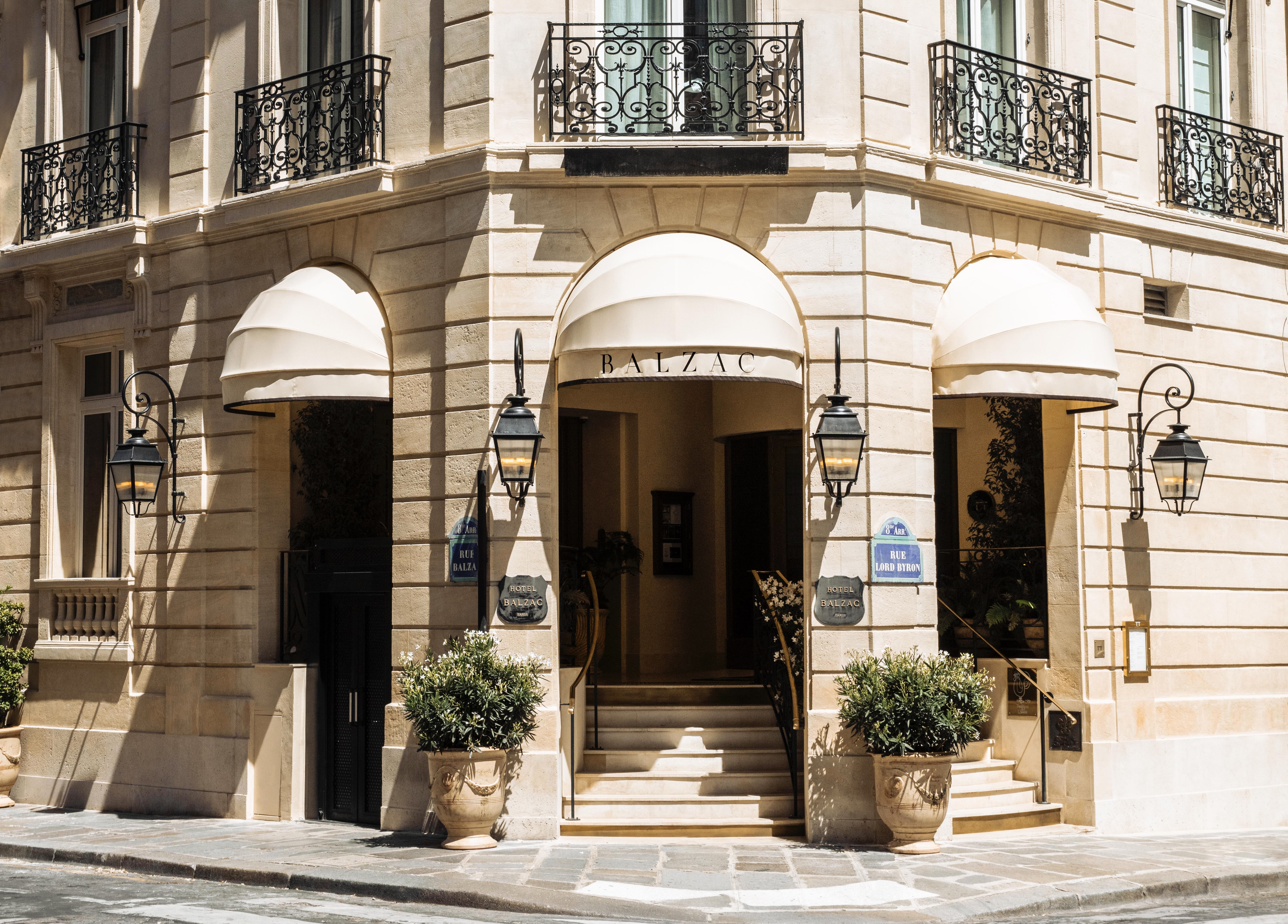
Just steps from the Champs-Élysées, Hôtel Balzac brings together a historic building and state-of-the-art design after a complete renovation by Festen Architecture
The Hotel Balzac in Paris combines boutique chic with the feeling of being in a (very sophisticated) friend’s home, as LUX discovers
Where to stay in Paris this spring? The great hotels of Paris share many qualities: style, grandeur, history, and often a powerful sense of superiority that they really are at the centre of a city unmatched by any other for sophistication.
Follow LUX on Instagram: @luxthemagazine
What they don’t tend to have, however, is tranquility and this is exactly what you find when you walk in to the Balzac. A quality even more surprising given the hotel’s location just metres off the Champs-Élysées and within throwing distance of a handbag from both the Louis Vuitton flagship and the shops of the 8th.
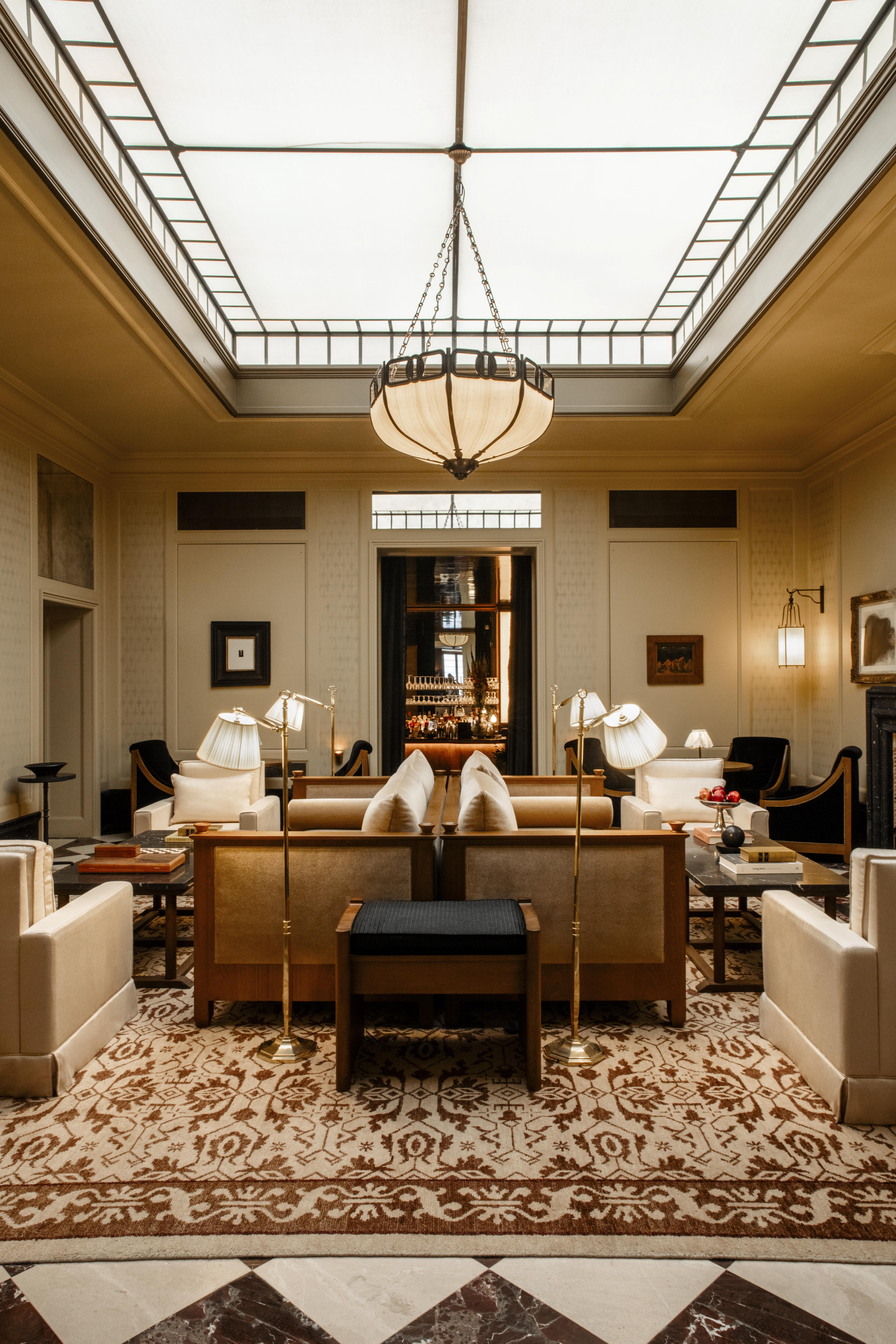
The lobby at Hôtel Balzac, where you can sip a cocktail or 1930s vintage
The Balzac, on a stylish side street of the same name, welcomes you in with a white tea perfume, a perfectly coiffed doorman swinging the door open for you, and a sense of 1930s-meets-contemporary style that could only emanate from the coolest collection of hotels in Paris.
You sit on white sofas and cut crystal decanters while sipping your welcome cocktail, lime hued, out of a martini glass of similar 1930s vintage (non-alcoholic, but there is an alcoholic version available in the utterly chic bar a few steps away), before being taken up to your room.
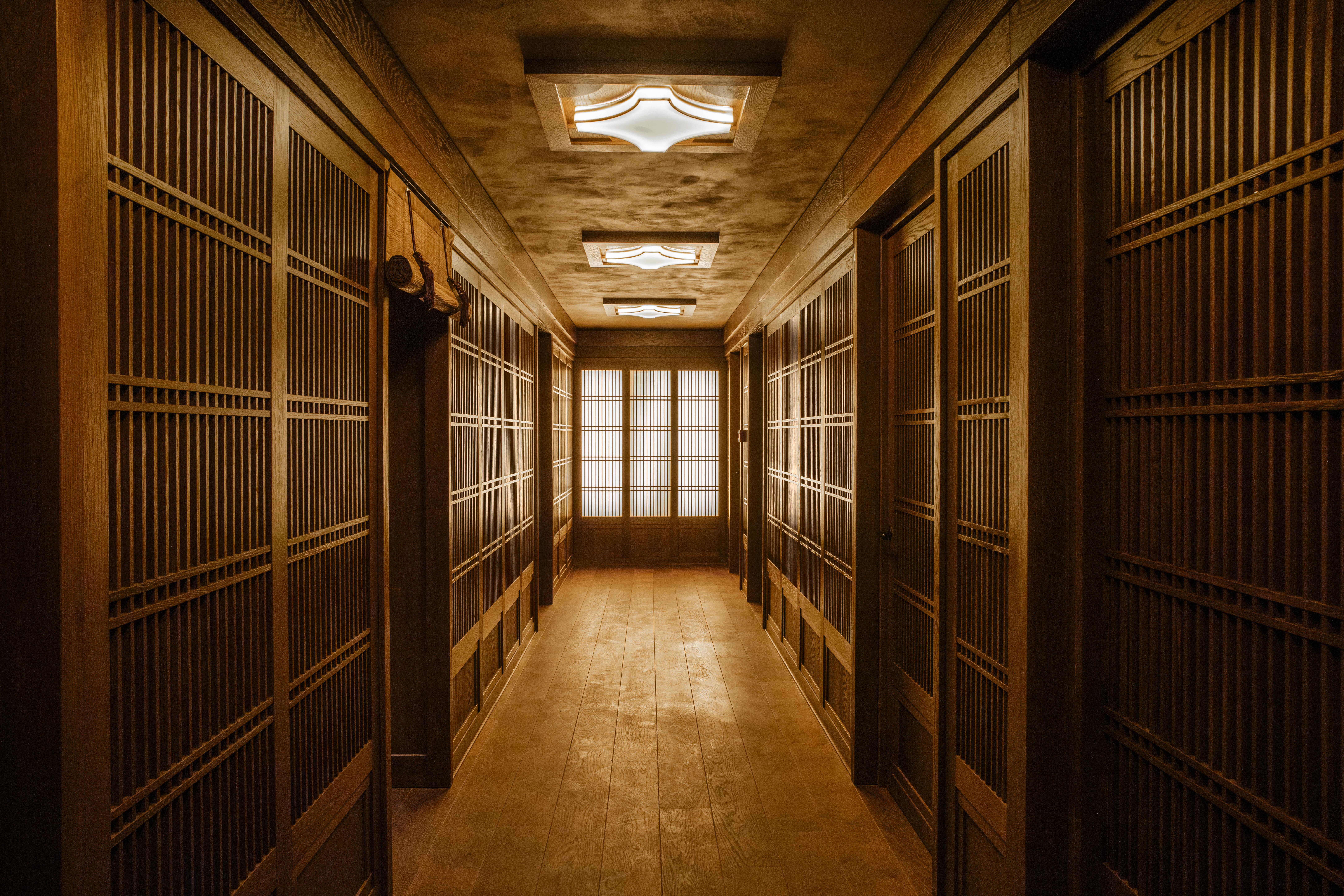
Inside Spa Ikoi, a Japanese wellness space brought to the centre of Paris by Hôtel Balzac
Ours was as tranquil as the lobby, every detail so perfectly put together that it could only be in Paris, every detail aimed towards peace and the feeling of a private home. Everything from the late art deco glassware and decanters through to the kettle, hairdryer, light switches… It feels as if you are at the home of a very stylish interior design designer friend whose parents are in fashion and art.
Read more: Tom Rowntree on modern luxury hospitality
It’s well executed too, not just surface detail: the bed is properly comfortable, the stunning bath is not just a page out of Architectural Digest magazine but supremely delicious to be in, the mini bar snacks and drinks comprise only the most artisanal brands which are also delightful to consume.
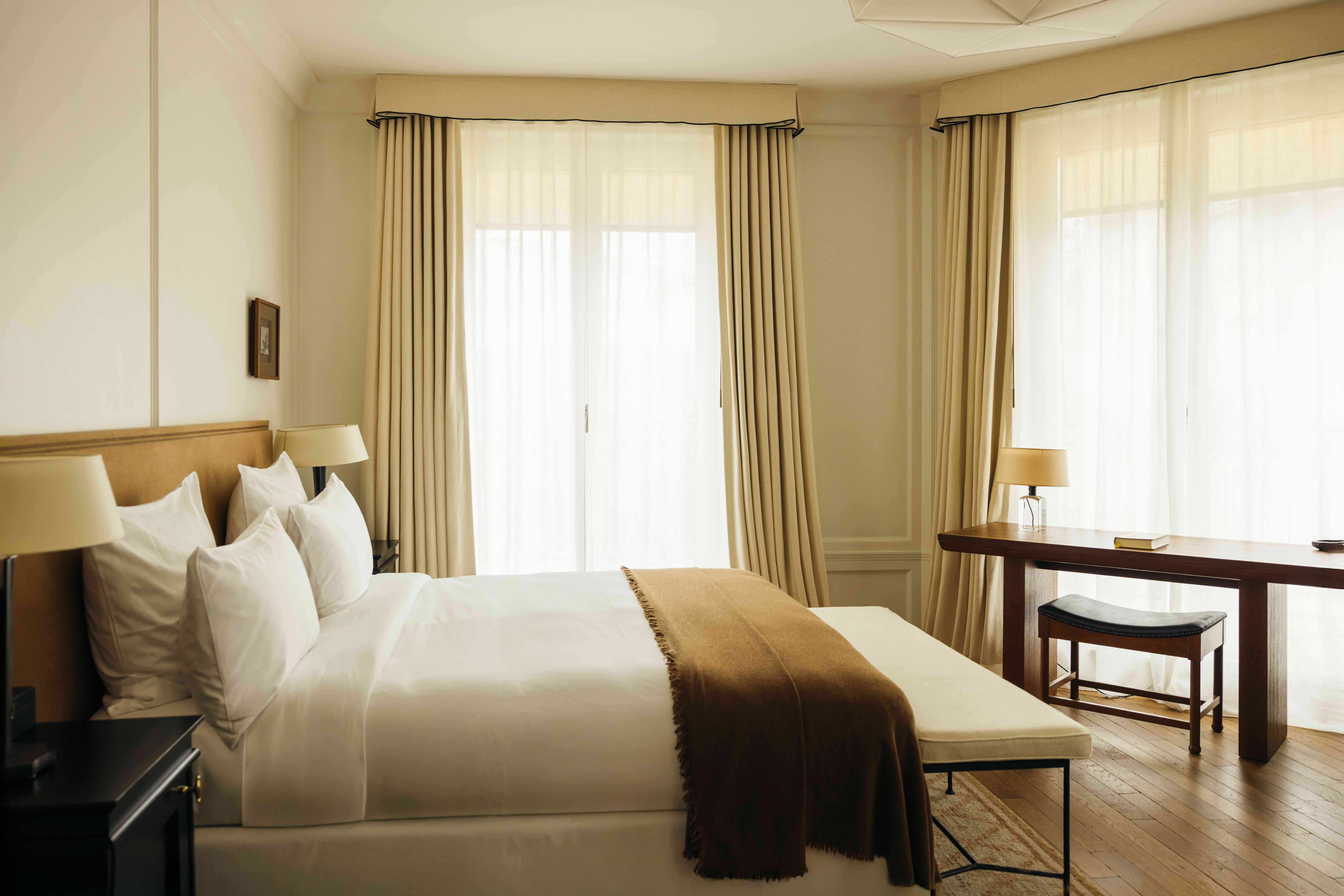
The rooms are as tranquil as the lobby, with the feeling of a private home
So is this the perfect Paris hotel? That depends a little bit on you and your requirements: if you want to take a group of friends to a flashy restaurant or bar, this is not the place, and nor is it where you take a bunch of investors looking for the flashiest parts of Paris for a business meeting.
But if you’ve been there, done everything flashy, and just want to sink into the spa/design/architectural home of some friends in the heart of the eighth – or feel like you are – there really is no better place.
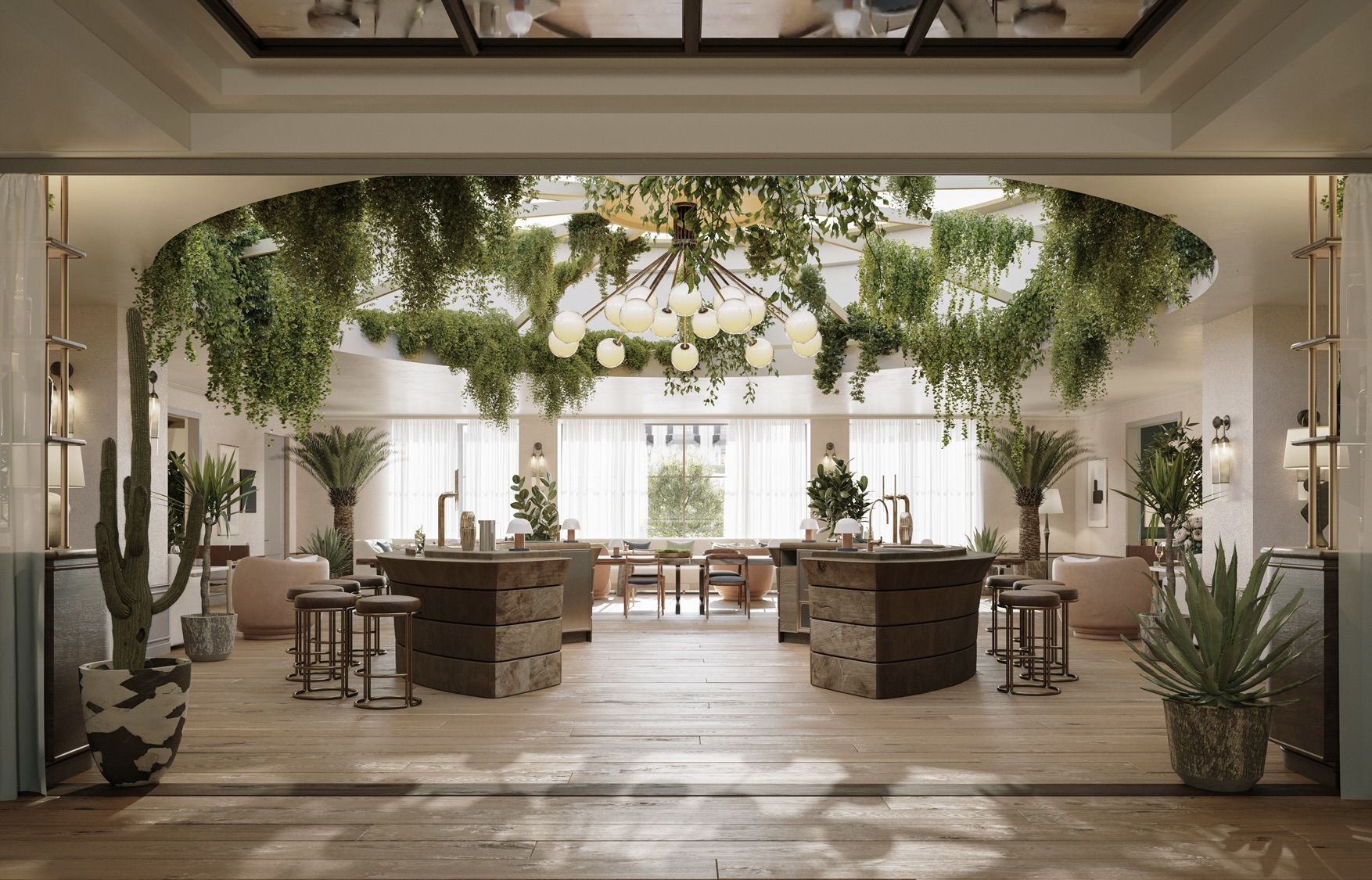
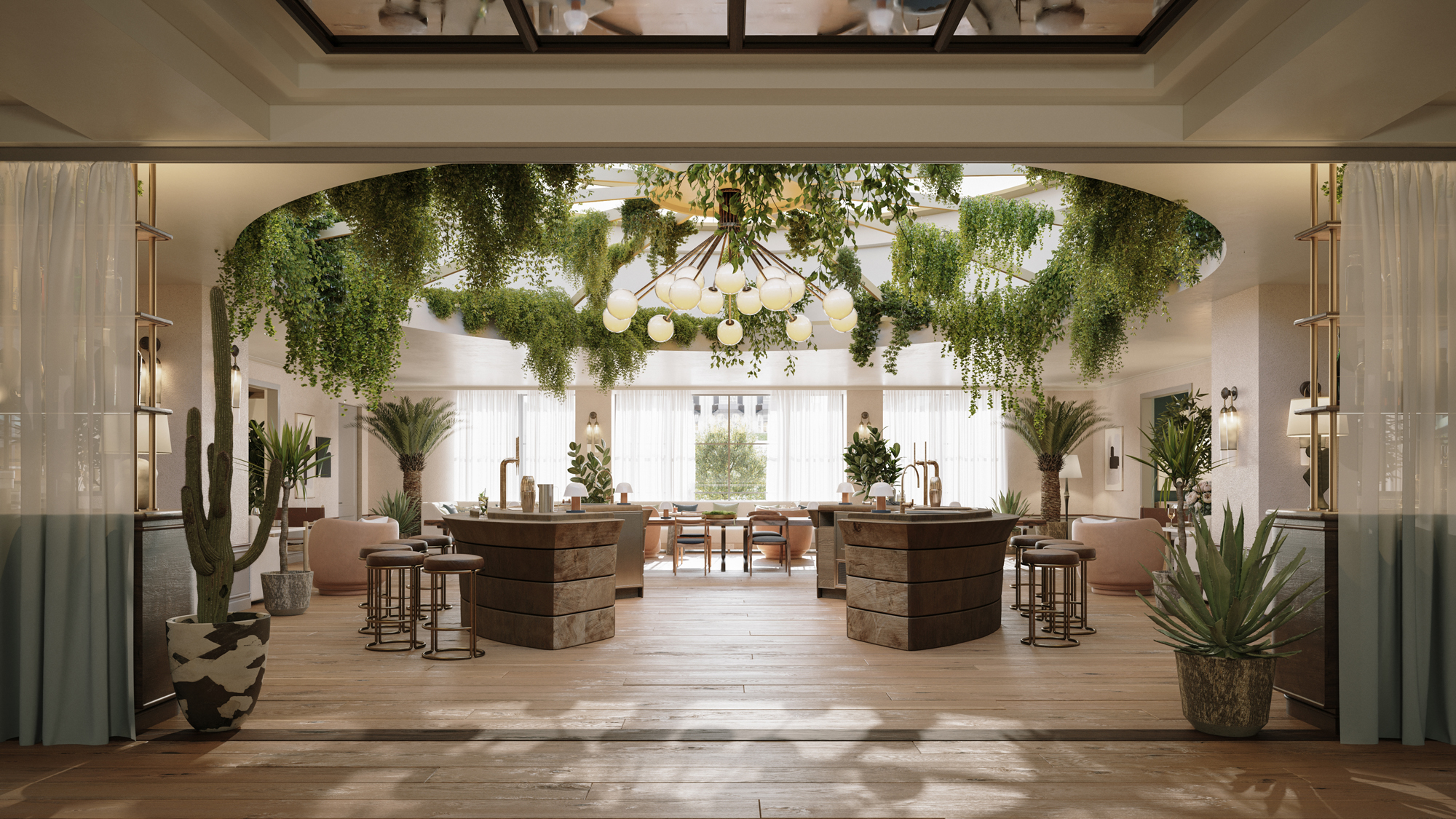
The new Six Senses opening in the iconic Whiteley, London, fitted with 109 rooms and suites, along with 14 Six Senses Residences, spa, and fitness centre
As VP of the luxury portfolio of Six Senses owner IHG, Tom Rowntree is at the cutting edge of modern luxury hospitality. He speaks to LUX about how to keep the future both luxurious and Zen
LUX: Tell us more about the Six Senses in London and the members’ club?
Follow LUX on Instagram: @luxthemagazine
Tom Rowntree: The Whiteley is an iconic building, and we are delighted to be opening a Six Senses here. It will be landmark moment for both Six Senses and IHG. There will be a signature 109 rooms and suites, along with 14 Six Senses Residences, a signature Six Senses Spa, and over 325 square meter fitness centre, complete with a 20-meter indoor pool.
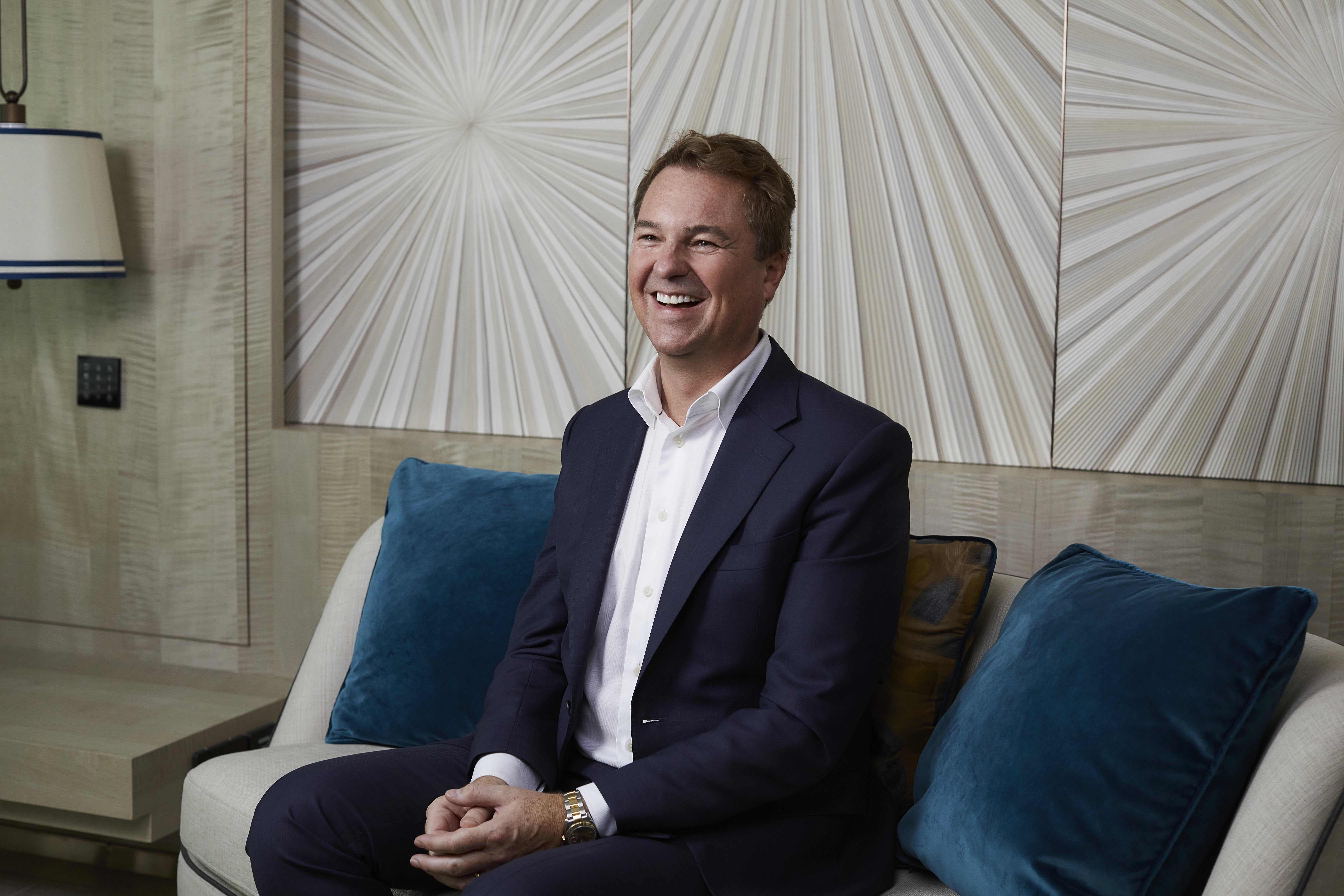
Tom Rowntree at the Regent Taste Studio premiere, which fuses fine art and culinary craft
Six Senses Place is a part of this and will be our first private members club. It is designed around ‘a new rhythm for the city’. A place where members and hotel guests can join a community to heal, gather, learn, and feel a sense of belonging.
LUX: How do you integrate art and food into your experiences?
TR: Regent Taste Studio is the perfect example of this. It is a series of pop-up culinary experiences inspired by art, design and culture. These are immersive experience where the chefs from our properties around the world collaborate with artists, designers and musicians to curate one of a kind extraordinary dining moments that engage our guests on a multi-sensory level that goes far beyond the realms of art or food individually.
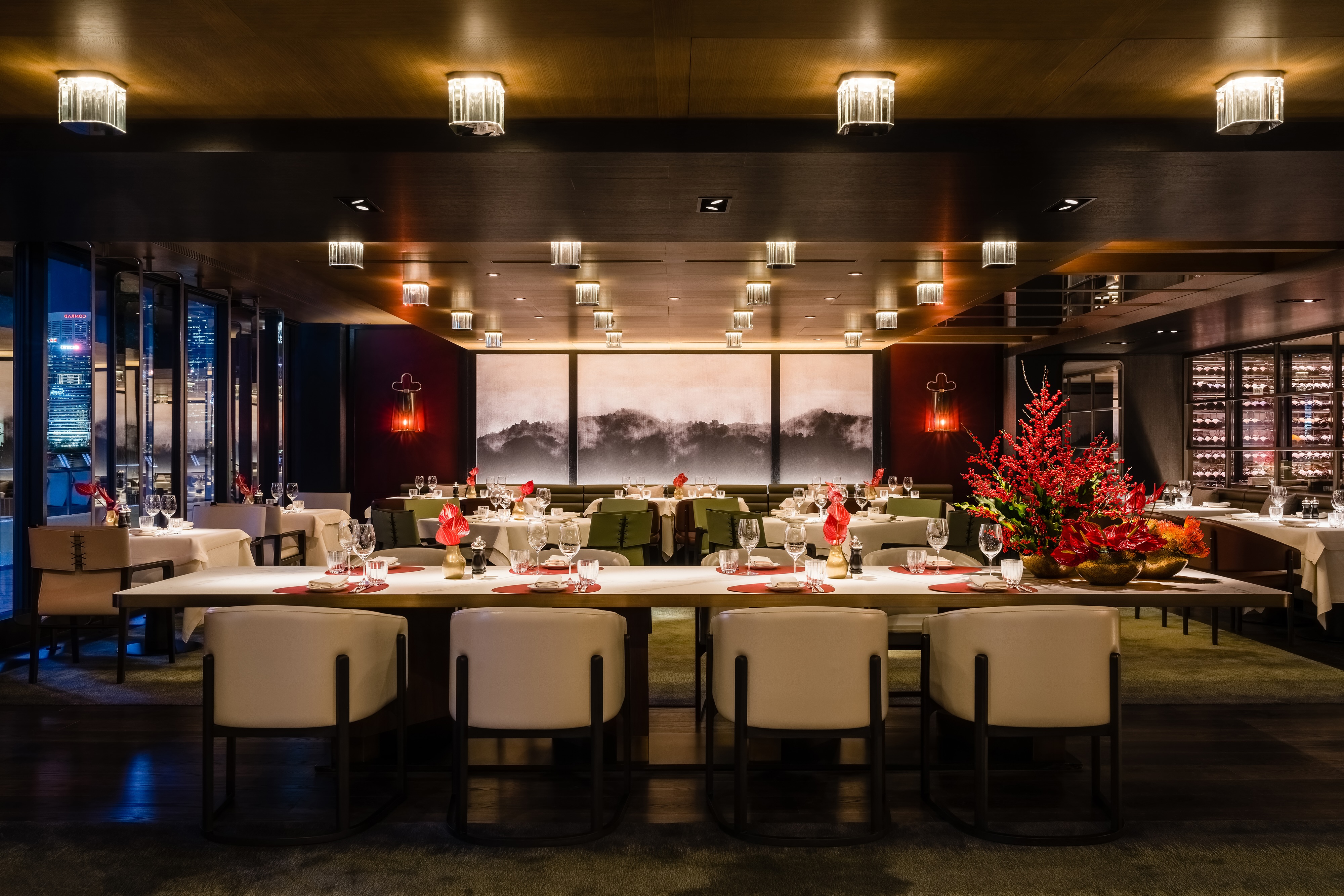
A dining moment at IHG’s Regent Hong Kong
LUX: You are now catering to multigenerational travel. Tell us more.
TR: With the birth this year of Gen B, for the first time ever we are seeing 7 generations travelling. A key element of that is multi-gen travel and skip-gen, such as grandparents travelling with grandchildren.
Read more: A week of art in Jaipur
From a product perspective, we are looking at room, suite and villa configurations – a great example is Regent Phu Quoc that has four- and seven-bedroom villas and also the flexibility to connect villas, ensuring families have space but can come together.
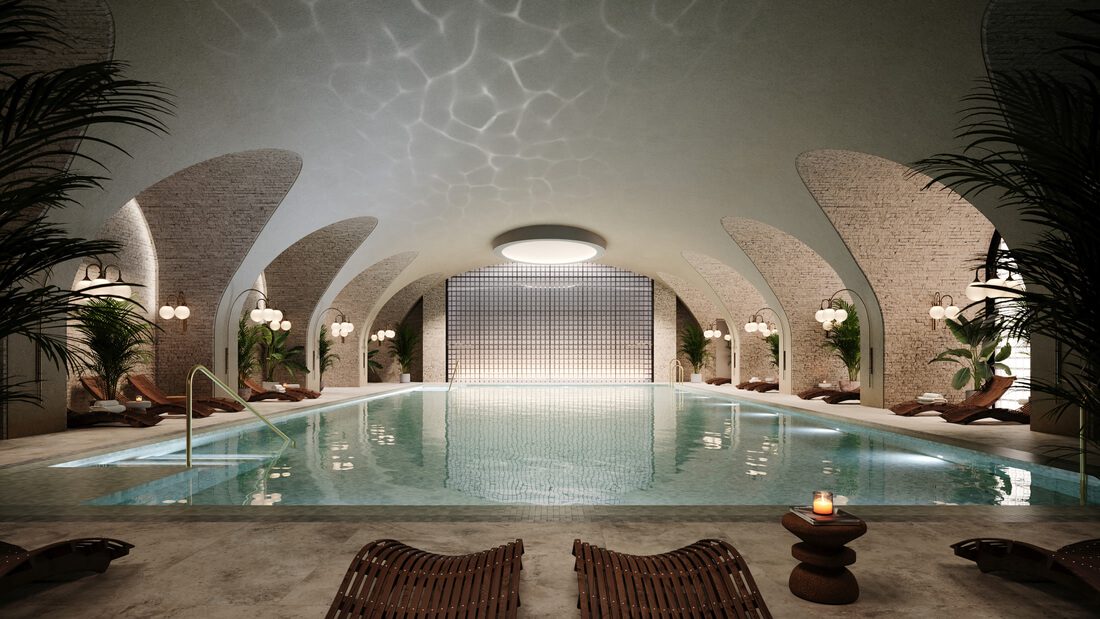
The Six Senses opening this year at the Whiteley comes with a signature Six Senses Spa, and over 325 square meter fitness centre, complete with a 20-meter indoor pool
Additionally, we’re seeing growth in a younger, more experience-focused consumer. Millennials aged 30 to 44 years now comprise the highest penetration of luxury seekers, followed by Gen Z. Combined, Millennials and Gen Z now make up ~45% of luxury spend.
What this means is that when we design our brands and their guest experience, we’re designing for the guest of yesterday, today and tomorrow all at the same time. This makes things more inclusive and diverse than ever, a big challenge, but also an immense opportunity. It’s exciting.
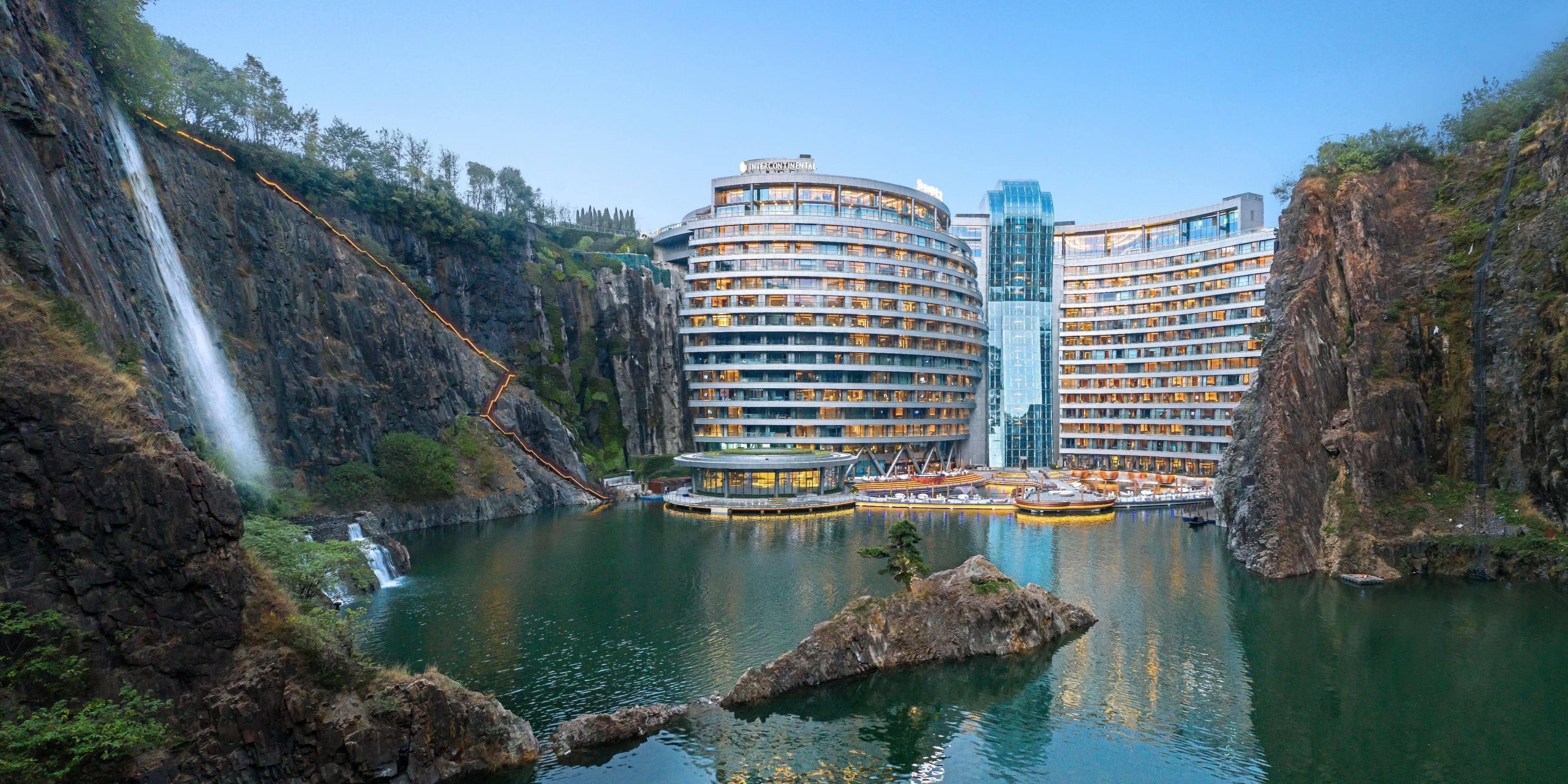
IHG’s InterContinental Shanghai Wonderland: a luxury hotel located in Songjiang, at the root of Shanghai
LUX: You have a one week all expenses paid holiday in one IHG property with your partner. Which one do you choose and why?
Read more: Where art becomes ocean conservation
What a great question. It has to be Six Senses Vana, a dedicated wellness retreat in the Indian Himalayas. Day to day, Flavien and I are both so busy, operating on autopilot. We seem to live our lives in 30-minute diary appointments. I think we’d both benefit from the time to just be present with one another and within one of the world’s quieter corners. I’ve also always been curious about the principles of ayurveda, something Vana does especially well.
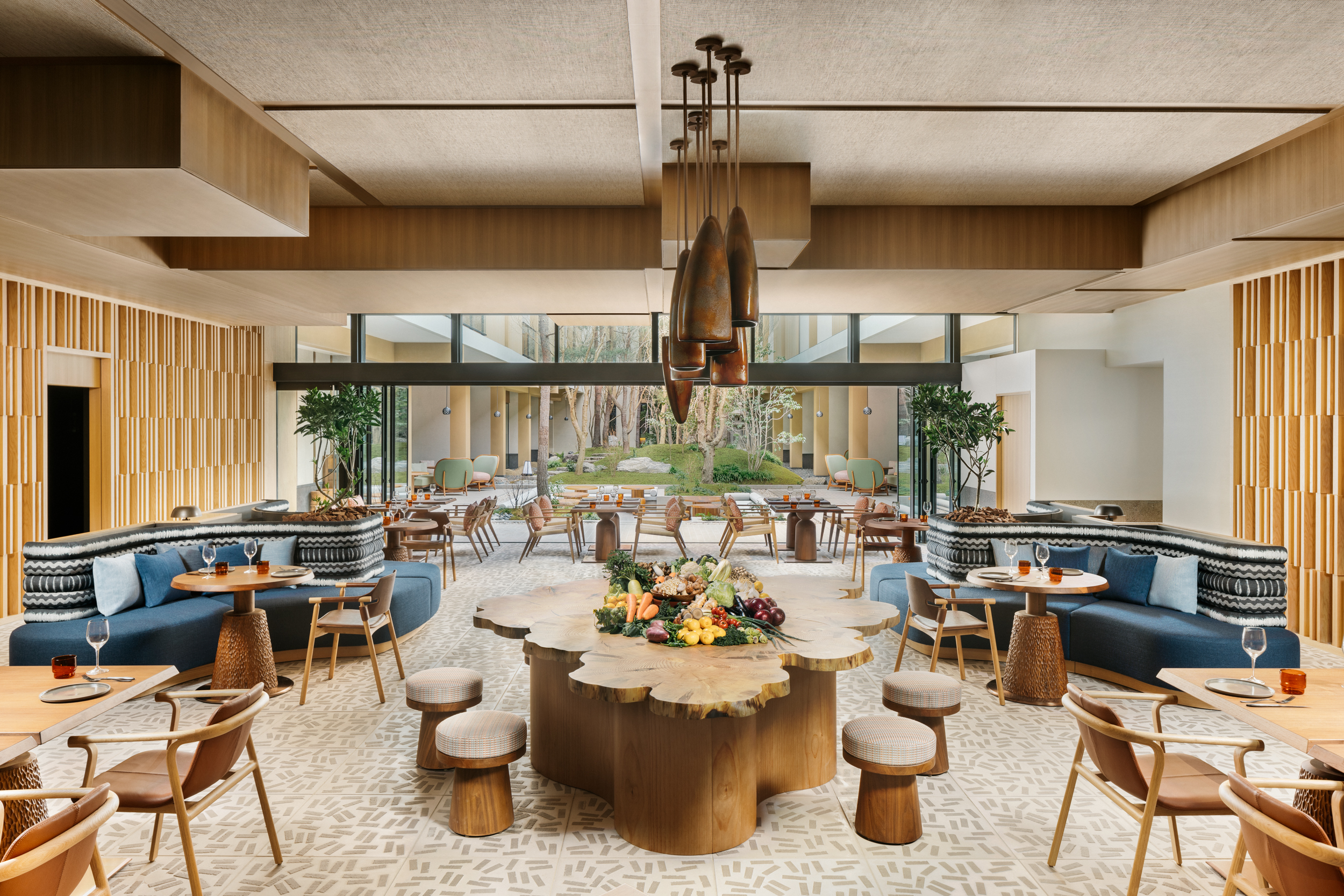
The Six Senses Kyoto, where the design is inspired by the Tale of Genji and ancient folklore
LUX: Six Senses is a powerful modern luxury brand. How do you ensure it retains that power under corporate ownership?
TR: It really is and we are working hard and focussed on ensuring we retain all that is special, whilst evolving for the future. Each of our brands is designed around a clear purpose and a unifying and unique set of hallmarks.
With Six Senses, we are considered and always intentional. It is a brand that has always been slightly maverick and quirky. That personality hasn’t changed, nor has its ethos and philosophy. Being part of the IHG family has enabled Six Senses to achieve even greater performance. The relationship is symbiotic, and it occupies a unique and special place in our luxury and lifestyle portfolio.
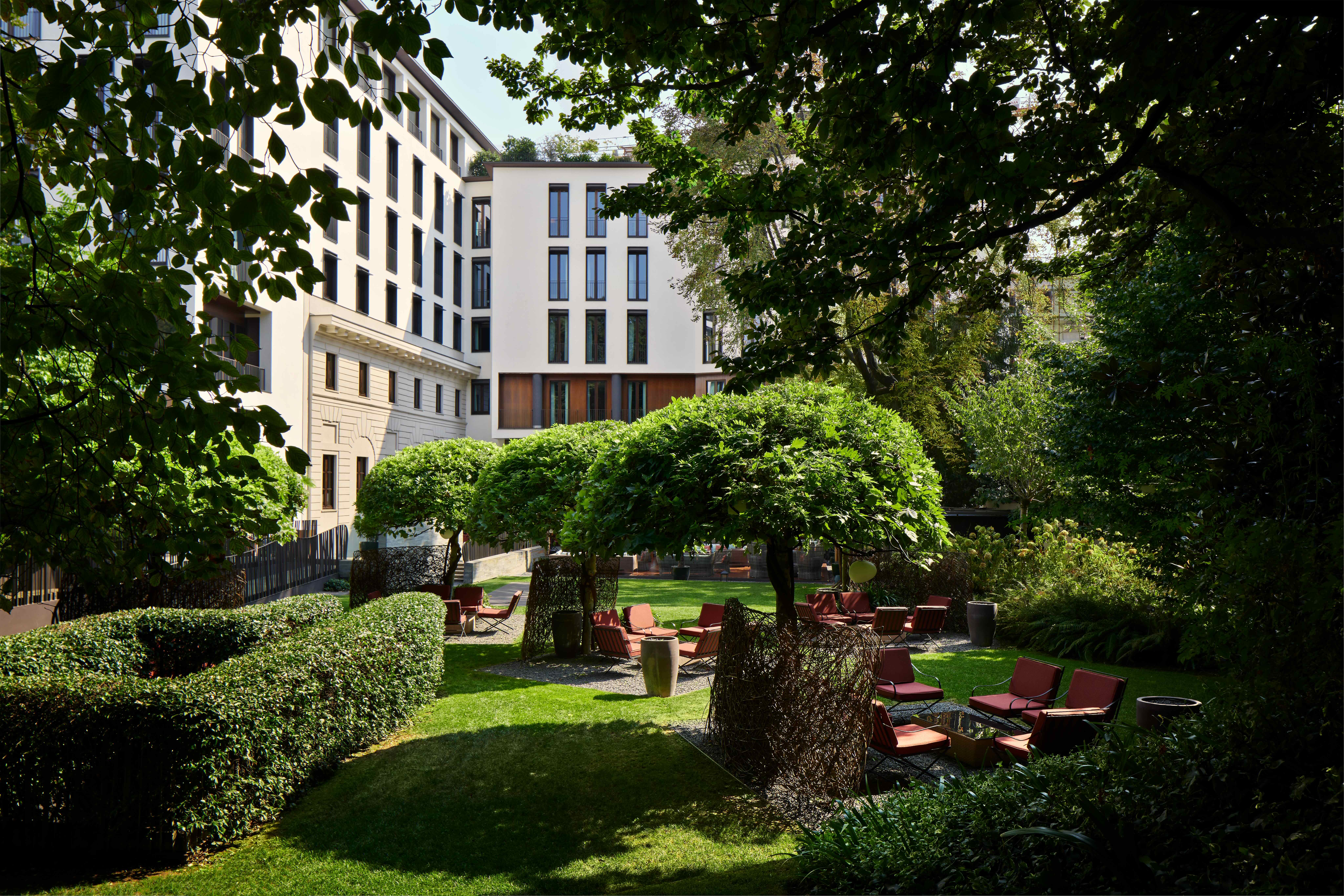
Bulgari Hotel Milan, where you can enjoy the Mediterranean sun from the shade of Il Giardino
Bulgari has become one of the most celebrated luxury city hotel brands, and here we visit their flagship offerings in Milan and Rome
Anyone who is anyone knows that Milan is now the buzzing place in Europe. Yes, the city that previously was known only for its fashion shows and design week, whose residents spent each week planning how to escape for the weekend, is now the place for people too move to, eat in, and show off at.
Milan is still a club, though. People know each other, and it’s social death to be seen in the wrong places. That, dear LUX reader, is why we are taking you to the epicentre of the social scene – or one of them anyway. Specifically, to our dinner table at the Bulgari hotel’s Niko Romito restaurant.
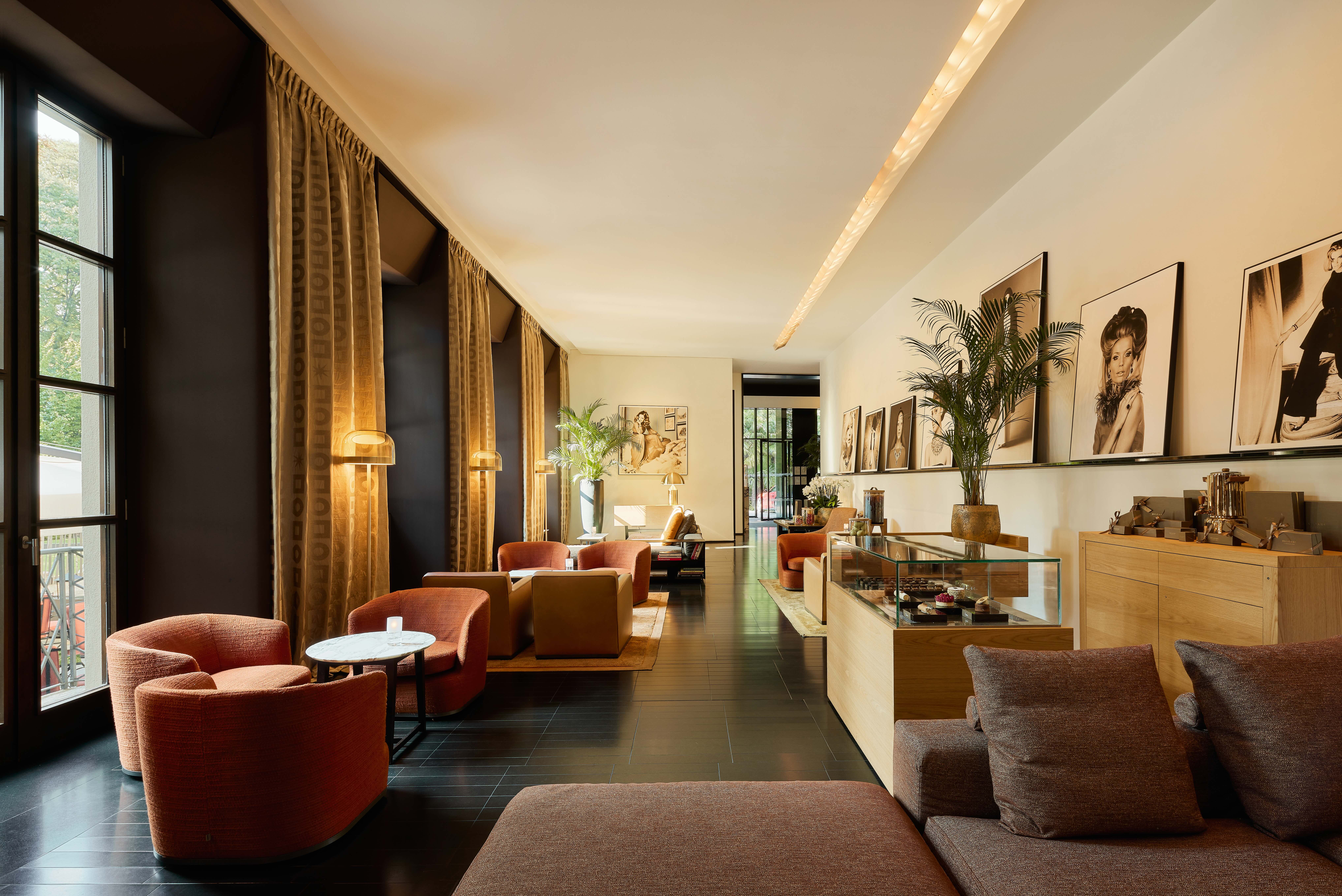
The luxury yet comfortable lobby at Bulgari’s Milan flagship
Situated up a few steps from the circular bar and more casual dining area, swathed in dark light (if that makes sense), you sit here like an Emperor in Europe’s new capital of affluence. Across from us, his back to the banquette, was a well-known fashion elder statesman, who sat happily and purposefully through his piccata, pasta and bottle of Barolo, surveying the scene like a king, his eye never turning to his phone.
Follow LUX on Instagram: @luxthemagazine
We enjoyed an excellent wine also, from the nearby Alpine Dolomites region, along with some tortelli with ricotta cheese and black pepper beef. The food is brilliant, and B hotels somehow seem even more in their element in their ancestral homeland, more comfortable in their skin.
Speaking about comfort and skin, we had arrived in a state of slight discomfort as LUX had left a company laptop on board the British Airways plane we arrived on a couple of days previously – we had spent the intervening time at the country house of a reader, contacting British Airways and the airport to absolutely no avail – each referred us to the other.
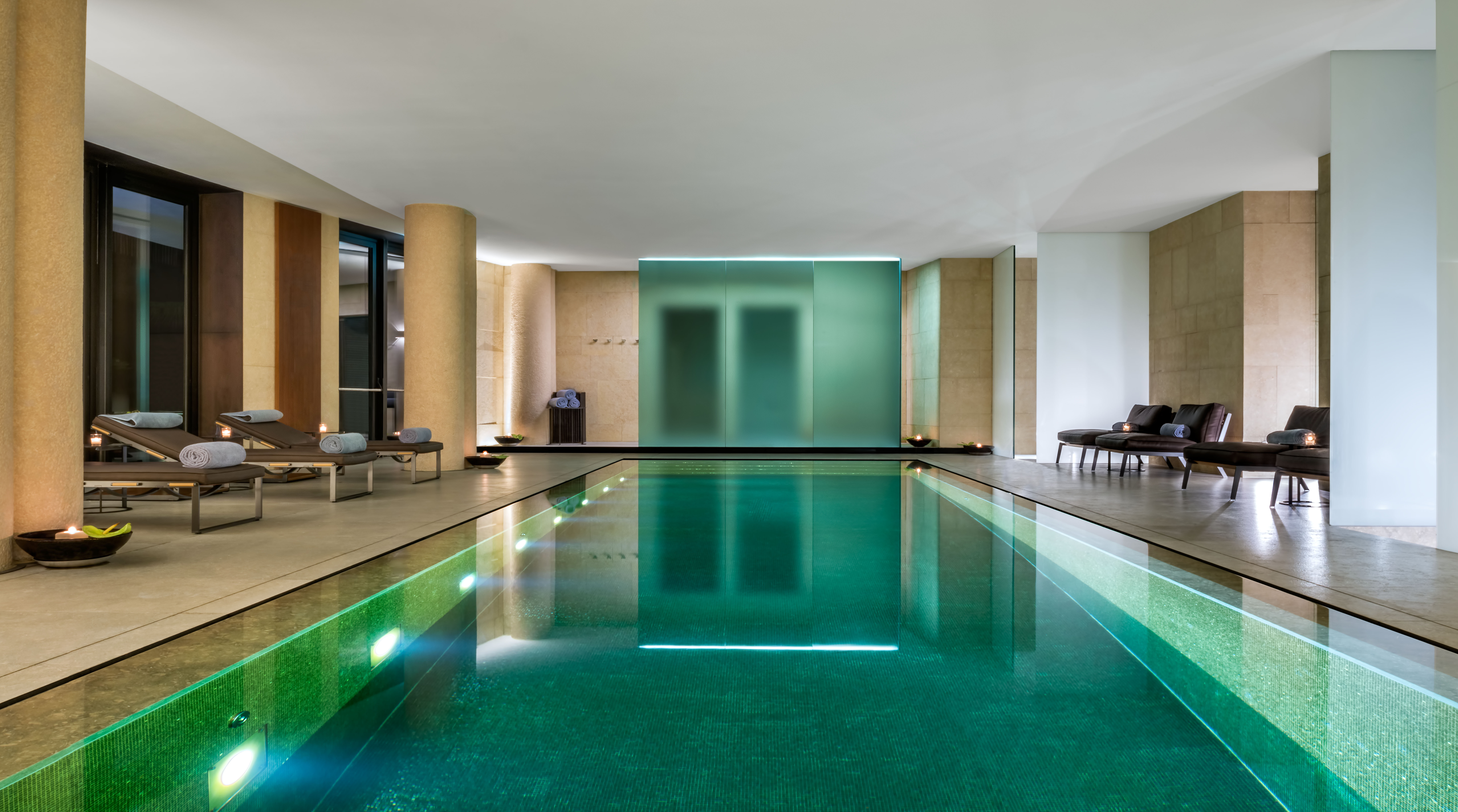
The spa offers guests a retreat in the midst the bustling streets of Milan
On arriving, we had been introduced to the Bulgari hotel Butler, available 24/7 on WhatsApp. The WhatsApp Butler is one of the greatest hotel inventions of recent times, genuinely adding convenience as you don’t need to worry about whether they will pick the phone up, whether they will understand you completely, whether they will note down the details of your requirements and hand them on to the next shift.
More in desperation than hope, we mentioned the laptop situation. “We will look into it straight away sir,” came the response and within half an hour we had a message that they had located the laptop, in an office at the back of the airport, and would we like them to send someone to pick it up?
Perhaps you should expect a luxury hotel concierge to be well connected with an airport but nonetheless the concierge service that was delivered is an enormous asset to the Bulgari.
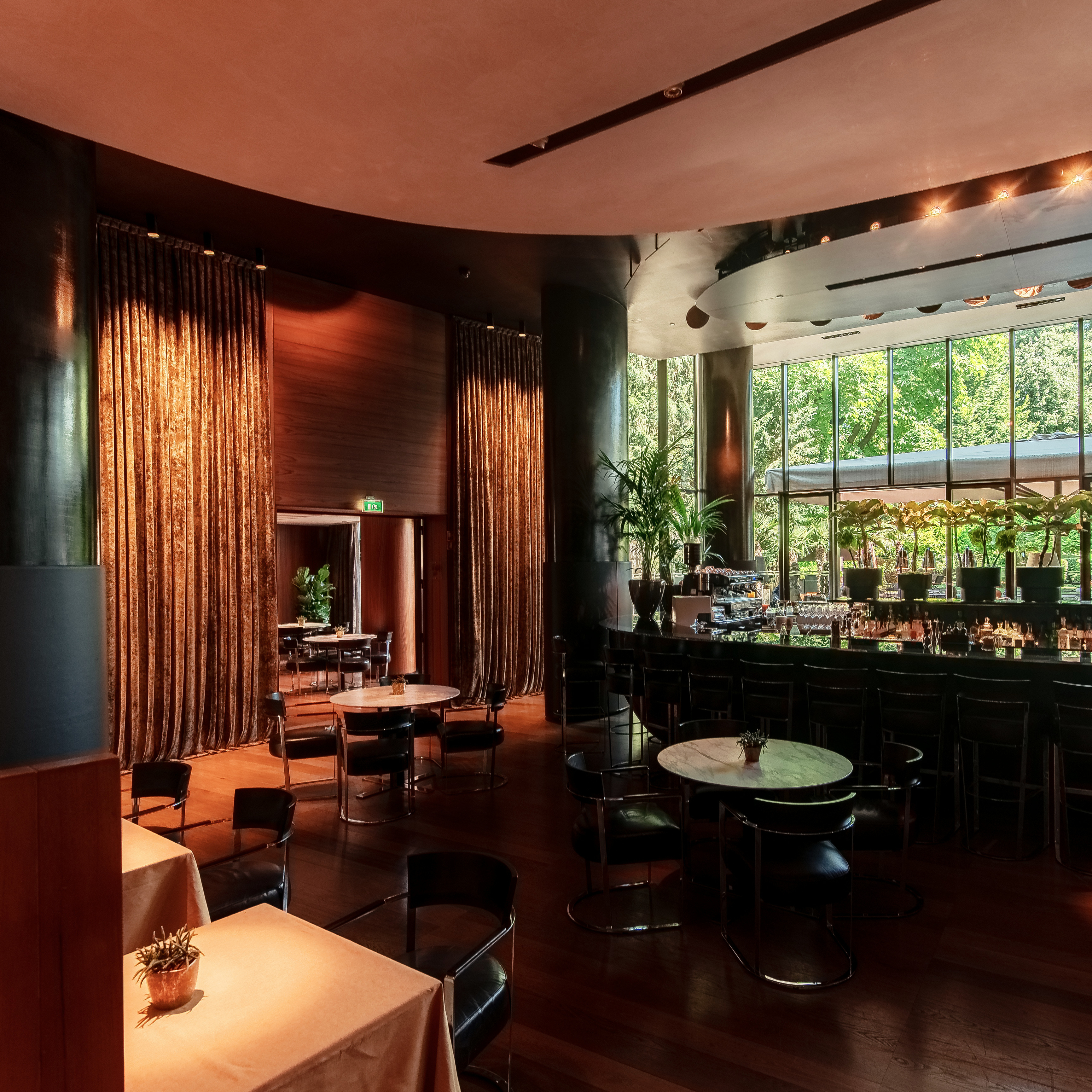
The Bulgari Bar, a meeting place not only for hotel guests but for in-the-know Milanese
Our room itself was welcomingly quiet, looking over the courtyard garden where the hotel is located. This is an extremely quiet part of central Milan, and only a six minute walk from the golden triangle of luxury shops.
Read more: Inside the Monte-Carlo Bay Hotel & Resort
Our suite was beautifully and intensely appointed in that signature Bulgari style, overlooking the courtyard garden. This is not a hotel that looks like any other and you feel like you are in the cossetting arms of a heritage luxury brand.
Room service breakfast was served with a flourish, with lavish extra bits and table decorations. This is a place that’s hard to leave, because, you know, it’s the place to be in the place to be.
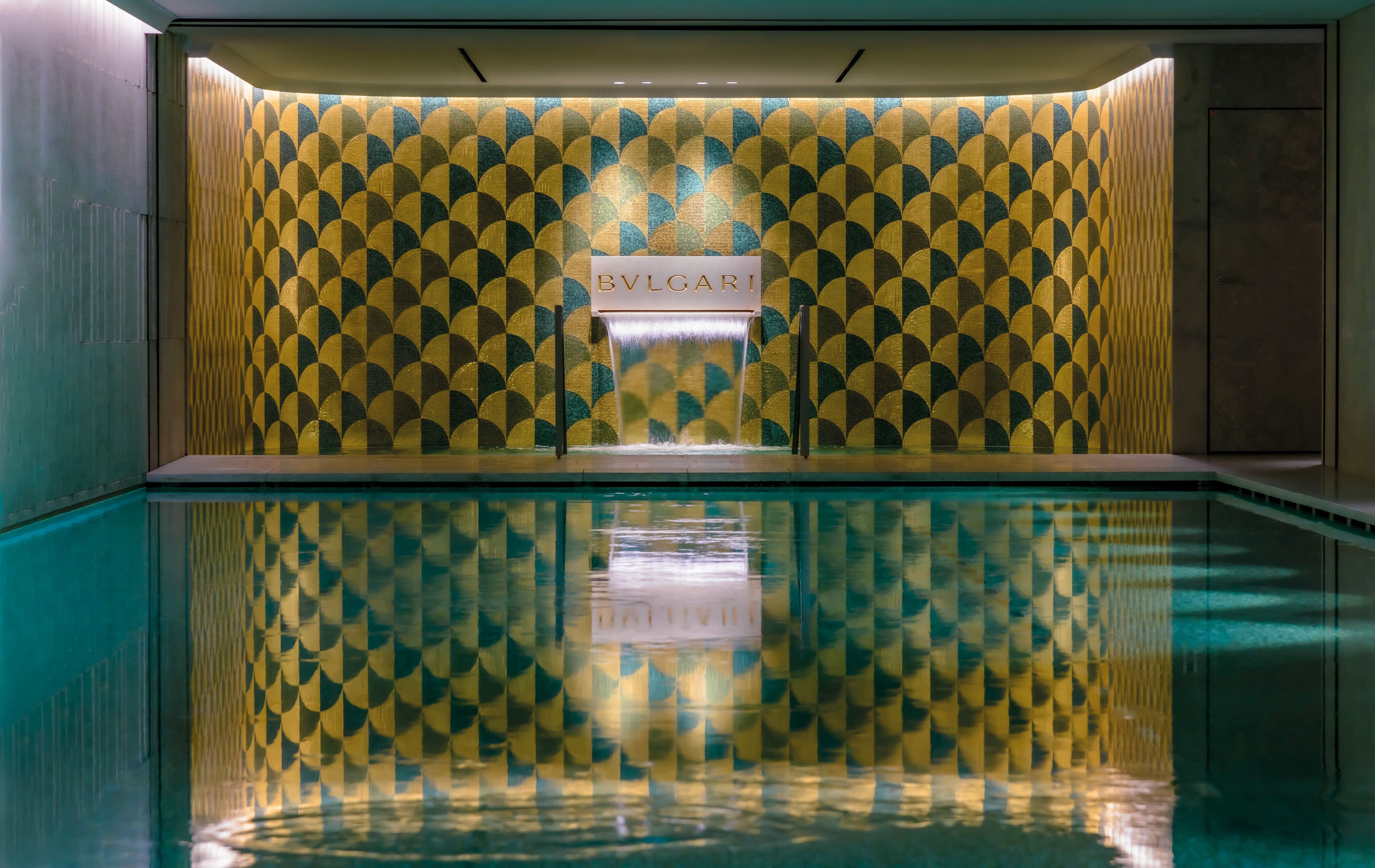
Inspired by the Roman baths, the Bulgari Paris’ 25 metre pool is intricately decorated with mosaic of gold, emerald, jade, and malachite
Bulgari Hotel Paris review
If you thought Paris was all about traditional, grand – slightly chintzy – luxury on the one hand, or self-conscious boutique chic that isn’t quite delivering luxury on the other, walking through the doors of the Bulgari Hotel on Avenue George V will rapidly change your mind.
The doormen swing the doors open for you into a glossy dark wood and light marble temple to lavishness. The reception desk, small and understated, is to the left, and a lobby lounge with dim lighting and sweeping luxury is to your right.

The Bulgari Suite is accompanied with views across Paris
Our seventh-floor suite had a terrace half the length of a city block, with views out over the Paris rooftops: the Invalides, and the Bibliotheque Nationale, in the distance. On the marble coffee table was an artfully positioned box of huge Bulgari cigar matches. You know what you are supposed to be doing here.
Read more: How Louis Roederer champagne leads in biodiversity
The suite itself had deep pile-patterned cream carpet, and every detail touch showed that this is the creation of the masters of luxury themselves, Bulgari as owned by LVMH. The box for the creams, the box for the shoe shine, the box for the products you might have left behind – in all these cases, the containers with things you are very tempted to take home and present on a coffee table of your own. (We didn’t).
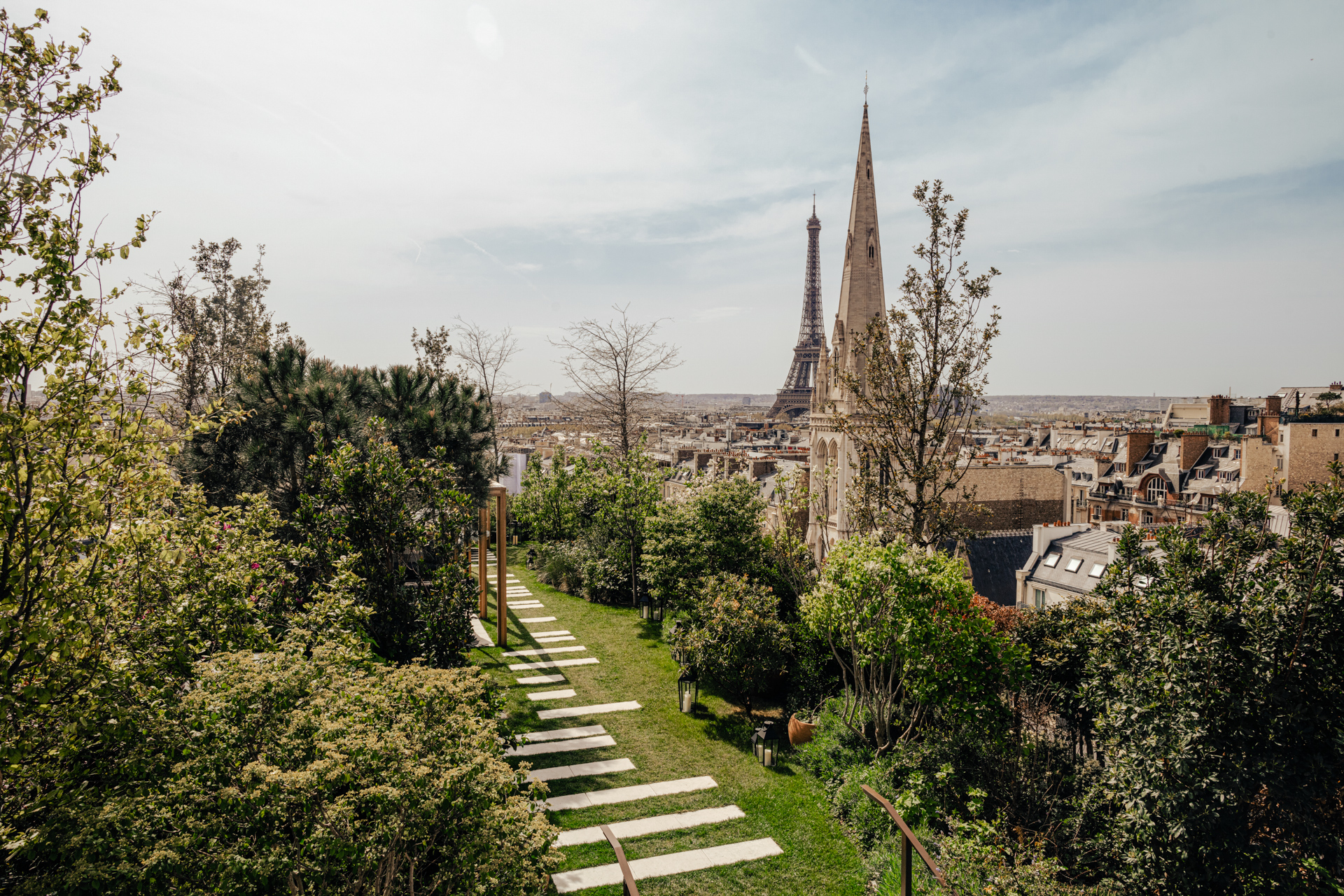
The Bulgari Hotel Paris’ Penthouse garden offers a natural retreat in the heart of Paris, where you can enjoy views of its landmarks away from the crowds
Presentation is everything in luxury, and the welcome presentation of champagne, chocolates, flowers, and three citrus fruit on three Bulgari plates was too good to touch or eat.
Room service breakfast was even more so; an exhibition of oatmeal, Goji berries, different nuts, seeds, blueberries, blackberries, and strawberries, each one occupying its own dish ranged around the bowl like numbers on a clock face. Tasted good too.
At the Bulgari‘s heart downstairs is Il Ristorante, which looks out a little courtyard garden where you can sit in summer. Our weather was not suitable for terrace dwelling, but we enjoyed a long and indulgent dinner of accompanied by excellent bottle of Barbaresco from Piedmont, the service correctly Italian and perfect.
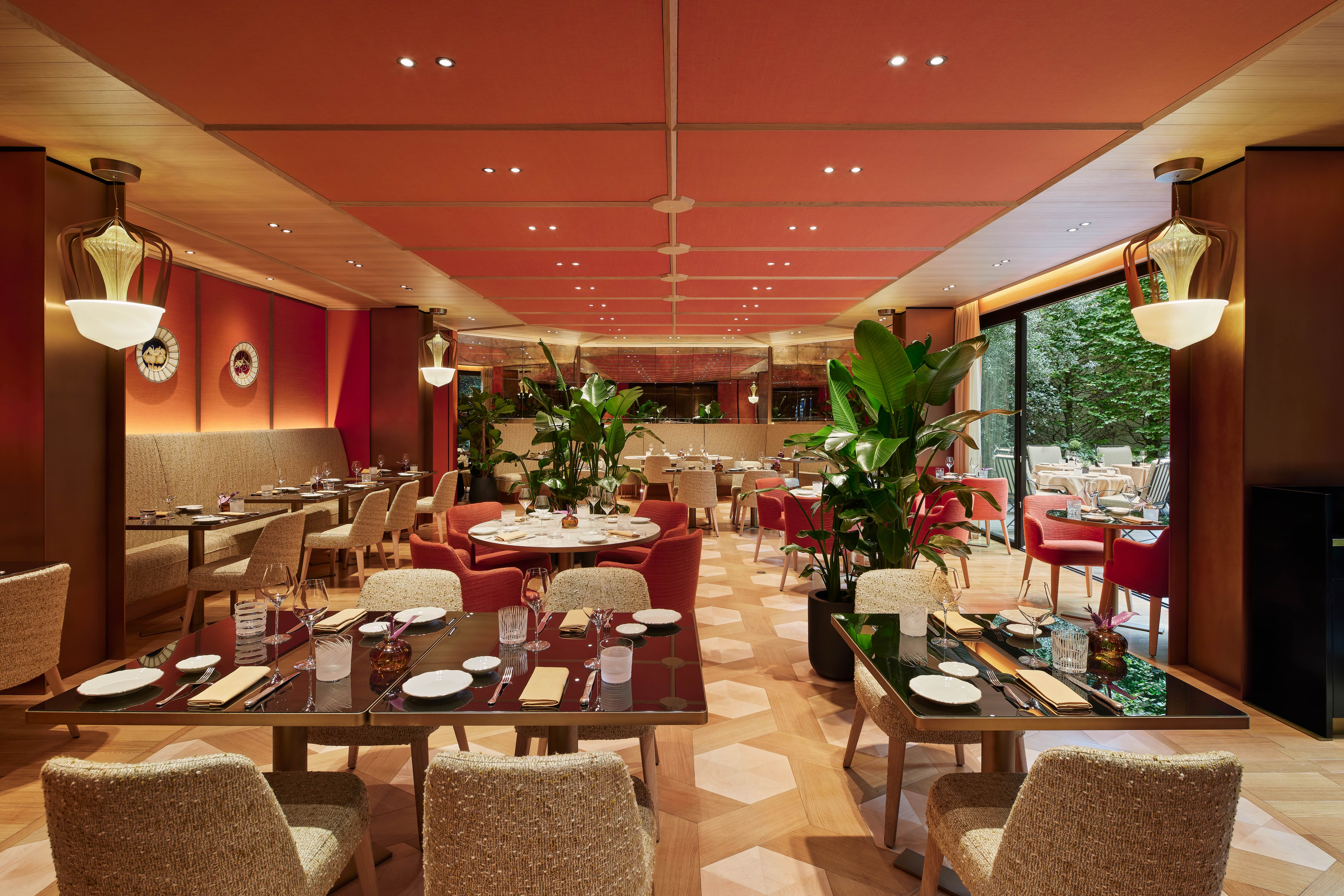
Il Ristorante, led by three-Michelin-starred Chef Niko Romito
And then there is the location: walk out onto George V and you can walk into the flagship or nearly-flagship boutique of every luxury brand in France and possibly the world. The Champs Elysées is five minutes one way, the Eiffel Tower probably 10 minutes the other (we didn’t go). If you’re there for Art Basel Paris, probably the best art fair in the world, it’s around an eight minute walk.
Read more: A conversation with Sassan Behnam-Bakhtiar
Luxury reinvented in Paris? Close to it, for sure. The only thing we missed was being able to use our terrace, and a little garden. Paris does doesn’t always play ball with the weather, and even the gods of LVMH can’t change that. Yet.
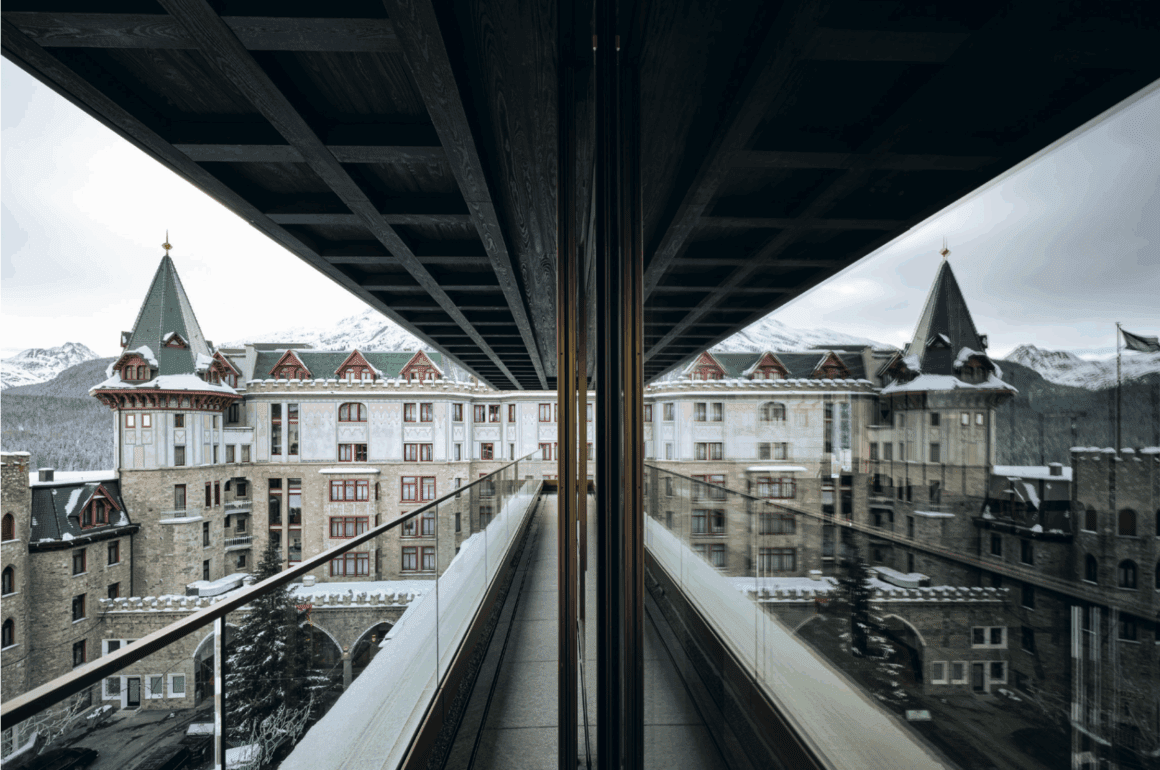
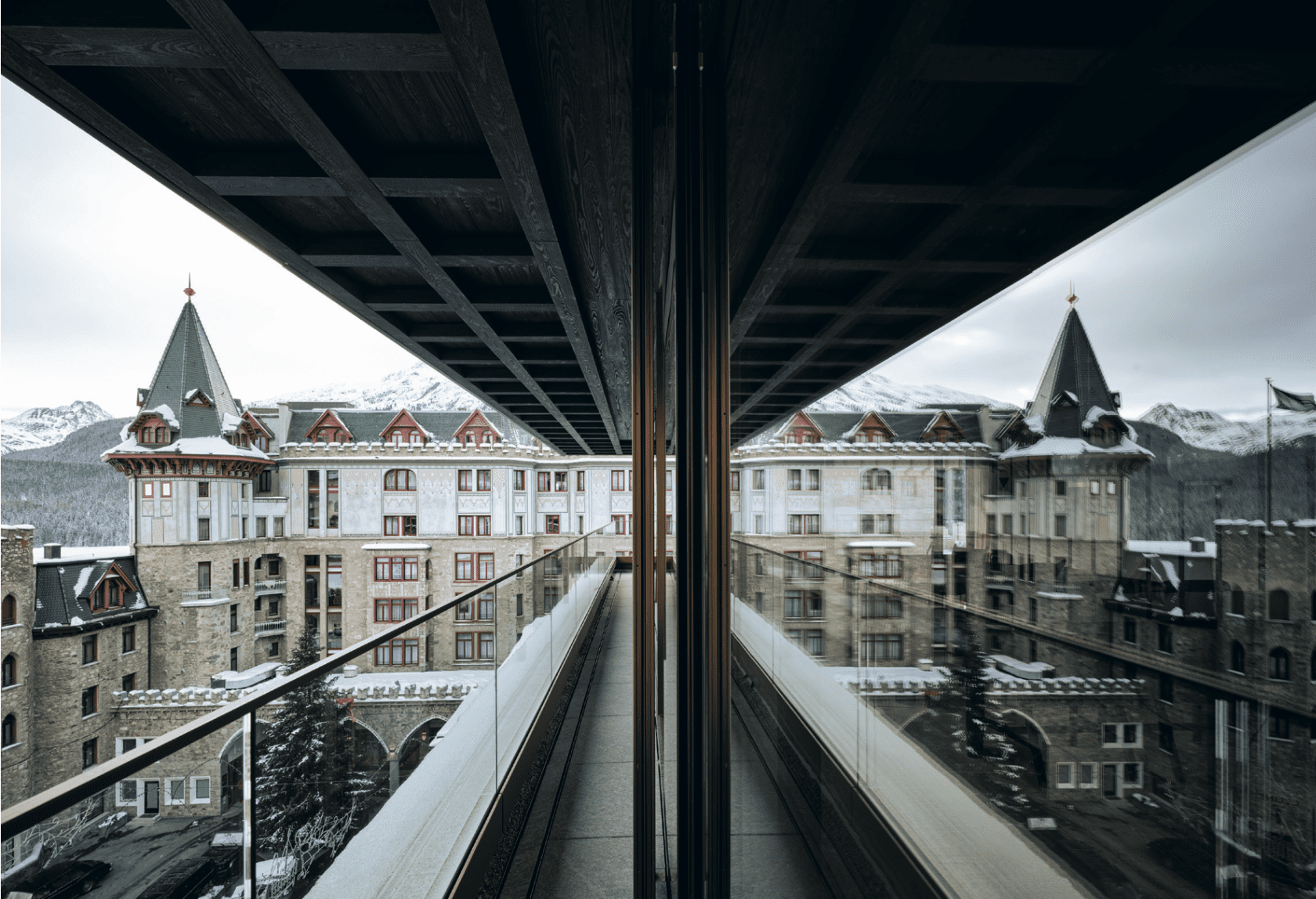
The new Serlas Suite at Badrutt’s Palace, connected to the historic building by an underground luxe-zone
If you’re looking for a place to stay this winter, start with a new suite in an old St Moritz Palace, Badrutt’s. LUX Editor-in-Chief Darius Sanai reports
You’ve landed at Samedan in the Gulfstream after a flight from St Barts laced with just a little too much Yamazaki. You are now in the back of the Maybach, long elegant blond man/blonde woman (take your pick) by your side, heading for town, with Zina’s party at Dracula tonight and the need to wake up in time to do a couple of runs (Cresta or Corviglia, either is ok) with the long blonde ahead of Clayton’s lunch at Paradiso’s private room, up the mountain.
Follow LUX on Instagram: @luxthemagazine
Where do you stay? At the new Serlas Suite at Badrutt’s Palace, of course. This has all the advantages of the historic Badrutt’s building across the street (and connected through an underground luxe-zone), and it’s part of a brand new building (known as the Serlas Wing) designed by Antonio Citterio, Italian architect and St Moritz regular. It’s also directly above Hauser & Wirth.
You’ll enjoy the new Badrutt’s. It’s just like the old Badrutt’s, but with even more Loro Piana.
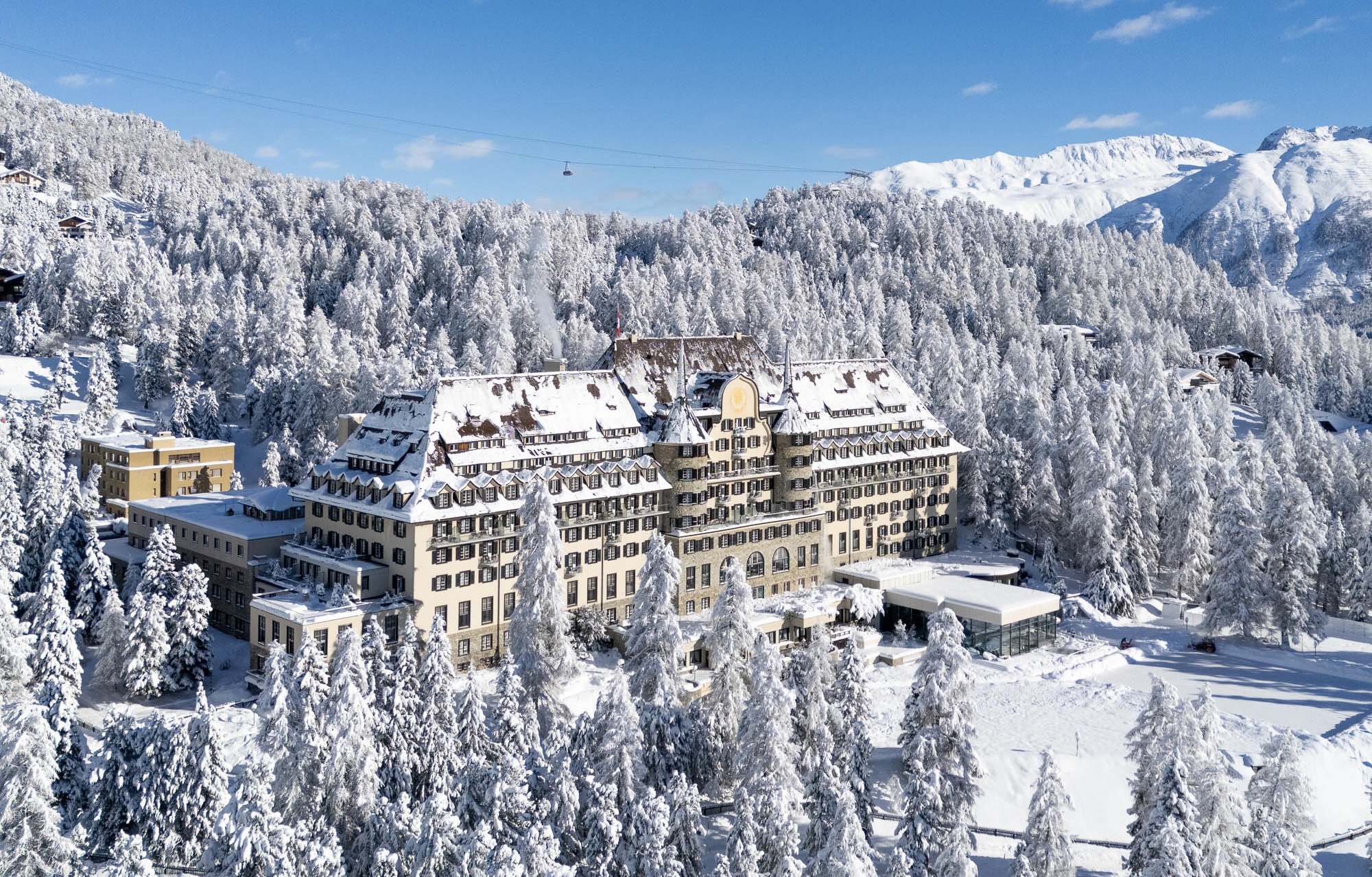
The venerable Suvretta House amidst the forests above St Moritz
Suvretta House, just outside St Moritz, could be the perfect combination: a self-contained resort with celebrated restaurants and its own ski lift, a snowball’s throw from the parties in town, and right next to the even more exclusive parties up the road
One slight contradiction in some glamorous mountain resorts is that sometimes you don’t feel you are truly immersed in the mountains. As dramatic as the views might be, mountain resorts are still urban developments.
Follow LUX on Instagram: @luxthemagazine
Combine that with crowded lifts – we think it’s amazing that nobody has invented a private lift system in major resorts so the superwealthy don’t need to be in the same car as the merely slightly wealthy – and you have a situation that is less of a mountain retreat than you may have hoped.
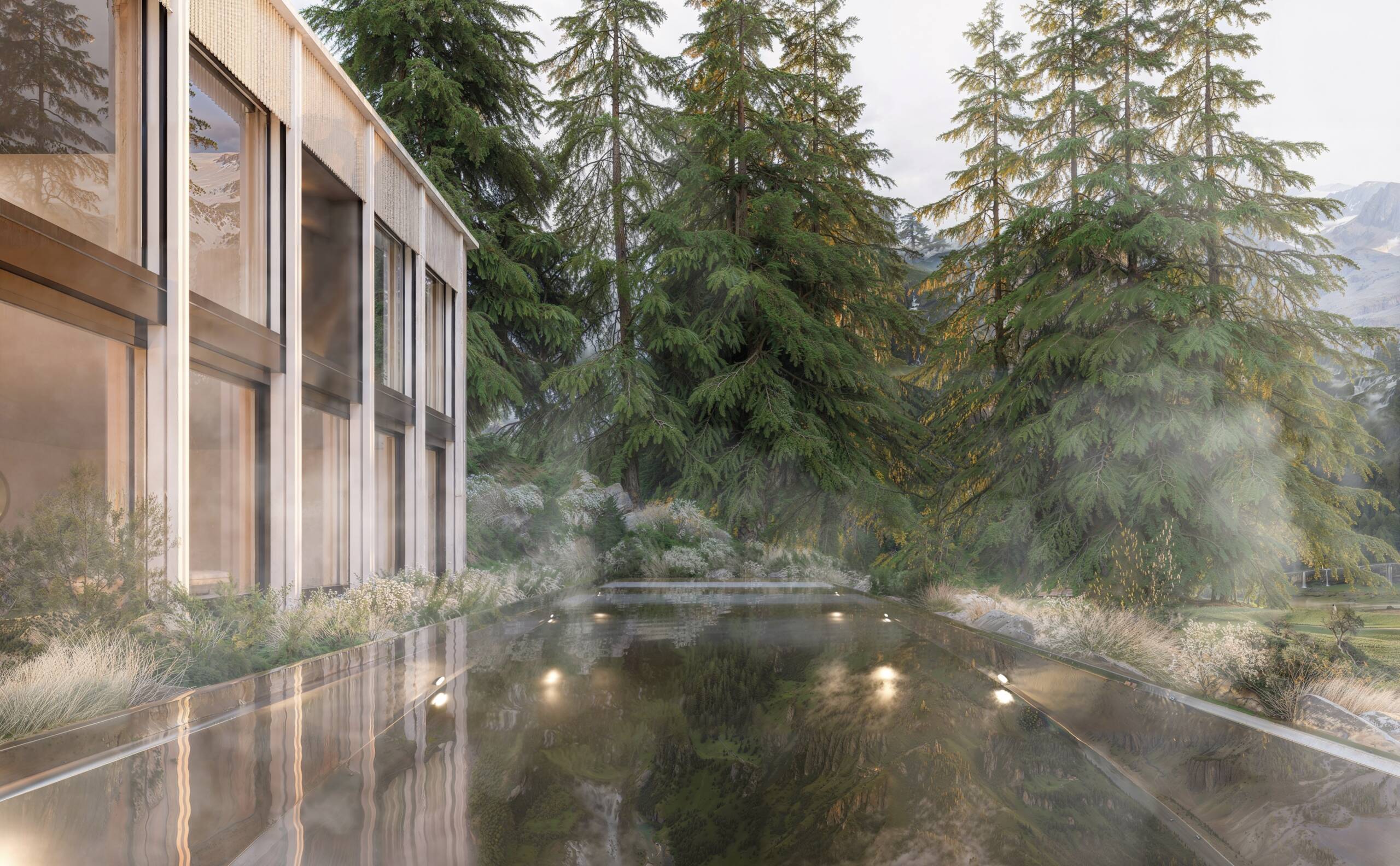
The new open-air pool at Suvretta House is in communion with nature
Neither apply to Suvretta House. This grand luxurious palace of a hotel is perched on its own hilltop, surrounded by forests, just a 10-minute walk – or two-minute drive in a Ferrari Purosangue – from the town of St Moritz. But its location is gloriously, famously quiet. Step out of the hotel in summer and you find yourself in the middle of a forest walking trail. In winter, you are crunching through a deep snowfield in the heart of the forest.
Read more: Inside Diriyah, Saudi Arabia’s new-old cultural city
Suvretta House is its own destination. It has its own ski lift rising up from its grounds – the nearest thing you can get to a private ski lift – connecting to the big Corviglia ski area. You can literally ski into the hotel – an amenity not shared by any other palace hotel in the area. You are also – and you can visit many times and not even realise this – in the heart of the most exclusive community of St Moritz: Suvretta, which is a discreet collection of villas (mansions, really) occupied by the European aristocracy and global superwealthy scattered on the hillside immediately above.
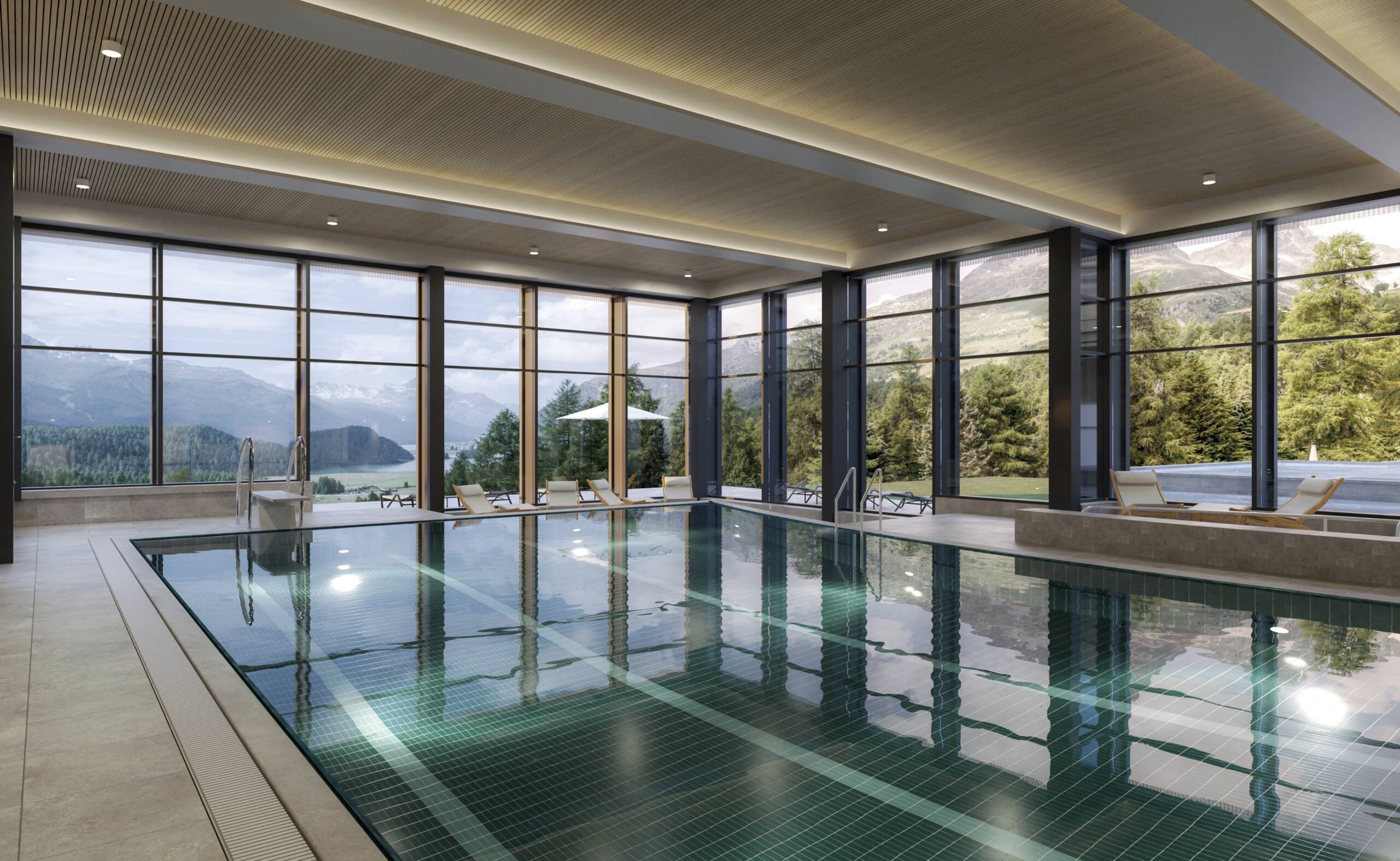
Suvretta’s indoor pool with a view that stretches across the Engadine valley, accompanied by an extensive new spa wing
There are no indications to this effect, no glossy shopping malls, no branches of Nobu – it’s just something you know. Many of those who own the villas all around are owners of brands that people wear at dinner.
Read more: A conversation with Sassan Behnam-Bakhtiar
Our room at Suvretta House looked out over the back gardens – tennis and other sports in summer, ice rink in winter – stretching out to the forest that undulates down towards one of the great lakes of the Engadine. Beyond that, only mountains and wilderness. Just looking at the view felt like being in a spa.
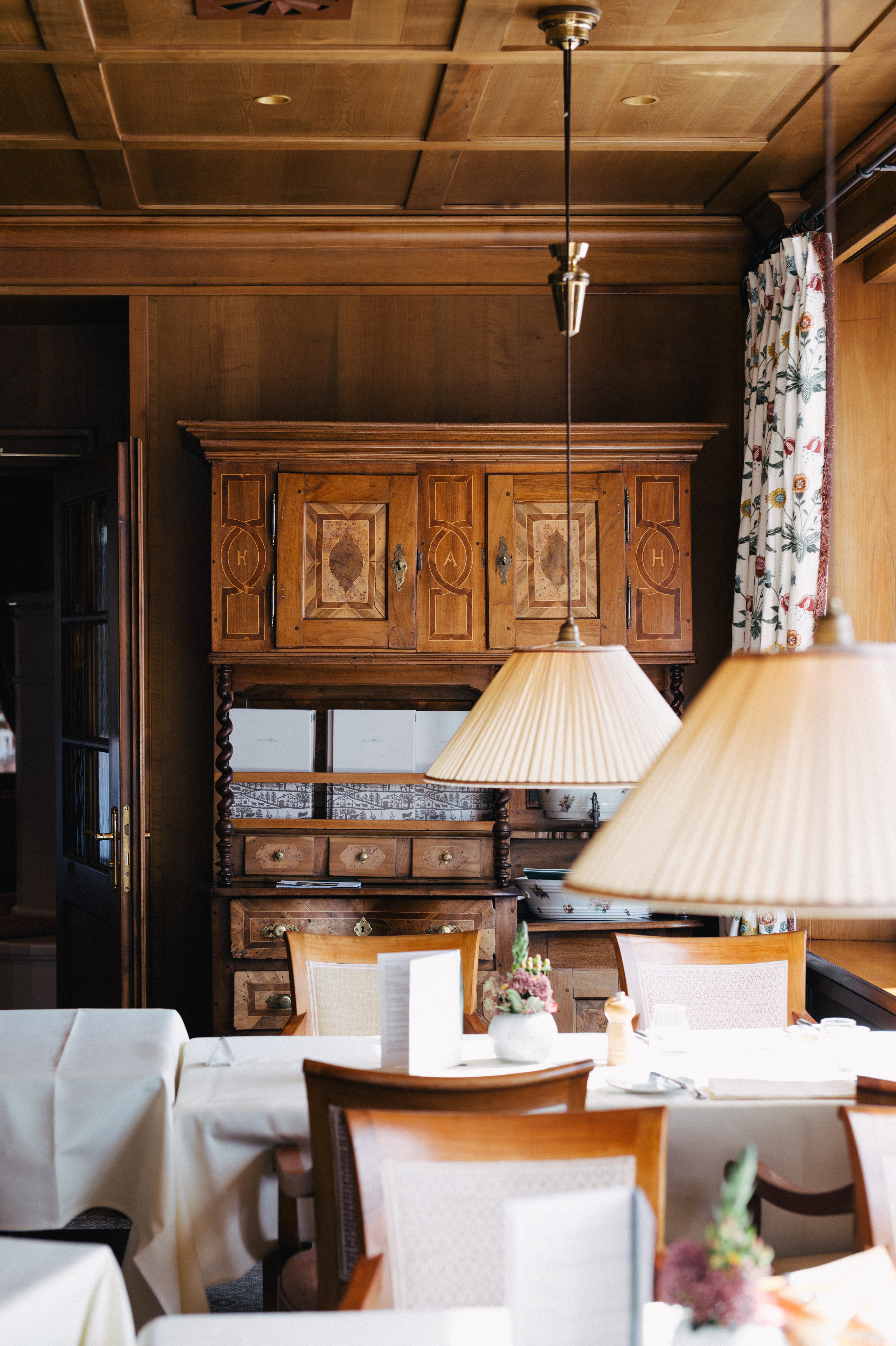
The Suvretta House Stube is a comfortable place to dine, offering Swiss classics with a lighter touch
Nobody can come to Suvretta without experiencing the Stube, the casually named restaurant that is both cosy, relaxed and extremely gastronomic. We could eat there every day, due to the magnificent quality of its simple dishes. We also love its wine list: even the house wine is a globally renowned Chardonnay from the nearby Graubünden wine region. We just couldn’t get enough.
The huge indoor pool is now accompanied by an extensive spa wing, meaning there is even less reason to leave Suvretta House. There is a wealth of luxury resorts being built across the Alps, but there will never be anything like Suvretta House, which feels like a private club for the discerning and knowledgeable, but open to guests.
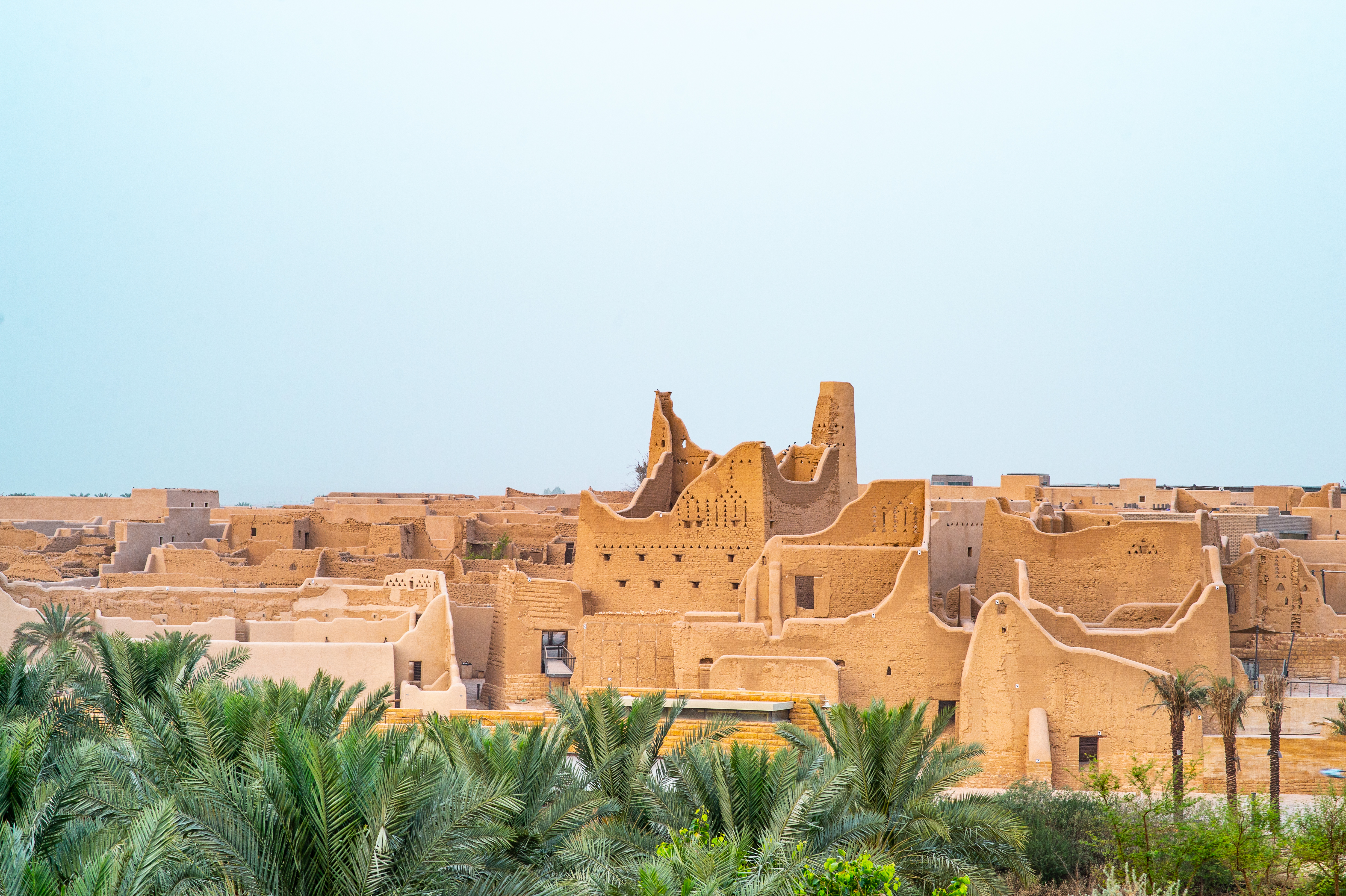
A view of Salwa palace in At-Turaif, a UNESCO site in Saudi Arabia and heart of the new Diriyah development
A vast development on the outskirts of Riyadh, Diriyah is being built around the foundations of the kingdom’s historic capital. Combining culture, leisure, education, and plenty of terraces where you can sip (alcohol-free) cocktails with a view, it could just be the most important of Saudi Arabia’s gigaprojects, reflects Editor-in-Chief Darius Sanai after a recent visit
Along a huge, sunny valley, boutique super luxury resorts sprout like oases on hillside crests. In the middle of the valley is a 27 hole golf course, designed by Greg Norman, with the practice fairway nestled in its own private valley. Resorts have dramatic sunset views (or sunrise if you are so inclined), there is a riding stables, polo field, hiking, biking and riding trails. In between the resorts is a scattering of high end super luxury homes, nestled in their own grounds.
Follow LUX on Instagram: @luxthemagazine
You probably wouldn’t guess that this scene was in Riyadh, capital of Saudi Arabia (or technically just outside), And in reality it isn’t quite like that yet, but it will be very soon. I visited recently and saw the luxury resorts, to be operated by Aman, Faena, Oberoi and other luxury hotel brands, topping out. Plantations were being planted, roads built, and the golf clubhouse was so complete that you could hit balls down the practice fairway in the presence of a pro, appropriately sourced from Scotland. Although all around, the rest of the scheme is very much a work in progress.
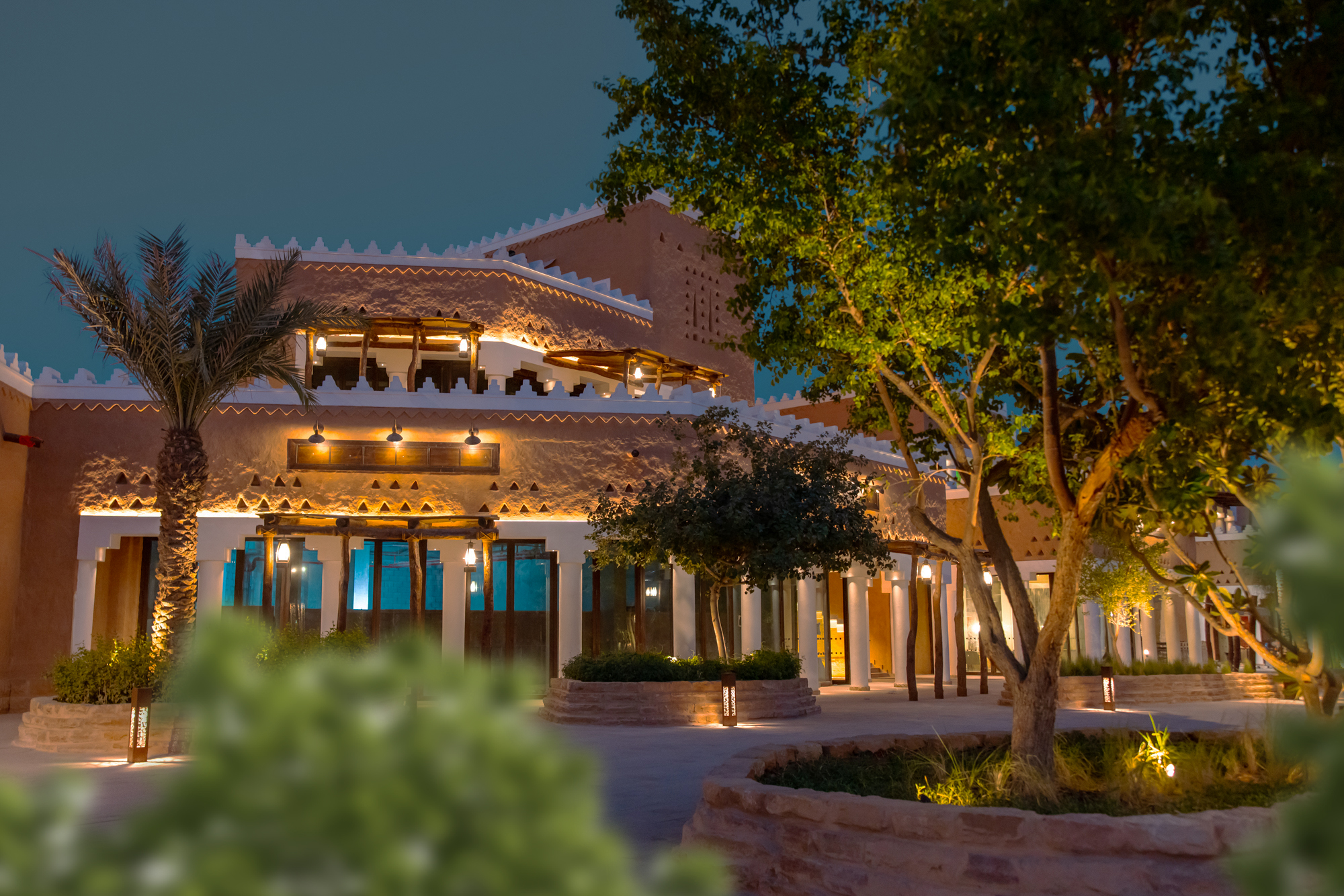
The Bujairi Terrace in Diriyah. Unlike the city of Riyadh, the new development features organic architecture and colours
Wadi Safar, the “Bel Air of Arabia”, it’s just one part of the vast Diriyah development just outside Riyadh. You could even call it a small part, even though Wadi Safar is itself the size of Manhattan and roughly the same shape, a valley a few kilometres wide and a few kilometres longer, enclosed by cliffs.
Diriyah itself is an entire new city, built out of the ruins of quite an old one, the former capital of the country that was raised to the ground by an Ottoman invasion. Not that much remains of old Diriyah, but what there is has been lovingly restored and reconstructed and around it a cultural city has been and is being created.
It’s the biggest project of its type in the world, and probably in the history of the world – perhaps Romulus and Remus building Rome at the bidding of the she-wolf might have matched it.
The official statistics provided to media say that this government-driven plan will create over 180,000 jobs, include nearly 40 luxury hotels, including The Ritz-Carlton, Baccarat, Armani, Raffles, Faena, and Chedi, 18,000 residences, including 300 branded residences, and 566,000 sqm of lifestyle retail and F&B offerings, among much else. (As such, it will also likely double the world’s annual sales of “nosecco” and ingredients for zero-alcohol cocktails, as all those F&B offerings and luxury hotels are still alcohol-free, Saudi being a “dry” country in more ways than one.)
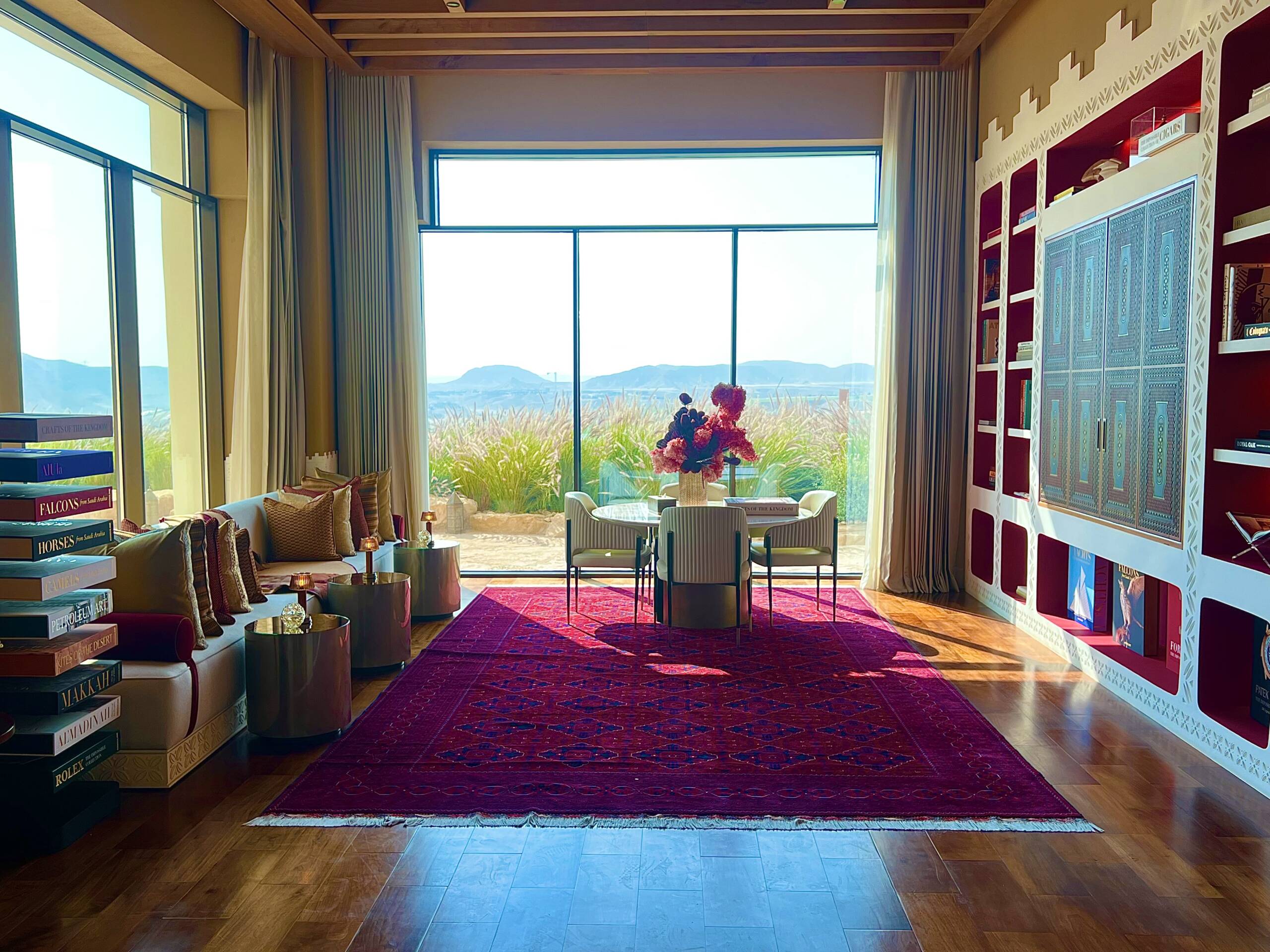
Wadi Safar, being built now, is one of the world’s most ambitious luxury residential developments, with a 27-hole golf course and riding stables at its heart (photograph by the author)
We in the media have been hearing about the Diriyah development for years; since the place nothing but cliffs, desert scrub, and a few historical ruins – so it was fascinating to finally visit and see some of the projections in the original plan actually spring to life.
Diriyah itself is in a strategic location, on a series of cliffs outside what is now the sprawling and rather featureless modern city of Riyadh. Unlike the capital city, Diryah has, in places, relief, cliffsides and views. The developers have been sure to highlight and create features aplenty in Diriyah.
Read more: Rachel Verghis interviews Sam Falls
You can walk along a cliff top, lined with restaurants and cafés, across a walkway to the ancient palace (part restored) and look at an artful reconstruction of the family tree of Al-Saud family, while weaving your way through the old and restored buildings and surrounding courtyards and walkways. You see history in a way you never could before, here. Bujairi Terrace, where the restaurants and cafes reside, is actually a place you could imagine chilling out on a date, 0% Margaritas in hand.
Elsewhere you find the Futures Museum, which opened with a spectacular show by the brilliant digital artist Refik Anadol.
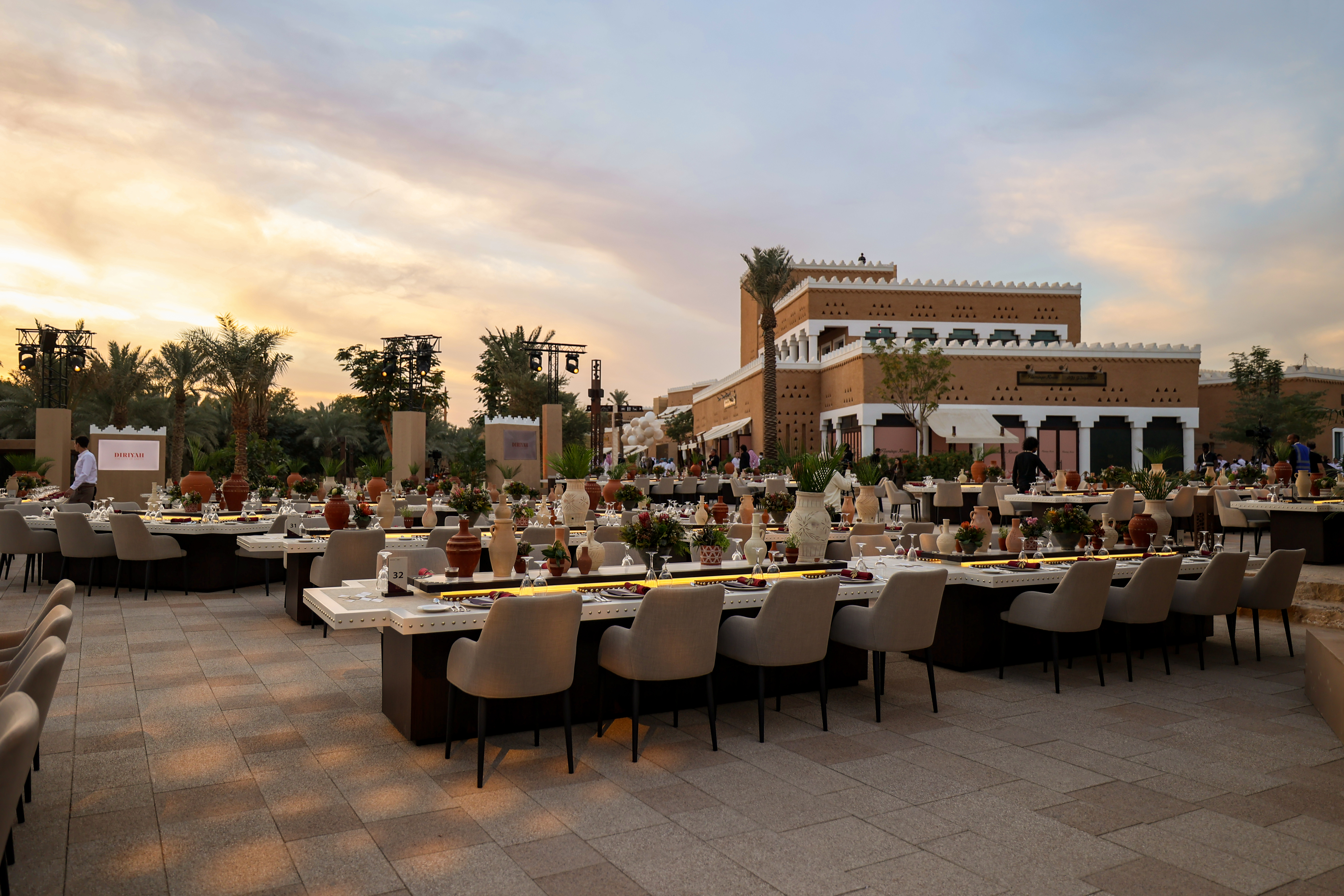
The Bujairi Terrace offers high-class dining and views
I do wonder why they don’t make more of art as a conveying and legitimising force in what is after all a new cultural city, but was told the designated arts district of JAX is in a different part of Riyadh – although art in real life, and its collectors, flows seamlessly with culture and cannot be confined; while luxury retail is about people shopping for brands, art is about endorsement by individuals, which can be immensely valuable for soft-power branding in a place like Diriyah.
Indeed, is notable and admirable that unlike neighbouring Abu Dhabi and Qatar and Dubai, Saudi Arabia has resisted the route of using international brands to create its cultural image. Where Abu Dhabi has the Louvre and Guggenheim, Doha has its Jean Nouvel and IM Pei designed museums and Dubai has Tadao Ando creating a museum of modern art, Diriyah is being remade as a place that highlights Saudi culture with links to the world.
I think this kind of thoughtful approach speaks of a confidence that, guided correctly, will serve the rapidly modernising Kingdom well. Perhaps they will also realise that their cultural narrative is best amplified by cultural leaders (full disclosure: LUX does this with our partnerships with UBS, Richard Mille, Louis Roederer, and our various art and cultural prizes for country partners).
Everywhere in Diriyah the buildings have a pleasing and warm terracotta colour and new buildings are constructed in architectural sympathy with ancient styles, including triangular cooling windows (even though they all obviously now have the fierce air-conditioning needed in this climate).
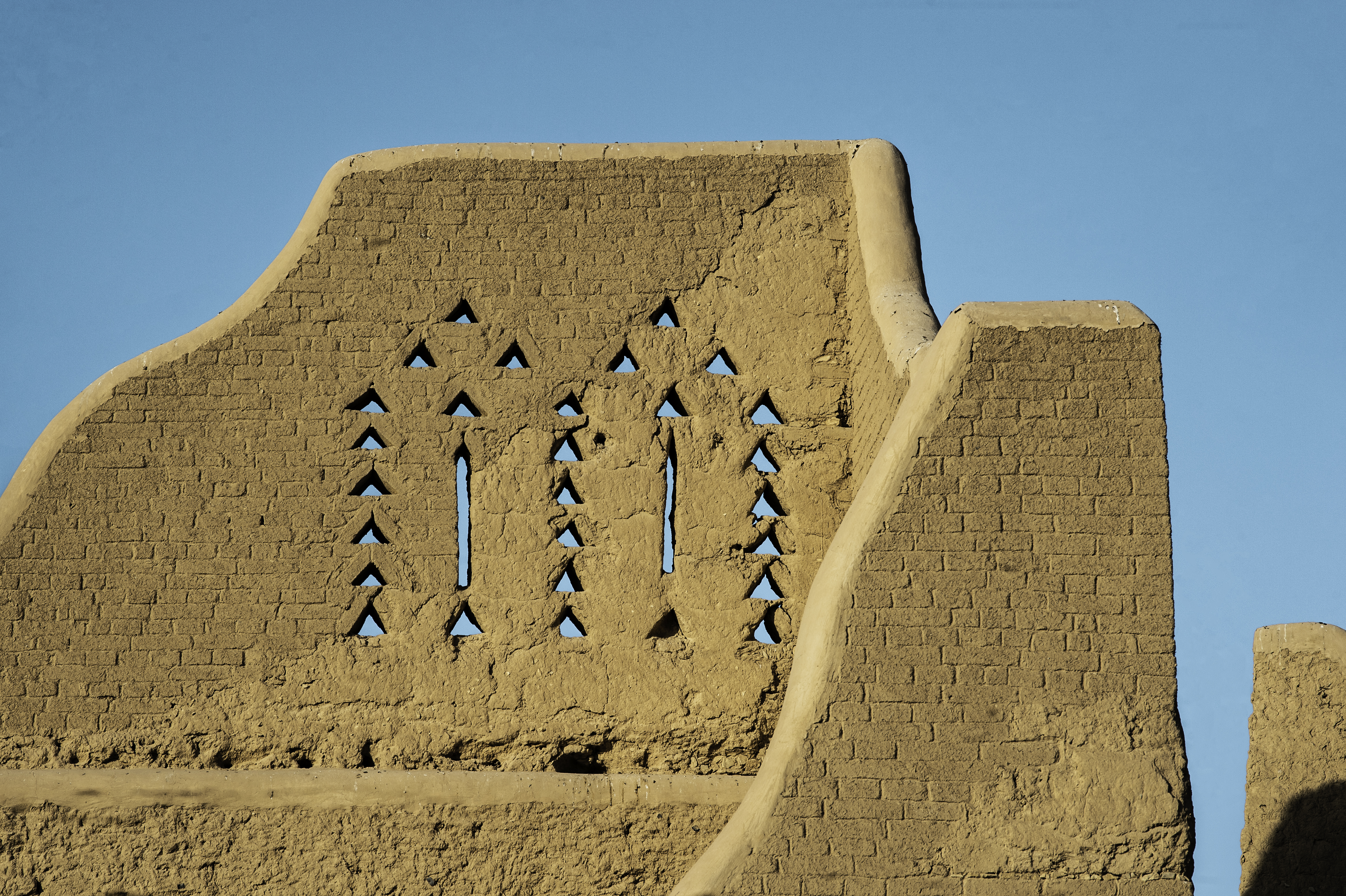
A close up of the ancient walls of At Turaif
A note about the climate: you may think, on hearing that a huge hyper luxury development and cultural city are being developed in Riyadh, that the climate may not favour living there. And if you are partial to northern climates, you may be right. But they said that about Singapore in the 1950s, and more recently about Dubai, Abu Dhabi and Doha, and that has not stopped a vast relocation of wealth to these places. Air conditioning, inside and out can work wonders (regardless of the sustainability concerns).
And there is something about the climate of Riyadh which is actually more attractive than that of Dubai and the Gulf states. Inland, far from the sea, and at an elevation of several hundred metres, it benefits from dry air and cooler nights, and it doesn’t feel like you are wading through hot mud because the humidity is low. Summers are extremely hot, but it’s more like Arizona than Dubai, summer and winter. Less steamy.
Read more: Inside the Monte-Carlo Bay Hotel & Resort
At Diriyah’s heart is the At-Turaif UNESCO World Heritage site; around it is being built cultural hubs like a new opera house, a university, a museum, as well as unimaginable amounts of retail and residential property. Some of it is already there, and you can certainly have the most pleasant experience that Riyadh offers amid the mud-brick architecture of At-Turaif, in outdoor cafes and restaurants (or indoors in the summer). Much of the Diriyah concept, however, still exists only as a sea of arid ground under a forest of cranes.
But things move fast here. The first luxury hotels open next year in Wadi Safar. You can play golf there now. Saudi Arabia is a country in a hurry. There is some justified scepticism about these gigaprojects: The Line, part of the futuristic Neom gigaproject elsewhere in the country, is being reevaluated. Diriyah is at a much more advanced stage, is properly tangible, and most importantly is at the edge of an existing metropolis of more than seven million people, with its international component growing fast. The people we met working on the Diriyah project have the zeal of a new generation determined to reshape their country’s future. Watch this space, and be prepared to be positively surprised.
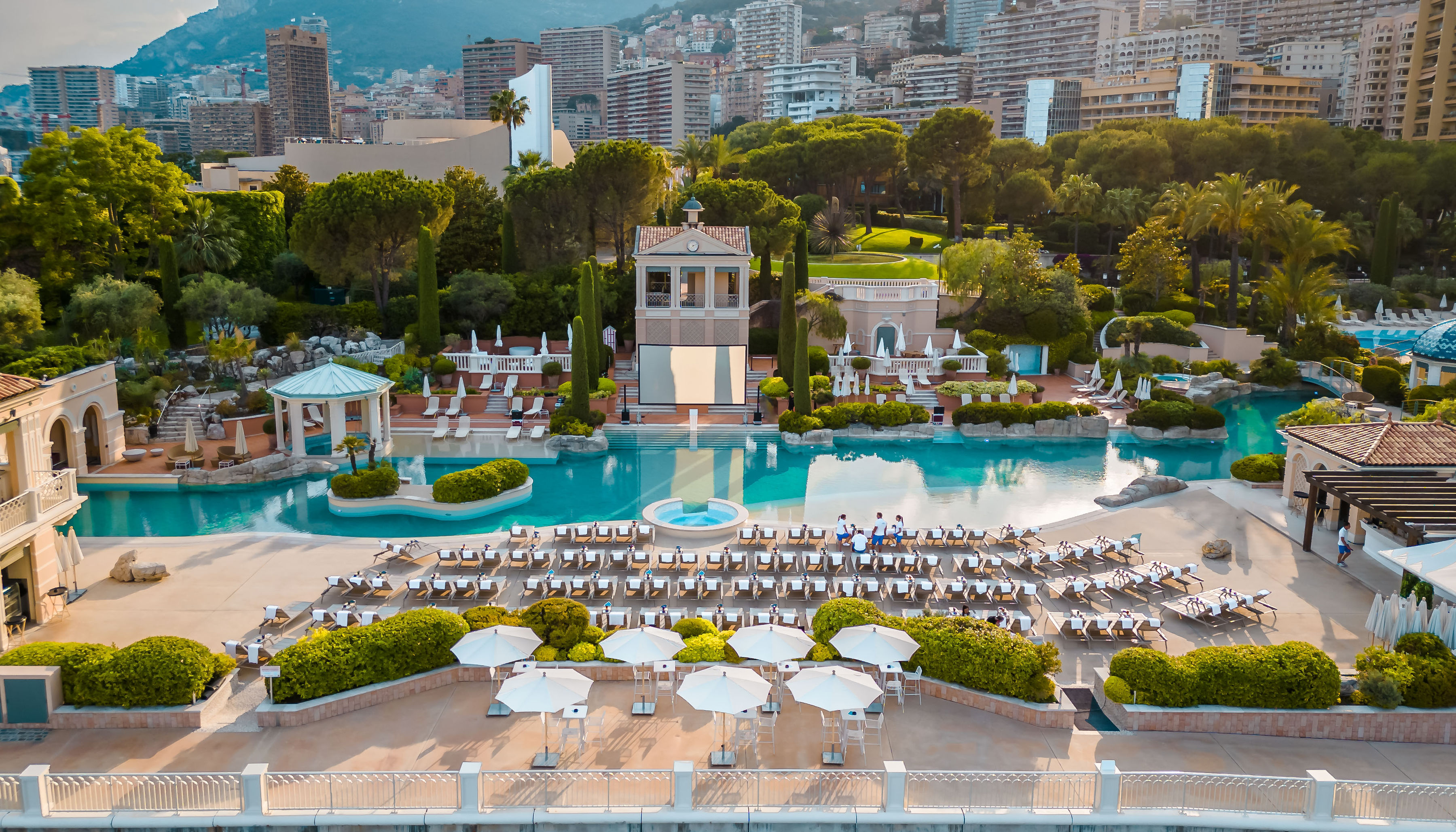
Monte-Carlo Bay Hotel & Resort, with its 10 acres of gardens
At Blue Bay Marcel Ravin in Monte Carlo, chef Ravin’s poetic Martinique-meets-Mediterranean cuisine has been rewarded with two Michelin stars – and transformed the Monte-Carlo Bay Hotel & Resort into one of the principality’s most exciting culinary destinations. When Ravin invited three-Michelin-starred French chef Anne-Sophie Pic to a special collaboration at his restaurant within a restaurant, the result was culinary magic
LUX: Marcel, how was your experience of the “four-hands” dinner, where you worked with chef Anne-Sophie Pic?
Follow LUX on Instagram: @luxthemagazine
Marcel Ravin: Wonderfully good! Chef Anne-Sophie Pic has everything you look for in a chef. The camaraderie, the sense of sharing and the respect for the teams made this dinner a moment suspended in time.
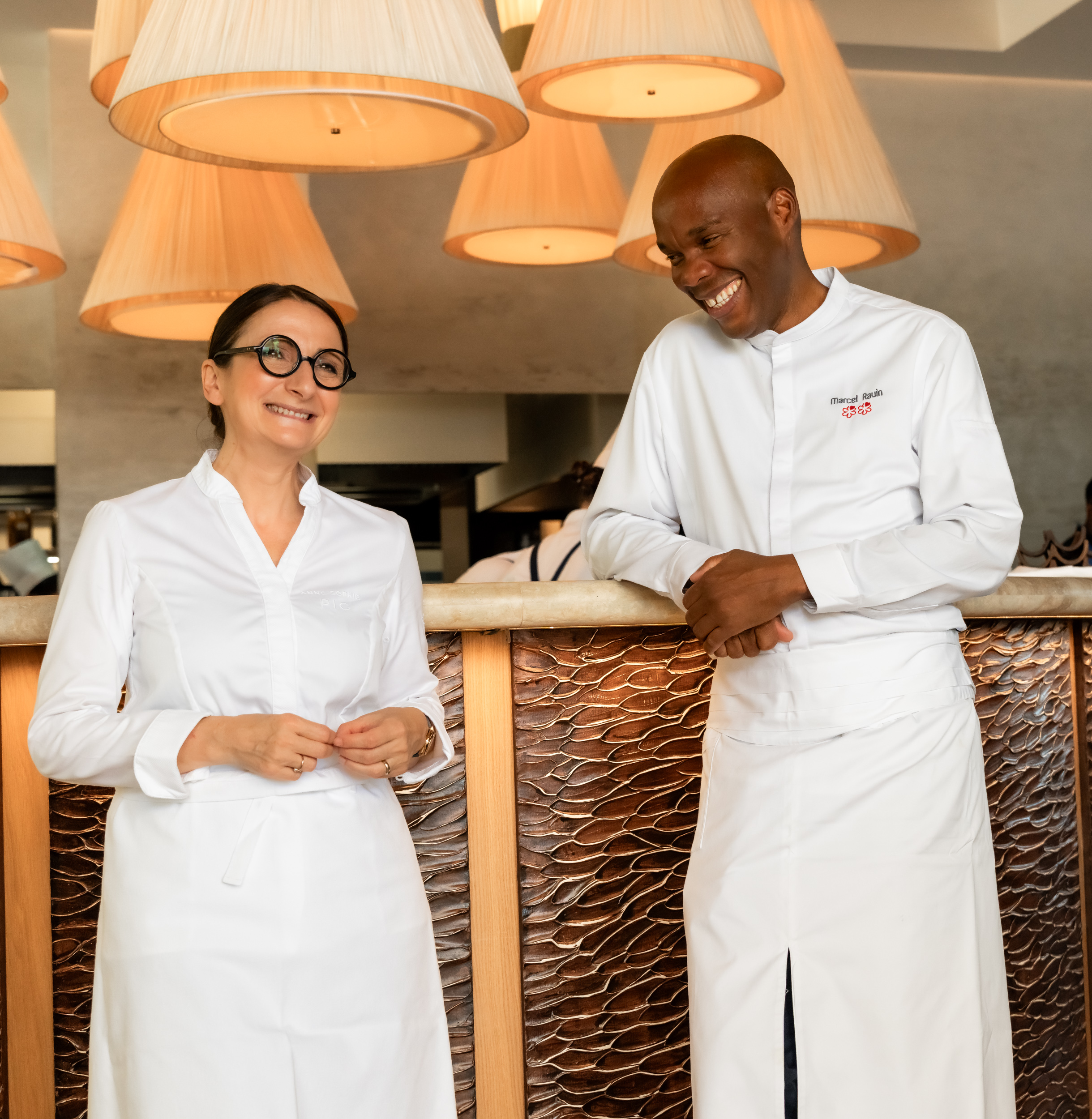
Chefs Anne-Sophie Pic and Marcel Ravin, creating a four-hands dinner at Blue Bay Marcel Ravin
LUX: What else would you love to do and achieve at Blue Bay, Marcel Ravin?
MR: I would like to finalise the concept of the restaurant within the restaurant, La Table de Marcel. This is a place of expression with just eight seats, where we will offer an exceptional gastronomic experience to privileged guests, combining culinary art and culture. The goal: to make it a Michelin-starred restaurant itself.
LUX: Have your ideas for your cuisine changed over the years?
MR: It is important for anyone with a passion to maximise the possibilities of the knowledge they have acquired. For me, it’s an eternal renewal based on research at the cutting edge of creativity.
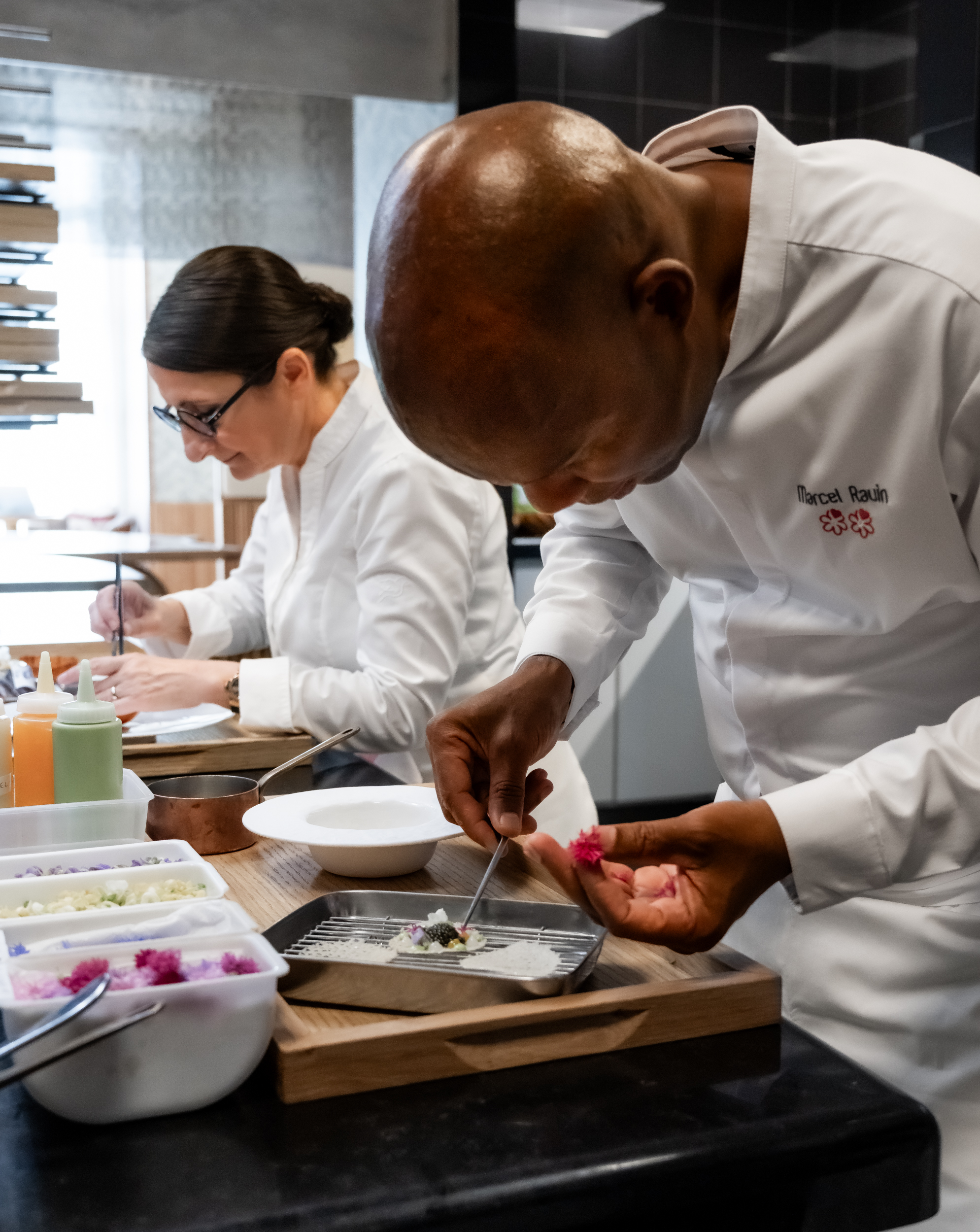
The two chefs at work together for the event, which was part of the Monte-Carlo Festival des Étoiles 2025
A Stay at the Bay
We all know that Monte Carlo is a glamorous destination—perhaps for a bit of showing off your Graff diamonds, drifting around in your Ferrari and being seen in the right places at the right times. But for beach and cuisine, it may not have been top of your list of considerations.
Read more: A conversation with artist-poet Arch Hades
Well, reconsider. Driven by a new generation living and staying there, and by investment from the principality, it is now becoming a prime destination for both.
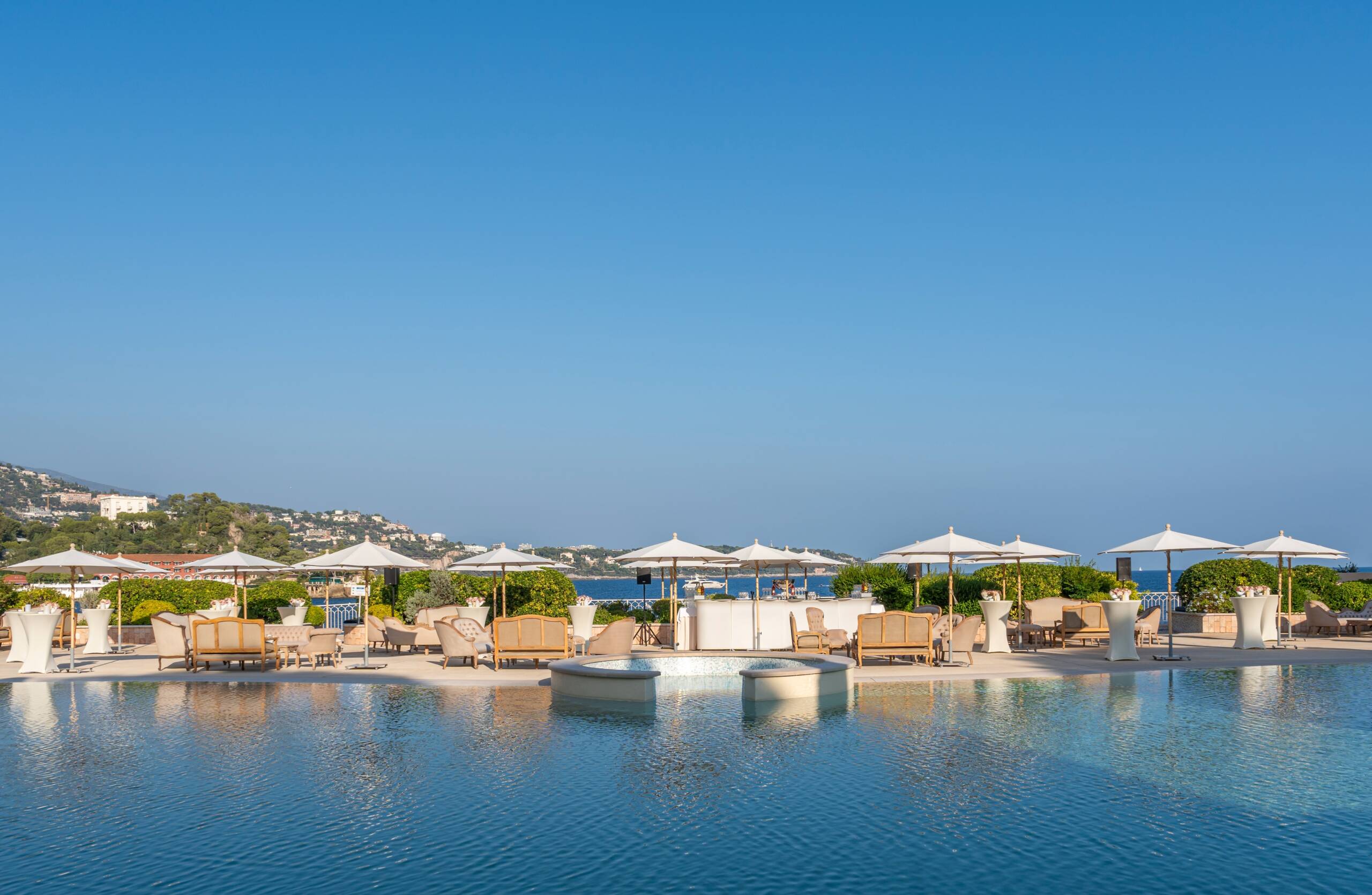
The hotel’s lagoon area looks out to sea, away from the crowds
Monaco now hosts frequent “four hands” dinners, where multi–Michelin-starred chefs collaborate to create spectacular evenings in the principality’s new array of luxury restaurants. Many of the dinners are led by the two-Michelin-starred chef Marcel Ravin, who runs the Blue Bay restaurant and oversees everything culinary at the Monte-Carlo Bay Hotel & Resort.
Whether you go for one of the special collaborative events or for dinner at Blue Bay, it is spectacular. The terrace features well-spaced tables looking out to sea with a view of the mountains behind. Ravin’s cuisine blends Creole and Mediterranean influences with creativity and panache. Colours and flavours are natural, vibrant and entirely original, as in signature dishes such as Oeuf Monte-Carlo, with truffle, cassava and passion fruit.
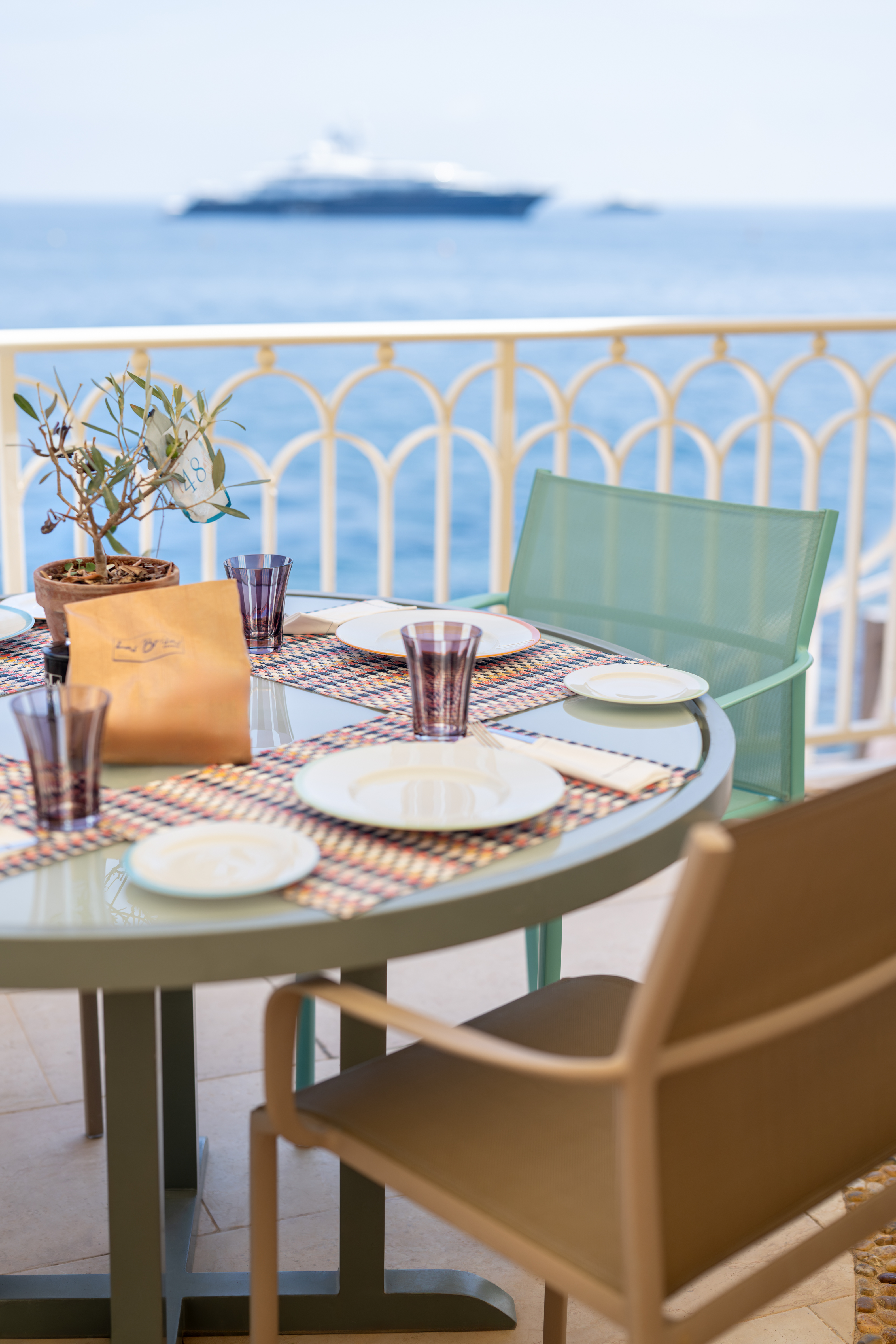
A lunch table with a view at Las Brisas, a summer restaurant at the Monte-Carlo Bay Hotel & Resort
The Monte-Carlo Bay is a resort within a resort: by day, stroll along the terrace underneath Blue Bay and you come across its huge, organically shaped pool, which wraps around a rock garden and is lined with white sand. All you need do is settle down on a lounger and choose a view of the pool in one direction or the sea in the other.
Read more: Head to Baku Art Weekend for a unique cultural celebration
Lunch, meanwhile, is just around the corner—at Las Brisas, perhaps the best setting in Monte Carlo. It sits right by the water’s edge with views of the Mediterranean and the mountains. Sip some Perrier-Jouët Blanc de Blancs champagne—an excellent choice, with lightness and florality—and enjoy simple, beautifully crafted Mediterranean cuisine with a fitting blue vibe, given you are surrounded by sea on three sides. Make sure you get a table right by the water.
On our final night, we dined at Jondal à La Vigie, a takeover of a spot inside a pine forest on the next peninsula over, on the other side of the bay. It took 10 minutes to walk there, but if it’s too hot, it’s just a two-minute car transfer. This cuisine, curated by the famous Ibiza spot, is different again, blending Spanish and trans-Mediterranean influences. We strongly recommend pairing the food with the excellent white Burgundy available by the glass. The vibe is super relaxed, without the drumming music you get in so many Monaco places.
And the beach? There’s the beach club exactly between the two, plus the massive resort pool at the Monte-Carlo Bay. You don’t need to venture into “town” at all for a gastro sunshine break next summer. And it’s all just 40 minutes from Nice International Airport.
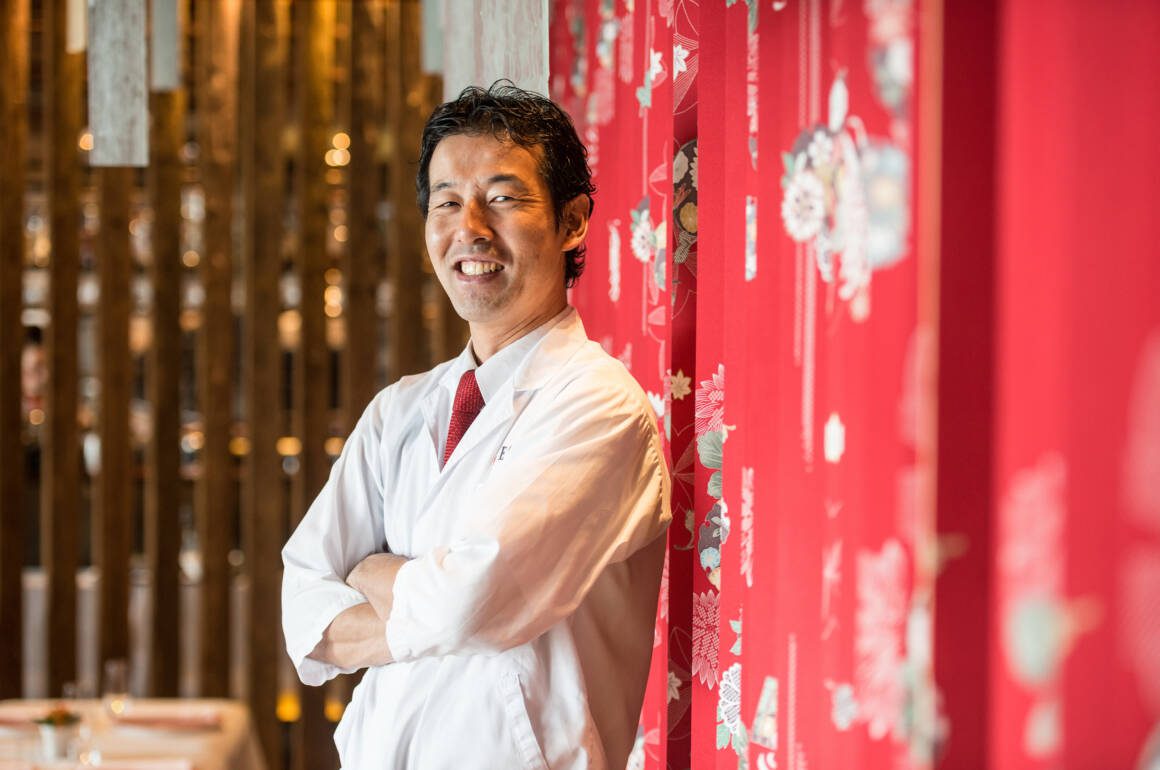
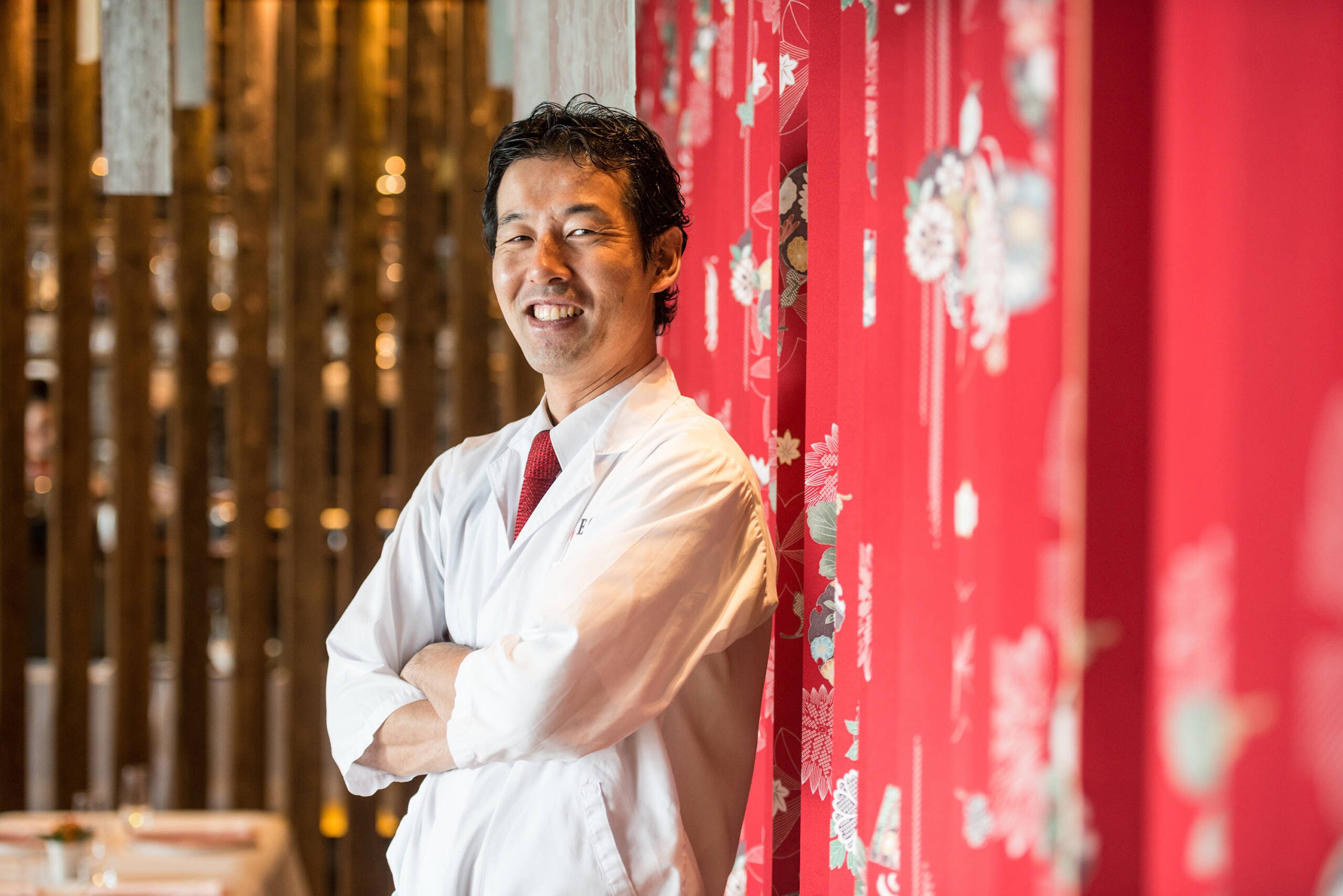
Tetsujiro Ogata at Megu, the head chef of the top Asian restaurant in Switzerland and home to the country’s largest sake collection
Haute cuisine in the high Alps: anyone passing through Gstaad this summer had the choice of not one but two culinary legends next to each other on one of the most scenic terraces in Europe, with a contemporary cool vibe unmatched anywhere else in the mountains
Follow LUX on Instagram: @luxthemagazine
The crispy green asparagus crumbed with kaki no tane and lemon. That’s what lingers in the memory from Megu. And that’s despite an array of superstar dishes that came afterwards, each at the pinnacle of the culinary experience.
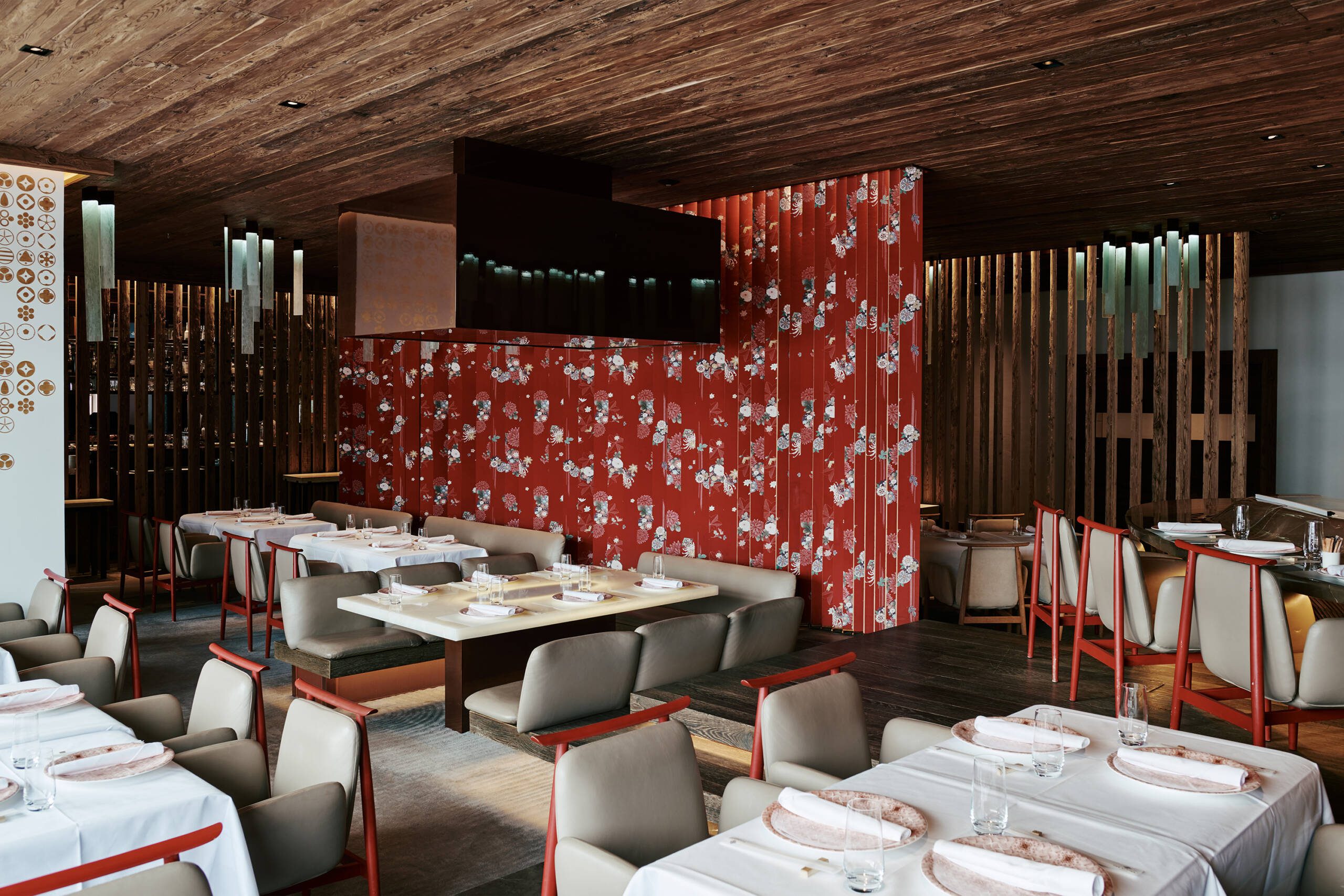
‘Many Japanese restaurants in Europe have the quality of cuisine but not the vibe; Megu has both’
But the asparagus… First, there was the asparagus itself, which tasted as if it had been lovingly hand-reared in one of the impossibly green meadows rising up the mountainsides all around. It tasted of chlorophyll and crunch, the essence of what the colour green should taste of. Then the crunchy crumbs surrounding it, nutty, dry, peppery, toasty, and with a hint of tartness. A dish for all times.
We were sitting outside on the terrace at Megu, Bossa Nova singer warbling away in the background, the green and blue mountain dusk turning to night as smells of the meadows rose up all around.
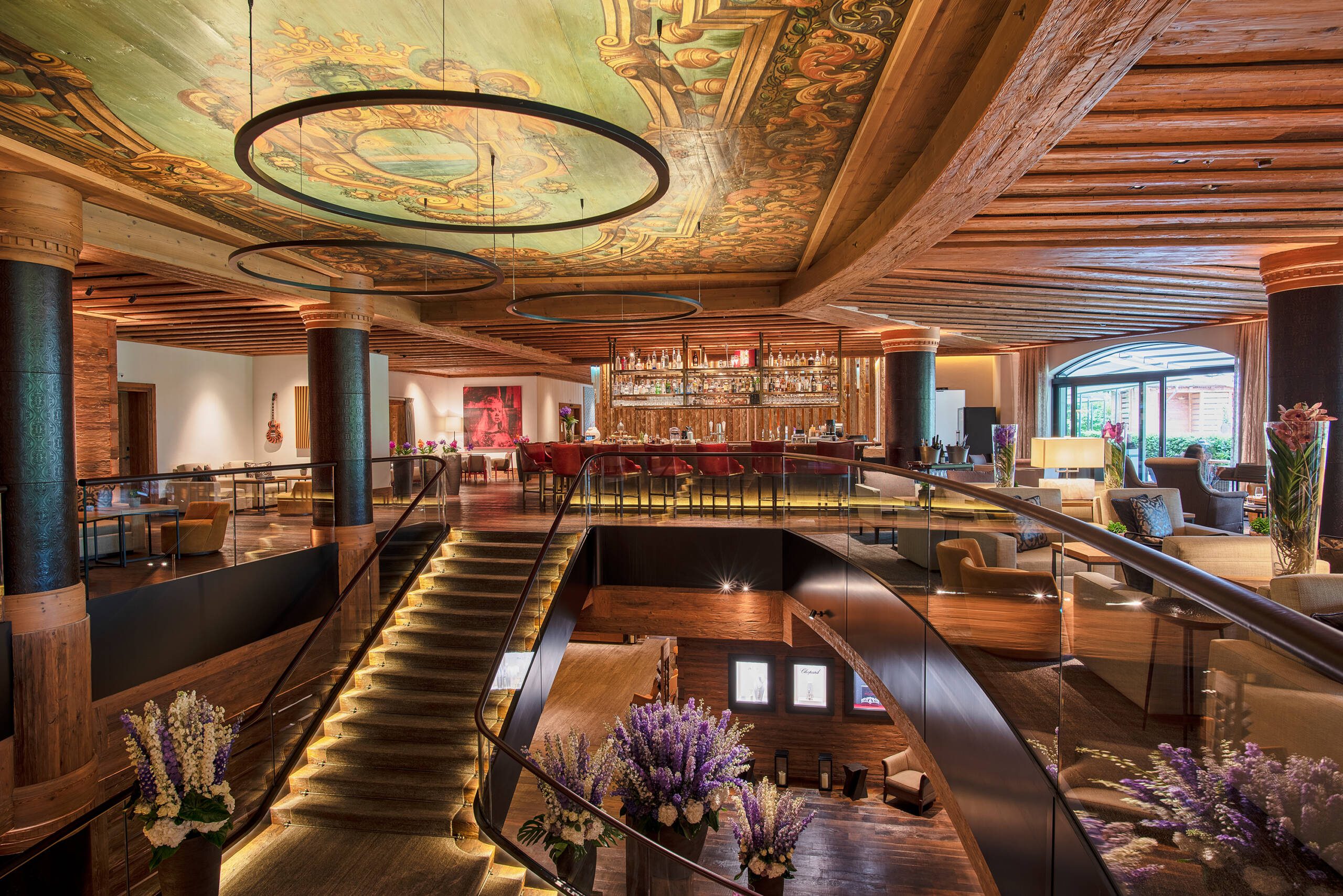
The impossibly elegant lobby of The Alpina Gstaad
This is a chi-chi and boutique Japanese restaurant in the impossibly contemporary elegant Alpina Gstaad hotel above Gstaad, in Switzerland. The vibe is chilled, fun, and of the highest level.
Read more: Il Salviatino, Savoy Florence and Portrait Florence review
The menu continued with delicate, delicious maki and nigiri – with the scallop and seabass standouts – and climaxed with silver cod marinated in saikyo miso. A more delicate, lightly savoury, almost herbal alternative to its more common black cod sister, this was Japanese cuisine at its most refined and enchanting. Many Japanese restaurants in Europe have the quality of cuisine but not the vibe; Megu has both.
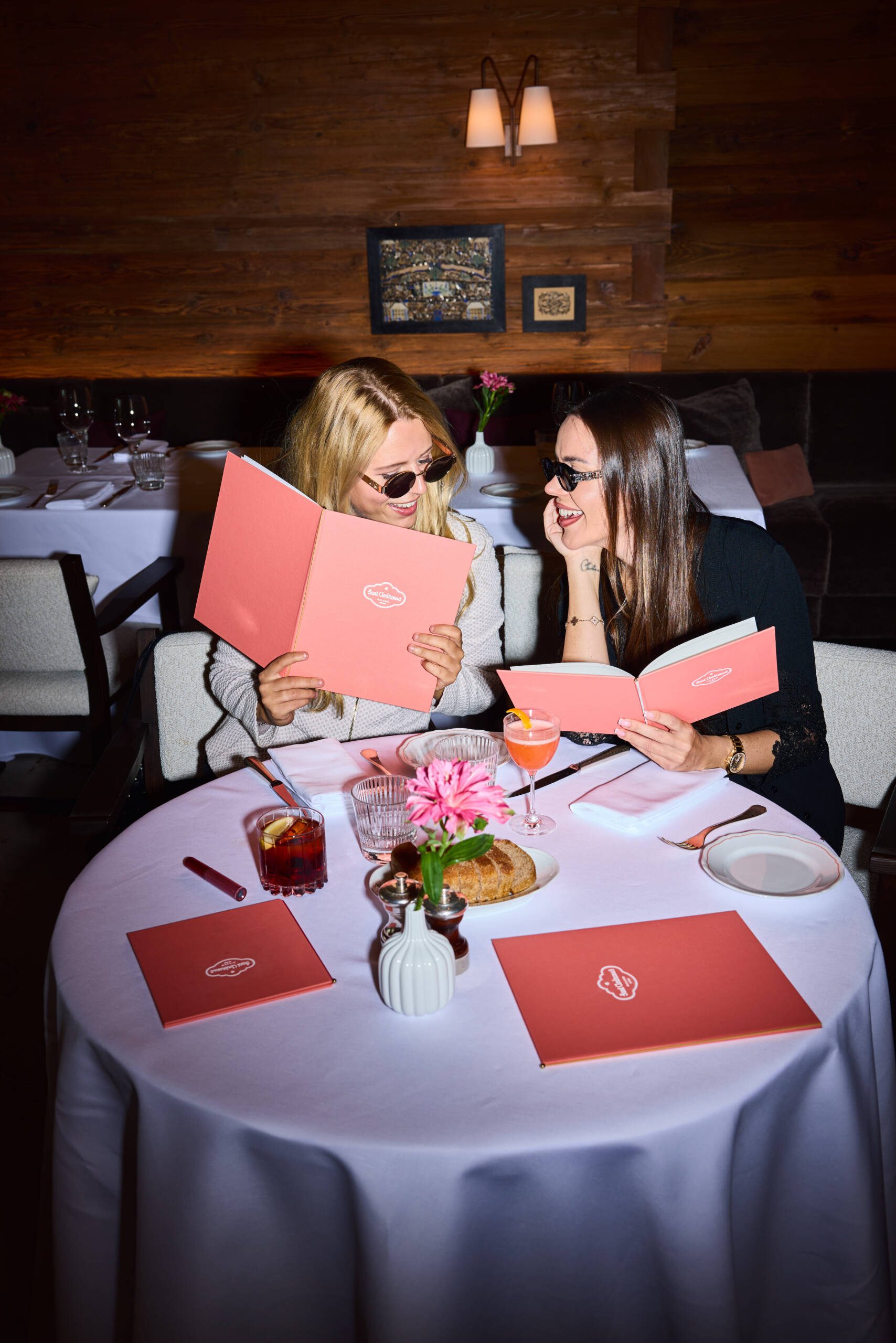
The Sant Ambroeus pop up restaurant at the Alpina Gstaad, offering the highest-level Milanese cuisine amongst the Alps
The Alpina Gstaad has always sought to redefine cuisine and the dining experience in the Alps since it opened just over a decade ago. On the next terrace to us at Megu was Sant Ambroeus, a pop up of the Milanese legend, which has its outposts already in New York, the Hamptons, Palm Beach and Aspen. Sant Ambroeus (Alps edition) was rocking. And within the space of around 50 metres on a magical terrace that seems to float above the Gstaad countryside, The Alpina created a kind of culinary heaven.
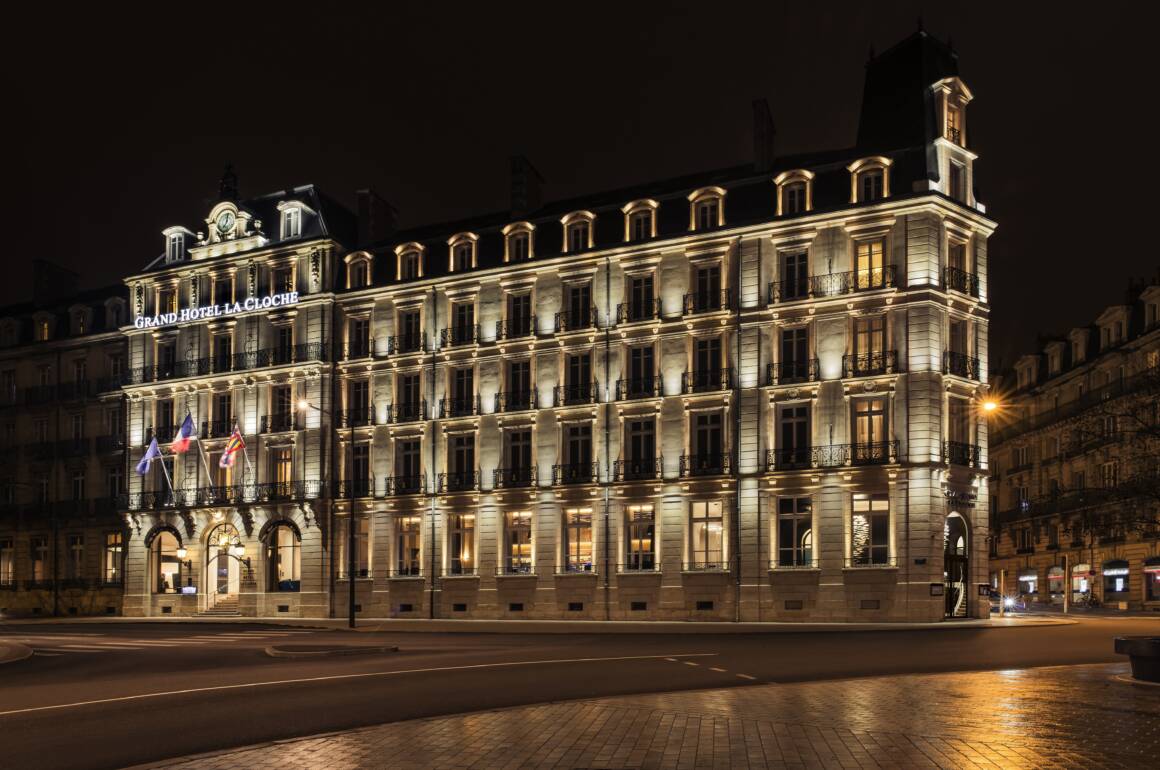
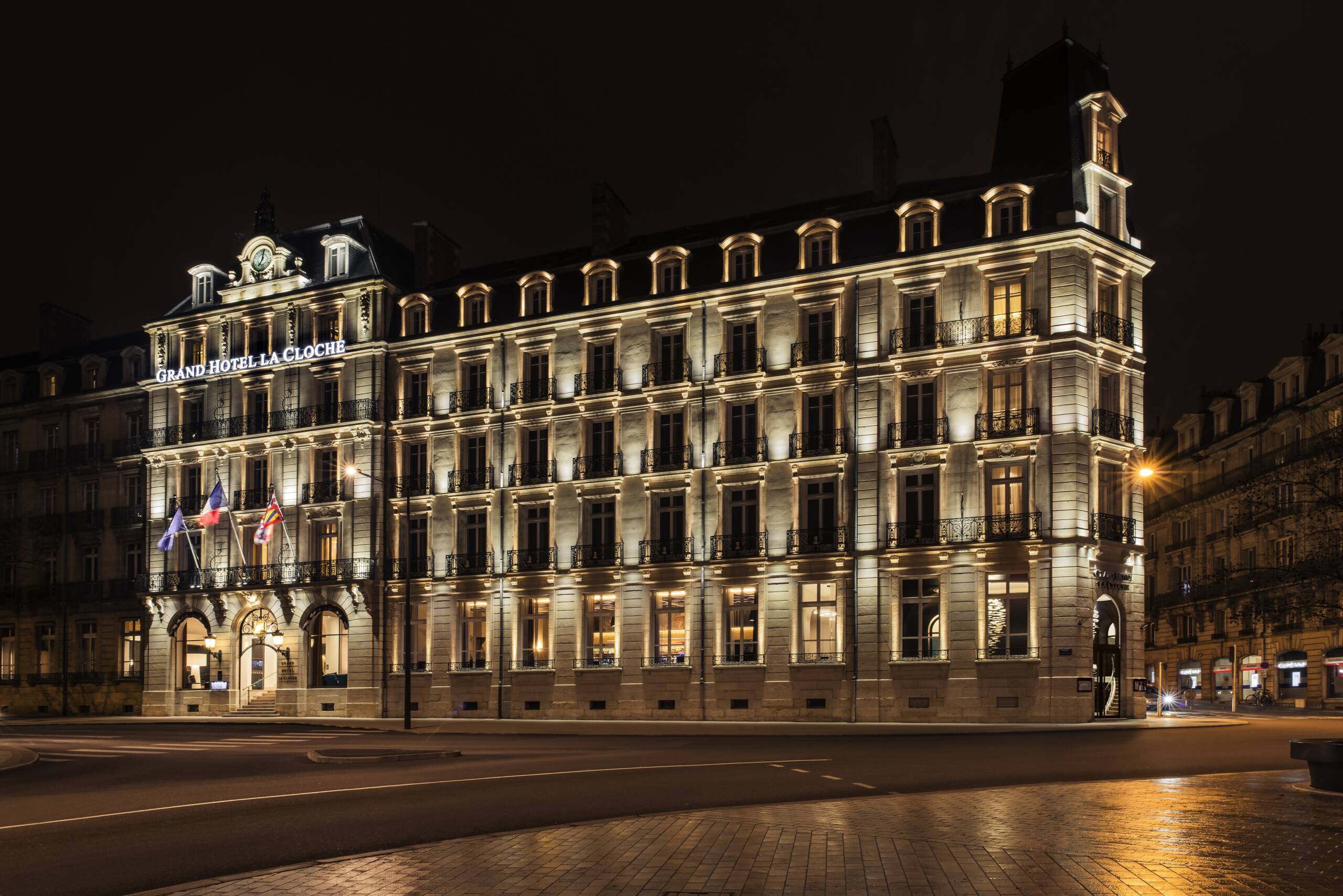
Grand Hotel La Cloche, considered the best hotel in Dijon, at night
Burgundy is at the top of the list for any discerning wine lover to visit, with its blend of history, scenery, rural charm, beautiful cities and some of the world’s greatest wines. Here we visit the best city hotel in Burgundy, and an authentic rural retreat amid the vines
Grand Hotel La Cloche Dijon review
It might seem strange to suggest that France, one of the most attractive destinations in the world for high-end tourism, is actually underrated. After all, who doesn’t rate Paris, the Cote d’Azur, or Mont Blanc. But France has an array of cities that for some reason have not quite reached the consciousness of the international luxury traveller.
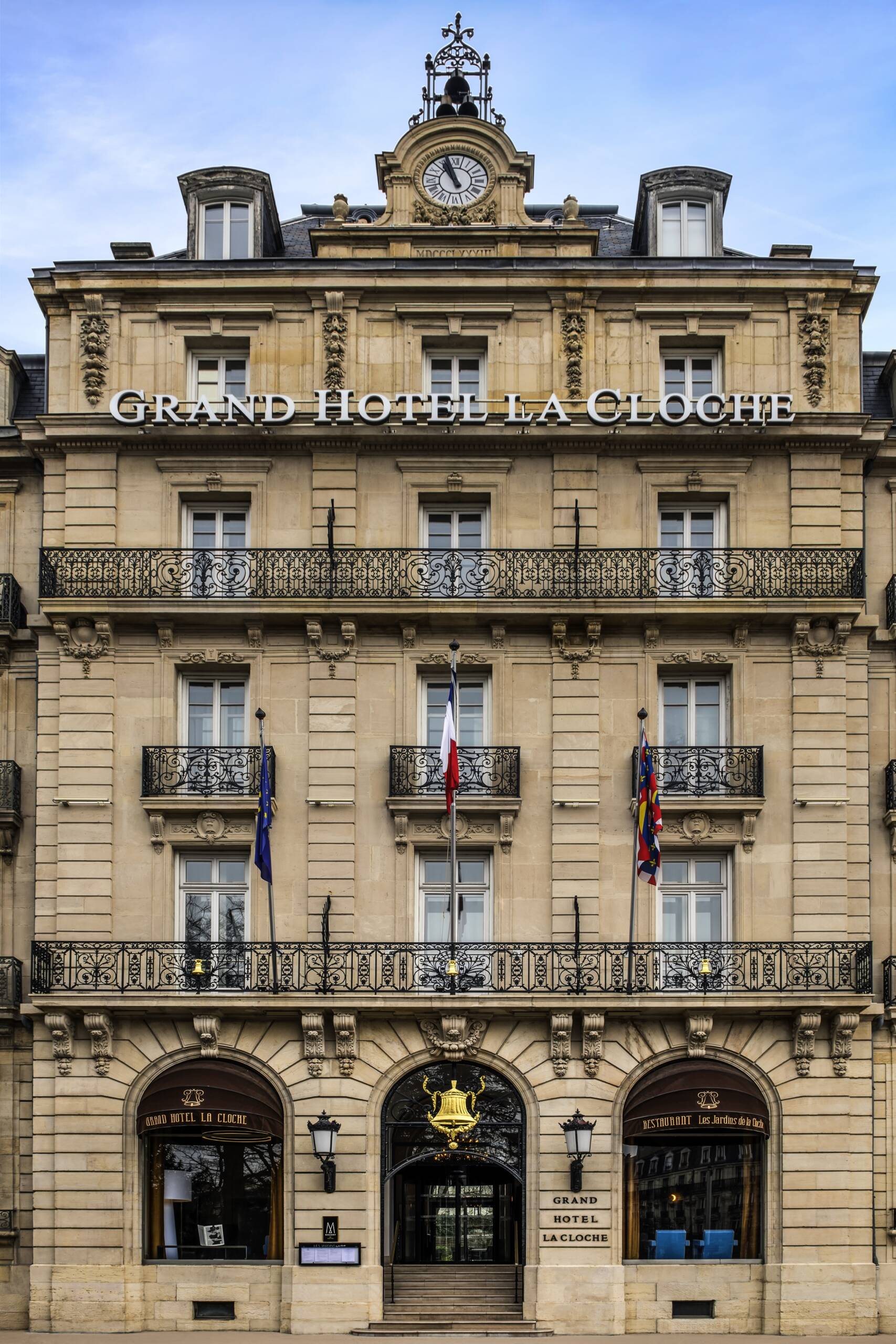
The facade of the Grand Hotel La Cloche by MGallery
Dijon is an interesting case in point. On the one hand, it is the historic capital of Burgundy, and Burgundy is the most fashionable wine for ultra-high-net-worth collectors. So, the surrounding vineyard areas are not short of very wealthy visitors year-round.
Read more: An interview with Bas Van Kranen
But, unlike Beaune, Burgundy’s other wine city, Dijon is just outside the edge of the vineyard area, rather than at the centre of it (unlike Beaune, Dijon does not have its own vineyards) and perhaps not enough of the luxury wine tourists actually make time to visit the capital.
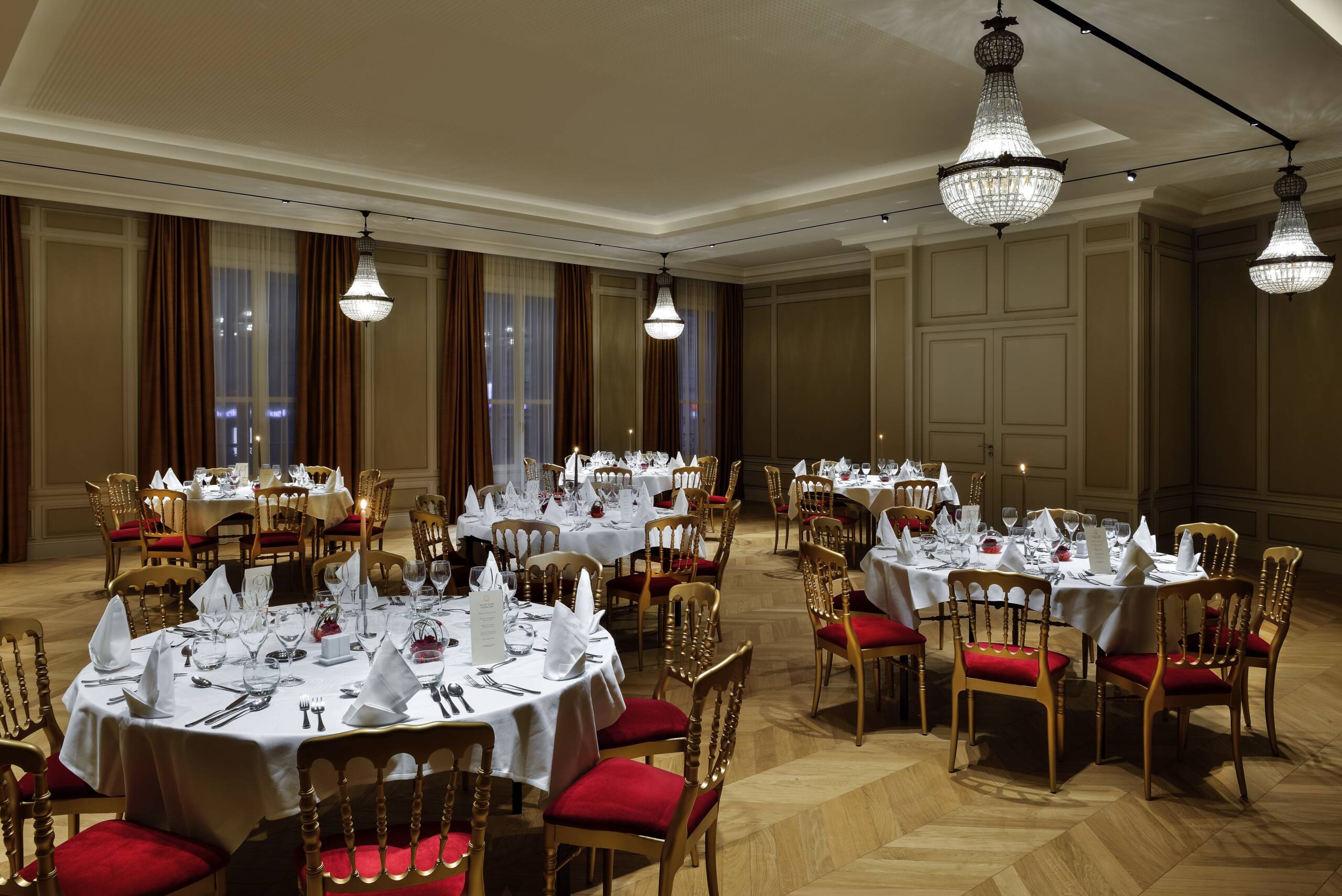
The dining salon in the style of Napoléon III cabaret
And that, we decided, as we strolled out of MGallery’s Grand Hotel La Cloche, was a great shame. The hotel is on the edge of Dijon’s old town, by a little park where families gather by the fountains and carousel; across the pedestrianised square, you walk under and arch and into an old town not just teeming with shops, churches and historical buildings, but a real sense of grandeur, as the home of the historical Dukes of Burgundy.
La Cloche is known to be the best hotel in town; from our room on the top floor, we looked out over the Cathedral and the city, over its rooftops to the long hillside of the Cites de Nuits, stretching along into the distance. Do a wine tour to Gevrey-Chambertin, come home to your room, and look back out to the vineyards you visited in the distance.
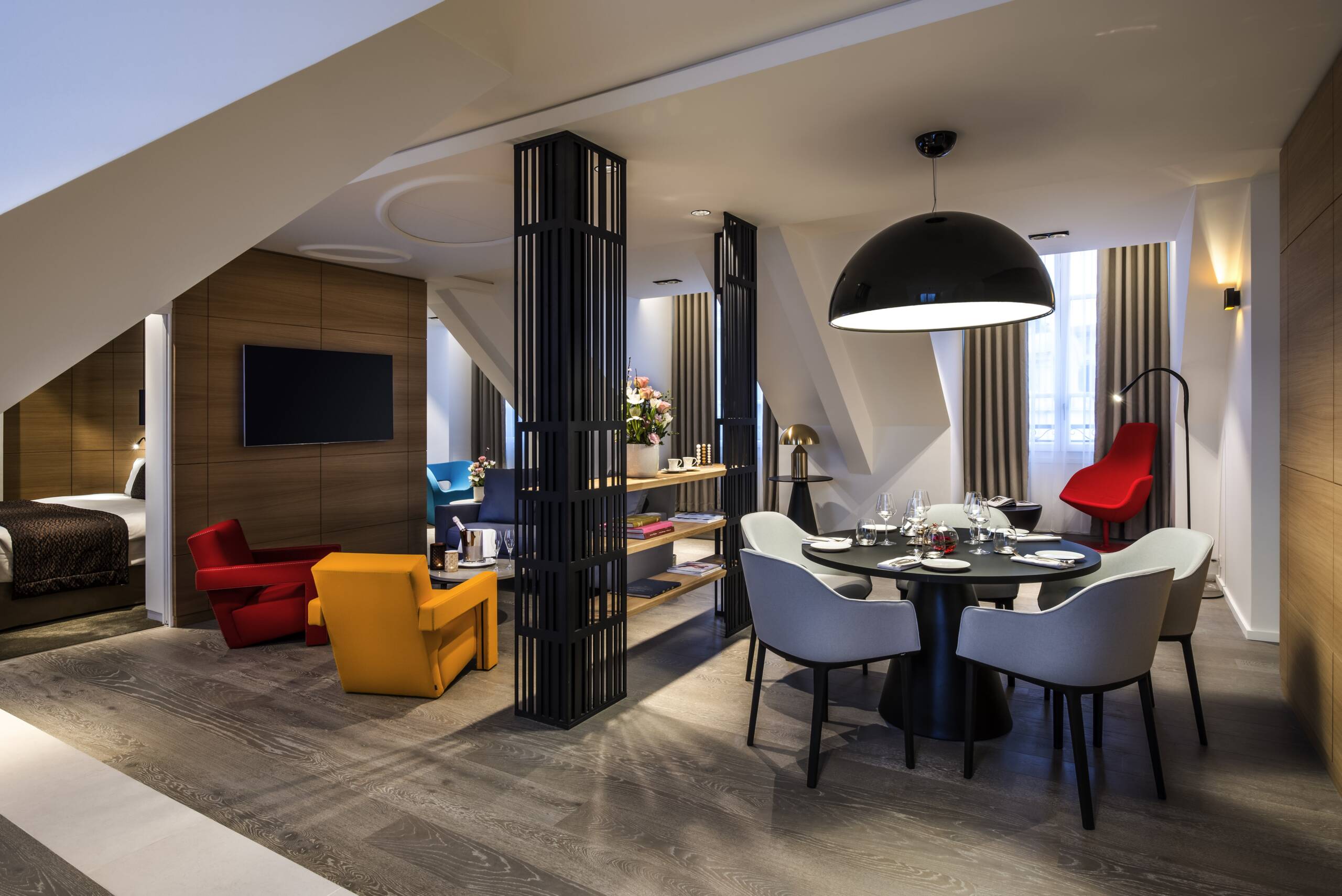
The Suite Montrachet in the Grand Hotel La Cloche Dijon
The room, in the rafters, was characterful and quiet, and the service at MGallery’s Grand Hotel La Cloche was of the top level; once when we found ourselves with no key, outside our door, one of the housekeepers we had gotten to know opened our door and then rushed downstairs for a duplicate key, without being asked.
Read more: Mont Cervin Palace and Beausite, Zermatt review
We had breakfast in the room each day because of the view, and everything was prepared to perfection: omelette with herbs, homemade pancakes and smoked salmon of far higher quality than served at most hotel breakfasts, along with fresh sourdough.
A gem of a hotel in a gem of a city.
Ermitage de Corton, Burgundy review
There is nothing, we find, as attractive as sipping a glass of one of the world’s greatest wines in plain sight of the vineyard where it was grown, and then waking up in your hotel the next day with a view of the same vineyard. Particularly if that vineyard is Corton Charlemagne, the celebrated white wine that is spectacularly situated near the top of the hill of Corton, a distinctively shaped mini-mountain in the middle of the Burgundy region.
Read more: Binith Shah is creating the ultimate duvet with UMŌ Paris
The vineyard itself is something of an outlier: unlike the other great white Burgundies which are found south of Beaune around Puligny Montrachet and Meursault, Corton is located in the heart of a region otherwise dominated by celebrated red wines.
You can ponder all of this, and more, from the terrace of the Ermitage de Corton, situated amid fields and vineyards just outside the village of the same name at the base of the hill.
The Ermitage has the feel of an authentic country inn as you walk in, a restaurant on the right and a bar area on the left, with chairs and tables outside, all looking at the horizon of hills.
Arriving after a long journey, we didn’t have any appetite but enjoyed a couple of glasses of excellent white burgundy – not Corton Charlemagne as that would have been a little excessive as a welcome drink – in the bar along with some local artisan-sourced cold cuts.
Read more: The morning after the night before at St Moritz’s Dracula Club with Heinz E. Hunkeler
Our room was as memorable as it was delightful, spread over a bedroom area, a living area down some steps, and a huge terrace with views across the fields, away from the vineyards into the heart of rural France. It was utterly peaceful.
As well as the comfort, the location is pretty much unbeatable for anyone touring Burgundy. You are in the heart of the countryside: an easy cycle along the side roads to anywhere you like in wine paradise villages like Chambolle-Musigny or Morey St-Denis.
A word of advice: Burgundy is not like some of the more tourist-focused wine regions in the world where you can just turn up at a good winery and enjoy tasting. You need to make the effort to make your appointment well beforehand and plan your itinerary accordingly, much more so with the most celebrated names which are unlikely to welcome you anyway unless you have insider contacts.
Whoever you visit, make sure you come back for a little dinner with a view of the Hill of Corton at the Ermitage.
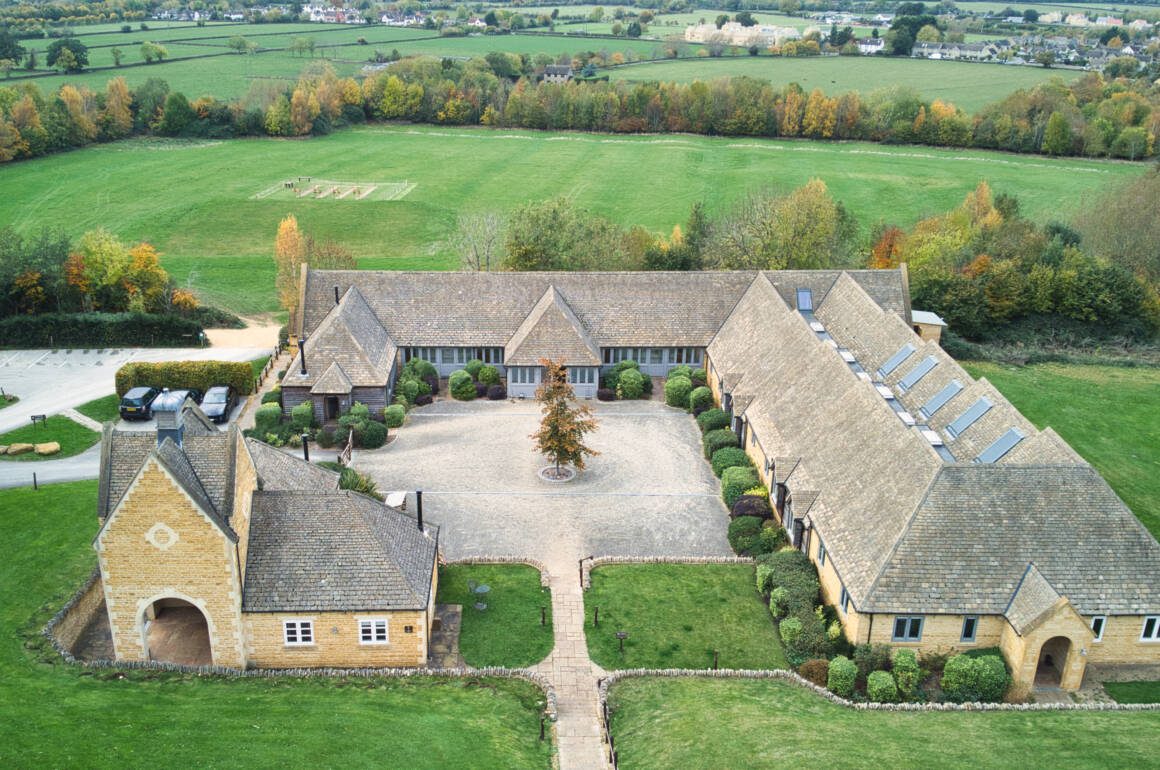
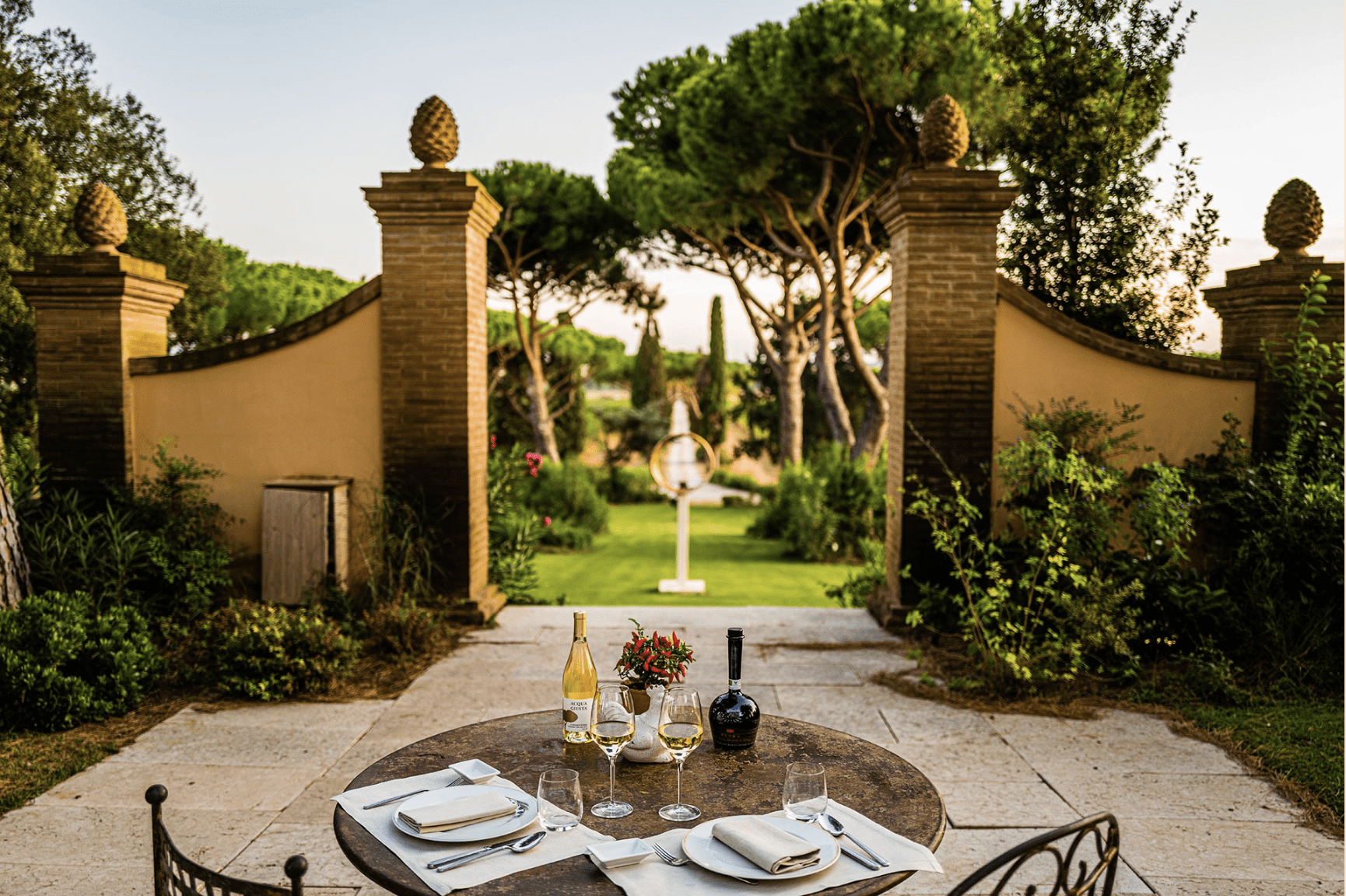
Dinner in the Garden of Eden… sorry, L’Andana, Tuscany
In summer Europe is at its best, and it’s time to visit destinations made justifiably famous over the centuries. Here, we visit a classical country estate hotel in Tuscany, L’Andana a wonderful and authentic luxury hotel in the Cotswolds, The Fish, and a traditional luxury hotel in Vienna, The Harmonie
L’Andana, Tuscany review
Tuscany is a place of justifiable legend among discerning and well-heeled travellers. But which Tuscany? Everyone knows Florence and the hill country around Sienna. But Tuscany is a big place, relatively speaking, and if you drive a couple of hours south, through beautiful scenery, you come across L’Andana.
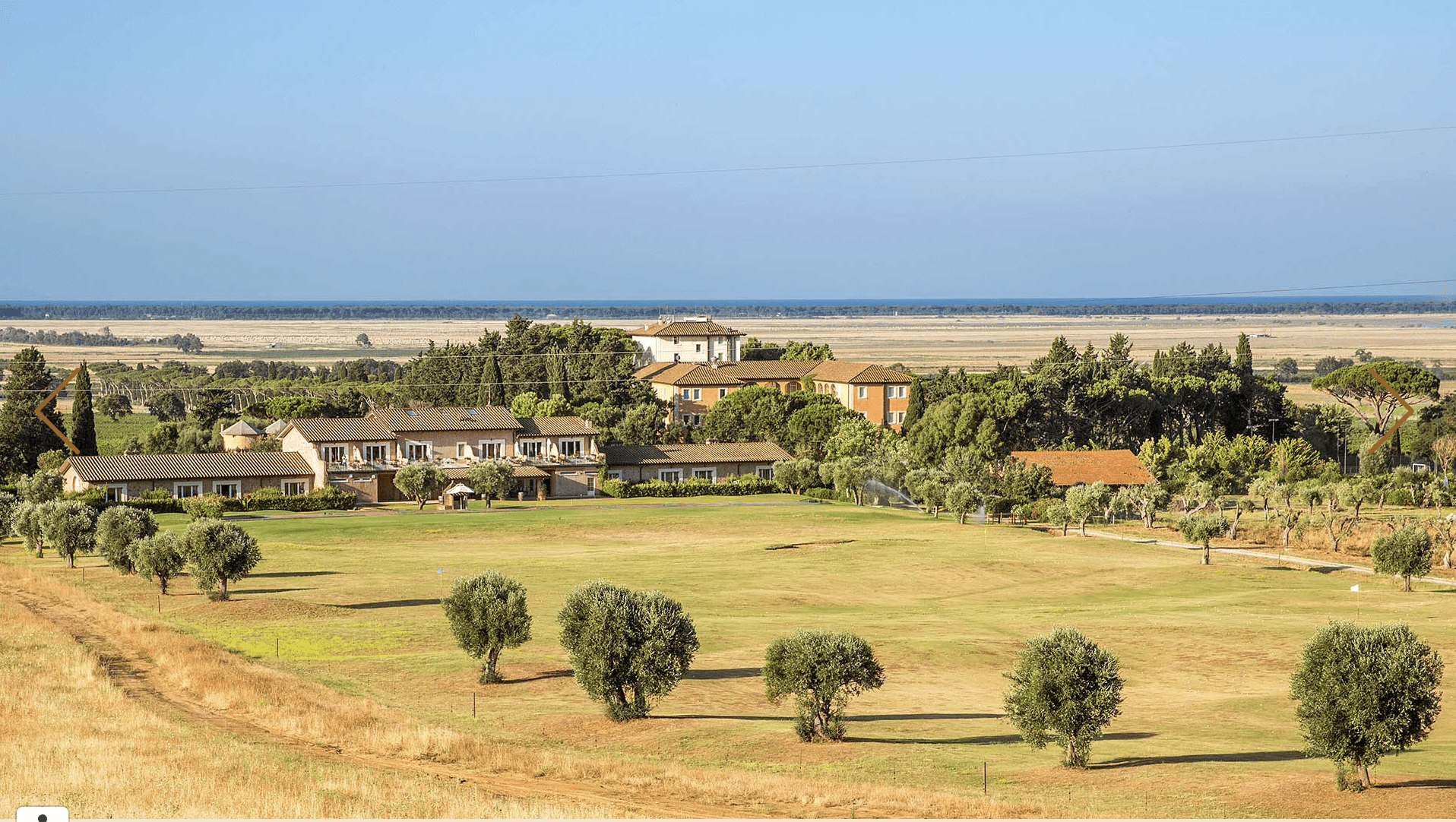
The Tuscan countryside view of L’Andana
Nestled amid olive groves underneath a forested hillside, it is just a couple of miles from the Mediterranean Sea but away from the bustle of the coast. You can see mountains, sea and sky and as you make your way up the long, cypress-lined drive.
Read more: Omega CEO Raynald Aeschlimann on the watch industry
L’Andana is a grand-manor-house-turned-hotel in the Tuscan tradition. This area feels more discreet, less busy than the countryside of central Tuscany. Walk through the hotel’s grand hall to the outdoor pool and it feels more as if you are in a private home – it never felt crowded, and the servers by the pool feel more like your personal butlers.
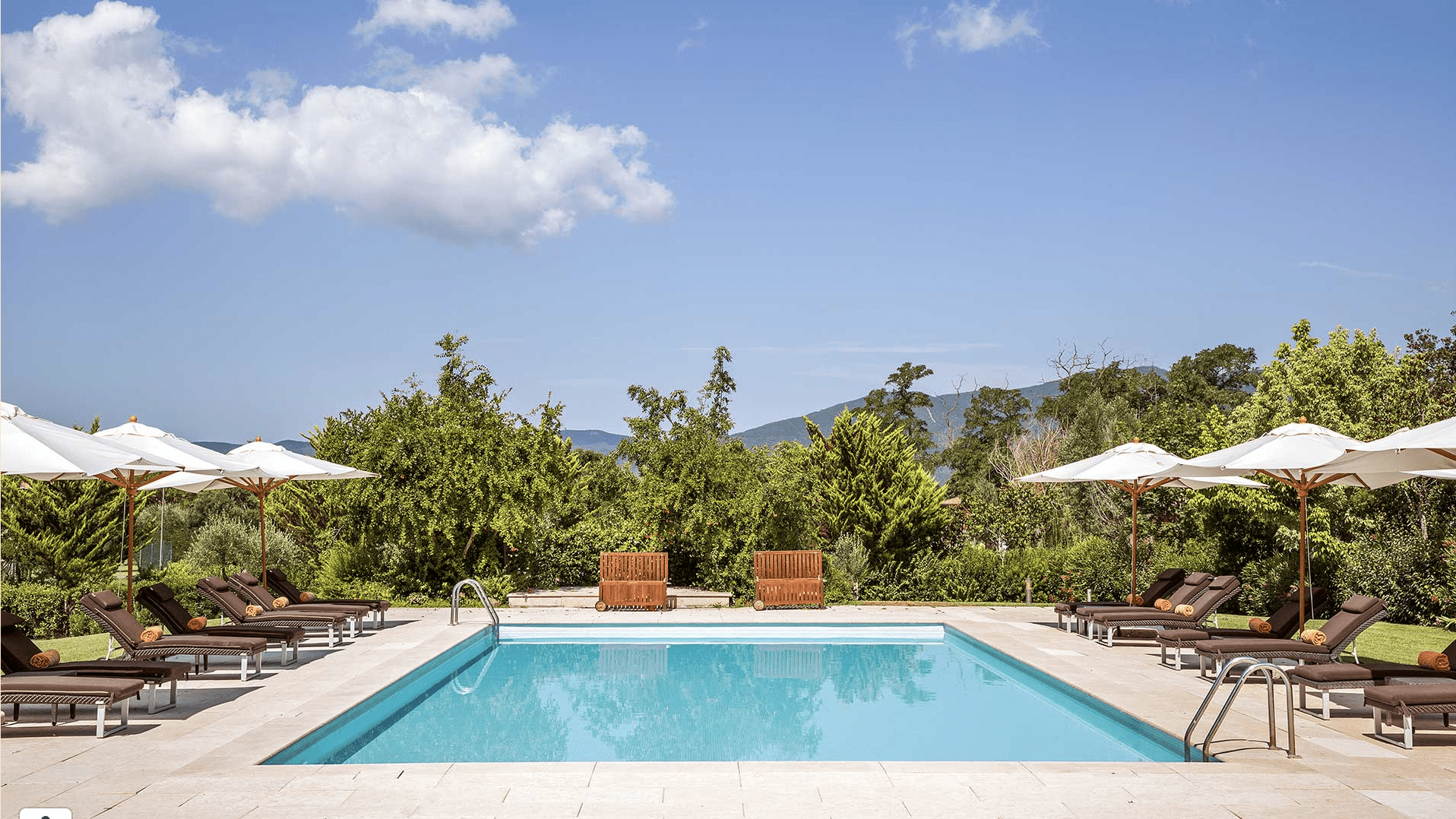
It feels as if you are in a private home as you sit by the outdoor pool at L’Andana
There is another pool across the gardens and near the forest with views leading down to the sea: this is officially the children’s pool but during our stay it was empty and delightful after teatime. It’s the kind of place you go to and then give up your plans to tour the surrounding area or go for dinner, just deciding to relax until sunset.
The cuisine at L’Andana is celebrated, and we enjoyed a highly memorable dinner in the gardens surrounded by fountains, flowers and trees; perhaps just as memorable was the breakfast in the same garden, where you see the birds, insects and bees in full glorious activity. You are are in the middle of nature. And unlike the rest of Tuscany, there isn’t a cluster of other hotels on the horizon or busy roads nearby – it’s just you.
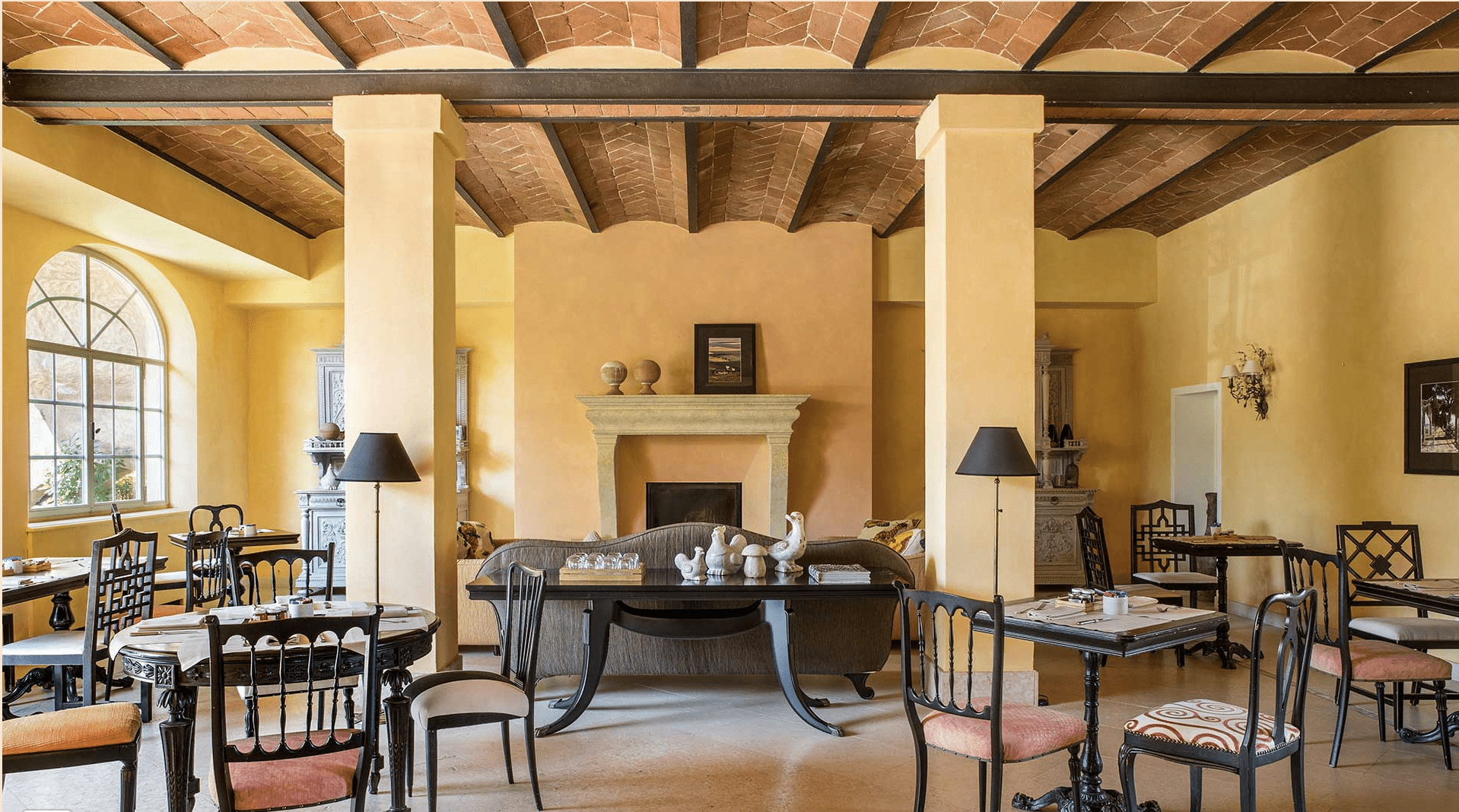
The comfortable reception area at L’Andana
Our room was suitably memorable, with a vaulted high ceiling and a view across to the hills in the forest. The public areas at L’Andana are so relaxing it seems only natural to have a Negroni at the piano bar. There are many activities including wine tasting, cooking classes and even golf – and the hotel will book you a place at one of the beach clubs in nearby Castiglione della Pescaia, where the beach is long and sandy and the water is shallow and clear.
Altogether, something of an undiscovered gem.
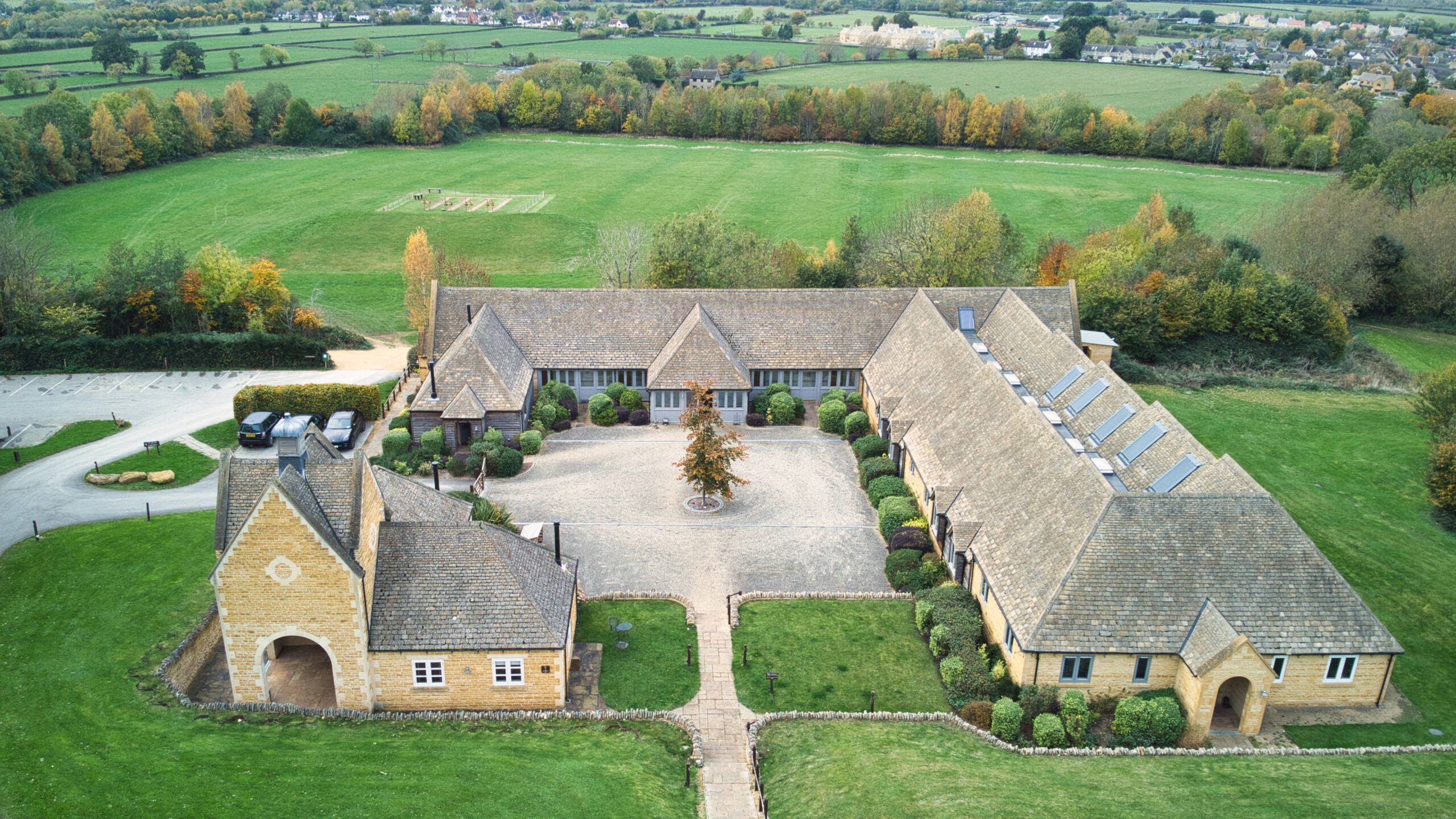
The Fish, a luxury hotel in the Cotswolds overlooking the Severn River valley
The Fish, Cotswolds review
There are many hotels which oversell themselves. You’ve been to them: wide angle images of rooms disappointingly small, images of grand façades that conveniently ignore the hideous 1990s office block jarring into the view in real life; country hotels that look grand but are poky with views of nothing much.
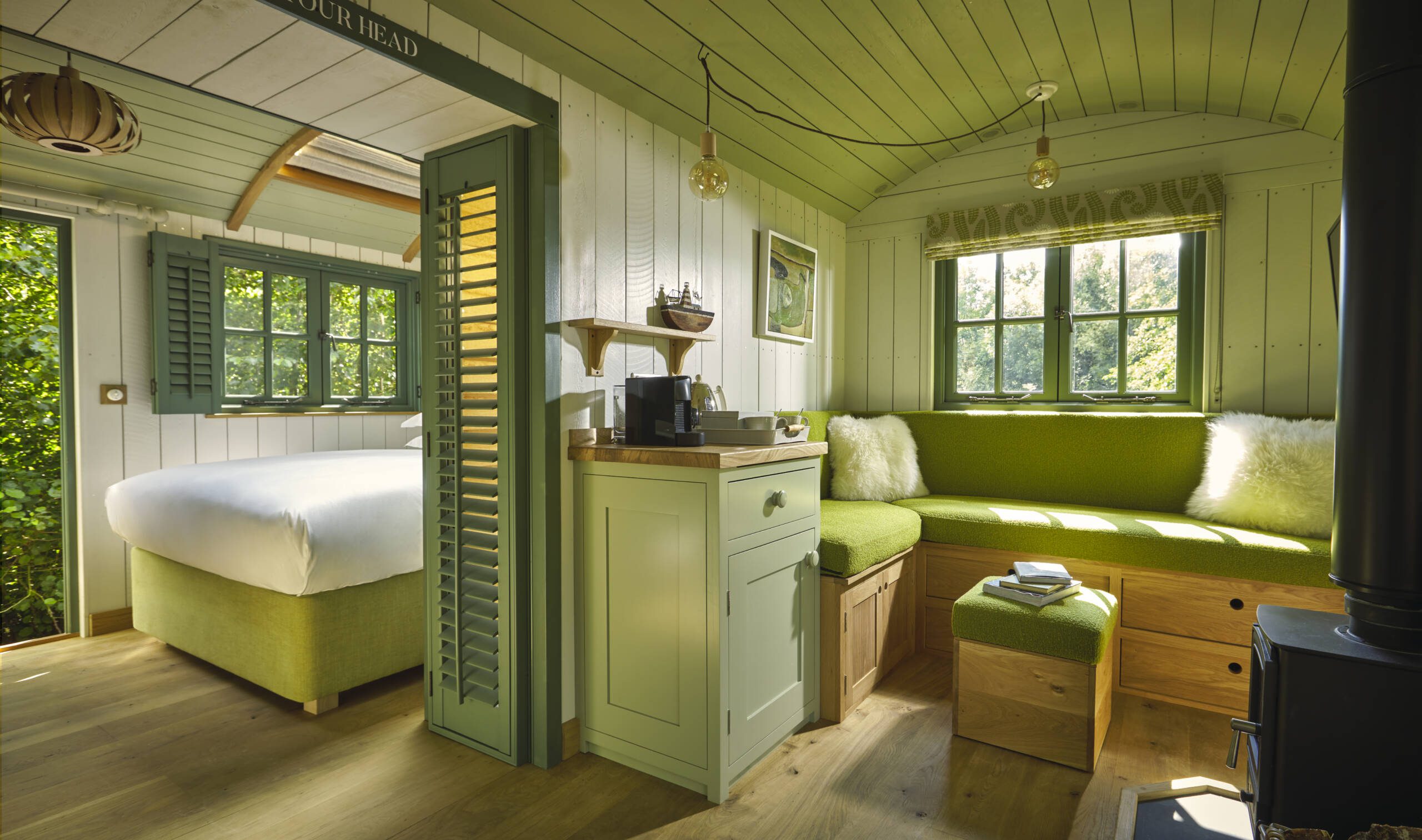
The Hideaway, one of many unique rooms at The Fish
The Fish is a very rare example of the opposite: a hotel even more interesting than it what it seems to be on its website.
Follow LUX on Instagram: @luxthemagazine
There’s nothing wrong with the website, mind. It’s just that the very concept and execution are discreet. It is built into the woodland Western escarpment of the Cotswolds, the celebrated uplands halfway between London and Wales where plutocrats and aristocrats rub shoulders. Here, in one of the most distant and remote corners is an area of many thousand-year-old forests and ecosystems, tumbling down a steep slope that marks the end of the Cotswold uplands and drops into the deep Severn River valley. The mountains of Wales loom in the distance.
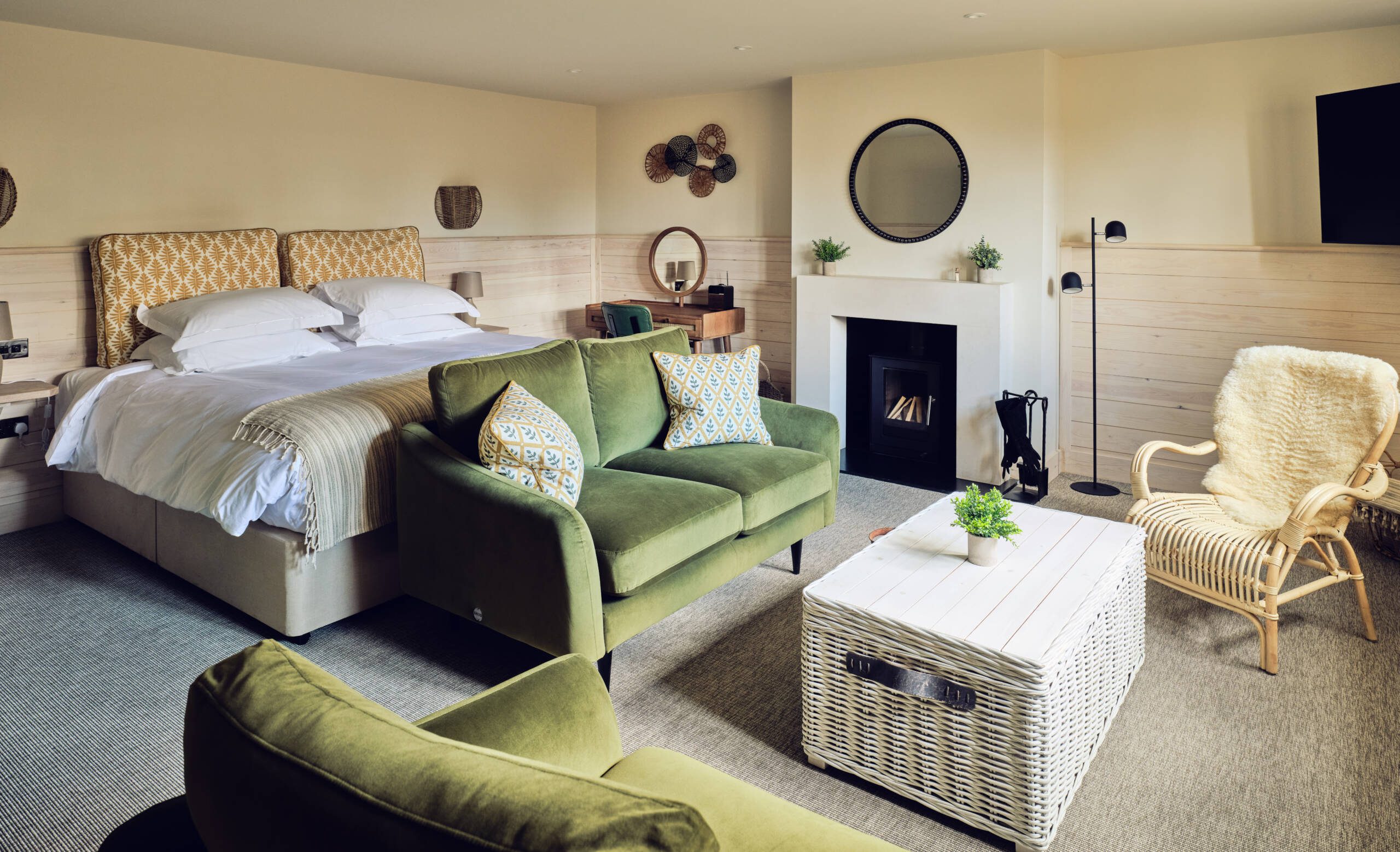
A suite at The Fish, within the Farncombe Estate
You approach The Fish from a country lane at the top of the Cotswolds, first entering the grounds of the Farncombe Estate that encompasses it. The driveway winds through woods, past a couple of buildings, and down the sloped escarpment, views all around. You park at a low-rise wooden building, almost lost in the forest; this is where the reception area, bar and restaurant are located. They are stunning inside, modern without being jarring, with a Scandinavian-forest-feel and extensive outdoor terraces that blend woodland with views.
Our room was in another building, a short walk through the woods (you can also drive and park outside) and it had uninterrupted views across the fields of the Severn Valley. In the evenings, we walked to the bar and restaurant (where breakfast was also served) and enjoyed some quite magnificent country food – excellent fish and local herbs and vegetables. Very pure flavours and highest quality ingredients. We also appreciated the efforts to employ local staff: it gives The Fish a feeling of authenticity.
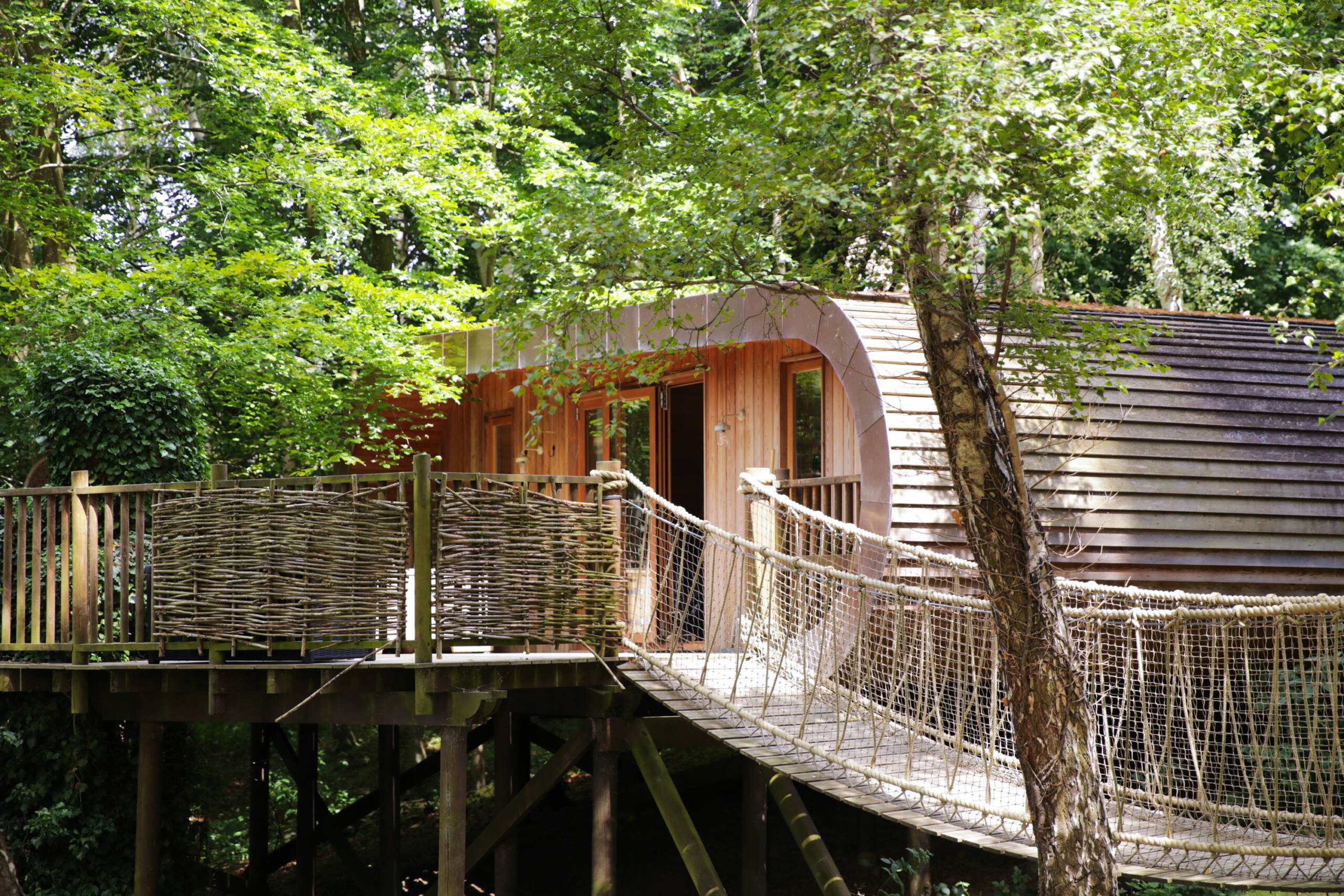
The Treehouse: The Fish is a collection of quirky hotel rooms, treehouses and huts, all nestled in the 500-acre hillside
If you feel like escaping from The Fish, you have an array of Cotswolds walks all around, and these are among the best country walks in the world: along hillsides, through glades and woods, meadows and hilltops. There are also the historical villages to visit: you can walk to the crazily pretty Broadway in 20 minutes, and others like Chipping Camden and The Slaughters are a short drive (or long hike).
The Fish itself also offers an array of activities and recreations, from clay shooting to axe throwing and falconry. But our favourite was chilling at sunset – which it faces – with a Picante on the bar terrace.
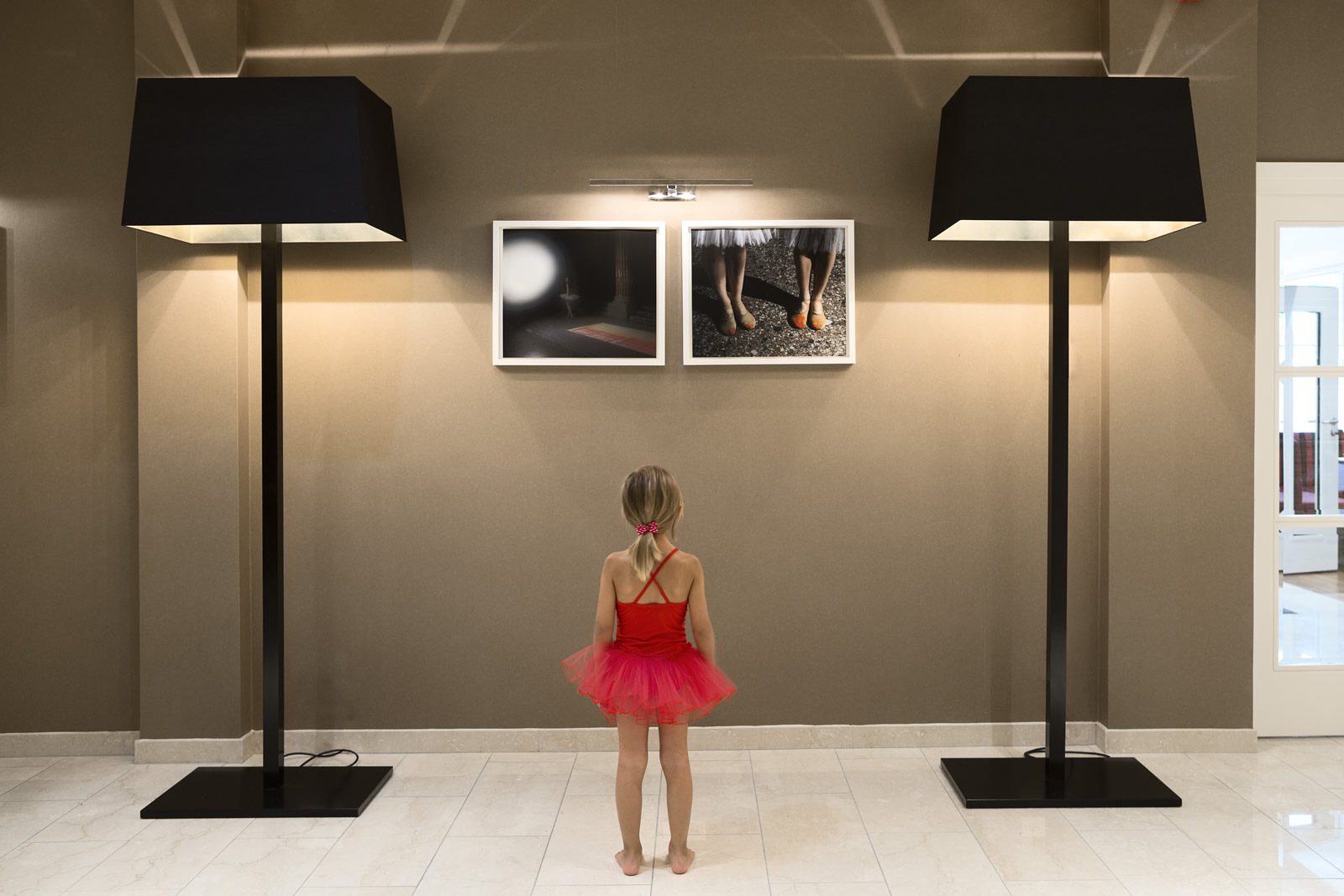
The Hotel Harmonie in Vienna: ‘a centre of wealth, craft, science, culture, literature and commerce’
The Harmonie, Vienna review
Vienna is a city of stories. Every square, every street, every building speaks to you of the artistic, cultural and imperial history of this capital without an empire. It was only just over 100 years ago after all that this city ruled Europe’s greatest empire, the Austro-Hungarian domaine that stretched from Germany to Italy and the Balkans.
Read more: Il Salviatino, Savoy Florence and Portrait Florence review
Not the biggest in size, but a centre of wealth, craft, science, culture, literature and commerce that dominated what was one of the most powerful continents in the world for centuries.
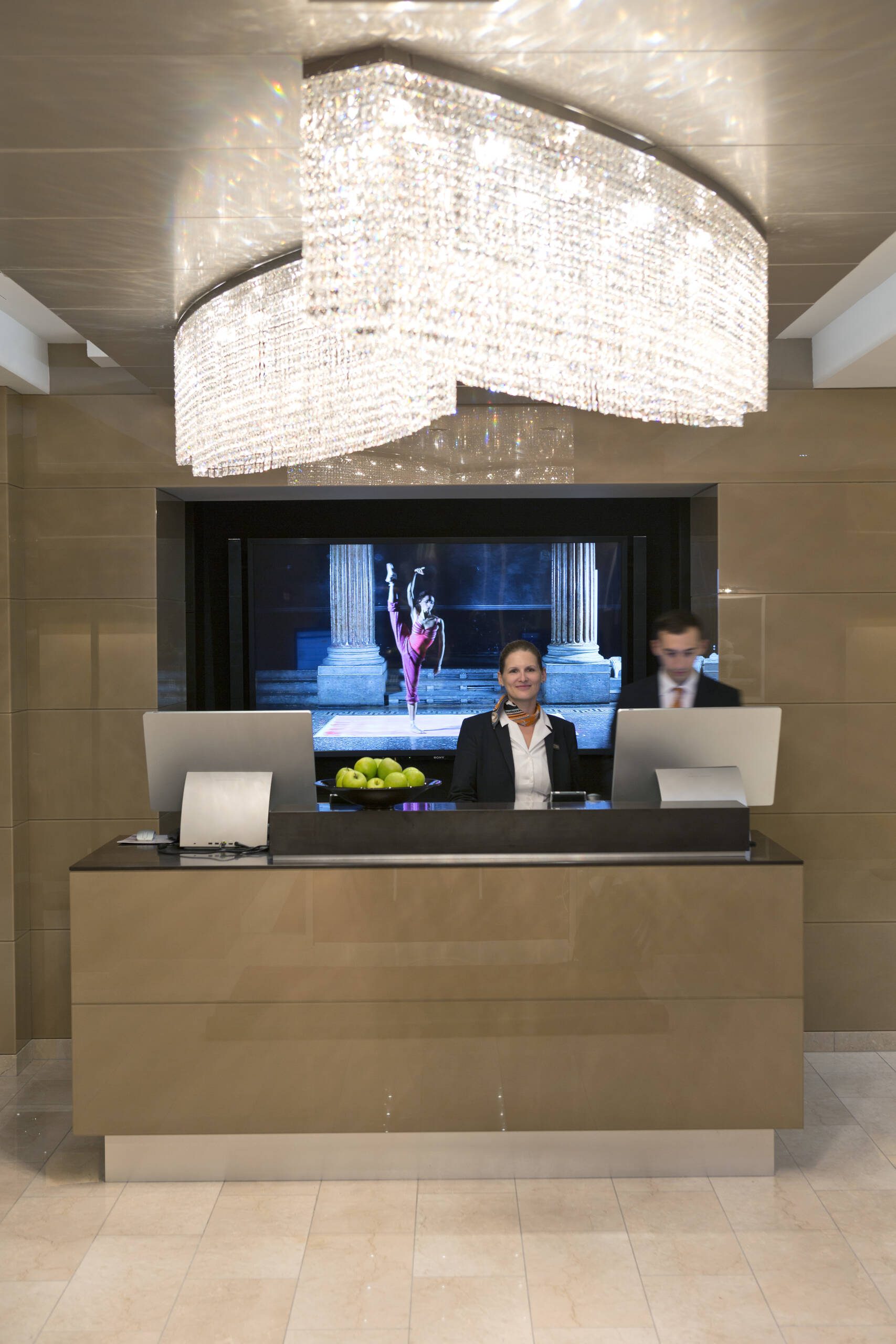
‘The Hotel Harmonie has a recognisable central European vibe as soon as you stroll in’
Vienna was virtually untouched by bombing in the Second World War and so is preserved perfect and unscathed, its stories seeping from its walls and the palaces almost alive.
In a city like this, we don’t always want to stay in a grand palace of a hotel, removed from the action. We want to feel part of the fabric of the story, joined with the history, living perhaps like the powerful Hapsburgs just over a century ago.
And it’s for this reason that we chose the Hotel Harmonie. It sits on a quiet street on the edge of Vienna’s historic central First District. You can walk to the great museums, the cathedral and squares through within minutes.
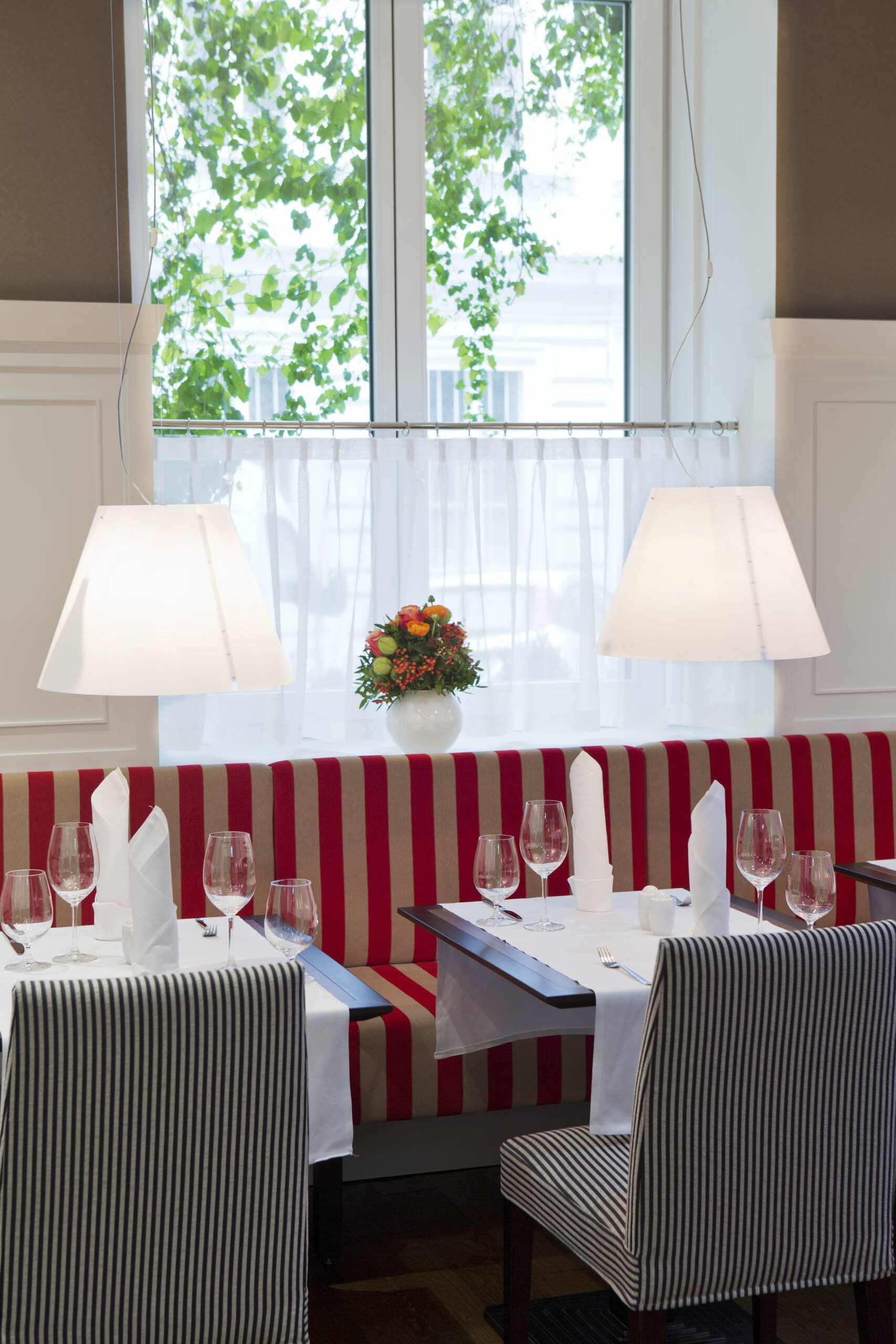
The Hotel Harmonie bistro: ‘everything beautifully laid out, homely, correct, with a sense of place’
A series of townhouses, or at least feeling like one, the Hotel Harmonie has a recognisable central European vibe as soon as you stroll in. It is immaculate, there is marble, and everything works beautifully but you also expect to see poets and spies in the corners of the bijou lobby area.
Read more: Binith Shah is creating the ultimate duvet with UMŌ Paris
Our room meanwhile was exactly what you might expect if you were staying with your distant cousin, the dowager princess of Hohenzollern zu Wolkenstein: everything beautifully laid out, homely, correct, with a sense of place.
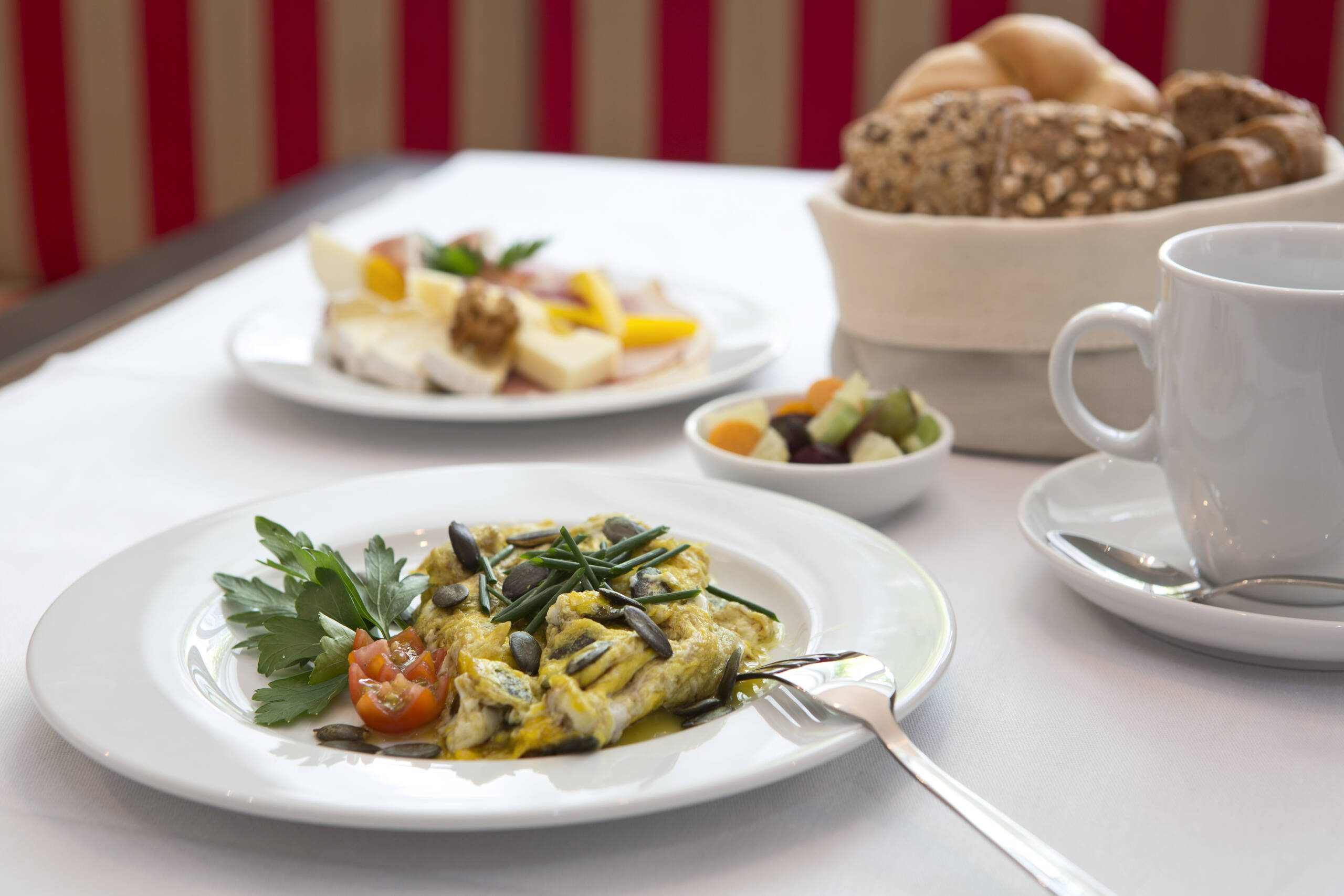
Breakfast at the Hotel Harmonie bistrot
The staff were polite, considered, and slightly reserved, just as you would expect and want the Viennese to be. A fulsome welcome is fine in Minneapolis: this is Mitteleuropa.
Meanwhile, our favourite part was the little bar just off the lobby, where newspapers – yes, real newspapers – on sticks were provided alongside coffee table books and a cultured atmosphere.
A place to come back to, for hundreds of years.
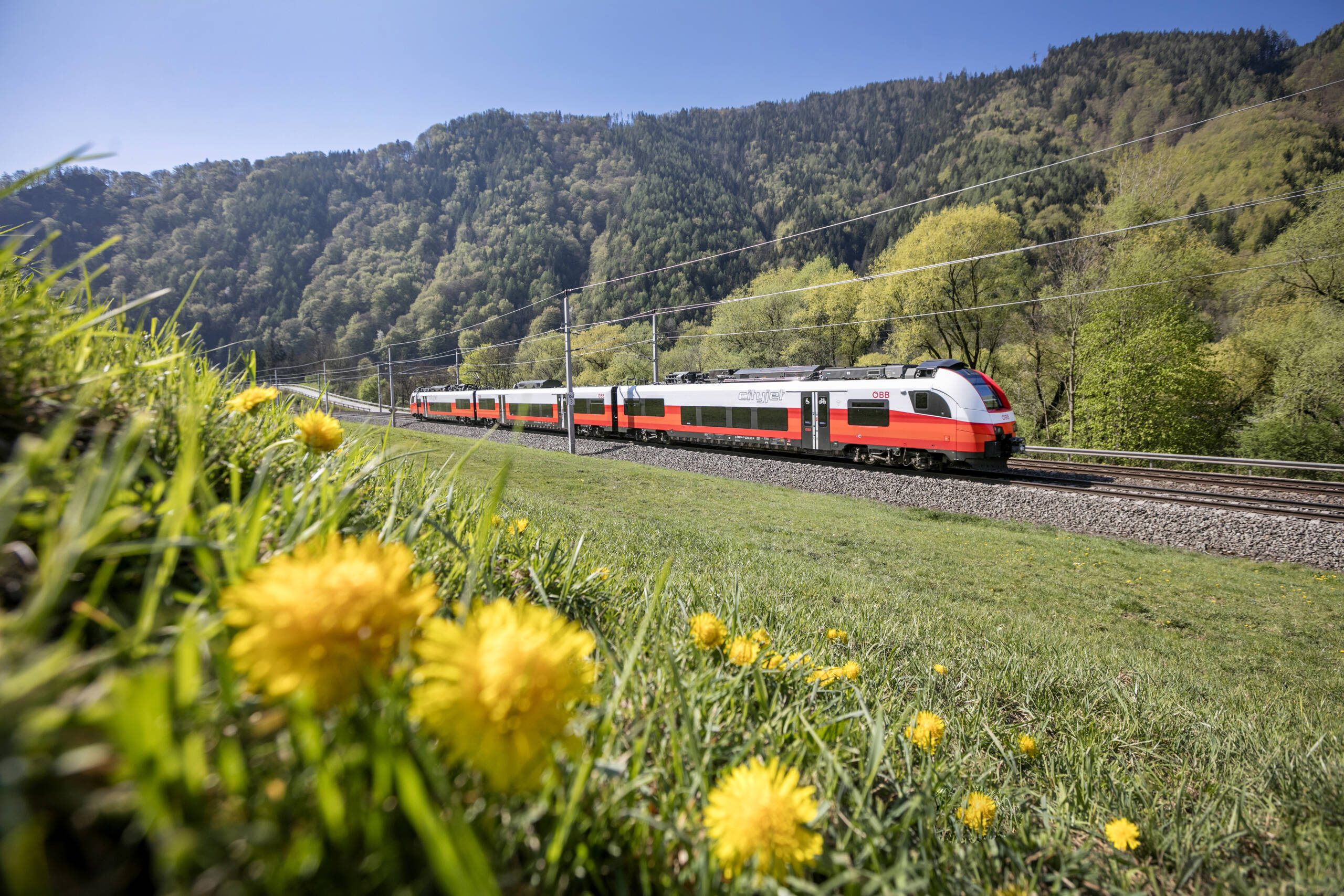
LUX travelled to and from Vienna by the most environmentally-friendly means possible, train. Our journey the length of Austria took us past the Wienerwald forest with its castles, along the deep Danube valley, the orchards near Linz, and the rising Alps as we approached the Tyrol, where the tracks were surrounded by dramatic snowy peaks, rising up to more than 1200m altitude, before dropping into the forests near Bregenz. All courtesy of the Austrian tourism board on Austria.info
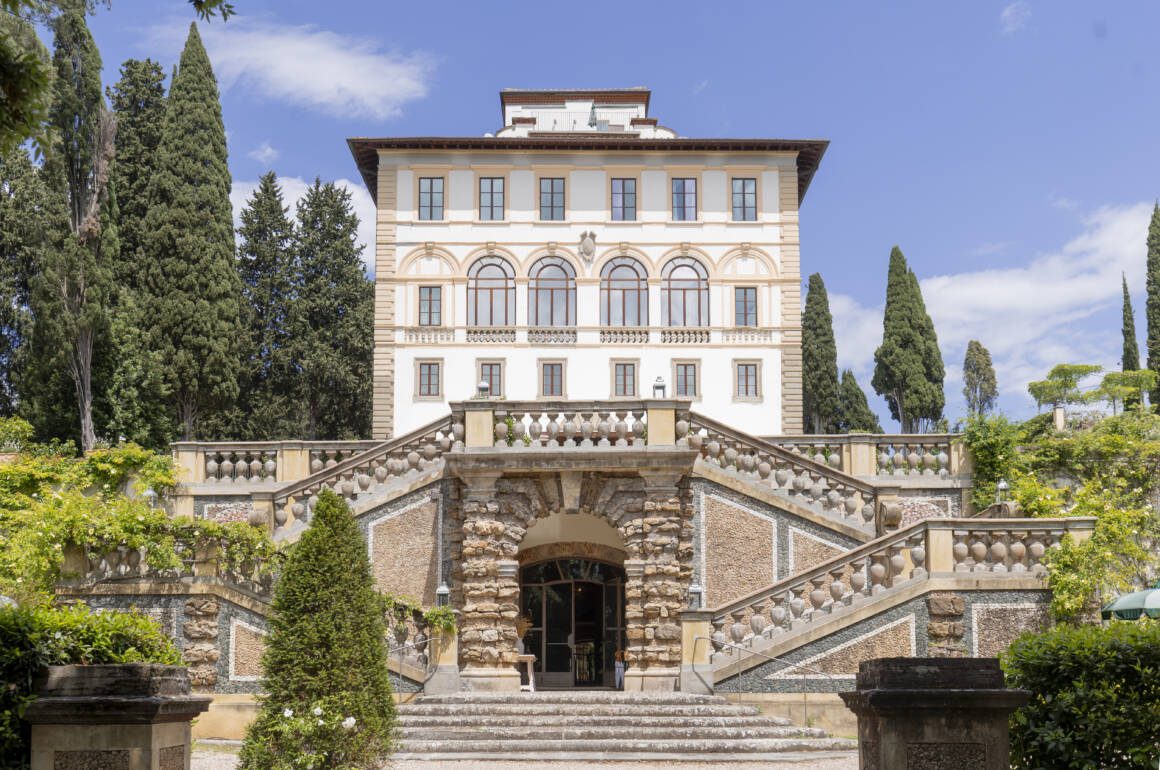
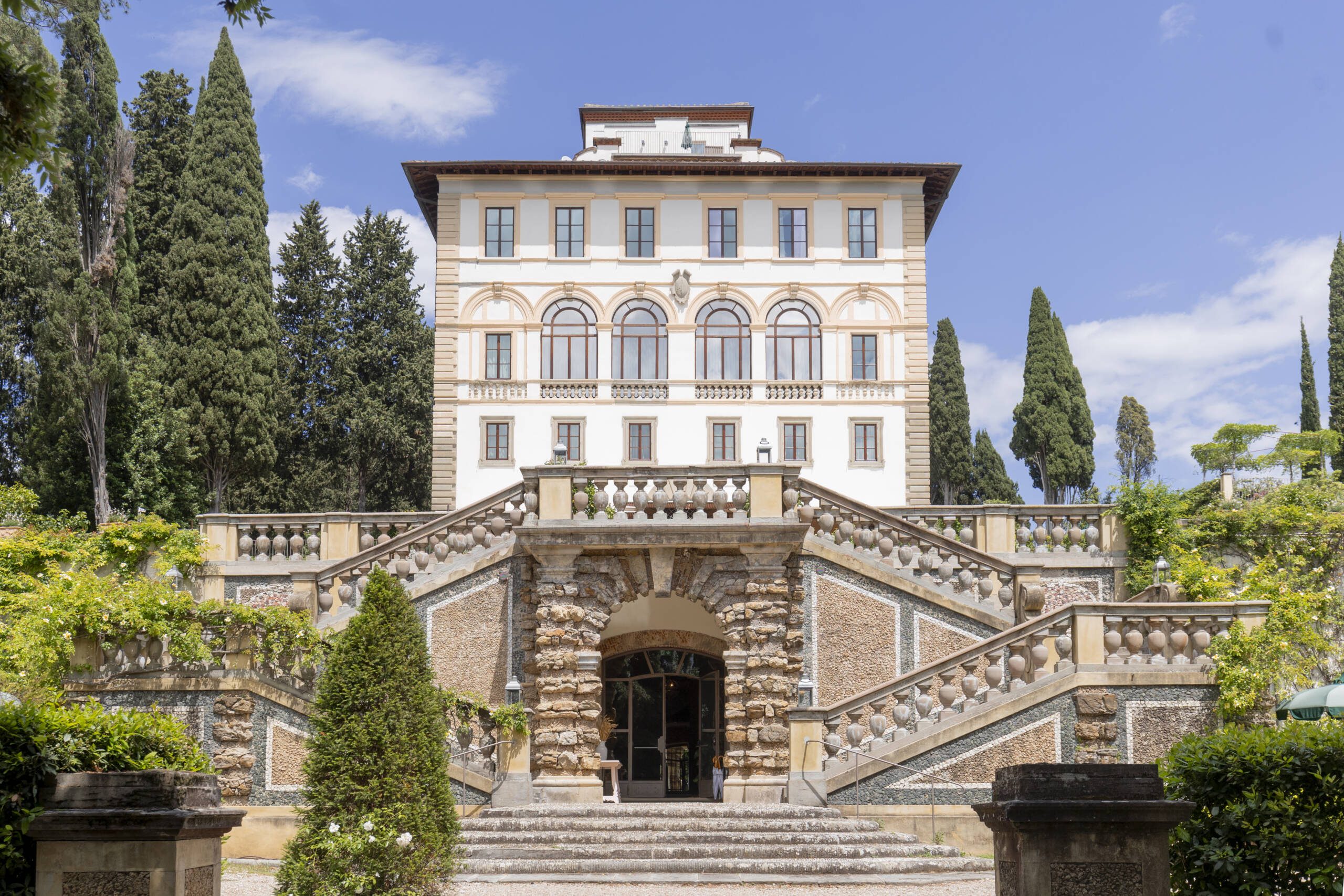
The grand exterior of Il Salviatino, Firenze
Florence has never been more compelling for its mix of old and new art – and old and new people – with a buzzing youth scene complementing the wonders of the Uffizi and its churches and squares. And there has never been a better selection of places to stay, as we discover at Il Salviatino, on a hill outside the city, and the Savoy and Portrait, in the city’s heart
Il Salviatino, Florence review
Il Salviatino is special. Now, you could say that about a lot of luxury hotels in Tuscany, and you would be right.
But in the case of Il Salviatino, it’s special in a way nowhere else is.
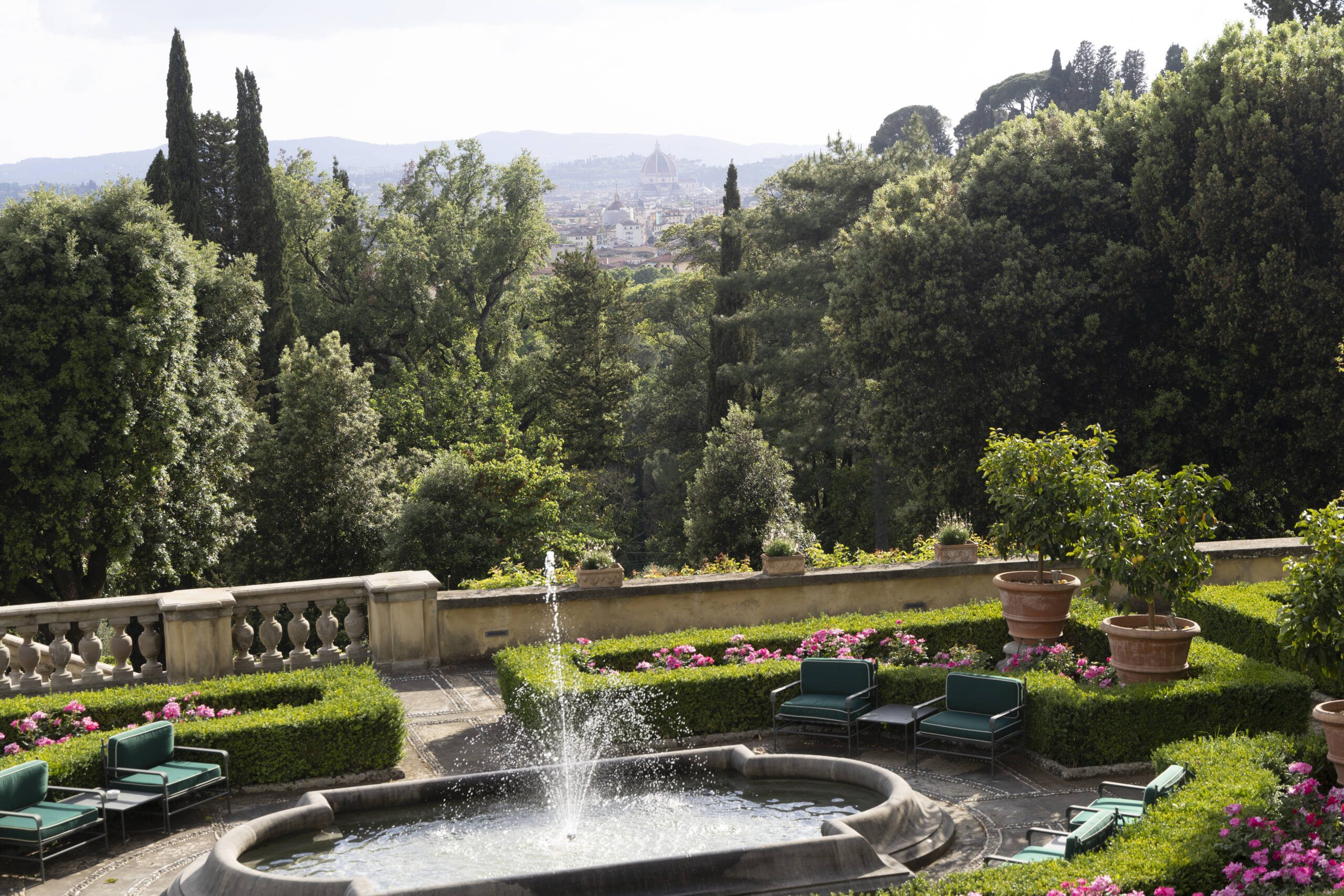
The Italian gardens of Il Salviatino, which look out onto the Duomo, seen in the distance
To get there from the city centre of Florence, we drove past the Duomo and famous palaces, out for five minutes through a suburb, onto a winding hillside road lined by cypresses and suddenly – only fifteen minutes after leaving the hectic centre of Florence – a botanical-historical paradise emerged.
Follow LUX on Instagram: @luxthemagazine
Like everywhere special in Tuscany, Il Salviatino is a visual feast – but that’s not the first thing you notice. Instead, it was the smell of jasmine, mint, rosemary: a thousand herbs and flowers wafting through the air as if they had been beautifully packaged and released – except they hadn’t, we were outdoors and this is how the gardens, planted by owner Alessandro Rovati, smell.
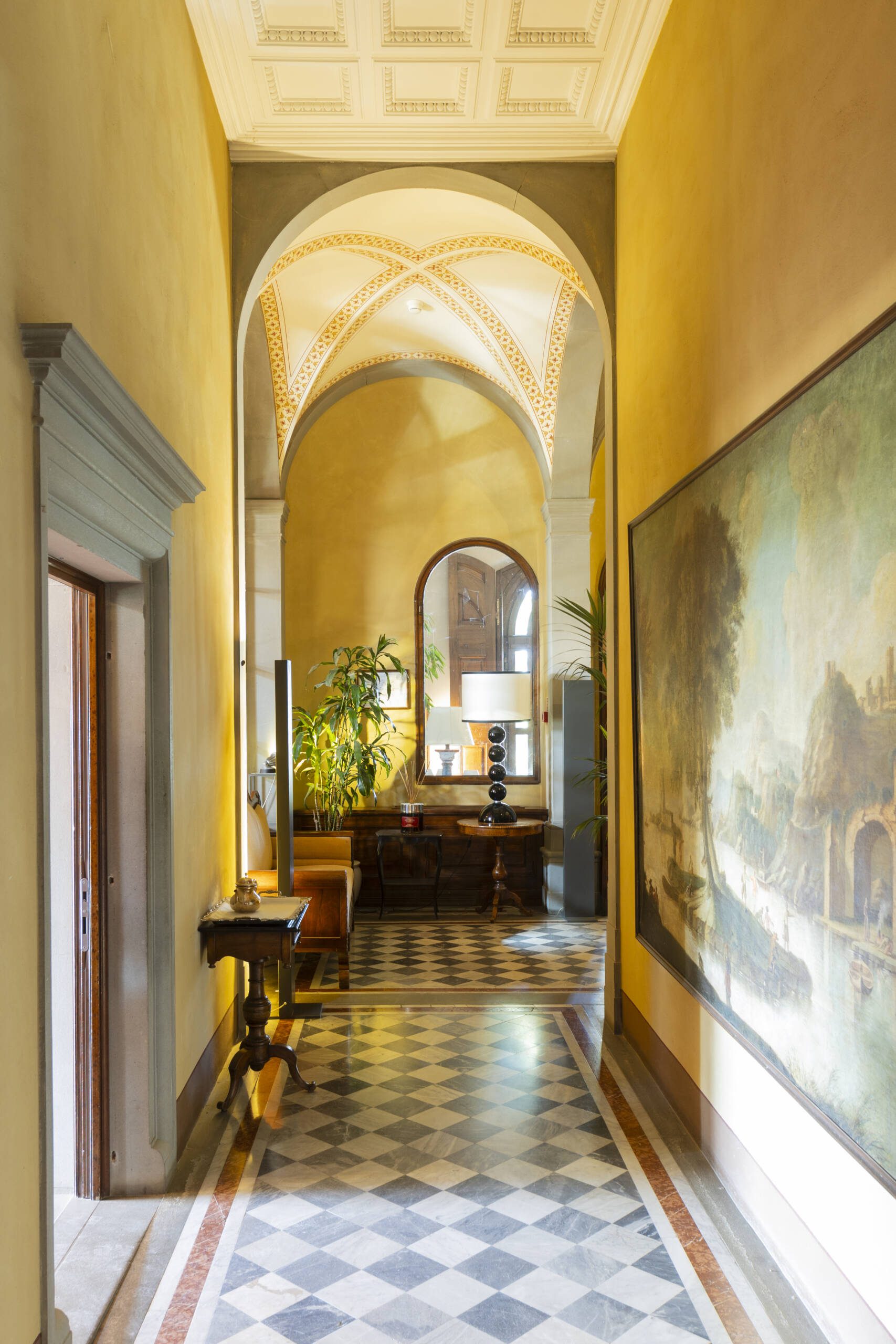
The entrance hallway to Il Salviatino: 17th-century Italian architecture refreshed thoughtfully by books, furnishings, and art added through time
These aren’t the formal and slightly forbidding gardens, inspired by the originals at Tivoli, that you often find in an Italian hotel. The foliage is as wild and beautiful as its scent.
Wander around the front of the palazzo and an Italian garden drops away into a quite astonishing view of Florence set out before you. The Duomo looks near enough to touch – and in fact it is only a couple of miles away in a straight line. On the hillside it feels like you’re lined up with the top of its roof.
Beyond rise the forest and vineyarded hills of Chianti, undulating into an eternal distance.
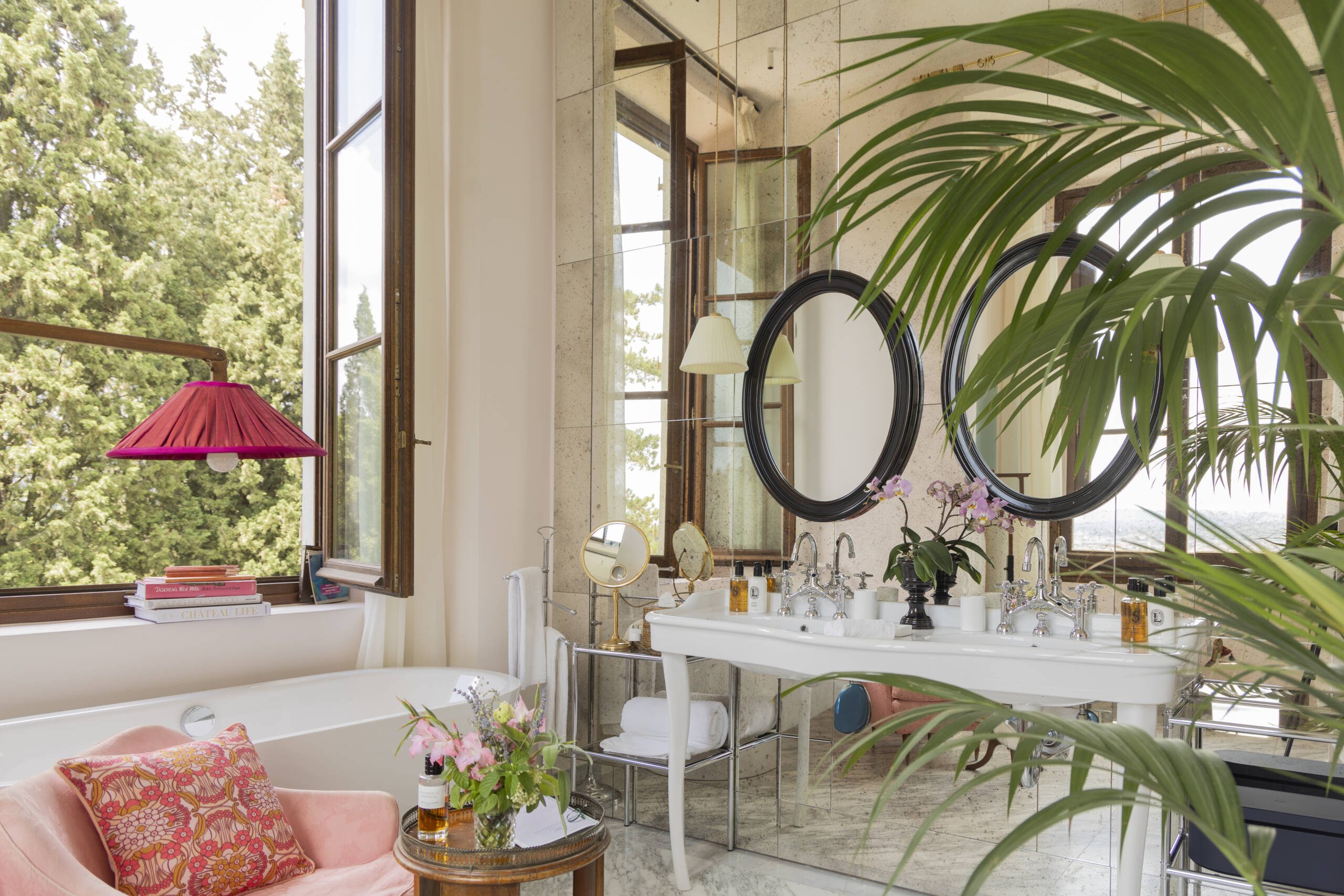
The bathroom of the Duomo View suite in Il Salviatino
The house itself – it seems wrong to call it a hotel – is a 17th century masterpiece, a work of art so gently and thoughtfully refreshed with books, furnishings and art by the owner, but always retaining the feel of being in a private home or club.
Our suite was down below the Italian garden, comprising of a bedroom and bathroom that led into a conservatory which in turn led to a terrace.
A few minutes crunching down the gravel through the gardens (lizards by day, fireflies by night) led to the swimming pool area. One side is on a shelf offering a view of nothing but trees and gardens, despite the fact that driven in Italian style you could get to the Ponte Vecchio in around six minutes on a traffic free early morning.
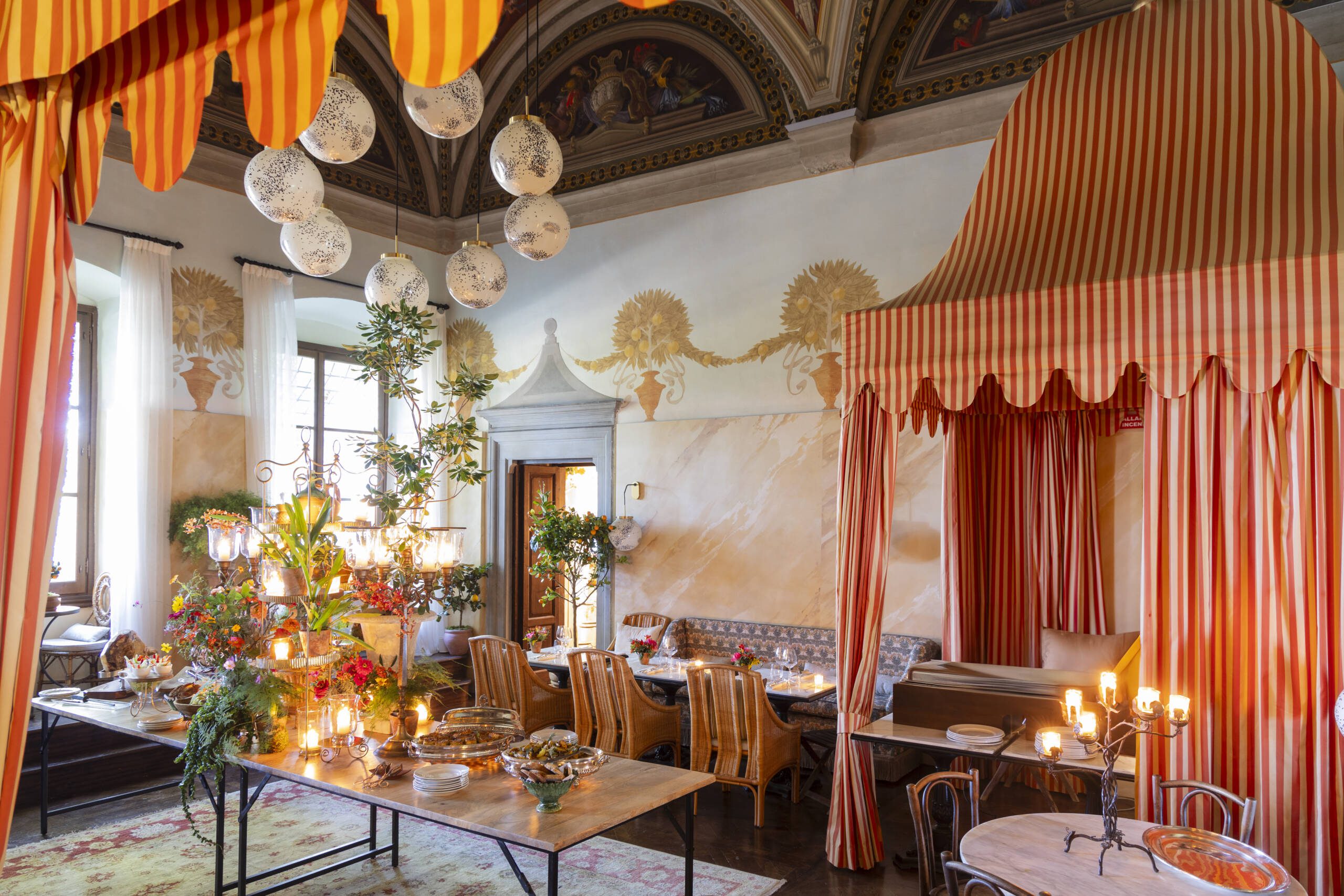
Giacomo al Salviatino, bringing one of Milan’s most famous restaurants to the Florentine hotel
On the terrace by the main building, the view of Florence and Tuscany changes colour and character hour by hour. This is where you have dinner, created by one of Milan’s most famous restaurants, Giacomo, while gazing at this view and choosing from a fascinatingly curated list of mainly Italian wines.
Read more: Binith Shah is creating the ultimate duvet with UMŌ Paris
If it gets chilly, or too hot, you can repair to the bar and enjoy the room inside, feeling even more that you are part of a house party.
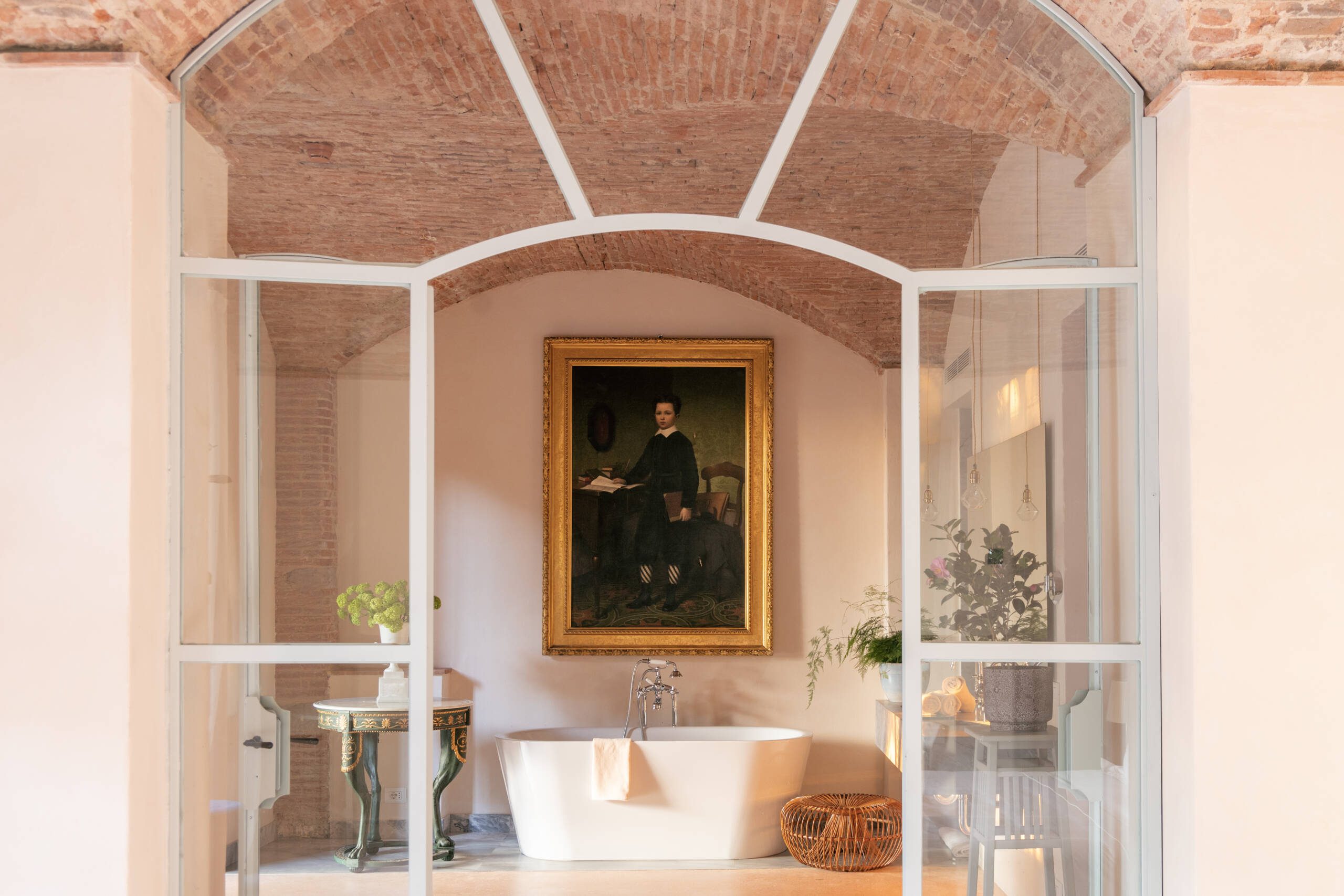
The beautifully curated bathroom of the Greenhouse suite at Il Salviatino
Curation is everywhere – the small but elegant spa offers treatments with Augustinus Bader and local Santa Maria Novella products.
It’s a place where your pulse rate decreases the moment you walk out and into the scented air and continues at that level throughout. Both Tuscan country and Florentine, it is special like nowhere else.
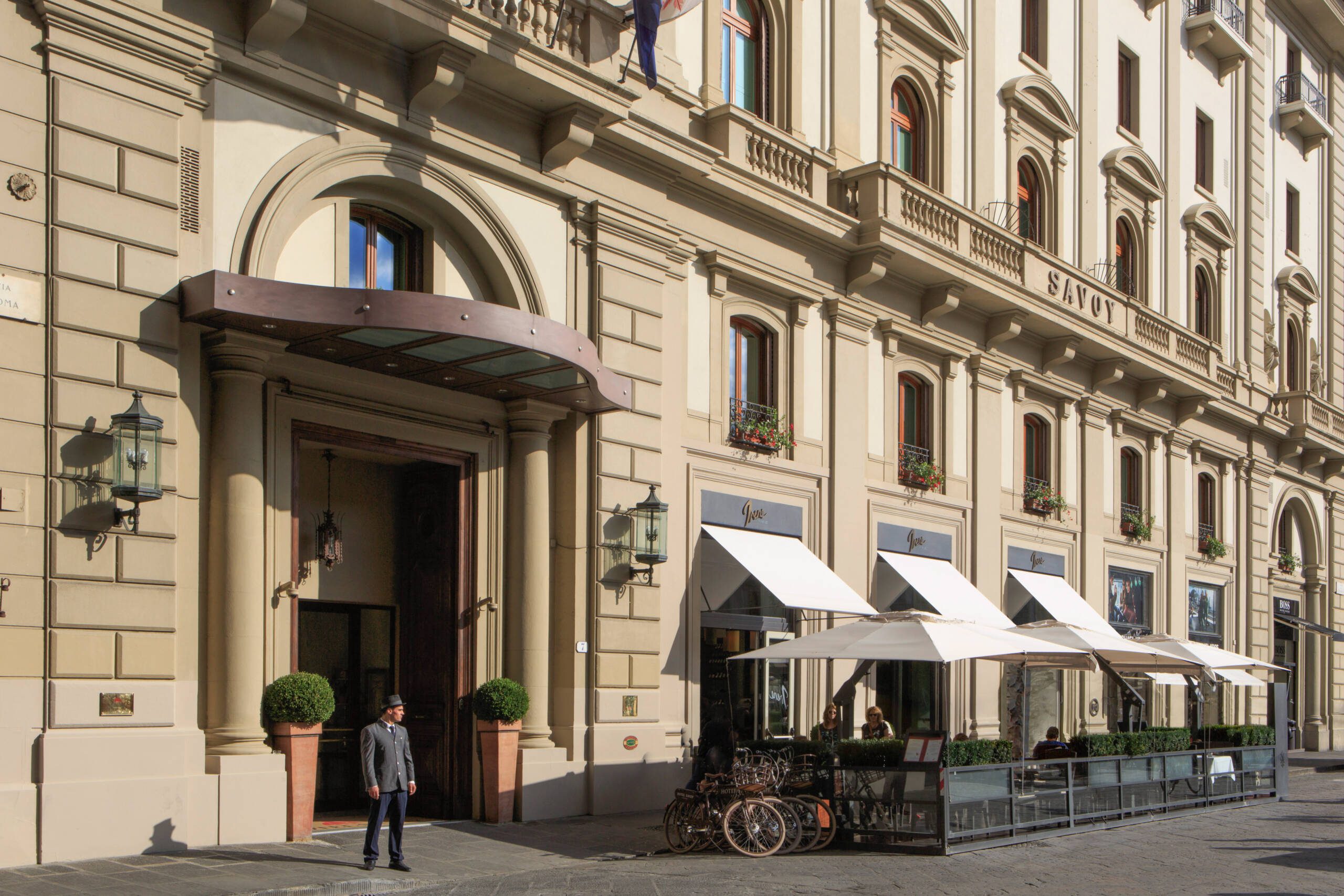
The Hotel Savoy, located in the very heart of Florence
The Savoy, Florence review
If location is everything, then staying at the Savoy in Florence gives you everything you may ever need. On the Piazza della Repubblica in the heart of the city, our room at the back of the hotel had a little balcony looking out directly to the cathedral and its famous square.
If you are at the front of the hotel, you are facing the famous pedestrianised Piazza della Repubblica and are directly across from the city’s celebrated Palazzo Strozzi museum. A good cricketer could throw a ball and hit Michelangelo’s David a block away. (Actually, the David in front of the Uffizi is a replica, but let’s not spoil the dream here).
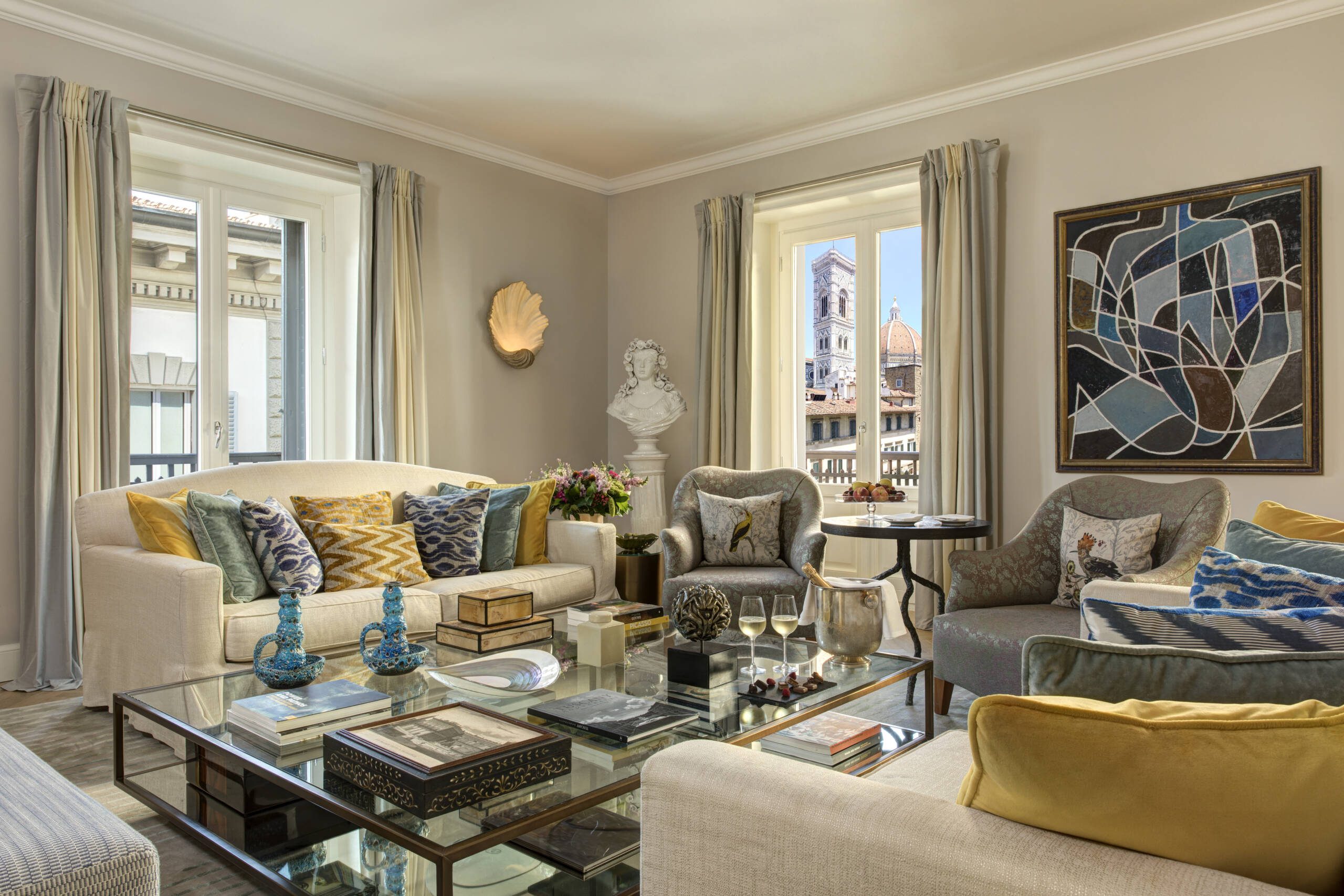
The Presidential Suite at Hotel Savoy, looking directly onto the Duomo
Our favourite part of the Savoy was breakfast. You are taken outside to a little terrace cleverly carved out of the square, where proper old-fashioned friendly Italian-British service (it’s part of the Rocco Forte hotel group) melds with hearty and deliciously cooked dishes.
Read more: The morning after the night before at St Moritz’s Dracula Club with Heinz E. Hunkeler
You feel you could sit and sip coffee for the rest of the day, watching Florence and its tourists go by. Wander in and pick a few more berries or slices of salmon or roast turkey from the buffet, pour yourself another glass of prosecco, and repeat.
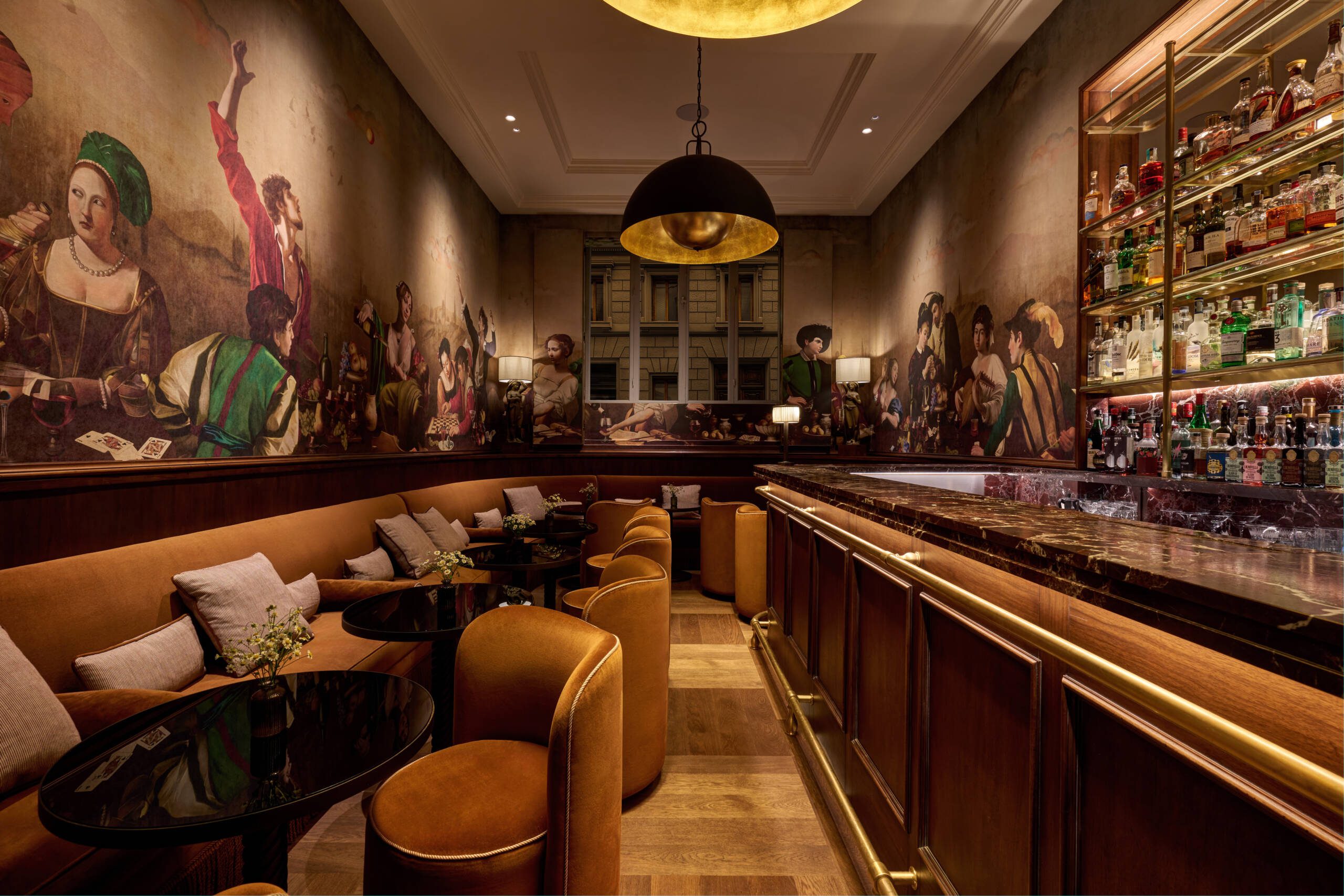
Bar Artemisia at Hotel Savoy, inspired by the great Baroque artist Artemisia Gentileschi
The decor and design of the public areas and the rooms is as lavish and LUX as you would expect a hotel – belonging to Rocco Forte and lovingly put together by his sister Olga Polizzi – to be. Bathrooms are marble, beds are generous and high-quality, service is impeccable. And as for the location: it’s a sanctuary in the heart of the historical maze of the city centre.
This is Florence at its best, created by someone whose dream was always to make the best hotels in his family’s original homeland, their adopted homeland of Britain, and beyond.
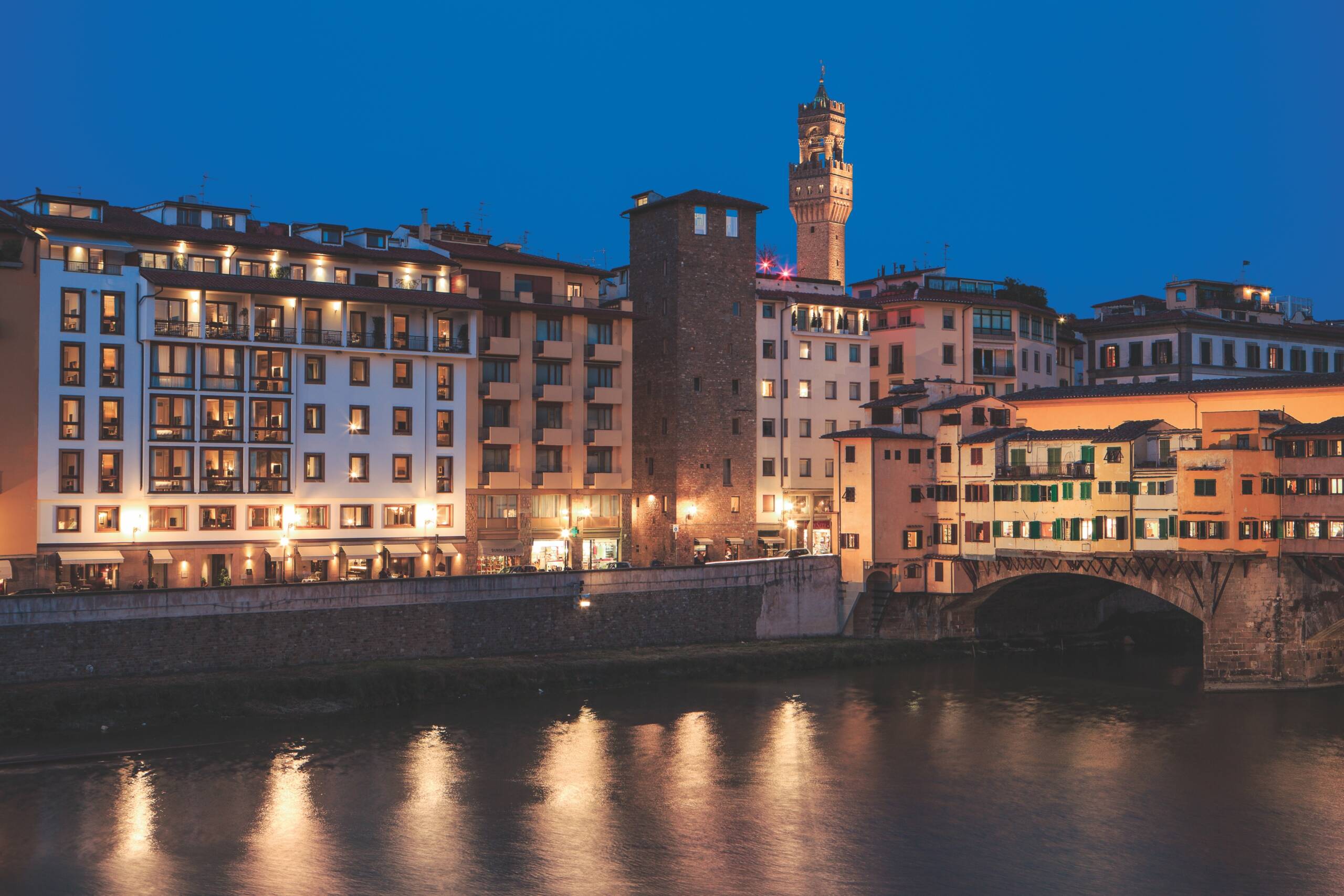
An evening view of the Portrait Hotel, Florence, along the Arno riverbank and just next to the Ponte Vecchio
Portrait Hotel, Florence review
Is there a better city view to wake up to than drawing the curtains of your big picture window, and seeing the Ponte Vecchio and Arno riverbank in front of you? We don’t think so, and that’s how we were greeted every day doing our stay at the Portrait, the super-chic luxury hotel from the Ferragamo family.
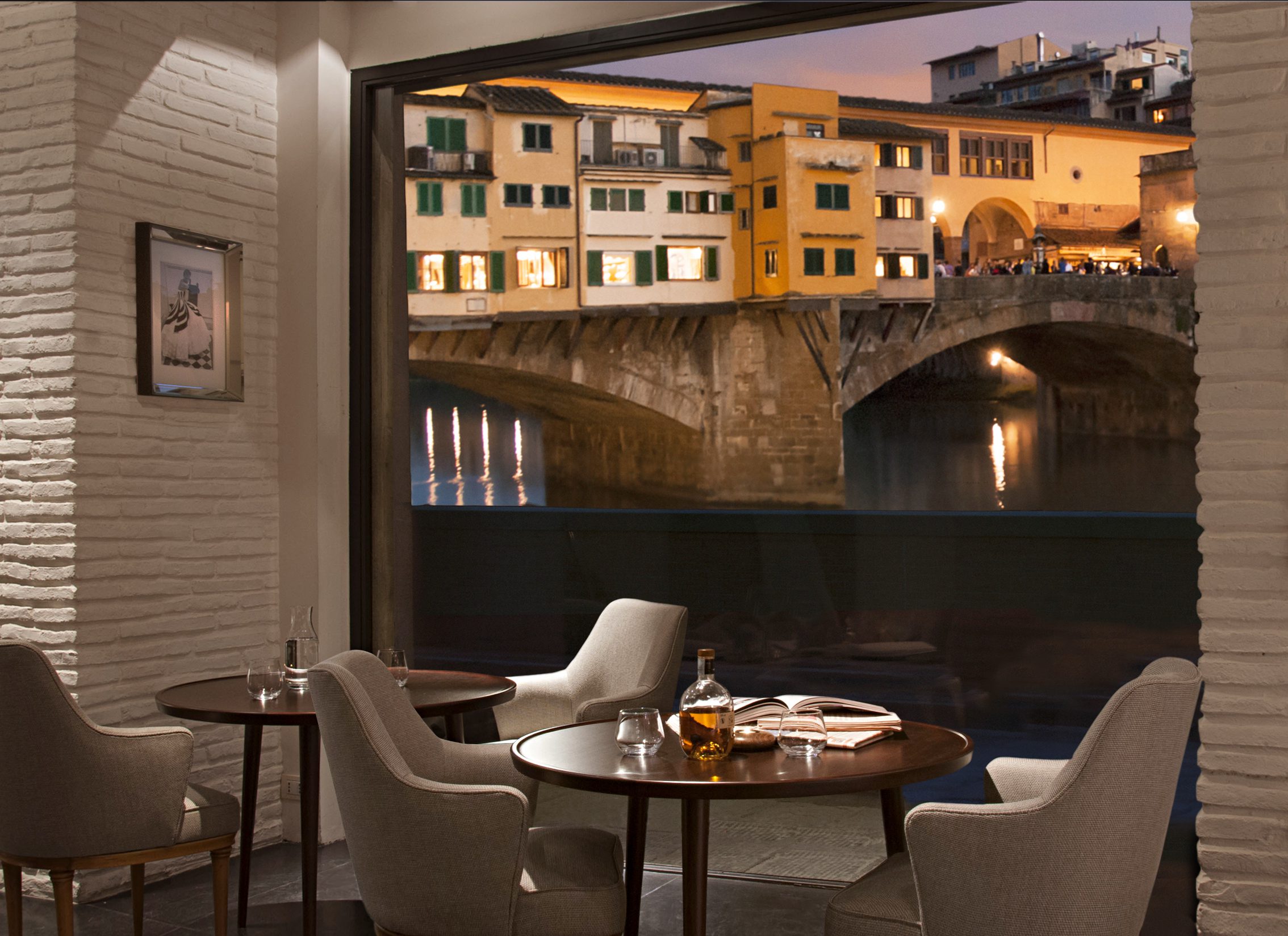
The view of the Ponte Vecchio from Caffe dell’Oro, the hotel’s riverside restaurant
Arriving gives a good taster of the experience to come. Your taxi ambles along the Lungarno, the embankment of Florence’s river, coming to a halt just metres away from the famous bridge. We celebrated our arrival with lunch and a glass or two of delicious Franciacorta at the Caffe dell’Oro, the hotel’s restaurant whose tables line the river back.
Read more: Six of the best hotels in Scotland reviewed
Service was contemporary Italian – fashionable and delightful. We particularly enjoyed the Bao al Vapore, steamed bao buns with chilli pork, which somehow went very nicely with the Franciacorta.
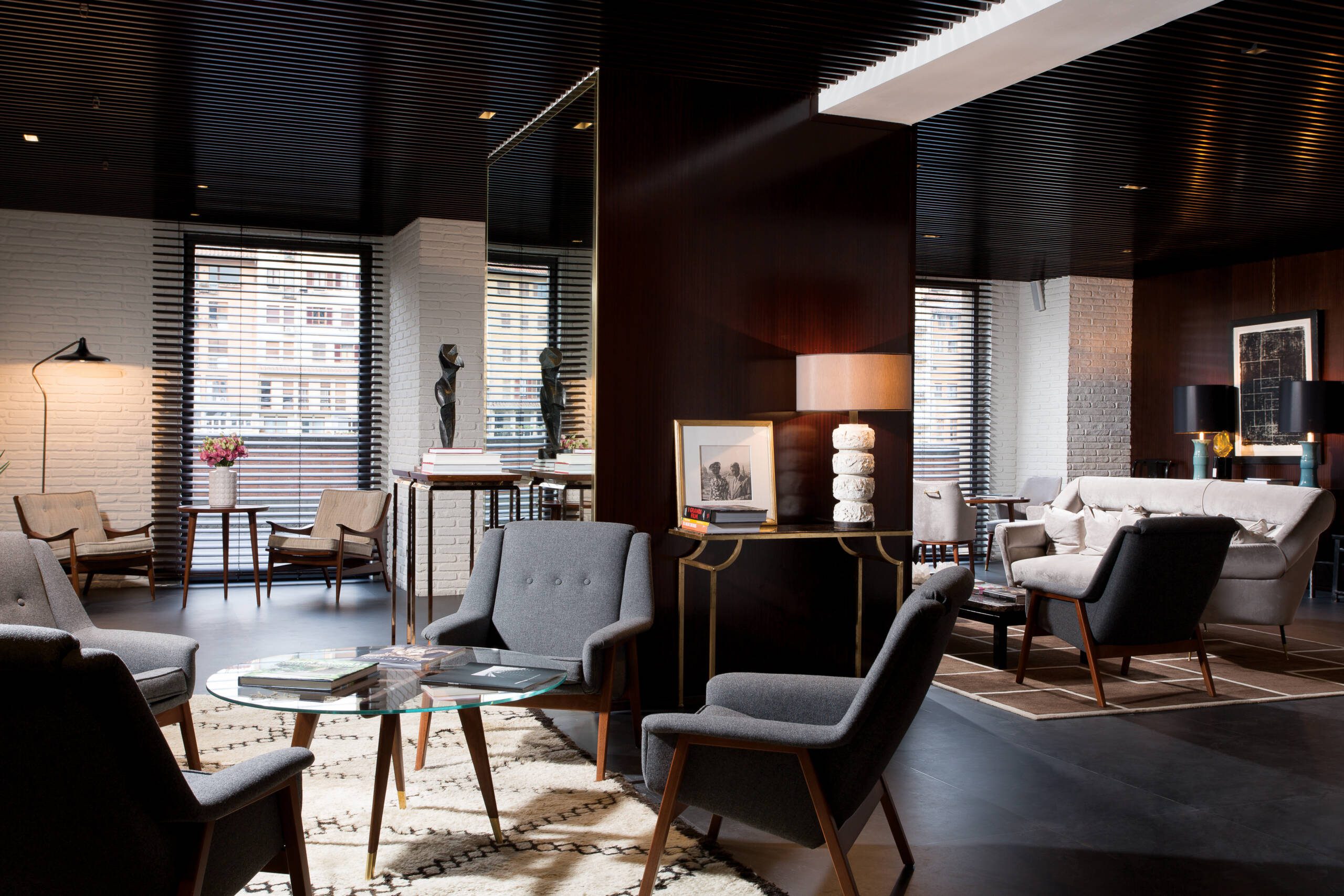
The slick and comfortable lobby of Portrait Firenze
The lobby area is like a curiosity cabinet of contemporary design; a place you could feel you could sleep in quite happily if the rooms weren’t so nice. Rooms in the heart of Florence are never huge, but our suite had two separate rooms, each with the same view of the river and the city across from it. Walls were light cream, furniture 20th-century-modern style also finished off in crema (as a Ferrari owner would say). Everything was just so, showcasing contemporary Florence inside and Asian Florence through the window. There was also a compellingly readable selection of excellent coffee table books in the room.
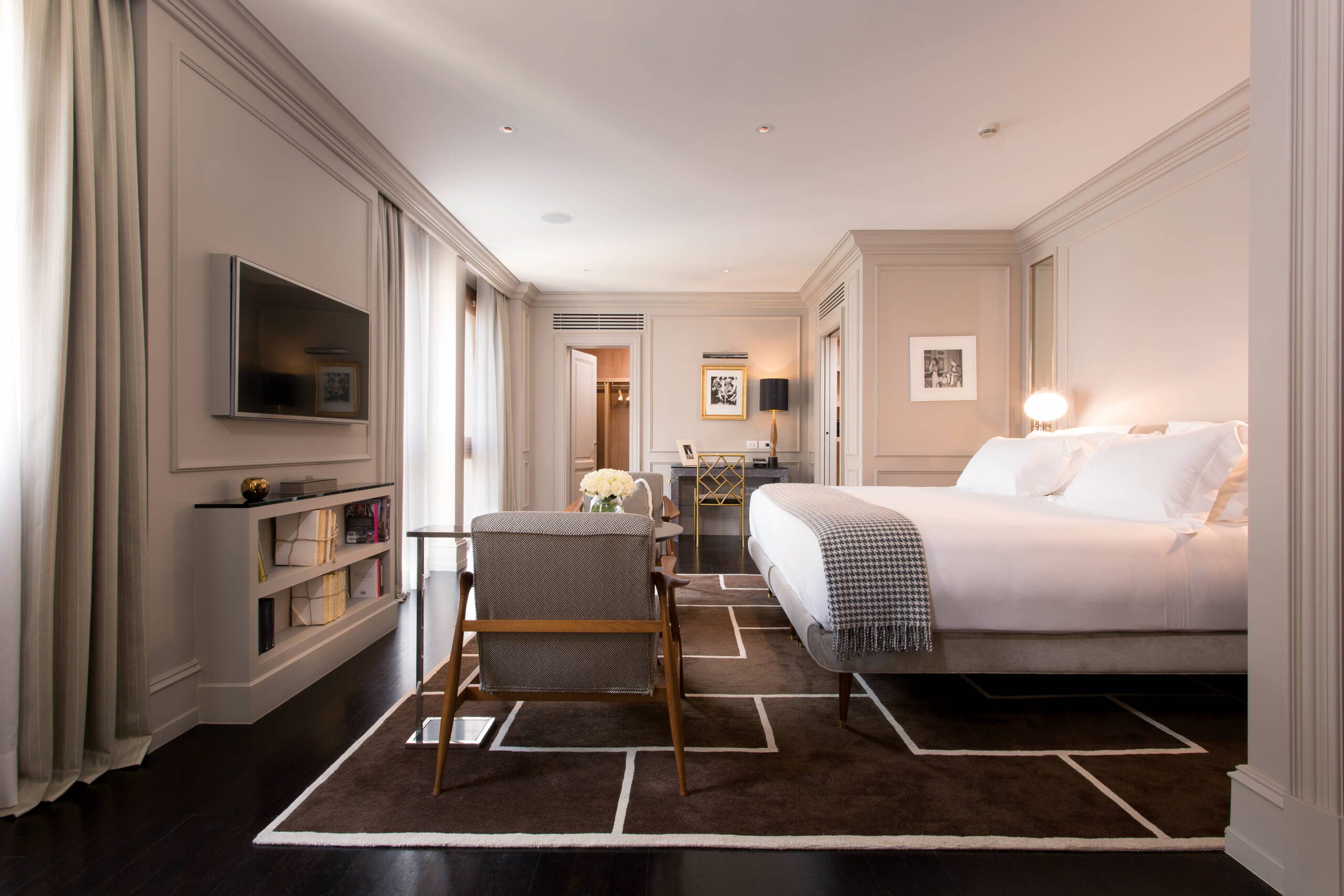
A suite at Portrait Firenze, each with a view of the river and city
There was one challenge: the dilemma of whether to have breakfast in your room, with its silent view of the bridge and the city, or outside on the terrace, which offered the view in the sunshine and buzz. Either way, you really can’t go wrong, and you are left with a feeling that you have enjoyed the lavish hospitality of Florence’s most celebrated fashionable family whilst staying in its coolest spot.
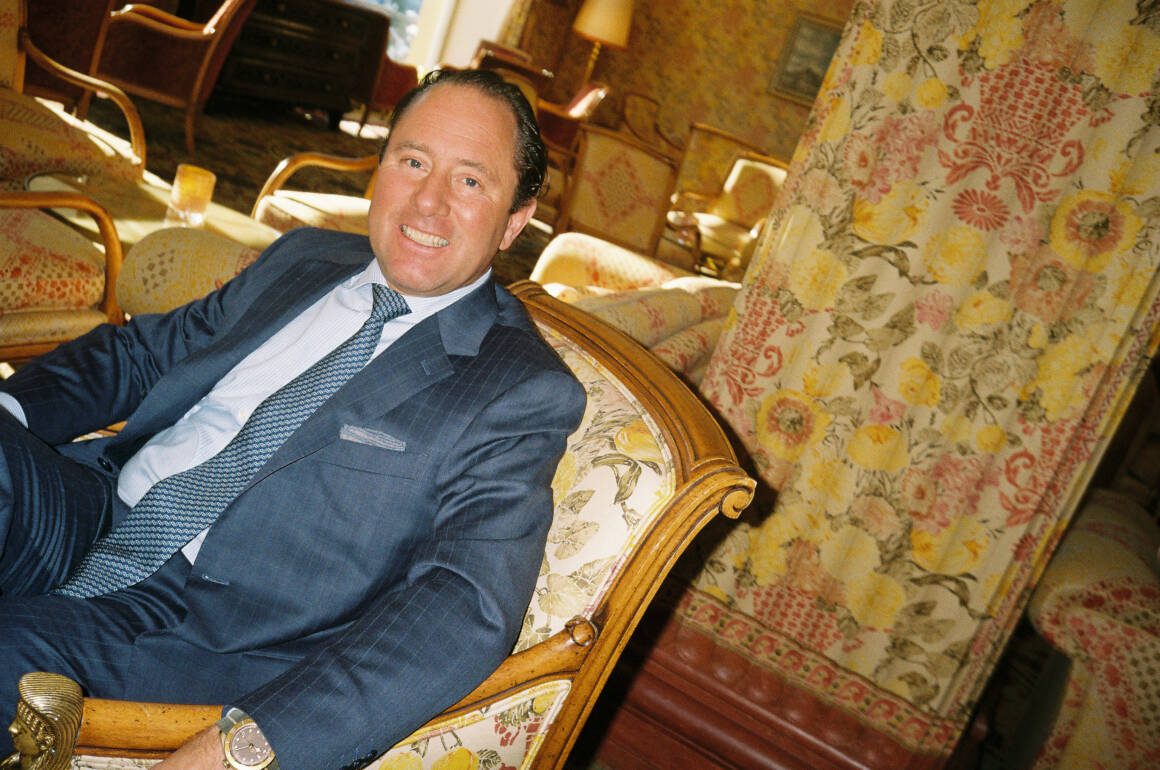
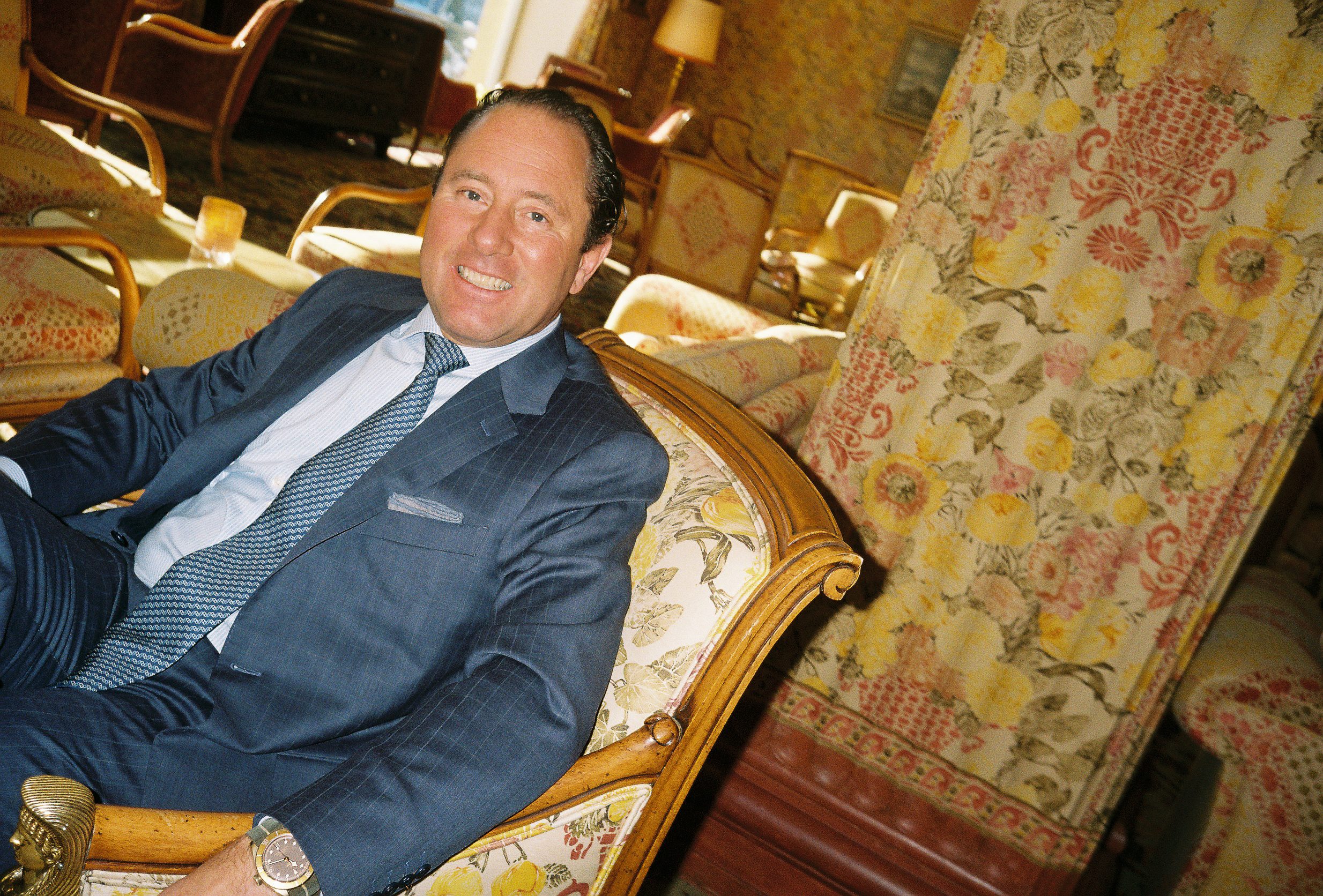
Heinz E. Hunkeler, the manager of Kulm Hotel, photographed by Konstantin Arnold
German writer Konstantin Arnold offers a glimpse behind the scenes at the iconic Kulm Hotel in St. Moritz. Through his (groggy) encounter with longtime Kulm Hotel manager Heinz E. Hunkeler, Arnold reflects on the delicate balance of tradition, change, and the quiet rituals that keep great hotels – and their guests – running smoothly
The morning after a long night, I met Kulm Hotel manager Heinz E. Hunkeler. Naturally, I was late – it wasn’t exactly the next morning, but rather three hours later. He didn’t take offence at this, behaving with the diplomacy and courtesy of a hotel manager who’s now part of my story. ‘No problem,’ he said, ‘I had some things to attend to anyway.’ He asked how my evening had been, and I told him it had been fantastic. He remarked that it couldn’t have been too crazy a night. He had all the numbers in his head, after all. The big spenders hadn’t been there – how could they have? I joked that I’d drunk like one but hadn’t paid anything. I laughed, and then he laughed, too.
Follow LUX on Instagram: @luxthemagazine
The first thing Heinz does in the morning is look at the figures – how many bottles of Dom Pérignon went to which room and at what time. You might have to apologise to your room neighbours. Heinz knows the truth before he even wants to. I mean, the guy had already been out swimming at six o’clock today. He wore a wonderful blue pinstriped suit in the morning light and sat with the same grand posture as he did in the armchair in his lobby. At one point, we had to move because the sun was shining too much in Heinz’s face. He was a good storyteller and spoke in simple and beautiful phrases with a charming Swiss accent. This was lucky since I wasn’t quite up to talking yet, and it was a pleasure to see how naturally he moved around the room.
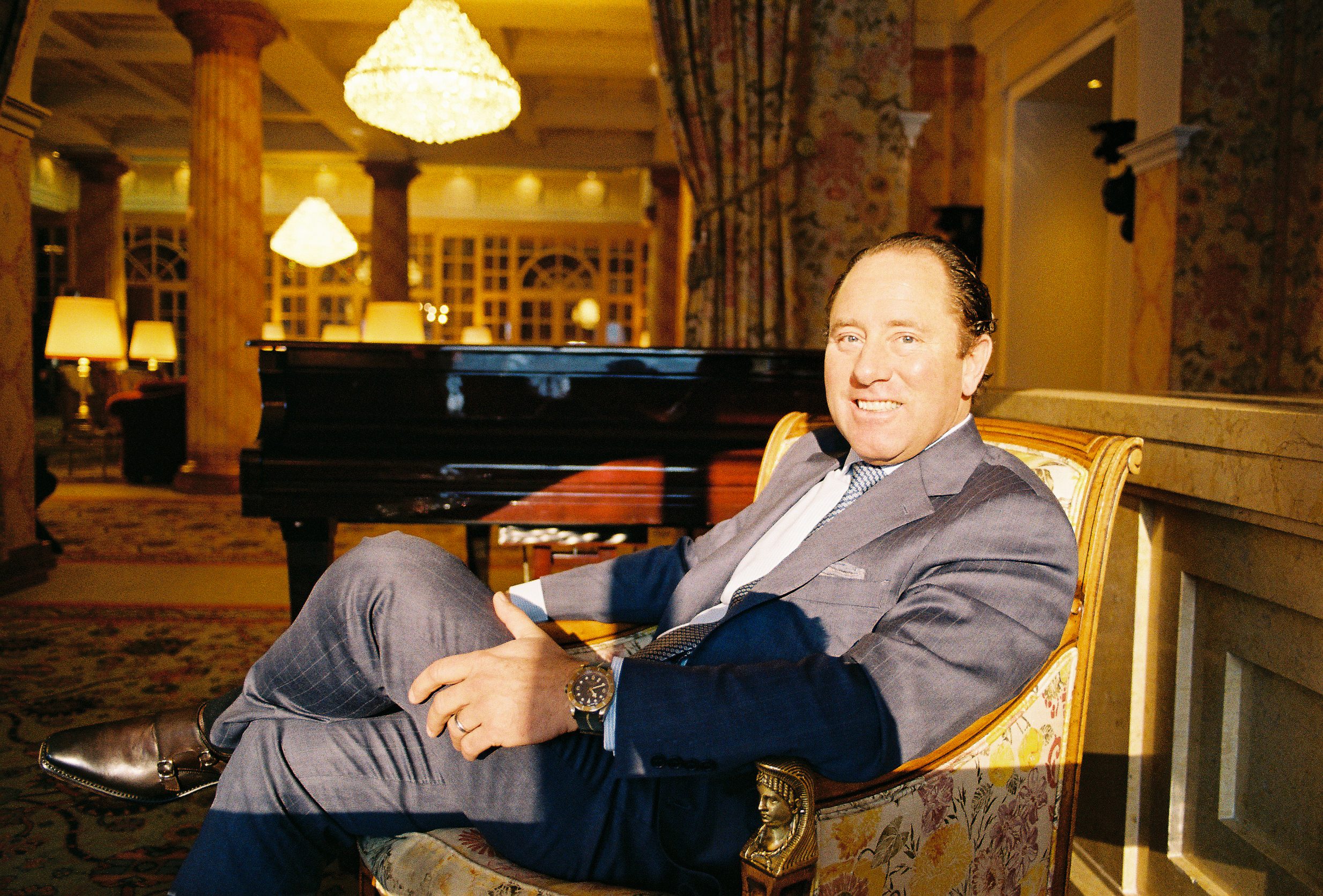
Heinz E. Hunkeler photographed in his Kulm Hotel by Konstantin Arnold
Heinz E. Hunkeler – a hotelier shaping the future with tradition
Heinz grew up in Kulm. As a child, he played football in the indoor pool between seasons. Today, he and his wife are a true hotelier couple, who still live here. It’s a rarity these days. We talked a bit about the power of routines and the fact that there is a lot of work behind all the apparent ease. If you ask yourself in the morning what you’ll eat, wear, and do, you’ve already wasted precious time thinking. The most important skill of a hotel manager, however, is to make you the most important person in the world for the moment you spend with them. As soon as they walk out the door, you might be forgotten, but that doesn’t matter. Heinz’s job is to lead this hotel into the next century, so that the world of yesterday will still exist tomorrow, and his guests won’t stray. He even tolerates pizza boxes in the corridors. He has hired staff to cater for the trends of our time.
Read more: Six of the best hotels in Scotland reviewed
Tradition, change, and the value of good staff
Some people say he’s conservative; after all, Heinz likes to go hunting, so he doesn’t forget how to do his own shopping. Why do people always say that as if it were a bad thing? Time passes in cycles because people tolerate its passing better that way. The cultural manifestation of these cycles is called fashion, and its melancholy revival is called nostalgia. The point is to illuminate things and distill their constant repetition down to an essence that becomes eternal for a moment. Nothing lasts forever. Not even Angelo and Fabio. The turnover can be hard to bear. Many guests come not least because of the staff. Good employees are hard to find and hold onto. That’s why they have just renovated the staff accommodation for 25 million. In the past, Heinz says, there were shared rooms; today, there’s a gym, down duvets, compensation days, and chia seeds.
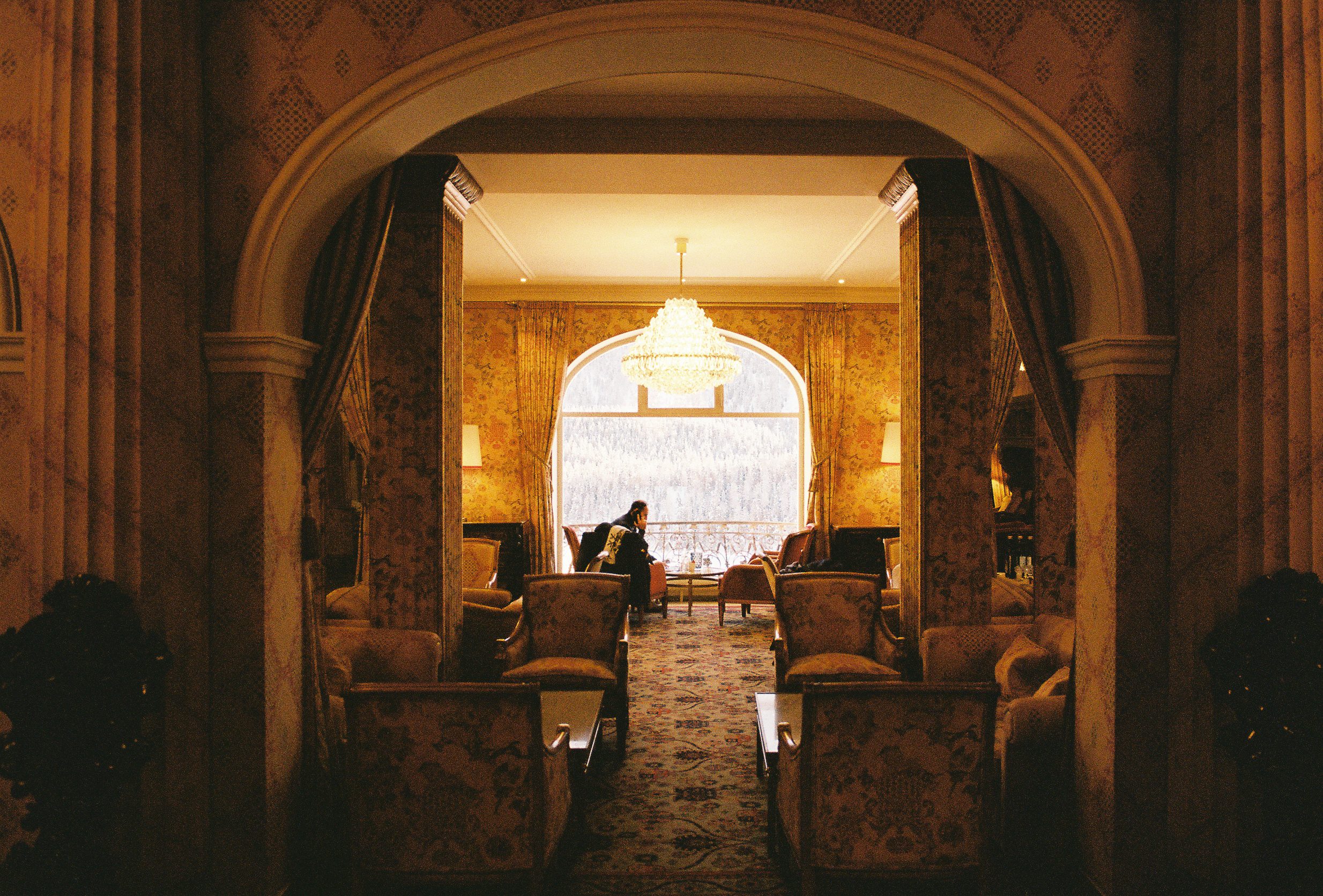
The lobby lounge at Kulm Hotel, photographed by Konstantin Arnold
Reflections in the Kulm lobby
After the meeting with Heinz, I walked around the hotel for a while, still exhausted. You always think, ‘it’s over now,’ but it wasn’t. I settled into the lobby, its comfort almost unbearable without sleep. I nodded off, with the wall behind me and the world in view. Once again, I was struck by the beauty of these chairs. You notice them the first time, but you don’t realise how much they struck you. They’re colourful and have women’s faces in gold at the end of the armrests, which you can stroke as you sit down. Some of the women who came by looked remarkably similar. If you spend half the day there and you don’t have any inhibitions, you’ll meet all sorts of fascinating characters throughout the day: opera singers undergoing proton cancer treatment, people who sell bread and jewels in the same store, and friendly Slovenian waiters. It is the true living room of St. Moritz. The lobby at Badrutt’s is too hectic, too many people who are obliged to be there – the usual few days a year: say hi, play the game, leave. The one at Suvretta is too big to be truly cozy, though at least you can smoke at the bar.
Read more: Inside Aston Martin’s Valhalla and Vantage
So, what does the Kulm mean to me now? Tweeds and the lobby. Cornelius, the concierge. Angelo, the sommelier at the Dracula and breakfast room. A Portuguese woman walking down the lobby in a white ski dress, her brown hair tied up, gold earrings glinting. And what else? Andrea at the country club and the Slovenian waiter who always liked to talk to me when I was sitting here, the Russian aristocrat who skated every day and sipped tea in the lobby. But definitely Heinz E. Hunkeler, who likes to go hunting and whom I saw many times that day, talking and sitting with various guests until dusk fell. I have no idea how he manages it all.
Konstantin Arnold
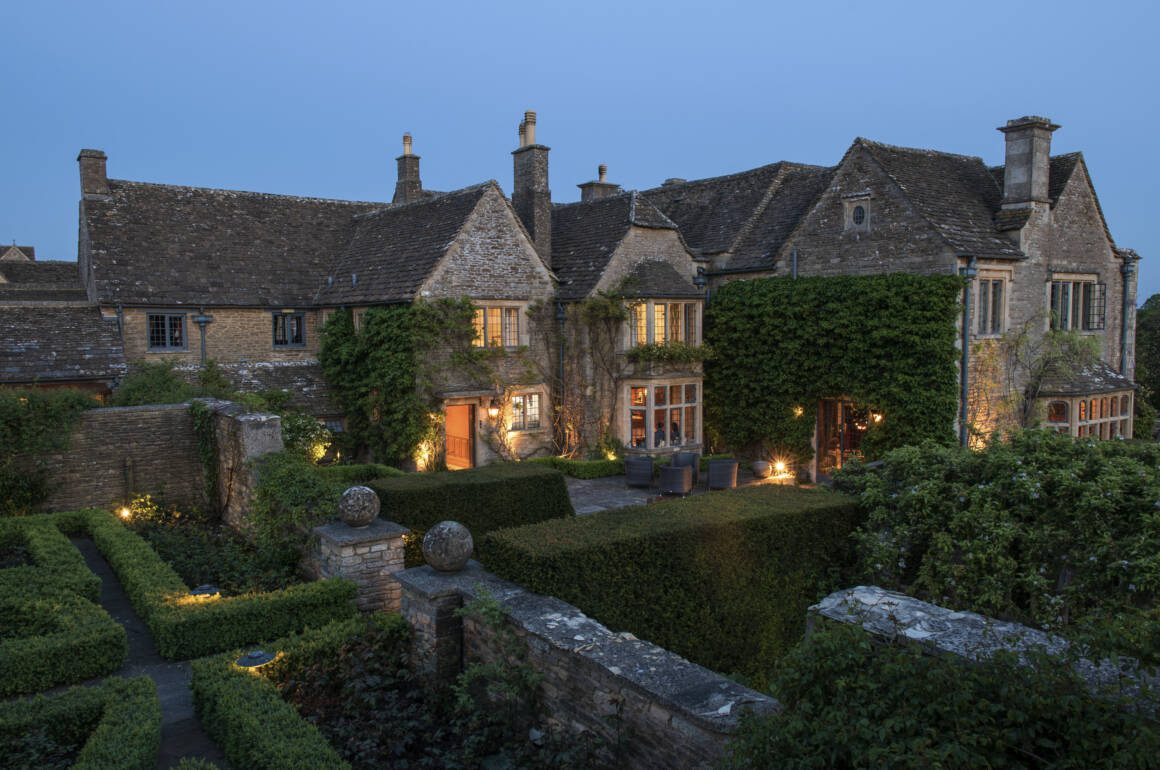
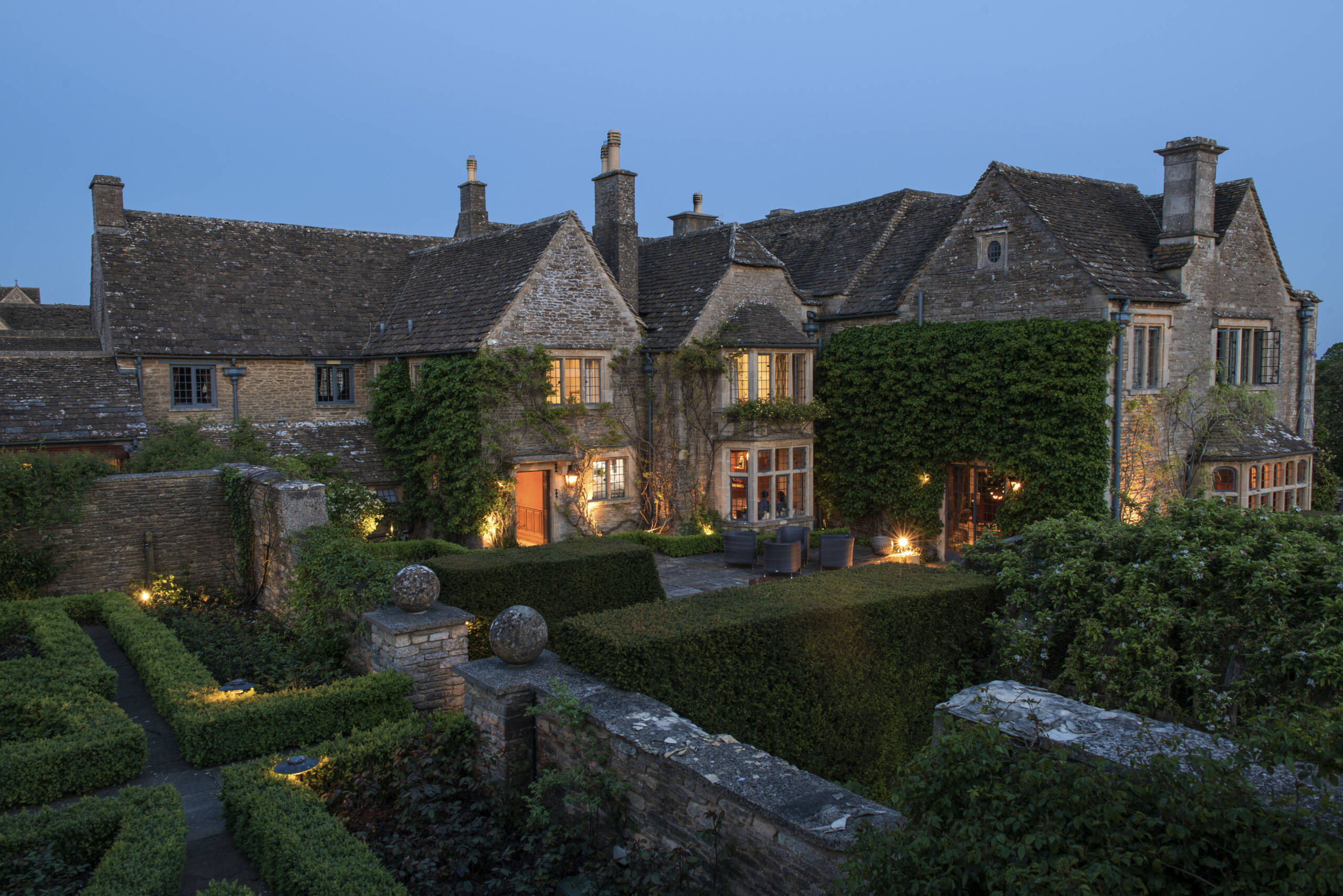
The exterior view of Whatley Manor, a luxury hotel located in the Cotswolds
Looking for a short early spring break in Europe? Look no further than these gems: Whatley Manor in Britain’s Cotswolds, the Ca’ di Dio on Venice’s waterfront, and the Westin Valencia, in a historic building in the heart of the city
Whatley Manor
The Cotswolds in England have become the most fashionable country retreat in the world. This is partly because of it’s history and natural beauty, and partly it’s location, which is just far enough from London to feel remote but not so far that you get bored driving there in your Range Rover from your home in Notting Hill.
Follow LUX on Instagram: @luxthemagazine

The cosy yet decadent lounge reception at Whatley Manor
But the Cotswolds are much more than just the patch of land between Chipping Norton and Broadway, in which the most frequently spotted wildlife has been become art collectors and beauty influencers from West London.
These hills, valleys and forested plateaux actually stretch in an arc southward for 100 miles towards that other emerging fashionable countryside zone of Somerset.
And it is towards the southern sweep of the Cotswolds arc that we find Whatley Manor. Five minute’s drive from the astonishingly lovely town of Malmesbury with its 900 year old abbey, you approach the Manor along an appropriately long driveway surrounded by gardens and fields.

A view of the stately gardens at Whatley Manor
A wooden drawbridge-style door swings open automatically to lead you into a courtyard where you are met by friendly staff unloading your luggage from your two-seater (we recommend Aston Martin or possibly a Morgan) before parking it out of sight at the side.
Read more: A conversation with artist Enoc Perez
This stately house is located on a ridge, and on the other side a pretty formal garden gives way to a field which in turn drops down to a river, with more fields and forests rising on the riverbank.

A bedroom suite at Whatley Manor
Views are enormously important in any countryside experience and we are continually amazed at the number of country hotels that don’t manage to provide one. But you haven’t experienced this properly until you head to the outdoor hydrotherapy pool, situated in a private spa area with its own garden on the valley side of the hotel.
While you get pummelled by water jets on a starry evening, you are treated to a view of planets, stars and the dark outlines of the hillside and valley opposite. This is a truly unique experience and it is worth the visit for this alone.
The spa area also contains a series of rooms of varying temperatures, so you can go from cool to warm to hot and back again: good for the soul, and certainly stimulating an appetite.

The understated and intimate Michelin-star Dining Room at Whatley Manor
On our first night we dined in the Michelin-starred Dining Room restaurant, an excellently crafted experience which began with cocktails and “yesterday’s bread” – an utterly delicious secret concoction – in the big, accommodating lobby bar area. This was followed by a taster in the show kitchen, chatting to the chefs while watching the brigade of fellow members putting together dinner. Then, a tasting menu in which each ingredient shone, while being enhanced by the technique and skill of the chef: a far more subtle feat than just combining ingredients and sauces. This was soft power at its best.
Read more: A tribute to Don Bryant
That kind of food is wasted if you do it every night, and on our second day we stayed in the lobby area and had an equally superb casual meal of grilled fish, steamed vegetables and some superb English wines.

Guests are offered a tasting menu which highlights each ingredient – in this case, rhubarb – while being enhanced by the technique and skill of the chef
Our room looked out onto the beautifully tended gardens, river and woodland: a suite, with a living room and bedroom separated by a bathroom whose windowside bath probably had the best of view of all. The decor is a modern take on traditional – minimalist walls with little decoration, no chintz, no carpets, an extremely high-quality bed as benefits this hotels Swiss ownership, and a feeling of craft throughout. Too minimal? Some might prefer rugs underfoot and more art on the walls, but nobody can doubt the quality of this endeavour.
As new country house hotels have opened in the Cotswolds, so they have become increasingly hectic and crowded due to the region’s popularity. Whatley Manor feels truly grown up, sophisticated, professionally run, and offers a big and beautiful oasis of tranquillity.
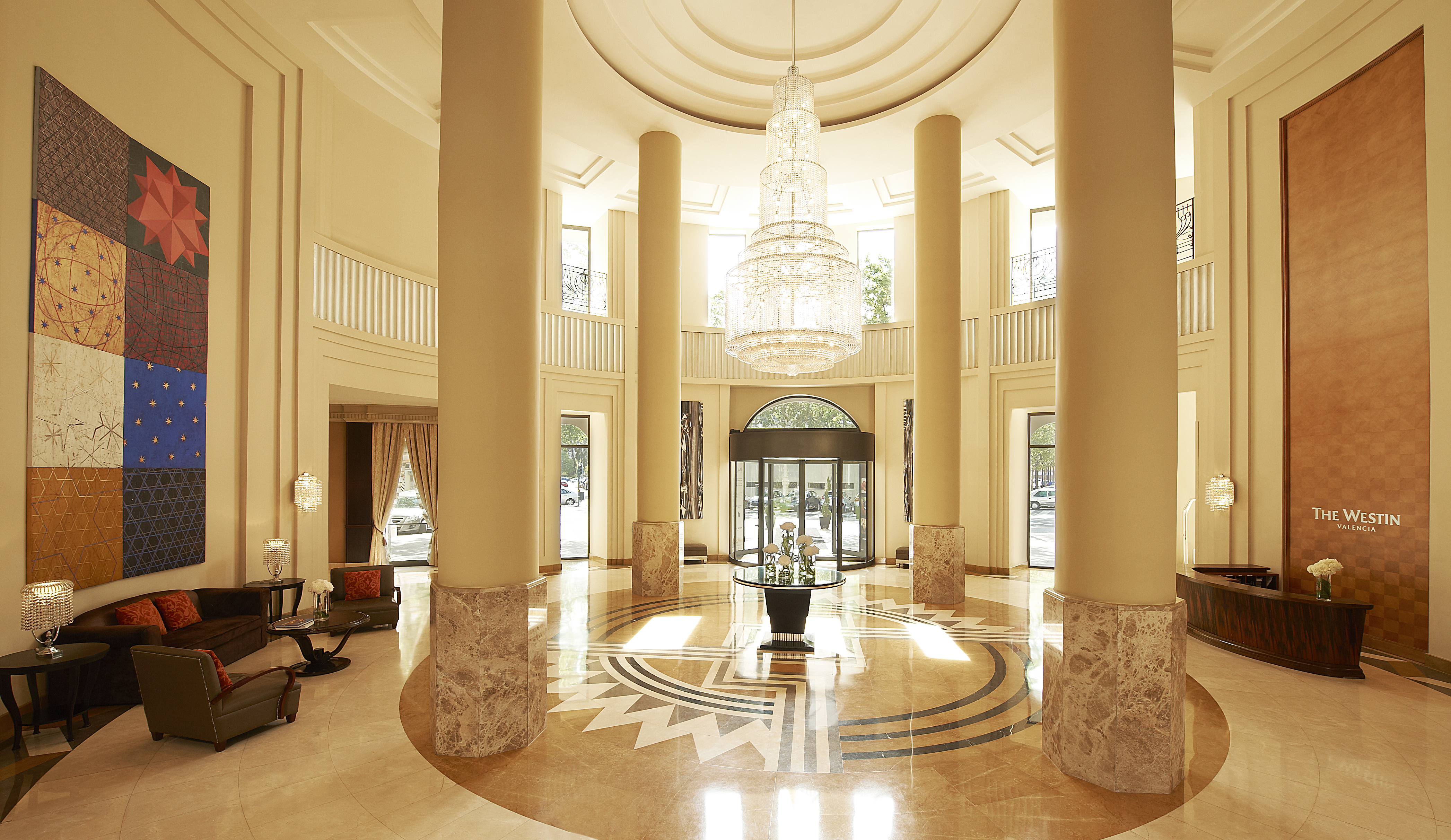
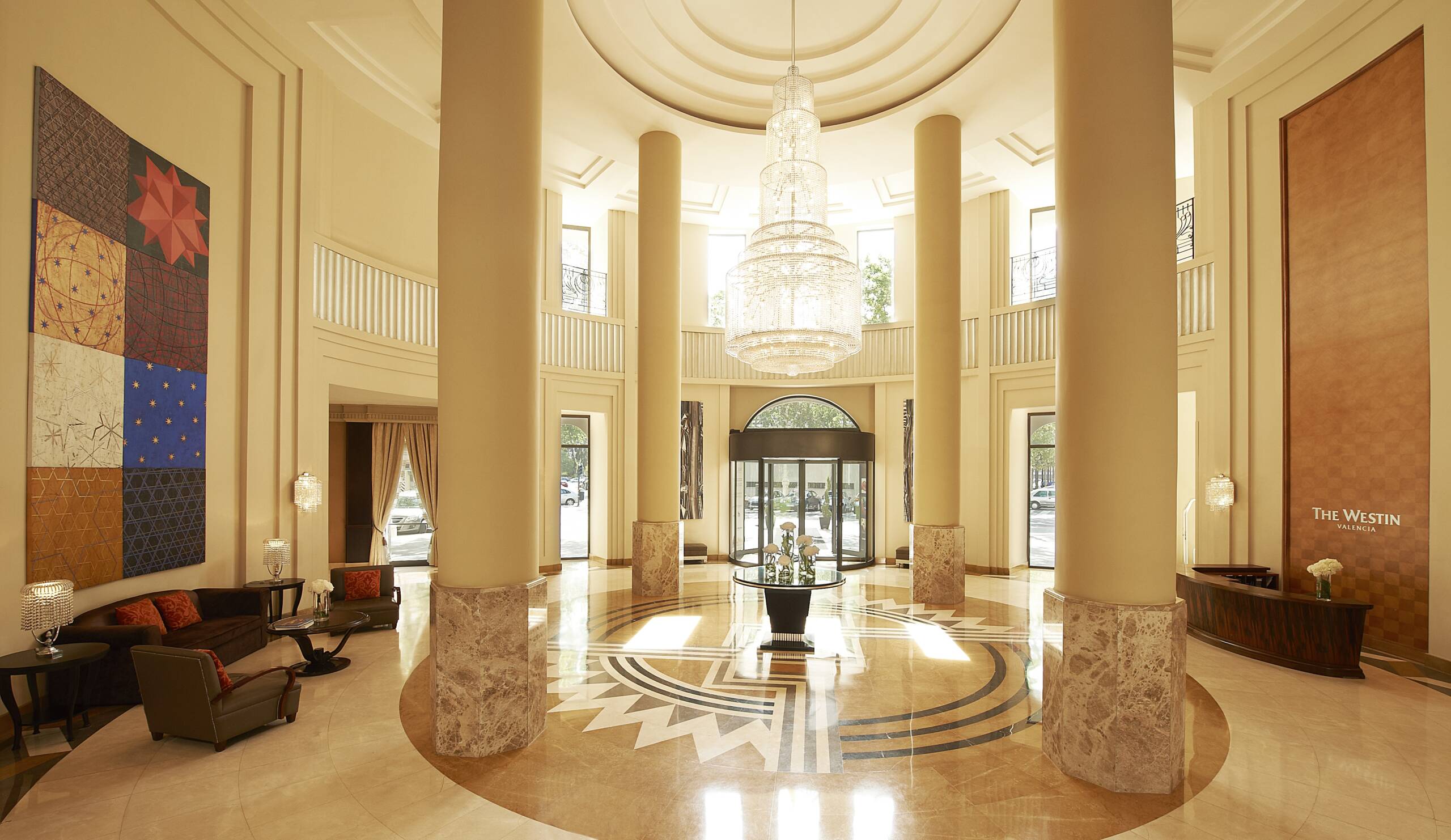
The airy lobby of the 5-star Westin Valencia Hotel
Westin Valencia
Can a city break to a vibrant southern European metropolis also be tranquil? It certainly seemed the case arriving at the Westin Valencia. The hotel is built into the stone walls of a former factory, low rise but with significant feeling, beautifully transformed with a light and airy atrium lobby area, and a stunning courtyard studded with orange trees with tables scattered throughout. Get a room facing the courtyard and you are in complete privacy and peace; our room faced outwards and had a big terrace on which you could spend long afternoons sunbathing.
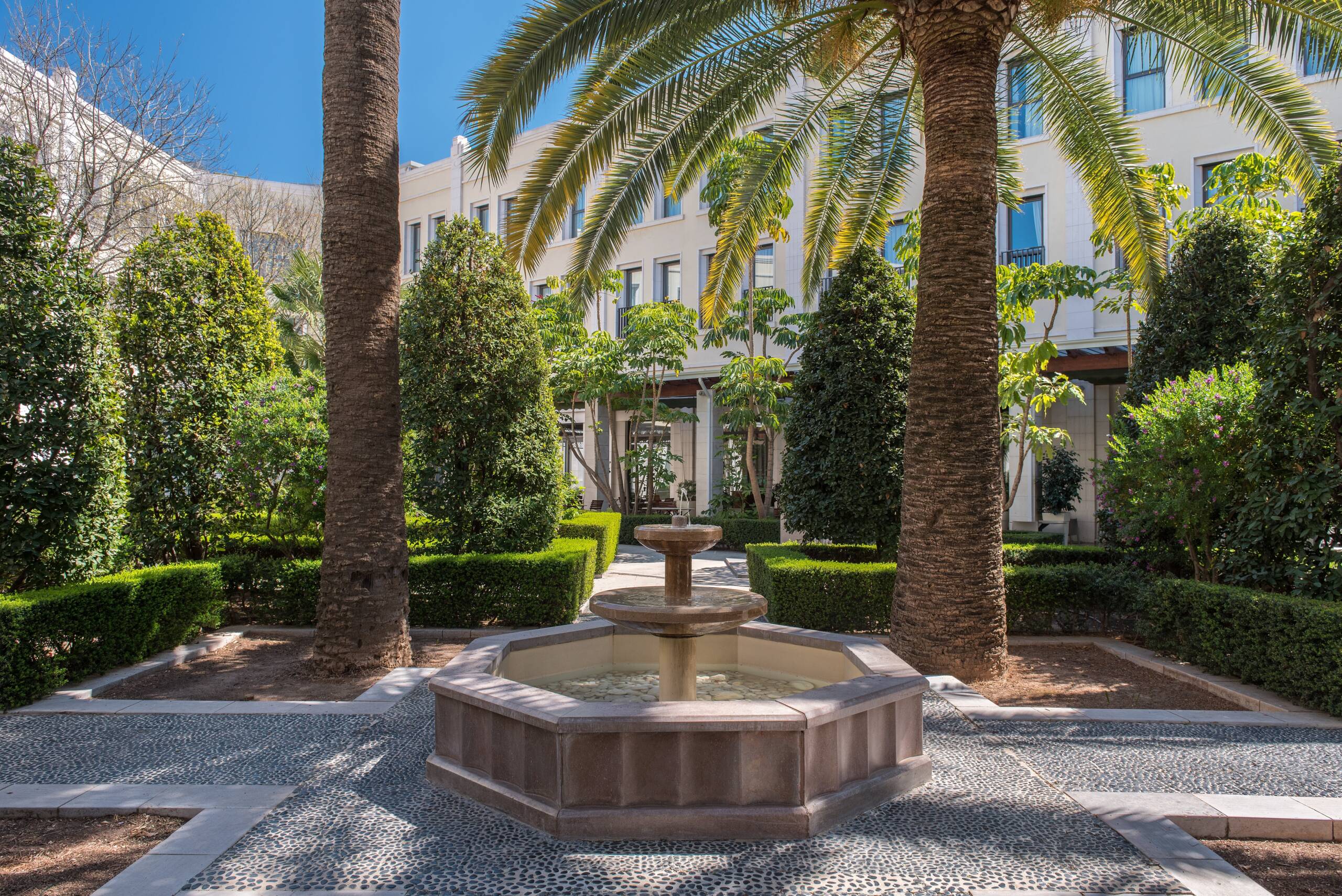
‘Get a room facing the courtyard and you are in complete privacy and peace’
But that would be a shame as there is so much else to do – even within the hotel itself. The award-winning bar, high ceilinged but perfectly lit and atmospheric, is a place to try adventurous cocktails including some legendary creations made with seafood, and also some excellent more traditional drinks – we enjoyed a Negroni and champagne cocktail.
Read more: Luxury travel from the Alps to the Persian Gulf
We find breakfast is often a test of hotels’ gastronomic intentions and ability. Do they simply stick some stuff on a buffet and hope people enjoy it? In the Westin’s case, breakfast is in a big and light high-ceilinged room looking out onto the courtyard where you can eat in the warmer months.
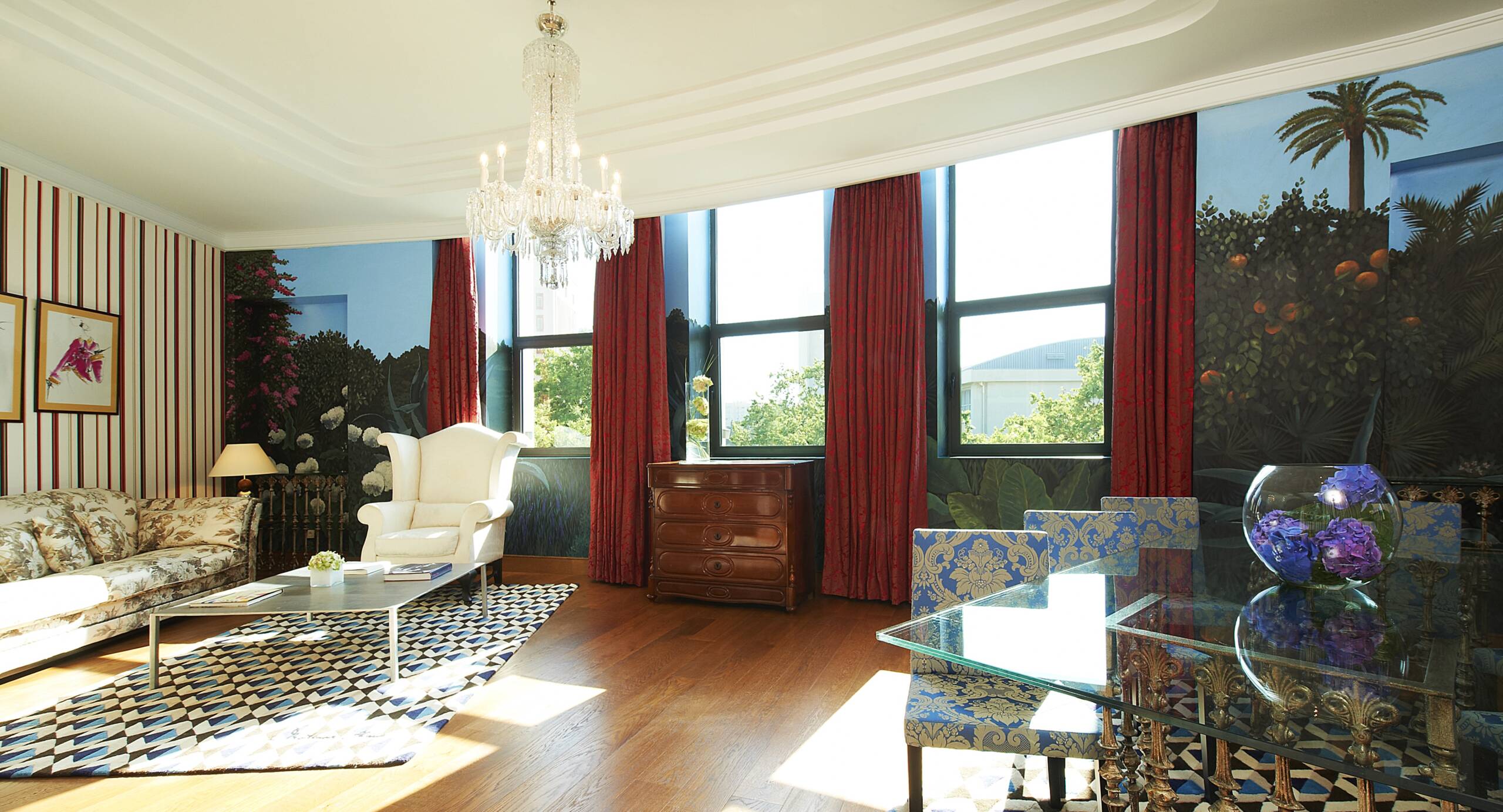
The living room of the Westin Valencia’s Royal Suite
The buffet was vast and plentiful, as you would expect, but also extremely skilfully put together with high-quality ingredients. Freshly sliced and seasoned salmon, avocado that came with its own salad and garnishes rather than simply dumped on a plate, a huge array of bread, fruits, vegetables…
The best of American generosity and service in a beautifully restored historic building in the heart of one of Europe’s most interesting and vibrant cities? You’d better believe it.

The unassuming exterior of Ca’ di Dio hotel, by the Arsenale water bus stop
Ca’ di Dio, Venice
Is there a best location in Venice? The locals and experienced visitors would certainly say so: probably halfway down the grand canal where you have a vista of the stunning palazzo facing you and easy access to all the city’s brilliance.
Read more: Ronnie Kessel’s insider guide to St Moritz
But other icons are also available. Most would probably agree that your ideal place to stay needs to be on the water – it’s a little disappointing being in Venice and having a view of the street.
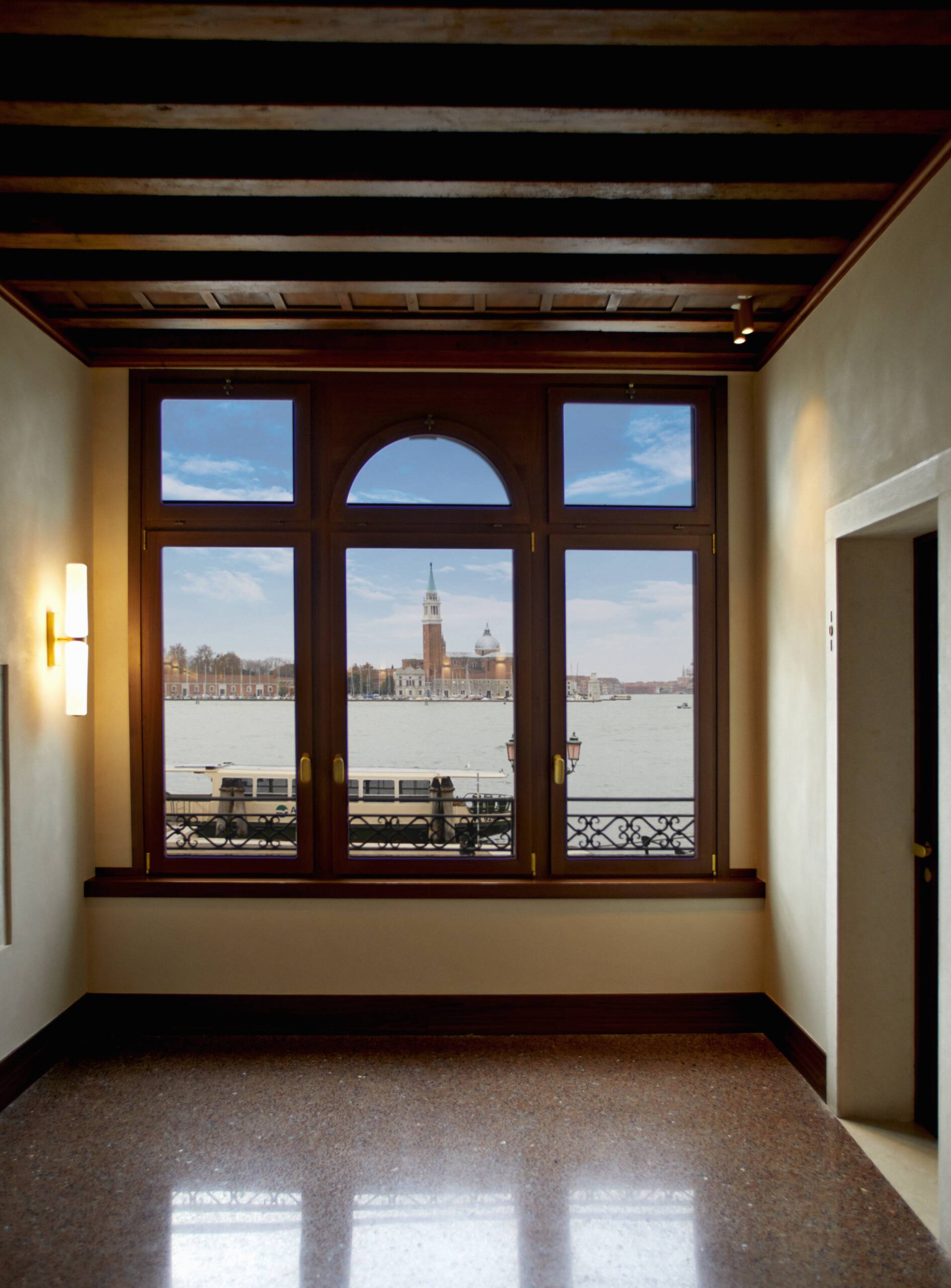
Ca’ di Dio contains hints of its history as a 15th-century monastery
A visitor needs both history and a view, and for us the location of the Ca’ di Dio hotel is quite astonishing. Alight from your water taxi at the Arsenale water bus stop and your Google Maps tells you are right in front of your hotel. Your eyes, however, may wish to differ.
There are no hotel signs or frontages, nothing at all except a beautiful building many hundreds of years old with odd-shaped windows, facing the water. Look a little more closely, though, and you notice a couple of discreet wooden tables outside the doorway. This is indeed Ca’ di Dio, a converted 15th century monastery.
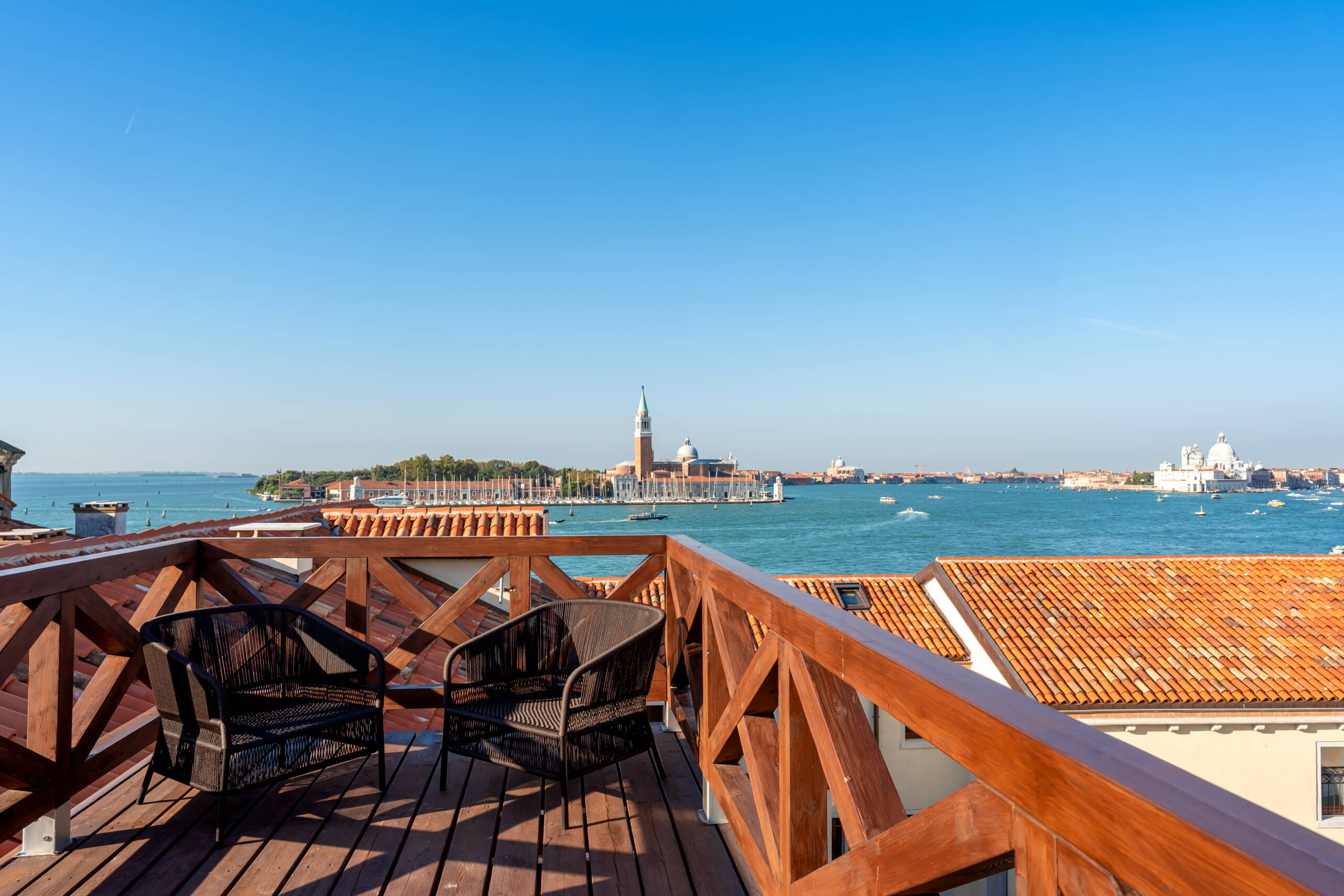
‘A visitor needs both history and a view’
Walk in, and there is nothing remotely monastic about the style and luxury that greets you in the reception area, with its vaulted ceilings and very 21st century contemporary furniture. We were given a quick tour – the bar is in one wing and the two wings are separated by a tranquil and grassy courtyard bordered by one of the hotel’s restaurants, and our room was in the other wing, the original monastery building.
Read more: Coralie de Fontenay on women luxury entrepreneurs
Our suite had a perfectly round window, like a porthole, through which one could peer at the locals and tourists ambling along the waterfront, by the lagoon, with the view extending to the various churches, palaces and buildings on outlying islands.
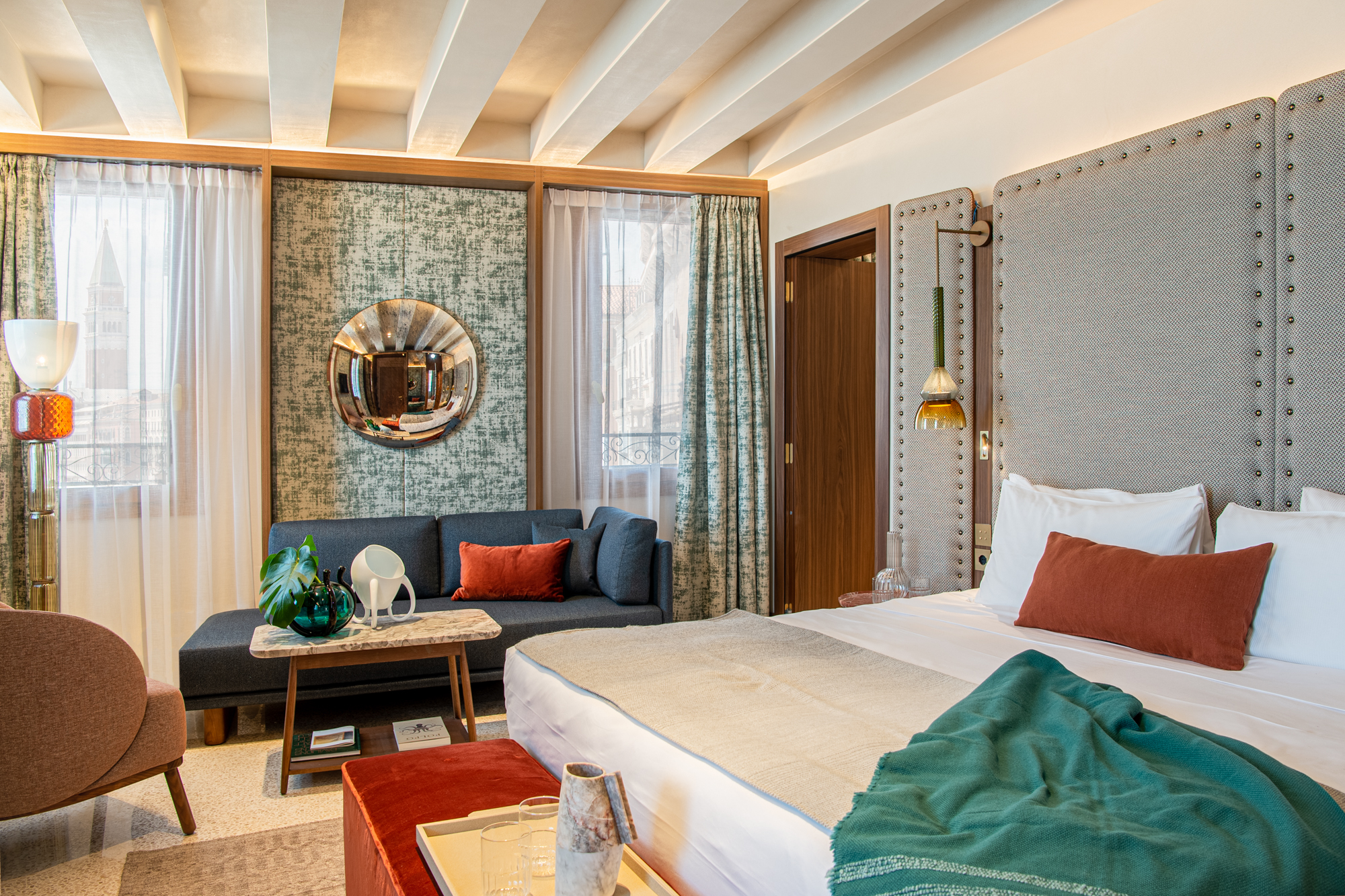
‘The suite, despite its ancient providence, is contemporary and chic’
The changing of the view in the different lights of day, dusk and night was mesmerising, as was the way it changed from blue sky and sunshine to a typically Venetian mist one evening. The suite, despite its ancient providence, is contemporary and chic. There was a cocktail bar, a bathroom straight out of the design fair with a freestanding tub and view both sides, out across the lagoon and the back across the courtyard.
Italian breakfasts, even in luxury hotels, can be little disappointing: it’s as if the culture which is so invested in food at lunch and dinner and times in between just views ‘la colazione’ as an opportunity for some espresso, saltless white bread, a piece of fruit and boiled egg.
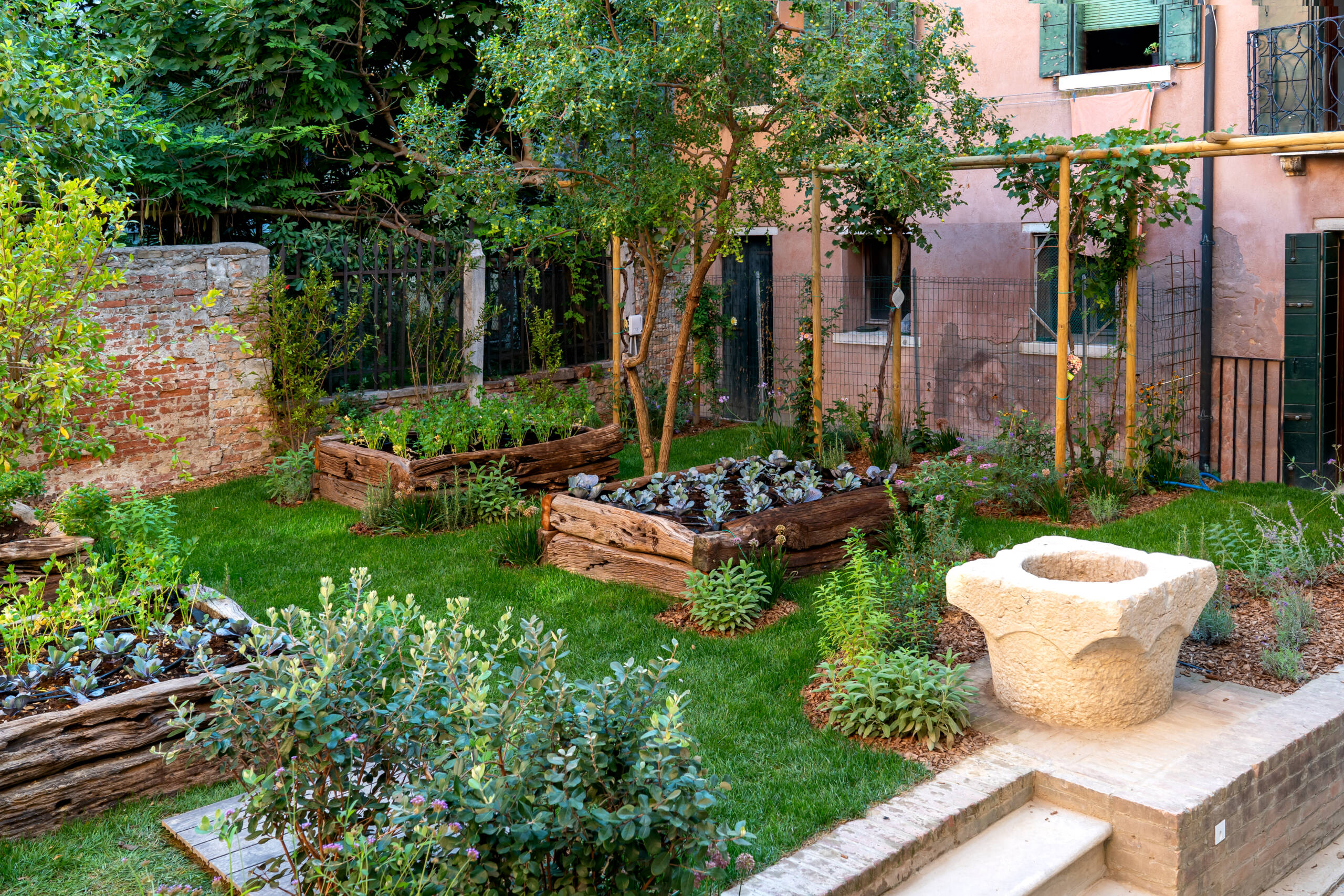
Horticulture in the gardens of Ca’ di Dio, where herbs and fresh produce are grown
The alternative in some modern luxury hotels is the full American spread which is not exactly local., But this was a tribute to the imagination and determination of the hotel’s chef – more on whom, later. One entire section was given to home-made cakes and pastries, made fresh every day, not just a token selection but a pastry shop worth of chocolate cakes, fruit tarts, and elaborate pastries and everything in between. Loved it.
Read more: Binith Shah and Maria Sukkar on UMŌ’s ultimate luxury
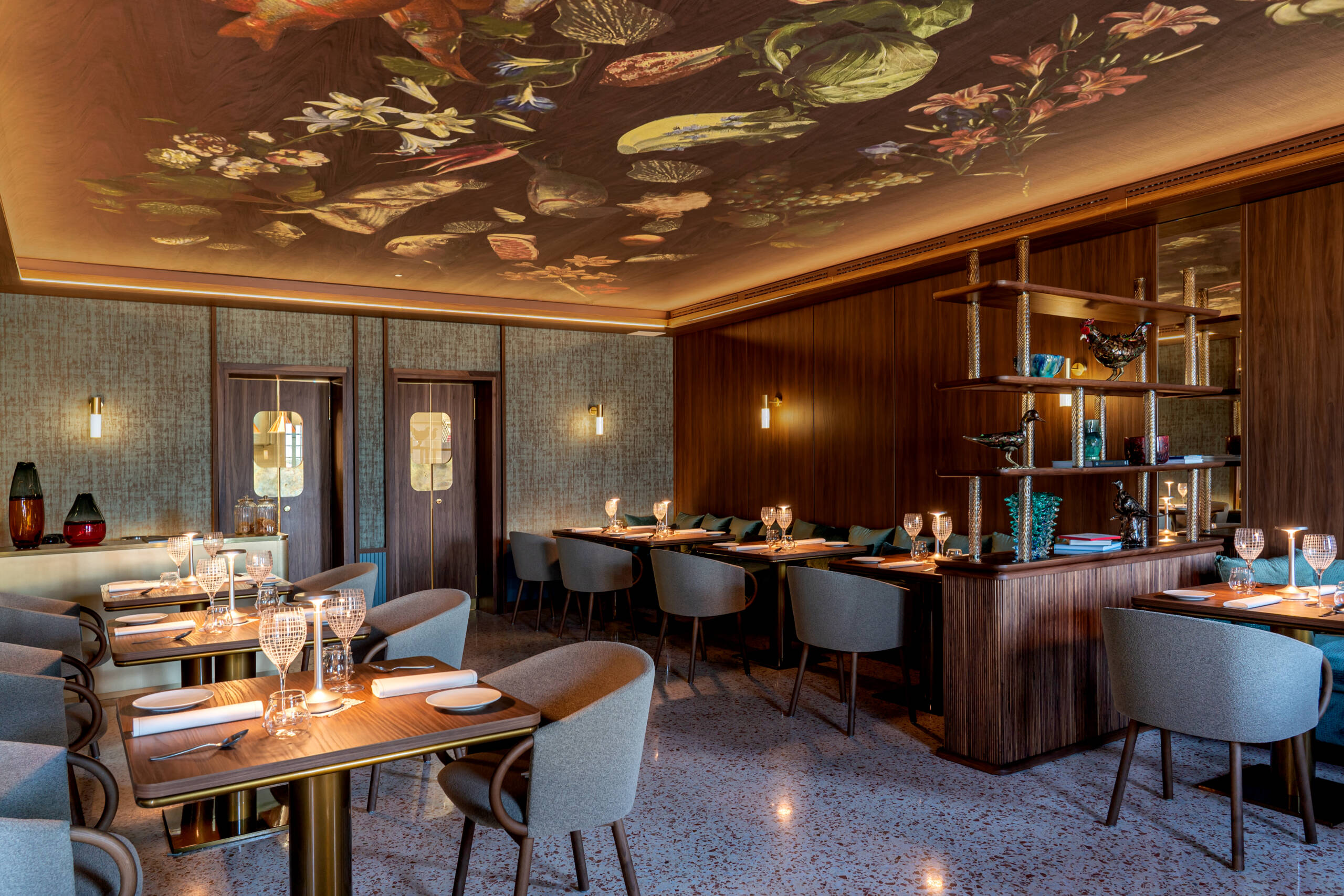
The restaurant VERO at Ca’ di Dio is run by Luigi Lionetti, who just won the award for Italy’s greatest chef under 30
But breakfast was just a precursor to dinner – separated of course by a day wandering around Venice. The Dio’s location is refreshing after staying in any hotel crammed in the centre of the narrow laned tourist district. Here, people wander slowly along the wide waterfront towards the Giardini; meanwhile just to one side of the hotel is the access waterway to the grand gates of the Arsenale, once the world’s biggest naval dockyard and the source of the city state’s power hundreds of years ago. You can still feel it now. But back to dinner, which was precursed by a cocktail one of the little tables discreetly placed outside on the promenade.
The restaurant, VERO, is run by Luigi Lionetti, who has just won the award for Italy’s greatest chef under 30. And this was evident in the precision and passion of his cuisine. Lionetti agreed to give us a sneak peek of his kitchen afterwards: certainly, a man on a mission, to judge not just by his creativity and control, but by his age and ambition.
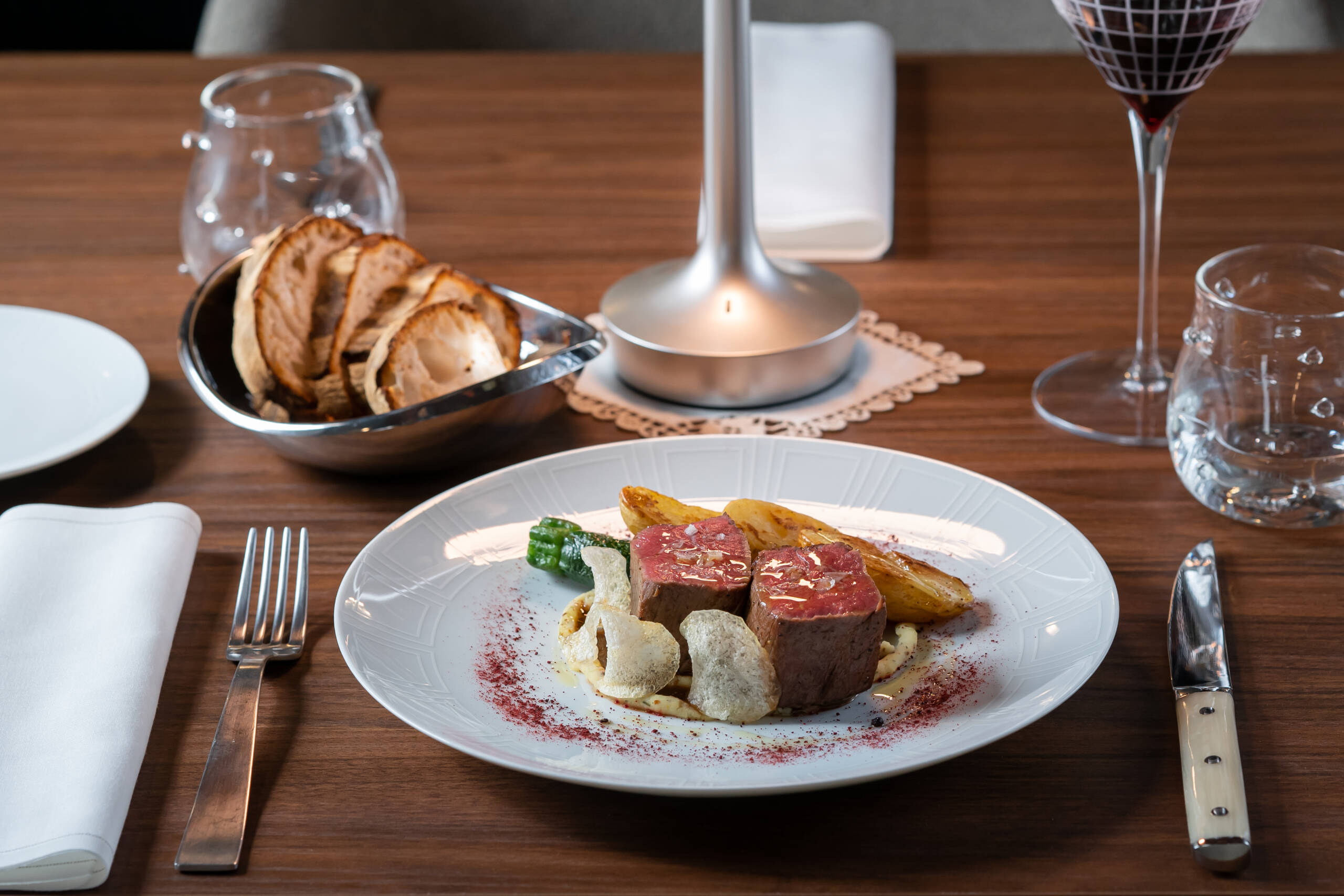
A main meal at the hotel’s restaurant VERO
Ca’ di Dio is an original and hard to classify creation (it opened during the pandemic) on the Venice hotel scene. A stylish, sophisticated, boutique villa, informal and without the weight of the classic luxury hotels, but just as chic, and big enough to have two restaurants, a big courtyard and the sense of being operated by a professional group. The only problem is we think it’s going to be booked out months in advance during the summer and attractions like architecture and art biennale. Book now to avoid disappointment.

The Anantara Ubud Resort family pool overlooks the green jungle which surrounds the whole resort
Nestled amidst the greenery of Ubud, in Bali, a wellness retreat awaits – Fabienne Amez-Droz reflects on the newly built Anantara Ubud Resort, where the surrounding jungle and the healing rituals provide a sanctuary for those looking to escape the winter cold
In recent years, Bali has undergone significant changes. Those who visited in the past will remember a very different island – one that has since, in parts, transformed into an Instagram hotspot, often overwhelmed by tourism. However, there are still places that have retained Bali’s natural beauty – spots that remain more untouched by social media hypes and globalization.
The newly bulit Anantara Ubud Resort, lies in the heart of Bali’s cultural and spiritual hub, Ubud. The resort offers a wellness sanctuary to visitors all of the worlds and blends luxury, tranquility, and authentic Balinese traditions.
Surrounded by green rice paddies and jungles, this hotel embraces the concept of a holistic getaway, providing an experience for body, mind, and soul.

Next to the family pool, the hotel also has an adult only pool
Refreshing welcome
After a approximately 50 mins car journey from Denpasar airport to Ubud, you will find the gate of the resort. From the moment you step into the Anantara Ubud Resort, you will receive a warm welcome from the Anantara staff, a tropical flower to put behind one of your ears and a refreshing herbal drink. Good to cool you off after a perhaps sweaty journey from a long overseas-flight. The open-air lobby is equipped with Balinese art and natural stone elements.
Follow LUX on Instagram: @luxthemagazine

The One-Bedroom Forest View Pool Villa offers a private space to take in the views of the jungle
Queen of the jungle
The resort offers different kind of accomendations. From Forest view suites in the main resort building to private villas overlooking the jungle. My forest view pool villa was a blend of modern elegance and Balinese charm, featuring floor-to-ceiling windows that framed the views of the jungle. The private infinity pool was a personal highlight, providing a very instagrammable spot.

The One-Bedroom Forest View Pool Villa costs 852.50£ per night
Cleansing rituals and manifesting
Anantara Ubud’s wellness programs are perhaps not for everyone but certainly interesting for a niche wellness and energy-sourcing clientel. The signature rituals that they offer, draw on centuries-old Balinese healing traditions. I started with the Water Purification at the Mengening Temple, a guided experience that takes guests to a sacred water temple nearby, where you can cleanse your soul in the holy considered water and wash away negative energies through holding your head under little waterfalls.
Back at the hotel, I had a look at the multiple spa treatments that they offer and decided to treat myself, when in Bali, to a relaxing massage – the Anantara Signature Massage.

Make sure to wear some swimming clothes under the sarong as you will definitely get soaked
To stay in shape while trying lots of different Balinese dishes like Nasi Goreng and Betutu, the hotels has gym facilities and hosts daily yoga session. For someone like me, trying Yoga for the first time, I must say, it is a pretty perfect setting – It wont get any better after that, many told me..
For a deeper sense of connection, I visited stepped into a temple and joined a fire ritual session with a real balinese priest. During this ceremony which happens multiple times a week, we were sitting in a group circle, singing songs and throwing rice into a big fire to burn away the negative energy – Let’s see if it worked..

The lobby deck shows views on the Mount Agung and you can enjoy a sunset cocktail
Choice of restaurants
The culinary offerings at Anantara Ubud compliments its wellness aesthetic. The Botanic Restaurant serves organic, farm-to-table cuisine that’s as delightful to the palate as it is nourishing for the body. Highlights included a vibrant jackfruit rendang and a refreshing herbal jamu drink. For a more immersive experience, guests can ask for a private dining setup overlooking the pool and rice fields.

The Kirana Restaurant Terrace is the right spot to enjoy a peaceful breakfast and also for a western or balinese lumch menu – whatever you are in the mood for
Adventures through the jungle
Alternative to the wellness programmes, for action-lovers, the hotel offers a VW 181 Safari tour, where you and a personal driver explore the roads and ricefields of ubud with a restored vintage Volkswagen Type 181 convertible. In case you prefer walking yourself, there is a guided trek through the Campuhan Ridge Walk, showcasing Bali’s natural beauty.

The resort has 85 suites and pool villas
Find out more: www.anantara.com/en/ubud-bali
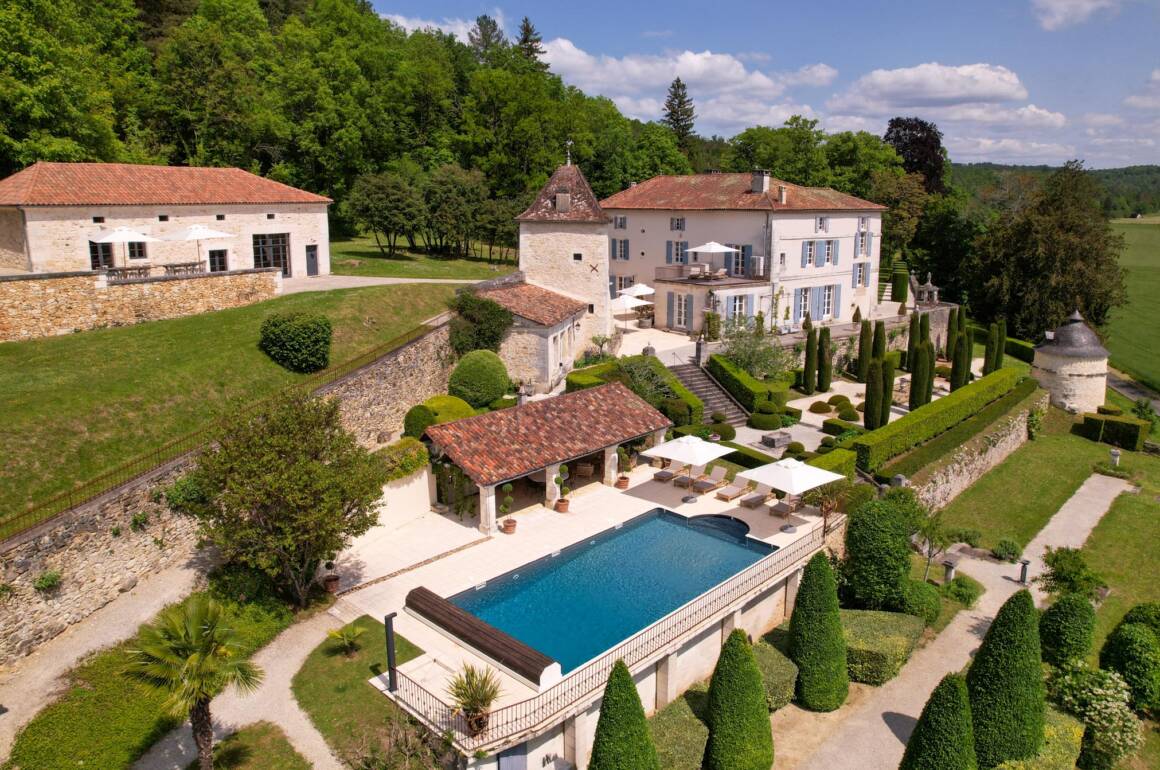
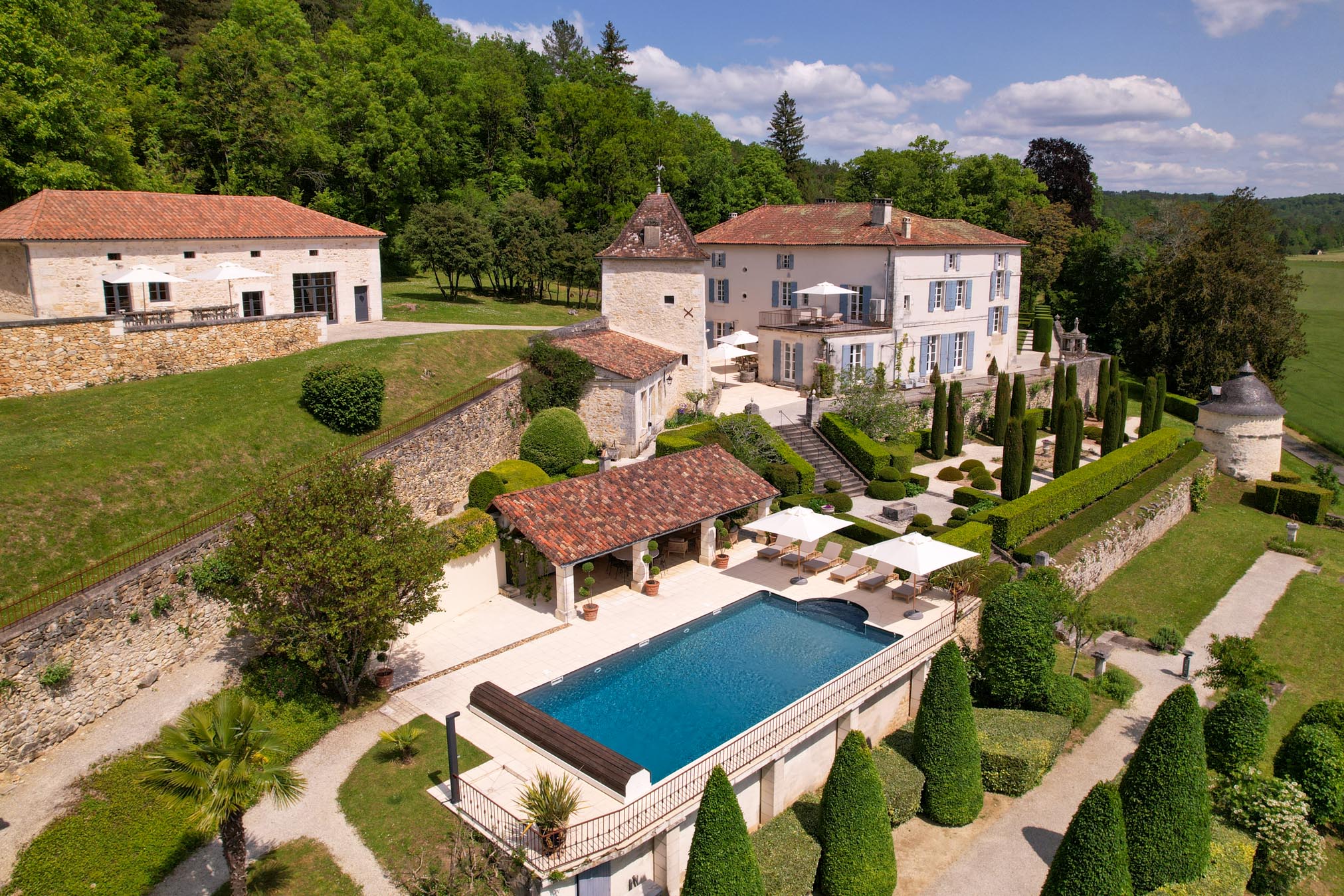
Domaine de Lavy, in the Dordogne, a historic, green and hilly region in Southwest France
In the heart of the historic Dordogne region, Domaine de Vieux Mareuil stands as a sanctuary-like estate with a simple yet profound philosophy: providing guests with freedom while preserving the land that defines it
Spanning 200 acres of forests, fields, and exquisitely restored properties, Domaine de Vieux Mareuil reflects the spirit of its creator, Laëtitia Morlat.
Madame Morlat’s family history dates back to the early 1200’s in Dordogne. She lives in the home she was born in and enjoyed her childhood in the Perigord Vert region. “I love every property because each one contains a part of my soul and my spirit,” she says. Madame Morlat’s intimate connection with the area and her determination to protect its future is at the core of the estate.

Laëtitia Morlat, owner and designer of Domaine de Vieux Mareuil
There are no rigid schedules, prefixed packages, or brochures dictating your stay at the Domaine. As Madame Morlat explains, “We want to leave each person that comes with an experience.”
Read more: Kempinski Palace Engelberg Review
Whether it’s a private dinner under the stars or truffle hunting with dogs in the forests surrounding the estate, the experiences are made bespoke to each individual. The idea is for guests to embrace the land they inhabit. Sustainability isn’t a buzzword at the estate—it’s a way of life.
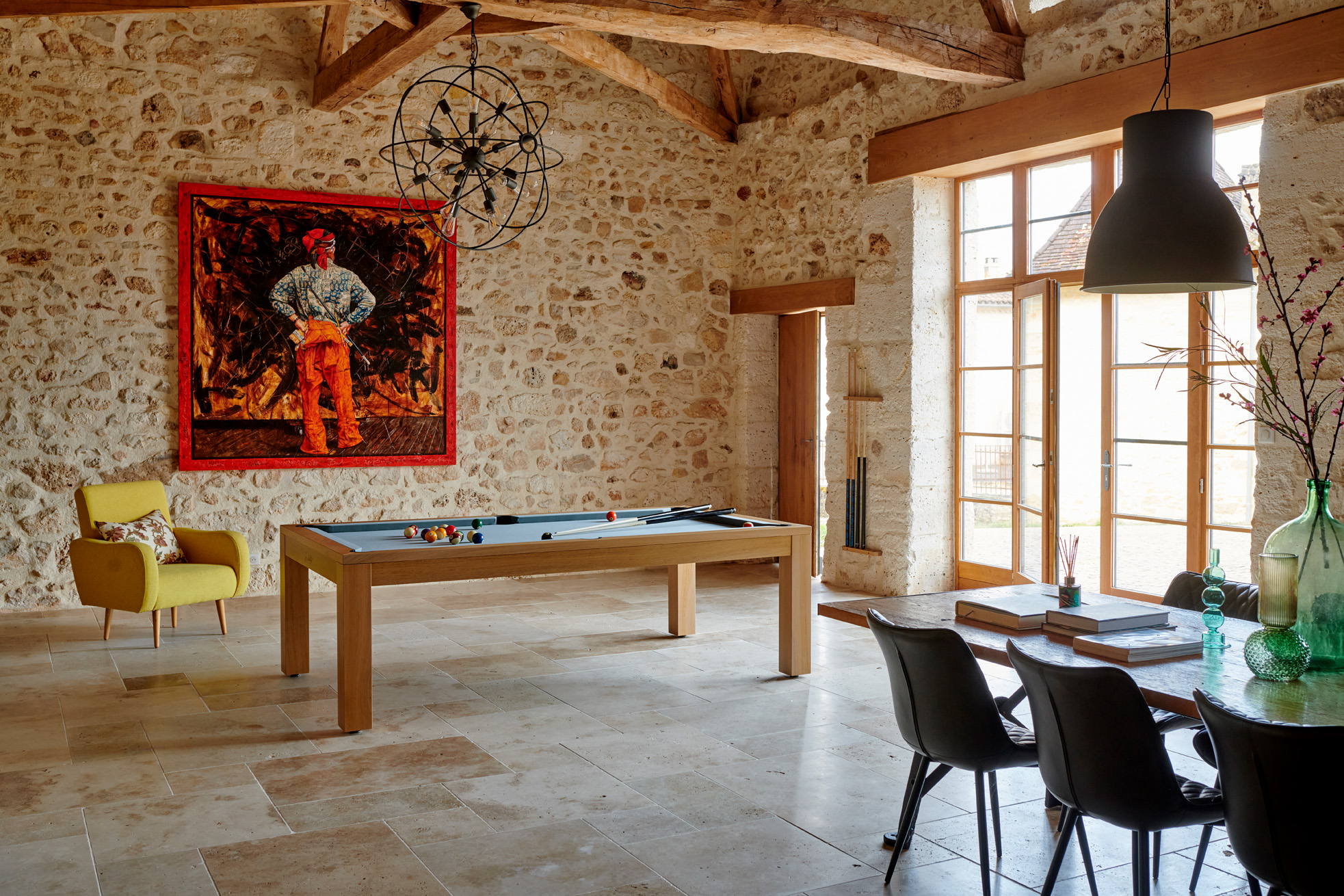
A modern style billiards room in the former Soldier’s House within Domaine de Lavy
From the moment you step onto the estate, it’s clear that the Domaine’s connection to the land is not performative but essential. A sprawling permaculture garden provides the chef with organic, seasonal produce, ensuring that meals are not just farm-to-table but deeply tied to the local soil.
Follow LUX on Instagram: @luxthemagazine
Partnerships with nearby producers keep the supply chain short, reducing the estate’s carbon footprint while supporting the regional economy. Even the furniture in the beautifully Provençal designed interiors is often sourced second-hand and restored—an approach that celebrates craftsmanship while embracing circular practices.

A sitting area in Domaine de Bagatelle with access to the garden and sweeping views across the valley
Madame Morlat’s experiences abroad, particularly in Japan, shaped her philosophy of finding beauty in simplicity. This is evident in the carefully curated art by local artists, and the hand-painted details on beams and fireplaces by her long-time friend and collaborator Christophe Boucher. These design choices mirror her commitment to preserving not only the spirit of the past but the environment’s future.

Each bedroom is meticulously personalised and named in Chateau de Chanet; the above is Chambre Josephine
The Domaine is a haven, not just for its guests but for the ecosystems it fosters. Solar panels power much of the estate, while beehives and insect houses support local biodiversity, and forest maintenance practices ensure the land remains healthy.
For Madame Morlat, sustainability isn’t separate from luxury; it’s integral to it. It’s about ensuring that the pristine landscapes that shaped her childhood, and now provide solace for her guests, will last for generations.
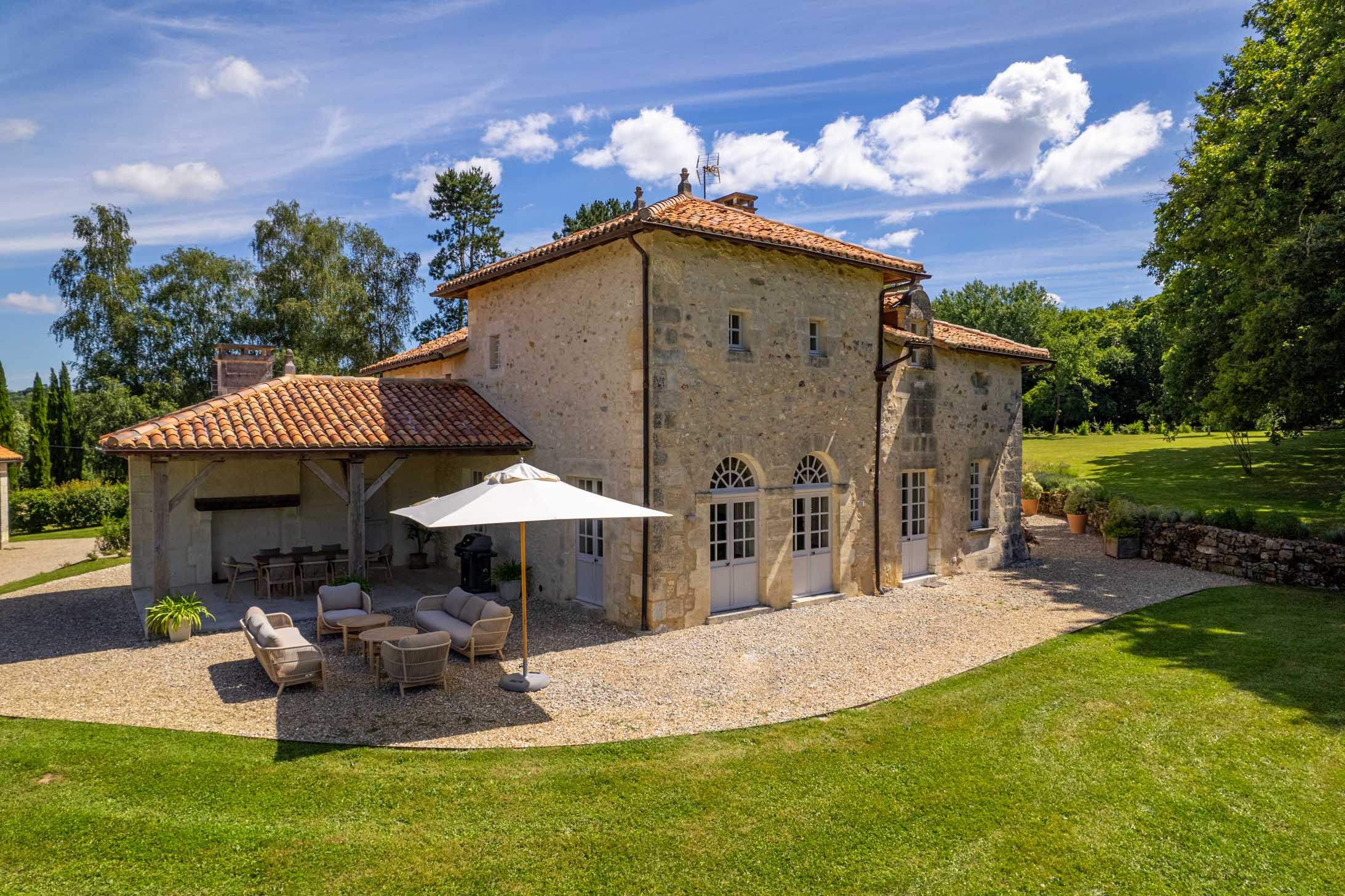
Villa de La Roussie
Madame Morlat’s approach to hospitality was shaped by a new era, a world redefined by the pandemic. Privacy is no longer just a luxury; it’s a necessity. At the Domaine, guests enjoy this freedom in every aspect, from how they spend their time to the exclusive use of spaces. “People come here for the freedom of privacy,” Madame Morlat emphasises.
Read more: Mandarin Oriental Lucerne Review
This ethos permeates the entire estate, offering guests the liberty to craft a stay that reflects their needs, desires, and imagination. The 44 staff aren’t just employees; they are collaborators who contribute to creating unforgettable experiences for each guest.
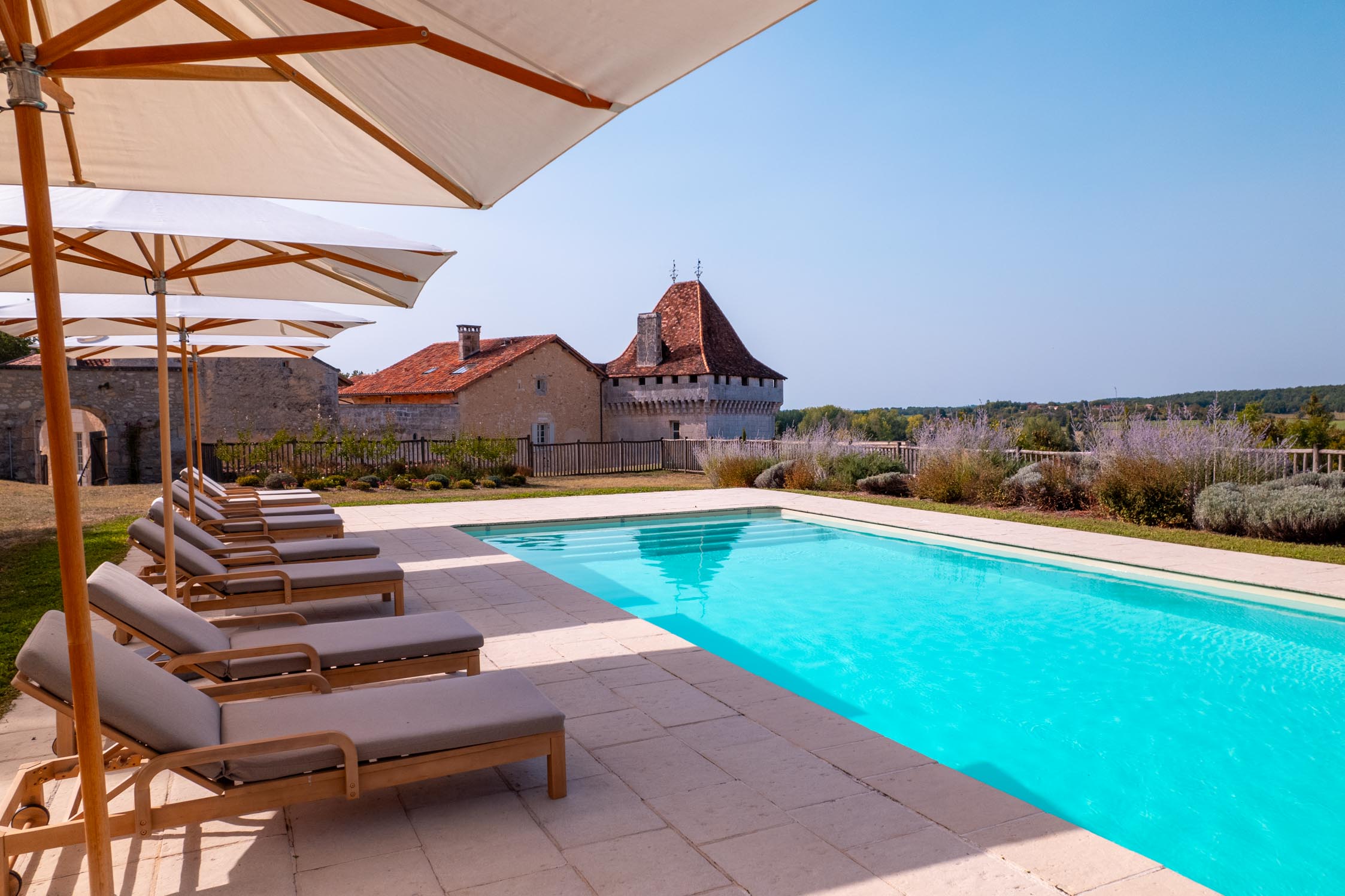
The swimming pool in Chateau de Chanet overlooks the gardens of the estate
Each of the four estates possess their own character, shaped by their unique locations, yet all share an attention to detail that show a commitment to quality and authenticity.
Château de Chanet, true to its name, exudes the stately charm of a castle while retaining an inviting warmth. Despite being the largest property within the estate, its wooden beams and thoughtfully designed interiors create an unmistakable sense of home. It is also where Madame Morlat and her husband spent their honeymoon!

The bright drawing room filled with natural light in Villa de La Roussie
In contrast, Bagatelle is for those who seek a more modern escape, reminiscent of a villa on the Côte d’Azur. Its sleek, minimalist design is complemented by breathtaking views, with a pool that stretches out toward the rolling hills of the Perigord countryside.
Domaine de Lavy is an entertainer’s dream. Nestled amidst lush green hills, this property comprises two separate houses, making it ideal for hosting large groups of friends or family.

Every nook is used to its full potential, even this chess corner at Chateau de Chanet
Finally, there is La Roussie, the smallest and most intimate of the estates. Set within a lovingly restored farmhouse, it’s ideal for creating cherished memories with loved ones; a place where the simplicity of rural life meets the refined comforts of the Domaine.
Read more: Prince de Galles, Paris Review
This is Madame Morlat’s legacy: not just a collection of properties, but a philosophy of love for a region, a history, and a future. At Domaine de Vieux Mareuil, luxury isn’t about excess – it’s about “intention”. That intention, like the estate itself, feels timeless.
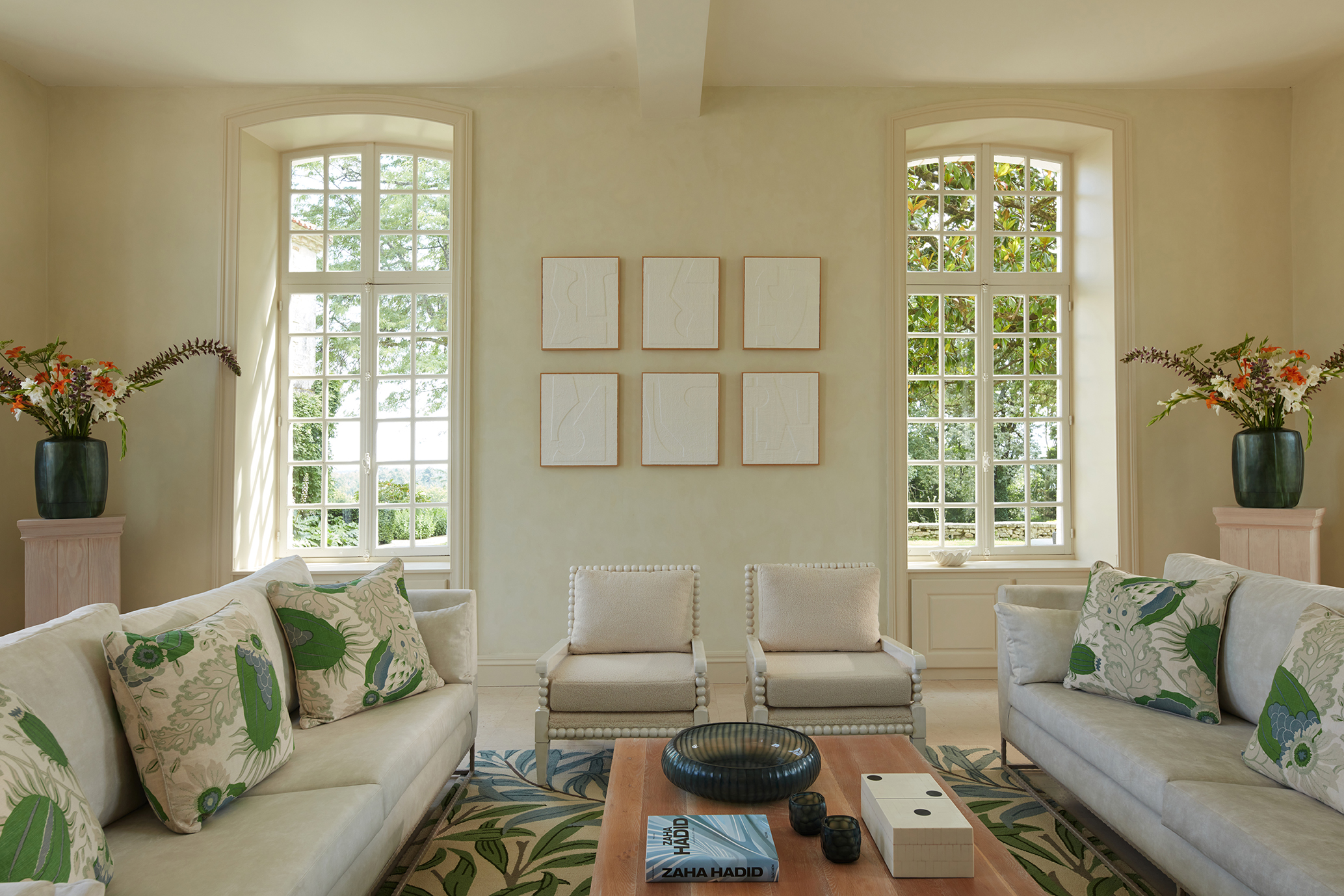
Domaine de Bagatelle’s design blends the elegance of the French Riviera with the distinctive charm of the French countryside
Rates: €6,500 Euros per night at Chateau de Chanet/Bagatelle Estate/Lavy €3,000 Euros per night at La Roussie Villa.
Minimum 2 nights stay

View of Santa Maria della Salute from a Terrace Grand Canal Suite
At the centre of Venice, looking over the canal and Santa Maria della Salute, there could not be a better place to stay on the final leg of your Grand Tour. A LUX editor recounts the ancient art, gondolas, and Bellinis of his recent stay at the Venetian-style palace of St Regis Hotel
As we settled down in the boat with a glass of Prosecco each, the outlying islands and churches of Venice started to waft past us. Then the landmarks start coming into view. For the last few minutes of the airport transfer, the boat slid through the little canals in the centre of the city and then emerged to drift past St Mark’s Square and the Doges’ Palace. Soon afterwards, we moored in front of a grand building and disembarked next to a terrace on the Grand Canal dotted with glamorous couples sipping Bellinis.
Follow LUX on Instagram: @luxthemagazine
Welcome to the St Regis Venice. Perhaps less known than some of its neighbours, it has the most spectacular arrival imaginable. And it goes on from there. Down the marble corridor we walked, through art-filled rooms that make the hotel a contemporary-art museum in itself – we particularly liked the whimsical works by Austrian sculptor Erwin Wurm. This is a place you could linger in without feeling the need to see any of the other artistic treasures around the city (although that would be a shame).

The Monet Suite, with its Grand Canal view
Our suite looked out over the Grand Canal and across to the Basilica of Santa Maria della Salute opposite, at the point at which the neighbouring island falls away into the lagoon. We could watch gondolas float along as well as the boats carrying out the daily business of Venice – tourism and sightseeing and deliveries. To the right, the Grand Canal curved away.
Read more: The intimate grandeur of the Grand-Hôtel du Cap-Ferrat
Even more immersive than our suite (which also featured a cocktail bar full of ingredients prepared in-house for us to pair with the supplied organic Prosecco) was the hotel’s breakfast terrace. Here you sit outside, centimetres from the water, having selected from a buffet adorned with fruits and very precisely cooked local specialities, and try to resist a first Bellini of the day, as the Venice world passes by on the water.
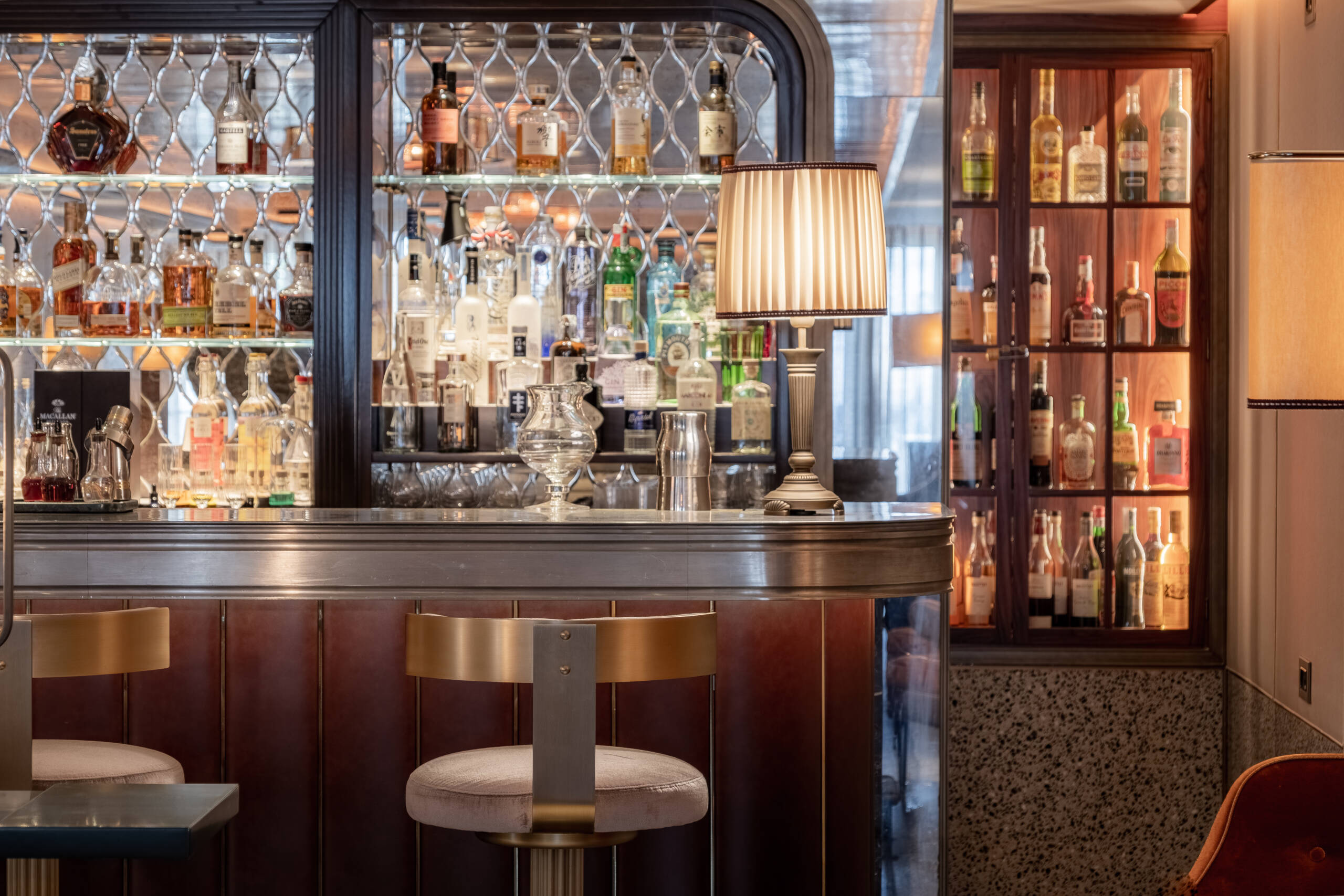
A seat at the luxury St Regis Bar
St Regis may be known for its palatial luxury hotels elsewhere in the world, but this is a Venetian-style palace, a bijou incorporation of ancient buildings fused with stunning contemporary art and design in the best location in Venice. We would not stay anywhere else.
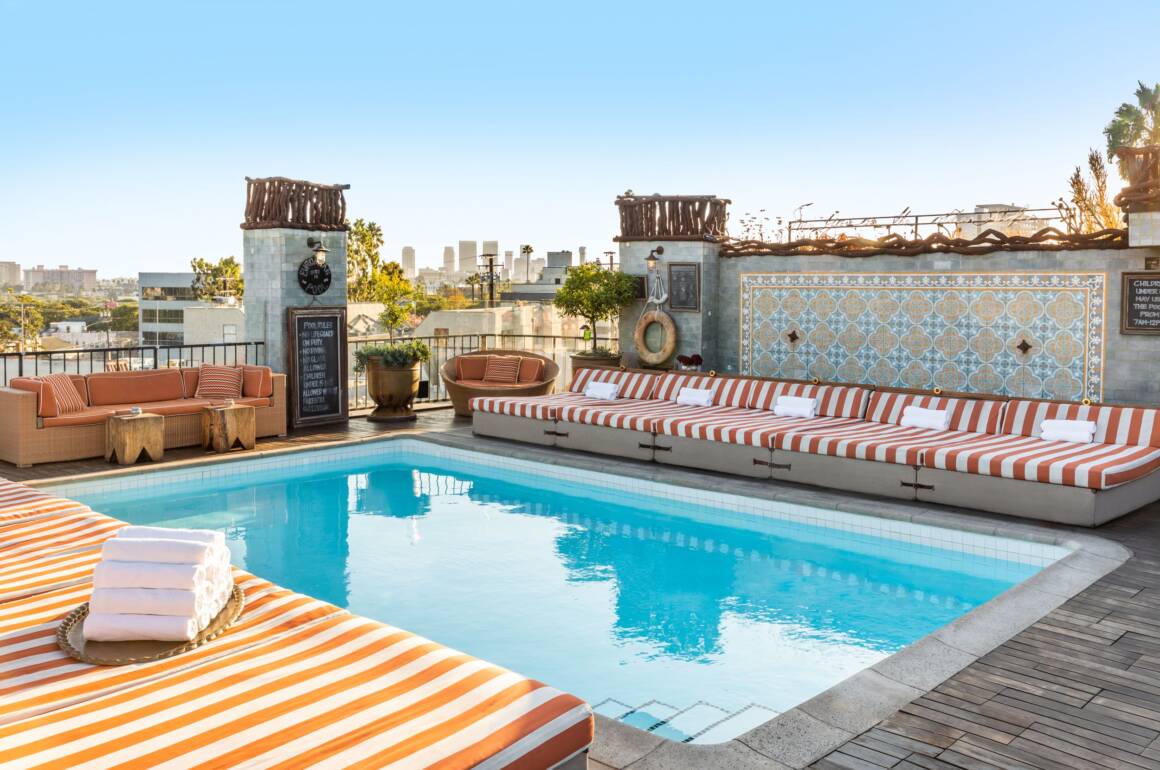
The original apartment building has turned into a hotel with 79 suites, each with either a small bar, kitchenette, and separate living areas, most of them having a working fireplace
Candice Tucker checks in to the Petit Ermitage, for a bohemian European escape in the heart of West Hollywood
The Wow Factor
If you didn’t know about the Petit Ermitage, you would likely walk past this discreet hotel, in the heart of West Hollywood, without taking a second look. Once you walk in, it’s a completely different experience. The hotel exudes an enchanting blend of bohemian chic and European elegance.
Follow LUX on Instagram: @luxthemagazine
The rooftop, a dreamy oasis, is the crown jewel with its lush garden, cosy fireplaces and red and white striped double lounge chairs surrounding the pool area. Art lovers will be delighted by the curated collection that adorns the hotel, including works by Miro and de Kooning. The ambiance is intimate and full of character—a perfect escape from the ordinary.
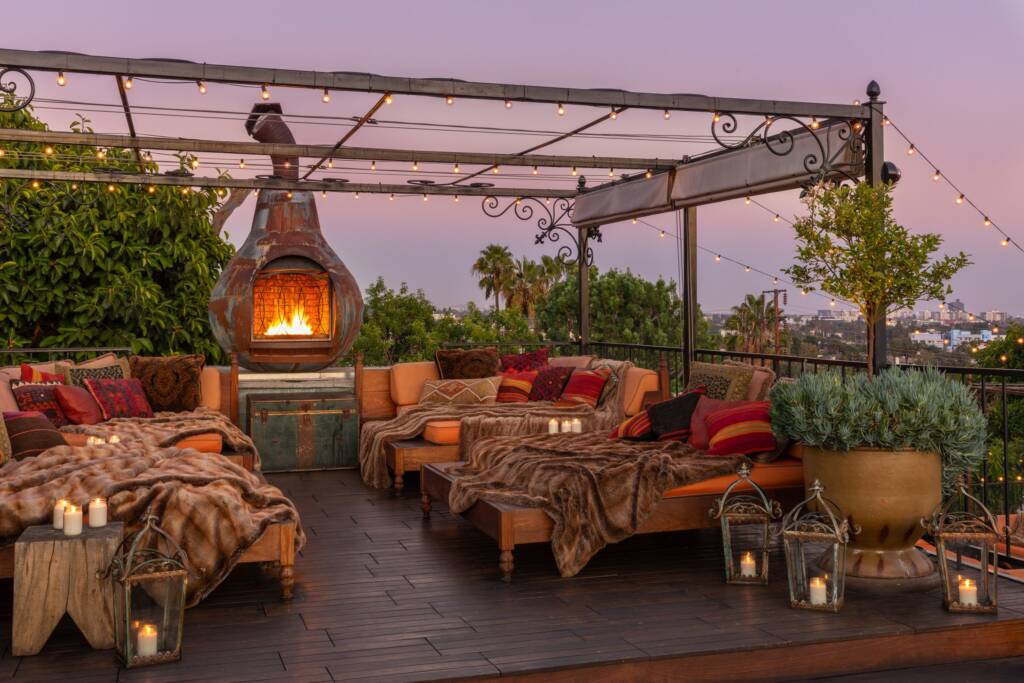
The rooftop offers a heated saltwater pool, a cozy lounge area and fireplace
People Watching
The rooftop pool at Petit Ermitage is one of the best spots for people-watching in LA, especially because it’s the city’s only European-style pool. The crowd is stylish and eclectic, a mix of creatives and influencers.
Read more: The Savoy, London review
It’s a serene haven where you might find yourself lounging next to Hollywood’s elite, as the hotel is a known favourite among celebrities seeking privacy. The no-photos-or-videos policy by the pool ensures that everyone can relax without the intrusion of social media, making it a rare, paparazzi-free zone in Los Angeles.
Show Me to My Room
The rooms at Petit Ermitage are a delightful mix of vintage charm and modern comfort. The Belle Suite, where I was staying, had a floral pink wallpaper, complimented by plush green rugs. The light up vanity and fireplace create a sense of warmth that makes you feel right at home. The bathrooms are equally quirky, with vintage tiles and well-chosen amenities that add to the overall boutique experience.
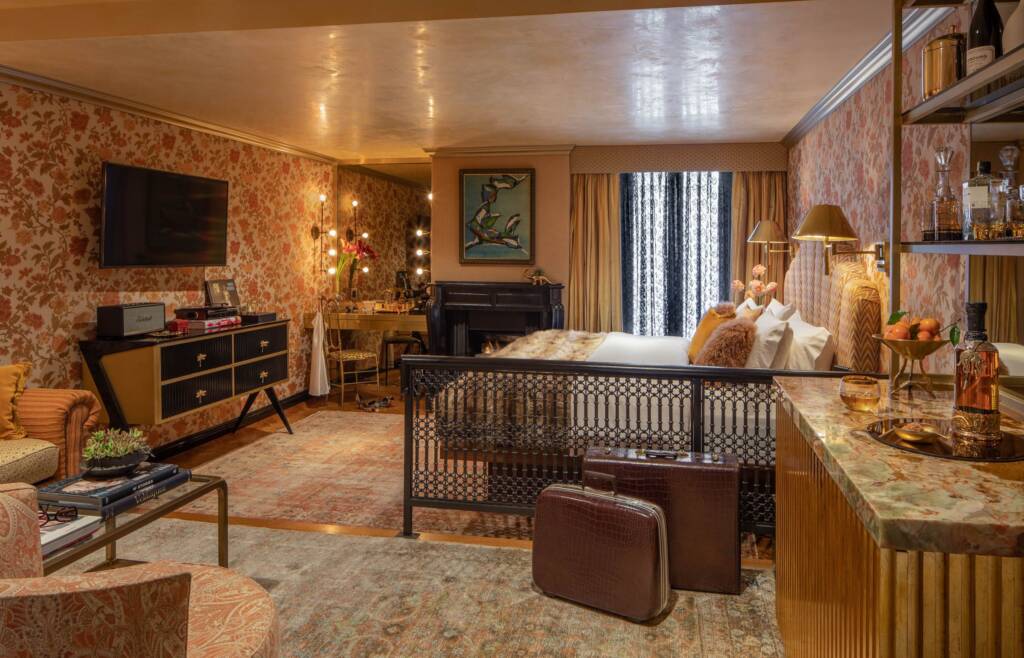
The walls if the hotel are filled with art from the owner’s personal collection, including works by Miro, de Kooning, Rauschenberg, and Dalí
Come Dine with Me
The rooftop restaurant offers dishes that blend Mediterranean influences with fresh, local ingredients. The ambiance is enhanced by the garden surroundings, twinkling lights, and the soft hum of conversation.
One standout on the breakfast menu is the breakfast burrito—an absolute must-try. Packed with fluffy scrambled eggs, and fresh avocado, all wrapped in a perfectly grilled tortilla, it was the best way to start the day in LA.
Find out more: https://www.petitermitage.com/

The Clement Palo Alto is ranked #14 on the All-Inclusive Resorts list in the USA
The Clement Palo Alto offers a distinctive experience that stands out in a region known more for its tech giants than its hospitality. Candice Tucker reviews this luxury all-inclusive hotel and shares why it is the place to stay in Silicon Valley.
The moment you walk into The Clement, there is an instant sense of homeliness. Just a small minimalist reception area which leads through to a lounge, restaurant and 24-hour open kitchen area, the hotel has a residential charm that completely puts you at ease. With light brown wooden finishes and cream leather sofas, the hotel strikes the perfect balance of luxury without pretentiousness—ideal for those using it as a sophisticated retreat while attending meetings or visiting Stanford University, just across the road.
Follow LUX on Instagram: @luxthemagazine
Stepping into the bedroom feels like entering your own private sanctuary. The expansive space is thoughtfully divided, offering a cozy lounge area and a dedicated workspace with a separate guest loo. The bedroom area provides a tranquil retreat, while the enormous white marbled bathroom—complete with a double-sized shower and bath added a touch of spa-like luxury.
The generous space makes it feel more like a well-appointed apartment than a hotel room, creating a restful environment that feels like a home away from home. To no surprise, being in Silicon Valley, the technology was completely up to date with one simple machine controlling every function possible in the room.

The hotel is located downtown Palo Alto near the Stanford University campus with 23 residential-inspired suites
Later in the afternoon, feeling a bit peckish, I called reception to inquire about room service. While they were happy to send something up, they suggested I explore the 24-hour open kitchen instead. Right by the main restaurant, this brown wooden kitchen with dark marble tabletops resembles one you’d find in a luxury Beverly Hills mansion.
Read more: Shogun, Zermatt’s finest Japanese restaurant, reviewed
Complete with a double fridge, cabinets filled with perfectly arranged jars of biscuits, yogurt and fruit bowls, fresh juices, and an array of light snacks, I was browsing through as if it were my very own dream kitchen at home. It was a refreshingly personal touch, allowing guests to help themselves at any time, fostering an atmosphere of comfort and familiarity.

All meals and beverages are inclusive in the price of your room, thus no exchange of money is necessary
The next day I dined at the hotel’s restaurant for lunch which offers a curated seasonal menu that showcases local ingredients. I was also given the option to dine whenever and wherever I chose, which was not only convenient but added to the level of personalisation that the hotel seems to so easily provide. The tomato soup was flavoursome and light and left the perfect amount of room for the Dijon roasted salmon which was soft in the middle with a crispy tangy outer layer.
Read more: Chez Vrony, Zermatt, Switzerland review
The Clement Palo Alto excels at offering a luxury experience that never feels overwhelming. The hotel’s small size, combined with its attention to detail and personalised service, creates an intimate atmosphere that’s perfect for both business travellers and those visiting Stanford University. Every aspect of the stay is designed to cater to your needs, making it a place you’ll want to return to time and time again.
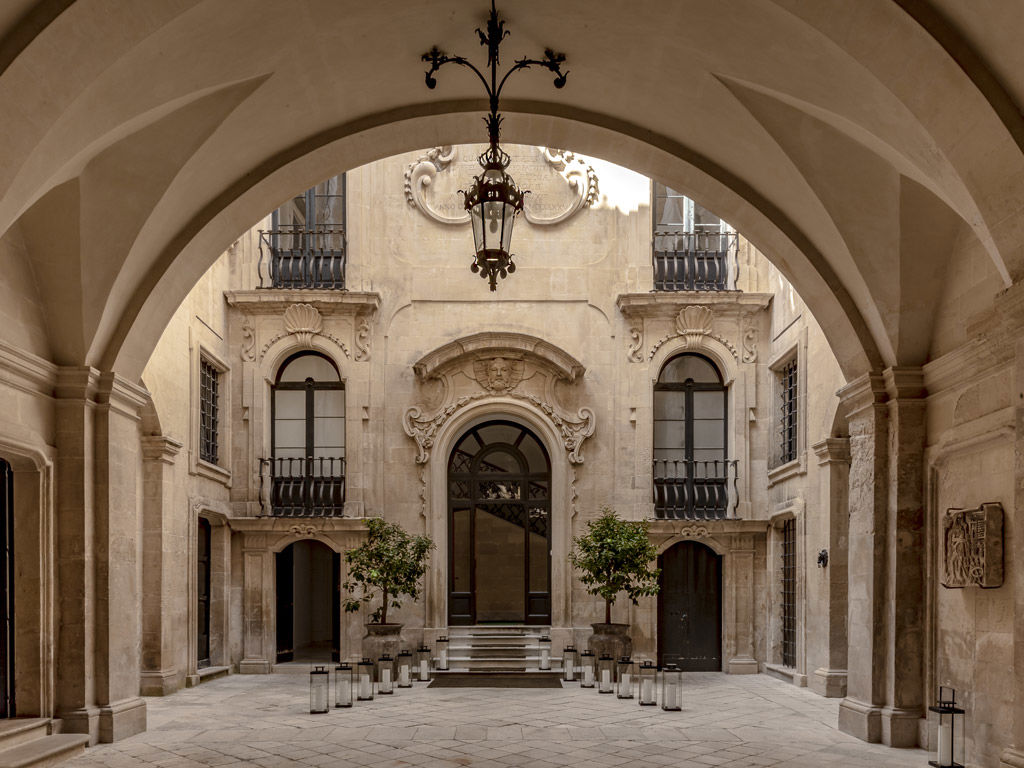
Dating back to 1775, this building is nearby the Basilica of Santa Croce in Lecce
Authentic. immaculate, aristocratic, contemporary family-curated luxury in a Baroque palace in a city that’s a living museum? Take us to the Palazzo Bozzi Corso in Lecce, Puglia
Authenticity is becoming an ever greater part of the luxury travel experience. People want experiences when they travel, and cookie-cutter luxury simply doesn’t cut it anymore.
That’s why you get French and Italian fashion and luxury creating spectacular hotels in territories as far apart as Australia and Las Vegas. But authenticity cannot be created through replication or over the Internet; by definition it is something that comes from inside.
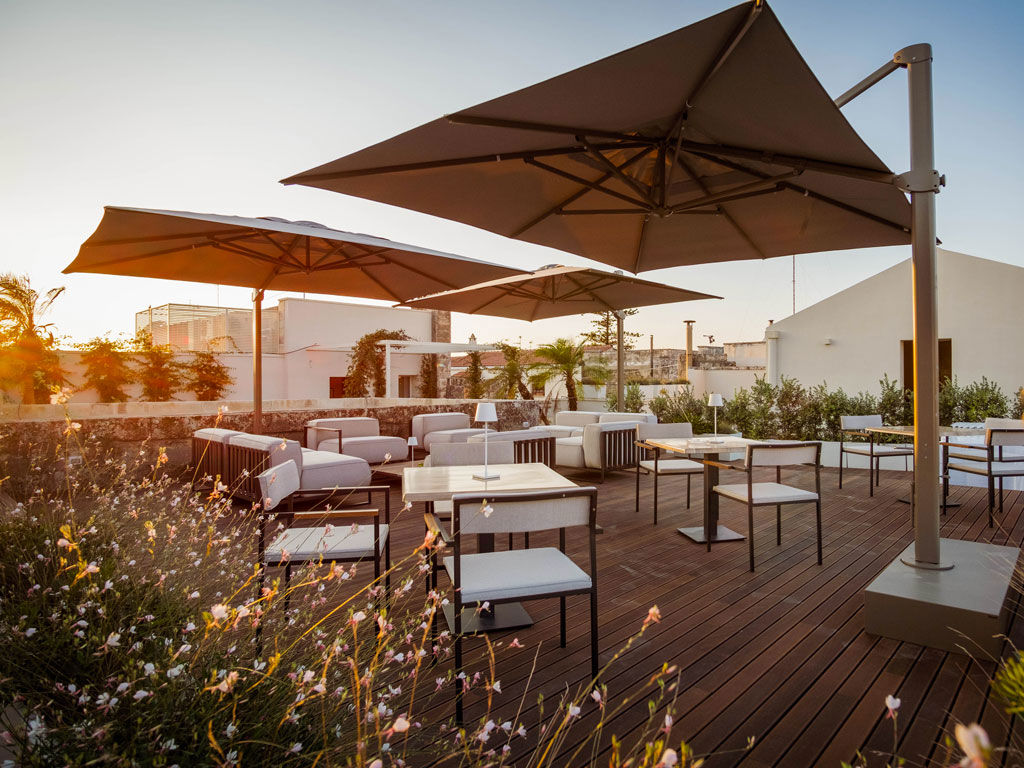
The hotel was designed by the 18th-century architect Emanuele Manieri, this historic building attained its unique blend of traditional and contemporary features when it was developed in conjunction with the La Fiermontina Family Collection.
That, more than anything else, is what strikes you when you walk into the Palzzo Bozzi Corso. You are walking along a historic street in Lecce, in the heart of Puglia, buzzing with tourists, locals, craft shops, wine bars, local food markets.
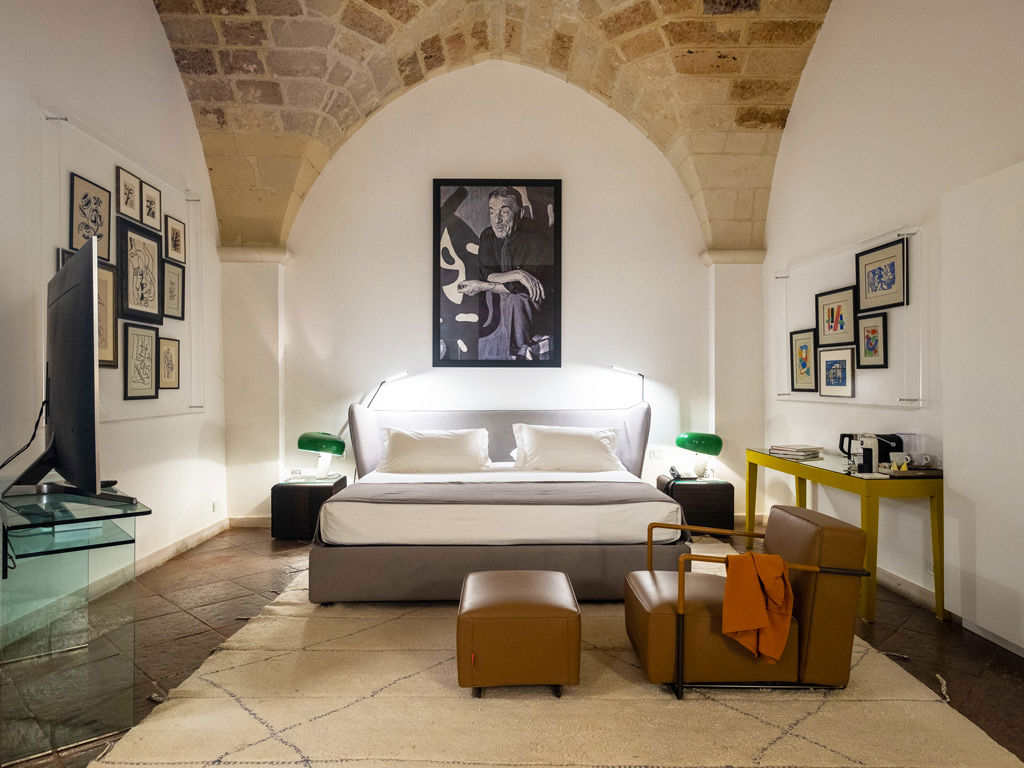
Dedicated to the memory of the boxer and actor Enzo Fiermonte, La Fiermontina Palazzo Bozzi Corso offers its guests spaces with ornate furnishings and artworks
This is and was a wealthy town and the Baroque era buildings are grand and imposing. Then you walk into the Palazzo and you are whisked into the private home of a wealthy merchant of hundreds of years ago: the equivalent of walking into a Rockefeller house in a different era.
Except the Palazzo Bozzi Corso has been sylishly and impeccably updated so it feels almost like a perfectly curated exhibition, a museum of contemporary and 18th century Italian design, immaculately reimagined as an intimate luxury hotel.
Art by the likes of John Lennon (a friend of the owning family) and Fernand Leger sits among the Renaissance artefacts; no interior designer in the world could create a passion project so warm and thoughtful. This is a place to live, or at least to stay for as long as possible.
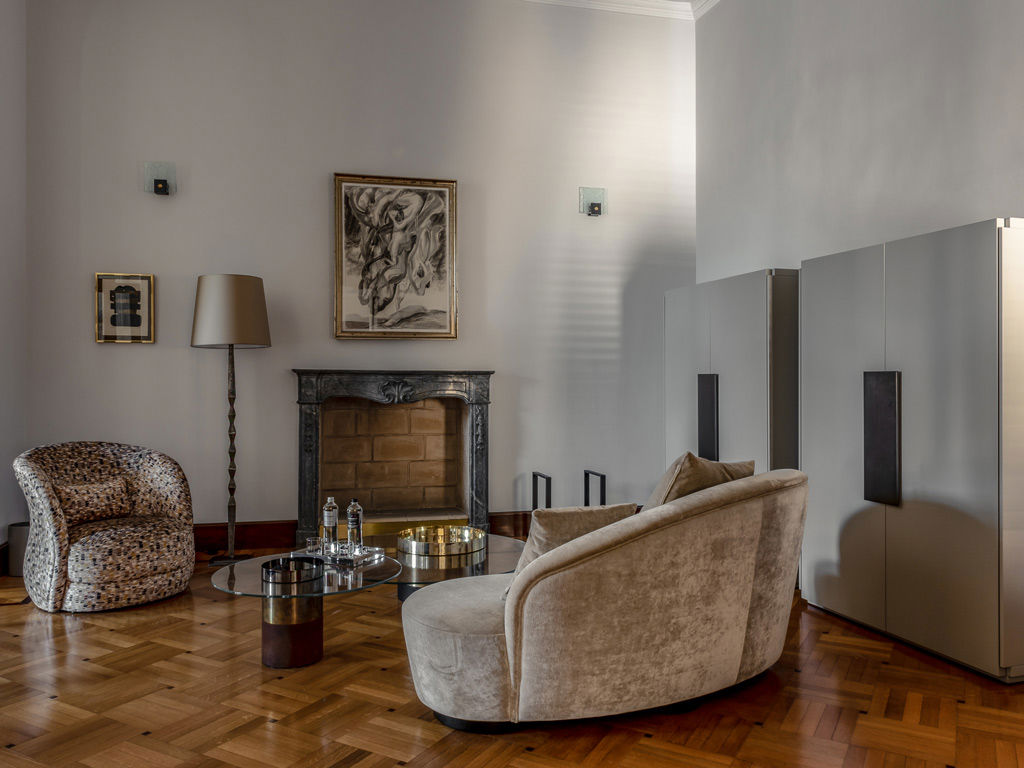
The building is also home to original drawings by John Lennon, donated by Yoko Ono, a friend of the owner’s mother.
There are only 10 suites here and every one is different: ours had a stone arch above the bed, church-like high ceilings, modernist furniture, a combination of ancient and contemporary art, eggshell walls, vast mirrors. Bathrooms are out of a show suite at Milan Design Week, except the work, both physically and in the destination.
Walk out of the building and you are in the living museum of Baroque that is Lecce; there is a roof terrace, and you can use the pool in the garden at the nearby sister hotel (also gorgeous), La Fiermontina. Authentic luxury doesn’t even begin to describe Palazzo Bozzi Corso.

Guests also have access to the secret garden and rooftop terrace to see the sunset
www.lafiermontinacollection.com/en/palazzo-bozzi-corso
Darius Sanai is Editor in Chief of LUX and an Editor in Chief at Condé Nast International
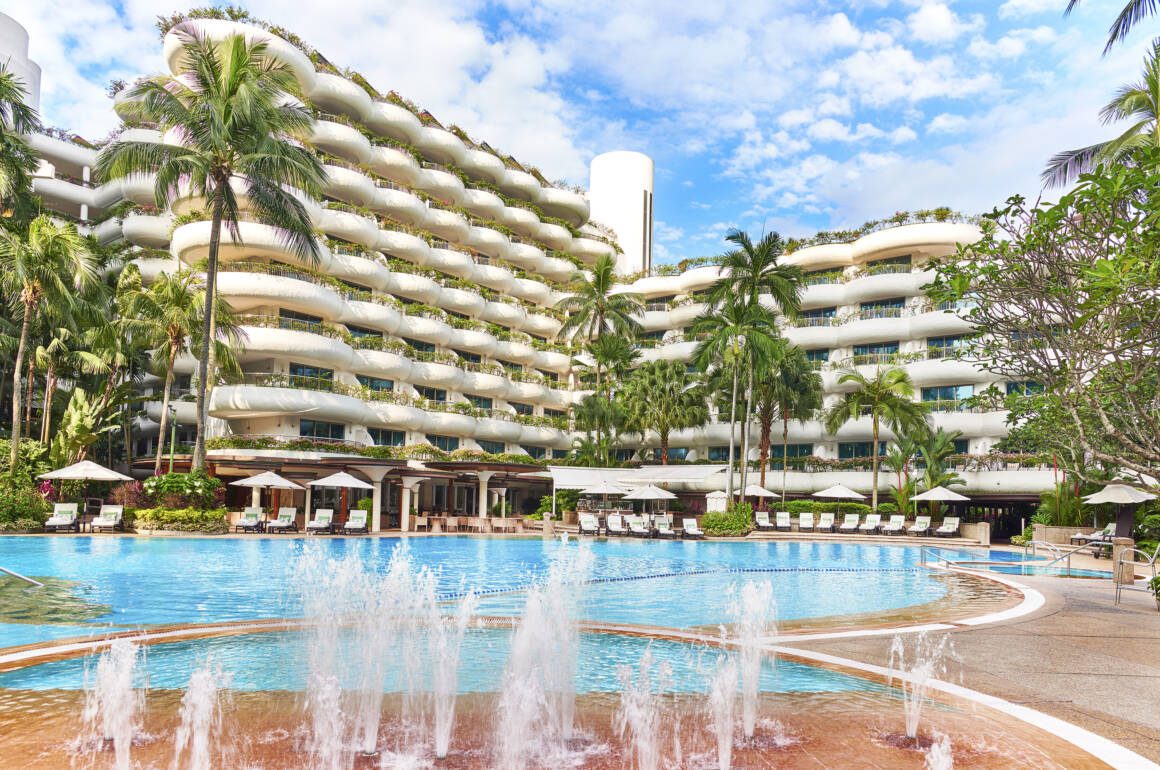
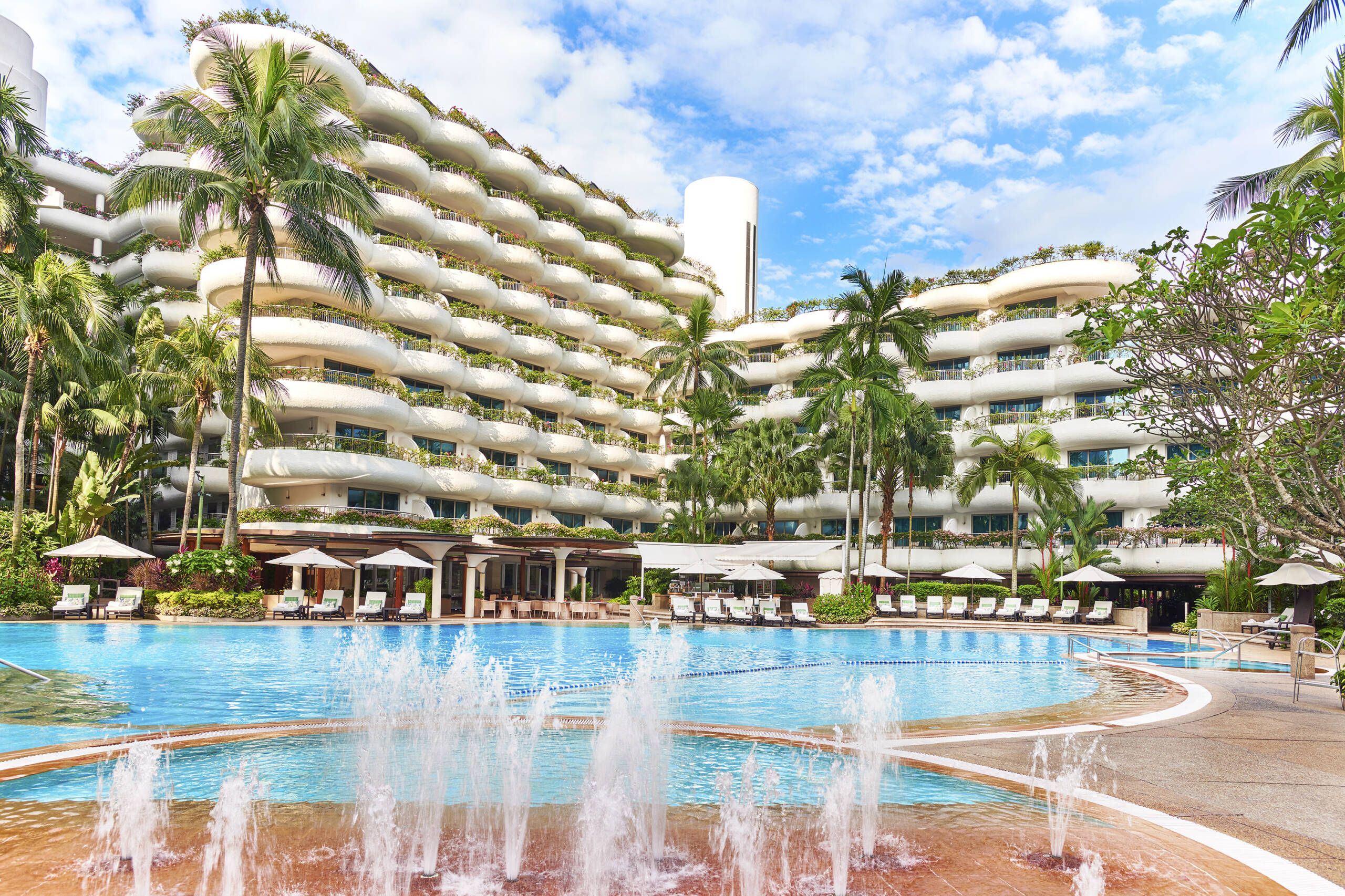
The stunning pool area of the Shangri-La Hotel in Singapore
The Shangri-La Hotel in Singapore offers a tropical sanctuary in the heart of the city. LUX checks in
Singapore’s hawker food is the street food of legend and even features in gastronomic guides. But while the food is astonishing, the stress of getting a table is less so. And much as it is fun to be crammed in with others buzzing with the same experience, sometimes you crave peace. And you do need an appetite for the equatorial heat. We took our Singapore laksa with vintage champagne, in pure tranquillity, in a temperature-controlled garden room, looking over lush plantations, a lawn and a swimming pool. How? The Shangri-La brings the street food to the hotel guests, that’s how.
Follow LUX on Instagram: luxthemagazine
At the Line kitchen pop-ups, real street-food chefs from guest hawker stalls, including Habib’s Rojak, cook in the hotel kitchens. It doesn’t replace the authentic experience, but having just landed from Qatar it suited us. After lunch, we wandered down to the huge outdoor pool to swim a few lengths before drifting into the spa for a restorative treatment. The Shangri-La is not among the newest of Singapore’s luxury hotels, but, as seasoned travellers know, newness does not always mean improvement.
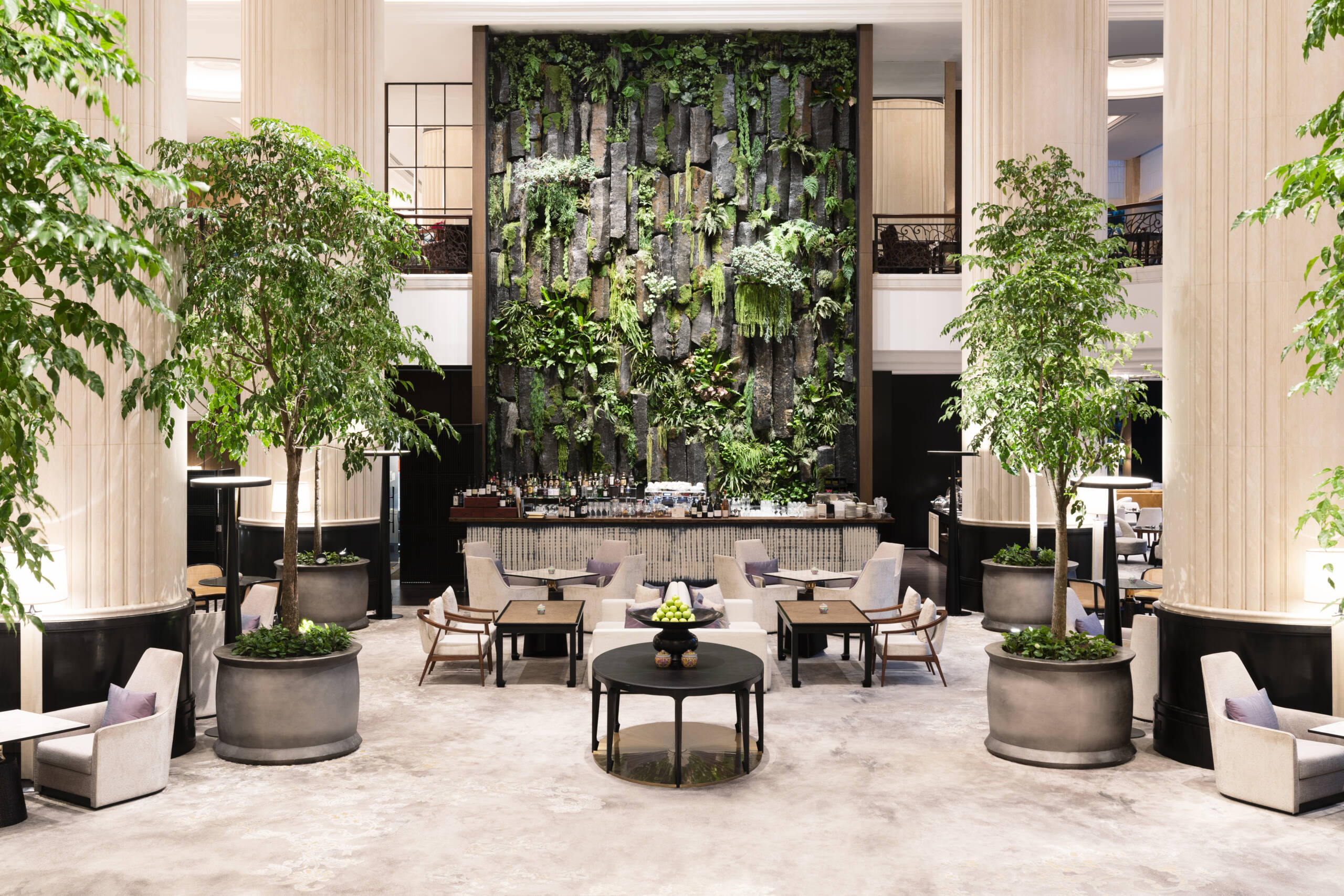
The Hotel Lobby Lounge is equipped with a lot of green plants in the Tower Wing
Read more: Waku Ghin, Singapore, Review
A new developer might have been tempted to build over the rich tropical gardens, or make a smaller pool. There’s also the danger of design to social media. A space made to look good on Instagram is not always good to be in, and this is very true of bars, where bold shapes detract from the dreamy ambiance that makes a good bar. And the Shangri-La has a good bar. The Origin is dark, full of corners and has a long wooden bar for sitting at. We asked for a gin southside margarita, a hybrid cocktail of my own invention, and were pleased, although not surprised, that the bartender knew the ingredients.

The rose veranda has a high tea set menu, designed to continue afternoon traditions of luxurious tête-à-têtes over dainty sandwiches, delectable pastries and freshly baked scones served with clotted cream.
This joint effort was so delightful we had another. And another. In Singapore, you want a room with a view, and our suite had just that: high over the gardens and high-rises of the Orchard area. The room was conventional luxury, and all the better for it. To end the day, a charming wander through the gardens, then sitting poolside by a tropical fruit tree at midnight, bracing for another day.
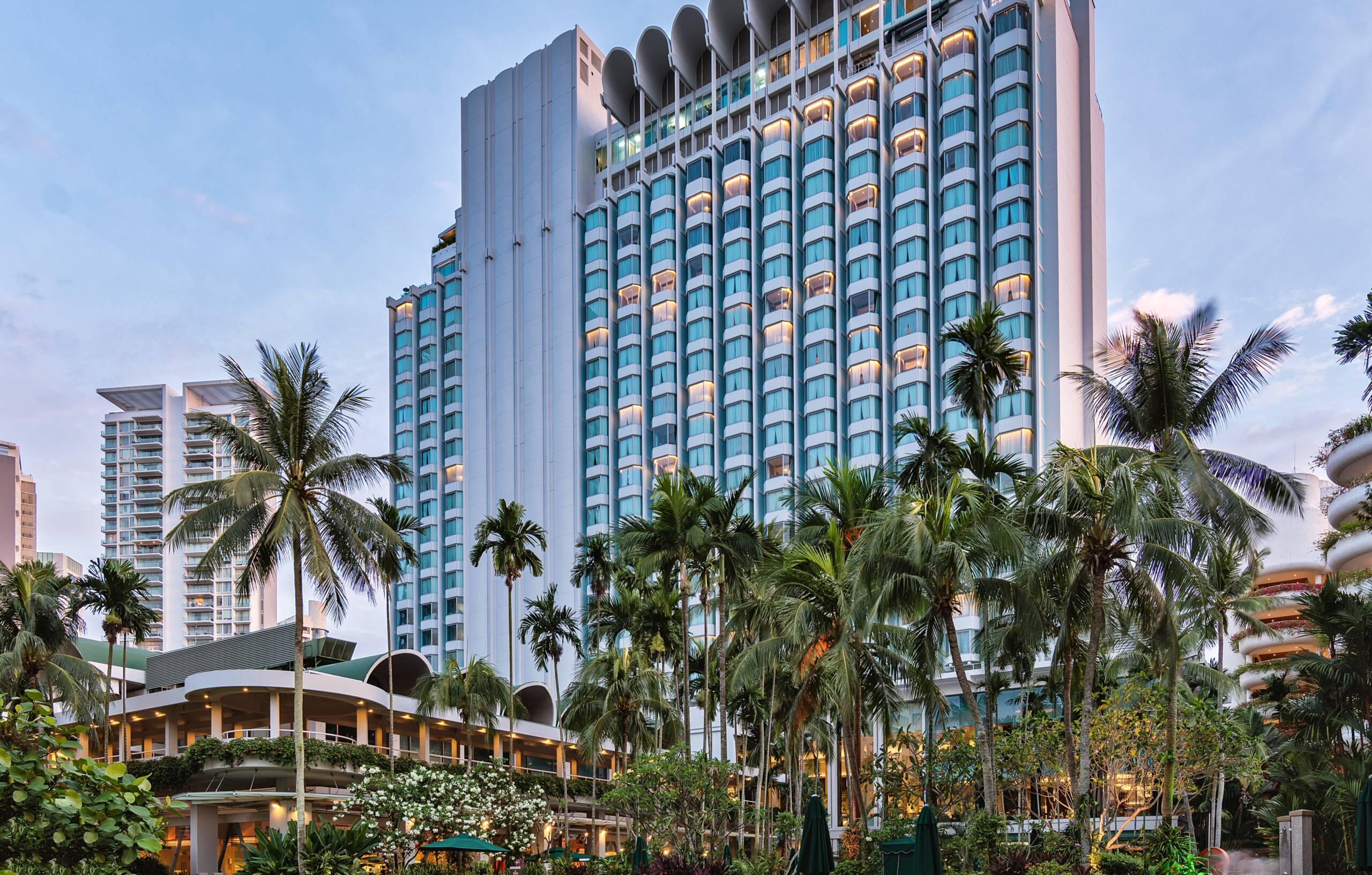
Nestled within 15 acres of tropical landscaped gardens, guests are warmly embraced by the hotel’s distinct service and smiles.
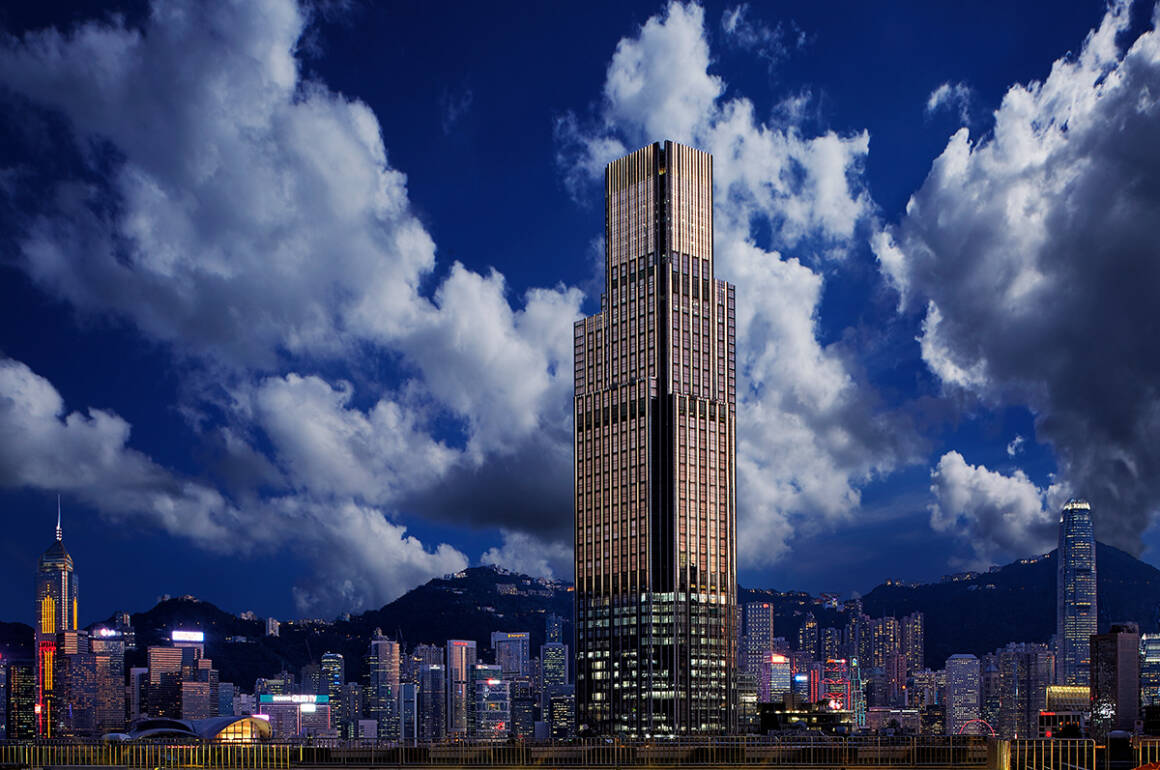
Has Rosewood’s Sonia Cheng created the best city hotel in the world, with the Rosewood Hong Kong? Darius Sanai revisits, five years after the grand opening
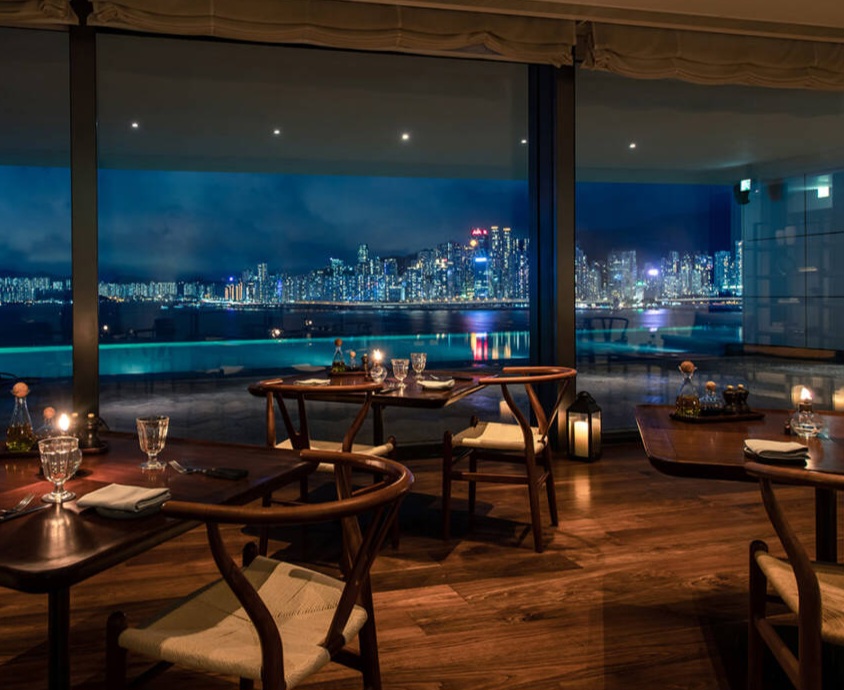
The Asaya Kitchen. The Rosewood is built along the water’s edge in Tsim Sha Tsui, facing the towers of Central Hong Kong.
Standout new hotels in cities are hard to create. If you are building a resort on a tropical island, as long as you have the right hardware – pools, beaches, spa, restaurants and bars, leisure facilities and access – and the right people to operate and sell it, then the right crowd should start flowing in.
The world’s great cities are different. They tend to have existing hotels which are part of the social fabric and history of the city – think of the Pierre or the Carlyle in New York, Claridge’s or the Ritz in London, the Plaza Athenee or Bristol in Paris. Newcomers can’t just win by offering the right suites and chefs. They have to establish their own legend among the locals. And they are hypersensitive to location. Claridge’s wouldn’t be what it is if it had been built 200m north across Oxford Street.
In this context, Hong Kong’s Rosewood had a battle on its hands when it opened in the spring of 2019. It was a new building, part of a broader complex created by one of the city’s big families, the Chengs, on the “wrong” side of the water, in Kowloon. There was no history or legend: despite being from Hong Kong and operating hotels around the world, Rosewood’s owners had never had a Rosewood Hong Kong, One of the city’s landmark properties, the Peninsula, was just down the road.
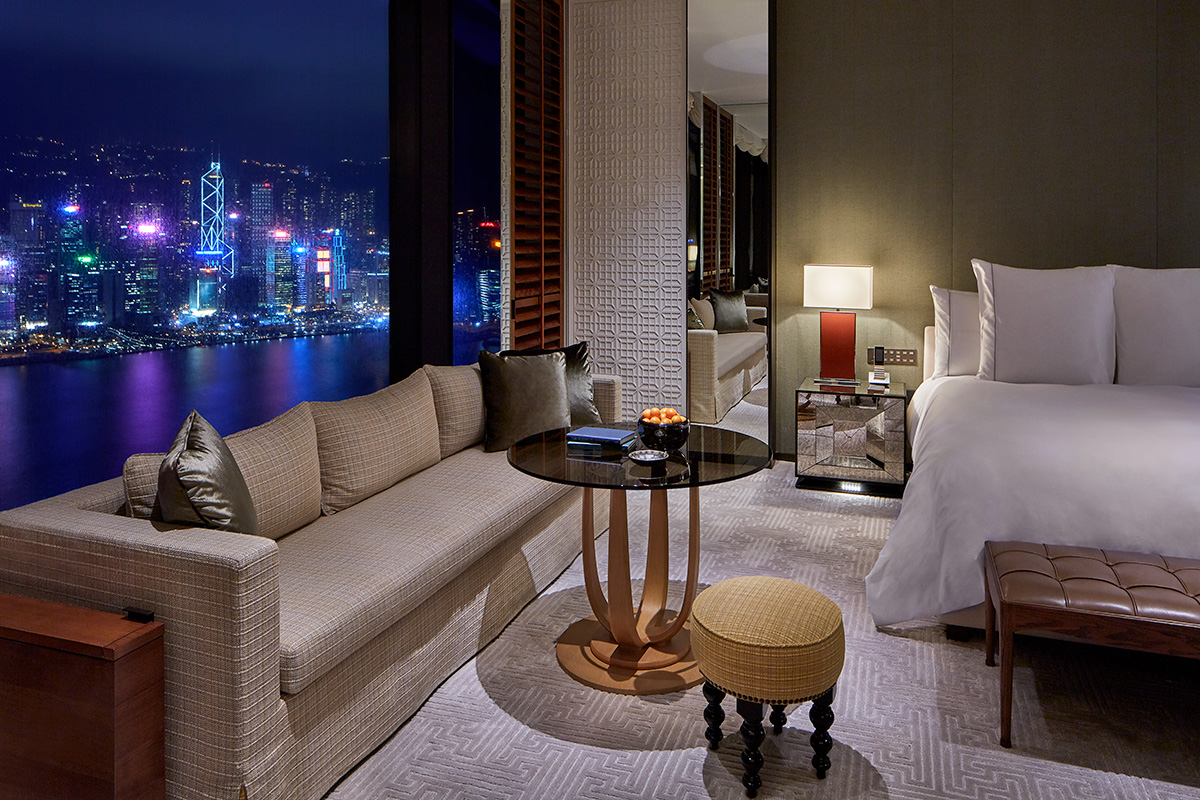
A Manor Suite. There is an intellectually-driven curation of design detail throughout the rooms
Just weeks after the lavish launch party, which I attended, Hong Kong was thrown into social unrest as political protestors barricaded streets, burned buses and fought running battles with police in full body armour firing tear gas. No hotel was immune to having its guests risk walking into a teargas barrage. Then came the pandemic, with Hong Kong suffering among the most severe lockdown restrictions in the world; at times any visitor from the rest of the world had to self-quarantine, at their own cost, for weeks on arrival.
Now, nearly five years later, I have been back to the Rosewood Hong Kong for the first time since its launch party. I expected a fine luxury hotel in the mould of other new-ish city hotels, still finding its feet, perhaps. After a four day stay, I am increasingly convinced I found something that changes the game.
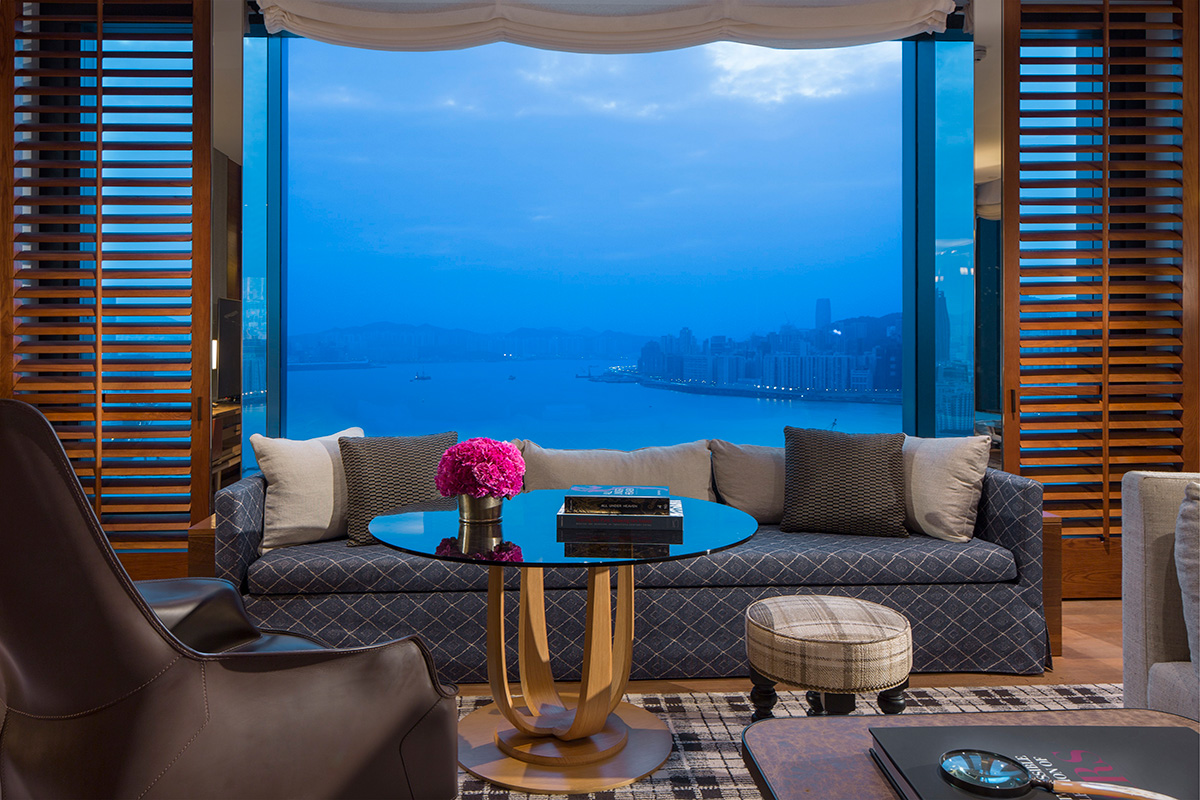
LUX checked into a Harbour Corner Suite. We were dreamily distracted by the coffee table book selection, the view, and just out of picture, the drinks trolley, and telescope.
Rosewood’s dramatic tower sits linked to the equally new K11 MUSEA complex on the Victoria Dockside in Hong Kong. The hotel’s designers have made a virtue of its waterfront location across the water facing Hong Kong Island: I tried three rooms, each with an unbelievable view across the water, through floor-to-ceiling windows, of the city’s skyline and the Peak mountain rising up behind. By night, it is a Supernova-style light show. By day, you are distracted by pleasure boats and other traffic floating back and forth along the water.
Design is a difficult element at a time when the wealthy are going through a generational change: do you create interiors aimed at the older or the emerging generation? Rosewood has succeeded in doing both, primarily through the sheer thoughtfulness and quality of the materials, designs and public areas. If it were a luxury brand, this hotel would be Hermes: traditional yet playful, compromising nothing on cost or quality, with a clearly executed and thoughtful vision.
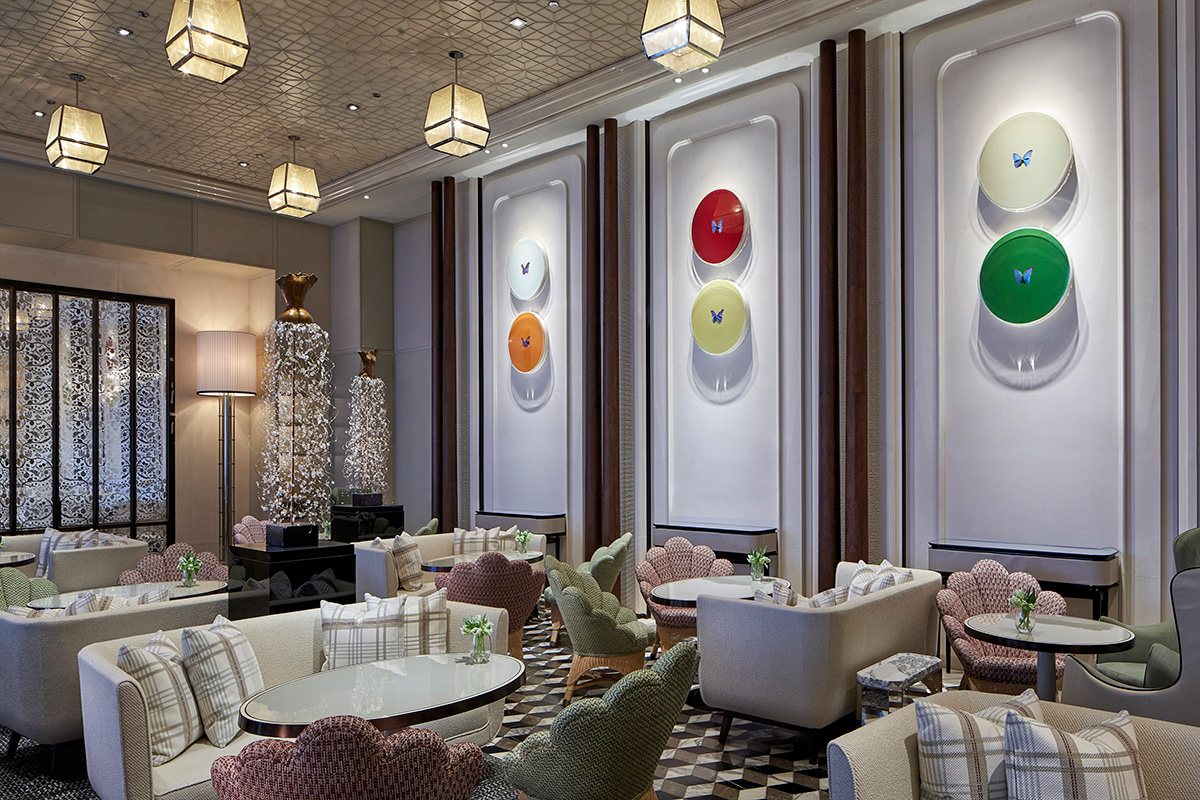
The Butterfly room, featuring Damien Hirst’s Zodiac series.
Lift lobbies are created as drawing rooms, with beautiful furniture and cabinets containing everything from Chinese vases and models of 1970s cars to the best curated selection of coffee table fashion and design books I have seen anywhere. In the bedrooms, it’s all about the quality of detail. My coffee machine and waste baskets were nestled in cool contemporary leather pouches. The bath had a wooden book and magazine holder on one side .
The glass bottles of Votary shampoo, shower gel and conditioner were encased in their own glass cabinet, swathed in light wood, within the two-person, walk through marble showers. The extending reading light had its stem swathed in stitched leather. The drinks trolley, with its curved metals, contained a beautifully presented nest of hyper-artisanal bottles of spirits and liqueurs and a couple of good cocktail books.
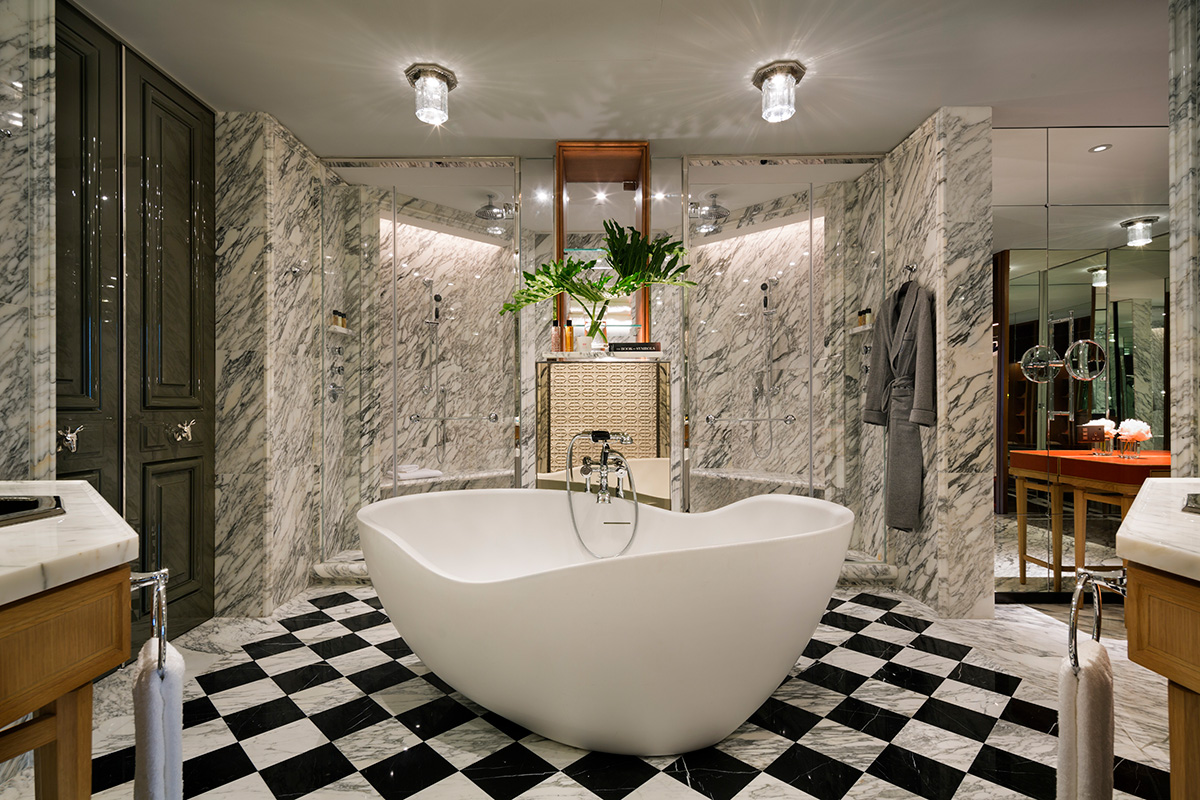
From the door fixtures to the lacquering, from the choice of marbles to the design threads of the bathrobes and staff uniforms, everything at the Rosewood is a level above your average luxury hotel.
The look is not fussy or traditional. It’s firmly up to the minute, yet unites a Gen Z fashion leader and a Boomer conglomerate owner. The creativity of the design combines hints of art-deco, sprinkles of 20th-century modern, and a very up to the minute aesthetic which somehow takes in classicism. Solid woods, brass, and other metals are everywhere. Things that should ring hollow, literally, make a “thunk”. Yet there is no brashness, not a hint of bling.
Outside the rooms and lift lobbies, I spent quite some time in the Manor Club, a 40th-floor refuge containing a dining room, bar, snooker room and drawing room. Again, everything was about the detail. Lighting was exquisite, and slightly different for each area – I liked the darkness of the two-seat table by the floor-to-ceiling window in the bar area. The cocktail list combines the confidence of a family that owns one of the world’s bar legends, Bemelmans at the Carlyle in New York, with a next-gen curiosity and edge. Even the wines by the glass are perfectly curated – I remembered that Sonia Cheng’s husband is, independently, the most respected importer of fine wines in Hong Kong, and although I he doesn’t input directly on the lists, this is a place that is obsessive about details.
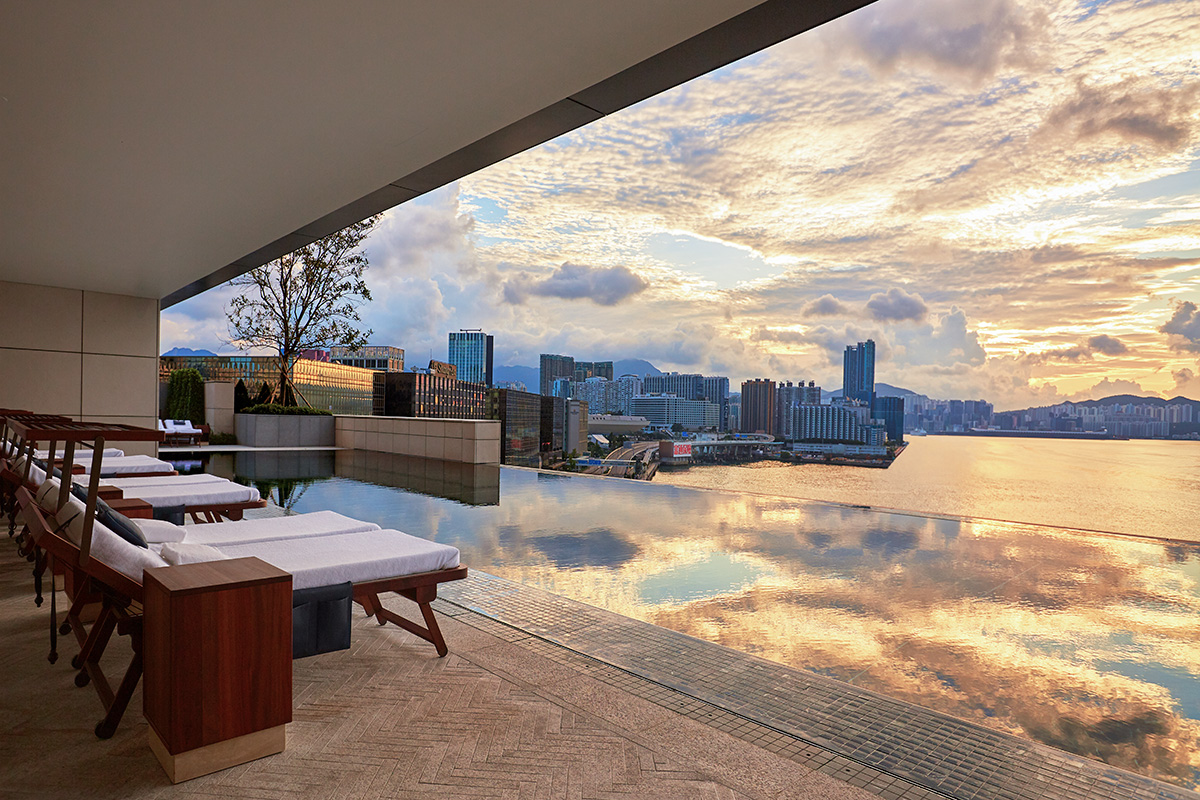
The Asaya Spa has indoor and outdoor wellness facilities, giving an island resort feel
Meanwhile down on the 6th floor the spa is another feast of organic, artisanal design detail, with a room devoted entirely to which herbs, extracts and smells should accompany your treatment and an outdoor terrace with a view. The outdoor pool (closed for annual maintenance when I visited) is open year-round and a destination in itself with its dramatic views.
None of this would work without service and local engagement – nobody wants to stay at a tourist hotel – and the Rosewood has both, and how. Staying in a suite, I was assigned a team of butlers, nattily dressed in the group’s trademark grey and black check. Butlers can sometimes be a mixed blessing in hotels. Unlike your own personal Jeeves, tomorrow’s butler may have no recollections of your conversations with today’s, meaning for sometimes tiresome repeat conversations. These ones had nailed it with their handovers: it’s as if butlers on different shifts had the same brain but different faces. They were charming, too, not service robots: chic young locals. I had a lively conversation about my sneakers with one, a big Off-White fan.
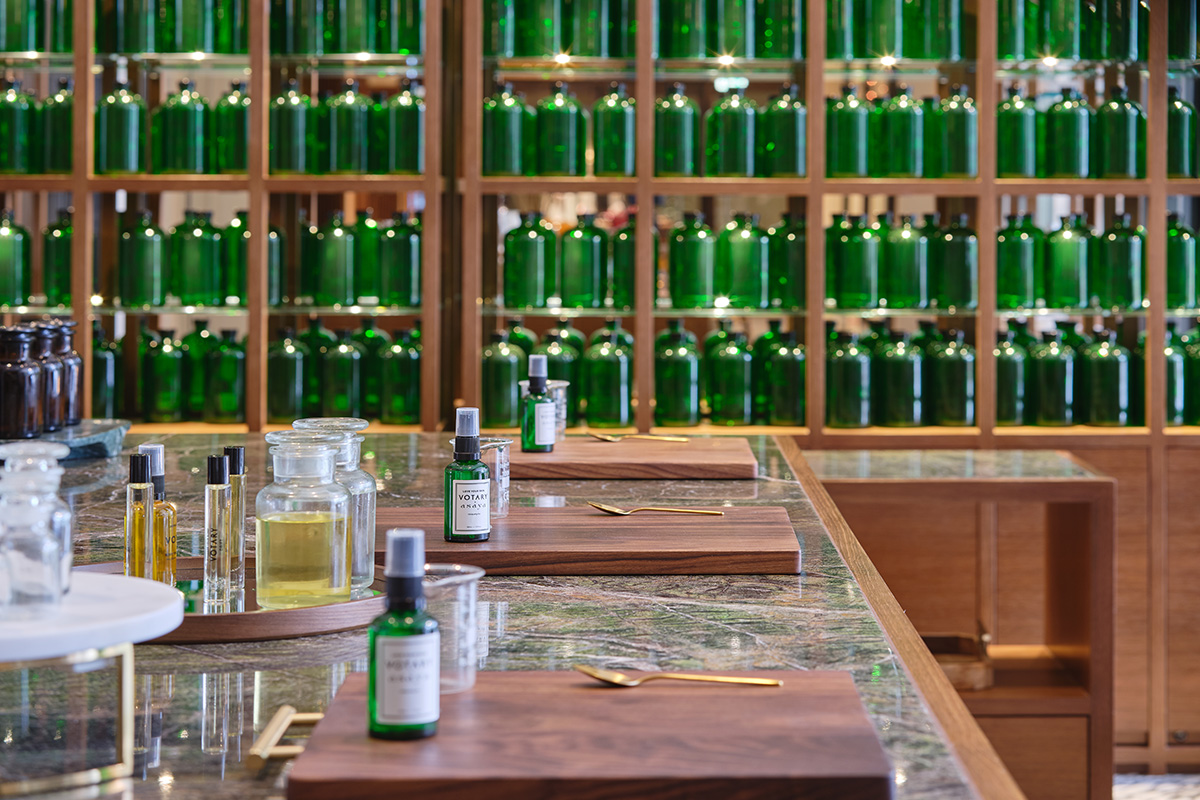
Working out exactly which potions and lotions you wish to avail yourself of before your treatment is a relaxing experience in itself
You could, frankly, just spend your F&B time in the Manor Club, so special is its design, vibe and service, but the Rosewood has numerous other restaurants to try, and is umbilically linked to K11 MUSEA, the art, culture, retail, gastronomy and craft showcase created next door by Sonia’s brother Adrian Cheng – this is a creative family, creating stuff at a level not seen anywhere else.
One of the Rosewood bars is called The Dark Side, a self-ironic reference to what those on Hong Kong Island call the Kowloon side of the water where the Rosewood sits. There is a private members’ club on the 53th floor, Carlyle & Co, teeming with locals; apparently the hotel as a whole is a favourite for wealthy Hong Kongers on staycations.
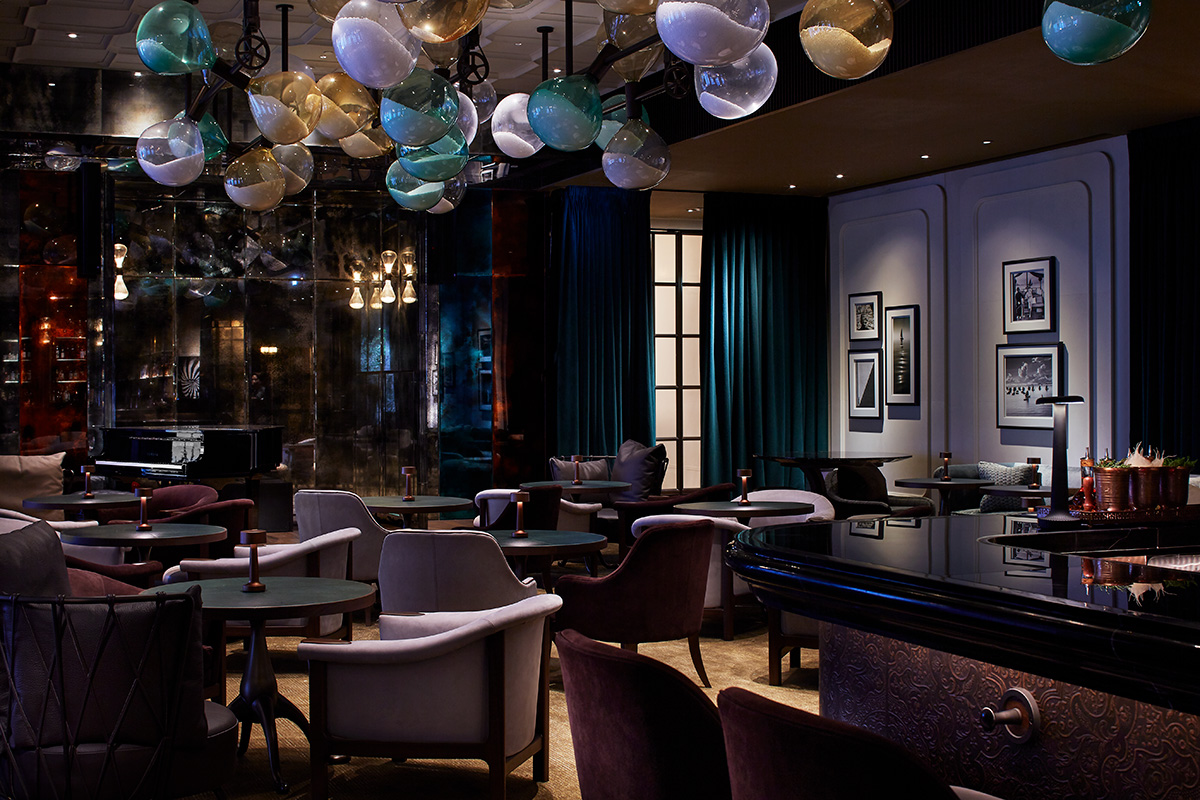
The Rosewood has the confidence to be self-referentially ironic. The Dark Side bar is a humorous reference to what locals in central Hong Kong across the water call this side of the Harbour
And what about that location? The area has become a destination in itself, with K11 MUSEA and notably the new M+, Asia’s best contemporary art museum, along the road. If you need to get to Central Hong Kong for meetings or visits, it can take 10 minutes with no traffic, or more on a bad day. There is also direct access, via K11 MUSEA, to TST MTR (subway) station from which it is one stop to Admiralty station in the heart of Hong Kong Island. Or you can take the Star Ferry across the bay.
The ambition of Rosewood Hong Kong is immense, and it has been executed with a combination of mathematical thoroughness – Sonia Cheng is a mathematics graduate from Harvard – exquisite taste in design and materials, deep knowledge of how hotellerie should work, and an innate awareness of how to create timelessness, which always starts with quality. I can’t think of a better newly built city hotel anywhere in the world. Rosewood, originally an American hotel company, is Asia’s luxury brand now. Maybe we can expect some handbags and silk scarves next.
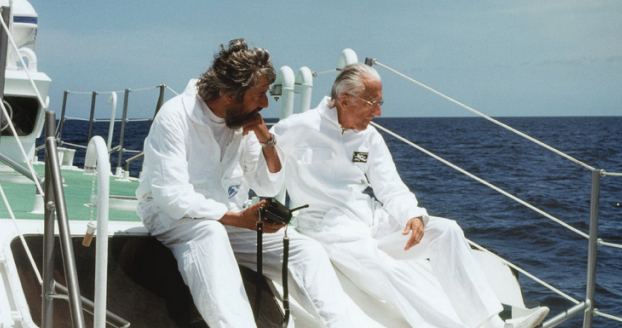
LUX x Deutsche Bank
As global content and marketing partner for Deutsche Bank, we create content, virtual and real life events, business, academic, institutional and individual introductions, and collaborate on ESG strategy.
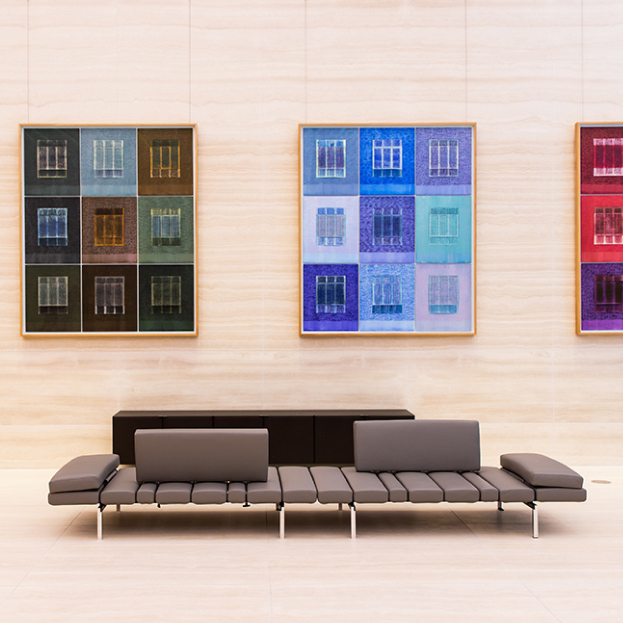
Photo by Andy Mann
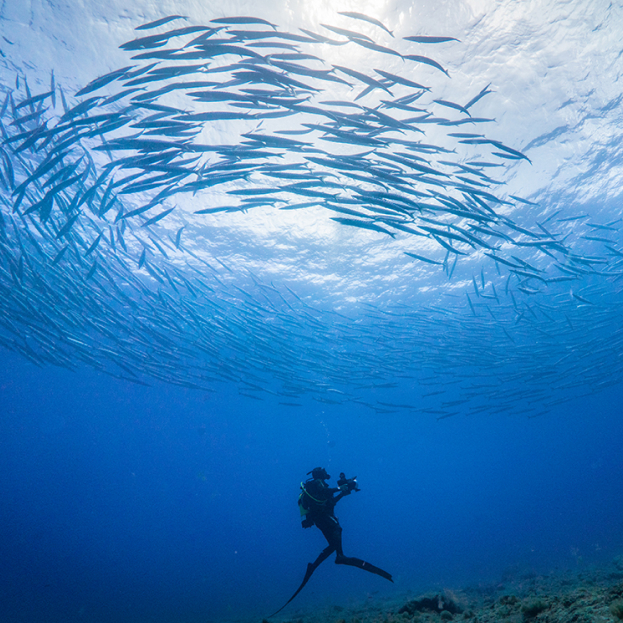
Photo by Ben Thourad
Case Study

Deutsche Bank x LUX ESG Strategy
The Mission
To help Deutsche Bank position themselves as the lead banking institution to be pioneering ocean conservation and the blue economy.
Execution
Sourcing and securing key leaders to participate in events and conferences around sustainability and in particular ocean conservation and the blue economy.
Thought leadership content streams created for Deutsche Bank over multiple channels.
16 page section in LUX magazine and online featuring leaders in the ocean economy, investors and philanthropists developed over several years with a special edition dedicated to the conference.
Introductions to partners who can enhance Deutsche Bank’s involvement in the ocean conservation space.
Direct Introductions to potential clients who are interested in investing in the blue economy or philanthropically towards the Deutsche Bank Ocean Resilience Philanthropy Fund.
Result
Created high engaging, original and successful events conference connecting ideas, entrepreneurs, thinkers and leaders.
Formed long term-partners and clients in the ocean conservation space.
Produced content for the intended audience showing Deutsche Bank’s commitment to ocean conservation.
Case Study
Deutsche Bank x LUX ESG Strategy
The Mission
To help Deutsche Bank position themselves as the lead banking institution to be pioneering ocean conservation and the blue economy.
Execution
Sourcing and securing key leaders to participate in events and conferences around sustainability and in particular ocean conservation and the blue economy.
Thought leadership content streams created for Deutsche Bank over multiple channels.
16 page section in LUX magazine and online featuring leaders in the ocean economy, investors and philanthropists developed over several years with a special edition dedicated to the conference.
Introductions to partners who can enhance Deutsche Bank’s involvement in the ocean conservation space.
Direct Introductions to potential clients who are interested in investing in the blue economy or philanthropically towards the Deutsche Bank Ocean Resilience Philanthropy Fund.
Result
Created high engaging, original and successful events conference connecting ideas, entrepreneurs, thinkers and leaders.
Formed long term-partners and clients in the ocean conservation space.
Produced content for the intended audience showing Deutsche Bank’s commitment to ocean conservation.
Photo by Ben Thourad
Photo by Ben Thourad
Photo by Ben Thourad
Photo by Ben Thourad
Photo by Ben Thourad
Photo by Ben Thourad
Case Study
Deutsche Bank x Frieze Art Fair x LUX
The Mission
Amplified Deutsche Bank’s leadership role as a bank in the art world, produced content for the intended audience showing Deutsche Bank’s commitment to art, and formed partnerships and client relationships.
Execution
Year round content creation and coverage in print, online, social media
and video.
Introductions to collectors and artists.
Exclusive events at Deutsche Bank, Frieze lounge and collectors’ homes.
Interviews and interactions with artists and collectors.
Special issues of LUX devoted to Deutsche Bank x Frieze.
Result
Amplified Deutsche Bank’s leadership role as a bank in the art world.
Produced content for the intended audience showing Deutsche Bank’s commitment to art.
Formed partnerships and client relationships.
Case Study
Deutsche Bank x Frieze Art Fair x LUX
The Mission
Amplified Deutsche Bank’s leadership role as a bank in the art world, produced content for the intended audience showing Deutsche Bank’s commitment to art, and formed partnerships and client relationships.
Execution
Year round content creation and coverage in print, online, social media
and video.
Introductions to collectors and artists.
Exclusive events at Deutsche Bank, Frieze lounge and collectors’ homes.
Interviews and interactions with artists and collectors.
Special issues of LUX devoted to Deutsche Bank x Frieze.
Result
Amplified Deutsche Bank’s leadership role as a bank in the art world.
Produced content for the intended audience showing Deutsche Bank’s commitment to art.
Formed partnerships and client relationships.
 Read Deutsche Bank
special edition
Read Deutsche Bank
special edition
Contact us
For partnership, event and advertising enquiries
please contact
[email protected]
 Follows us on Instagram
Contact us
For partnership, event and advertising enquiries
please contact
[email protected]
Follows us on Instagram
Read also
Read also

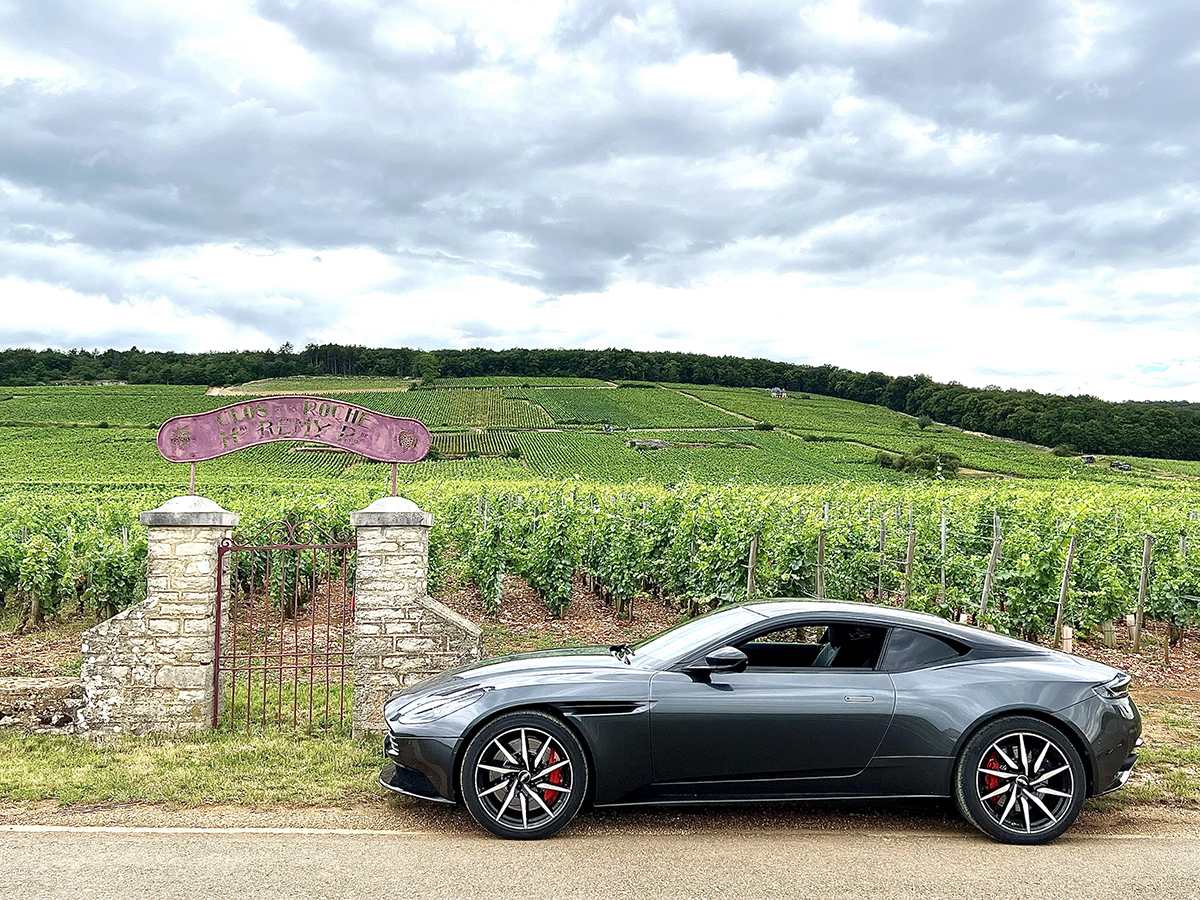
The Aston takes in the Clos de la Roche vineyards in Burgundy, France
In the second part of our Great Drives series, Darius Sanai travels, in an Aston Martin DB11 V8 Coupe, from the Jura Mountains, Switzerland to London, UK via Burgundy and Champagne, France for a quick tasting of Amour de Deutz, 2008
In the Vallée de Joux in the Jura Mountains in Switzerland, signs for watch manufactures (factories) come as thick and fast as signposts for whisky distilleries on Speyside. Tempting though it was to make a stop (we at LUX know the watch manufactures well, but they require a little planning to visit), we dropped down a gear in our xenon-grey Aston Martin DB11 and zoomed out of the valley along snaking roads through deep forests. Every mile or so, the trees dropped away to reveal a lake or another valley. We opened the windows to hear the thrumming of the Aston’s V8 engine, a low, mellow but not over-loud rumble, bouncing off the slopes on either side of the road. This was a joyous drive.
Follow LUX on Instagram: luxthemagazine
The DB11 Coupe is a piece of automotive architecture, sculpted, so it seems, from a block of granite. It feels satisfying to drive, even if you are not moving. It is very satisfying, and not a little fun, to drive when you are. The empty French roads allowed us to accelerate a little faster and farther than perhaps we would have done in Switzerland, where we had started that morning, or back in England, our final destination. It’s not overly challenging, but it is nicely weighted to give you a sense of Aston Martins of old, which were slightly macho and brutish as well as beautiful, like Sean Connery as James Bond, or perhaps a young Marlon Brando. Fortunately, too, it does not succumb to the latest trend of making extremely fast cars too easy to drive.
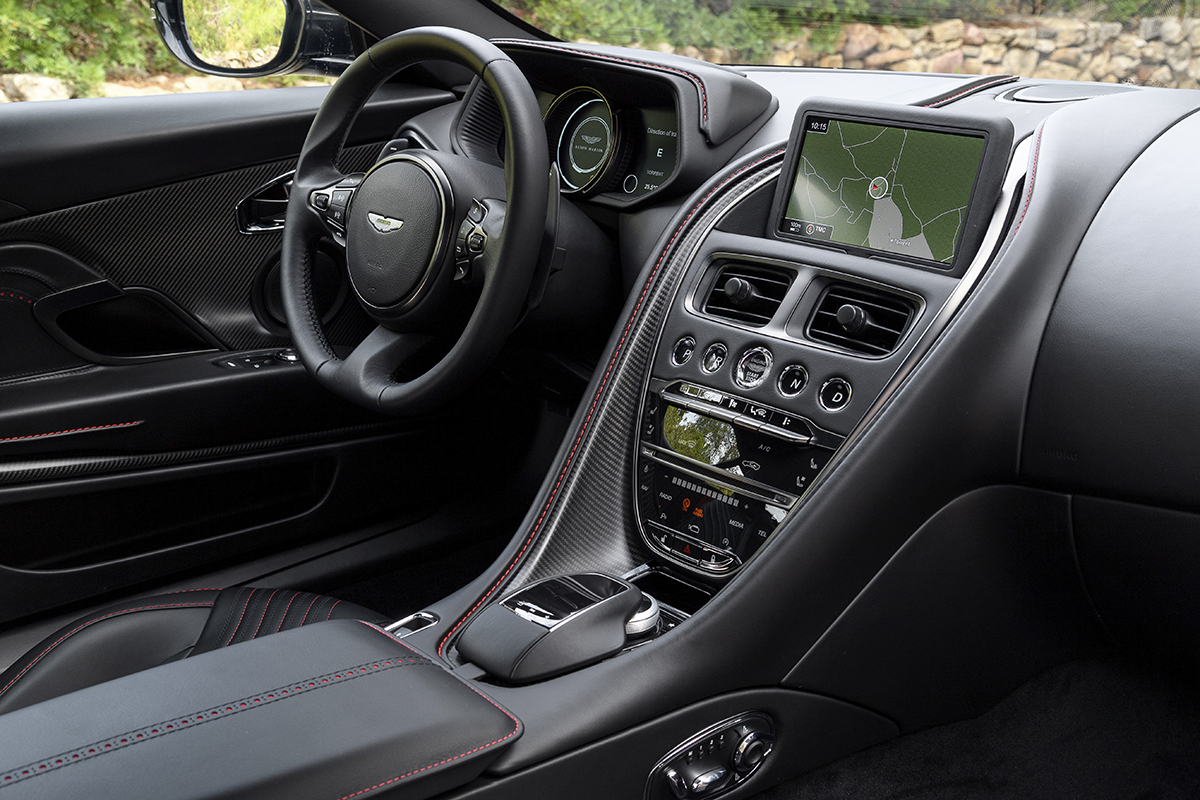
A peek inside the Aston Martin DB11
You would not buy the DB11 if you just wanted a very fast car, we mused, as the road, having descended down through the north side of the mountains, straightened out along a plain lined with wheat fields. These days, almost any electric car – and there seems to be a new one every day – can be programmed to go as fast as a moon rocket, but where’s the fun in that? This Aston, with its masterpiece of an exterior and equally chiselled interior, and lovely waffles of leather all around inside, is an event to be in and to arrive in. The hotel we were staying at that night in Burgundy, Hostellerie Cèdre & Spa Beaune, gave it pride of place in its car park.
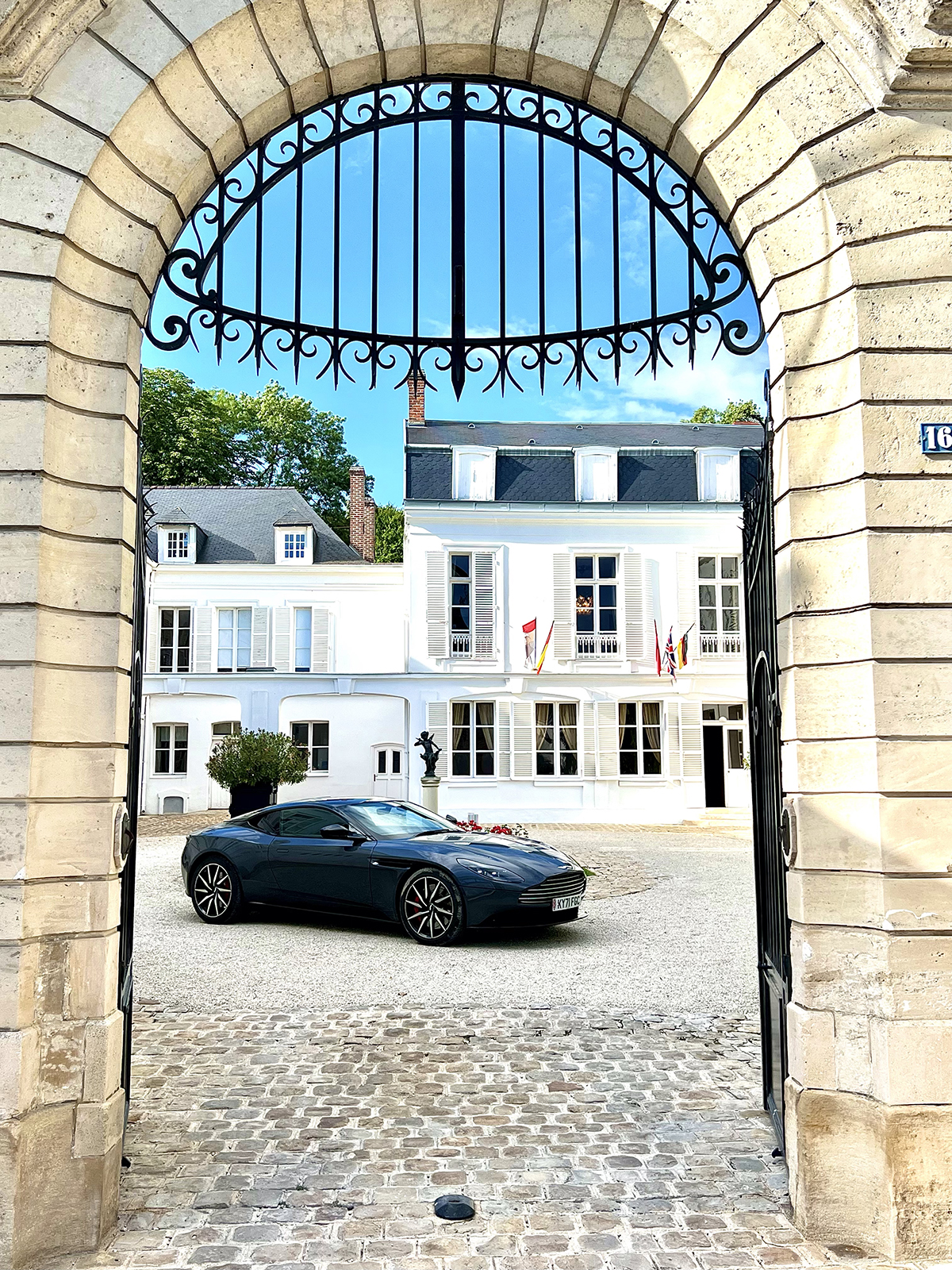
The Aston Martin DB11 V8 Coupe in the courtyard of the Deutz champagne house, France
The Cèdre is exactly the kind of place you want to arrive at when touring France. A little palace or big mansion (take your pick), on the edge of the old walled town of Beaune in the centre of Burgundy’s wine country, it has a driveway lined with very smart cars that show the measure of its clientele, who travel from all over the world to stay and taste wines here. There is a maze of a garden with ornamental ponds and seating dotted around the foliage. We sat there that evening and enjoyed a glass of poignant 2019 Château de Meursault, salty and nutty and balanced, from a small producer just a couple of miles away. The air smelled like the wine. Inside, the Cèdre is traditional and rich, like the home of a wealthy merchant. By the bar, an Enomatic machine, which preserves open bottles of wine, serves a selection of the great vintages of Burgundy – no need to visit a wine estate, just stay here and taste.
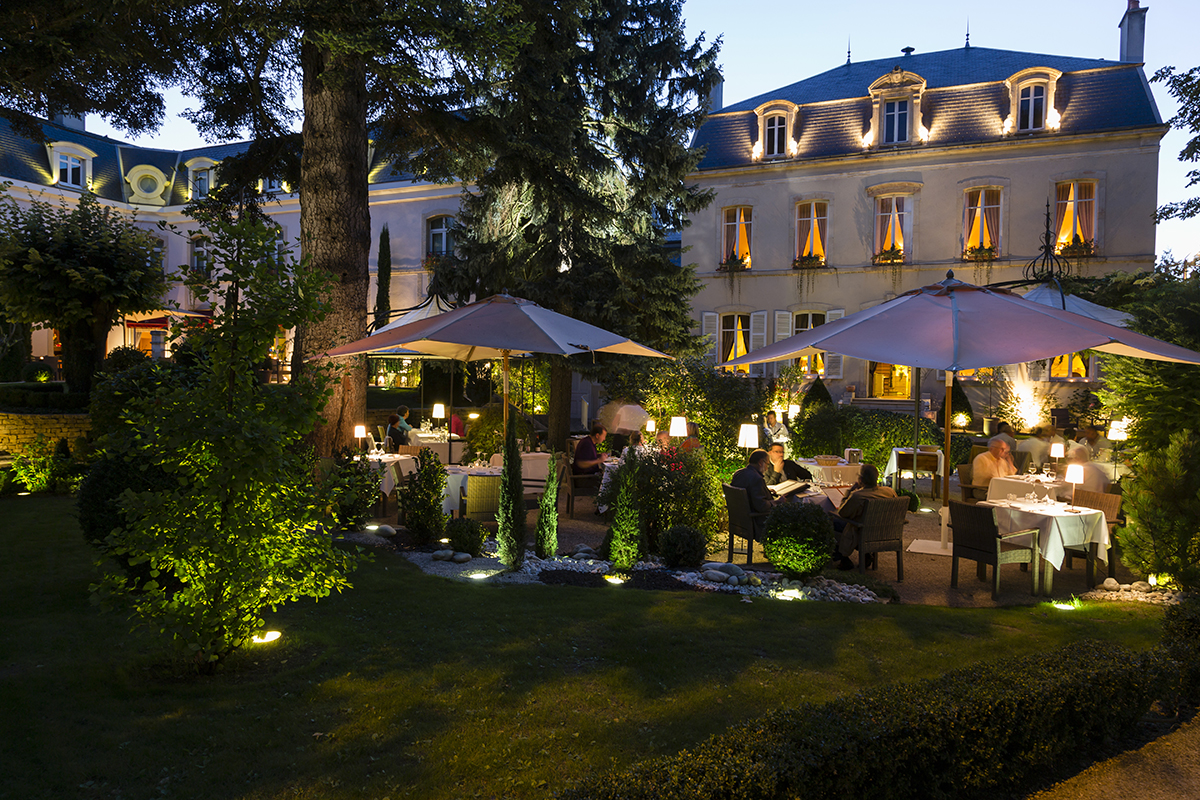
Garden dining by night at the Hostellerie Cèdre & Spa Beaune, Burgundy
Our room was characterful and split-level, with bedroom and bathroom on one floor and a living area in a gallery above, big enough for a group of four to stretch out on the sofa and chairs, fine wines in front of them, and chat into the night. The room didn’t have a big view but it had an interesting one, across the outskirts of Beaune to the vineyard slopes creating its eponymous, and delicious, red wine. One of the world’s most ancient vineyard sites, its history can be traced back 1,000 years. This is a soulful hotel.
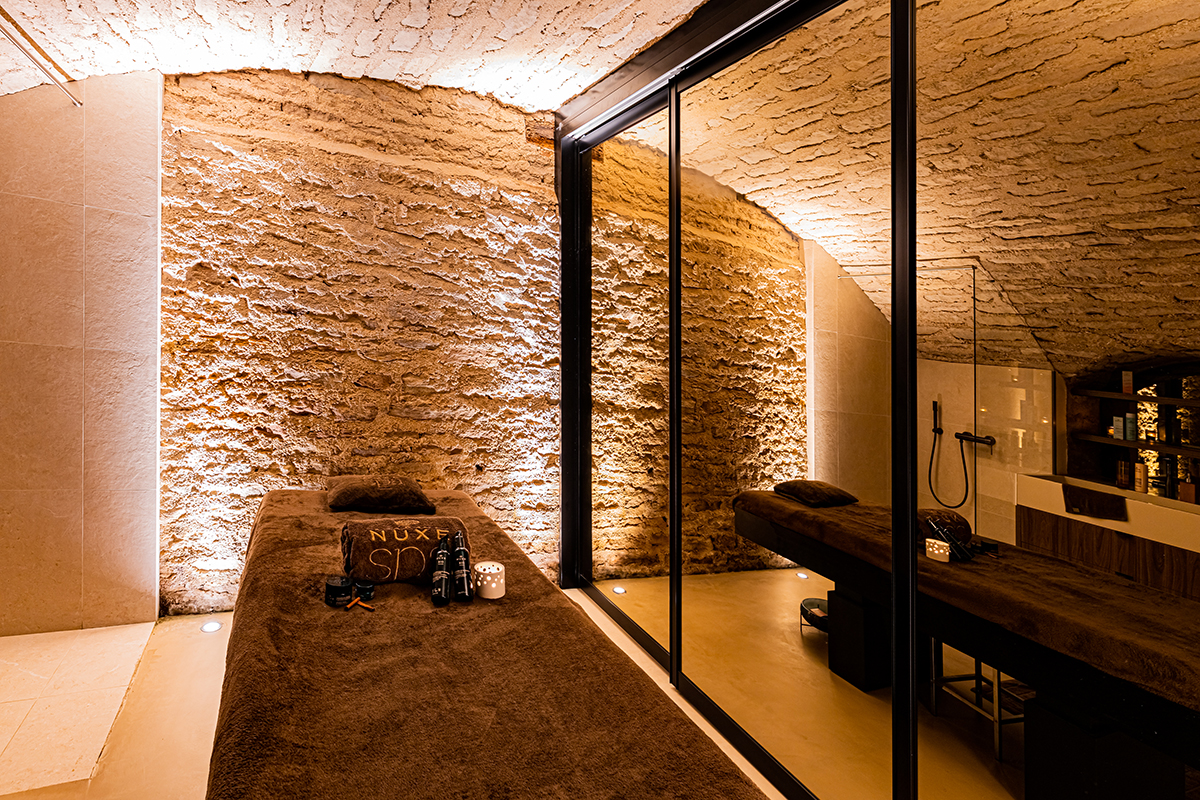
The stylish Nuxe Spa in the vaults of the Cèdre
Our focus the next day was a drive across the countryside of central France, from one of its great winegrowing regions, Burgundy, to another, Champagne. These are connected by an autoroute, and getting there can take fewer than three hours. But that would not do justice to a car like this, so we took the back roads instead. First, we wound our way up the low, but very definite ridge of the Côte-d’Or, where we saw the same Burgundy vineyards we had seen from our hotel room, and then through forests, glades and ancient villages on the Plateau de Langres. This is Charlemagne territory, one of the most historic but unexplored parts of France. In each village there were at least a few grand houses, hundreds of years old, that wanted to tell a story.
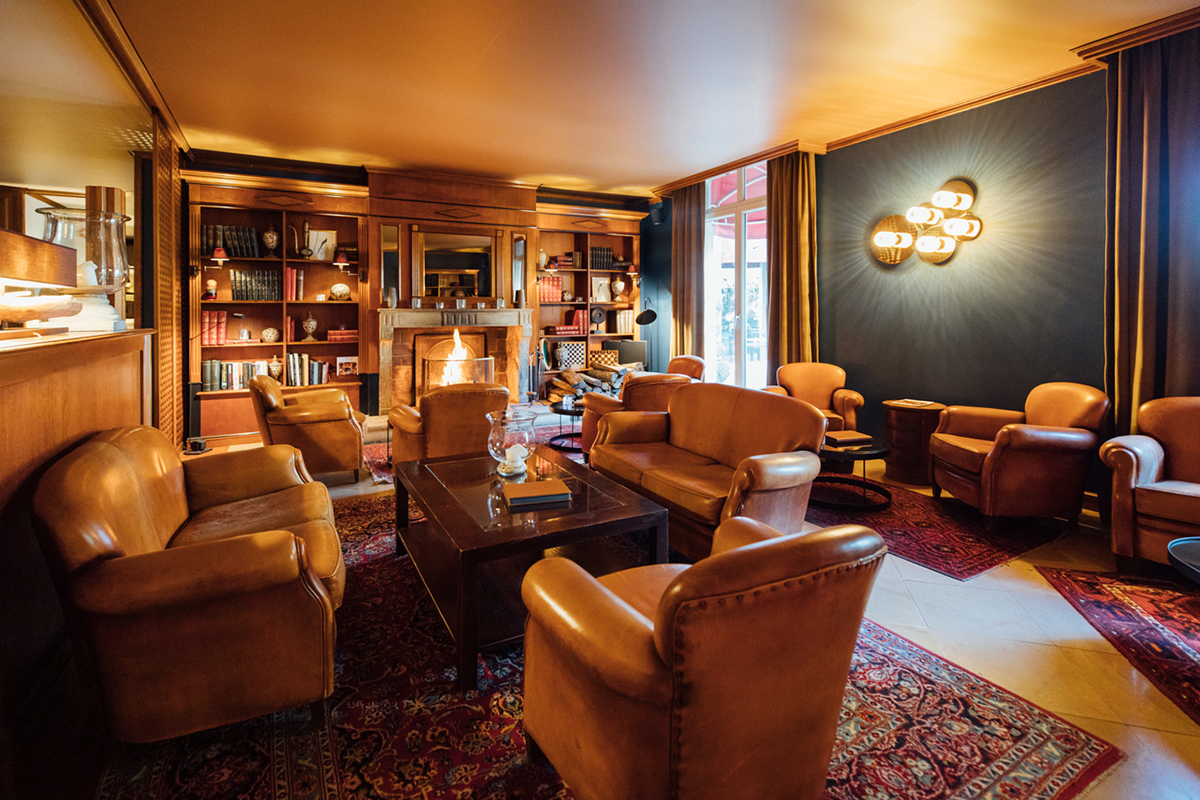
A cosy ambience at the Cèdre Lounge Bar,
The Aston ambled happily through them, like a big dog strolling with its mistress, then roared down the empty byways when the countryside emptied out a little. After a couple of hours, wanting to make it to Champagne for our next meeting, we headed back towards the autoroute, joining it near Charles de Gaulle’s home village of Colombey-les-Deux-Églises. On the smooth French highway, the Aston reverted to its alter ego of relaxed grand touring car, purring quietly.
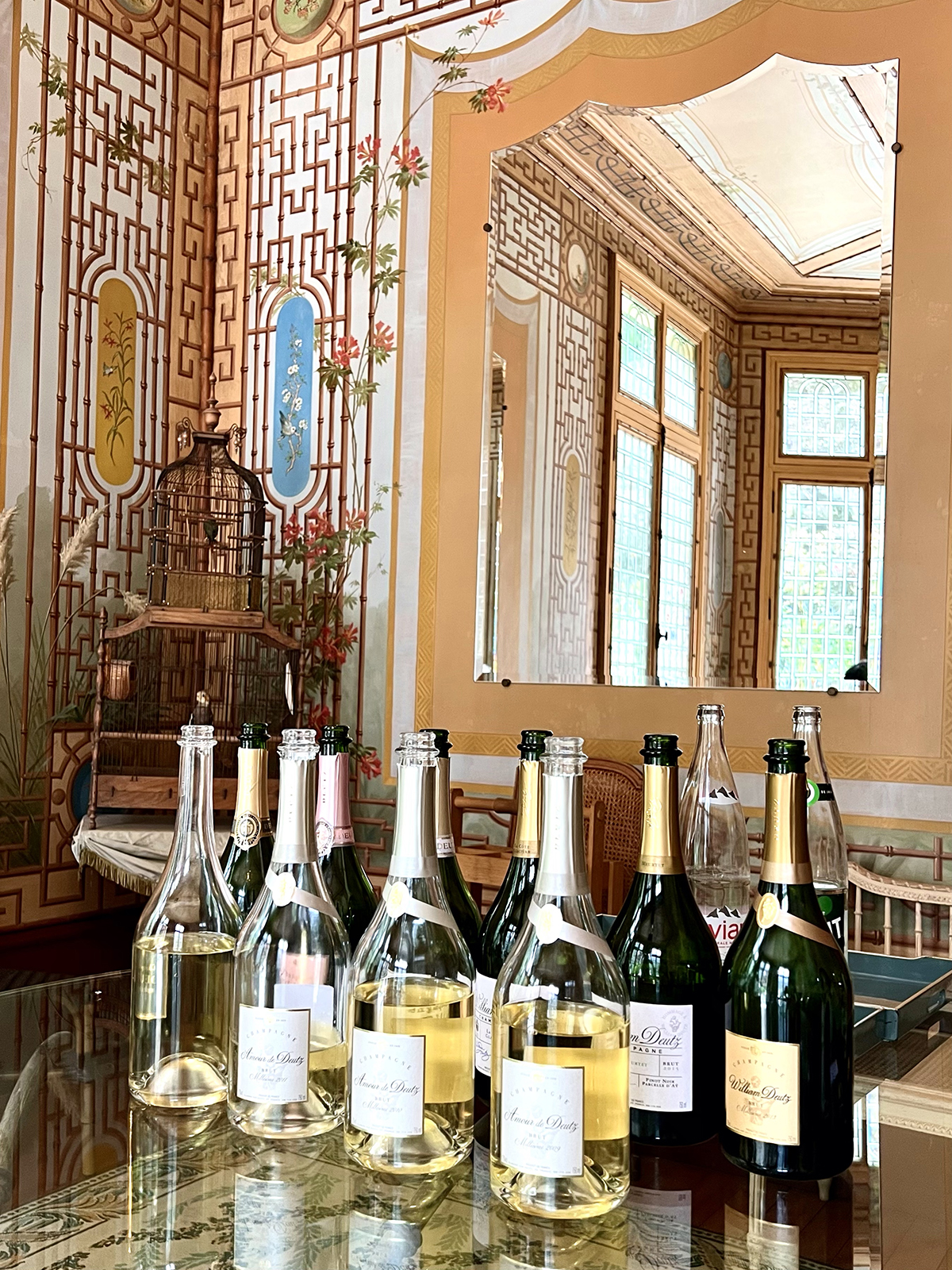
The sublime tasting at the Deutz champagne house, France
Deutz is not a champagne house that is familiar to so many international wine collectors. It doesn’t market itself like the region’s more famous names. Perhaps it doesn’t need to, we reflected, as our taxi dropped us at the maison’s cobbled courtyard (the Aston having been parked safely at our hotel for the night). After a tour of the massive underground cellars, we were shown into a beautiful historical house, its decor preserved as the Deutz family created it in the late 19th century. The tasting room was really a garden room, looking out onto lawns and intricately planted borders.
Window views from the garden room at the Deutz champagne house
Deutz is about quality more than marketing – more than anything, we thought, as we were guided through a selection of the maison’s champagnes. The vintage rosé, 2013, was delicate, balanced, floral and beautiful. They only got better. The prestige cuvée, Cuvée William Deutz, had a power, a richness and a kind of nobility to it – the sort of champagne you would serve at the coronation of a king (a shame the French got rid of theirs), or perhaps at a dinner to mark the 200th anniversary of your watch manufacture. But it was another one of their champagnes that really got into our souls.
Tasting of Cuvée William Deutz and Amour de Deutz
Amour de Deutz is made from 100 per cent Chardonnay, the best picks of the white grape that the maison gets its hands on every vintage. We tasted the 2013, 2009 and 2008. They were sublime: complex nutty creaminess, a savoury edge, richness yet ethereal lightness and a kind of golden flavour. Each was more powerful than the last, yet as gentle as a butterfly. Featherlight yet eternal.
Read more: Great Drive: Santa Monica to Napa Valley, Califonia
The next day, powered by memories of the Amour de Deutz, we cruised back to the UK in the beautiful, purring Aston, a case of golden champagne treasure in its (small but adequate) luggage compartment. The perfect little grand tour in the perfect grand tourer.
Find out more:
This article was first published in the Spring/Summer 2023 issue of LUX
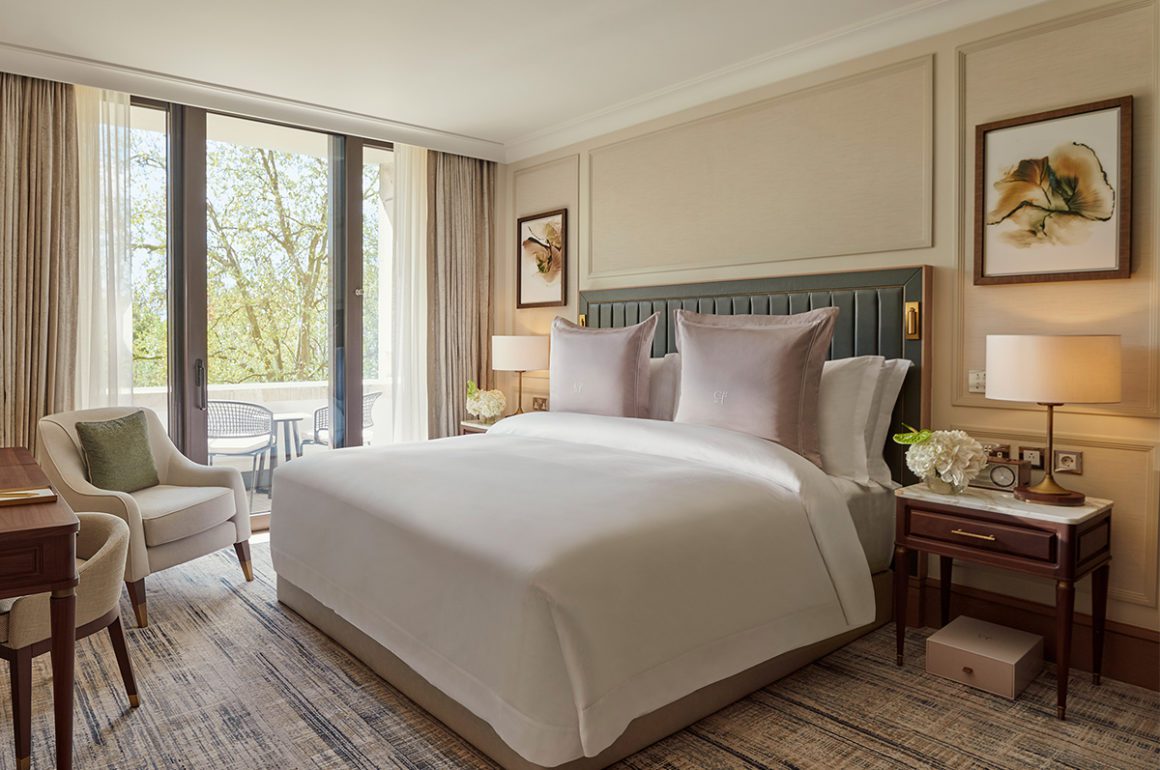
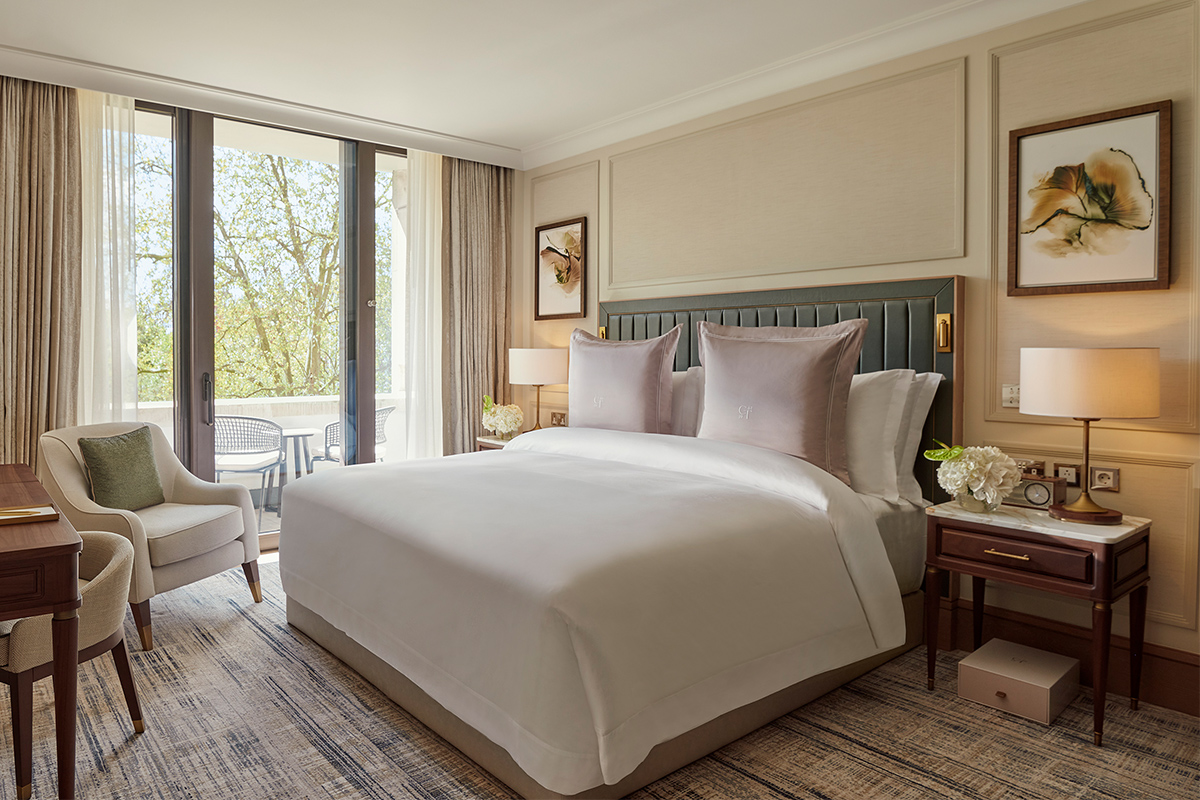
One of the hotel’s garden suites
The Jumeirah Carlton Tower is a London legend, recently lovingly refurbished. In an unmatched retail location in Knightsbridge, can it regain its 1960s glamour? Darius Sanai checks in to our Hotel of the Month
It’s peak pre-Christmas shopping season and the Jumeirah Carlton Tower is a short stroll from Harrods and Harvey Nichols and basically inside the Sloane Street branch of Hermès, preferred by locals to the Bond Street boutique for its more thoughtful buying. It’s also a dash from the Hyde Park Winter Wonderland.
What’s the lowdown?
Fashion week tribes all have their favourite hotels, and it’s safe to say that until the pandemic, the Jumeirah wasn’t on their radar. It was more old-fashioned luxury where international visitors sipped tea in the lounge while their kids came back from shopping at Hermès next door. All that changed with the biggest refurbishment in the hotel’s 60 year history, which happened during the lockdowns.
Follow LUX on Instagram: luxthemagazine
Everything from the bar, to the public areas, to the restaurant, spa and rooms, has been recreated with a contemporary eye. That in turn refocusses attention on the standout points the hotel always had, but which became lost as its original star faded. It’s in Knightsbridge, right on Sloane Street, but overlooks a peaceful garden square and has views across the city from all sides, unlike any of its competitors. It has the biggest and best indoor pool in London, and, did we mention, it’s right next to Hermès?
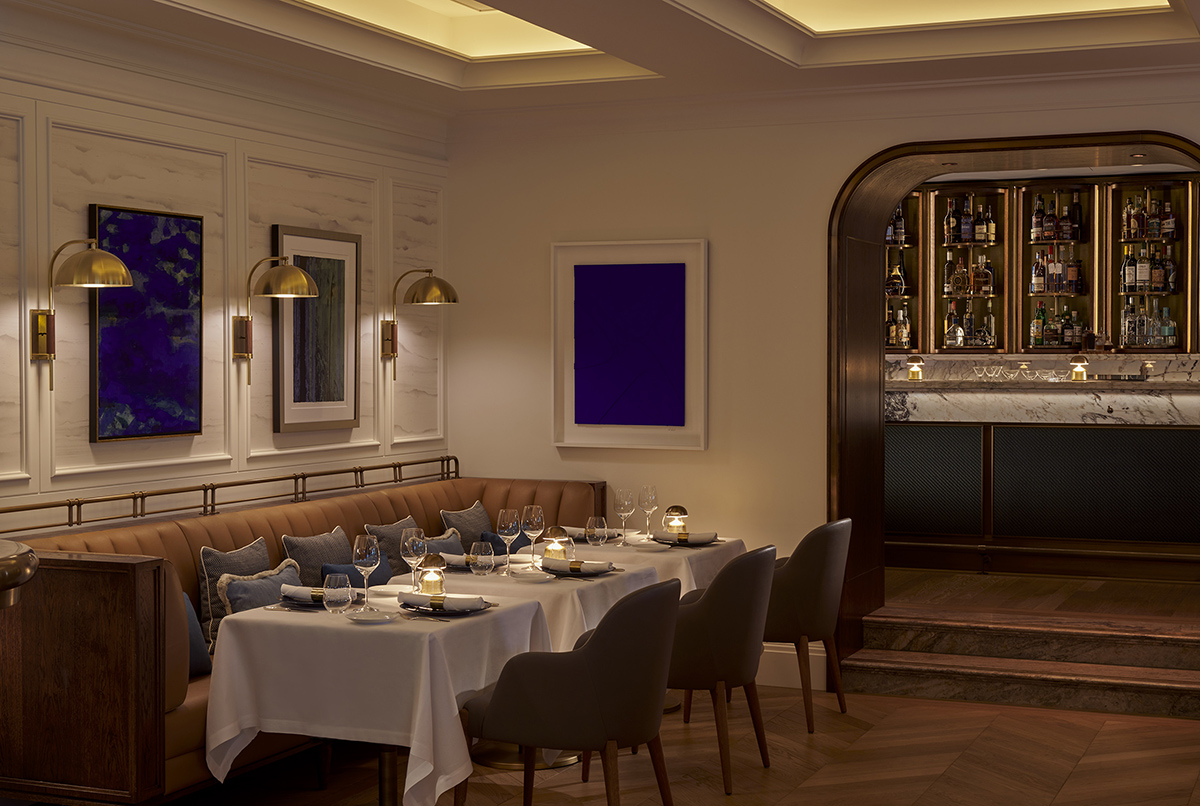
Al Mare Restaurant
The new Italian restaurant, Al Mare, takes the superstar corner position on the angle of Sloane Street. It’s a big, light, airy, New York midtown type of space, and it’s been transformed into a casual chic venue with just the right mix of both, like a grown up Soho House. We recommend one of the booths by the window, and picking from the imaginative and light options from the menu, like tuna tartar with oscietra caviar and ponzu – though there is plenty of comfort food also (we enjoyed a rigatoni al tartufo after a long night out).
You don’t need to go out though, as the hotel’s bar has been pole-vaulted into the top tier of London bars courtesy of an all-star bartending team and some very original cocktails, and relaxed, cool decor.
Getting horizontal
Our suite had a view along the length of the garden square, where we could see locals walking their dogs and children, from a great height: and across the rooftops to the whole of London, from the Battersea Power Station to the City. Even more striking were the bespoke touches: a Berluti shoe polish kit, slippers and products all monogrammed for us, as were the pillowcases. Delightful and very relaxing.
Read more: A tasting of Dalla Valle wines with the owners
Even more relaxing were the new poolside cabanas, replete with an excellent selection of magazines (including LUX). Given the conservatory feel of this huge indoor pool, on a sunny day in February you could settle down and pretend you were, well, somewhere sunny.
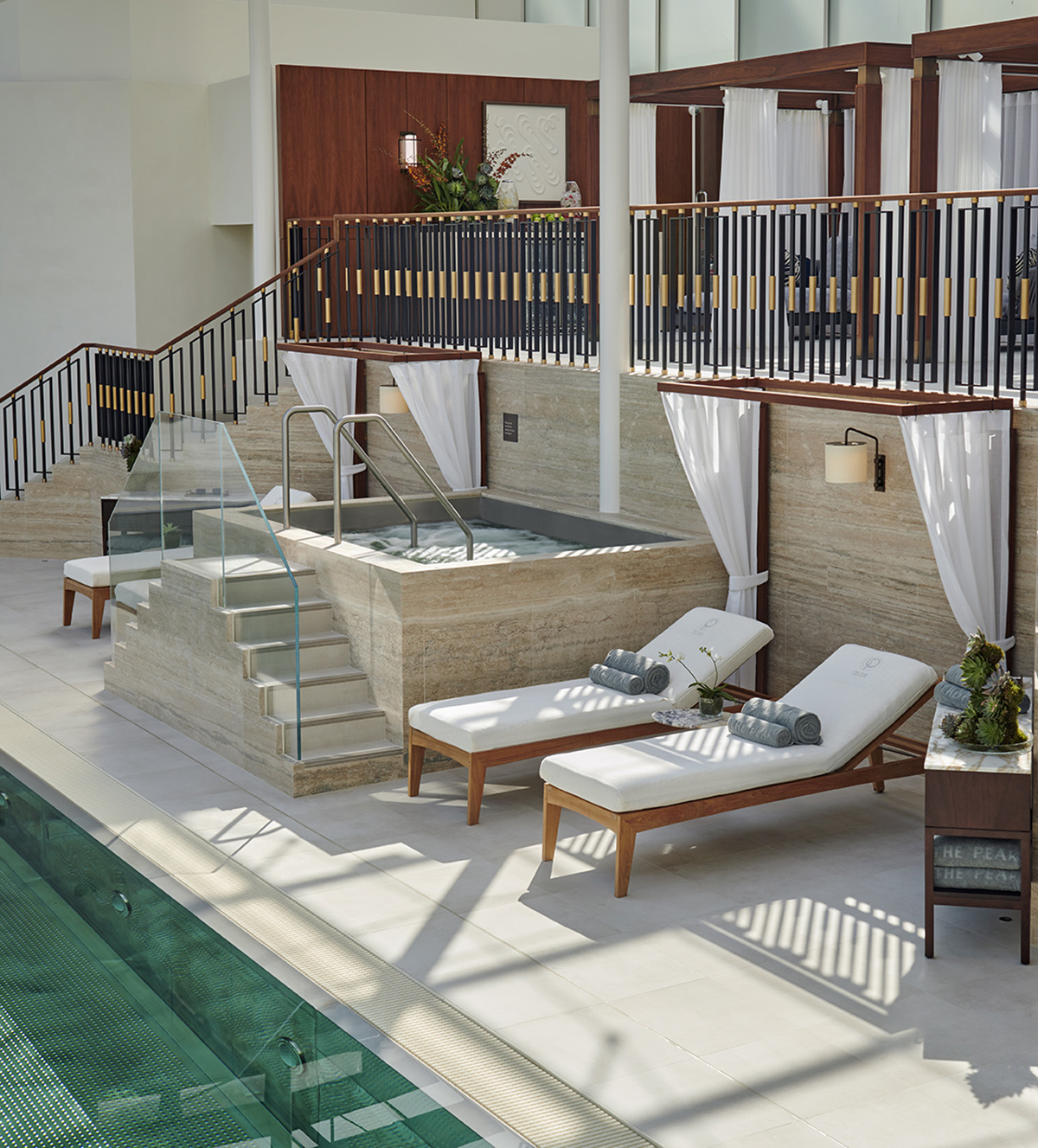
The spa and swimming pool
Flipside
Staying at the Carlton Tower doesn’t have the bragging rights of nearby hotels like the Berkeley or the Lanesborough, but we feel that is going to change quite fast.
Rates: From £750 per night (approx. €900/$1,000)
Book your stay: jumeirah.com/london/the-carlton-tower
Darius Sanai
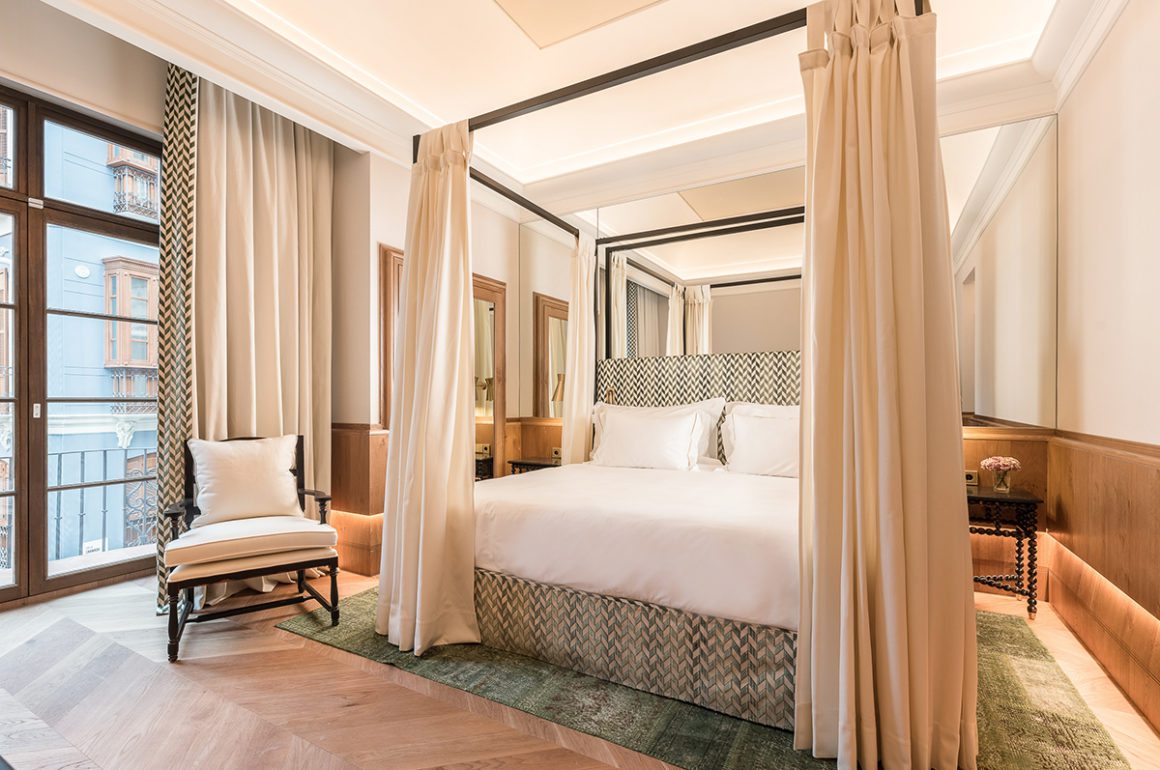
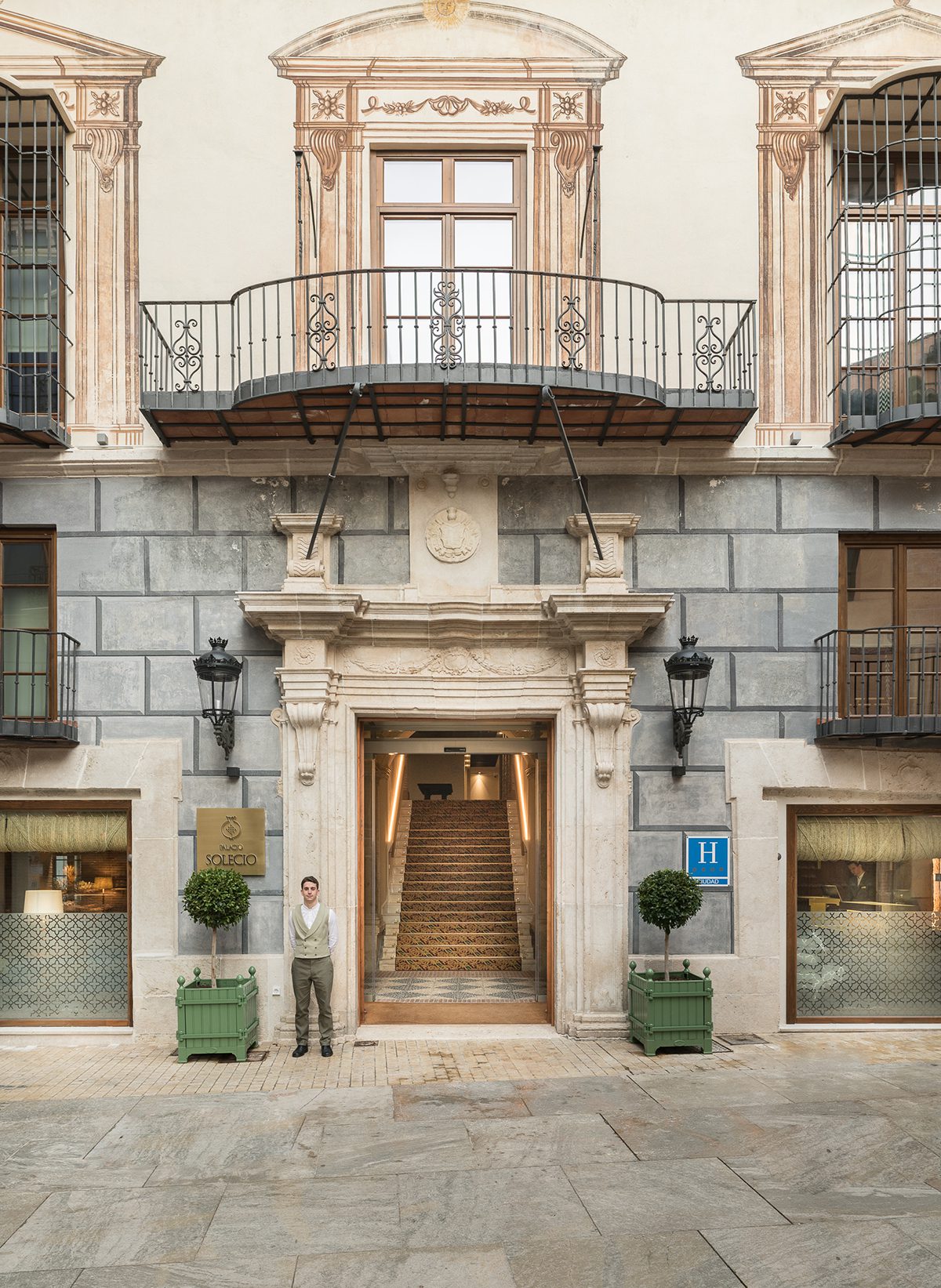
Málaga might not be the first place that springs to mind as a luxury destination, but the recent opening of sophisticated boutique hotel Palacio Solecio alongside the first international outpost of the Pompidou centre and a super-yacht marina signals a new future for the historic Andalusian city. LUX checks in for a weekend of food, art and culture
We arrive on a warm spring evening. Our taxi drops us on the edge of the pedestrianised cobbled streets of Calle Granada, Málaga’s old Jewish quarters, where our hotel, Palacio Solecio, is located in a former 18th century Andalusian palace opposite a peach-coloured 14th century church. This part of the city has a serene, almost earthy feel to it, perhaps partly due to the plethora of historic buildings and narrow winding alleys but also because it feels lived in. There are none of the Irish bars and nightclubs that are so popular with hen and stag dos – although if that is your thing, the central strip is a matter of minutes away too. That said, Malaga has done much in recent years to shake its reputation as a party destination. With a new sleek port, a first-class culinary scene and a growing clutch of artistic attractions, it’s slowly beginning to attract more culturally-orientated visitors.
Follow LUX on Instagram: luxthemagazine
After we’ve checked in and been shown to our bedroom – an elegant junior suite with an enormous four poster bed and a french balcony overhanging the street – we head back out to find somewhere to eat and stumble upon El Pimpi, a rustic tapas bar where, in true Mediterranean fashion, local families are crowded around tiny tables for a late night snack and glass of sherry. The menu is scrawled in Spanish on a large blackboard behind the bar and we pick a few plates, largely based on words we recognise. A few minutes later, a thick yellow wedge of tortilla arrives on our table along with boquerones en vinagre (white anchovies in oil and vinegar), patatas bravas drenched in a rich tomato sauce and crispy calamari. Málaga is renowned for having some of the best tapas in Spain and this is strong start.
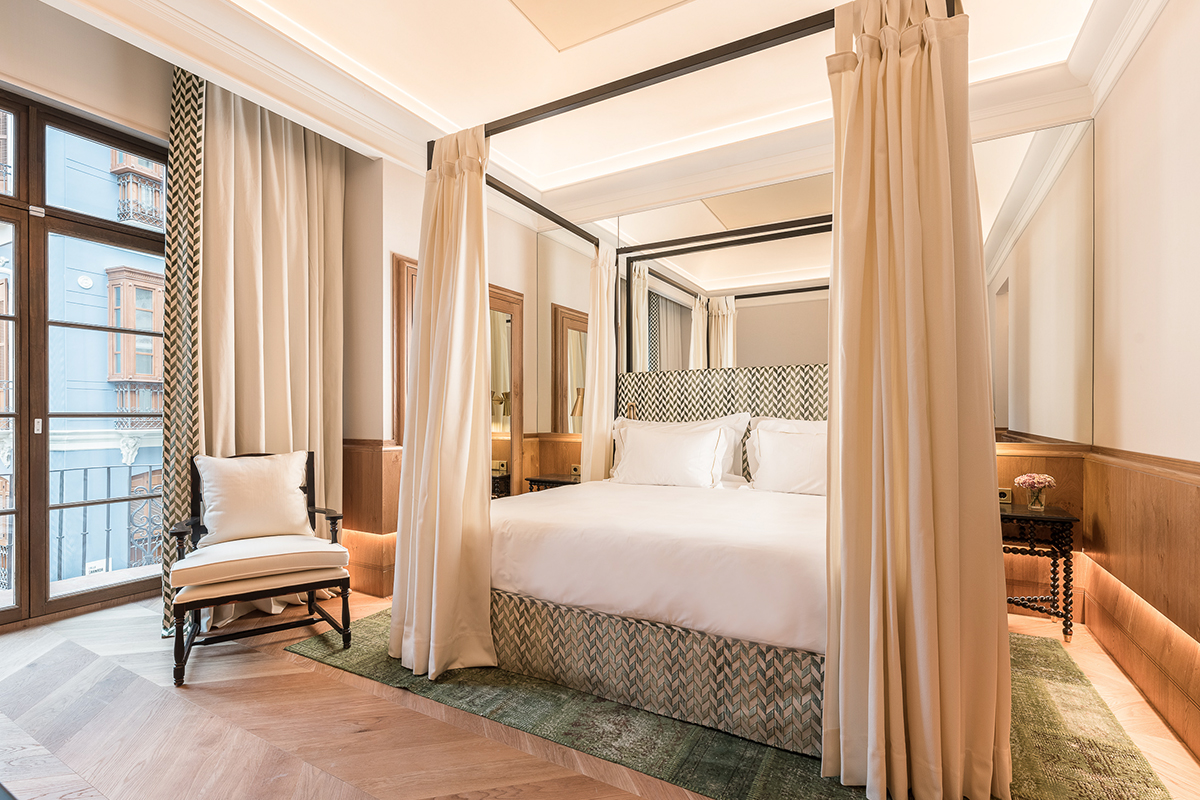
A junior suite with french balconies
The next day is bright and fresh – warm enough to go without a jumper in the sun. We have been given an extensive list of recommendations by the hotel’s staff (all within walking distance), but decide to spend the morning wandering and set off without any particular direction in mind.
What strikes us the most is the sheer beauty of the city: its sun-washed palette, patterned ceramic tiles, hidden churches and vibrant plazas, the way in which the ancient and modern coexist so seamlessly. One minute we’re walking past high street brands and the next, we’re standing in front of the ruins of a Roman theatre. The cathedral is especially astounding both for its monumental scale and the lush gardens that surround it. On our visit, a woman is sitting against one of the walls, singing a slow, haunting tune.
Read more: A tasting of Dalla Valle wines with the owners
For lunch, we take the hotel’s advice and find a table on the edge of the famed Atarazanas food market, listed as one of the best markets in the world by The Guardian in 2019. The food is exceptional: tortillitas de camarones (crispy prawn fritters) followed by fresh tuna kebabs with thick slices of beef tomato and pepper, and two enormous grilled king prawns. We then head down to the waterfront to visit the Pompidou Centre Málaga, the first international branch of the Pompidou Centre outside of Paris to view its permanent collection which includes a promising range of works by the likes of Picasso (Málaga’s most famous son), Bacon, Giacometti and Frida Kahlo. Although some of the pieces are compelling, we find the experience as a whole disappointing: the space is disorientating and the display lacks any curatorial concept. The Carmen Thyssen Museum, however, is wonderful. The permanent displays on the lower levels offer an intriguing insight into Spanish art history with a strong collection of Old Masters, while the upper galleries stage visiting exhibitions – during our visit, there’s an excellent presentation of works by American photographer Paul Strand.
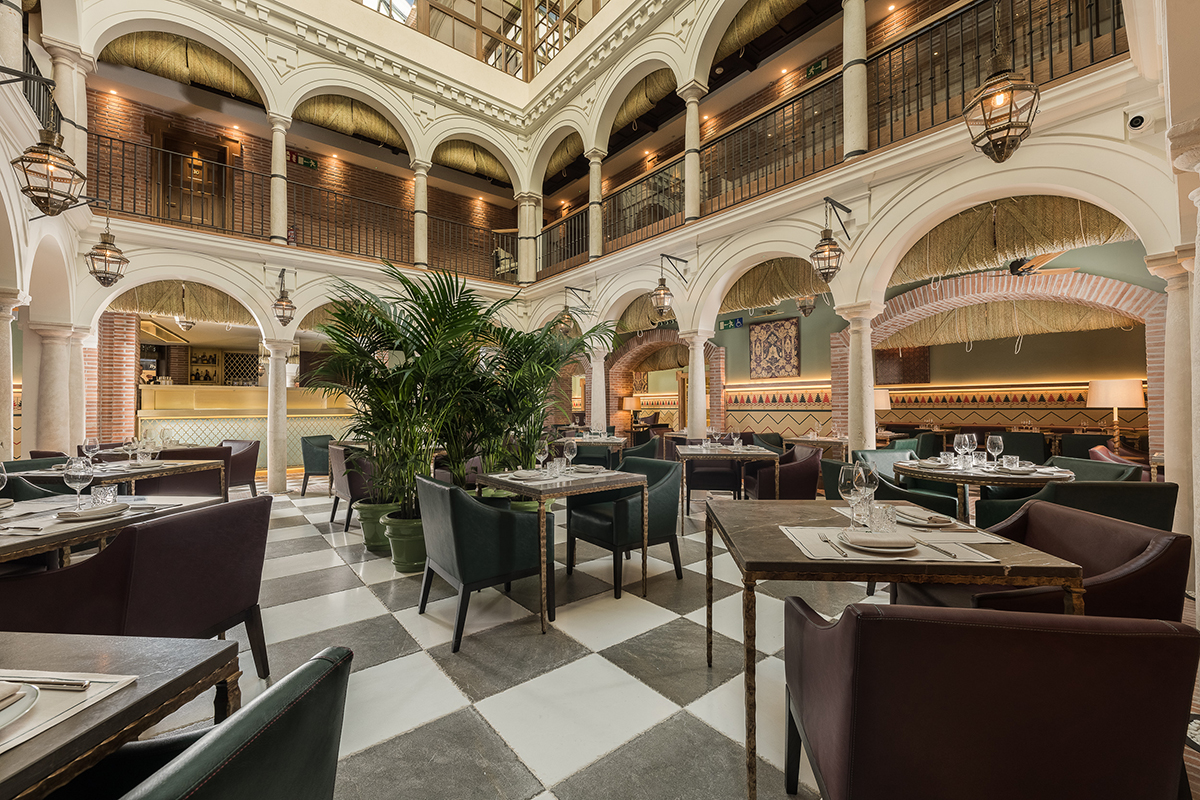
Balausta, the hotel’s restaurant
That evening, we dine at Balausta, the hotel’s restaurant, located in a light-filled atrium edged with pillared archways. The menu focuses on Andalusian dishes made with fresh, local produce. Our waiter recommends we choose a few plates to share and we opt for the tomato tasting platter and kale salad followed by the red tuna tartare and scallops cooked in tomato stew (a local recipe packed with flavour). The dishes are modestly sized, but perfect after our indulgent lunch while the unpretentious serving style feels very much in keeping with hotel’s relaxed, homely atmosphere.
After dinner, we make our way to Hammam Al Andalus (a five minute walk from the hotel) where we bathe in candlelit heated pools until midnight when the baths close and we drift back to our room for one of the best night’s sleeps we’ve ever had.
Rates from €179 per night on a room only basis. For further information or to book, visit www.palaciosolecio.com/en/
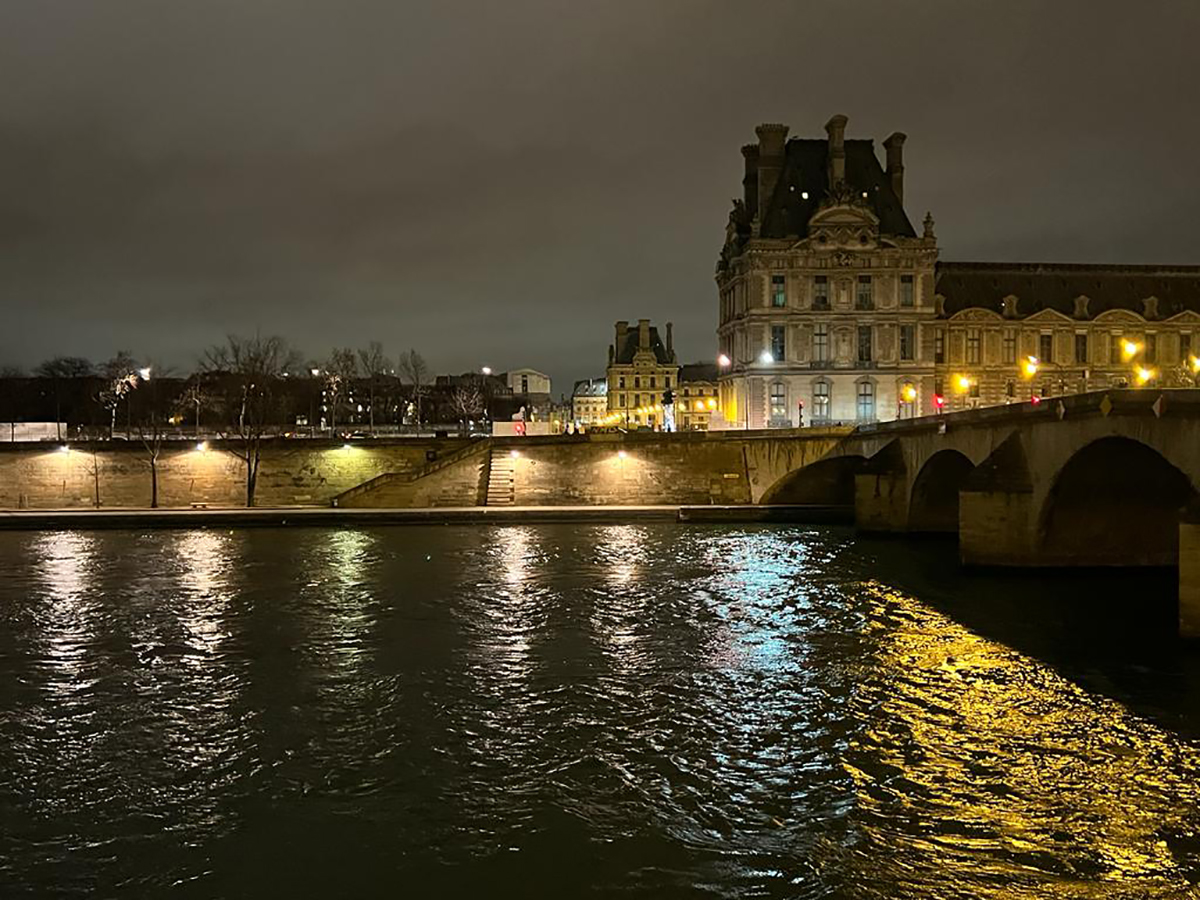
Walking back after dinner. Image by Darius Sanai
Paris, the eternal city, never changes. Or perhaps it does. After a two-year hiatus, Darius Sanai notices some interesting happenings during a week of meetings with luxury CEOs, art dealers and creatives
Meeting an old friend for the first time in two years, I wonder if she will have aged and find her instead fizzing with renewed life.
The friend is Paris. I am here for the first time since just before the pandemic hit Europe. “Since Brexit, people are coming here instead of London because it’s easier to get a job,” says Kai, a graphic designer I bump into at a gallery opening. Estonian, she moved to the vibey/slightly scary 19th arrondissement from Dalston, in London, in September.
That doesn’t mean that Paris hasn’t suffered from city flight, like London, New York and most other metropolises. Prices of apartments in the centre of Paris are down 2.5% year on year. The sellers are not like Kai. They are wealthy and middle aged. Maybe an exchange of the wealthy bourgeoisie for edgy graphic designers in their 20s is the reason for the vivacity. Property prices in the dodgy/cool 19th are up 3.8%, from a much lower base.
Follow LUX on Instagram: luxthemagazine
To dinner on the Left Bank with Francois Pinault’s CEO of Artemis Domaines wine estate group. Frédéric Engerer has Château Latour, the celebrated Eisele and Clos du Tart estates in Napa and Burgundy respectively, and several others, under his thumb. I get the feeling from Frédéric that these may not be the last: luxury goods titan Pinault is buying great wine estates like he once snapped up Gucci, Bottega Veneta and Saint Laurent.
At Les Climats, the Parisian restaurant with “the best wine list in the world”, according to numerous magazines, the sommelier at first doesn’t recognise Frédéric, who is arguably the most powerful man in French wine. This could have been embarrassing but Frédéric is understated, leafing through the list as anyone would. The penny drops. “Ah…sorry, I didn’t realise who…” stammers the sommelier. It’s fine.
We do a side-by-side blind tasting of his own Clos d’Eugenie against another excellent Burgundy. Frédéric and I both manage to identify both wines correctly, simple for him, and a 50/50 for me. Having had a bottle of champagne and two bottles of Burgundy on a Tuesday night, with meetings all day Wednesday, we decline the suggestion of a dessert wine.
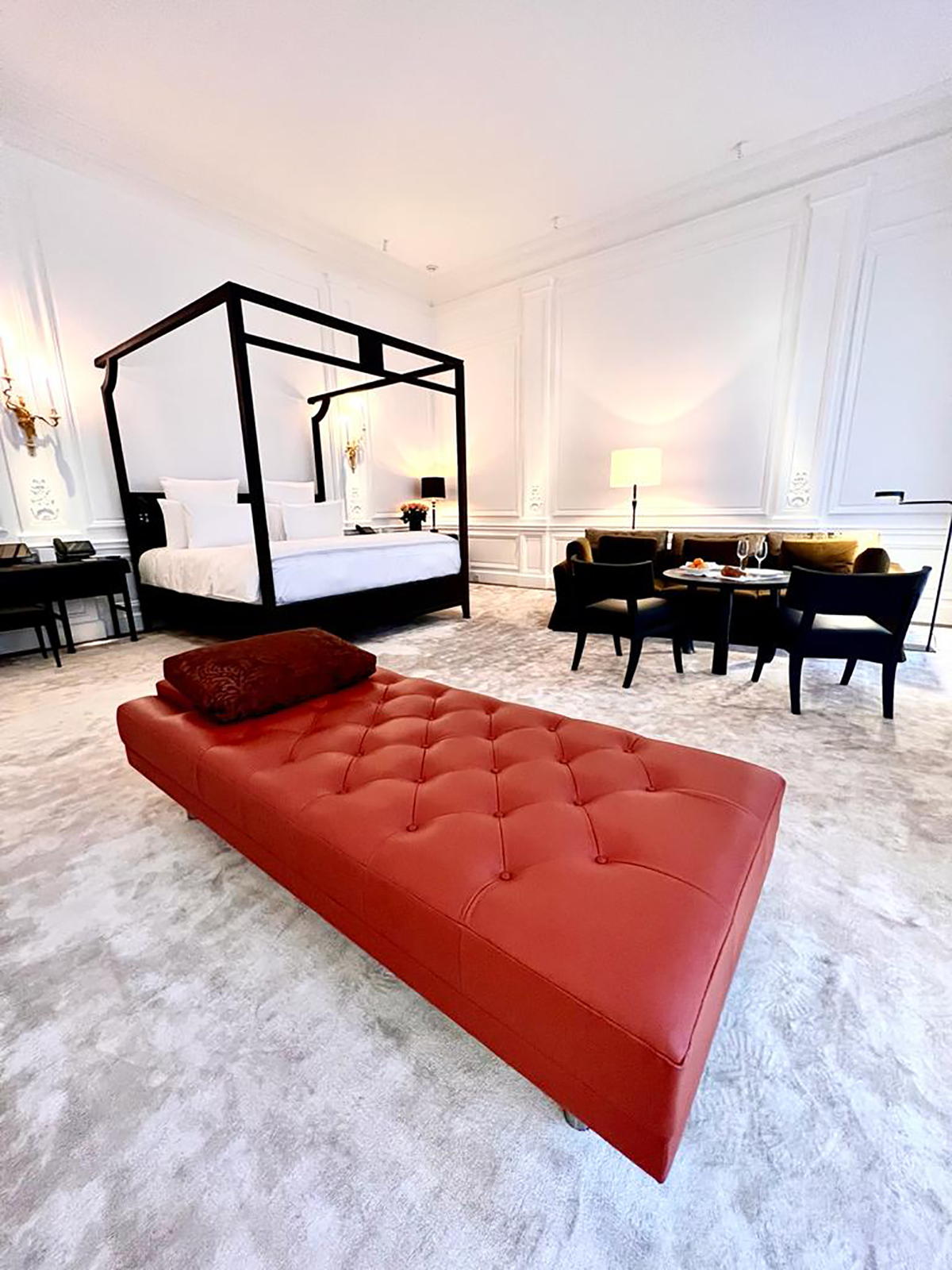
Our suite at the Hotel Costes Castiglione. Image by Darius Sanai
Back at Hotel Costes, I am walking slightly unsteadily towards the lift in the arresting, Christian Liaigre-designed lobby of the new Castiglione wing, when I am greeted by someone walking out of the bar. After establishing I am who he thinks I am (two years absence and a compulsory face mask have that effect), Jean-Louis Costes invites me for a drink in his bar.
Over a late-night glass of Badoit, the man who first created a new vibe for Paris with the Hotel Costes in 1995 tells me his plans to expand the Costes even more. A boutique is becoming a palace. It’s also turning into my kind of place: I found the Jacques Garcia-designed original Costes a bit self-conscious, or perhaps it’s the people I met there over the years. The Castiglione, with its high ceilings, visual drama and flair, is Paris showing Dubai, London, New York and anywhere with pretensions of grandeur, how contemporary luxury style is done. If Marie Antoinette were alive and holding court in 2022, she would do it here. I reflect on how the most talked-about hotel in France among the social and media (and social media) sets is owned and run by a man who doesn’t do interviews (the profiles I did with him for LUX and Condé Nast Traveller in 2021 were the first he has ever done for the international press) and isn’t on social media.
Read more: Why you should get your new car ceramic coated
The next morning, I walk downstairs as Jean-Louis walks into the lobby. He offers me on a hard hat tour of the new spa and swimming pool, under construction beneath the hotel, and the next wing, to be a loft-style chill out zone, opening later this year. I promise to say nothing about them until the time. Only, the pool is very big and will be special. “I don’t want to build something for three people doing lengths,” he says. Jean-Louis reminds me of Nick Jones, founder of Soho House. He looks at the same space everyone else looks at, and sees an idea for something nobody else can see.
Bird’s eye view of Angie Kremer’s photoshoot for the next issue of LUX. Image by Darius Sanai
I walk to Montparnasse, to the Photo House studio where Angie Kremer, a happening young photographer and videographer, is doing a shoot for the next issue of LUX on young creatives in Paris. Gen Z Parisians entering the workforce seem far more open to culture and ideas from the rest of the world – and outside the Peripherique – than the previous generation of twenty somethings. A positive impact of social media.
Vanessa Guo & Jean-Mathieu Martini. Courtesy Galerie Marguo
Vanessa Guo and Jean-Mathieu Martini are not Gen Z. They are globally connected millennials on a mission. Vanessa, former director of Hauser & Wirth in Hong Kong, moved to Paris and opened Galerie Marguo in October 2020. The gallery is in in a former government building in the Marais and looks out onto a newly rebuilt courtyard – the Square Arnaud Beltrame – where public art and outdoor private views take place next to a kids’ playground. (No Takashi Murakami works here.)
Vanessa says a new generation of collectors is interested in collecting a new generation of artists. Back to Brexit: with taxes and paperwork on art in and out of the UK, Paris is vying to take over London’s preeminent role in the European art world. The collectors are coming here too, she says. So long a museum of culture and brands managed carefully by a closed elite, Paris is opening out. The imminent arrival of Art Basel, displacing the more local FIAC from its seat at the Grand Palais, will change things even more.
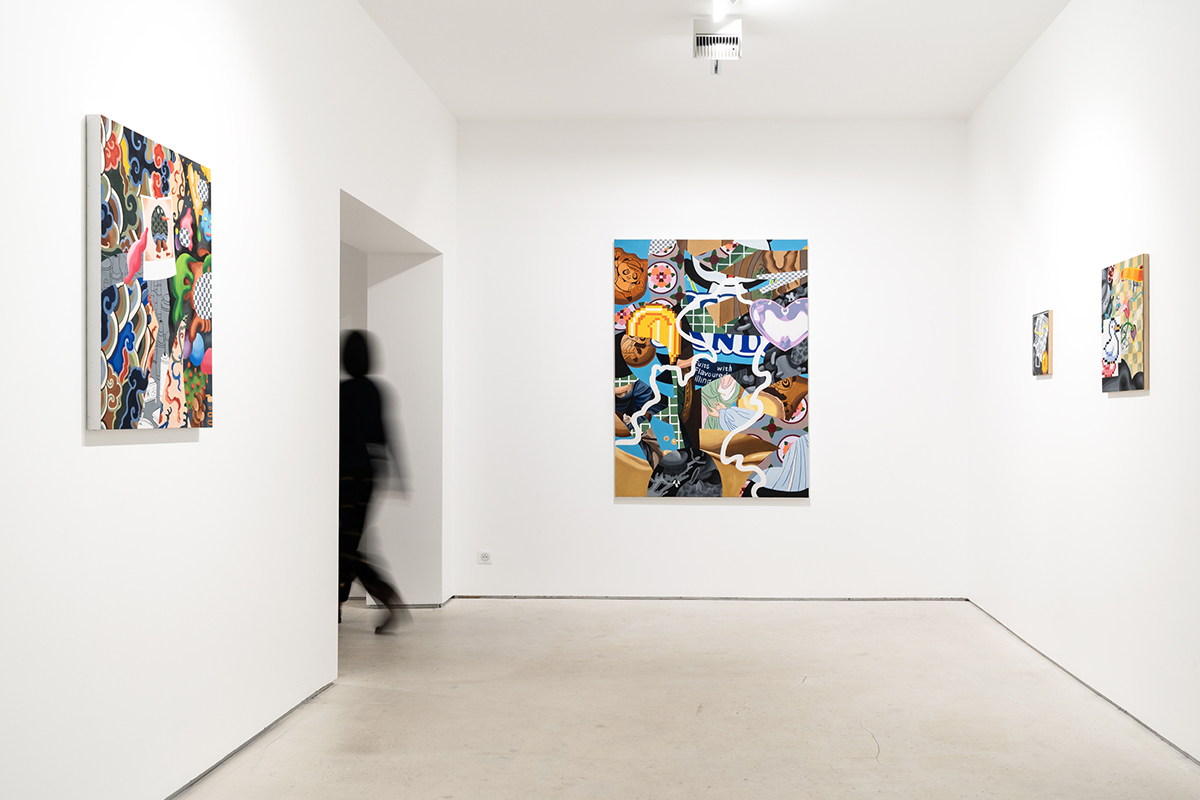
Installation view of “Ziping Wang: Obsession Indifference and Onionskin” at Galerie Marguo, Paris
Amin Jaffer, collector and curator of the sublime, is out of town this week so I can’t take him up on his invitation for tea at his beautiful home, where his art collection is so beguilingly put together that I never want to leave. Instead, he organises for me to have a tour of the new Al Thani collection, which he curated, at the (also) new Hôtel de la Marine. The building is on Place de la Concorde, directly in the centre of the north side. The collection is a sliver of the art from Persia, Mesopotamia, Egypt, India and surrounding regions, collected by Qatar’s ruling family over the last decades. It is presented delicately, clearly, warmly, with excellent descriptions that are both clear and authoritative. And have no “side”. Curators of far lesser intellectual worth writing dreadful, biased descriptions in some of the leading institutions of the Anglo-Saxon world should take note and learn from the Qataris, and Amin. I make a note to ask him to give me a personal tour next time.
Read more: Richard Curtis on the Power of Pensions
At meetings at Kering‘s HQ, at a former military hospital on Rue de Sèvres, I reflect that Francois-Henri Pinault’s sustainability strategy and introduction of environmental P&Ls for his brands felt revolutionary and a bit weird when I first spoke about them ten years ago. Now, it feels normal, the least you can do. Meanwhile the metaverse feels revolutionary and a bit weird now.
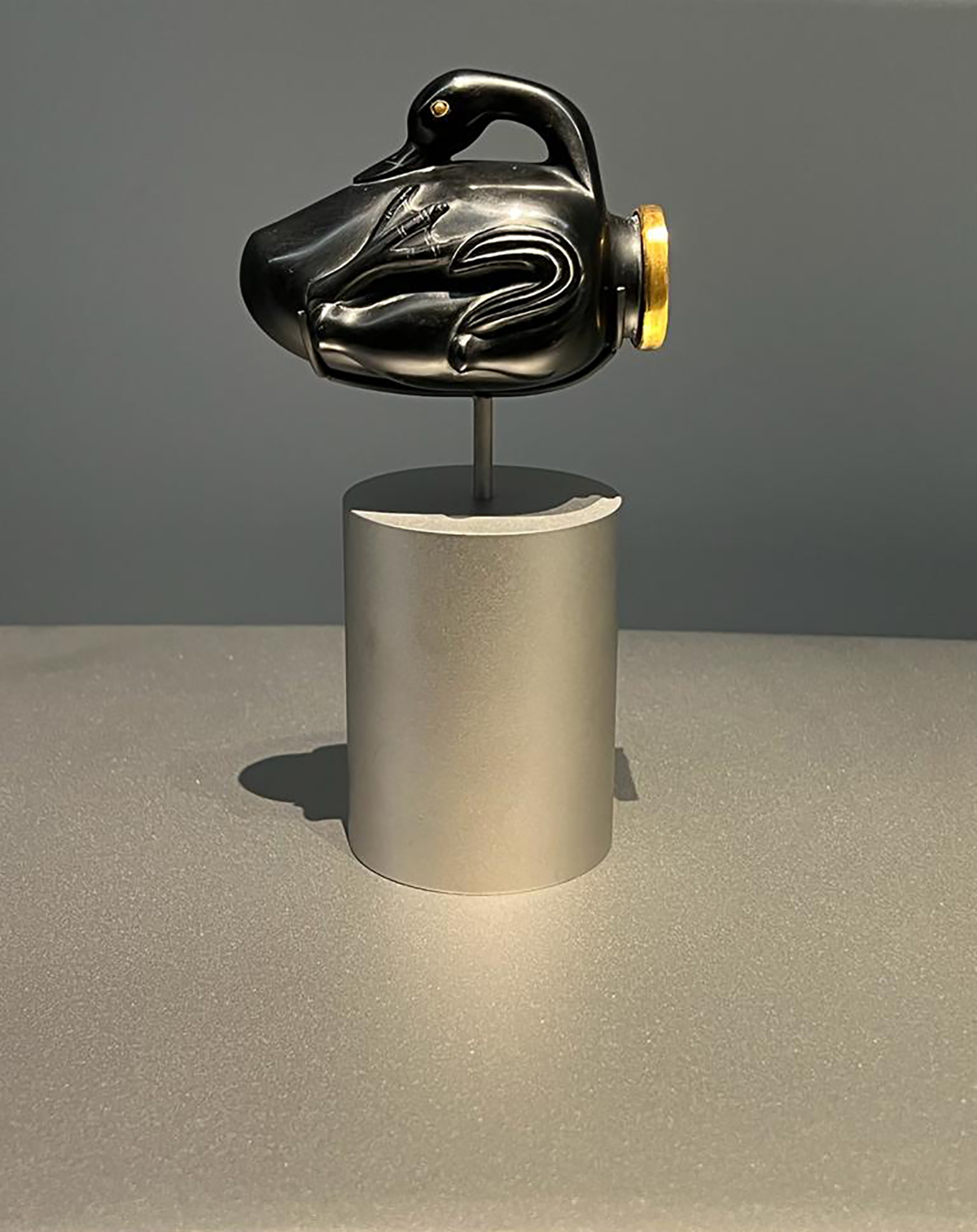
A sculpture at the Al Thani Collection. Photo by Darius Sanai
A final lunch with the LUX team and Angie Kremer at Château Voltaire. This new mini five-star hotel with 1970s themes is where Kanye West stayed for the last fashion week. I have tuna tataki with ponzu and frisée salad. Angie points out that frisée can misbehave when covered with dressing and goes for haricots verts. We plan a little party and exhibition for her shoot after the next issue is out.
Time to catch the Eurostar, where the security still doesn’t provide trays, so your Balenciaga coat sits on the conveyor and your Fragonard perfume bottle gets chewed up between the ramps.
At the Eurostar arrivals area of London St Pancras, the huge Dent clock above the Tracey Emin neon has stopped. It’s an easy omen for a writer. London hasn’t stopped, but in Paris, something has restarted.
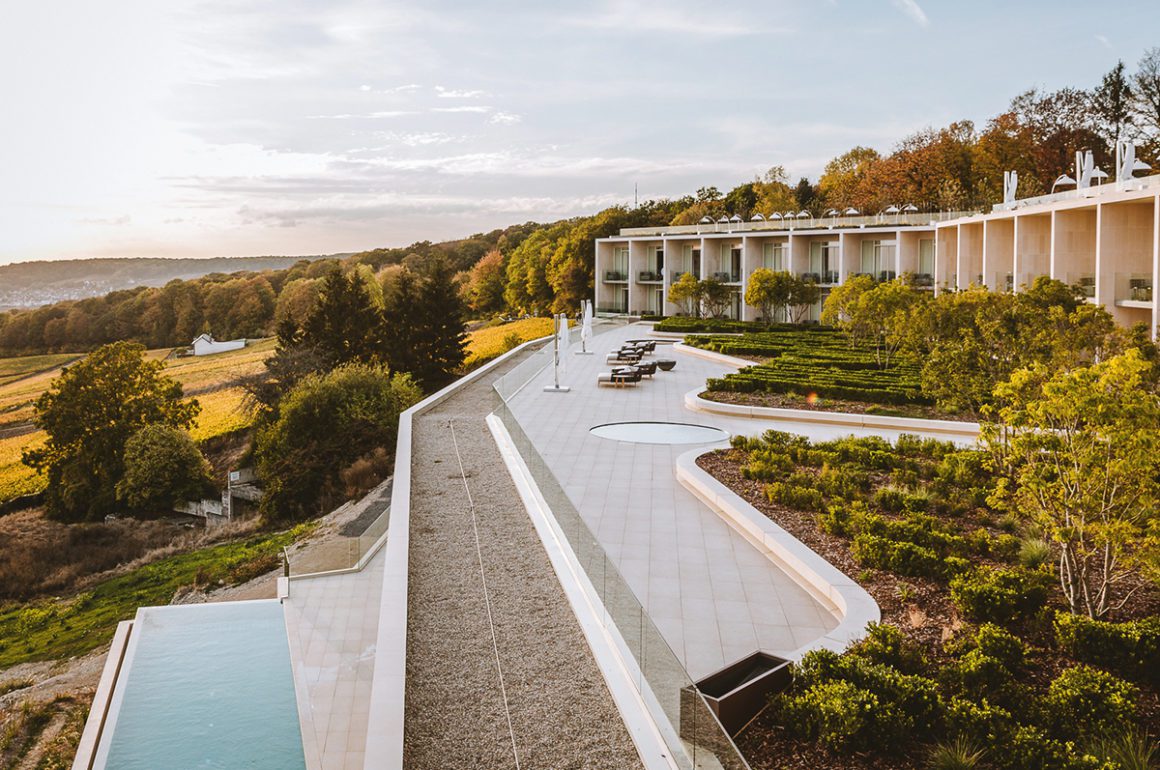
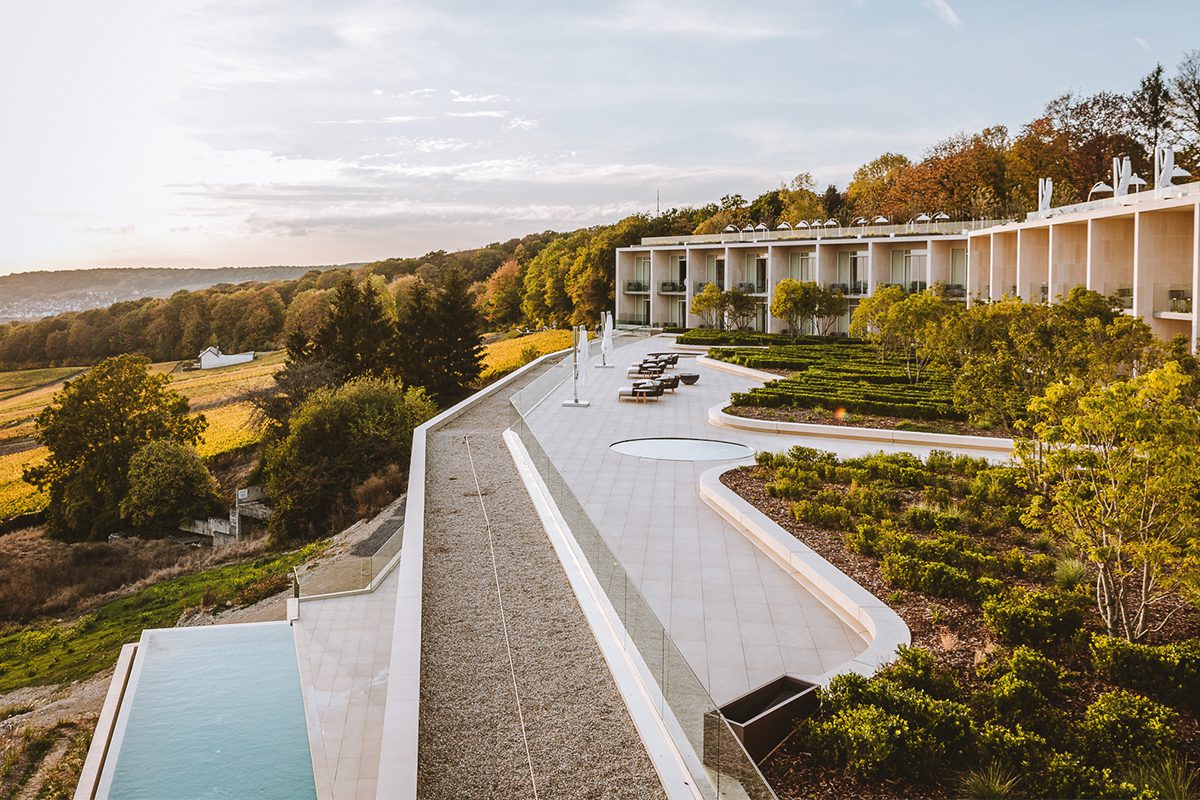
The Royal Champagne is built into south-facing vineyards on the Montagne de Reims
In the final part of our luxury travel views series from the Autumn/Winter 2021 issue, LUX’s Editor-in-Chief Darius Sanai checks into Champagne’s newest and most luxurious hotel: the Royal Champagne Hotel & Spa in Épernay
If the devil is in the detail, the Royal Champagne is a devil of a place. In the best possible way. What detail to pick on? The barista-style Italian espresso machine in the room? The pale-leather welcome box containing a bottle of boutique Leclerc Briant champagne in an ice bucket, two champagne glasses and some fruit slices? The delicate mesh on the light wood occasional table? So many.
Follow LUX on Instagram: luxthemagazine
In truth, Champagne has been in need of this hotel forever. I have been visiting the region on business and pleasure for years, and the choice has been between a couple of old-school country luxe hotels with little in the way of contemporary pleasures, and an array of functional places wholly out of keeping with champagne (the drink) and its image of indulgence.
From the very start, it’s plain that the Royal Champagne is something else: an indulgent hotel created with extreme love and style (and budget) by deep-pocketed owners wanting the best and hang the cost. (That is my impression, and I challenge them to prove me wrong.)
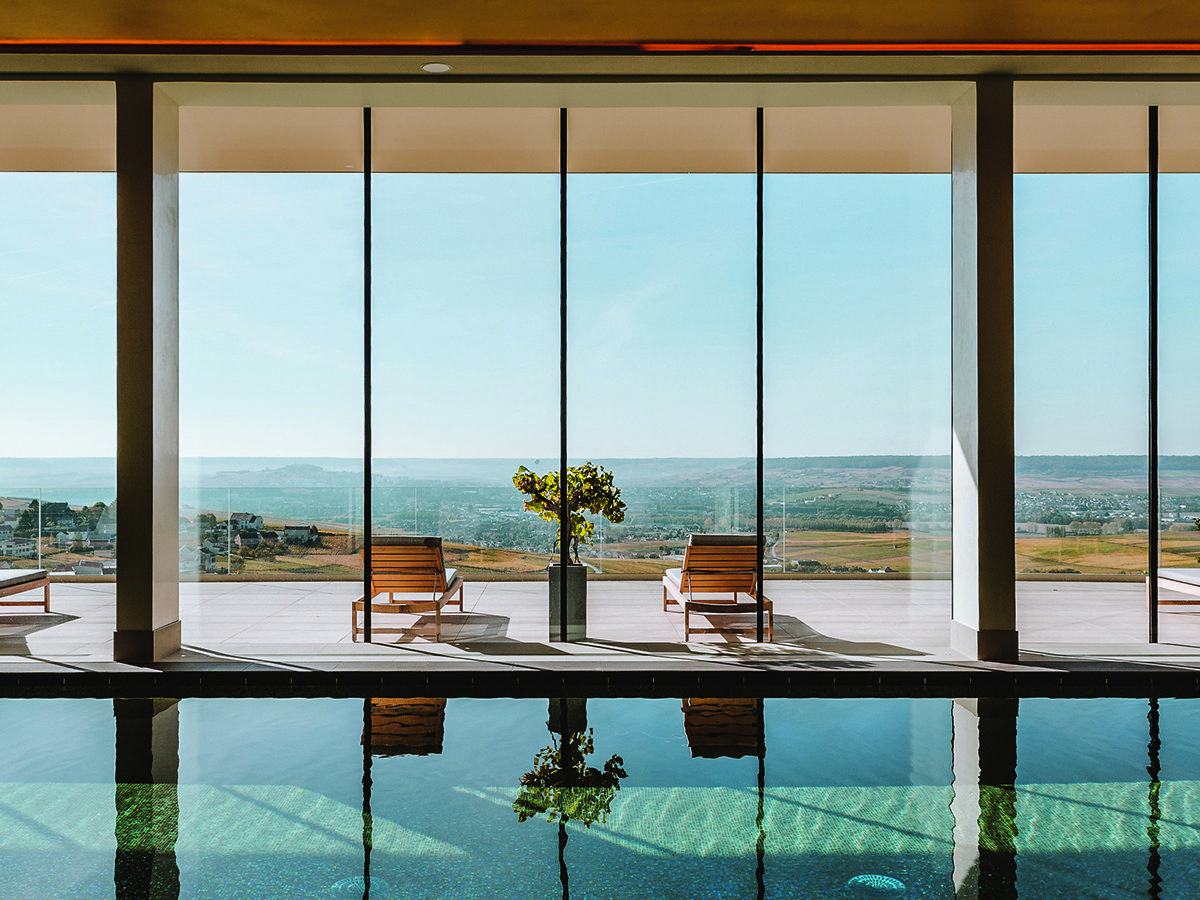
The pool overlooks the champagne vineyards of Épernay
You approach from Reims by driving up the Montagne de Reims, the forest-topped big hill with vineyards on both sides that demarcates the territory between Reims and Épernay, the two capitals of Champagne. Through the forest at the top of the hill, onto a lane through the vineyards, and the hotel entrance appears out of nowhere.
The Royal is built into the hillside, a contemporary building and a feat of engineering beside the historic building that gives it its name.
Read more: LUX Editor-in-Chief Darius Sanai on Effective Climate Action
Inside, everything is light, open. The welcome is professional and swift, and our room, like all of them, faced out over the vineyards, with a big balcony and vista down to Épernay and to the hills of the Côte des Blancs beyond. The balcony table shaped as a hollow-sided mini-barrel was particularly cute. Inside, everything was generous, light grey, cream, gold: the big bathroom has a sliding wooden screen to the bedroom so you can bathe with a view.
The temptation to hang out in the beautiful bedrooms is extreme but should be resisted. A couple of levels below, an indoor pool stretches the length of the main building of the hotel, all with picture windows out to the vista; there are beds on pedestals at either end to relax on, as well as more conventional loungers all around, and on an expansive terrace outside there are more chill-out spaces and an outdoor pool, warmed to cope with the north European weather, on the edge of the vines.
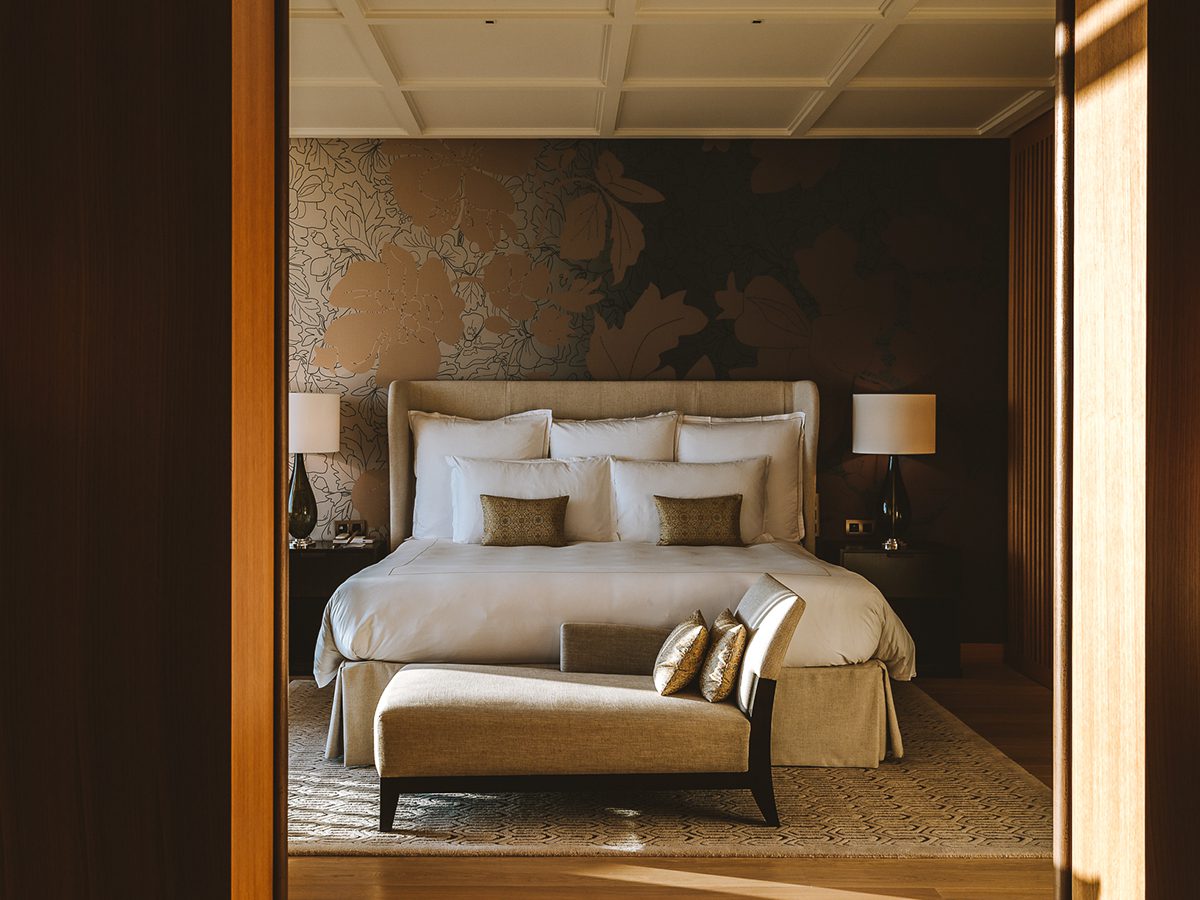
Then there’s the aptly named Le Bellevue restaurant, with a vast terrace with a view, where you can choose from an array of specialist champagnes and – amazing for the region – choose from a light, modern, organic-based menu. Bulgur and coriander tabbouleh, baked monkfish with chard risotto, that sort of thing. And do yourself a favour and allow the sommelier to choose for you from one of the small-grower champagnes: you may never have heard of them, because they only sell locally and make in tiny amounts.
The Royal Champagne is so good that it could be a destination hotel and resort for someone not interested in drinking champagne. It manages the trick of being desirable for couples, friends or families without overwhelming with one. The service is brilliant without being corporate (it’s not part of a group) and like another LUX favourite, the Alpina Gstaad, it redefines contemporary hôtellerie. It really is that good.
Book your stay: royalchampagne.com
This article was originally published in the Autumn 2021 issue.
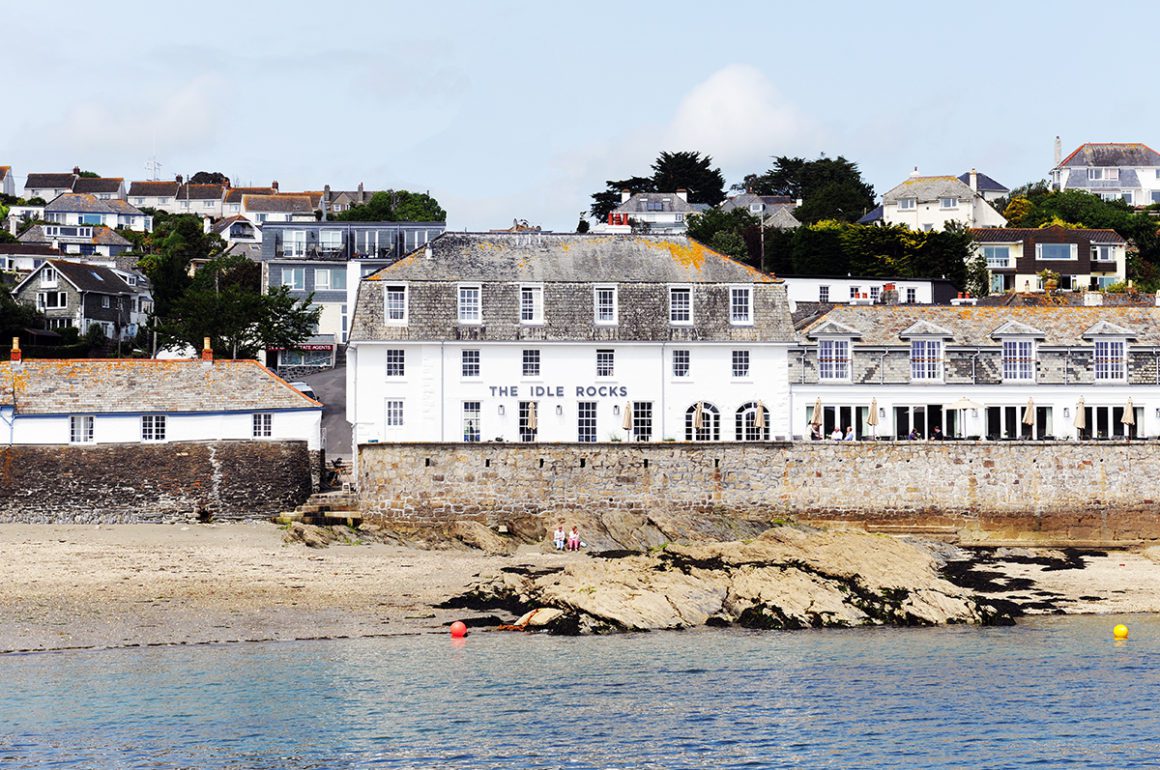
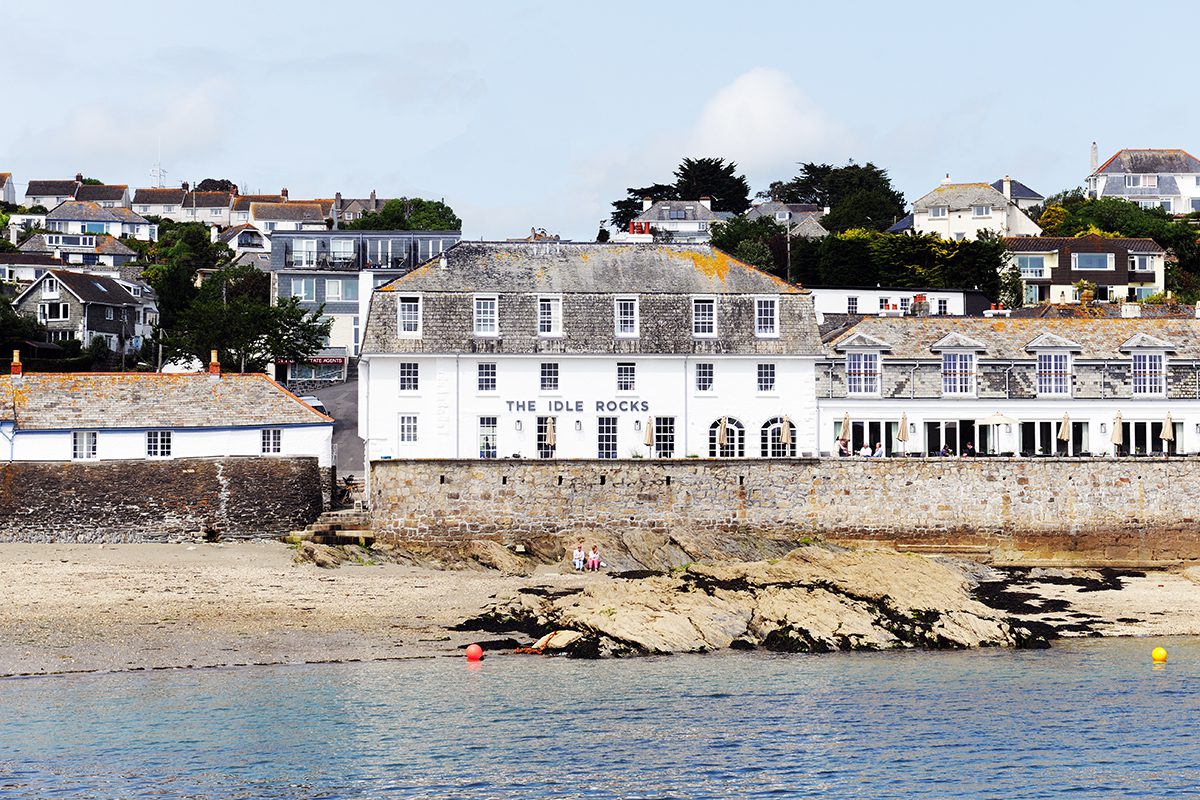
The Idle Rocks boutique hotel sits on the edge of St Mawes harbour in Cornwall
Located on the harbour’s edge of Cornish fishing village St Mawes, The Idle Rocks is a coastal-meets-contemporary hotel and locavore hotspot. Ella Johnson checks-in for a weekend of fine dining and relaxation
At 19 rooms, The Idle Rocks is an intimate hotel. Mementos of the owning family, which bought the hotel in 2013, are dotted about the place: photographs and well-read books populate the shelves; a pair of child’s red ballet pumps, un-pristine, sit poised beneath a bell jar. Soft furnishings are in exuberant and mismatched fabrics. The wall art – all by the same local artist – offers colourful, child-like iterations of the surrounding landscape. Signature scented candles and a log fire burn all day and night; shell-shaped light fixtures bathe the communal spaces in glow. Yet there is no music or forced ambience here: only the sound of the sea just outside the window.
Follow LUX on Instagram: luxthemagazine
The Idle Rocks is located on the harbour’s edge of St Mawes, a small fishing village on the Roseland Peninsula. Described by The Times in the 1940s as ‘a kind of British edition of St. Tropez’, a mild climate means that St Mawes is attractive year-round, and some prefer coming here away from the hectic summer months when crowds of ‘staycationers’ from across the UK fill the county’s narrow lanes and surfing beaches.
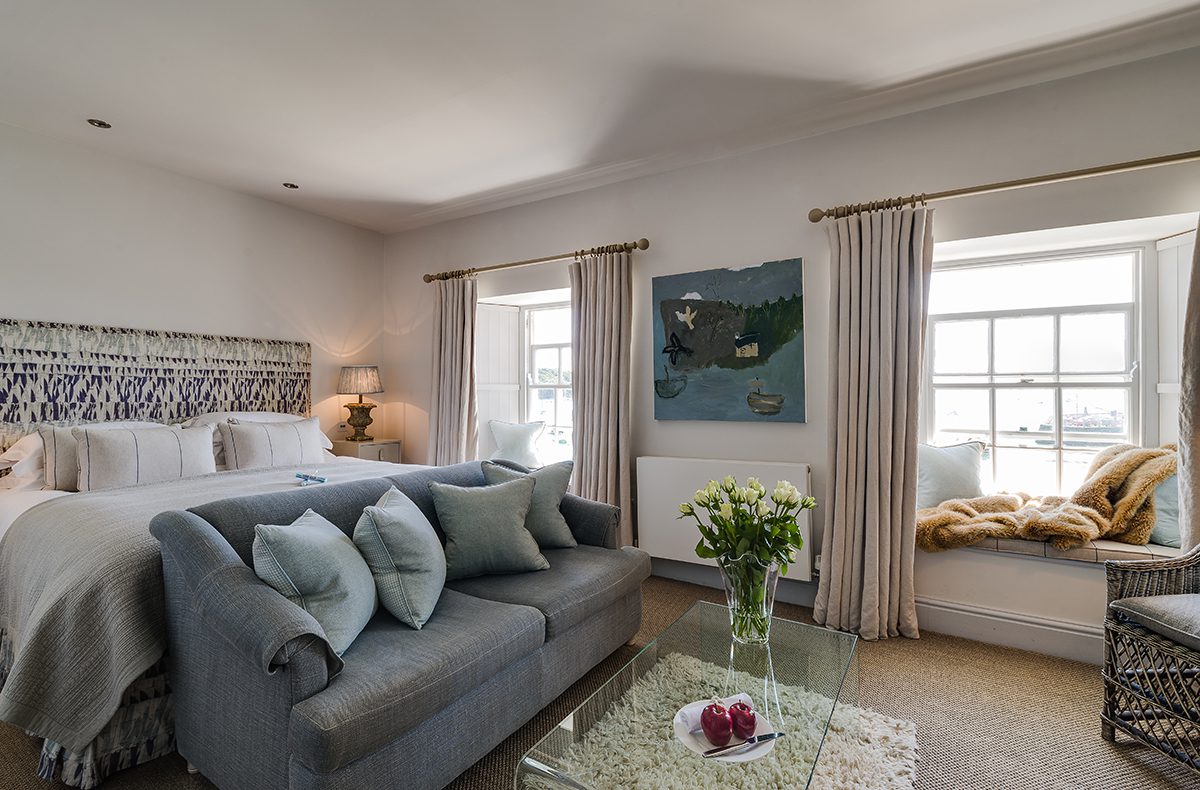
One of the hotel’s grand seaview rooms
You can hear the waves wherever you happen to find yourself in the hotel: bath, breakfast, bed, or otherwise. We took the corner room with the two Juliet balconies overlooking the harbour and slept with the doors open for maximum effect (the complimentary night-time hot water bottle meant there was no risk of getting cold). In the daytime, the room is light-filled; Breton-striped curtains, raffia rugs and a travel trunk nod to the nautical while letting the view do the talking.
Head to the fireside when it is time for aperitifs and plan a culinary trip around the peninsula. Of chef Dorian Janmaat’s seven-course seasonal tasting menu, our favourite course was the venison loin with celeriac, cavolo nero, and blackberries, washed down with a glass of Black Ram Cornish red from the local Trevibban Mill Vineyard.
Read more: Designer Ali Behnam-Bakhtiar on the future of luxury events
Seafood lovers will also enjoy the lemon sole with braised salsify, cep, Cornish caviar and verjus, or the Cornish monkfish with roasted chicory. (We tried both: with the water’s edge just metres away, it would have been rude not to).
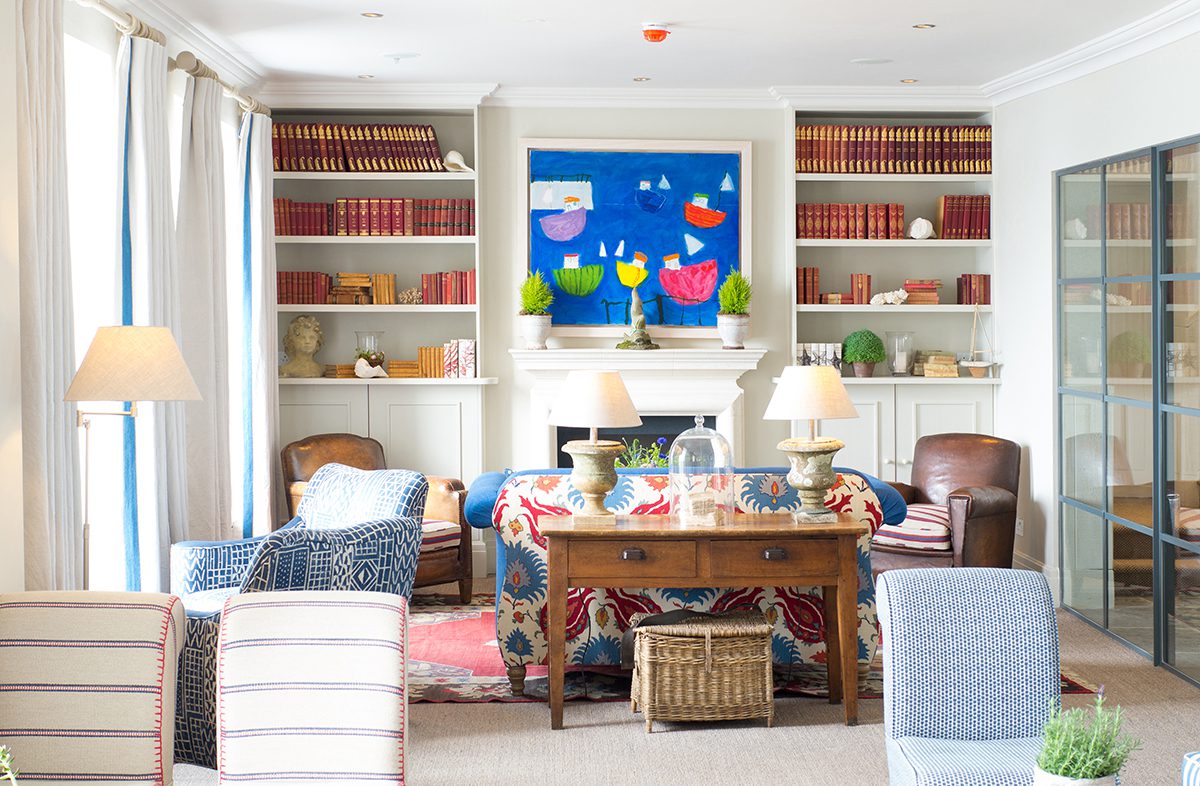
The lounge area with colourful artworks by local artists
If you book out the whole hotel for exclusive use, you get the keys to the Idle Rocks-branded Land Rover thrown in. Take it out for a day of shooting or beach walking with friends, stopping off at noon at the Hidden Hut in Portscatho to warm your bones with a bowl of fish chowder on the beach.
When we returned to the hotel, we booked in for a massage in the hotel’s treatment room. While the Aromatherapy elixirs were a tonic after a day braving the Cornish elements, none was so therapeutic as lazing about in our own private cinema afterwards. The Secret Cinema is located at The Idle Rocks’ sister establishment, the St Mawes Hotel, just across the road, and is a good alternative for those looking for something a little more laid-back.
Rates: From £230 incl. breakfast (approx. €250/ $300)
Book your stay: idlerocks.com
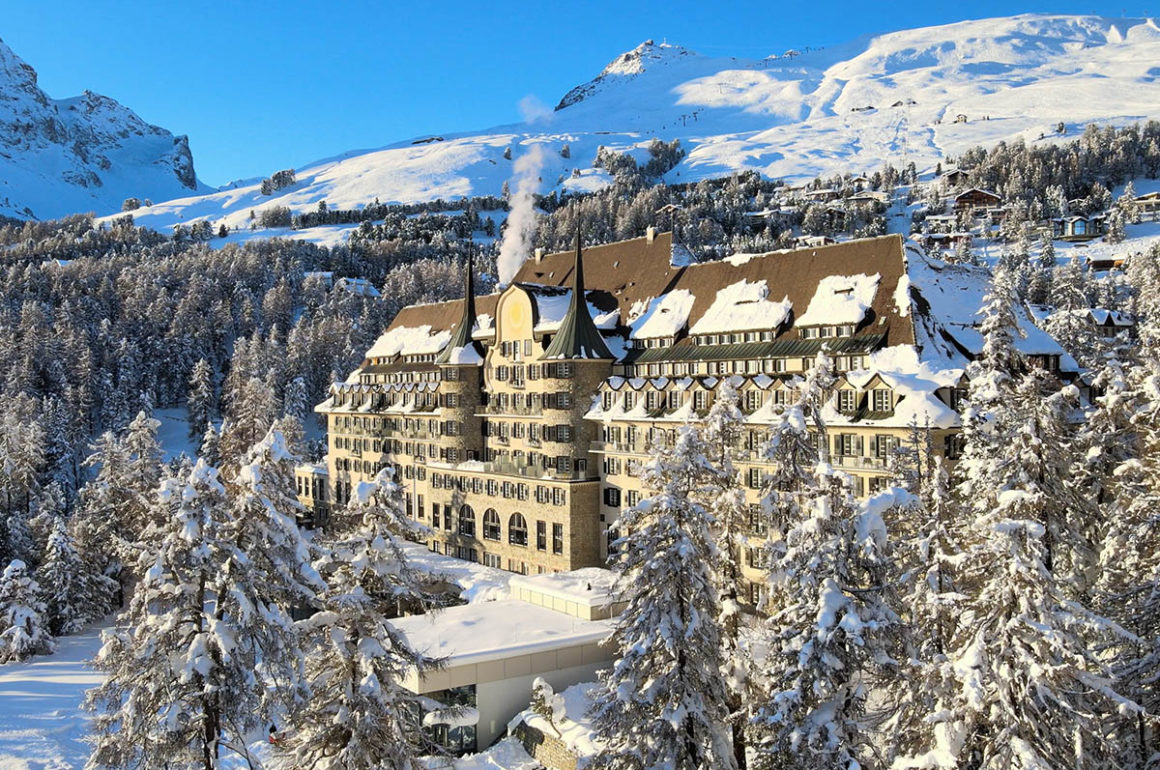
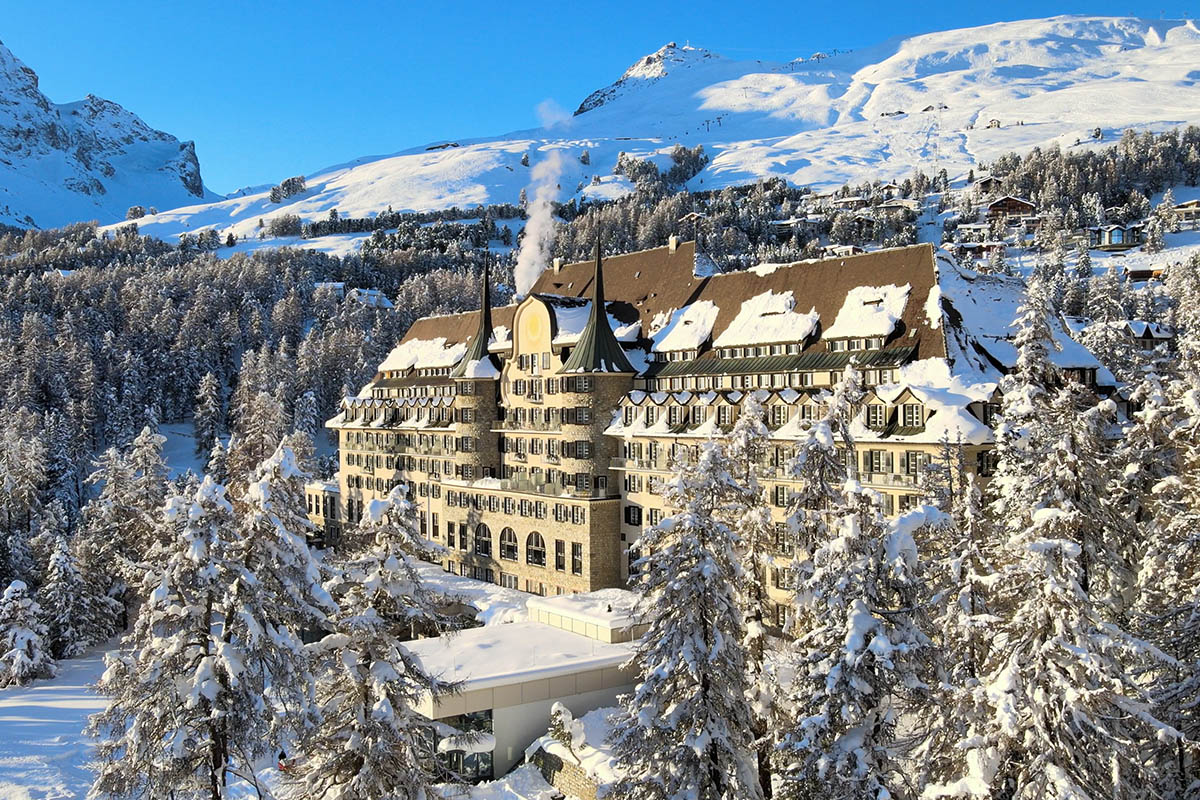
Suvretta House is surrounded by forest with sweeping views of the mountains
Why should I go now?
Seriously? Because January is the best month for winter sports in the Alps. Properly cold with powder snow, but, in the Upper Engadine valley by St Moritz where Suvretta House sits on its own forested ridge, with plenty of sun. It’s also refreshingly empty. Yes, St Moritz may be a place to socialise with the Von Opels and the Sachses, and you’ll be doing that at New Year and in March: this is a time to go and enjoy the mountains for what they are, and enjoy one of the greatest hotels in Europe when you’ll have the staff to yourself (well, not quite, but at least you won’t have the holiday season little princes and princesses underfoot in the hotel and on the pistes).
Follow LUX on Instagram: luxthemagazine
What’s the lowdown?
A five star palace hotel with its own ski lift and piste to its garden (currently an ice skating rink) is a hard proposition to resist. But Suvretta House is much more than that. It’s a couple of hundred metres outside the limits of St Moritz, surrounded by forest, at the foot of the great Corviglia ski area, and has views across the broad, high valley to Lake Silvaplana and up to the other great mountain of the region, Corvatsch.
Unlike almost every other luxury hotel in the area, you can ski in and take a lift out; Suvretta House also has its own mountain restaurants. Trutz, high up the mountain, is a lunchtime bratwurst-and-rösti stop with broad views across to the Italian Alps. Chasselas, just above the hotel above the nursery slope, may look, with its lively and cheerful manager Livia, and its chequered-tablecloth-and-wood interior, like another cosy Alpine refuge, but it’s actually a refuge of cuisine as haute as its 1900m altitude. Essence of wild mushrooms with shiitake and agnolotti followed by lamb saddle with aubergine, Jerusalem artichoke and wild Brussels sprouts: simple but sophisticated.
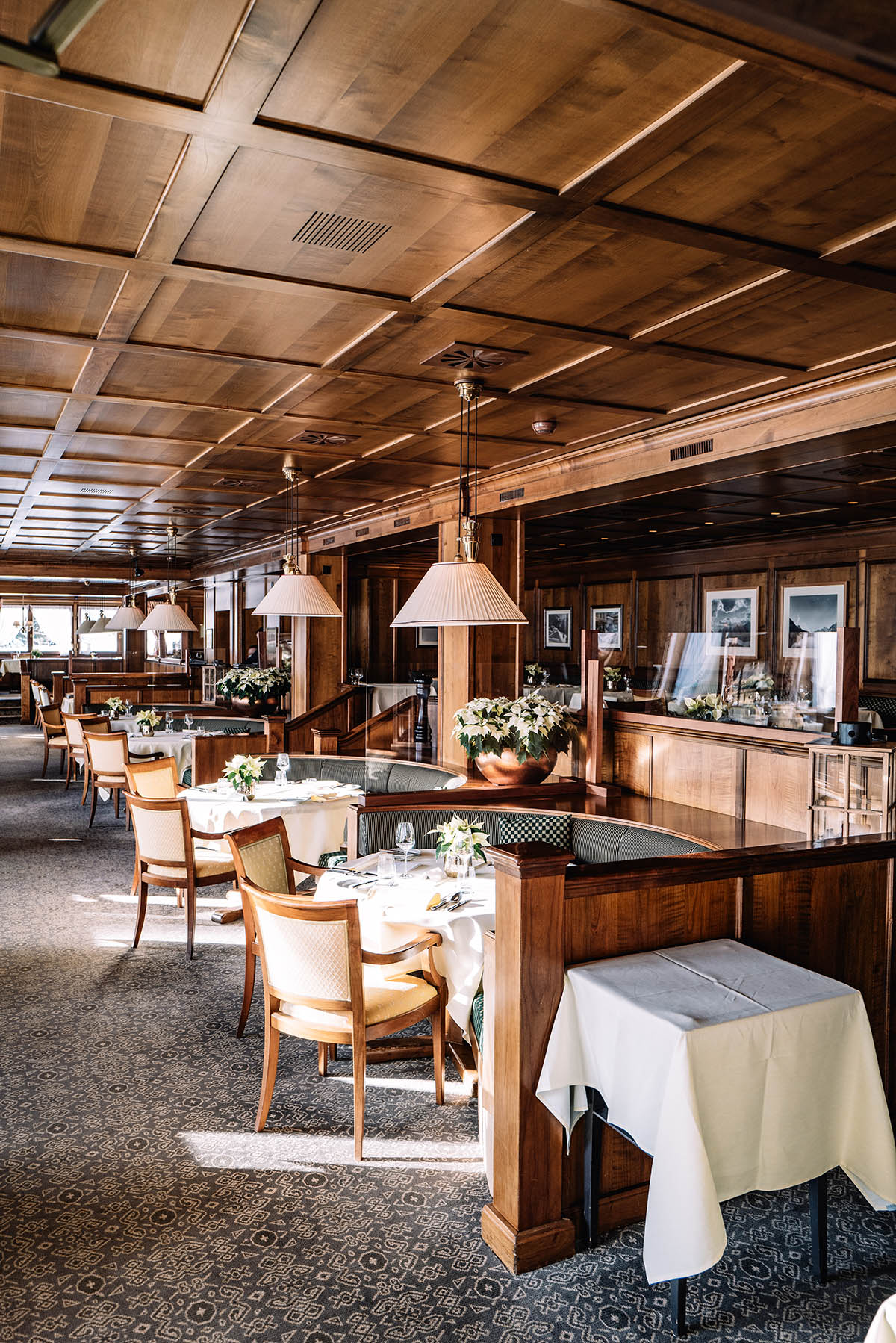
Suvretta is actually a one-hotel dining itinerary. Arriving tired one lunchtime (St Moritz is quite a distance from the commercial airports if your Gulfstream has let you down) you may delightedly sink into the soft seats and jazzy ambience of the Stube – broadly translated, the cellar. But amid this gentle comfort, you will find refreshingly un-Alpine options: Endive and spinach salad with apple, walnut, dried cranberries, radish, fennel, quinoa and honey balsamic dressing; or Tuna Poke with jasmine rice, avocado, cucumber, edamame, mango, seaweed, sesame and ginger, as zingy as they sound. Did we mention the Grand Restaurant? Pack a proper frock, honey.
Then there’s the huge indoor pool and chill-out zone with picture window views to the forest, and the spa, and the very elegant and high-ceilinged lobby where you’ll imagine Lauren Bacall and Ella Fitzgerald playing poker together.
Getting horizontal
Our room was light, airy, refreshingly free of pine and frills, taupe carpets, wooden panels, light greys, a big marble bathroom.
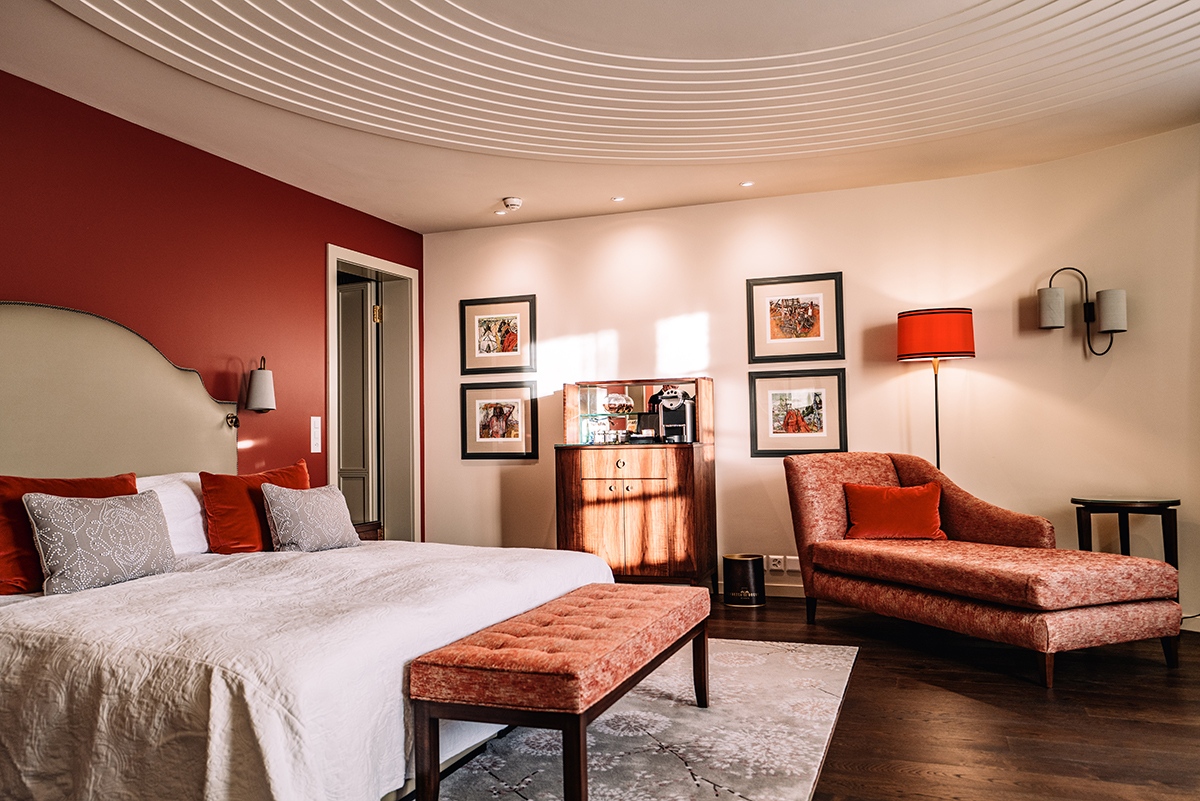
Flipside
We loved being just out of St Moritz and having the ski lift and piste at the door. It is a taxi ride into town for the clubs and bars, although at this time of year, we recommend staying just where you are.
Rates: From CHF 630 per night for a standard double room with mountain views (approx. £500 /€600/ $700)
Book your stay: suvrettahouse.ch
Darius Sanai
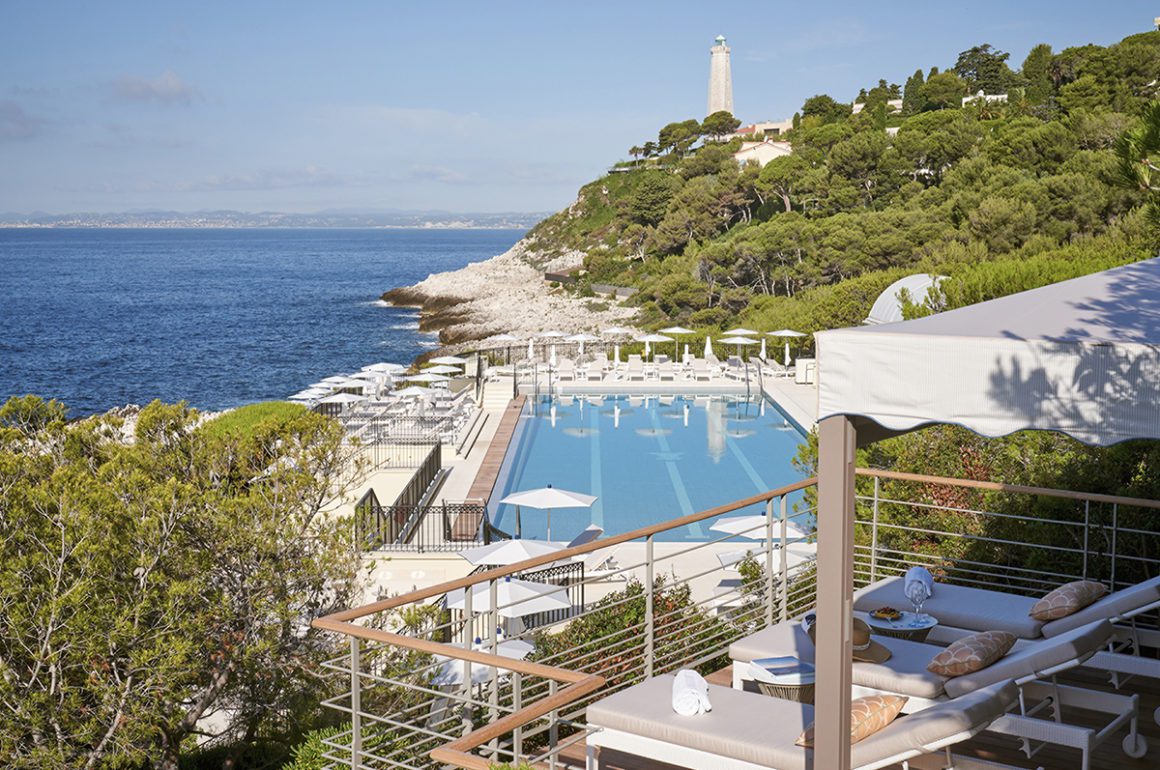
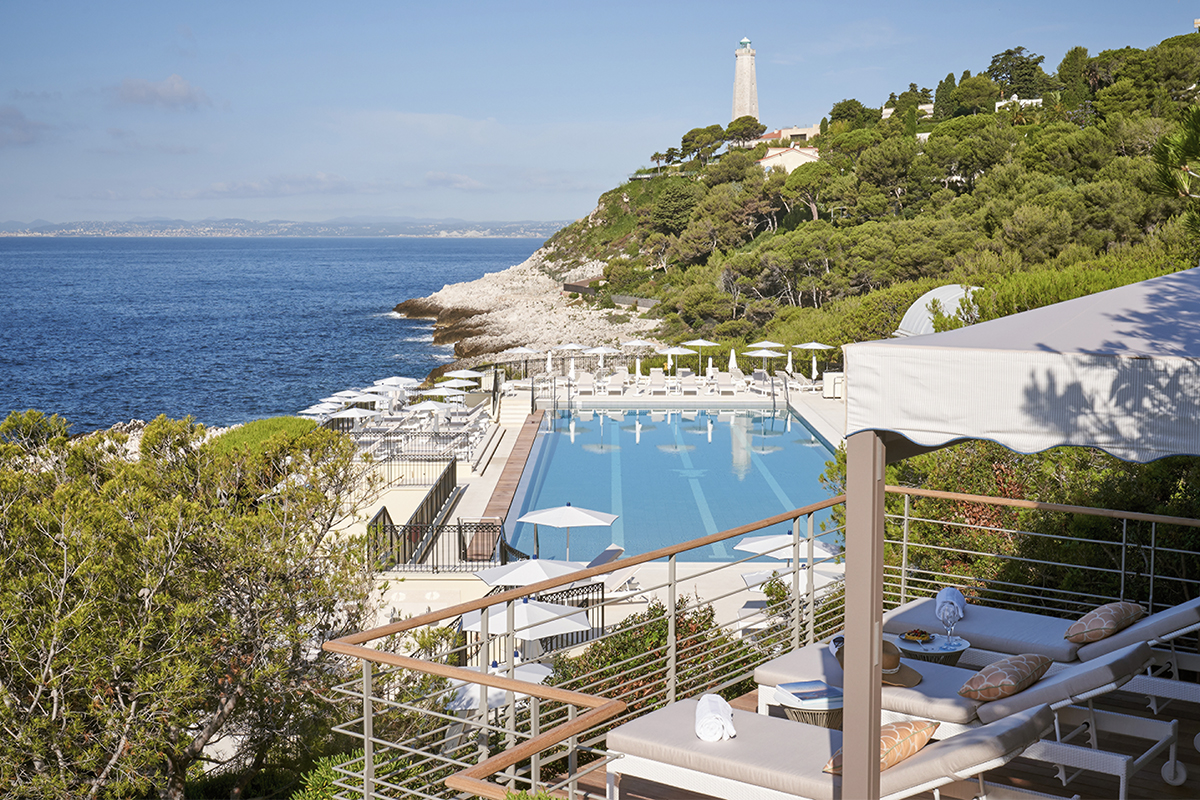
The Club Dauphin pool at the Grand-Hotel
In the first of our four part luxury travel views column from our Autumn 2021 issue, LUX Editor-in-Chief Darius Sanai experiences a taste of old world glamour at Four Seasons Grand-Hôtel du Cap-Ferrat
Cicadas trilling down a long avenue lined with high walls, behind which some of the world’s most expensive real estate lurks. Glimpses of the Mediterranean through the hedges. A security-guarded gateway, a short driveway and doormen opening doors on either side at the entrance to a Belle Époque mansion.
Arrival at the Four Seasons Grand-Hôtel du Cap-Ferrat could barely be more grand. You are in an unchanged south of France of 1920s flapper legend. Not here the camper vans, beach-going day-trippers and crowds of normal people that besmirch even the swankiest Monaco boulevard. Cap Ferrat is a place where the rich can be rich, and the Grand is the sea-facing jewel at its tip. High ceilings, light marble, big windows: first impressions are of a Parisian palace hotel transplanted and reworked to suit the setting, rather than anything like a resort. But wait, that comes later.
Follow LUX on Instagram: luxthemagazine
Our room was light, a bedroom connecting through sliding doors to a living area with a taupe sofa, white and light grey colourways everywhere. Open the window (there was no balcony) and lavender and thyme and the sound of the cicadas pour in in one sensual flow.
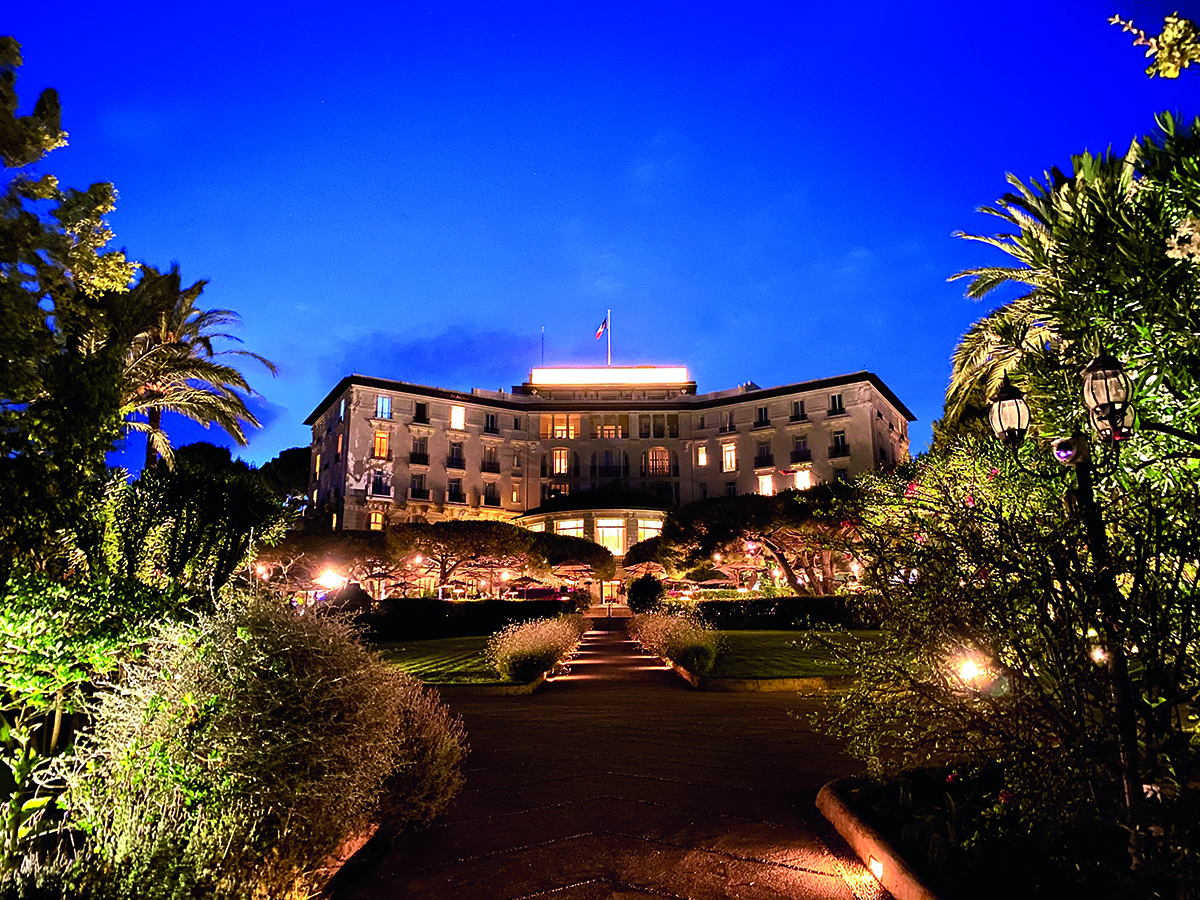
The gardens and Le Cap. Image by Darius Sanai
Down through the palatial lobby, out of the door at the top of the staircase at the back of the building (or is at the front?), and down towards the gardens, it’s as if you are descending through layers of formality into total chillout.
Read more: Art Basel Miami Beach is Back and it’s Buzzing
The terrace of Le Cap restaurant is on the first layer of terrace, shaded by mature trees. Next layer down is a casual dining terrace and the bar where a rather good jazz band played under the canopy of the trees every evening. Carry on walking across the big lawn of the hotel and you can take various paths into a labyrinth of flower beds and trees – quite an indulgence in the place with the highest residential real estate price in the world. The gardens are on a gentle slope down towards the sea, and at night the combination of starlight, the bouquet from the plants and the sound of the jazz is intoxicating, even without a champagne cocktail.
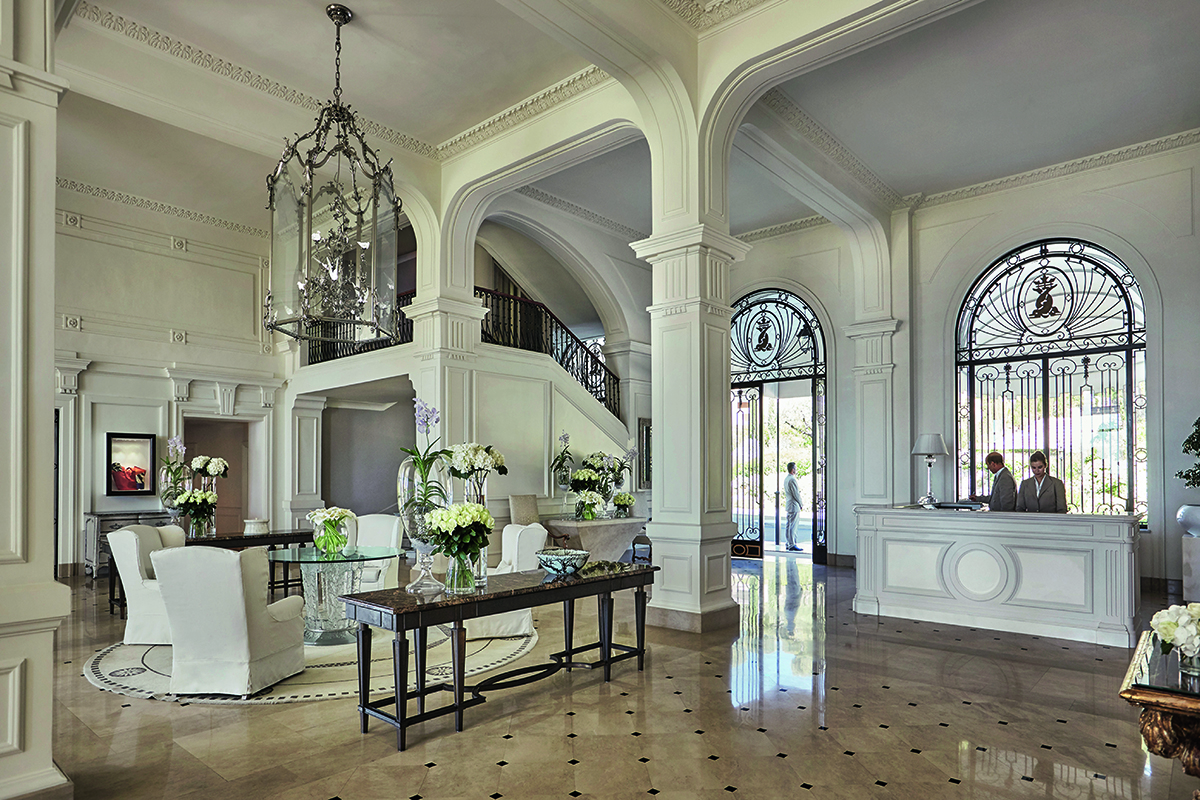
The entrance hall
Directly across a little road from outside the back gate at the bottom of the garden is the entrance to Club Dauphin, the hotel’s beach club (local people can also join as members). You can take a funicular down the steep hillside that descends towards the sea, or walk down along the flower-lined path. You’re then presented with the club restaurant and swimming pool, at the very tip of the Cap. It seems that there is sea for 270 degrees around you, and what isn’t sea is either swimming pool, or a terrace where very expensive people are nibbling tiny amounts of vibrant food and being served out of magnums of Provençal rosé wine.
Here, the palace hotel you are staying in feels a long way away, and you have reached the pinnacle of informal chic as epitomised by somewhere like St Bart’s – or indeed, the Grand-Hôtel du Cap-Ferrat.
Lunch at Club Dauphin and dinner at Le Cap seems to be standard practice at the Grand – preceded in our case by an aperitif next to the jazz band, our bench seat offering a gorgeous view across the lawns and trees to the sea. The food is a kind of ultra-superior Provençal: razor clams and cockles with seaweed and fennel bavaroise; grilled asparagus in thyme jelly; and a particular favourite, grilled red mullet with olive tapenade, tomato hearts and basil, fish and tomato reduction. The only thing that was missing was David Niven chatting to Audrey Hepburn at the next table.
Book your stay: fourseasons.com/capferrat
This article was originally published in the Autumn 2021 issue.
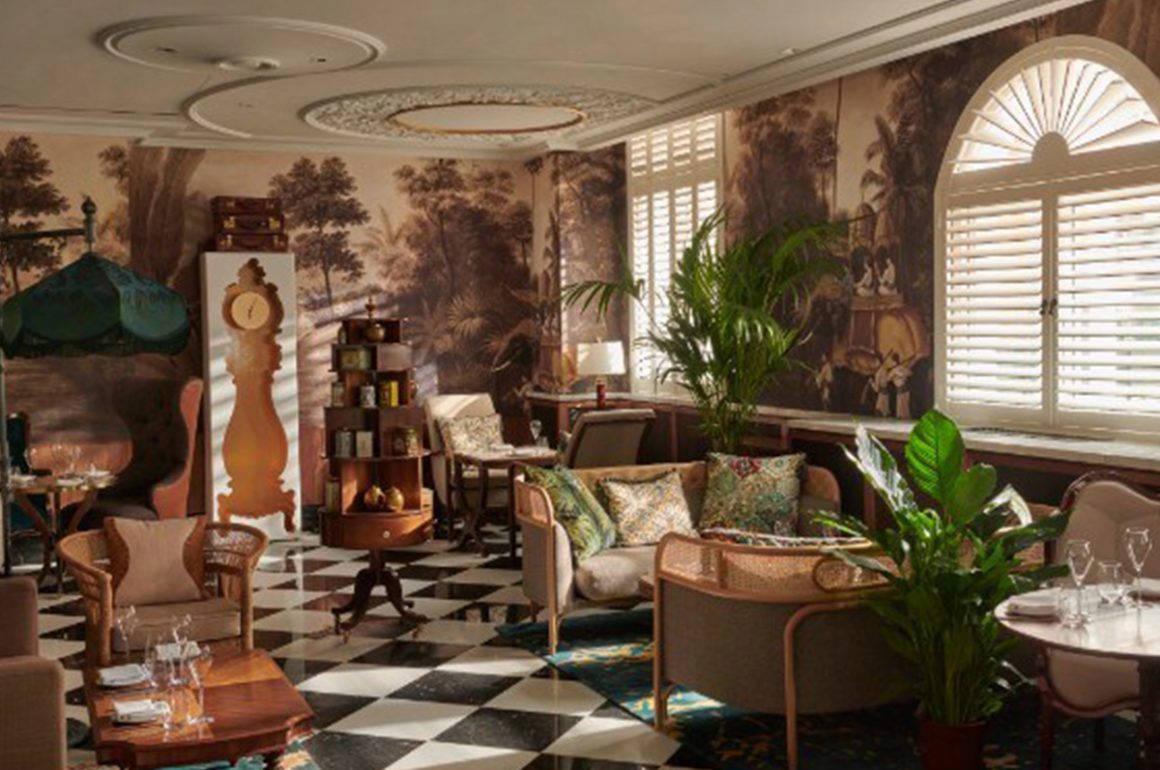
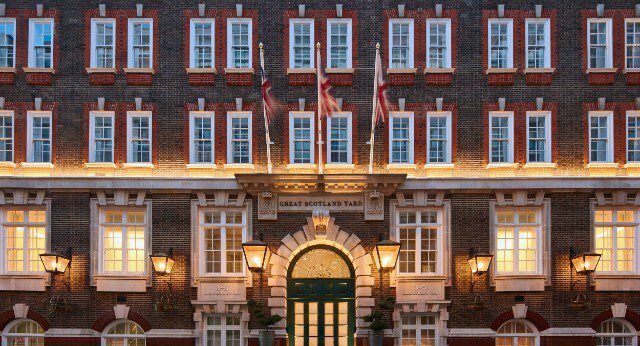
Why should I go now?
In the lead up to Christmas London really comes into its own. With sparkling light displays, artisanal markets and towering Christmas trees, it’s one of the best places to go for festive cheer.
Follow LUX on Instagram: luxthemagazine
Great Scotland Yard hotel occupies one of the city’s most historic buildings and retains a grand old world charm. Plus it’s now home to one London’s hottest new restaurants, Ekstedt at The Yard, reinforcing the hotel’s well-established reputation for dining and drinking.
First Impressions
Few approaches to a London hotel can rival that of Great Scotland Yard. You’re surrounded by the capital’s beguiling mix of history and heritage, architectural styles and even touches of pageantry with the Horse Guards on watch at Whitehall Palace.
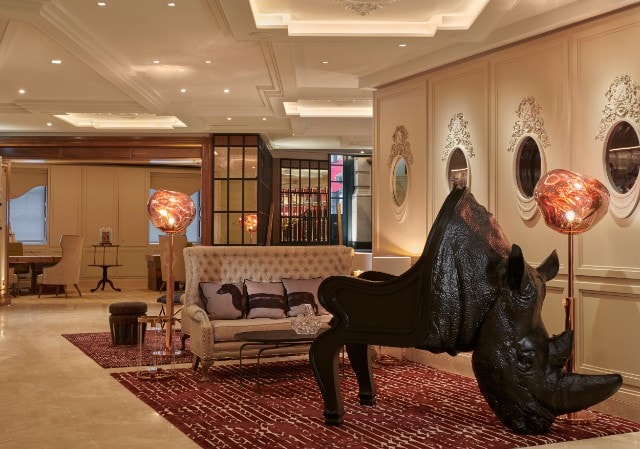
The Lobby at Great Scotland Yard Hotel
The area known as Great Scotland Yard dates back more than a thousand years, but was most famously the former home of London’s Metropolitan Police. More recent incarnations included an army recruitment centre and Ministry of Defence office, but today elegant glass street-lamps illuminate the hotel’s Edwardian exterior and brickwork, beckoning in guests from the quiet street outside.
The Experience
An unconventional hotel arrival immerses guests straight into a number of f&b offerings, with a compact reception desk tucked away around the corner. It’s a deliberate move to emphasise the hotel’s growing reputation for gourmet experiences including Forty Elephants Bar, named for a ruthless all-female 19th century gang of robbers and a perfect spot for an aperitif or social drinks. The Parlour is a sensory and design delight where afternoon tea is a big draw for foreign guests while the Veuve Clicquot Champagne Terrace is a real find, a rooftop hideaway for bubbles overlooking the Westminster skyline. But the biggest draw has to be Swedish chef Niklas Ekstedt‘s Michelin-starred restaurant, where dishes are cooked over wood fire, using Scandinavian techniques and British ingredients, and accompanied by natural wines.
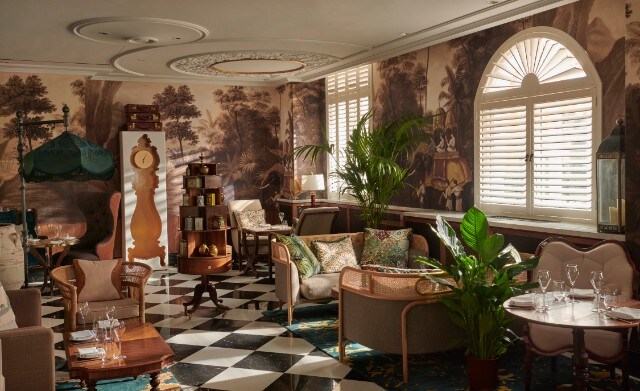
The Parlour serves afternoon tea from Saturday to Sunday
Elsewhere, a gymnasium, an innovative events space, a hideaway whisky bar and an intriguing collection of art and police artefacts from over the centuries ensure constant stimulation whether you’re staying in-house or visiting to drink and dine.
Takeaway
A perfect spot for tourists wishing to discover London, or a fun bolthole for Londoners looking to drink and dine in style, Great Scotland Yard mixes the historical and contemporary to great effect in a storied location.
Rates: From £315 per night
Book your stay: greatscotlandyard.com
Chris Dwyer
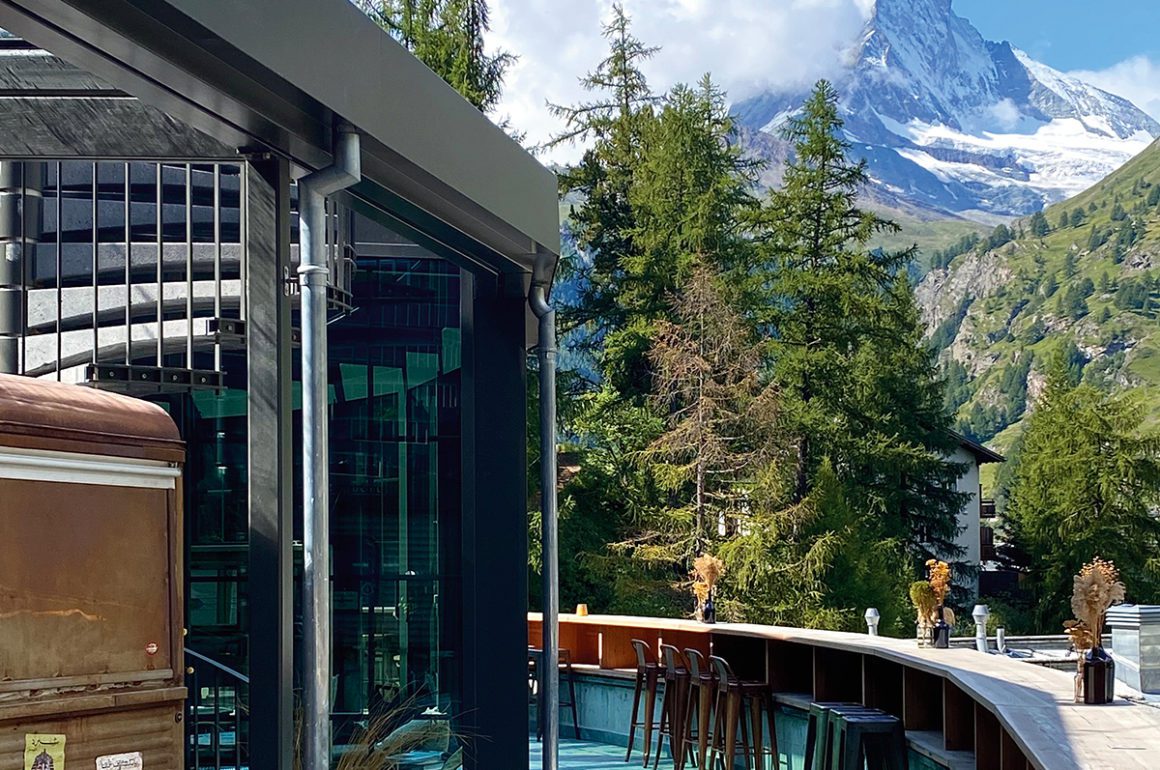
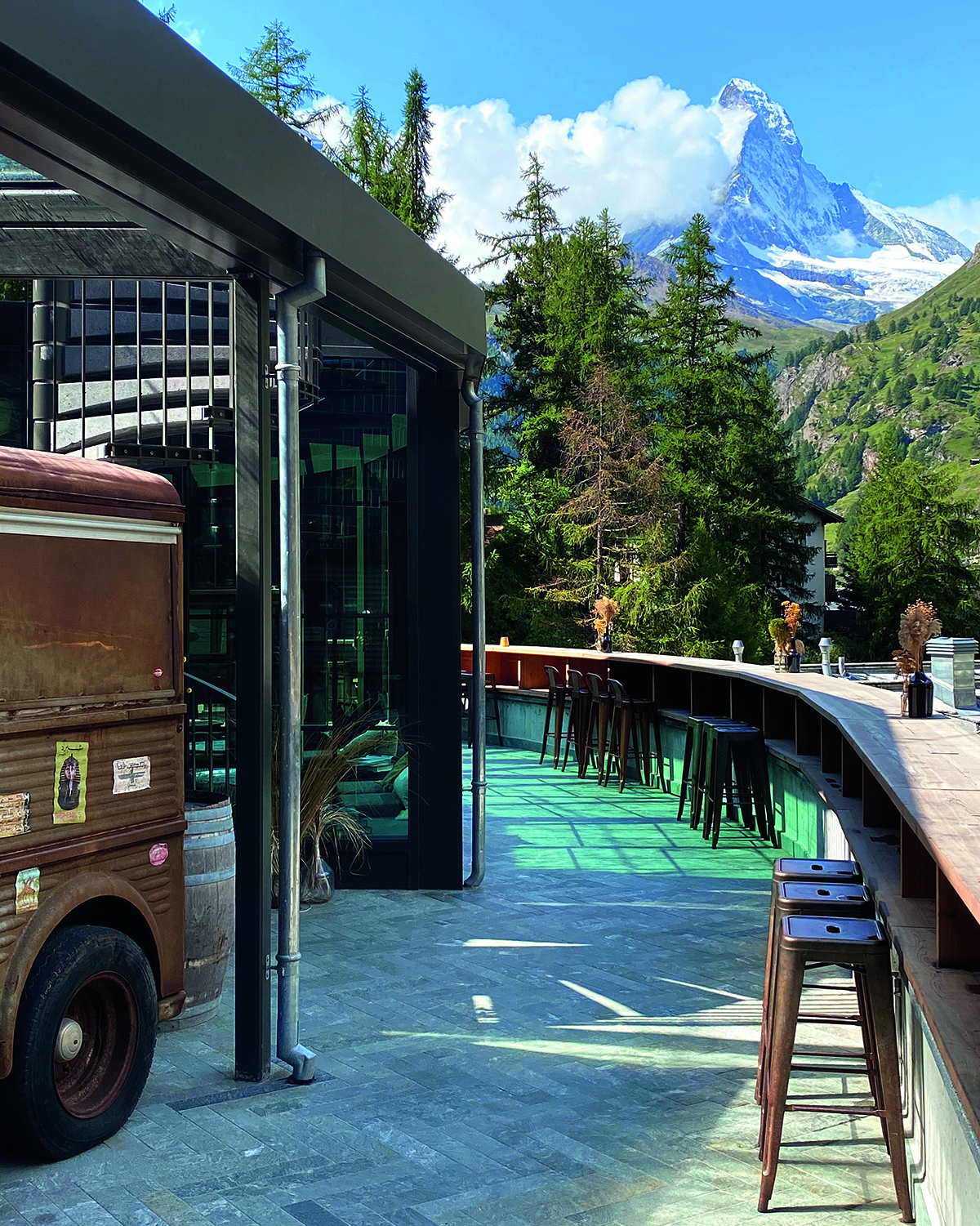
Lauber’s Hotel CERVO uses recycled materials and geothermal heat. Photograph by Darius Sanai
As COP26 brings together world leaders to discuss climate change, Daniel Lauber, owner of the CERVO Mountain Resort in Zermatt, gives us his six guiding principles on how to create a truly sustainable luxury hotel. No greenwash included
Walk into the CERVO Mountain Resort in Zermatt, Switzerland, and you know you are in game-changing sustainable luxury. All the fixtures, fittings, furniture and decorations inside and outside the main Bazaar restaurant are of found, recycled or second-hand/vintage materials, down to the cloth screens separating tables for Covid-19 security. In the rooms, there are no disposable plastic bottles, either in the bathrooms or minibar; no disposable plastic at all, in fact, as even the bedroom slippers are made of recycled felt (they are then recycled again).
And there’s no greenwashing; Lauber knows the difference between offsetting and zero carbon. His aim is for the hotel to have a zero-carbon footprint or better, an immense challenge.
Follow LUX on Instagram: luxthemagazine
Deep boreholes mean all the hotel’s heating is geothermal; electricity is all renewable; produce in the restaurants and bars is discernibly local, sourced from within a 150km radius. All of this is even more challenging in a remote ski resort at 1650m altitude, ringed by some of the highest peaks in the Alps, than in most places.
It’s also one of the funkiest hotels in the Alps; its bar and terrace at the bottom of the Sunnegga mountain piste are the place to be seen at the end of the ski day in Zermatt.
1. Do your homework, set targets and become your own expert
The (geothermal) heating is installed. Now we are trying more and more to go zero footprint or at least a compensated footprint. That’s the next goal, and we are aiming to get to zero waste, maybe by 2024/25.
We work together with myclimate, a Swiss organisation. We are evaluating how big our footprint is. So, the first step is to evaluate and the second step, by the end of 2022, is to try and minimise it with actual plans for things we can change, and what we can’t change then definitely to compensate for it. The end goal is to be zero footprint and then even positive, so we don’t produce a negative footprint at all. As a hotel, that’s quite a challenge, especially as we take into account construction, which always has a negative impact.
2. Make your clients your ambassadors
Doing all this is sometimes (though not always!) more expensive. Then it’s up to us to tell the story to the customer. If they understand it and appreciate it, and most of them do, then we can try to compensate the higher cost of buying with a slightly higher price; and we are lucky that our customers are able to pay that.
3. Go local, but also support family business, and be realistic
The social aspect is very important, as is the economic aspect, because you can be very social and very environmental, but if the business doesn’t work you’re going to lose.
We can work with suppliers who are smaller family businesses to find new ways of being sustainable. I really like that. And I like to give those smaller companies a platform.
For example, most of our ice cream is home-made, but in the summers we have ice cream stands and we sell ice cream from Basel. We could find ice cream that’s closer, but the people producing the one from Basel have a social work space for people who have some health issues or other disabilities and I think that’s nice. It might be 100km further away than other producers, but the mindset they have is so great, it’s worth it.
Read more: Professor Peter Newell on climate responsibility
4. Make a virtue out of your ethical sourcing
Generally, we try to use furniture that also has a sustainable approach. For example, the beds are handmade with organic materials. With whatever furniture we created ourselves, we tried to use local carpenters. In the Bazaar restaurant it was a bit different, it’s more themed, so in that instance we tried to work with young designers and companies in Morocco to support emerging designers or the all-women enterprises there. The chairs, the cushions, the carpets were made for us by small enterprises and that’s nice. It’s different to just ordering a fake Moroccan-style cushion produced anywhere.
5. The hard work is on what clients can’t see
It was quite an easy change to be plastic free in the amenities and rooms. It’s good that the customers see that. The bigger challenge to being plastic free is when it comes to the supply chain. Some stuff we need to order comes shipped stupidly wrapped up. And now that’s the second goal. We can’t do it alone, but we try to talk with those companies and ask if they can ship it differently, to see if they can use multi-reusable packaging, for example.
6. Create a virtuous circle and inspire, but don’t proselytise
We have a lot of feedback when customers say, “Ah this is a good idea”, so we do what we can to inspire customers and staff. If you inspire 10 people, it’s already worth it, and if those 10 each also inspire another 10, then it quickly escalates.
To be inspiring is very important for a hotel but it should never pushy. It’s great to inspire guests but if they don’t care that’s fine, too. Inspiring people can also be a bit educational, but I don’t think it’s our job as a hotel to educate.
Find out more: cervo.swiss
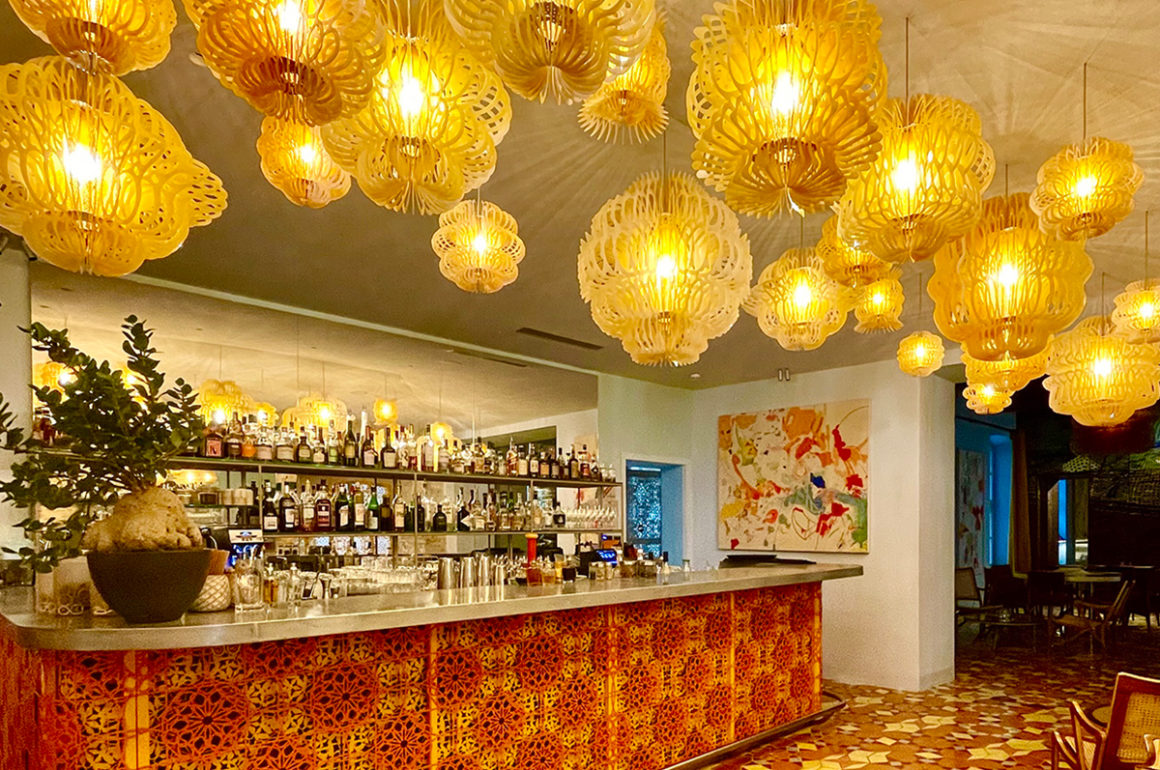
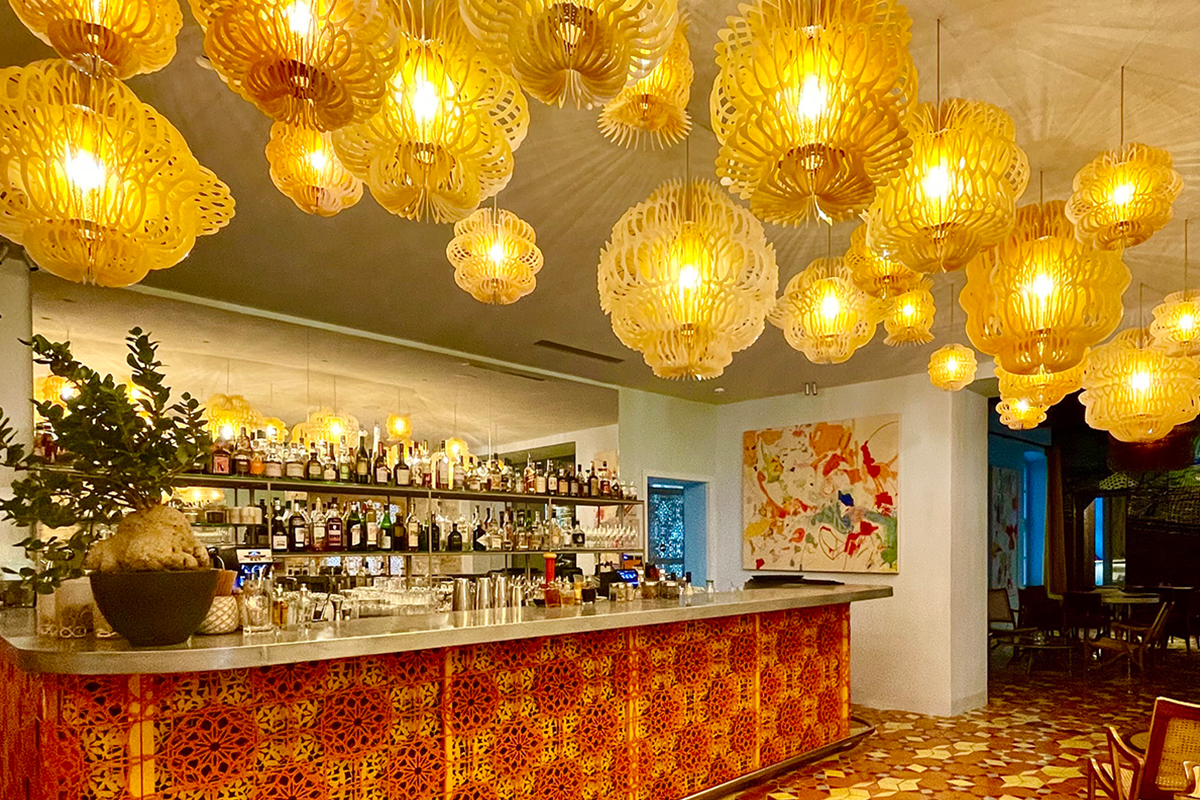
Over a century after Vincent van Gogh moved to the Provençal city of Arles with the intention of setting up an artists’ commune, Maja Hoffmann, Swiss art collector and founder of the city’s contemporary art centre LUMA, is reviving his dream with l’Arlatan, a hotel and artist residence occupying a 15th-century palace. Filled with more than a million handmade, glazed ceramic tiles in vivid shades of yellow, tangerine, lavender and blue, the historic building has been transformed by Cuban-born American artist Jorge Pardo into an inhabitable piece of art. LUX Contributing Editor Maryam Eisler photographs its kaleidoscopic surfaces
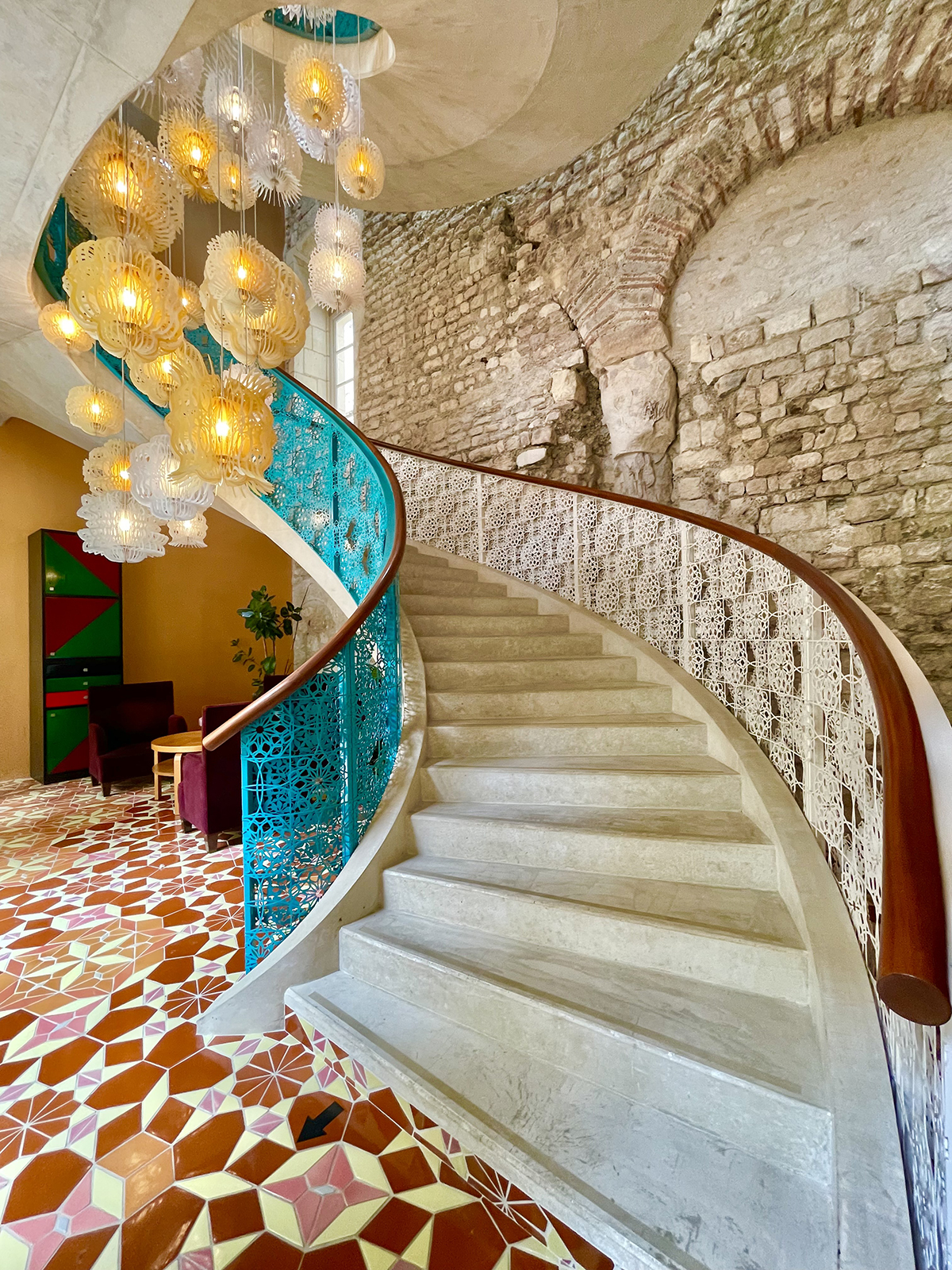
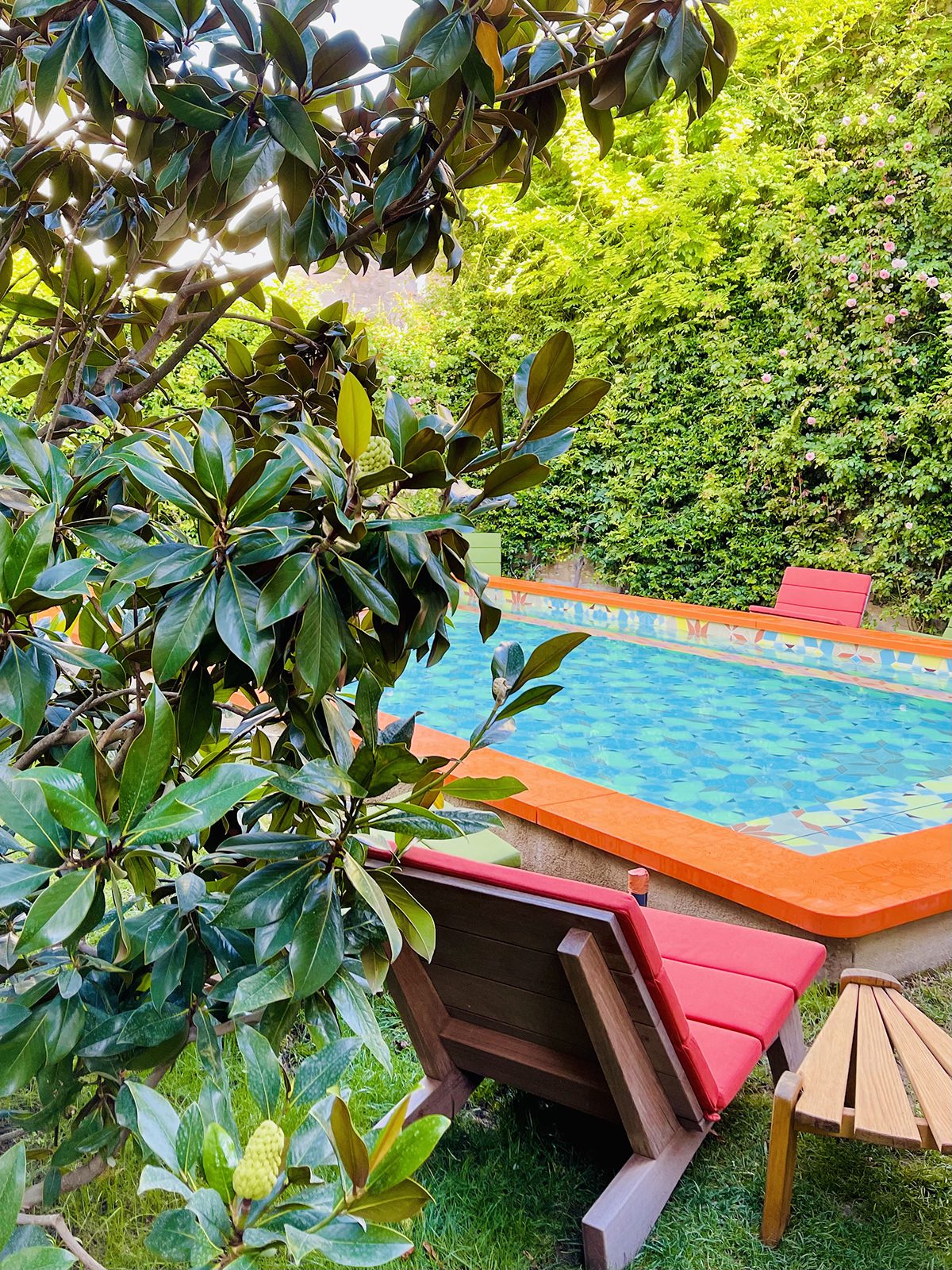
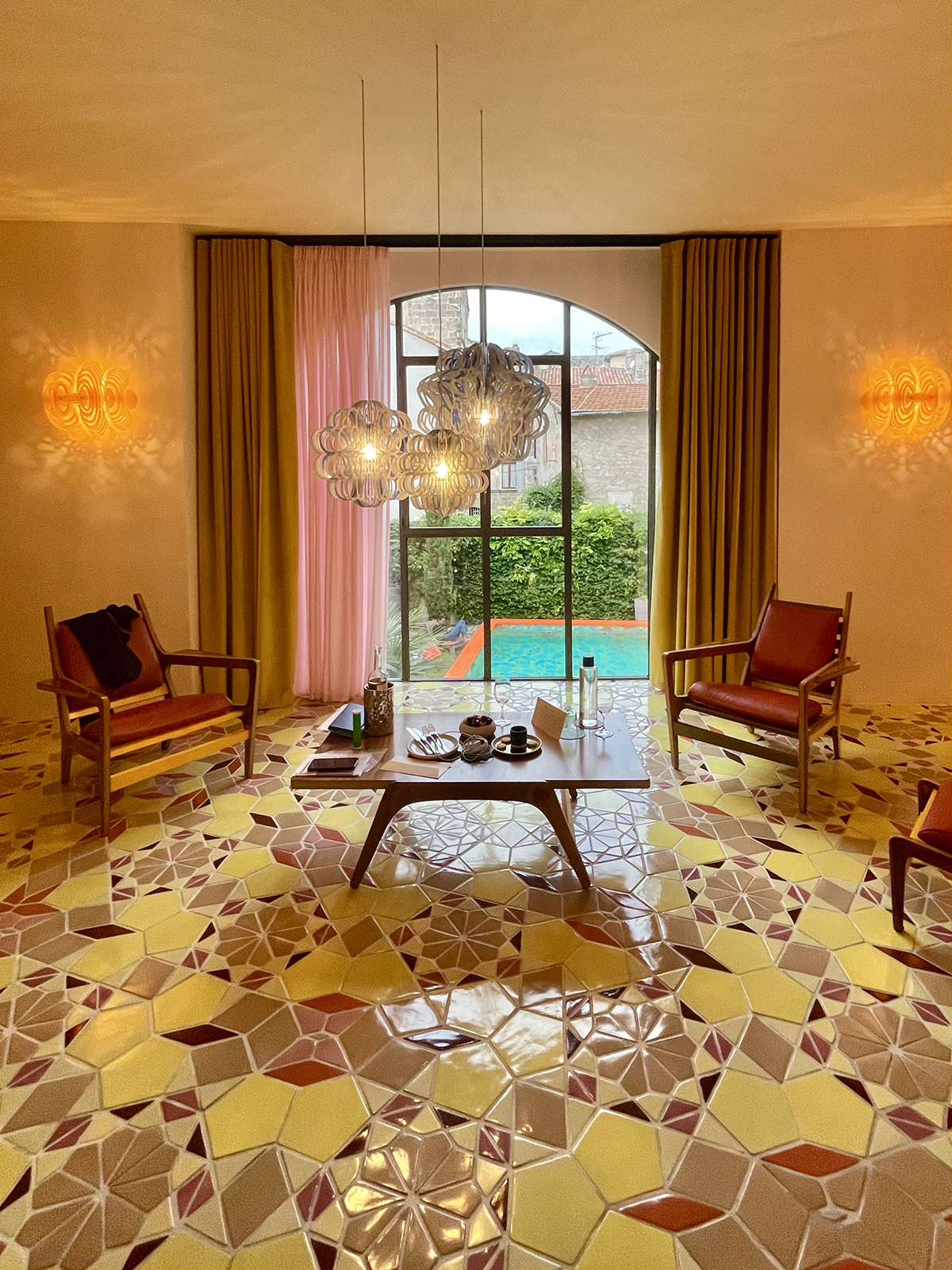
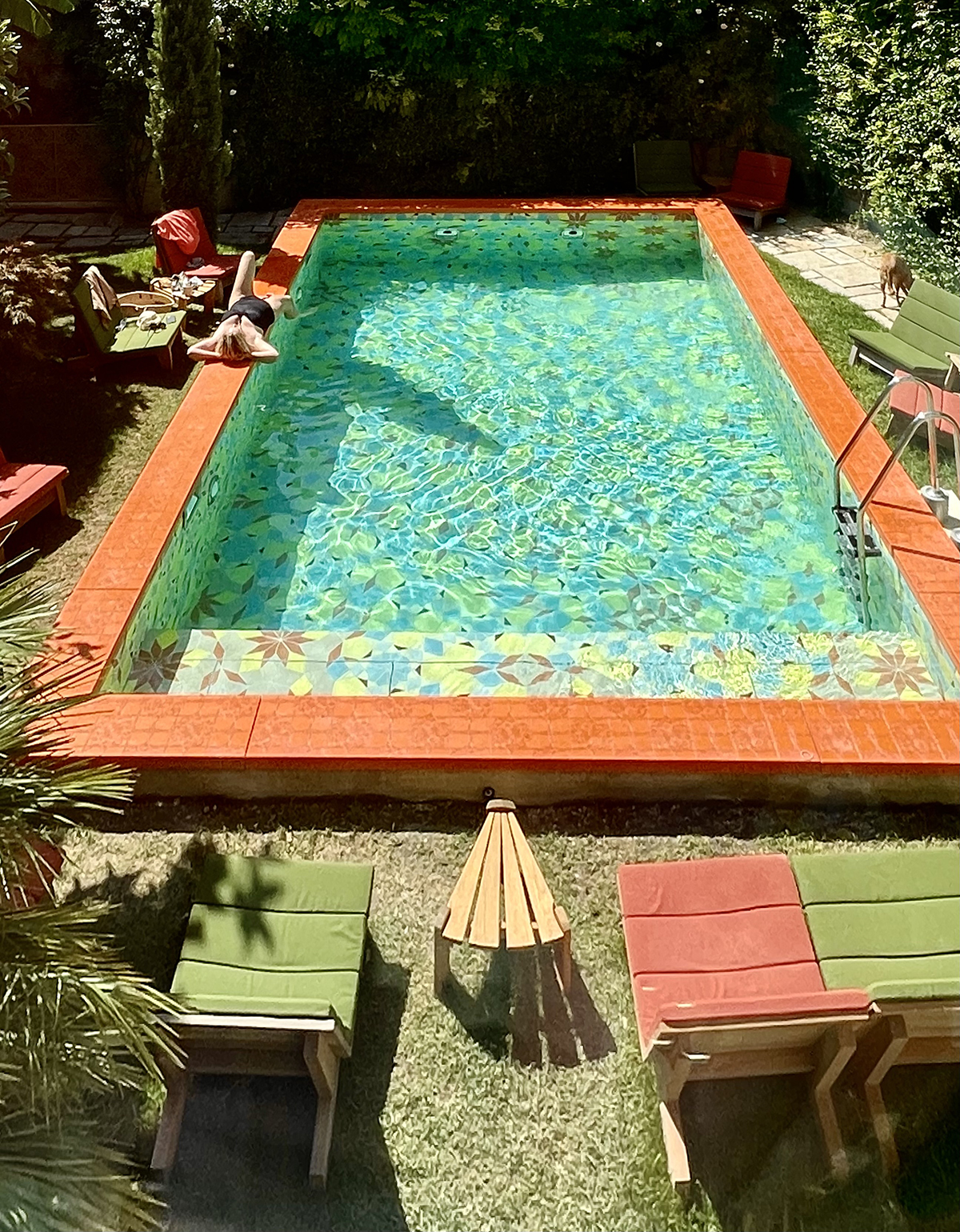
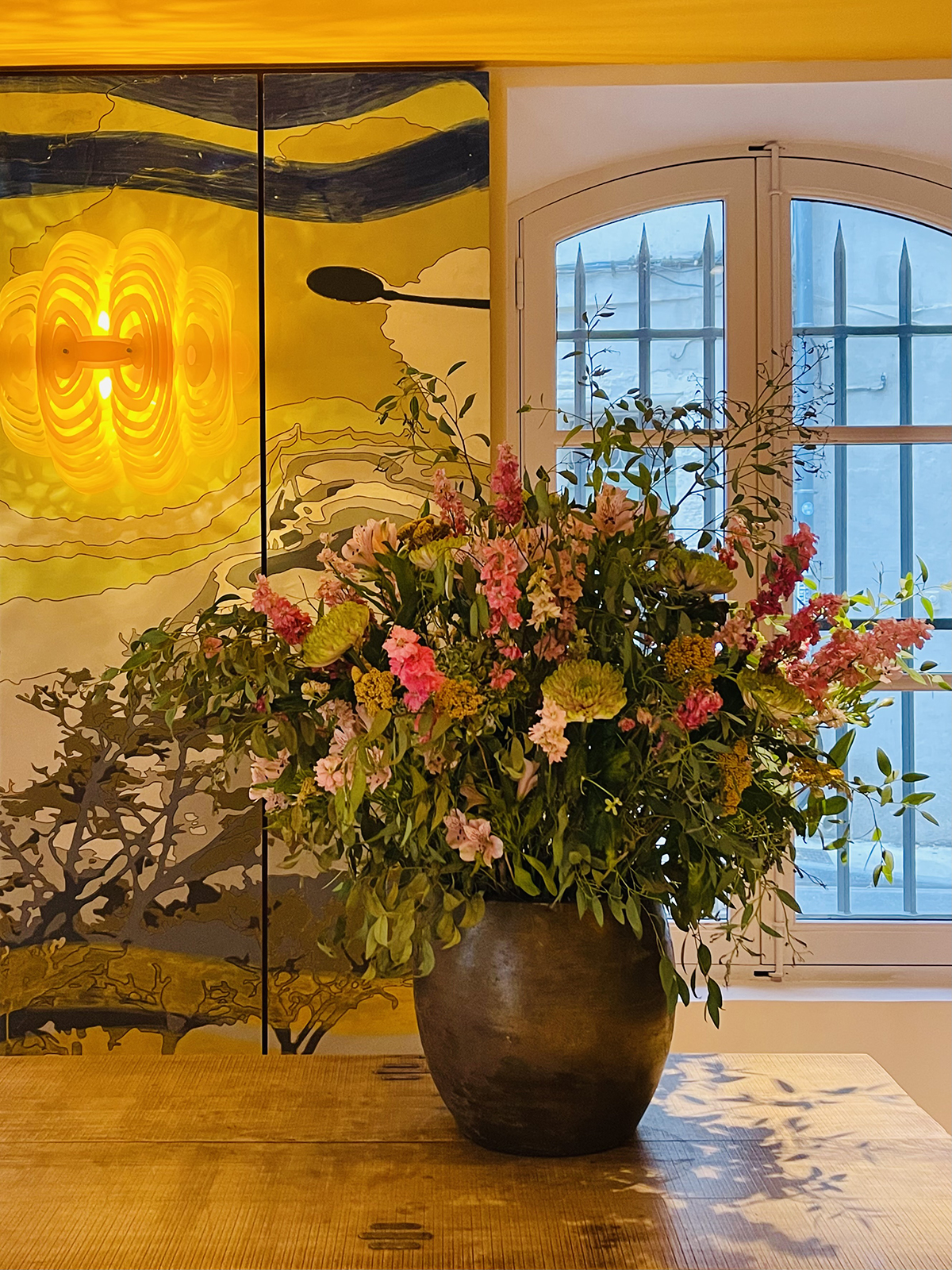
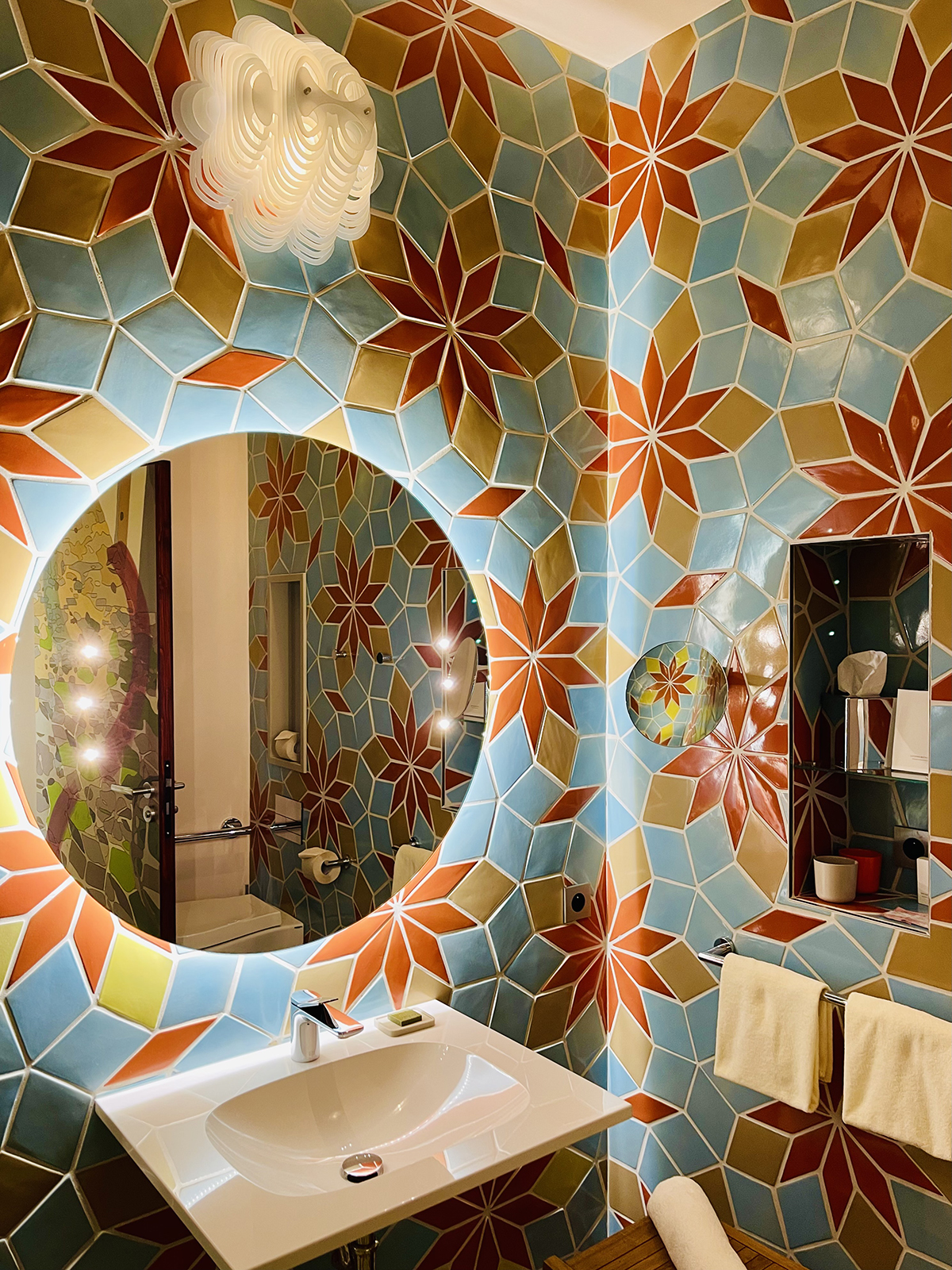
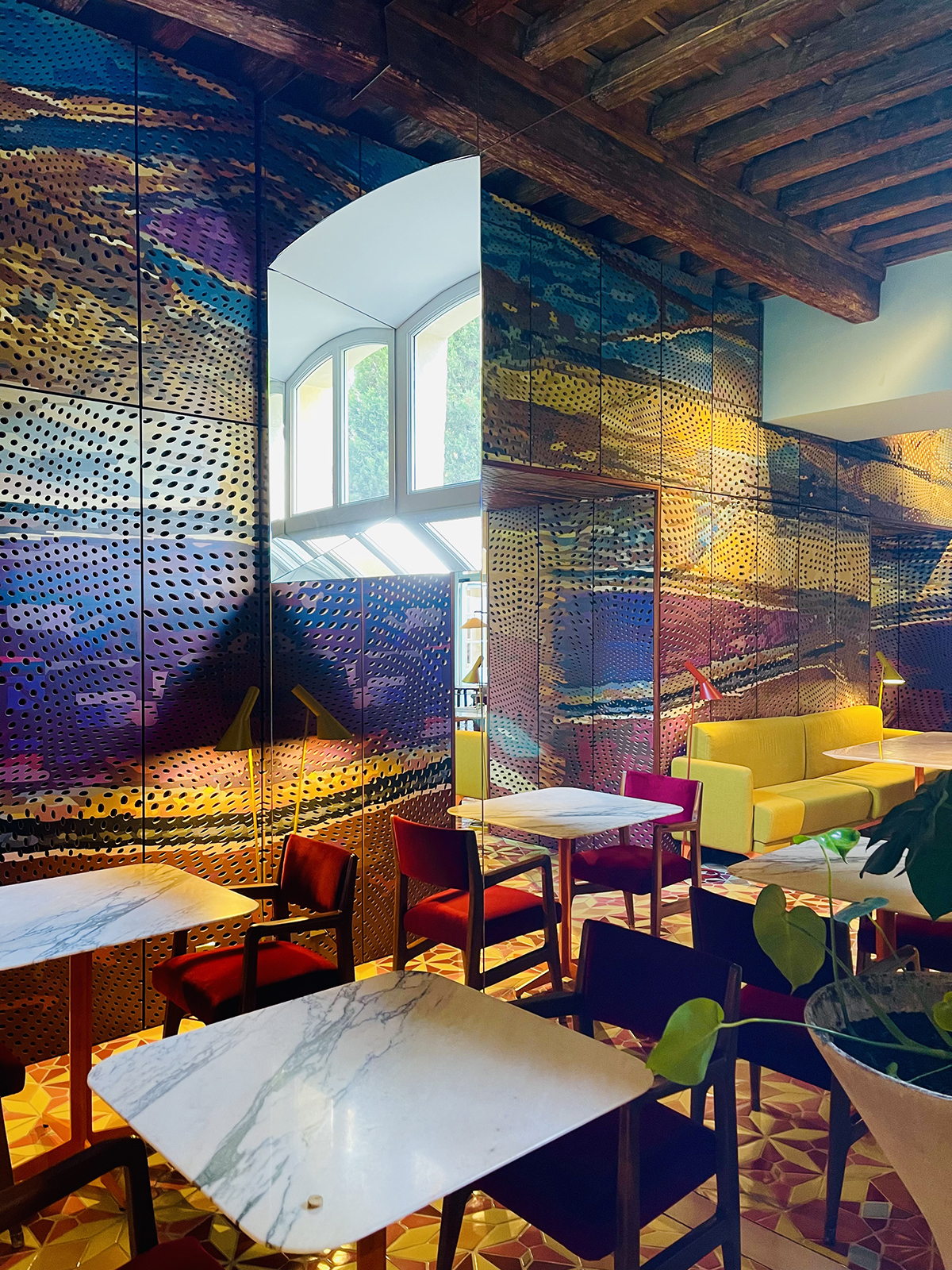
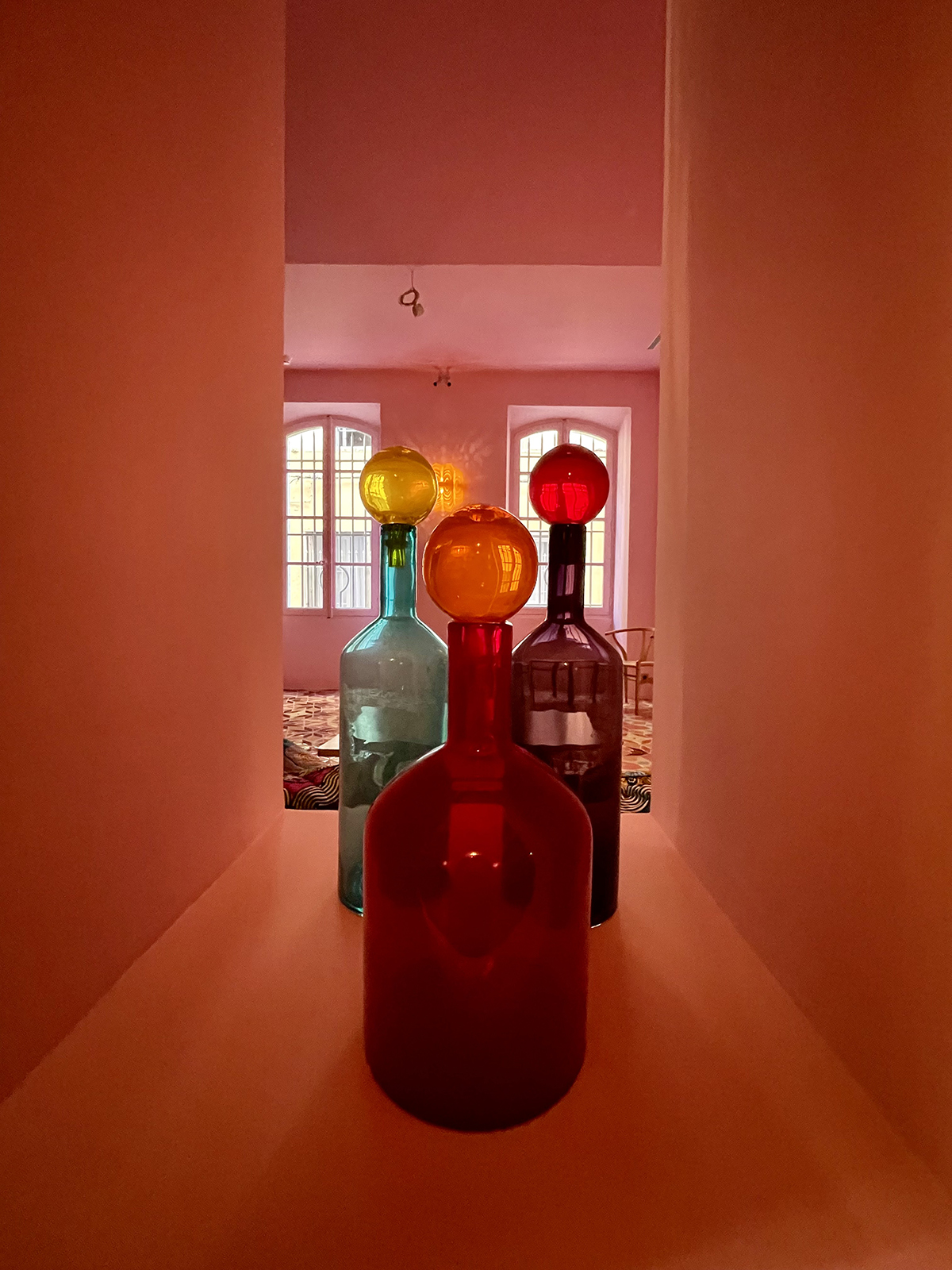
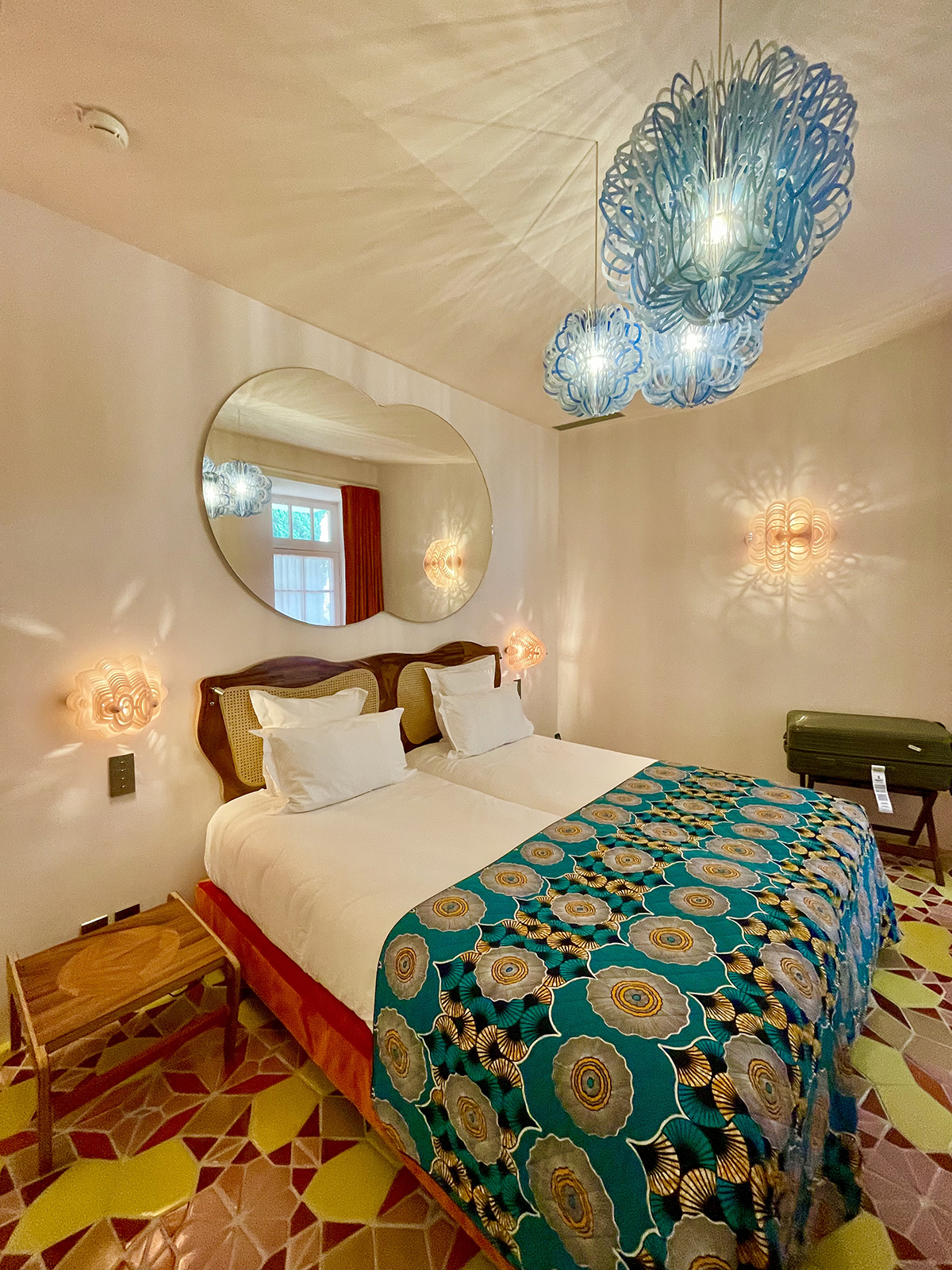
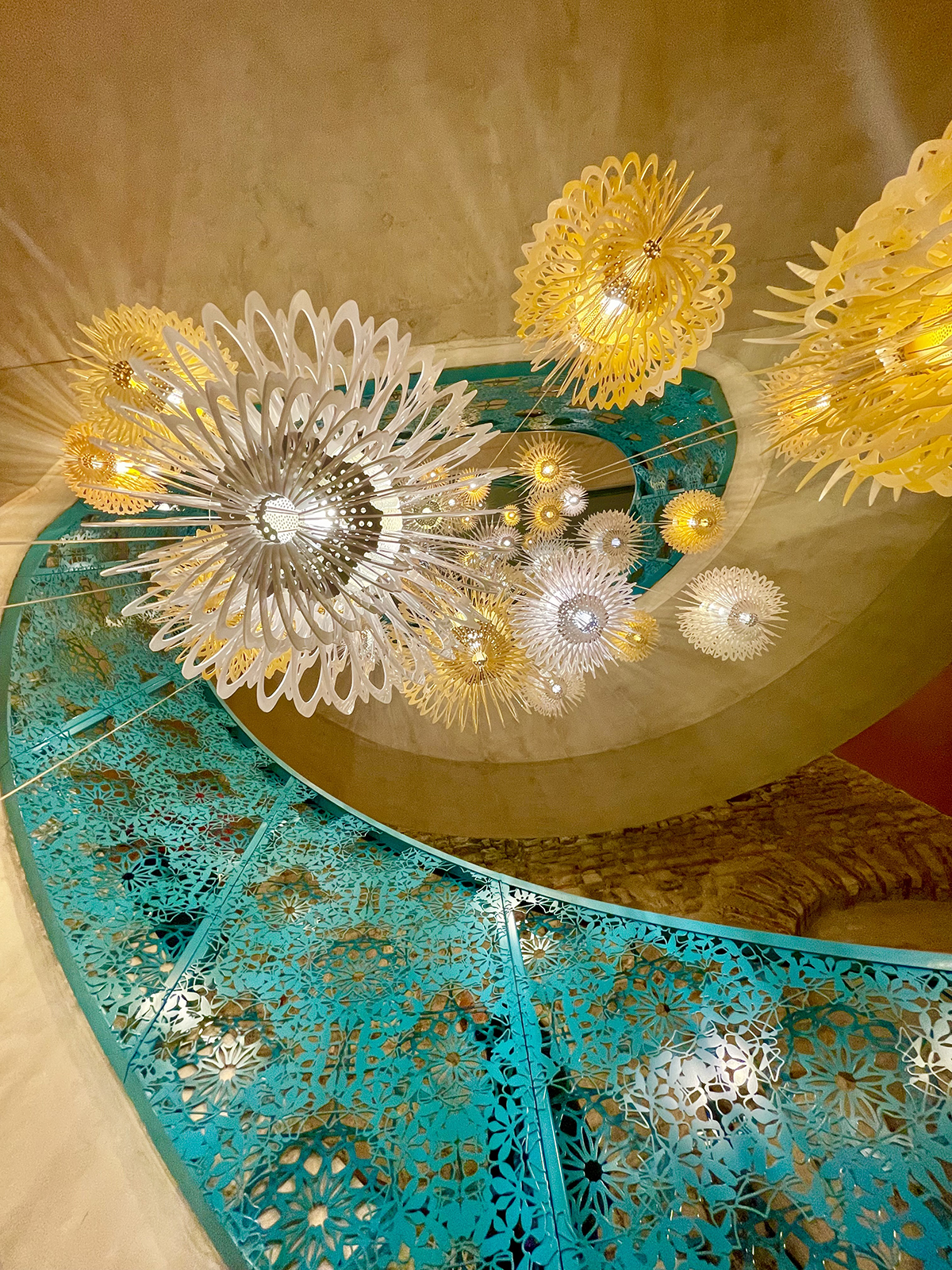
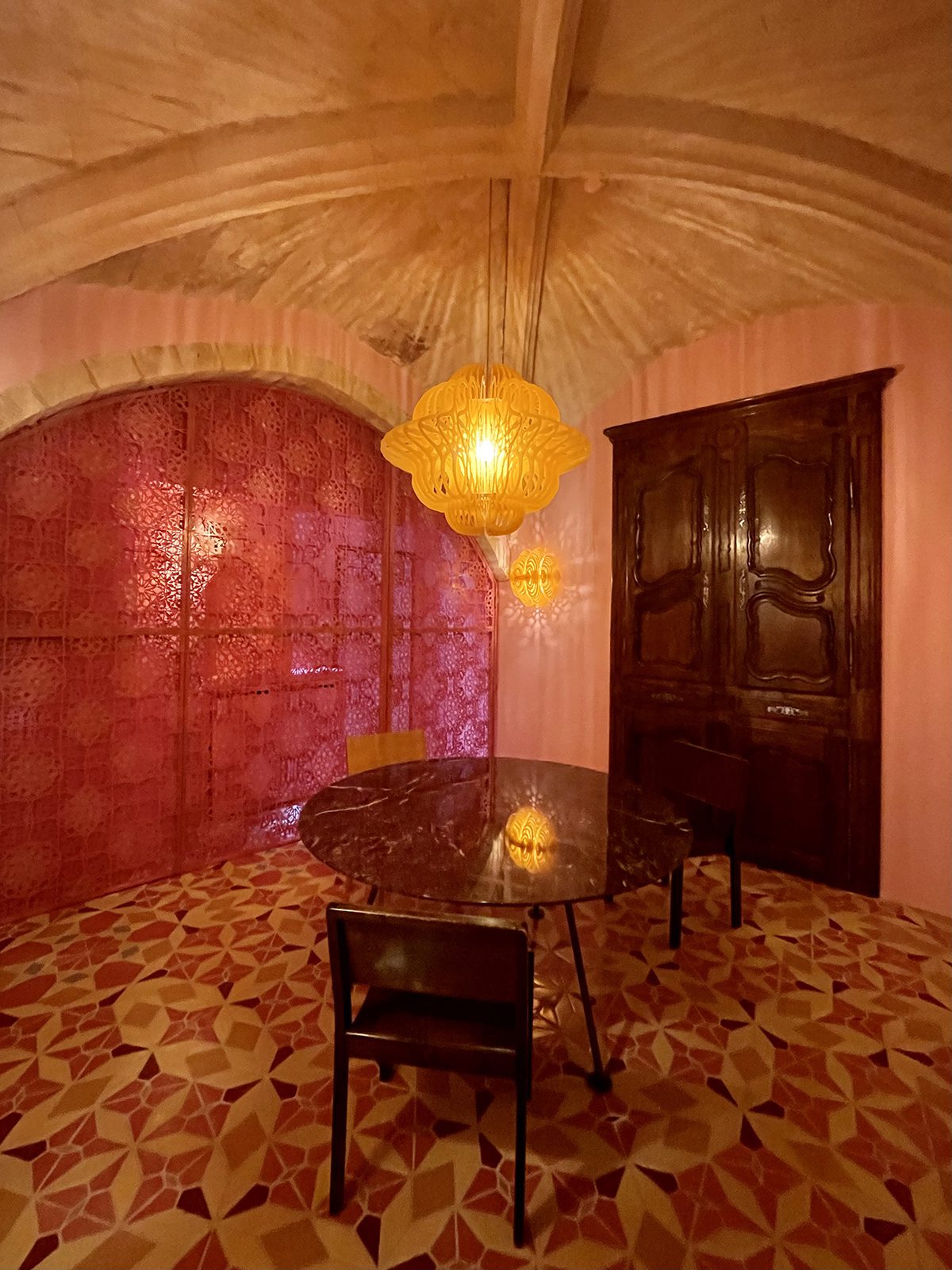
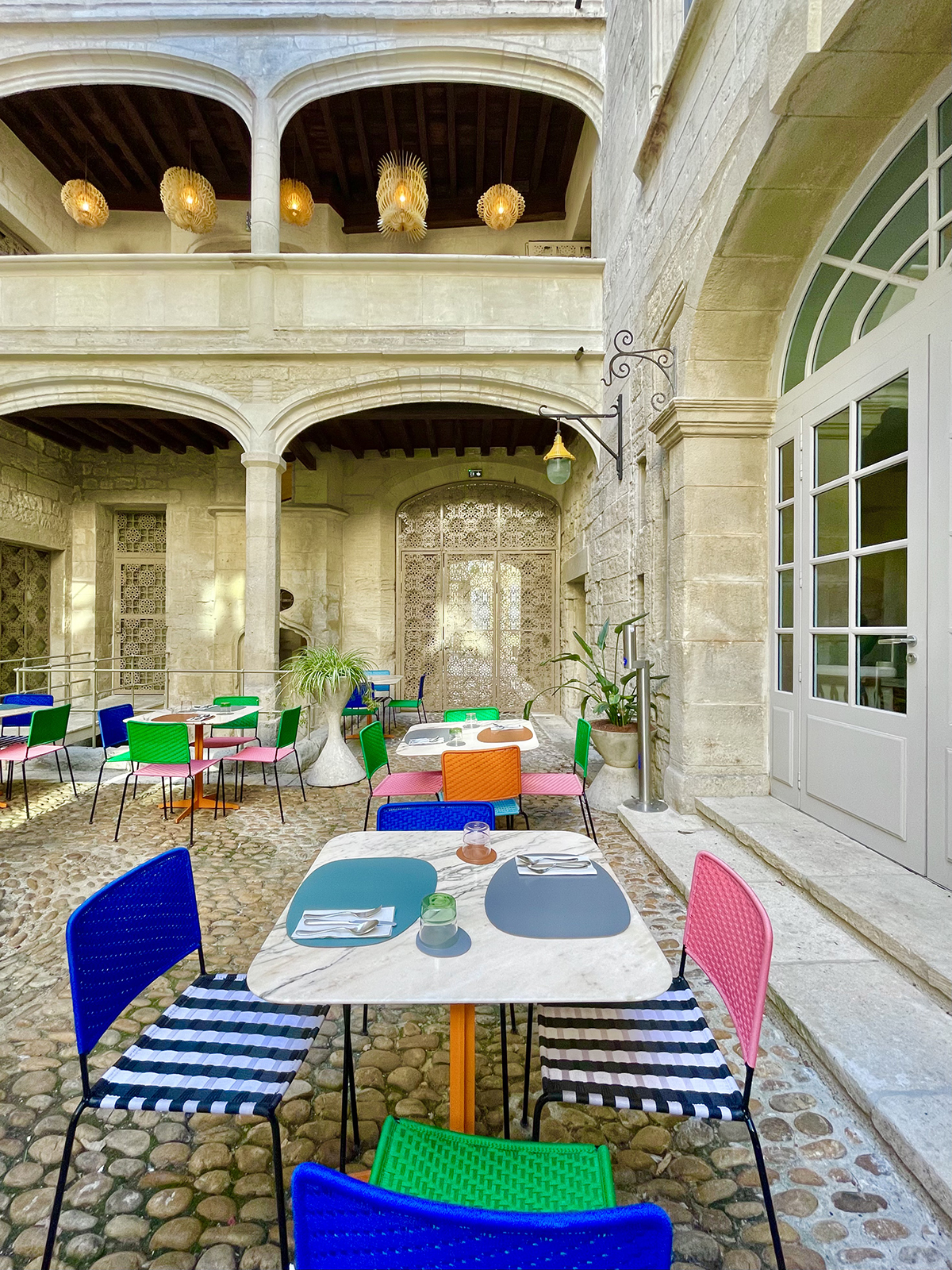
Book your stay: arlatan.com
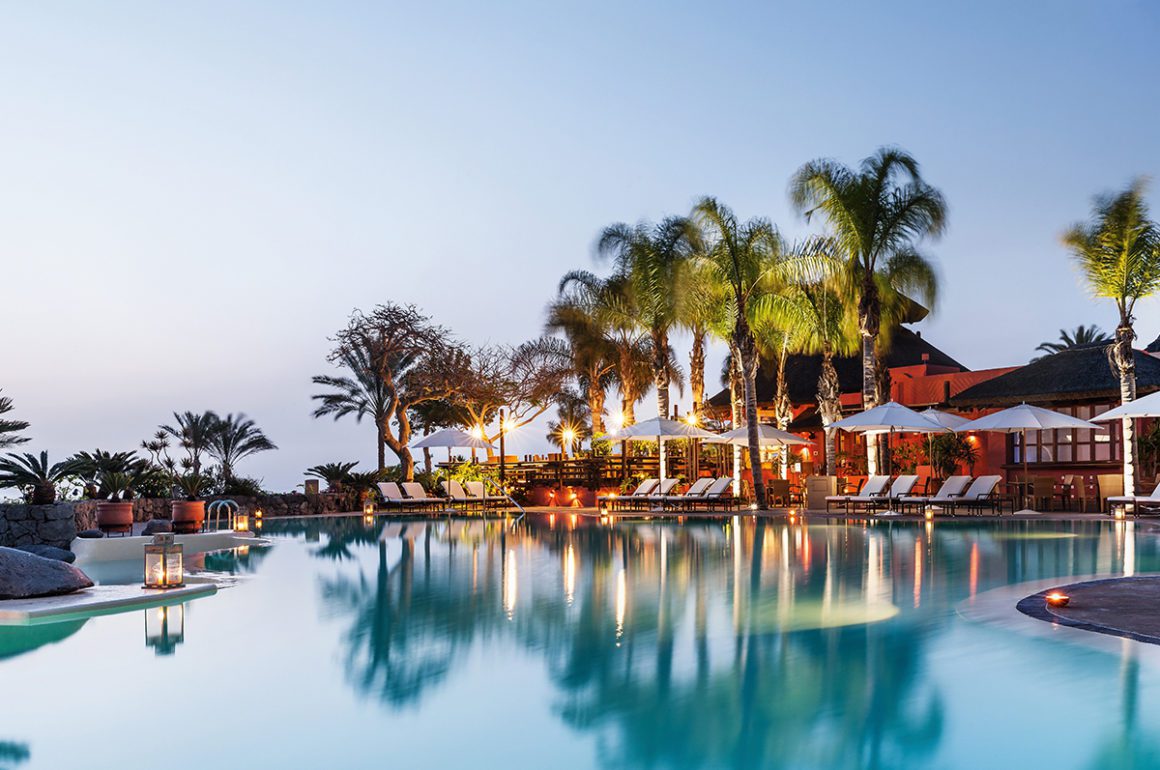
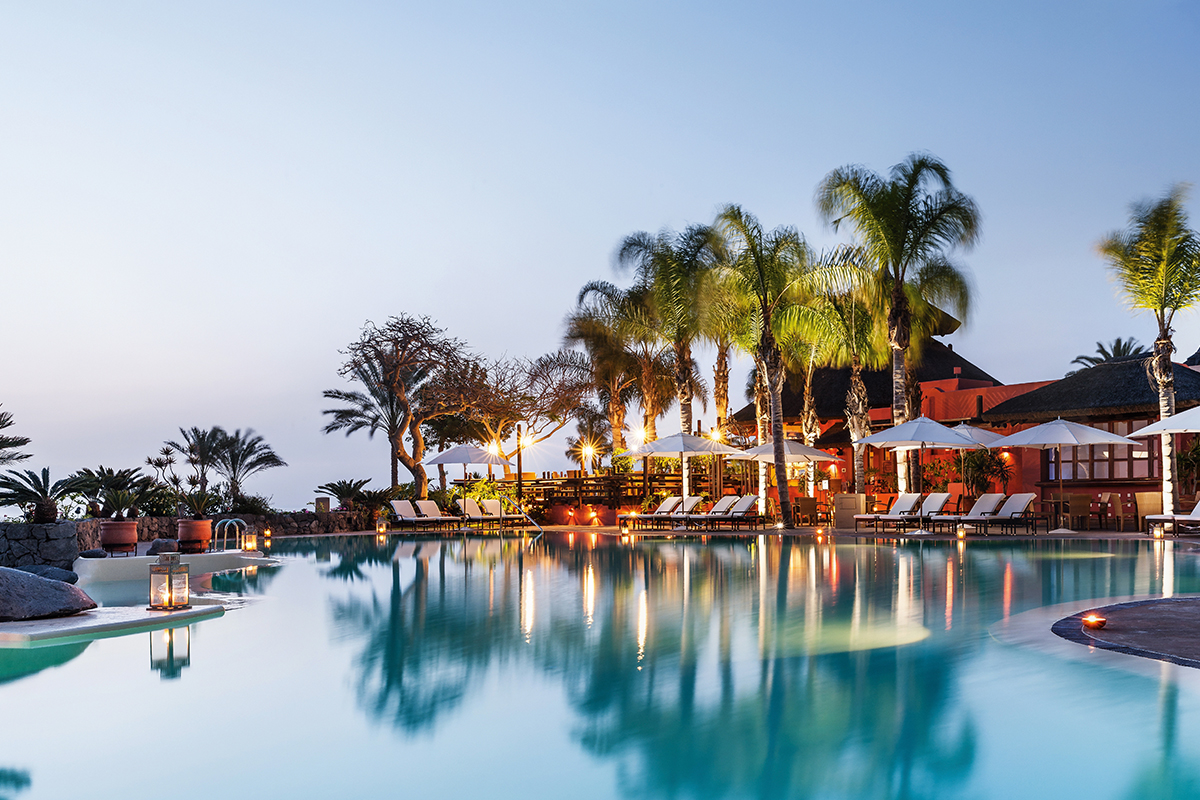
The El Mirador swimming pool at the Ritz-Carlton, Abama. Photograph by Gary Schmid.
Seclusion, service, tropical weather, Michelin-starred dining, multiple pools, golf, gardens and sports: The Ritz-Carlton, Abama offers an escape for everybody
As we all endure multiple lockdowns of varying strictness and duration, the idea of an escape from the past year’s febrile world is an attractive one. Time for a break from the pandemic fallout accompanied by multiple heated global conversations, including one which would have brought tears to Voltaire’s eyes, about whether we should actually be allowed to have a conversation.
Follow LUX on Instagram: luxthemagazine
All of which makes your own beachside villa a delightful prospect. Although for some people, the attractiveness fades when you start to examine the details. It may have full service, but your chef realistically isn’t going to be able to rustle up a Michelin-starred Japanese meal one night and some molecular gastronomy the next. Your pool, while potentially big, will be just that, a pool, not a choice of numerous pools in different locations. As to the atmosphere, you’ll either have to make your own, or travel to the nearest establishment which has one.
Then, there is The Ritz-Carlton, Abama. Perched on a cliff at the southern edge of the Canary Islands, with a spectacular view across the sea to a volcano bursting out of the ocean and looking as if it might come alive at any moment (don’t worry, La Gomera hasn’t erupted for three million years). Abama has a sense of geography that would be the envy of many places in more exotic settings, in a location that is a short flight and transfer from the major cities of Europe.
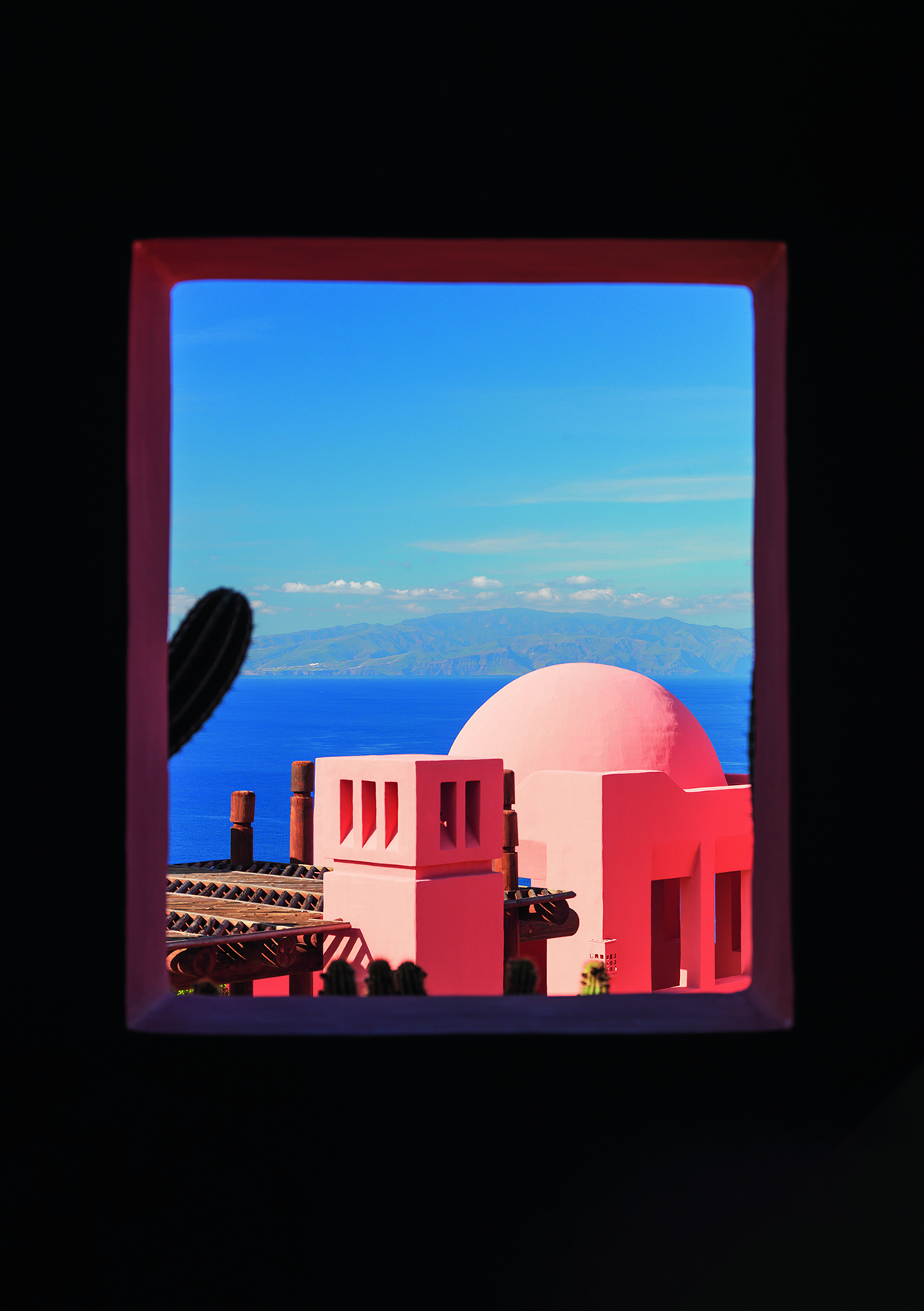
A view from the hotel’s Citadel building. Photograph by Roger Mendez Fotografo, S.L.
The luxury Ritz-Carlton hotel is at the heart of the complex, but we stayed at one of the villas, located on a series of pathways traversing exotic hanging gardens tumbling down the peak of the cliff. Despite the name, these are not villas per se, as they do not have a kitchen: ours was a large private apartment, with two big bedrooms with vaulted ceilings, marble bathrooms with North African touches, a marble living and dining room, and no fewer than four balconies, all facing the sea, the volcano and, at night, a view of the stars for which the islands are famous.
Read more: Professor Peter Newell on why the wealthy need to act on climate change
On our first night, we became addicted to room service, taking it on the biggest of the balconies, itself the size of a decent suite. Iberico ham, local Canarian potatoes with an intensity of taste served with a spicy vegetable sauce, the day’s catch of local white fish, and as secluded as you might ever want to be. Eventually one evening we headed out to El Mirador restaurant. This is located below the villas with its own pool, on the edge of the cliff itself. We dined on the restaurant’s speciality, its seafood paella with clams, mussels, white fish and calamari.
The resort exists in an elevated sphere of gastronomy. A short ride in your own dedicated golf buggy takes you up the hillside to Kabuki, an outpost of the famed Madrid restaurant of the same name, with a 100km view in three directions, a Michelin star and dishes that remain in the soul, like butterfish and white truffle nigiri, and white fish and Iberian pancetta sushi.
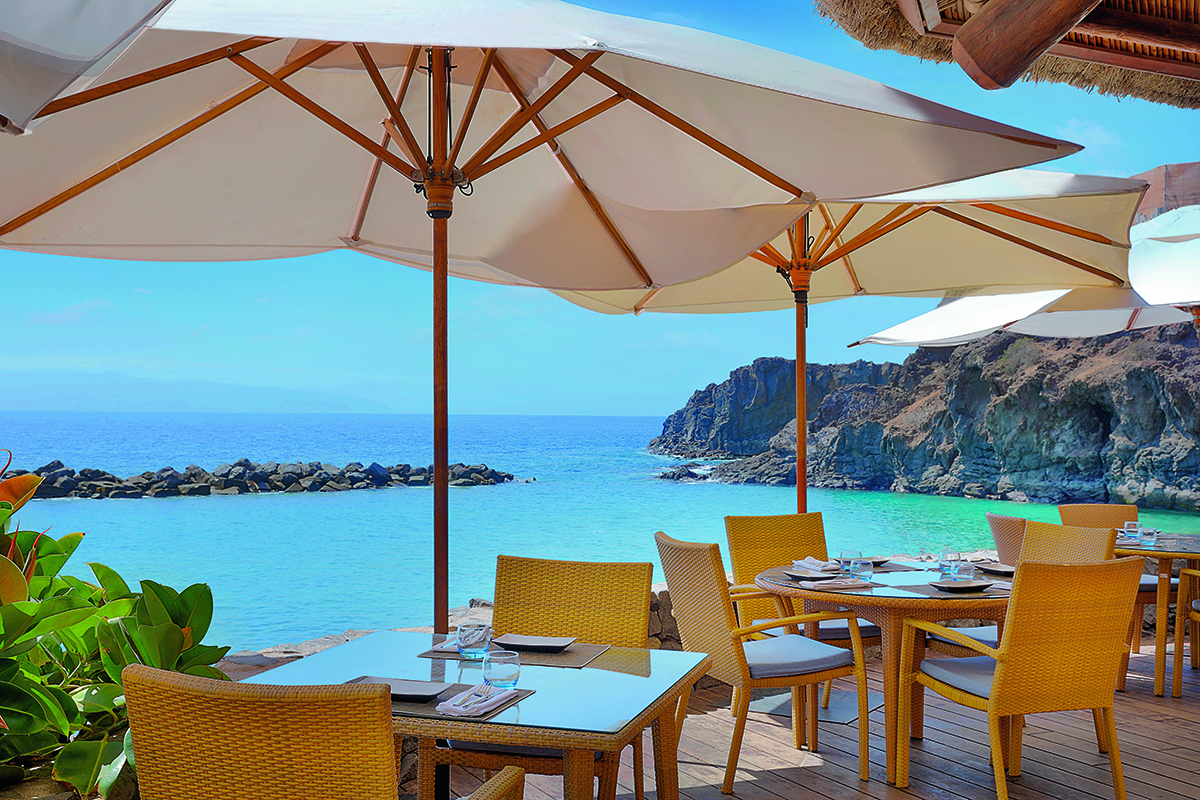
The Beach Club. Photograph by Roger Mendez Fotografo, S.L.
There are more outdoor pools than we could count – we gave up at ten. Each set of villas has its own long, sinuous, sneaky 40m-long pool at whose side socially distanced sunbathing on the garden terrace, accompanied by butterflies and exotic flowers, is not just possible, it happens naturally. This is a place with a luxury of space.
At the bottom of the cliff, accessible by lift, hotel transport or a short walk, is the only white-sand beach of the island, with its own beach restaurant, bar, rock diving spots and a sheltered swimming area where even short swim brings you into visual contact with an array of multicoloured fish. And at the top of the resort, high on the mountainside, is one of Spain’s most celebrated 18-hole golf courses, and a set of championship quality tennis courts.
The facilities of one of the world’s greatest hotels with the seclusion of a villa? The best, as Voltaire’s Candide would say, of all worlds.
Book your stay: ritzcarlton.com
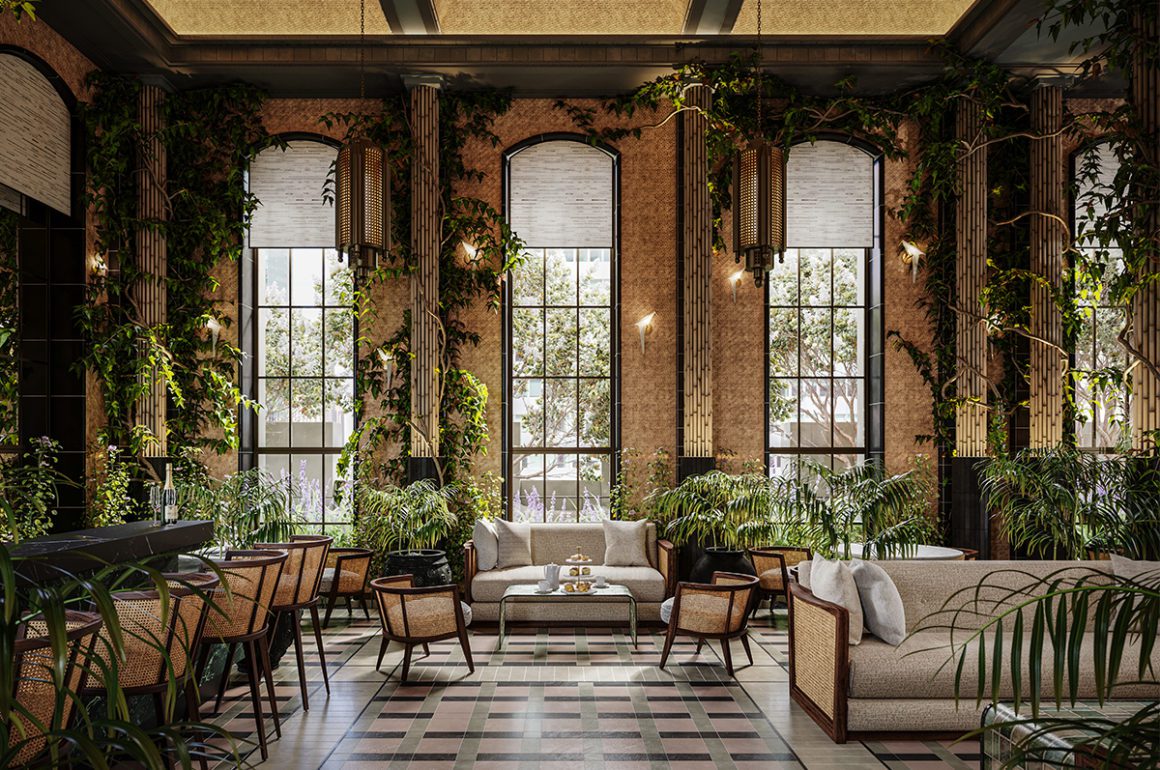
The Park Avenue entrance to Waldorf Astoria New York’s luxury residences, The Towers
Waldorf Astoria Hotels & Resorts, the luxury hotel and resort brand of Hilton Worldwide, recently embarked on a major transformation of its historic New York hotel, creating 375 luxurious private residences which are set to open, along with the hotel, in 2023. Here, the group’s Senior Vice President and Global Category Head, Dino Michael discusses the importance of creating memorable experiences, understanding your guests and building local partnerships
1. What makes a luxury brand?
Experiences are everything. Truly personalised touches that create unique moments and memories are what distinguish a luxury brand. There is more license to be whimsical in luxury now more than in the past, to be familiar and welcome guests as if they are visiting someone’s home. Yet while the luxury industry is becoming more approachable and inclusive, luxury customers still appreciate and want a certain level of prestige and truly seamless, elegant service from their luxury brands. Waldorf Astoria, for instance, is a brand known for its effortless service and for creating unforgettable moments for our guests while making them feel at home no matter where they are around the world.
Follow LUX on Instagram: luxthemagazine
2. How do you approach global brand development for companies like Hilton, which already have a firmly established reputation and history?
In times of uncertainty, consumers gravitate towards brands they know and trust, and we want our loyal customers to be confident that they can continue to find that with Hilton. It is because of this deep connection we have with our guests that we are able to expand and further develop our brands, particularly Hilton’s luxury category.
We are looking forward to continuing to grow and develop our luxury footprint in both established urban destinations, such as the Waldorf Astoria London Admiralty Arch opening in April 2023, as well as within more remote resort locations like the Seychelles, to give consumers a trusted place to stay while exploring the world. In addition to our hotel offering, we are also seeing momentum with our residential portfolio, most notably with Waldorf Astoria New York’s luxury residences, The Towers, and Waldorf Astoria Hotel & Residences Miami, both open for sales and seeing incredible buyer interest.
The “Winter Garden” at The Towers
As an organisation we work tirelessly to meet the evolving needs of the luxury traveller, including having a long-term approach and being able to forecast where and how our discerning guests will want to travel. With privacy and exclusivity more important than ever for our guests in the post-pandemic travel landscape, unique offerings such as the recently unveiled Private Island at Waldorf Astoria Maldives Ithaafushi provide both a safe and reassuring way to travel, as well as the ultimate in luxury experiences.
In addition to Waldorf Astoria, Hilton’s two other luxury brands, Conrad Hotels & Resorts and LXR Hotels & Resorts, both have aggressive development timelines in the next five years. LXR, Hilton’s collection of luxury hotels and resorts, recently launched in the U.S. with the debut of the oceanfront Oceana Santa Monica which will be closely followed by openings in the Seychelles, Las Vegas and Kyoto, Japan. Conrad, our contemporary and design-forward luxury brand, continues to expand its global presence with recent openings in Punta de Mita and Abu Dhabi and upcoming openings in Las Vegas, China, Morocco and more.
3. You have worked across the hospitality sector – from culinary to residential. How does your approach to brand development vary depending on the industry?
Ultimately it is about understanding your guest as they are the heart of the hospitality business, no matter which part of the industry you work in, whether that be hotel, residential or F&B. A good example can be seen with our two Waldorf Astoria developments – both with a residential and hotel component- in New York and Miami. Waldorf Astoria New York is being restored to resemble the hotel’s classic grandeur yet will blend the old and new in a balance of modern comfort with Art Deco opulence that celebrates the scale and beauty of the iconic property. The hotel, residences and F&B components will also reflect the New York City guest and resident in a way that caters to every need they might have visiting and living in Manhattan.
Read more: LUX’s Editor-in-Chief Darius Sanai on media
On the other hand, we have Waldorf Astoria Miami – another residential and hotel development- which
Soars 1,049 feet above Biscayne Bay as the tallest building south of New York City and a new modern architectural wonder in South Florida. We’ve taken the rich culture of Miami and let it inform how this property comes to life, while still maintaining the personal service and best-in-class experiences people come to know from Waldorf Astoria. Like all properties we develop, this project will be truly unique to its destination, offering a sense of geography and locale first, followed by the comforting reassurance of being “home” second.
This guest-centric mentality is also integral to how we develop our culinary programs across Hilton’s luxury portfolio. Overseeing the evolution and growth of our luxury F&B program is a passion of mine that stems from my humble beginnings in food and beverage within the hospitality industry. As food tourism continues to be in high demand in the luxury travel market, we continue to innovate and showcase the natural bounty of each destination through the work of world-renowned chefs like Jean-Georges Vongerichten, Dave Pynt, Michael Mina, Bryan Voltaggio, Richard Sandoval, Heinz Beck and more, bringing our guests exclusive and truly unforgettable dining experiences.
The living room of one of the private residences at The Towers
4. Given the hotels you work with span many locations across the globe, are there any golden rules to ensure consistency of brand quality?
A defining factor of the Waldorf Astoria brand is that each property is a true representation of their destination and captures the culture and essence of locale. We aspire to create hotels for their destination, not merely in a destination which means that guests should feel that sense of place and localisation first and the Waldorf Astoria brand second.
With that said, Waldorf Astoria properties across the globe work tirelessly to deliver personalised, elegant service, unforgettable experiences, and award-winning culinary excellence, all in marquee destinations which, while perhaps a world away from home, feel like a refined, welcome haven for our guests.
5. Has there been a particular strategy by the hotels under your aegis to survive the global pandemic, given they have had to shut down for the most part?
With ever-evolving guest expectations and comfort in travelling during the pandemic we, as an industry and company, continue to innovate and find unique solutions for the unprecedented challenges of the pandemic and post-pandemic climate.
We are seeing increasingly blurred lines between business and leisure travel as people have more flexibility in their work environment. As many people are choosing to “work from home” in a variety of locations outside their home, our luxury properties have capitalised on this trend by offering specialised packages catering to the extended stay traveler as well as offering alternative work spaces for those wanting to stay closer to home, including an “Escape Longer” package at Waldorf Astoria Los Cabos Pedregal and an “Office with a View” getaway offer at Waldorf Astoria Trianon Palace Versailles.
The “Starlight” indoor pool
For a property like Waldorf Astoria New York, many of the restoration changes already happening for the hotel and residences naturally work in a post-pandemic environment, such as fewer, larger guest rooms and residences allowing for more personalised attention and service for each guest and resident. Scaling down to 375 guest rooms will enable us to concentrate on delivering our renowned Waldorf Astoria service.
Read more: Louise Cottar of Cottar’s Safaris on meaningful luxury experiences
Additionally, Waldorf Astoria continues to align with and implement Hilton’s industry-defining initiatives and cleanliness protocols to adapt to the needs of our guests. Programs like Hilton CleanStay, an industry-leading standard of cleanliness and disinfection, along with EventReady and WorkSpaces by Hilton, allow us to provide our guests with the peace of mind and assurance that our hotels are not only operating at the highest cleanliness and safety standards, but that we are working to create programs and initiatives that allow guests to still host events, work remotely and travel in a way that makes them feel not only comfortable, but catered to.
6. To what extent does relationships with the local community play a role when establishing hotels in new locations?
Local relationships and partnerships are extremely important as we expand because they drive our impactful and authentic destination experiences across Hilton’s luxury properties. We engage with local shamanas and curanderas for native healing and wellness rituals; partner with elite establishments on private excursions that deliver a sense of place and culture in an intimate setting; and bring the region’s natural ingredients and resources to our restaurants for memorable and immersive dining experiences.
Our Conrad hotels across the globe take local engagement and social impact especially seriously, with many of our hotels offering dedicated programs that directly engage or give back to local communities. For example, the Conrad Maldives Rangali Island collaborates with several local environmental groups to help promote sustainable travel and encourage guests to reduce the use of materials that impact the environment and ocean. Our Conrad property in Washington, DC also embeds sustainability into its operations, integrating Hilton’s food waste training program into the kitchen culture as well as partnering with Clean the World to recycle and redistribute soap from guest rooms to communities in need around the world.
Conrad Washington D.C. will partner with DC Central Kitchen on a culinary internship and training program for youth. The hotel will the world. All of these programs are part of Travel with Purpose, Hilton’s corporate responsibility strategy to redefine and advance sustainable travel globally.
Another example of our engagement with the local community can be seen at The Towers of the Waldorf Astoria New York, where last year over 15,000 furniture pieces from the original hotel were put up for auction with Kaminski. The proceeds from this auction were given to support St. Bartholomew’s Conservancy in its mission to help restore and preserve the exteriors and gardens of fellow neighbourhood landmark St. Bartholomew’s Church and Community House, a celebrated local historic site and marvel of Byzantine-Romanesque architecture directly across the street.
Find out more: hilton.com/en/waldorf-astoria/

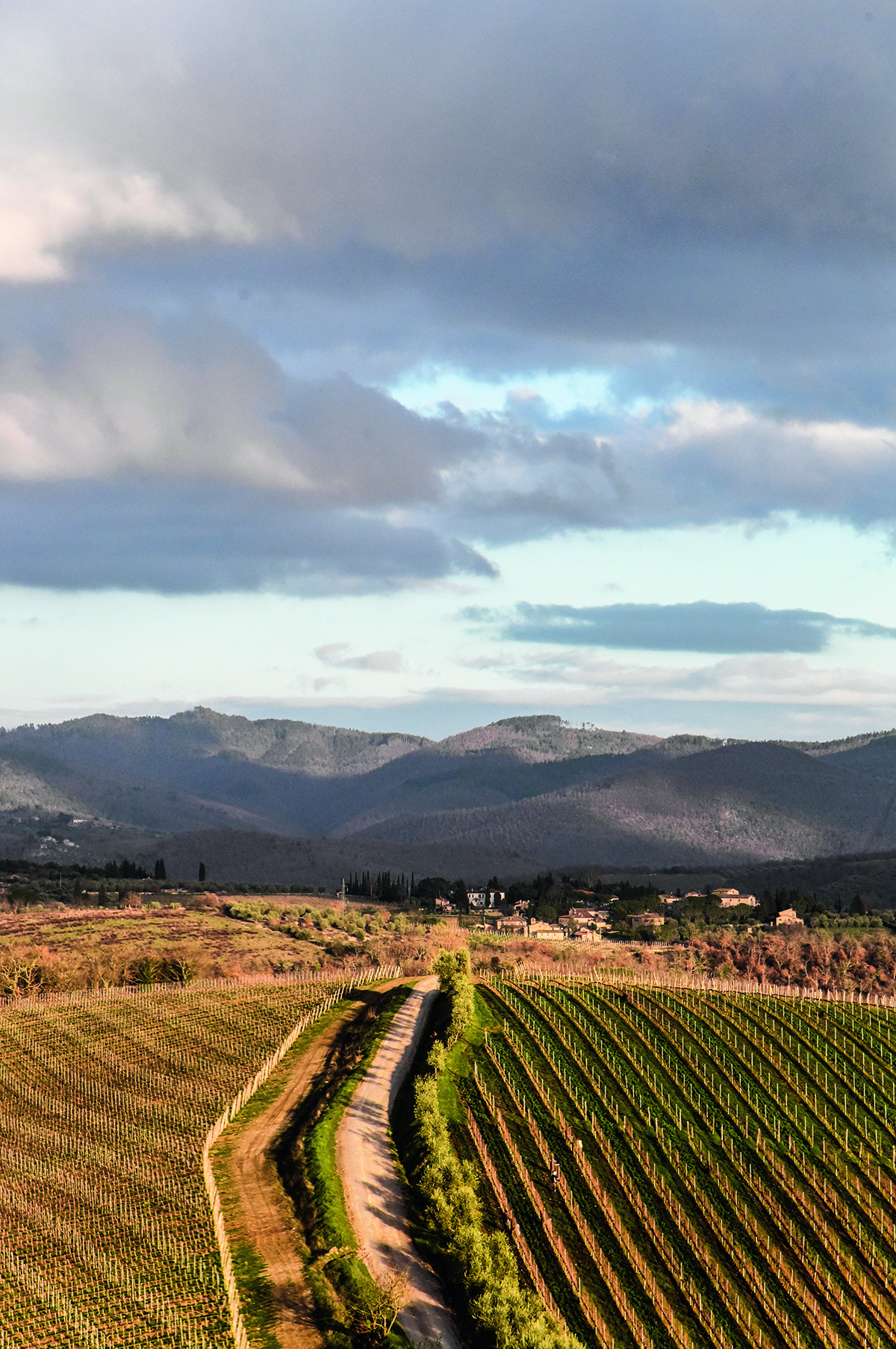
Dievole is surrounded by the endless green and gold hills of Tuscan legend. Photograph by Marco Badiani
The second half of our journey through Tuscany takes us to Dievole, a luxurious wine resort in the heart of the region’s famous rolling hills
Where
On a ridge surrounded by vineyards, olive groves and forests, in a wild part of Tuscany just 20 minutes’ drive from Siena.
The arrival
Dievole is surrounded by the endless green and gold hills of Tuscan legend. Arriving from Florence, you divert south towards Siena and turn northeast along a winding country lane, great houses appearing suddenly on hilltops, wild boars popping out of the vineyards. This is not a highly touristed part of Tuscany, you feel you are a visitor among locals, yet it is easy to get to Siena and the villages on the Chiantigiana trail. The last part of the journey takes you down a dust track to a tidy car park at the back of imposing stone buildings; there is also an old chapel opposite the pleasant reception office.
Follow LUX on Instagram: luxthemagazine
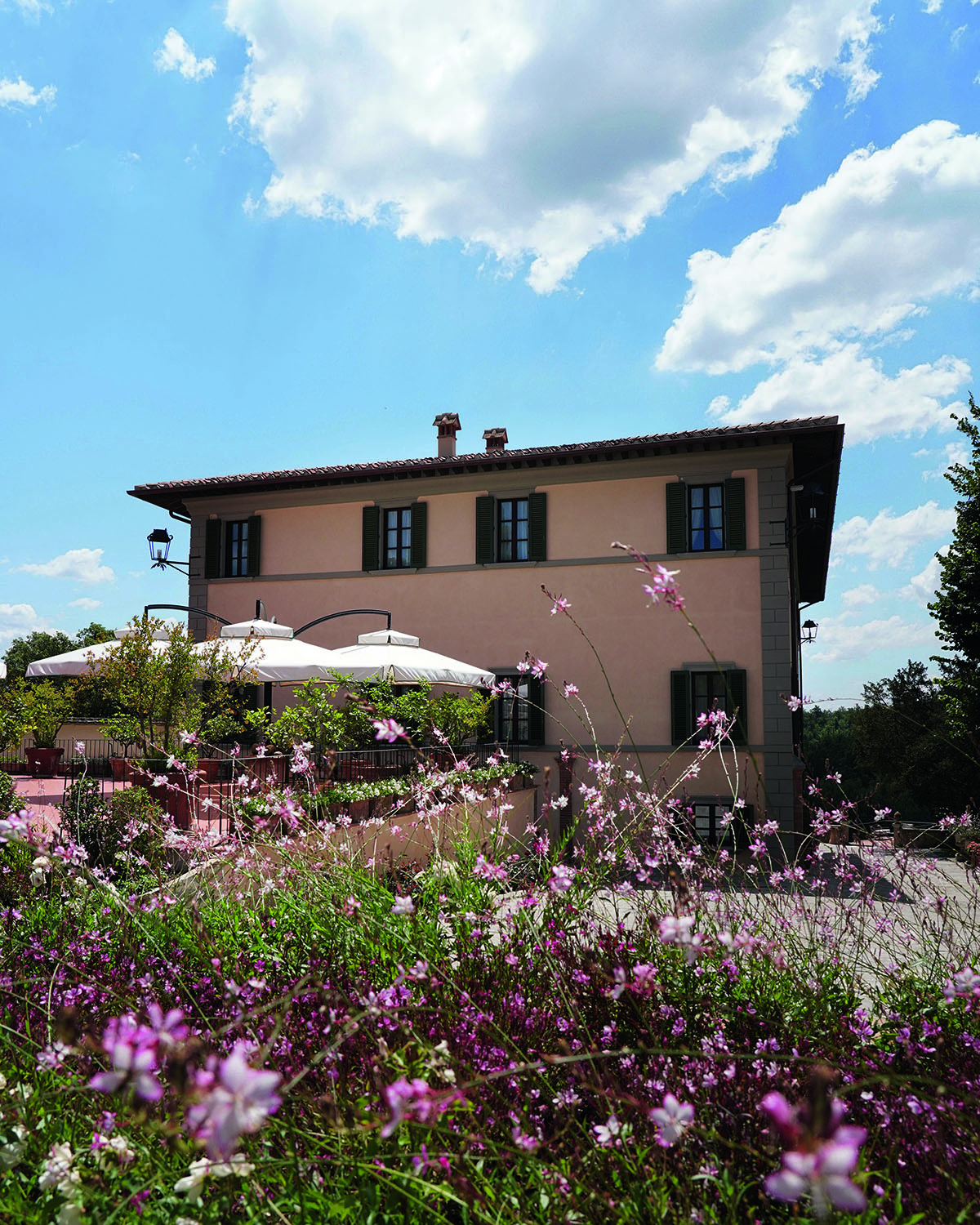
The Dievole winery and hotel. Photograph by Alexandra Korey
The views
This is deepest northern Tuscany, the land of Chianti and olives. The hotel’s main pool has an infinity edge overlooking vineyards and a forest in the valley; forest and vineyard extend for miles up ridges and down dells. There is another pool of equal size on the other side of the hotel. Above the pools and below the main buildings are grassy gardens where you can sit and have lunch or a drink on a wonderfully casual scattering of garden furniture. The formal terrace, for breakfast and dinner, sits behind one of the gardens and has a symphony of cicadas at night time.
Read more: Professor Peter Newell on why the wealthy need to act on climate change
The rooms
Modern Tuscan chic without trying too hard: high ceilings, plenty of marble and space. Some rooms have the same views as the pool, others look more inwards, but all are generous, genuine, authentic and light.
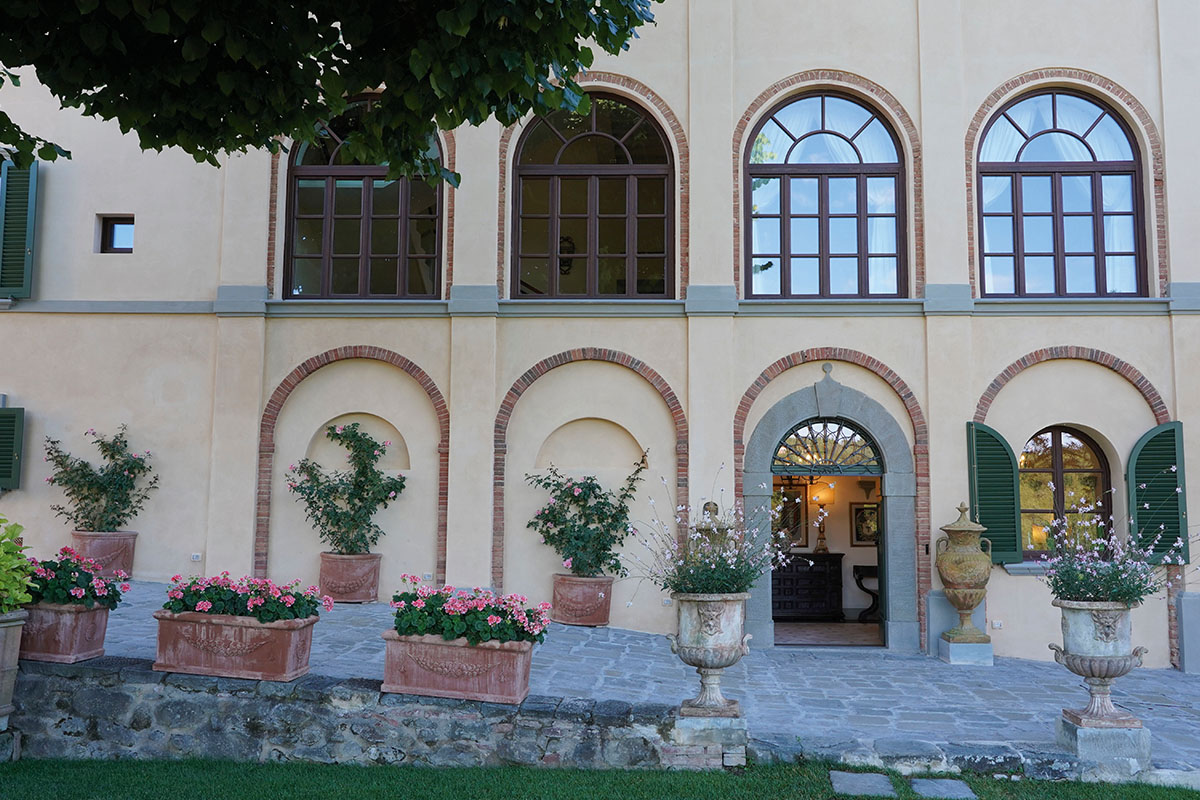
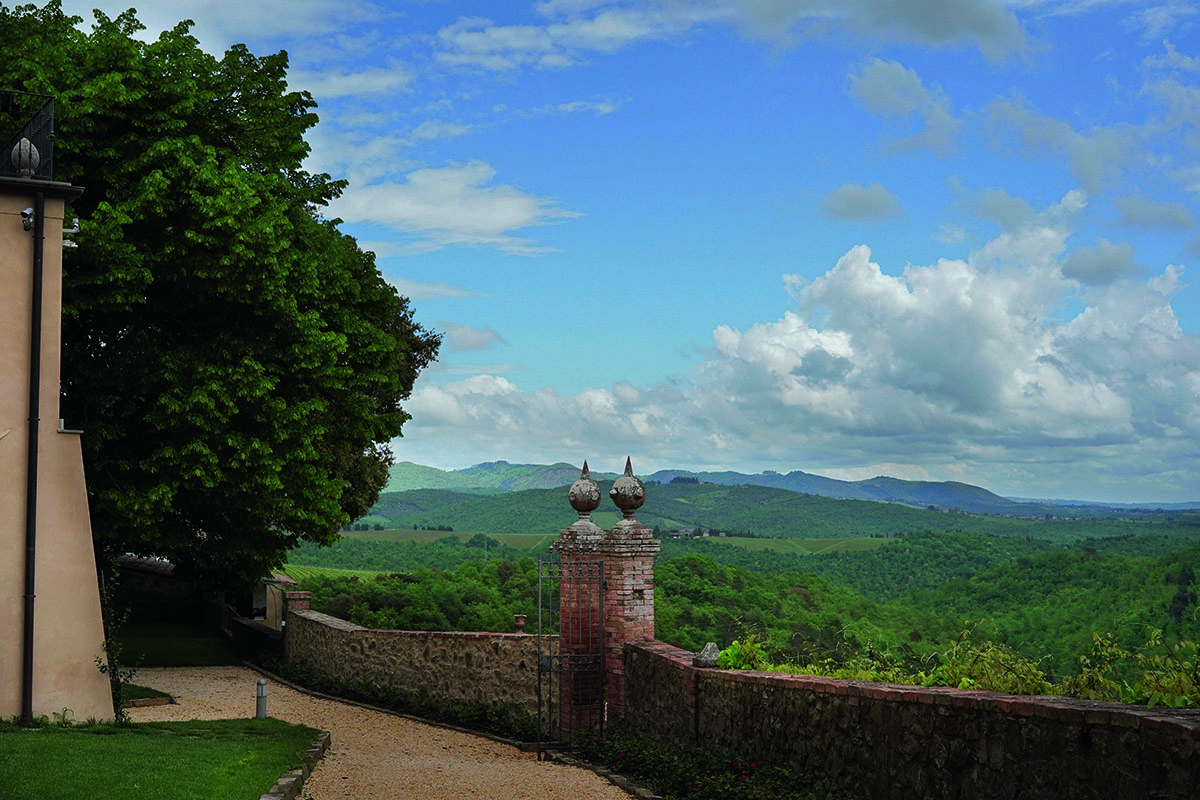
The entrance to the villa (top) with views across the estate’s vineyards vineyards and the northern Tuscan landscape. Photographs by Alexandra Korey
Wining and dining
Breakfast is the standard Italian luxury fare of a buffet biased towards fruits and cheeses. Lunch was our favourite meal here, just sitting at a table on the lawn above the low wall, beyond which the ground dropped down into the valley below. The nearest other guest was 20 metres away; indeed, Dievole is a magnificent place for not feeling on top of anyone. For lunch, our favourite pick was a grilled turkey breast with a salad of local tomatoes, whose punchy flavours went with the flavours of the air.
Within a 20km radius of Dievole are some of the top wineries of the region and the hotel’s relaxed, professional staff seemed happy for us to sample their wares during lunch. Dievole’s own wines are served at the restaurant during dinner. Not as famous or profound as other local wines, theirs were well priced and a good accompaniment to the food.
The highlight
The views changing colour and texture daily; and the staff, who made things run beautifully without ever falling into the old Italian trap of getting in the way too much. Tuscany for true connoisseurs.
LUX rating: 9/10
Book your stay: dievole.it
This article originally appeared in the Summer 2021 issue.
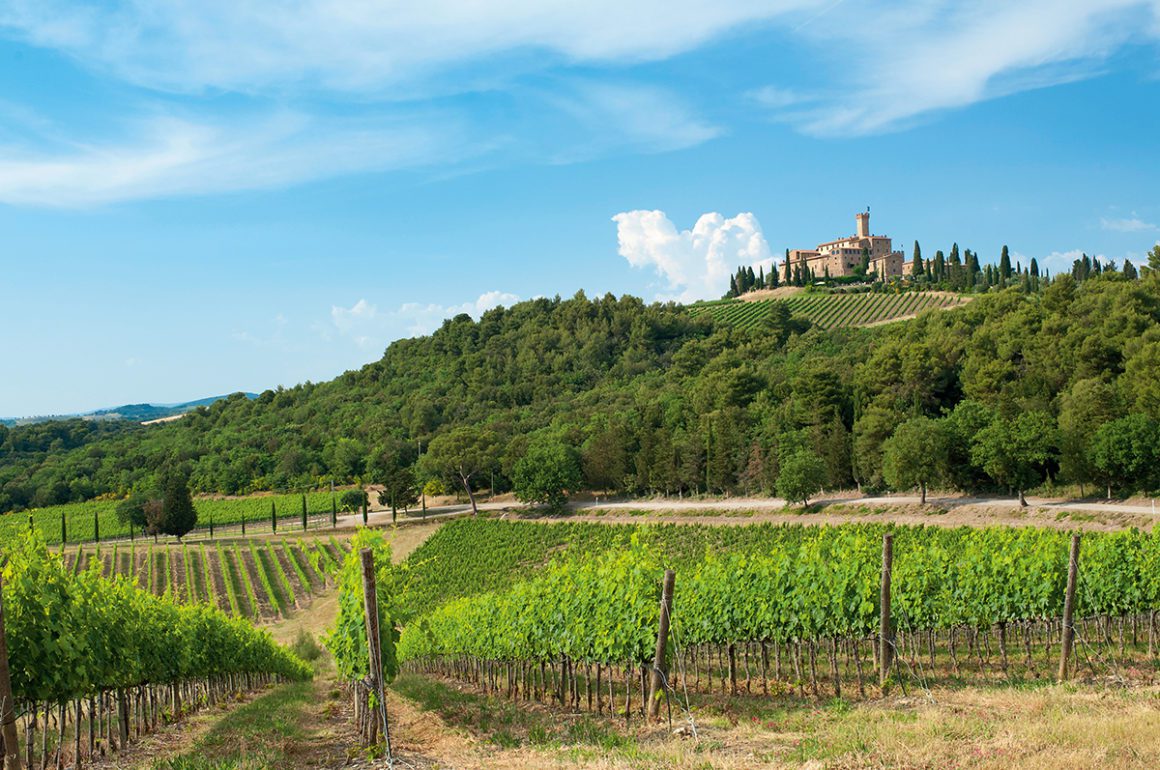
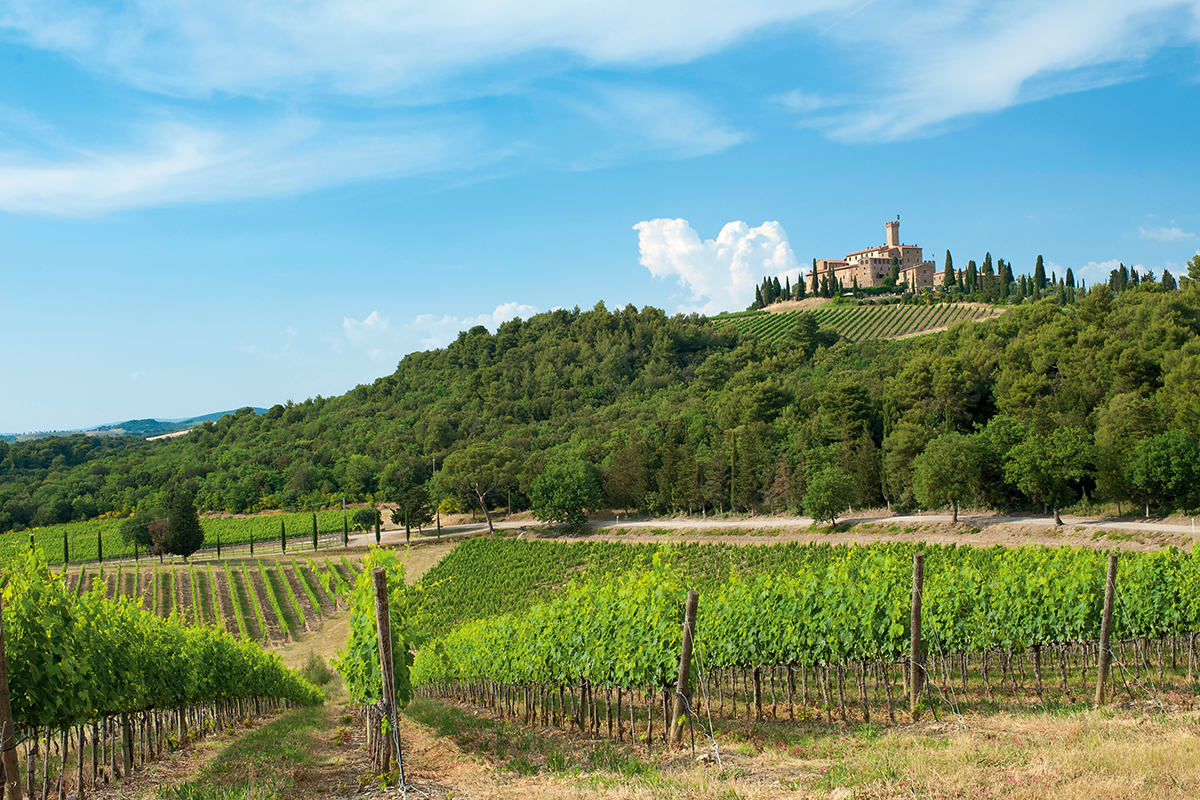
The Castello Banfi wine resort. Photograph by I. Franchini.
Staying at two wine estates at opposite ends of the region, LUX experiences fine wines, history, cuisine and the spiritual tranquillity that only Tuscany can offer. First up is Castello Banfi Il Borgo, a wine estate and historic hilltop hamlet transformed into a luxury hotel
Where
On a hilltop in the far south of Tuscany, above a broad sweep of valley and plains, with the massive, looming forested ancient Etruscan volcano of Monte Amiata in the far distance.
The arrival
You know you’re in wine country when you drive to Castello Banfi. The land for miles in every direction is covered with vineyards; a smooth, quiet road leads to the estate from the main road connecting Montalcino, on its hilltop to the north, with Sant’Angelo Scalo in the flat valley below. Banfi is not just a wine estate, it is a hamlet, all converted into a luxury hotel (il Borgo), wine estate and celebrated restaurant. There is even a museum of glass bottles. The feeling is that you have arrived at a very exclusive destination, but a working one, with the vines all around making some of the most famous wines of Tuscany. The ‘hotel’ is the cluster of buildings down the single cobbled road of the hamlet, which have been artfully and expensively restored.
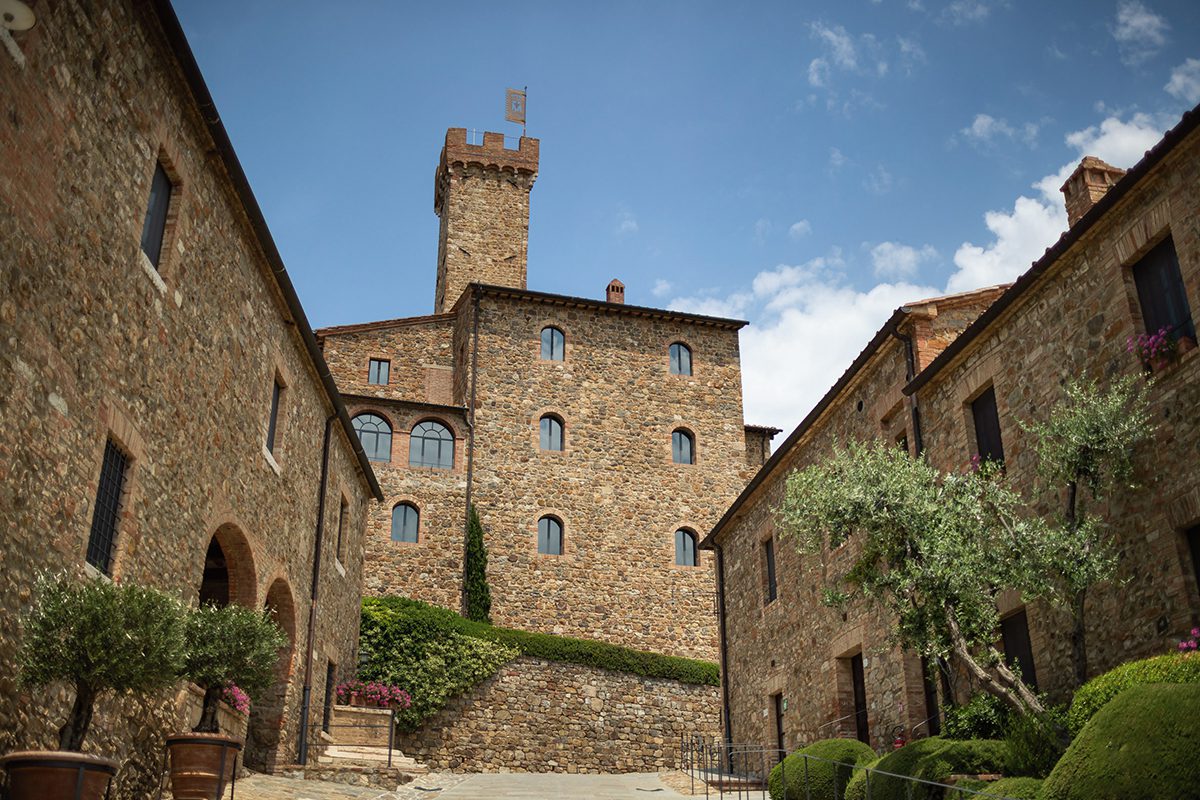
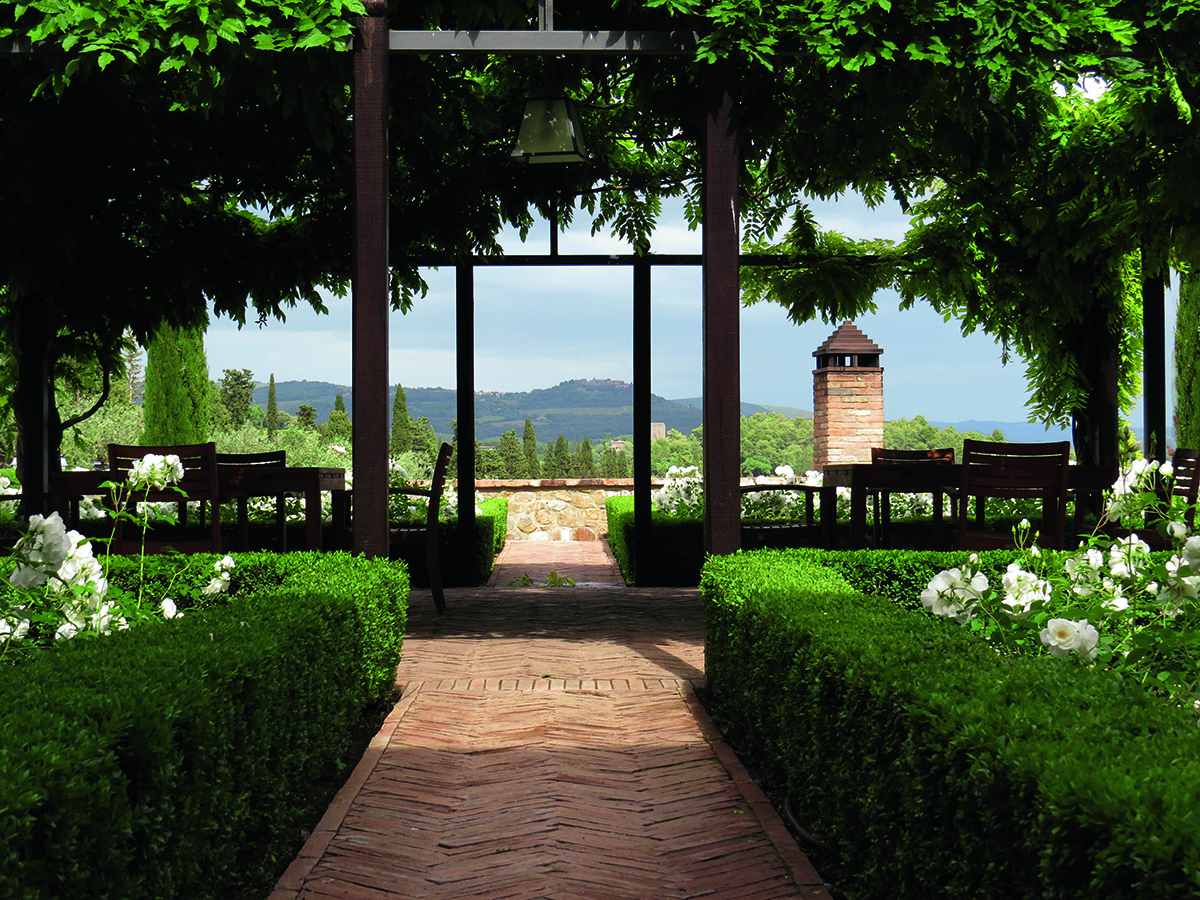
The restored hilltop fortress (above) with its rose garden
The views
The place to be here is the pool, which looks out to the south, over vineyards, agricultural land, and plains, over to forested hills in the far distance, many miles away, beyond which are the beaches of the Maremma. At night, you can sit on the grass by the pool and try and guess how far away each point of light in the blackness of the land is: 10km? 20km? In contrast to northern Tuscany, the views here are vast, unending, almost unsettling in their scale. Or is the best view from the bedrooms, which look out over a terrace and to the Monte Amiata volcano in the distance to the east? You are spoiled for choice with different vistas here.
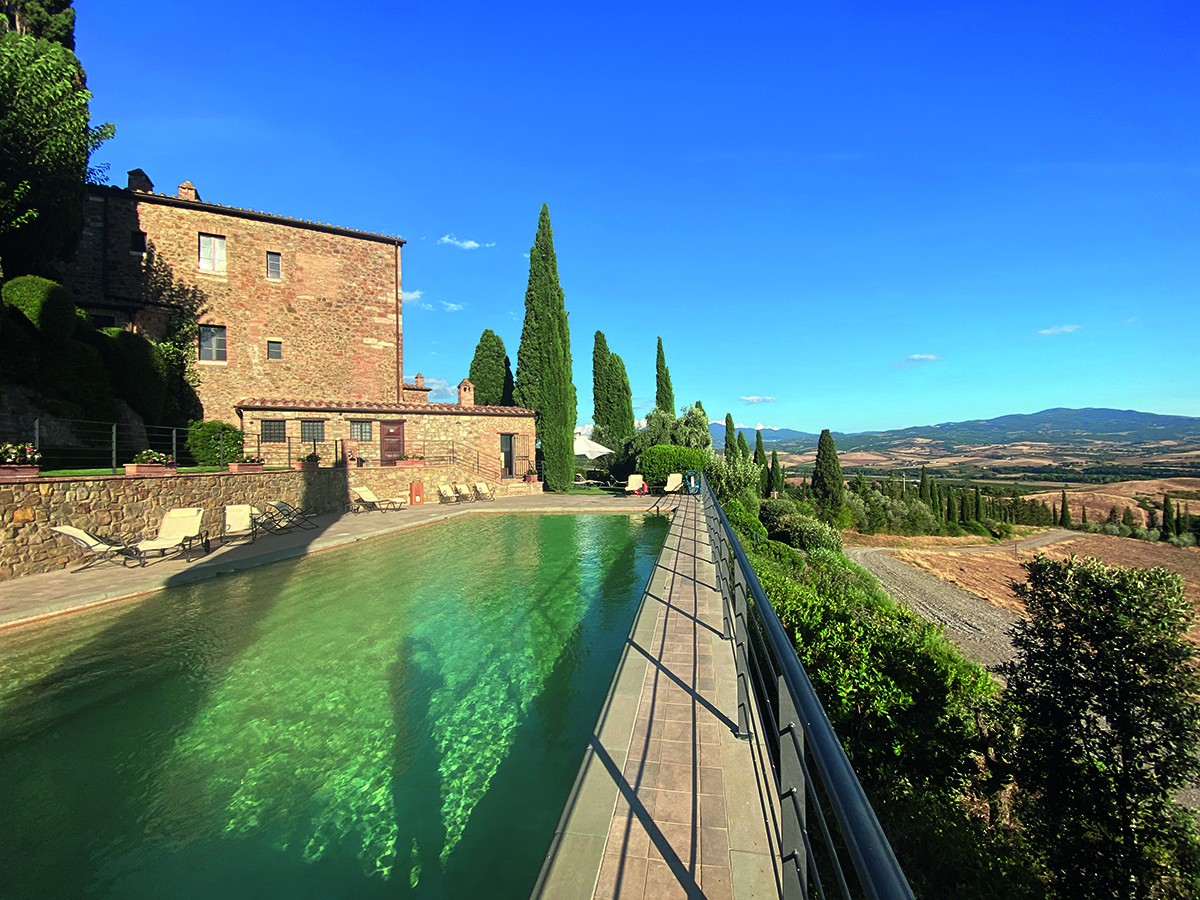
The swimming pool with views over the vineyards. Photograph by Darius Sanai
The rooms
The old hamlet’s rooms have been cleverly repurposed into a luxury setting, with beautifully treated woods, marble and fabrics. They are less about light and more about texture, although throwing a window open always reveals a dramatic sight of vineyard and horizon.
Read more: Why Maslina Resort, Hvar makes the perfect summer destination
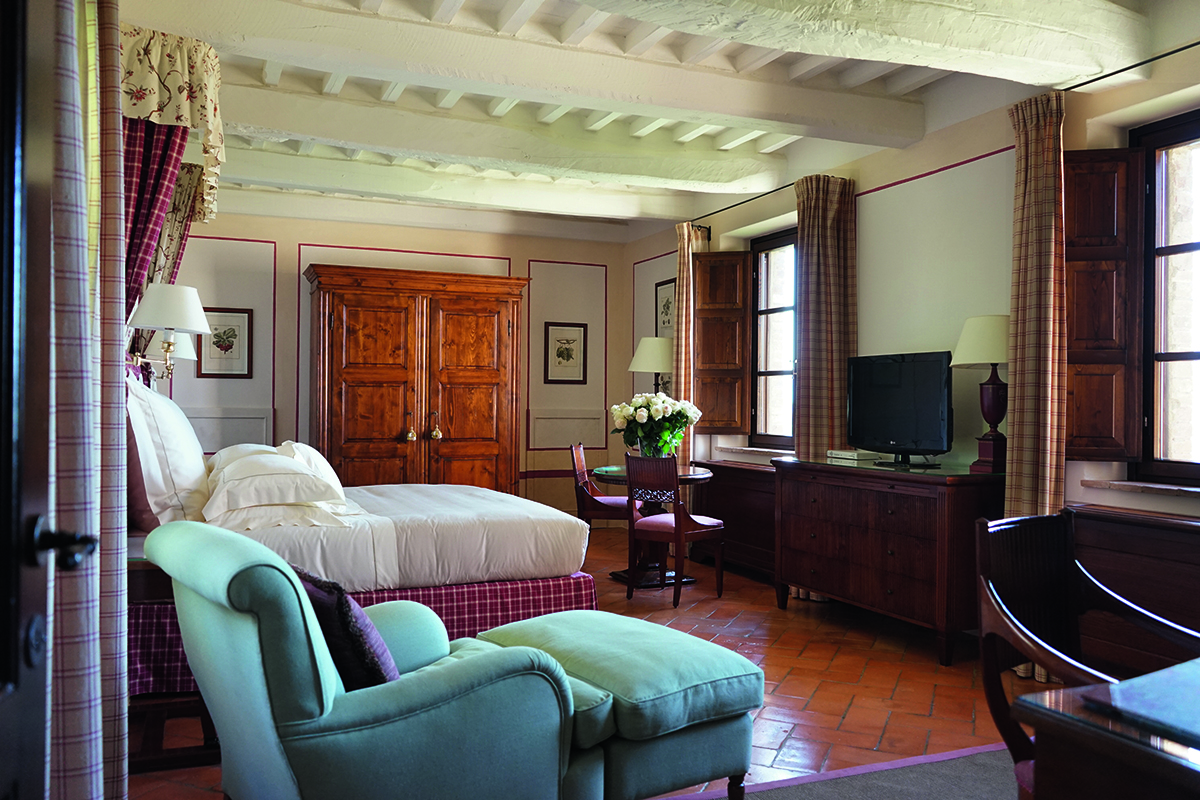
One of the suites at the Hotel Il Borgo
Wining and dining
Banfi is known to connoisseurs around the world as one of the most significant producers of Tuscan wines. We were given the rare pleasure of a tasting personally overseen by the estate’s director Enrico Viglierchio. The Poggio alle Mura, one of the prestige cuvées of Banfi, is made from a blend of some of the best vineyard sites in the area, many of which you drive through as you approach the estate. Deep, powerful and rich, it’s a Brunello di Montalcino for those who love their wines to resonate. Meanwhile the range-topping Poggio all’Oro is elegant, almost delicate, its older vintages having a complexity of earthy layers, a connoisseur’s wine. You can choose from those and many more at the Sala dei Grappoli fine dining restaurant, in a medieval courtyard, which serves elaborate, intricate, complex cuisine like total black crisp egg, pallone di gravina cheese foam, avocado and Cinta Senese pork dust (and that’s just a starter). There’s also La Taverna for more relaxed, hearty Tuscan dining indoors.
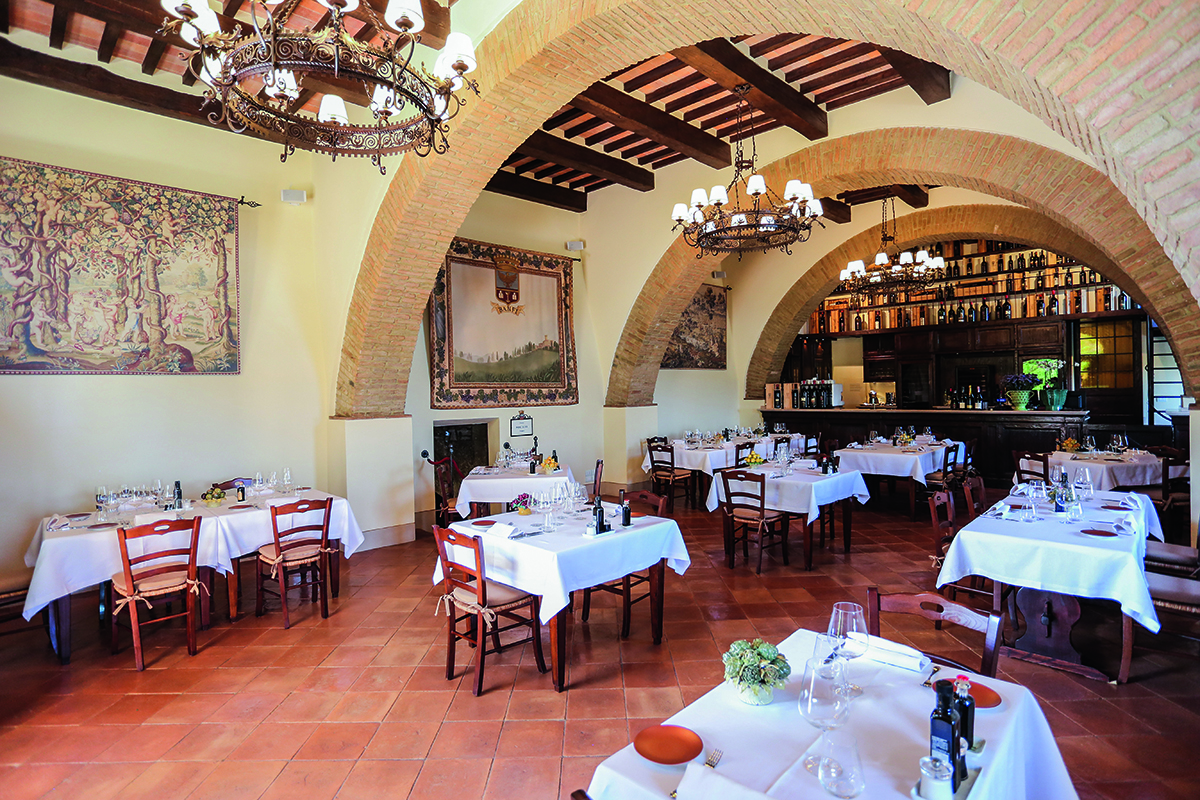
The Taverna restaurant
The highlight
Apart from the wines, it’s the architecture of this intimate private village, and the way you and the other guests (never many of them) feel that you have a whole, perfectly tended, luxury hilltop community and all its astonishing sightlines to yourselves.
LUX rating: 9/10
Book your stay: castellobanfiwineresort.it
This article originally appeared in the Summer 2021 issue.
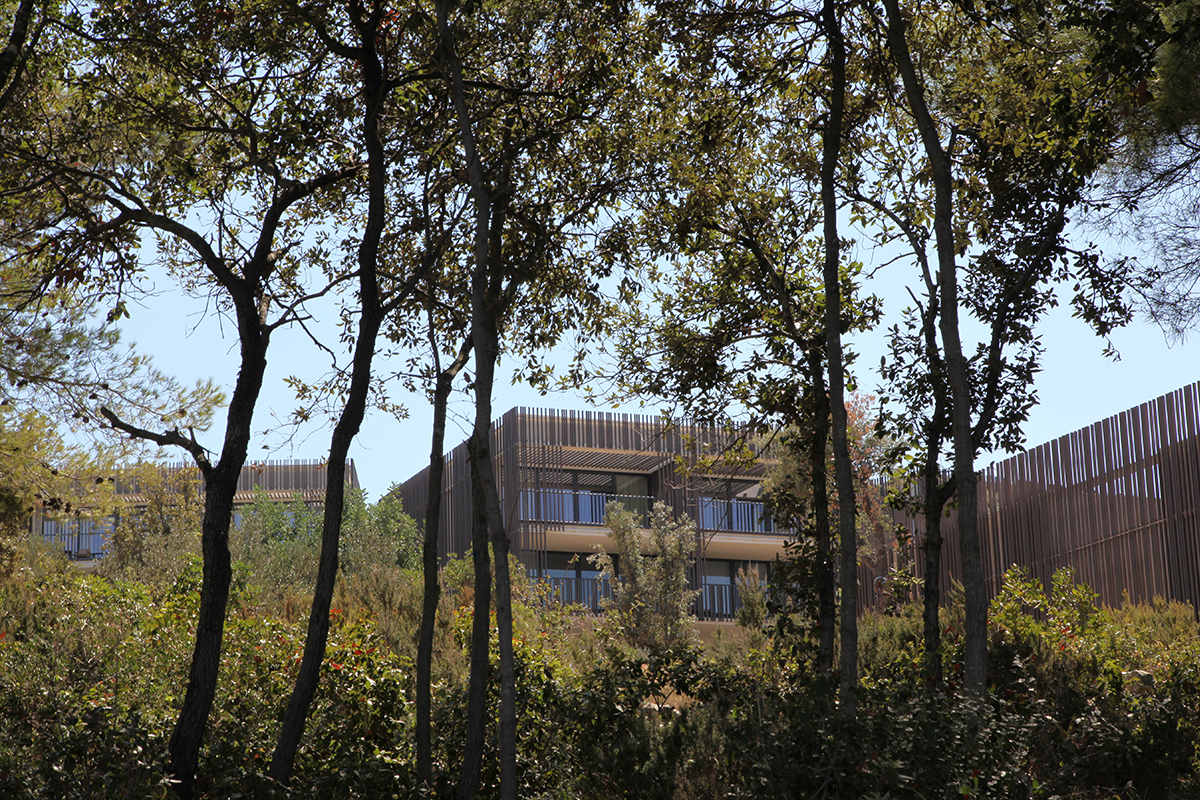
Maslina Resort sits within a former olive grove on the edge of Maslinica bay. Photograph by James Houston
Why should I go now?
For endless blue skies, crystal clear water, and the slow, seductive pace of island living. Croatia remains one of the most popular and reliable summer destinations in Europe, and thanks to the sheer number of islands (there are over a thousand), there are still a handful of unspoiled spots to be found.
Follow LUX on Instagram: luxthemagazine
While Hvar town might be bring to mind superyachts and glitzy parties, the island itself is rugged and wild with dense pine forests, remote fishing villages, and a rich, layered history. Maslina Resort opened quietly in 2020, mid-pandemic, and offers a wholesome, earthy kind of luxury.
First Impressions
The colours are the first thing you notice: the vivid blue and white spray of the Adriatic sea as the speed boat curves around the base of Hvar island and into Maslinica Bay. From a distance, the wooden-clad buildings of Maslina Resort are barely distinguishable amidst the earthy green of the olive and Aleppo pine trees, but inside is everything is bright, open, and bare with smooth, cream walls, terracotta-tiled floors, and white floaty curtains, which divide the reception, library and a sunken lounge. Each space is filled with beautiful objects and eclectic furnishings, including a spectacular 12-ton rock from the island of Brač which serves as the reception desk.
It has the feel of a fashionable, much-loved pied-à-terre, which in a way, it is: the owners are French financiers who fell in love with the raw beauty of the island and purchased the land to build their own little hideaway.
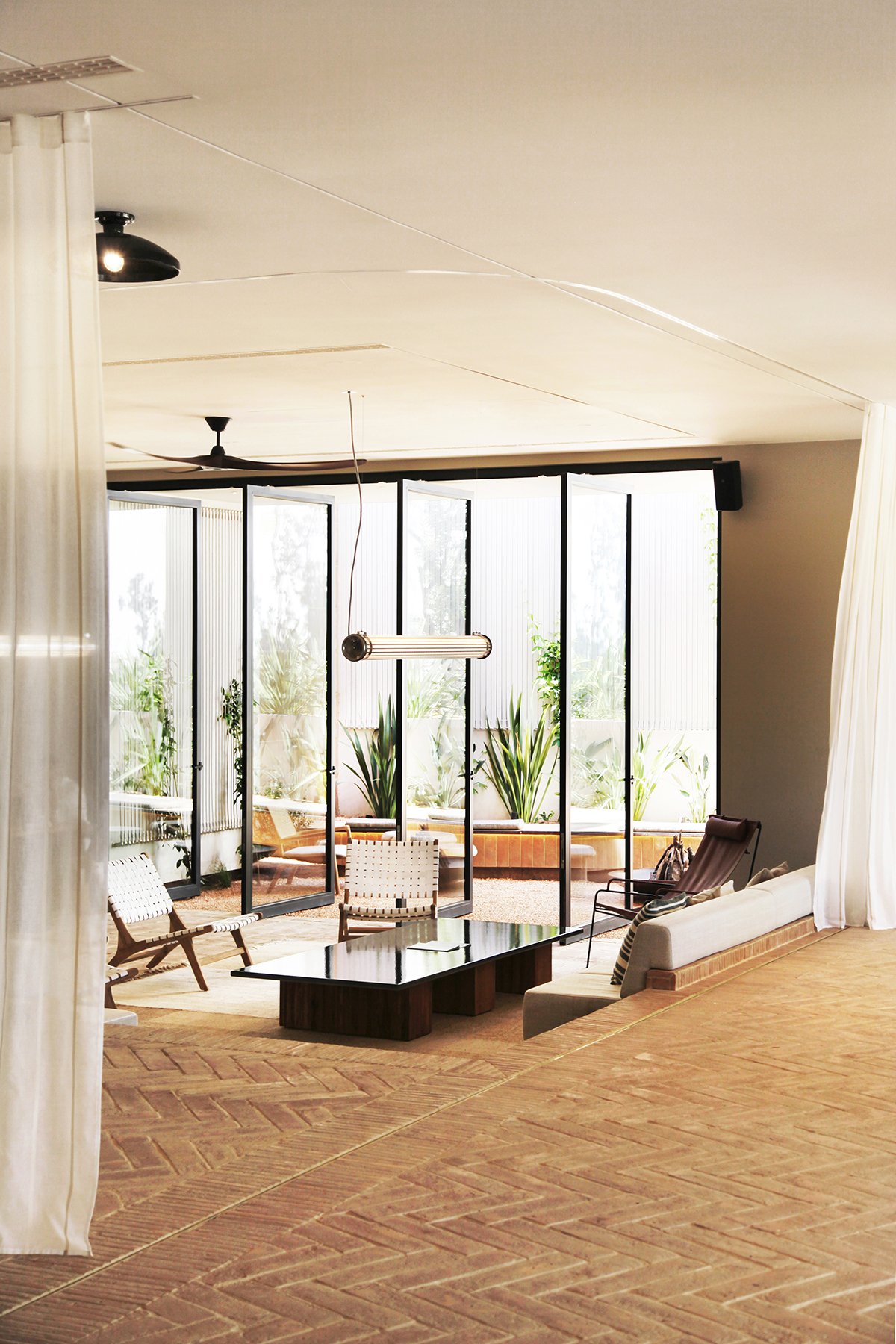
The public spaces are open-plan, creating a sense of light and space. Photograph by James Houston
The Experience
Guests spend their days padding around barefoot in their swimsuits, wandering between the restaurant, poolside, spa and the sea. Bedrooms are divided between six-interconnected pavilions; some have their own private plunge pools or gardens, but for the best sea views, check into a panoramic suite. There are also three spacious seafront villas for groups of friends or families.
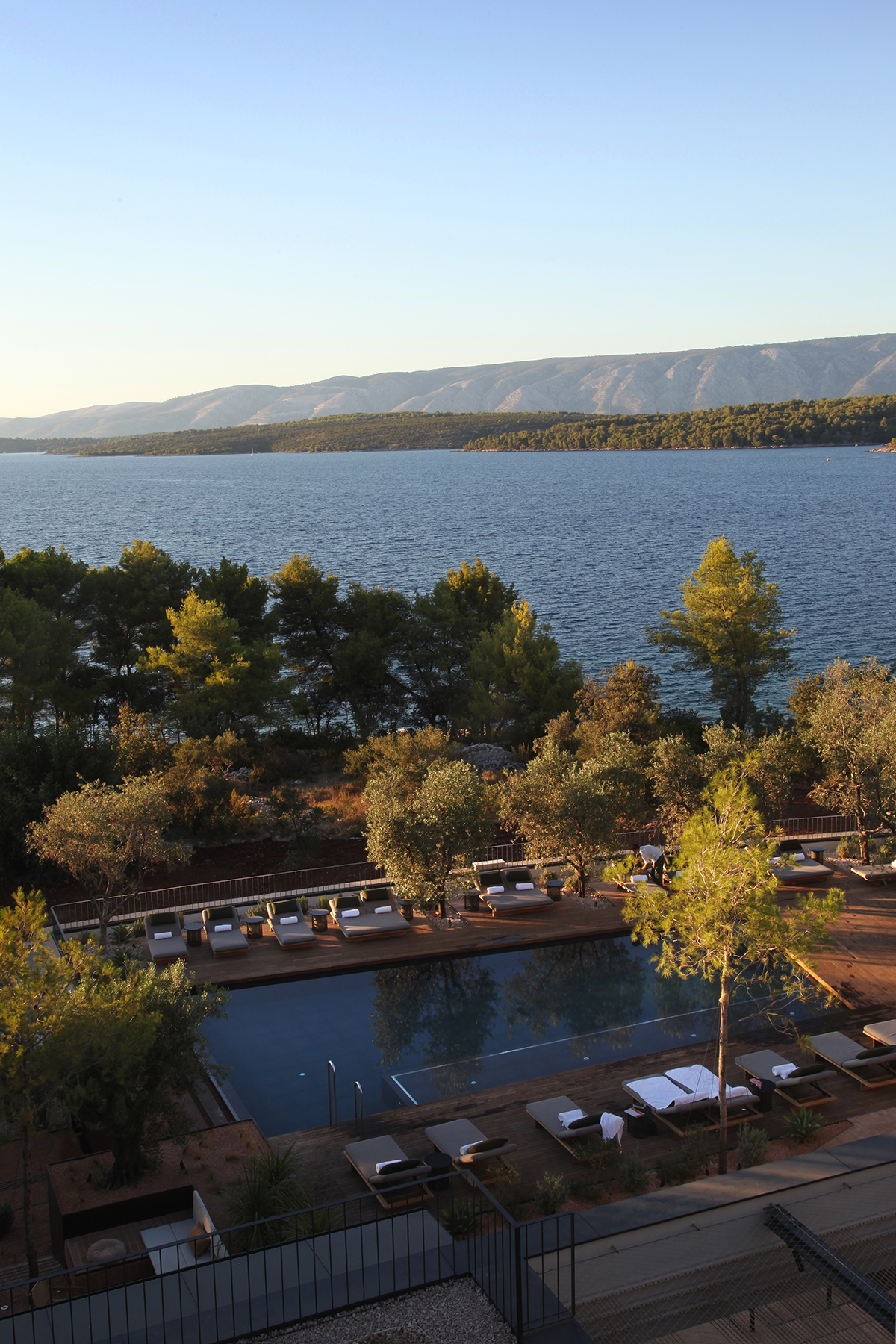
The view over the bay from the balcony of a top floor bedroom. Photograph by James Houston
There’s a strong focus on holistic living that connects with the local culture and landscape. Spa treatments involve botanical oils, scrubs and baths, and for those checking in for longer stays, there are wellness programmes designed for stress-relief and detoxification. One of our favourite experiences was guided meditation under the shade of a tree in the organic garden, which sits just behind the beach, providing a soothing soundtrack of rolling waves.
Read more: Professor Peter Newell on why the wealthy need to act on climate change
The main restaurant makes the most of the home-grown seasonal produce, pairing Mediterranean flavours with Japanese cooking techniques (think herby salads, fresh fish, flat breads, and olive oil), while the beach bar (open from 5pm onwards) offers a more causal menu of tapas and seafood dishes.
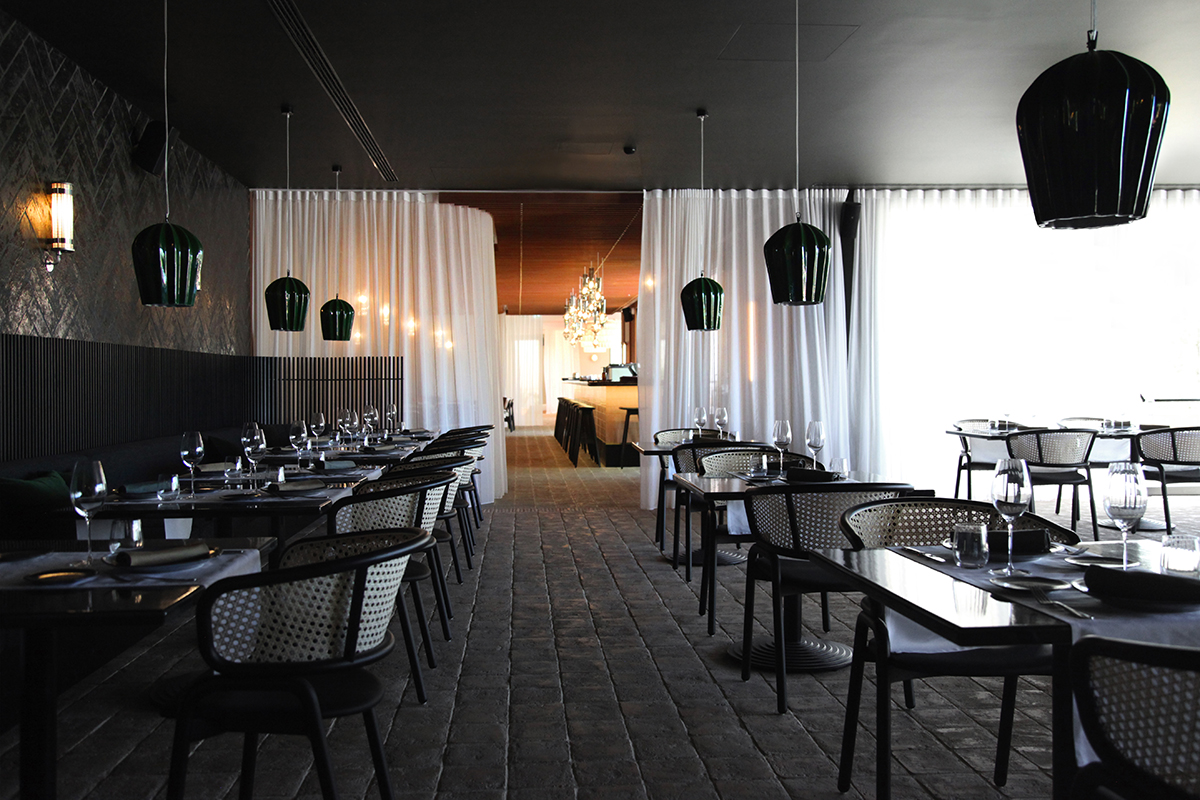
The indoor dining room at the main restaurant. Photograph by James Houston
As the staff come mainly from the surrounding communities, they have an expansive knowledge of island’s sites, histories and customs. We spent a wonderful afternoon with one of resort’s expert guides, who took us on a tour of the ancient town of Stari Grad followed by wine-tasting in a beautiful, candlelit cellar, and dinner at a konoba-style restaurant, perched high up on the hillside.
Takeaway
Unlike a lot of luxury island resorts, Maslina feels genuinely rooted in its surroundings, which has less to do with its architecture, and more to do with the people and natural landscape. The atmosphere is laid-back and unpretentious; you feel at home, almost instantly.
Rates: From €300 per night, including breakfast (approx. £250 / $350)
Book your stay: maslinaresort.com
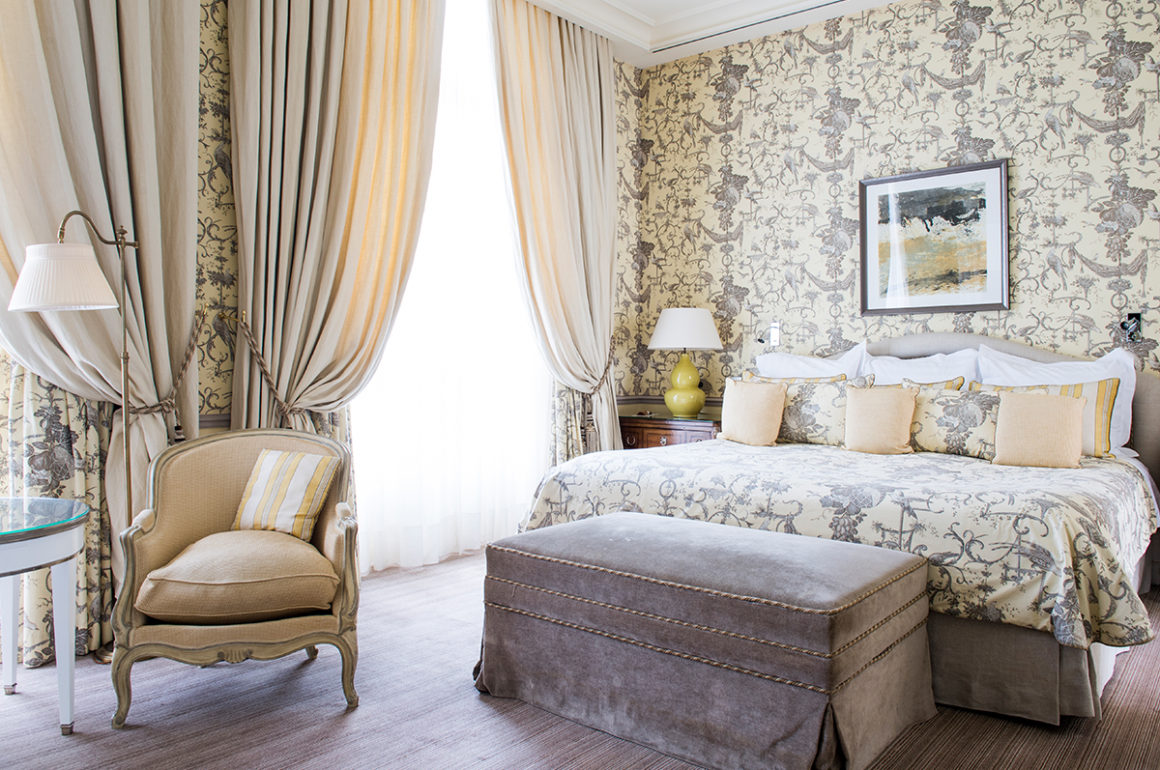
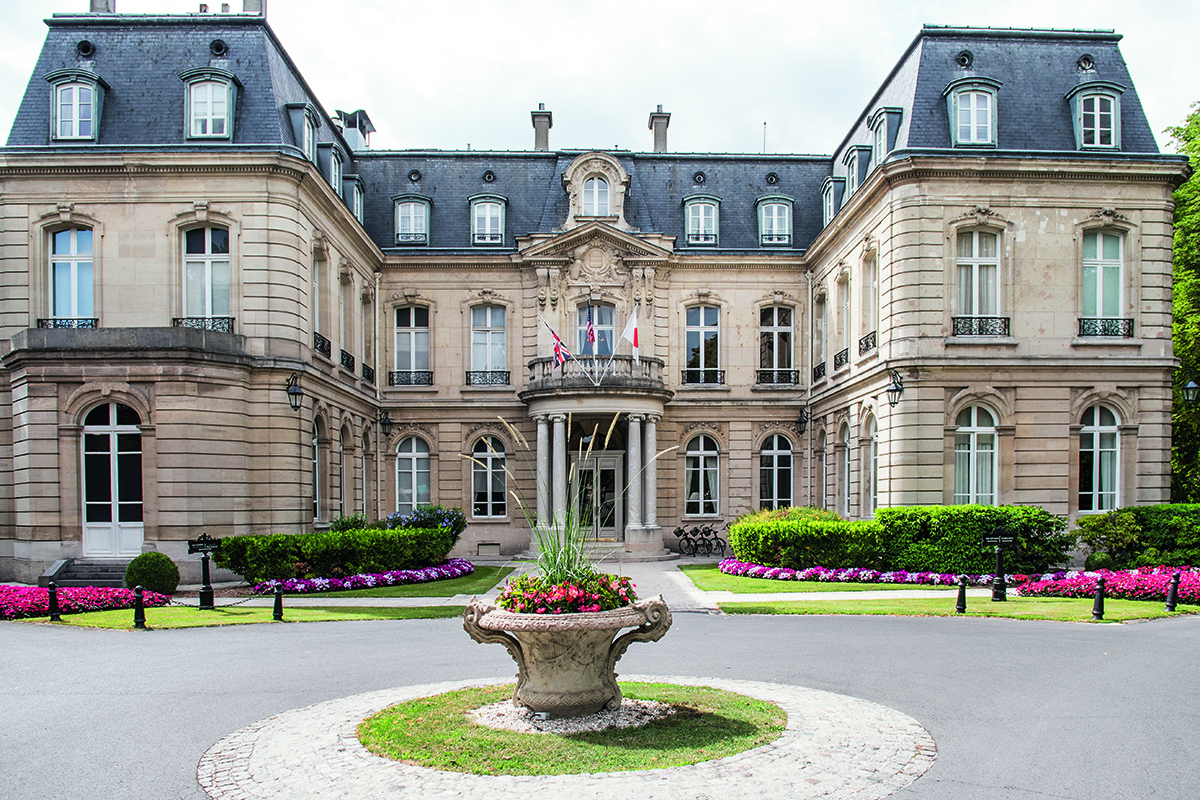
Photograph by Anne Emmanuelle Thion
In the final part of our luxury travel views column from our Summer 2021 issue, LUX editor-in-chief Darius Sanai discovers the subtle grandeur of Domaine Les Crayères in the Champagne region of France
If the method of departure from a hotel leaves a lasting memory, so too does a welcome. The luxury hotel where the doorman ignored you, or wasn’t there in your moment of need, is likely emblazoned on your heart. And the welcome at the Domaine Les Crayères was something else. It was a five-hour drive, roof down into the sun, from Baden-Baden to the outskirts of Reims in the Champagne region of France; after some moments of interest passing through (but sadly not stopping in) the wonderful hills of Alsace, the road was relentless. Crunching down the drive and drawing up to the grand mansion, I felt like nothing more than passing out on a cool bed for half an hour before an early dinner, ahead of my day of meetings the following day.
Follow LUX on Instagram: luxthemagazine
The doorman whisked my door open and ushered me in; reception was a brief formality; all good. And then: “We would like to invite you onto our terrace for a glass of champagne, monsieur.” Really, I thought, like this? I was wearing black jeans and a polo, not evening wear. I was assured it would be fine. Still swaying from the drive, I walked out onto a broad terrace above a long stretch of parkland garden, was shown to my table and poured a glass of their champagne. Canapés appeared. The sun was about to set but still a few centimetres above the treetops; it was warm, and the terrace was scattered with lively and appropriately spaced couples. What had seemed like a slightly bad idea on arrival – shouldn’t you have a glass of champagne before dinner? – turned out to be a stroke of genius. A blanc de blancs champagne is reviving, not soporific, and when I finally went up to my room at sunset, I felt energised.
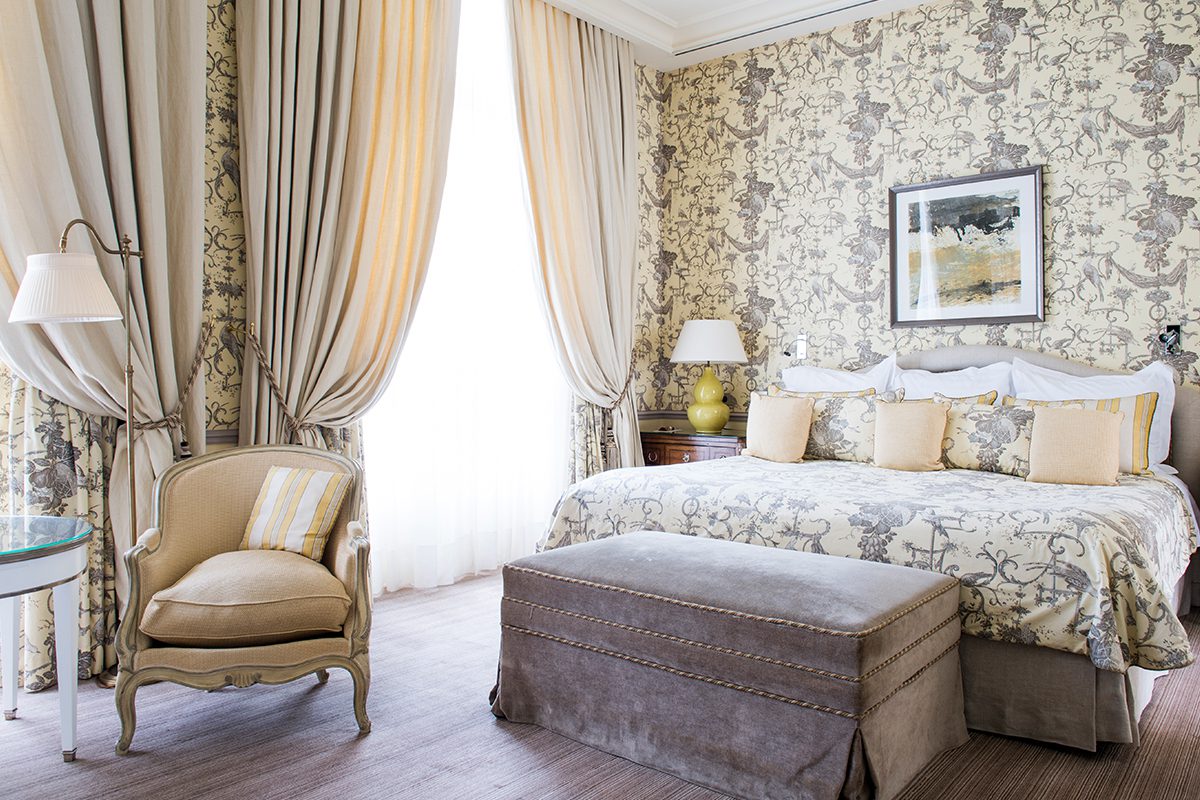
One of the hotel’s elegant bedrooms
My room, at the top corner of the château, was elegant and elaborately decorated, with a view out over the same parkland. Although it is on the edge of Reims, the feel is peaceful: you have no sense of being in a big city, but nevertheless I walked to my meetings in the centre of town the next morning (full disclosure: it was a couple of kilometres each way, and I was working on my step count after a lot of driving).
Read more: Professor Peter Newell on why the wealthy need to act on climate change
You come to Champagne to drink champagne (or in my case to meet clients who own champagne houses), and you come to the Crayères for the best possible base while doing so – and to drink champagne and most of all to dine in its two Michelin-starred restaurant.
The atmosphere here, in its intimate dining room, was surprising in a positive way: it wasn’t so grand and formal that guests felt they had to dine in a hush. And yet the chef Philippe Mille and his creativity were very much front and centre. As well as à la carte, you can choose from various menus including an ‘Escape into the Vines’ menu. This was an astonishing piece of imagination and artistry, and so far beyond a mere manifestation of its ingredients that it would do it a disservice to describe it by the ingredients of each individual course.

A foie gras dish from the two Michelin-starred restaurant at Domaine Les Crayères
There were seven courses, created to work in sequence like a story and woven together by a freshness and life so often missing from formal French dining where heavy saucing is a substitute for imagination. Oh, OK, I will describe just one of them: lobster from the Iles de Chausey, grilled on vine shoots, with shells juice (no typo there) and pinot meunier.
The champagne list – encyclopaedia, really – is extensive but what is really impressive is the selection of small-grower champagnes, many of them just farmers making champagne on their smallholding, many of them cheap, unavailable elsewhere and absolutely delicious. I do not usually seek the advice of sommeliers, finding them too often beholden to their own tastes or trends, but here, stay away from the brands you know, and seek one of these out. A unique and highly repeatable experience.
Book your stay: lescrayeres.com
This article originally appeared in the Summer 2021 issue.
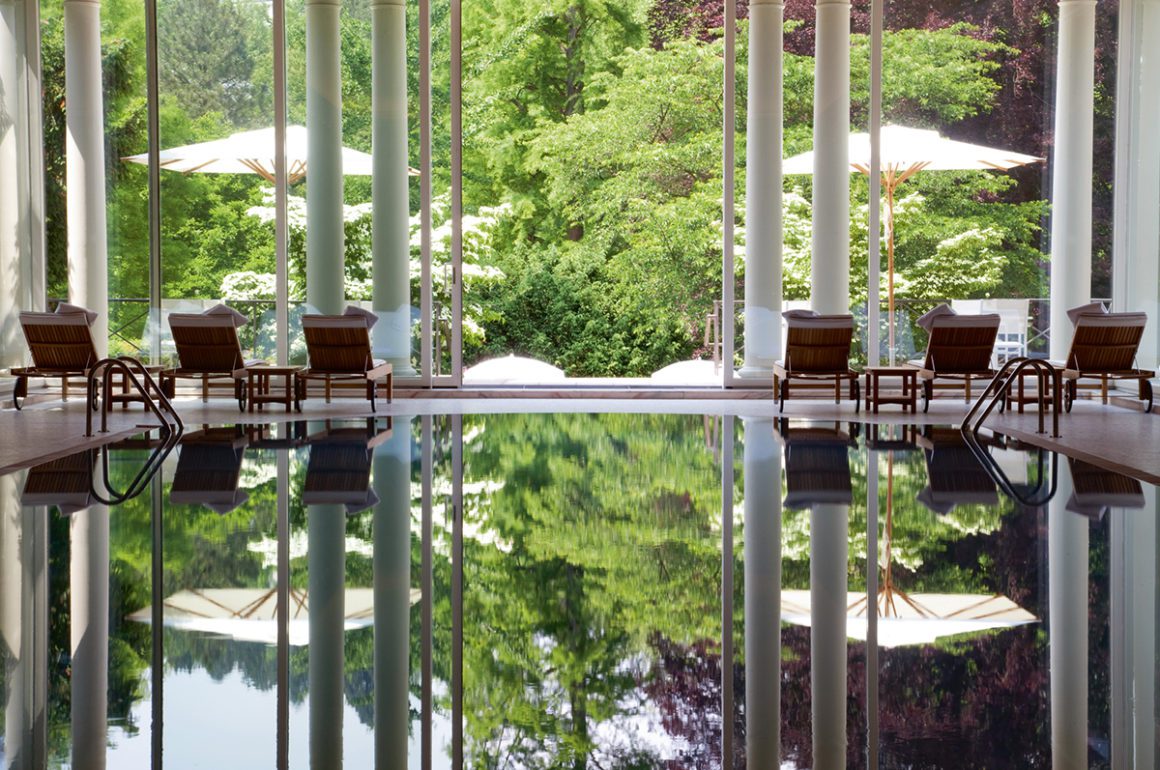
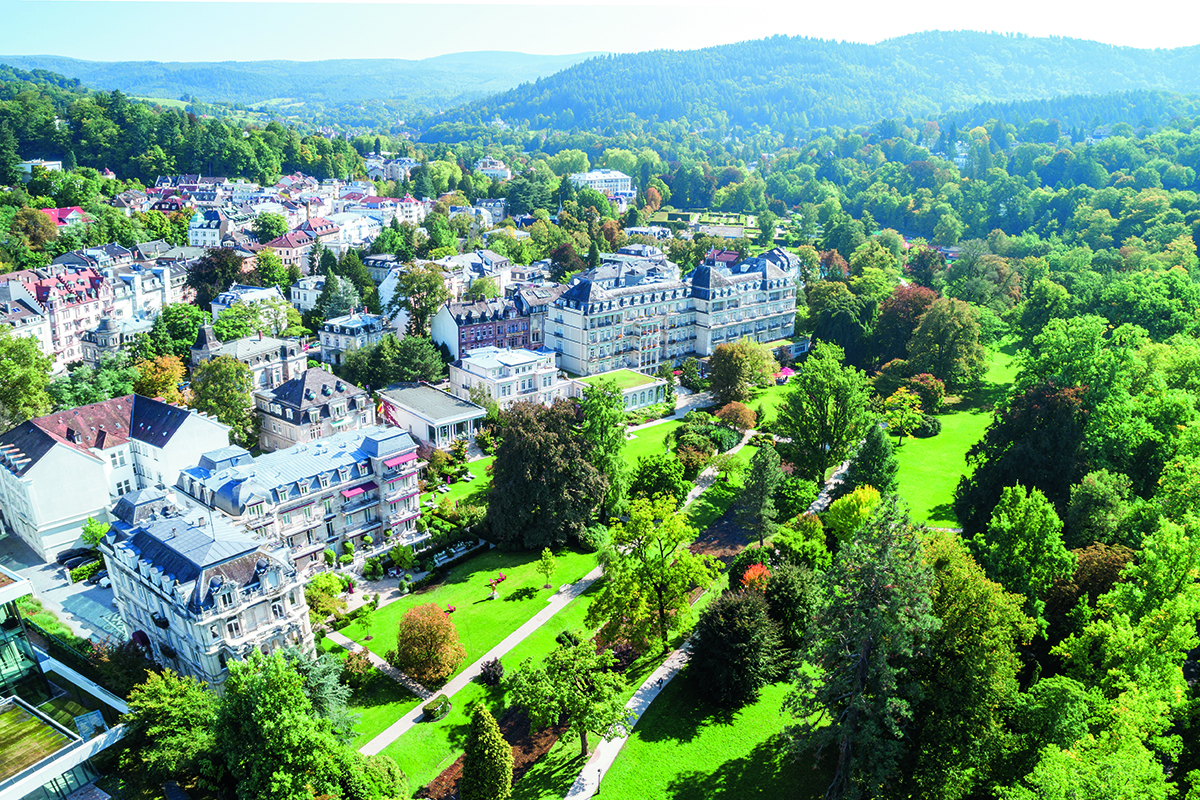
An aerial view of Brenners Park-Hotel & Spa and, to the right, the parkland of the Lichtentaler Allee
In the third edition of our four part luxury travel views column from our Summer 2021 issue, LUX editor-in-chief Darius Sanai checks into Brenners Park-Hotel & Spa in the scenic spa town of Baden-Baden
Drive north from Switzerland into Germany and along the flatlands of the Rhine valley, and you would have forgiven me for wanting to leave as quickly as I arrived. Yet just a few kilometres to your right you can see the undulating crest of the Black Forest (in reality a range of low mountains, not just a forest). Baden-Baden is a spa town set at the entrance to a valley; above it the road winds into the mountains, and the town itself is pleasingly encased by a variety of greens from meadows and trees.
The heart of Baden-Baden is a park, which runs along the mountain stream that flows through the town and beyond its famous opera house. This was a celebrated 19th-century retreat for the aristocracy, and the grandest location then is the grandest location now, the Brenners Park-Hotel & Spa.
Follow LUX on Instagram: luxthemagazine
Stroll through the hotel’s lobby from the entrance on a quiet street (Baden-Baden is mostly about quiet streets) and through onto the terrace and garden on the other side, and you can walk across a private bridge across the river, with its panoply of ducks, through a gate for the guests of the hotel only, into the park and surrounding gardens. From there it is a five-minute walk to the cafés and promenade at the centre of town. Perfect for a Victorian used to being shuffled around in their landau carriage.
The hotel itself remains true to its history. This is part of the impossibly aristocratic Oetker Collection, which runs, among others, the old money Le Bristol in Paris, the Hôtel du Cap-Eden-Roc in Antibes, and The Lanesborough in London.
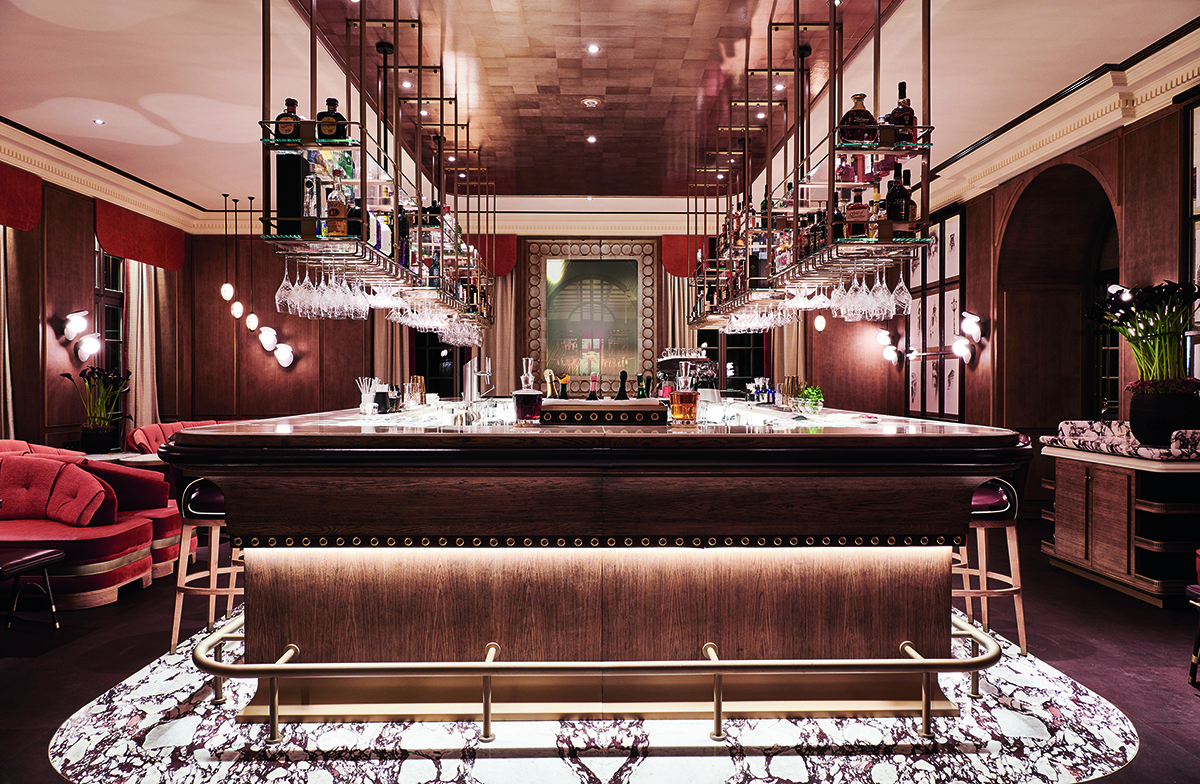
The Art Deco bar in the Fritz & Felix restaurant, where craft beers vie with cocktails and local wines for your attention
There is a tranquil feel about this place, particularly if you choose a room overlooking the park – really, the only option you should consider. Your view is a canopy of trees and the stream: no roads or traffic in sight. Wander downstairs and sit out on the terrace for a drink, surrounded by trees.
Read more: Spanish architect Santiago Calatrava on light and space
It was a warm night when I stayed, and the combination of a very genteel 19th-century ambience and the very 21st-century cuisine of Fritz & Felix, the hotel’s contemporary-cool restaurant, was addictive. Corn salad with quinoa and pomegranate; local char (a hugely underrated fleshy white fish) with pumpkin, coconut, chilli and mandarin; pata negra with string beans and pied de mouton mushrooms. The southwest of Germany also makes some excellent pinot noir wines: it is very close to Burgundy, but as the climate is a little warmer and more continental, the Baden pinot noirs are a tad richer and softer than a typical Côte-d’Or red; and mine matched the pata negra very well.
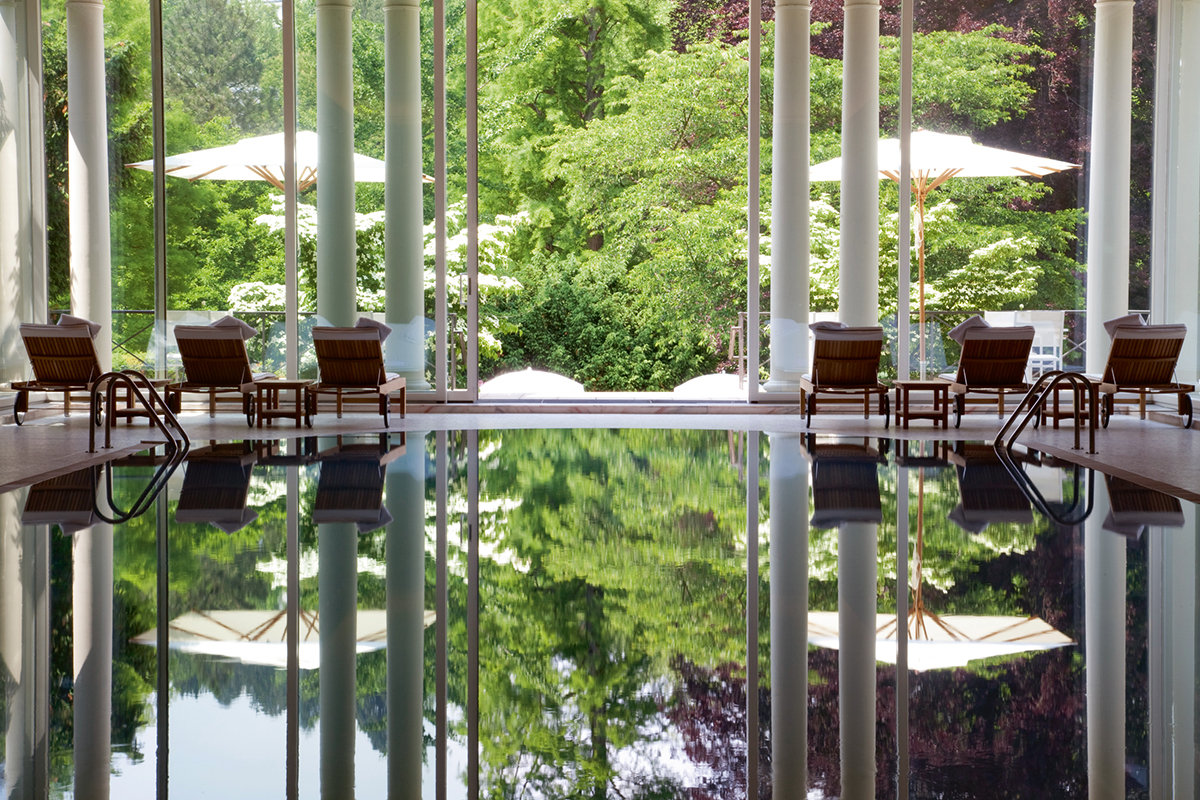
The spa swimming pool
The Brenners is fabled for its spa, which is the kind of place you go to for a six-month programme to reshape your body and soul, rather than a simple treatment, though you can do that, too. There’s a big indoor pool with French windows opening out onto the gardens, and you can lounge outside when it’s warm.
Anyone who knows the Oetker hotels also knows the staff are among the best in the world at personalised treatment of guests, a kind of old-world je ne sais quoi without ever being too formal or in the way. A warm wave goodbye, water bottles installed in the car, just concluded a perfect memory. If I’d had more time, there would have been plenty of exploring Baden-Baden and its theatres, and the surrounding Black Forest and its walks and inns.
Book your stay: oetkercollection.com
This article was originally published in the Summer 2021 issue.
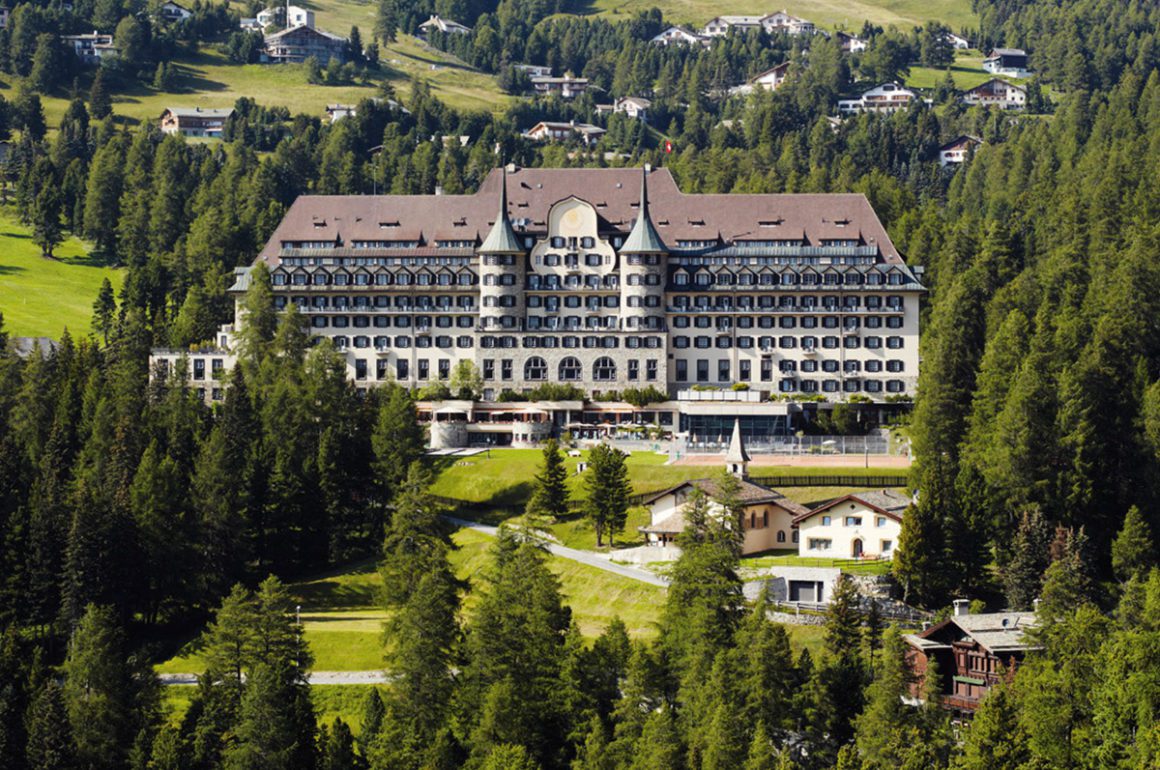
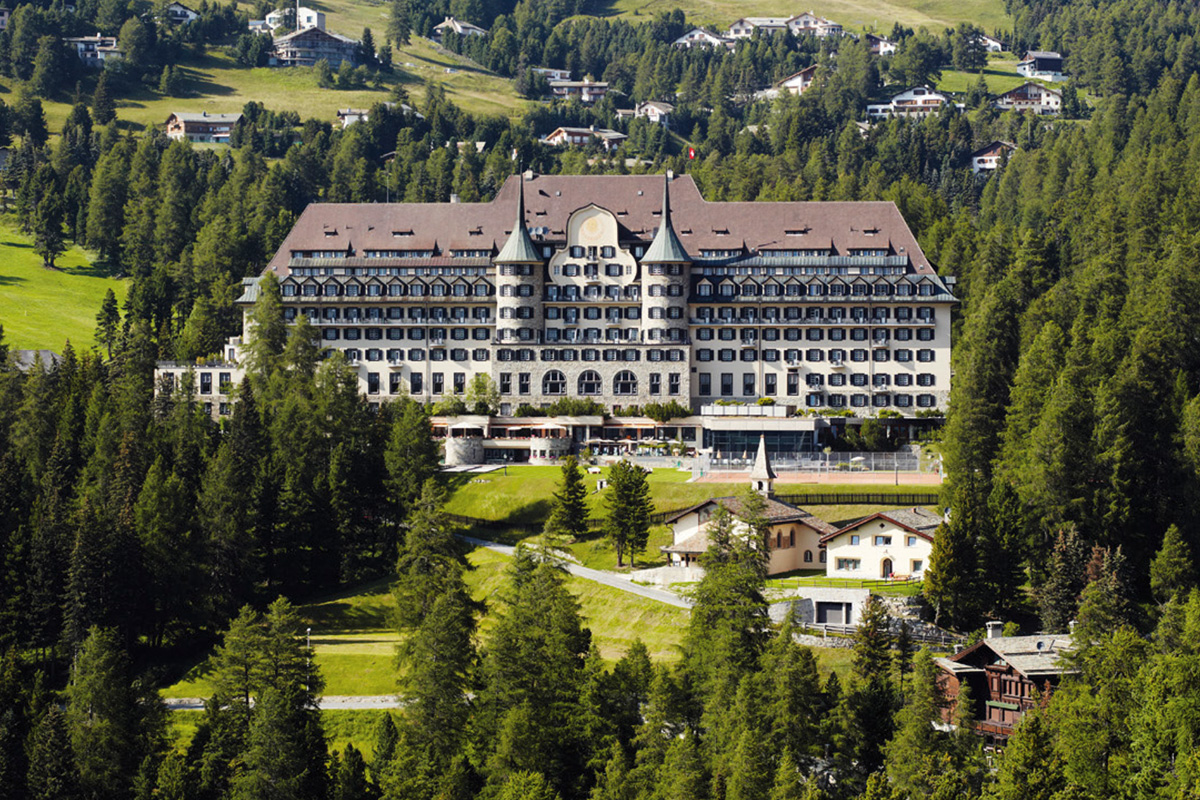
Suvretta House overlooks the Upper Engadine valley. Image courtesy of Suvretta House.
High in the Swiss Alps, LUX indulges in a gastronomic tour like no other, all under the auspices of one hotel
It’s summertime, and what we crave is sunshine, blue sky, space, views, freedom and a change in cuisine. All uncontroversial except for the last – why would we want to change the way we eat? Perhaps because for many of us in the fortunate minority in the world, even during the lockdown cycle, a great variety of cuisines has become the norm. Temaki and uromaki delivered tonight; Vietnamese cha cua and mi quang tomorrow; miso Chilean sea bass the next. Freed from choosing restaurants for the experience they offer, we have spent a lot of time choosing them purely for their variety of cuisine.
Follow LUX on Instagram: luxthemagazine
We reflected on this last summer, during a release from the first wave, sitting at the Chasellas restaurant above St Moritz. For generations, great European dining has been about being welcomed by a host who recognises you; typically, a besuited maitre d’ of an older generation, as comfortable giving orders to staff as he is joining favoured customers for a cognac after hours. We were welcomed by Livia Sterki, a smiling young woman ostensibly as far removed from the traditional maitre d’ image as can be imagined: her charm and efficiency were so memorable it made us want to go back every night.
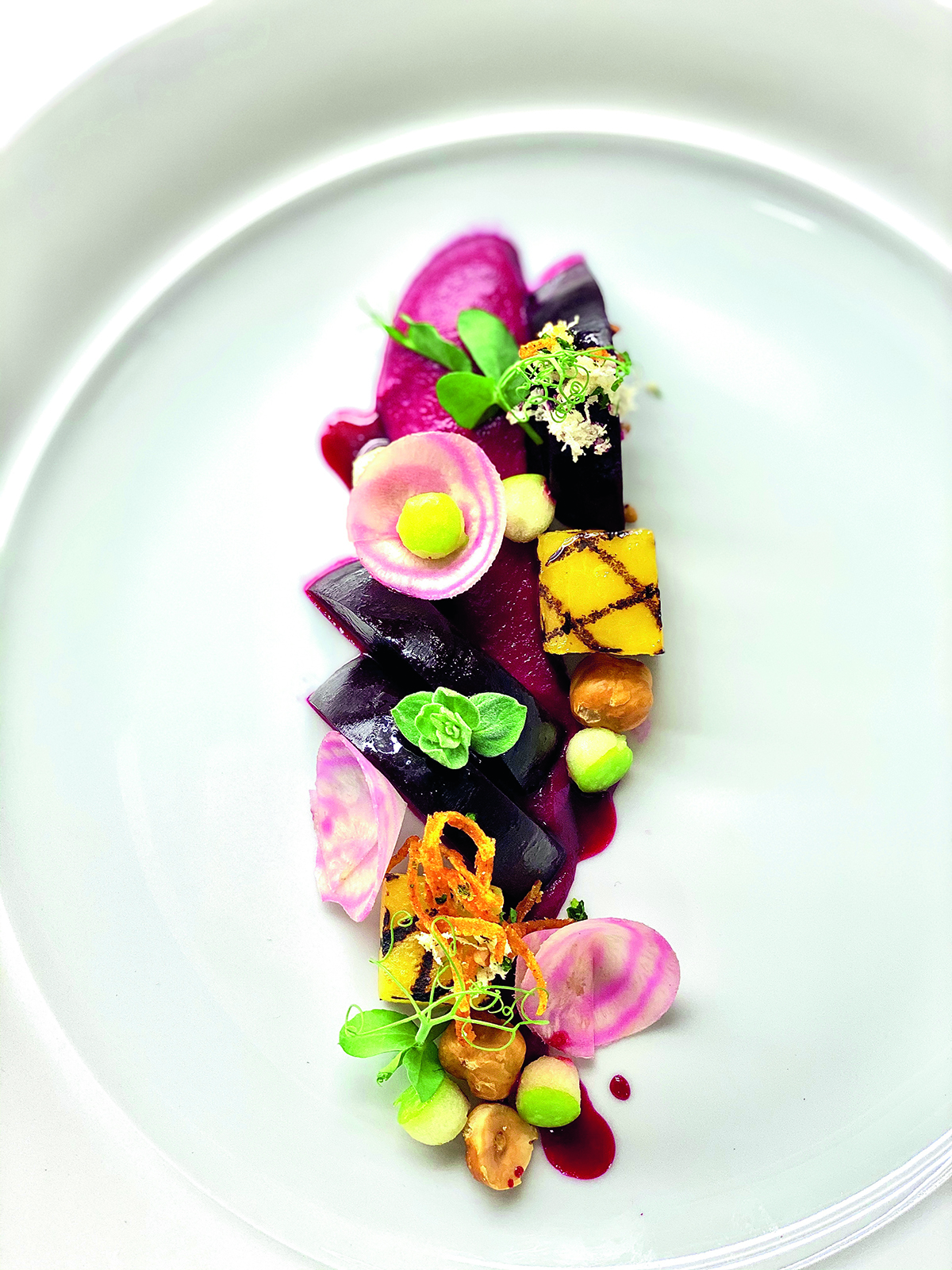
The hotel’s cuisine focuses on local ingredients. Image courtesy of Suvretta House.
The Chasellas is decorated in Alpine mountain inn style, lots of pine, bare-backed wooden seats, and a terrace with a view over the rooftops of the village of Champfèr, across forests and lakes to the towering mountains of the Bernina range across the valley. The cuisine of chef Marco Kind is not only fine: it is unlike anything you will ever find in a metropolitan hub.
There’s a combination of mountain purity, local ingredients, and a local Swiss authenticity, and a lightness of touch. Beef entrecôte sous-vide, datterini tomatoes and summer truffle was both satisfying and light; essence of wild mushrooms with shiitake and agnolotti was a kind of ultimate consommé (and vegan); and even the non-vegetarians went for the variation of peas with mountain peach, radish, asparagus and macadamia. Another vibrant main course was spring chicken braised in apple with young vegetables, local potatoes and wild mushrooms.
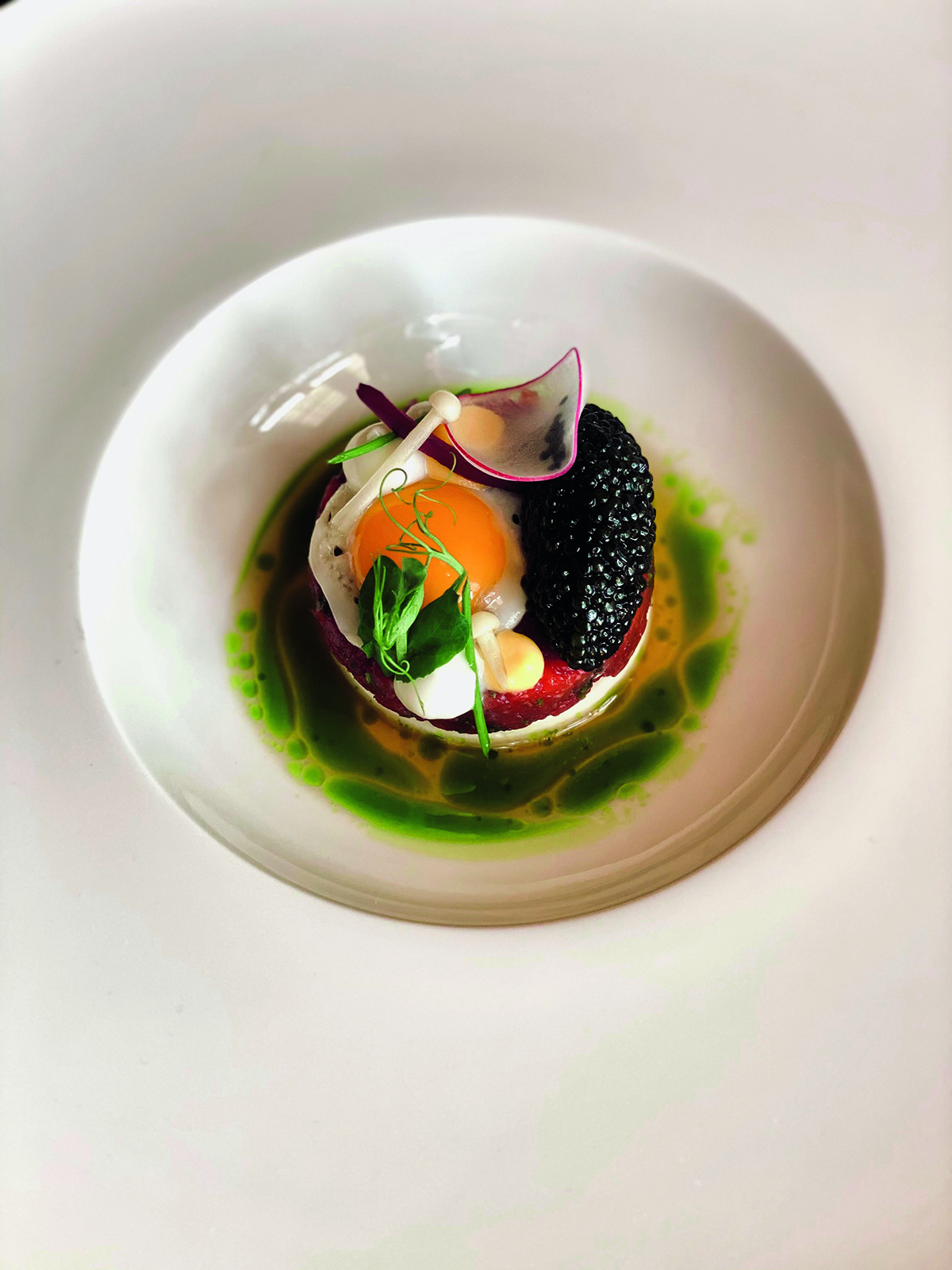
Beef tartar with oysters, miso and caviar. Image courtesy of Suvretta House.
The cuisine was like eating the Alps and went delightfully with what is commonly referred to as the “local chardonnay”. In fact, the Engadine valley is too high for growing grapes, but the modest moniker refers to chardonnay from the Bündner Herrschaft, two valleys over at lower altitude, which is in fact emerging as one of Europe’s most brilliant yet unknown fine-wine regions. The wines have the same freshness as the cuisine.
Read more: The beauty and biodiversity of Andermatt’s golf course
The Chasellas is part of the dining offering of a single-hotel resort, Suvretta House, which brings us to the second point of this story: being able to luxuriate in different dining experiences under one resort banner is not confined to swanky brands on tropical islands. Interestingly, Suvretta House’s owners and its managers, the mind-bendingly hard-working Peter and Esther Egli, have decided not to bring in outside brands, but to create all their dining themselves.
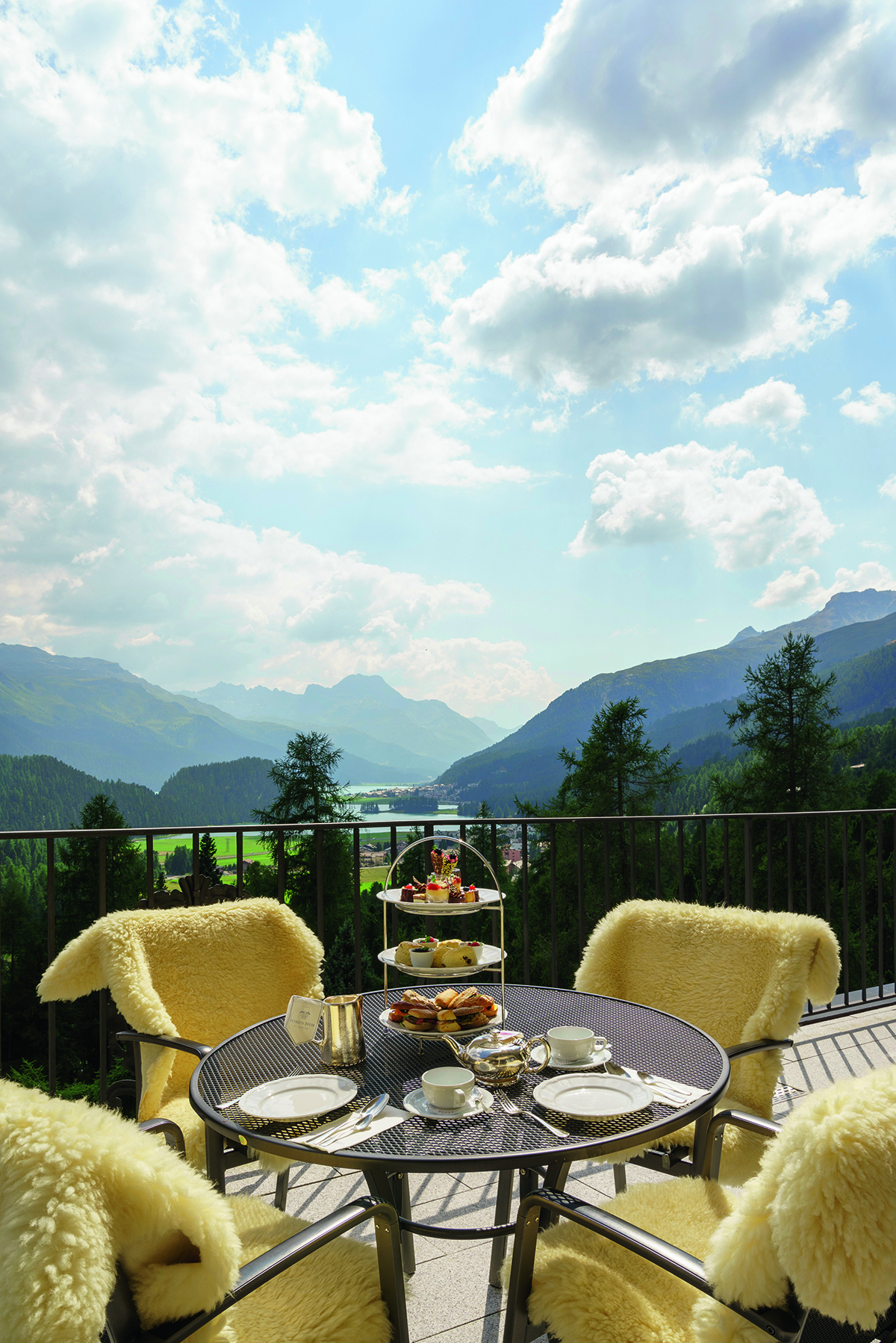
The hotel’s terrace with views over Lake Silvaplana and Lake Sils. Image courtesy of Suvretta House.
It’s a five-minute walk downhill to Suvretta House from the Chasellas, past a couple of very nice chalets (or a 20-second ski in the winter season, past the hotel’s own lift). Suvretta is one of St Moritz’s original palace hotels, and everything about it suggests old money, aristocracy and a clubbish feel, in the nicest possible way. You’re more likely to see a classic Ferrari parked outside than a new one.
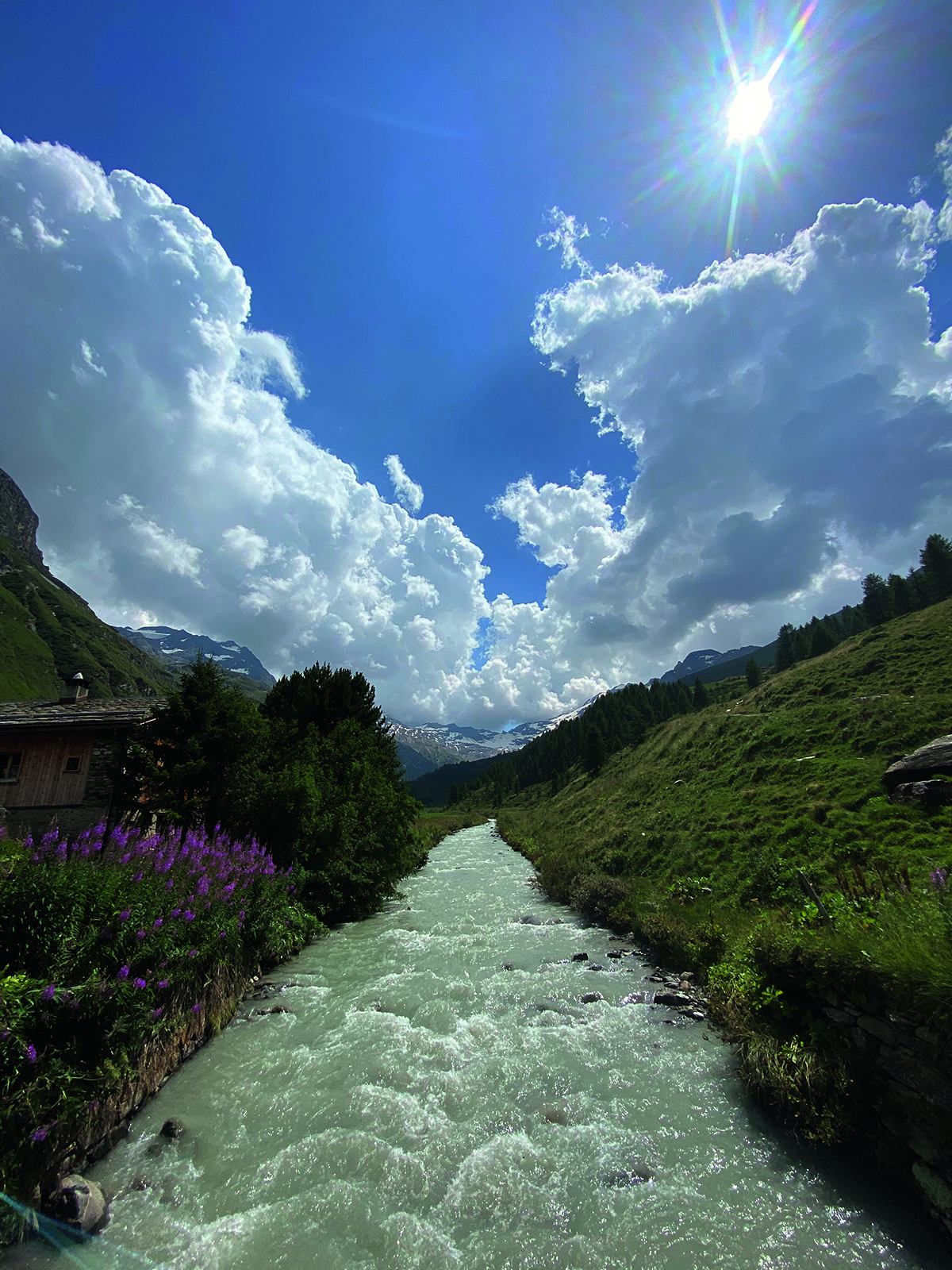
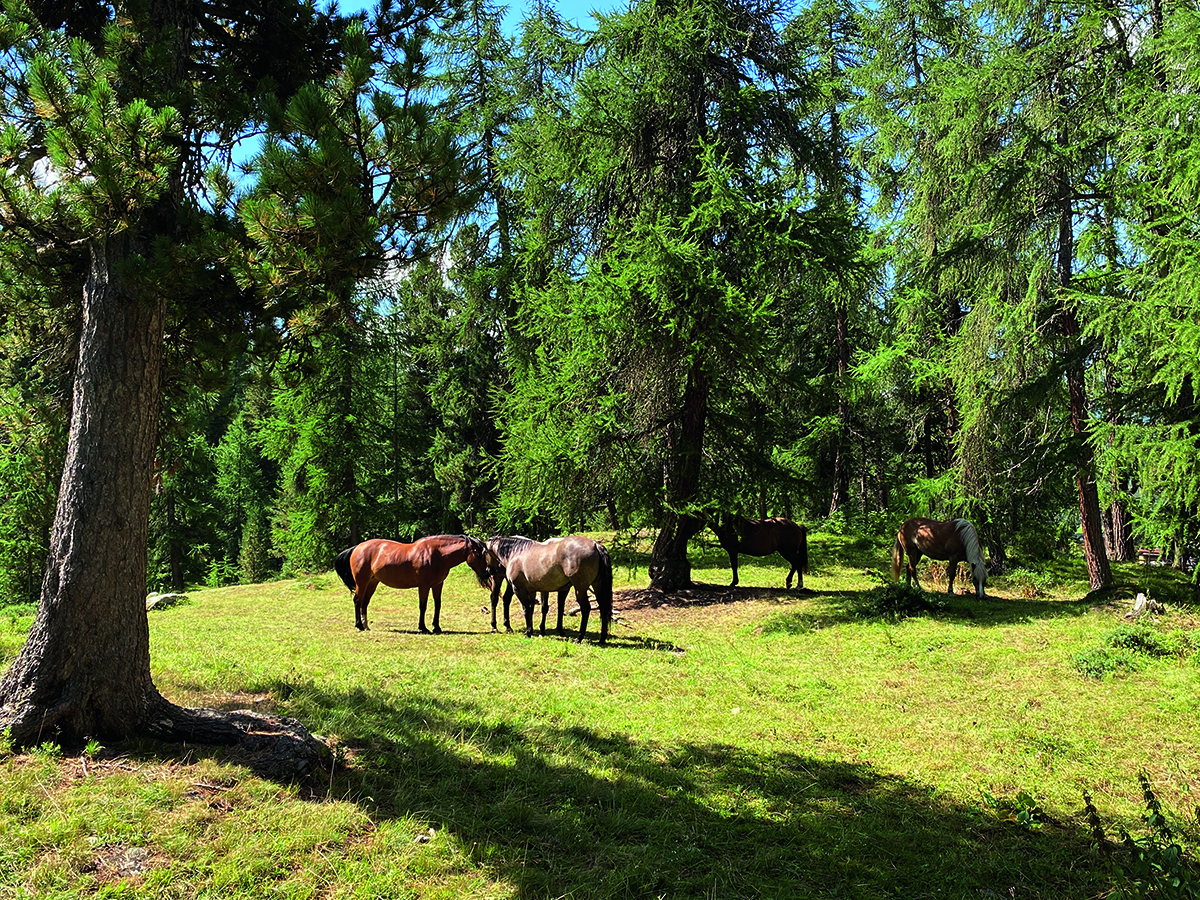
Idyllic paths through the meadow and woodland around the hotel bring unexpected sights. Images by Isabella Sheherazade Sanai (top) and Darius Sanai.
The hotel overlooks a wavy forest, stretching up the valley towards the Italian border; St Moritz itself is out of sight just around the corner of the mountain. Just above the swimming pool and huge lawn overlooking the view is the Stube restaurant, cosy and hearty in design, where you might expect to eat rib-thickening traditional mountain food. But not here; or not quite, anyway. Isaac Briceño Obando, the chef in charge of this culinary hotspot (each of Suvretta House’s restaurants is a destination in itself), blends simplicity (Wild Kelly flat oysters; Iranian beluga caviar) with purity (saddle of lamb smoked in hay; A4 wagyu tenderloin plain grilled) and tradition (sliced Zurich-style veal in cream) with just a touch of the exotic (Maine lobster salad, pumpkin, kalamansi and miso). So relaxing is the Stube experience that the lockdown limitations on seating times (gone soon, we hope) felt almost intrusive.
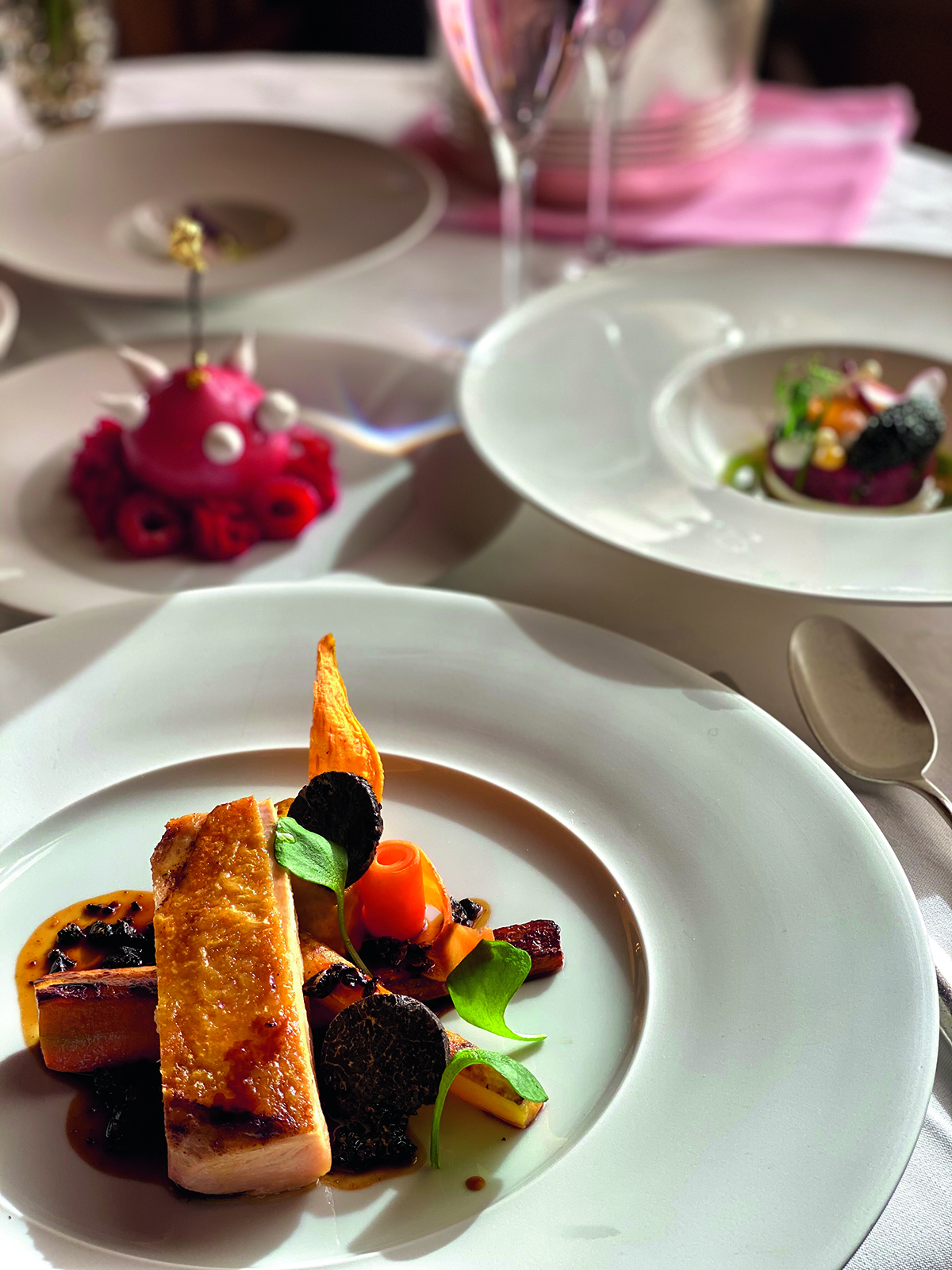
Chicken with carrots and a Sauternes jus
Upstairs, the centrepiece of the hotel is the Grand Restaurant, a dining room with a Belle Époque flair whose New Year’s Eve parties are the stuff of legend (and many years of waiting lists). Watching Europe’s grand aristocracy waft back and forth there one evening was an experience in itself (at the time of going to press, the hotel is not sure whether regulations will allow the Grand to reopen for the summer season). High on the mountainside above Suvretta there is also the Trutz restaurant with a kind of rustic-Swiss chic serving air-dried beef, pastas, barley soup and salads with local cheeses – an excellent tonic after hiking up there.
Read more: Umberta Beretta on fund-raising for the arts

The river En (Inn) beneath the hotel
There is far more to the Suvretta House than its cuisine; the rooms, fresh and Swiss-luxurious, have an eternally epic view across forests and mountains; the indoor pool-with-a-view is huge; and the gardens (and utterly charming woodland childrens’ playground) are addictive. But this summer, there is nothing that will stop us indulging in a gastronomic tour of its restaurants and the sublime service and views. Something no home delivery service will ever offer.
Find out more: suvrettahouse.ch
This article was originally published in the Summer 2021 issue.
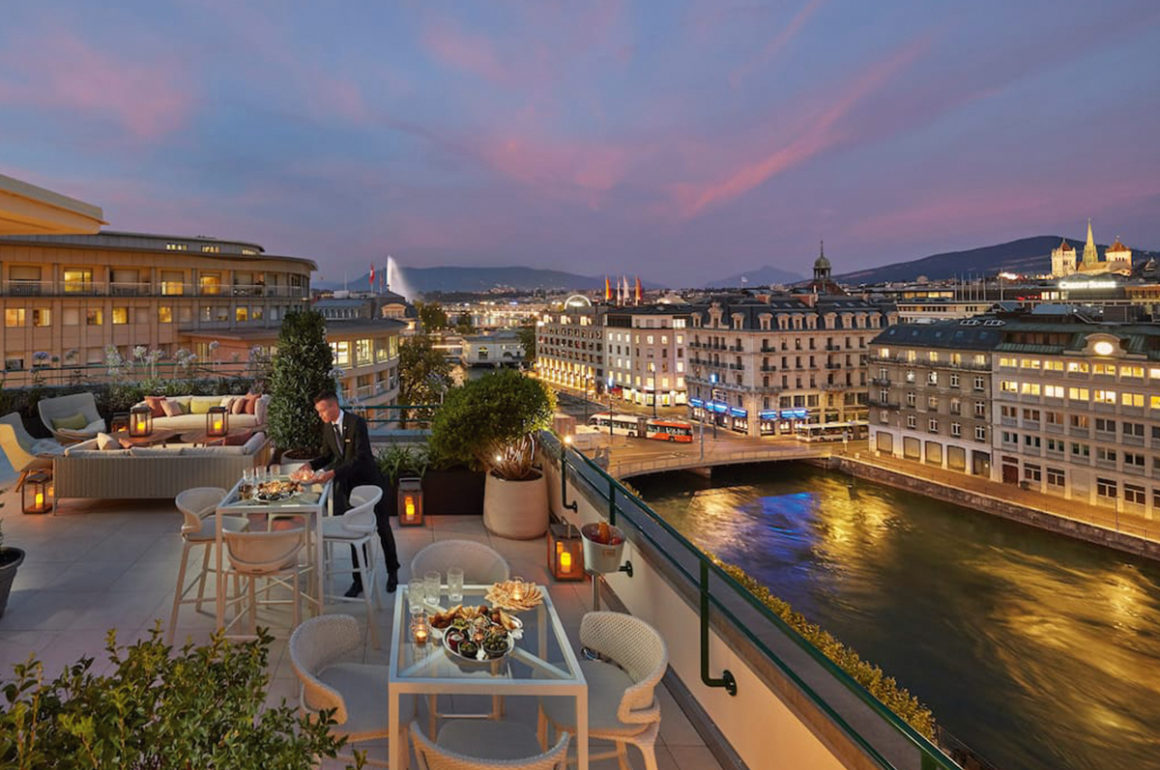
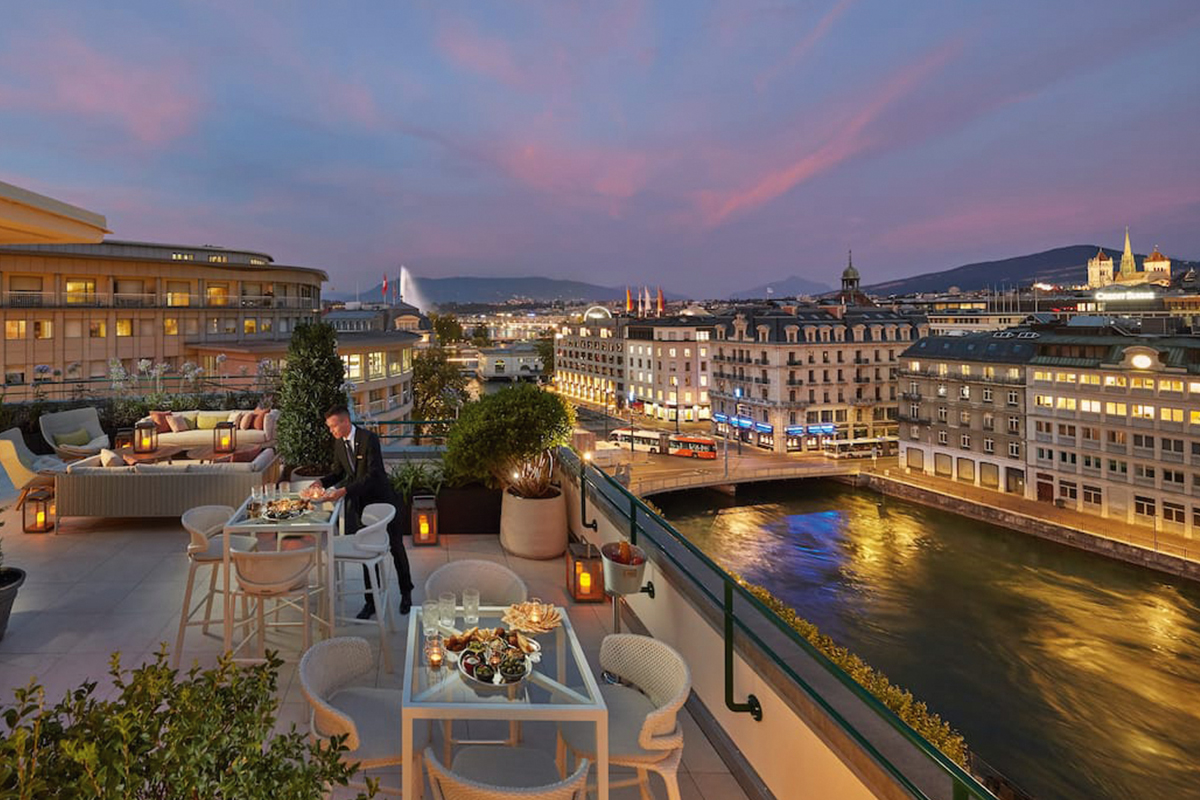
The view from the terrace of the Royal Penthouse suite at the Mandarin Oriental Geneva
In the first of our four part luxury travel views column from our Summer 2021 issue, LUX editor-in-chief Darius Sanai enjoys fine dining and Alpine views at Mandarin Oriental, Geneva
Geneva is a city that will be known to LUX readers as a place to park the jet ahead of a skiing holiday, and a city to visit a few times a year on banking business.
It is also a centre of tourism, although its hotels tend to be focused more on the business traveller: plenty of exclusive restaurants and conference rooms, less in the way of relaxation and views.
During the lull in the pandemic last summer, I decided to combine visits to clients in Geneva, Andermatt, Zurich, Germany and Champagne into one single drive, rather than the more fraught process of taking planes, trains and taxis.
Follow LUX on Instagram: luxthemagazine
Arriving in Geneva by car rather than the usual plane/taxi combination opens your eyes to the city’s location. To arrive from northwest Europe, you make your way down a winding motorway through a valley in the Jura Mountains, with the Alps opening out in front of you beyond the lake.
It was a summer’s day with deep-blue Alpine skies, and I would rather have camped out in a deckchair then be cooped up behind the sealed windows of a business hotel, however luxurious.
Fortunately, the Mandarin Oriental is a place to combine both business and leisure. After a Covid-secure check-in, I was ushered into a lift by myself, and checked into my junior terrace suite. In many hotels, even expensive ones, a junior suite is really an excuse to charge a higher rate by sticking a sofa into a king-size bedroom. But not here.
To the right, a big glass-walled bathroom, with an electric blind you could lower for privacy. To the left, an extensive dressing area, and in the room itself a big glass desk, cabinets and bookshelves, plenty of oriental chic furniture, a triple-bed corner sofa and coffee table, with a lot of space in between. Not a suite of rooms, but a very large, well-designed and light bedroom, which could easily have been divided in two – which would have ruined the effect.
Outside was the pièce de résistance, certainly on a sunny summer’s day (less useful in Swiss winters): an extensive private terrace with sun loungers, chairs, a table, outdoor candles and a Buddha. The terrace looked out over the Rhine river at the point it tapers from the lake, across the old town and the rest of the city to the Alps beyond.
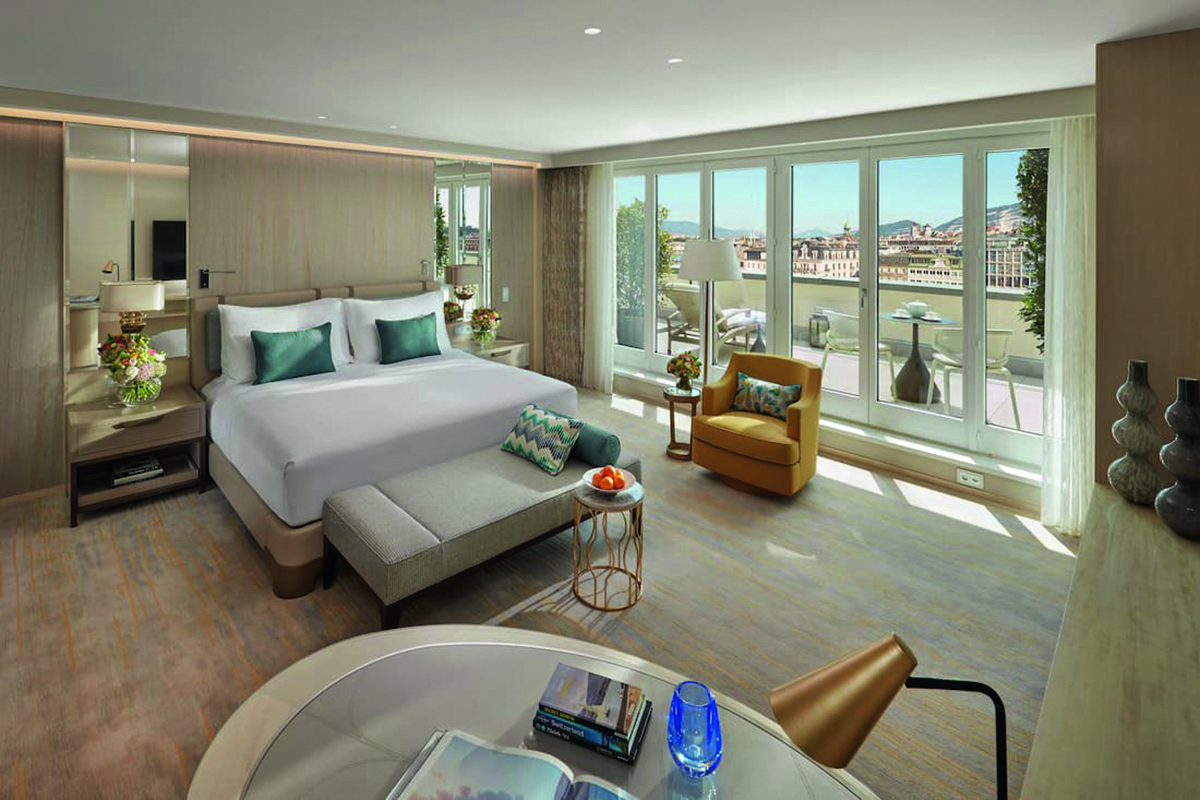
A guest bedroom in the Royal Penthouse suite at the Mandarin Oriental Geneva
Furnishing was in a pleasing contemporary classic green and gold, and the glass bathroom answered a question Nick Jones, founder of the Soho House group, posed in my head some 20 years ago. At that stage, Nick was just planning to launch his first hotel, Babington House in the British countryside. He told me over lunch that the rooms would be completely different to anything anyone had seen before in a hotel, starting with the bathrooms. “Why should there be a bathroom on the right or left as you go in?” he said, somewhat gnomically.
Read more: Superblue’s experiential art centres & innovative business model
Now, as anyone who has been to any of the Soho House properties and their imitators will know, you can find a bath almost anywhere within the perimeter of the room. But the problem is that people want privacy and cosiness in bathrooms, sometimes; and at other times they may wish to see the world or the world to see them. The glass-walled bathroom in my terrace suite was the perfect answer: with the blind raised, this was a large, wet, marble part of the bedroom and terrace. And with it down, total privacy.
On my last night I had that welcome rarity on business trips, an evening alone, due mainly to pandemic caution deterring any formal dinners with clients. It was a warm evening, and I ordered room service on my terrace from Yakumanka, the hotel’s acclaimed Peruvian restaurant.
Three staff members arrived and swiftly moved to the terrace to set the table; the courses arrived separately, so they would not get cold.
This is pure, focused cuisine. White fish with calamari, tamarind sauce and tartar; grilled calamari with white chaufa and Szechuan leche de tigre. Particularly memorable was the sautéed rice with calamari, lettuce, bok choy, Chinese cabbage and tortilla.
All accompanied by a creamy but fresh bottle of Deutz champagne and that view across the city to the Alps. A business hotel and a relaxation zone all in one in the heart of town and with the flawless professional service, swift yet relaxed, the group has made its name for.
Book your stay: mandarinoriental.com/geneva
This article was originally published in the Summer 2021 issue.
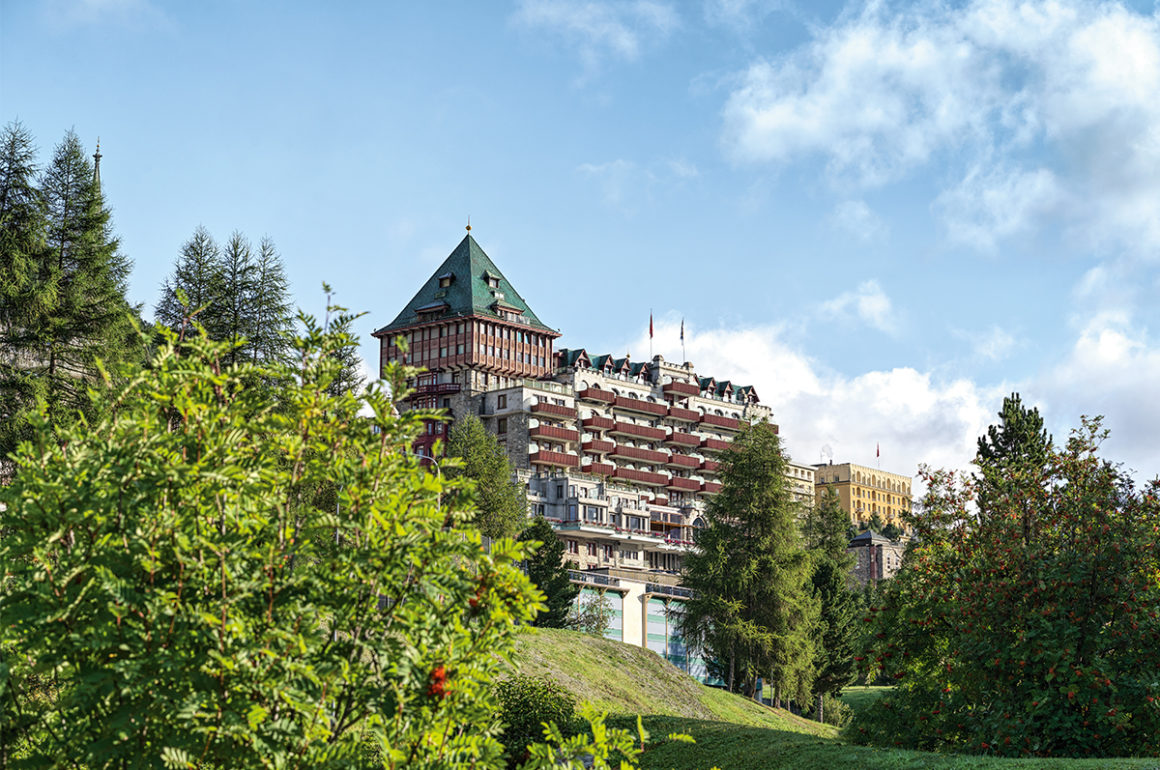
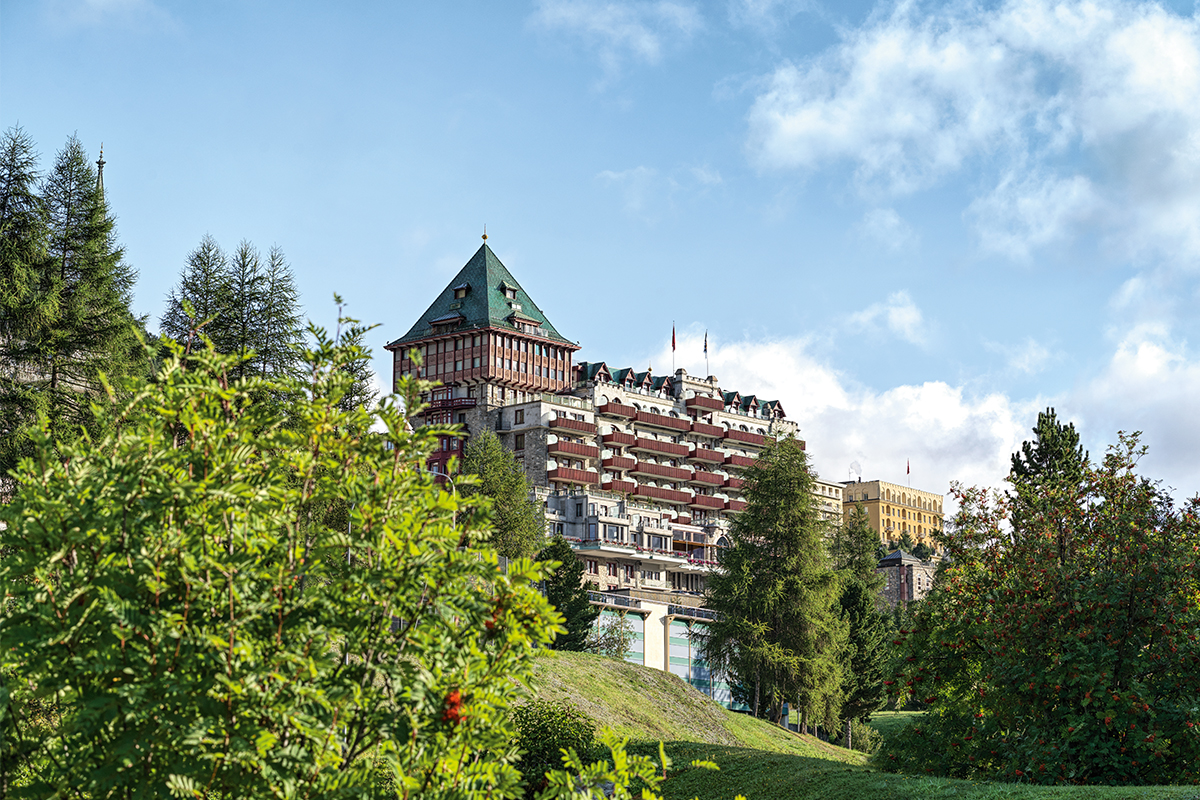
The Badrutt’s Palace hotel’s grand frontage and its iconic tower.
High in St Moritz, the grandest hotel in the Alps has just been revitalised. There’s nowhere better to take the summer air with your entourage than Badrutt’s
What could be better than the Helen Badrutt Suite at Badrutt’s Palace? Yes, we know there are some pretty swanky hotel suites out there. The Abu Dhabi suite at the St Regis in the namesake emirate has its own spiral staircase and cinema. The Presidential Suite at the Mandarin Oriental in Pudong, Shanghai, has floor-to-ceiling windows over the city and its own wine cellar and roof garden. Stay at Seven South at the Ritz Carlton in Grand Cayman and as well as 11 bedrooms, you get a free painting to take home.
Follow LUX on Instagram: luxthemagazine
But still. Enter the Helen Badrutt and you don’t feel like you have arrived, or paid what it takes, so much as having been granted entry to a very exclusive club, in one of the world’s most desirable pinpoint locations. Badrutt’s Palace is the acme of palace hotels in St Moritz, the world’s most exclusive mountain resort. It’s the fact that it has been so for more than a century, despite its location 1,800m up in the Swiss Alps, that provides a clue to the exclusivity: this is where blue bloods, royals, pretenders and their circle have played for more than 100 years.
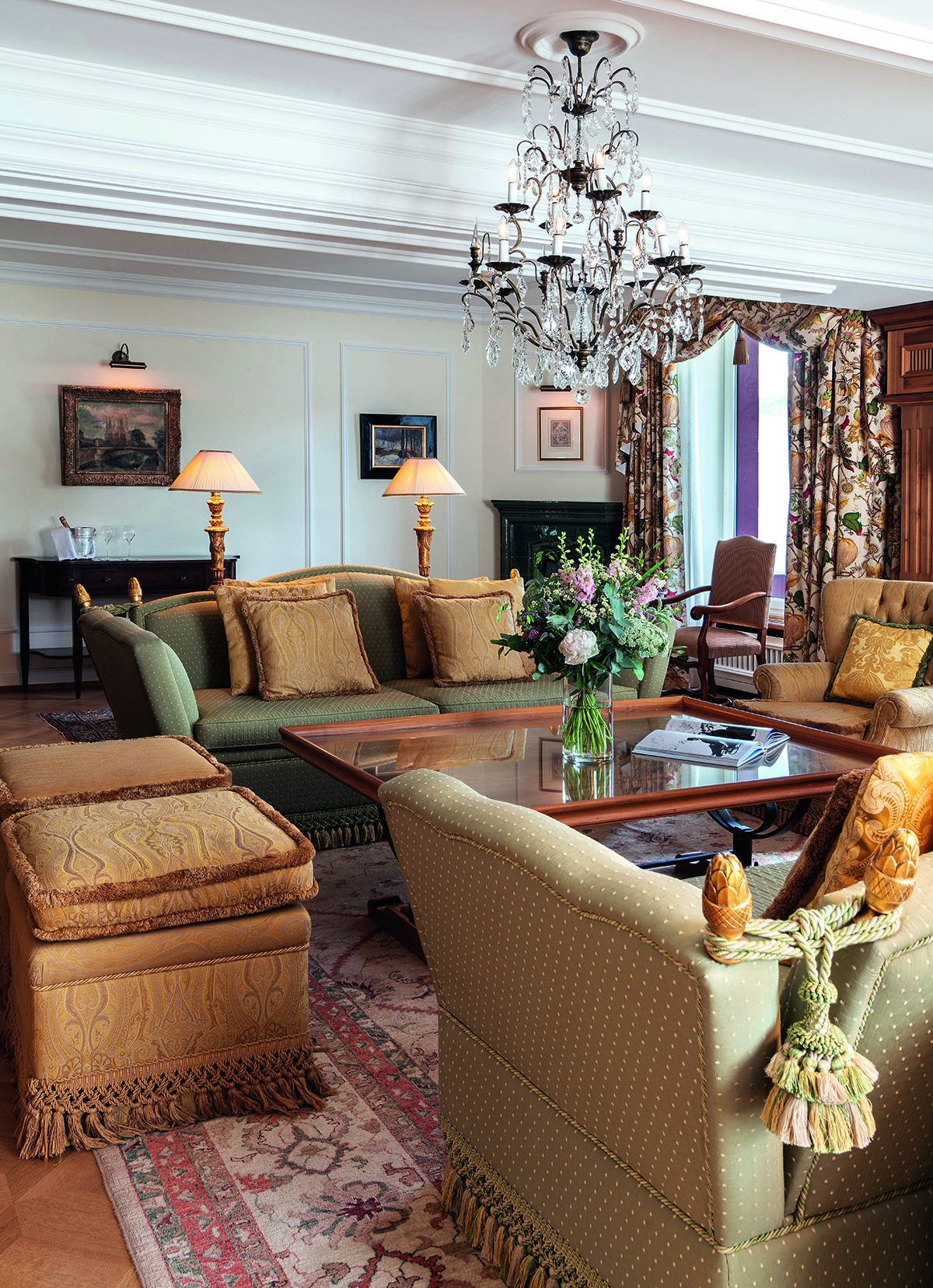
The drawing room of the Helen Badrutt Suite
When the Shah of Iran decided to celebrate the 2,500th anniversary of the Persian Empire with the grandest dinner in the history of the world in Persepolis in 1971 (an act of indulgence that ultimately contributed to his downfall in the Islamic Revolution), he flew in the staff from Badrutt’s Palace. And staying in the Helen Badrutt, you are the crème de la crème of the hotel’s guests (or perhaps the Shahanshah).
Read more: Speaking with America’s new art icon Rashid Johnson
It might be the living room, with its grand décor, bottomless drinks cabinet refilled with spirits in decanters (no tacky miniatures here), Persian carpets and chandelier; or the balcony terrace looking out over Lake St Moritz and the mountain beyond, big enough to host a party for 20 people (we did); or the silent-quiet bedroom or marble bathroom; or that it can interconnect privately to form an entire wing of ten bedrooms.
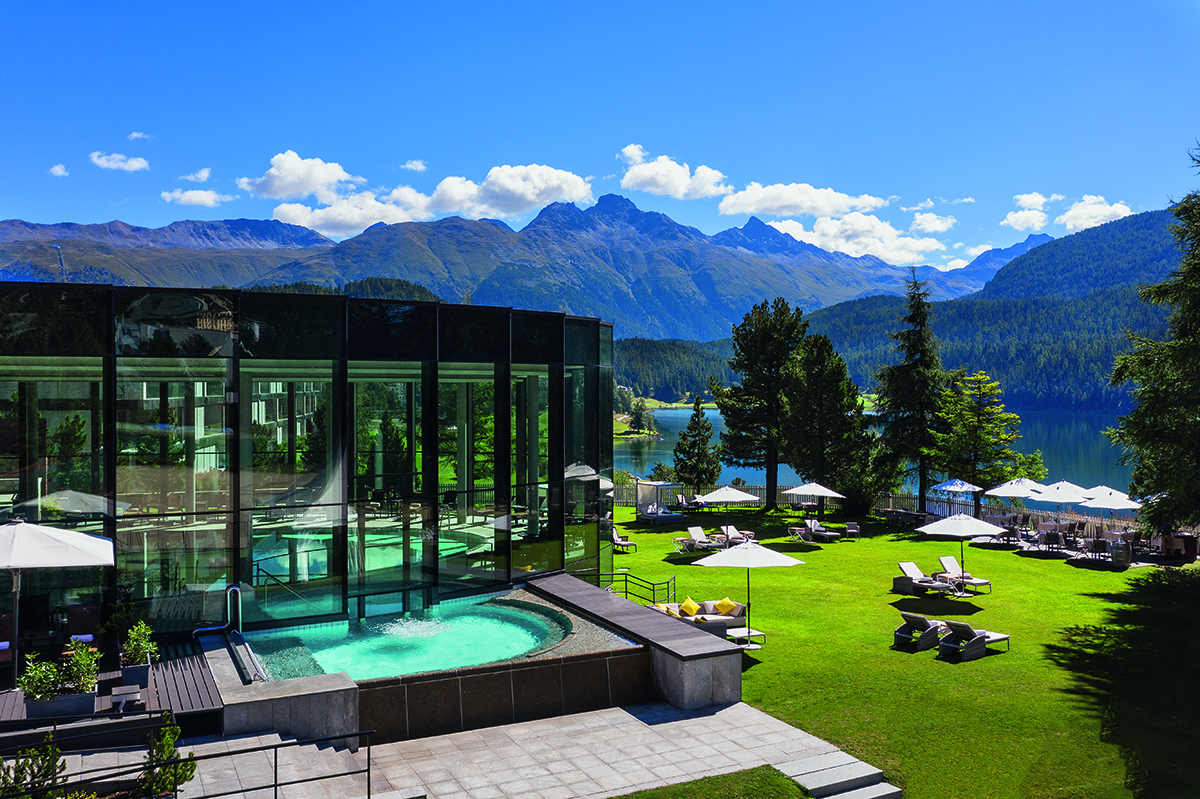
The Badrutt’s Palace pool overlooking Lake St Moritz
Maybe it’s the butler service, which, unlike some more thrusting hotels, is almost entirely seen and not heard, Jeeves-style (we don’t know about you, but we don’t need butlers knocking on our door and asking what to do; they should know already, as they do at Badrutt’s).
In any case, staying in the Helen Badrutt bestows upon the visitor a sense of history, transforming the humble paying guest into a multi-suffixed European aristocrat with seats in each major city of the Holy Roman Empire and a foundation in a castled town in Westphalia from where a tweed-suited team of faithful retainers disburse philanthropic goodness to worthy institutions around the world. Or so it feels, anyway.
Read more: Sophie Neuendorf on Georgia O’Keeffe’s enduring influence
And even if that nuance escapes you, there is the rest of this glorious destination to enjoy. The Palace driver (there is a Rolls-Royce, of course) will whisk you to the foot of the Languard chairlift in nearby Pontresina, for example, from where you waft upwards through a magical larch forest where unknown creatures seemingly create tiny gardens in tree stumps; and from the top of which there is a view to the end of the Roseg valley where mountains live in permanent winter.
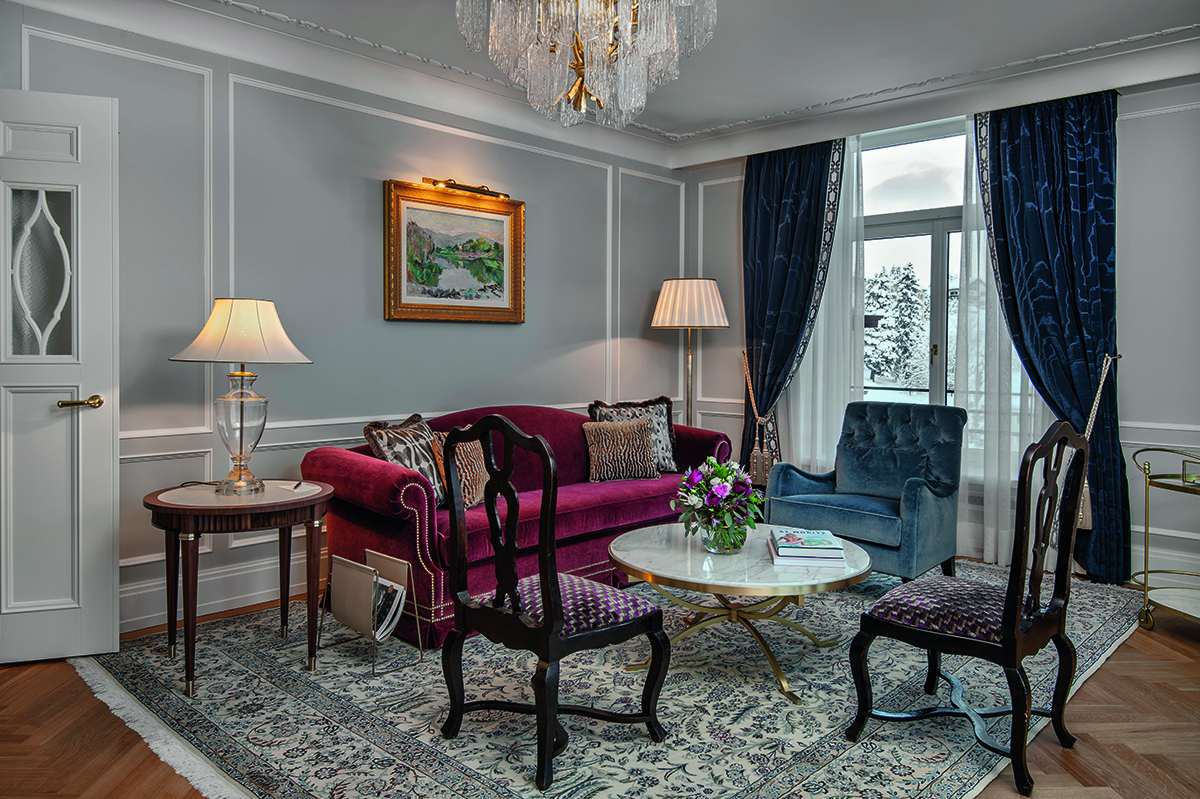
A newly refreshed St Moritz Suite
Or if you prefer to stay in St Moritz, Cartier, Louis Vuitton, Hermès, Chopard, et al, are metres, or in some cases centimetres, from the Palace. And if you prefer to stay in the
hotel itself, there’s the swimming pool with its celebrated rock garden to dive from (a kind of mini Alpine Acapulco) and spa, tennis courts, adventure playground and kids’ club.
And the best thing? Well, even old money needs refreshing sometime, and during lockdown the Palace has had more than 40 of its rooms and suites redecorated – the official word is “refreshed” – by New York design studio Champalimaud, which has brought fresh blues and whites and a kind of Alpine light to the rooms. Which means that even if you’re not old-guard enough, there’s a place for you.
Book your stay: badruttspalace.com
This article was originally published in the Summer 2021 Issue.
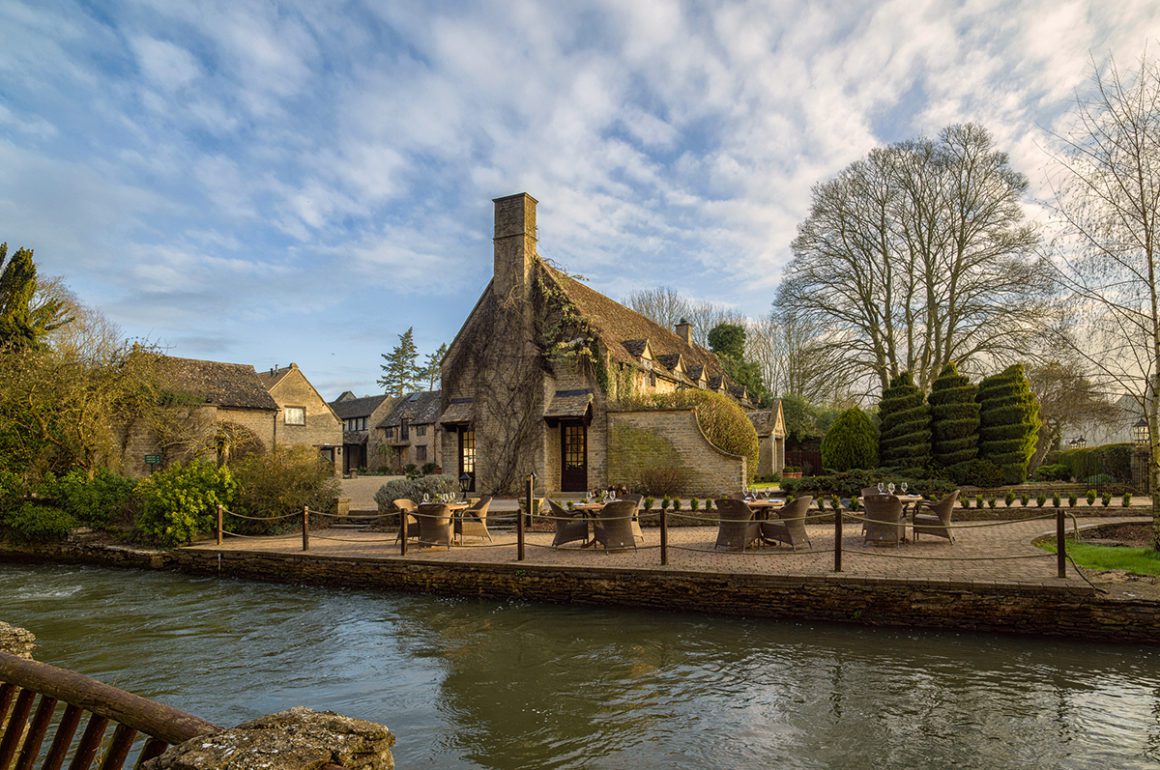
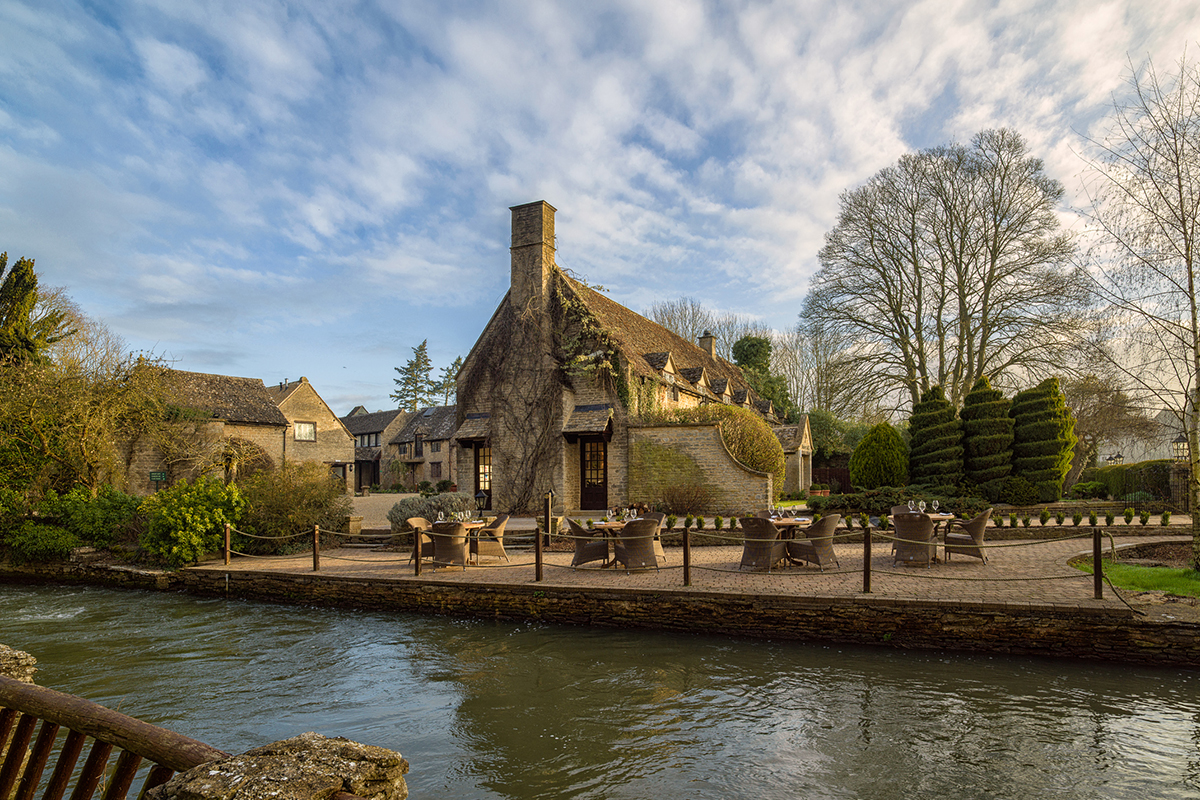
Minster Mill sits on the edge of the River Windrush in the Cotswolds
Why should I go now?
Bluebells, blossom, and undulating greenness rolling into the distance. So long as the weather plays ball, there are very few better places to be then the English countryside in May, and specifically the Cotswolds. Add to that the opening up of Britain post lockdown and you have the makings of a perfect spring break.
Follow LUX on Instagram: luxthemagazine
Minster Mill is a relatively new Cotswold hotel, created by the chi-chi Andrew Brownsword hotel group. Pitched more at the contemporary chic market rather than traditional luxury, it has an interesting story to tell, as a converted mill and outbuildings alongside a stream with extensive grounds.
First Impressions
Minster Mill is literally on the edge of the Cotswolds. Just 20 minutes from Oxford, you turn off the main road, down a narrow lane, through a hamlet of sandy Cotswold stone, and through a gate and short drive that leads charmingly alongside a stream. The property comprises several buildings clustered around the stream, together with croquet lawn, spa, a tennis court, outbuildings with a table tennis table, and pathways leading off into fields adjacent.
The welcome is informal and friendly, part English country house, part Soho House. Decor is crisp and contemporary country, but not so fashionable that it would make you feel like an interloper.
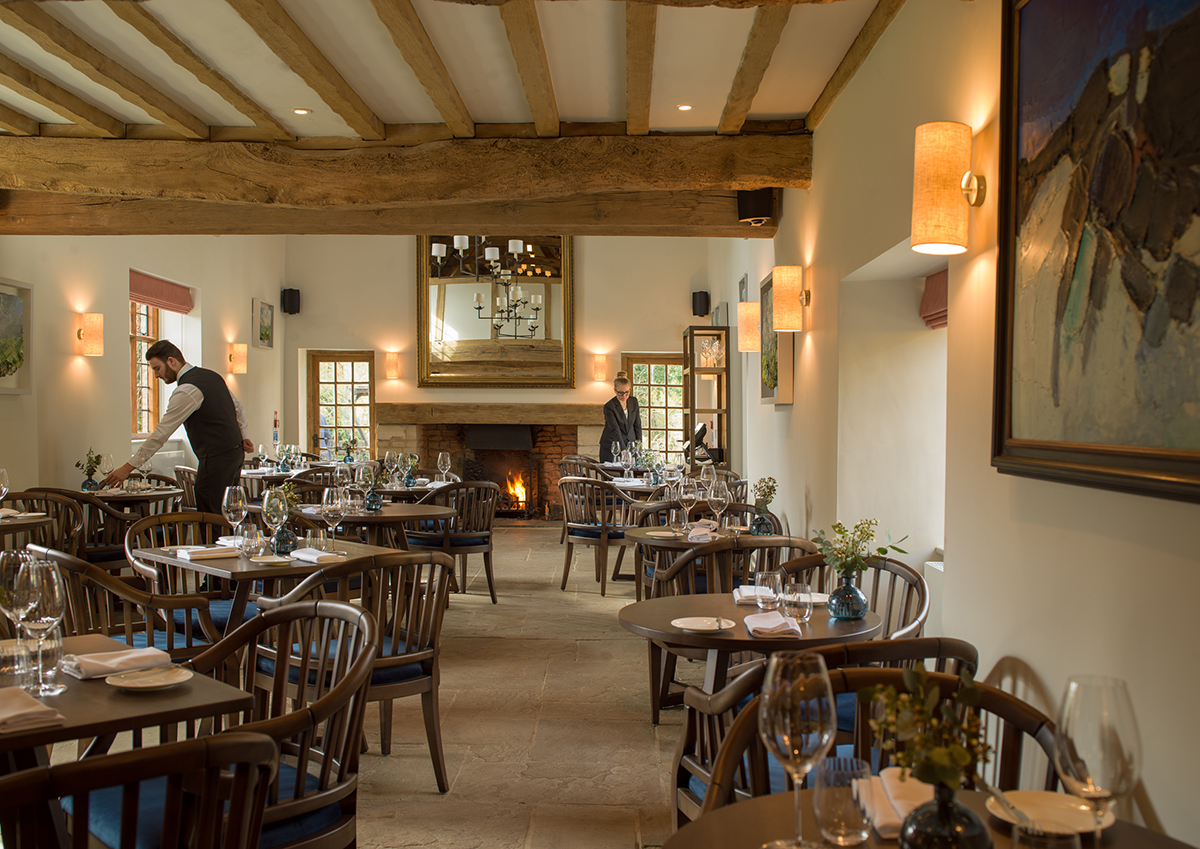
The restaurant at Minster Mill
The Experience
Certain types of hotel tend to offer similar experiences, in English country house hotels you expect drawing rooms, and dining room is looking out over a lawn. That’s the case for the most traditional, like Minster Mill’s stablemate Buckland Manor, and the most contemporary, like Babington House.
Read more: An exclusive private tasting of Ornellaia with Axel Heinz
The most memorable parts of Minster Mill are completely different. Breakfast by the stream, looking across ancient woodland and fields. Croquet, a little further up of the same stream. Wandering off past the tennis courts into semi wild countryside, and into a natural maze in a field, looping back to the same stream where the swing slung over a high branch could act if you wished as a launch point into a bigger river. Dinners of grilled trout and extremely pert green vegetables, outside by the stream. The stone walled dining room inside would be a pleasant enough alternative if the weather turned bad, as it always can in England.
These all add up to an experience that is unique (in the best possible way) in the Cotswolds. The rooms are comfortable, relatively simple, light: blonde woods, beige and taupe fabrics and throws, light green and light grey paint. Service is low-key and good – this is not the place to go if you expect to be fussed over, and it’s a four rather than a five star, but everything is efficient and friendly.
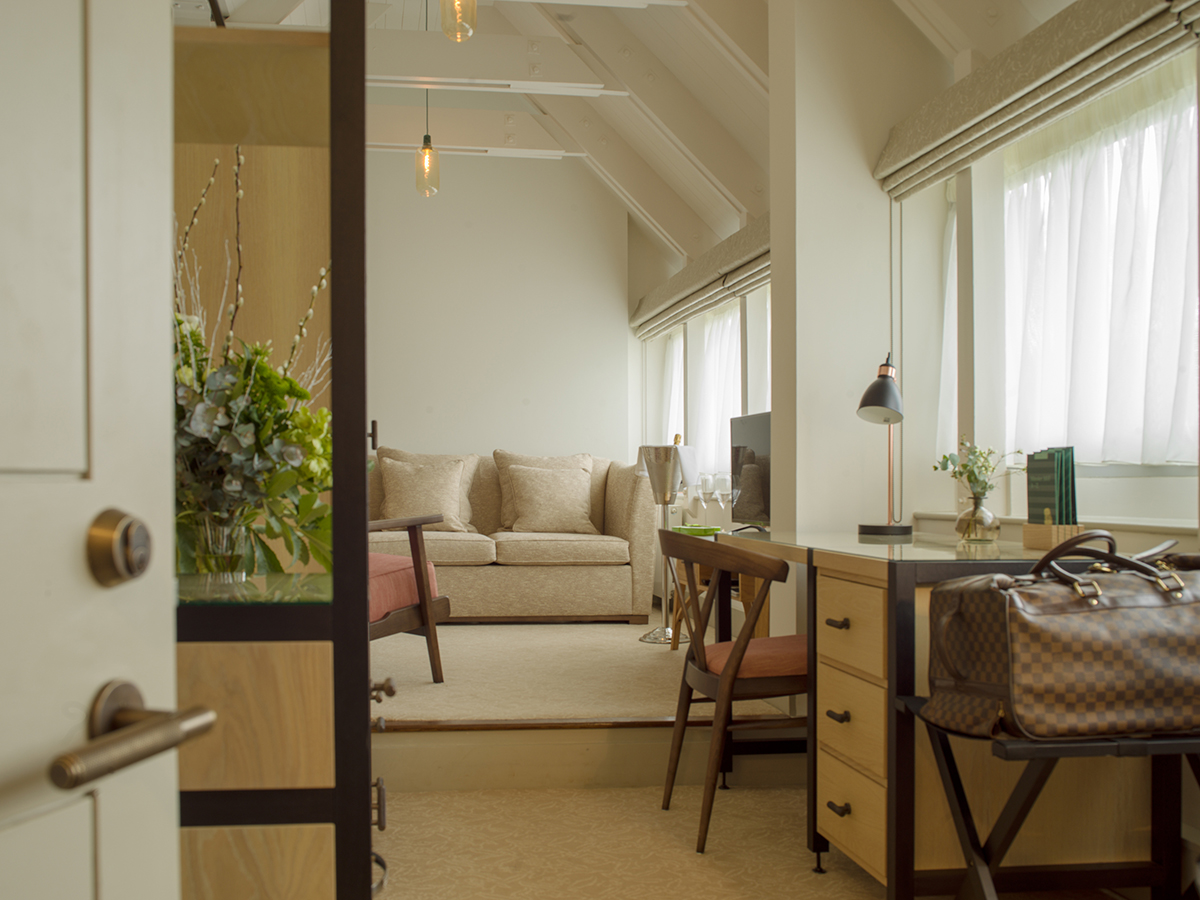
The drawing room of a junior suite
Takeaway
Minster Mill is not far from the apotheosis of contemporary country house hotels, Soho Farmhouse. Although they are at a similar price and appeal to a similar market, they are very different: you are more likely to lose yourself at Minster Mill, and you’re more likely to bump into a celebrity designer at Soho Farmhouse. Which you prefer is perhaps a matter of taste and mood, but we left Minster Mill feeling like we had had an authentic and truly relaxing getaway.
Rates: From £210 (approx. €250 / $300)
Book your stay: minstermill.co.uk
Darius Sanai
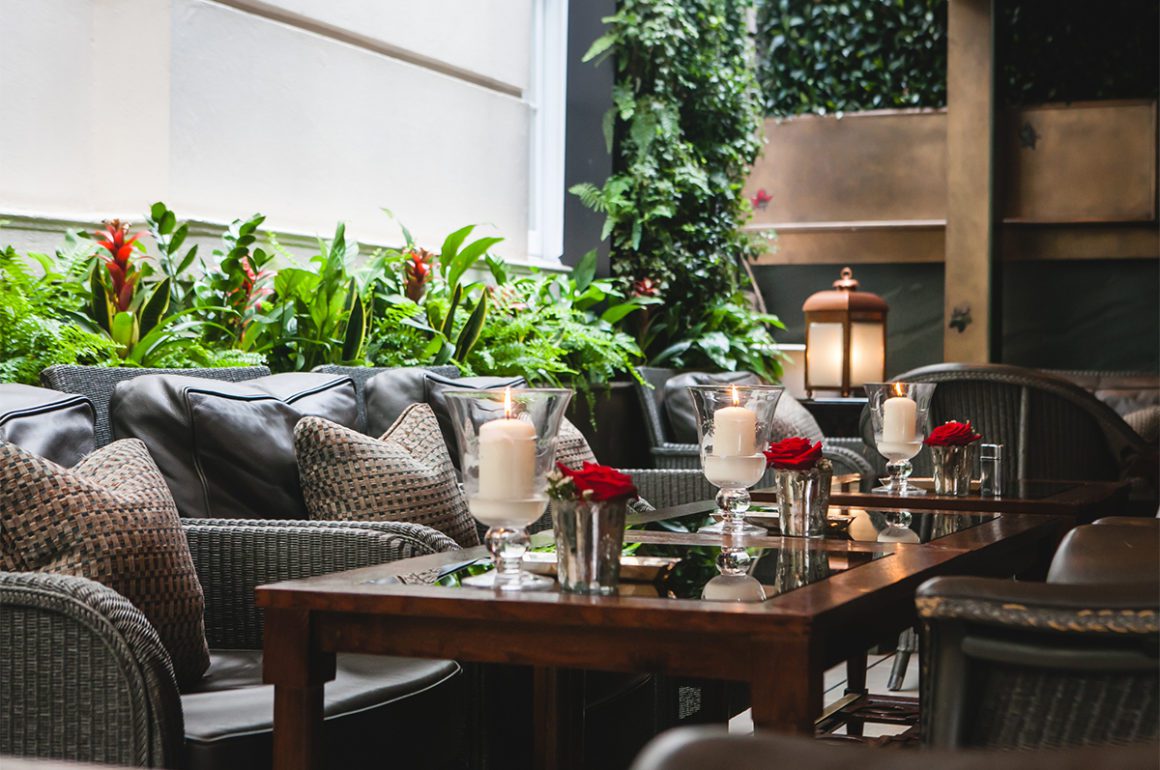
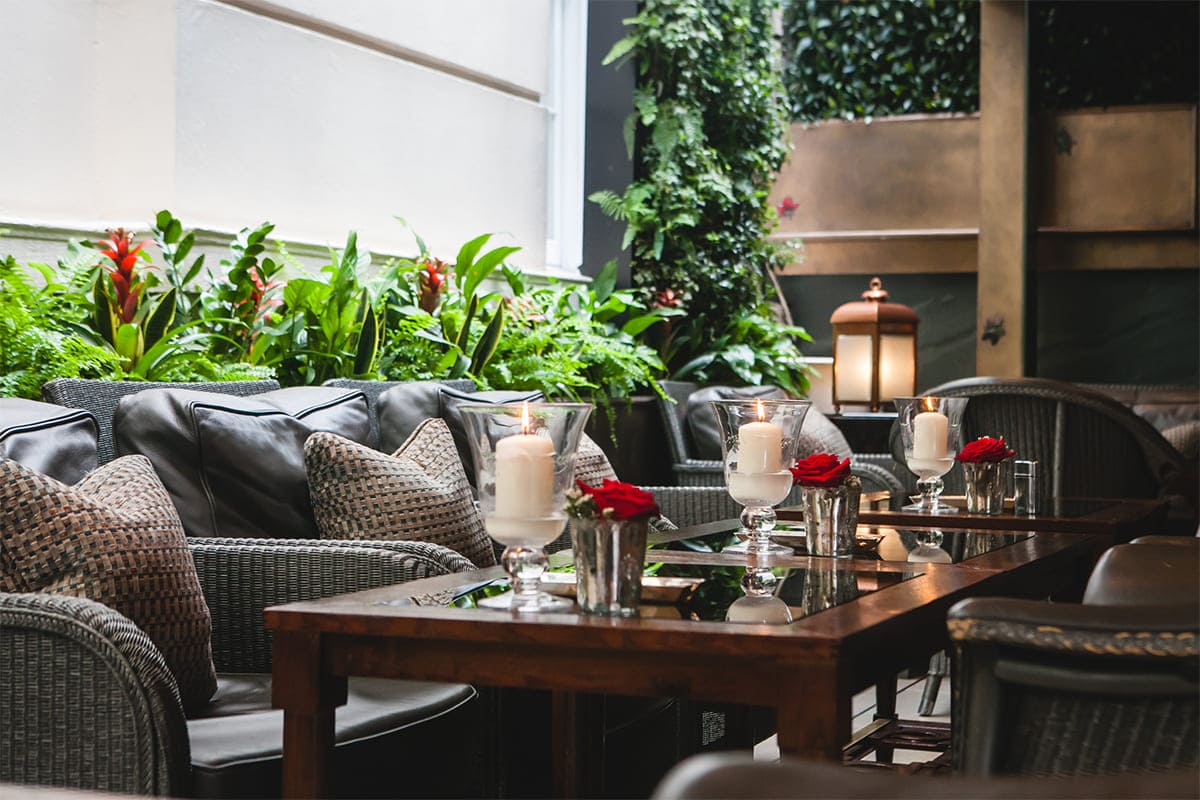
The Garden Room at The Lanesborough hotel, Knightsbridge
The Garden Room at the Lanesborough hotel is one of the world’s most glamorous cocktail destinations. Darius Sanai celebrates the end of London’s lockdown with a glass of fine wine and a cocktail
Have you ever wondered what it must be like to be on the other side of the luxury hospitality industry? We love the service at the world’s great hotels and restaurants, from Lombok to London. But to be in the hospitality industry, to be serving demanding, wealthy, privileged, and often entitled customers literally 24/7?
Follow LUX on Instagram: luxthemagazine
There are LUX readers who will know the answer, perhaps because they own a hotel or group of restaurants, or trained in the industry before becoming senior executives. From my own conversations (and my limited experience of working in the industry at a very low pay grade when I was younger) there is one thing that unites any institution with great service, and that is the love of providing great service. All those stories about staff going home and cursing and sticking pins in dolls of their customers? Not really, not in the greatest hotels and restaurants. You have to love what you do, however exhausting.
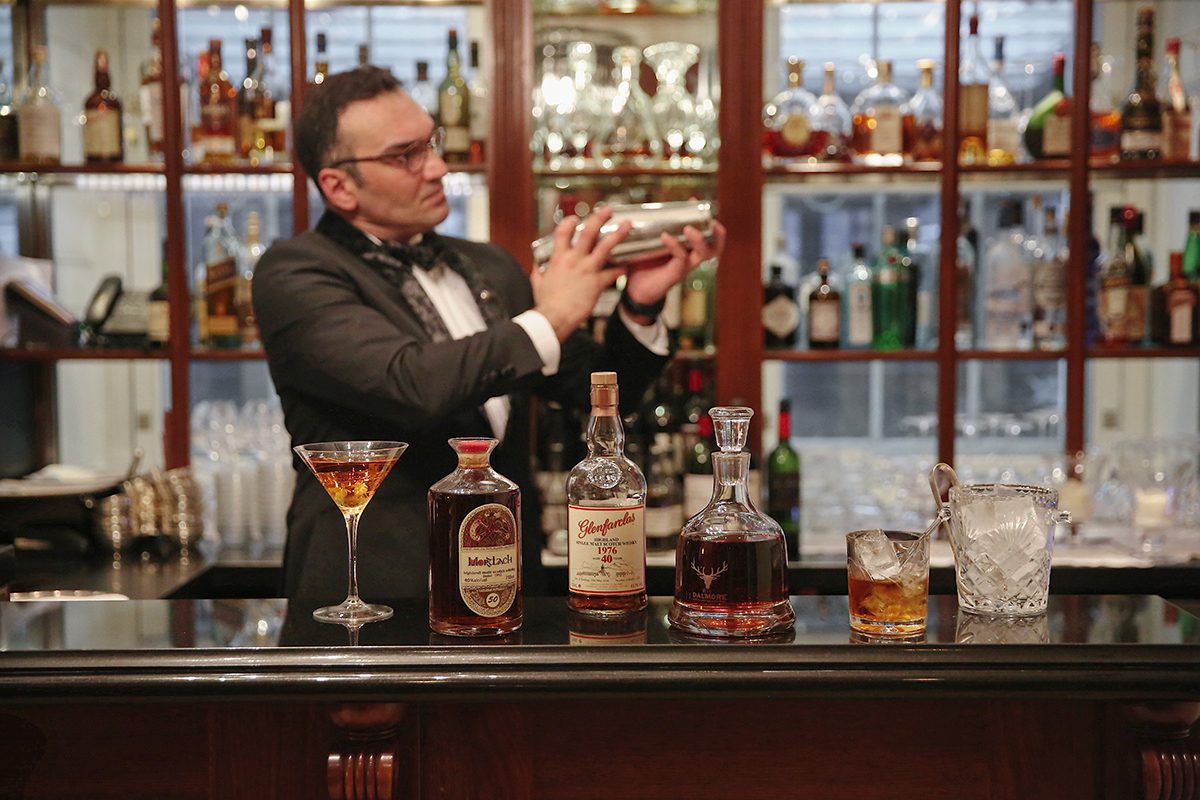
And that’s what I realised I had missed when walking through the doors of the Lanesborough in London last week, my first entry into a luxury hotel since last year, unprecedented in my current life. If you are fortunate enough to be able to stay and visit such establishments – not confined to marble and gold taps luxury, but anywhere at the peak of the hospitality industry – you will have missed being with people who genuinely love and get a thrill out of looking after their guests. This goes as much for the old couple who welcome you in to sit on a table (that’s right) in the mountains of northern Iran and treat you with a banquet of tea, local fruits and Petit Beurre biscuits as it does for a luxury hotel.
But if you are visiting a luxury hotel, there are very few that will give you better service than one of the Oetker Collection, comprising among others the Eden Roc, the Bristol in Paris, and the Lanesborough in London.
Read more: Hermès perfumer Christine Nagel on the emotional power of scent
Stepping into the doors of the Lanesborough, being ushered at a distance down the up-lit marble hallway to the grand stairs leading down towards the Garden Room – the outdoor space that they are now permitted to open – was, after London’s lockdown, a luxury experience in itself.
Even if you wouldn’t dream of smoking a cigar, you would be tempted by the cigar wall on your right downstairs and the subsequent cigar library – with delicious looking cigars dating back for decades – on your left as you enter the Garden Room.
It’s a kind of combination of a bar and a terrace. A short selection of excellent wines served in cut crystal glasses, heavy enough to make a thud when you put them down on your table. (Note to the sommelier: while each of the wines is superb in its own right, you have three Sauvignon Blancs as the first three wines on your list.) A Chablis Lechets Bernard Defaix was an excellent match to our dinner of crispy squid, very nutty homemade hummus, garden salads, and a sea bass with olive and tomato (and truffle fries) that flung us, metaphorically, to the Cote d’Azur in June.
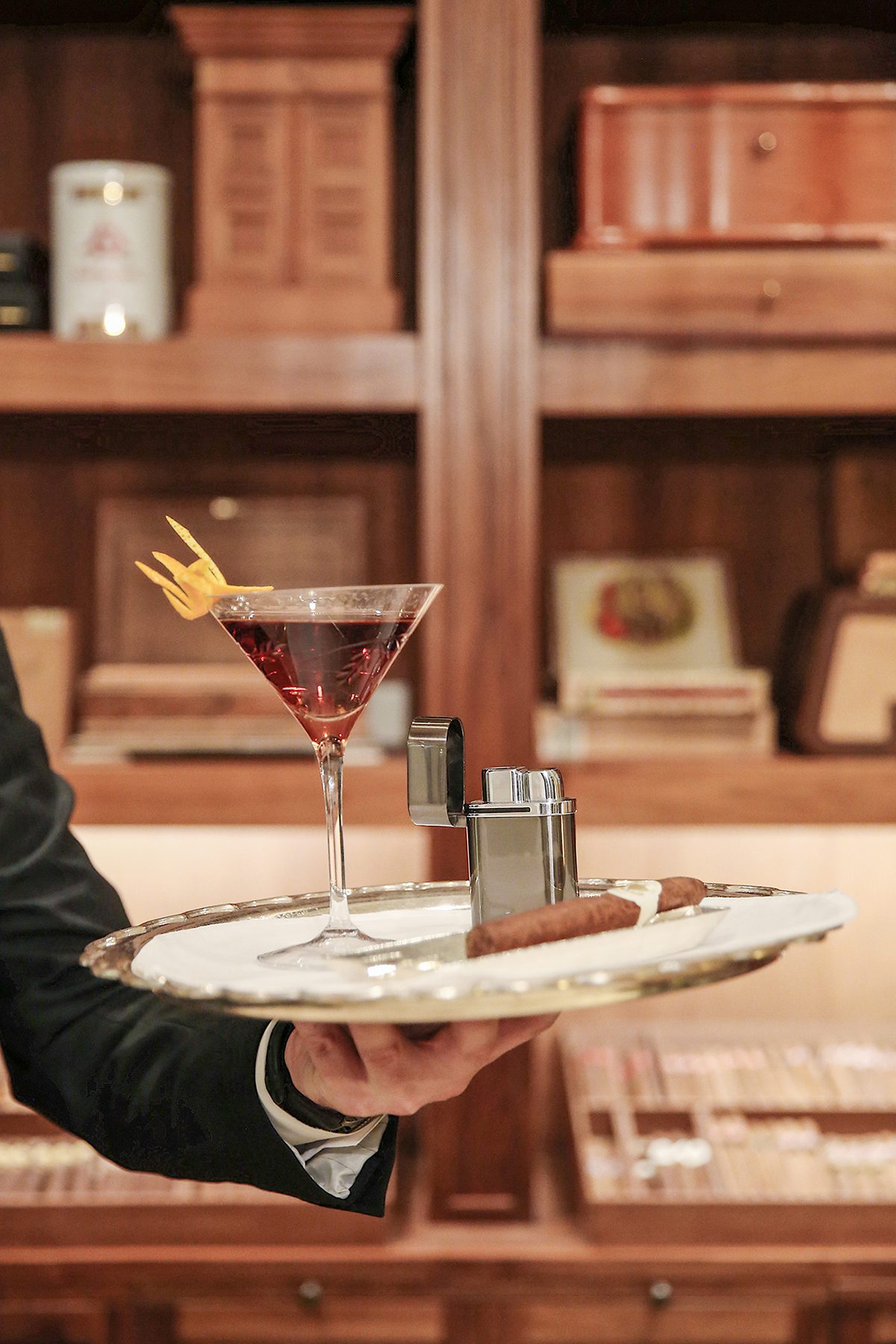
This is a cocktail bar above all else, and a virgin mojito (always a hard drink to make brilliantly, without the balance of the Havana Club) was sweet-sour mint perfection.
And the service: it felt like the staff had been waiting for months of gruelling lockdown just to get back to work – which may or may not be true, but they made us feel it was true, which is the suspension of belief of every luxury experience.
The Garden Room may not be for the stogiephobic – although semi-outside, it has the waft of well-aged Havanas in its DNA – but aside from that it is a London destination, now reopened, with glamour. That’s what we have been missing, and as glamour is almost by definition provided by other people, it’s impossible to recreate at home in a lockdown. The Garden Room has it by the magnum.
Find out more: oetkercollection.com/hotels/the-lanesborough/
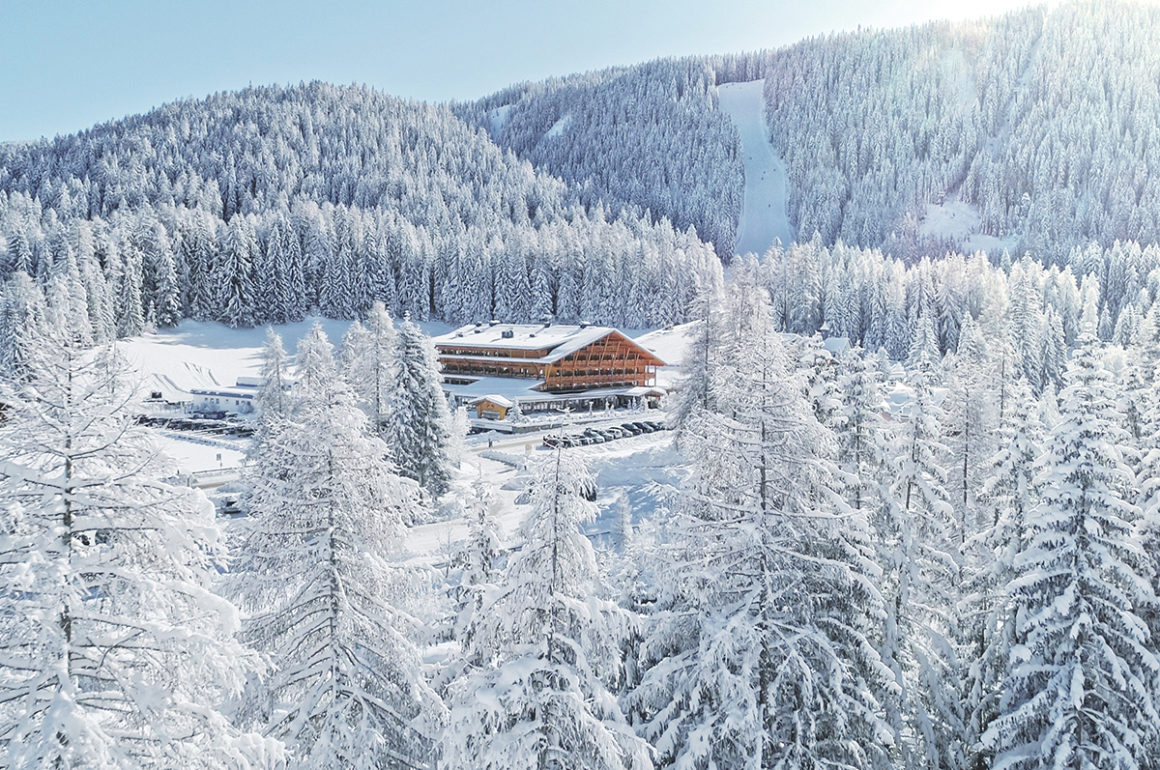
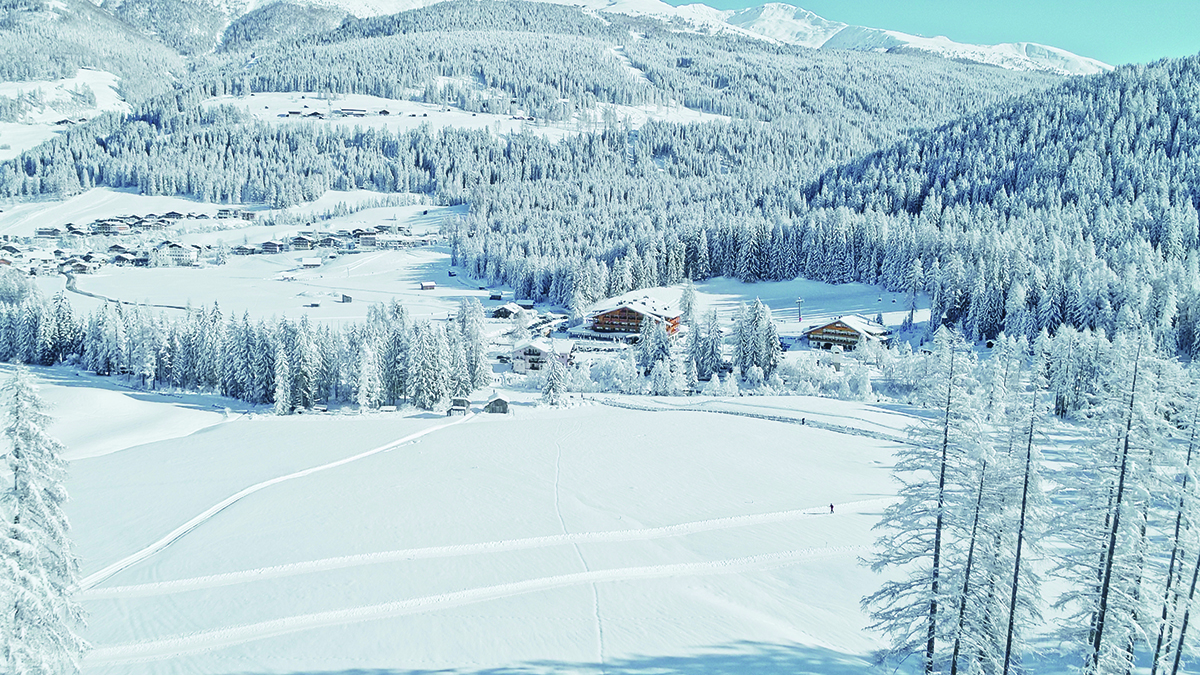
Looking down onto the Bad Moos Dolomites Spa Resort in the Drei Zinnen Dolomites
The little-known area of Drei Zinnen, in the German-speaking Italian Dolomites, offers a cultural, culinary and slopeside experience like no other, as Darius Sanai discovers
‘Atmosphere’ has become an almost meaningless word when describing a place. A hotel describes its bar as “atmospheric” as a matter of course. But a real atmosphere, in terms of travel, is not about a room, or a building, or even a town. It is about a sense of place that is imparted by the location, the light, the scenery, the buildings, the weather, people, detail… Everything.
Some places simply don’t have an atmosphere, and cannot create it however luxurious the hotels, restaurants and facilities they create. Other places have elements of an atmosphere – spectacular views, fascinating buildings – but they do not add up to a whole.
Follow LUX on Instagram: luxthemagazine
And some places have an atmosphere that is more than the sum of its parts, that envelops you as soon as you arrive and increases in intensity the longer you stay.
Drei Zinnen is one of those places. Step out of the car that has whisked you there on a relatively easy drive from Innsbruck airport, and there is the sense of being somewhere quite apart from the rest of the world, yet not secluded, claustrophobic or shut away.
Crunching the few steps in the snow to the door of the hotel Bad Moos, you are in the middle of a wide, high, tree-lined bowl, lined with crannies, streams and villages, and backed by the dramatic fingers of the Dolomites.
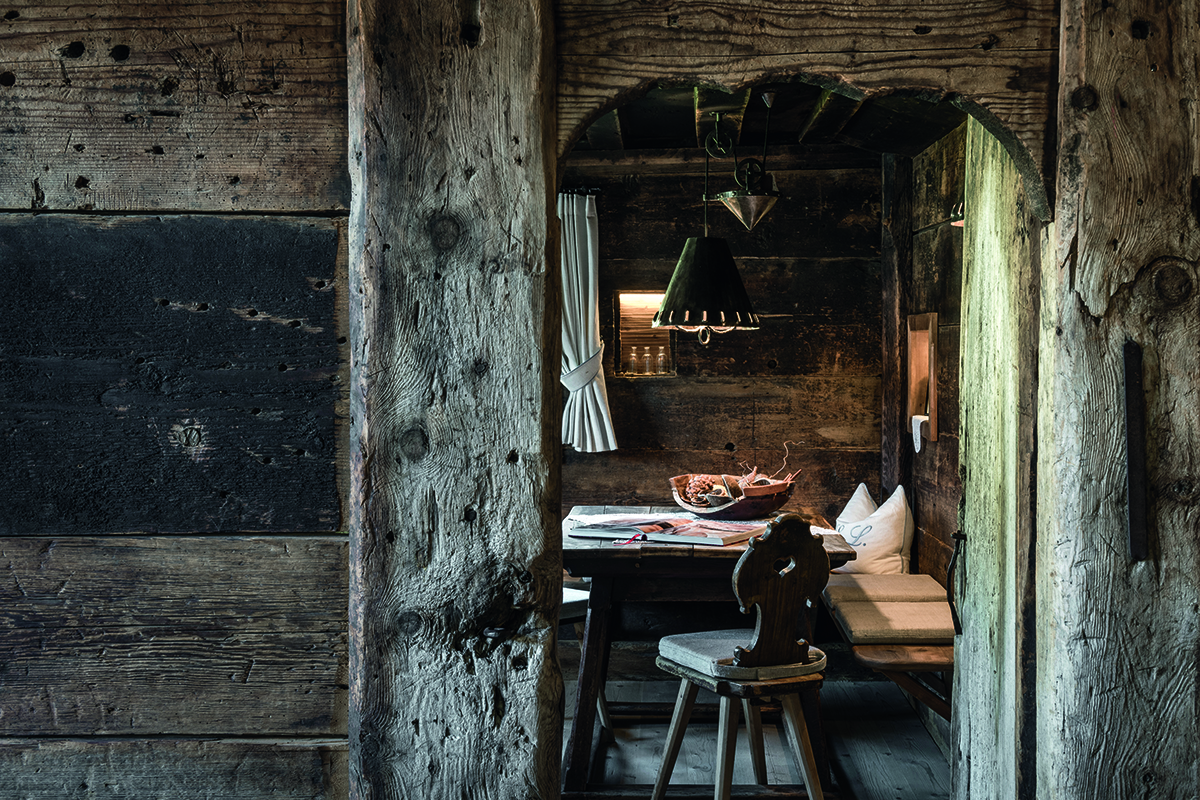
The gothic dining room at Bad Moos. © Hannes Niederkofler
Inside the hotel, the atmosphere is only heightened. This is an exquisitely tasteful, contemporary take on Alpine (or specifically, South Tyrolean) chic. Rooms have lavish wooden floors, fabulous wool throws, beautiful modern fireplaces, glass-walled bathrooms, and finishes and details (the furry slippers!) that puts many more hallowed luxury Alpine hotels to shame.
Read more: Auctioneer & Collector Simon de Pury on curating the Waldorf Astoria’s art collection
A wooden-lined tunnel leads to a spa zone that is split between equally large indoor and outdoor pools, and swimming through the divide that leads outdoors into the moonlit night, surrounded by snow, in winter, there’s that word ‘atmosphere’ again. Lie on the long (everything is done generously here) hydro massage rack at the far end of the pool, look down the broad open valley to the peaks of the Tre Cime mountains in the distance, spot planets and stars overhead above the gently forested slopes, and there is more of a sense of place than in many Alpine resorts.
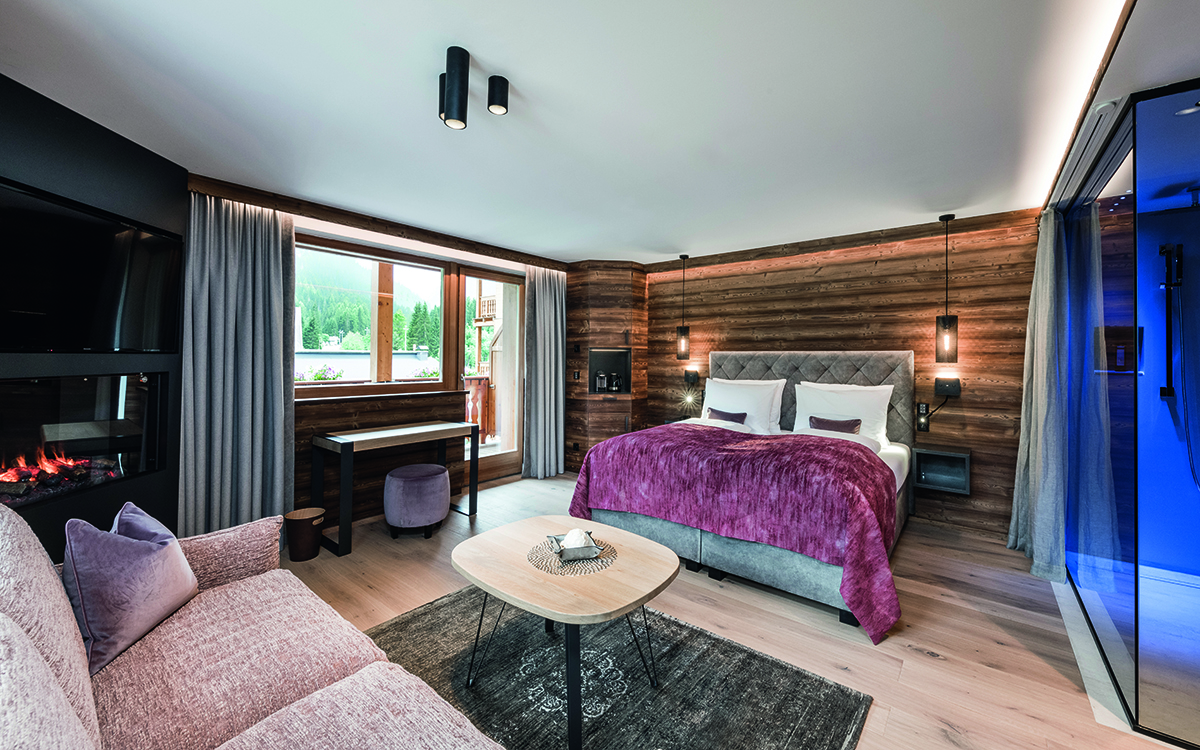
A ‘Tre Cime’ Junior Suite. © Hannes Niederkofler
Wonderful as these facilities are – particularly for a hotel not classified as one of the region’s official palaces, and all the better for it, having none of the pomp and intrusiveness of staff looking down on you – the best part of the Bad Moos experience is in the dining room.
It’s a big area that manages to be spacious (all the best for social distancing this winter) and atmospheric at the same time, split into three broad rooms at slightly different levels. The picture windows have views out over the snow fields and over to the village, a couple of hundred metres away across the bottom of a piste.
The service is a kind of perfect concoction of the best of the Alps. The South Tyrol, where the hotel is located, was part of Austria until the end of the Habsburg Empire at the end of the First World War, just over 100 years ago. It was then taken over by Italy, and has remained in Italy ever since, albeit under an autonomous government. Like everyone else in the area, staff speak both German and Italian. There is an Austrian cosiness, a Germanic efficiency, an Italian sense of style and gastronomy – and generosity of spirit. If delicate Italian fish dishes and perfectly ethereal pasta finished with home-made Austrian strudels and tarts are not your idea of culinary perfection, perhaps a choice of some of the greatest wines of the northern Italian Alps or alternatively an icy Austrian Pilsner beer, is. The cuisine and ambience are simply transported outside onto a generous terrace at lunchtime at the bottom of the piste.
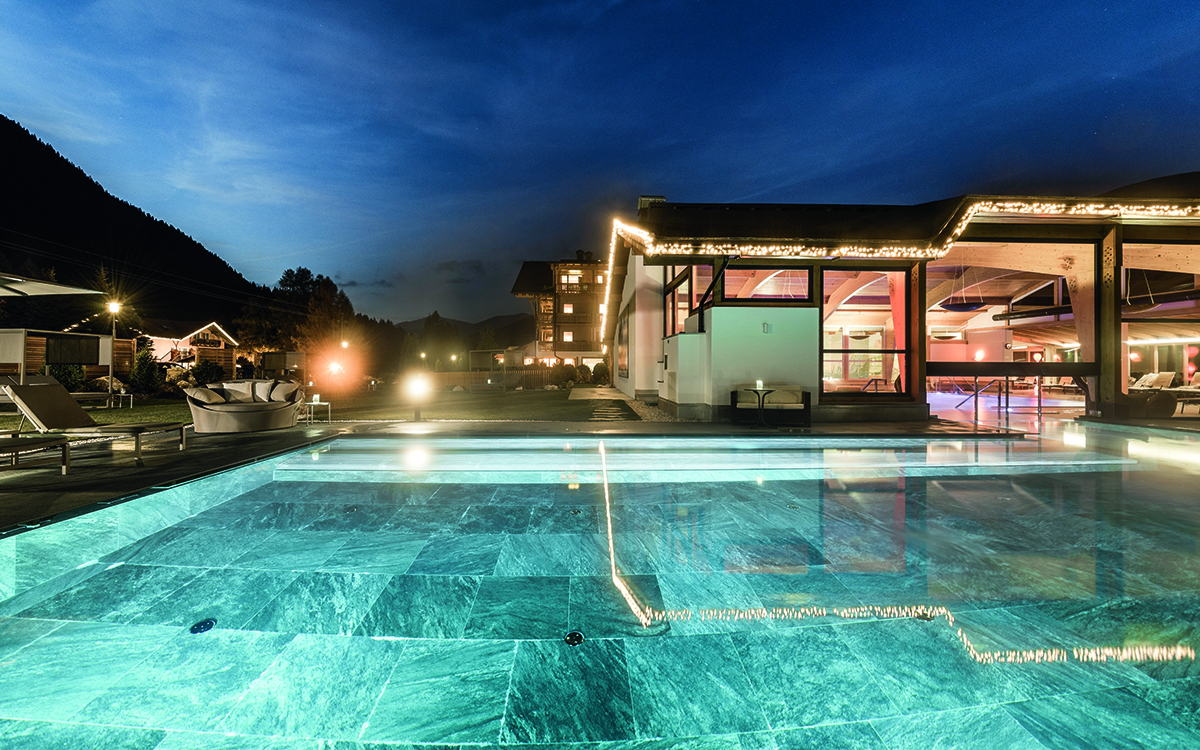
The outdoor pool at the hotel’s spa. © Hannes Niederkofler
Ah, the pistes. It’s easy to forget about the skiing as you enjoy the originality and brilliance of the hotel, but the tree-lined slopes above and around the hotel are deceptively extensive. This is one of the most serious ski areas in the Alps, and the black run descending directly to the hotel terrace via a twist in the mountainside is officially classified as the steepest black run in the Italian Alps. The gondola to send you to the top is located directly outside the terrace; at the top you emerge onto a mountain pass, just above the tree line, with a boggling view of the Dolomites, a range that looks like it has been transported to Europe from another planet.
Read more: Artist Shezad Dawood on the endless potential of virtual reality
From here, you have a choice of entertaining red runs to take you down to a variety of excellent runs on the other side of the huge valley junction; or you can head in the other direction, and set off on the Unesco World Heritage ski trail. This tracks gently across and down the mountainside, through forests and past lakes, with a series of mesmerising views unfolding, seemingly miles from inhabitation or any lifts. You arrive at a small hotel on another mountain pass, with a couple of lifts to take you up, and from where you ski away along the mountain trail again, ending up in a long traverse at the far end of a huge meadow, in a village, Padola, that is not only in a different ski area, but in a different province of Italy, where they speak no German at all. To get back, there is a regular ski bus – although it operates with a more Italian than German concept of regularity, and it would be worth checking this season how it will operate if there are social distancing requirements still in place.
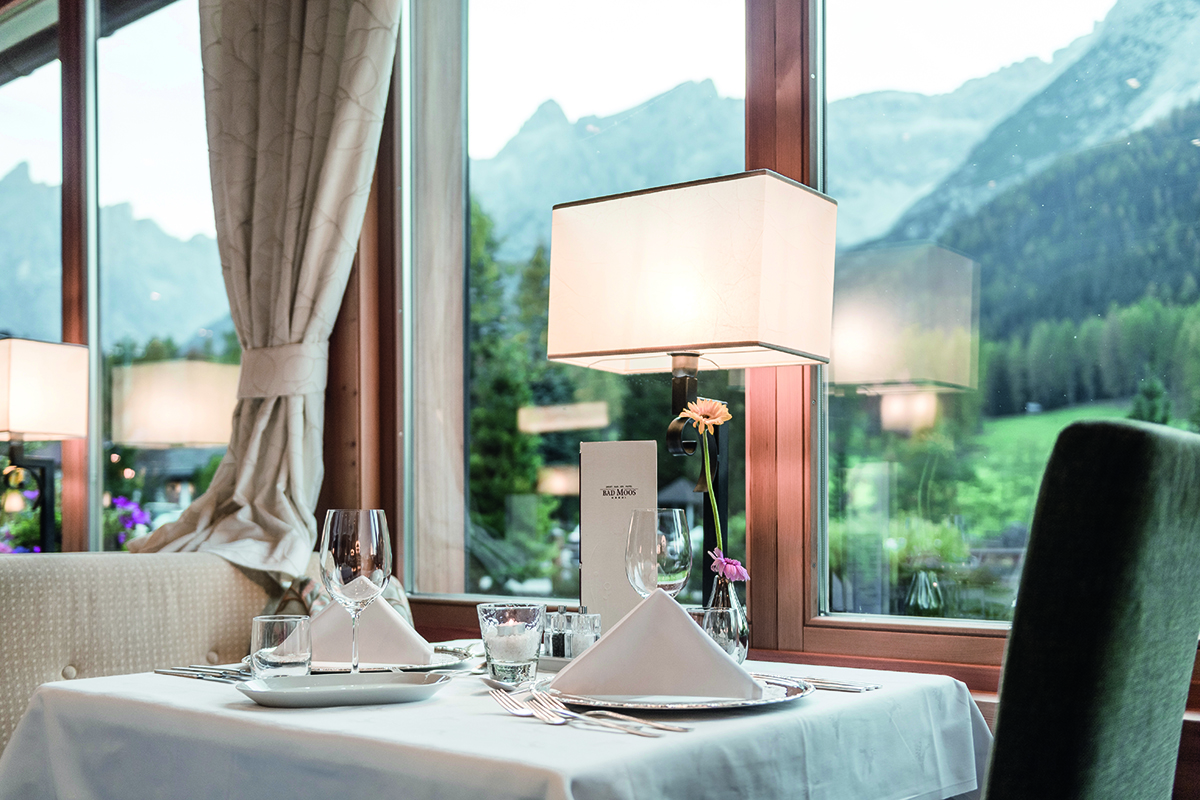
The panorama restaurant. © Hannes Niederkofler
If you’re looking for a replica of Courchevel or Verbier with sushi bars and nightclubs, and dancing till dawn, Drei Zinnen is not for you. And if you’re looking for a place to take the family and friends on an easy ski holiday with everything immediately at hand, then it’s probably not for you either – try Meribel. Which may sound strange, but let me explain. On our third day, as the sun was heading towards the crest of the mountains after another day of blue sky and deep snow, I headed, in my moon boots, across the kilometre-wide field separating the hotel from the little village of Moos. (I could have taken the bus, but that would’ve defeated the purpose.) Walking across the field you are surrounded by a 360° amphitheatre of the Dolomites. Such a view in just one of those directions would have been impressive; it was replicated in every direction, and this is at the bottom of the valley, let alone the top.
After 15 minutes, I found myself on the village High Street, and walked past a bakery into what appeared to be a mountain accessory shop but which also had a supermarket sign on it. This was the ‘everything store’ of the village, selling a unique selection of local products (south Tyrol jams, embroidery, cloths) along with high-tech ski gear, and an excellent wine selection, from tiny producers in the local area that sommeliers in Europe’s metropolises would fight over, and local hams and cheeses. Everything was in two languages, German and Italian, and their lack of similarities can make for extra fun: the wine was from the Alto Adige, Italian for Sudtirol (South Tyrol); cured ham was both Speck and Prosciutto; even the area is alternatively called Drei Zinnen or Tre Cime, and the mountain above the village (housing the main ski area) was called Helm until 1918 (and on half the signs) and Monte Elmo since 1918 (and on the other half).
Walking back to the hotel, wine bottles weighing me down, I felt that I had discovered a striking cultural and geographical part of Europe on holiday, and, just coincidentally, enjoyed some of the best and most interesting skiing in the Alps. It is a unique combination, and not for everybody, but true atmosphere rarely is. A place for intermediates, experts – travellers, and connoisseurs.
Drei Zinnen, Italy
We travelled to Drei Zinnen via Innsbruck and a private transfer, with Crystal Ski Holidays, which offers a week’s half board at the Bad Moos Dolomites Spa Resort from £1,165 per person when booked online (based on two adults) including flights from London Gatwick to Innsbruck and transfers. Transfer time from Innsbruck airport is around 90 minutes via an easy, mainly motorway, route.
For more information visit: dreizinnen.com
This article originally appeared in the Autumn/Winter 2020/2021 Issue.
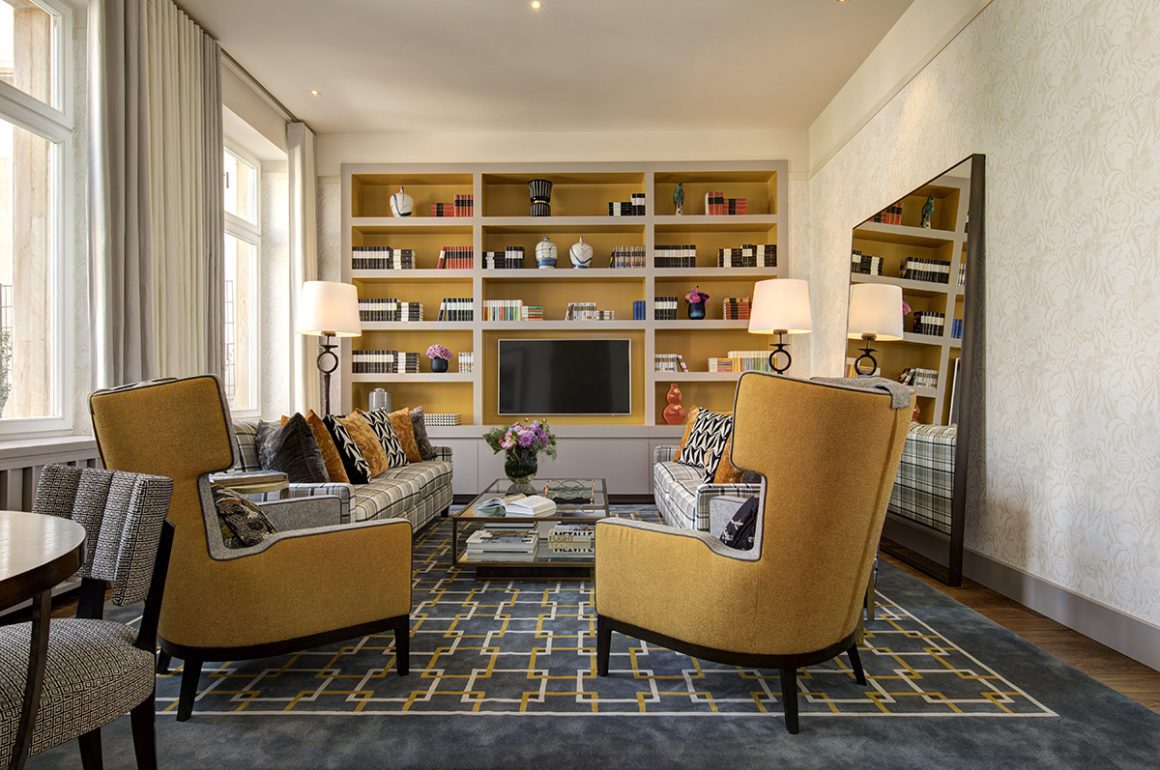
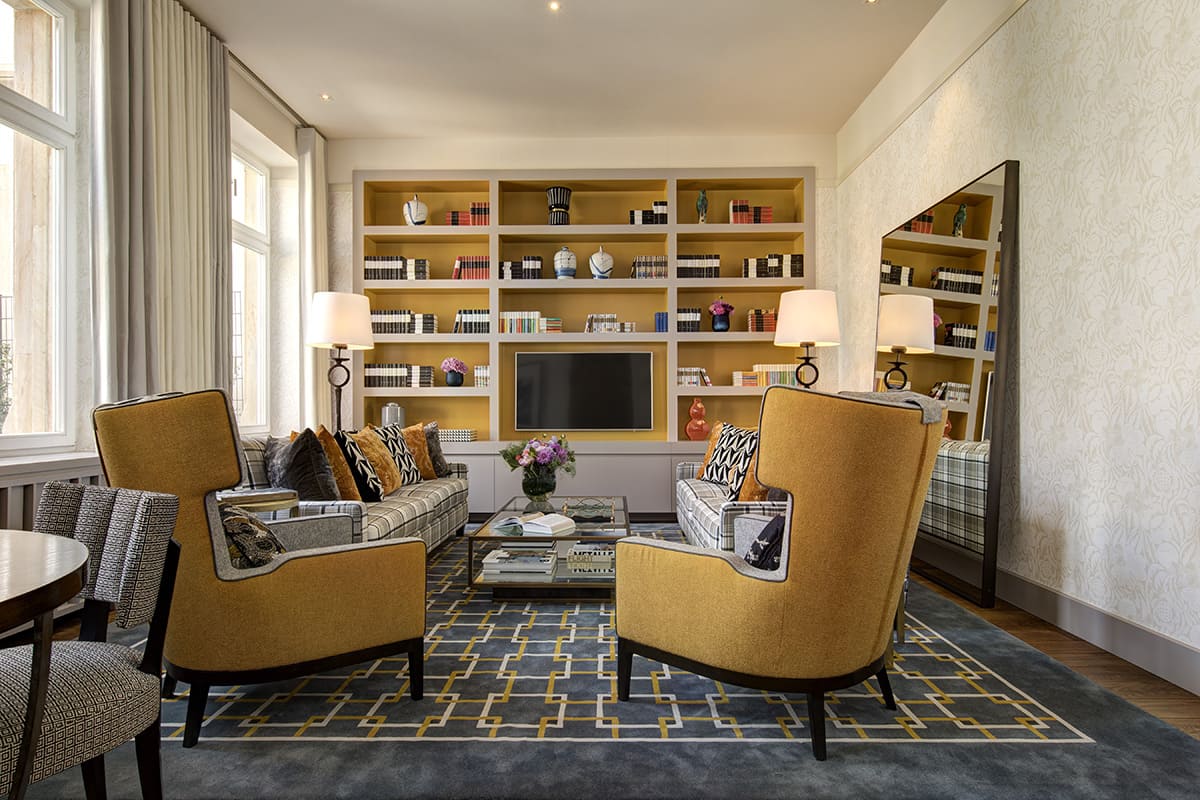
The Jackie O. Suite at the Villa Kennedy
In the third edition of our luxury travel views series, LUX Editor-in-Chief returns to Villa Kennedy, a Rocco Forte hotel in the centre of Frankfurt, to discover how it stands the test of time
Frankfurt is not a city known for either its romance or its luxury experiences. So, if someone suggested flying there for a romantic weekend, you might start doubting their sanity.
But bear with me here. Having landed at Frankfurt airport, a 15-minute taxi ride through a forest into Sachsenhausen, an area of grand villas, took me to the Villa Kennedy. A villa hotel with a spa a long way metaphorically from the skyscrapers of the city centre – although Sachsenhausen is just across the river from the financial district.
Follow LUX on Instagram: luxthemagazine
I had been to the Villa before, when Rocco Forte first opened it in 2006, and was curious to see how Europe’s most endearing (and indeed enduring) hotelier has adapted it to the times.
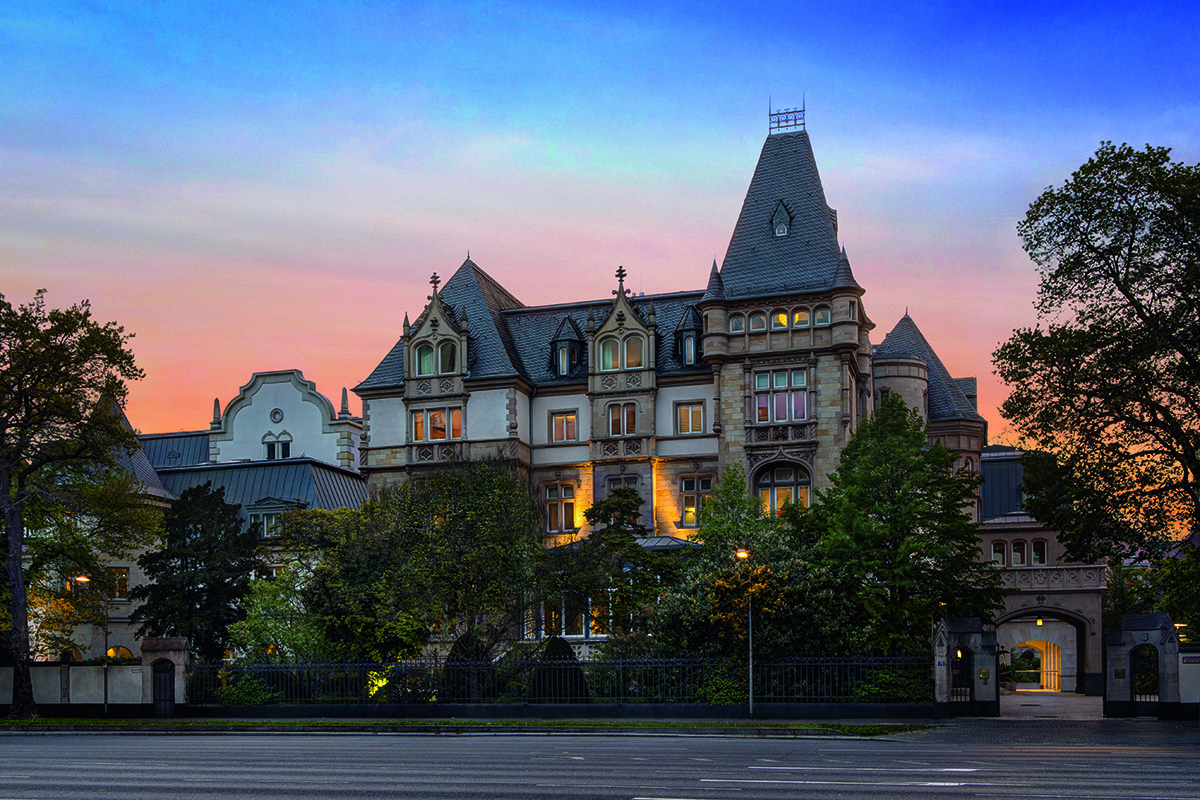
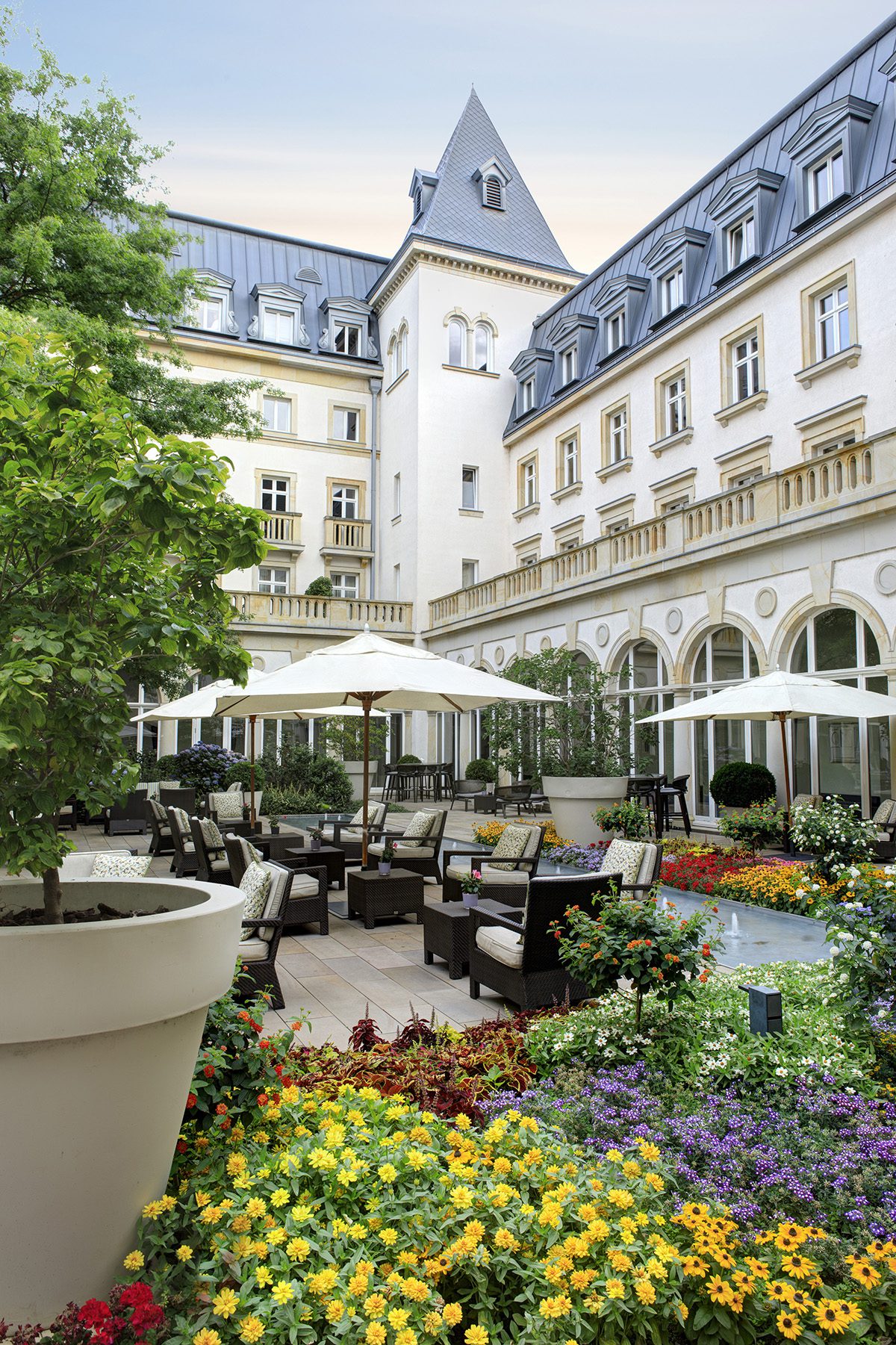
A view of the hotel’s façade (above), and the gardens
This is a very exclusive hotel and the Zen-like atmosphere virtually wafted me up to the Jackie O. Suite, whose library room was bigger than that in many a decent home, and looked out over a tranquil central courtyard, via an extensive private terrace. The decor was sixties inspired, with swathes of gold, and the coffee table was laden with books on art and design. The bedroom was separated from the extensive bathroom area by corridor so long that you could take your exercise at the Villa Kennedy just by walking the length of your suite.
As well as being a financial capital of Germany, Frankfurt is close to the Rhine winelands, and it was pleasing to see a good selection of those wines by the glass at the Italian restaurant, Gusto, that evening. Gusto is on the ground-floor level by the internal courtyard, and while the weather was not good when I visited, I imagine sitting at a table in the courtyard would be a delightful Italianate experience on a sunny summer’s day.
Read more: How to shop for art online by Artnet’s Sophie Neuendorf
I needed to finish off a presentation ahead of my meetings the next day, and the calm atmosphere and efficient service were just what was required to accompany a laptop, a glass of Trocken Rheingau Riesling and some tuna tartare with ricotta and cucumber. Perhaps, though, the restaurant has missed a trick in being too efficient, feeling like a better place for a corporate dinner or an editor working on a laptop, than a more lingering and languid romantic dinner.
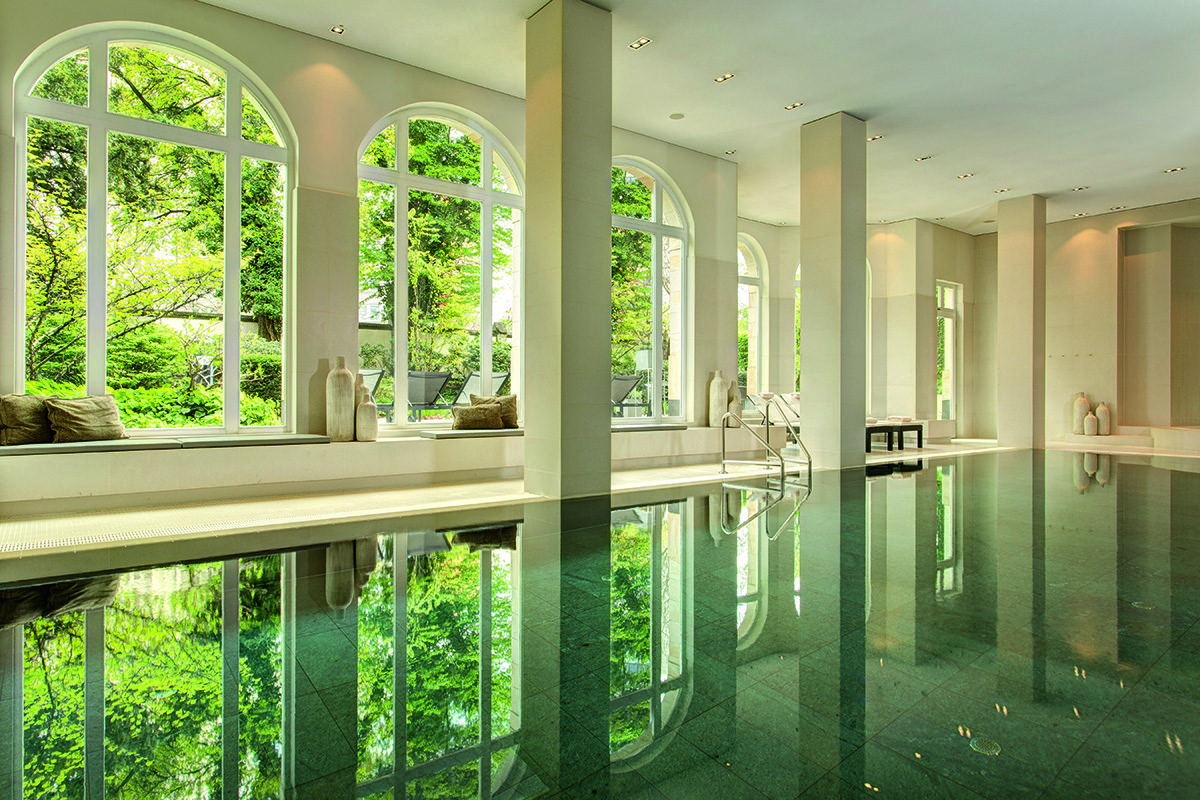
The spa swimming pool
That’s probably due to the nature of Frankfurt, although it’s a bit of a shame. The hotel also has a celebrated spa, which I didn’t have time to visit on my overnight, but which caters to the Frankfurt elite. Combined with the efficient journey, the architecture, location, and magnificence of the suite, a visit to the spa would’ve been a perfect ending to a romantic break, as long as there was a cuisine experience to match. Turn Frankfurt into a lovers’ location: Sir Rocco, you have overcome many challenges in your colourful life, and here’s the next one. It just needs a softening of the dining area to add the right mix of atmosphere, and ecco. Done.
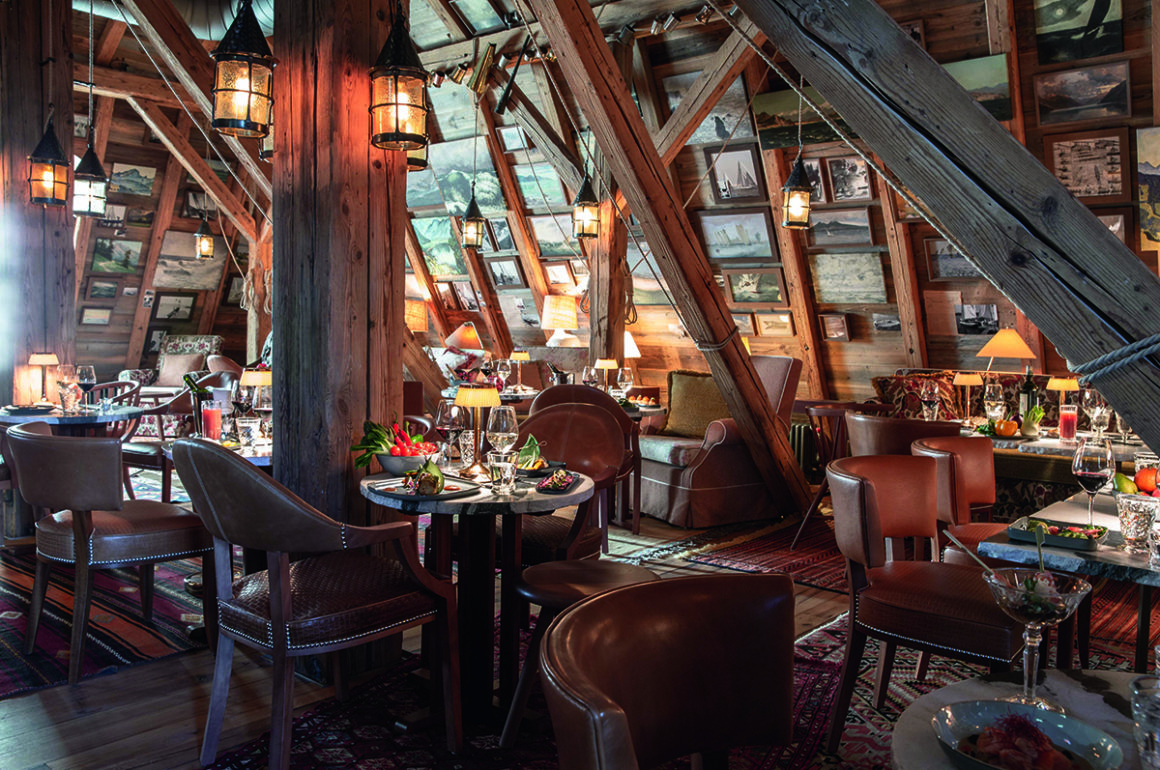
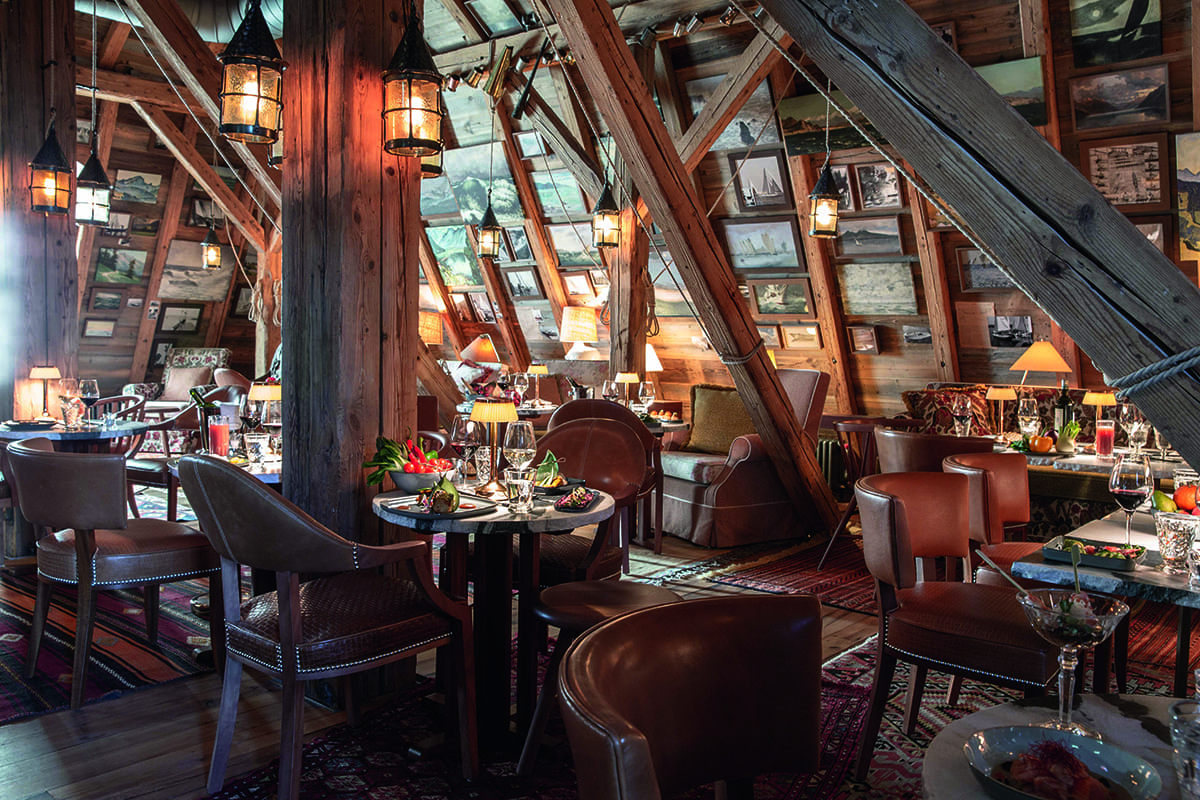
La Muña restaurant at La Réserve Eden au Lac Zurich.
In the second of our four part luxury travels view column, our editor-in-chief Darius Sanai discovers the elegant alpine charm of La Réserve Eden au Lac Zurich
Have you come across a La Réserve junkie? They are fans of one of Europe’s most distinctive and chichi luxury hotel groups, a kind of micro-version of the original Aman concept. There are La Réserves in Paris, Geneva and Saint-Tropez. The Geneva and St-Trop (in fact, Ramatuelle, on the coast just outside) properties have similarities. They’re both resorts, with delicious swimming pools – Geneva’s is the city’s most bijou pool and spa, as well as an outdoor pool with a country-club feel for the summertime.
Follow LUX on Instagram: luxthemagazine
So, I was interested when the owner of the La Réserve group, Michel Reybier, told me that he was opening a La Réserve in Zurich, not a city known for the quality or variety of its luxury hotels. But where would it be? Just outside town, on a greenfield site near the lake, like Geneva? Or a city centre hotel like Paris?
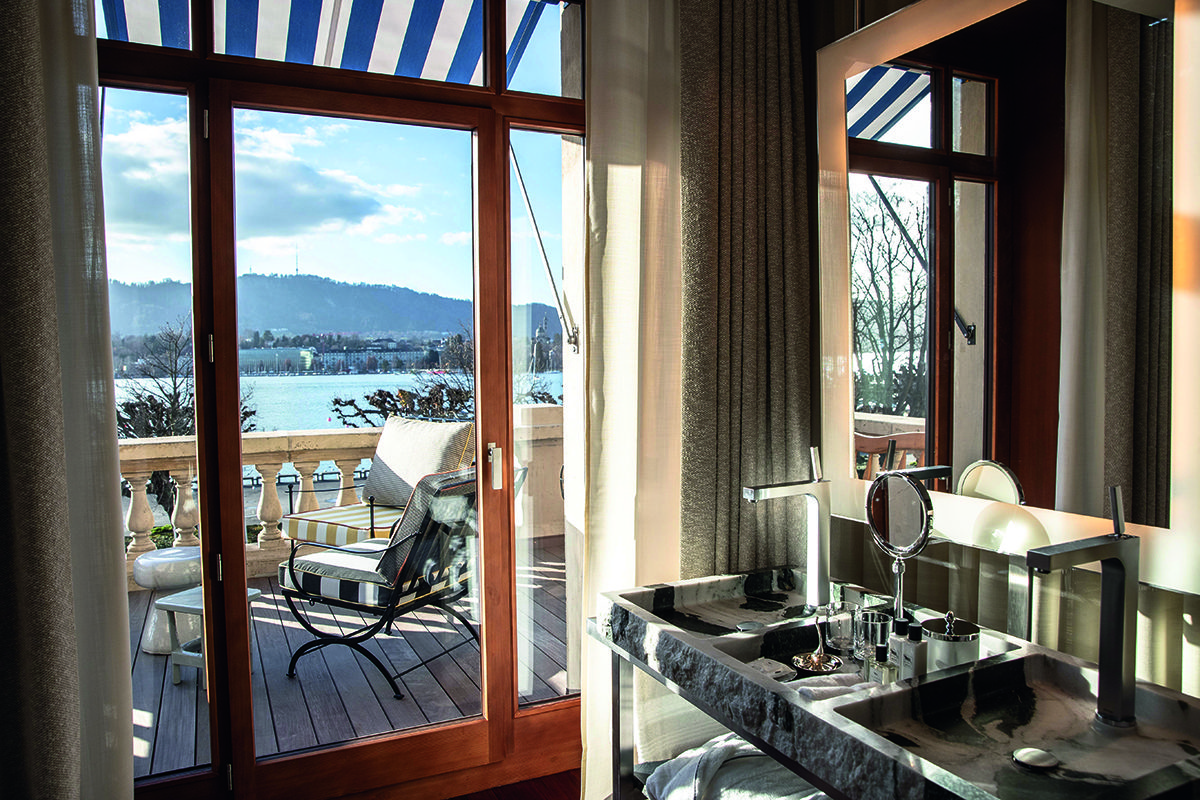
The view from one of the hotel bathrooms. Image by G Gardette
The answer is, a bit of both. The La Réserve Eden au Lac is, as its name suggests, set on the shore of Lake Zurich, a ten-minute walk or five-minute taxi ride from the heart of downtown. It is still in the city centre, a conversion of one of the city’s most celebrated properties, Hotel Eden, which had become a little neglected.
Read more: How ethical blue economy investments support ocean conservation
My room, on the second floor, with a small balcony, had an entrancing view across the lake to the Alps beyond. The interior was just delightful. The bed was in the centre of the room, with a writing desk behind, a blend of 20th-century modern and contemporary touches in the design, bare walls, Ibiza-style white drapes and some beautiful Swiss marquetry.
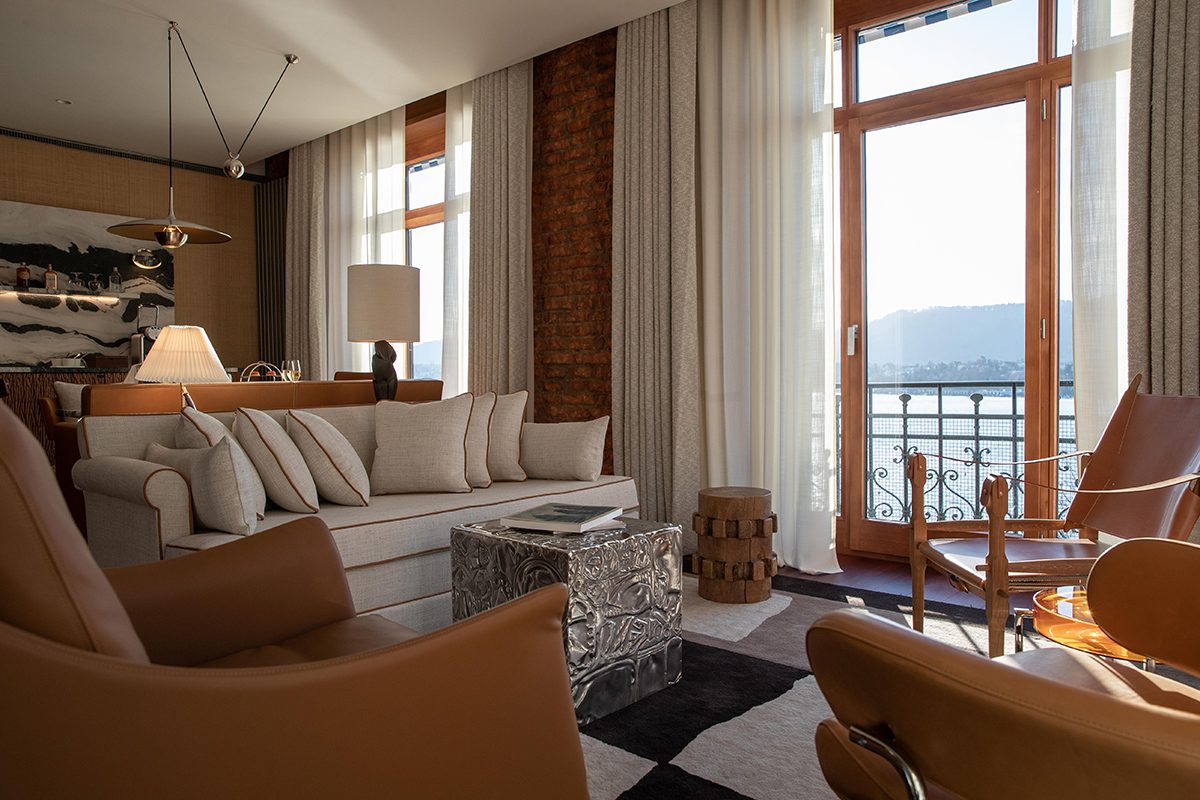
The Eden Suite at the hotel
Reybier has made the Geneva and Saint-Tropez properties destinations in themselves due to their dining and bar options. Would Zurich be the same? The Eden Kitchen & Bar is melded into the lobby restaurant and, while many people would enjoy their Cecconi’s-type vibe, I like my hotel bars to feel a little bit more exclusive, more club-like.
Fortunately, Reybier also appointed Philippe Starck to create La Muña on the top floor. With a view across the lake and city on a clear summer day, it’s also a curious and rather wonderful mix of Alpine and ‘yachty’ (the concept is ‘an imaginary yacht club created by Starck’) in an attic-type space in the rafters of the building. It really feels like an Alpine chill-out bar serving fabulous Japanese food, with a hint of South America. Creamy spicy salmon tartar with tobiko, sesame, jalapeño and fried rice was gorgeous, as were the grilled vegan gyoza. La Muña also has a very painstakingly sourced list of Swiss wines, the best of which were superb and hard to find.
Chapeau, Monsieur Reybier, you may just have created your best Réserve yet.
Find out more: lareserve-zurich.com
This article originally appeared in the Autumn/Winter 2020/2021 Issue.
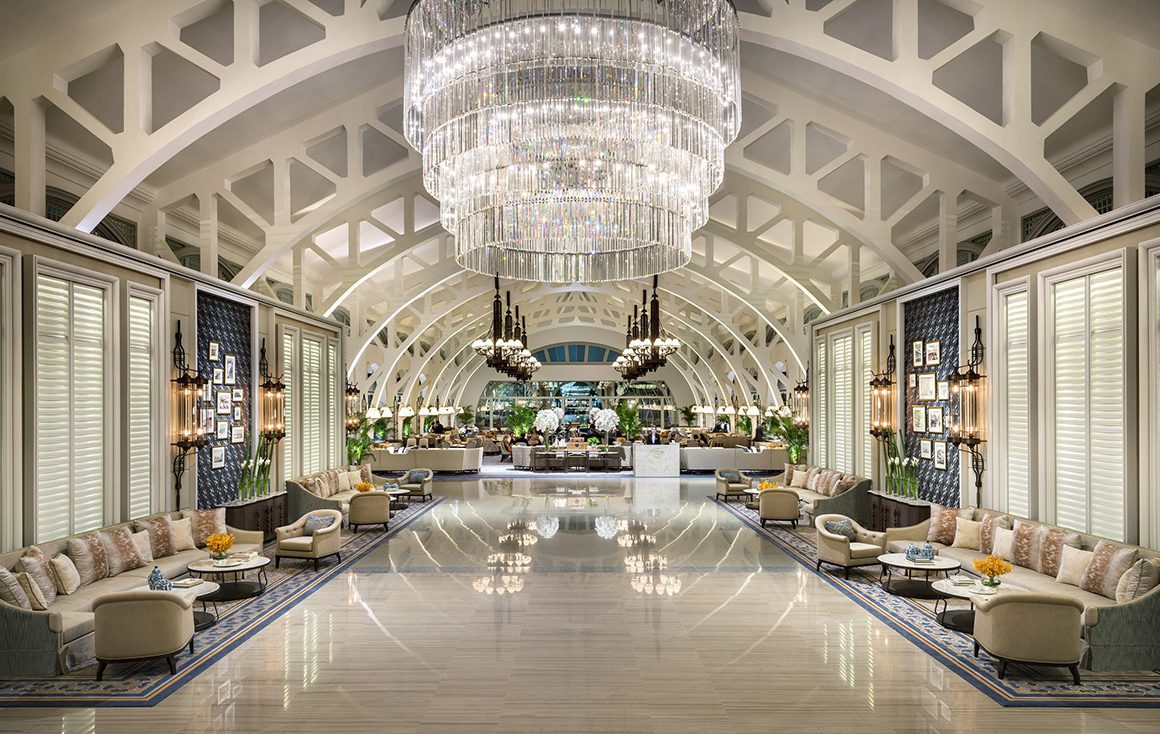
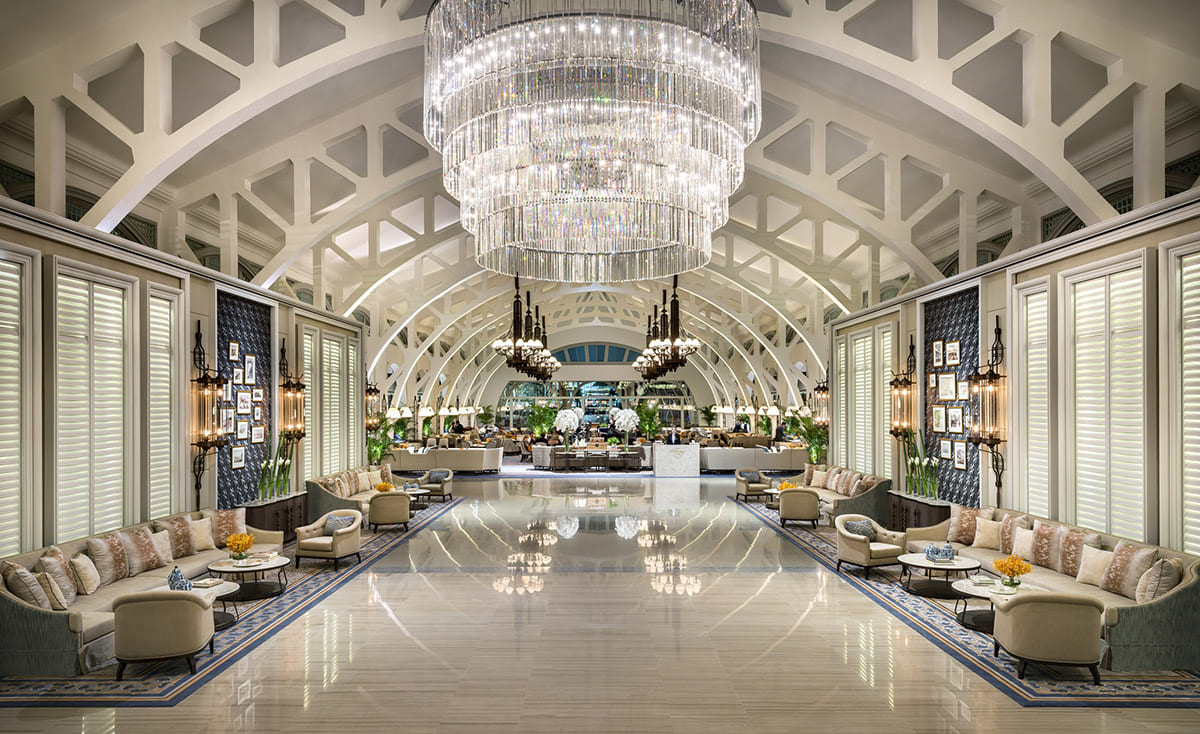
The reception area at The Fullerton Bay Hotel Singapore
In the first of our four part luxury travel views column, our editor-in-chief Darius Sanai recalls the breathtaking views and chic ambience of The Fullerton Bay hotel in Singapore
A first-time visitor to Singapore before would be forgiven for being rather surprised arriving at the rooftop swimming pool at The Fullerton Bay hotel. The city state has a reputation for being efficient but unexciting – a business city for the wealthy, not a tourist destination.
Walk out of the lift on the top floor of the hotel, and you realise that reputation is outdated. In front of you is a huge outdoor pool with sunloungers both beside it and along both sides, inside it – meaning you can have both a wet bar and a wet sunbathe. Or moonbathe, in my case, as I had just arrived on a long-haul flight in the evening. Beyond the pool was a bright and throbbing outdoor bar area, the front row of which looks directly across the water of Marina Bay at the celebrated skyline of the Sands landmark on the other side, beyond which is the ocean and, in the distance, the islands of Indonesia.
Follow LUX on Instagram: luxthemagazine
It may seem ‘normal’ if you are a resident of Singapore but coming from the western hemisphere this tropical city skyline-bar-swimming pool combination is literally breathtaking. A quick swim, then down to my room to get changed ahead of a couple of drinks in the bar, refreshing the palate before a long day of meetings the next day.
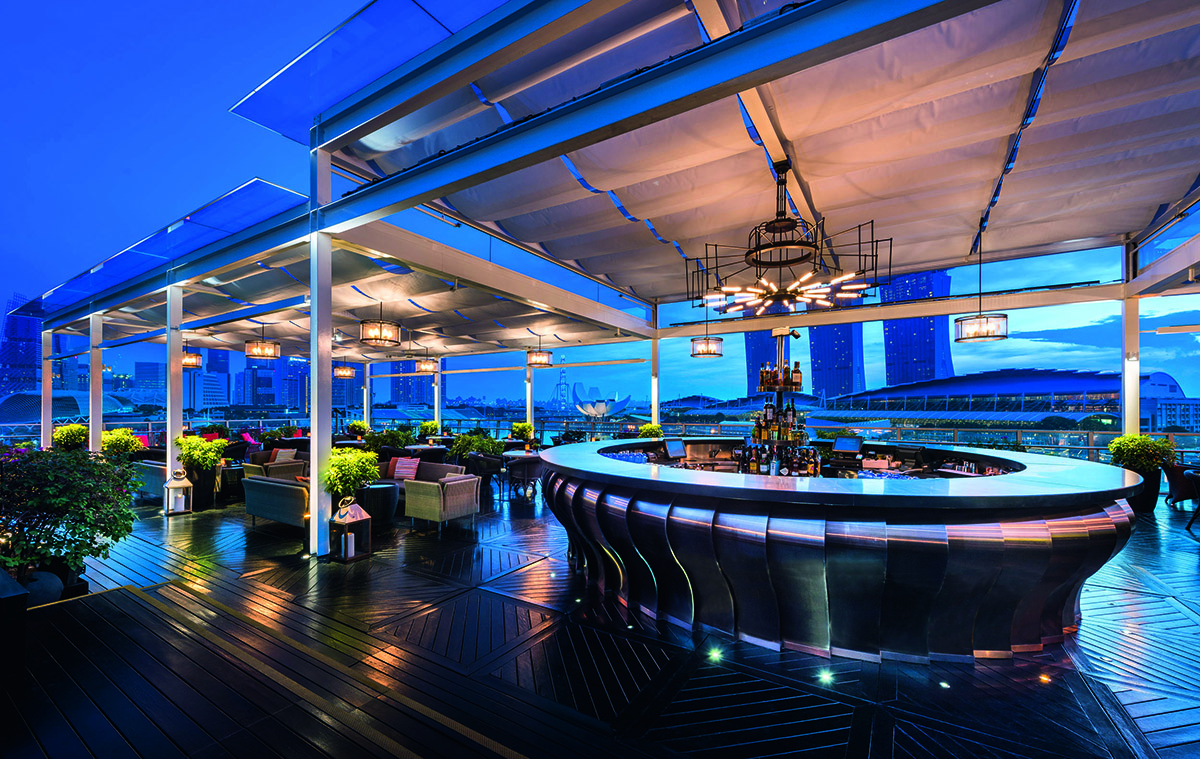
The rooftop Lantern bar at The Fullerton Bay Hotel, Singapore
While I was swimming, my room had been transformed. Normally, the ground floor is no place for a suite in a luxury hotel, but at The Fullerton Bay, the ground floor is located directly on the water. No road, no path, nothing in the way – the screens in my room had been folded back by the turndown service so I had a 180-degree view of the harbour, and when I stepped out onto the balcony and into my own personal swimming pool, I could also have taken a couple of steps more and jumped into the sea.
Read more: Activist José Soares dos Santos on environmental responsibility
If I’d been on my own, I would’ve stayed right there on the balcony, ordered some champagne, and chilled in the equatorial moonlight.
Up on the roof, by 10pm, the bar was turning more into a nightclub, with people dancing in an area cleared of tables. I sat at a table on the corner of the bar terrace, a 360-degree view of Singapore city centre all around. A pretty exhilarating introduction into the city.
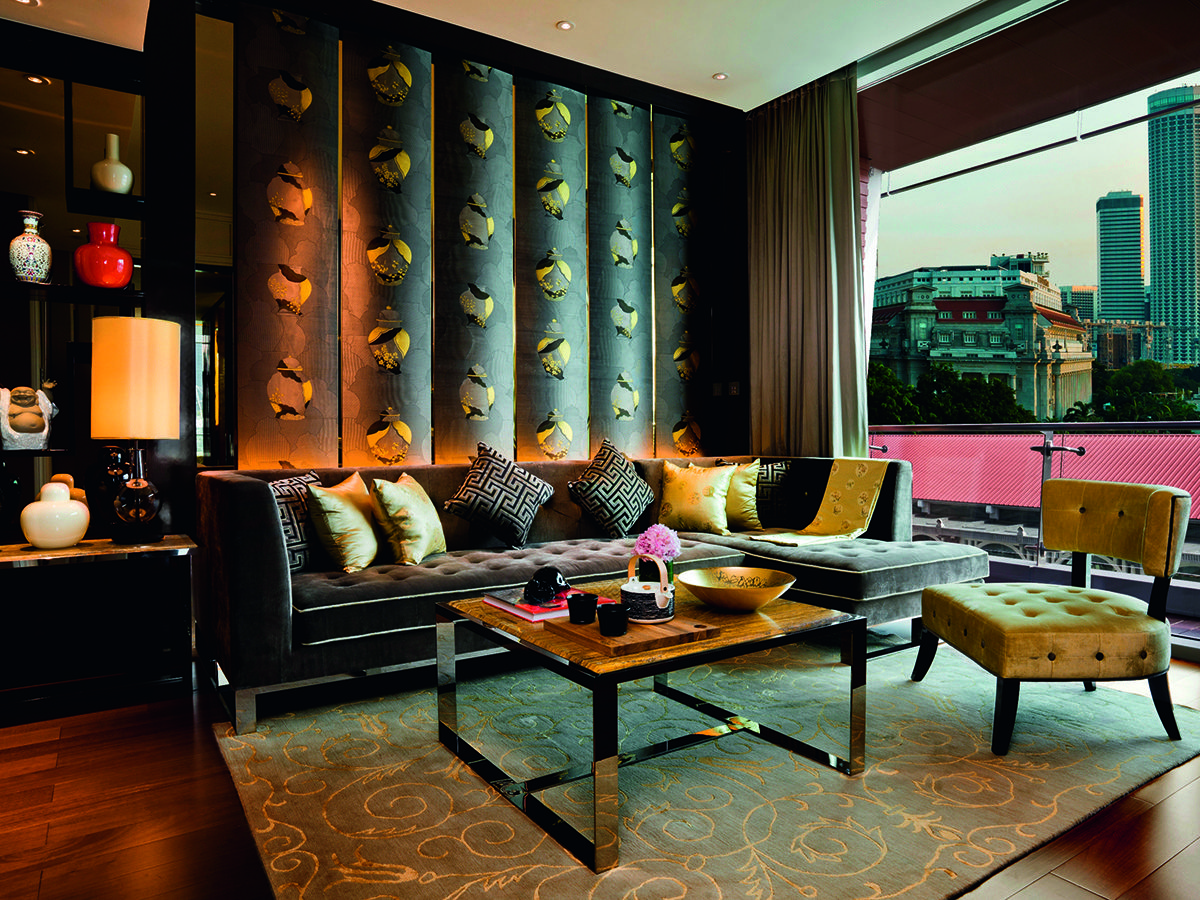
The living room of its Robinson Suite
In a time when eating outside is advisable as well as enjoyable, The Fullerton Bay has no shortage of options, as I discovered at my outdoor breakfast the next day. It is served à la carte, with tables well spaced, and a choice of Malaysian/Indonesian (nasi goreng), Chinese, and western, it would have been perfect on a luxurious break. On a business trip, though, I recommend you don’t make the same mistake as I did and go down in a crisp white Margiela business shirt to wear at your meetings – 8am, Singapore weather is hot enough to turn you into a sweat ball, meaning a rapid return to the room to change.
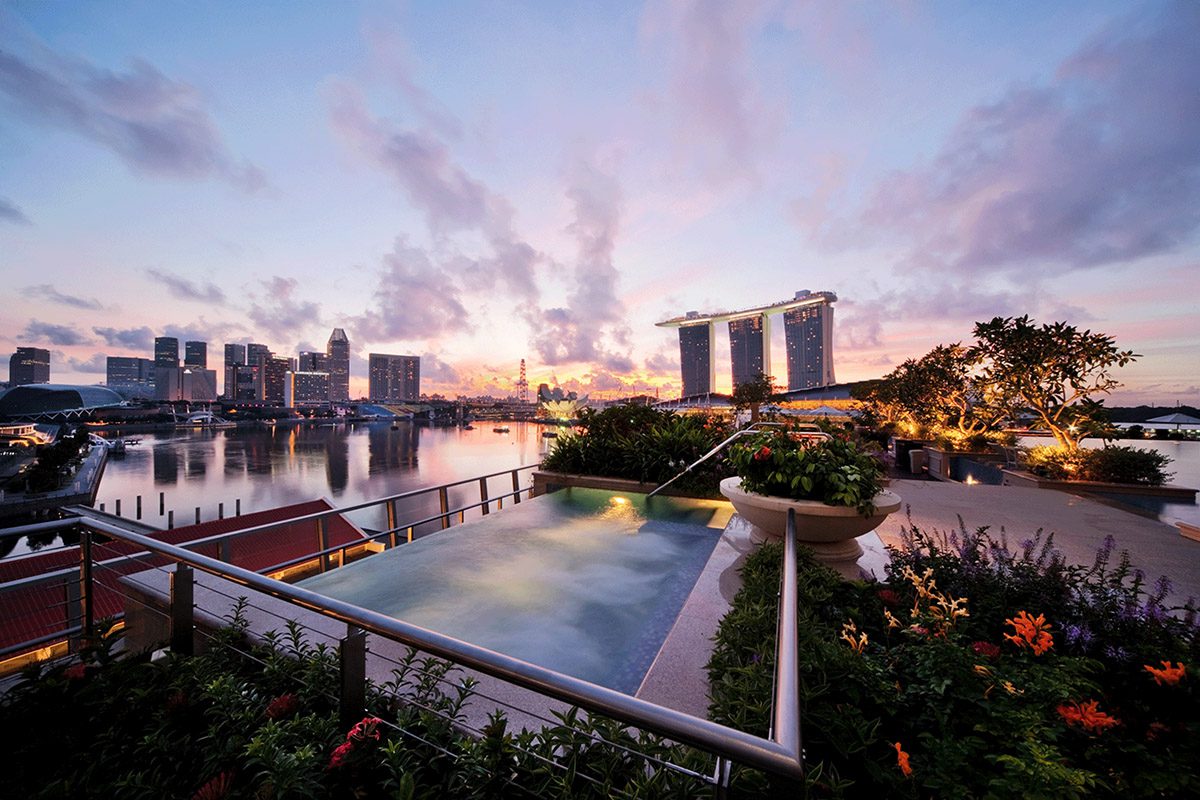
The hotel’s rooftop jacuzzi
Fullerton is a legendary name in the Asian luxury industry, owned by the redoubtable and charming Ng family (who are also active in Hong Kong) and the more famous hotel and original of the same name is located 100m along the waterfront. The Fullerton, a local institution, is the colonial-era palace but is not priced at the same high-level as its more exclusive sister hotel. It is where you have to go for spa treatments, and I arranged one for just before my flight home. It was a mixture of Chinese pressure-point massage, ginger, rosemary and lavender oil, and stretching and soothing that was the perfect end to the Singapore stay-over. Over the years, I have changed my pre-long-haul flight routine flying back from Asia from champagne and sushi to a swim and a spa treatment, which is definitely more effective if you want to feel fresh on landing the next day.
Find out more: fullertonhotels.com
This article originally appeared in the Autumn/Winter 2020/2021 Issue.
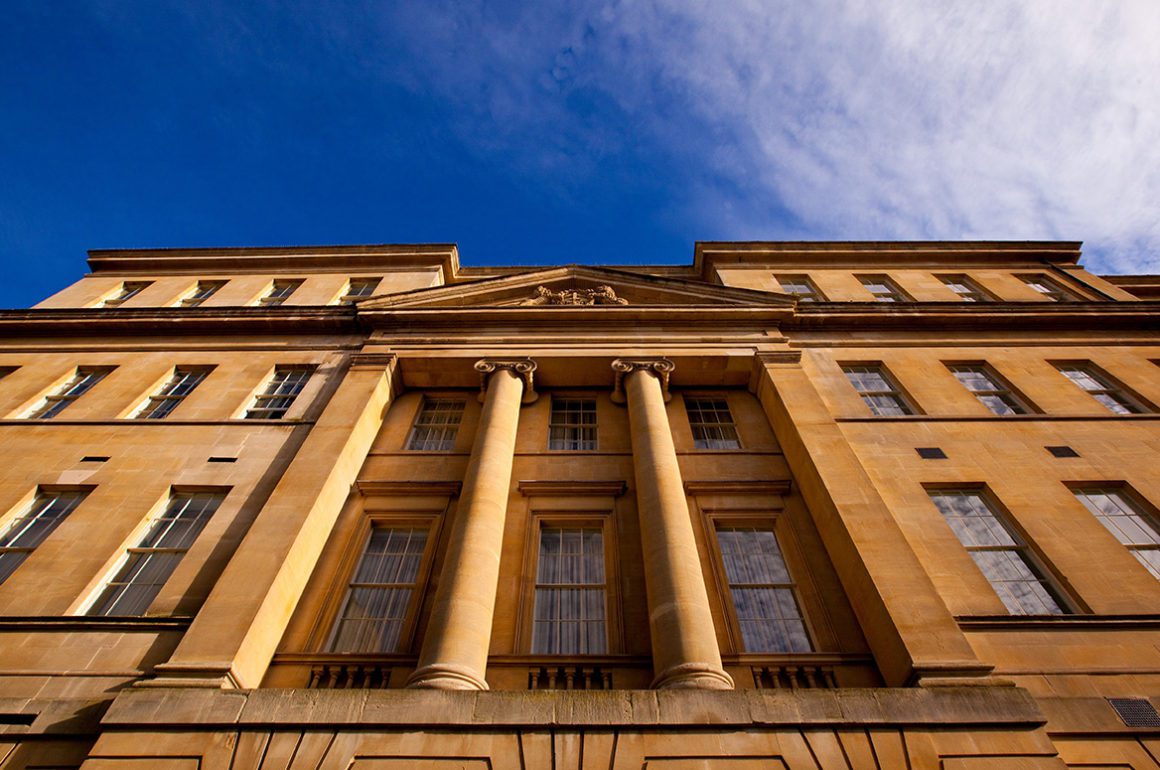
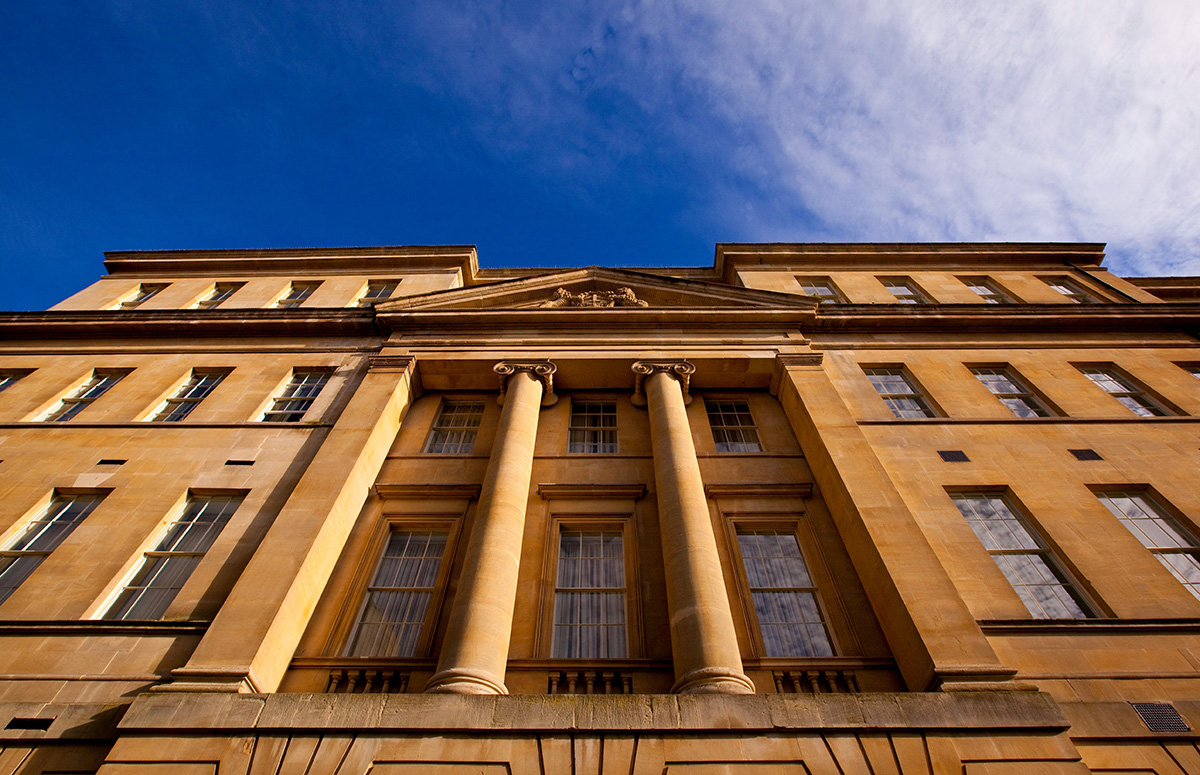
The Gainsborough Bath Spa occupies two Grade II Listed buildings in the heart of Bath
The Gainsborough Bath Spa is located in the heart of the historic city of Bath, but with access to natural thermal waters, extensive spa facilities and a calming atmosphere, it’s no ordinary city hotel. LUX checks in for a midweek stay
Staycations have soared in popularity this summer and it’s likely to be a lasting trend not only for pandemic reasons, but also for travellers seeking a more sustainable alternative to travel. For London residents especially, Bath is a no-brainer. One of the UK’s most beautiful and historic cities, it’s just over an hour by train from Paddington Station or an easy two and half hour drive, and if you’re staying at The Gainsborough Bath Spa you don’t even have to worry about parking. The valet is there to meet you at the bottom of the hotel’s steps and on check-out, the car’s ready and waiting, stocked with water bottles and a little tin of mints for the journey. It might not sound like much, but these are the kinds of thoughtful extras that contribute to a completely stress-free experience.
Follow LUX on Instagram: luxthemagazine
The YTL group (to which The Gainsborough belongs) is known for its acute attention to detail. Added to the top-notch valet service, all the rooms, regardless of category, have complimentary mini-bars stocked with artisanal snacks and juices, and the bathrooms are filled with an abundance of good-sized Aromatherapy Associates toiletries and fitted with underfloor heating.
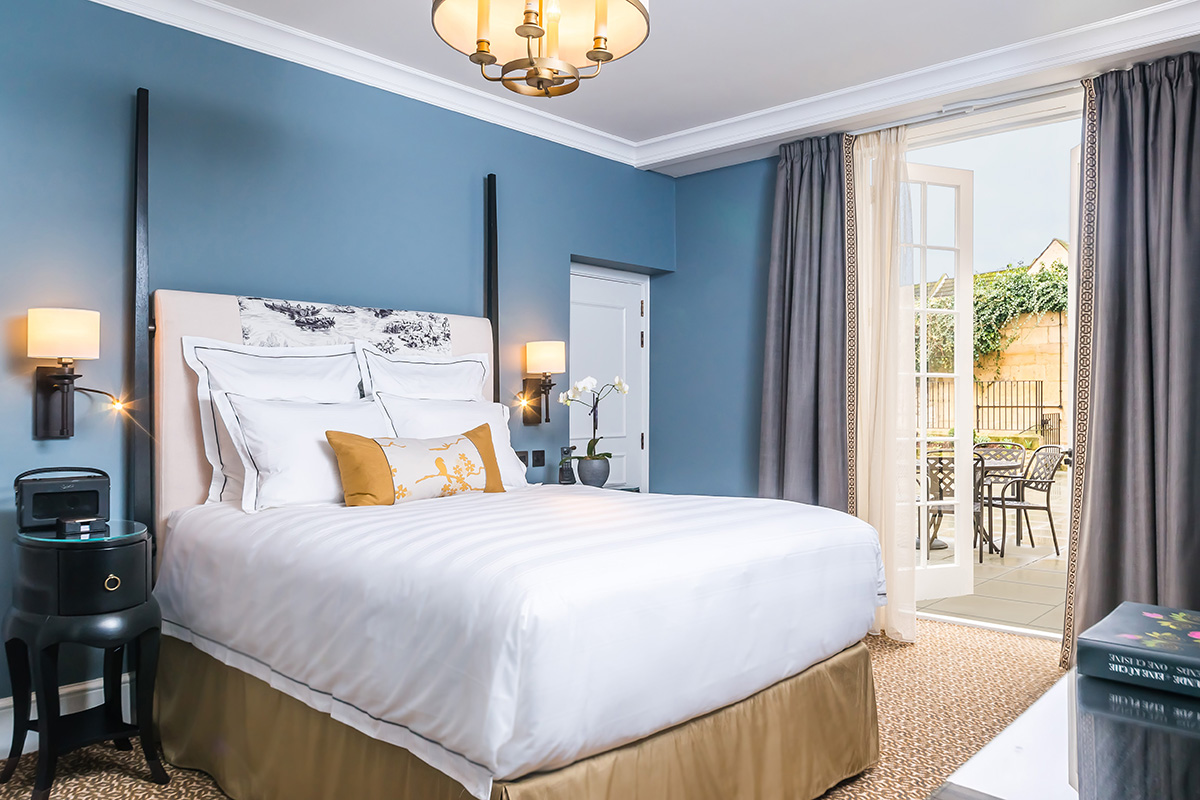
One of The Gainsborough’s courtyard rooms
The rooms are smart, modern and spacious, decorated in a soothing colour palette of duck-egg blue and gold with varying layouts. We stayed in a two bedroom suite, which takes the form of a maisonette with a double room and bathroom upstairs, and an additional double (or twin) room downstairs with a small sitting room. Both beds were exceptionally soft with piles of pillows, but the downstairs room was somewhat lacking in natural light whilst the rest of the suite benefited from towering ceilings and huge windows.
Read more: Diango Hernández’s disruptive Instagram art project
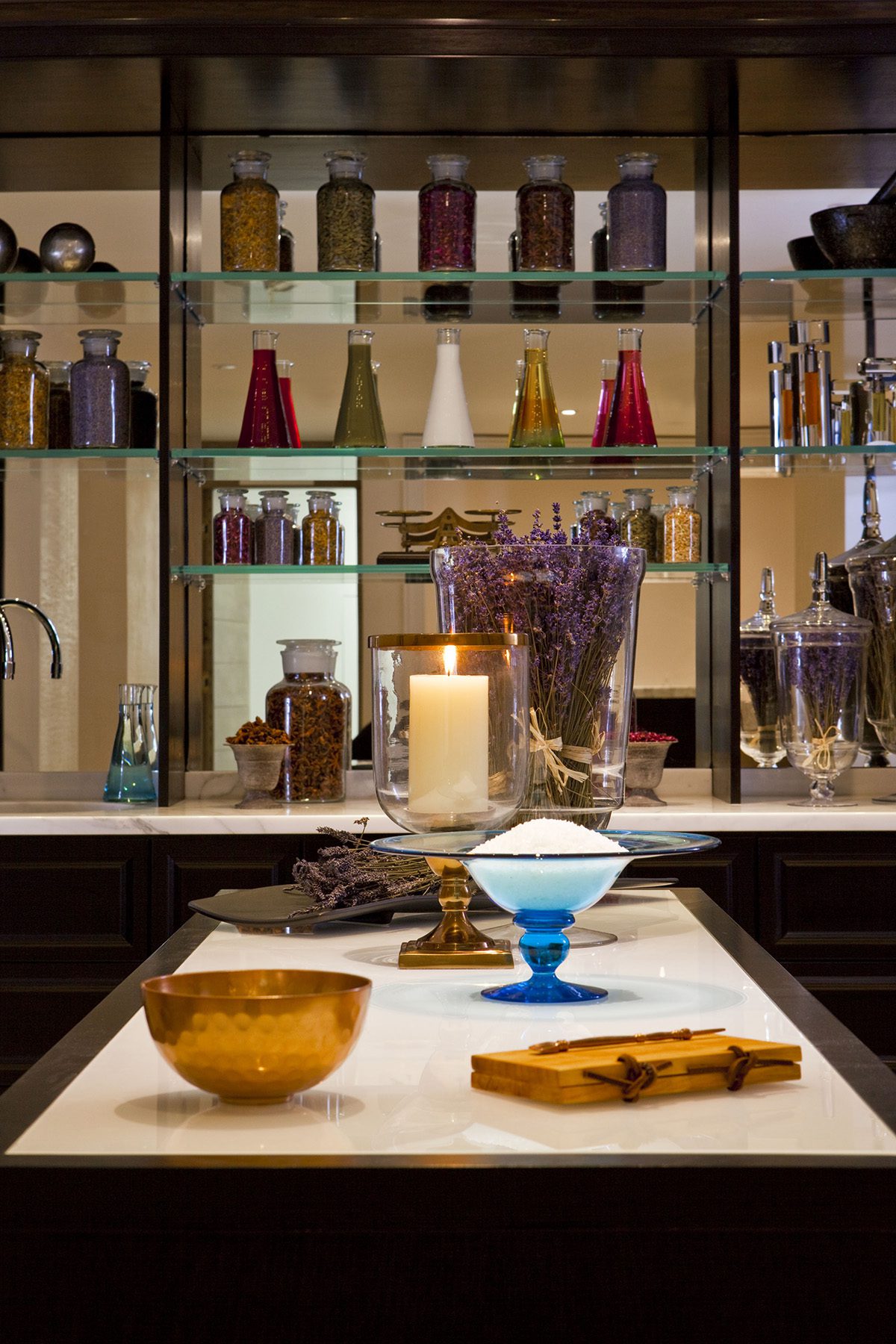
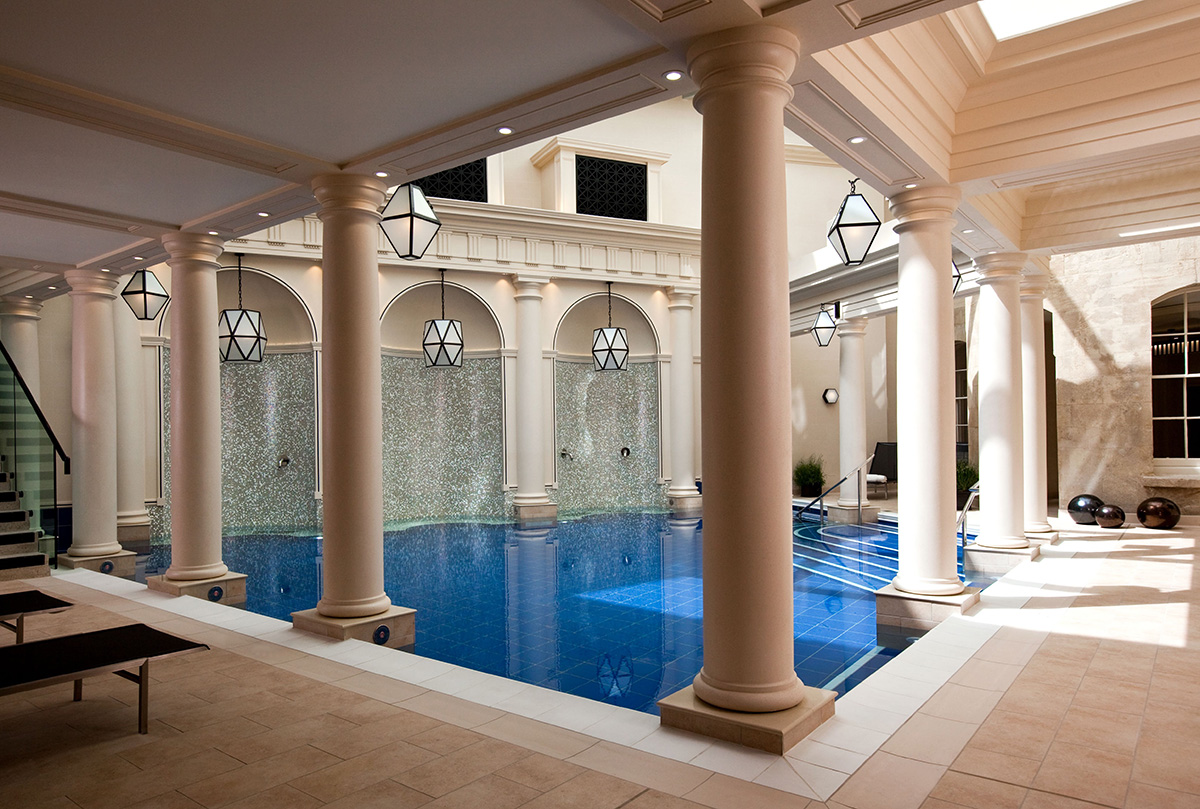
Aromatherapy bar (above) and one of the thermal pools in the hotel’s spa village
The Gainsborough features the only hotel spa with access to the city’s natural thermal waters. Currently, visitors are required to pre-book one-hour bathing sessions to prevent overcrowding, but that still leaves plenty of time to dip into the different pools, sauna and steam rooms with breaks in-between for shots of thick, spiced hot chocolate (a favourite of the Romans). In terms of treatments, there’s usually a wide selection including various acqua therapies, but due to current Covid restrictions, the signature massage is the only offering, beginning with a foot bath in neroli water infused with rosemary and pine essences followed by a full body massage using calming lavender oils. Spa experiences begin with a mini workshop making scented salts using a selection of Aromatherapy oils, and end with a cup of pink Hibiscus tea on the terrace overlooking the baths.
Read more: Holly Chandler of boutique travel company Fish&Pips on travelling post lockdown
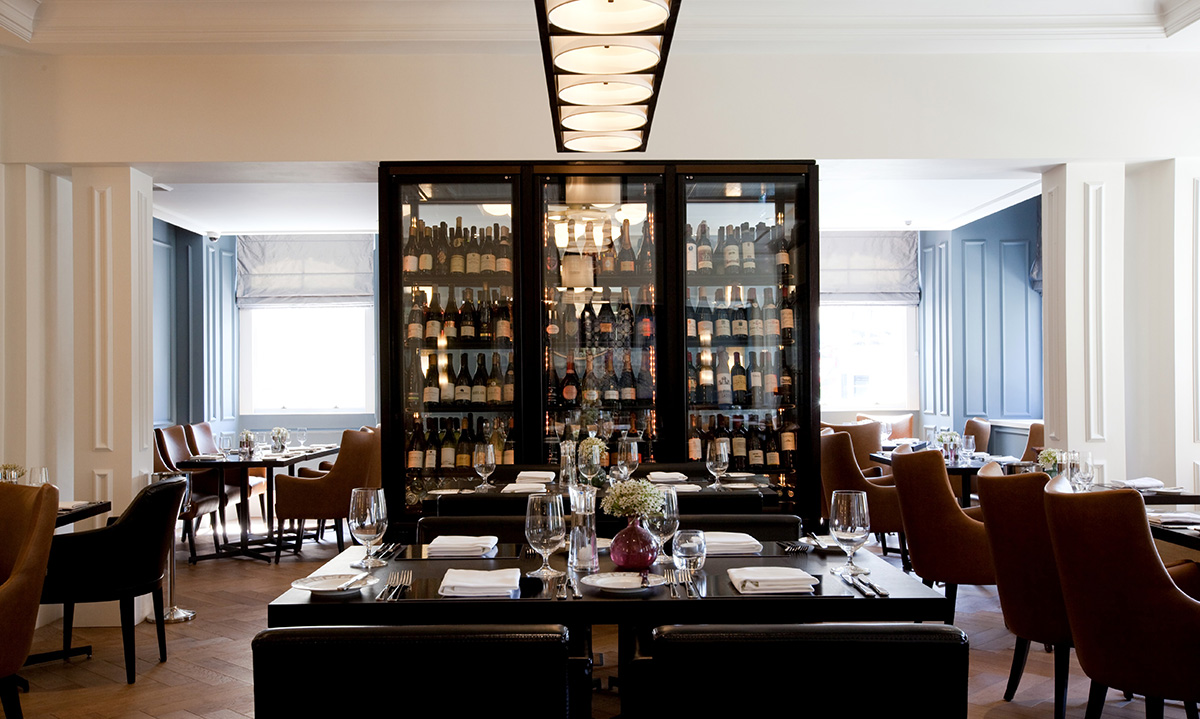
Dan Moon’s restaurant is currently only open for breakfast
Dan Moon’s restaurant, which usually serves elegant dishes made from seasonal and locally sourced ingredients, is only open for breakfast at the moment. In the afternoon, tea is served a chic mirrored lounge known as The Canvas Room and the bar is open in the evenings for cocktails.
It’s a hotel that prioritises its guests’ relaxation and privacy. Staff are warm and attentive, but generally leave you to wander freely, creating a pleasing sense of homeliness. It’s the kind of place you can imagine returning to year after year.
Rates start from £325 per night for a Deluxe Room including breakfast (approx. $400/ €350). Book your mid-week getaway: thegainsboroughbathspa.co.uk
Please note: This review was carried out before the global lockdown. Valet parking is currently not available to guests.
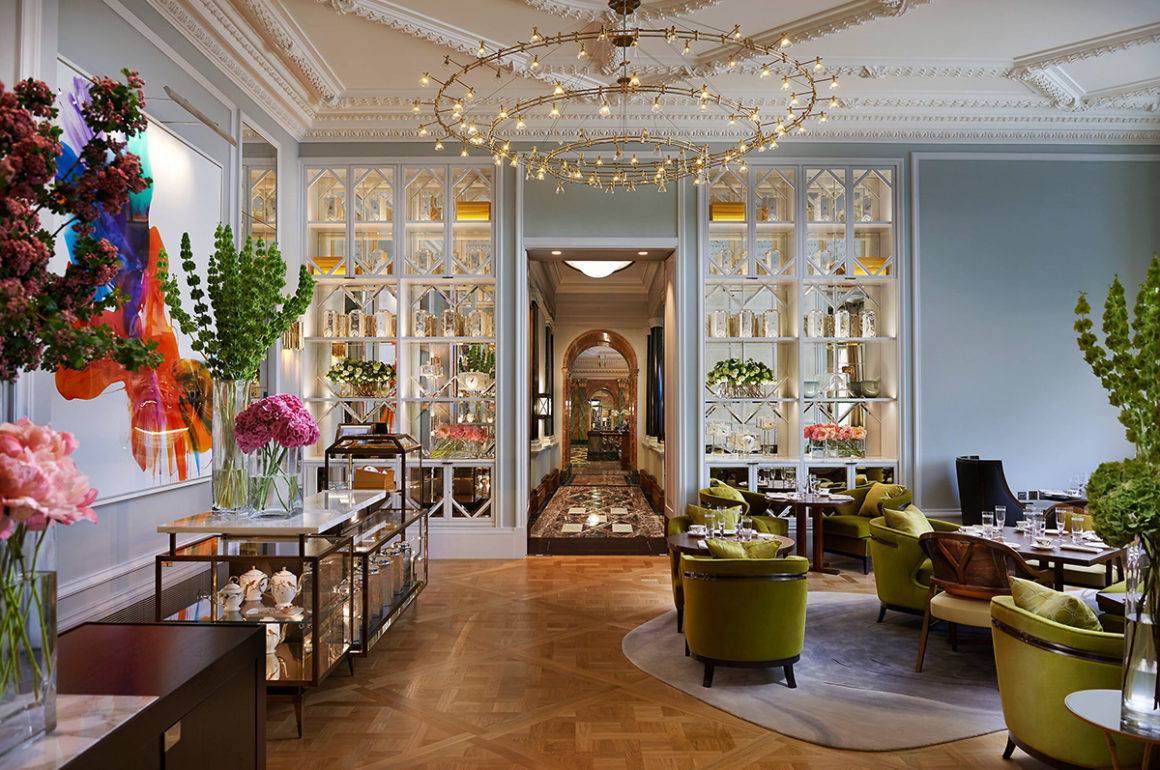
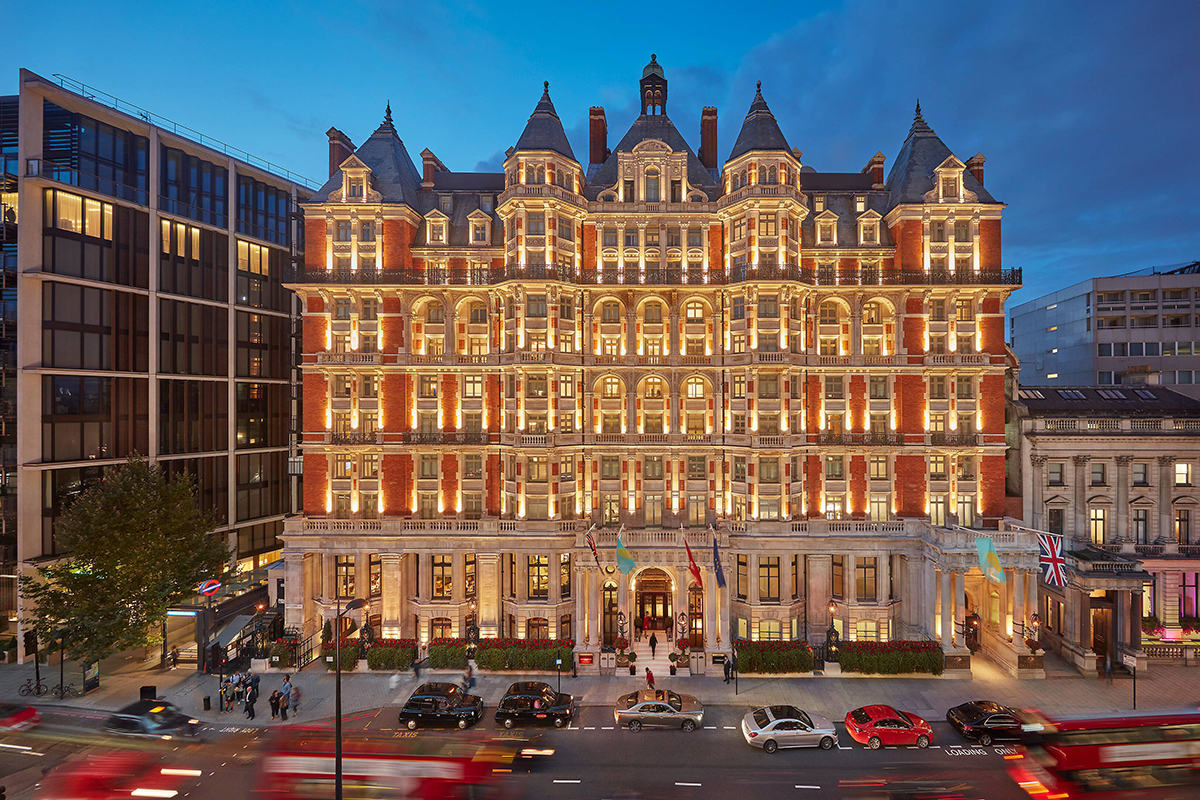
Located in heart of Knightsbridge, Mandarin Oriental London backs onto Hyde Park
Why should I go now?
The last few years haven’t been easy for Mandarin Oriental Hyde Park. Following the hotel’s biggest ever refurbishment, a major roof fire broke out in 2018 causing significant damage and almost two years of closure. It reopened at the end of 2019 with a bright new contemporary look, only to face closure again due to Covid-19.
Follow LUX on Instagram: luxthemagazine
Thankfully, the hotel reopened its doors to guests on 23 July, and for those looking for a luxurious and relaxing summer staycation, there’s no better place; London is at its best in the summer and the hotel boasts one of the best locations from which to enjoy it. The back entrance of the hotel (reserved for the Queen) opens directly onto Hyde Park where you can jog, picnic, meditate, horse ride, row on the Serpentine and wander through Kensington gardens whilst the other side (the public entrance) sits opposite Harvey Nichols. Down the road is Harrods and South Kensington, Mayfair and the West End are all a 15-minute stroll away.
What’s the lowdown?
The hotel was originally built in 1889 as a gentleman’s club and the grand red-brick Edwardian exterior remains beautifully preserved as a relic of the city’s past. The interiors, however, have been given a hefty make-over by designer Joyce Wang. A light, floral colour palette reigns throughout with flashes of gold and copper detailing; flower-shaped lighting features hang from the ceilings and huge vases of fragrant seasonal blooms designed by McQueens stand on almost every surface alongside misty terrariums filled with giant succulents. The atmosphere is joyful, calming and a tiny bit eccentric. Entering through the double doors (held ajar by men in top hats and red blazers) and up the grand staircase, feels delightfully cinematic and otherworldly.
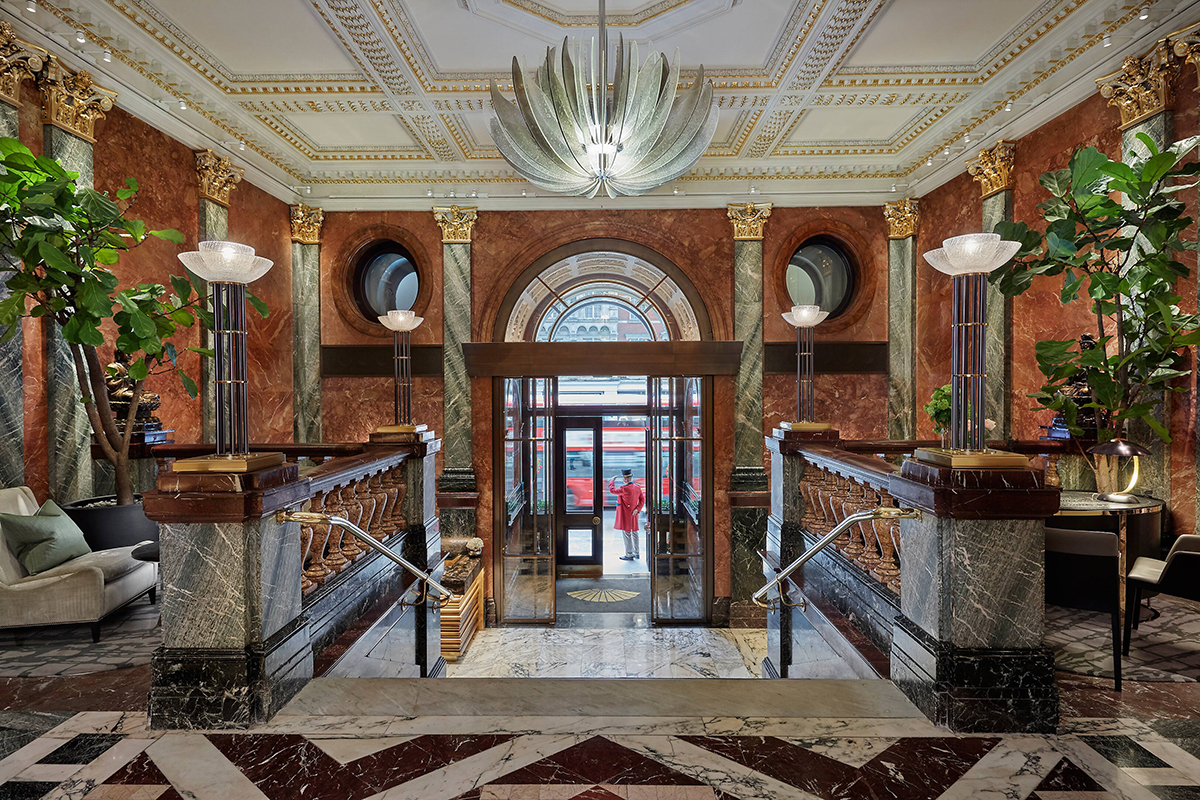
The entrance into the hotel from the street; the Hyde Park entrance is reserved for the Queen
The underground spa is moody and sexy. Redesigned by Adam D Tihany, it features a slim 17-metre heated pool with a good-sized gym, but the real highlight is the wellness experience. The experience begins in the changing rooms where there are a variety of (gender separate) pools, steam and sauna rooms followed by a relaxation room, featuring exceptionally comfortable loungers, snacks and mindful activities such as colouring, breathing exercises and meditation. If you’re having a massage, facial or scrub, this is where the therapist collects you from (it’s worth remembering to arrive in plenty of time), but even without a treatment, it’s a deeply calming space to spend time in. We went twice during our stay and on both occasions, we had the facilities to ourselves.
Read more: CEO of Azumi restaurants Sven Koch on the future of hospitality
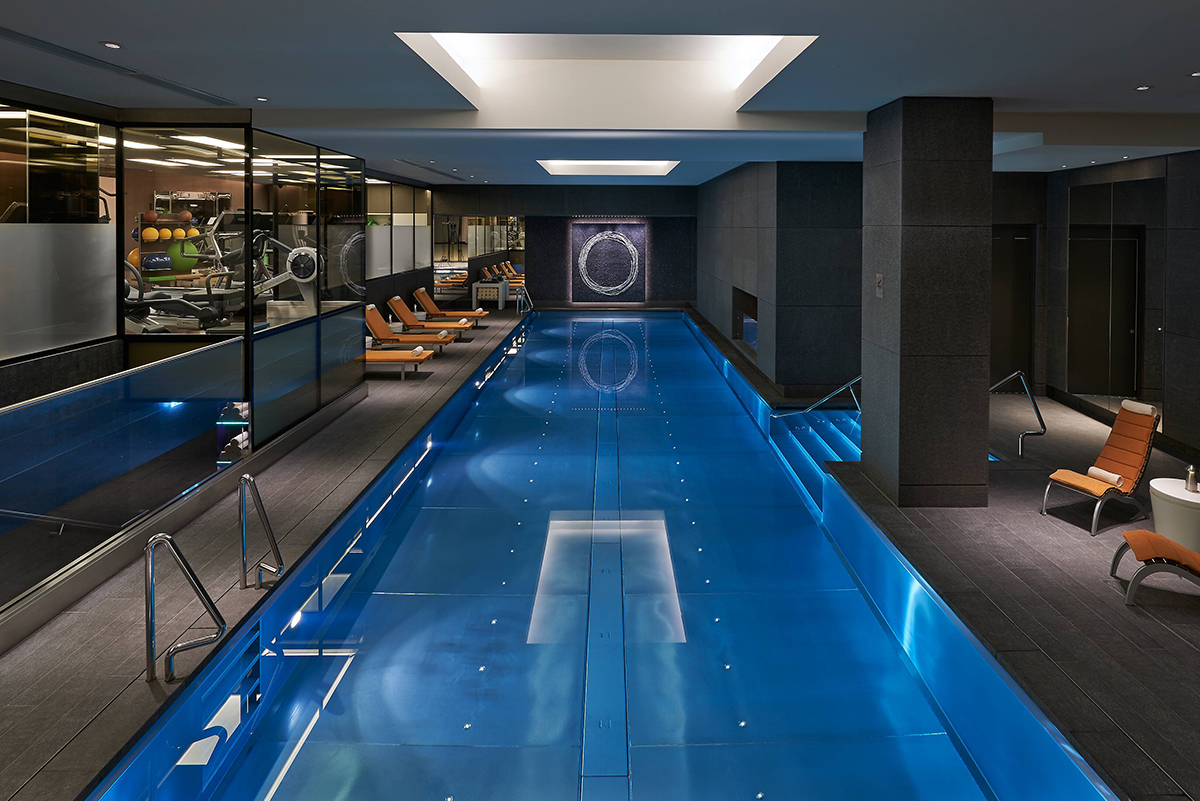
Redesigned by Adam D Tihany, the spa features a 17-metre underground swimming pool
In terms of dining, Bar Boulud is the hotel’s all-day French bistro. Situated on the lower ground floor and accessible by a separate entrance from the street, it offers a relaxed, easy atmosphere and a menu of refined comfort food; our favourite dishes were the rich onion soup and creamy, white wine moules served with thin, crispy pommes frites. Despite its name, Heston Blumenthal’s Dinner serves lunch or dinner in a more high end setting with a range of a la carte and tasting menus and an exclusive chef’s table experience.
The prettiest of the restaurants, however, has to be The Rosebery. Open throughout the day, The Rosebery serves one of the most impressive hotel breakfast menus we’ve ever experienced. Alongside the usual array of pastries and cereals, there are detox juices, bircher museli, exotic fruit platters and beautifully cooked dishes with lots of healthy options. The afternoon tea is also something of an occasion with a bespoke menu designed to match the chosen tea blends.
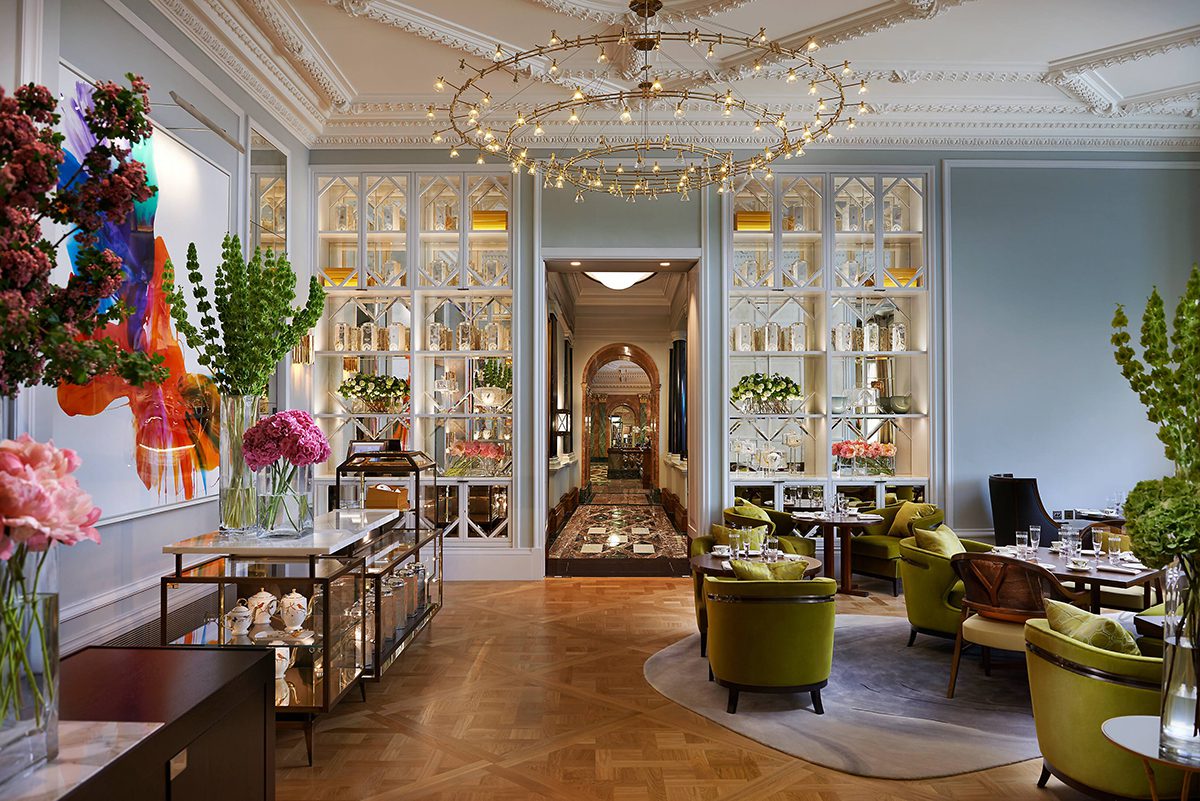
The Rosebery is open throughout the day for breakfast, lunch, afternoon tea and dinner
The service throughout the hotel is impeccable. Every member of staff, even the ones we hadn’t met, seemed to know our names, but we also liked that it never felt intrusive. Many of the hotel’s guests are public figures (we spotted a few familiar faces who we won’t name), so privacy is respected and prioritised.
Getting horiztonal
Our Deluxe room overlooked the streets of Knightsbridge and straight into the windows of Harvey Nichols, which was a somewhat surreal but amazing experience. We especially loved watching the transition from day to night as the sun dipped and the lights began to glow through the windows.
Read more: SKIN co-founder Lauren Lozano Ziol on creating inspiring homes
The room itself felt spacious and airy with pale grey walls, soft-coloured contemporary furnishings and a huge double bed with mountains of pillows. There was a stylish drinks cabinet by the door complete with crystal champagne flutes and a coffee machine, and the marble bathroom featured a powerful walk in shower.
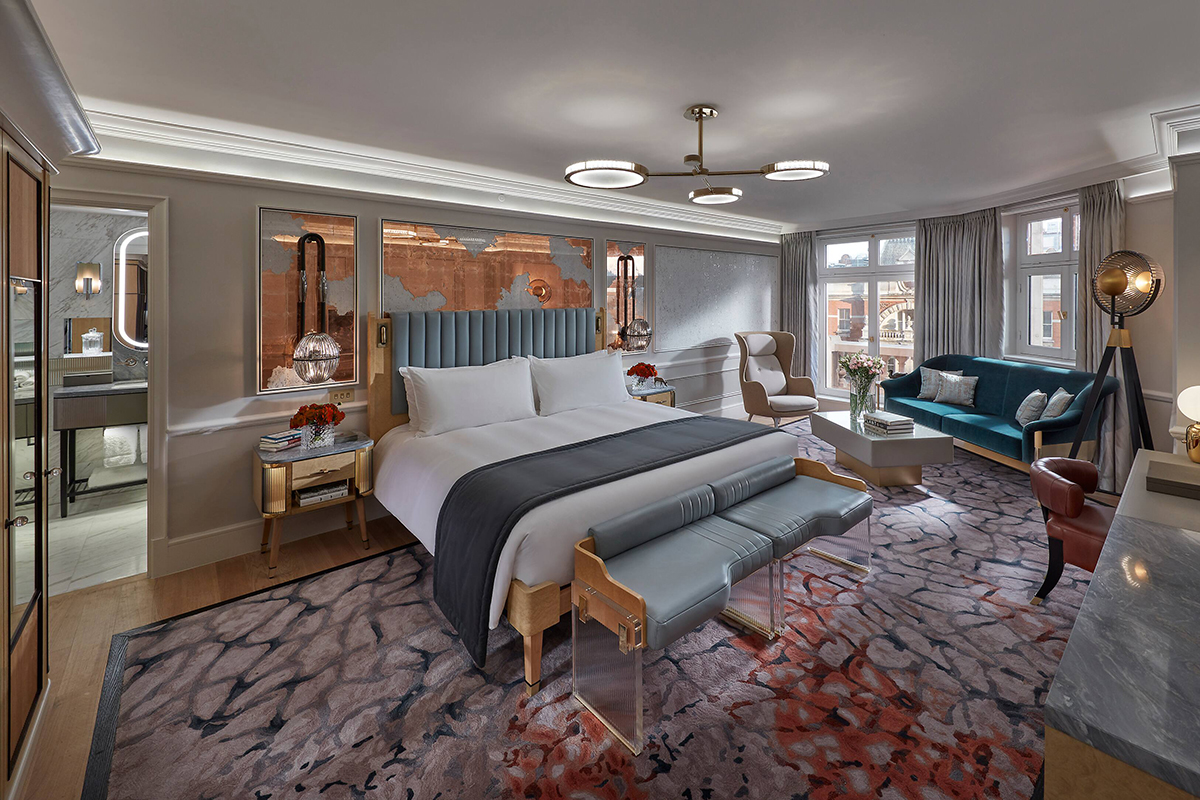
The Knightsbridge Suite
Flipside
While there’s a lot to love about Bar Boulud, the interiors could do with a refresh to match the new, brighter, youthful elegance of the hotel.
Rates: From £740 (approx. €800/ $950)
Book your stay: mandarinoriental.com/london/hyde-park
Millie Walton
Please note: This review was carried out before the breakout of coronavirus and the subsequent closure of the hotel. Dinner by Heston Blumenthal and Bar Boulud are due to reopen soon, whilst the spa currently remains closed due to government guidelines. The Rosebery is open for all-day dining and afternoon tea, as well as 24-hour in-room dining. Please check the hotel’s website for further updates.
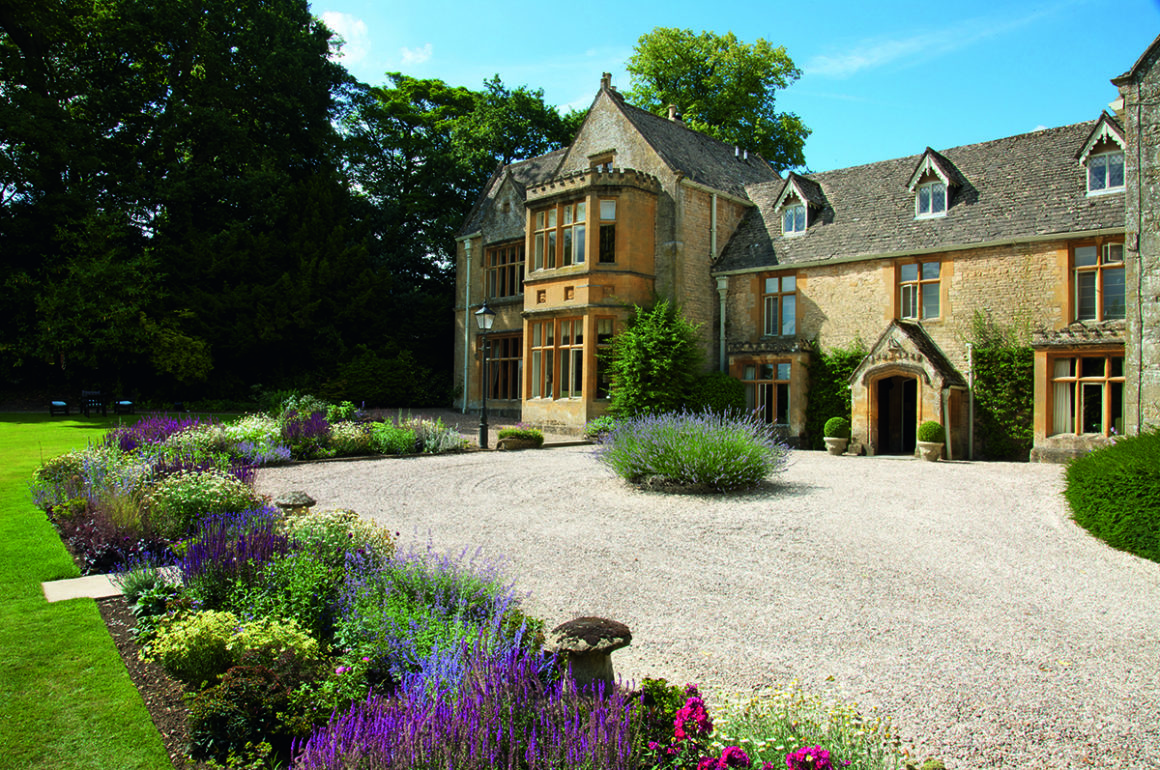
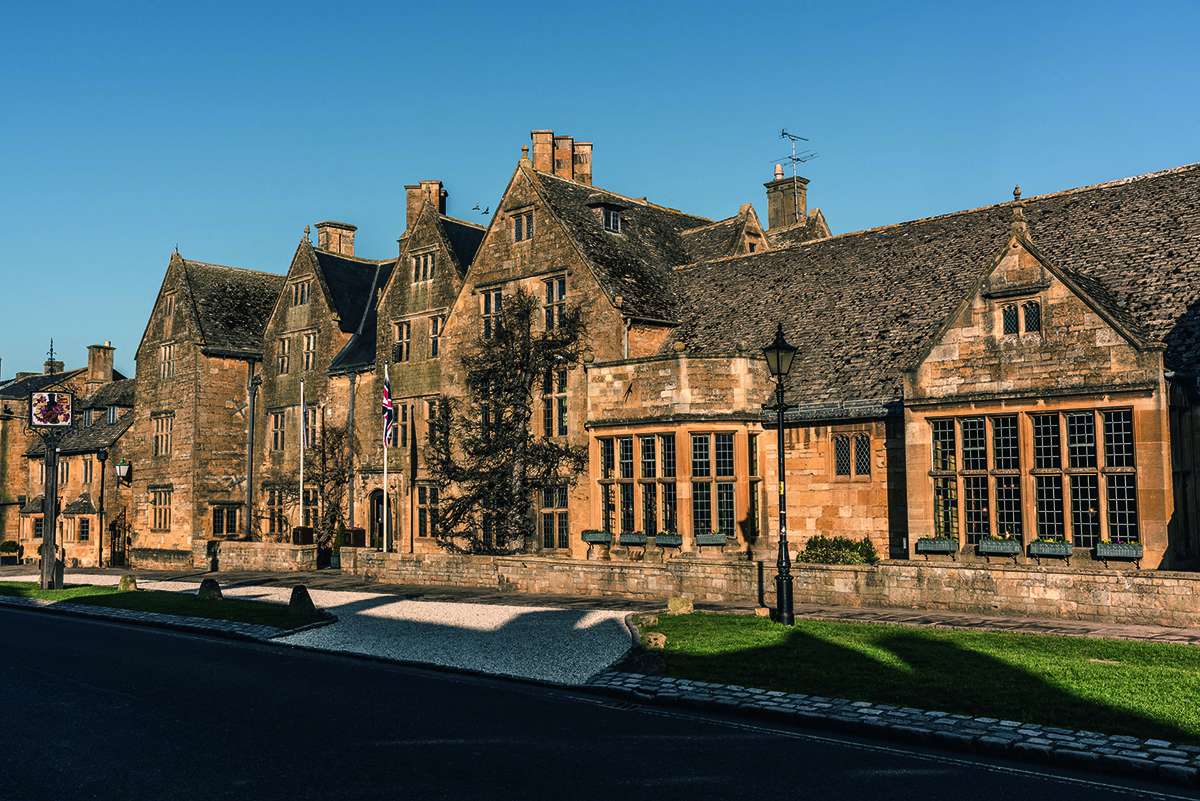
The Lygon Arms in the Cotswolds dates back to 14th century
A couple of unspoilt Cotswolds rural idylls from the 14th and 17th centuries, a rare luxury hotel in Champagne with a touch of the contemporary, and the best place to stay in medieval Heidelberg, LUX recommends four historic country hotels to visit post-lockdown
The Lygon Arms, Cotswolds
THE LOCATION
Broadway is a Cotswold village straight out of central casting. This includes the tourists wandering down the exquisite High Street lined with low buildings of local stone, with the Cotswold Hills rising beyond. The colour palette of nature and history is a perfect sand yellow/deep English green.
Follow LUX on Instagram: luxthemagazine
THE ARRIVAL
The Lygon Arms looks like a combination of coaching inn and hotel. You expect a ruddy-faced local, fresh out of the local country estate, to appear and help you with your bags, and that is exactly what we got. Parts of the structure of the hotel date back to the 14th century, and the feeling of a cosy history, lovingly recreated by its current owners, is all around you.
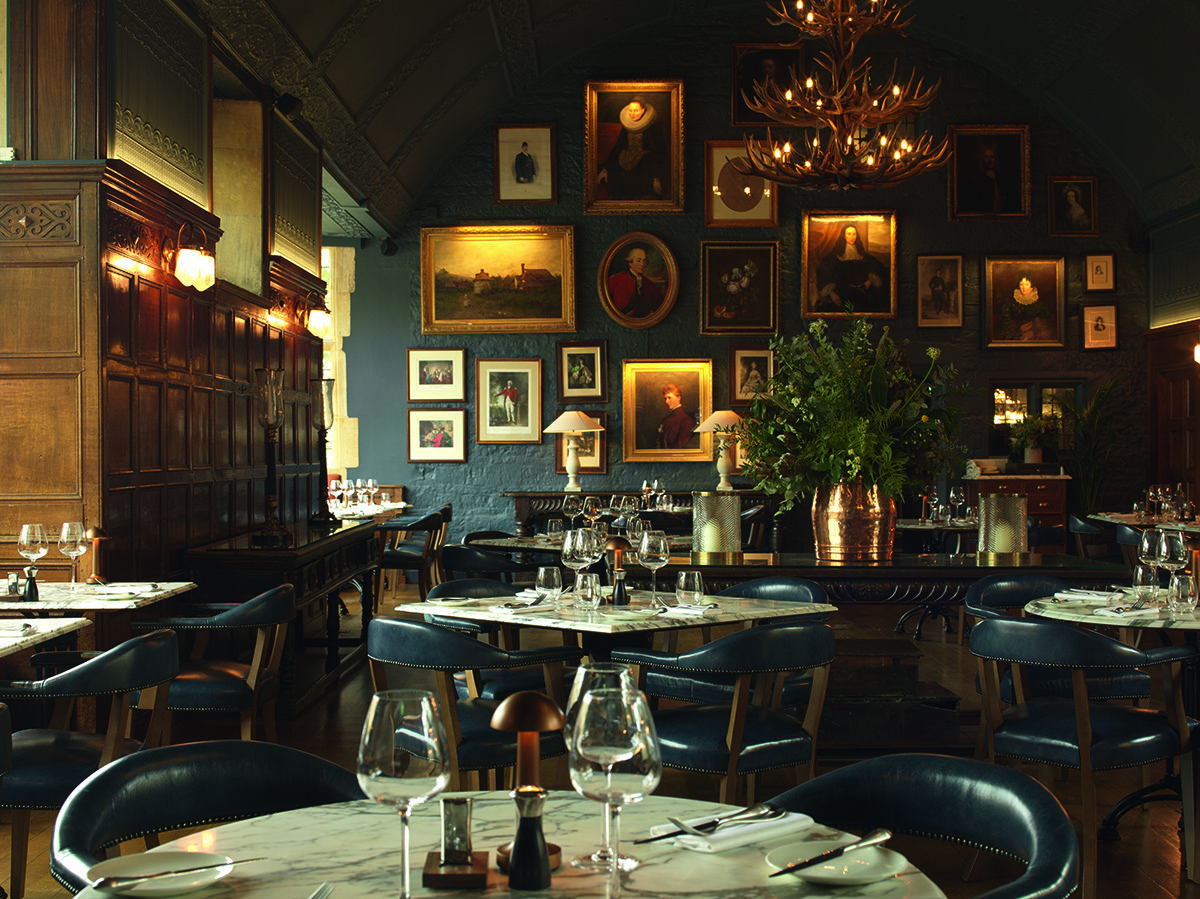
The Lygon Bar and Grill
THE STAY
Our room, the Charles I suite with a four-poster bed, was swathed in Tudor dark wood. We ate dinner in the courtyard at the Lygon Bar and Grill: the grilled chicken with chestnut mushrooms and tarragon was highly satisfying. The achievement of The Lygon Arms? To offer true history, nicely updated with casual contemporary service and simple high-quality food.
ANYTHING ELSE?
A 20-minute walk from the end of the High Street and up a hillside takes you to the Broadway Tower, from where you can view the invading Welsh armies swarming across the Severn River Valley. Behind the tower stretch the sweeping green uplands of the Cotswolds proper, with exquisite nature walks.
Book your stay: lygonarmshotel.co.uk
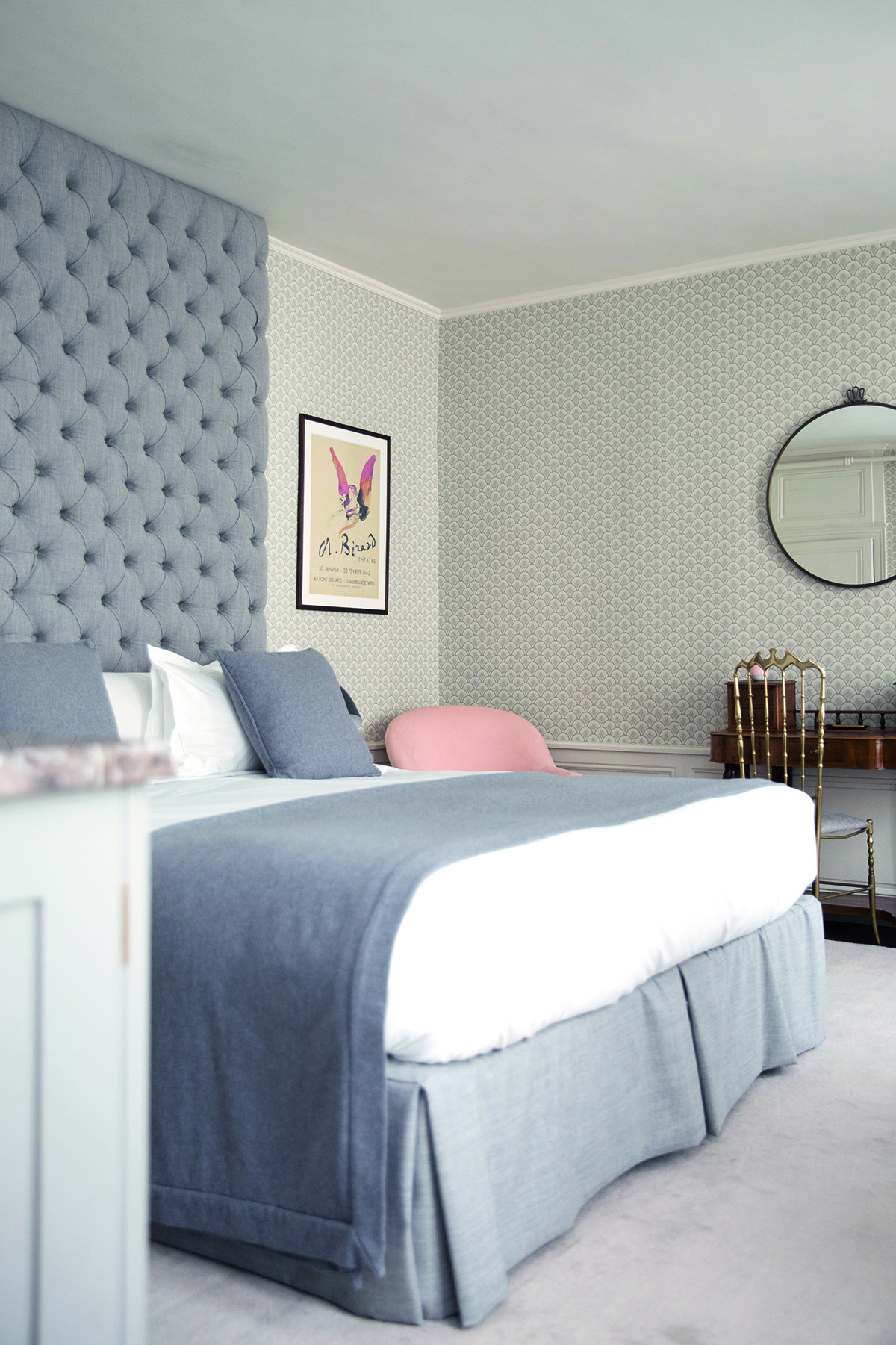
Le25bis is the first of its kind in Épernay
Le 25bis by Leclerc Briant, Champagne
THE LOCATION
It’s long been a matter of bemusement that you can spend your day being serenaded by a major champagne house in Épernay and then find yourself in a disappointing, generic hotel. Le 25bis, owned by a champagne house and refurbished in a luxurious modern style, promises to change that.
Read more: Driving from Alsace-Lorraine to Lake Constance
THE ARRIVAL
There is nothing quite like driving along the avenue de Champagne which radiates from the town centre. Le 25bis is fronted by a delightful courtyard with a few tables and as you walk to the reception desk, you walk past a couple enjoying a champagne tasting, a perfect scene setter.
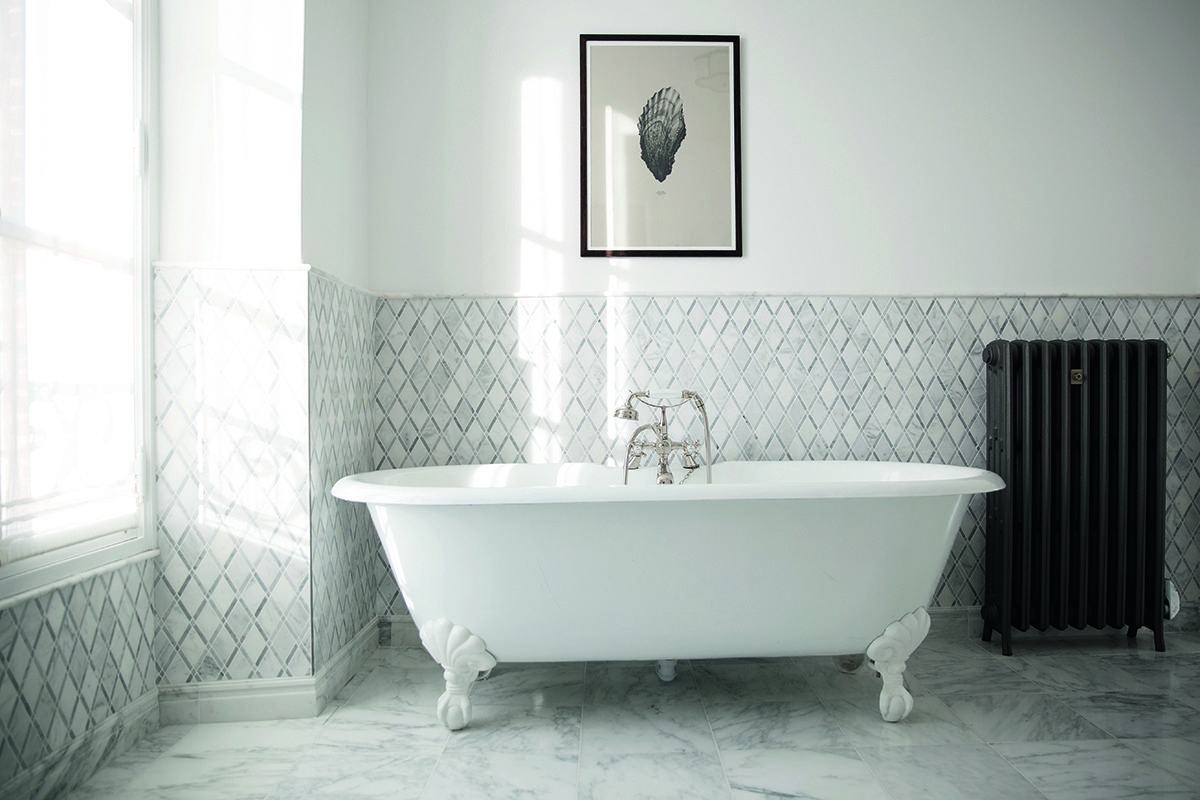
THE STAY
Le 25bis belongs to a well regarded boutique champagne house, Leclerc-Briant, which has a shop at the front of the house. After a long day of visiting champagne houses, there’s nothing quite like tasting the champagne made by your hotel. There are only five rooms, which are huge and have clearly been refurbished with little regard for budget, with pale contemporary furnishings with antique twists, aesthetic floral arrangements, intricate wallpapers and beautiful vintage-style (but very modern) bathrooms.
ANYTHING ELSE?
Make time to visit the Leclerc Briant house itself, and when buying from the shop at the hotel (our preferred cuvée was the eponymous entry-level cuvée, and the rosé was also delicious) make sure you buy in magnum. It is always better.
Book your stay: le25bis.com
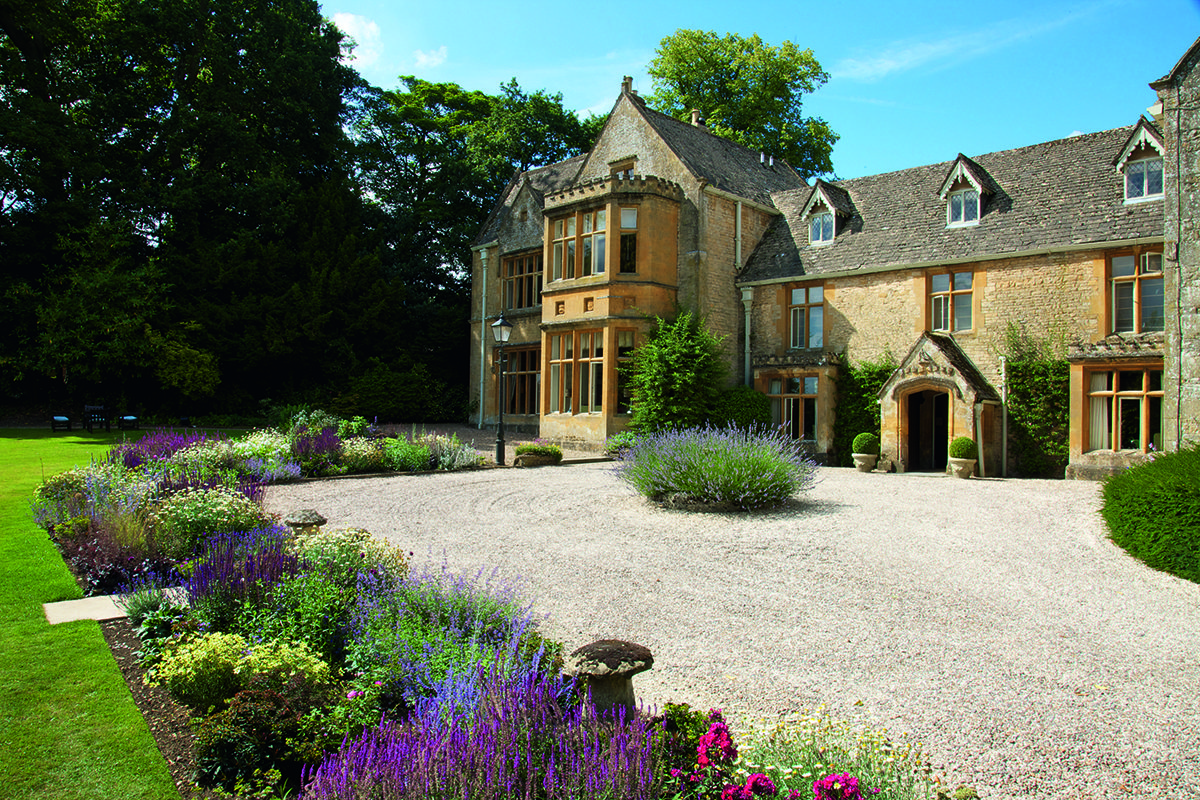
Lords of the Manor is located in Upper Slaughter, a pretty hamlet in the Cotswolds
Lords of the Manor, Cotswolds
THE LOCATION
If The Lygon Arms is in the low Cotswolds, Lords of the Manor is in the high Cotswolds. To get there, you wind slowly through Lower Slaughter (probably Britain’s prettiest village, and that’s saying something), past an estate and into the hamlet of Upper Slaughter. Down a drive, there is a manor house with gardens dropping to a lake, and meadows and woods beyond. This view hasn’t changed much since Shakespeare’s time.
Read more: Fashion superstar Giorgio Armani on his global empire
THE ARRIVAL
Walking into the wood-lined great hall feels like arriving at a friend’s country house. You are taken to your room up a suitably creaking staircase. Ours looked out over the drive, lawn and lake, and was decorated in lavish country house style. All around was silence.
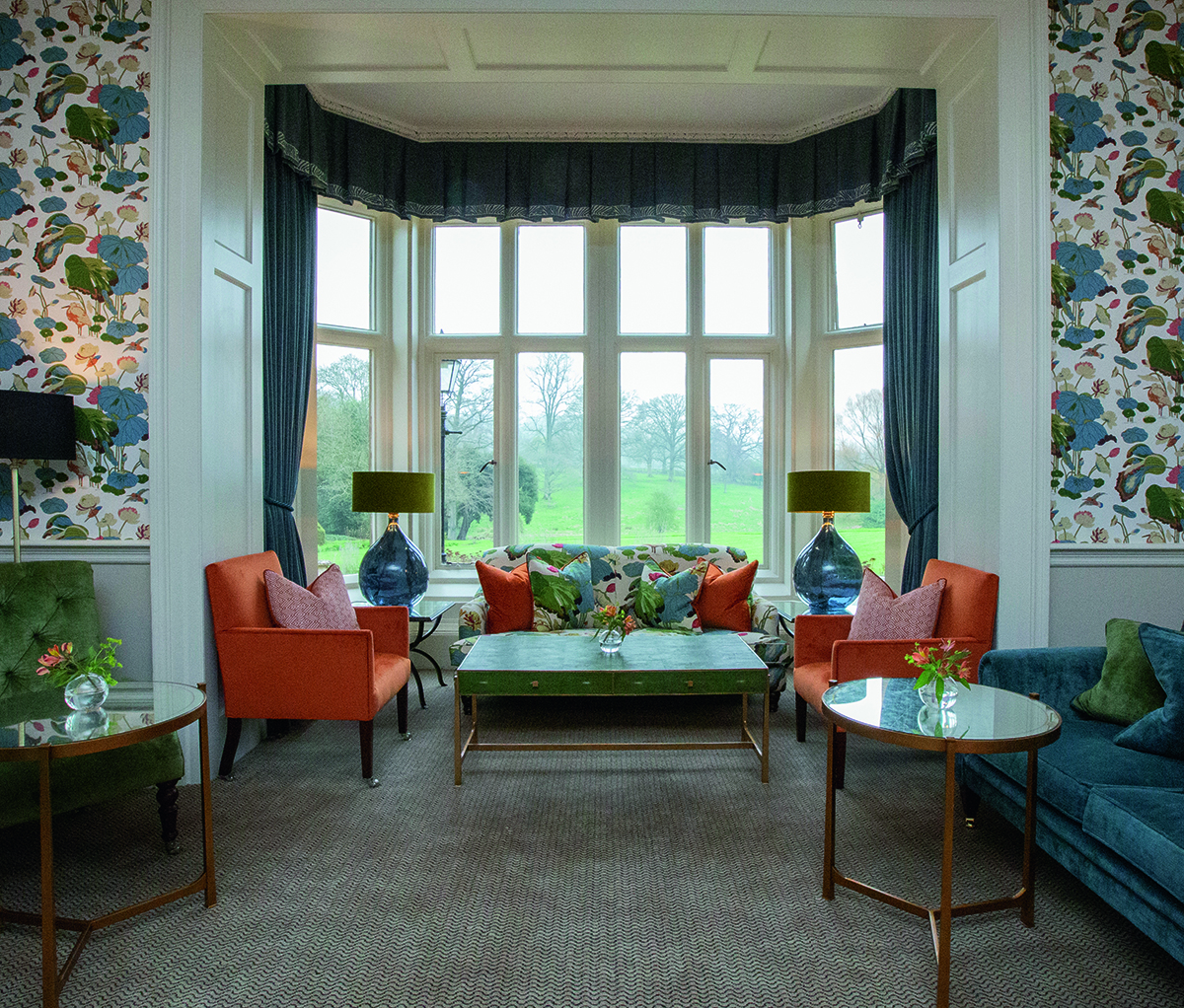
The bar at Lords of the Manor
THE STAY
Crunching through the grounds you feel like there is nothing more you would need from your English country estate. A walk across a little wooden bridge leads to a path alongside a stream taking you to Lower Slaughter, where you can slake the thirst in an inn. The dining experience at Lords of the Manor is very proper and British: venison and foie gras pithivier with creamed butternut squash and brandy sauce.
ANYTHING ELSE?
You could explore the many sites of this glorious region, but we wager you’ll stroll from the hotel on the secluded walks, and chill out on the hotel’s terrace with a glass of champagne, looking at the grounds, and do nothing else.
Book your stay: lordsofthemanor.com
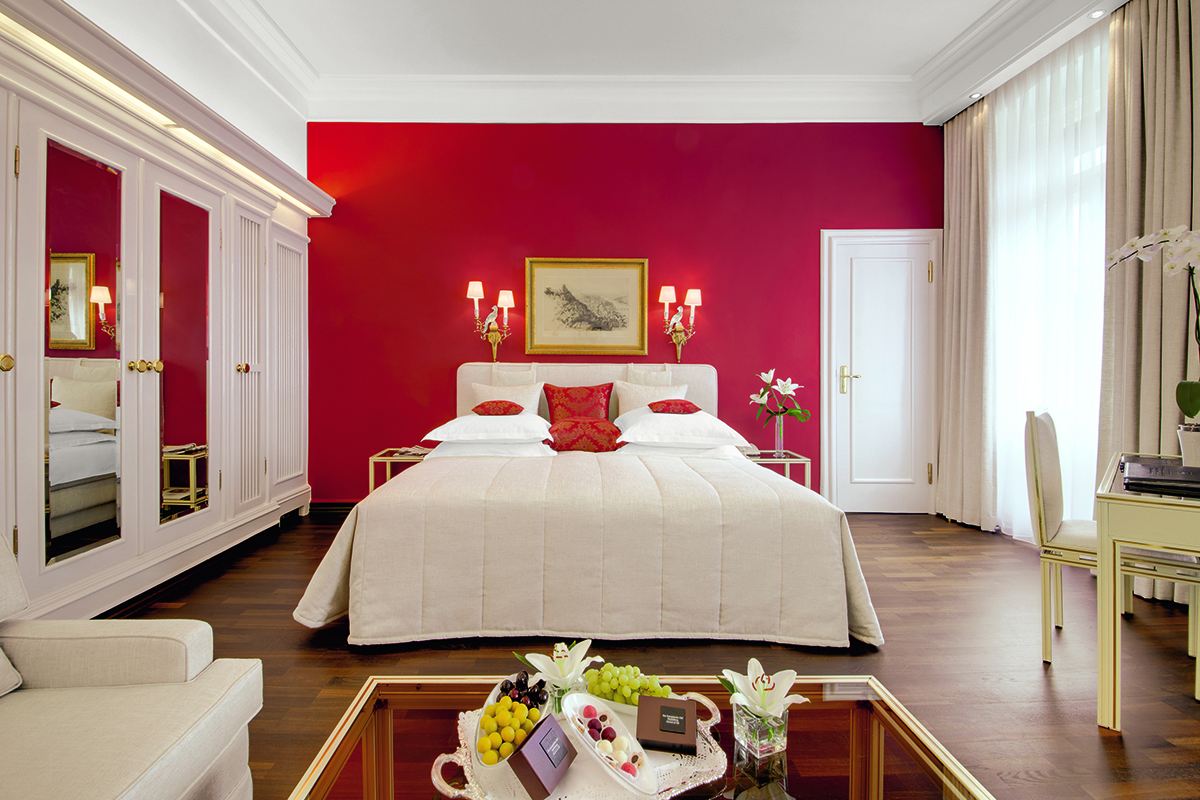
Grand Hotel Europäischer Hof is Heidelberg’s only five-star hotel
Grand Hotel Europäischer Hof, Heidelberg
THE LOCATION
Heidelberg, one of the world’s oldest university towns, lies at the edge of the Rhine river plain at the point at which it rises up sharply into the mountains of the northern Black Forest. It’s one of Europe’s prettiest towns, and also infused with a feeling of intellectual history – and current intellectual power.
Read more: How Hublot’s collaborations are changing the face of luxury
THE ARRIVAL
The hotel, the city’s only five-star property, is located on the edge of the old town, making it easy to get to when arriving by car or train. The family-owned luxury property is big and relatively modern. You turn into a grand driveway and are greeted by a uniformed doorman, and taken up some steps into the reception hall that leads to a jazz bar on the left and around the corner into a U-shape into a formal restaurant, the Kurfürstenstube.
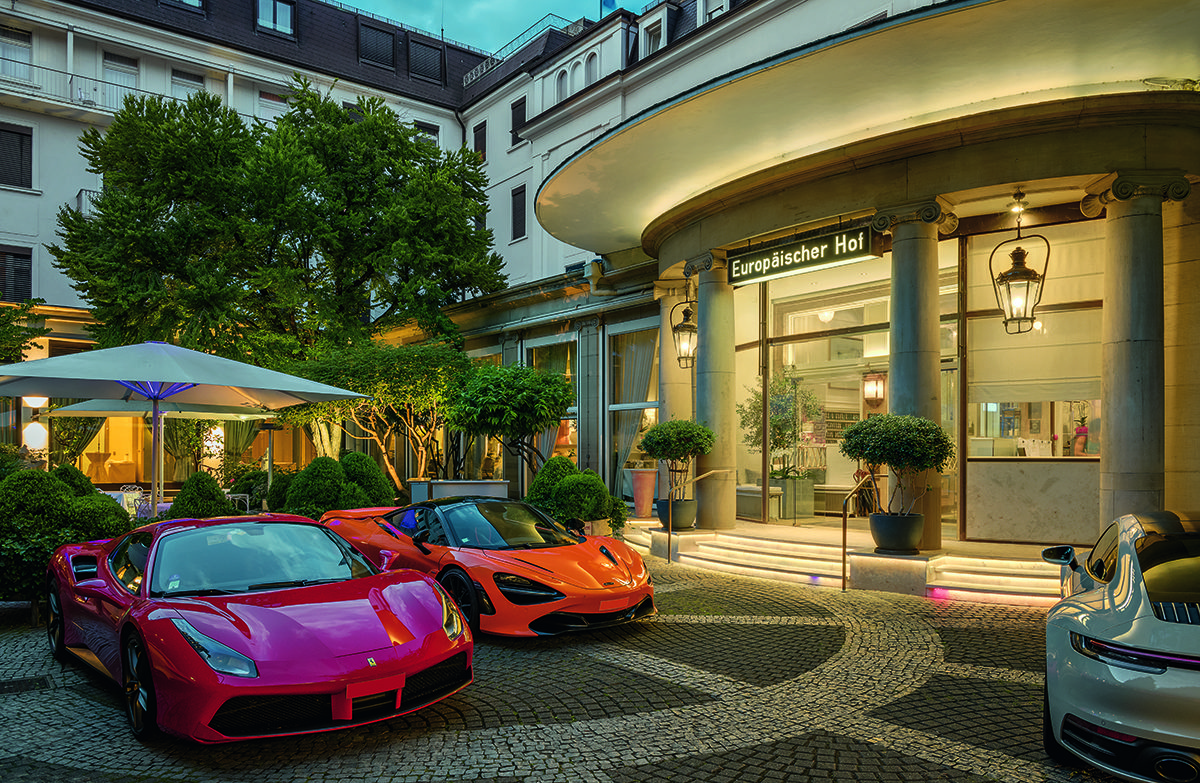
THE STAY
The hotel is grand and generously proportioned, as was our Executive Suite, which was light and airy with high ceilings, baroque-style furnishing in creams and beiges and rustic golds. While parts of the hotel are old, much of it has been built recently, including the large spa area. You will inevitably use the hotel as a base for visiting Heidelberg and beyond.
ANYTHING ELSE?
The hotel’s delightful concierge’s recommendations are now ours: the Kulturbrauerei, a centuries-old dining hallcum-beer hall with hearty, meaty cuisine and its own beer; and a walk down from the Königstuhl mountain, reached by a funicular.
Book your stay: europaeischerhof.com
Note: All reviews were carried out prior to the global lockdown
This article was originally published in the Summer 2020 Issue.
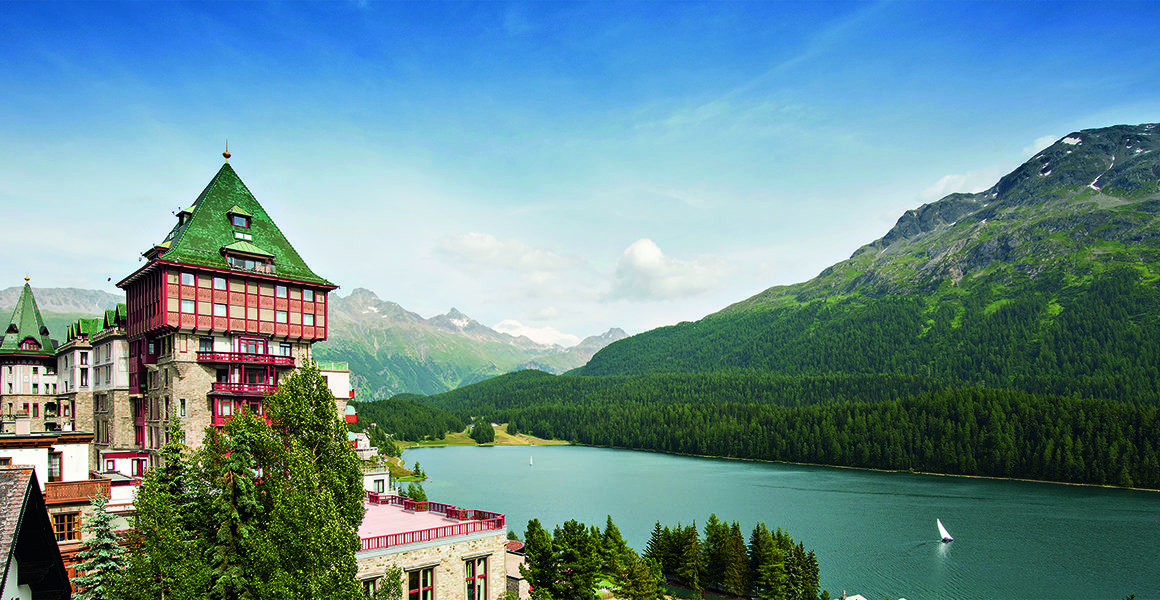
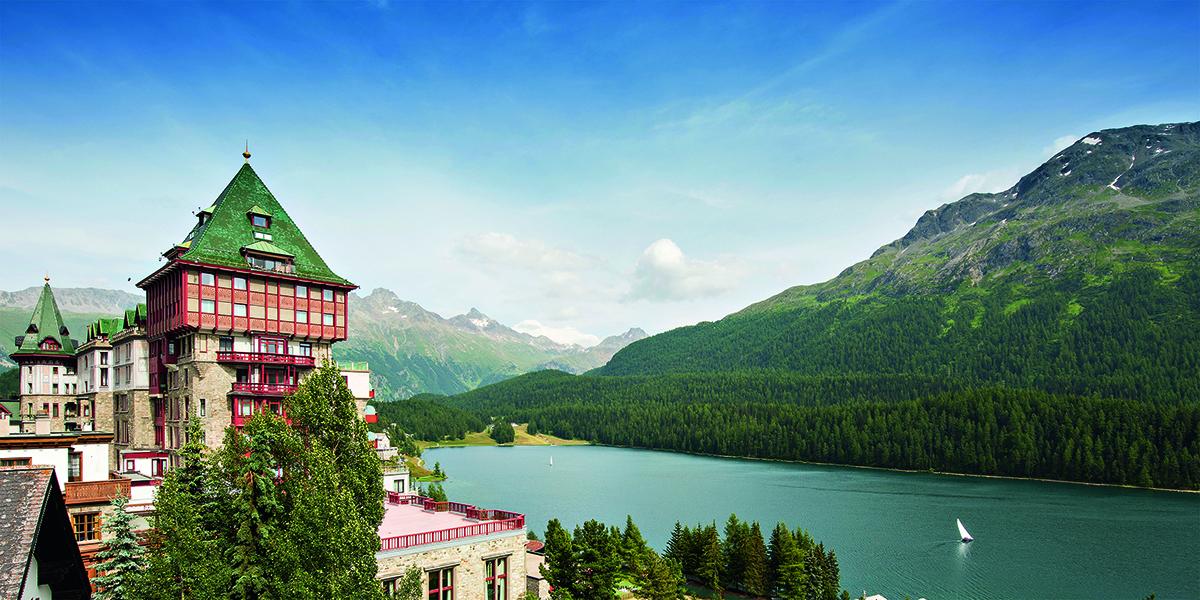
Badrutt’s Palace overlooking Lake St Moritz
St Moritz is well known as the winter playground of Europe’s rich and aristocratic. But don’t dismiss the resort, and especially its venerable and truly grand hotel Badrutt’s Palace, as a summer destination
One single word: Badrutt’s. Among a certain crowd, it conjures up associations: dancing in King’s Club after a long day’s skiing and après-skiing; bumping into billionaires in their Moncler in the wood-panelled corridors; and probably the most desirable (in a conventional way) New Year’s Eve gala in the world. (It may also whip up associations of bedrooms looking out over the frozen lake, though that would mean you don’t actually own a place of your own to winter in St Moritz – tsk.)
Follow LUX on Instagram: luxthemagazine
But there’s another Badrutt’s, in another St Moritz. They may be geographically identical, but the summertime town, and Palace, are a different world, and perhaps not yet as well discovered.
Our suite (declaration: we don’t own a place in St Moritz) opened out onto a balcony terrace on which we strolled on the first night, gazing across the lake, up to the mountains beyond, and along the broad Engadine valley in both directions. In summer on the mountains, myriad textures and colours replace winter’s uniform white and brown of snow and rock. A deep-green forest around the grey-blue lake; emerald meadows; high pasture the colour of a dying weeping willow; peak rockscapes in black and grey, slashed by snow, still there from the wintertime blizzards, high up. All looking back at us on our balcony.
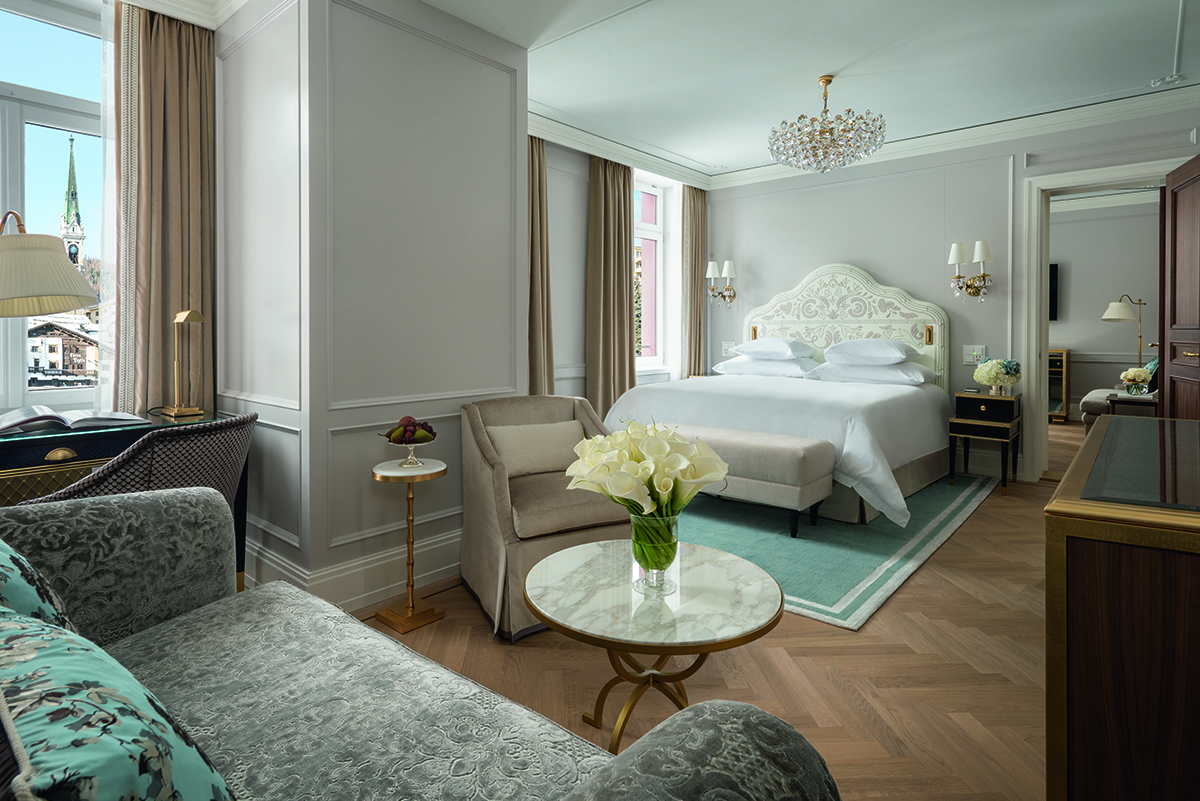
One of the hotel’s Village Deluxe rooms
Unlike some self-proclaimed palace hotels, Badrutt’s really does feel like a palace. The grand state rooms are places to stroll through in your most formal clothes (you can wander around in hiking gear, but somehow it doesn’t feel right) and in Le Restaurant, the grand dining room, you need to dress formally to match the ambience.
And what an ambience; here it seems you are walking past le tout of Europe’s old aristocracy. The lady at the corner table wearing a gown at breakfast reading the international New York Times every morning; that cluster of teenagers who look like the Romanovs; the artist wearing a smart deep-blue blazer who doesn’t just look like X; he is X. (We wouldn’t name names.)
Read more: Fashion superstar Giorgio Armani on his global empire
And there’s much more to the dining experience than that. We spent one delightful evening in Chesa Veglia, an old house across the street that has been converted into possibly the world’s most upmarket pizzeria (they sometimes allow children to make their own pizzas here, but we’re not supposed to say that). This is relaxed Palace, informal Palace, Palace with its hair down, wearing an Italian-stallion leather bracelet, drinking Ornellaia by the gallon. The food is perfect pizza, and the staff seem to be having as much fun as the guests.
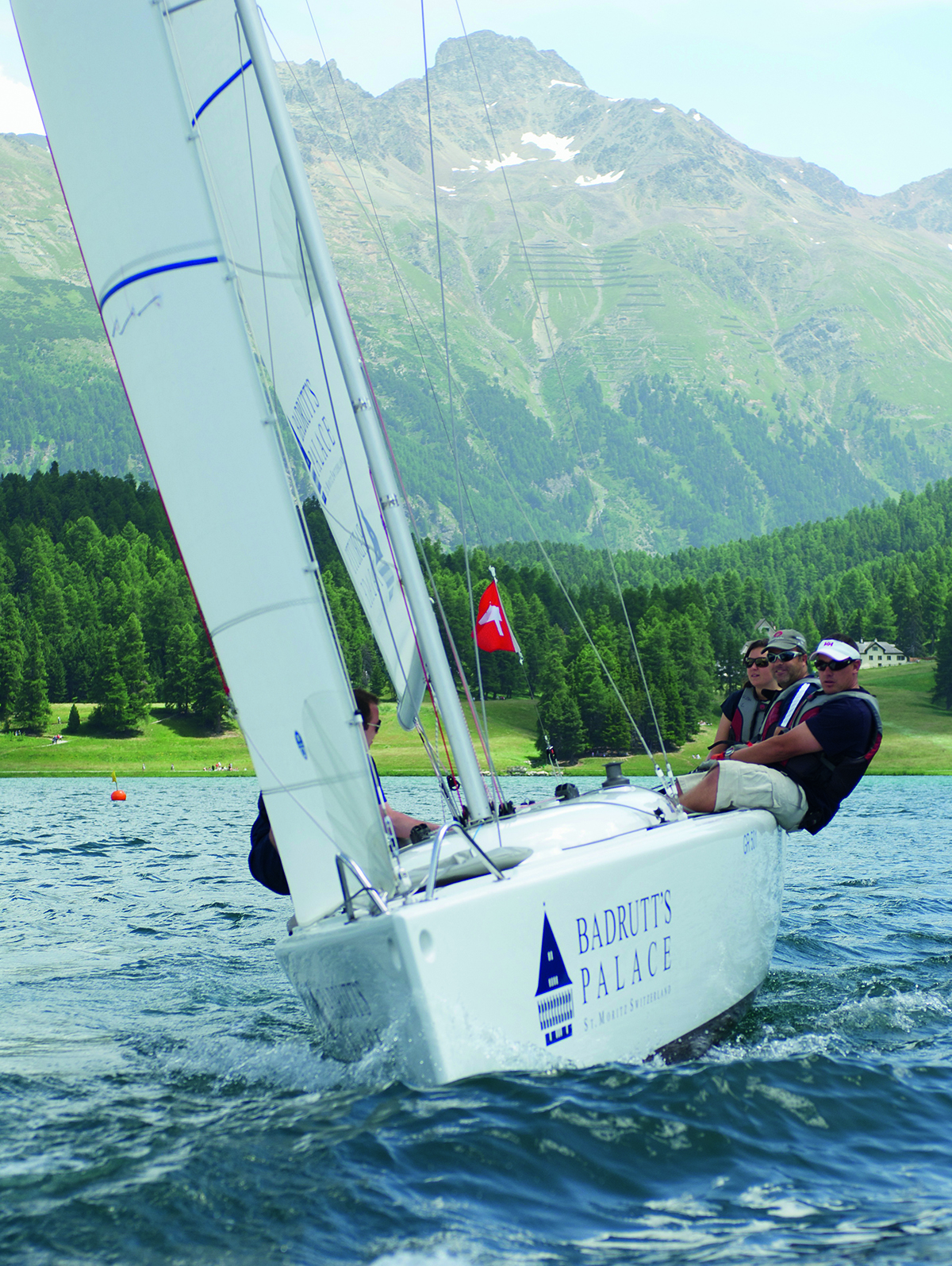
Sailing on the lake in the hotel’s yacht
St Moritz in summer is more influenced by the weather of the Mediterranean than northern Europe, so long sunny days are likely; on the one day of cloud we had in our week, we escaped into the vast indoor pool area, which has its own rock mountain off which kids can dive. The deep-tissue massages are as thorough as you would expect a mountain spa to offer.
There are rumours of more developments soon, including a Badrutt’s chalet in the mountains to escape to. Watch this space, or better still, just go.
Darius Sanai
Book your stay: badruttspalace.com
This article was originally published in the Summer 2020 Issue.
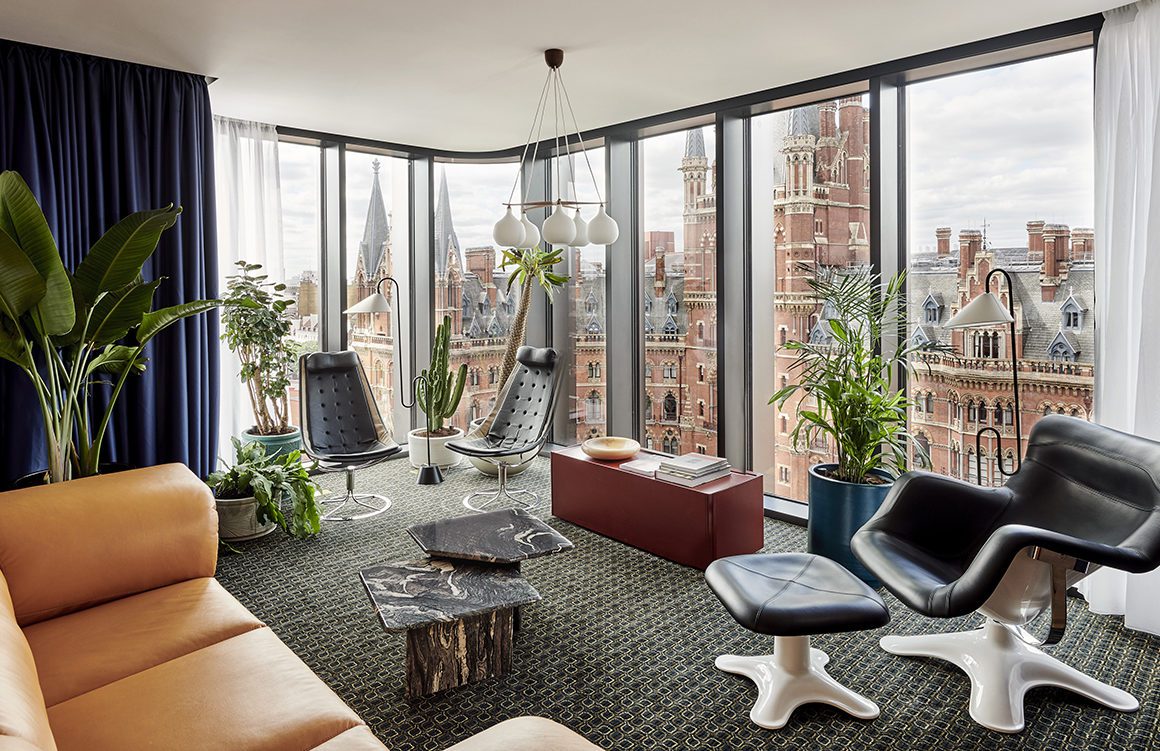
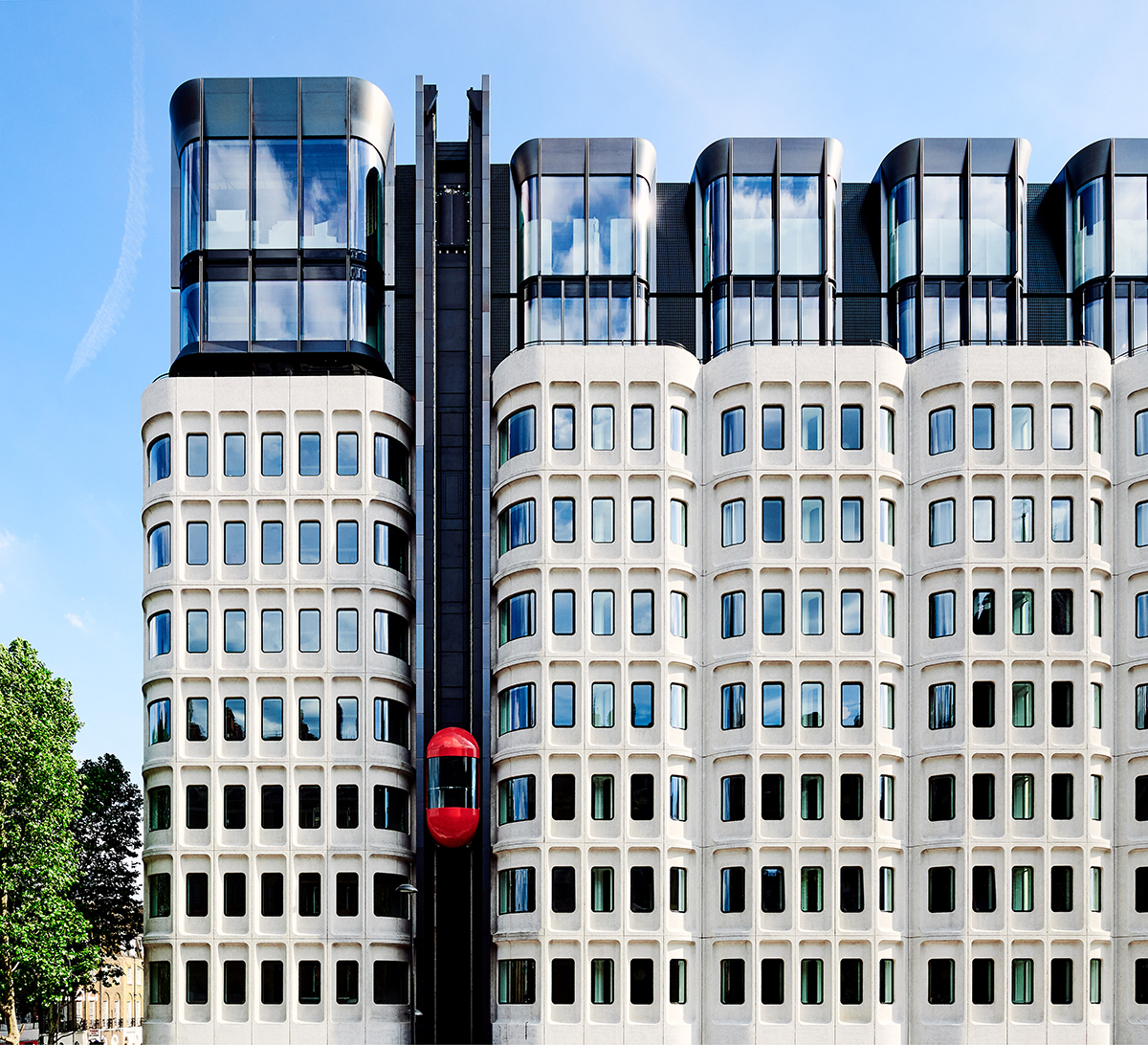
The exterior of The Standard hotel, Kings Cross. Image by Tim Charles
East London-based architecture and design practice Orms masterminded the renovation of Camden Town Hall Annexe in Kings Cross for The Standard hotel group’s first UK property. Here, James Houston speaks to one of the company’s directors John McRae about the project and its challenges
1. How does your approach differ when working with an existing building versus a new build?
On all of our projects we undertake extensive research and analysis to understand the site, its context and history. When retaining an existing building our research is forensic in order to establish the parameters and rules that will inform and guide the design. We believe it’s important to understand the thinking behind the building, its structural principles and construction techniques. We were fortunate to work with structural engineers Heyne Tillett Steel who share the same research ethos and they were able to build a Revit 3D model from the archive drawings.
Follow LUX on Instagram: luxthemagazine
2. What are the challenges when refurbishing a brutalist building?
The use of raw concrete defines Brutalism and in nearly always used on both the structural frame (insitu) and facades (precast). This building was no exception and to add to the complexity it was a two way spanning ‘waffle’ slab that transferred the load of the façade back onto a very deep first floor slab and the inboard columns. This fully integrated structure and façade solution meant that major internal interventions or a new facade would not be viable. Surprisingly, the residual structural load capacity within the building structure was limited and this needed careful consideration when adding the new top floor extension.
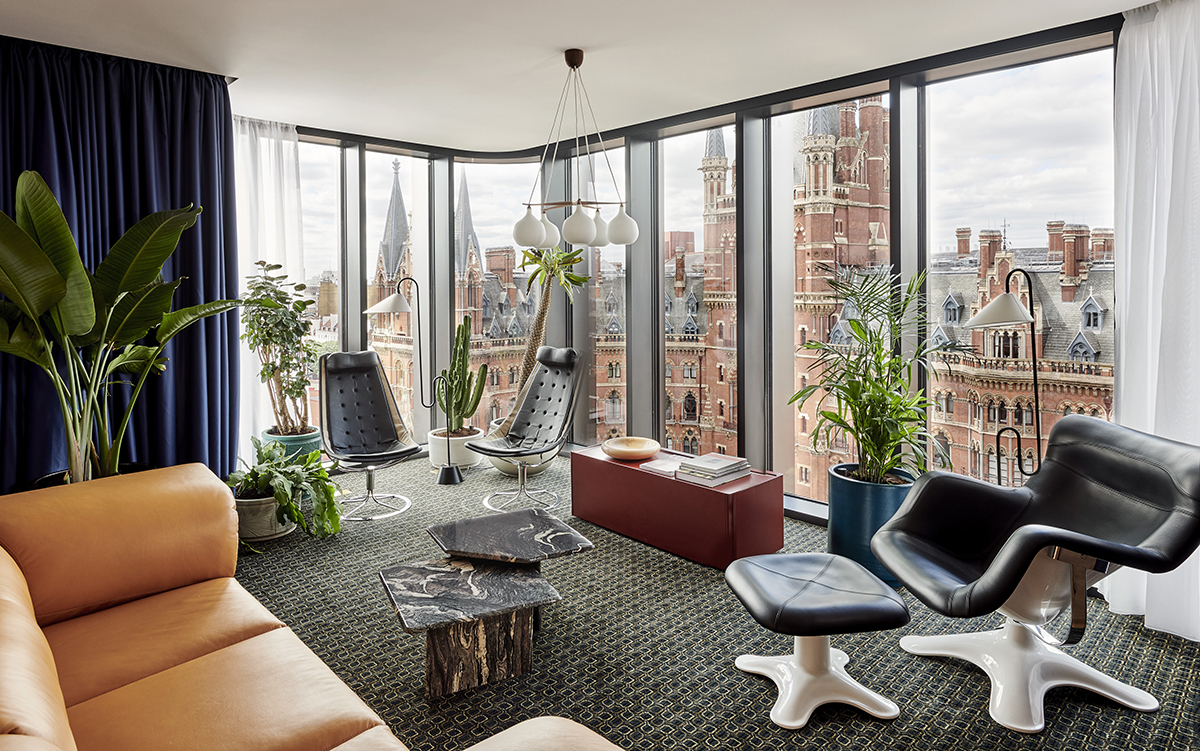
The 9th Floor Suite with views of St. Pancras Station. Image by Tim Charles
3. How do you see The Standard fitting into the wider redevelopment of the Kings Cross area?
The vast majority of regeneration projects within the Kings Cross have been to the north of the Euston Road so it was always an aspiration of the project to draw that energy to the south. A key component of this strategy was to have an occupier such as The Standard, a respected brand with an established following, that can attract people and act as a catalyst for further regeneration within the area. The hotels variety of spaces to socialise, listen to live music and talks means there are reasons to keep coming back.
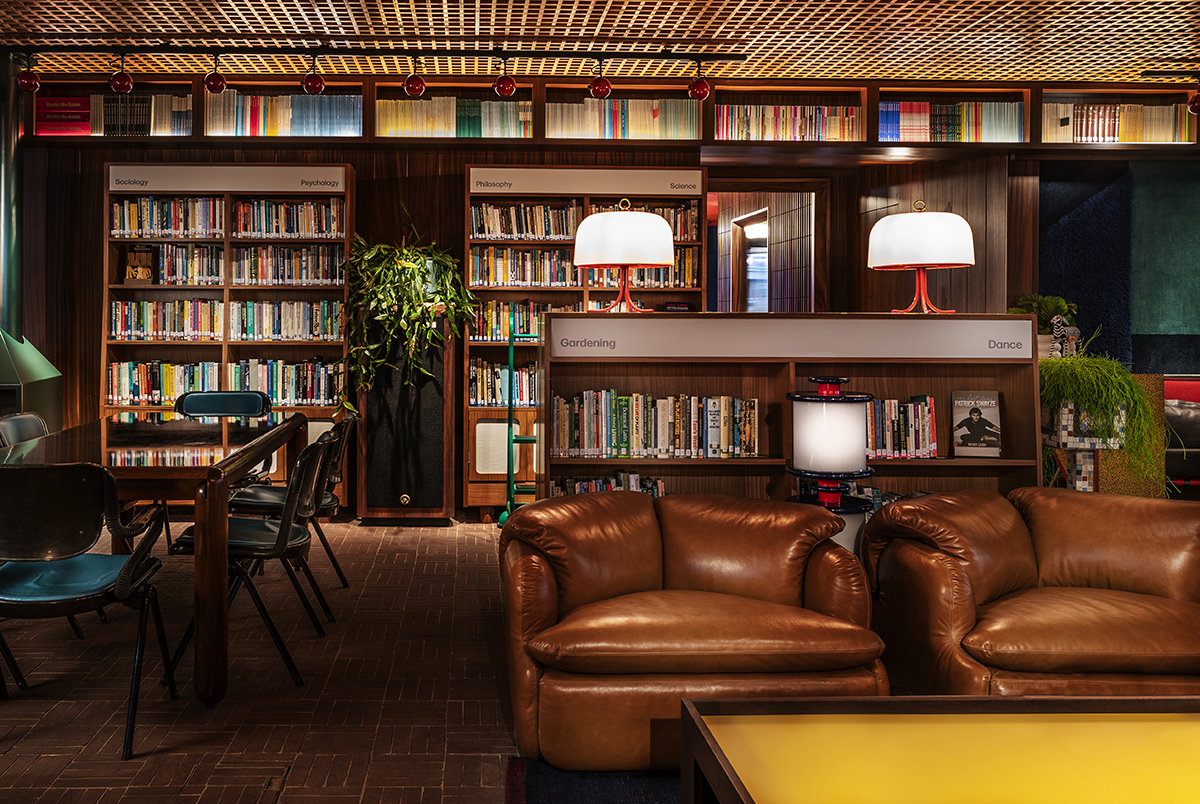
The hotel’s library lounge offers a space to meet, socialise and read. Image by David Cleveland
4. Do you have a favourite room or space in the hotel and why?
My favourite space is the library lounge on the ground floor. Set within an eclectic collection of eating, socialising and drinking areas that provide visual activity to the street but a moment of calm in the hustle and bustle of Kings Cross the library lounge is a nod to the former Camden public library. Surrounded by carefully selected and arranged books the space is used for meetings, live music and talks.
Read more: Entrepreneur Dr. Li Li on the importance of global relationships
5. What was the inspiration behind the external lift pod?
A new lift was required to supplement the main bank of lifts and serve the 10th floor restaurant and bar. Given the complexity of the existing structure the idea of an external lift was explored to provide a visual marker and signal that something special was going on at the top of the building. The red lift demarcates the entrance to the restaurant, which was always intended to be able to be separate from the hotel entrance. The concept and look and feel of the lift was led by Shawn Hausman Design and inspiration for the form came from the Mercedes Benz museum elevator and the iconic Routemaster bus for its red colour.
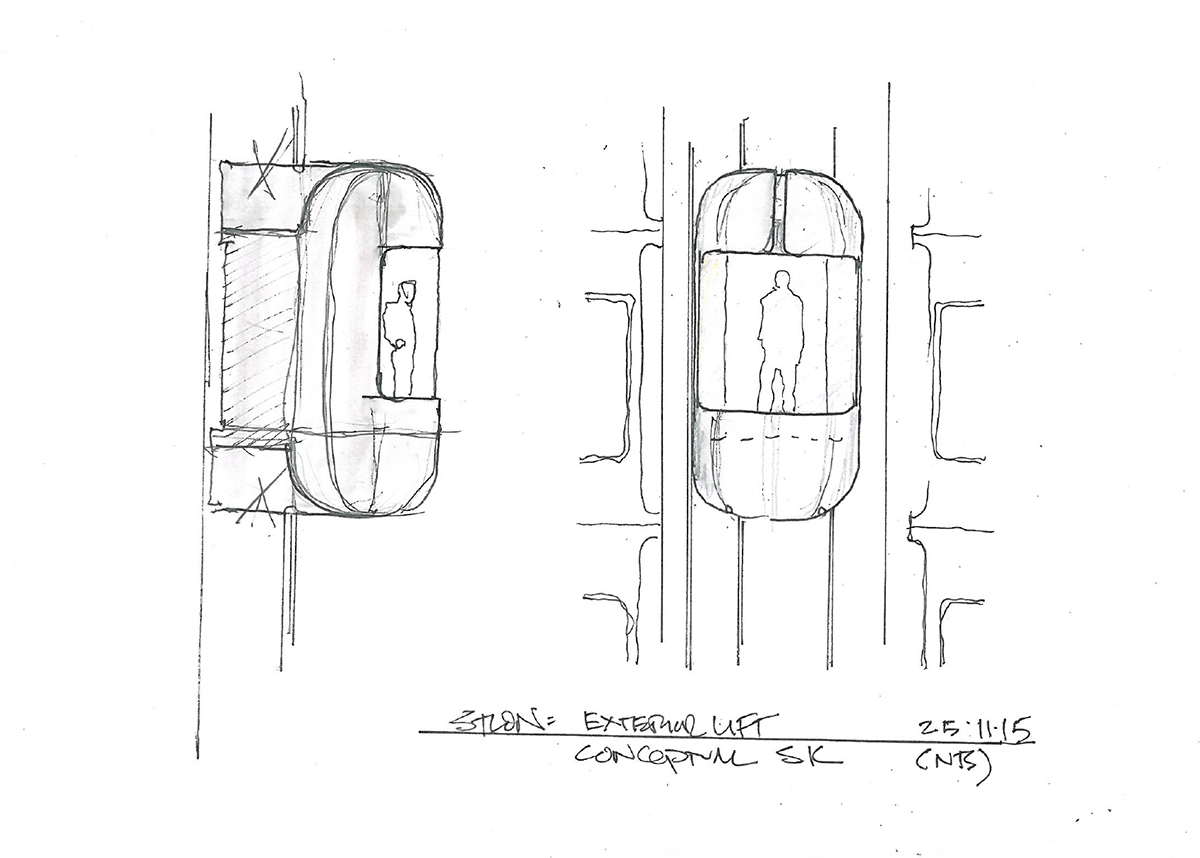
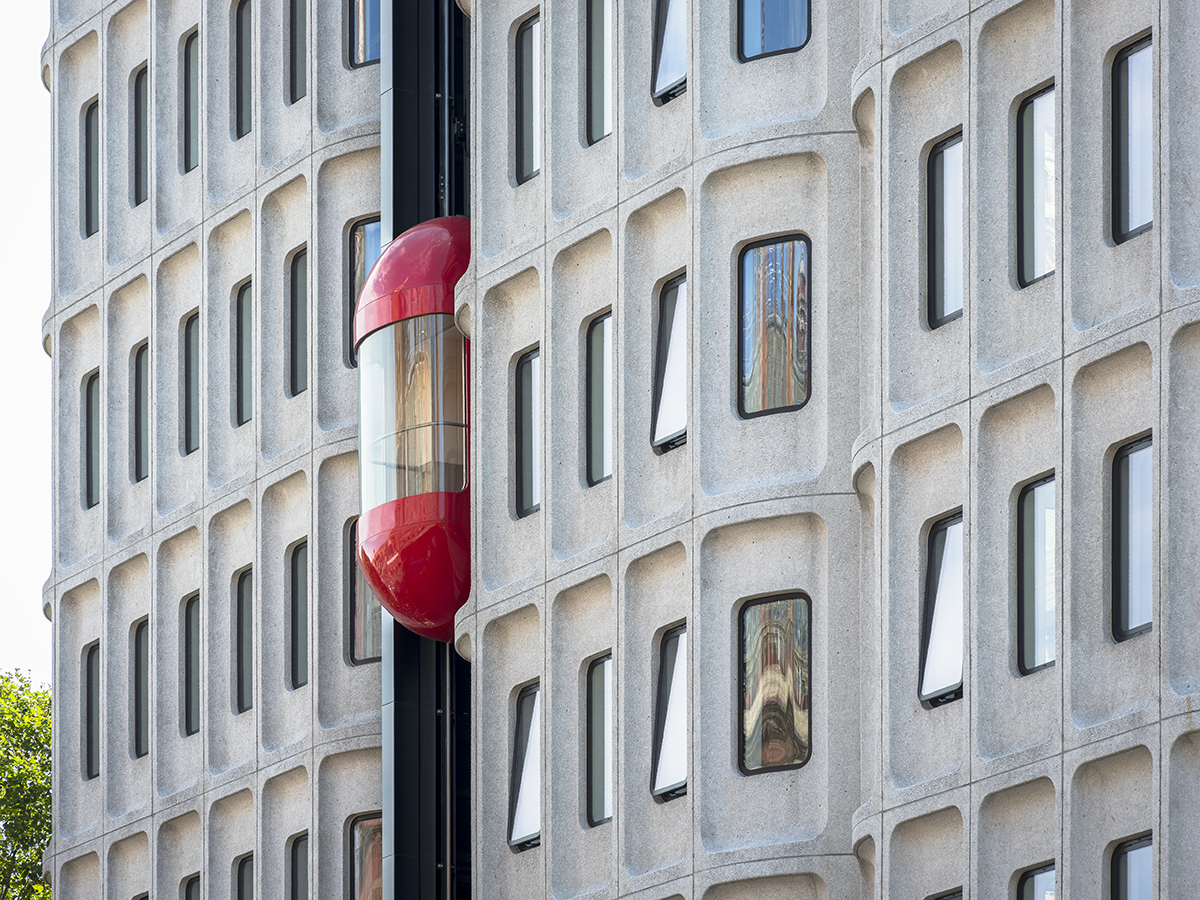
Orms’ preliminary sketches of the hotel’s external lift (above) which takes its colour from London’s iconic Routemaster bus. Image by Tim Soar
6. Do you have a favourite brutalist building in London?
London is spoilt for choice with respect to brutalist buildings but one of the hidden gems is Space House (now often referred to as 1 Kemble Street), a 1960’s office development by Richard Seifert & Partners for the developer Harry Hyams. It is a great speculative office building, whose exteriors reflect many of the themes at play at their Centre Point development. Its innovative use of a precast concrete grid, partial prefabrication that allowed for rapid construction without the use of scaffolding and striking visual effects makes it an exemplar even for today’s commercial developers and architects.
Find out more: orms.co.uk
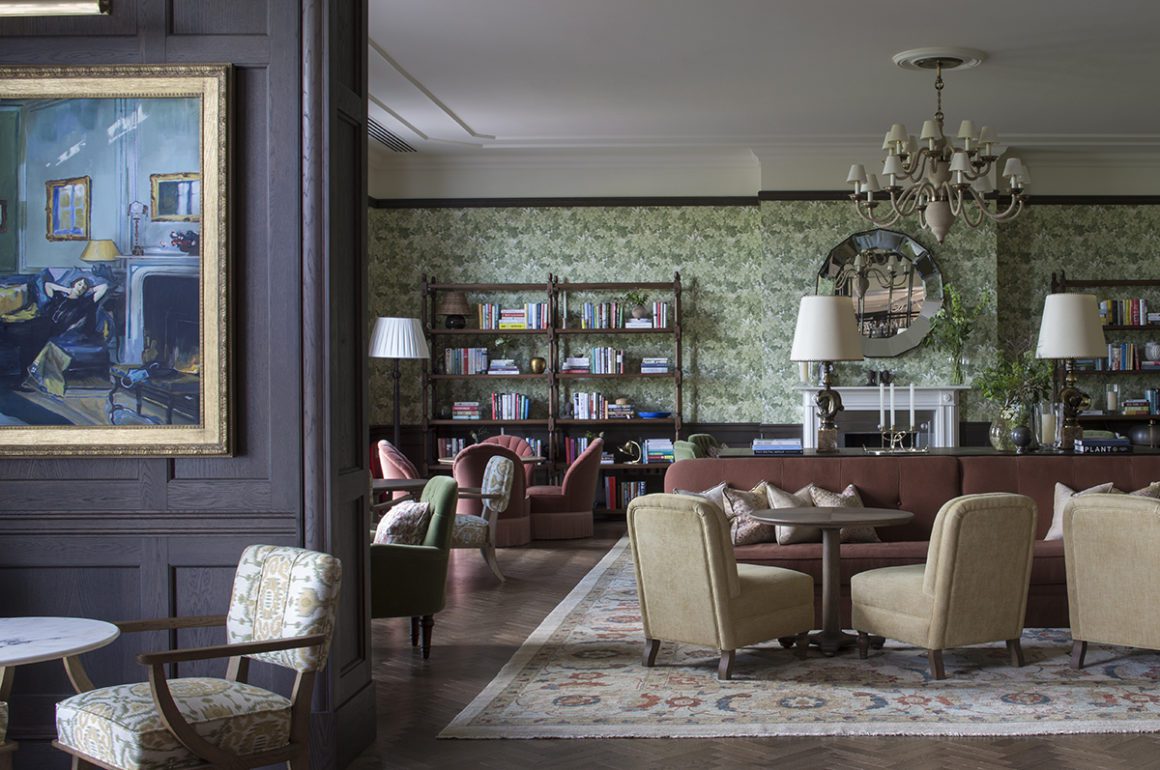
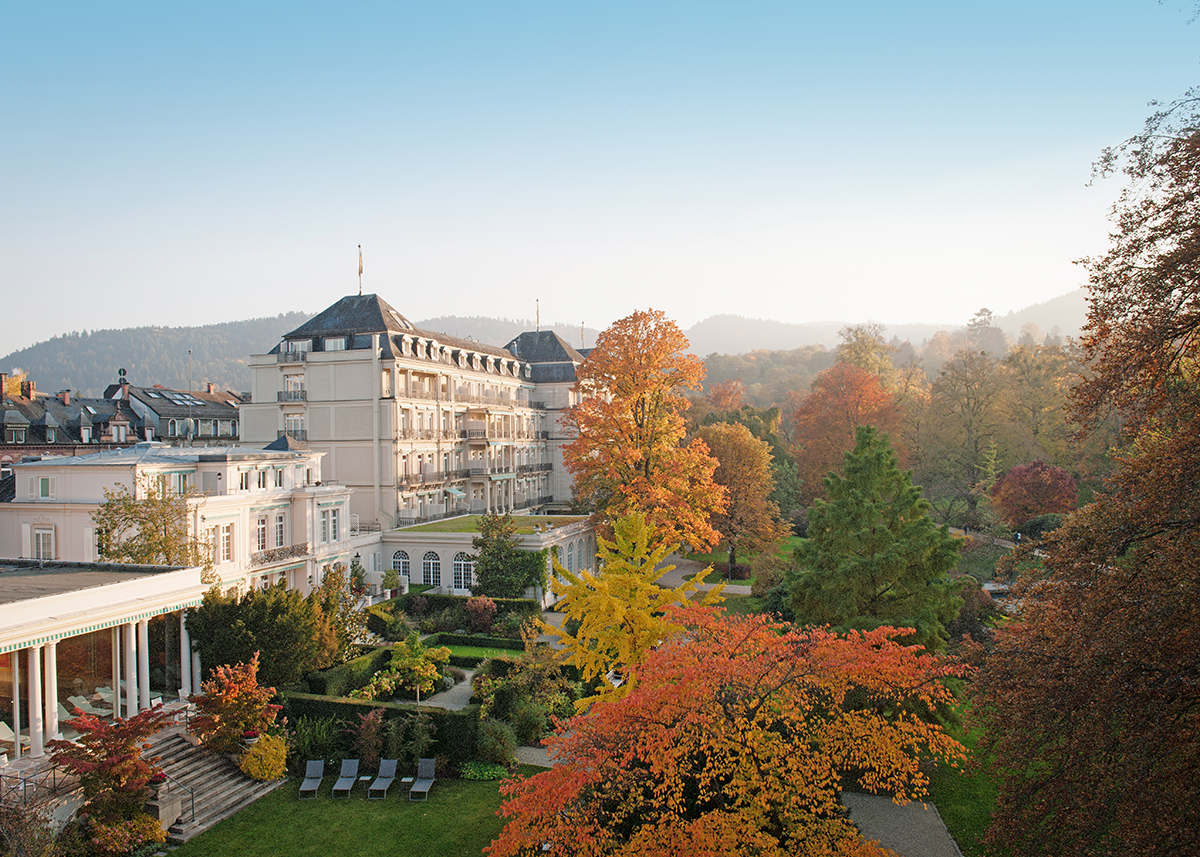
The grand exterior and park of the Brenners Park-Hotel & Spa in Baden-Baden
Our editor-in-chief reflects on travels to some of the world’s great hotels, old and new, across Europe and Asia
Brenners Park, Baden-Baden
Swing open the balcony door at the Brenners, and you are in a fairytale land of luscious trees and deep lawns, with a stream running along the end of the garden in front of you. Locals and tourists stroll along the path beyond, kids run in the flower-bedecked meadow.
Not that long ago, Baden-Baden in Germany was pretty much the place in the world to come to get away from it all. In the days before jets, the view from the Brenners Park, overlooking the gardens, with the tops of the hills of the Black Forest immediately beyond, and the opera house just down at the end of the park, was as good as it could possibly get.
Follow LUX on Instagram: luxthemagazine
It feels pretty good right now. I ease myself into one of the balcony chairs, listening to the birdsong, reflecting that we are in the heart of Europe, a tiny distance from my home, somewhere unencumbered by the over-commercialisation of modern tourist destinations, and without hurricanes, typhoons or sweltering heat.
The hotel is in a little valley which itself is the centre of the spa town of Baden-Baden. Walk out through the grounds, over a little bridge, turn right and you are in a Baroque town centre within around four minutes’ walk. The park itself feels like the hotel’s back garden. Arriving at the grand entrance, you are aware of drawing up at an institution that has attracted the world’s great and good since 1872. Emperors from Germany to Persia stayed here. The reception area has the feel of the ground country house, rather than a city hotel, and a short climb up an oak-panelled staircase (or in a cute vintage lift) took us to a grand corridor with our suite at one end, and the connection to the adjoining villa containing the hotel’s famous wellness and spa area.
True to its history, the Villa Stéphanie is a health, medicine and recuperation centre in its own right. Sure, you can swim lengths in the conservatory pool and chillax on wooden sun loungers inside facing the park, or outside in the park in summer. You can also have a treatment and a tour of the wet facilities in the 5,000sq m spa, with its pool areas overlooking the gardens. You can also get proper medical consultations and physiotherapy along with everything else – the medical centre is housed in yet another building, adjacent to Villa Stéphanie.
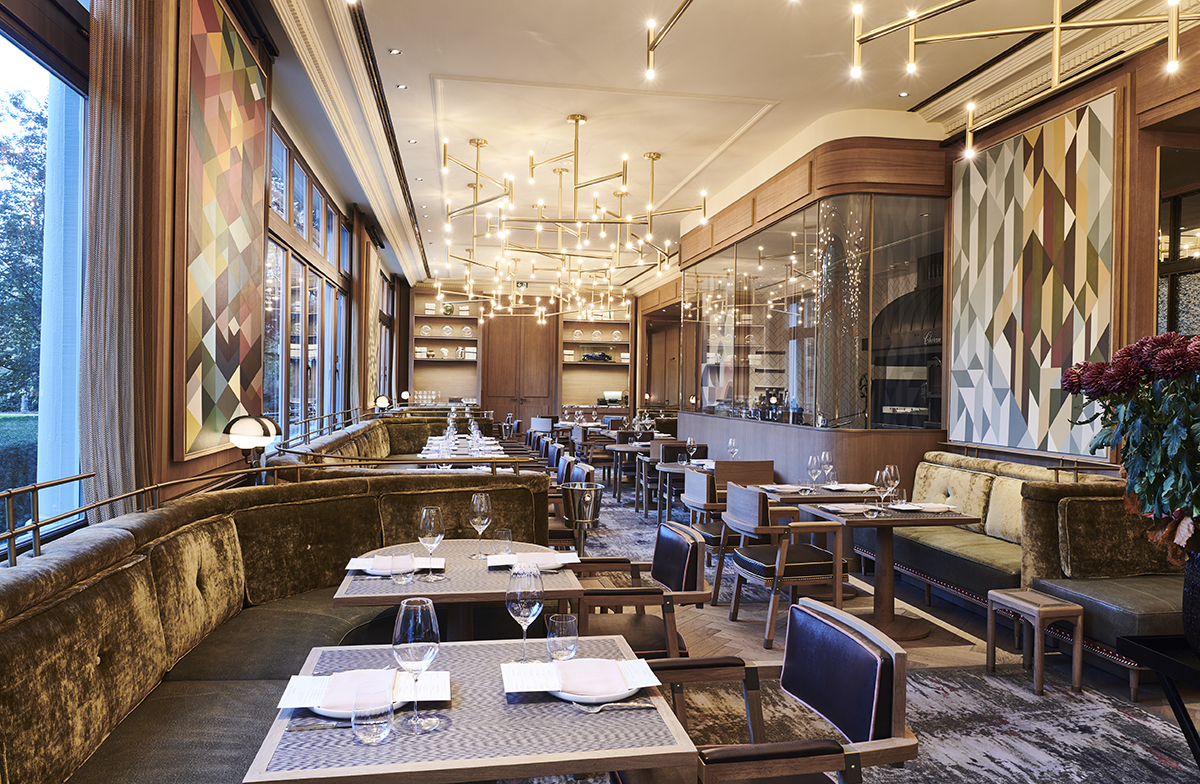
The subtly modernised Fritz & Felix restaurant
I settled for an excellent analysis and treatment session of physiotherapy regarding my tennis elbow (conclusion: too much phone use, and too little actual tennis) after which a refreshing 50-length swim gave me an appetite. We wandered down for dinner at Fritz & Felix, an art-deco styled but distinctly contemporary culinary concept, a restaurant/ bar/kitchen. It was a refreshing contrast to our expectations of a historic German hotel. The menu, all in lower case, featured a delicious looking selection of high-quality but simple dishes: sole with capers, parsley, lemon and olive oil; local pike perch with lentils, balsamic, thyme and olives; fillet of beef with chimichurri and broccoli. The rack of lamb with chick peas, raisins and cumin went down particularly well.
The Brenners Park is part of the same group as the Hôtel du Cap-Eden-Roc in the south of France and the Bristol in Paris, and you can tell with every flutter of perfect service. Pure class.
Book your stay: oetkercollection.com
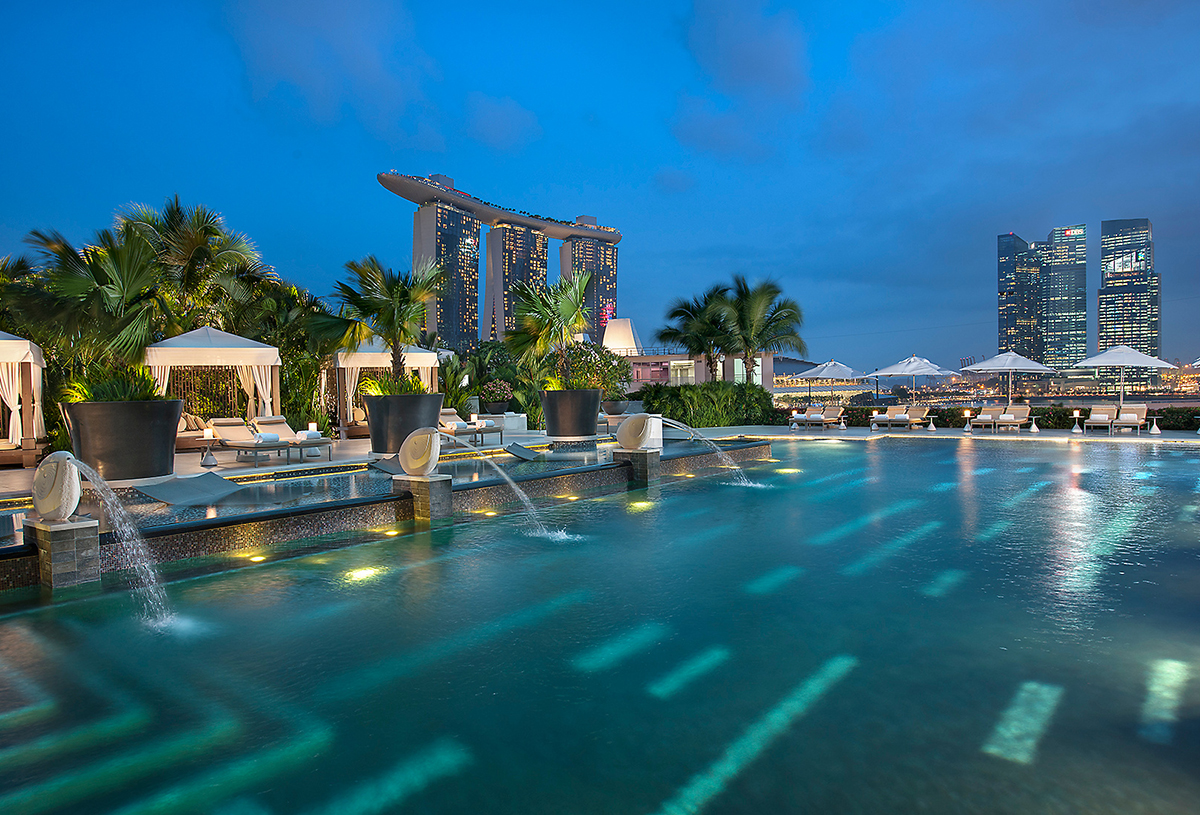
Mandarin Oriental Singapore’s swimming pools with views across Marina Bay
Mandarin Oriental Singapore
It was late when I arrived at the Mandarin Oriental Singapore. The transfer from the airport was quick, only 15 minutes. But the flight had been delayed, we had circled during a storm, and I had missed my dinner arrangement, so was feeling rather irritable.
I explained this all to the pleasant young lady who met me at reception and took me to my room (in-room check-in is such a slam dunk for a luxury hotel that they should all be required to do it to retain their five-star status) and she sympathised and, in that luxury Asian hotel way, immediately came up with a solution. Why didn’t I go to the poolside lounge bar, Bay@5, still open, for a glass of wine and a bite to eat?
Read more: Back to school with Van Cleef & Arpels
There aren’t many city hotels in the world where the swimming pool bar will be open, let alone tempting, at 11 o’clock at night, but this Mandarin, it turns out, was very much one of them. On exiting onto the pool terrace, I was greeted with a night-time-hued blue pool and surrounding tropical foliage and, across the waters of Marina Bay, an archipelago of black liquid and skyscrapers that is one of the most intimate yet dramatic night-time cityscapes in the world. Being on the fifth floor, we were just raised above the streetscape of the bay area.
The storm had passed over, the sky was starry with a warm breeze. The terrace of the bar area had a few couples and a small group sipping wine, and 80s music playing. I sipped on a beer so cold the condensation poured and reformed and poured again onto my lap, and instantly I felt much improved.
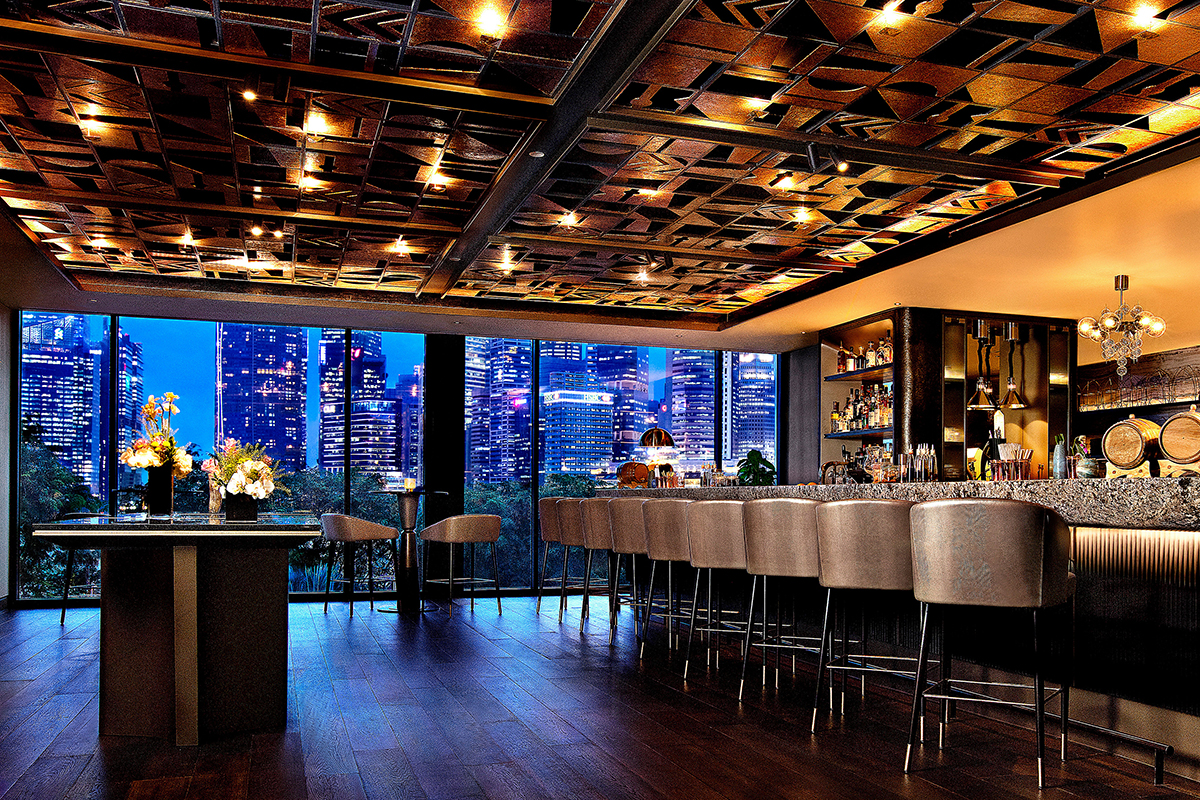
The bar at Mandarin Oriental Singapore
The food was exactly what you might want after a long and jet-lagged journey: I had a vegetarian pizza with San Marzano tomatoes and grilled vegetables, and a hamachi ceviche with coriander. There was a selection of cocktails from Mandarin Oriental bars across the world, some fine Australian wines, and Ruinart Blanc de Blancs champagne, but the draft beer suited me fine that evening – I was the last to leave, and back in my room I was half tempted to leave the curtains open so the harbour lights lulled me to sleep, although in the morning I would have been woken by the tropical sun.
I had a morning in my room before meetings in the afternoon, which was nothing if not invigorating. The decor was contemporary Asian luxury: lots of greys and taupes, some piano blacks, and floor-to-ceiling windows. Fortunately, Mandarin Oriental has not yet fallen for the trend of assuming everyone works lying down propped up on pillows in their beds, and there was a proper office chair and desk, which I shunted around to face the view. On my final morning I had an hour spare, and went back to the pool deck, this time to do some lengths of the huge pool and spend 10 minutes lying under the overhead sun. With a view directly across the harbour and out of the sea, it felt like we were on a tropical island, and in a sense we were. Pretty impressive for a city-centre hotel, and I can’t think of anywhere that beats it for a resort in a city of glamour.
Book your stay: mandarinoriental.com
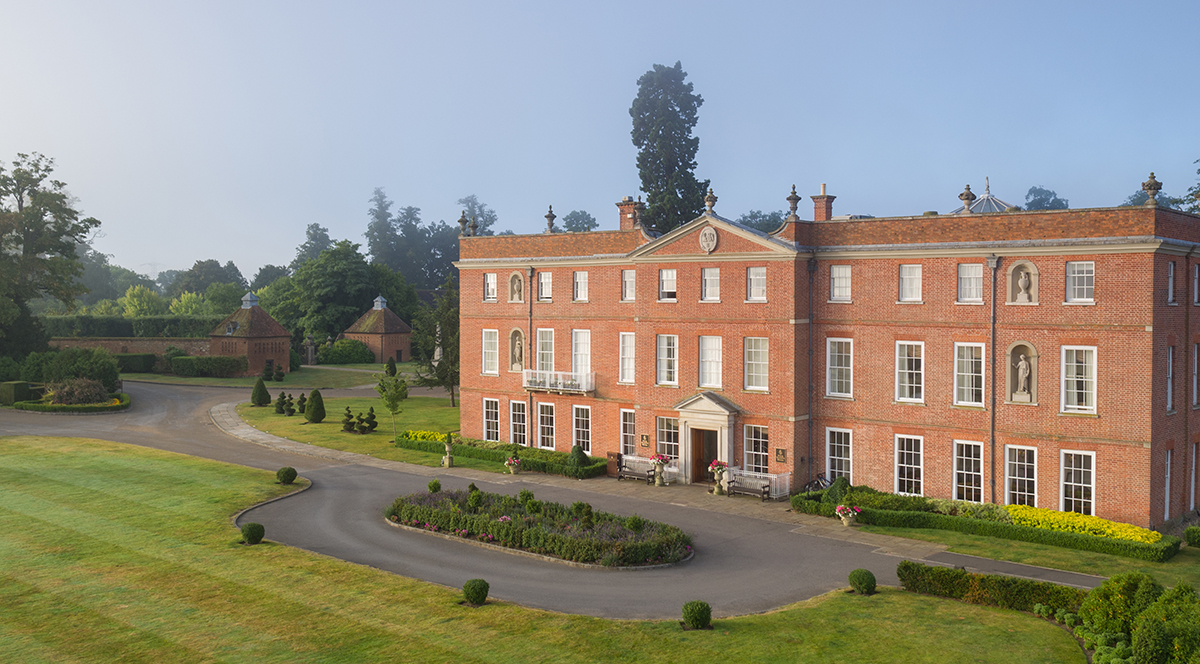
The Four Seasons Hampshire brings a modern style to its 18th-century English manor house and park
Four Seasons Hampshire
The clouds were dramatic as we headed up the drive towards the brick manor house that is the Four Seasons hotel in Hampshire. The hotel is on a slight hill above open fields of English countryside, and on a sunny day, puffs of white and slabs of grey fought each other for places in the Atlantic-washed sky. Arrival was made even more atmospheric at the sight of three fawn-coloured horses, their riders gently leading them across a lawn to the stable block.
The feeling here is of space and light; you (or your kids) are free to roam down the slope leading around the hotel to the restaurant, café and eventually the shooting field at the back. Inside the building, a covered passageway in the conservatory leads to a spa block with a big indoor pool with a glass roof, and outdoor Jacuzzi and sunbathing area, completely private on an Italianate terrace.
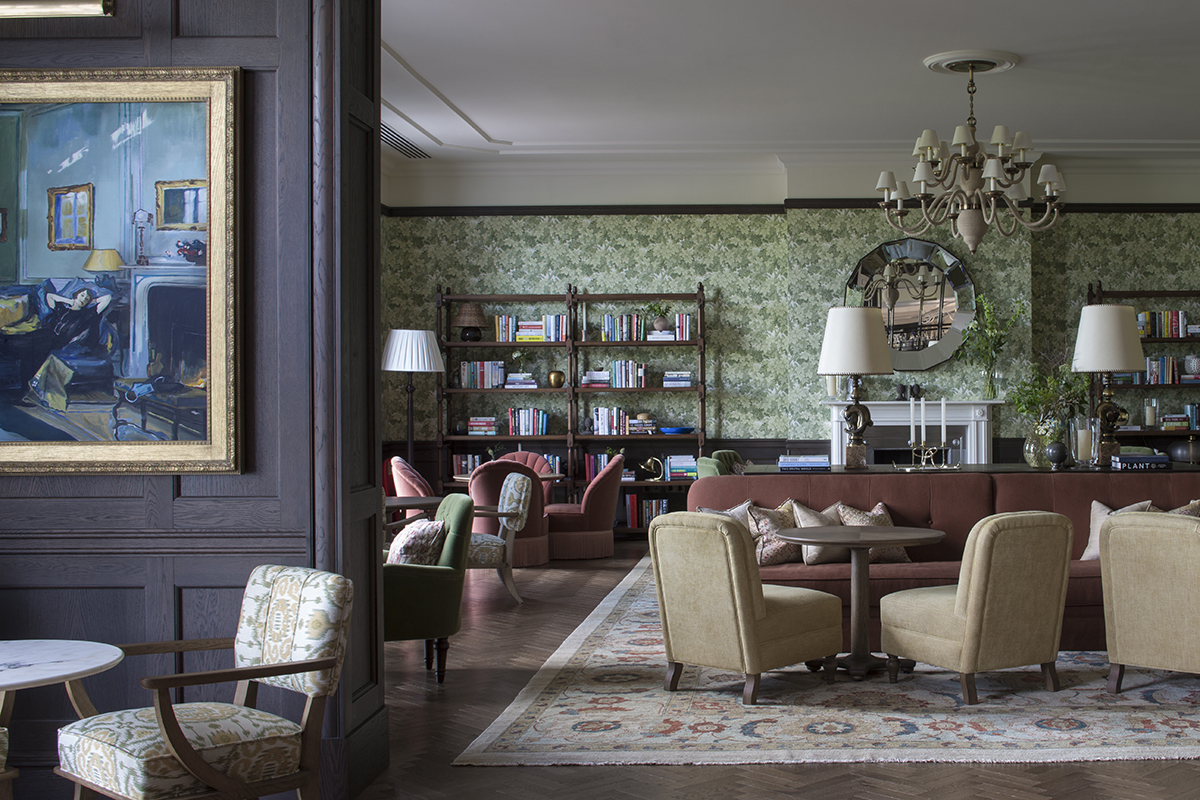
The lounge are of the Wild Carrot restaurant at Four Seasons Hampshire
Our room was a blend of traditional English coloured cushions – pinks, dark pastels, and burnt orange – a combination of leatherwork, ornate wallpapers, with windows looking over the open fields. Less than 40 minutes from Heathrow, you are plunged into a serious English country house experience.
Read more: High altitude luxury at Riffelalp Resort 2222m, Zermatt
We were expecting a slightly formalised English dining experience, but fortunately the management had more sense than that. Wild Carrot, the main restaurant, has been reborn as a kind of grand Parisian bistro. There were leather banquettes, bare wooden floors and no tablecloths, and a menu featuring lots of raw and local ingredients. Typical was the very welcome lightly torched house-cured mackerel with pickled radish and hollandaise, and a main of Somerset salt-marsh lamb rack with roasted cucumber, Greek yoghurt, tomato chutney and mint. All the vegetables are locally grown.
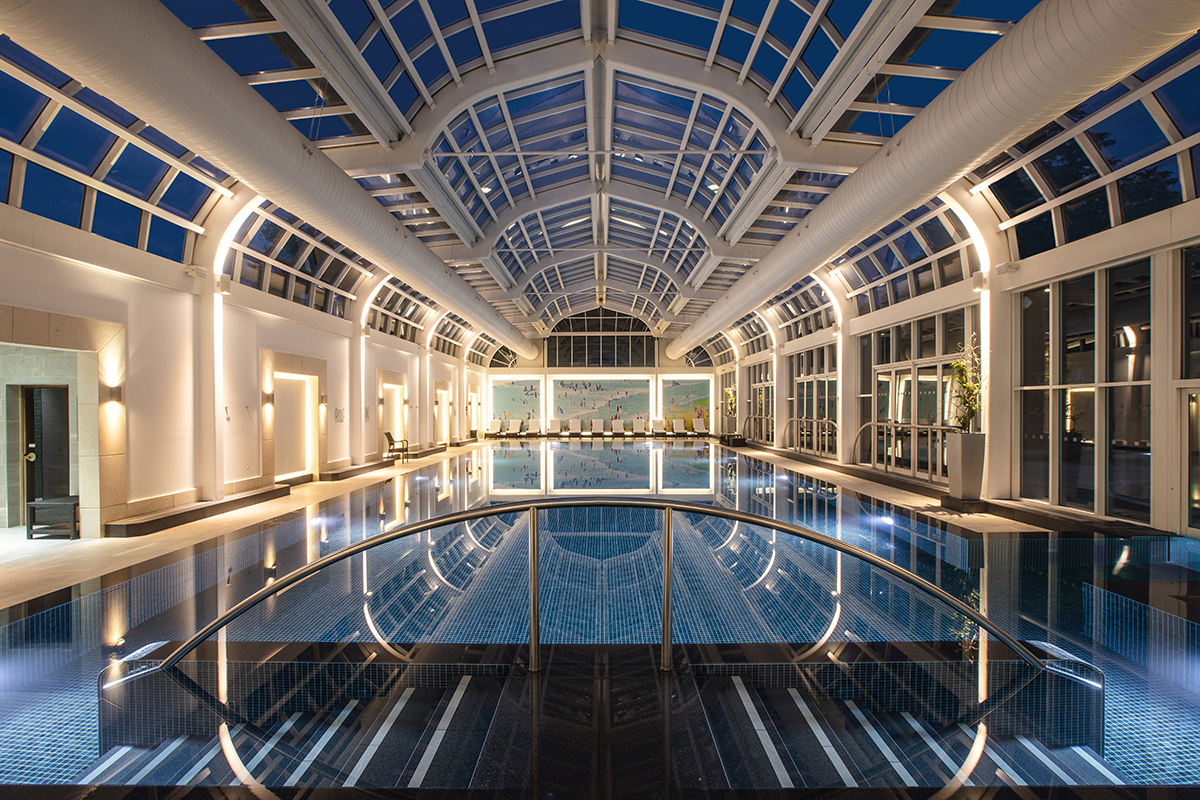
The hotel’s pool is attached to the converted stables
Unlike some traditional English country house hotels, signs proclaim children and dogs are welcome, and there are plenty of activities for both. The riding stables offered us a trek across the fields and around the lakes and hacking around the woodland on horses which had been perfectly matched to our height, weight and experience. There is also a high-wire adventure park, which involves zip wires, ladders and perilous bridges to clamber across, all with highly professional instructors.
There is also tennis, clay pigeon shooting, cycling, croquet and an immensely satisfying spa. The grounds are vast – a walk down to and around the lake and back is enough to work up a full day’s appetite. Altogether, it’s impossible to think of another English country house hotel which offers such a complete range of experiences in such luxury, let alone one so near Heathrow Airport and the capital.
Book your stay: fourseasons.com
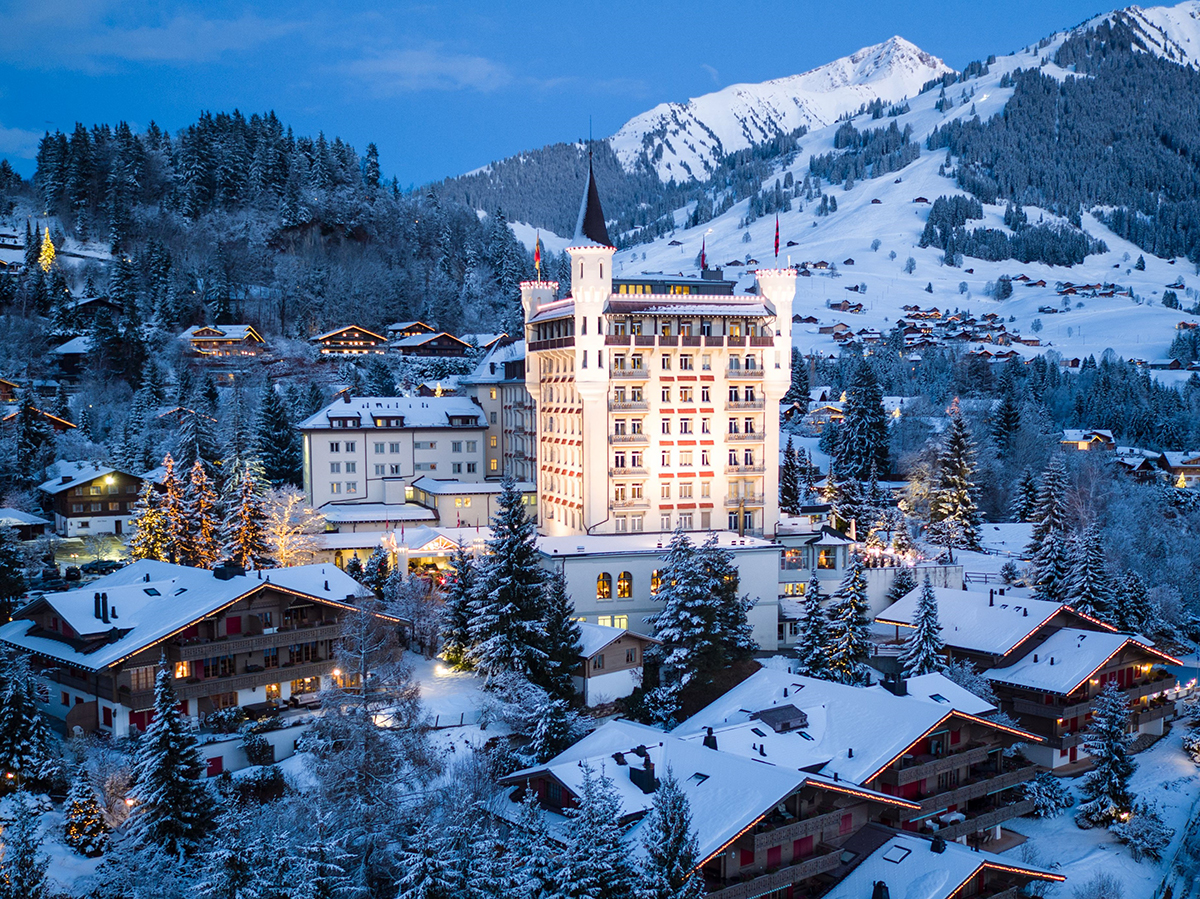
The Gstaad Palace was once called, for good reason, the ‘Winter- Palace’
Gstaad Palace
A memory of a place is first recalled by rapid-fire still or moving image (or maybe now a GIF?) in your brain. A few weeks after my visit, my instant memory of the Gstaad Palace was our table at Le Grill restaurant. Wood-panelled walls and ceilings and a thick Alpine carpet, and veneered wooden chairs and occasional tables gave it a mountain chic. Formally dressed waiters bustled around, chatting with guests they have known evidently for years or decades.
They were no less courteous to us, to their credit, although of course we had no common anecdotes to share with them. With Alpine flowers on the thick tablecloths, and cuisine rich and local ingredients, including flambéed dishes prepared at the table by the waiters like a glorious piece of 1970s revival, it was an evening experience unlike almost any other.
Read more: The Thinking Traveller’s Founders Huw & Rossella Beaugié on nurturing quality
There was a fantastic Hungarian traditional string band playing in adjacent bar, alternating with a soulful jazz band. The house Burgundy, poured from magnums, accompanied everything extremely well. You could choose Le Grill to propose to your other half, for a family get-together, or a casual dinner for one – it’s that versatile.
When we drew back the thick red curtains of our suite in the morning, we were greeted by the Alps as drawn by Laurent de Brunhoff, creator of Babar the Elephant. Big, forested round hills dropped into a broad bowl, above which jagged rocky peaks loomed. The Palace is the cornerstone of Gstaad, the reason the village has become one of the epicentres of wealth in Europe. In winter, after dinner at Le Grill or one of the other restaurants, you would roll down to the GreenGo nightclub, with James Bond and Pussy Galore sitting on corner sofas sipping two olive martinis as Julio Iglesias rocks the dance floor.
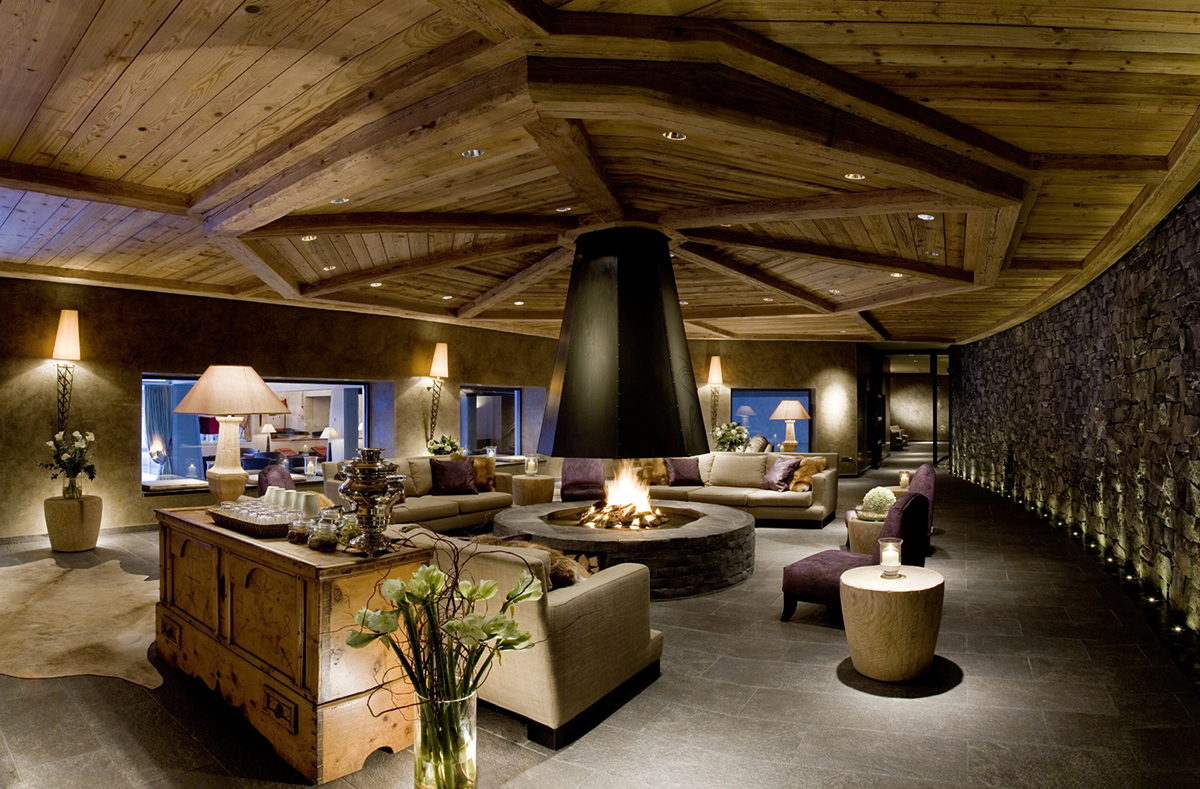
Today, the hotel’s modern spa adds a warmer kind of seclusion from the outside world
In summer, when we went, the nightclub is a swimming pool, connected to the spa (open year round) and looking out onto a garden with a cute kids’ playground, and lined by the hotel’s famous clay tennis courts. Here, you can play as if you were born with a pro living in your garden house (as many guests likely were) with a 270-degree view of the mountain bowl of the Bernese Oberland. If you need something bigger than the hotel’s internal pool, wander up to the Olympic-sized pool the hotel shares with the village (it has its own sun-lounger area, and this is a very posh village). We loved our simple, abundant mountain-food lunch at the pool bar.
The Palace is the kind of place which makes you feel very welcome, but at which it is always evident that there are layers of society into which money simply won’t buy. In its lavish lounge and bar area, just behind reception, old families from Germany, Switzerland and Italy, whose forebears have been coming here for generations, chat easily about art, girls and boys, and schools. The windows in the corridor leading down to the restaurant contain watches and jewellery, from famous brands, that simply might not be available to you unless you know them personally.
The service, however, is sublime for everyone – there was not a flicker of an eyebrow when we booked a tennis court, arrived on the court, and realised we didn’t have any rackets or balls. They were served up in an instant. I just enjoyed sitting on the terrace at breakfast, picking out a gluten-free croissant, looking out over the view, and catching snippets of cultured conversation in several European languages. Perhaps we will be coming back here for generations also.
Book your stay: palace.ch
This article was originally published in the Spring 2020 Issue.
Monte Rosa, the second highest mountain in the Alps at 4,634m (left), towers over Zermatt’s Gorner Glacier. Lyskamm (right) is another of the 33 peaks higher than 4,000m surrounding Zermatt. Photograph taken from the Gornergrat observatory station by Isabella Sheherazade Sanai
Zermatt, in Switzerland, has mountain views and activities that are the stuff of legend. It also has the highest altitude luxury hotel in Europe. Darius Sanai checks in and is mesmerised
We arrived for our stay in Riffelalp Resort 2222m by taking four trains from Zurich, each one more quaint and tiny than the previous. The first was a double-deck express that arrowed smoothly through luscious lowlands and past lakes; alighting at the bottom of a deep valley at Visp, we changed to a more pared-back, basic train that made its way up a narrow, steeply inclined V-shaped valley, more gorge than valley in places. Shards of rock sat on the valley floor among trees and cows, a fast-flowing river accompanied us upwards. There were glimpses, as we ascended, of glaciers and snowy peaks, even in mid-summer.
Follow LUX on Instagram: luxthemagazine
Arriving at the top of the valley in Zermatt, we crossed a tiny station square, gazing up at the citadel of the Matterhorn looming over the village like a rock god. The next train was a cog railway, which headed in a meandering zigzag through the larch forest up the valley sides; we crossed over a high iron bridge above a waterfall, in and out of deep larch groves, the ground disappearing below us.
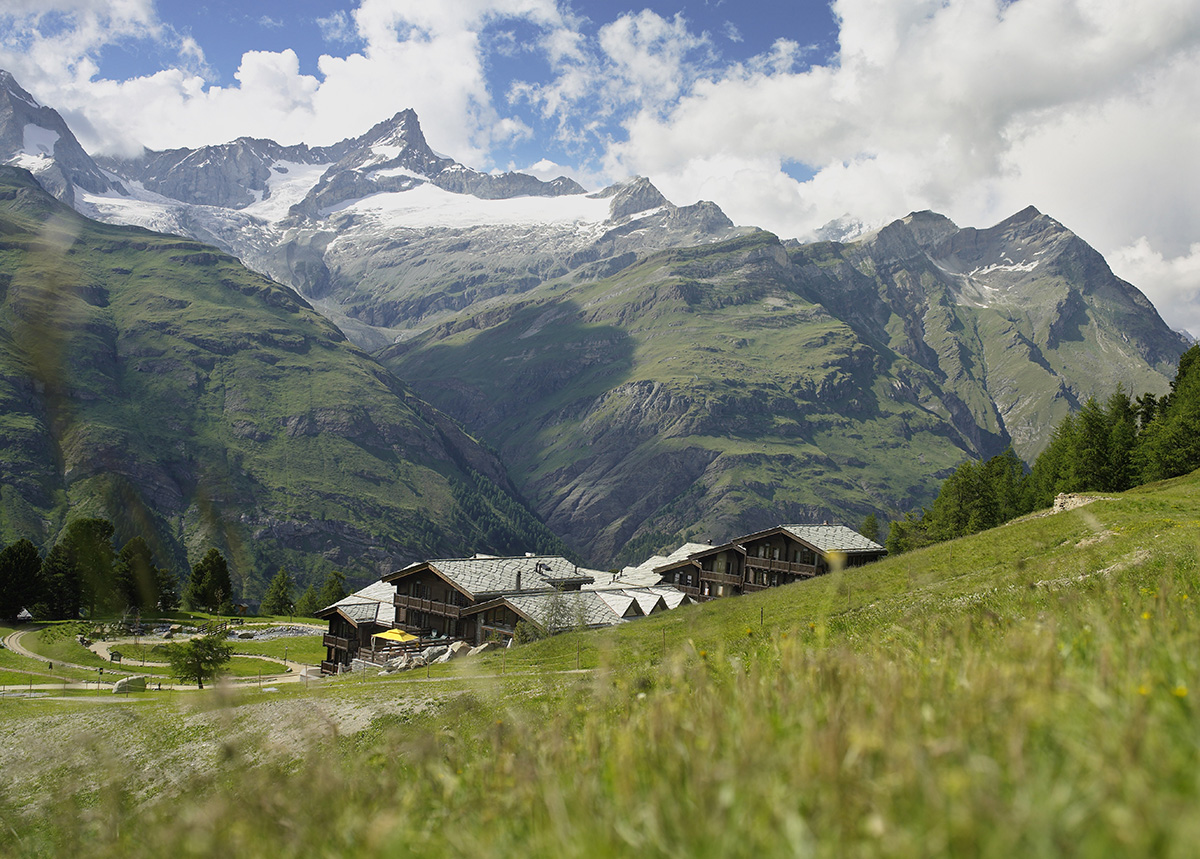
The Riffelalp Resort 2222m sits high above Zermatt in the valley below, with views of the surrounding peaks, including the Matterhorn
After 15 minutes, and feeling a lightness in the air, we emerged at Riffelalp station, right on the tree line. On the other side of the open-air ticket barrier was a tiny, open, narrow-gauge train, and a smiling drive/porter in full uniform, with a peaked cap. This little train, more toy than real, with no windows and waist-height doors, had room for around 20 people and a little luggage. It ground along a mountain path through the forest, at little more than jogging pace, for five minutes, as we were enmeshed in the aromas of pine cones and herbs, until it reached a clearing. Here, 600m above the valley floor, at a height of 2,222m (thus the name) we were greeted with a cluster of pretty Alpine chalets and a view, across and above the confluence of three glacial valleys, over to the Matterhorn, and several other peaks, lit only by moonlight and starlight, glaciers staring at us from across the dark night-time green haze.
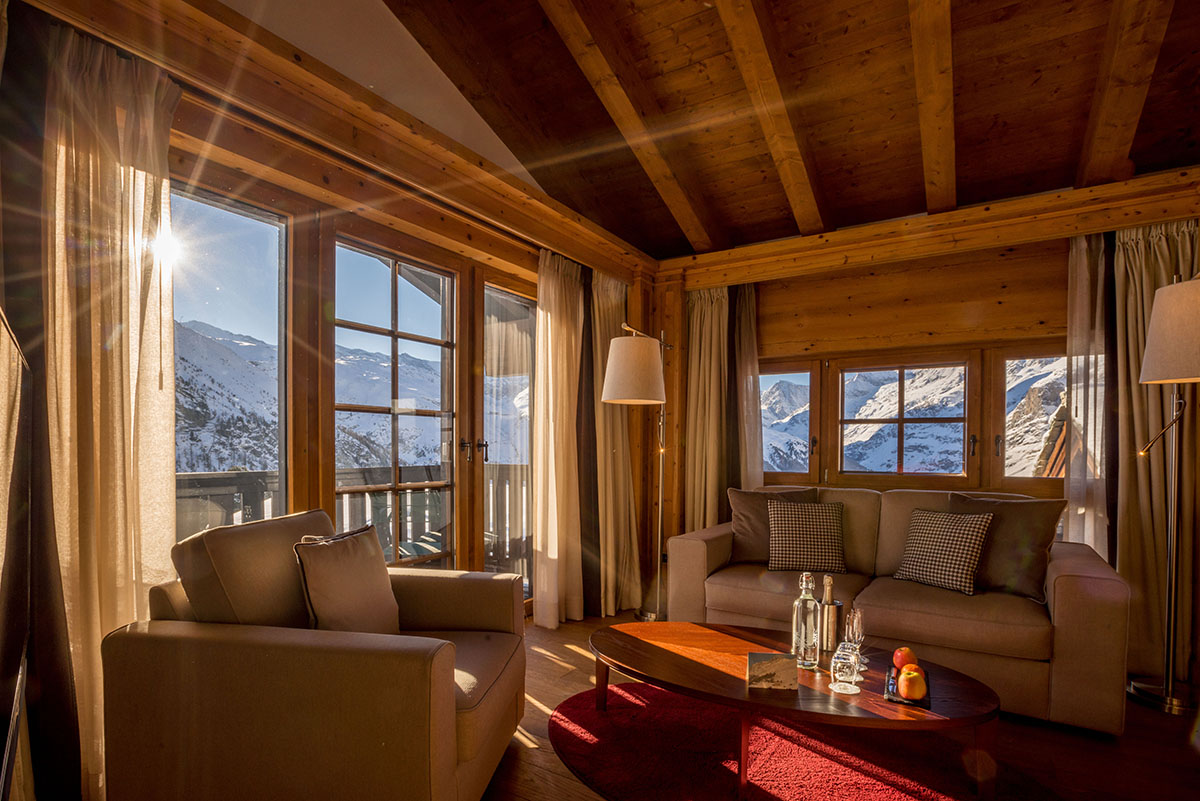
Bedrooms at Riffelalp benefit from sweeping views over the mountain peaks
If the view was mind-bending, stepping inside the hotel was even more so. For this was no high-altitude mountain hut; we were inside a luxury palace hotel, beautifully created with Alpine woods and finishes, with a long and wide corridor leading down from the lobby area, past a jazz bar with a live band, and towards a restaurant, whose large windows perfectly framed the night-time Matterhorn. All the details were done beautifully, from the lighting, to the granite, wood and artisanal tables in the gently curving lobby/corridor area, whose large windows perfectly framed the mountains: at night, you could spot the helmet lights of the climbers on the Matterhorn.
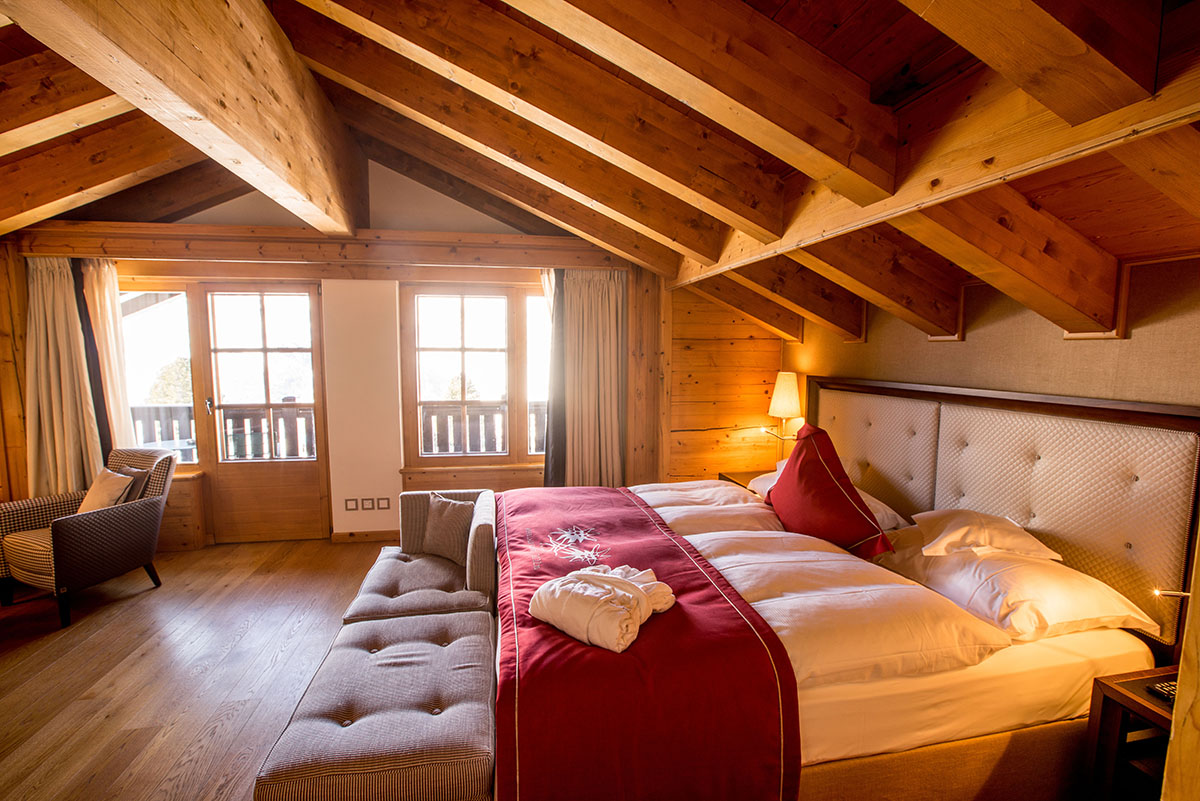
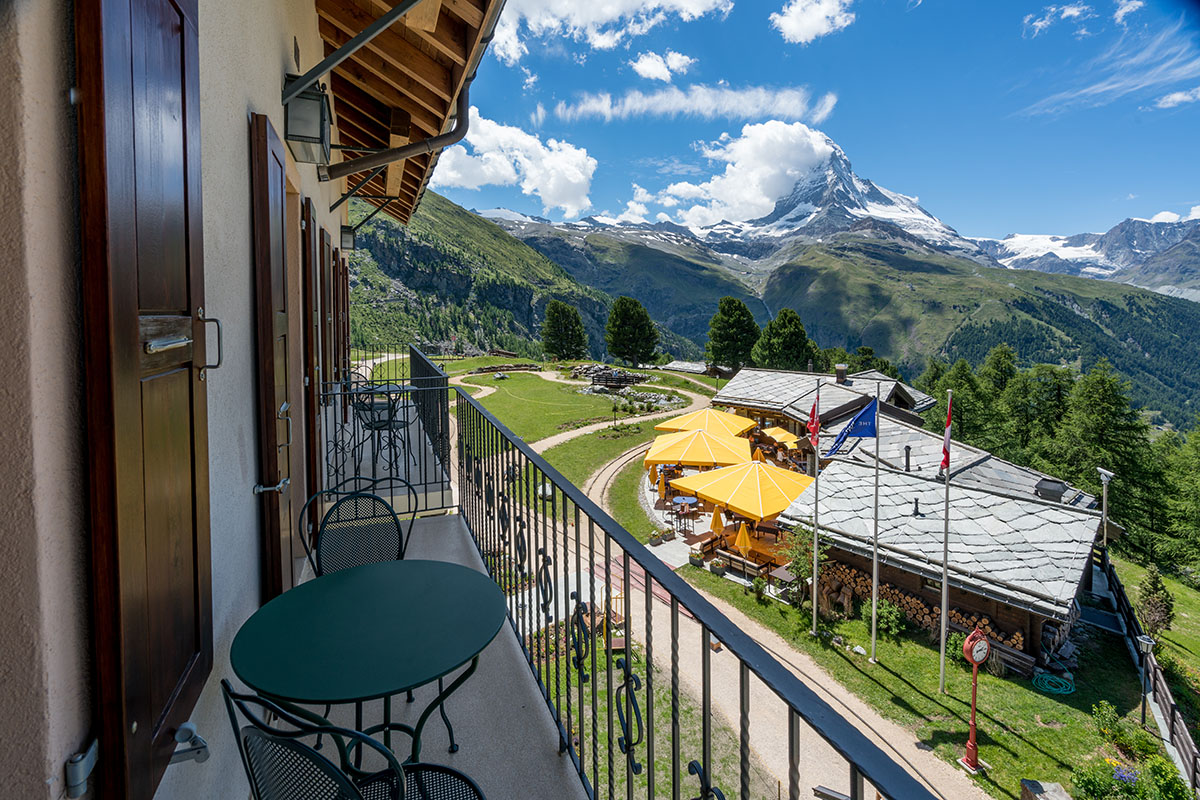
One of the resort’s bedrooms (above), and (here) views of the Matterhorn from the terrace
We stayed in the Matterhorn suite, an L-shaped series of rooms, decorated in blonde woods with contemporary furnishings, each of which had a balcony looking out over the high-altitude drama of a dozen peaks of more than 4,000m. This is the highest luxury hotel in Europe, and from the bedroom balcony, it certainly felt it. The granite and marble master bathroom was a masterpiece of design and sheer size – in contrast to many Alpine mountain hotels’ compact dimensions.
Read more: Back to school with Van Cleef & Arpels
What was particularly compelling about the resort is that it is just that: a place you don’t need to leave. On the roof of one of the buildings is an indoor and outdoor pool and sun terrace – it gets surprisingly warm on a summer afternoon, notwithstanding the altitude. Inside is a spa. There is a bowling alley, table tennis, billiards, trampolines in a play area outside, and perhaps our favourite part was the garden terrace downstairs.
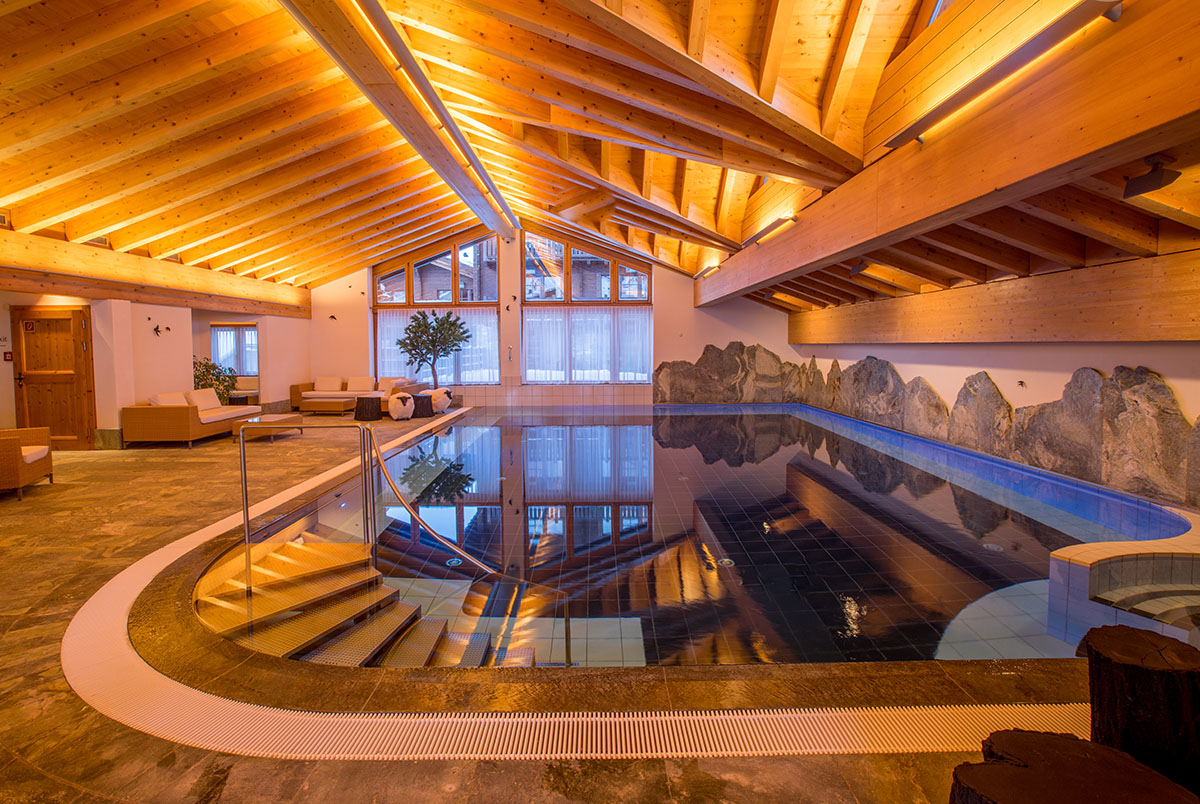
The indoor swimming pool at the hotel’s spa
The buildings are located just where the trees start to peter out, giving way to high-altitude grass and tundra, meaning you can sit at a table outside the hotel, watching hikers and climbers go past during the day while sipping a glass of wine – and you have the mountain to yourself at night. Kicking back with a drink after a long hike, as the sunset turns ever more blue, watching the other tourists disappear down the valley to Zermatt, or the serious climbers striding on and upwards towards their bivouacs, is an infinitely relaxing feeling.
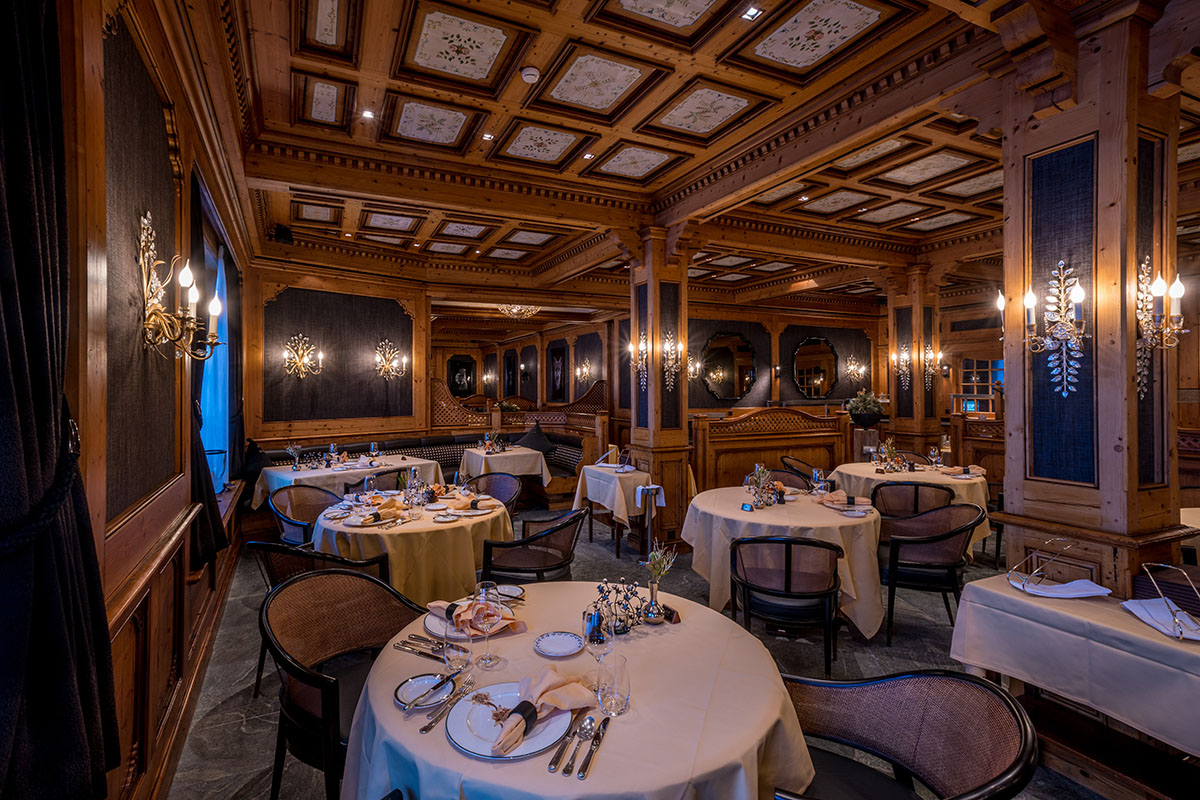
The Alexandre restaurant serves fresh, light Alpine cuisine
There are three restaurants and a bar (the two main restaurants are open in summer). The Alexandre is the one in the main hotel building and any fears that it will be an old-fashioned Swiss grand restaurant serving heavy cream and food are quickly dispelled. The Swiss Alpine salmon fillet with wild spinach and venere rice was light and umami; meanwhile the Simmental beef with mountain vegetables and potato purée really tasted of Alpine meadows.
We had slightly feared that staying at Riffelalp would mean feeling cut off from the village below, a 20-minute train ride down in the valley. In fact, it was quite the opposite: we felt like we were the privileged ones, in a kind of contemporary, tasteful luxury Nirvana high up in the view, and we never felt like going down. Indeed, we never felt like leaving at all.
Book your stay: riffelalp.com
Larch and pine forests coat the steep slopes immediately above Zermatt. Image by Isabella Sheherazade Sanai
Four unmissable summer activities in Zermatt
Hike the Mark Twain Trail. Named after the American writer, it loops upwards and around the mountain from Riffelalp, revealing more and more vast, glaciated peaks at every turn, past high-altitude lakes and meadows, until you reach Gornergrat, the station and observatory at 3,100m with probably the most spectacular 360-degree view in the Alps. The trail is not particularly steep and can be done in three hours, but it’s not for those who have a fear of heights. There are hundreds of other mountain paths, over mountain top and through forest, valley and meadow.
Take advantage of the mountain gastronomy. Zermatt’s mountain huts may look quaint and weathered, but many of them house restaurants of Michelin-star standard, or rustic cuisine of the highest quality, with fine wines from around the world to match. And you need to walk or trail bike to get to them, making them justified. Some of our current favourites are: the Findlerhof, on a forest trail with a mesmerising view of the Matterhorn, where we had fantastic forest cuisine: a local mushroom salad and herbed chocolate fondant, cooked and served by the delightful owner; Restaurant Zum See, in a tiny
hamlet in a lush glade just above Zermatt, where the platter of local air-dried beef and cheese was sublime and the owners charming; Edelweiss, a characterful hut on a cliff directly above the village, accessed only by a short but very steep walk, which felt cosy and atmospheric; and the Whymper Stübe, in the oldest hotel in the village, where Edward Whymper, the English tragic hero who first climbed the Matterhorn in 1865, stayed, and where the fondues are superb and the atmosphere even better.
A panoramic path down from Zermatt’s Stellisee lake with the peaks of Dent Blanche, Obergabelhorn and Zinalrothorn in the background. Photograph by Isabella Sheherazade Sanai
Visit the Forest Fun Park. A high-wire park in a forest on the edge of the village, run by mountaineers, its trails, of varying difficulties, are ingeniously devised and variously involve zip-wiring over the river, down above rapids, and across a football pitch, and clambering from treetop to treetop, all in safety and with a stunning view of the Matterhorn.
Climb the Matterhorn. If you’re fit and fearless, plan ahead and book your guide and accommodation, Europe’s most famous mountain can be climbed by capable non-experts. But take heed of advice and guidance: after a gradual decline in accidents in recent years, in 2018 there were at least 10 deaths on the mountain. If you’re not quite up to climbing, a spectacular second best is a hike up to the Hornli Hut, known as Base Camp Matterhorn, on the leg of the mountain, which anyone can do if they are fit and don’t suffer from fear of heights. It’s two hours up from the Schwarzsee lift station, and pretty dramatic in itself.
Wildflowers grow in the unique microclimate of Riffelsee, at 2,800m one of the Alps’ highest lakes, protected by ridges from northerly winds. Photograph by Isabella Sheherazade Sanai
Other places to stay
Up in the mountains above the village, there is nowhere that comes close to Riffelalp Resort 2222m. When staying in Zermatt itself, we like to stay in Winkelmatten, a hamlet on its southern edge, at Chalet Banja. Available for private hire, Banja is beautifully built and detailed by a local doctor and his artistic wife, with four floors of exquisite local stone, wood, artefacts and detailing. It sits above a riverbank amid conifer trees, with uninterrupted views up to the Matterhorn; on the lowest floor is Zermatt’s biggest private (indoor) pool, with the same views, and a gym and sauna and steam rooms. The Alpine library in the atmospheric kitchen/living/dining area is engrossing.
This article was originally published in the Spring 2020 Issue.
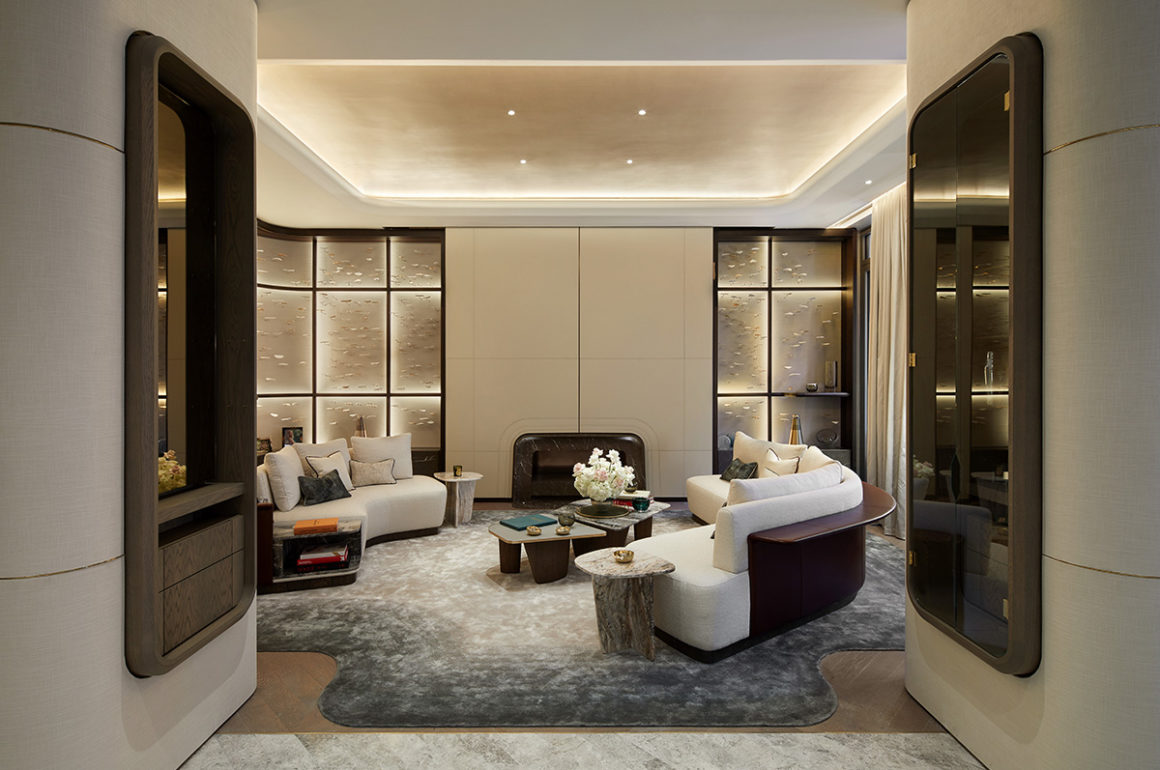
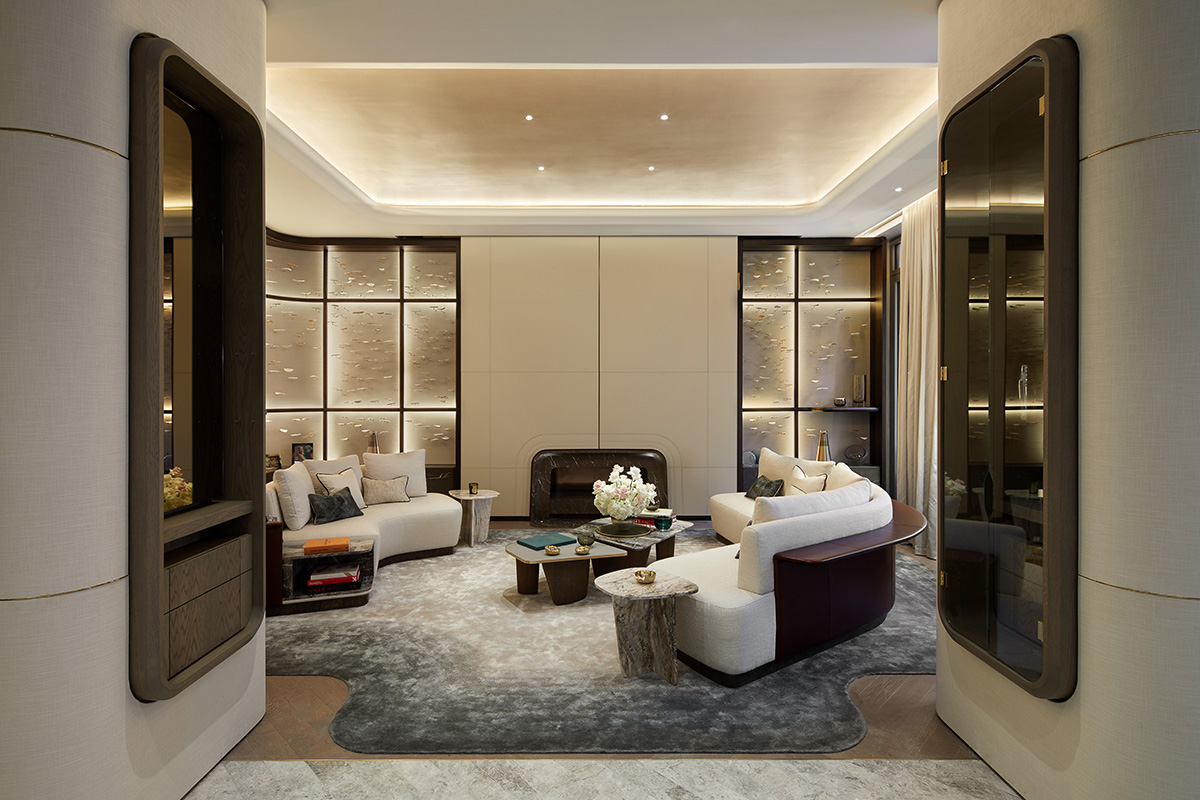
Residents of Clivedale London’s latest luxury development can enjoy branded services and amenities provided by the Dorchester Collection
Mayfair-based developers Clivedale London recently unveiled the interiors for a townhouse at Mayfair Park Residences, an exclusive residential development managed by the Dorchester Collection. Chloe Frost-Smith takes a look inside
Mayfair Park Residences is a collection of 24 private apartments, all fully-serviced with five-star amenities by the adjoining Dorchester Collection hotel, 45 Park Lane. Ranging from spacious pieds-à-terre to an eight-bedroom penthouse complete with rooftop pool, the generously proportioned apartments are spread over eight floors with sweeping views over Hyde Park.
Follow LUX on Instagram: luxthemagazine
Incorporating the character of a Grade II listed townhouse, Lee Polisano of London-based PLP Architecture has created a contemporary yet complementary counterpart to the refurbished historic Georgian façades, one in black-painted brick, the other in Portland stone and white travertine. Fronting two streets and presenting six distinct exteriors, Mayfair Park Residences blends into the surrounding eclectic architectural styles.
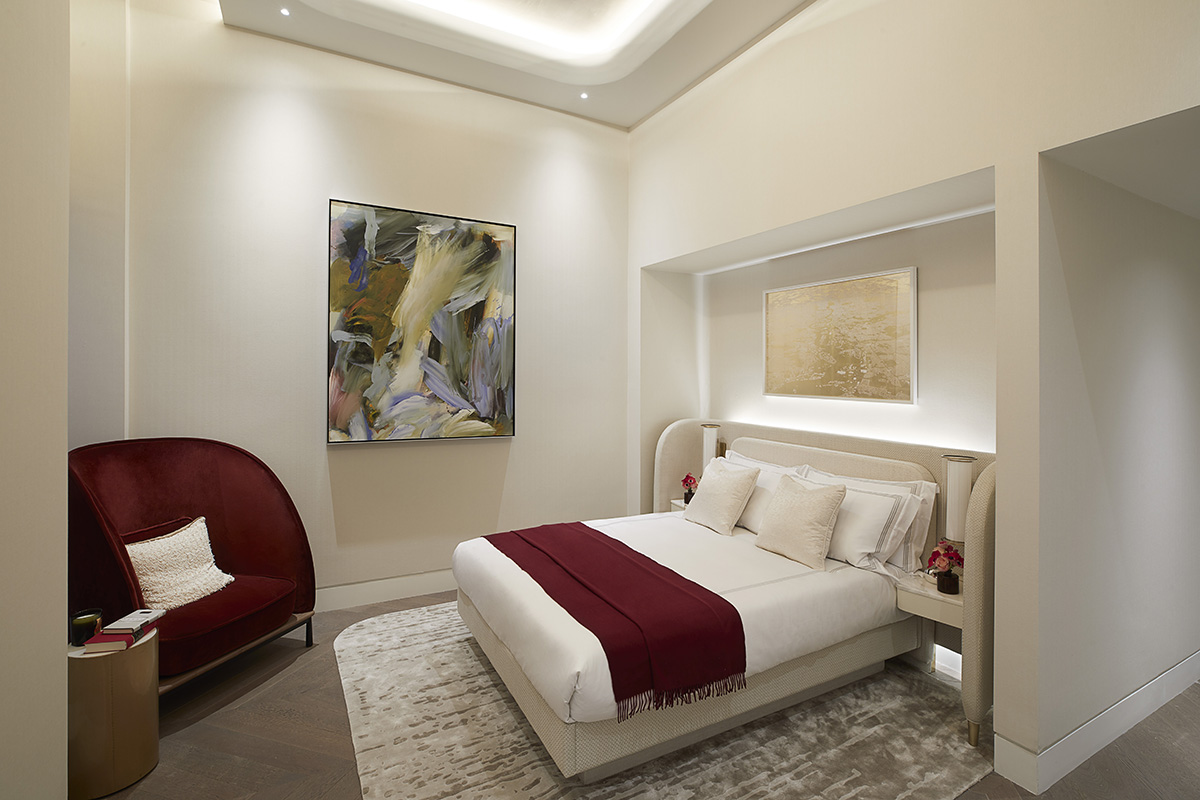
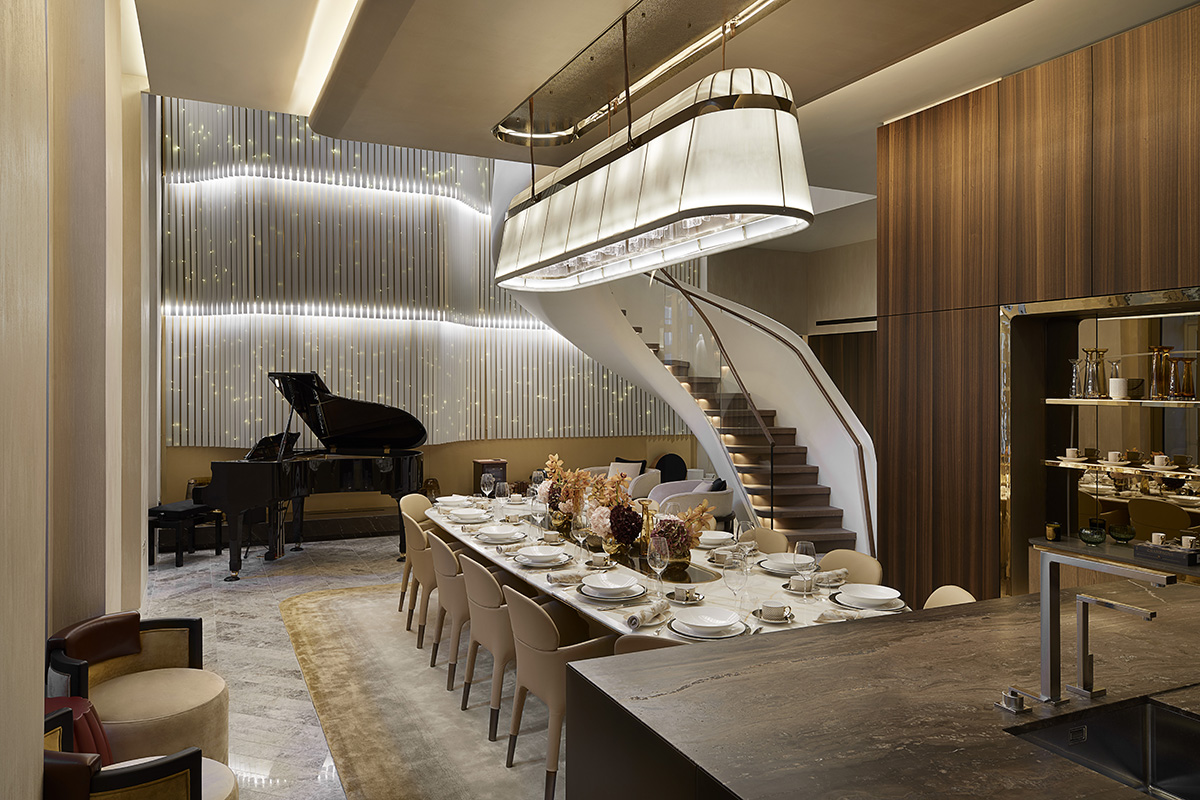
The spacious dining room of a townhouse at Mayfair Park Residences, and (above) one of the bedrooms
The classic Georgian period details are continued in the interiors, which draw on historical references combined with bespoke features by Parisian design studio Jouin Manku. With a number of previous Dorchester Collection hotel projects in their portfolio, Jouin Manku has taken a fresh approach to the group’s first residential development, focusing on an organic, natural colour palette and luxurious materials. Soft, muted tones are paired with elegant marble work, floor-to-ceiling windows, and wood-panelled spiral staircases.
Read more: Film director Armando Iannucci on David Copperfield & Fleabag
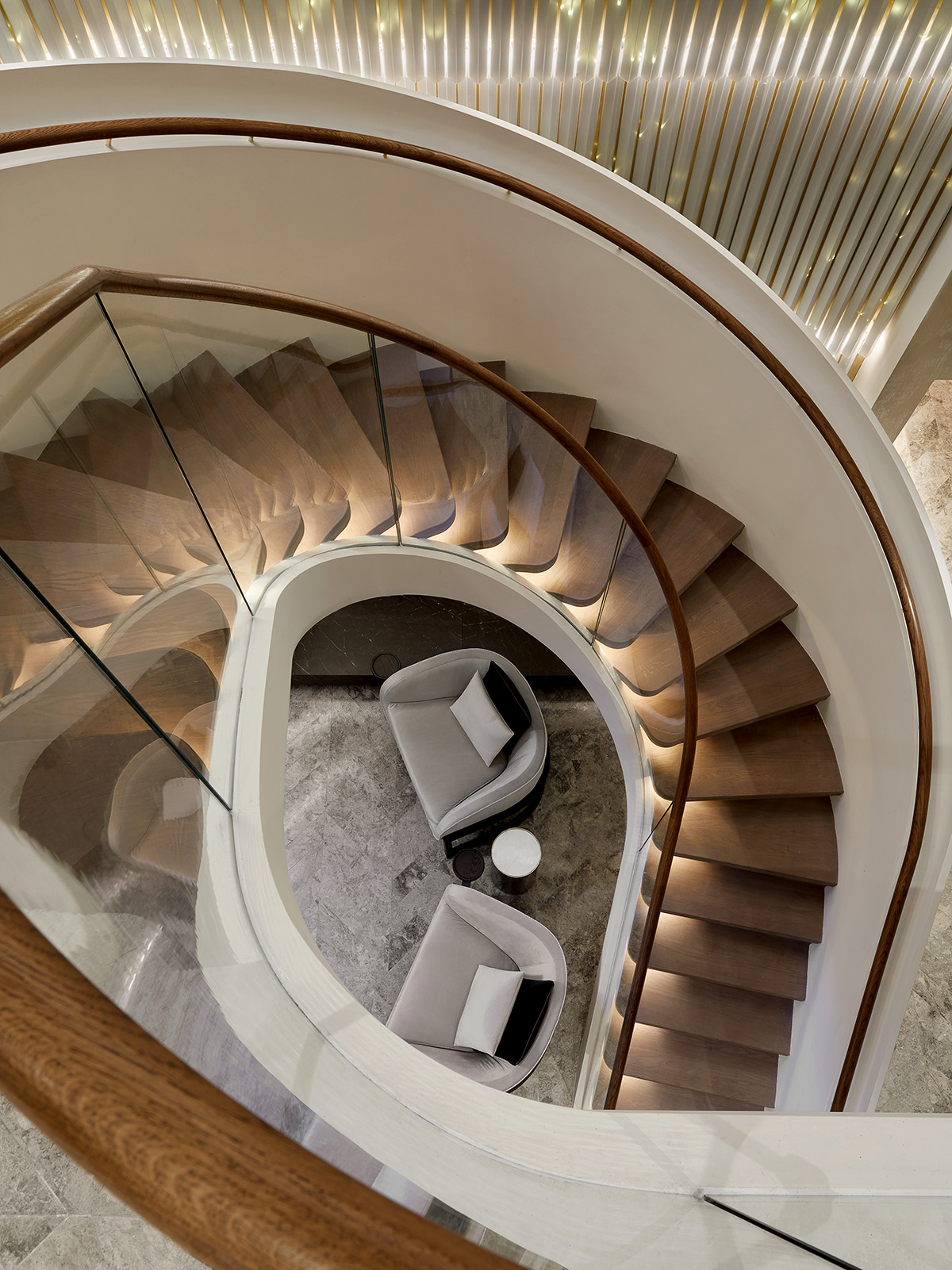
Interiors by Parisian design studio Jouin Manku blend historical references with contemporary details
Residents will enjoy access to an impressive selection of services available on an à la carte basis, including 24-hour room service, concierge, security, and valet parking. In addition to 45 Park Lane and The Dorchester amenities, residents can also make full use of the heated swimming pool, sauna and steam rooms, and hydrotherapy pool.
Find out more: mayfairparkresidences.com
Georiga’s capital Tbilisi sits amidst the Caucasus mountains, on the border of Europe and Asia. Image by Denis Arslanbekov
Why should I book now?
Thinking of booking a spring break? There are few places more lovely than the Caucasus mountains, on the border of Europe and Asia. And in the region, Tbilisi, the capital of Georgia, is unmistakably the most beautiful city. In a broad valley surrounded by mountains, at its heart is a medieval old town with a fortress towering above. The country has two millennia of history and feels like it was once the centre of a culture and empire – which it was. Winters are cold, summers are hot, and spring, with the trees and blossoms in full bloom, are perfect.
Follow LUX on Instagram: luxthemagazine
What’s the lowdown?
The Radisson Blu is the best-located hotel in the city, at the top end of the broad Rustaveli Avenue, the magnificent boulevard, lined with palatial buildings, that bisects the town centre like a more elegant Champs-Elysees. Rooms have views across the city to the mountains beyond. It’s a modern, light and airy place with a lot of glass everywhere. Climbing out of our car and being greeted by the doorman was our first taste of hearty, genuine Georgian hospitality – we had two recommendations of things to do before even entering the reception area. The receptionists were equally friendly, and, you felt, from their hearts: this was genuine national pride, not just training.
Filini is the hotel’s chic Italian restaurant (above), and in the warmer months, guests can dine on the rooftop terrace (below)
Getting horizontal
Our “superior” category room was spacious and very light, with full glass walls on two sides, and gorgeous views across to the churches of the old town. Decor is contemporary and minimal: whites, creams and light greens. The minibar was filled with local snacks – creamy Argo beer, and packets of local pistachios. There are two restaurants in the hotel, both of them contemporary-chic, and an excellent selection of neighbourhood restaurants just across the square. Wander down Rustaveli Avenue, where a highly fashionable passeggiata takes places every evening in the warmer months, and you get to the Old Town’s wonders, but as a place to stay, we preferred being slightly out of the tourist main drag at the other end of Rustaveli.
Read more: Galleria Continua’s Lorenzo Fiaschi on opening a space in Rome
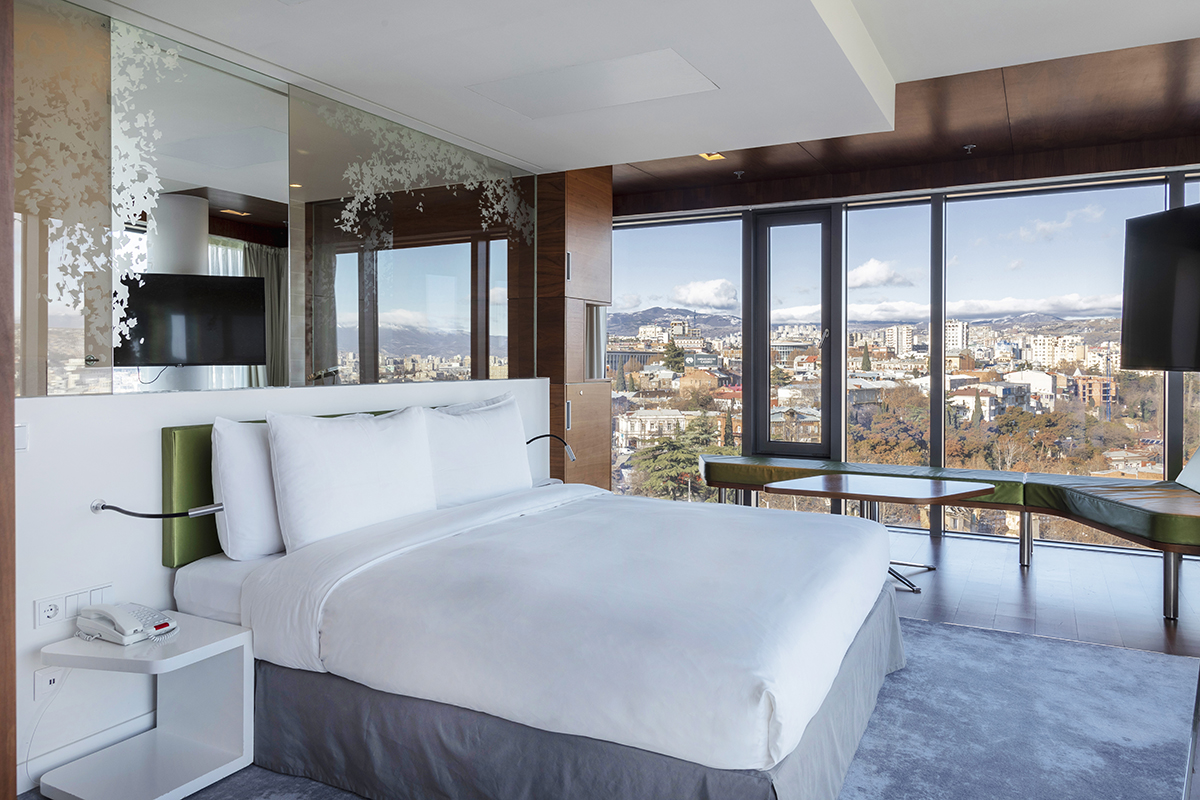
The rooms on the higher floors offer the best views over the Old Town
Flipside
The Radisson Blu Tbilisi really didn’t have any drawbacks. Although we would advise anyone visiting to pay more for a room on a higher floor, to maximise those views.
Rates: From GEL 424.80 (approx. £100/€150/ $150)
Book your stay: radissonhotels.com/en-us/hotels/radisson-blu-tbilisi
Darius Sanai
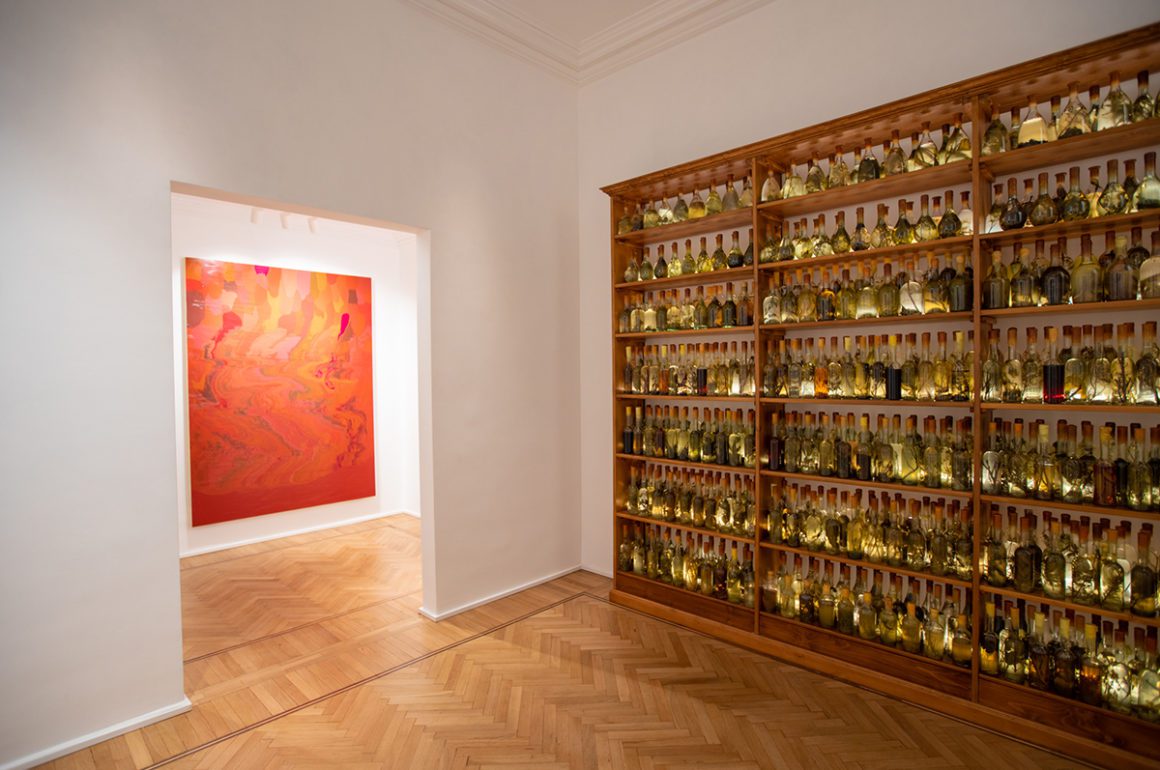
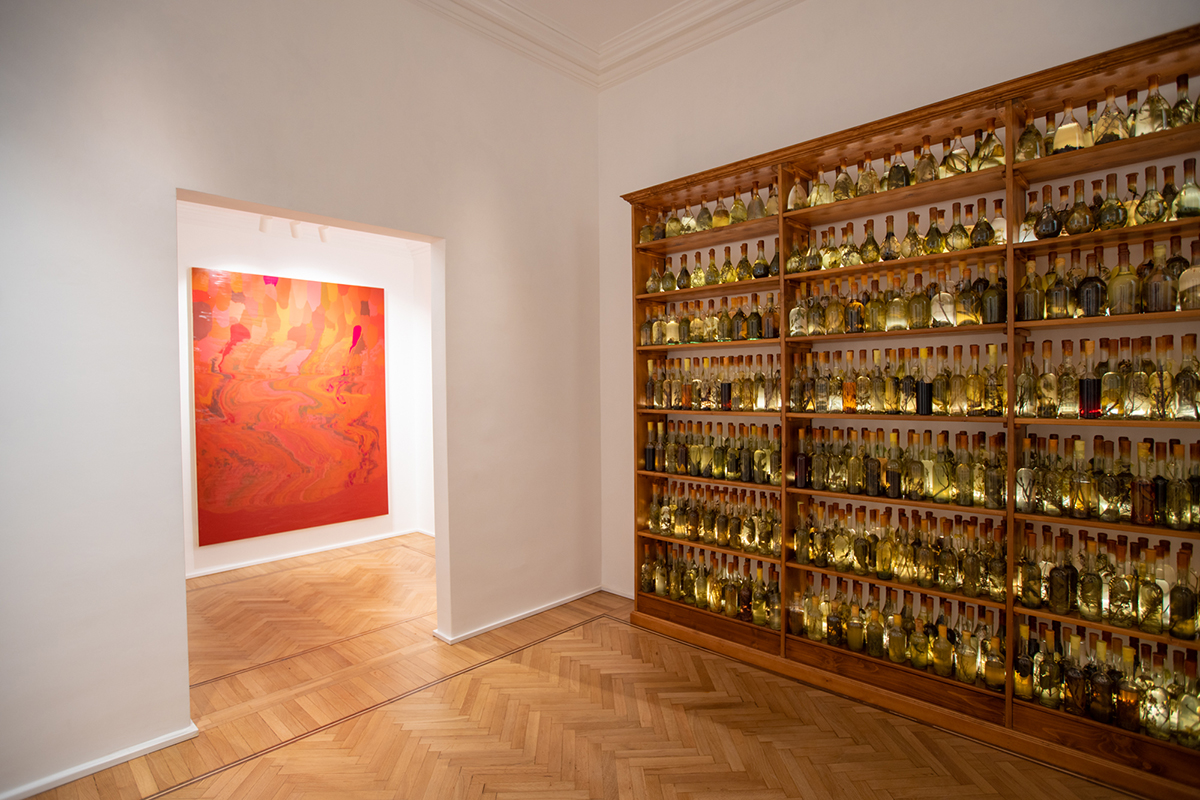
Installation view of Maturation by José Yaque (2020) at Galleria Continua Roma, St. Regis. Image courtesy the artist and Galleria Continua
Founded in 1990 by three friends in the Tuscan town of San Gimignano, Galleria Continua now represents the likes of Ai Weiwei, Anish Kapoor and Michelangelo Pistoletto with spaces in Havana, Paris and Beijing. Last week, the gallery opened its first location in Rome within the St Regis hotel. We spoke to co-founder Lorenzo Fiaschi about the opening, artist residency programs and the year ahead
Lorenzo Fiaschi, Co-Founder of Galleria Continua
1. Why Rome and why now?
The people, situations and places we encounter are what inspires us, our projects don’t come from how the “market” works or from collecting. When we find somewhere with which we feel a certain type of harmony, we launch ourselves into it, body and soul. We let ourselves get swept away by passion and luckily, results follow. In Rome, we have collector friends who follow and appreciate us, so we’re happy to create this new adventure in order to see them more often.
Follow LUX on Instagram: luxthemagazine
2. How did you first develop a relationship with the St. Regis?
We started our collaboration with The St Regis Rome through a project with Loris Cecchini. His exhibition had great success and created a lot of interest and buzz. Some Romans were curious about the installation Blaublobbing that you could see from outside and entered the hotel to discover the other works. A place that hosts international artists while creating a dialogue between the works, the space and the guests that stay there is something new and it worked. We then followed that with an exhibition by Pascale Marthine Tayou, an artist who celebrates life through his works. Forms, colours and a mix of human and geographical oddities invaded The St Regis and it was another thrilling experience.
The General Manager, Giuseppe De Martino, from the beginning has been a promoter of an open relationship towards the world of contemporary art, at this point he showed us a very unusual wing of the hotel, unknown to guests, the Sala Diocleziano. We liked it and so accepted the challenge, imagining what it could become and deciding to open a new exhibition space.
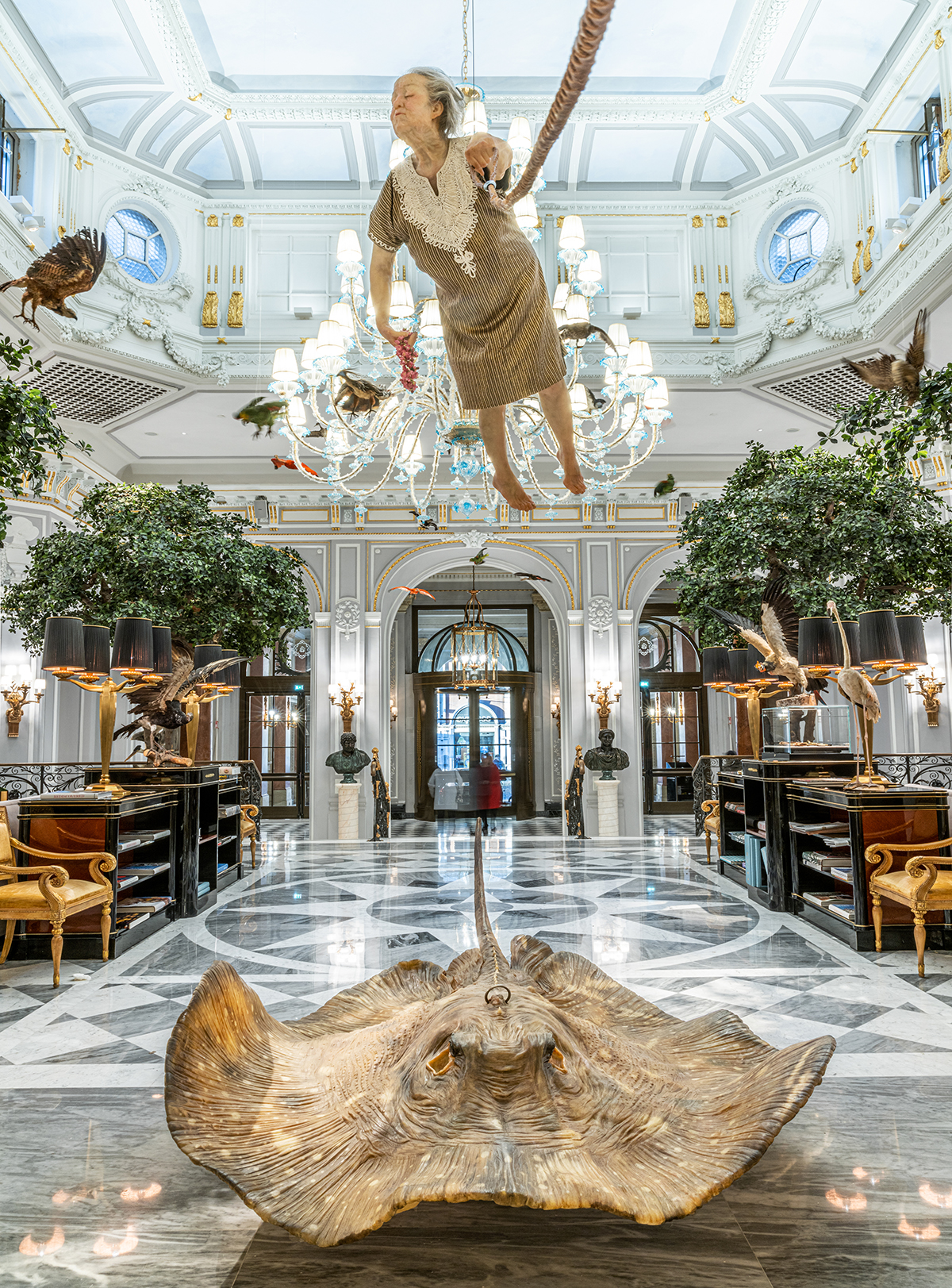
If I Died (2013), sculpture installation by Beijing artist duo Sun Yuan & Peng Yu installed in hotel lobby at St Regis Rome by Galleria Continua. Image courtesy: the artist and Galleria Continua. Photo by Ela Bialkowska, OKNO Studio
3. What are some of the challenges of opening a gallery within a hotel?
The challenge is to stimulate and draw in people who don’t know, or don’t frequent the contemporary art world. The challenge is to bring the gaze of the hotel guests onto forms and languages that are unusual for them. Art opens us up to new realities and new ways of thinking.
The educational aspects of Galleria Continua Roma’s program aim to bring children closer to contemporary art by providing them with suitable reading keys, not only for the understanding of an artistic language for the time they live in, but also for the creation of creative knowledge and stimulants. The intent is to educate about art through art.
4.Can you tell us about the concept behind José Yaque’s exhibition Maturation?
José Yaque, as the first artist in the new space, represents a continuation of the Cuban experience which began with the opening of Galleria Continua Habana. He’s a witness and representative of a gallery experience which aims to weave relationships between cultures, geographies and diverse individuals, Yaque conceptually represents a bridge between Cuba and Rome.
Read more: Artist Richard Orlinski on pop culture & creative freedom
For Maturation, he presents a series of new paintings and an installation from the ‘Tumba Abierta’ series, an archive in transformation made up of natural elements (plants, seeds, fruits, leaves); new forms of landscape where matter, colours and smells magically transport the viewer to other places. José Yaque’s paintings are like windows opening onto a landscape. Mixing and applying the colours using his hands, a sort of magma is formed and transformed when he wraps the works with plastic film before removing the protective layer, once dried, resulting in an eroded painting.
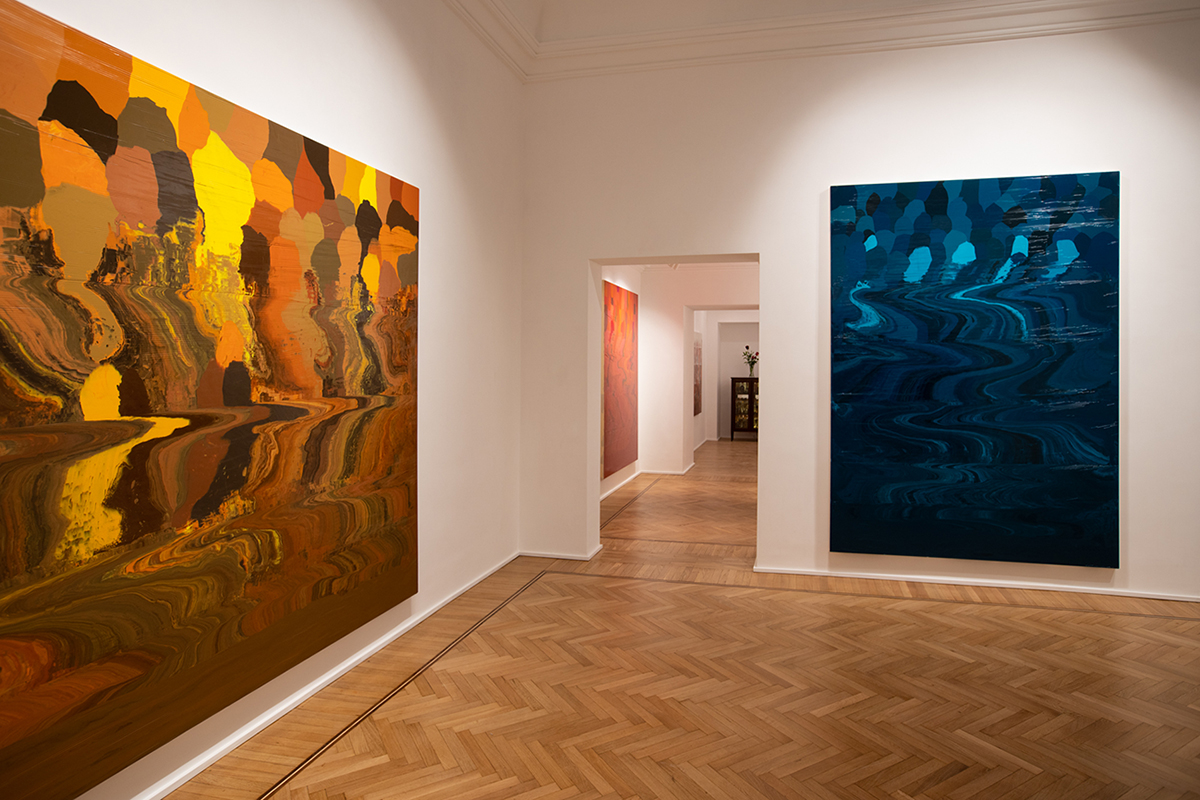
Installation view of ‘Maturation’ by José Yaque (2020) at Galleria Continua Roma, St. Regis. Image courtesy the artist and Galleria Continua
5. How will the artist residencies work?
We’ll also be launching an artist residency program that will be selected by an expert committee every 6 months, giving an opportunity to young artists from emerging countries to stay in the capital, to increment their personal and professional growth by confronting themselves with the immense contemporary, and antique Italian artistic heritage. The works done during these stays will be presented to the public in the spaces of the gallery.
6. What other developments do you have planned for this year?
Coming up, with the Chinese artists Sun Yuan & Peng Yu (their exhibition constitutes a third stage in the collaboration project with The St Regis Rome, after Loris Cecchini and Pascale Marthine Tayou) we organised talks at the Accademia di Belle Arti di Roma and a talk at the Accademia di Belle Arti di Carrara. We’re always open to any collaboration that can create an exchange and a dialogue.
In 2020, we are celebrating the thirtieth anniversary of Galleria Continua so there are many exciting things to come. At the end of the summer we are opening a new location in Sao Paulo in Brazil in the Pacaembu stadium, a historic building in the heart of the city, since 1940 it has been a central part of the city’s cultural life.
In September, we will be celebrating this anniversary where everything began, in San Gimignano with an exhibition of Chen Zhen inaugurating on 18, 19 and 20 September 2020.
‘Maturation’ by José Yaque runs until 28 March 2020 at Galleria Continua at The St Regis Rome. For more information visit: galleriacontinua.com
Hôtel de l’Etrier is located in the sunny Alpine resort of Crans-Montana
Why should I go now?
While many Swiss resorts suffer from “deep valley” syndrome in midwinter, with the sun hidden by peaks for most of the day, Crans-Montana is both snowy (it sits at 1450m and its top station is at 3000m) and sunny, as it’s on a south-facing shelf high above the deep Rhône valley. Hôtel de l’Etrier is a Crans-Montana institution: take one of its recently refurbished, Alpine-contemporary pine clad, coolly lit south-facing rooms with a big balcony, and you have one of the best views of any Alpine hotel, and one of the sunniest locations.
Follow LUX on Instagram: luxthemagazine
What’s the lowdown?
L’Etrier is a three minute walk from the main Crans lift station (you can leave your skis at the lift station rental store, which incidentally does an excellent line in Swiss Stoeckli skis, among our favourites). Step into the hotel and you have a picture-window view from the bar across the Valais Alps; there are few better places to relax with a long cocktail after (or maybe before) a day on the excellent Crans slopes.
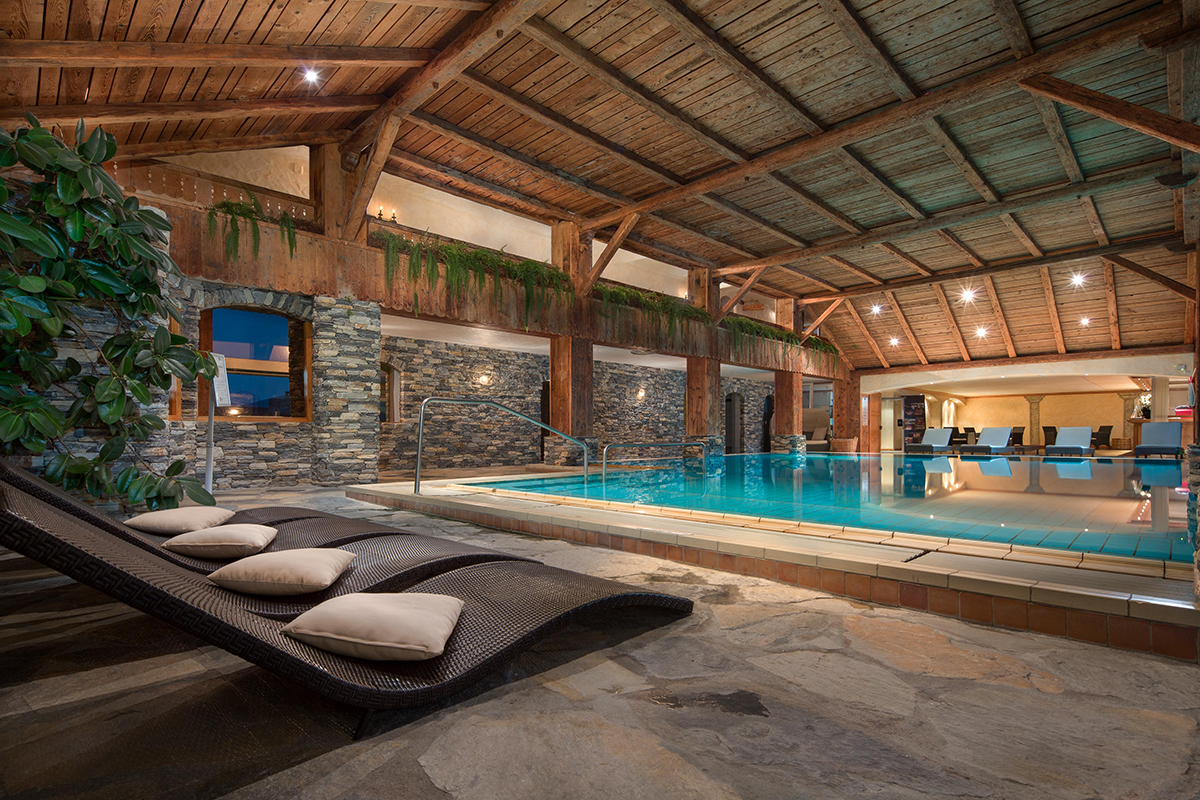
The hotel has a spa and indoor pool, which connects to an outside swimming pool in summer
You also have access to two of this foodie village’s most well-known restaurants without even stepping outside, as a passageway leads to the Michelin-starred Pas de l’Ours restaurant and its more casual counterpart, the Bistrot de l’Ours, serving signature dishes such as candied pig shank with curry, beer cabbage, juniper and apple vitelotte.
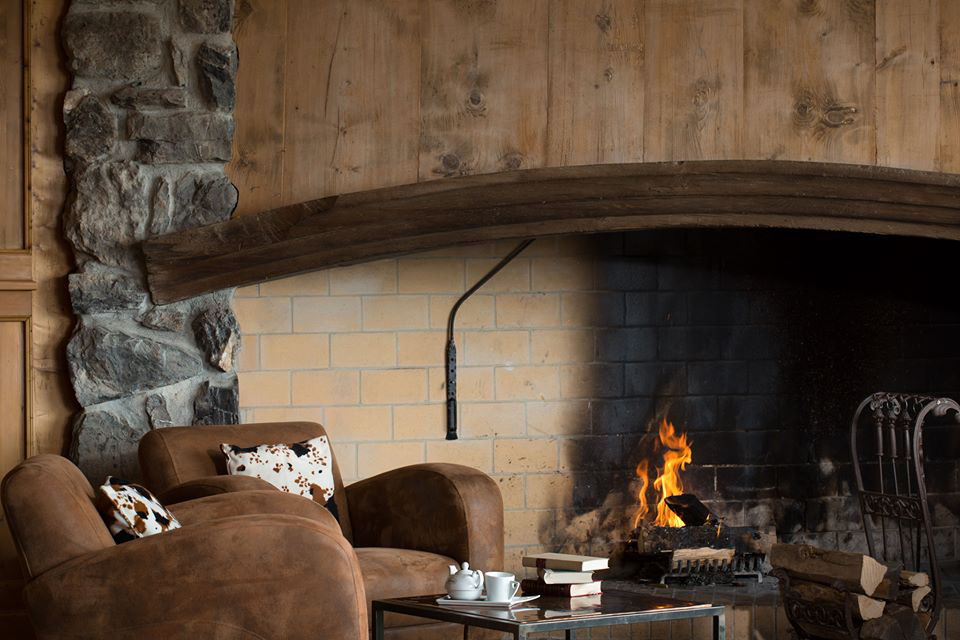
The bar offers a cosy atmosphere for casual dining, whilst le Fer à Cheval restaurant (below) serves traditional Swiss alpine cuisine
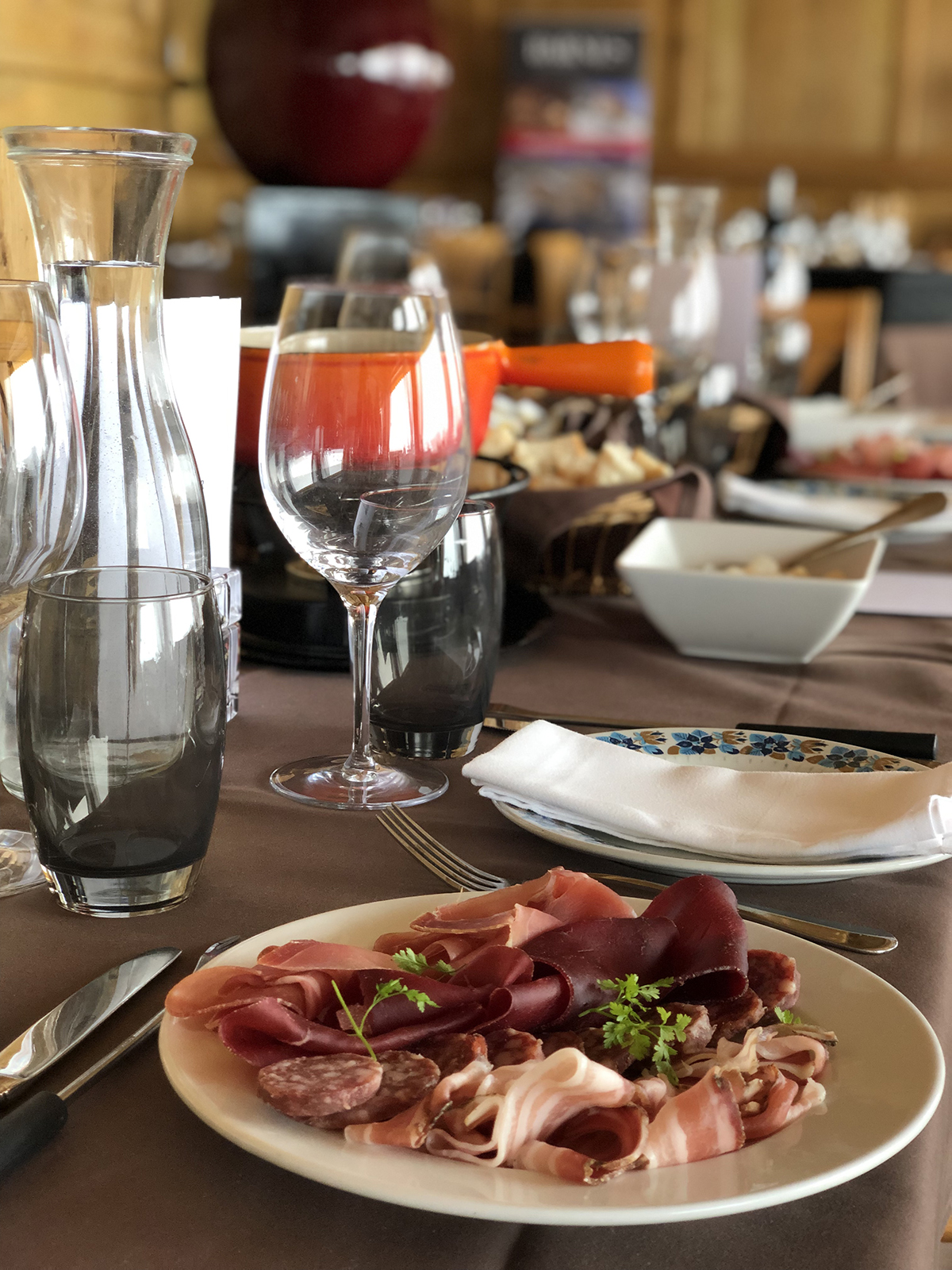
The bar in the hotel itself is supremely relaxed and serves casual food, and this was our favourite hangout of all, in a deep armchair by a picture window looking out at the dramatic view. Many Alpine hotels nestle deep in valleys and views are limited; not so here. There is also an indoor pool (connecting outside in summer) and spa/wet area.
Getting horizontal
Our “superior” room was just that. It wasn’t the last word in high luxury, and l’Etrier is not priced as such, being a four-star hotel. But we preferred it to rooms we have had in some of Europe’s (and Switzerland’s) grandest institutions. The light pine and modern lighting decor were just right; the furnishings were light and contemporary without being irritatingly over-designed and the emphasis was on comfort.
Read more: Andermatt’s new high-altitude restaurants
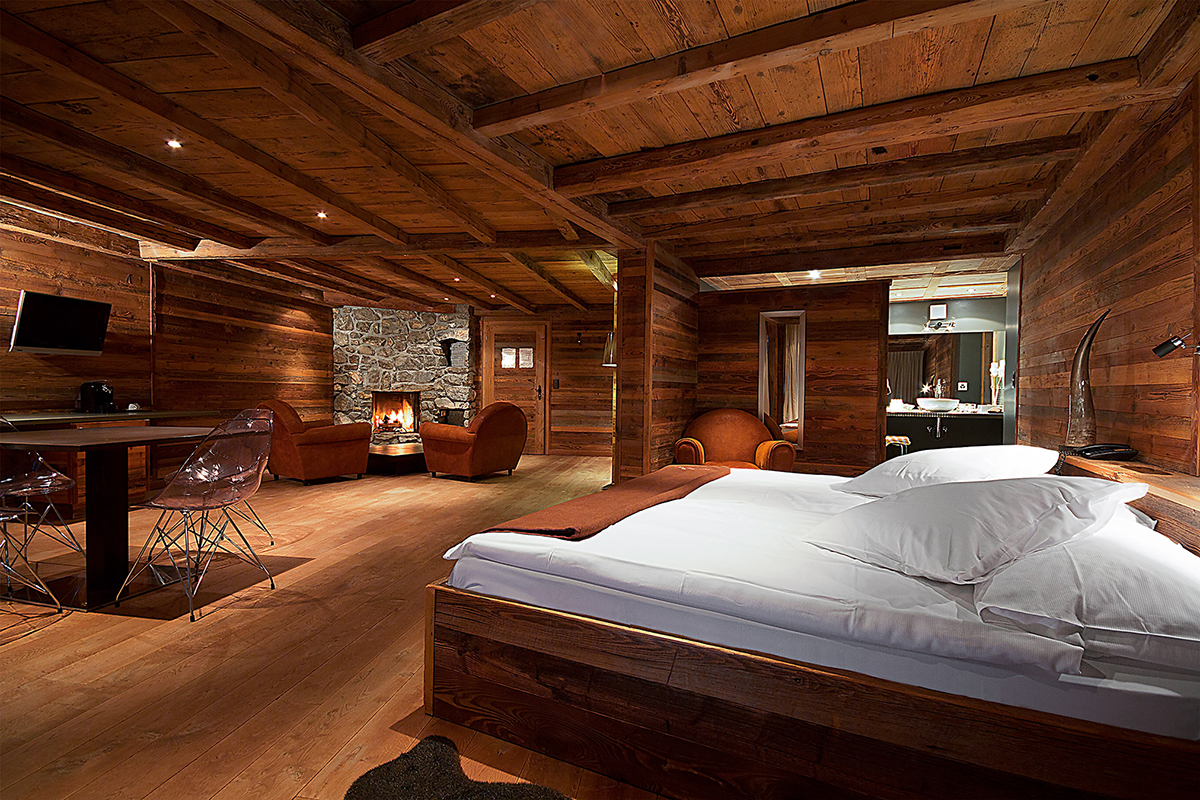
One of the hotel’s spacious suites
The balcony had such magnificent views across the resort, below, the woods around it and across the Rhône valley to the giant peaks of the Pennine Alps surrounding the distant resorts of Zermatt and Zinal, that we spent an evening sitting and admiring the rose-coloured sunset, despite the increasing Alpine winter cold. Some rooms are just right in terms of general vibe: this was a room you didn’t want to leave, in the evenings, as the canopy of stars emerged above the mountains and valley.
Flipside
Crans-Montana is quite a spread-out resort and none of its top hotels can claim to be quite in the centre of things; L’Etrier is no different, and while it’s very near the main lift, it’s an eight minute walk (or two minute shuttle) to the centre of Crans, one of the two villages.
Rates: From 200 CHF (approx. £150 /€200/ $200)
Book your stay: hoteletrier.ch
Darius Sanai
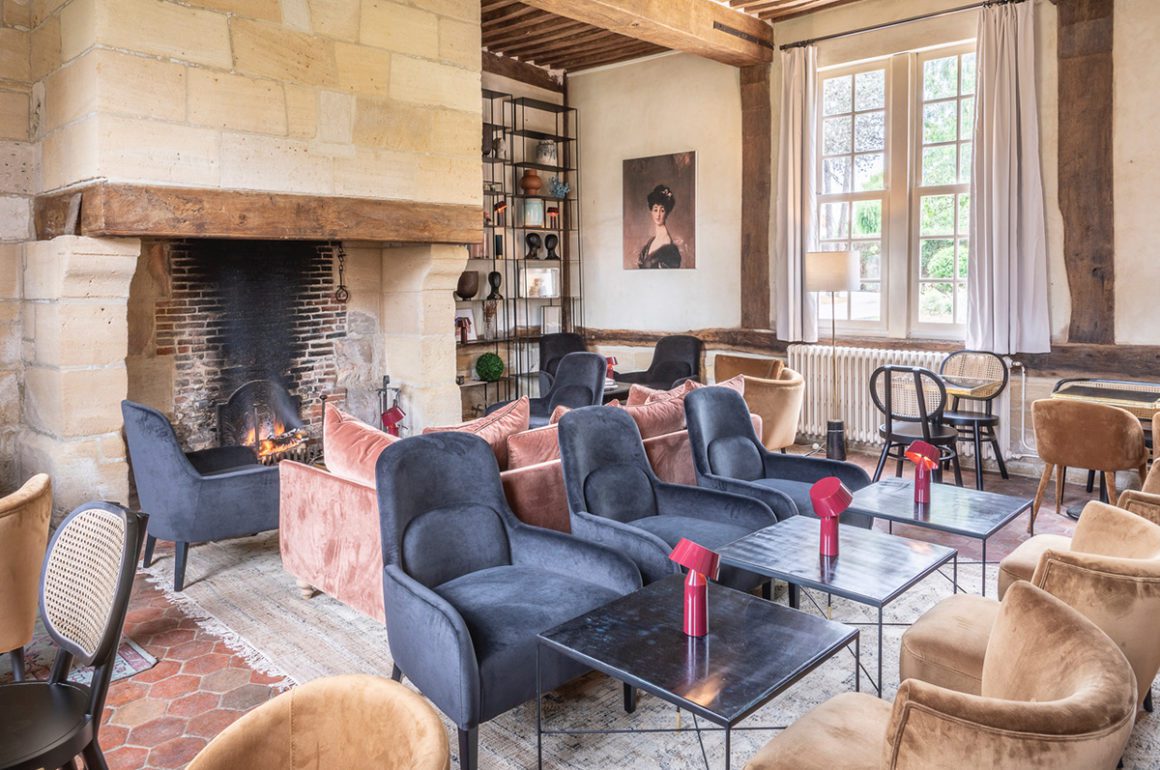
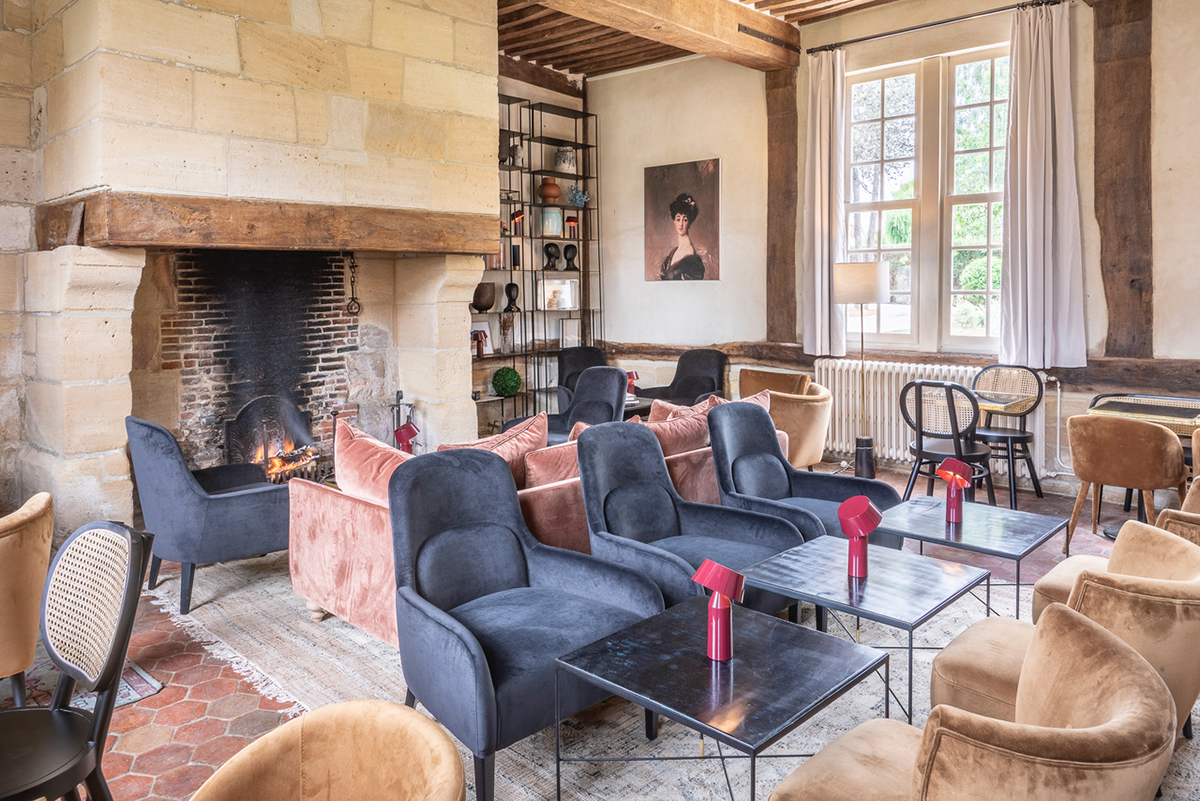
Boutique hotel Les Manoir de Portes de Deauville offers a homely kind of luxury in the heart of Normandy
Located just two hours from Paris, Deauville has long been a chic weekend destination for Parisians and now with the newly opened boutique hotel Les Manoirs des Portes de Deauville, it’s perfect for families too. LUX Managing Editor Serena Hamilton discovers
Europeans tend to lean towards the same destinations in France. They go every summer, stay in the same house or hotel, get croissants from the same boulangerie and eat dinner in the same bistro. There’s something undoubtedly comforting about that kind of routine, knowing that your expectations will be met year after year, and yet, comfort as everyone knows doesn’t necessarily equal excitement or adventure. So this year, we decided to try somewhere new.
Deauville and its neighbouring town Trouville are often referred to as the “Parisian riviera” not just because of their proximity to the French capital, but also for their chic ambience. Deauville, for example, boasts a year round calendar of film festivals, yachting regattas and vintage car rallies as well as great shopping and a beautiful, albeit busy white sandy beach complete with Instagrammable candy-coloured parasols. The streets are immaculate and everyone is stylishly dressed, which is wonderful if you don’t have children hanging off your arms. For us, holidays are generally more about relaxation, and we tend to look for places which can offer adult-orientated calm whilst simultaneously catering to the children’s endless energy. Not a lot to ask for is it? Thankfully, Les Manoirs des Portes de Deauville fitted the bill perfectly.
Follow LUX on Instagram: luxthemagazine
Located a few minutes outside of Deauville town, the boutique hotel only opened its doors this summer and straddles the line between country manor hotel and Parisian chic. It’s set within acres of lush parkland, with a 16th century manor house at the centre and nine surrounding private cottages.The furnishings throughout are a mix of contemporary and antique, whilst the colour palette of pale pinks and creams pairs perfectly with the dark exposed beams and more rustic touches. Some of the rooms and shared spaces also have beautiful old brick fireplaces. More importantly, though, it feels like a space to be lived in rather than just admired, which means you can properly relax rather than stressing every time a child clambers over an armchair.
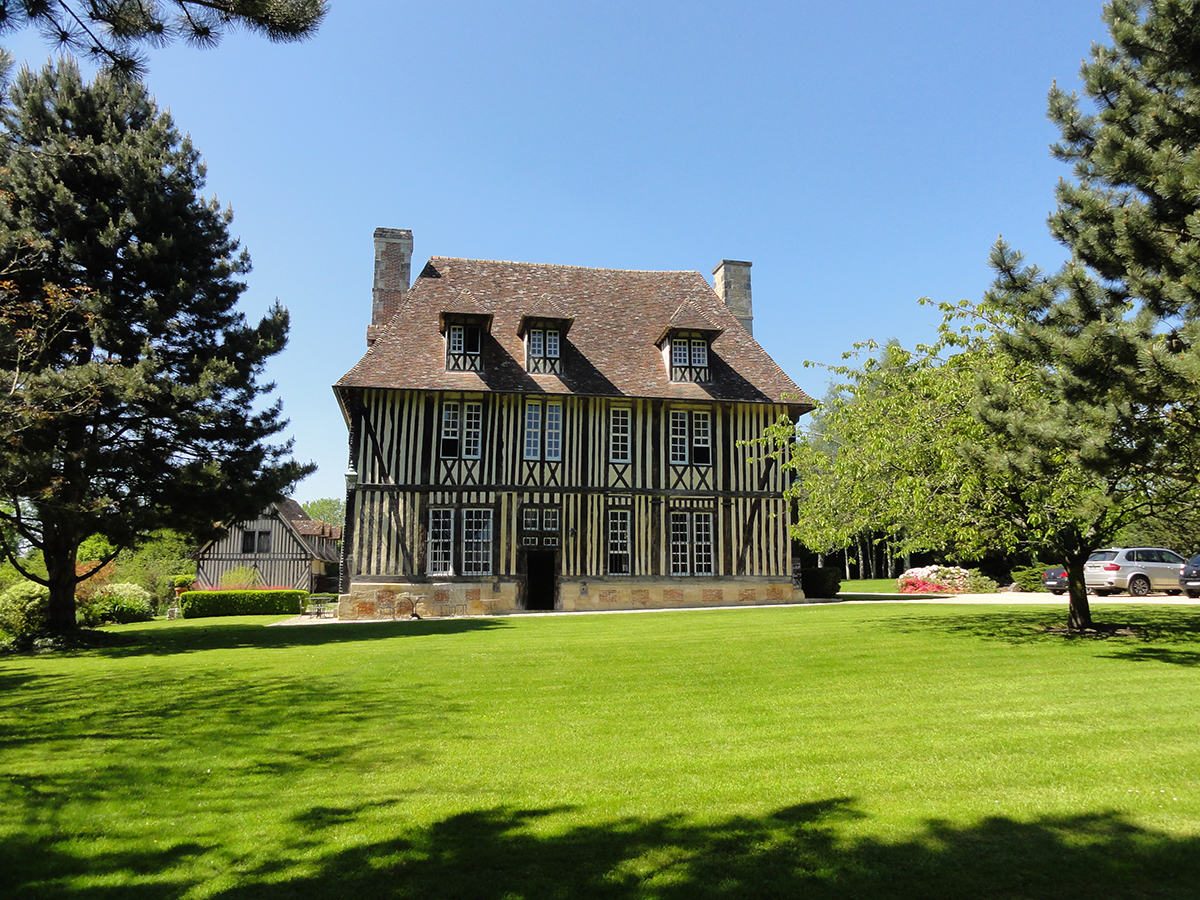
The hotel is set within stunning parkland and gardens (see below) with bedrooms in the main manor house as well as private cottages
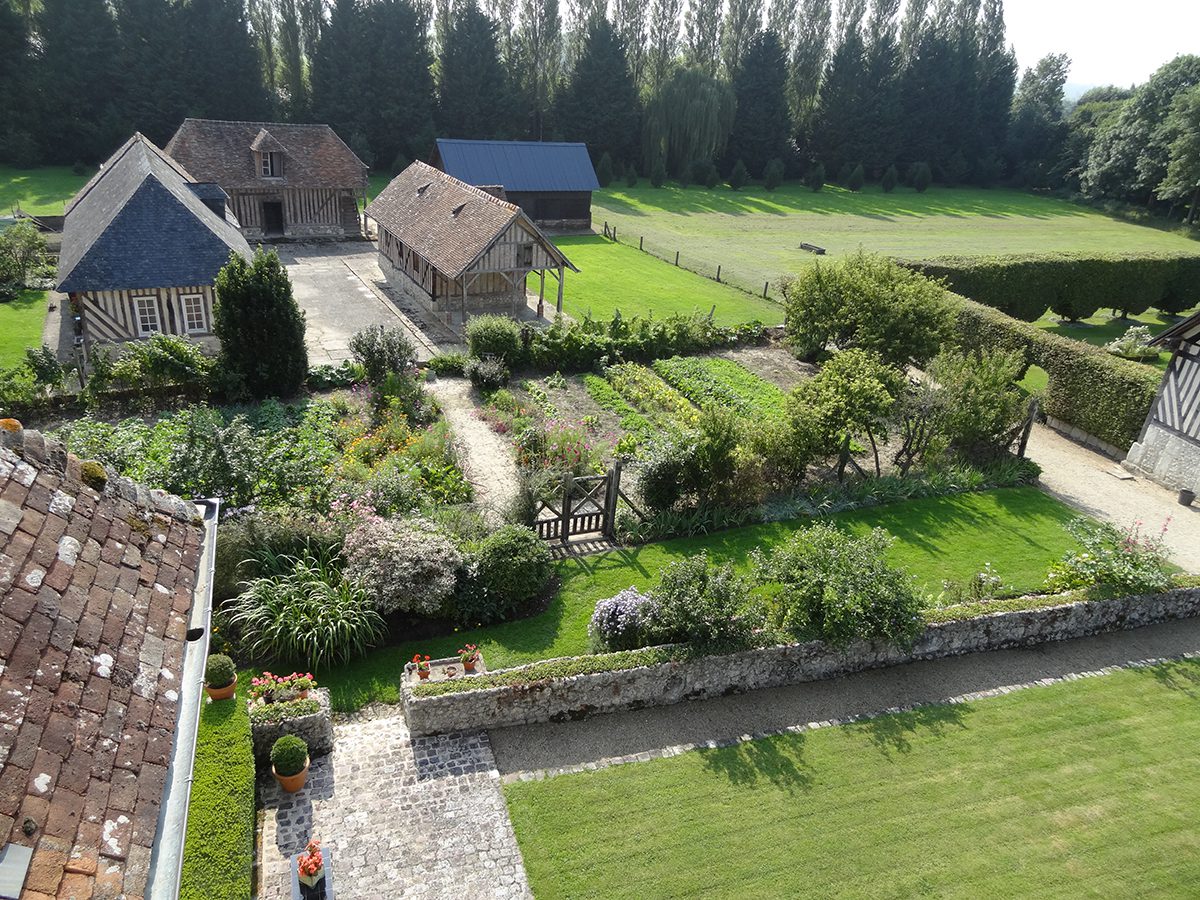
We were staying in a very pretty little cottages (adjacent to the one booked by our family friends), which provided more space and the added luxury of total privacy, whilst still in easy access of the outdoor pool, sauna and jacuzzi. As parents it was pure bliss to sit drinking our morning coffee on the lawn whilst our children ran around the park and tipped each other out of the hammocks.
Read more: Half Moon Bay Antigua reveals Rosewood Residences
Sadly, the restaurant wasn’t yet open during our stay, but there were plenty of excellent nearby options including the historic town of Honfleur, where we enjoyed several lunches of delicious moules-frites on the harbour’s edge. In the evenings, after tucking the children into their beds, we strolled across the lawn to the main house for a cheese and charcuterie board with local wines in the cosy lounge bar. No need for hushed in-room dining, or babysitters.
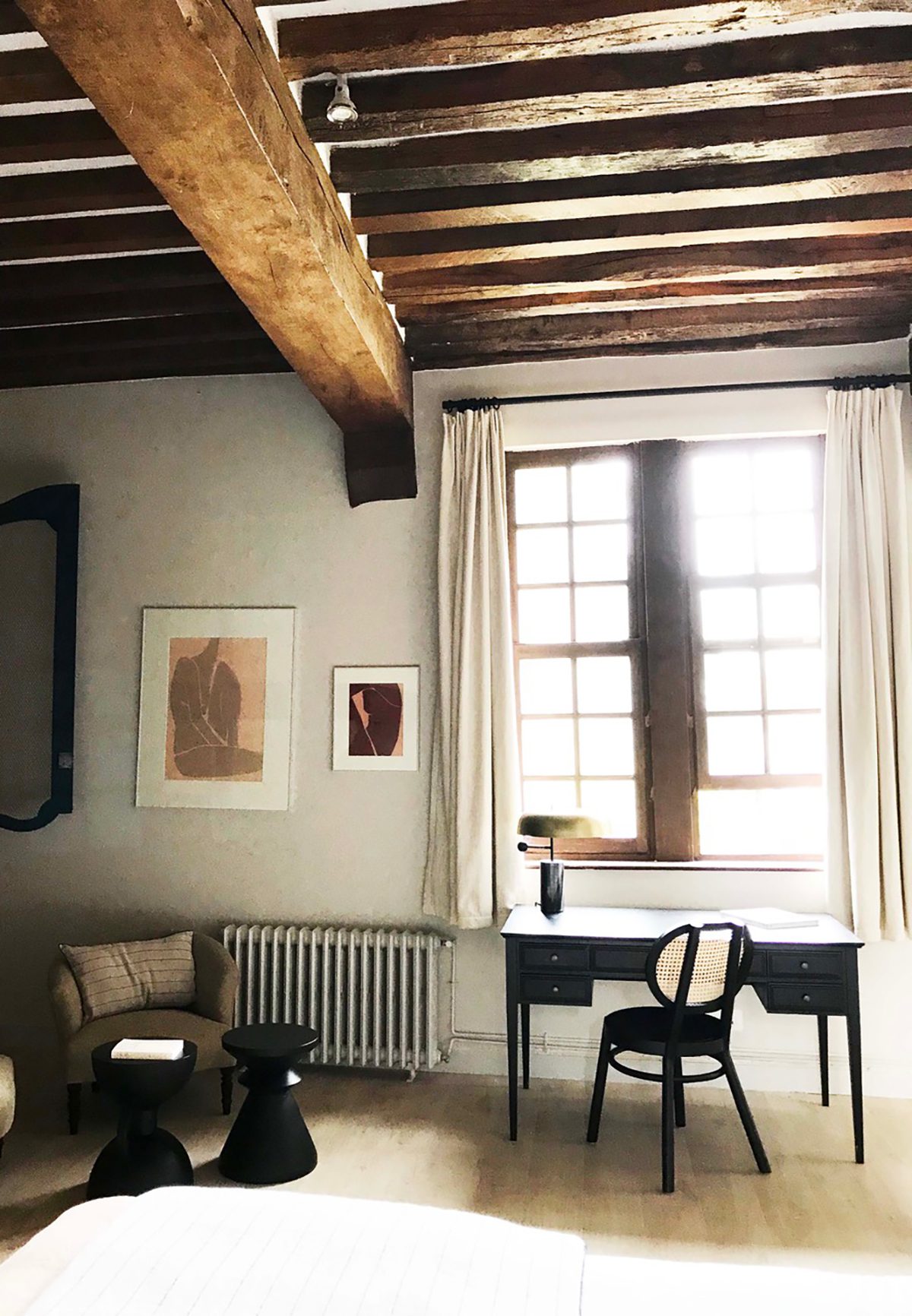
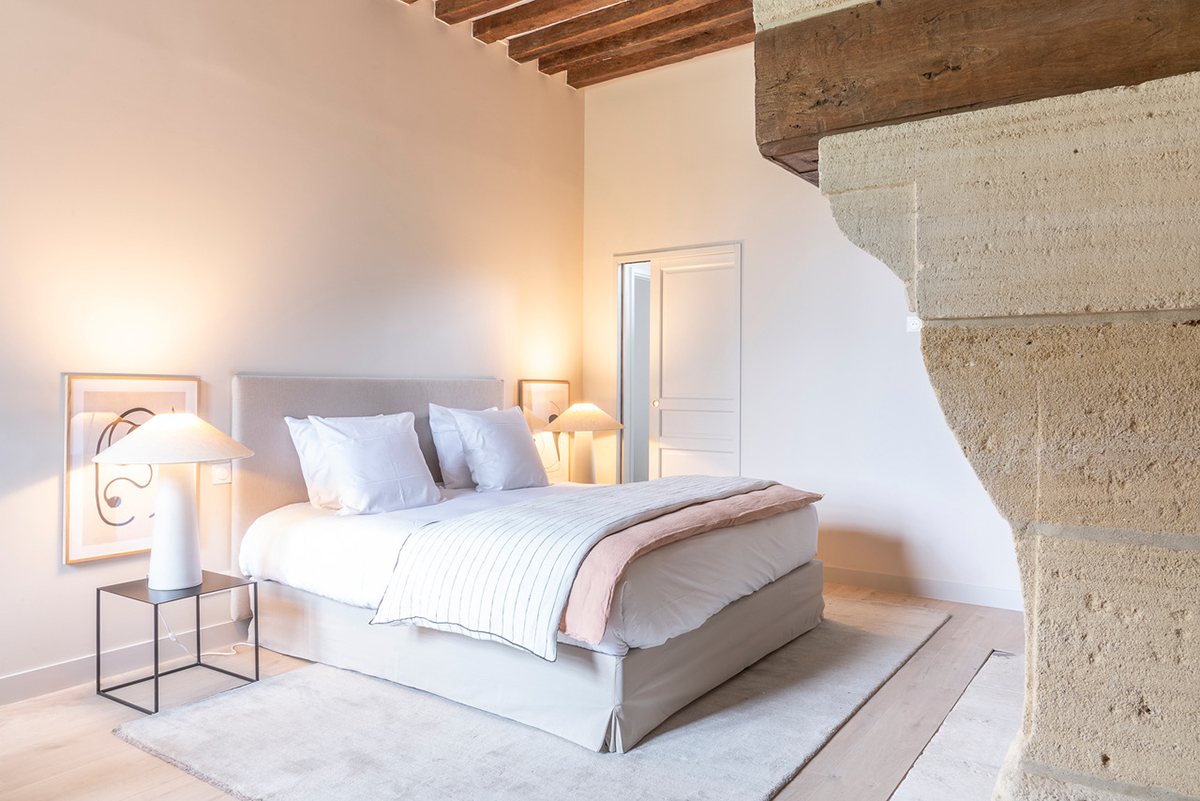
The interiors blend rustic chic with contemporary furnishings and a calming colour palette
The staff, especially, made us feel immediately welcome and were wonderfully patient with the children’s endless requests for hot chocolates and snacks, which isn’t always the norm with luxury hotels. They were also very knowledgable about the local area and suggested child-friendly activities such as a cute petit train ride through the heart of Deauville, and strolls through the stunning countryside.
It might not be quite the place for the usual Deauville crowd, but for anyone wanting to relax in an elegant, unpretentious setting that’s within easy distance of a beach as well as upmarket restaurants and shops, it couldn’t be more perfect.
Rates start from €120 per night including breakfast (approx. £100/$150). Book your stay: portesdedeauville.com
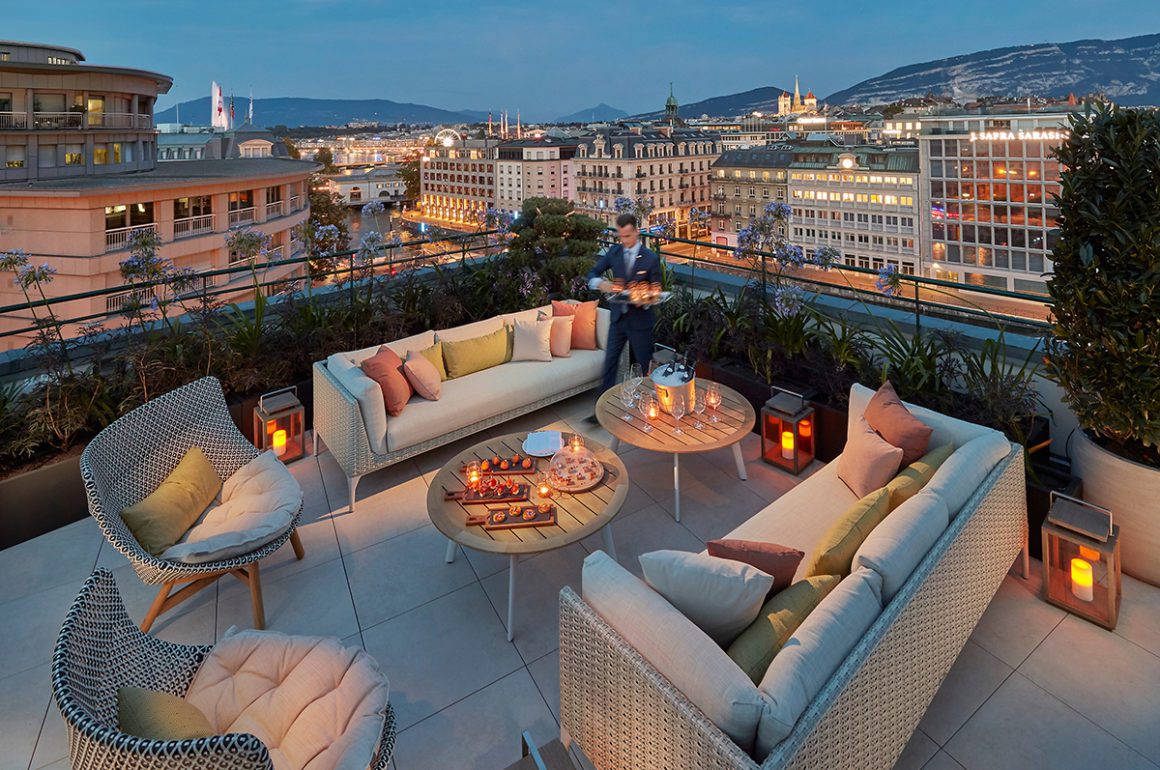
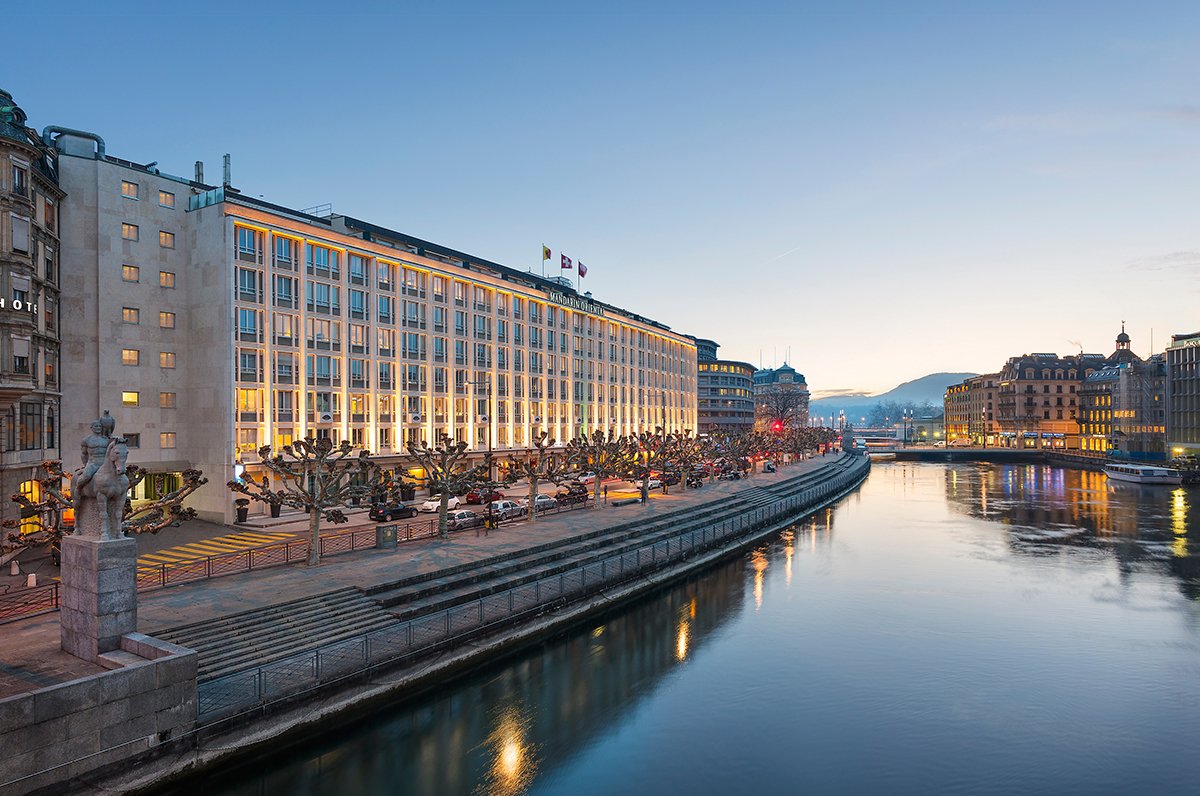
Mandarin Oriental Geneva sits along the banks of the River Rhône
Mandarin Oriental Geneva is now home to one of the biggest and most luxurious suites in the city
Spanning 325 square metres across the hotel’s top floor, Mandarin Oriental Geneva’s Royal Penthouse is well placed for breath-taking views. Through the floor-to-ceiling windows, guests can survey the city and the winding River Rhône with snow-capped mountains looming in the distance.
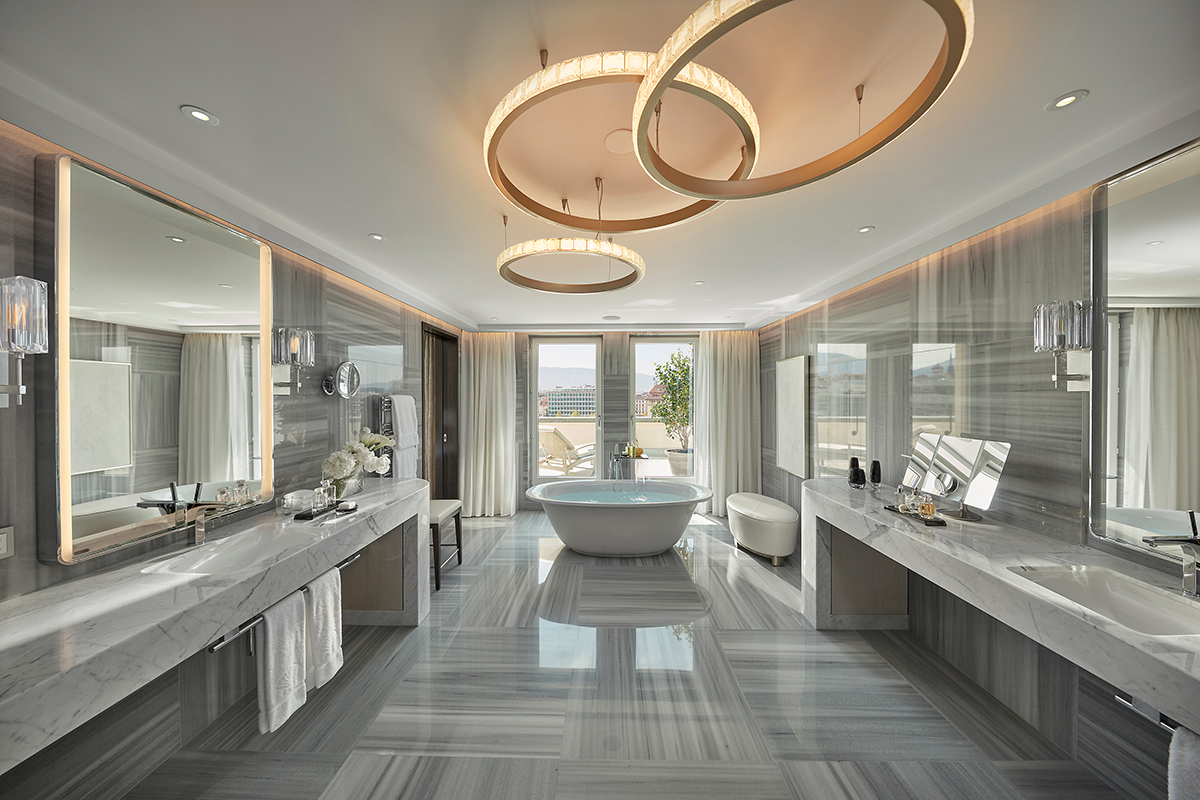
The master bathroom in the Royal Penthouse Suite
Designed by BUZ Design, the suite is open-plan with a master bedroom, hammam shower, two further en-suite bedrooms and a spacious living room with a fireplace. It also features a sound-proofed entertainment room with the latest audio-visual equipment.
Follow LUX on Instagram: luxthemagazine
The interiors take inspiration from seasonal colours; the bedroom reflects spring with bright shades of yellow, whilst the other bedrooms favour a summery palette. The living room is filled with warm, autumnal hues and the cinema room is decorated with cool, winter colours.
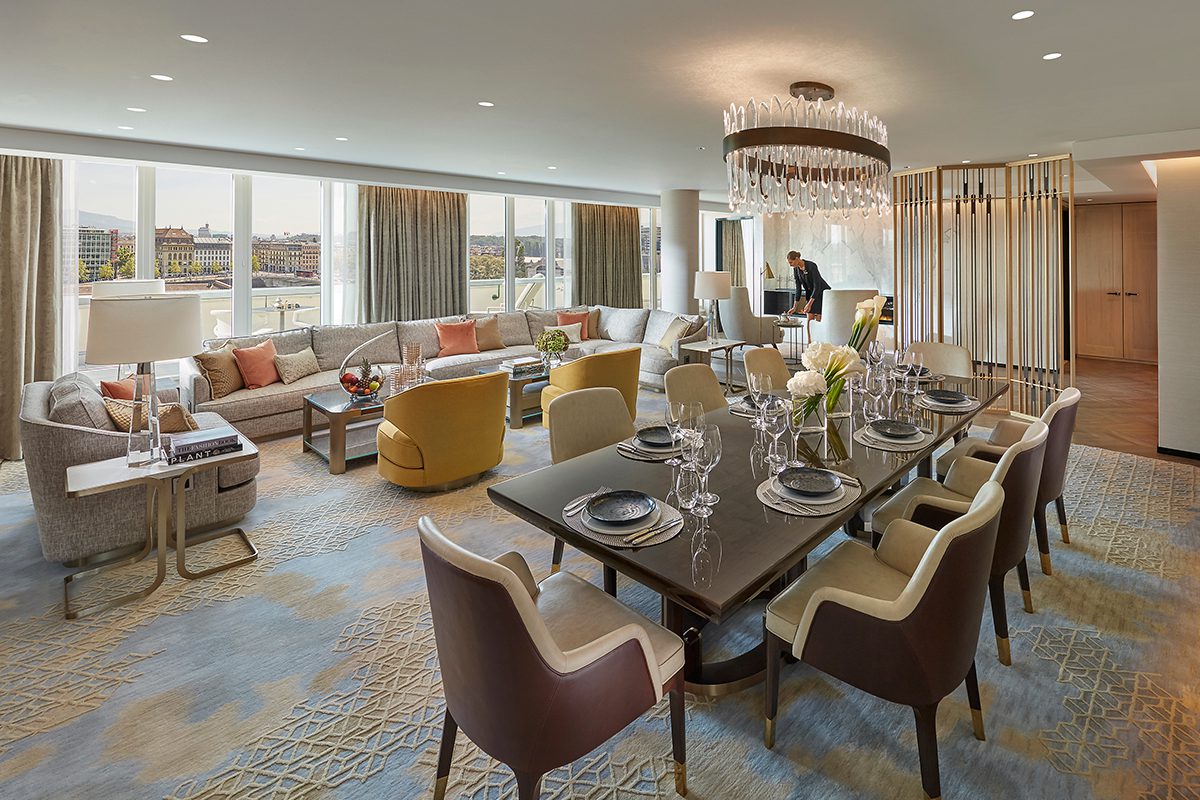
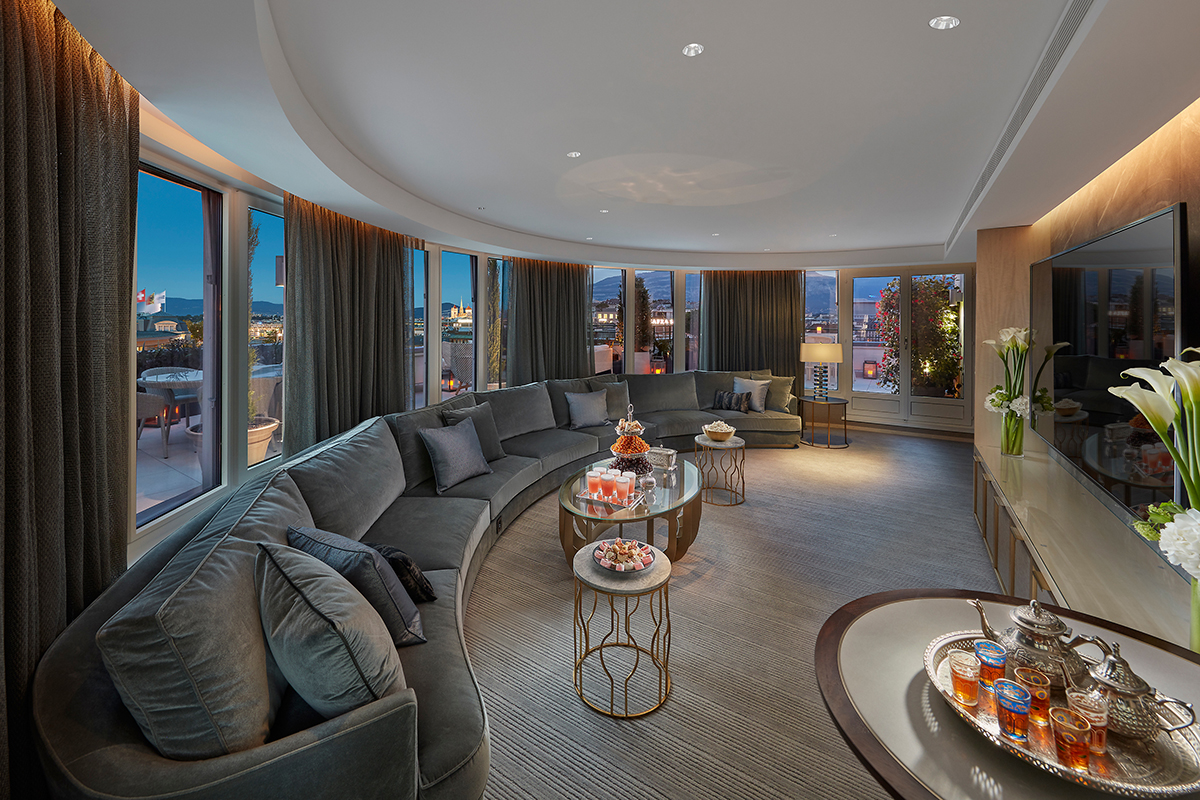
The suite’s interiors are designed around the seasons
The terrace is one of the suite’s main draws for not just its views, but also for the laid-back ambience created by soft furnishings and flowerbeds.
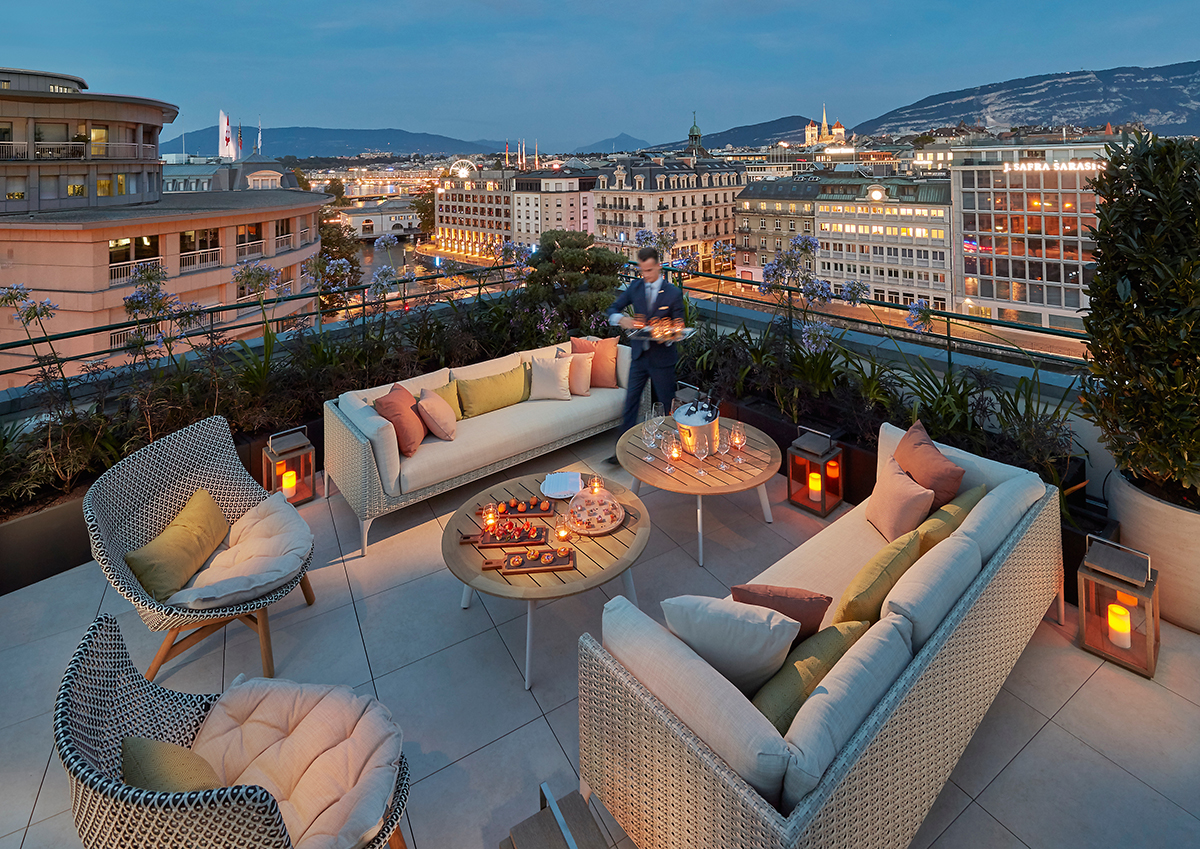
The Royal Penthouse suite terrace boasts spectacular panoramic views
The Royal Penthouse can be converted into a one-bedroom suite or combined with the Royal Suite on the 6th floor, via a connecting private lift, to form the Imperial Residence, a sensational six-bedroom suite offering 577 square metres of luxurious living space.
For more information visit: mandarinoriental.com/geneva/rhone-river/luxury-hotel
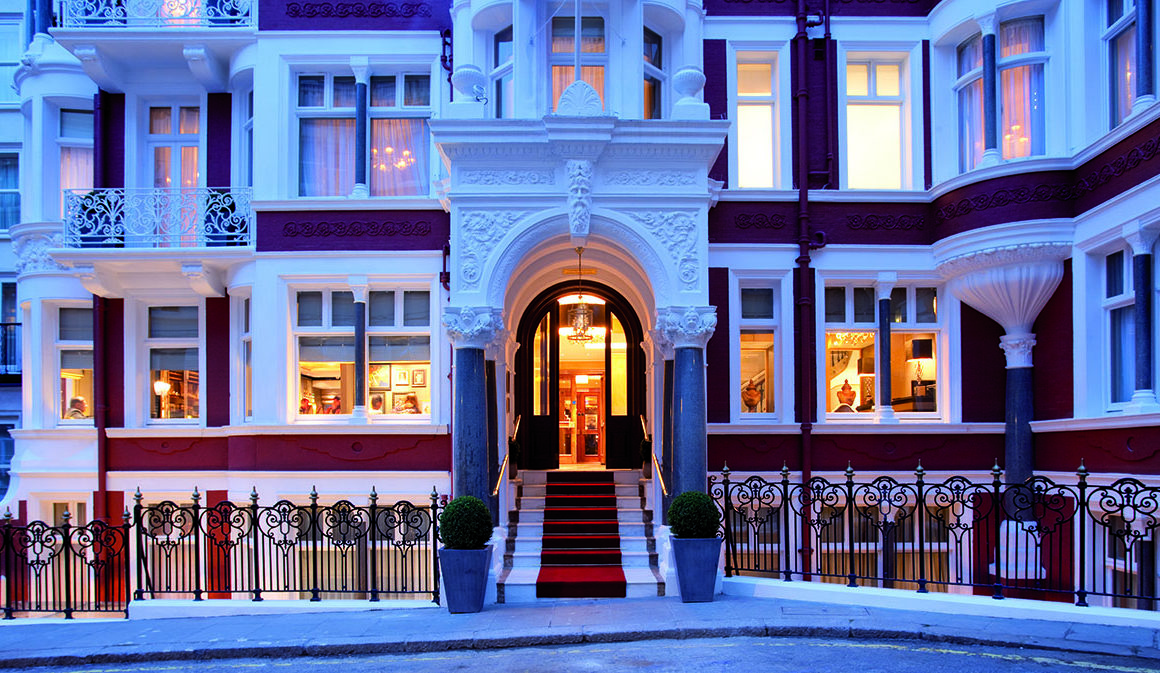
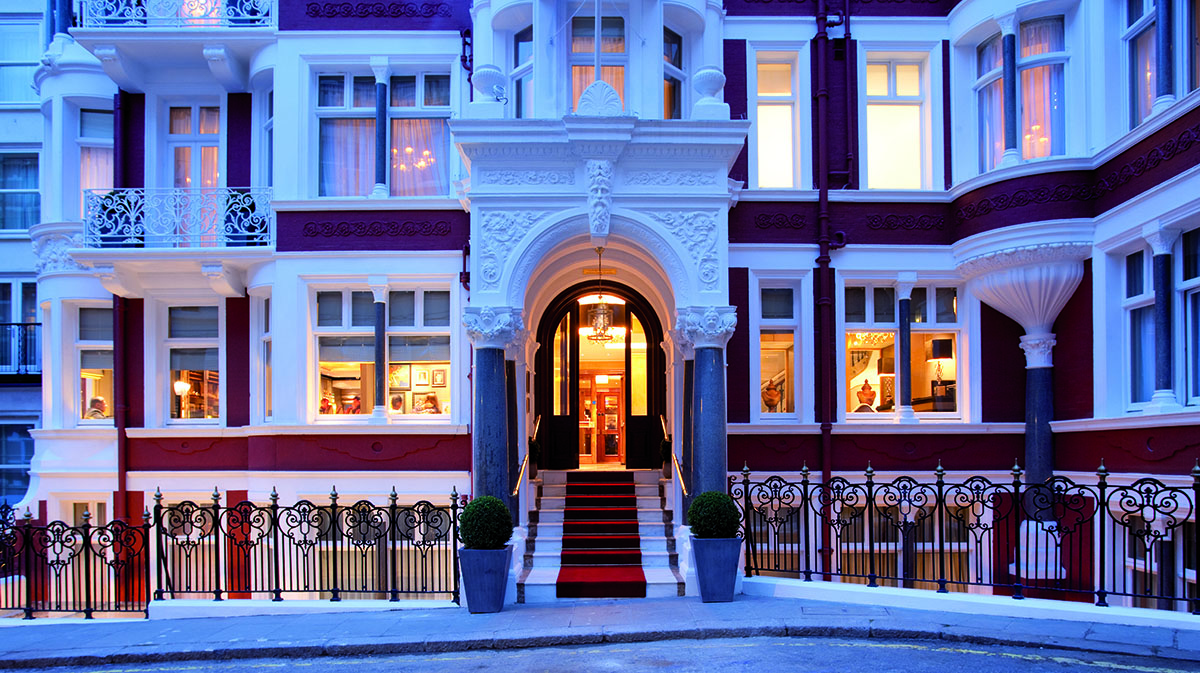
St. James’s Hotel and Club is tucked into a quiet corner of Mayfair
London might seem spoilt for hotels, but if you’re looking for small-scale, intimate luxury it’s not so easy to find – especially in Central. This is where St. James’s Hotel and Club comes in with a Michelin-starred restaurant and hands-on masterclasses
Tucked in a quiet residential street on the edge of Green Park, almost directly behind The Ritz, St. James’s Hotel and Club benefits from proximity to Piccadilly and Regent’s Street, whilst also offering a sense of relative seclusion. The building itself was originally a members’ club for travelling diplomats, founded in 1857 by English aristocrat and the Sardinian minister. It played host to the likes of Winston Churchill, Henry James and Ian Fleming, among others, until it closed in the 1970s. In 1980, the doors were reopened by Peter de Savary (owner of The Cary Arms in Devon) as a hotel and a club. Now owned by German hotel group Althoff, the hotel has been refurbished with contemporary touches, whilst still preserving a sense old-world charm.
Follow LUX on Instagram: luxthemagazine
Our room is the Westminster Suite on the seventh floor. The ambience leans slightly towards the corporate side, but it’s elegantly furnished and features a private terrace, large enough to host a cocktail party. On a less drizzly evening than ours, it would be a very pleasant place for a warming glass of mulled wine whilst admiring the rooftop views. As it is, we have a chocolate masterclass to get attend.
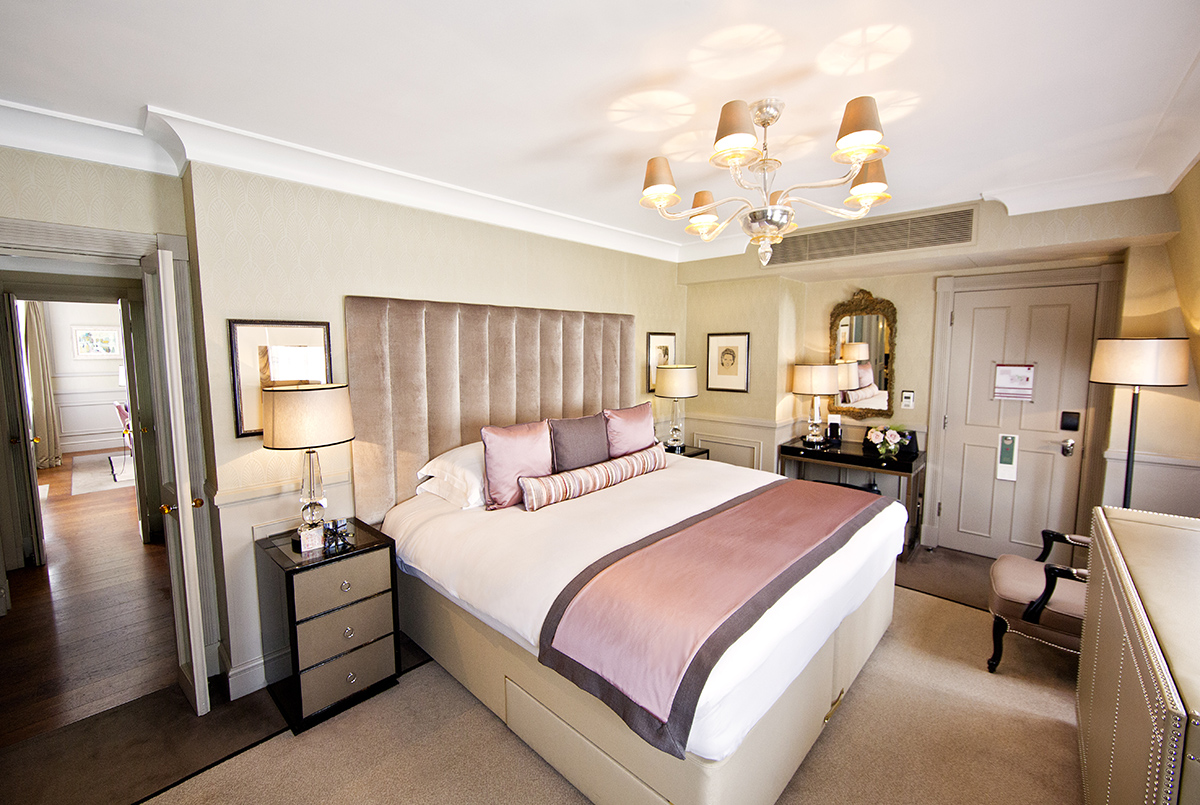
Rooms are decorated with elegant, contemporary furnishings
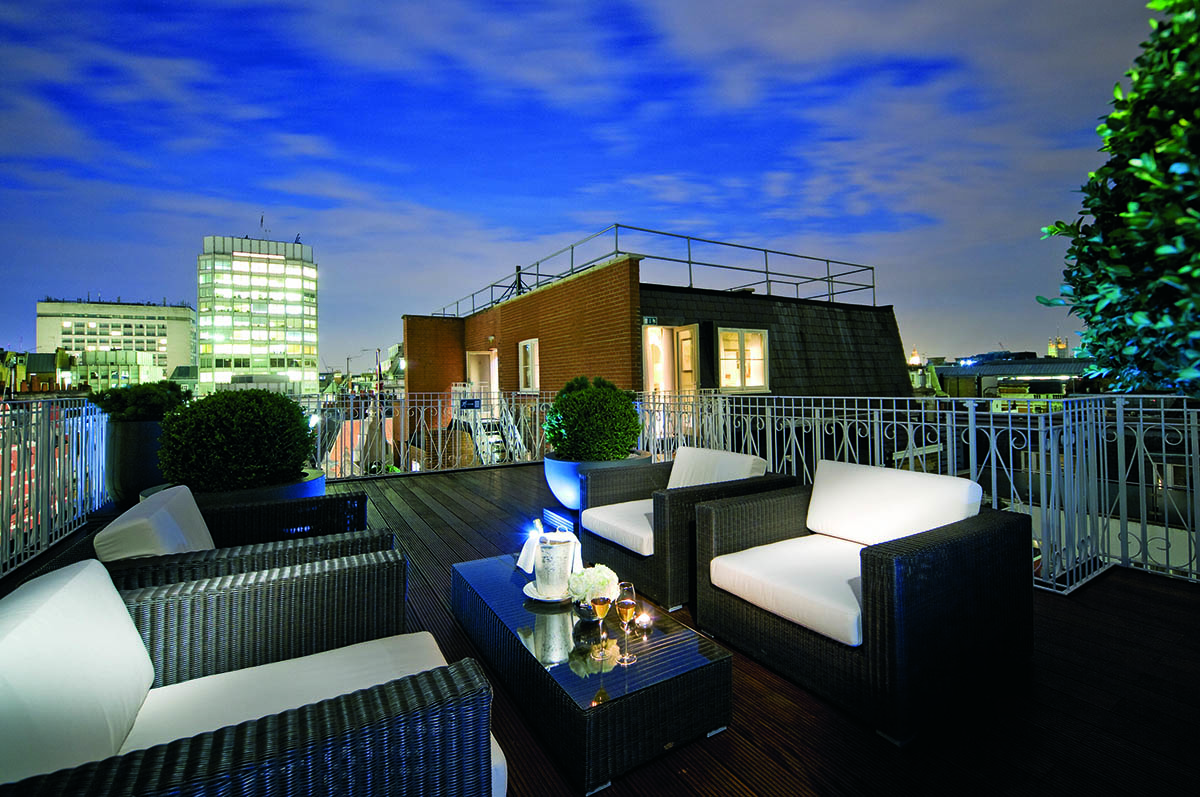
The Westminster Suite’s private terrace
The masterclass is just one of the hotel’s offerings for guests, alongside cheese and wine pairing, and cocktail mixing. Our class is held in a smart basement meeting room and is led by the convivial pastry chef, who shows us how to make and roll truffles whist we sip on glasses of champagne. The class, unlike those at many five-star hotels, is very hands-on, and whilst our truffles come out oddly shaped (some collapsing completely) it’s a lot more fun making than watching. Better yet, our truffles are whisked away to solidify and then returned to our room in ribbon tied bags with a kit containing ingredients and recipes so that we can make more at home. White chocolate passion fruit truffles are a revelation.
Read more: Oceania Cruises’ Managing Director on luxury hospitality at sea
The hotel offers a series of masterclasses including chocolate truffle making with the restaurant’s pastry chef
Pre-dinner drinks are served in William’s Bar and Bistro – a cosy and eccentric cocktail bar with a particularly impressive collection of paintings. These are part of the Rosenstein Collection, which includes more than 450 artworks in total, many of which are portraits and can be found dotted around the hotel. We thoroughly enjoy discussing the work whilst sipping cocktails and nibbling on British tapas plates. Guests can also dine here if they choose.
Read more: Panerai x Bucherer launch their latest BLUE collection timepiece
Tonight, though, we have a table booked at the hotel’s Michelin-starred Seven Park Place restaurant. The dining room is comprised of only a handful of tables tucked into a curved room with elaborately patterned walls and soft velvet seats. The menu – here and in the bar – is overseen by Head Chef William Drabble with a focus on the best of British produce which means seasonal plates and locally sourced ingredients. During our stay, the emphasis is on fresh fish and seafood, which, as pescetarian diners, suits us perfectly. Our favourites include the poached lobster tail with a buttery truffle sauce, and the seabass with braised Jerusalem artichokes, wild mushrooms and a red wine and tarragon sauce. Since the wine menu is nearly fifty pages long, we’re more than grateful for the sommelier’s assistance who pairs our courses perfectly to suit our individual tastes.
The service, in general, is friendly and relaxed, which makes for a very welcoming atmosphere. It’s perhaps not the most family-orientated hotel as noise levels are kept to a low hum, and the property itself is small, but for a luxurious city-break or staycation, it ticks all the boxes.
Book your stay: stjameshotelandclub.com
Note: Seven Park Place restaurant closed for refurbishment after our stay, but has recently reopened with a new look. For more information visit: stjameshotelandclub.com/en/restaurant-seven-park-place
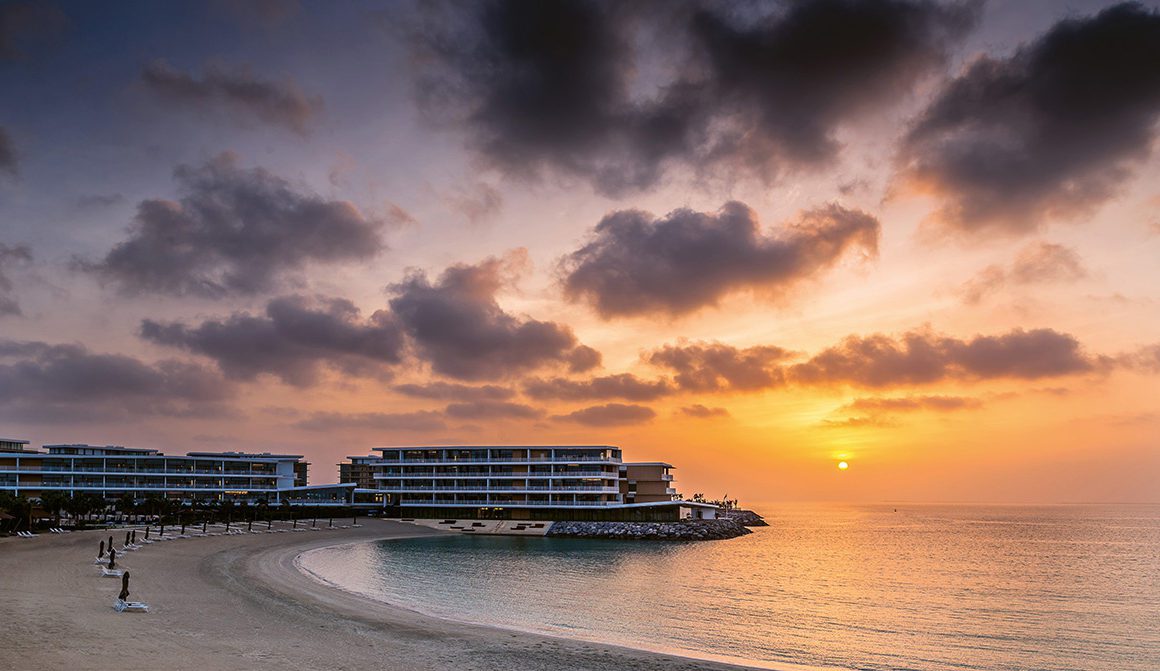
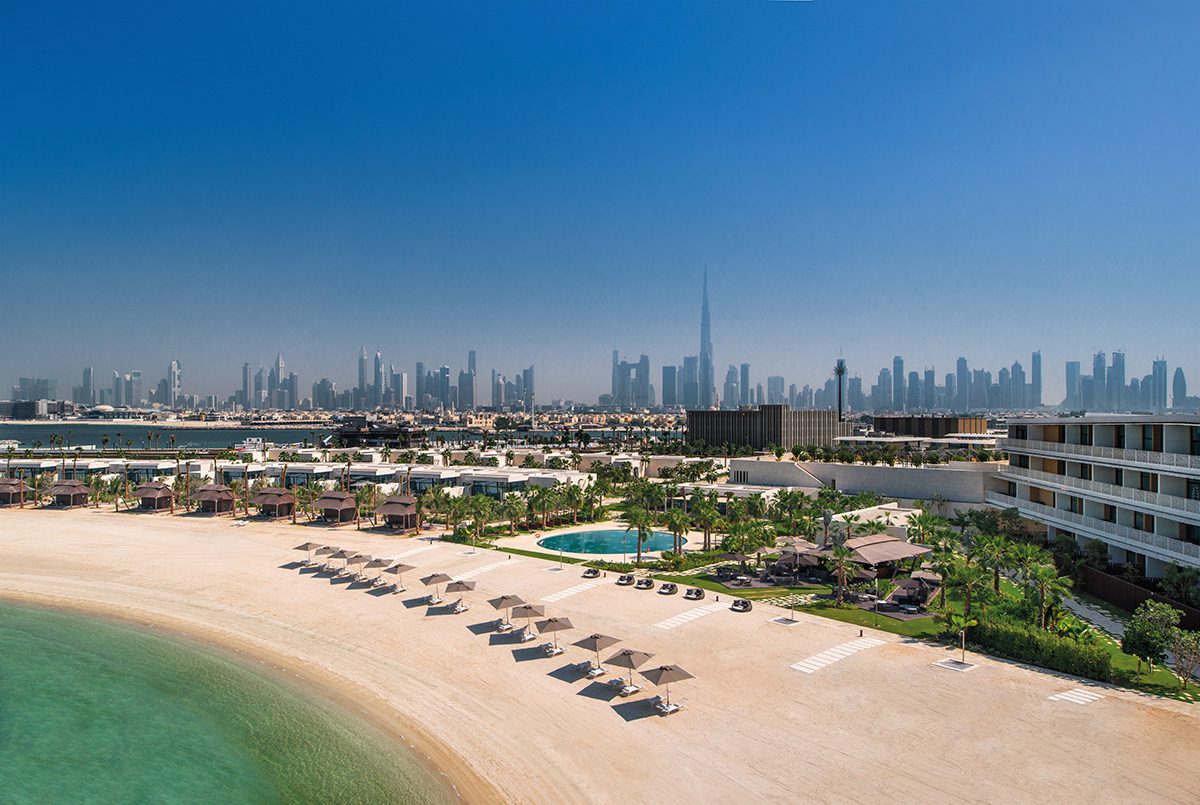
Bulgari Resort Dubai is located on the white sandy beaches of Jumeira Bay
Why should I go now?
Still dreaming of that perfect glass of chilled Puligny-Montrachet at sunset on the beach? Keep your memories of those warm summer nights alive, by heading over to Dubai, where the perfect season to visit is just beginning. From around November to March, temperatures come off the searing heat of summer months, so don’t pack away those shorts and sandals yet.
Follow LUX on Instagram: luxthemagazine
The city has an over-achieving buzz about it that always bring you back to experience something new. Straight off visiting the top of the Burj Khalifa, we were swiftly introduced to a model construction of the Creek Tower, which will stand at 1.3 kilometres high, surpassing the current tallest skyscraper by 472 meters. The new addition to Dubai’s iconic skyline is projected to be completed in time for the World Expo in 2020.
What’s the lowdown?
If walking through a hall of a hundred doors to get to your room puts you off, Bulgari is the luxury boutique answer to your fear of mega hotels in Dubai. It is a 20 minute drive from the airport, on the seahorse-shaped white sandy beached island of Jumeira Bay, the latest addition to the Bulgari Hotels and Resorts collection comprising six properties in five different countries.
Here, you get the opulent and glamorous experience that Dubai is famous for, without the garishness and glitz. The coral-influenced panel design of the exterior structure coincidentally looked a lot like melted parmesan crisps, perfectly exemplifying the brand’s philosophy of blending their Italian heritage with the region’s maritime influence.
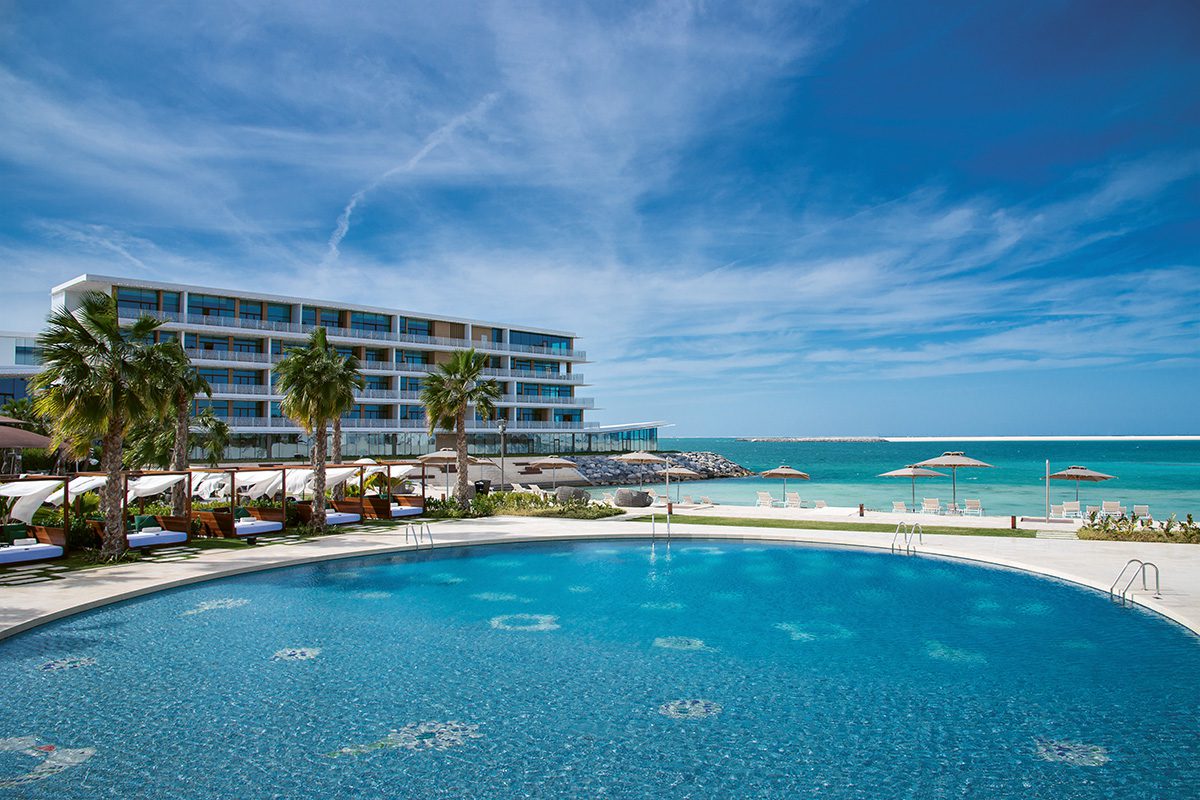
The resort’s main swimming pool sits just above the ocean
From the lobby to the rooms, one could easily mistake oneself to be at the annual Salone del Mobile in Milan. Recognisable signature designs of top Italian furniture brands (Flos, B&B Italia, Poliform, Rimadesio – to name a few) will definitely inspire you to add a few new pieces to your own home. Throughout the resort’s walls, you are reminded of Bulgari’s 130 year legacy with glamorous photography and design sketches of the brand’s timeless jewellery and the famous people they adorned.
Read more: The luxury concierge company that provides the perfect holiday wardrobe
Should the weather get too hot to go outdoors, and it often does, the spa also offers one of the longest and most impressive indoor swimming pools in Dubai complete with private relaxation cabanas. Yes, fly to the sun, and sit indoors. Wise, as the locals know.
Getting horizontal
We stayed in a two-bedroom family villa, which can be best described by one word: home. The moment we arrived, we were greeted at the door by our personal butler, catering to our every need. As we enjoyed fresh fruits, house-made chocolates, dates, and Amaretti biscuits, our butler helped to unpack our luggage. We loved the spacious living area furnished with a large leather sofa of rich mocha, and almond nougat-coloured marble tables. Most of our family time and meals were spent there, where they even set up a cute tent filled with toys and activities for our children.
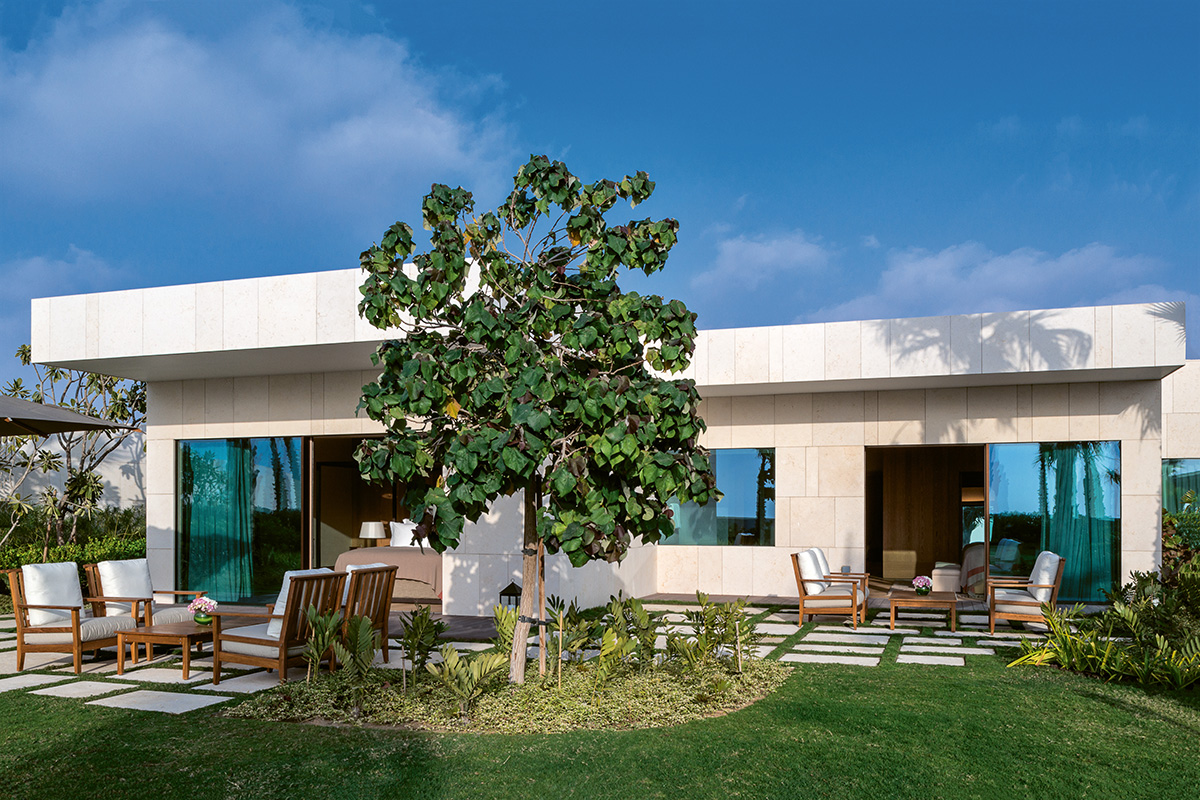
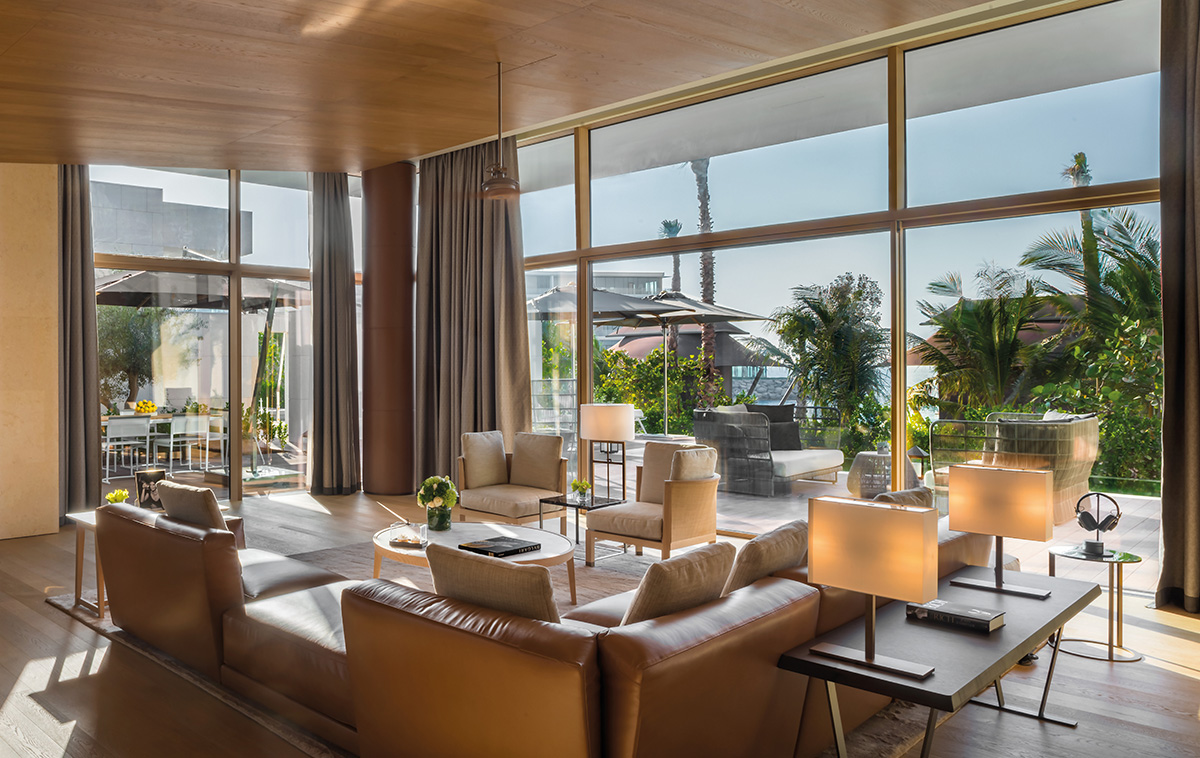
Here and above: one of the resort’s luxurious beach villas with a spacious living room
Given the exclusive, honeymoon vibe of the resort, it’s surprisingly kid-friendly with an all day Kids Club which even features a shallow plunge pool. If it’s too hot to relax on the beach, each villa has a personal pool, which we found perfect for a refreshing dip after our indulgent breakfasts. Our ever-present butler made sure that we were comfortably cool with Bulgari-branded fresh coconuts, sorbet popsicles, and ice cream-filled mochi. Needless to say, we found ourselves always looking forward to going back “home” to the comforts of our little retreat after a long day out.
Anything else?
If you stay at a villa, try the private barbecue dinner with a personal chef. We had lobster, sea bass, and wagyu steaks straight off our own sizzling grill, with no danger of the husband donning his chef’s whites and making like a BBQ cook-off king. Trust us: there’s nothing like being able to walk just ten steps back to your bedroom after an amazing dinner that puts you in a food coma. Don’t worry, you’ll work it off the next day with a serious cardio session of shopping at Dubai Mall.
The resort’s intimate Japanese restaurant Hoseki
And before you leave, do leave yourself in the hands of Chef Masahiro Sugiyama at resident Japanese restaurant, Hoseki, meaning “ Gem Stone” in Japanese. This sleek and modern restaurant with just 9 seats has a perfect view of Dubai’s glittering skyline and serves only an Omakase menu. You’ll get intimate with Chef Sugiyama who comes from 6 generations of sushi chefs before him. As he serves curated sushi, he explains in detail how each ingredient, all flown in fresh from Tokyo, comes into perfect harmony on your palate. Here, you can truly just sit back, relax and sip on a cup of ice-cold Junmai Daigin Jyo sake. Make sure to book ahead.
Rates: From 2,000 AED for an entry-level room during low season (approx. £400/€500/ $550)
Book your stay: bulgarihotels.com
Emily Lee

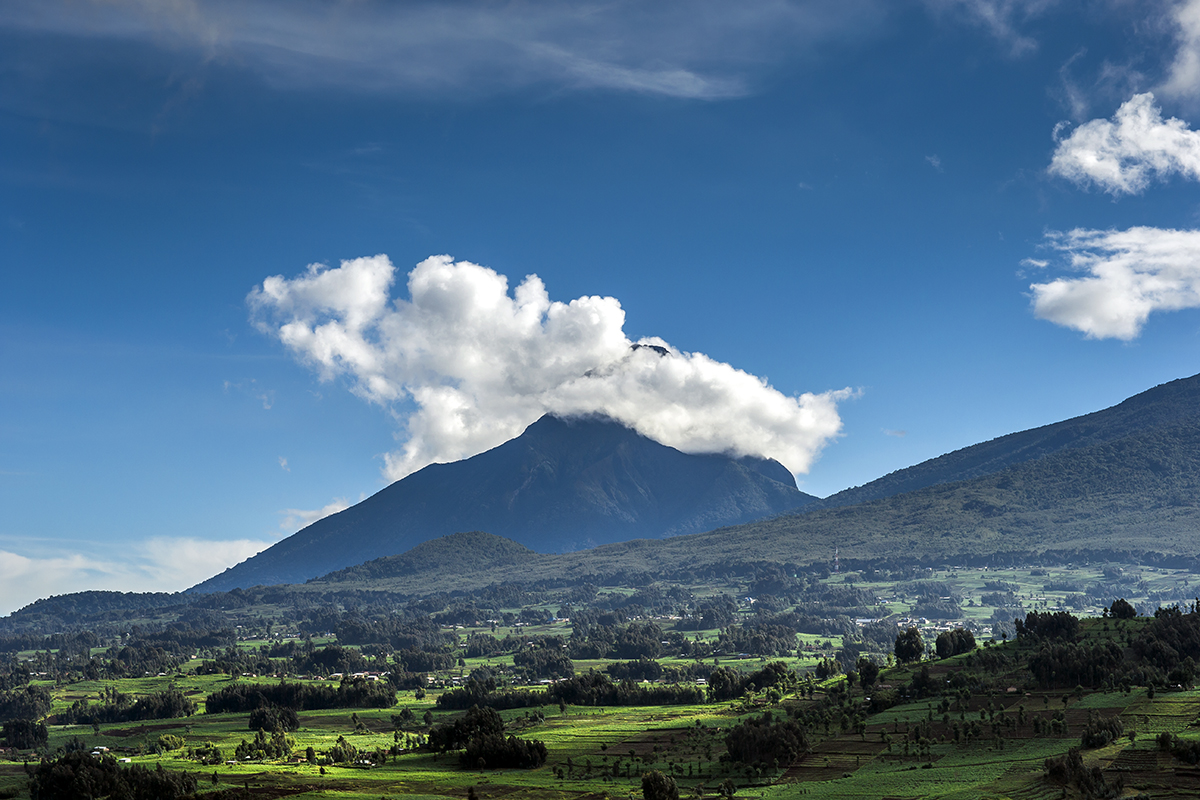
One&Only Gorilla’s Nest Rwanda overlooks the Virunga Mountain Valley
One&Only Gorilla’s Nest is the luxury brand’s second resort to open in Rwanda, offering guests the opportunity to trek after mountain gorillas and relax within a secluded setting. LUX takes a look inside the newly opened property
Located two and a half hours from Kigali International Airport and five minutes from the entrance of Volcanoes National park, One&Only’s newly opened Gorilla’s Nest resort offers guests a luxurious base from which to explore northwest Rwanda’s extraordinary ecosystem. The park, which takes its name from its five dormant volcanoes, is home to the highest number of mountain gorillas, which guests can trek after through the rainforest.
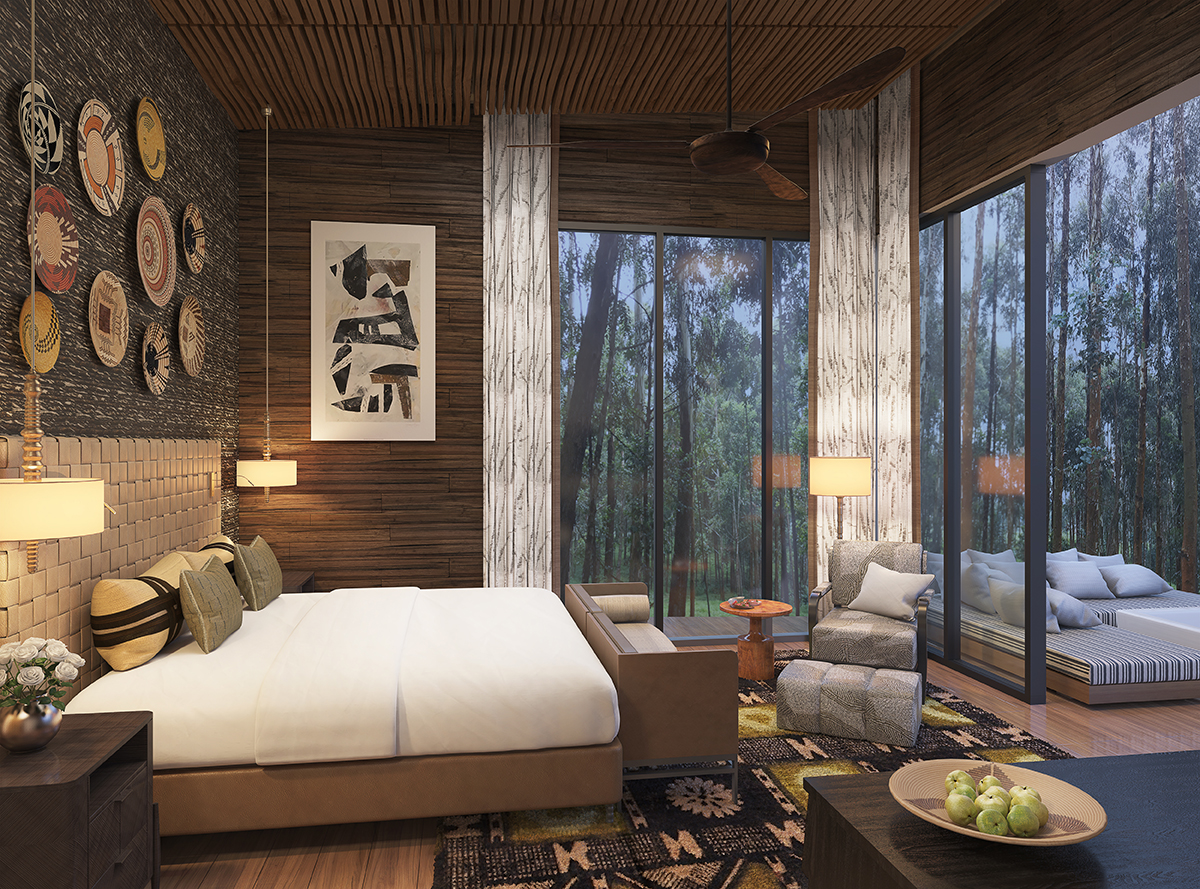
The Silverback Suite with a private swimming pool
Alongside safari expeditions, the resort also offers a variety of experiences including tasting locally farmed coffees, learning photography, traditional dance and basket weaving.
Follow LUX on Instagram: luxthemagazine
The camp itself is comprised of 21 elegant rooms, each designed to blend into the natural landscape with cosy in-room fireplaces, private viewing decks and outdoor bathtubs built high-up amongst the trees. The aesthetic is contemporary with a focus on natural materials, whilst paying homage to the colours and patterns of African culture. Our favourite is the Silverback Suite with its own private pool and unparalleled views of the surrounding forest provided by the floor-to-ceiling windows in the bedroom.

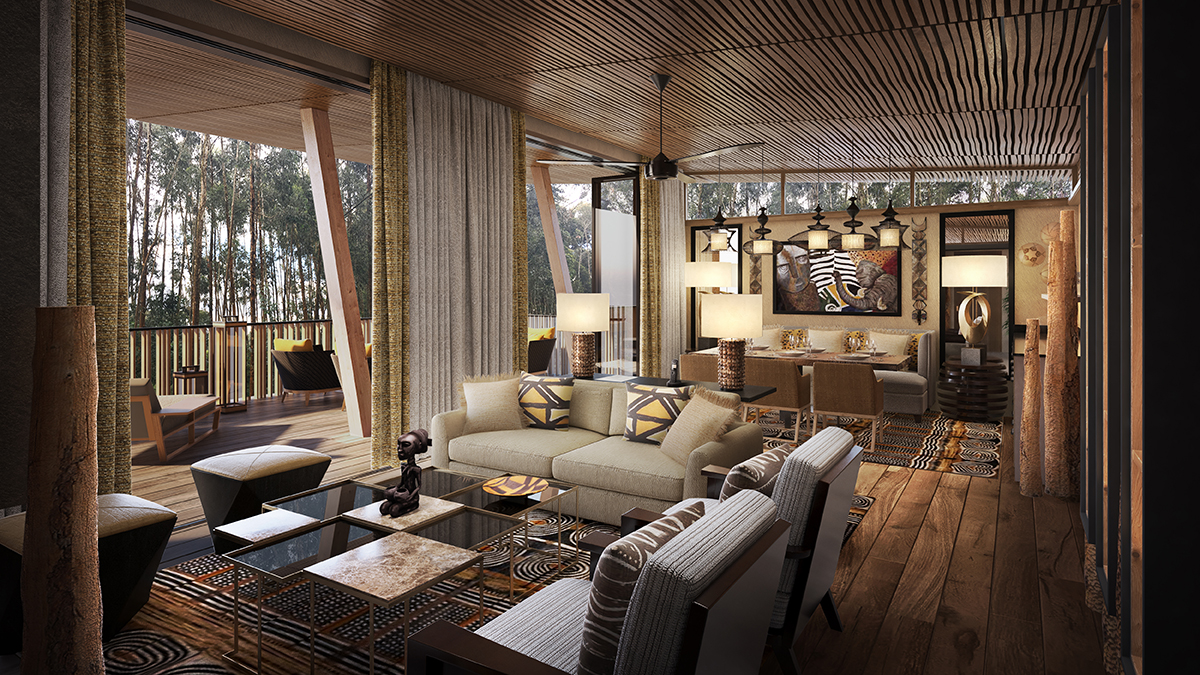
The Virunga Suite features a spacious living room
When it comes dining, the main restaurant, Nest, utilises locally sourced produce as well as home-grown ingredients from the Chef’s Garden. Or else, guests can choose to dine at the Pool Bar or in a secluded location within the camp’s grounds.
There’s also a small, beautifully designed spa, with two treatment rooms, an open-air heated pool, plunge pool and Fitness Centre with a stream room and sauna. The therapies on offer are all holistic and use plant-based African ingredients, such as coffee and coconut.
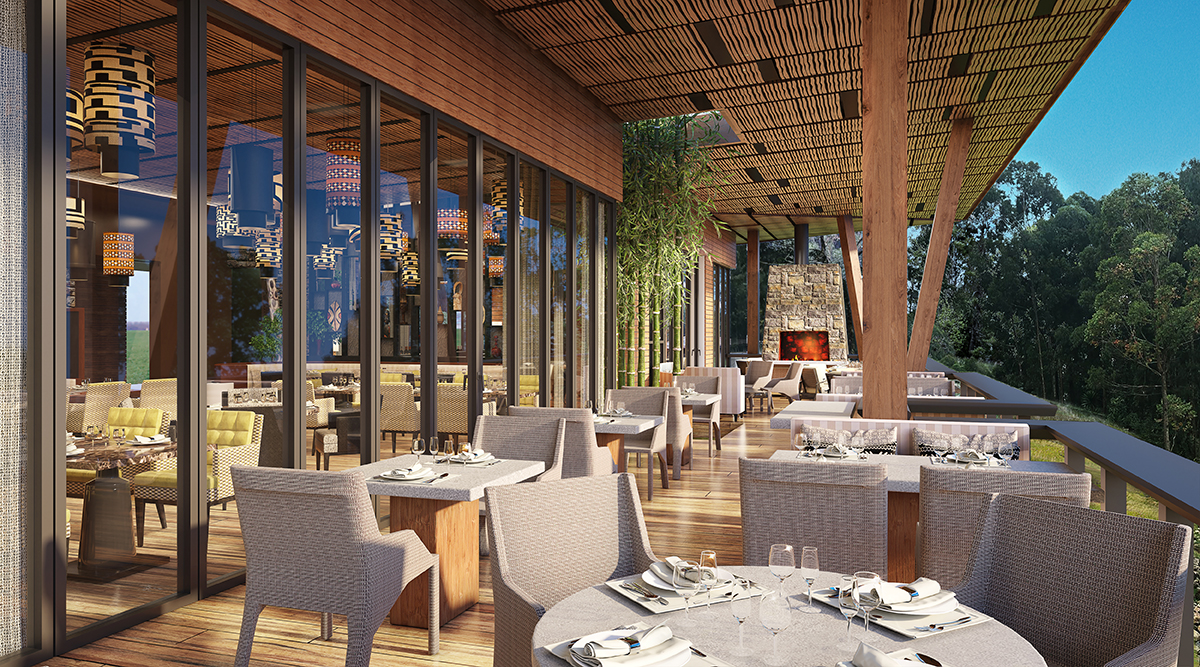
The terrace of the Nest restaurant
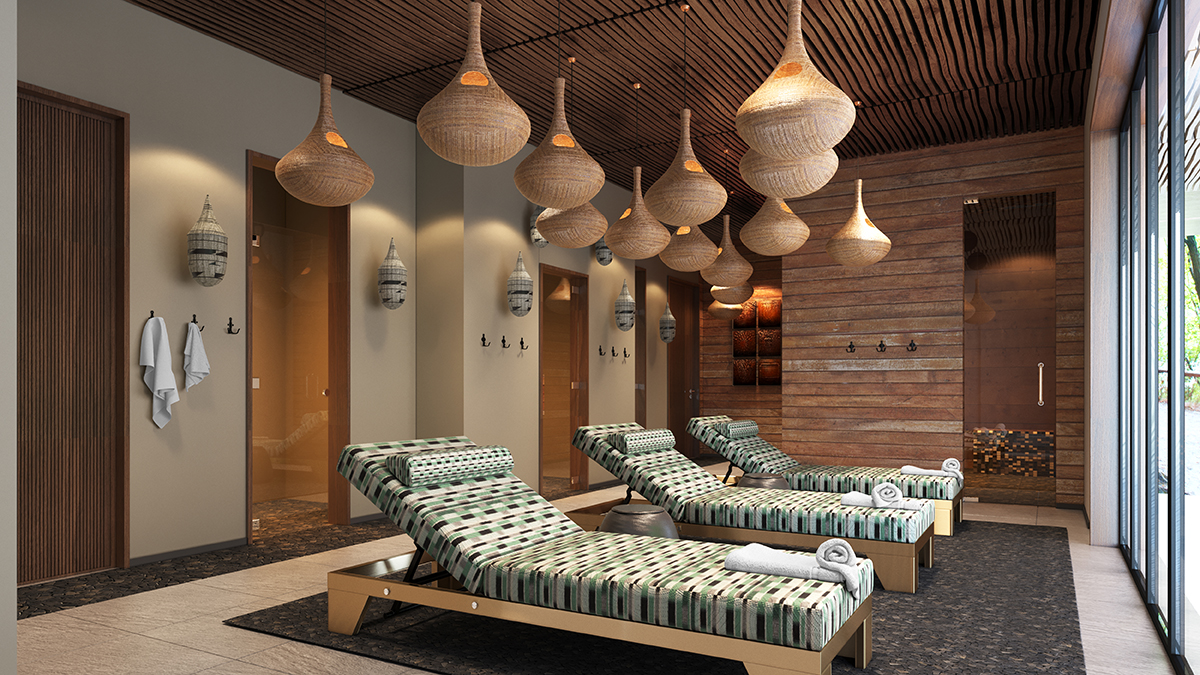
The spa’s relaxation room
For more information visit: oneandonlygorillasnest.com
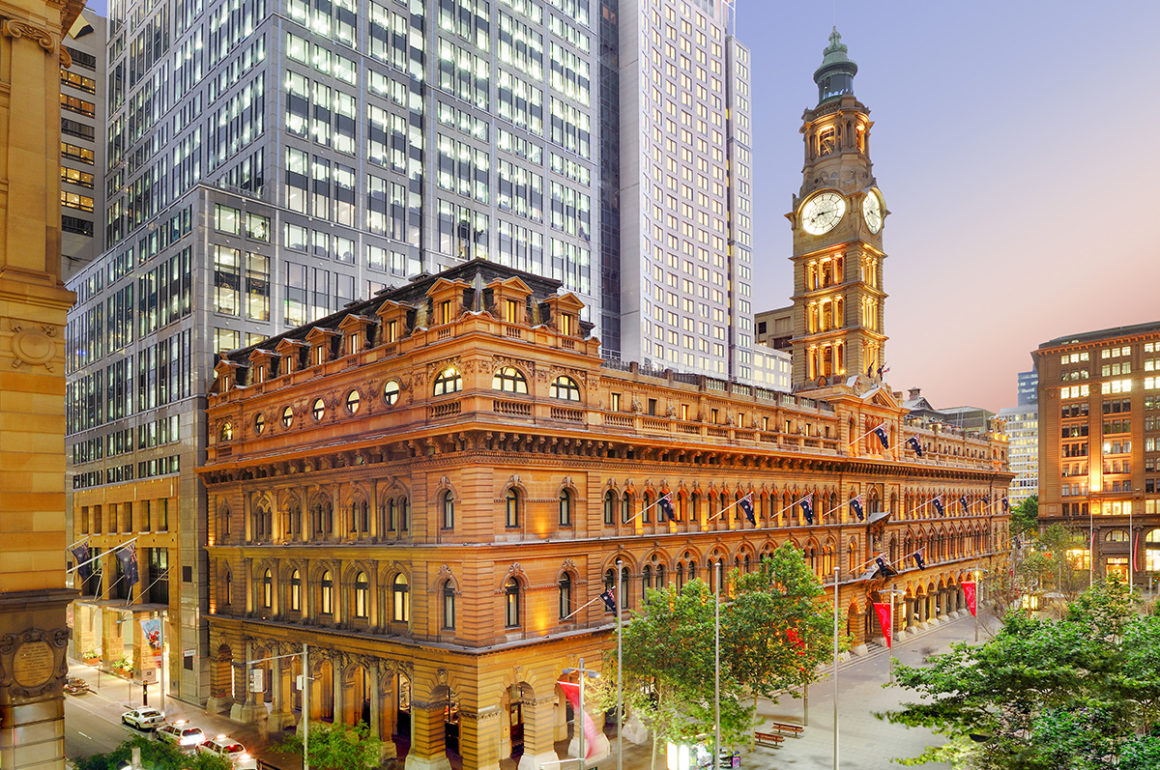
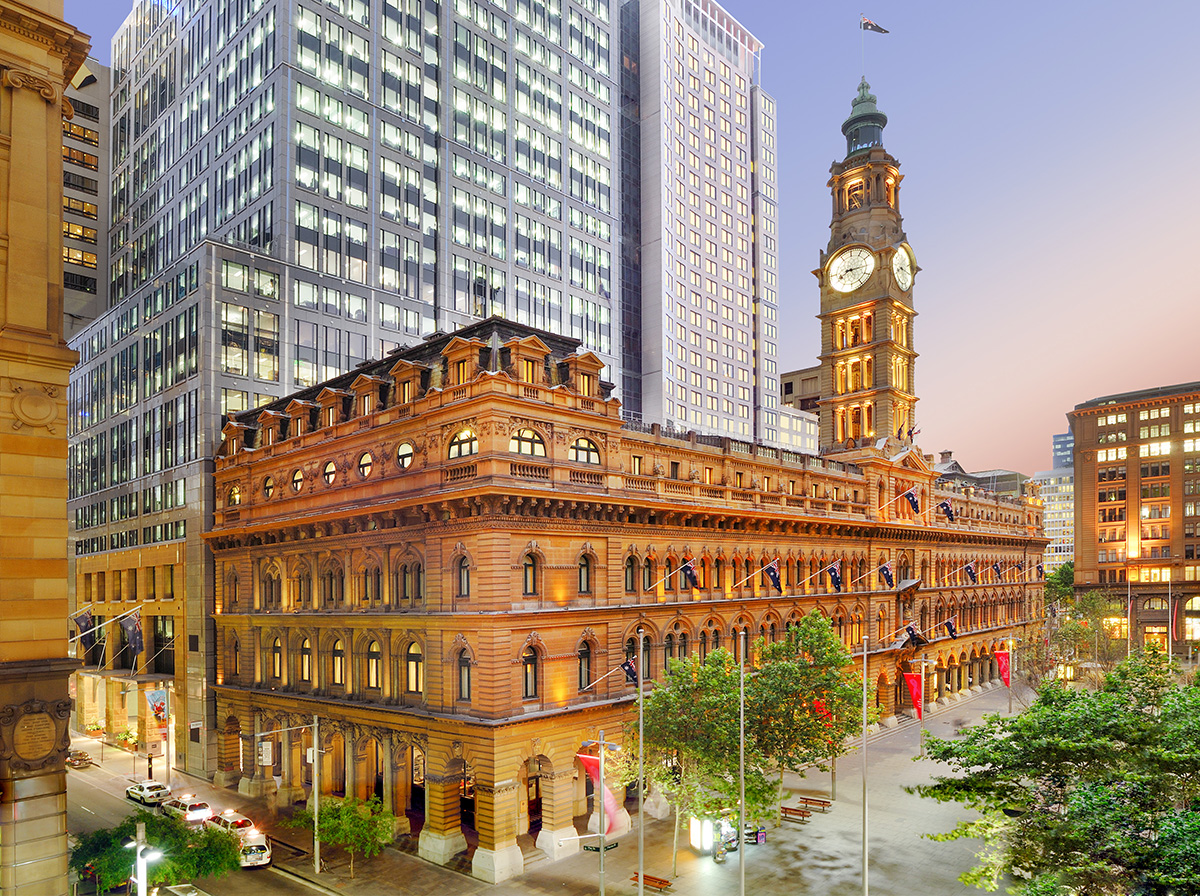
The newly opened Fullerton Hotel Sydney, located in the city’s historic General Post Office
Earlier this month, the opening of the Fullerton Hotel Sydney marked the Singapore-based brand’s first expansion overseas. LUX takes a look inside the heritage property
The latest opening by Singapore-based brand Fullerton Hotel & Resorts offers guests more than just luxury hotel. Housed in Sydney’s historic General Post Office, the hotel is the result of a careful restoration project which involved building 416 guest rooms and cleaning the sweeping sandstone façade.
Follow LUX on Instagram: luxthemagazine
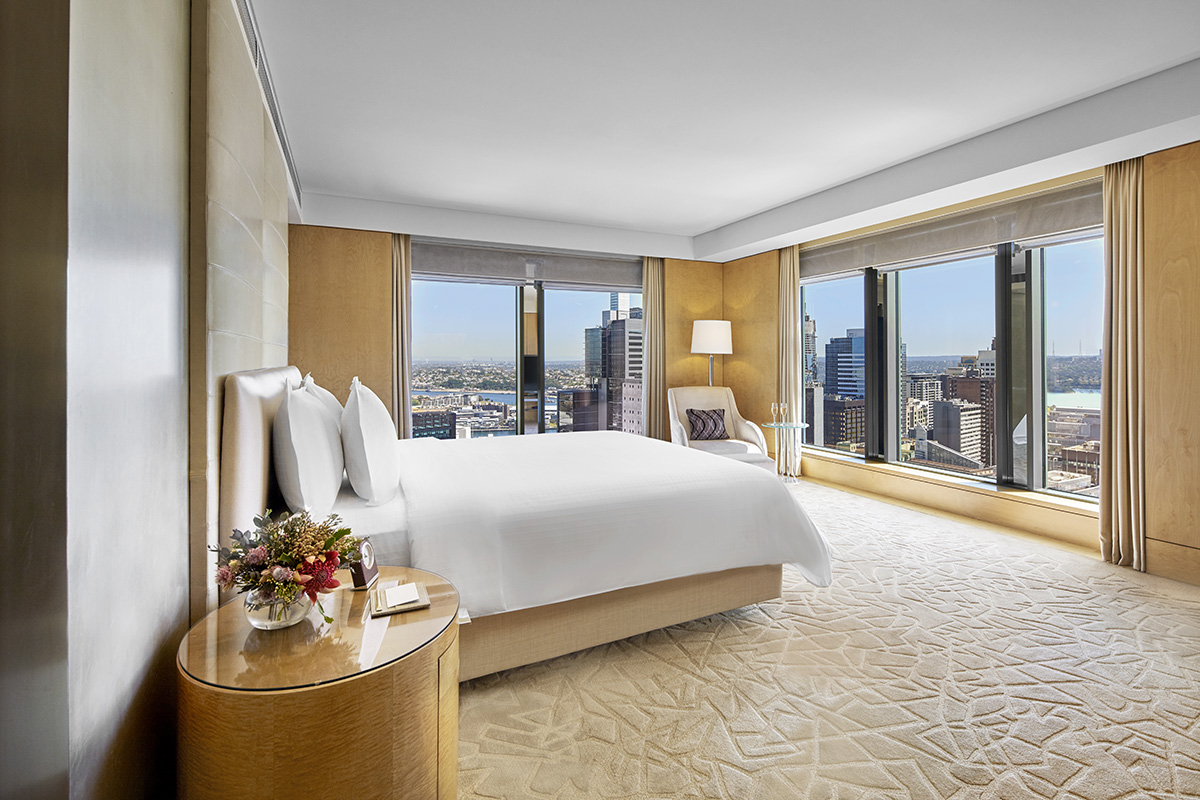
One of the hotel’s luxurious suites
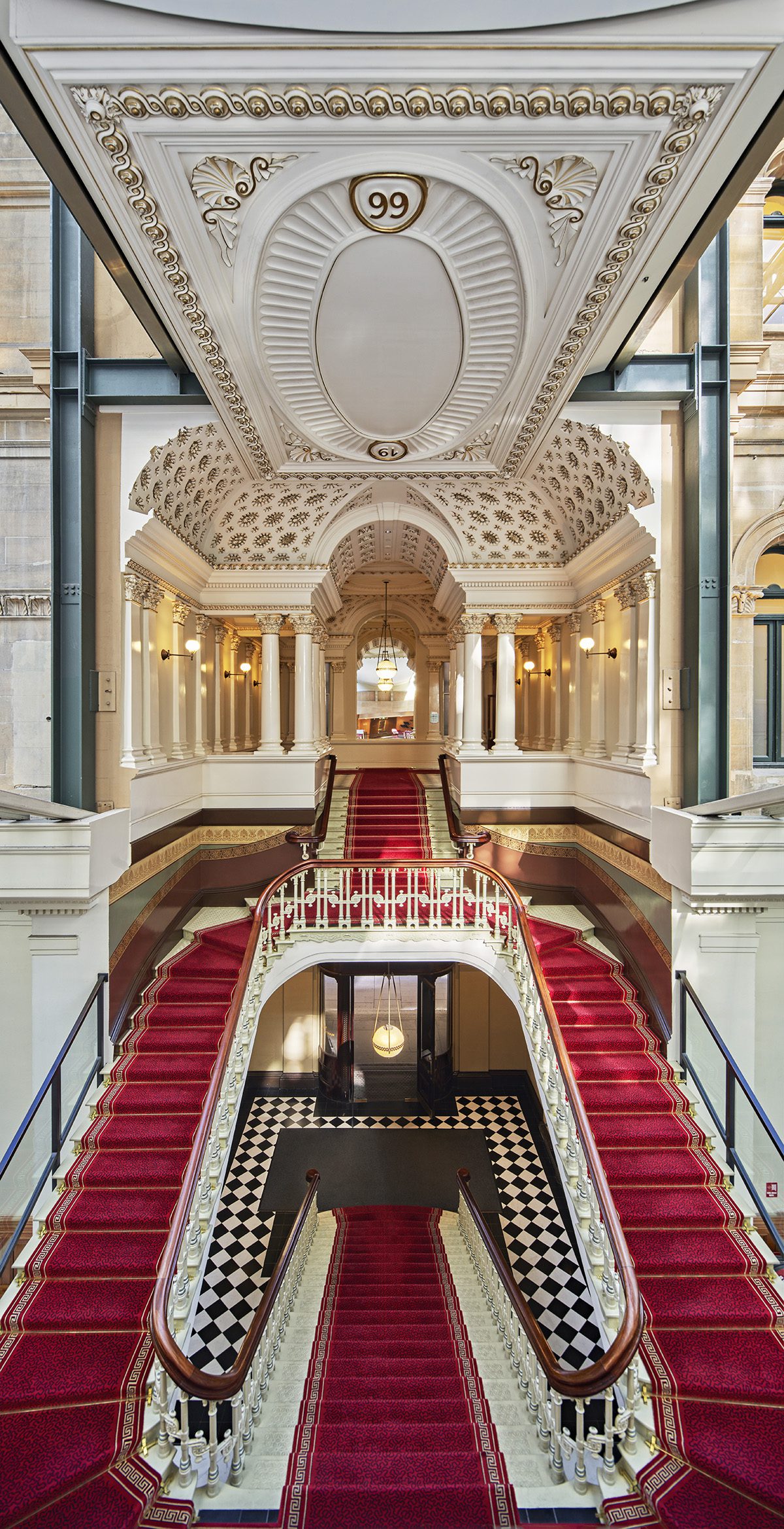
The grand staircase at the Fullerton Hotel Sydney
During its former life, the GPO was known as a gateway to the world, functioning as the centre of NSW’s telephone and mail communication for many years, and Sydney’s postal headquarters until 1996. Designed by colonial architect James Barnet and built in 1866, the building was and still is regarded as one of the city’s major landmarks.
Here and above: Archive images from the Telegraph Section at the G.P.O., November 1953
The hotel’s programme of complimentary heritage tours aims to introduce guests and members of the public to the building’s history with a 90-minute walk involving unique anecdotes and insights.
For more information visit: fullertonhotels.com/fullerton-hotel-sydney
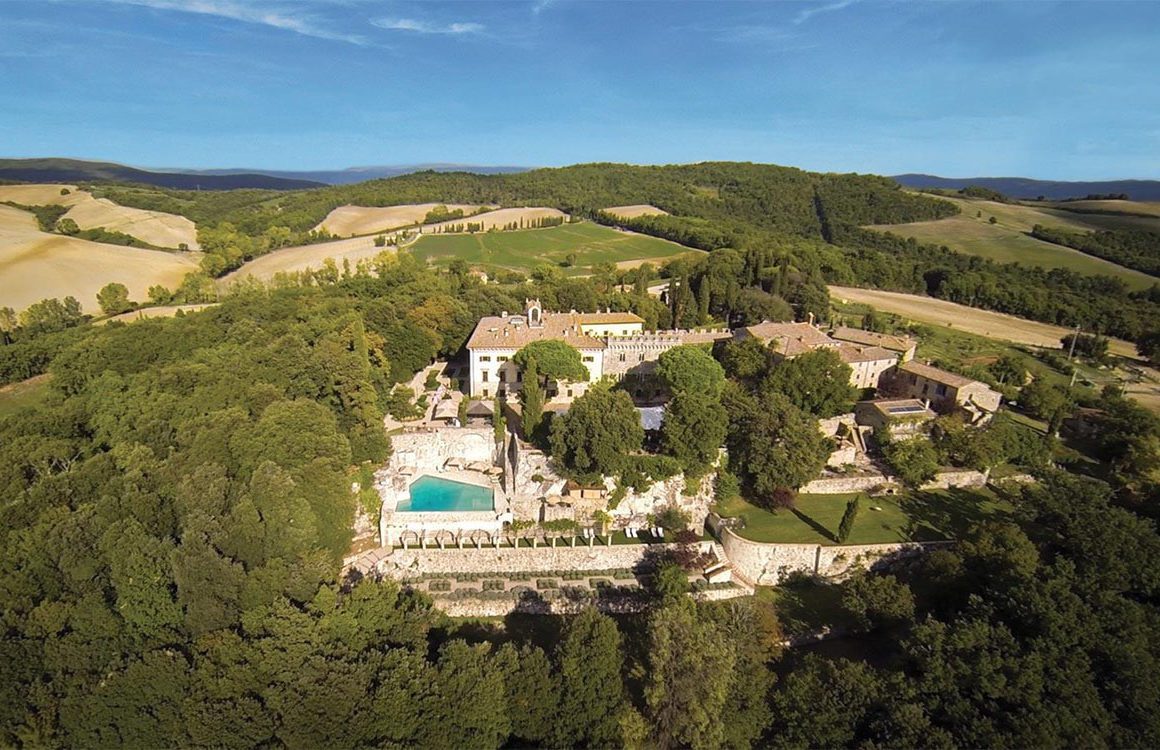
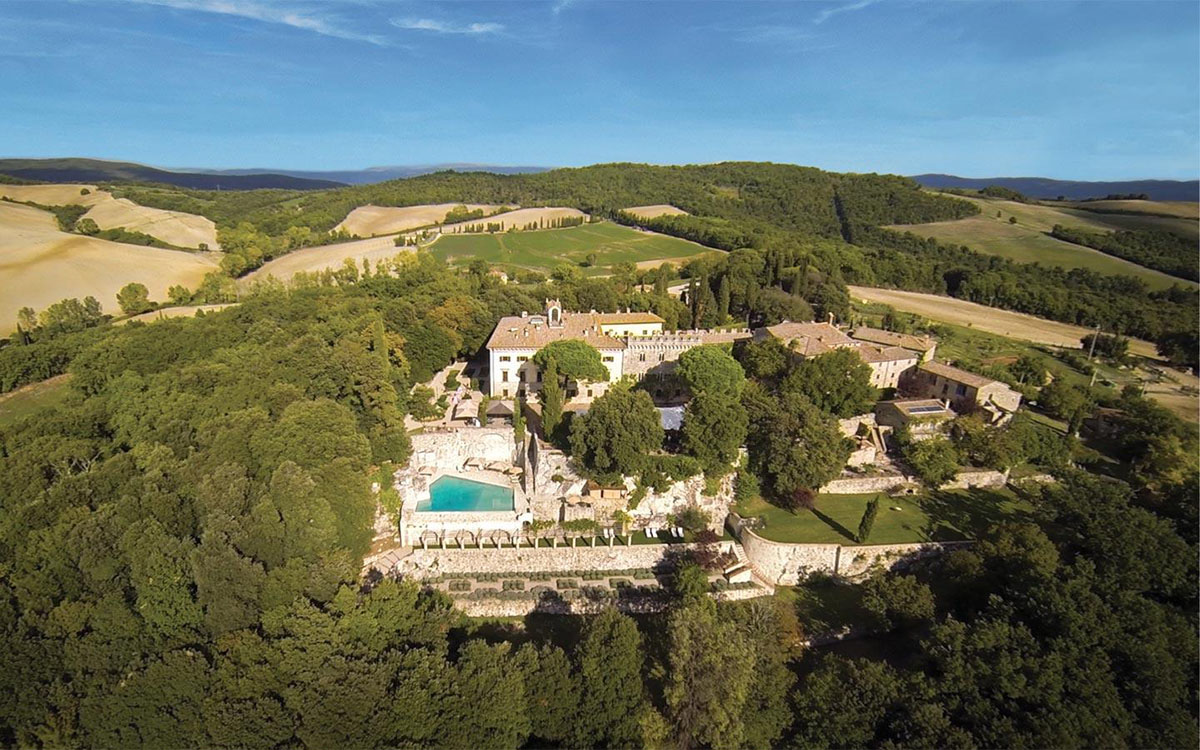
Borgo Pignano sits within a stunning 750-acre estate
Why should I go now?
Tuscany is always beautiful, but especially so when basking in firey Autumnal hues, the ground scattered with crispy orange and red leaves. Set in the hills between Volterra and San Gimignano, boutique hotel Borgo Pignano is remote and staggeringly beautiful – the perfect place to disappear for a few days, especially when the hotel is nearing the end of its season (the hotel closes early November and reopens in April). If you’re lucky, you can go the whole day without spotting a single other person.
Follow LUX on Instagram: luxthemagazine
What’s the lowdown?
Just over an hour’s drive from Florence, Borgo Pignano is 750-acre estate encompassing 15 rooms, 12 cottages and apartments, an organic farm and various workshops that produce everything from the hotel’s sustainable bath products and candles to the jars of honey and jam that you find at breakfast. A gorgeous 18th century villa sits at the centre of the property surrounded by gardens and forest land, with the main swimming pool carved into the original quarry stone of the hillside.
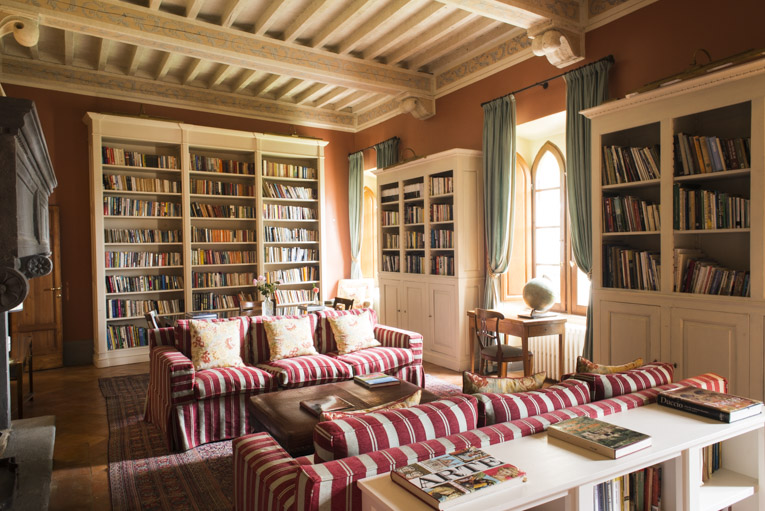
The hotel’s library
Once a hilltop hamlet, the property has been lovingly restored to preserve its original grandeur and romance. The rooms are decorated with painted frescos, patterned textiles and antique furnishings. In the evenings, guests are invited for drinks in the living room where the in-house mixologist makes cocktails whilst waiters circulate paired canapés. It feels old-world in the very best sense, fostering an atmosphere of earthy, cosy luxury in which guests are treated like old friends rather than moving bank cards.
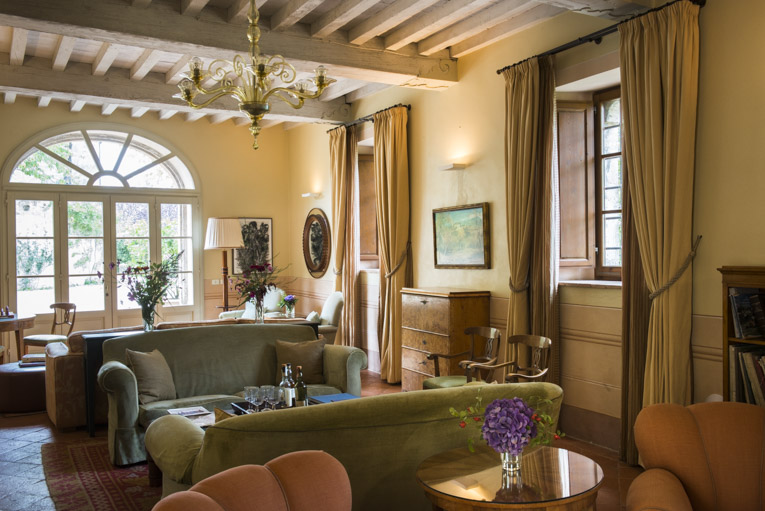
The living room, where evening drinks are served
Meals are generally served in the main villa’s dining room, with a menu featuring local and organic ingredients which are grown on site including dishes such as herb-filled goat’s cheese salad with pollen from the estate’s honeycomb. Guests are encouraged to freely roam the farm to learn more about the hotel’s sustainable efforts, and can also pick up walking routes from reception to further explore the surrounding landscape. There’s also an art gallery on site with contemporary exhibitions and a spa that offers treatments using natural remedies such as flowers, herbs, plant extracts, oils and honey.
Read more: Louis Roederer’s CEO Frédéric Rouzaud on art and hospitality
Getting horizontal
Located in the main villa, our room was once the bedroom of the marchesa with an adjoining single bedroom for her child. Elegantly and simply furnished with a large four-poster curtained bed, wooden shutters and stone tiled floors, it was a unique and calming space. We especially loved the hidden doors, painted to blend in with the walls.
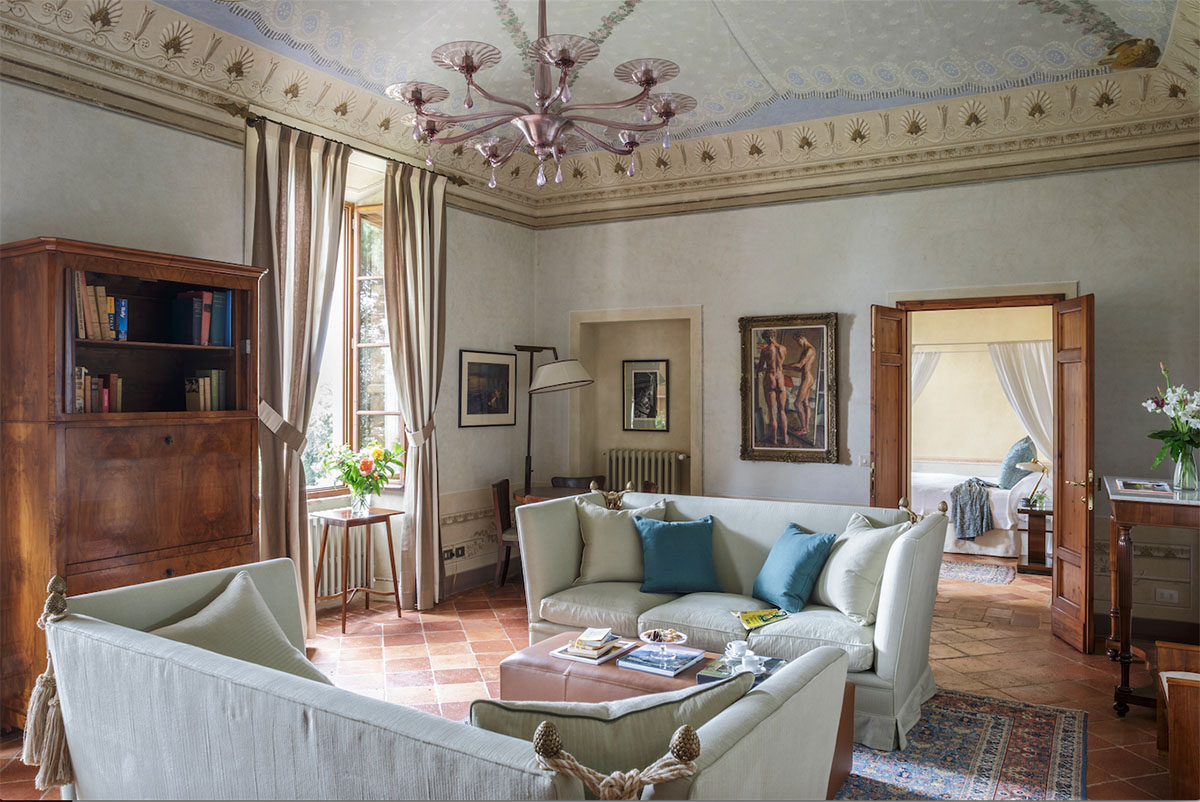
The signature suite, located in the hotel’s main villa
Flipside
The swimming pool isn’t heated so the water is very cold at this time of year, but we very much enjoyed a bracing swim before breakfast. It’s also worth remembering to pack a few jumpers as the evenings get quite chilly.
Rates from: €220 in low season with breakfast included (approx. £200/ $250)
Book your stay: borgopignano.com
Millie Walton
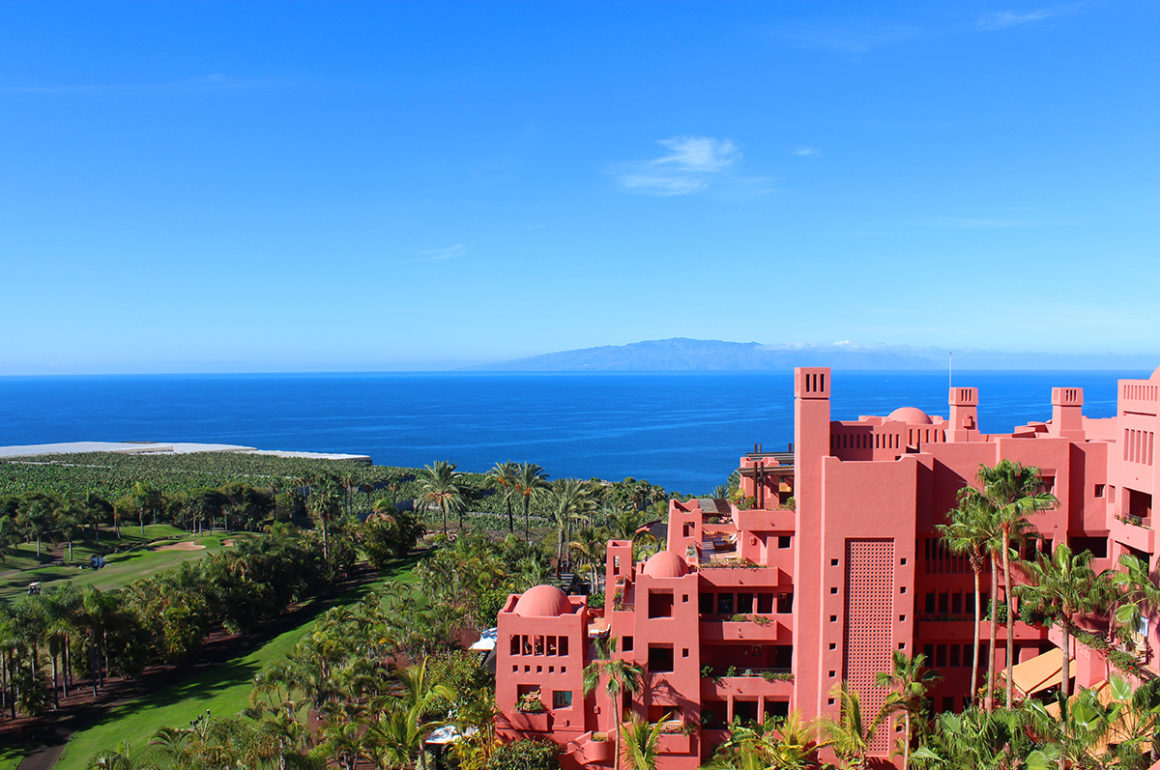
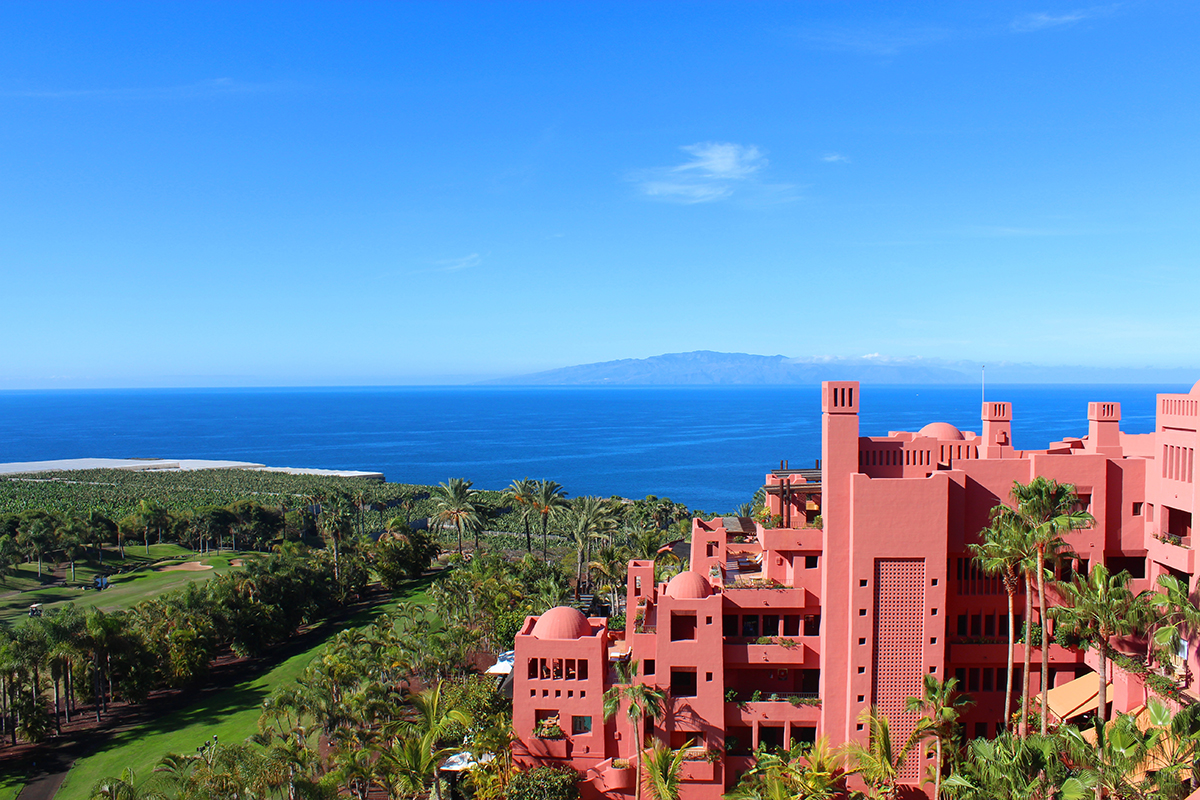
The Abama overlooks the volcanic island of Gomera
LUX steps into a different universe of tranquillity, colour and cuisine at The Ritz-Carlton Abama resort in Tenerife, a short hop from western Europe
Stepping out of your room into a kaleidoscope washed by warm salty air is a delicious feeling. The kaleidoscope was the lavishly planted sea of flowers in multilayered, terraced tropical gardens around the villa where we were staying. A short stroll along the path took us past even more plants, trees and flowers of every conceivable colour, which rose first past several organically shaped pools and then onto the terrace where breakfast was served.
Follow LUX on Instagram: luxthemagazine
The Ritz-Carlton Abama is located on top of a cliff overlooking the ocean and a volcanic island opposite. During breakfast time, this island was always covered in a mysterious, horror-movie murk, almost indistinguishable from the light-blue sky around it. The sun rises slowly in equatorial zones, and even though the morning air had a hint of chill in it, due to the coldness of the sea currents, we were indeed in an equatorial zone off the coast of Africa. The Canary Islands may have become host, in part, to unglamorous mass tourism recently, but they first came into Western awareness as a hive of distinctive species and ecosystems.
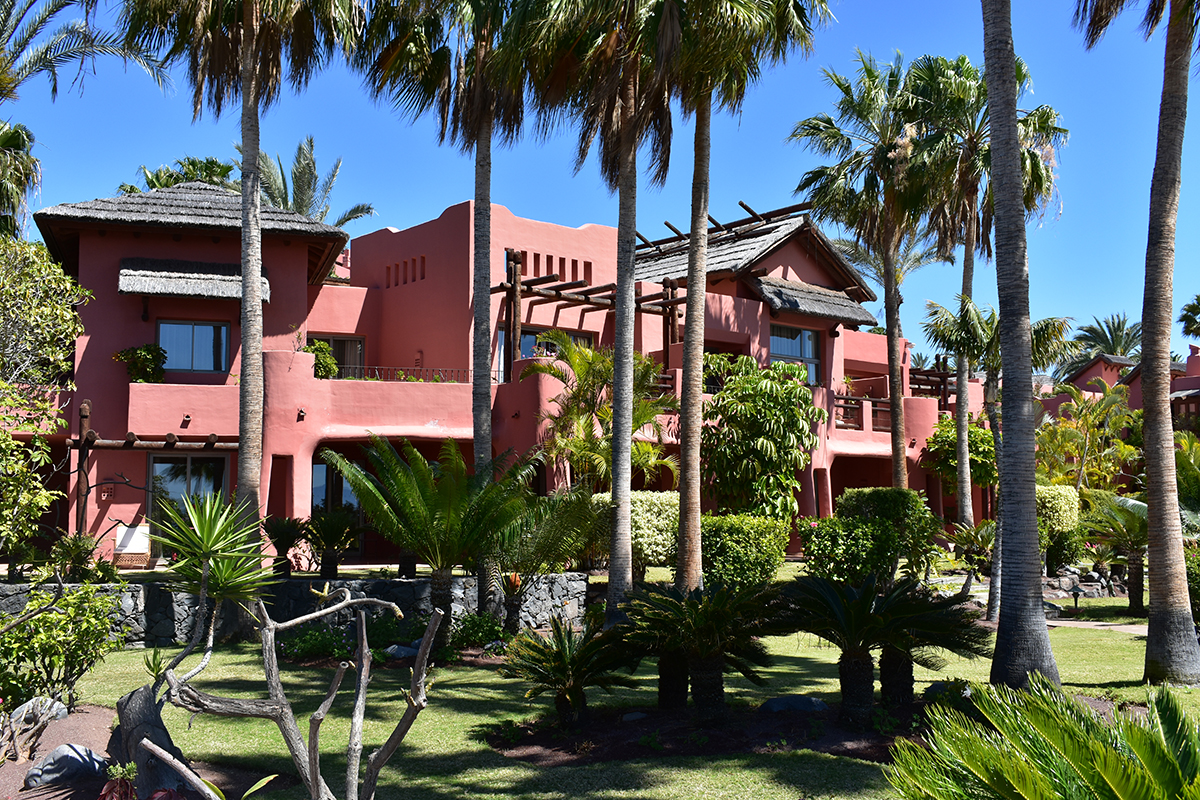
The villas are set in lush gardens
The days soon took on a familiar rhythm. Adjacent to the breakfast terrace, a 50-metre pool, curvaceous and irregular, is boarded by rows of sun lounges with a view down over the gardens to the sea. As the sun became stronger, we moved down to the beach, where a seafood and grill restaurant was washed by calling breezes and salty air. There is cliff jumping from either side of the bay where the long, sandy beach is located, and in the next bay you can jump from black volcanic rock to black volcanic rock admiring great schools of crabs, blue and orange, living in the twilight zone beneath them, between land and ocean.
Read more: Gaggenau’s latest initiative to support emerging artisans
Swimming in the clear sea, sheltered by a breakwater, involved being accompanied by fish – sometimes individuals, sometimes in shoals, occasionally monochrome, usually in an array of colours to match and even outdo their plant-based counterparts on land, with fluorescent blues and oranges all the vogue.
If we had not had the energy in the morning, an early-evening game at the tennis centre based around perfect clay courts next to the (celebrated) golf course was a way of adding to the exercise quotient, before either moving to one of the restaurants, or dining on room service on our own terrace overlooking treetops, banana plantations, the ocean and the volcanic island of Gomera. In the evening, this was lit up in pinks and greens, and strung by lights from its occasional roads, just visible from our vantage point 20 miles away across the water.
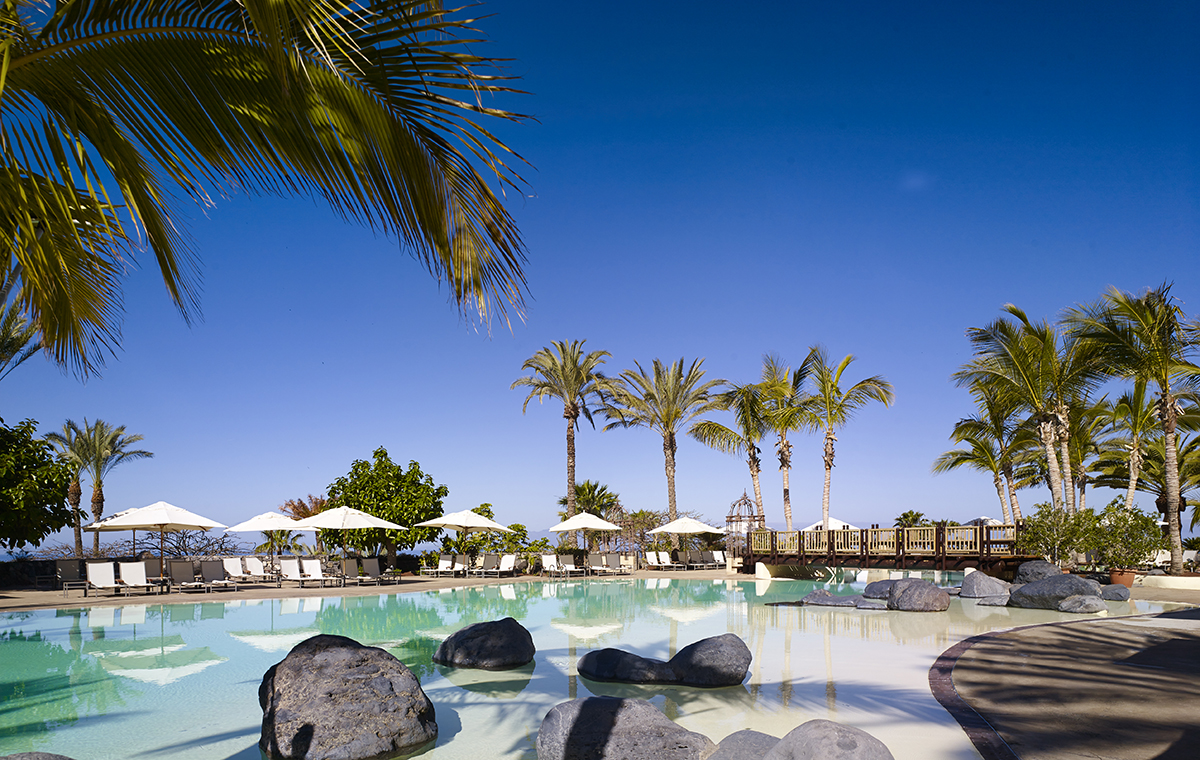
Abama’s main pool – one of seven at the resort
Fine dining is not often associated with the Canary Islands, something the original creators of Abama sought to change when building this resort. Unusually for an island in the Atlantic, 1,000 miles from the southern tip of Spain, it has Michelin-starred restaurants and an array of other dining spots with specialised cuisines and, often, spectacular views.
The most notable is Kabuki, a Japanese restaurant high above the resort and the 18- hole championship golf course. The whole resort is built on a steep volcanic slope, meaning the view down from Kabuki to the gardens, plantations, swimming pools and the sea is particularly captivating at dusk. Aperitifs are served on the terrace, and inside, the restaurant serves a celebrated blend of local and Japanese cuisine. The flame-seared fish nigiri is easily the most memorable thing on the menu.
At the other end of the resort, although by no means at the other end of the scale, El Mirador is an eagle’s nest atop cliffs that plunge down to the ocean. From the tables you can hear the sea crashing against the rocks far below and smell the ocean spray. Appropriately, El Mirador serves grilled fish and seafood, and is also celebrated for Spanish cuisine from a different part of the country: black rice paella. Like a number of the restaurants in the resort, it also serves a mean bowl of Canarian potatoes, which maximise on intense, nutty taste, accompanied by red and green chilli sauces.
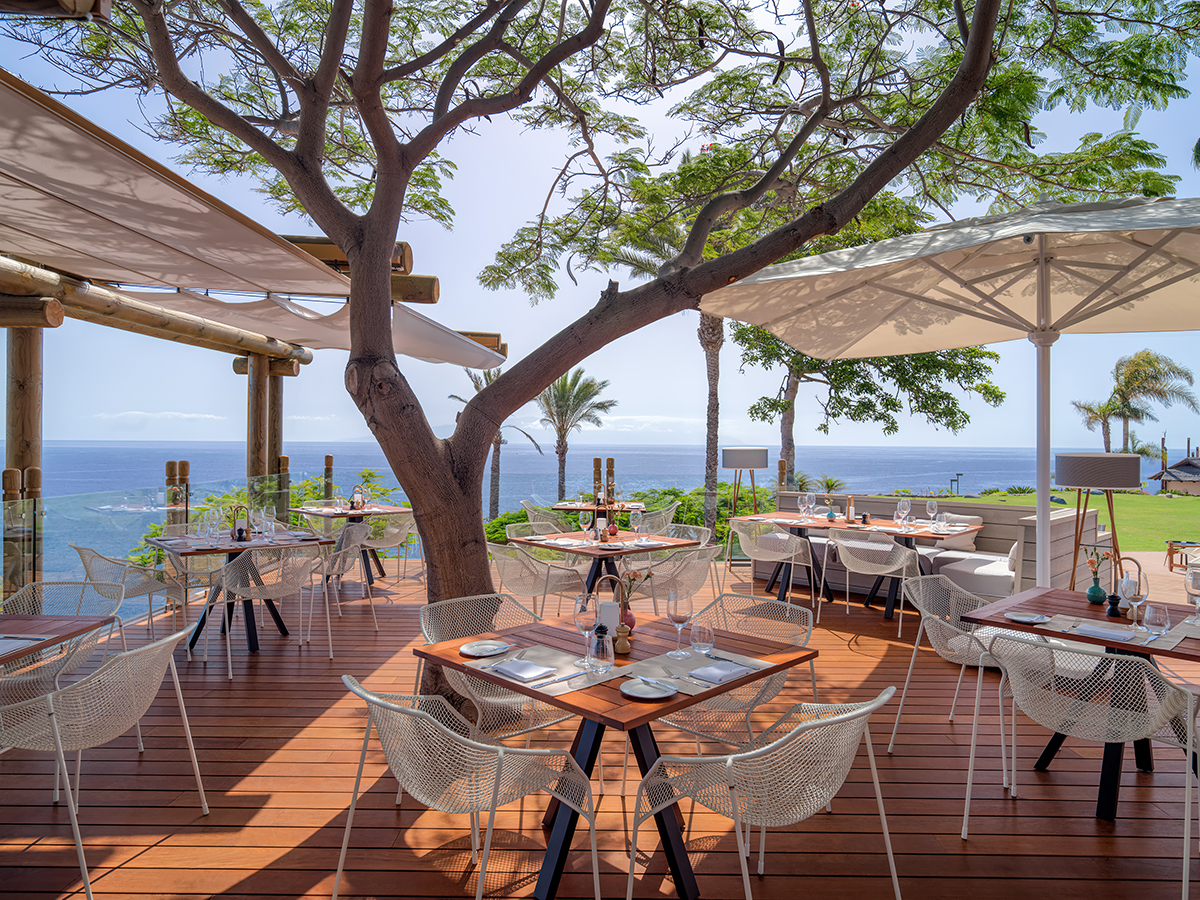
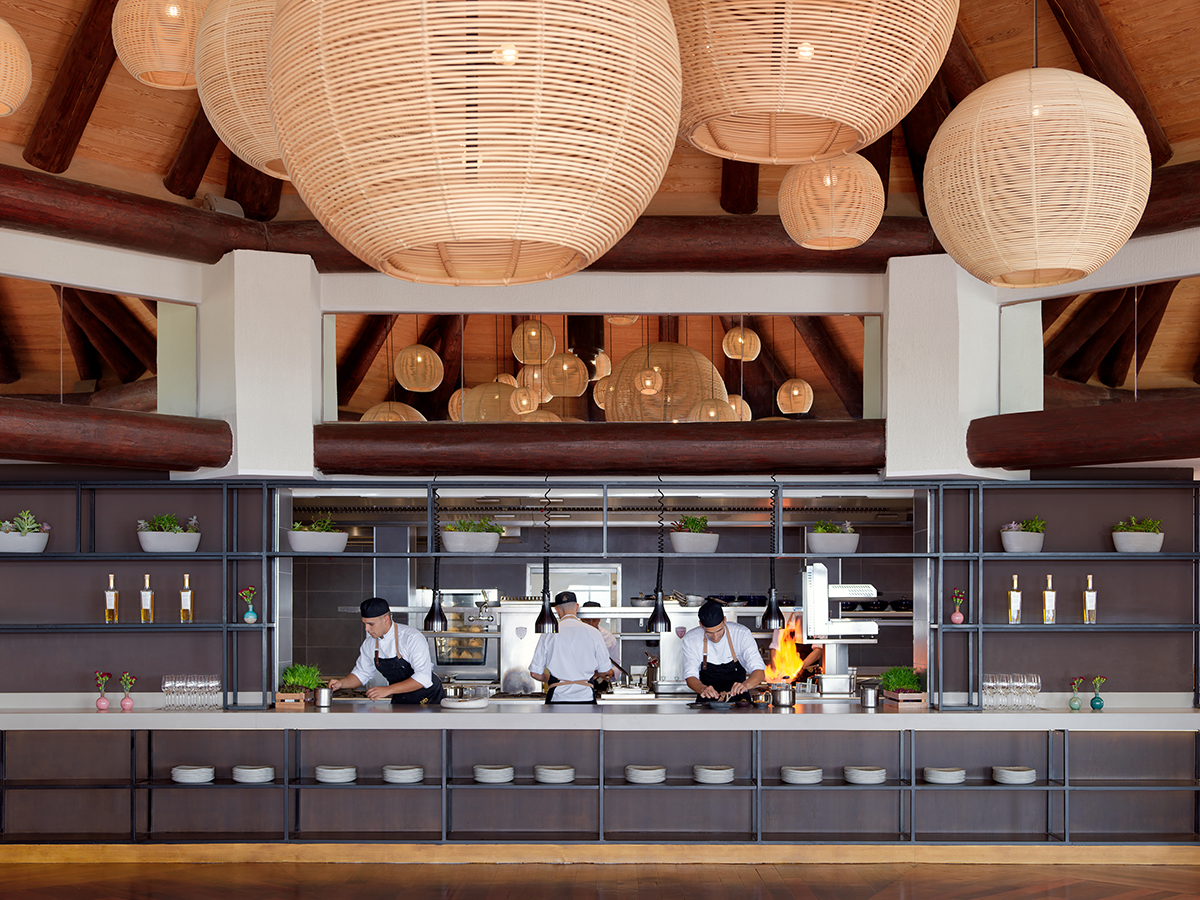
The kitchen and terrace at El Mirado
The cascade of colours at sunset at El Mirador is a match for any oceanside location in the world, and a fitting end to a day that began with the kaleidoscope of flowers outside the villas. The villas themselves are the most secluded category of accommodation in a resort that is bigger than it may seem, so well blended is it with its natural context. We had a seaview suite, including a large living room, huge bedroom and two balconies, which should be plenty for any couple. It can be combined with an adjoining (equally large) bedroom for a family area big enough to match many people’s homes. Interior décor is all cool stone and tiles, with equally large bathrooms to match. And that fabulous morning cascade of colour as soon as you draw the curtain, or open the door.
One-bedroom suites in villas at The Ritz-Carlton Abama Tenerife start from €615, plus tax. Find out more: ritzcarlton.com/abama
This article was originally published in the Autumn 19 Issue.
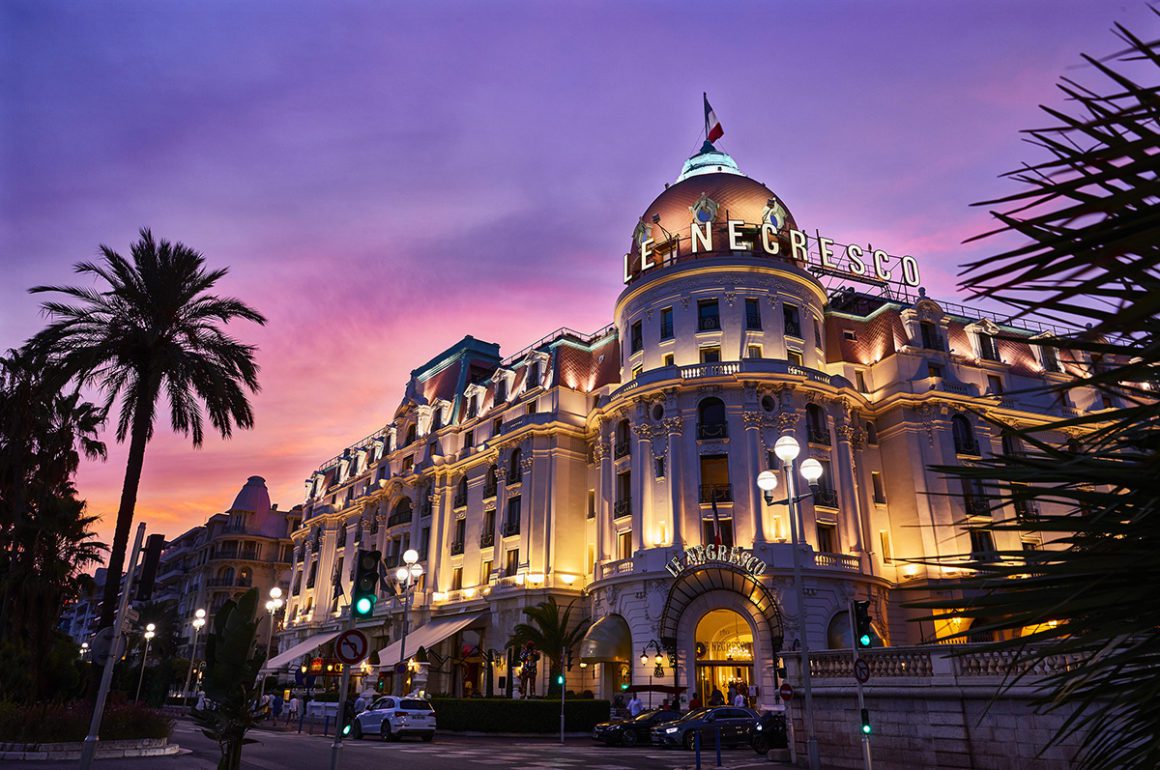
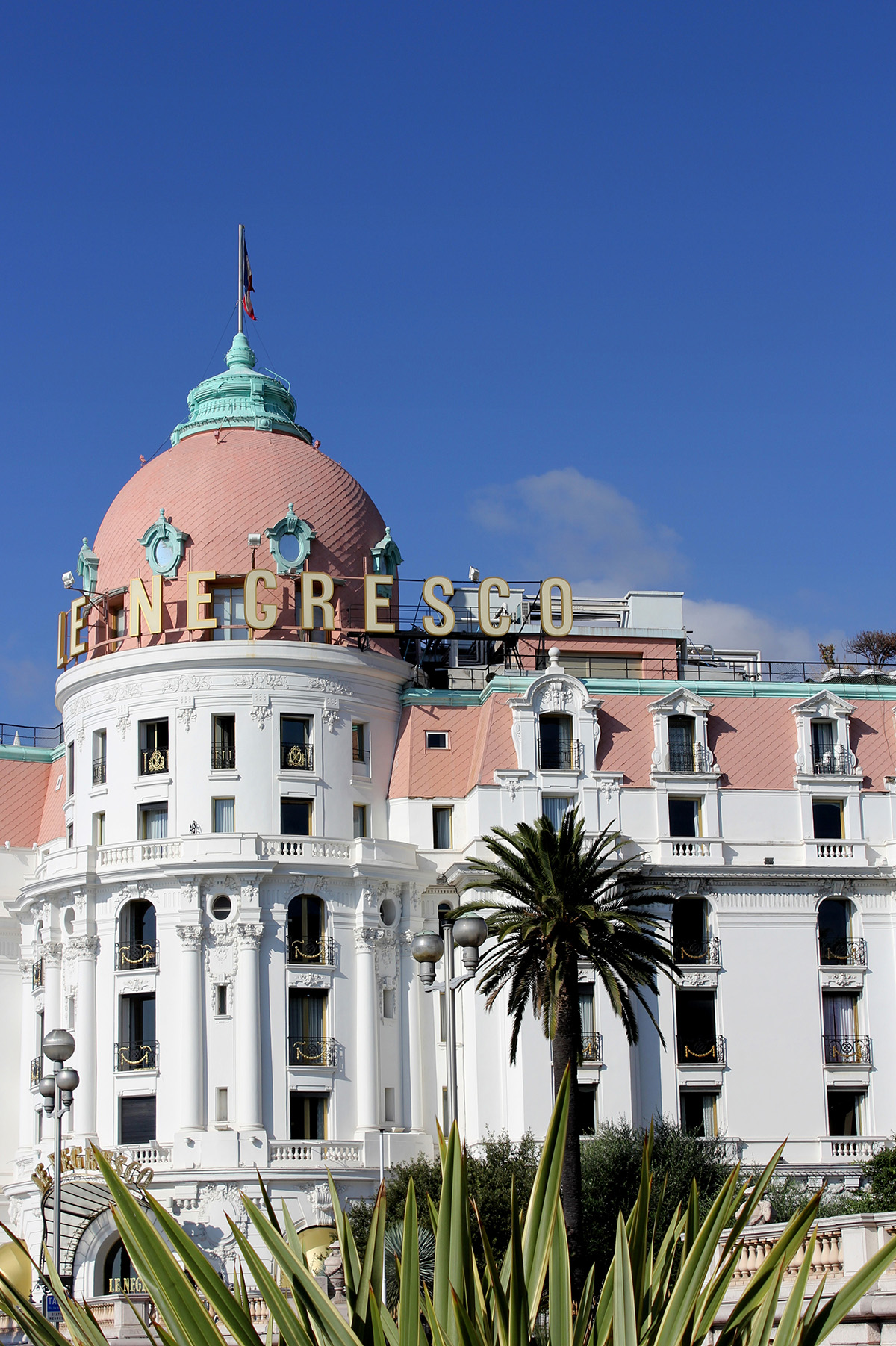
Le Negresco hotel is the epitome of the French riviera
Why should I go now?
July is the month the city of Nice, capital of the French riviera, comes alive. Beaches are lively but not yet as teeming as in August, the nightlife is in full swing, the weather is warm and the sea is blue. If only there were a place to rise above it all – oh, wait, there is.
Follow LUX on Instagram: the.official.lux.magazine
What’s the lowdown?
Le Negresco is the epitome of the French riviera, with art and glamour at its heart. Whether you’re a fan of Princess Grace or Niki de St Phalle, Dalí or Louis Armstrong, there is something in the hotel to touch you – the grand facade even hides a roomful of street art.
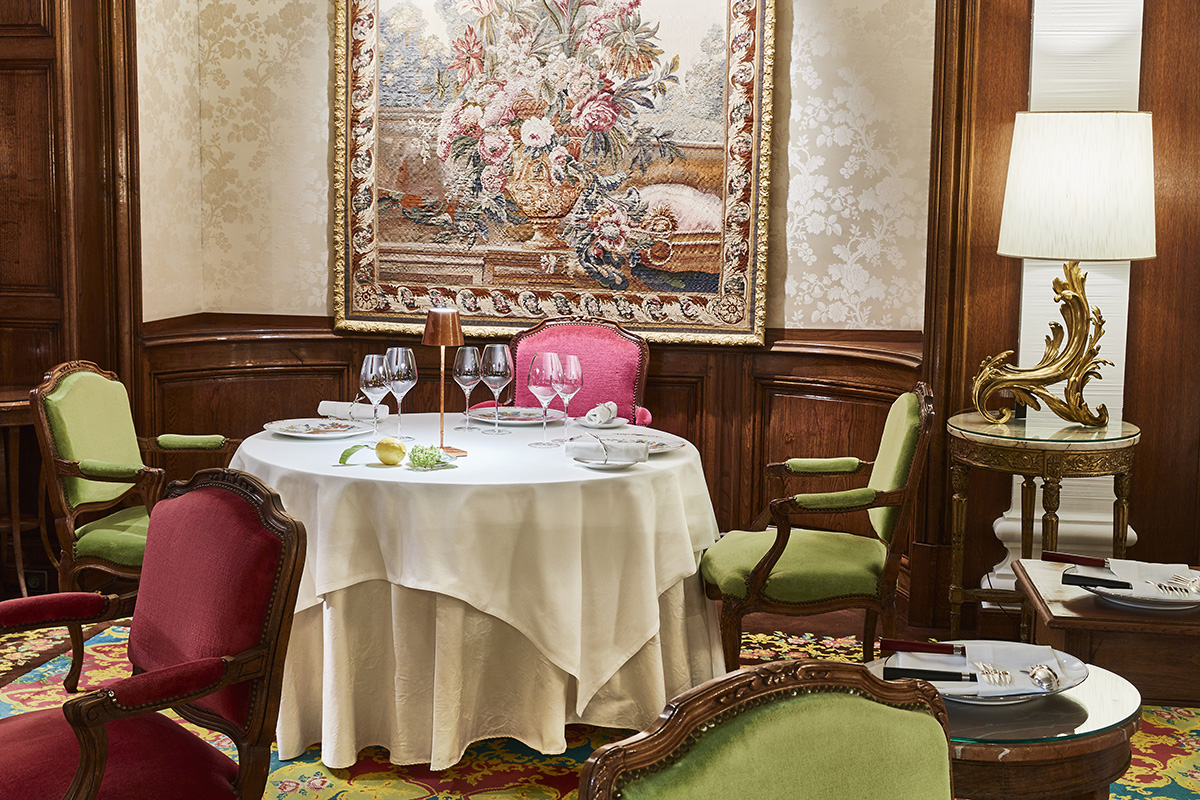
The hotel’s two Michelin-starred restaurant Le Chantecler
Meanwhile you can hone your Riviera as it suits you; there’s live music every night on the Terrace, which looks out onto the Promenade des Anglais, the classic curved boulevard looping along the Mediterranean seafront; or disappear into old-world elegance in the two Michelin-starred Le Chantecler restaurant, with its 18th century grandeur.
Read more: Ruinart x Jonathan Anderson’s pop-up hotel in Notting Hill
Getting Horizontal
There are different styles of room as well as different price-categories. Decor in the rooms is a blend of classical and super-contemporary with suitably artistic touches in fixtures, fittings and funky wall coverings; meanwhile a sea view junior suite transports you to a time when the French riviera was pretty much the only seaside destination for anyone wealthy enough to visit on their Grand Tour, with rich classical furnishings.
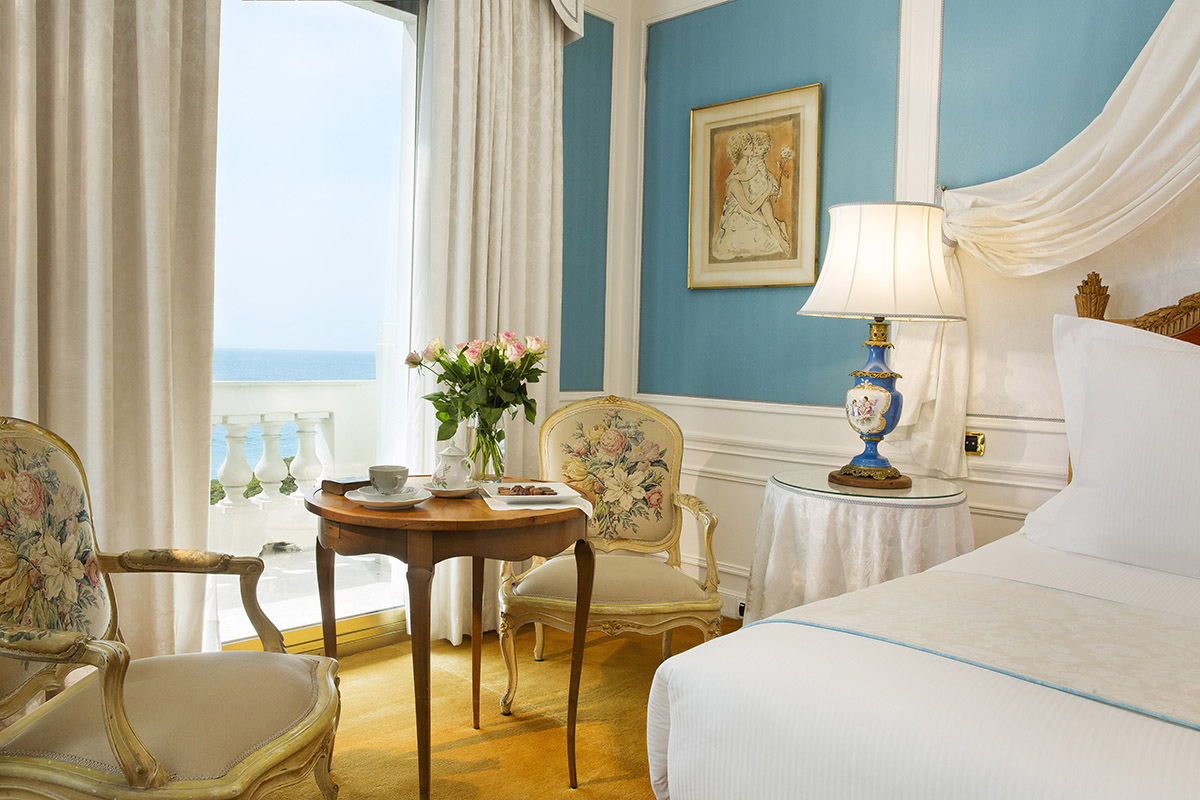
One of the luxurious suites at Le Negresco
Flipside
Nice is a city with a rich cultural programme, and teeming with restaurants, bars, museums, gardens and artisanal shopping. The Negresco is the seafront hotel literally at the heart of it all, so it’s not a place to be if you want to be away from the world. But for a few nights of summer living, we love it.
Rates from: €155 per room ($200/£150)
Book your stay: hotel-negresco-nice.com
Darius Sanai
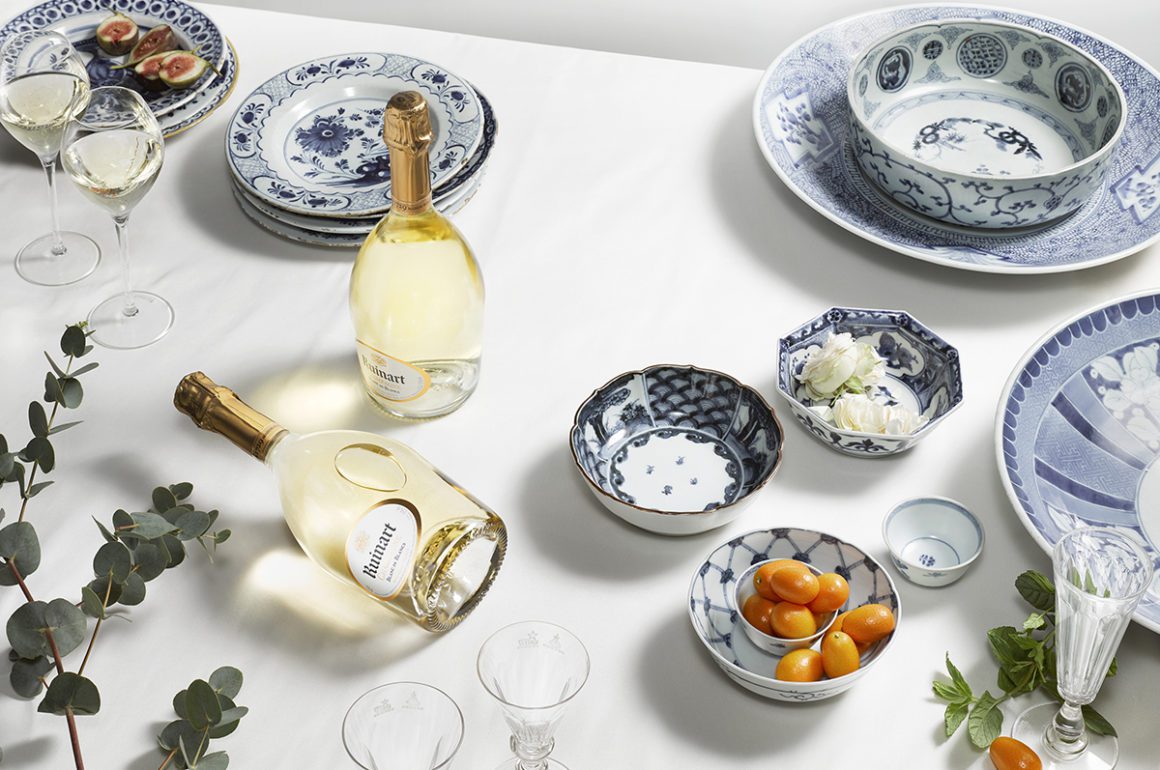
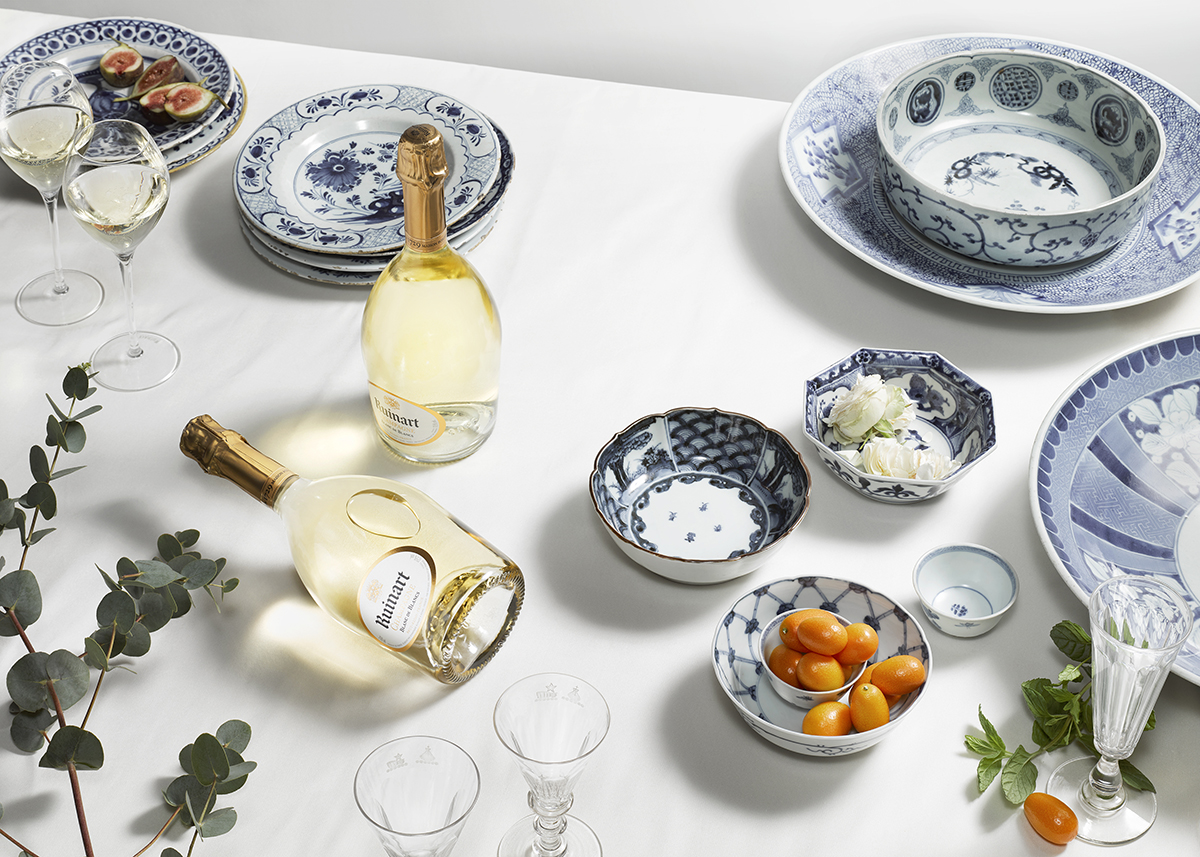
Hotel 1729, a one-bedroom hospitality concept designed by Ruinart x Jonathan Anderson
This week, Ruinart opens the doors to a one bedroom luxury hotel concept created in collaboration with fashion designer Jonathan Anderson
Designer Jonathan Anderson outside Ruinart Hotel 1729
Last year, it was designer Tom Hingston and Primrose Hill. This year, Ruinart’s pop-up hotel is the creation of fashion designer Jonathan Anderson inside a Notting Hill townhouse. Named Hotel 1729, guests can check-in for a one-night only experience hosted by the champagne house’s Maître D’, Olivier Livoir.
Follow LUX on Instagram: the.official.lux.magazine
The dining experience is the focal point of the evening, designed to cater for up to eight guests in total, who will be taken on a sensory culinary exploration through Ruinart‘s history. Whilst the exact details of Anderson’s concept are kept strictly secretive, his main inspiration comes from a recent visit to the Ruinart Maison, and the 1735 artwork Le Déjeuner d’huîtres (The Oyster Lunch) by Jean-François de Troy which includes the first appearance of a champagne bottle in painting.

‘Le Déjeuner d’huîtres’ (The Oyster Lunch) by Jean-François de Troy (1735), Musée Condé (Chantilly, France)
The menu itself has been specially created to perfectly pair with Ruinart cuvées by Chef Luke Selby, who previously worked as head chef at Ollie Dabbous’ HIDE. All drinks and courses will be served using antique glassware and ceramics from the 17th century, the same era in which Ruinart was established.
Curious? So are we.
Hotel 1729 in Notting Hill, London is open from Thursday 4 July until Sunday 14 July 2019. For more information visit: ruinart.com/en-uk/news/ruinart-hotel-1729
Rates: £1200 for a one night stay for two people including chauffeur transfers in partnership with BMW, dinner, breakfast and a selection of Ruinart Cuvées. Hotel residents can invite up to six guests to share the dining experience at an additional £160 per person.
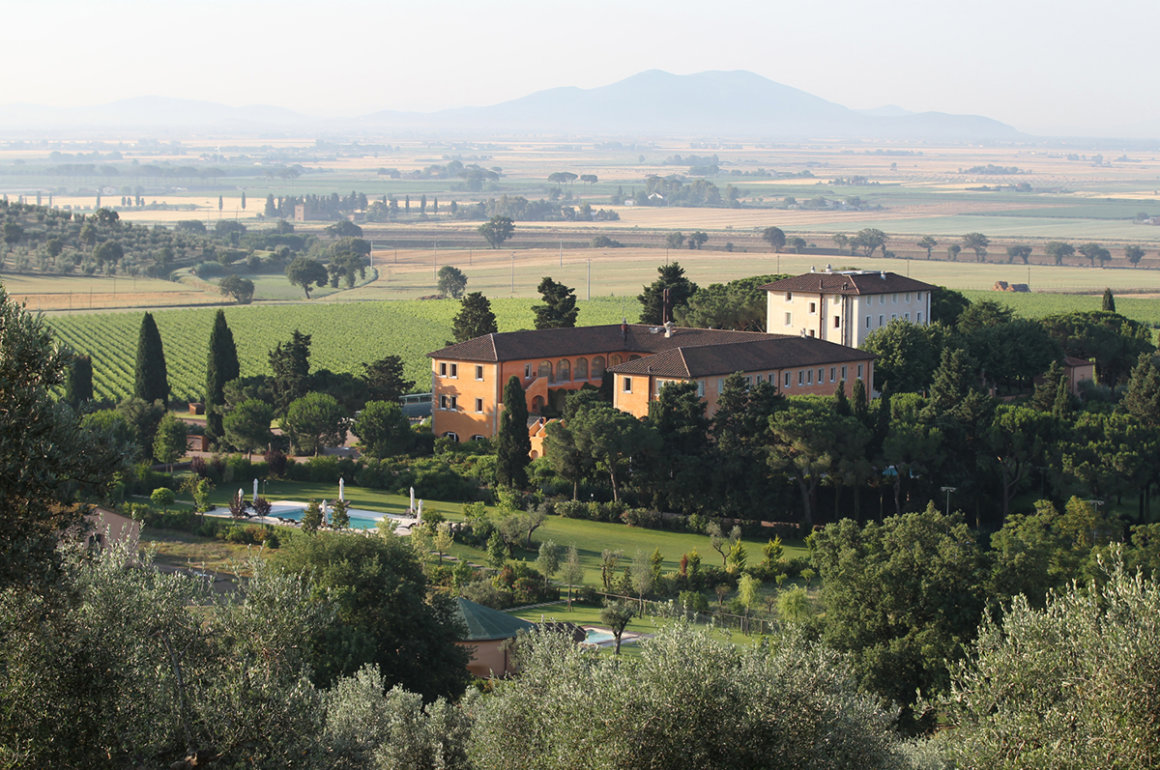
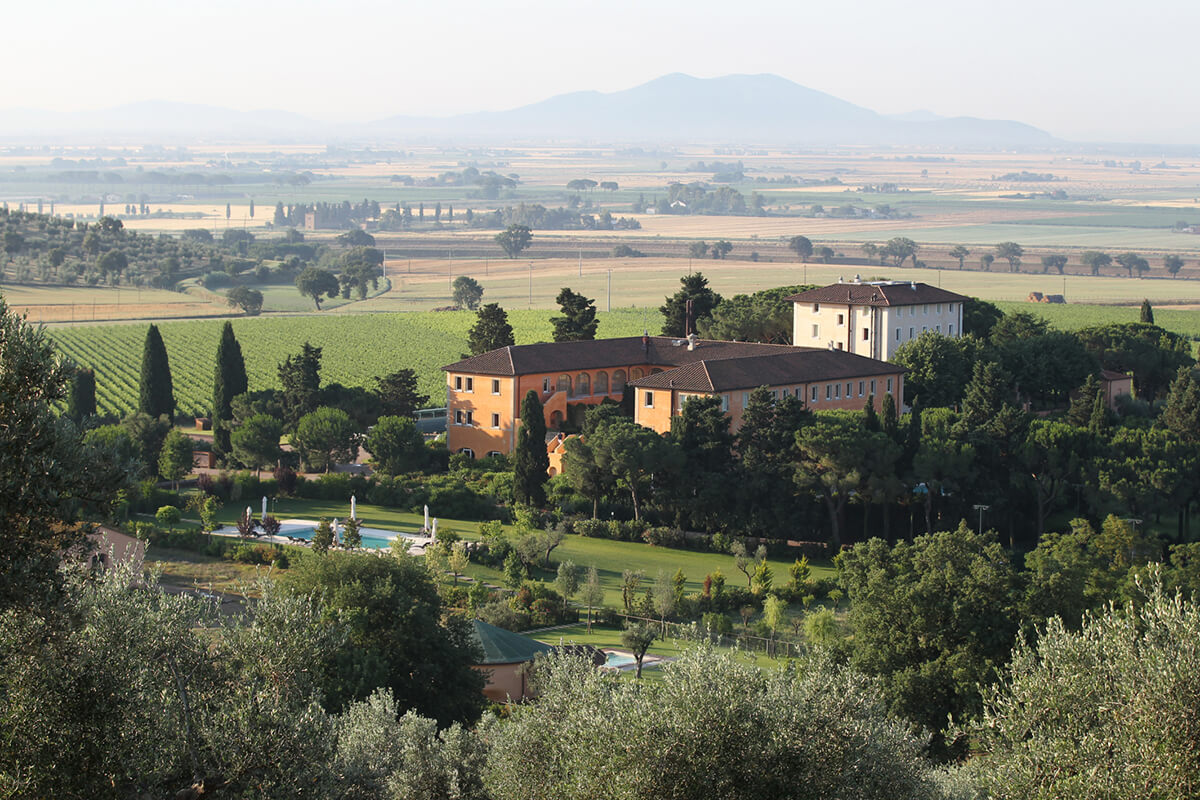
Once the residence of the Grand Duke of Tuscany Leopold II, L’Andana sits amongst olive groves and vineyards
Why should I go now?
Long, bright days, undulating fields of wild flowers and balmy evenings. Tuscany is beautiful all year round, but many locals will tell you that June is when the landscape is at its most spectacular. You’re also ahead of the crowds. Come July the region is flooded with tourists, and temperatures are soaring – admittedly both are more urban issues, but if seclusion and romance is what you’re after, you’re best to avoid the height of peak season even in rural areas.
Follow LUX on Instagram: the.official.lux.magazine
What’s the lowdown?
L’Andana is located in the Maremma region of Tuscany, roughly a 2 hours drive from Pisa and Florence, and a 10 minute drive from the pretty seaside town of Castiglione della Pescaia, and the beach. If you’re keen to explore, it’s pretty much essential to hire a car, but there’s no real need to leave the hotel grounds; there are acres of fields, an outdoor swimming pool and a small, but lovely spa with a heated pool, sauna, steam room and jacuzzi.
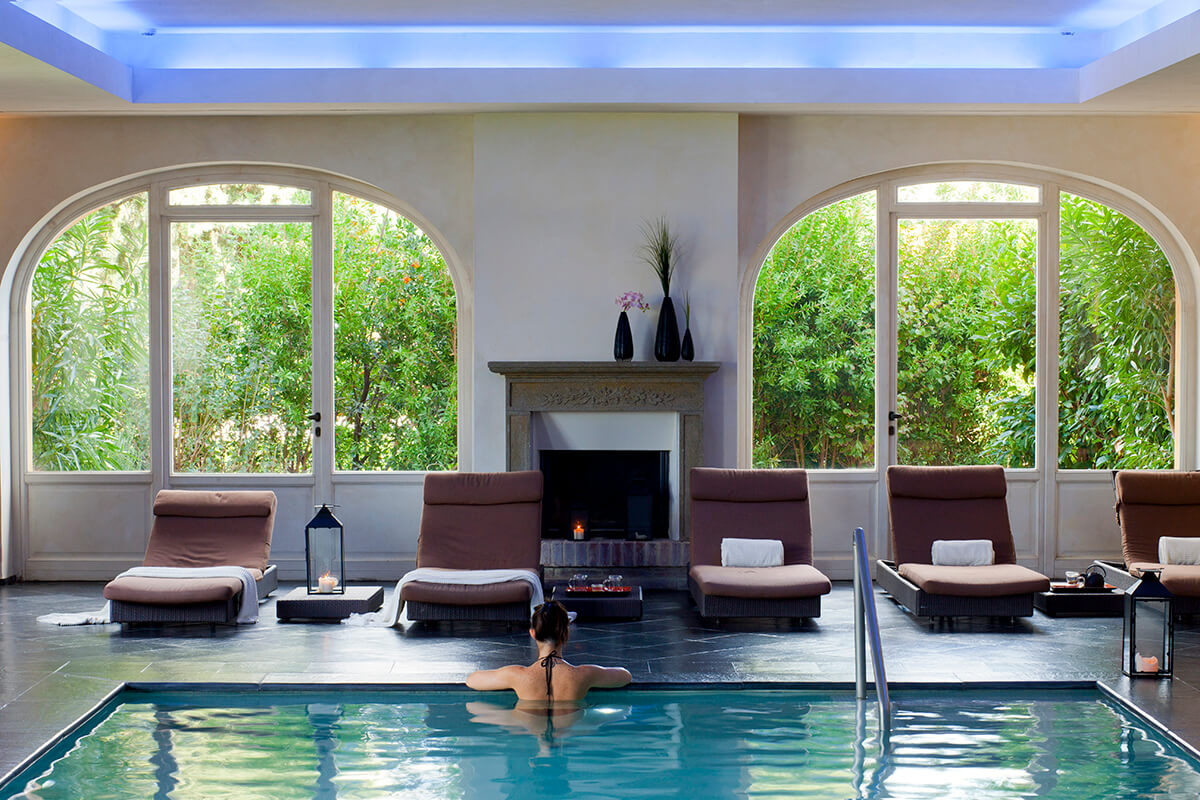
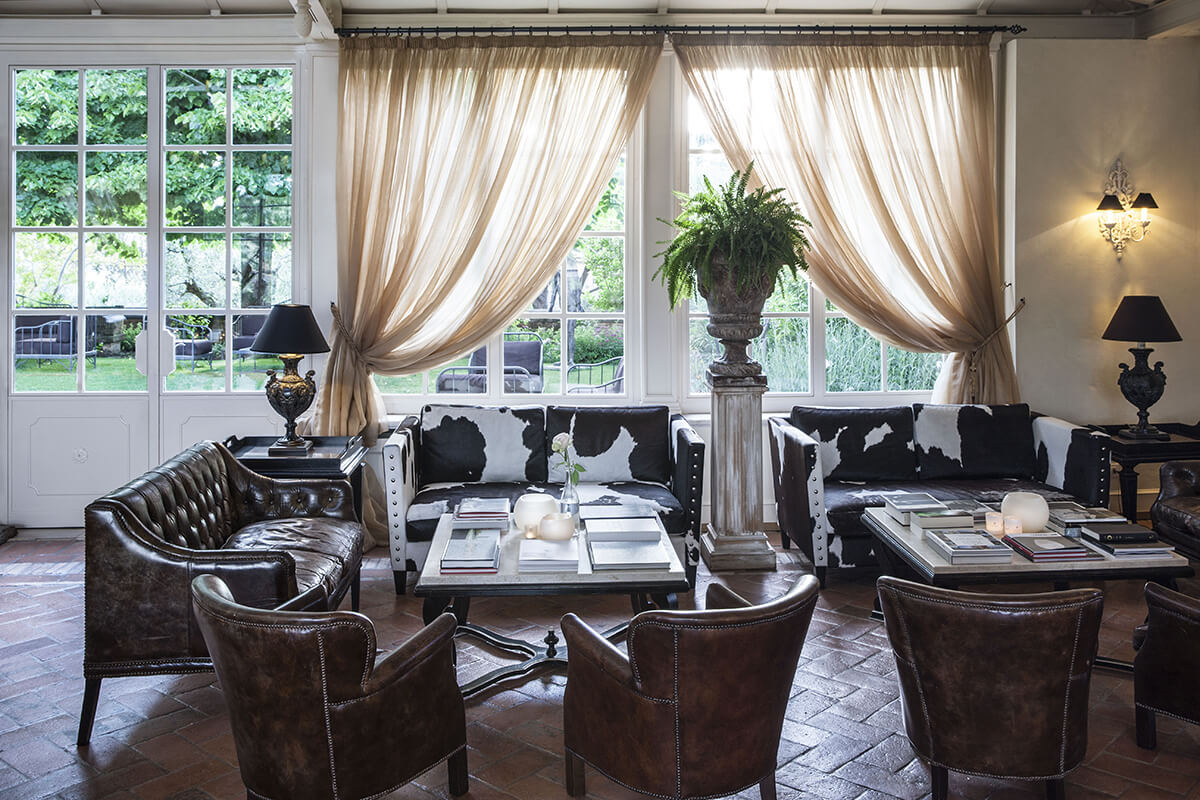
There are lots of spaces for relaxing, such as the spa (above) and the reception lounge, a conservatory which joins the two villas
The main villa was once the residence of the Grand Duke of Tuscany Leopold II and the traditional Tuscan grandeur has been maintained to give the whole place an elegant, stately feel. There are lots of cosy corners for relaxing and enough space that it never feels crowded. The reception lounge is one of our favourite spots come six o’clock when the fires are lit and the barman takes up his position to mix cocktails.
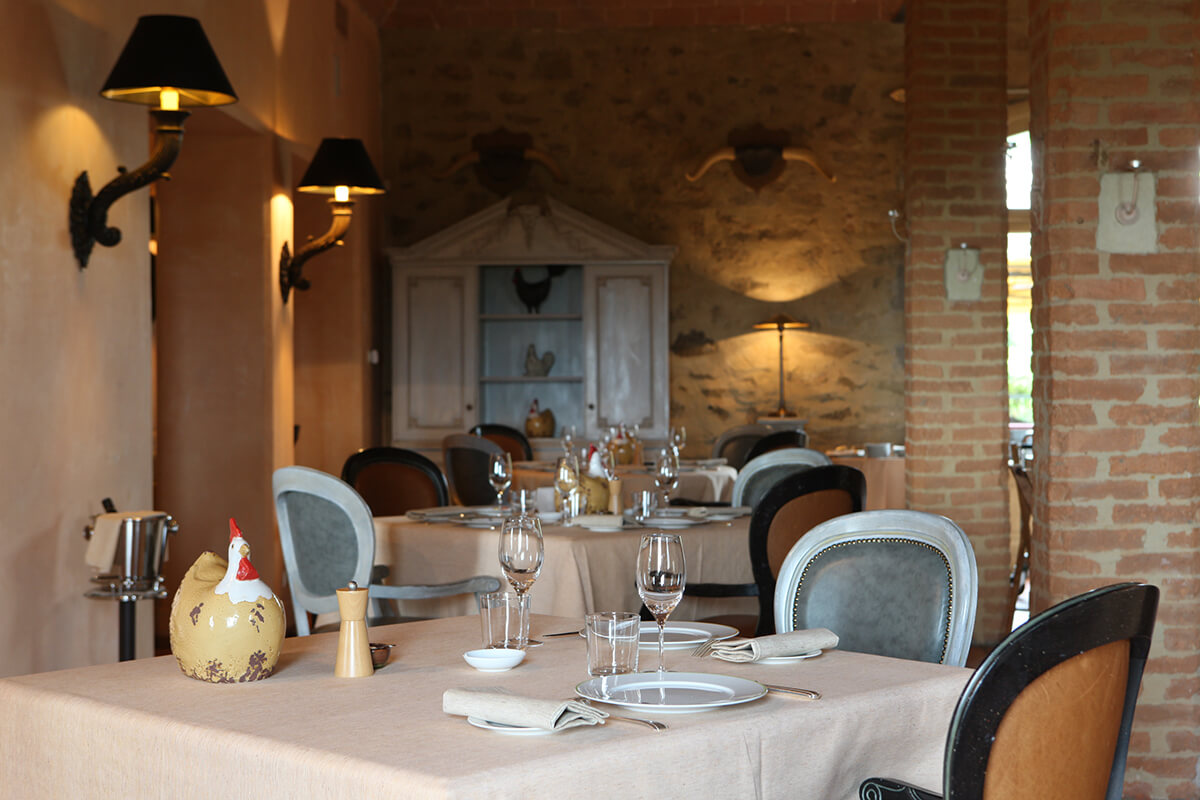
Michelin-star restaurant La Trattoria Enrico Bartolini
The Michelin-star restaurant La Trattoria Enrico Bartolini is well-known in the area and reservations are a must even for hotel guests. The tasting menu is superb and creative; tables are treated like canvases with each course artistically arranged on a crisp linen table cloth. The Porto Santo Spirito prawns served two ways (raw and fried) is our highlight along with all of the various desserts. Guests can also take part in cooking classes here, whilst Restaurant La Villa offers casual dining in the gardens or conservatory at the front of the villa.
Read more: Masseto’s spectacular new underground winery
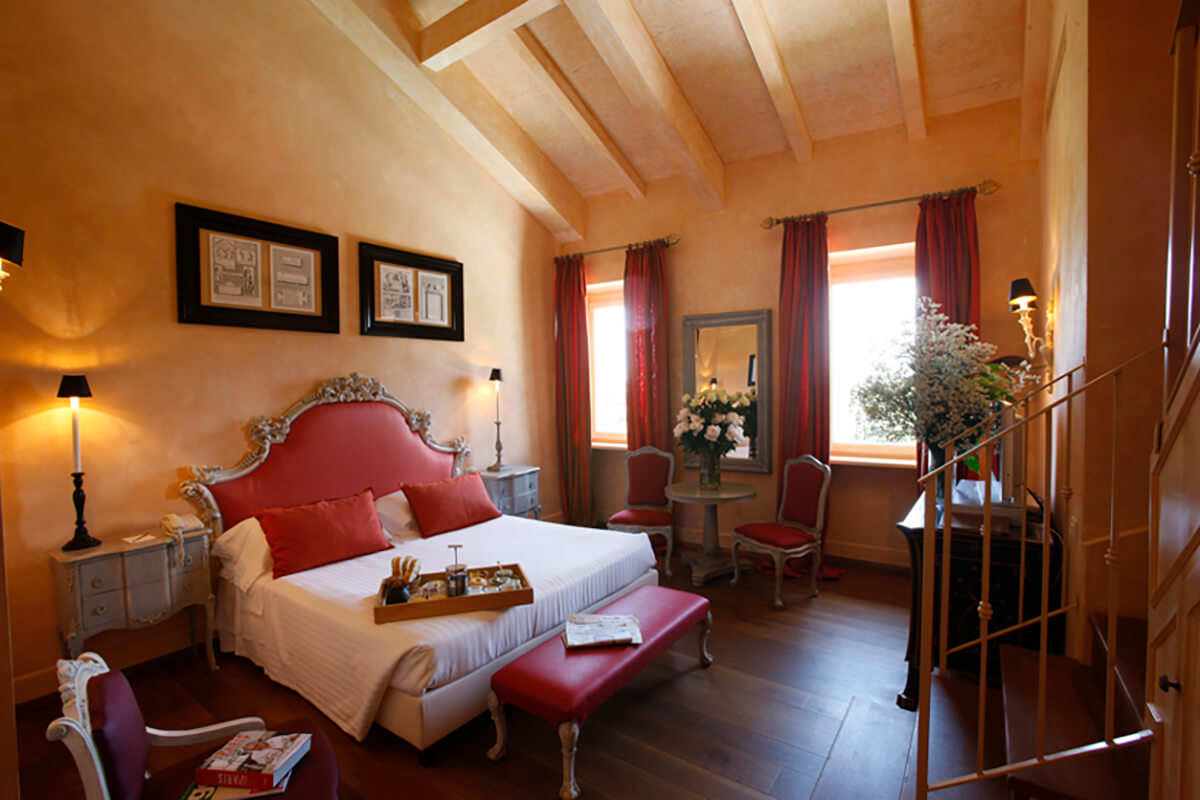
Bedrooms are decorated in traditional Tuscan grandeur with antique furniture
Getting horizontal
The rooms are simply, but beautifully decorated with vintage furniture and fine fabrics. The best are those on the top floor of the main villa for their sweeping views of the olive groves, vineyards and rolling hills. We loved lying with the shutters open, basking in the bright morning sunshine.
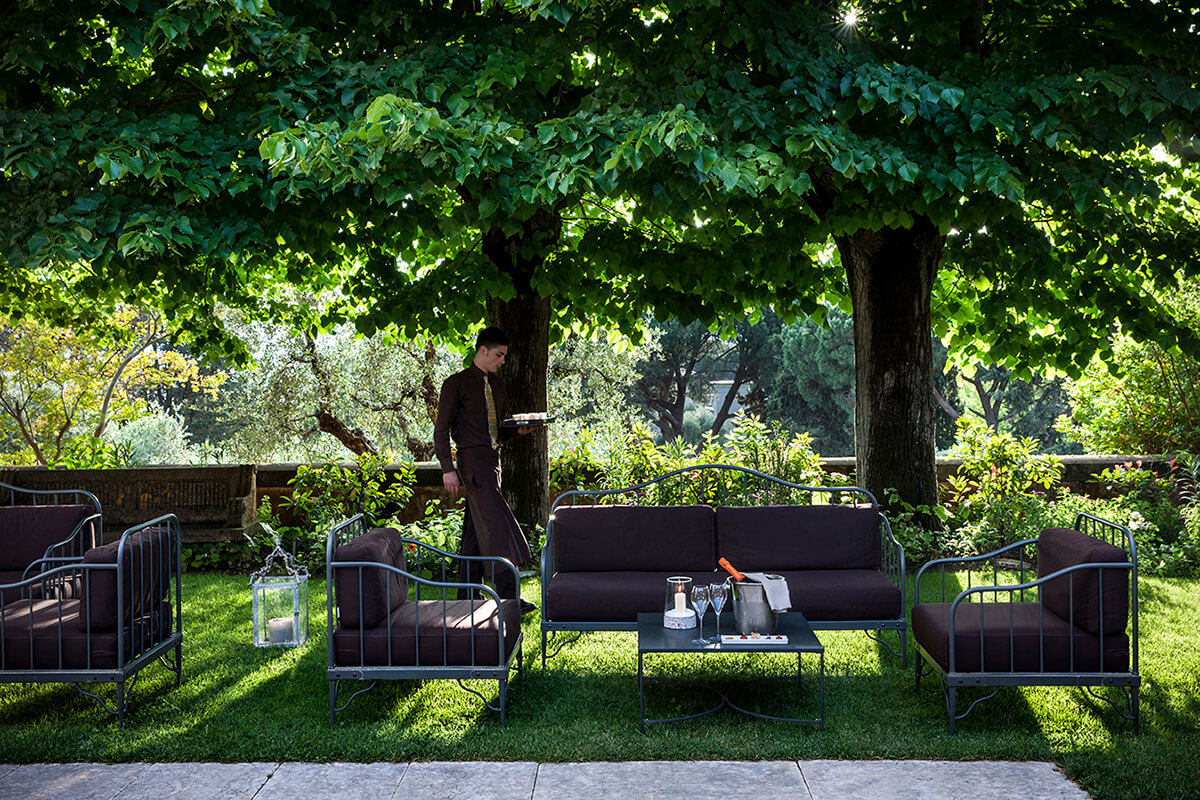
Flipside
At this time of year, there are a surprising number of mosquitoes buzzing around which rather spoils the bliss. By the pool there’s a little table with a bottle of repellent (and suncream) for guests to use, but still, it’s worth being prepared.
Rates from: €440 per night based on two sharing, including breakfast ($500/£400)
To book your stay visit: andana.it
Millie Walton
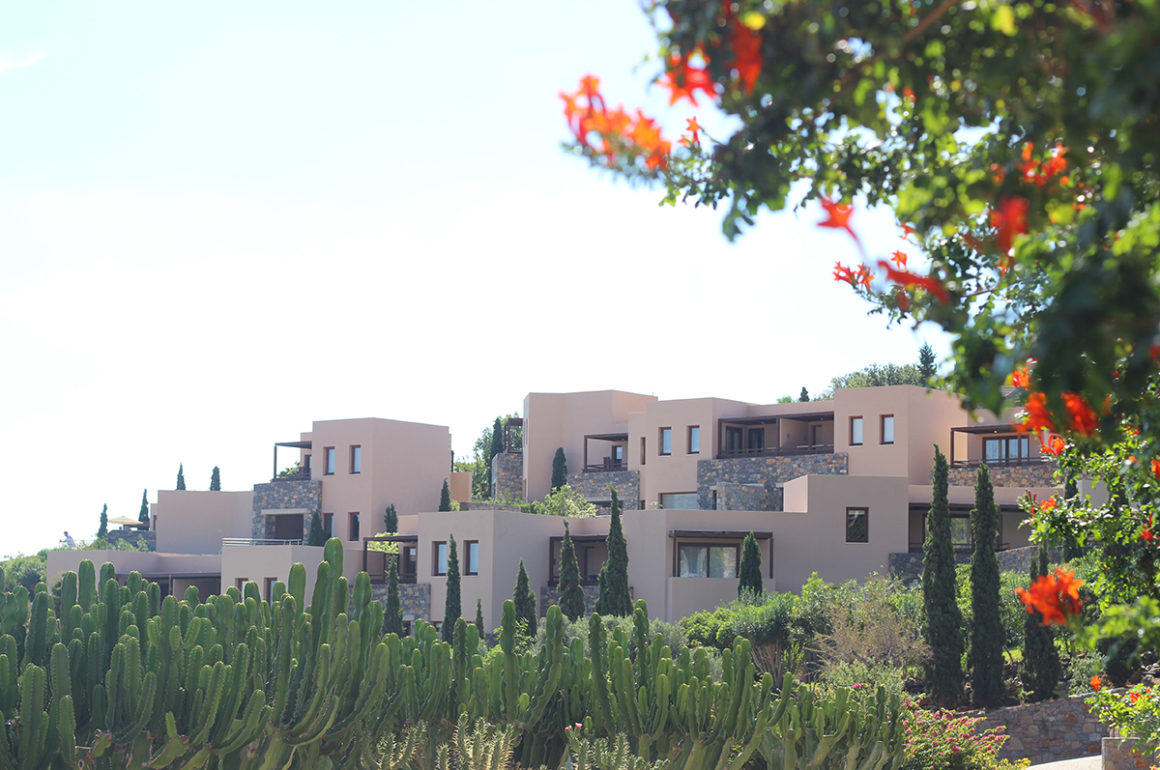
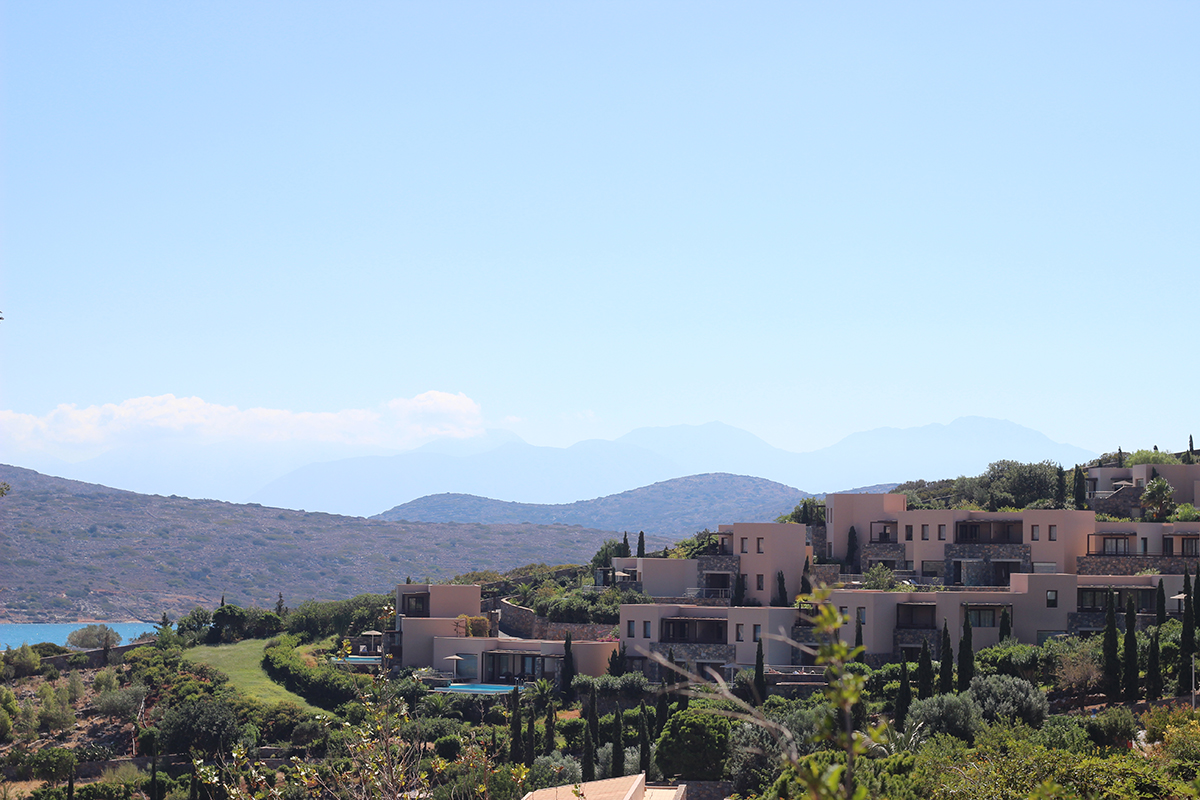
Blue Palace sprawls up a rugged hillside with spectacular views over the ocean
Why should I go now?
Most people go to the Greek islands in summer, but springtime is a far more pleasant time to visit. It’s breezy and warm, rather than insufferably hot (right now, for example, temperatures are in the low to mid twenties) and much less crowded. Plus, Crete is at its most beautiful and fragrant with the wild flowers in full bloom.
Follow LUX on Instagram: the.official.lux.magazine
What’s the lowdown?
Blue Palace sits tucked away in the Gulf of Elounda, roughly an hour’s drive from Heraklion Airport. It’s a big resort, with hundreds of rooms sprawling up the side of rugged slope, but since its built entirely from local stone, it blends beautifully into the landscape and has the appearance of a pretty hillside village. Guests are driven up a private road to the impressive open-air lobby, with huge arches framing the ocean and a long pool that comes halfway inside. This is just one of the many pools at the hotel, many of the rooms have their own infinity pools and there are several down on the beach. As you wander through the grounds you have the impression of being surrounded by soothing blue – the pools, sky and ocean.
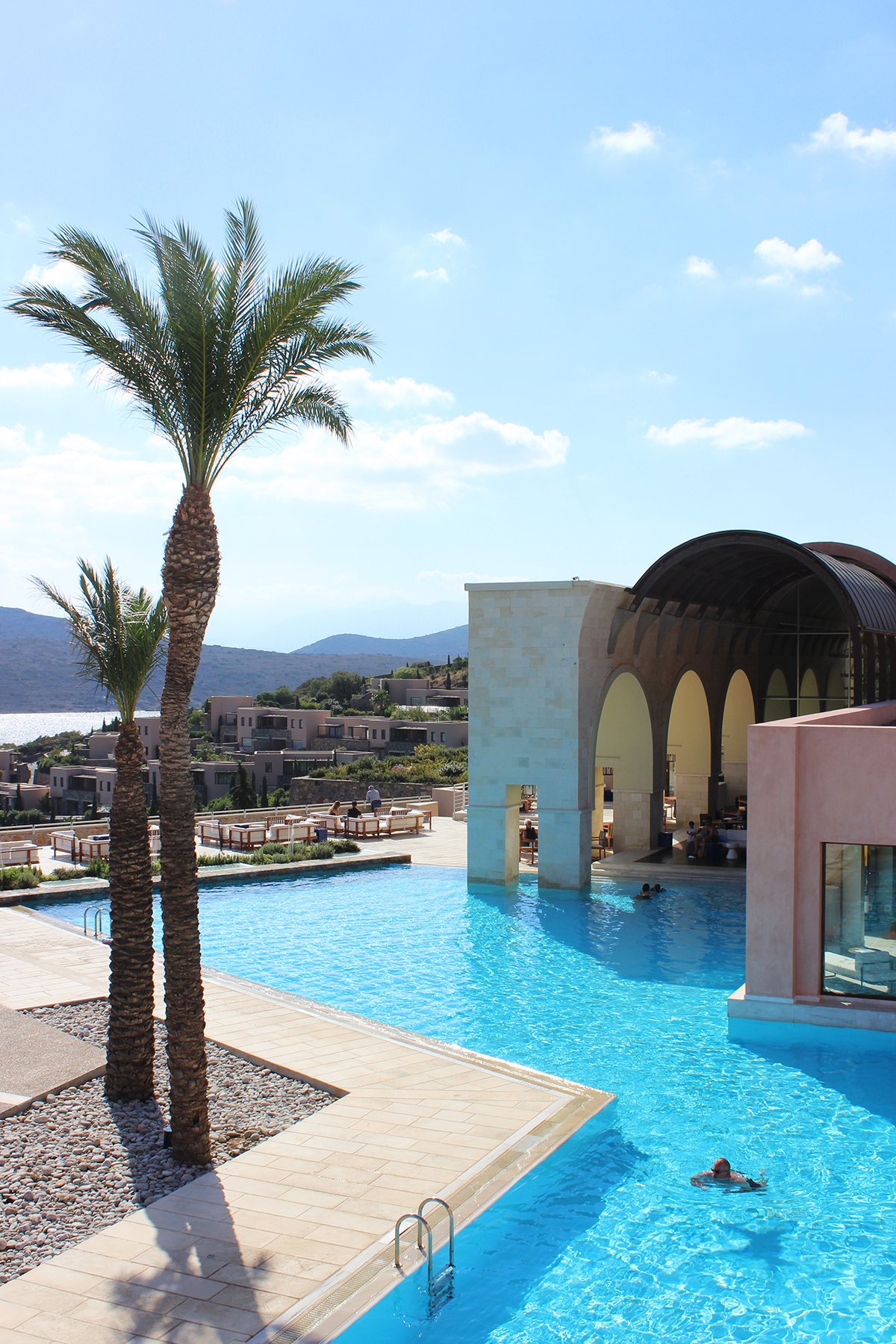
Blue Palace’s grand lobby area and one of the resort’s many swimming pools. Photography by James Houston
In the distance, lies the historic Spinalonga Island, an ex-leper colony and UNESCO World Heritage site. It’s close enough to swim to (or so we’re told), but we take a speed boat accompanied by a wonderfully passionate guide, who tells us that she escorted Lady Gaga on the same trip not so long ago. Other activities include water-sports and various cultural trips. The wine tasting on-board a traditional wooden caïque was one of our highlights, where we got to sample local wines and cheese whilst floating on the azure waters of a secluded cove. On the private beach, suite guests are granted access to the VIP area where they given baskets containing fluffy towels, magazines and refreshing wipes. There’s also a spa with a hammam, sauna, indoor swimming pool and treatment rooms.
Read more: 6 artists creating experiential art
True to Greek culture, the resort is hugely passionate about food with five excellent restaurants to choose from. Anthós is the most romantic (reserve a table on the terrace to dine alfresco and for the best views), but Blue Door is the most fun. Housed inside an old fisherman’s cottage right on the edge of the sea, its in the style of a traditional Greek taverna and serves delicious, authentic Greek cuisine. On the feast nights, there’s live music and dancing. The food comes in vast quantities with an array of delicious dips, breads, fresh fish and “antikristo” lamb, which is slowly cooked for five hours above a bonfire. Be warned: entrance to the restaurant is granted after a large shot of ouzo and guests tend to be coerced into dancing later in the night. This is all part of the wonderful Greek hospitality that makes the resort’s staff some of the warmest, most genuine that we’ve encountered.
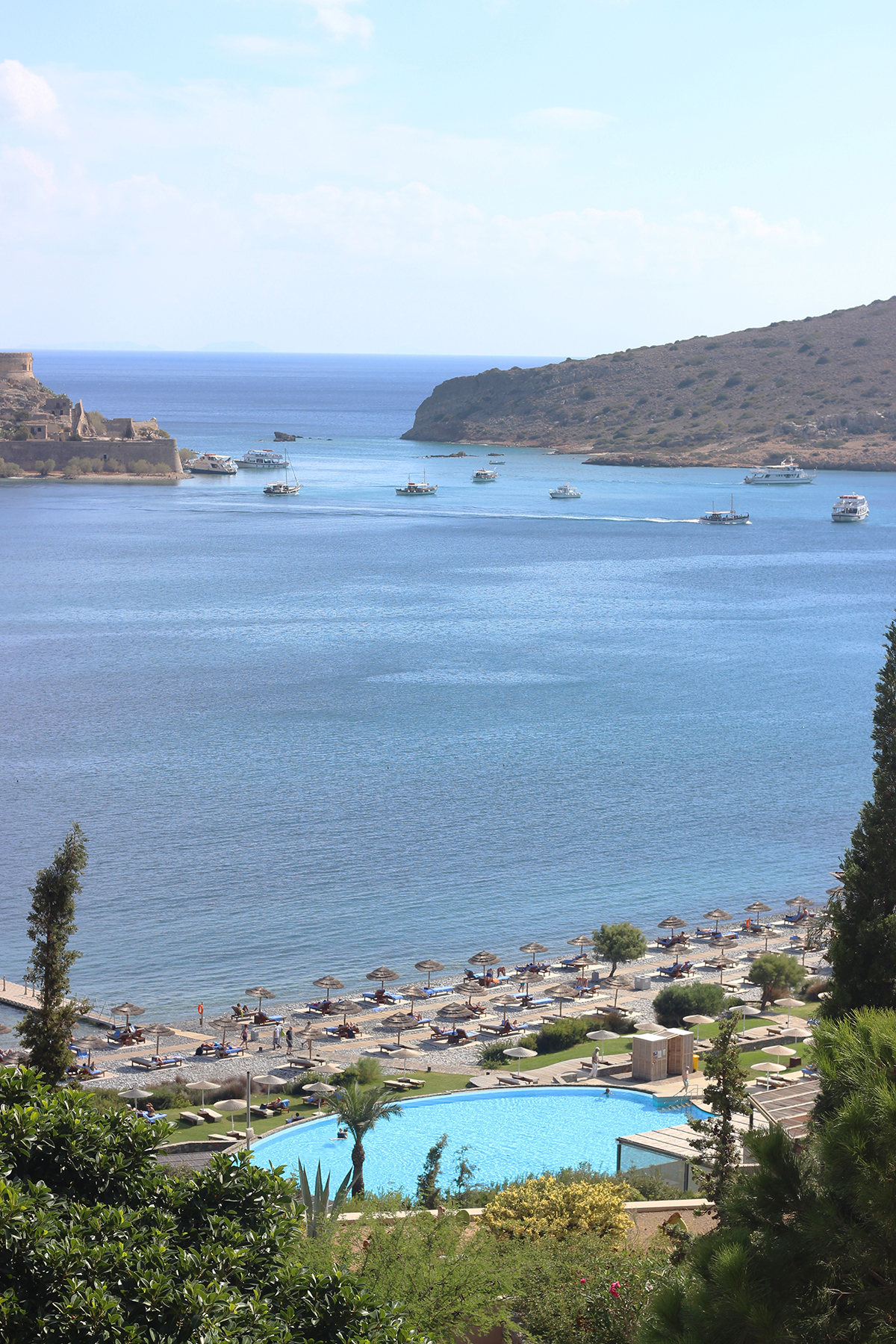
The resort’s private pebble beach with views of Spinalonga island (to the left) in the distance. Photography by James Houston
Getting horizontal
Our suite, named Santorini after the blue and white isle, followed the same theme of nautical colours with elegant, contemporary furnishings, a separate living room, bedroom and a secluded courtyard with a private pool. It was the perfect balance of luxurious and homely.
Flipside
The only thing that felt inconsistent with the resort’s relaxed vibe was the VIP area at breakfast, where suite guests are led to tables on a roped-off platform. It felt a little too exhibitionist for our tastes, and if necessary, it could have been arranged more subtly as it was on the beach.
Millie Walton
Rates: From 235 EUR for a Superior Bungalow Sea View room incl. taxes & breakfast (approx. £200 / $250)
Book your stay: bluepalace.gr
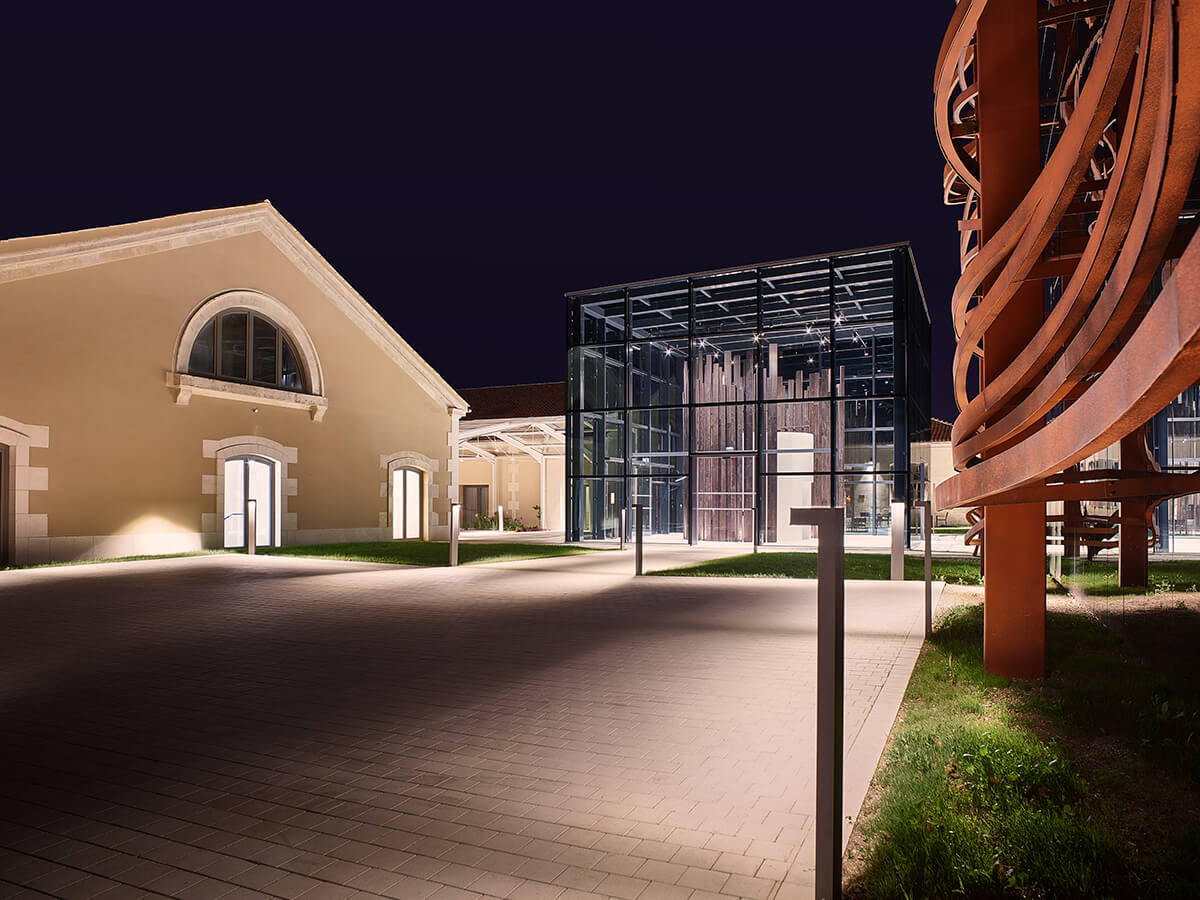
The spectacular architecture of the Hôtel Chais Monnet, designed by Didier Poignant
A new kind of luxury hotel in Cognac sets new standards of comfort, cuisine and architecture for those exploring the region that’s been in the shadow of nearby Bordeaux for too long, says James Richardson
Le 1838, the hotel’s jazz and cognac bar
A short drive from the city of Bordeaux, the newly opened Chais Monnet is the swankiest hotel in southwest France and the first of a new breed of destination – the super-luxury auberge. The hotel and spa (and conference centre) are situated in and around a very expensively converted former cognac-aging warehouse by the Charente river. Lavishly designed by architect Didier Poignant, the hotel’s spectacular exterior complements the welcoming contemporary chic of the interior.
Follow LUX on Instagram: the.official.lux.magazine
The 92 rooms (and 15 apartments) are decorated with a sophisticated rustic charm, the spa features a 24-metre indoor-outdoor pool, and the jazz bar, in its own converted building, is hugely atmospheric. The greatest revelation is in the restaurants, in the former cognac warehouse itself, headed by Sébastien Broda, who earned a Michelin star for Le Park 45 in Cannes. There is a real Soho House vibe (not surprisingly, since owner Javad Marandi also owns the legendary Soho Farmhouse in Oxfordshire in the UK), with the cuisine both light and delicious – the memory of a super-umami fish pot au feu at Saturday brunch remains with us still.
Read more: The problematic stereotypes cast by the male nude in art
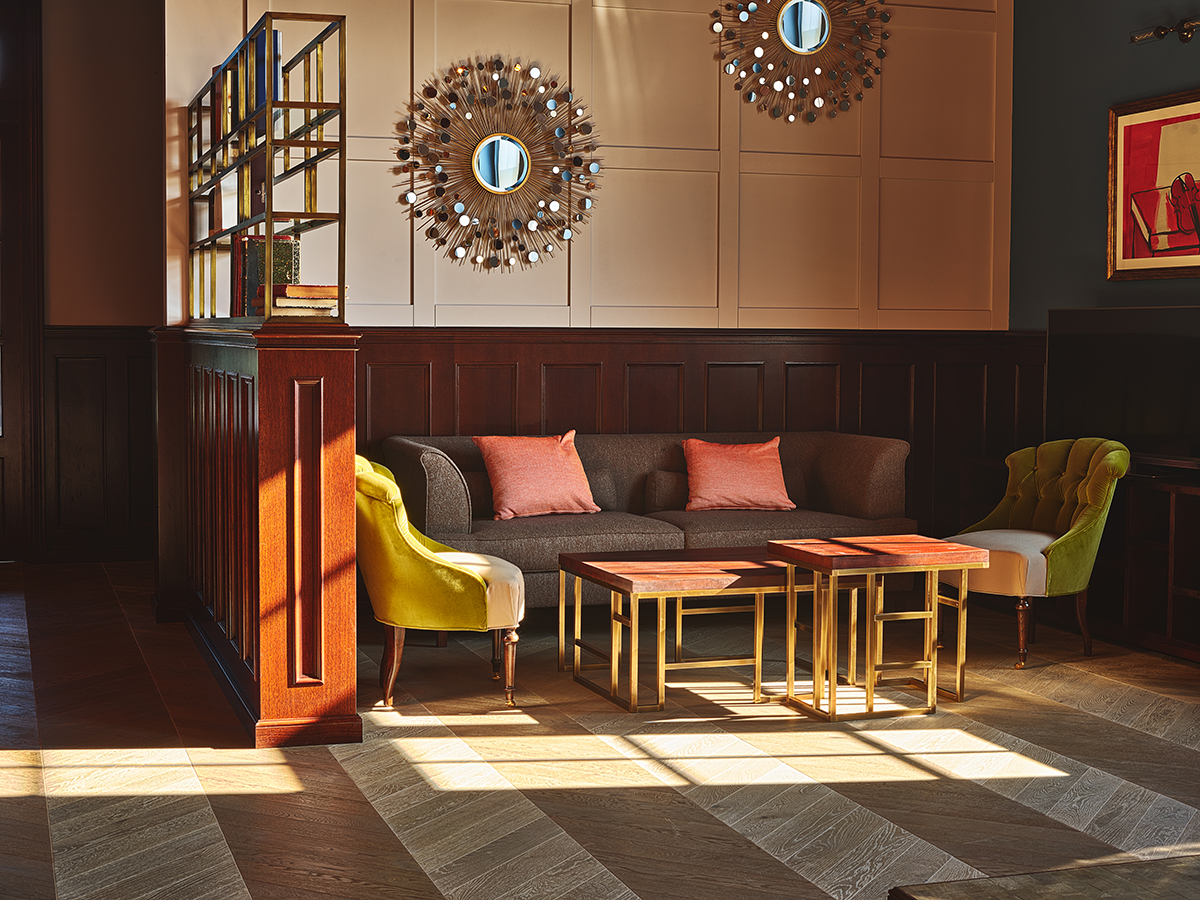
The hotel’s decor is casual contemporary luxe
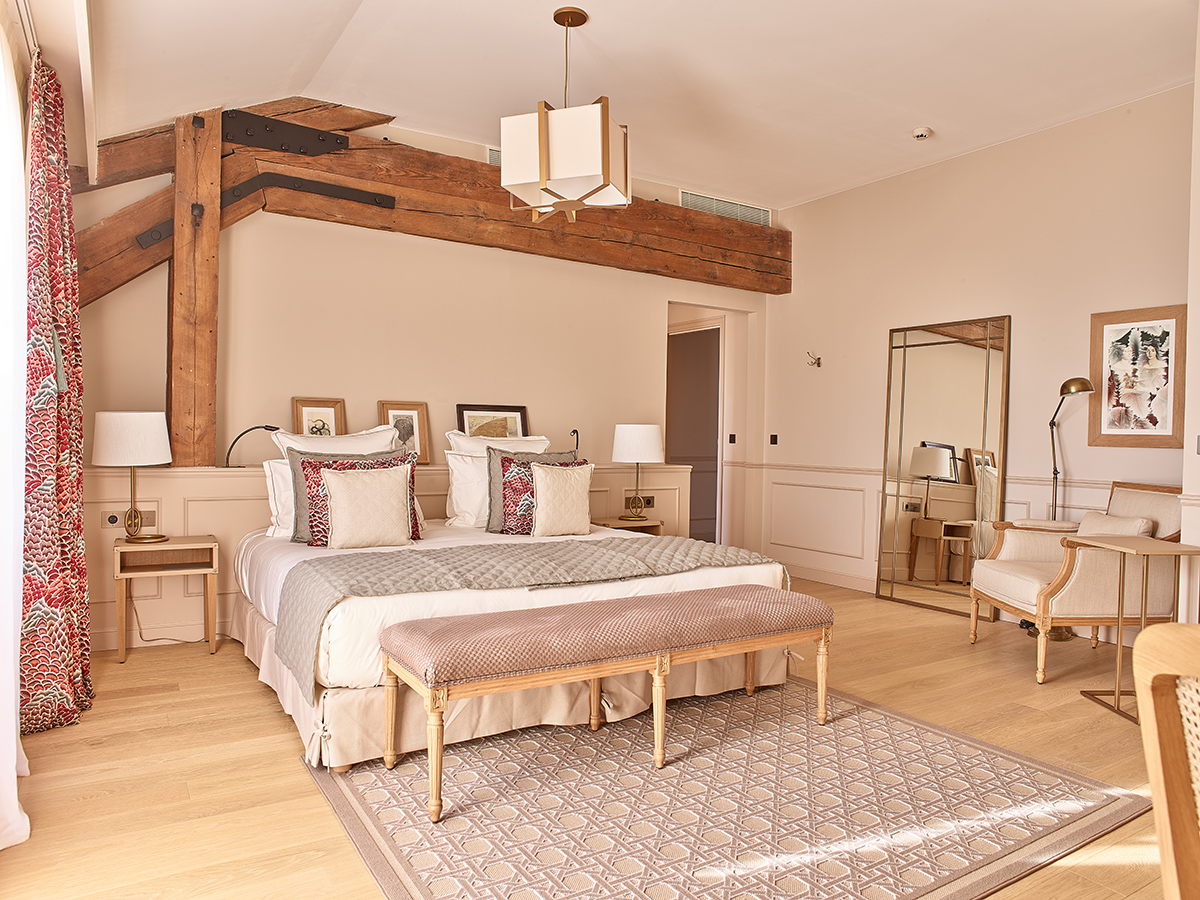
The guest rooms have been carefully incorporated into the original structure of the buildings
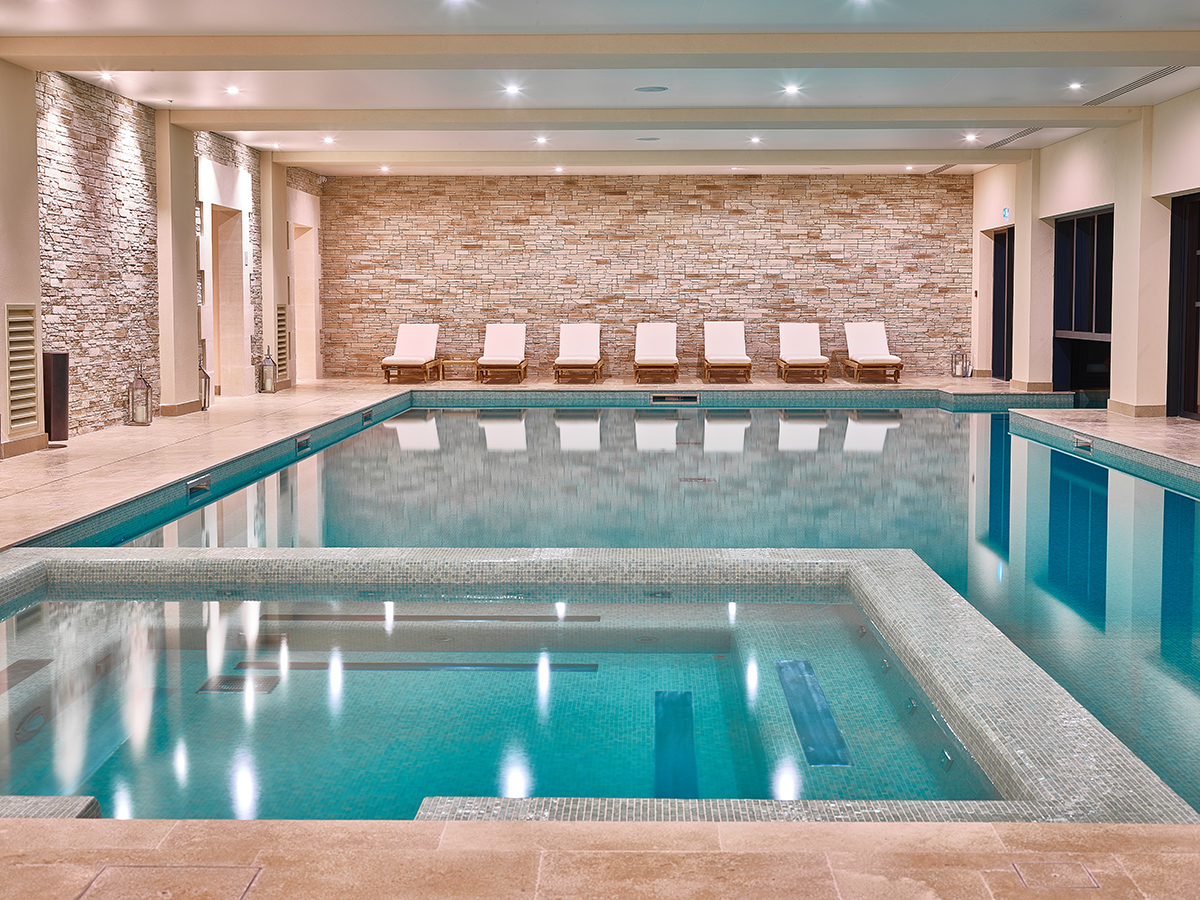
The indoor/outdoor pool in the spa
While it’s tempting not to leave the hotel, the experiences on offer in the area are compelling, from cycle tours along the river to driving to picnics in the local vineyards in a vintage car supplied by the hotel. Then there’s the serious business of tastings at the celebrated local cognac houses, such as Martell, Rémy Martin and Courvoisier, or sampling the wines of the great Bordeaux châteaux not far to the south.
For more information and to book your stay visit: chaismonnethotel.com
This article was first published in the Winter 19 Issue.
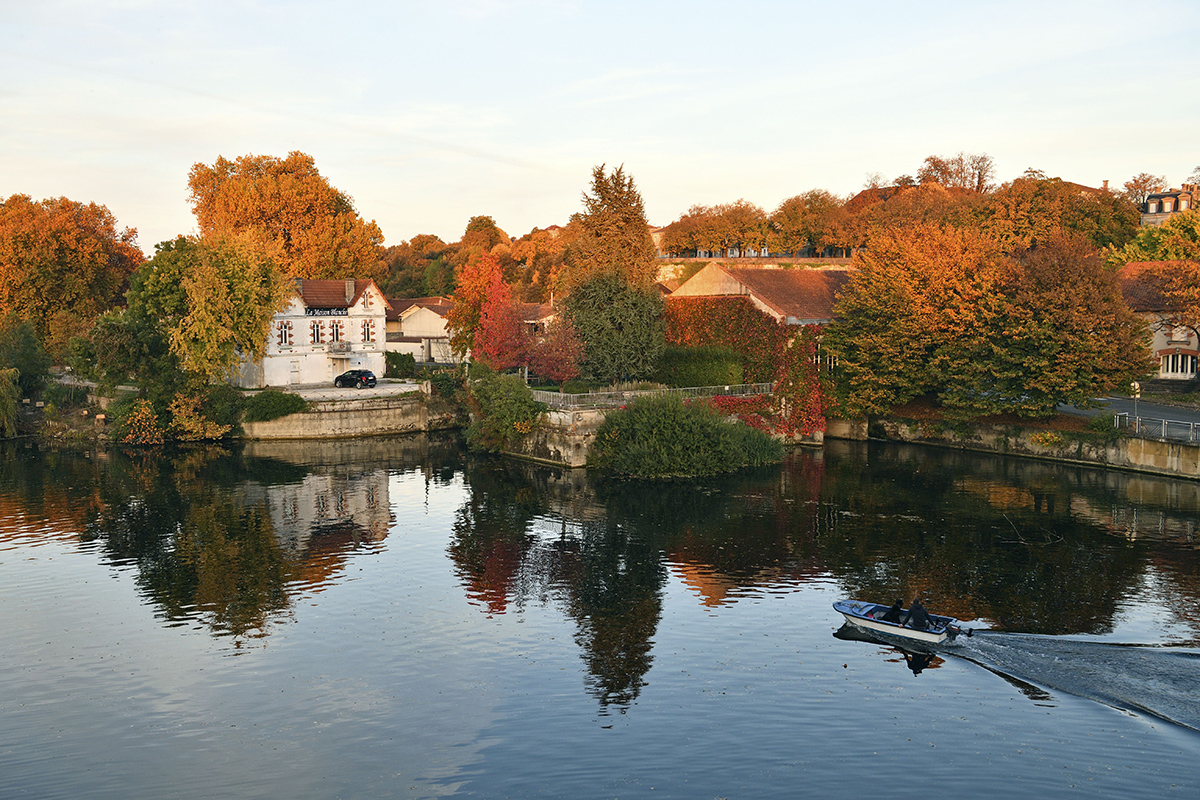
The Cognac region offers bucolic summertime relaxation and historical sites aplenty
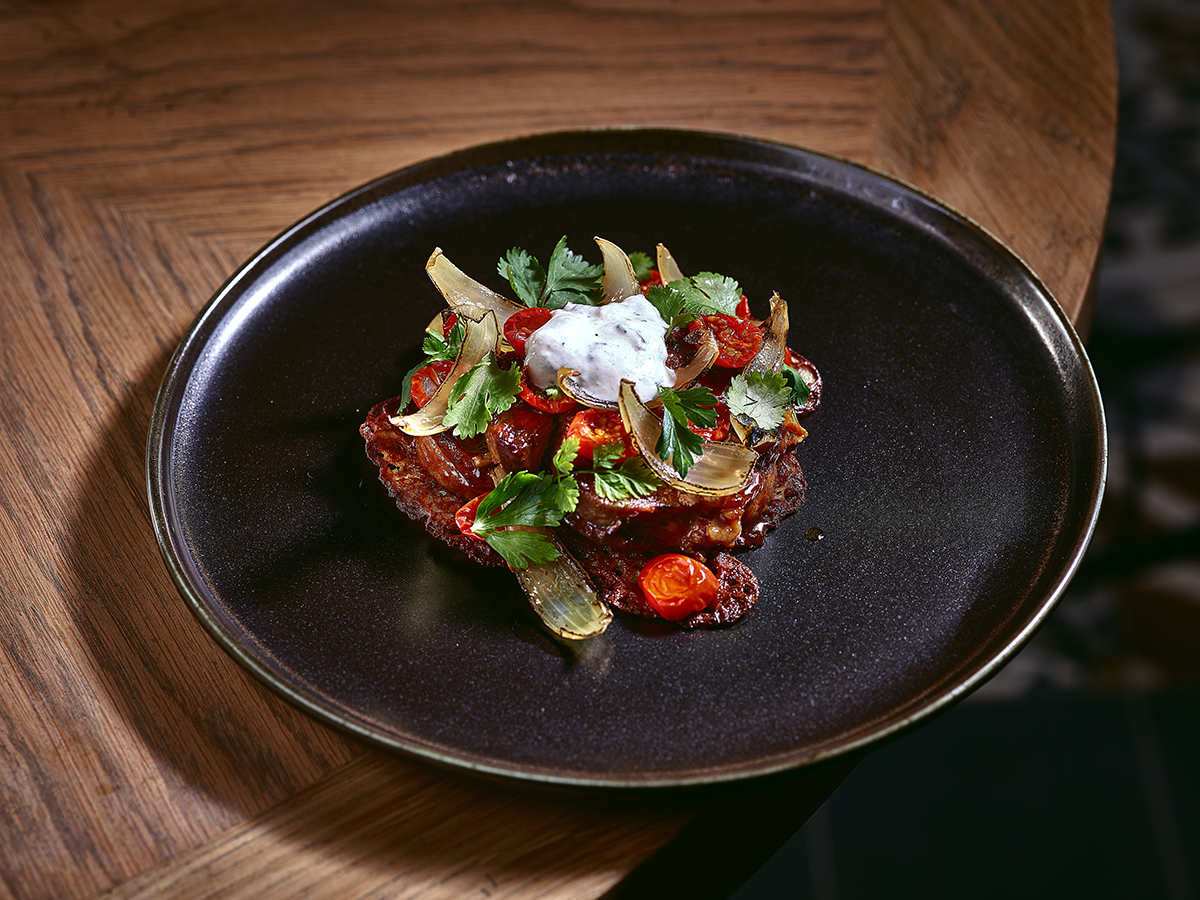
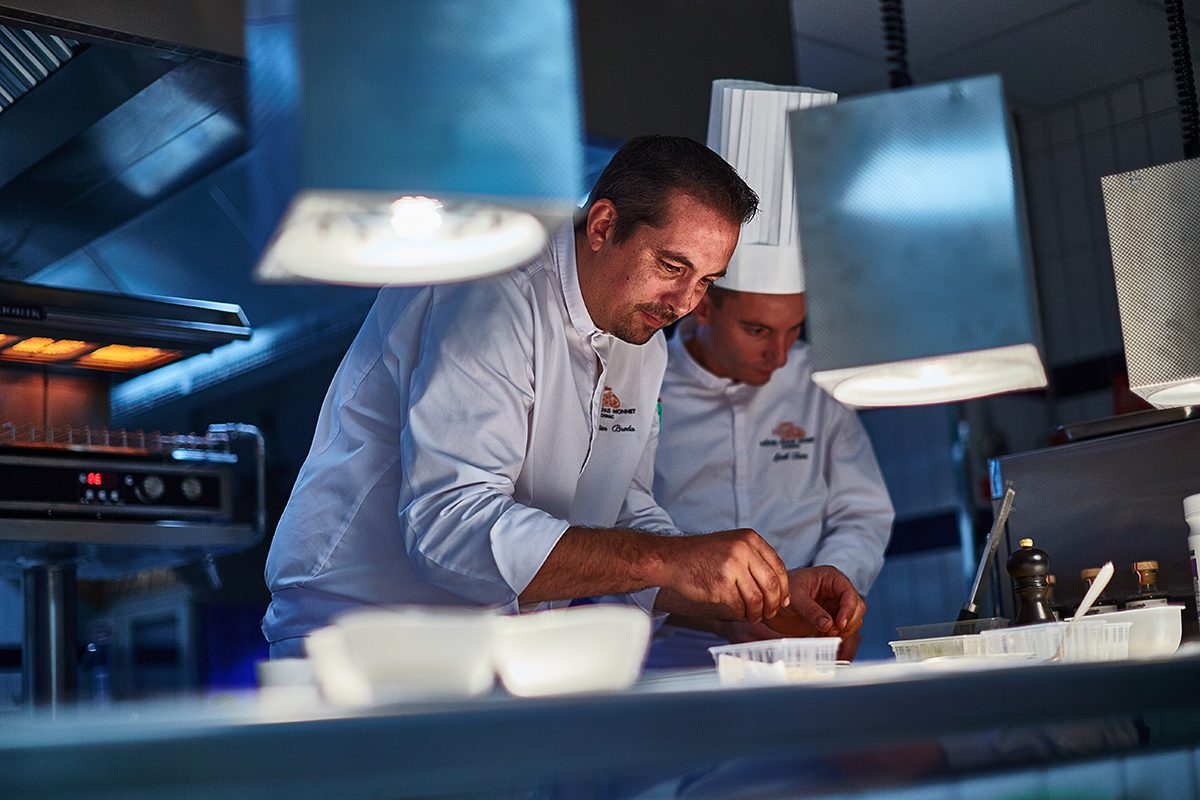
Chef Sébastien Broda in the kitchens, and one of his dishes that use locally sourced produce and that are served in the hotel’s Les Foudres and La Distillerie restaurants
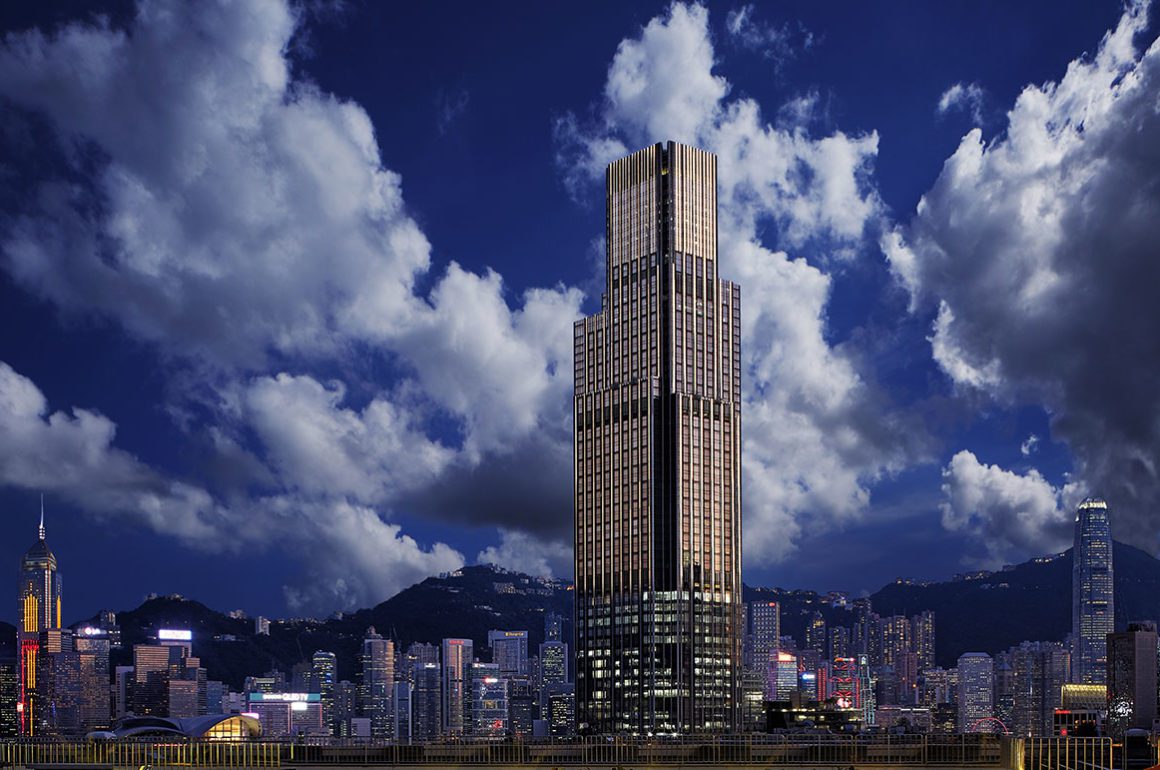
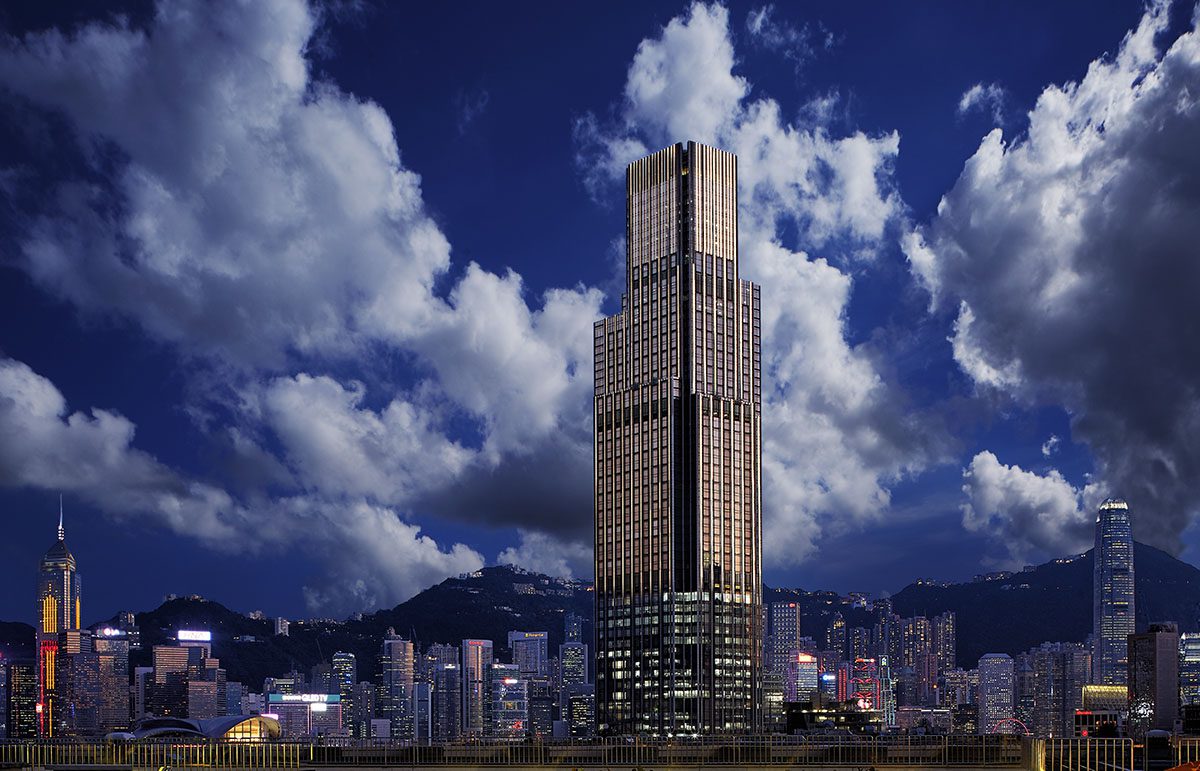
The new flagship Rosewood hotel in Hong Kong
Hong Kong’s brand-new Rosewood Hotel is a triumph of taste and style, says Darius Sanai
It was the party to end all parties in Hong Kong last weekend, as the Cheng family, HK’s answer to London’s Grosvenors or New York’s Vanderbilts, opened their global flagship Rosewood hotel here.
Moving speeches, fabulous conversation, amazing design, O Toro from Japan, Hospices de Beaune Meursault from Burgundy, pata negra from Andalucia, and a feeling throughout that you are in a very swanky, perfectly curated version of a Soho House.
The hotel, the brainchild of Sonia Cheng, third generation scion of the family, was nearly a decade in the making and is one of the centrepieces of the Victoria Dockside development, Hong Kong’s answer to New York’s Hudson Yards, masterminded by her elder brother Adrian.
鄭葉美卿女士、鄭家純、鄭志雯小姐、鄭志剛博士於台上進行祝酒儀式-Left-to-right-Ms.-Katherine-Ip-Mei-Hing2c-Dr.-Hendry-Cheng-Kar-shun2c-Ms.-Sonia-Cheng-Chi-man-and-Dr.-Adrian-Cheng-Chi-kong-.jpg)
From left to right: Ms. Katherine Mei Hing, Dr. Hendry Cheng, Ms. Sonia Cheng and Dr. Adrian Cheng at the opening part of Rosewood Hong Kong
From left to right: Ms. Sonia Chen, Ms. Katherine Mei Hing and Ms. Pansy Ho attend the Rosewood Hong Kong opening party
Every detail is both exquisite and tasteful – the Rosewood Hong Kong is the polar opposite to those gold plated, taste free monoliths in the Gulf. All around, you feel that you are surrounded not just by expensive things, but by extremely thoughtfully chosen ones.
Our favourite bit? The Manor Club, on the 40th floor. Shelves are lined with gorgeous art books, there was an extremely professional game of snooker going on in one room, and a door behind the bar opens up to the most stunning view of Hong Kong, and the Peak behind, of any hotel.
Worth visiting now, and even more so when the Victoria Dockside finishes in all its cultural glory later this year.
Book your stay: rosewoodhotels.com/en/hong-kong
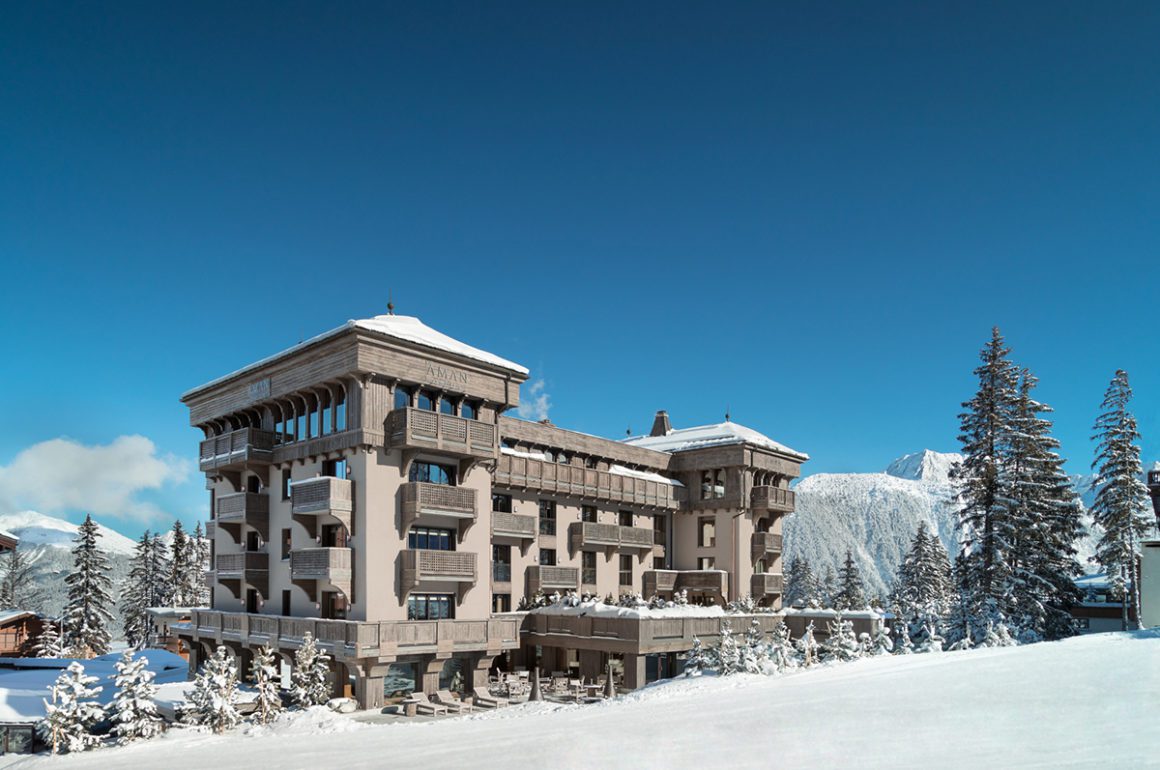
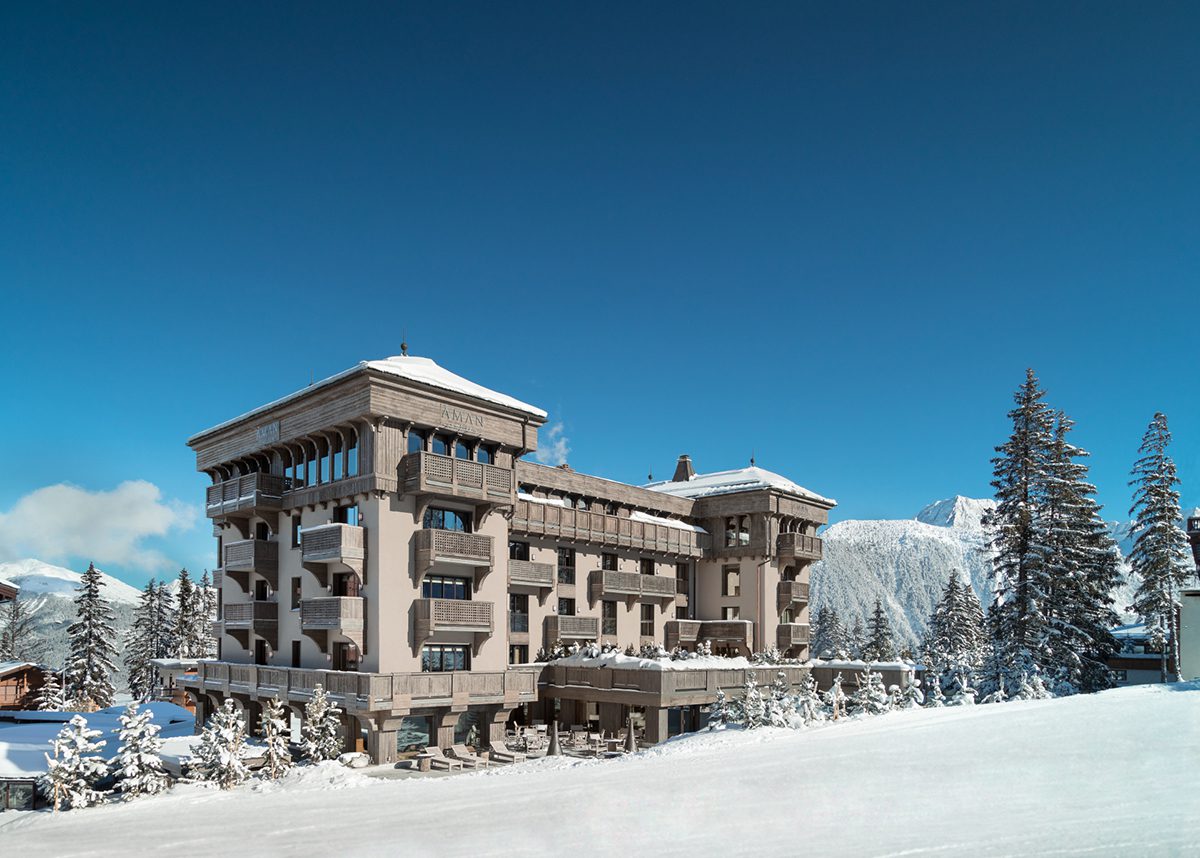
Guests of five-star hotel Aman Le Mélézin can step straight out of the ski room onto the piste
Why should I go now?
The snow in the French alps this season is sensational; the skiing is velvet-powder perfect and Courchevel 1850 is a white-dusted fairy-tale.
It’s one of the prettiest and most exclusive resorts in the heart of the world’s biggest ski area, Les Trois Vallées. Courchevel somehow manages to balance quaint with outrageous; wooden shutters, horse and carts and traditional French boulangeries sit alongside designer boutiques, Michelin-starred restaurants and luxury hotels, of which ski-in ski-out hotel Aman Le Mélézin is one of the most sophisticated.
Follow LUX on Instagram: the.official.lux.magazine
What’s the lowdown?
The Aman is an elegant, grey chateau-style hotel right on edge of the Bellecôte piste, an easy green run down to the main ski lift station and the central village. Everything from the warm wooden panels, stone flooring and soft grey armchairs to the bonsais, artwork and Japanese sake cups has been carefully selected to create an atmosphere of calm, seamless luxury. It feels effortless and homely. Many of the doors melt into the wooden panelled walls so it takes time to find the hidden areas. Guests are invited to roam at leisure without the constant presence of staff breathing down their necks and with only 31-rooms it never feels busy. One afternoon, we had the spa entirely to ourselves and spent a few blissful hours drifting between the pool, hot tubs, hammam, sauna and rainforest shower, which pours to the accompaniment of tropical birdsong.
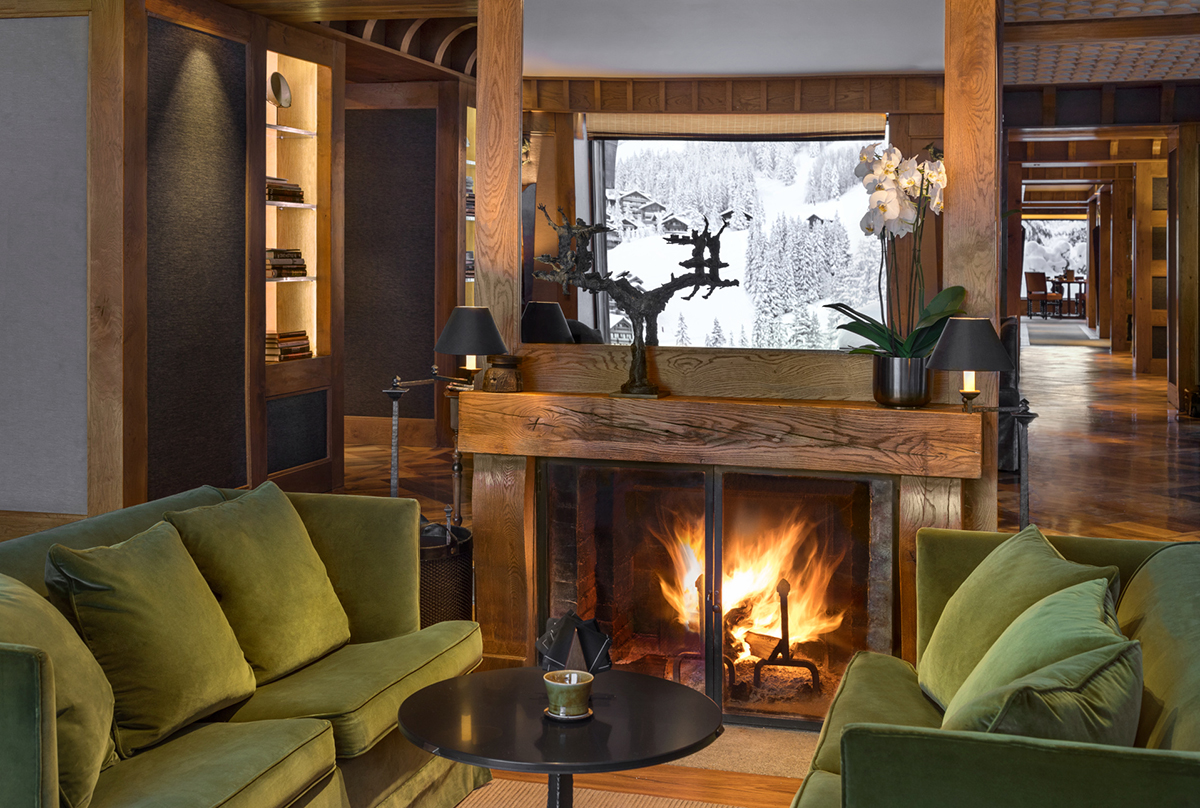
The cosy bar and lounge area at the front of the hotel
Meals are all served at Nama, the hotel’s restaurant which serves a limited but delicious French-style breakfast, and at night, becomes Japanese fine-dining. The kitchen is headed by chef Keiji Matoba, who creates innovative, authentic Asian dishes such as platters of melt-in-the-mouth fresh sashimi served on a bowl of ice, grilled black cod marinated in sweet miso and mochi sakura ice cream. The sake list is extensive with the option of a bottle or carafe, which comes in a hand-made Japanese ceramic jug.
Read more: Philip Colbert’s “Hunt Paintings” at Saatchi Gallery, Los Angeles
Downstairs is the new, spacious piste-side ski room where knowledgable staff literally put your feet into your boots and more or less onto your skis. If you’re feeling energetic, you can take the lift straight up and ski down into Méribel and over to Val Thorens all in time for lunch, or else enjoy the staggering views and mountain air with a vin chaud on the terrace of a restaurant whilst private planes fly overhead to land on the high-altitude altiport.
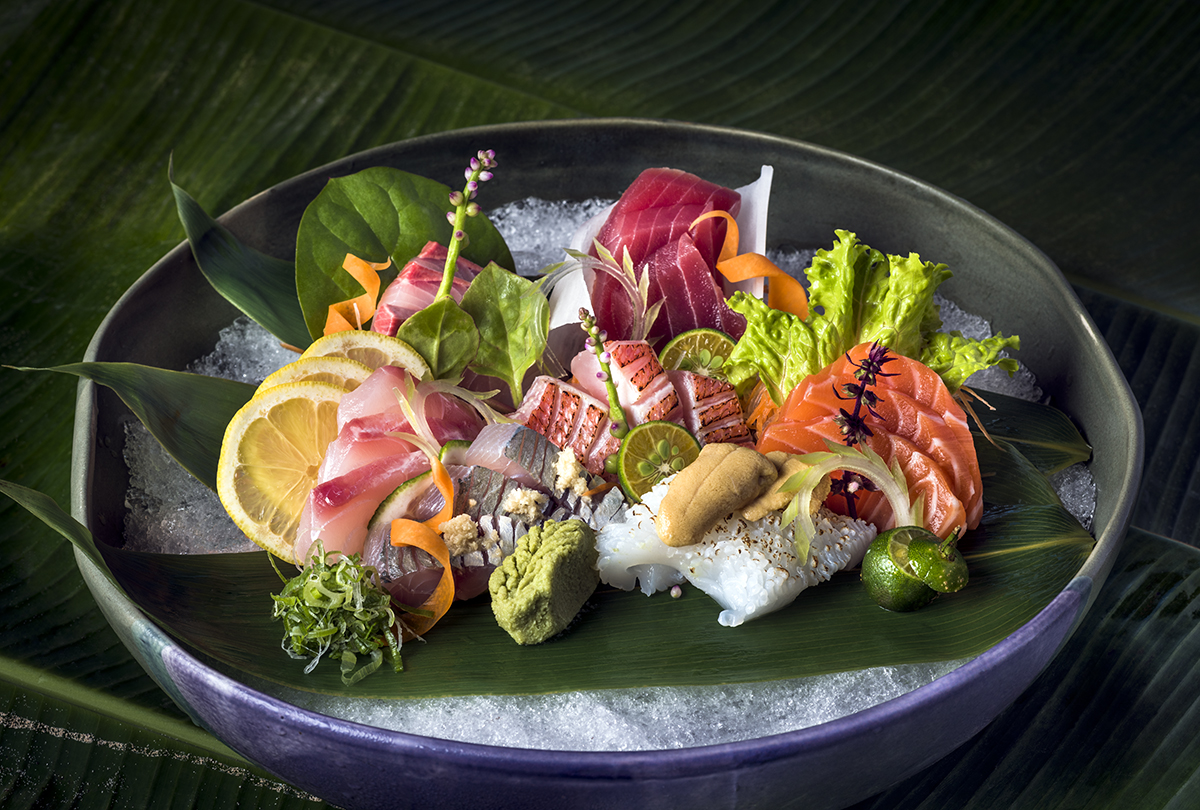
A sushi platter at the hotel’s restaurant Nama
Getting horizontal
Our room was high-up on a corner of the building with two balconies providing views over the piste and village. The space was light and relaxing, minimally furnished in creams and light wood with white orchids. There was a horizontal window at the end of the bathtub, from which we could watch skiers gliding past.
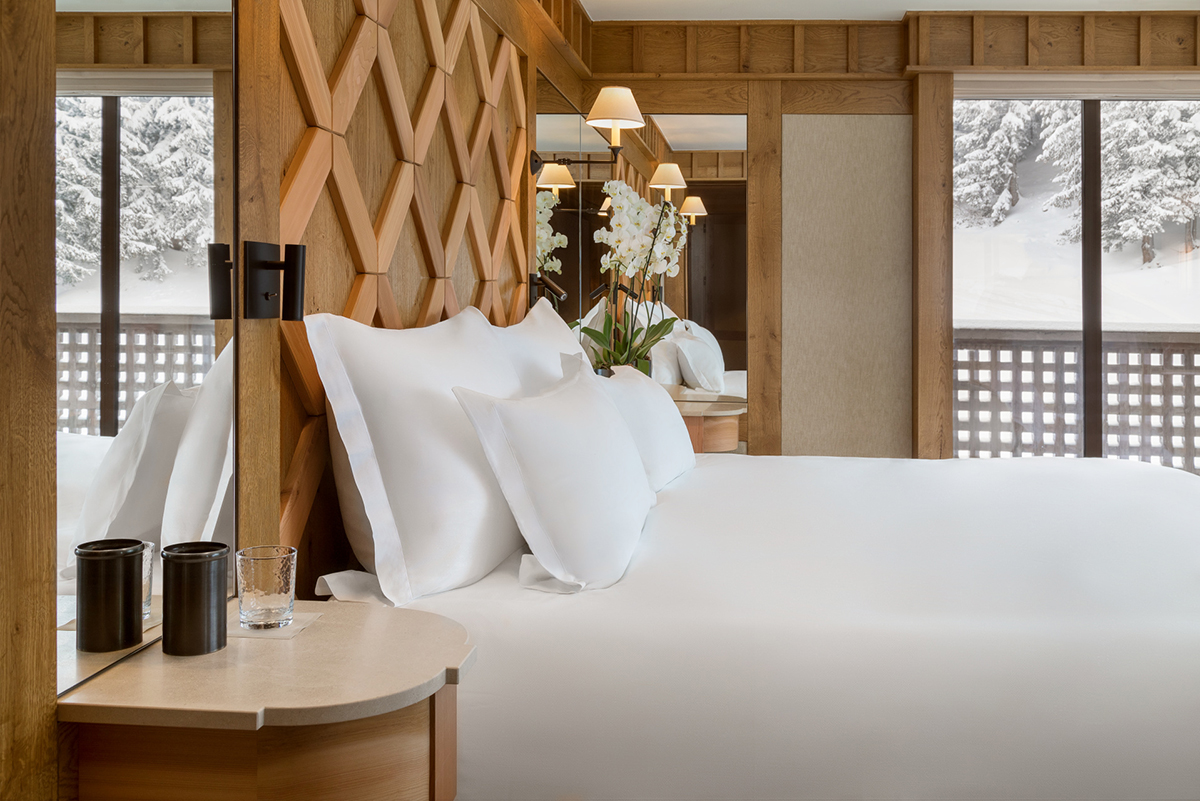
Chambre Melezin with two balconies overlooking the piste and Courchevel
Flipside
The hotel is a little bit behind the times when it comes to tech, which may frustrate guests used to contemporary conveniences (there are no bedside iPads or digital concierges), but when you’re in the quiet of the mountains, perhaps it’s no bad thing to be dragged away from hyper-efficiency.
Rates: From €1, 100 (approx. £950 /$1,250) per night, half board
To book your stay visit: aman.com/resorts/aman-le-melezin
Millie Walton
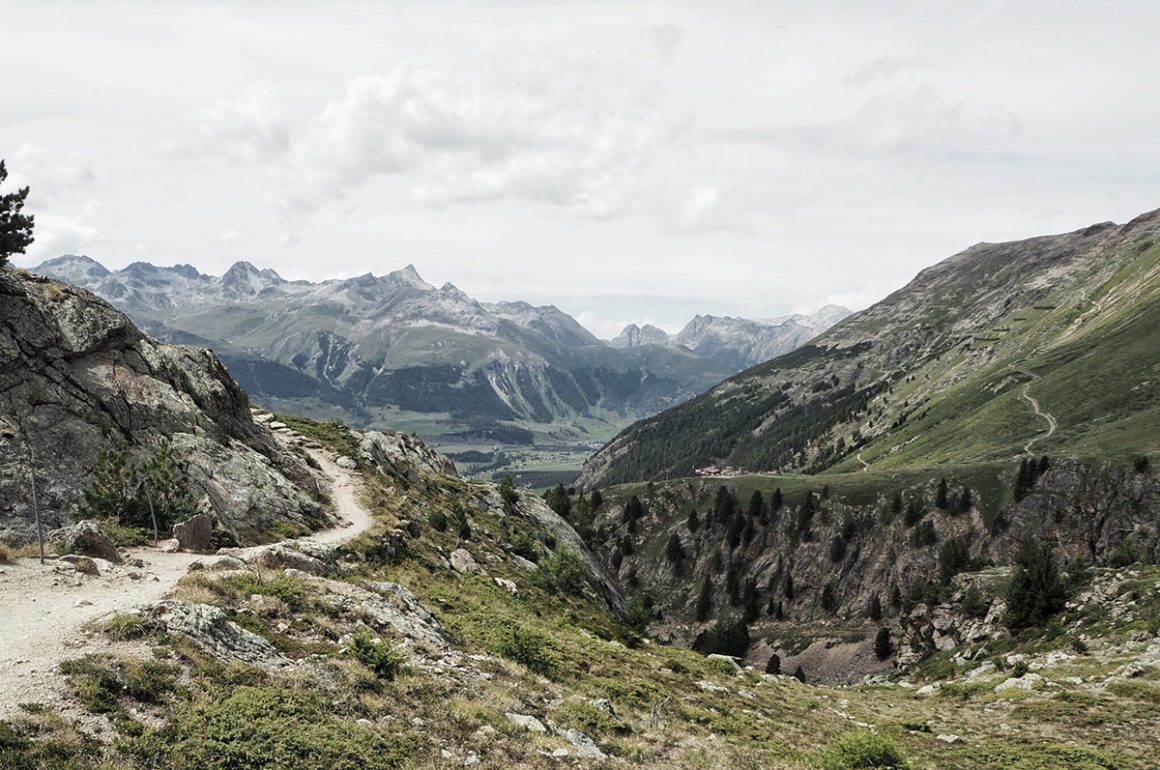
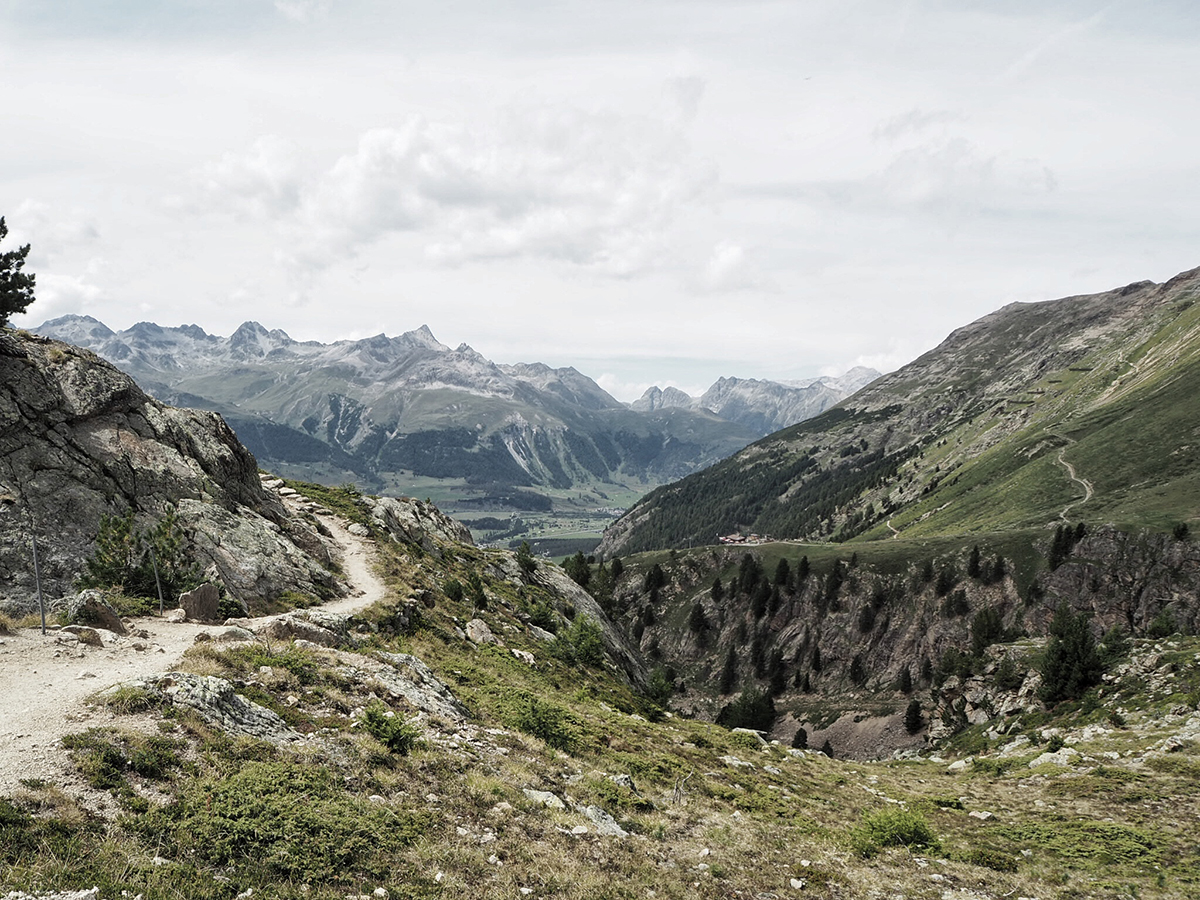
A view across the Engadine valley from Muottas Muragl, above St Mortiz
Switzerland’s Engadine region has been the enchanted holiday home of the likes of Friedrich Nietzsche, Gerhard Richter and some of the world’s most discerning wealthy. LUX takes a summertime tour of this romantic paradise
Landscape photography: Isabella Sheherazade Sanai (@sheherazade_photography)
There was a moment in the evening, a point in the flow of time each day, when the colour on the mountain was perfectly balanced. Just below my balcony, the larch forest rising out of the lawn was an almost vanishing green, turning to black. The same forest was a dark emerald high up the mountainside. The high pastures above, a thin carpet of melded brown and dry, light, green. And the peak of the mountain, that minute, was just straining to catch the last of the day’s sun, emanating from behind the hotel, on the west side of the valley. It was the colour of a tarnished gold ring, glowing with the pride of being in daylight, today, while the rest of us had fallen into tonight.
Out of the trees and grass around me, the image was accompanied by a rising smell of damp, green, earthy life, its textures matching those in the glass of wine that would always accompany this ritual, a glass of pinot noir from two valleys away, in what the Swiss call the Bündner Herrschaft.
Follow LUX on Instagram: the.official.lux.magazine
The Waldhaus Sils, where my room and balcony were, is known for its magic. Artists, writers, musicians and poets are guests there, sometimes invited by the hotel for the inspiration they bring. Gerhard Richter, arguably the greatest living artist, unarguably one of the most expensive, was staying while I was there; as were others from these worlds, whom I won’t identify as I didn’t spot them personally (the Waldhaus is very discreet about its guests).
The hotel sits on a forested ridge (thus the name Waldhaus – ‘Forest House’) above the village of Sils, once home to Friedrich Nietzsche, and overlooking Lake Sils, considered by many in the art world to be the most beautiful lake in Switzerland. The lake is at the southern end of the Engadine, a broad, flat, high-altitude valley making a slash through the most mountainous part of the country, its southeast corner, from Austria to Italy.
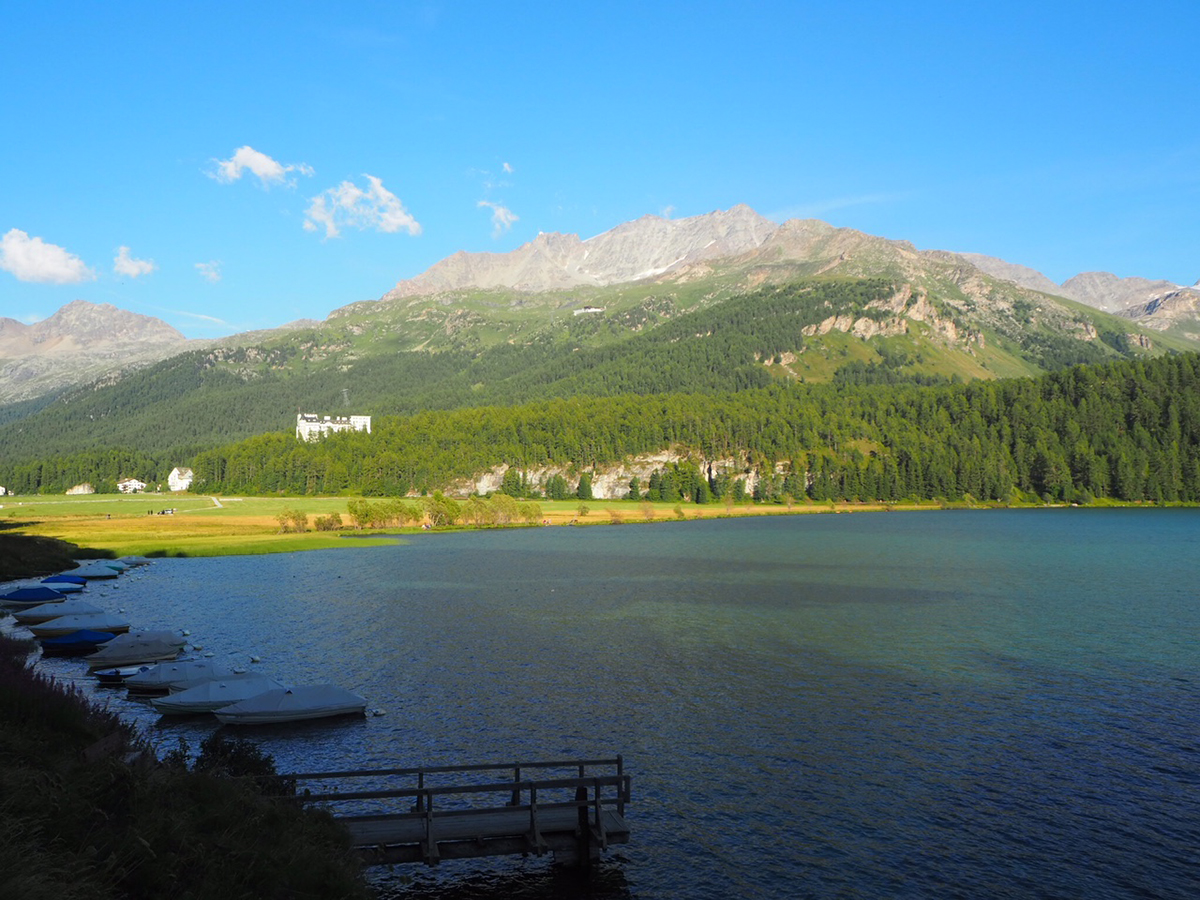
The Waldhaus Sils sits in a forest above the mystical Lake Sils, which has inspired poets, artists and writers since the 19th century
There is something about the Waldhaus Sils that no amount of money could create in a new hotel. The furnishings, from light fittings to tables, chairs, cabinets and even the signposts, look like they have come from a mid 20th-century Modernist sale at Phillips auction house. They are so perfectly positioned, as if everything has been looked at with aesthetic sight-lines in mind, and yet none of it feels Designed (with a capital D); this is just the aesthetic of the family who own the hotel. No wonder Richter and others love it so.
The Waldhaus mixes old, in the sense of mid-20th century, with a very up-to-date cuisine and wine list. Most guests take the half-board option, with dinners in a broad gallery of a dining room, with picture windows looking into the forest. Most memorable were the variations on a consommé, each night made with a different base stock; and the choucroute and pork fillet served by a visiting farmer-chef one evening.
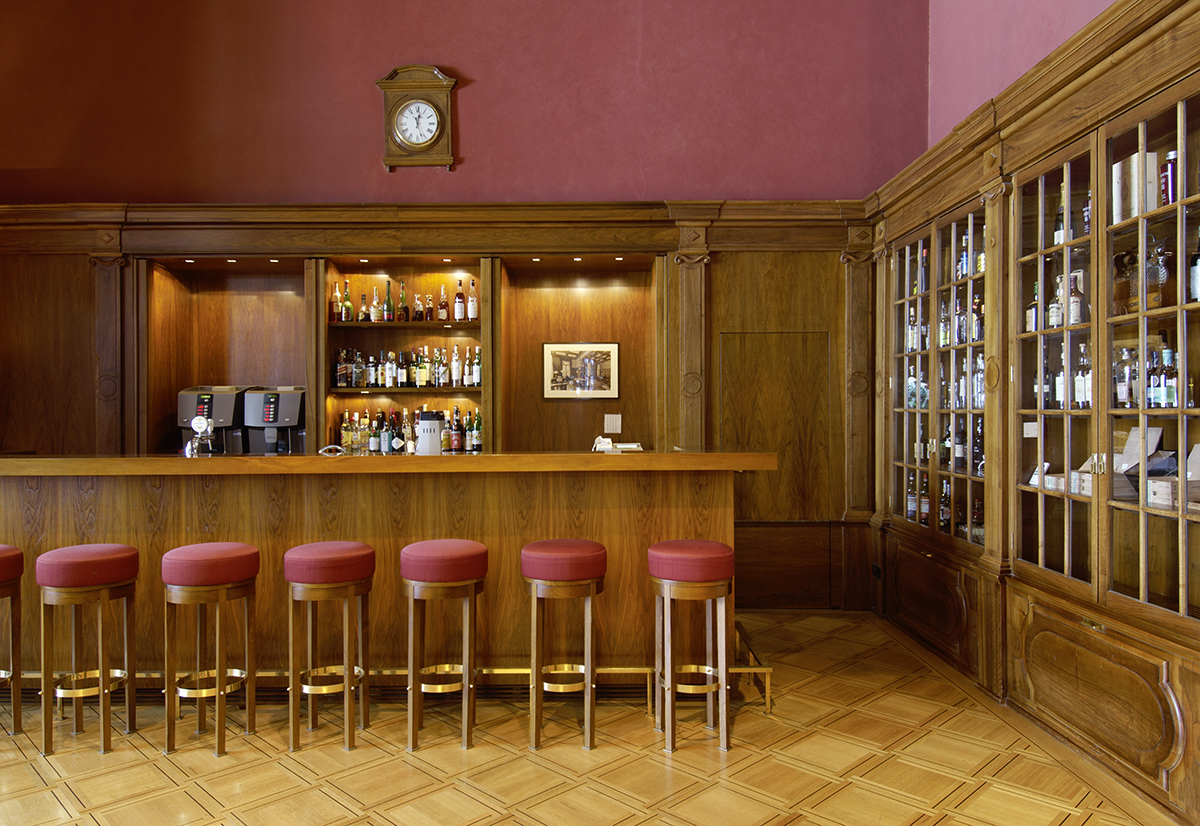
One of the bars at the Waldhaus Sils
One day, we walked out of the hotel down through the trees until we reached the floodplain of the lake, a flat meadow between the shore and the village. It was a summer day of intense mountain sunshine – you burn much more quickly here at altitude than down on the Mediterranean – but a flapping, chilly wind reminded us of exactly where we were. Along the lakeshore, a child and a dog were paddling in the water, on a tiny beach sprouting out of the path. The path itself curved past a tiny jetty housing a couple of rowing boats, and onto a forested promontory. Dipping and rising between larch trees and the water’s edge, it offered a different perspective every minute, with changes of light and in the colour of the water on the lake. The mountains beyond emerged bigger with every step we took away from them; my own mountain, which I had watched from the balcony, was revealed to be no more than the leading ridge of a much larger cluster of peaks at the end of what was a hidden valley.
Read more: Welcome to the age of internet art
We walked along that valley the next day. To get there, we first took a cable car from Sils up to a station above the treeline, from where we looked down at a string of lakes extended all the way down the Engadine past St Moritz, and were greeted by a pack of manic, crested chickens sprinting around a coop with a view most humans would crave. We walked along a path skirting the edge of the mountainside, past uncurious cows, until a luscious green valley, alternating meadows, streams, forest and hamlets, appeared beneath us. Invisible from the Engadine, this is Val Fex, home to some of the most ancient communities in Switzerland, who used the secret nature of the place (its entrance is sheathed in a deep, forested gorge which looks impassable from below) to shelter from invaders from Italy and the Germanic lands.
Along a woodland path at the bottom of the little valley, home to thousands of butterflies, we reached the Hotel Fex, where we had a fantastic lunch made of foraged and farmed local ingredients – young beef, herbs, grasses and flowers – while gazing at the high end of the valley. It was an hour’s walk, down past the butterflies and the meadow and through the gorge, to the Waldhaus and a balcony view back up to the sunset peak.
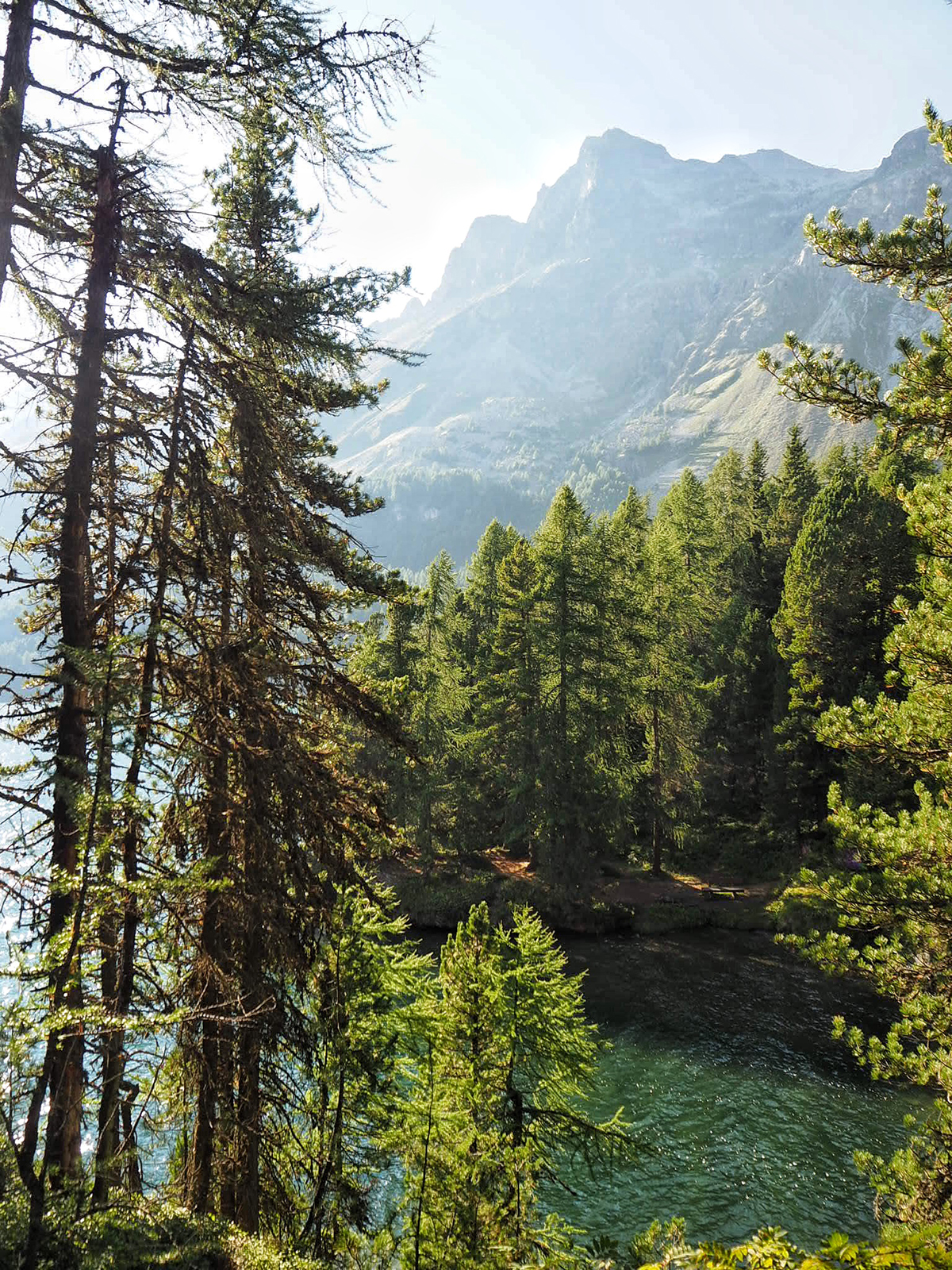
The forested peninsula on Lake Sils, nearly 2km above sea level
St Moritz is fifteen minutes’ drive down the Engadine valley from Sils, and it has a roster of legendary palace hotels. Our destination was just outside the town of St Moritz, on a hillside. Suvretta House, one of the oldest grande dame hotels of Switzerland, surveys the surrounding scenery like a majestic ocean liner atop a wave. As we approached from Lake Silvaplana, it was almost as if nature had bent to the grand hotel, according it its centre-stage position, with nothing around it except forest and lakes, on a ledge in this long, high valley.
That was an illusion; within a couple of kilometres of Suvretta House lies one of the highest concentrations of (vacation) wealth in the world, but part of this area’s appeal is that it doesn’t look like it.
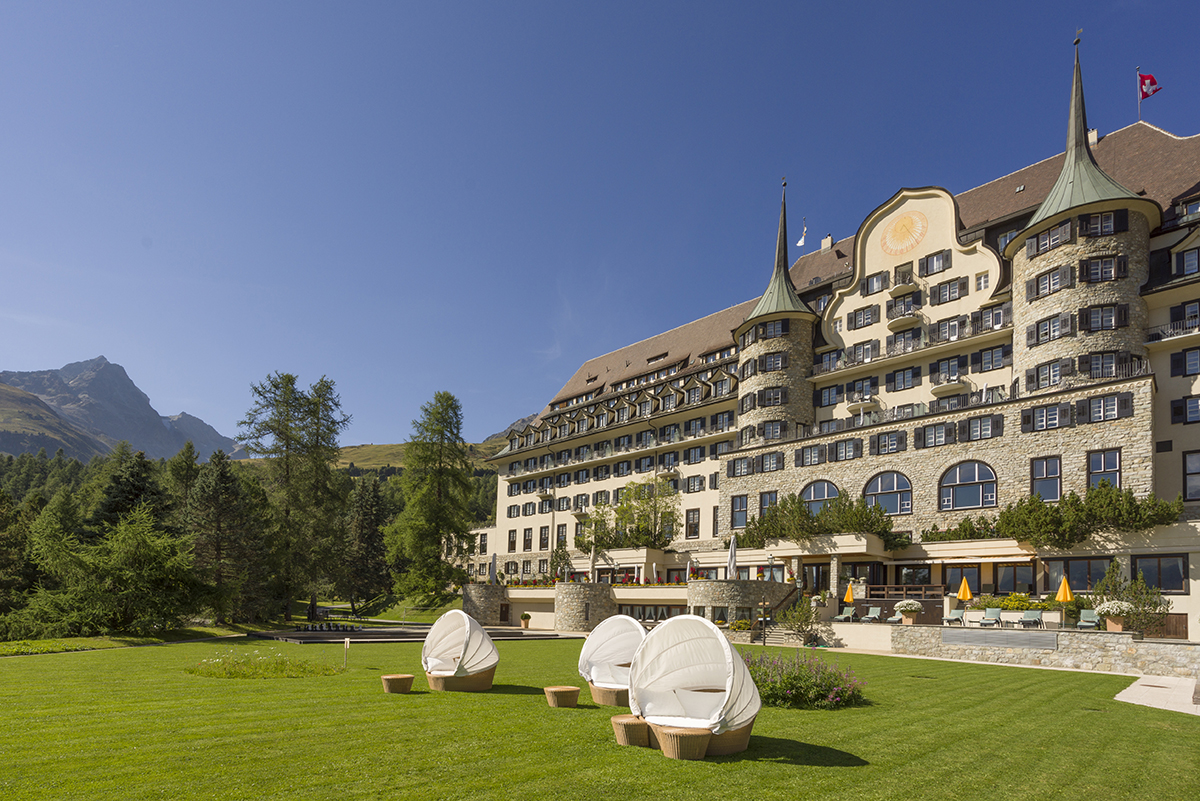
The facade of the historic Suvretta House hotel
Our junior suite at Suvretta House had six windows opening out onto a carpet of forest below, the lakes ahead, and the peaks of the Bernina range on the east side of the valley beyond. The décor was clean and crisp, a kind of safe contemporary Swiss, with plenty of rich fabrics to please luxury’s traditionalists.
The Bernina mountains are one reason for the particularly attractive climate here; they protect the area from storms sailing up from the Adriatic beyond, while to the north and west, several ranges of high mountains stand as a kind of climatic Berlin Wall to prevent the moist Atlantic air of northern Europe arriving. The result is that this is the sunniest spot in Switzerland; and Suvretta House itself lies on a sun-trap of a ridge. We discovered this the next morning, on a pre-breakfast frolic in what must be the most picturesque children’s playground in the world, carpeted in lush grass, banked on three sides by Alpine forest and on a fourth by a slope leading down to the hotel.
Read more: The Getty LA launches an African American Art Initiative
At the front of Suvretta House, the 25-metre indoor pool stretches through a conservatory alongside a broad lawn, on which sun-loungers, a giant chess set, and other leisure accoutrements are set (in summer, anyway; in winter, it would be under several metres of snow).
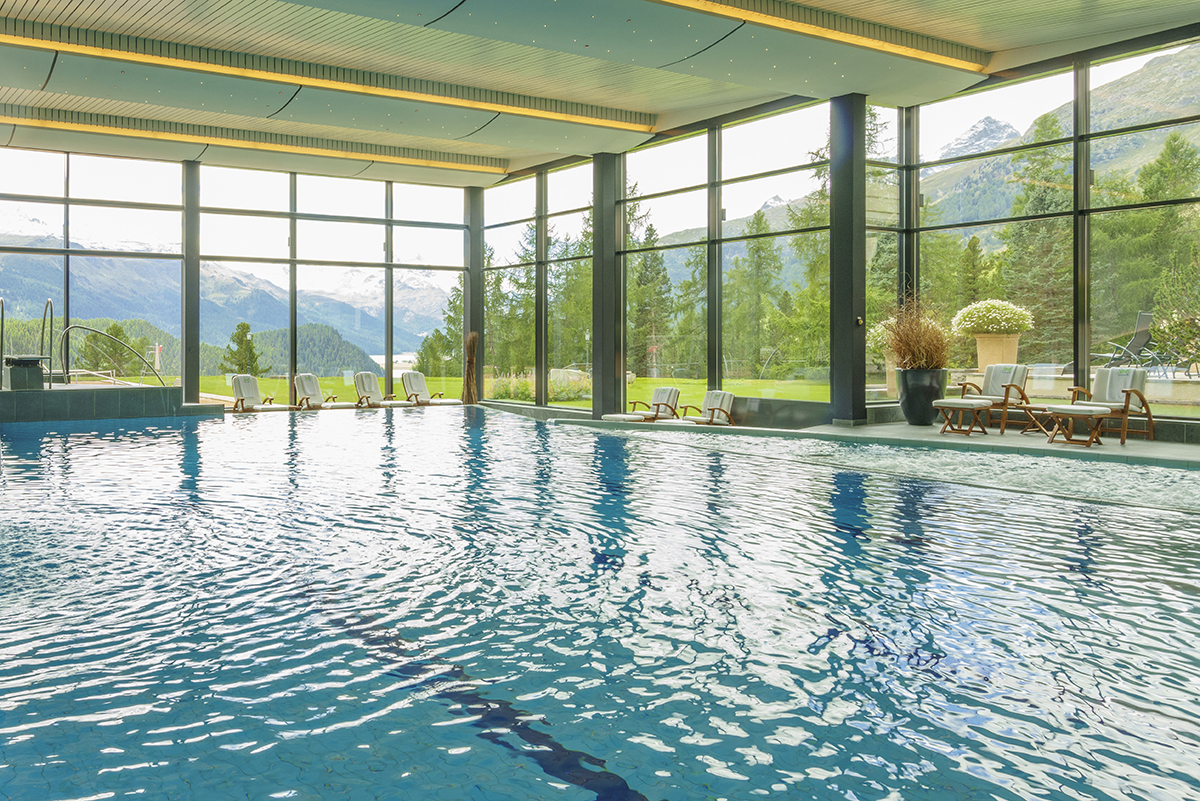
Suvretta House’s swimming pool

The Fuorcola Surlej restaurant above St Mortiz
Breakfast was served at the Arvenstube restaurant, and featured about 36 different types of bread, cooked (and shaped) in their own in-kitchen bakery every day from three in the morning. The buffet seemed lavish enough, until we found it extended around the corner with dozens of combinations of freshly cut fruit, more permutations of gluten-free cereal than would fit on the biggest yoga mat, an array of nuts, seeds and other health-giving items that would embarrass a health food store, and still plenty of indulgences on the pancake/ chocolate/Nutella/cooked bacon front.
We returned to the Arvenstube for dinner, at first a little apprehensive. Almost every hotel in the German-speaking Alps has a restaurant called a stube; in humble hotels these are often beer-cellar-type places serving humble food (sausages, dumplings) and good beer. Luxury hotels sometimes persist in the belief (mistaken, in our views) that a luxury stube ought to be a play on these dishes, with lashings of old- fashioned Michelin-chasing creams, foams and drizzles, and tiny portions that make you wish you had gone out for some fondue instead.
What we found instead was a revelation. In the beautiful evening light as the valley turns to night – the Arvenstube faces south – there was a menu based on the concept of ‘Switzerland meets Latin America’ from chef Isaac Briceño Obando, and it really worked. Examples: Puschlaver lamb, baby corn, roasted spring onions, tortilla powder and mountain honey; or Swiss cheese, guava jelly, tamarind jelly and paprika coulis; or tepid char with grilled peach, palm hearts and pine nuts. It was the distinctive, balanced, vivid cuisine of someone with a real ability to understand how and by whom his dishes would be consumed. We returned there three times and always had clear, crisp options.
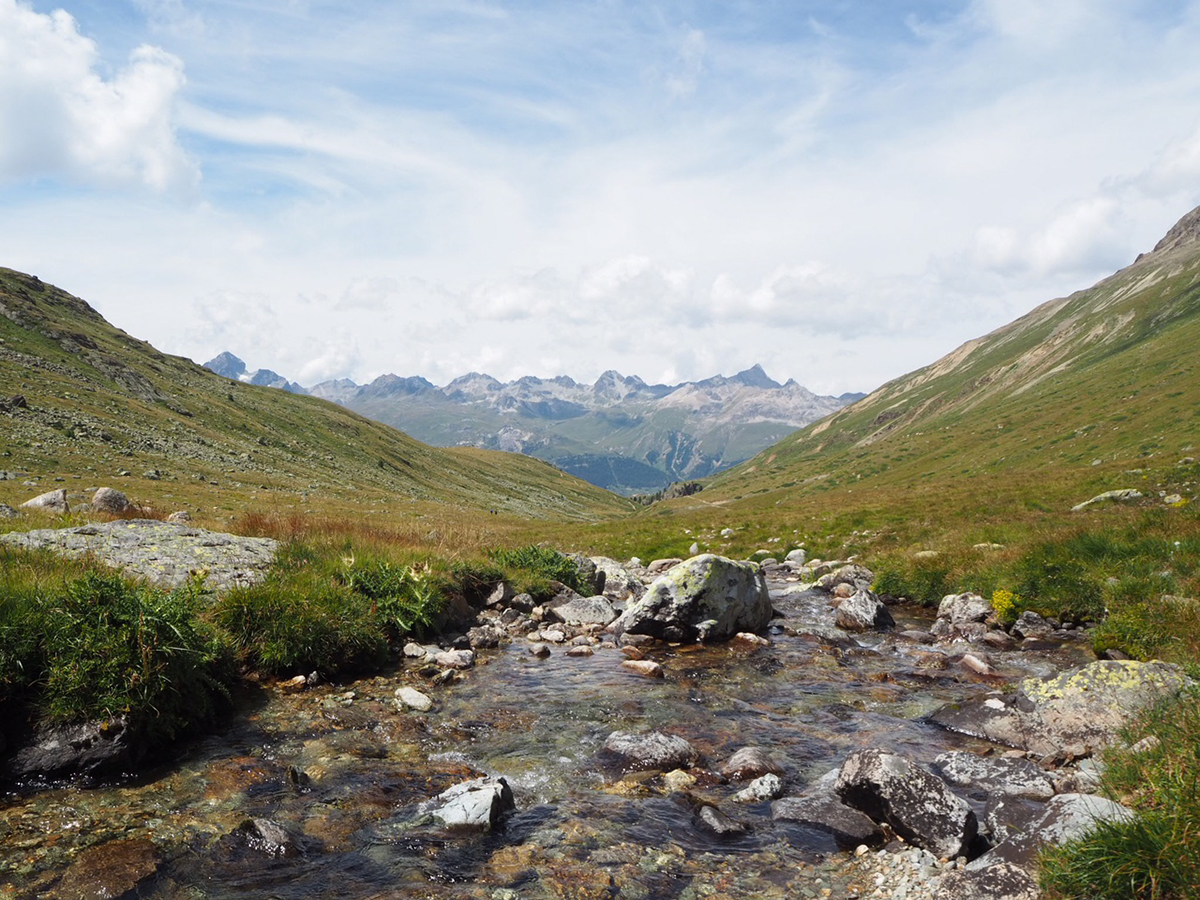
On the path to the aptly-named Paradise hut, above Pontresina

Goat’s cheese with rocket and truffle at Chasselas
The Suvretta House also owns the Gault Milau-celebrated restaurant just up the road, the Chasselas. At the bottom of a piste, with its own chairlift linking it to the main Corviglia ski area of St Moritz, the Chasselas tries hard to look like a pristine, immaculate but humble mountain hut; however, the cuisine and wine list are anything but humble. We loved the medium-grilled saddle and braised cheeks of Iberico pork with artichokes, balsamic onions and plain in pigna, and Irish highland lamb racks with salsa verde, grilled vegetables and barley risotto. Different chef, but the Suvretta principles remained: there was nothing on the menu to weigh you down and make you feel, like many mountain restaurants do, that you need to climb the nearest peak to burn everything off.
It’s tempting never to leave Suvretta House (either during your stay, or when it’s time to depart) but we did, one day taking a cable car up the opposite side of the valley, towards Piz Corvatsch, and walking along a rocky, dramatic, high altitude trail until we reached a restaurant in a little mountain hut on a ridge. The other side of the ridge revealed a little lake, and a flabbergasting view down to a glacier and up to a range of high, snowy, rocky peaks. Fuorcula Surlej, the restaurant, really is a humble mountain hut. The owner told us she lives there, with only her dog for company, all summer and all winter; when she returns after her autumn break to open up for the ski season, all the available water is frozen in blocks of ice and she curls up with her dog to keep warm.
A small staff in her kitchen were making dishes off a short menu; we tried the barley soup, which tasted of fields and mountains together as we ate it on the terrace, looking out at the high peaks framed by dreamy deep blue; followed by a spaghetti with ragu, flavoursome home-made food by someone whose home is a ridge at the top of nowhere, towering above the Engadine.
Darius Sanai
For more information and to book your stay visit: waldhaus-sils.ch; suvrettahouse.ch
This article was first published in the Winter 19 issue.
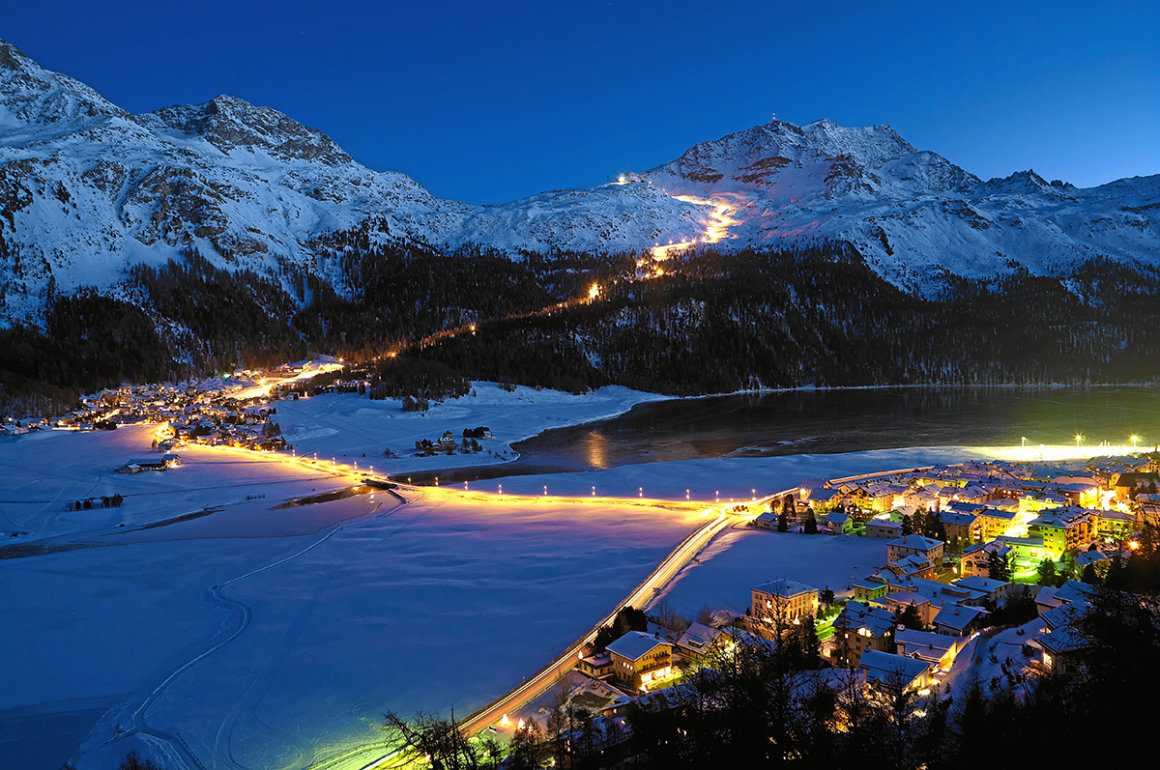
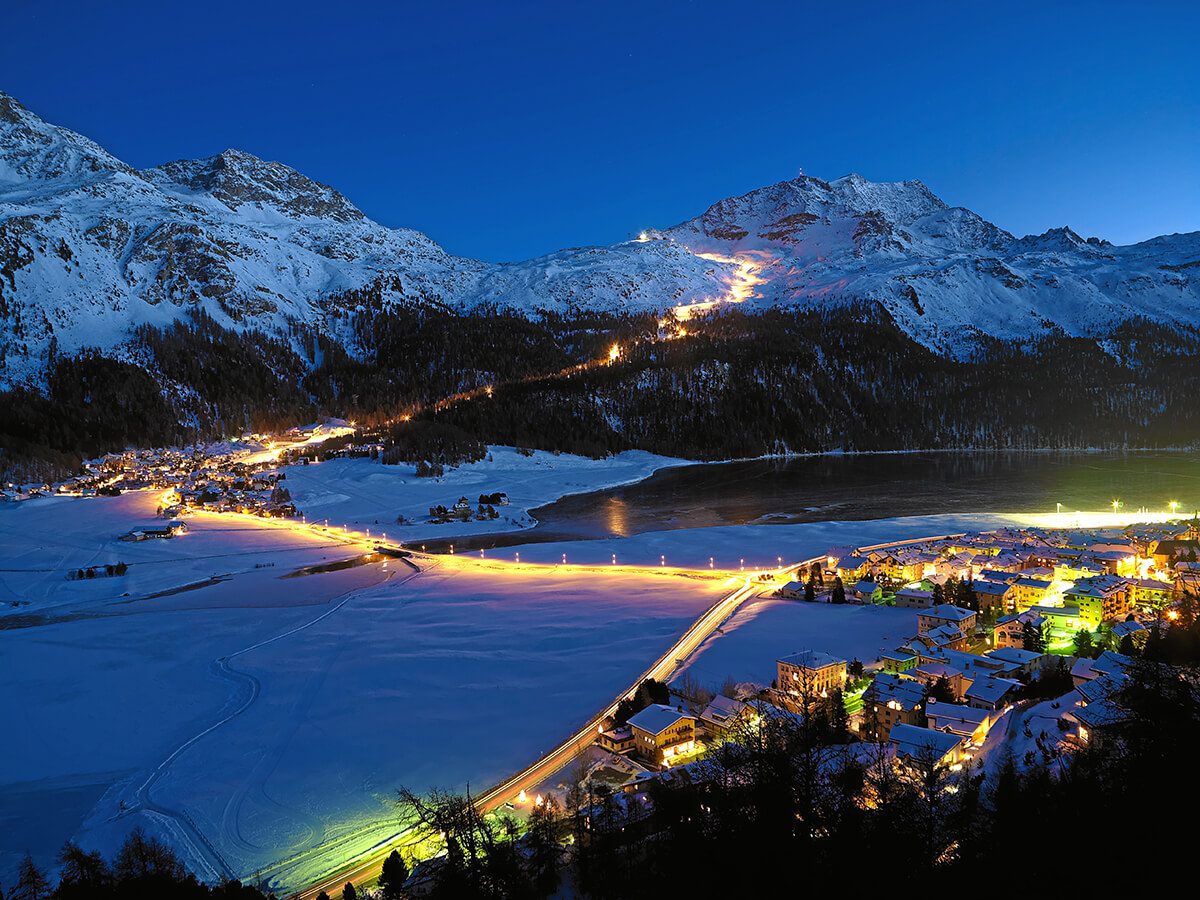
Night time skiing on Corvatsch Mountain, St. Mortiz
It’s been another winter of fantastic snowfall, and Darius Sanai is dreaming of his favourite location in the Alps, and the vibe at the Kulm hotel in St Moritz
It’s been another early winter of record snowfalls in the Alps, particularly in the eastern and northern tranches of the range. So it’s a perfect time to plan your impromptu visit to the mountains, and January and early February will be beyond perfect this year, with excellent snow and the customary lack of crowds that this part of the season brings, before the school holidays in mid-February change the tone.
Follow LUX on Instagram: the.official.lux.magazine
One of the saddest sights is to see couples and families split for ski weekends, with non-skiers staying at home. If you’re going heli-skiing in Canada, there may be nothing for your other half to do, but take a trip to one of our favourite hotels in one of the most wonderful parts of the Alps, and it might be that, at this time of year, as the events diary bristles, it’s the non-skier who makes the skier in the party jealous.
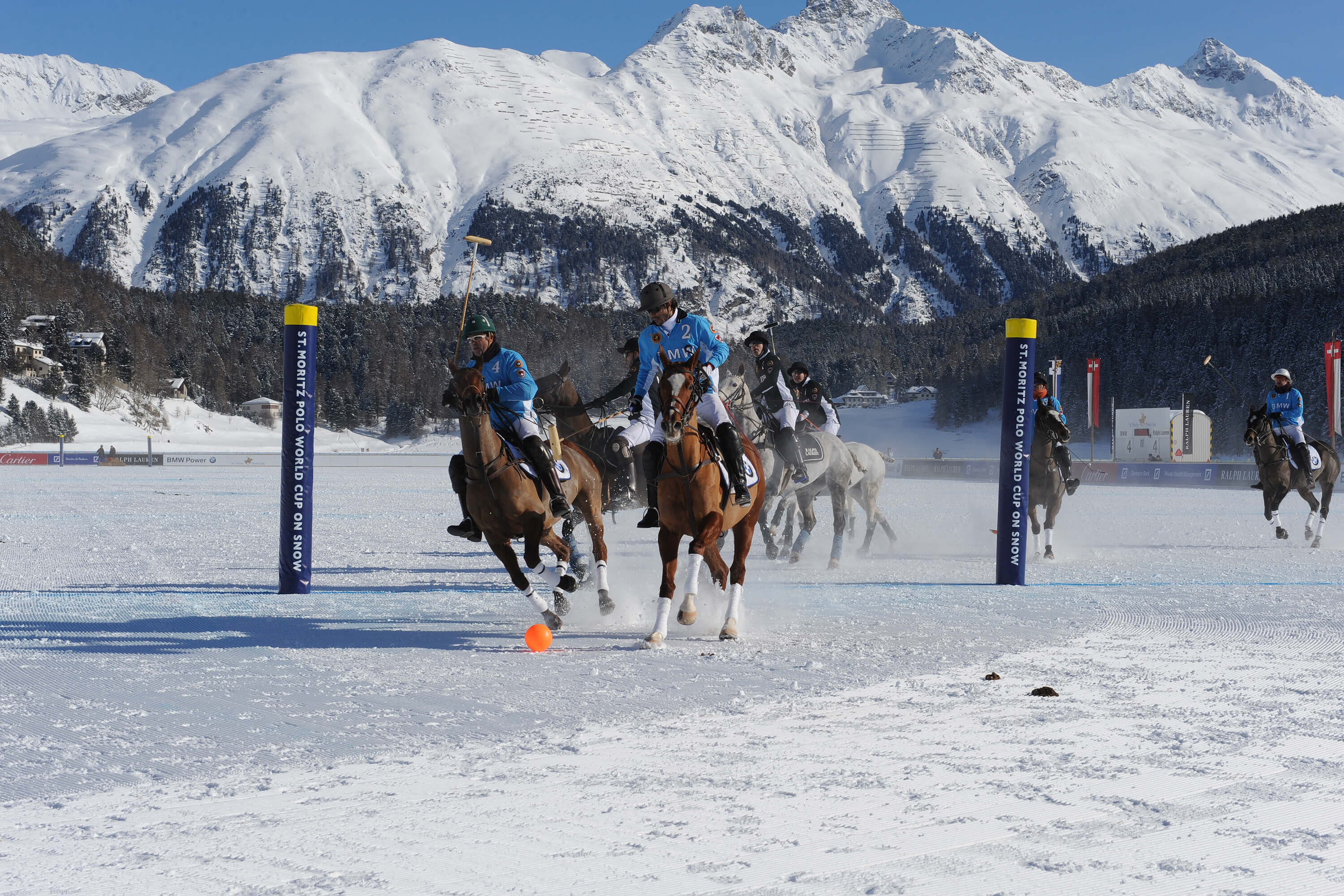
St. Moritz Polo World Cup on Snow, 2013
The hotel is the Kulm, the fabulous contemporary-classic grande dame of St Moritz’s. The area is famed for its range of activities for both skiers and non-skiers. This weekend sees the legendary Snow Polo on the lake of St Moritz (where the Kulm, has its own special stand where you can graze on gourmet delicacies and sip champagne all day). Happening simultaneously nearby are the Engadin Art Talks and the Snow Golf Championships, followed next week by the horse races in the snow, and the Grand National Cresta Run…
Read more: The history of TAG Heuer’s motorsport romance
All of that combined with the usual glories of the St Moritz-Pontresina area, including several challenging ski mountains, and the fur-lined nightlife.
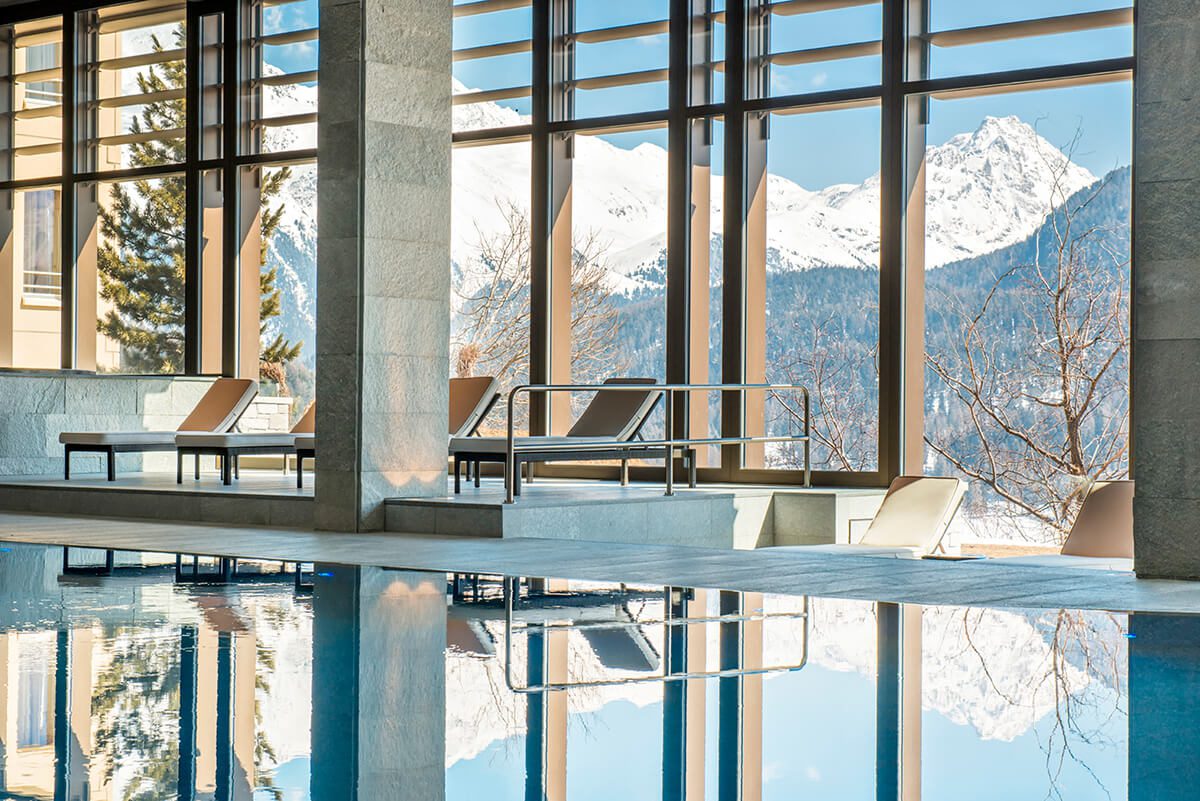
The indoor pool at Kulm’s spa
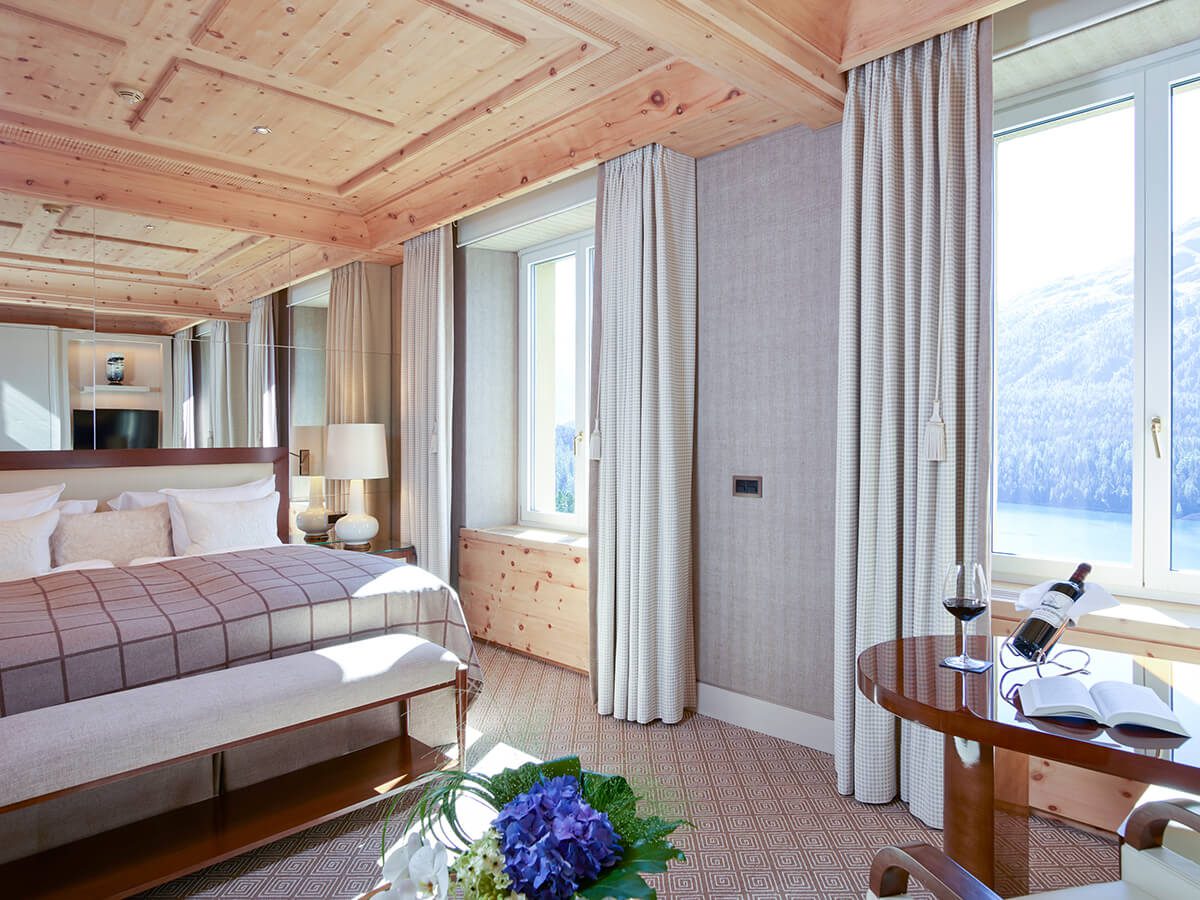
Kulm’s style is old-world elegance meets contemporary
But what we love particularly about staying at the Kulm is its sense of old-world grace – and its facilities. The spectacular pool has picture windows looking out over the forest and valley, rooms have a similar view. The classic restaurant and bar areas make you convinced that David Niven is going to pop out from around the corner. The rooms, meanwhile, have a very contemporary vibe, while not letting up on the rich Swiss luxe. You feel like a traveller in the mountains, taken care of at a real grand hotel, with options of everything from cross-country skiing to spectacular black runs, from watching the horses to chilling in the vast spa. The hotel is just a whisker above the crowded part of St Moritz (and a three minute walk from Pavarotti’s, our favourite spot for an après-ski Franciacorta) …and did we mention, the snow is fantastic this year?
Book your stay: kulm.com
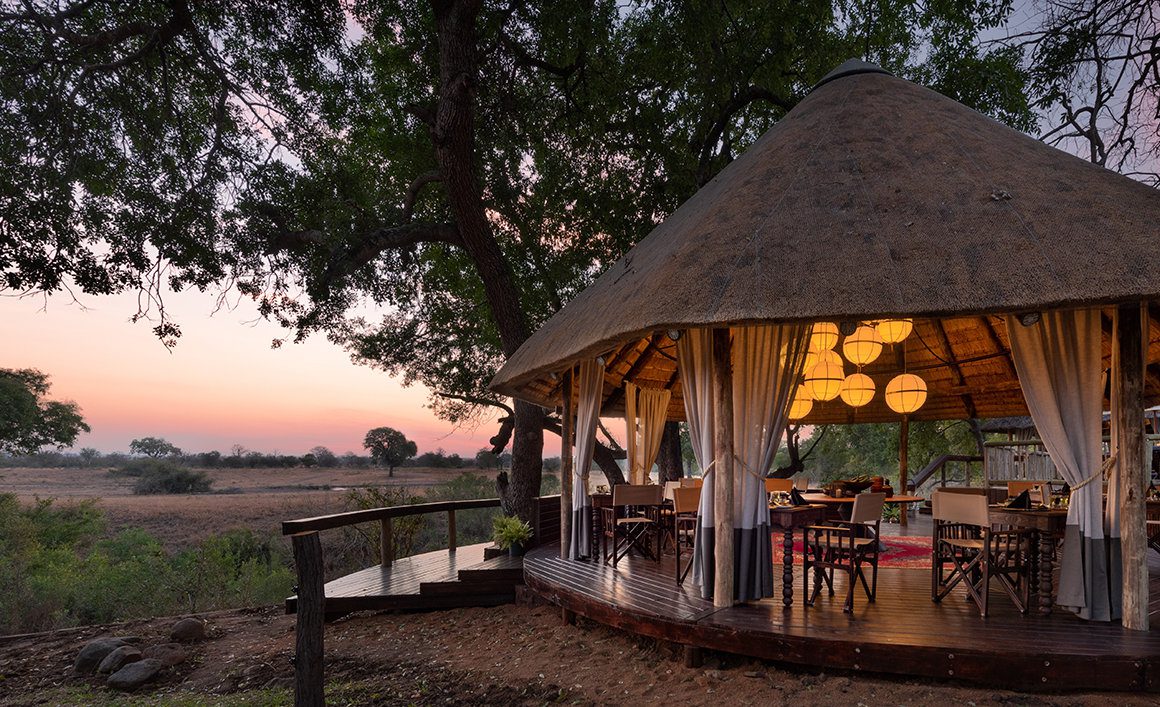
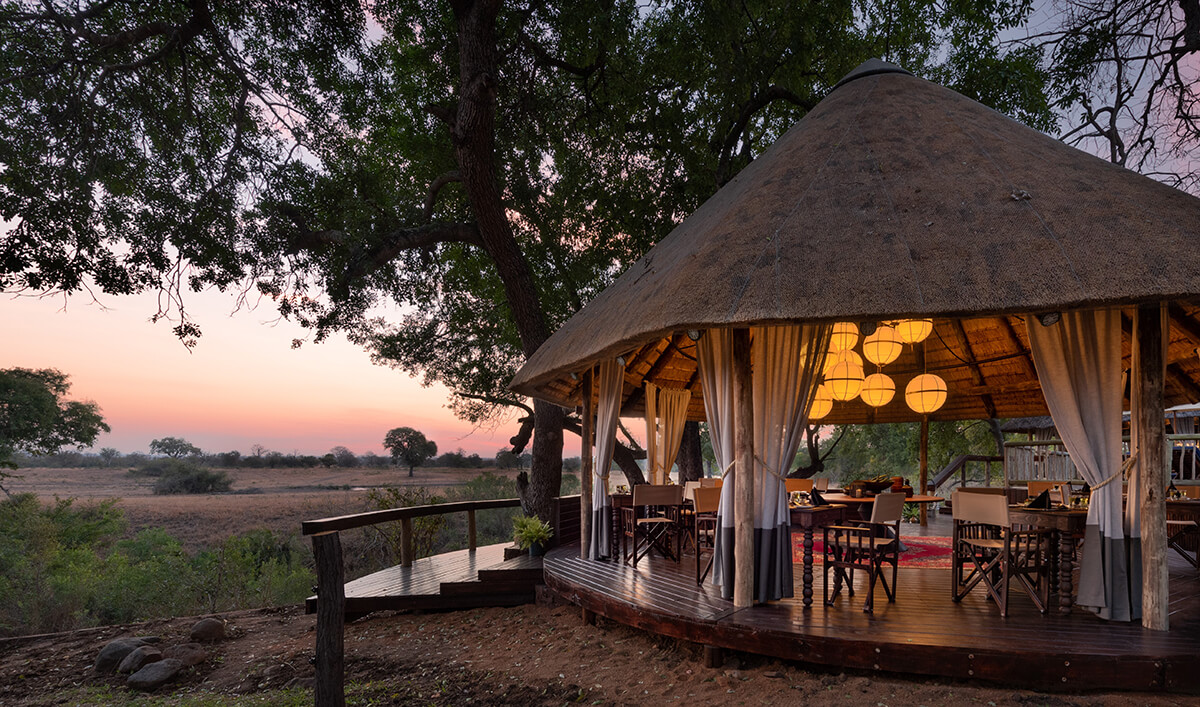
The safari deck at Selati Camp with views across the bush
Why should I go now?
Whilst the frost is settling over Europe, it’s summer in South Africa and the sun is scorching.
The Sabi Sand Wildtuin is an unfenced private game reserve stretching a massive 60,000 hectares of pure, uninterrupted wilderness. It’s situated adjacent to the Kruger National Park and is regarded as one of the top safari destinations in the country; home to the Big Five (i.e. lion, leopard, rhino, buffalo and elephant) and over 200 other animals.
Follow LUX on Instagram: the.official.lux.magazine
Aside from the game drives, “Tshamakahle”, “stay well” in Shangaan (the local language of Sabi Sands) is the only item on the To Do list.
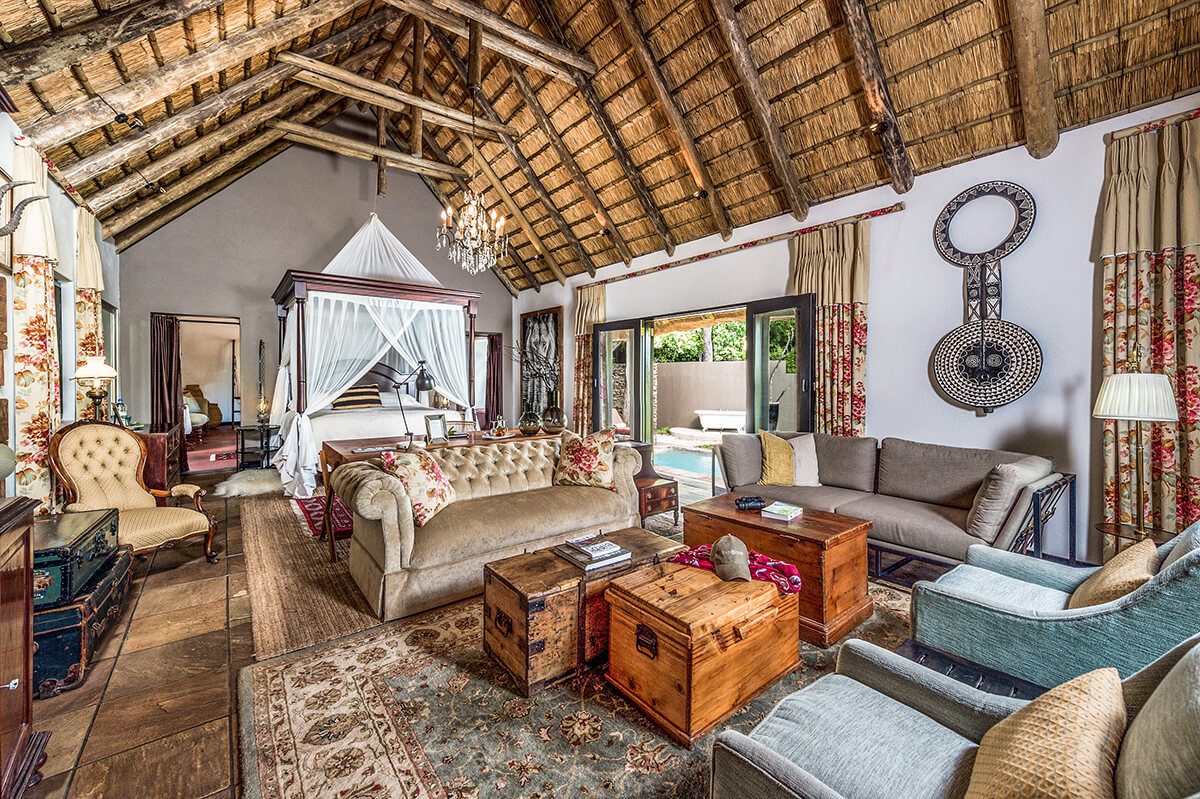
The Ivory Presidential suite with a private plunge pool
What’s the lowdown?
The Selati Camp is one of four luxury all-suite lodges at Sabi Sabi. Intimate with a classic, vintage aesthetic (think thatched roofs and original antiques), the vibe is elegant yet eclectic. The service style is old school, though not too formal, and very personable. Nothing feels too much to ask.
The safari experience generally follows the same routine: at 5.30am the ranger comes knocking on your door for the morning drive, which might sound horrifying but this is the best time to spot the animals before they all slink away into the shade. To soften the blow, there are blankets and hot water bottles in the trucks, and after an hour or two of driving, there’s often a pitstop for breakfast in the bush.
Read more: We speak to designer Mandkhai Jargalsaikhan about Mongolian cashmere
After that, the rest of the day is left open for snoozing, sunbathing, book reading, drawing or whatever else takes your fancy. The evening safari starts at 4pm, returning in time for dinner.
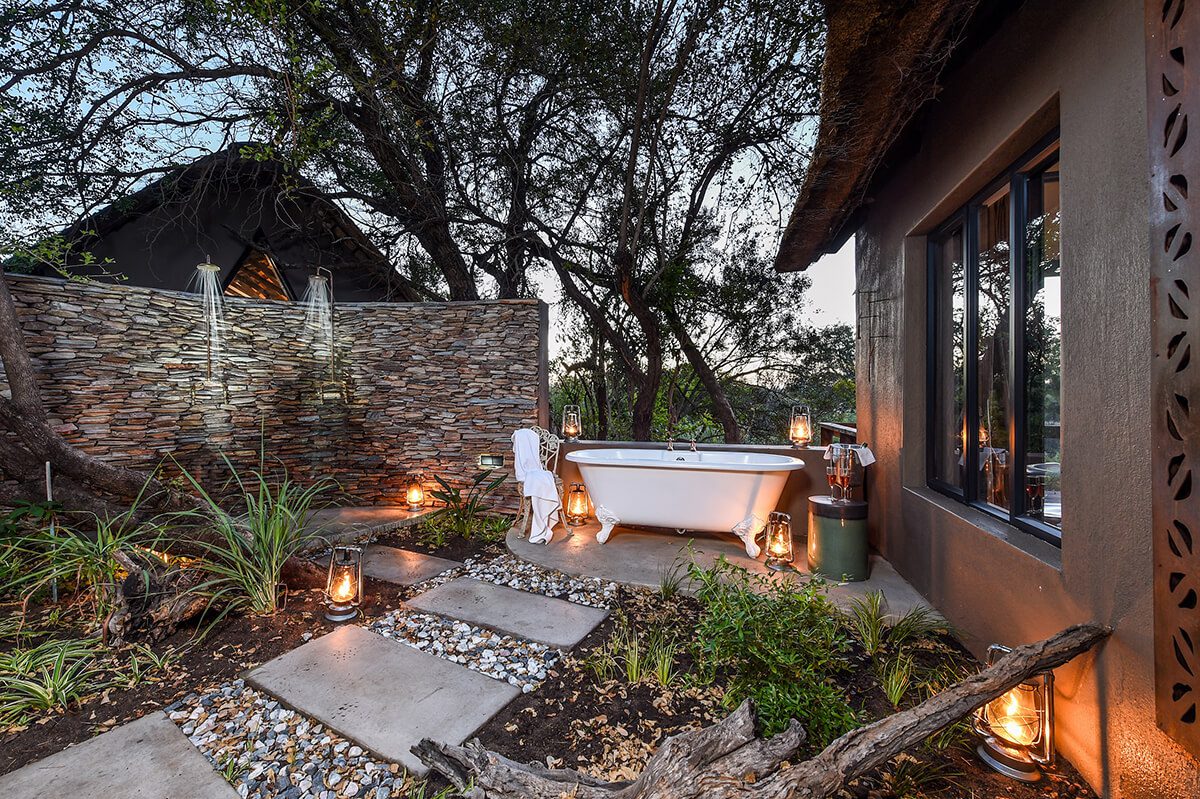
An outdoor bathtub beside one of the luxury suites
Getting horizontal
We loved the earthy colour palette, natural textures and the grandeur of the four poster bed draped with a curtain.
There are no fences around the lodges and our shower and bath were alfresco, which all added to the feeling of being at one with nature.
Flipside
The Sabi Sabi Private Game Reserve is perfect to get to by private plane from Nelspruit (less than 15 minutes in the air), but if you arrive after dark they won’t let you land on the Sabi Sabi airstrip because it’s too hard to keep the animals off the run way.
Rates: From £650 (approx. €750 /$850 ) per person per night, all inclusive.
To book your stay visit: sabisabi.com/lodges/selaticamp
Kitty Harris
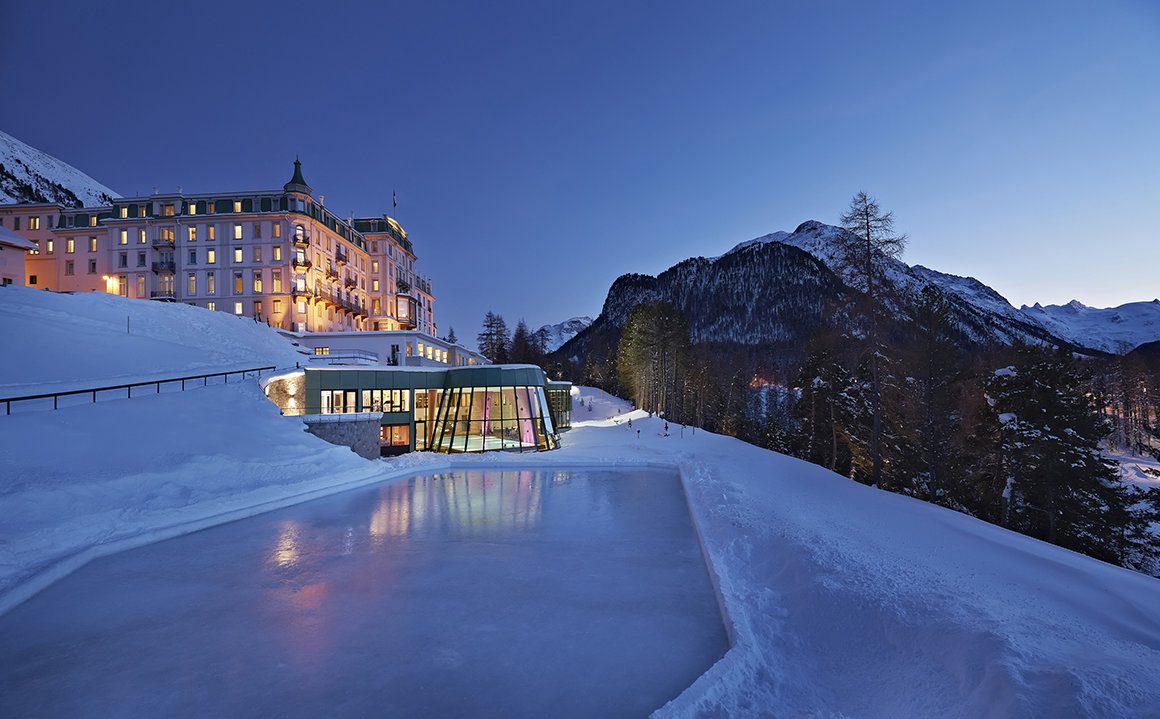
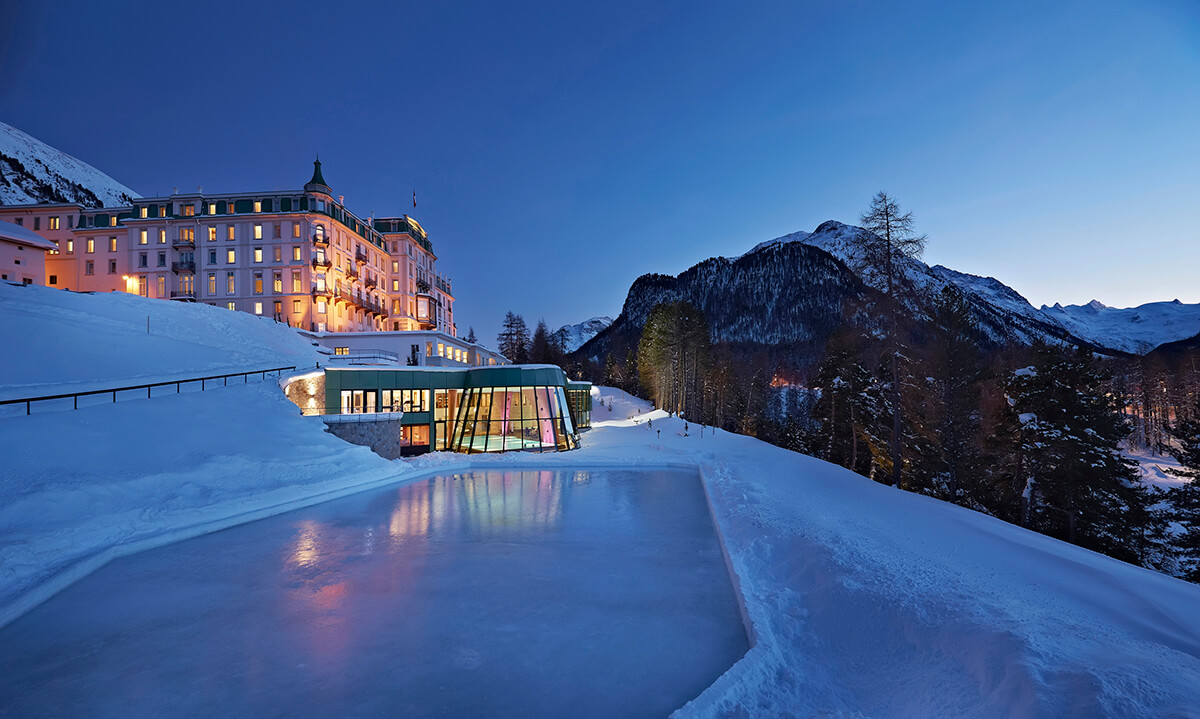
Grand Hotel Kronenhof in winter with its natural ice rink
Winter is here, and the world’s illuminati, glitterati and party-rati are agglomerating in mountain resorts, from Aspen to St Moritz, to see the year out, talk about next year’s business over magnums of Domaine de la Romanée-Conti, and, oh, also do some skiing between breakfast and long lunch.
Nowhere has such an aggregation of grand hotels as the Upper Engadine valley in Switzerland, home to St Moritz and a string of other villages studded around lakes, forests and various ski mountains.
Follow LUX on Instagram: the.official.lux.magazine
The discerning luxury traveller, looking for both solace and exclusivity, might be drawn away from the town of St Moritz and its Masseto-sipping revelers, and towards Pontresina, a village ten minutes’ drive away in an adjoining valley, and specifically to the Kronenhof, its most luxurious hotel (and sister to St Moritz’s own celebrated Kulm).
Why go now?
Late December and early January are when a significant section of Europe’s aristocracy decamp to the area; snow is plentiful right now, and you’re bound to know people to drop in on.
The welcome
Draw up the courtyard, at the lower end of a long high street studded with sixteenth and seventeenth century buildings, and you feel you have arrived at one of Europe’s grand old hotels. Doormen and receptionists have that perfect (and hard to find) blend of courtesy, genuine enthusiasm, and professionalism, without the over-formality of some hotels in the area that always makes you feel like you’re wearing the wrong shoes.
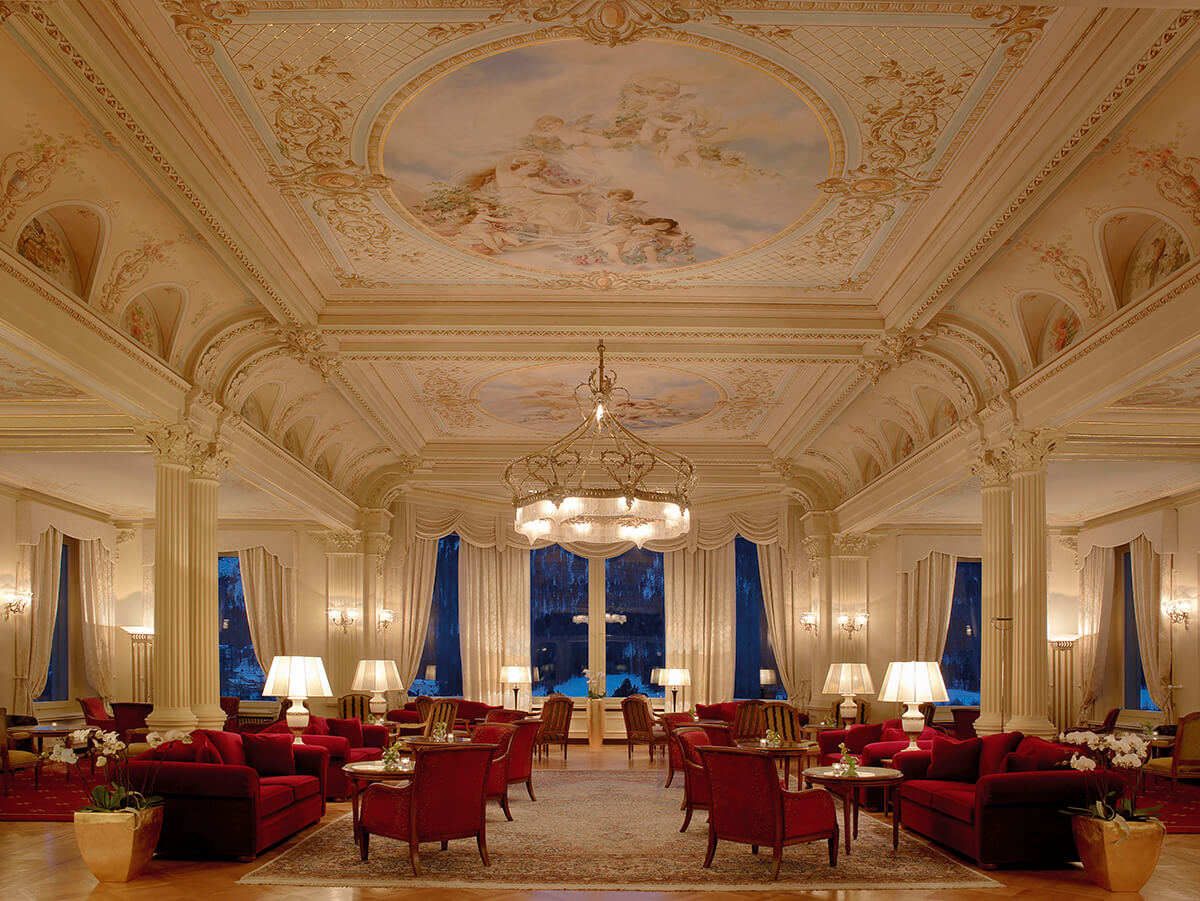
The grand lobby area
Walk through the reception area and you are in a vast, beautiful, series of high-ceilinged grand reception rooms, all with picture windows out over the forest and valley below; to one side is the Val Roseg and the high glaciers of the Bernina peaks.
Getting horizontal
Our suite was lushly but refreshingly decorated in eggshells and taupes; drawing the curtains revealed the same stunning view down over snow-laden pine and larch trees, across to the mountainside beyond, and the edge of St Moritz in view by the mountain’s right hand ridge. There was a spacious balcony for those chilled-out late night Cognacs.
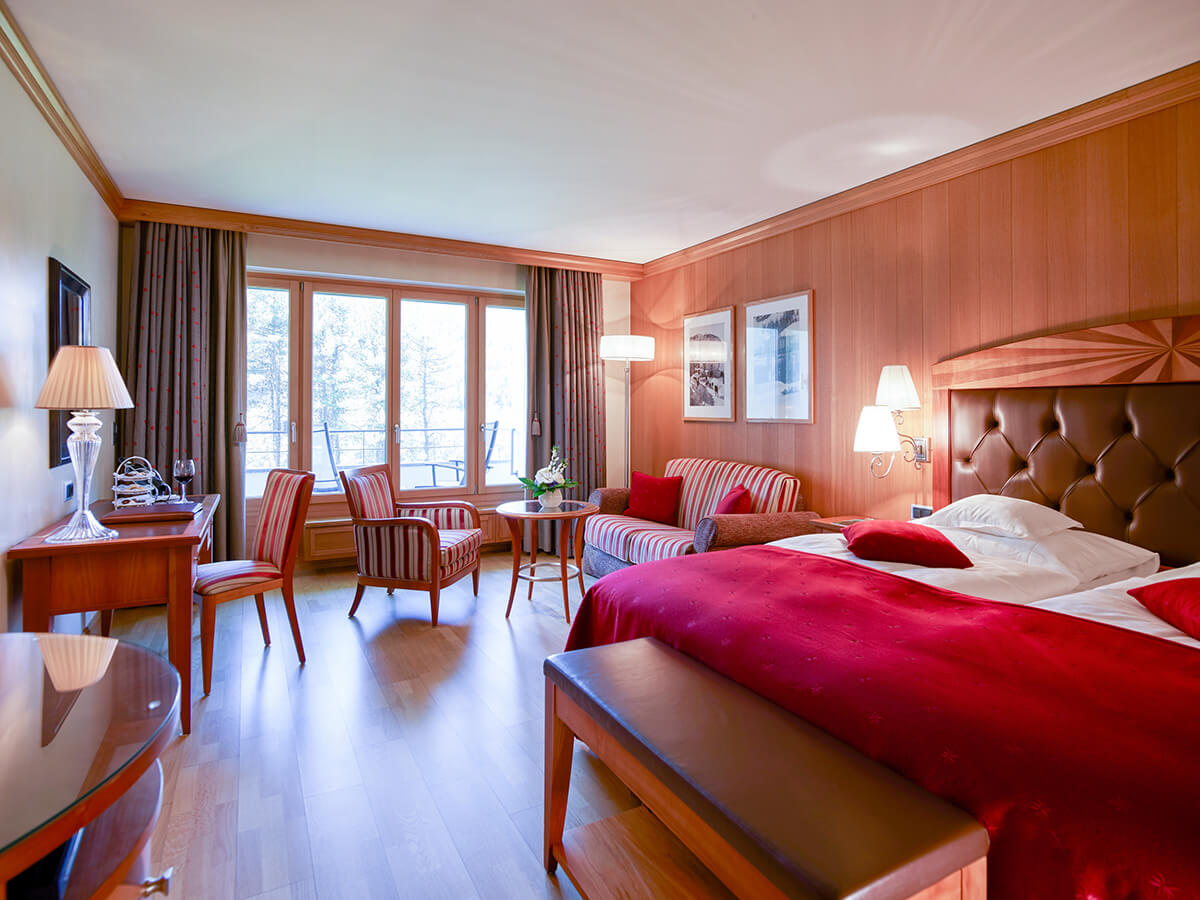
A Deluxe Premium double room
A quick trot down a couple of marble staircases takes you to the Kronenhof’s piece de resistance, a vast spa and pool area carved into the mountainside at the bottom of the hotel. The huge pool, with windows all round, has a mesmerising panorama across the Engadine valley, to the mountains separating this beautiful and isolated region from the rest of Switzerland. From the spa pools, indoor and outdoor in the snow-covered garden, you can see the Corviglia ski mountain above St Moritz with crystal clarity; we liked melting into the spa pools and looking at the mountain we had been skiing on.
Read more: Model and actress Adrianna Gradziel on female solidarity
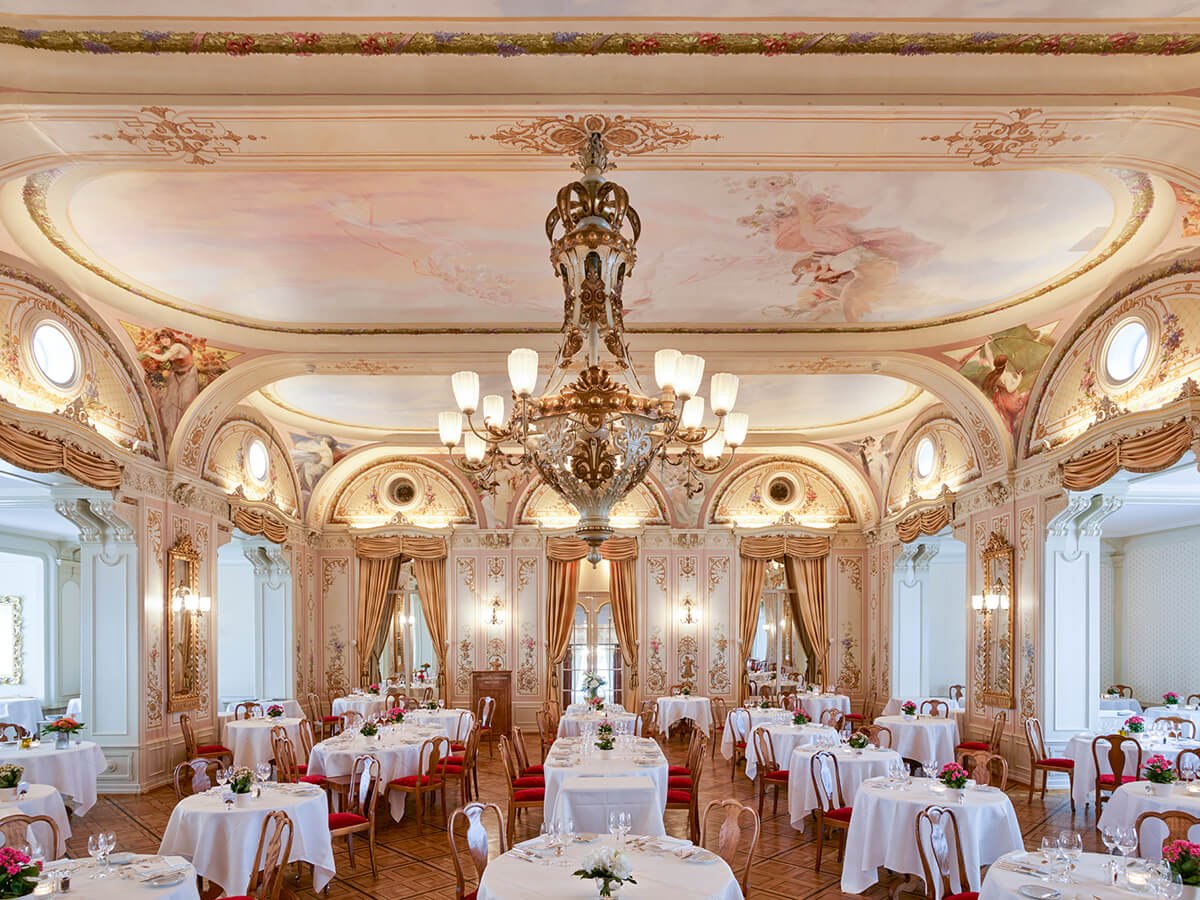
The hotels dining options include the Grand Restaurant (pictured here) and Kronenstübli
Anything else?
The Kronenhof’s restaurant, the Kronenstubli, is based in the original owner’s house above what were the hotel’s stables in centuries gone by. There is also a grand dining room where very thorough Swiss breakfasts (including just about every herb, nut and seed going) and lavish dinners are served, and a beautifully laid out children’s dining room, a miniature version of the same, next door.
After dinner, stroll along the town’s ancient high street, taking in the views – it’s on a ledge above the valley floor – and steeling yourself for the next day’s skiing. As classy as it gets, without the crowds.
Winter rates: From CHF565 for two sharing a double on a half-board basis (approx. €500/ $600/£450)
To book your stay visit: kronenhof.com
Darius Sanai


Up next in the exciting new development of Andermatt Swiss Alps? A state-of-the-art concert hall and artworks by a Swiss graffiti artist
At first glance, it might not seem like the most likely pairing: hip, Swiss graffiti artist Ata Bozaci with Andermatt Swiss Alps, the mountain village south of Zurich that over the past nine years has been gradually developed into a world-class, year-round destination resort. Yet Bozaci (who is known for working under the pseudonym ‘Toast’ and counts the late, legendary German photographer Gunter Sachs among his collectors) has been tasked with putting his artistic spin on Eisvogel, the latest apartment house currently under construction in the resort’s Holiday Village Andermatt Reuss.
Follow LUX on Instagram: the.official.lux.magazine
The house (which is due for completion in 2019) will be split into a series of smart studios aimed at younger urbanites. Smaller units are planned in a way that makes use of every square metre of space, plus residents can relax in the spa, socialise at the in-house bar and hang out in the communal kitchen, dining and chill-out zone – which is where Bozaci’s distinctive graphics come in. Similarly to the other apartment houses in the holiday village, owners here can also benefit from a specially developed rental concept that encourages them to generate income (and keep the place feeling lively) when they are away.
From the outset, Holiday Village Andermatt Reuss has been at the heart of this £1.3billion development project, encompassing around 500 apartments, 28 exclusive chalets and a handful of hotels including five-star, Jean Michel Gathy-designed, The Chedi Andermatt. An international architectural competition led to 30 global architects (including Kurt Aellen, Itten+Brechbühl and Soliman Zurkirchen) being selected to design the 42 apartment houses and hotels. Of those already sold, 50% have been snapped up by international buyers – many of them British, German and Italians – making the most of the exemption from both the Swiss Second Home Law and the Lex Koller legislation, which restricts the acquisition of real estate by non-Swiss residents.
Some, such as apartment house Alpenrose (due for completion this winter) are set around the main Piazza Gottardo, with its high-end restaurants, cafés and boutiques (other apartment houses are positioned just behind the square). Cleverly combining an alpine-inspired facade that integrates harmoniously into a traditional Swiss village with contemporary interiors, Alpenrose houses 20 apartments, from 50 square metres up to 146. Many have a glazed corner bay that provides excellent views of the surroundings, while maisonettes on the top floors come with their own sauna.
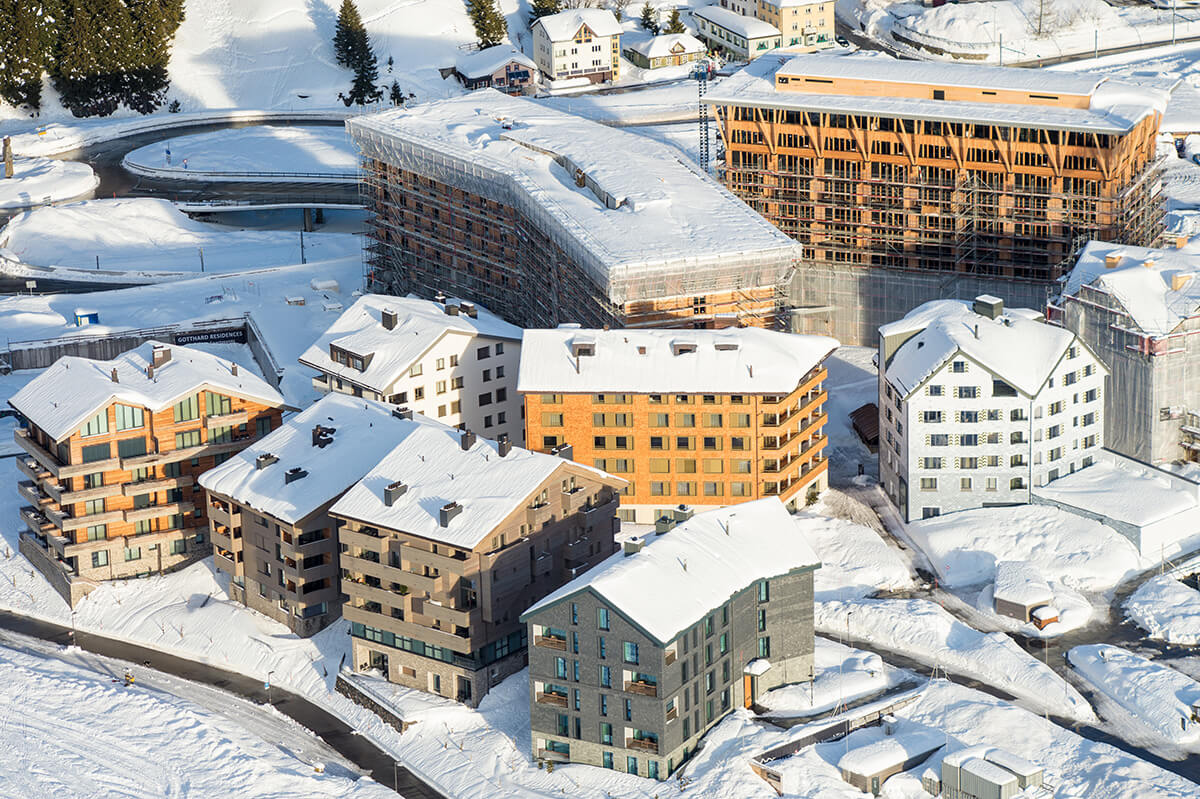
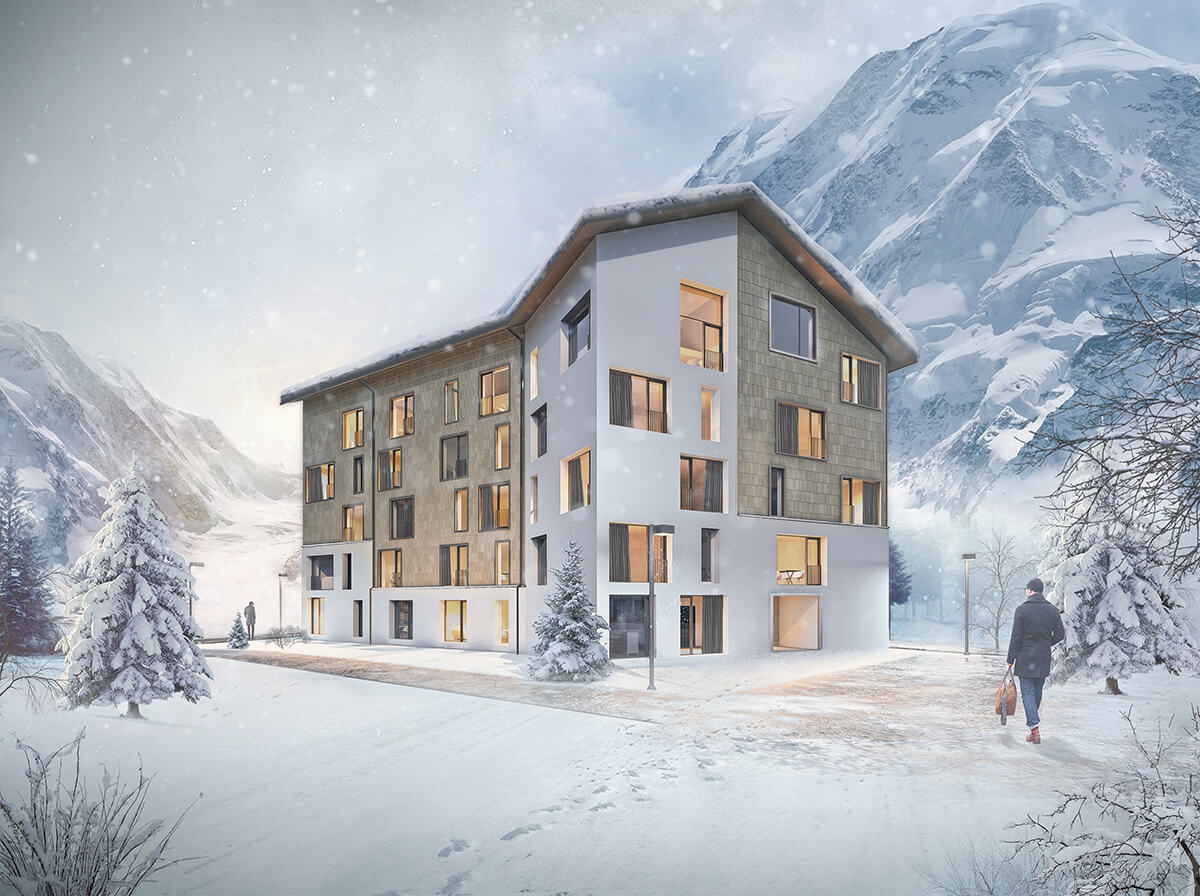
Andermatt’s redevelopment includes new apartment houses, hotels and chalets
Another important addition when it opens this season will be the Gotthard Residences: around 100 apartments, each with the added bonus of hotel services provided by Radisson Blu. Owners of the apartments, ranging from one-bedroom residential units to spacious multi-bedroom apartments and luxurious penthouses, will have complimentary access to the Radisson Blu fitness and wellness centre for the first three years, plus use of a ski locker in the hotel’s fully equipped ski room as well as a concierge on hand 24 hours a day. The Radisson Blu itself will also have six meeting rooms and a conference hall for more than 500 guests – making it an appealing venue for businesses throughout the year.
The process of realising Holiday Village Andermatt Reuss continues to have a positive impact on the local economy, with a 65 percent upswing in construction industry employment (this looks set to continue, with growth predicted in the hospitality, trade and service sectors). The number of overnight stays in the Urseren Valley has also increased massively: in 2016, the numbers reached 100,000 for the first time, and are expecting to hit 260,000 by 2022. This would place Andermatt at the scale of destinations such as Flims-Laax; with further expansion steps, the scale of Engelberg, Arosa or Grindelwald could be reached.
Of course, buyers are flocking here for the stunning natural beauty of the place. From blossoming pastures in summer for hiking and biking to the snow-blanketed mountains in winter, Andermatt Swiss Alps offers something for anyone who appreciates the appeal of fresh air and rural landscapes. Adventurous hardcore skiers come for the excellent powder, black runs and off-piste challenges of the Gemsstock Mountain; others make the most of ice-climbing at Göschenen and the ice-rink in Andermatt.
Read more: Photographer Hossein Amirsadeghi’s book launches at Hatchard’s
Now though, there is a handful of new sporting and cultural additions designed to draw in even more crowds. For starters, there’s the Andermatt Swiss Alps Golf Course (named Swiss Golf Course of the Year in 2017 for the second year in a row). Ranked among the Top 100 Golf Courses of the World with a rating of five stars, the Scottish-flavoured course, designed by the renowned German golf course architect Kurt Rossknecht, is over six kilometres long and meets international tournament standards. It comes with a modern clubhouse, The Swiss House, which doubles up as a hub for cross-country skiers in winter.
Not to mention a busy events calendar featuring the annual Bike Festival Andermatt (watch Olympians and world champions race in the PROFFIX Swiss Bike Cup), Andermatt Swiss Alps Classics (a classical music festival where concerts take place in various locations such as The Chedi Andermatt and the newly opened gondola station Nätschen) and Woldmanndli (based on an ancient custom where a procession of men enter the village to protect the forest below the Gurschen).
There’s also the much-anticipated Andermatt Concert Hall, a renovation of a former convention venue by Studio Seilern, due to open early next year. With an extended roof and covered plaza, it will adhere to the acoustic requirements of a state-of-the-art concert hall and be large enough to accommodate the Berlin Philharmonic Orchestra as well as host gala dinners and lectures.
The Studio Seilern-designed concert hall
As part of the ongoing Andermatt Swiss Alps project, there has also recently been a fresh focus on the gastronomy on offer within the resort. Multi-award-winning chef Dietmar Sawyere, who has been executive chef at The Chedi Andermatt since May 2015, has assumed overall responsibility for gastronomy. Currently the top choices for eating out in the resort are the restaurants at The Chedi Andermatt, which include one-Michelin-star The Japanese Restaurant (the five- to 10-course Kaiseki menu is a speciality), a wine and cigar library and the main restaurant, which has a noteworthy cheese cellar. Over the next few years, these offerings will be joined by half a dozen new restaurants in the village of Andermatt and on the surrounding mountains.
It’s all a far cry from when the Swiss Army was garrisoned near to Andermatt after World War II (prior to that it was a chic mountain resort on a par with Verbier and Zermatt). In 2003, the artillery range was closed, effectively reducing the population and the village’s major source of income at the same time. It wasn’t until Samih Sawiris, founder of Orascom Development, visited nearly 20 years ago that everything changed. Inspired by the picture-postcard Urseren Valley and untouched alpine countryside, he had an ambitious vision to turn the fortunes of the village around.
After collaboration with residents, government and tourism organisations, the people of Andermatt voted with an overwhelming 96 percent majority in favour of the development. Construction on the Andermatt Swiss Alps project began in 2009, the Chedi Andermatt opened in 2013 and to date, £687 million has been invested £131 million in 2017 alone).
Key to the master plan has always been merging the Andermatt and Sedrun ski regions into SkiArena Andermatt-Sedrun, the largest ski area in Central Switzerland – something which is coming to fruition this winter and by 2022, is expected to attract around 580,000 skiers over the course of a single season. There are also plans to invest another £305 million in the further expansion of Holiday Village Andermatt Reuss and the train station, cementing the area as a major destination for winter-sport enthusiasts.
The future for Andermatt Swiss Alps looks very bright indeed.
SkiArena Andermatt-Sedrun
This winter’s ski season marks the full opening of the new SkiArena Andermatt-Sedrun: more than 120km of pistes connected by the Oberalppass-Schneehüenerstock gondola cableway which can carry up to 2,400 people an hour from Andermatt to Gütsch mountain station. This huge development project has involved the construction of 14 lifts (some new, some replacements) and creating snow-making systems. Work on several new mountain restaurants is also underway. The result? For the first time ever, it is now possible to ski from Andermatt to Sedrun and back – what a thrill.
For more information visit: andermatt-swissalps.ch
This article originally appeared in the Autumn 2018 issue, to view more content click here: The Beauty Issue
Chais Monnet is a luxury country and spa hotel near Bordeaux
Last week saw the official opening of the most swanky hotel in southwest France, by Anglo-Iranian entrepreneur Javad Marandi, owner of the beyond cool Soho Farmhouse in Oxfordshire, England.
A very welcome addition to the luxury hotel scene near Bordeaux, Chais Monnet is a converted former Cognac warehouse transformed into a very lavish hotel, spa, and conference centre with some breathtaking architecture by Didier Poignant. The interior design is contemporary-luxe auberge, if you can allow yourself to imagine such a thing, and the cuisine has a lightness of touch and umami influence from Sebastien Broda, who earned a Michelin star at his former employer in Cannes.
The hotel was built out of a former Cognac warehouse by architect Didier Poignant
Chais Monnet offers riding holidays, picnics in the sun-dappled vineyards of Cognac in classic cars (guests can just jump into the hotel’s vintage Citroen and drive away), wine and cognac tastings and tours of the local Cognac houses such as Hennessy, Martell and Rémy Martin, as well as visits to the great Chateaux of Bordeaux, and a spa and full-sized indoor-outdoor pool.
A local troupe performs a fire dance at the opening of the luxury Chais Monnet hotel
Read more: An exclusive preview inside Hôtel Chais Monnet
At the launch event last week, we were content to sip Cognac cocktails (and some very refreshing local Chenin Blanc) while indulging in the festivities and a feast inside the old chais, or cellar, surrounded by ancient ageing vats. Oh, and then we partied away to a jazz band in the extremely cool converted barn-bar. A new reference for this part of France.
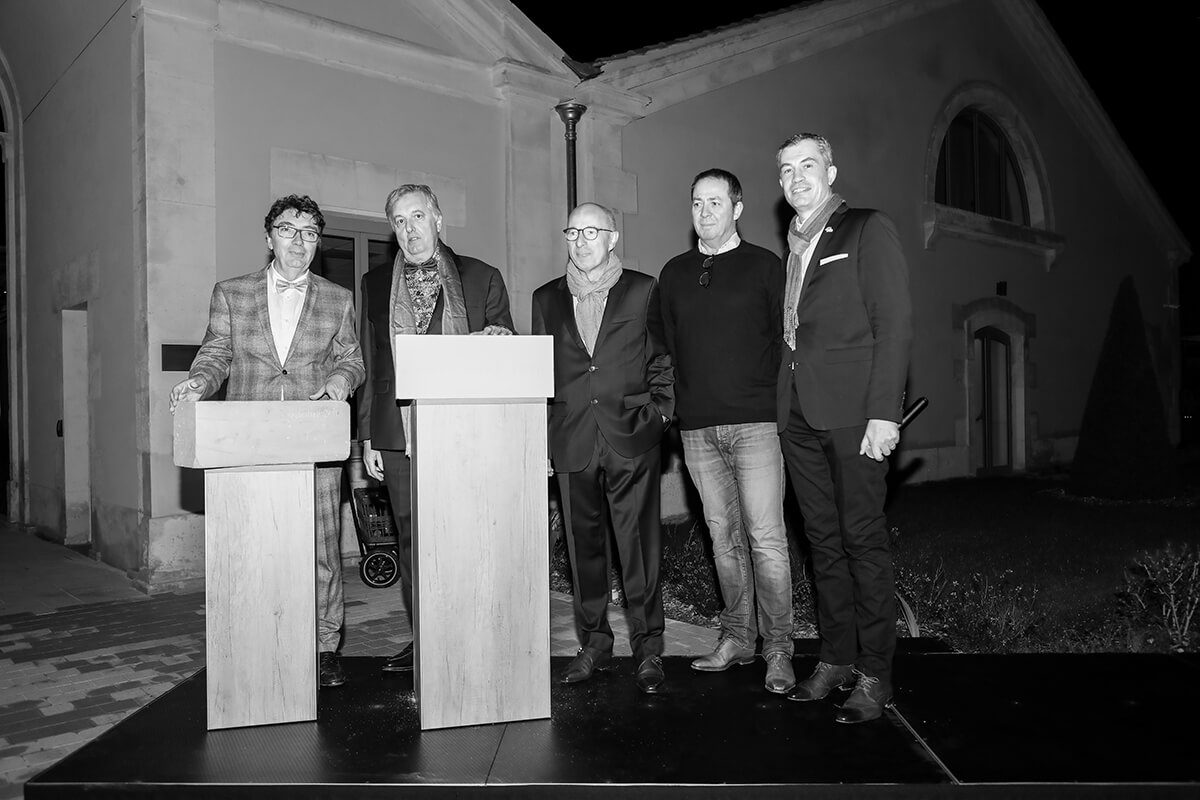
From left to right: Cognac Mayor Michel Gourinchas, architect Didier Poignant, Daniel Theron of ACPH, Xavier Arm from Vinci construction, and hotel General Manager Arnaud Bamvens

Owner Javad Marandi, Cognac Mayor Michel Gourinchas and hotel manager Arnaud Bamvens
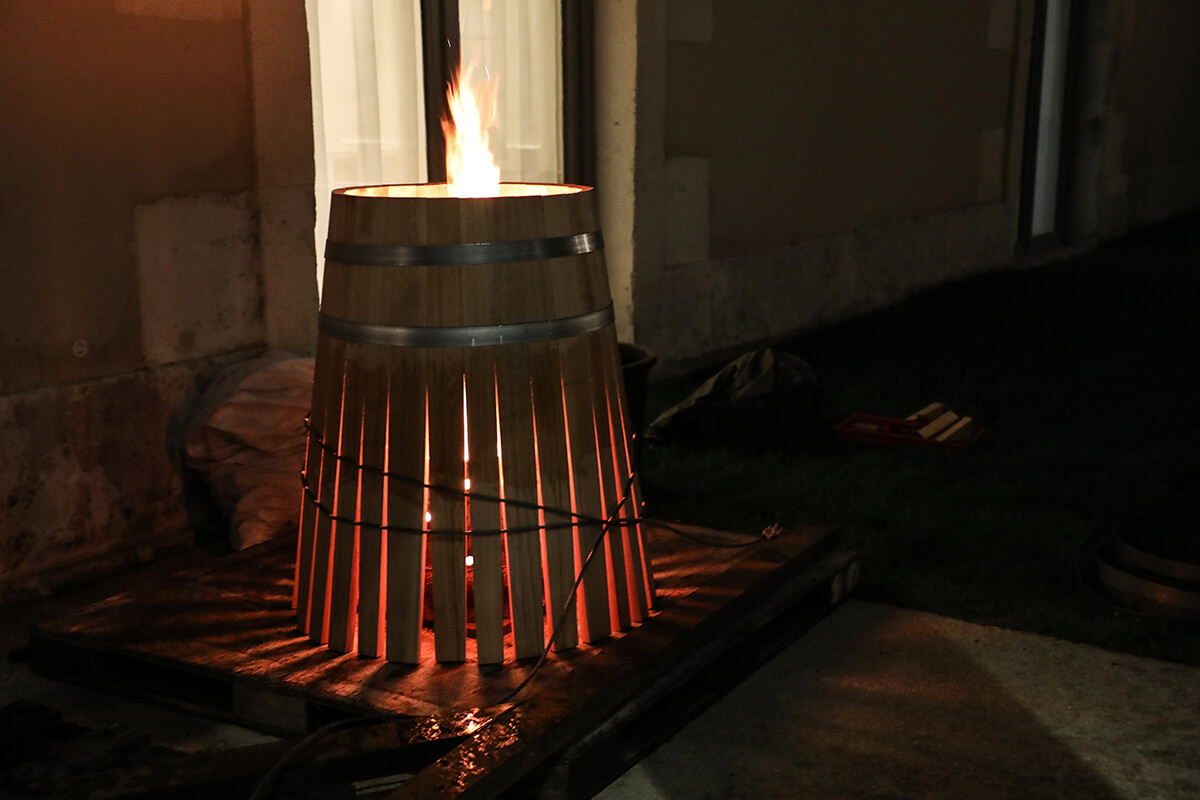
The making of an oak barrique, part of the display at the opening of Chais Monnet in southwest France
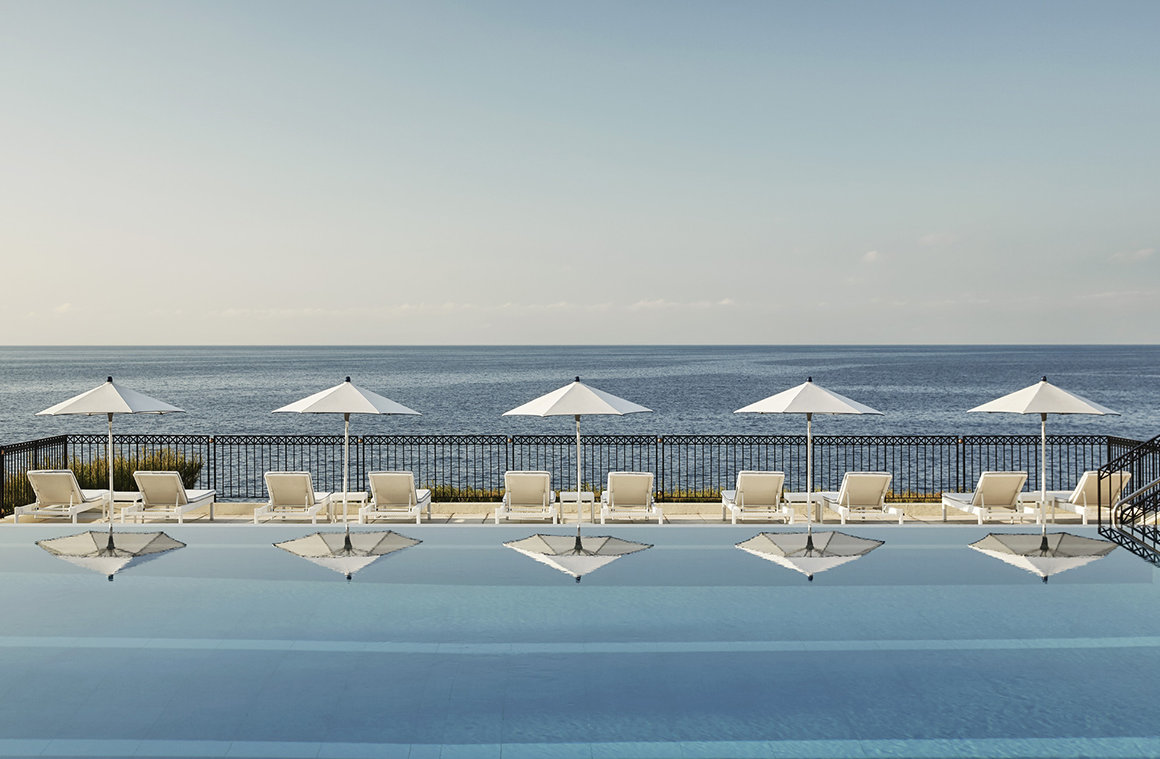
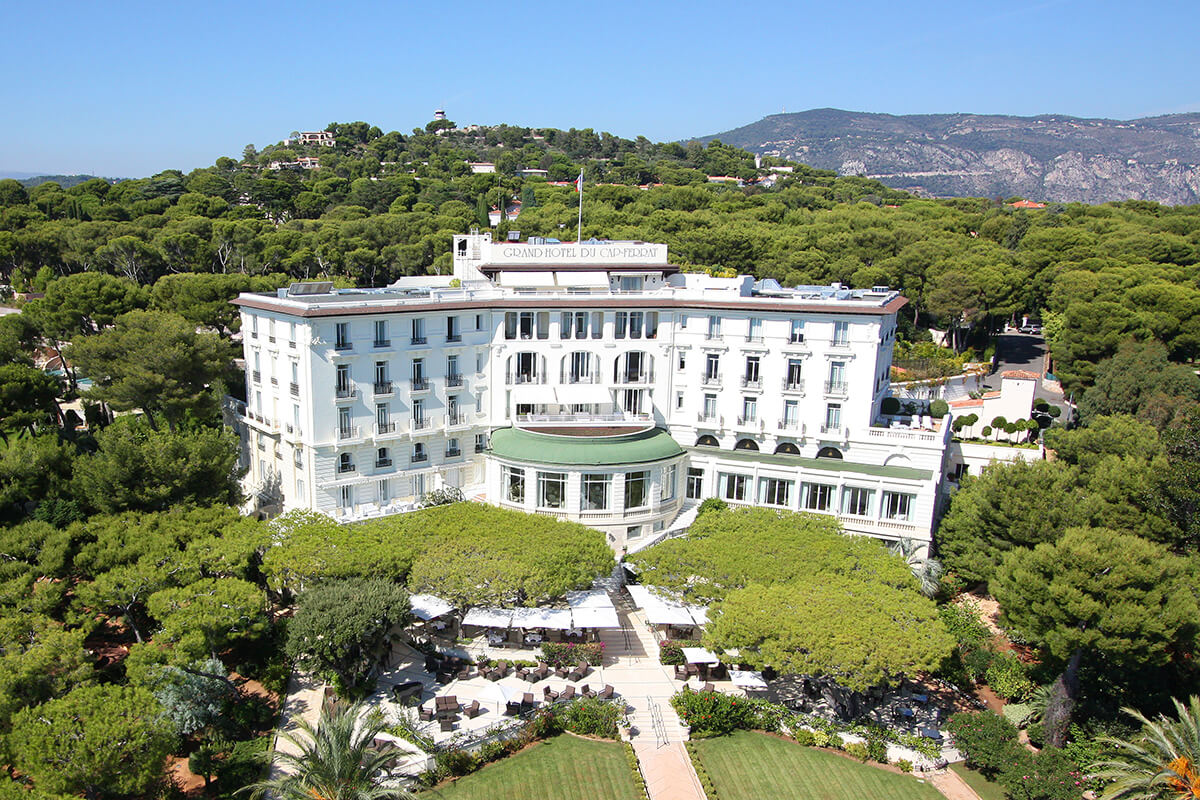
Grand-Hôtel du Cap-Ferrat by Four Seasons sits perched high on the cliff edge with stunning views of the Mediterranean
Club Dauphin at Grand-Hôtel du Cap-Ferrat by Four Seasons feels more like a private island than one of the most famous poolsides in the Cote d’Azur, says LUX Editor-in-Chief Darius Sanai
It’s high summer, and you are almost certain to be suffering from one of two types of holiday envy right now. Either you’re sitting in your office swiping through Instagram posts from people in exotic locations, wondering why you’re not there; or, worse, you’re on holiday in an exotic location, swiping through the same Instagram posts – and you’re still envious. Because, just as there’s always going to be someone richer or more successful than you (unless you’re Bill Gates or Nelson Mandela), there’s always a better place to be than where you’re at.
Follow LUX on Instagram: the.official.lux.magazine
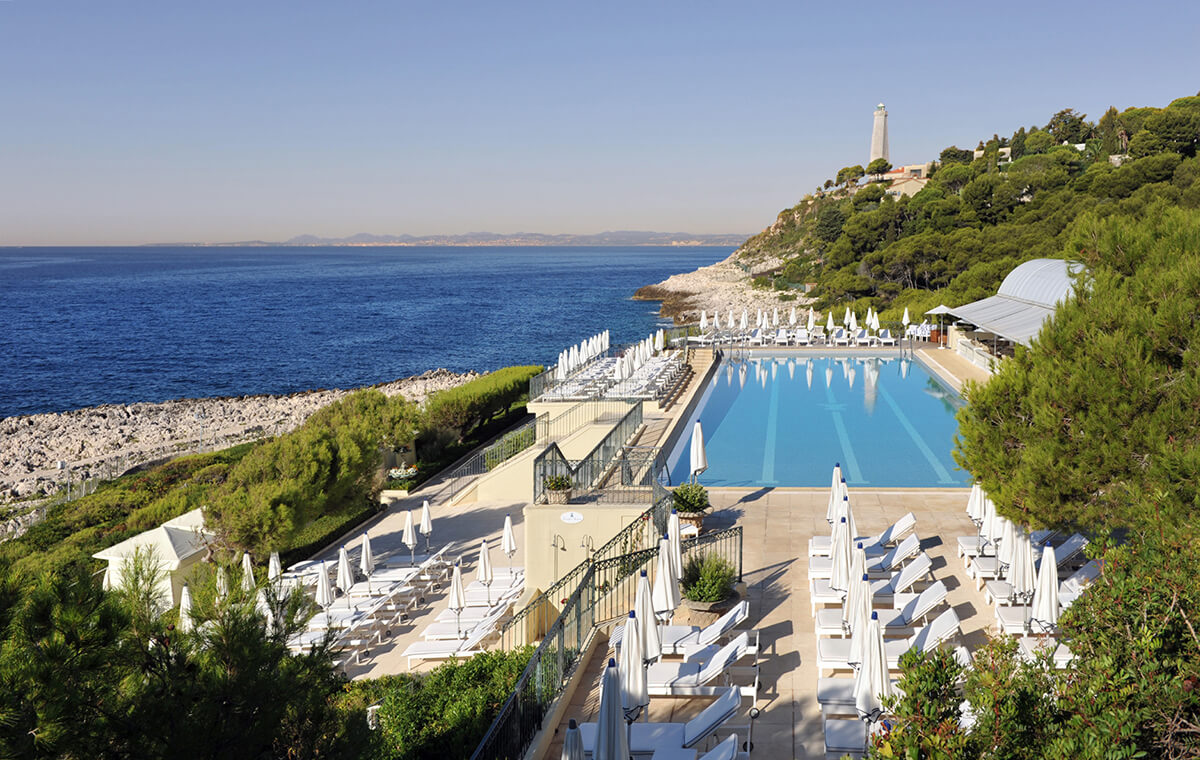
Club Dauphin’s infinity pool surrounded by sun loungers facing out towards the ocean
Unless you’re sitting poolside at Club Dauphin at the Grand-Hôtel du Cap-Ferrat, sipping a glass of rosé (poured by the cute bartender from a magnum, as is the current fashion), with a little tartlet by your side – a tartlet of the pâtissier kind (before you get any ideas – we’re not that type of magazine) created by the pastry chef as a special summer délice.
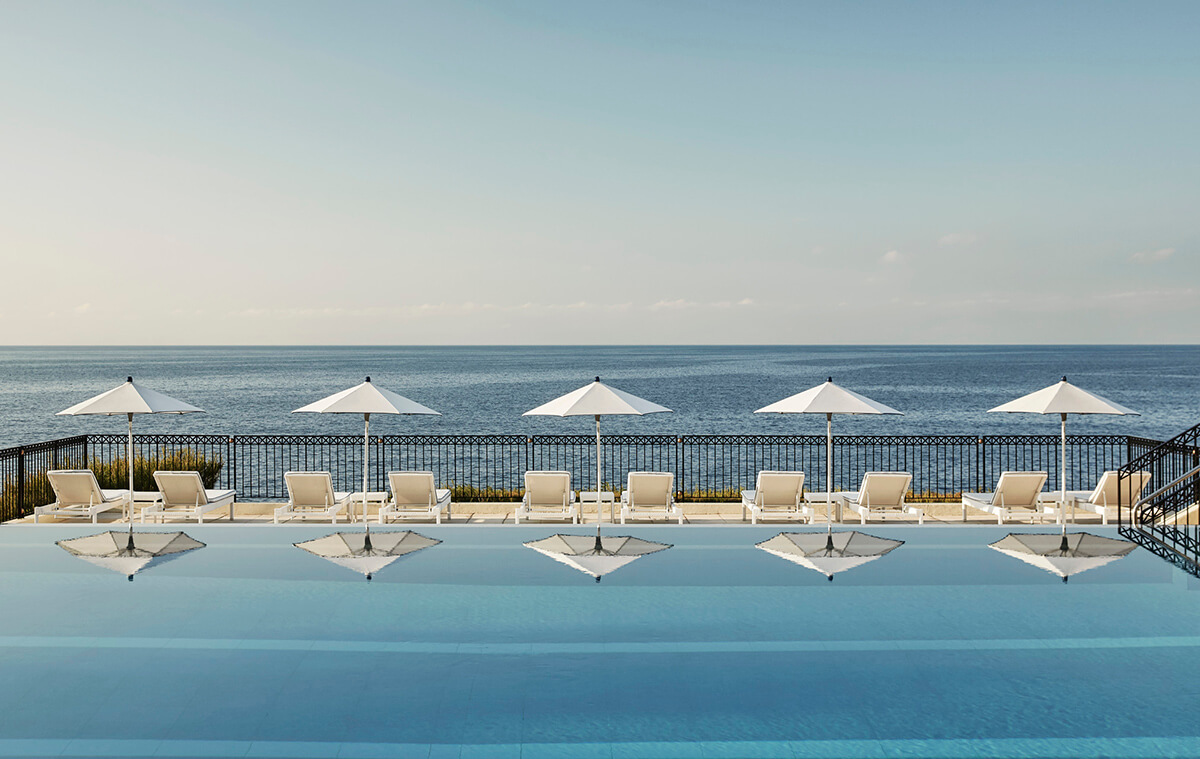
The Club Dauphin is the swimming pool area at the Grand-Hôtel, itself a dramatic creation at the very tip of the most exclusive spot on the Cote d’Azur, surrounded by the Mediterranean on three sides and avenues of stone pines shrouding hundred million euro Belle Epoque villas on the other. To get to the Club from the hotel, you wander along the lawn and down through a tropical garden sloping down a cliffside, which reveals a deep blue pool lined by sun loungers on two sides, rocks crashing into the sea on another, and a poolside restaurant/terrace. It is entirely private, more like being on a private island than in the heart of the Cote d’Azur, one of the world’s busiest and most beautiful holiday destinations, in high summer.
Read more: Co-founder & CEO of Spring Francesco Costa on creative co-working
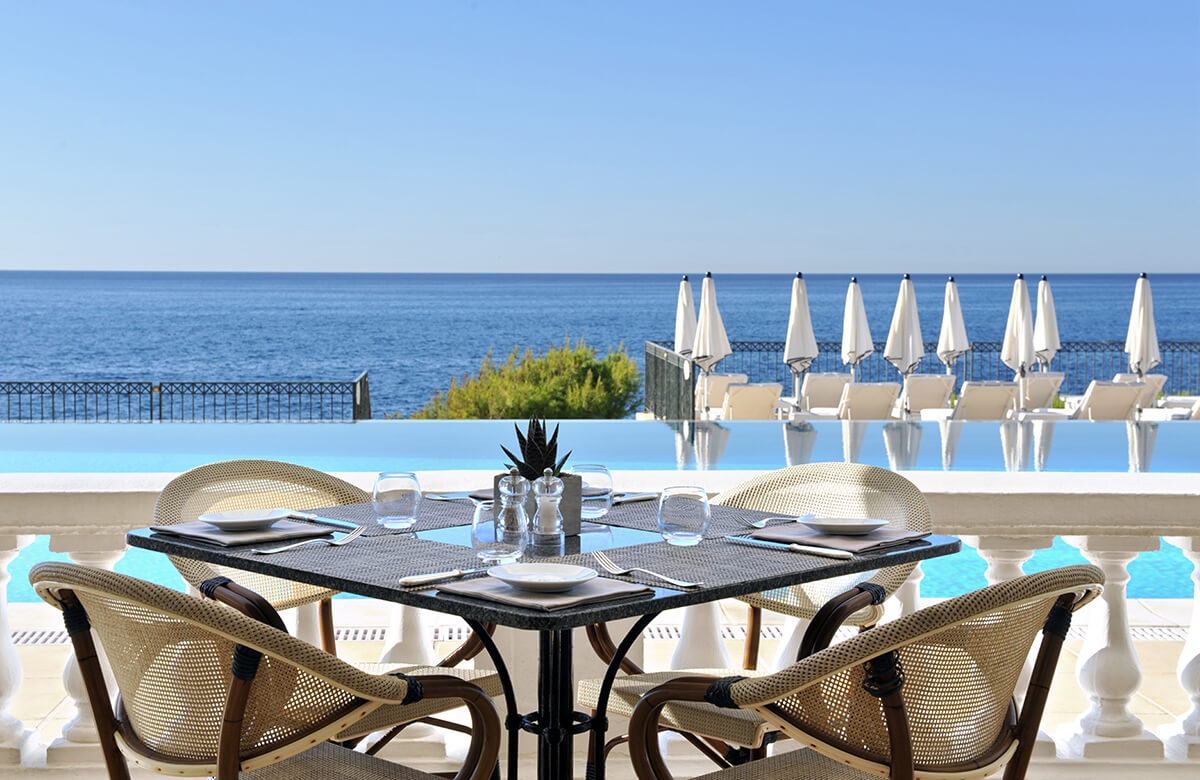
Open-air dining by the poolside
And that’s the beauty of the Grand-Hôtel. It’s rather like being on a yacht, except without the seasickness and the feeling of being hemmed in with other guests and their kids. You are surrounded by sea, but when you stand on the sea-side edge of the pool and look back, you see the dramatic backdrop of the Alpes Maritimes and the Corniche leading to Monaco, just 10 minutes drive away. You can visit Michelin-starred restaurants, drop by the Casino, wander the ancient streets of Eze or Saint-Paul de Vence, and then disappear back into the Club Dauphin for silence and another glass of rosé, please.
It’s so good, you’ll forget all about Instagram.
For more information on Club Dauphin and Grand-Hôtel du Cap-Ferrat by Four Seasons visit: fourseasons.com/capferrat
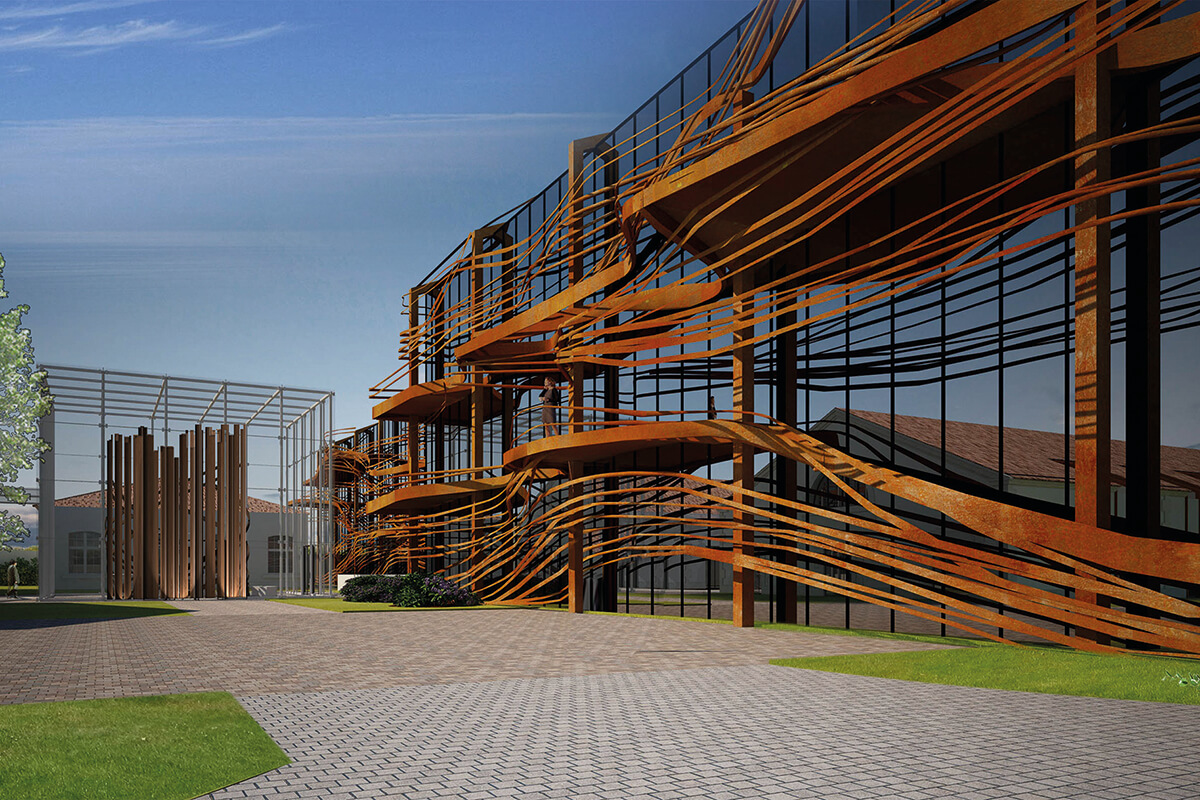
Dramatic architecture by Paris-based architect Didier Poignant has created a spectacular contemporary hotel out of a cognac ageing warehouse
A former warehouse in the heart of the town of Cognac is set to reopen this year as a luxury hotel. Emma Love gets an exclusive preview of the dramatic Hôtel Chais Monnet
It’s no secret that cognac has become cool. Where once the French brandy – determined as such by being made specifically in the Cognac region in southwest France – had a fusty reputation as an old man’s after-dinner tipple of choice, now the 390 cognac houses producing the stuff seemingly can’t make enough of it (the Hennessy label, owned by LVMH, recently opened a new bottling plant to keep up with demand and increase annual production). The fact that it’s a huge hit in China where it’s seen as a status symbol of wealth, and in the US, where it’s synonymous with rap music, are undoubtedly part of the reason why five bottles of the amber-hued spirit are sold every second somewhere in the world. And just as cognac the spirit has gone through a cultural shift, now the historic town where it’s produced is finding itself in the global spotlight, too.
Follow LUX on Instagram: the.official.lux.magazine
Last year Tony Conigliaro, a mixologist and major influence on London’s cocktail scene (he is behind the legendary bar 69 Colebrooke Row) opened Luciole, a bar with a cognac-based cocktail menu and this summer, the game-changing Hôtel Chais Monnet will open its doors in a former cognac warehouse, set in two hectares of land in the centre of town. Backed by British investor Javad Marandi, who is also the owner of the Soho Farmhouse in Oxfordshire, the hotel will house 92 rooms and suites, plus 13 apartments. “Here in the town we’ve been waiting for this for a long time,” said mayor Michel Gourinchas. “We’ve asked ourselves a number of times what we could do with this site and thanks to this hotel we’ll be able to see a reality of what’s possible in a way that’s in the best interests of our town, its inhabitants, and tourists.”
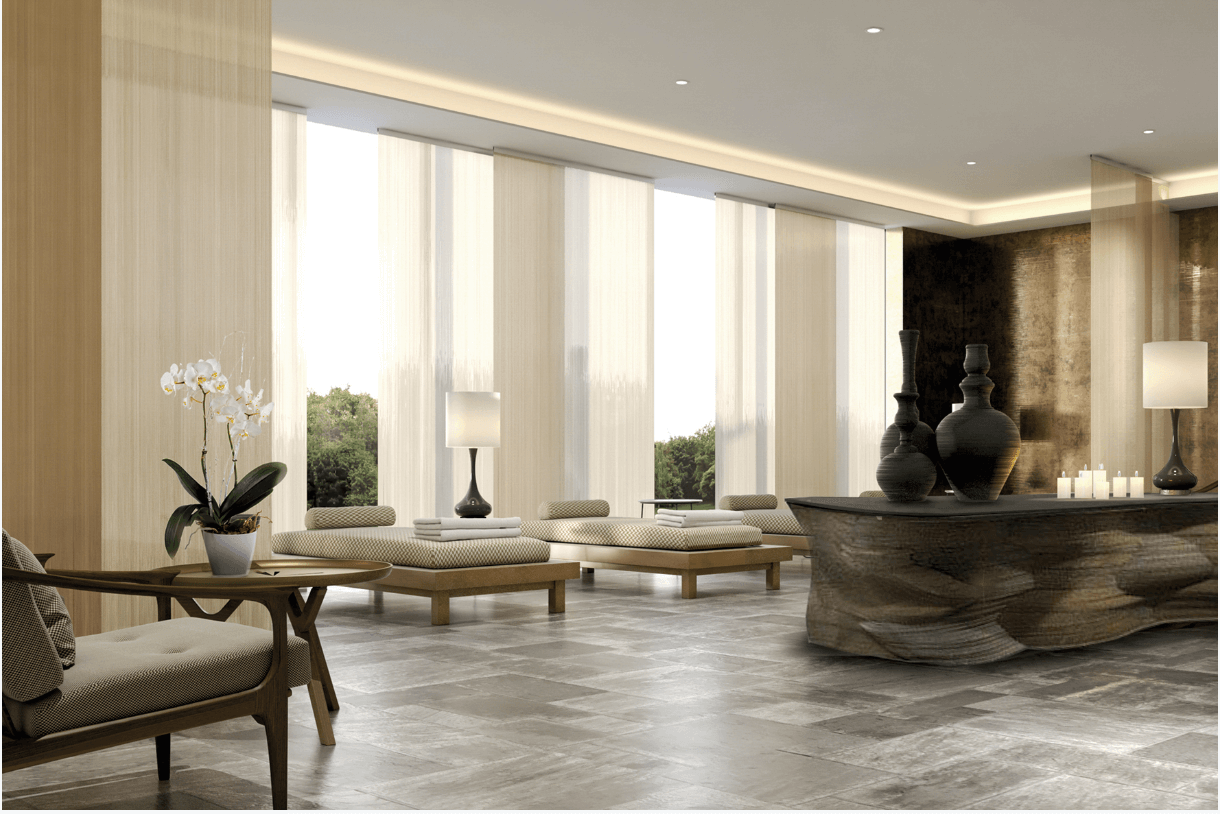
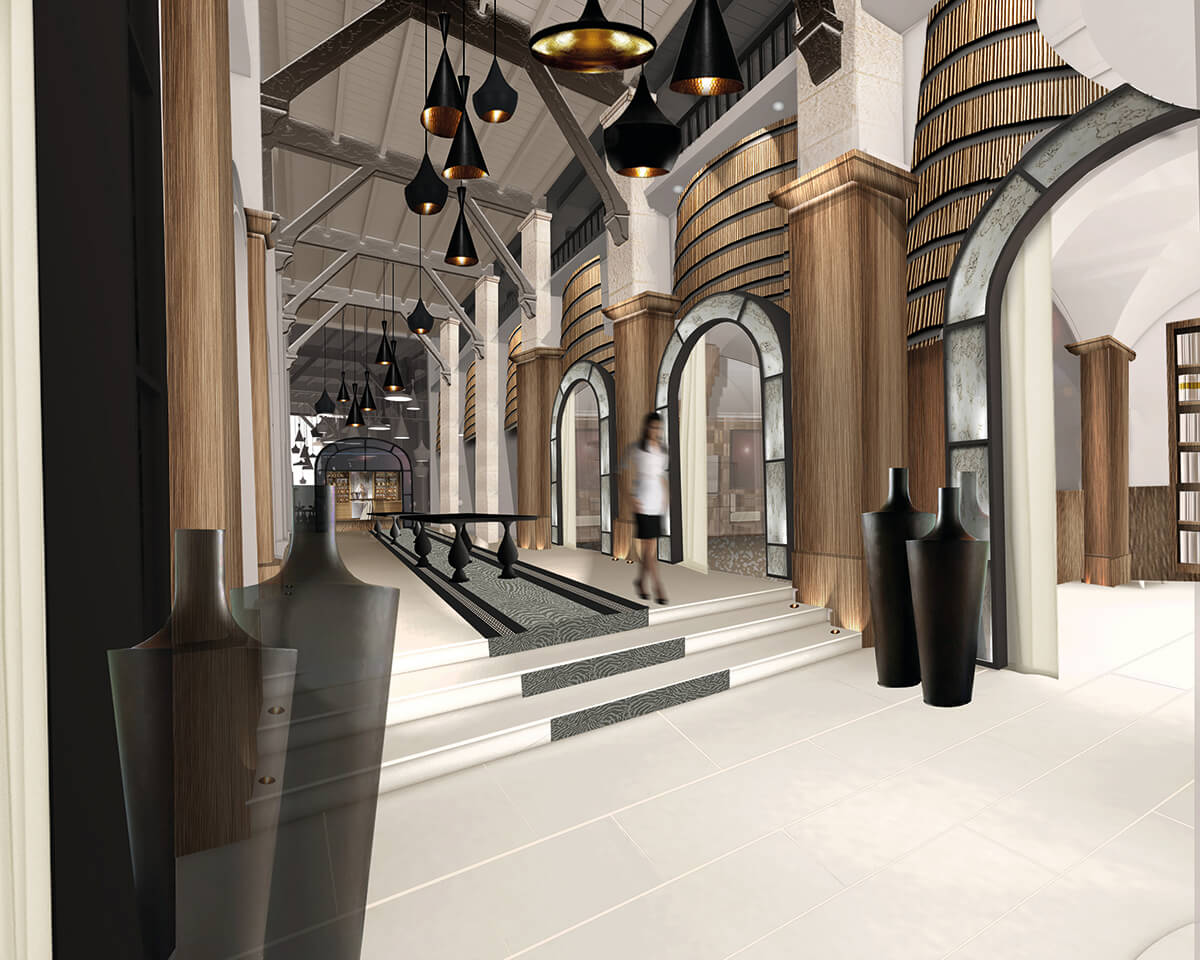
The public areas of the newly designed Hôtel Chais Monnet, such as the spa (top image) and the hallways, combine cool contemporary design with some original features of the former Monnet warehouse
The site itself has a unique history. The original 19th-century property was once owned by cognac trader Antoine de Salignac who, in 1838, founded the Society of Cognac Vine-growers, a community of several hundred small-vine growers who wanted to pool their strength to have sufficient stock to sell at the same time. Towards the end of that century, the shareholders asked Jean-Gabriel Monnet to manage the society and as part of the role, he and his family moved into the stately mansion and warehouse, naming it Chais JG Monnet. His son, also named Jean Monnet, left school aged 16 to follow in his father’s footsteps, travelling to Germany and America to sell cognac. He went on to become a political economist and diplomat, and an influential proponent of European unity (he is considered one of the founding fathers of the European Union). Later, the site was bought by the LVMH group, and then sold back to the town of Cognac in 2006.
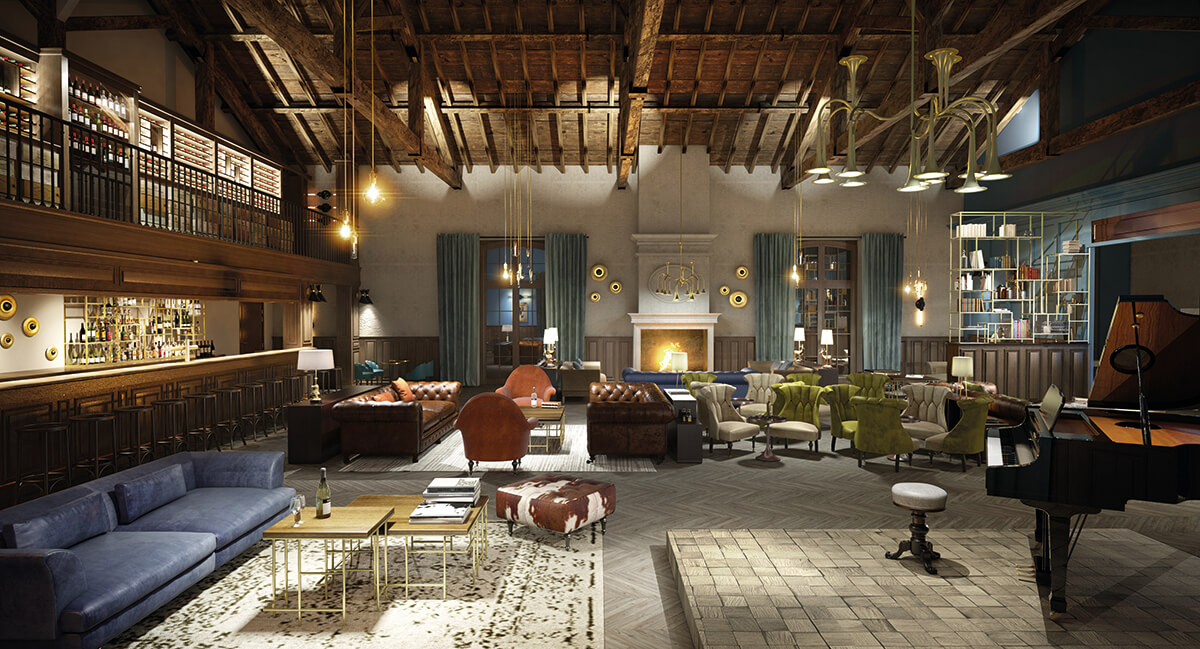
The next chapter in the property’s life looks very different – quite literally. Today, Hôtel Chais Monnet comprises seven original and three new buildings, all designed or remodelled by Didier Poignant of Ertim Architects in Paris. Looking at the hotel, what’s perhaps most striking is the way that the old and modern have been fused together, and how cognac references are subtly employed throughout. “I have never worked on, or seen a hotel like this in France,” says Poignant. “Transforming a historic cognac warehouse with such a large site in a town is very rare. For this reason, it is such a special project.”
Read more: Street artist Alec Monopoly on the purpose of art and wearing a disguise
At the heart of the property are a pair of new Les Ceps glass buildings surrounded by a twisting metallic structure inspired by grape vines. These house some of the rooms (the rest are in an original building, where the cognac was once aged) on the upper levels; on the ground floor of one there is a spa and wellness centre with seven treatment rooms, an indoor/ outdoor swimming pool, a hammam, jacuzzi and gym. The third new building is a series of apartments, which can be rented from three nights to a couple of weeks. The former old barrel-repair warehouse has been turned into a jazz bar with vaulted ceilings, Chesterfield sofas and a piano in one corner. As you’d expect, it will be stocked with a large selection of cognacs, from bottles by the small, lesser known houses to the famous Louis XIII from Rémy Martin.
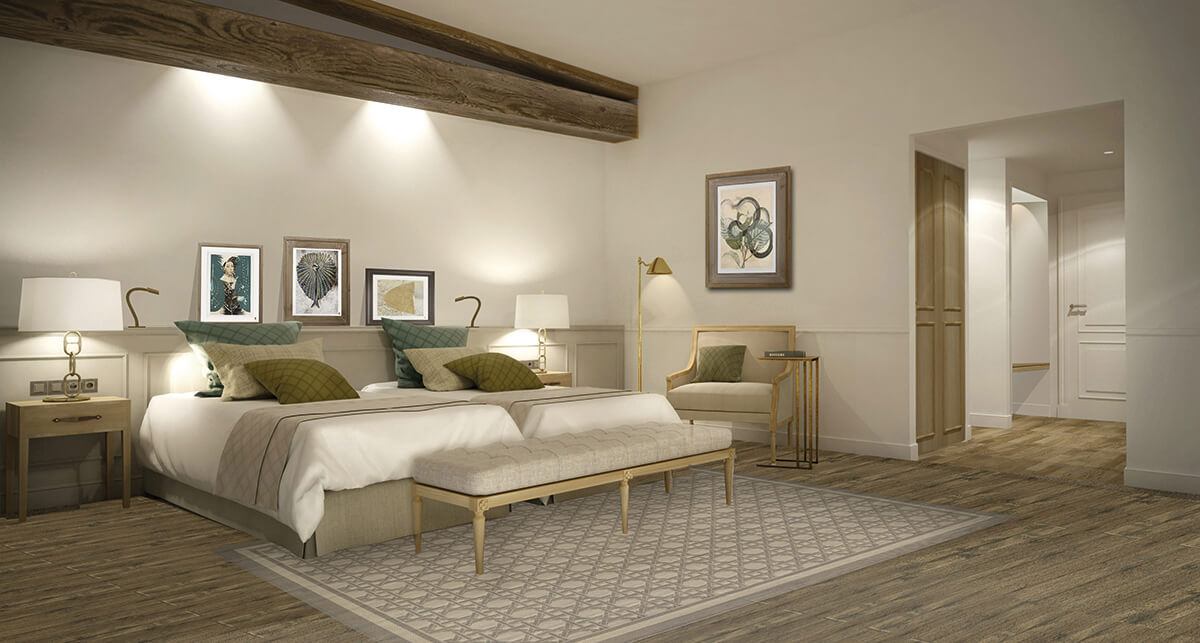
Render of one of the bedrooms
There are two restaurants within the old ‘Chai Cathedral’: a relaxed French brasserie and a more formal fine-dining offering which has old barrels, once used for cognac ageing, at the entrance. The chef chosen to head up the kitchen of the latter is Sébastian Broda, best known for his light, Mediterranean cooking at Michelin-starred Le Park 45 within Le Grand Hotel Cannes. “What matters,” explains hotel director, Arnaud Bamvens, “is that Sébastien Broda is a name of tomorrow. In his kitchen, which upholds a gastronomy of excellence, we can find his humility, his passion for cooking, and his interest in local produce. We want a cuisine of land and sea, rather than one or the other.” The hotel also has a private cinema, cigar lounge, kid’s club, a rooftop garden bar for summer sundowners, and a series of rooms dedicated to re-telling the story of Chais Monnet so far. The multipurpose ballroom (for up to 220 people) and four seminar rooms are suitable for meetings and events.

Render of the glass-encased entrance linking the two original warehouses
Of course, one of the biggest reasons for staying here will be the draw of visiting some of the many cognac houses that are on the doorstep, but the hotel is equally keen to promote the region’s many other attractions. The cobbled streets, the perfectly manicured gardens and traditional architecture, and the Charente river that runs through it, all point to a slower paced, more charmed life.
Read more: andBeyond CEO Joss Kent on creating luxury in the wilderness
“Cognac has a small bar scene but it has a lot of potential,” says Conigliaro, who decided to open a bar in the town with Guillaume Le Dorner, the former bar manager of 69 Colebrook Row, when he returned home to France. It was a smart move, and one that might encourage more drinking of cognac in the town itself (according to figures released in 2016, 97 per cent of cognac is exported, bringing the country 3 billion euros in annual revenue). With the cultural redevelopment of the nearby city of Bordeaux, it means a whole new part of France is opening up to the luxury traveller.
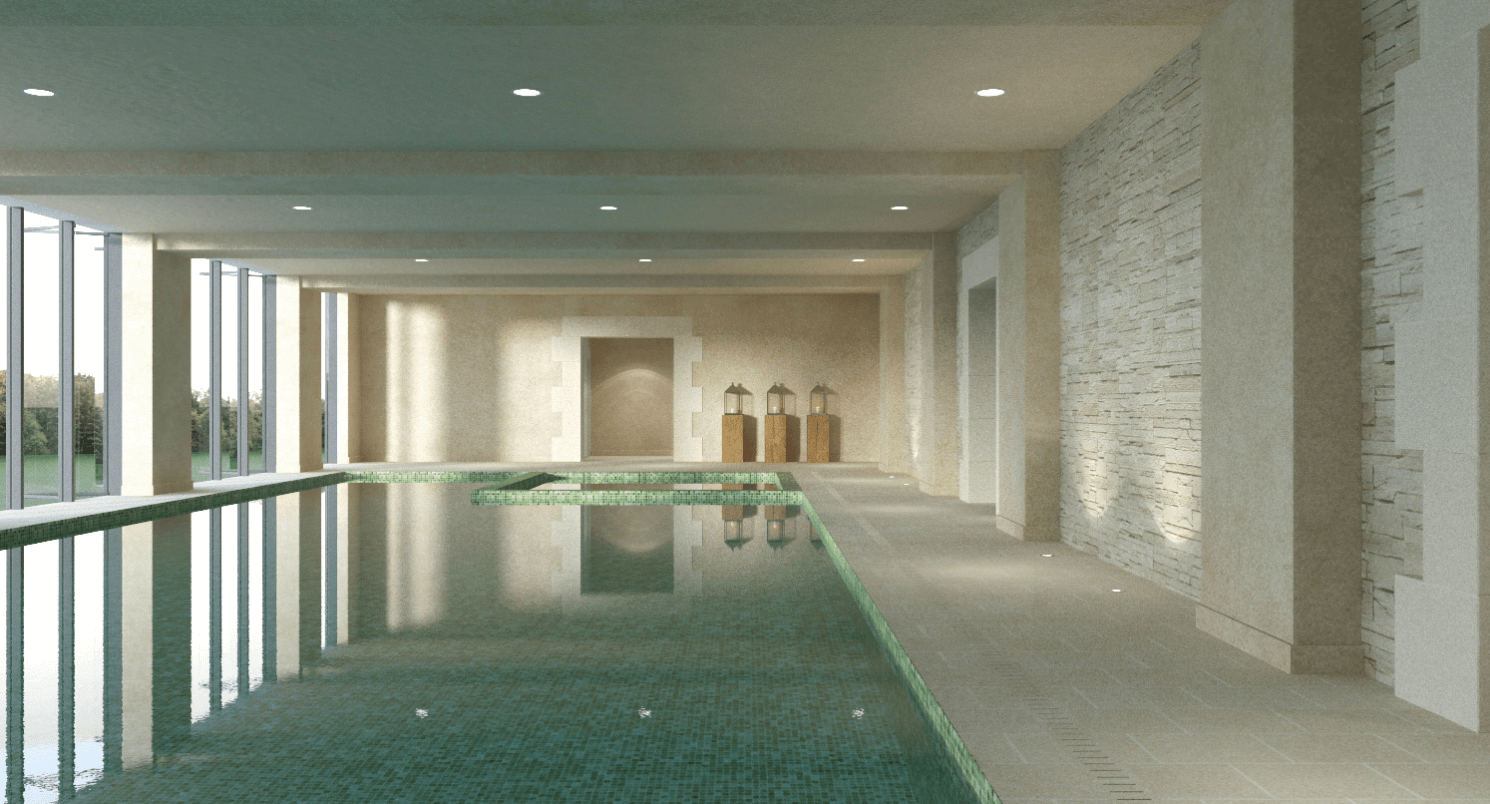
The hotel’s swimming pool and (below) one of the 21 suites that will be available
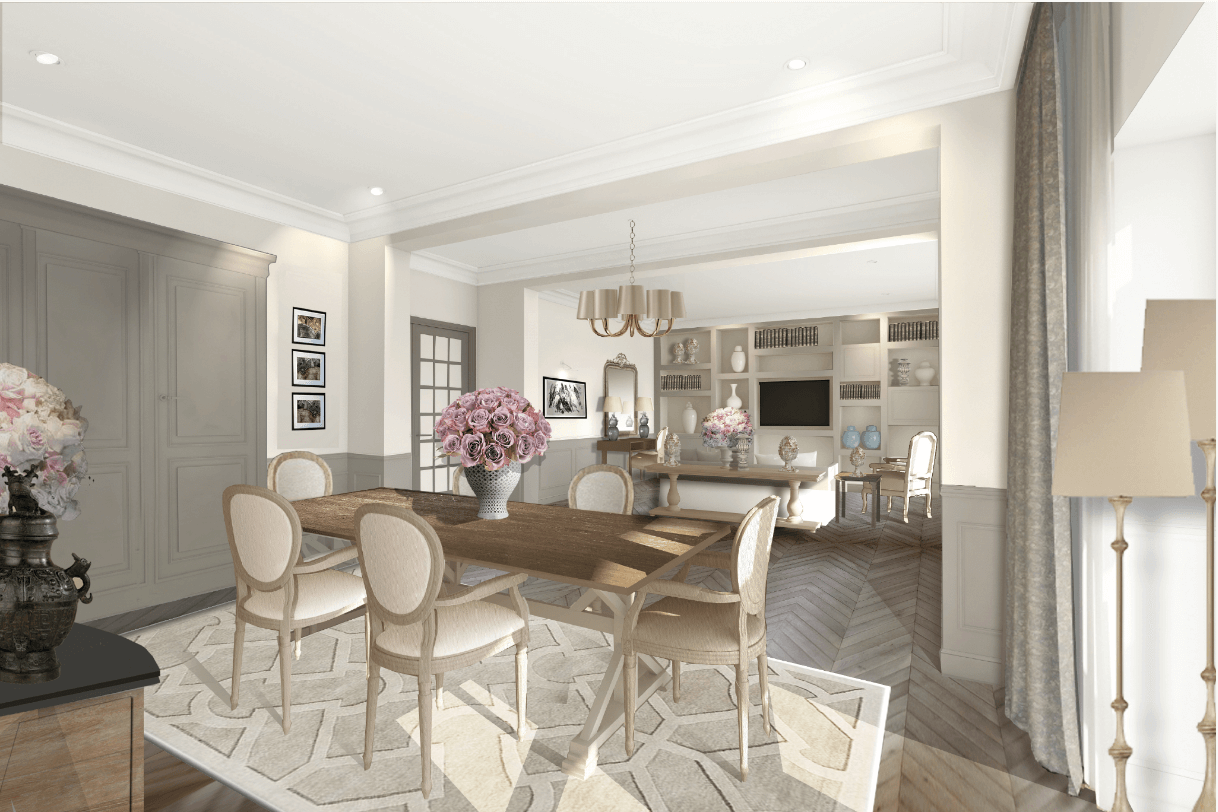
Four must-visit cognac houses
Meukow
Meukow was founded in 1862 by two brothers, August and Karl Meukow. They first visited Cognac on behalf of the Tsar of Russia, who hired them to buy French brandy supplies for the imperial court at St Petersburg. Look out for Meukow Extra, made from a blend of the very oldest eaux-de-vies in the Paradis Cellar. meukowcognac.com
Domaines Francis Abécassis
Domaines Francis Abécassis is a young cognac house with 220 hectares of vines. It is owned and run by Francis Abécassis and his daughter Elodie, who take a contemporary approach to producing classic cognac, such as in ABK6, blended from a selection of old eaux-de-vies. abecassis-cognac.com
Camus
One of the largest independent, family-owned cognac houses, as well as one of the largest landowners in the sought-after Borderies cru. Headed up by fifth generation owner Cyril Camus, the house recently launched a new addition to its Borderies range, Camus XO Borderies Family Reserve. camus.fr
Otard
Established by Baron Jean-Baptiste Otard in 1795, this house is known for its medieval residence and its distinctive teardrop shaped bottles. The one to buy is Fortis et Fidelis, created in homage to the house’s founder and featuring the Otard coat of arms motif on the bottle. baronotard.com
For more information and updates on Hôtel Chais Monnet visit: chaismonnethotel.com
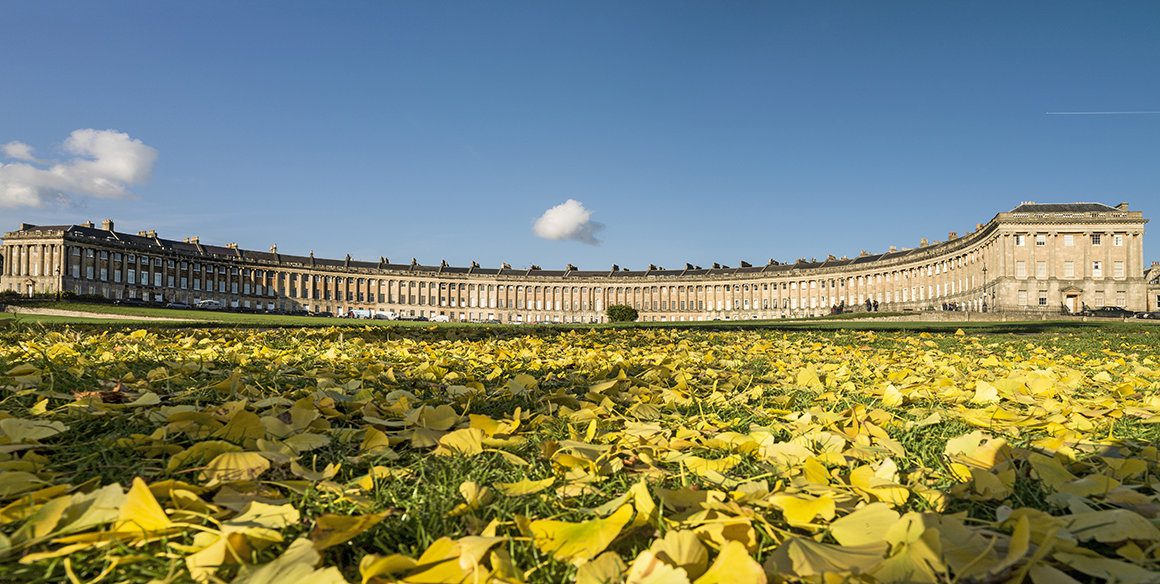
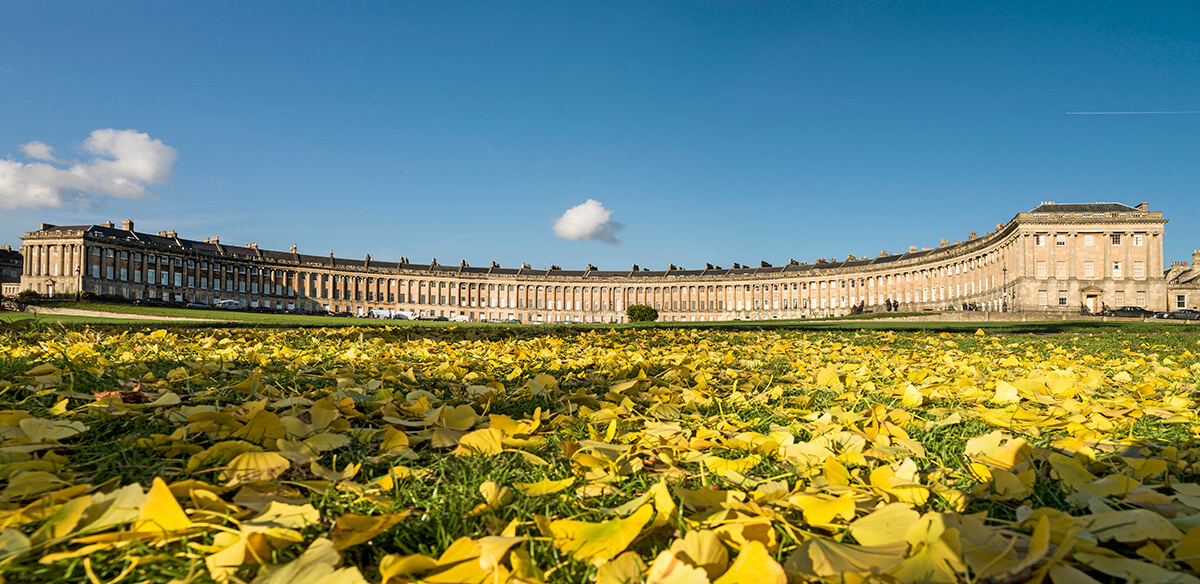
The impressive facade of The Royal Crescent Hotel, Bath
English country house hotels are wonderful, but it can be a challenge to get to them from the capital; and they can be teeming with families at weekends. LUX Managing Editor Serena Hamilton experiences the best of both worlds with a midweek break to the Royal Crescent, a hotel in the historic city of Bath with a country feel – and just over an hour in a first class carriage from London’s Paddington Station (and the Heathrow Express train)
Finding a hotel that’s not a million miles from London for a mid-week break isn’t as easy you’d think. Whilst there are a lot of beautiful hotels in the UK, many of them are hidden deep in the countryside so that when you arrive at the train station you still have to travel to get there, which is a big deal when you’re only going away for a couple of nights.
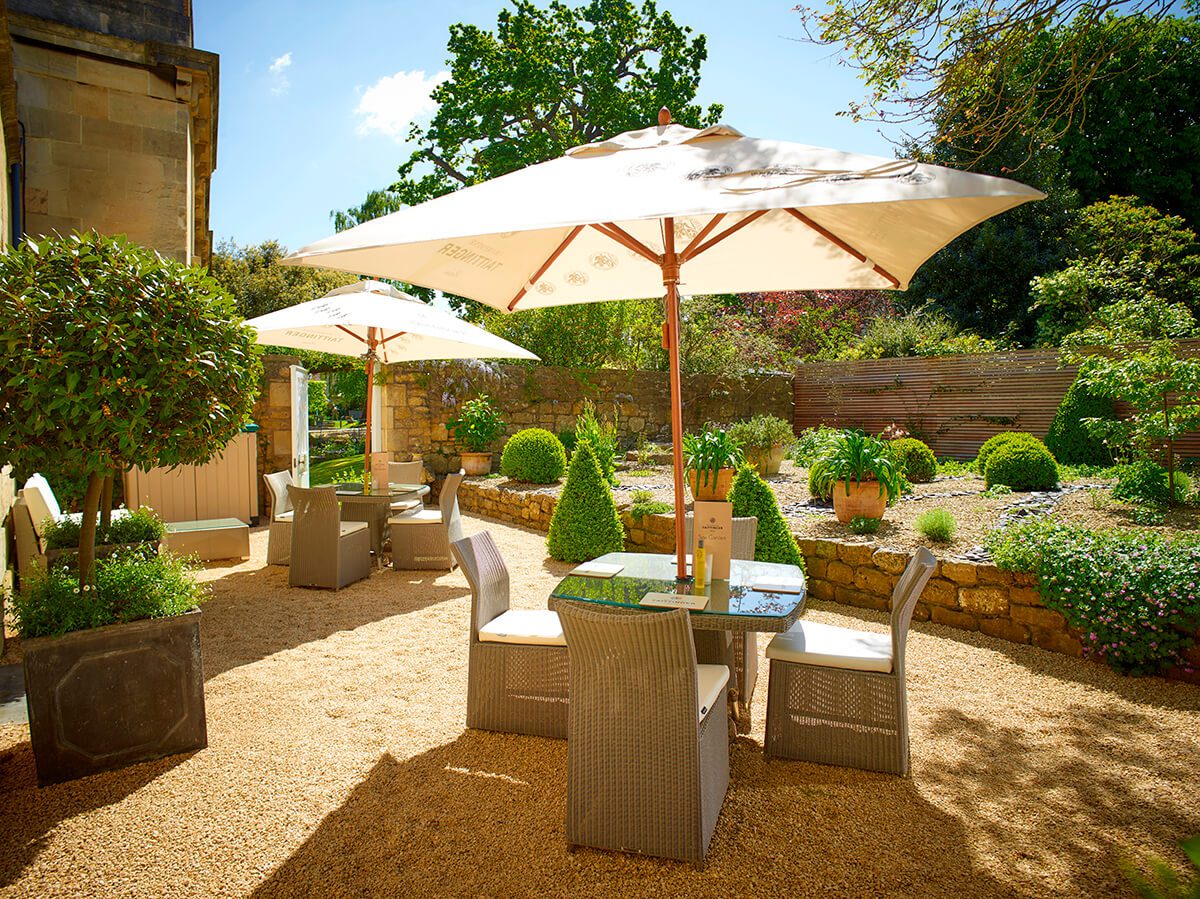
The Taittinger Spa Garden is just one of the few outdoor relaxation spaces at the hotel
The Royal Crescent is located right in the heart of Bath – from door to door it took us just over two hours. Spread across two tall, columned Georgian townhouses, the hotel is immediately striking and hides a beautiful, pristine garden dotted with statues and benches tucked into secluded corners – perfect for long, lazy afternoons reading in the low dappled sunlight. The buildings themselves are steeped in history and much has been done to preserve the ancient grandeur; think sweeping staircases, classical busts, antique furnishings, chandeliers, and exquisite oil paintings.
Follow LUX on Instagram: the.official.lux.magazine
We stayed in one of the spacious Master Bedrooms which featured a huge marble bathroom, and its own elegantly decorated living area, which was especially useful as we needed to do some work, but with staggering views over the city, it was a very pleasant and relaxing place to do so. We loved the bright interiors, which felt decadent and luxurious without being stuffy or overdone.
The award-winning Dower House Restaurant
Dinner at The Dower House restaurant was a real treat with tables overlooking the leafy gardens or the choice to dine alfresco on warm evenings.The roasted stone bass with crispy wild mushroom, confit pink fir, brown shrimp, pistachio paste and crumb comes highly recommended as does the slow cooked duck egg to start. We were very impressed by the charming sommelier Jean-Marc Leitao who expertly guided us through the wine list. The Montagu Bar also serves food and has a lovely laid-back atmosphere. Perhaps seduced by the nostalgia of the surrounding old-age glamour, we chose prawn cocktail as one of our small plates, which turned out to be one of our favourite dishes during the stay.
Read more: andBeyond CEO Joss Kent on creating luxury in the wilderness
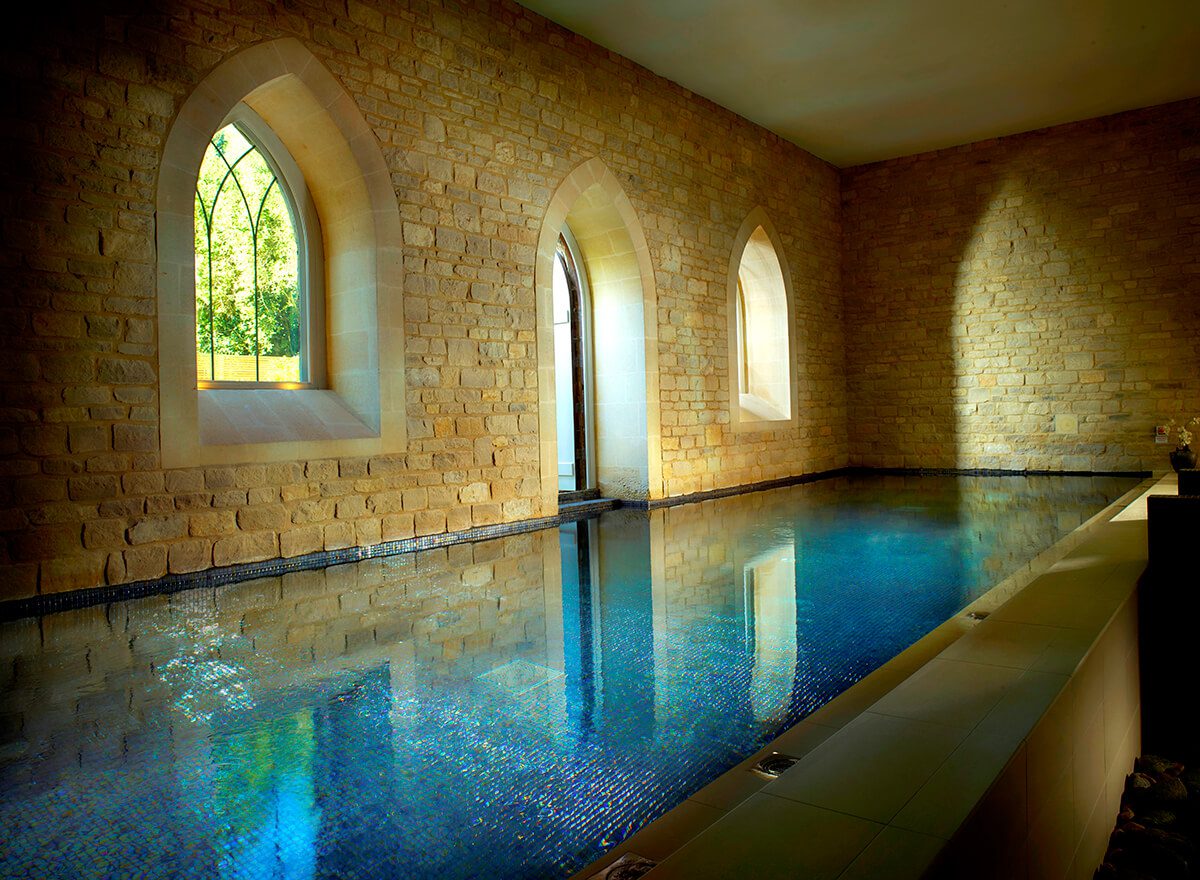
The Relaxation Pool at The Spa & Bathhouse
The Spa & Bath House is one of the hotel’s big draws. Located opposite the main hotel, across the courtyard and gardens, it feels like an escape its own right. The main communal area includes a 12-metre indoor relaxation pool, a vitality pool with massage jets, sauna and steam room. The Royal Crescent Signature Spa Treatment, known as the ‘Hero’, was a real highlight targeting the back, face and scalp. Afterwards, guests tend to relax in the tranquil Taittinger Spa Garden where you can order drinks, snacks, afternoon tea and of course, champagne.
Whilst the hotel is extremely conveniently located – a short walk from most of the heritage sites and shopping areas – it still manages to feel secluded and serene. We returned to London, after only two nights, feeling refreshed, rejuvenated, and better equipped for the week ahead.
Rates start from £330 per night (approx. $450/ €400). Book your mid-week getaway: royalcrescent.co.uk
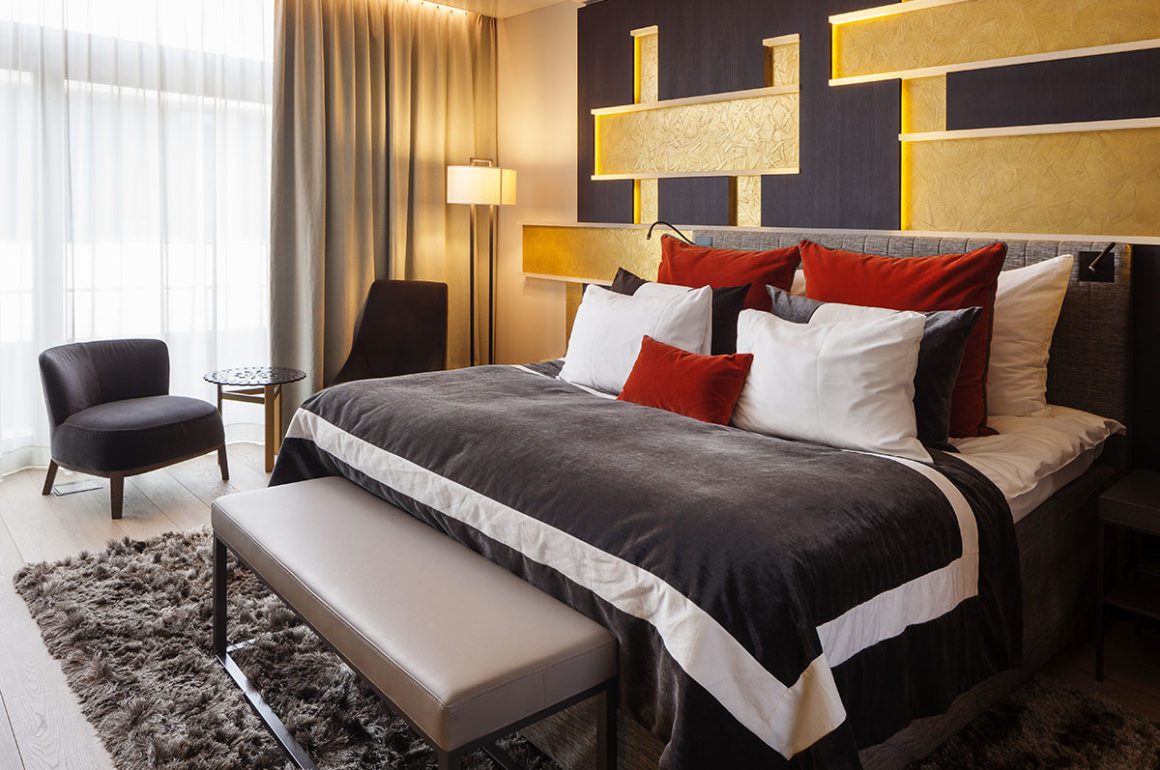
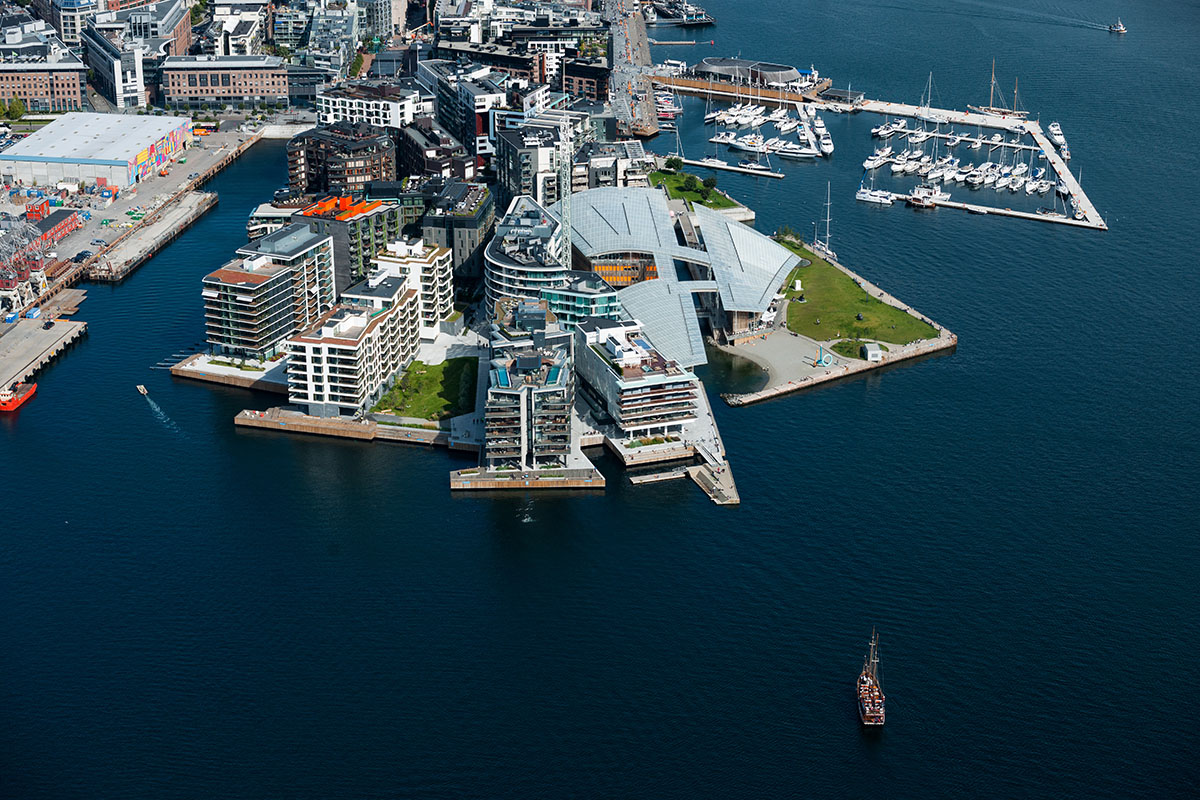
The Thief boutique hotel sits on the edge of a peninsula known as Tjuvholmen
Why should I go now?
One of the fastest growing capitals in the world, Oslo is in the midst of some serious reinvention, which admittedly means you’ll encounter a few clusters of cranes but the excitement is palpable. You can now walk the entire length of the pretty harbour which is lined with cafes and shops, and it’s well worth popping into the Nobel Peace Center while you’re at it.
Follow LUX on Instagram: the.official.lux.magazine
The Thief is very much part of the grand redesign; perched on the edge of the small peninsula known as Tjuvholmen (translated as thieves’ island) alongside slick luxury apartments, restaurants and galleries. The hotel’s views over the Oslo fjord are staggering especially at this time of year when the sun’s shining.
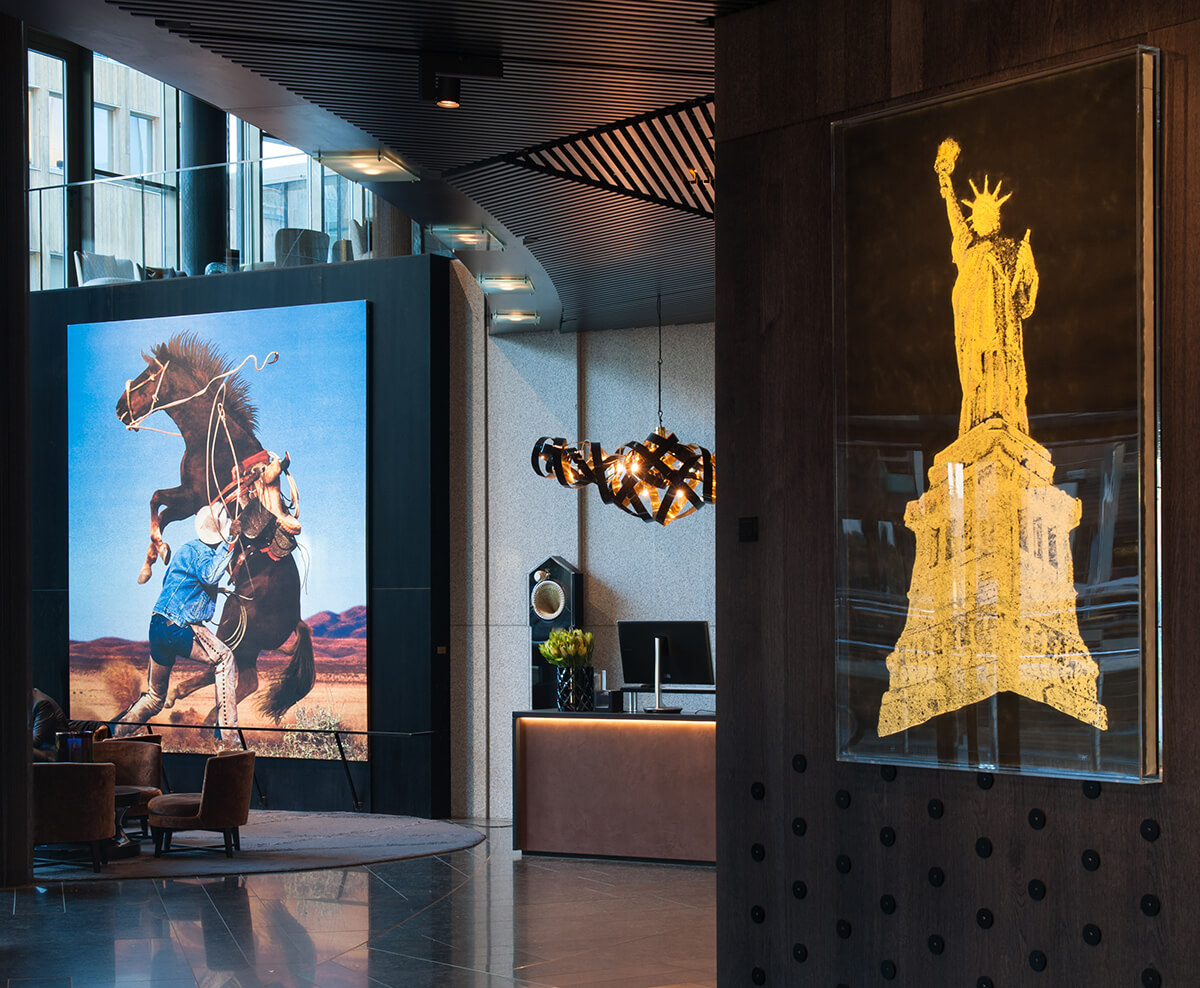
The Thief is an art-lover’s dream
What’s the lowdown?
The Thief Foodbar restaurant
The hotel is made for aesthetes; there are Warhols in the restaurant, works by Sir Peter Blake in the suites and Julian Opie artworks in the lift. The art is supplied in partnership with the Astrup Fearnley Museum (room keys to the hotel also grant you unlimited access to the museum) next door and forms an eclectic in-house collection that contributes to the cool ambiance.
Read more: Geoffrey Kent reveals how luxury hotels are still getting it wrong
The action goes down at the Thief Foodbar, a chic and stylish restaurant; personified it’s a sexy deep, dark and interesting character. Breakfast is also served daily for guests here, and in the warmer months the roof terrace opens for alfresco dining with panoramic views of the harbour and live music as part of the hotel’s Unplugged series. The grilled squid with eggplant, cherry tomato and browned butter comes highly recommended.
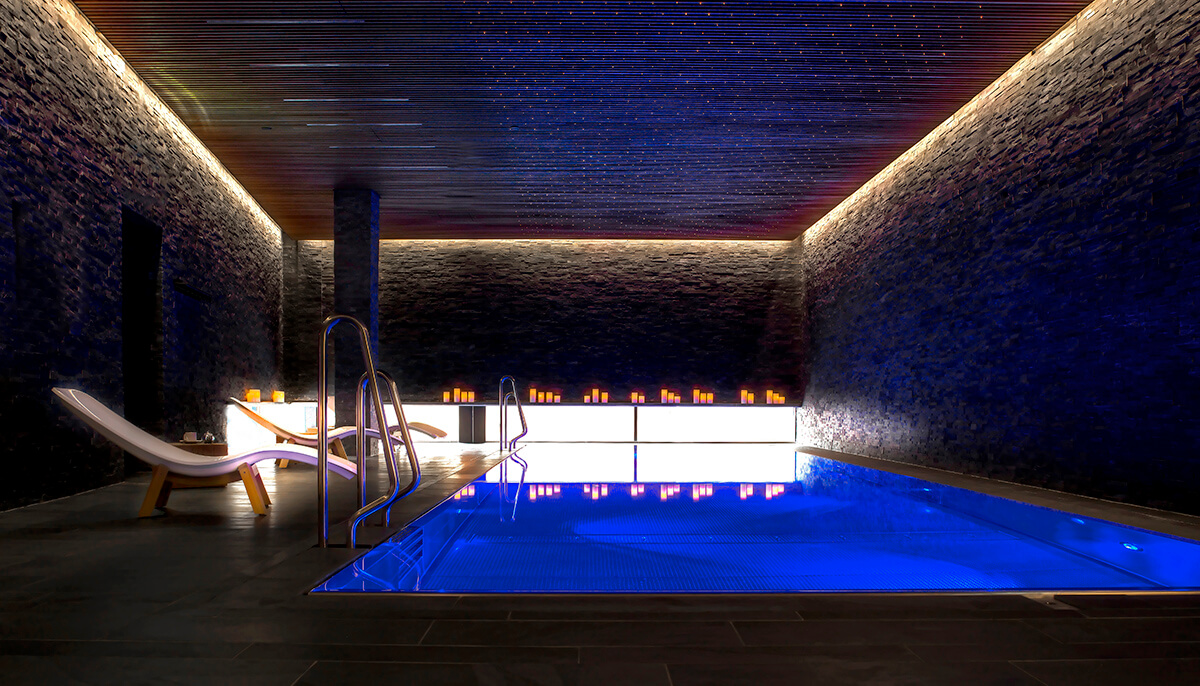
The Thief Spa’s cove-like indoor pool
The Thief Spa features an indoor pool with an eye-level window so that you can gaze out onto the crisp blue sea that gently laps against the glass as speedboats hurtle past. The Turkish hammam is dreamy with its twinkling LED lights in the ceiling and the Sensory Sky showers, by German brand Dornbracht, offer waterfall or rainfall downpours depending on your preferred level of drenching.
Read more: Introducing Richemont’s new, sustainable watch brand Baume
Getting Horizontal
We were in a Deluxe Suite on the seventh floor decorated in sultry shades of blue, grey and cream with an enormous, and exceptionally comfortable double bed piled high with pillows. All of the rooms have huge floor-to-ceiling windows and private balconies, but the higher up you are, the better views.
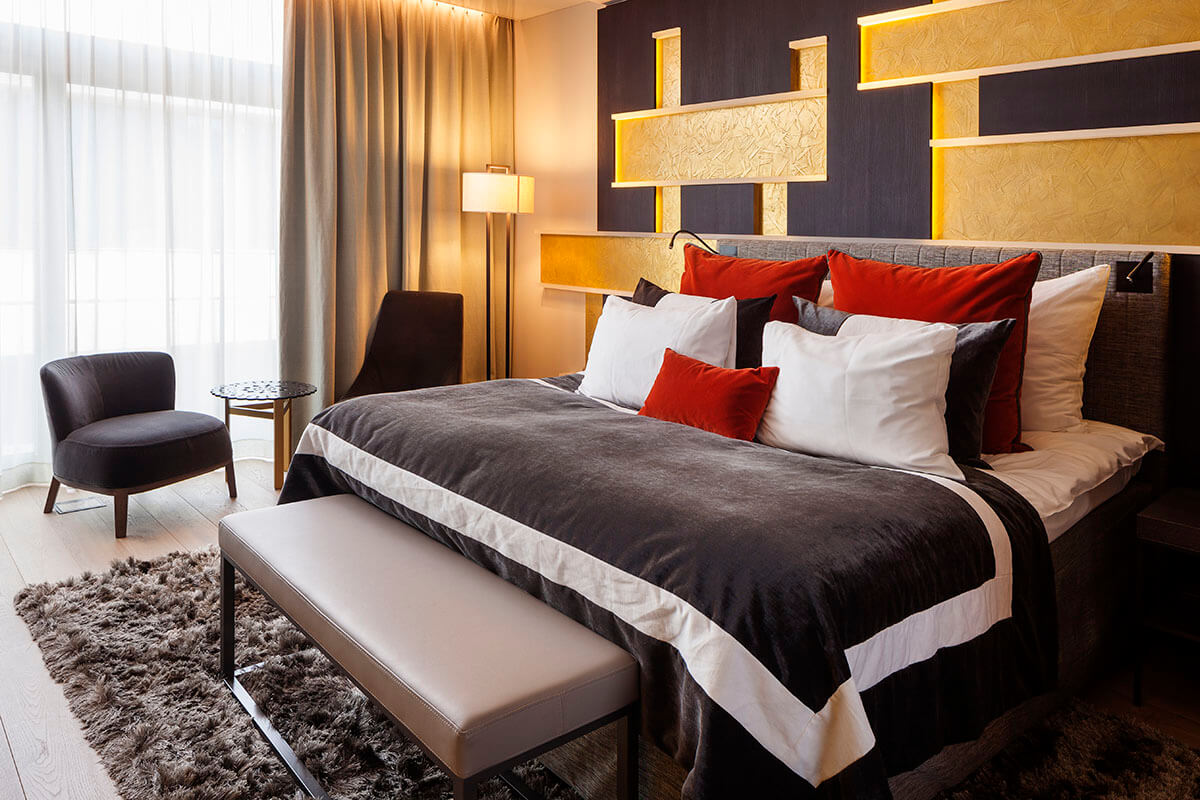
The extravagant suites are furnished with unique artworks
Flipside
The hotel’s moody atmosphere makes it perfect for a romantic getaway, but if you’re there on business, it might be harder to, well, actually get any work done.
Rates: From 3000 NOK (approx. €400/ £350 / $500)
Kitty Harris
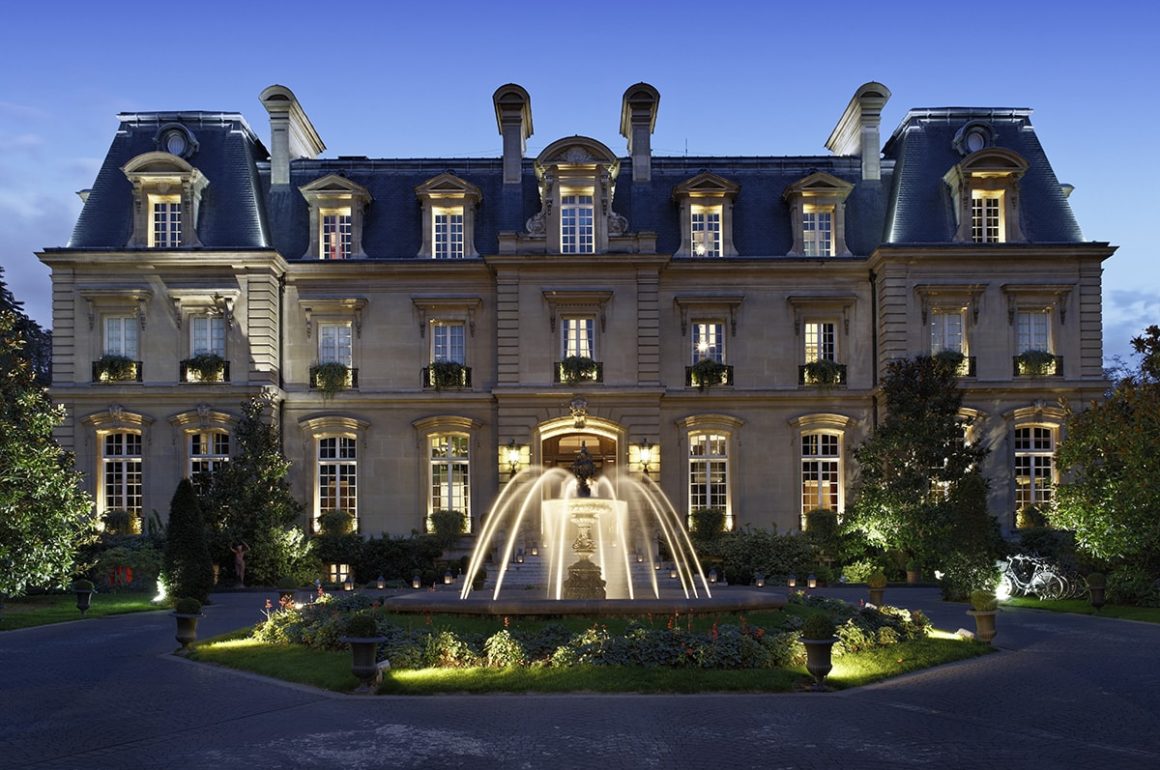
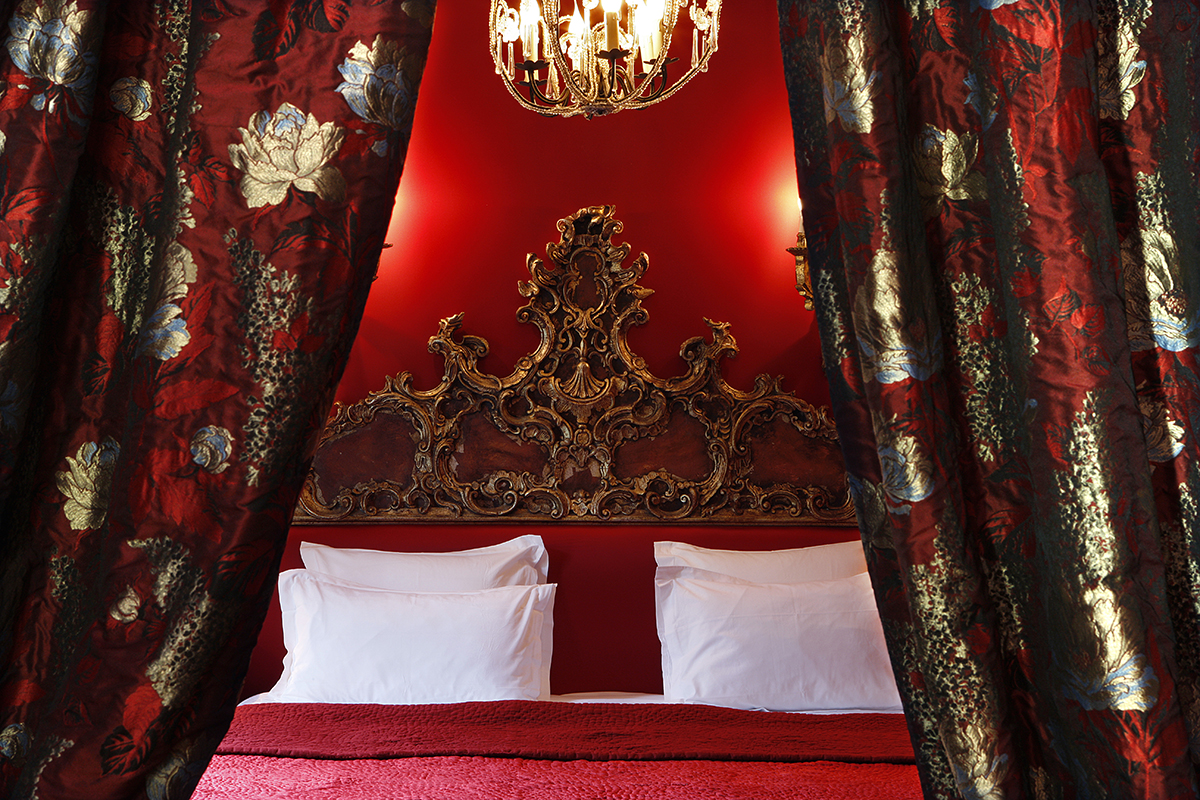
A decadent Junior Suite at the Saint James Hotel, Paris
Paris is by no means a new luxury destination – the international city of love is home to the world’s best restaurants, haute couture and the avant-garde art scene – and yet its charm never gets old. Digital Editor Millie Walton ventures into one of the city’s lesser known neighbourhoods, alongside the Bois de Boulogne, to re-discover Le Corbusier, Monet and the lasting allure of authentic French decadence
It hasn’t felt much like Spring the last few weeks in London and when we arrive in Paris, it seems Spring hasn’t arrived there yet either. It’s lightly, prettily snowing, in a way that’s so picturesque, it feels as if we’ve stepped inside a snow globe, but still it’s cold, bitterly so and we’re pleased to cocoon ourselves in the warmth of Saint James’ hotel for lunch at the one Michelin star, The Restaurant. However, in Paris, Michelin stars are scattered so densely across the city that it’s not really the accolade that stands out, but rather – and rightly so – the service, the atmosphere, that irresistible aura of je ne sais quoi.
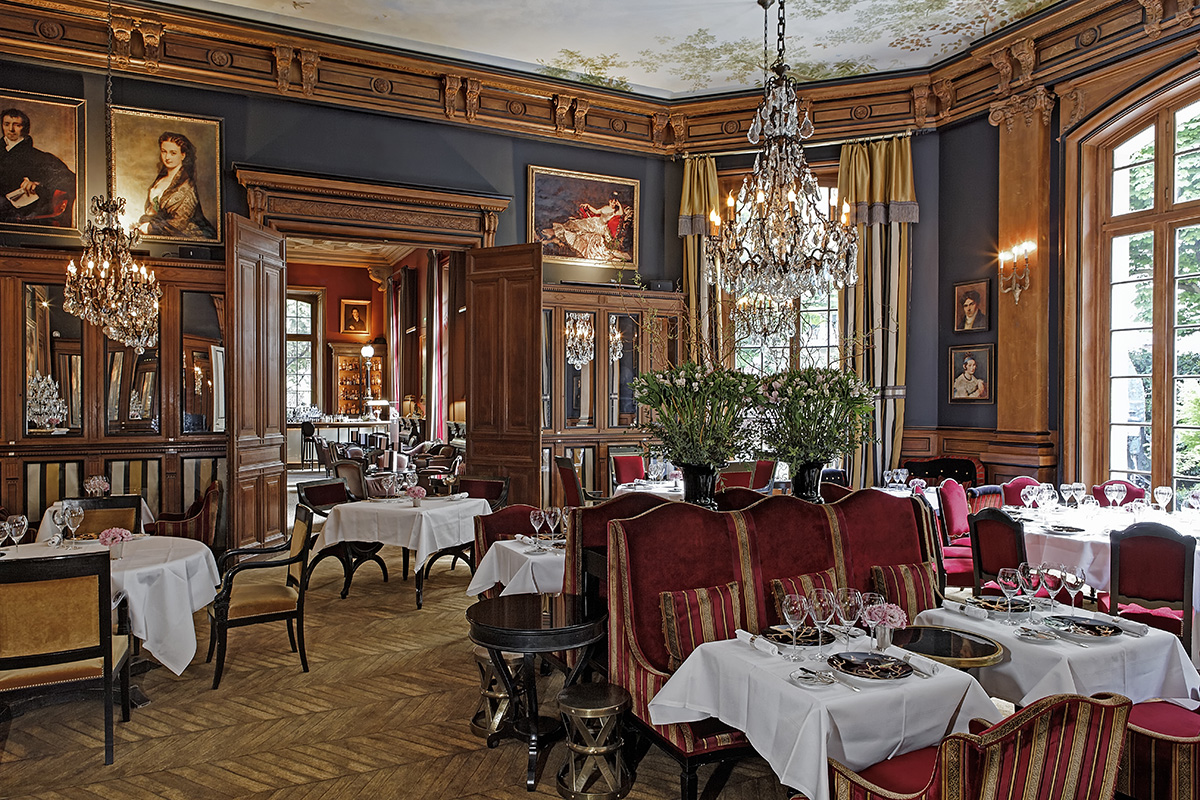
The Restaurant, headed by Chef Jean-Luc Rocha
It helps, on a day like this, that The Restaurant, like the rest of the hotel, is snugly grand as opposed to cool minimalist with dark walls, warm bulbs, velvets, silks and portraits of buxom ladies hanging on the wall. It feels oh so Parisian and decadent, and even without dining it would be an experience to sit and observe the well dressed guests arriving to be seated with their Chanel handbags perched on their own cushioned stalls alongside the table. Lunch is hotel guests only, so it’s quieter, more relaxed; we’re greeted by Chef Jean-Luc Rocha who recommends the escargots with souffléd crepes as his favourite dish (it happens to be ours too), along with the lobster and chestnut ravioli to start followed by scallops cooked in saffron-flavoured risotto and the filet of turbot. Each mouthful is bursting with flavour, rich, delicate and precisely the right portion sizes so that we’re satisfied rather than overwhelmed. Halfway through the meal, we’re joined by Pilou, the hotel’s resident black cat, who swirls round our legs and then curls up on a velvet bench in a corner. An enviable life he must lead – we’re almost tempted to do the same, to retreat to the spa then to our suite, but later, later, we’re here to explore.
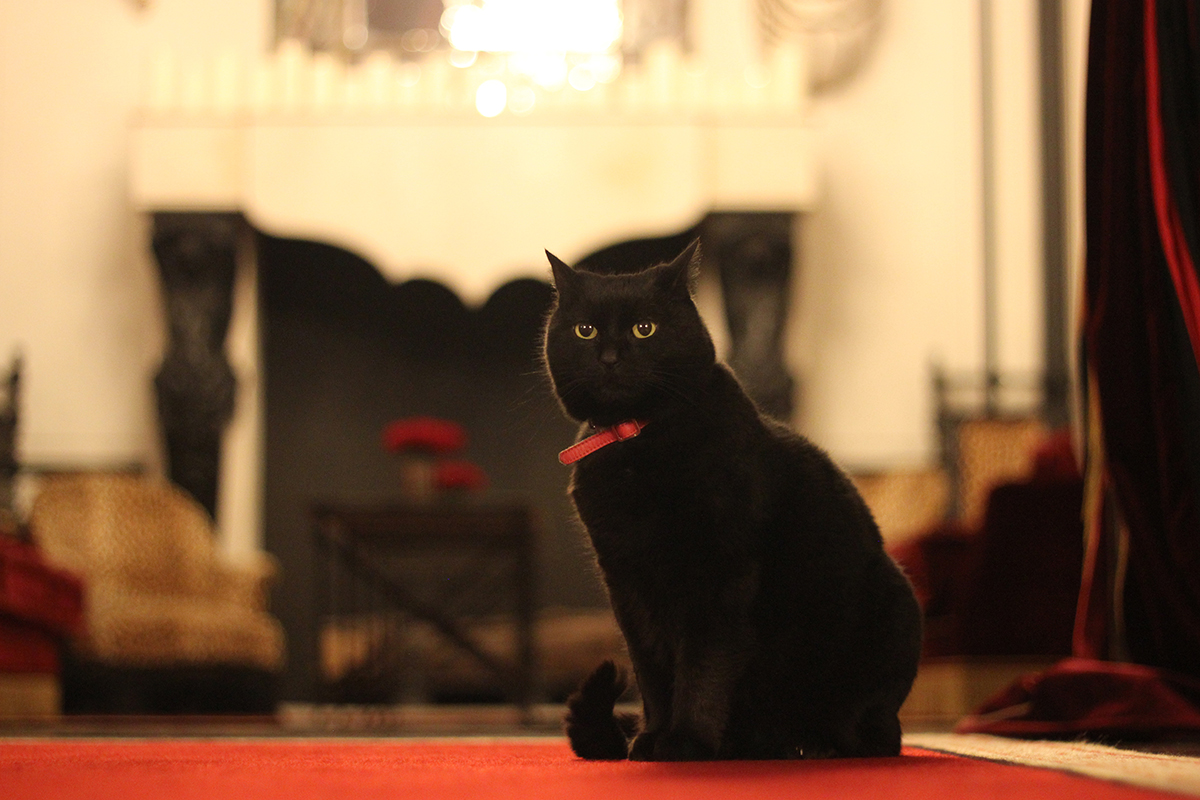
Pilou, the hotel’s resident feline roams freely throughout the property. Image by James Houston
Le Corbusier’s Villa La Roche was designed in 1925 as a resident for Swiss banker Raoul La Roche, who was also a collector of avant-garde artwork and the residence was designed as both gallery and home. It’s located in a lesser-known – or at least lesser to tourists – neighbourhood and it takes us a few loops to find our way, down an alleyway and through the door at which we’re stopped to pull plastic slips over our shoes, like at the Taj Mahal, which might seem like an odd comparison but to many architects and aesthete’s this villa is one of the ultimate monuments to modern housing. The interiors are playful and flowing with a curved sweeping walkway leading to an upper gallery, dark grey, lucid blue and pale sienna walls and cut out sections that serve as platforms and frames. The house leads you through a very particular kind of spatial experience, culminating in the rooftop terrace from which we gaze over the Parisian rooftops, puffing clouds of breath like a line of small human chimneys.
Close by too is Musée Marmottan Monet, which houses the greatest collection of Monet’s paintings worldwide – from his earlier years to the development of his signature style, the famous water lily scenes – as well as various temporary exhibitions. There’s something particularly special about standing in front of a Monet in a 19th century mansion in Paris, it feels right and proper and yet, we’re disappointed by the lighting (a mistake by the museum) which casts an usual glare over some of the more delicate pieces, slightly disturbing their enchanting atmosphere.
A curious visitor inside Villa La Roche. Image by James Houston
Outside the snow has settled – nature’s art- so we wander back to the hotel on foot; about a 30 minute brisk walk that takes us by the Eiffel Tower and whilst many French artists and aestheticians of the late 19th century – including writer Guy de Maupassant who reportedly at lunch in the tower’s restaurant every day for years so that he didn’t have to see the structure itself – despised the monument, it’s always a delight to see and I’m filled with a childish kind of excitement. ‘Can we come back at night?’ I beg my travelling companion who agrees no trip to Paris is complete without seeing the tower at least a handful of times day and night, even if it is freezing and the snow has turned to sleet.
We thaw our frozen limbs back in the hotel’s library bar with a glass of Bailey’s before disappearing into the fairy-tale romance of our royal red and gold suite. Springtime in Paris, snow or not, is brimming with aesthetic delights and real decadence; we’re thirsty for more.
Stay at Saint James Paris from €390 per night (approx. £ 350 /$ 500) for a Boudoir Room.
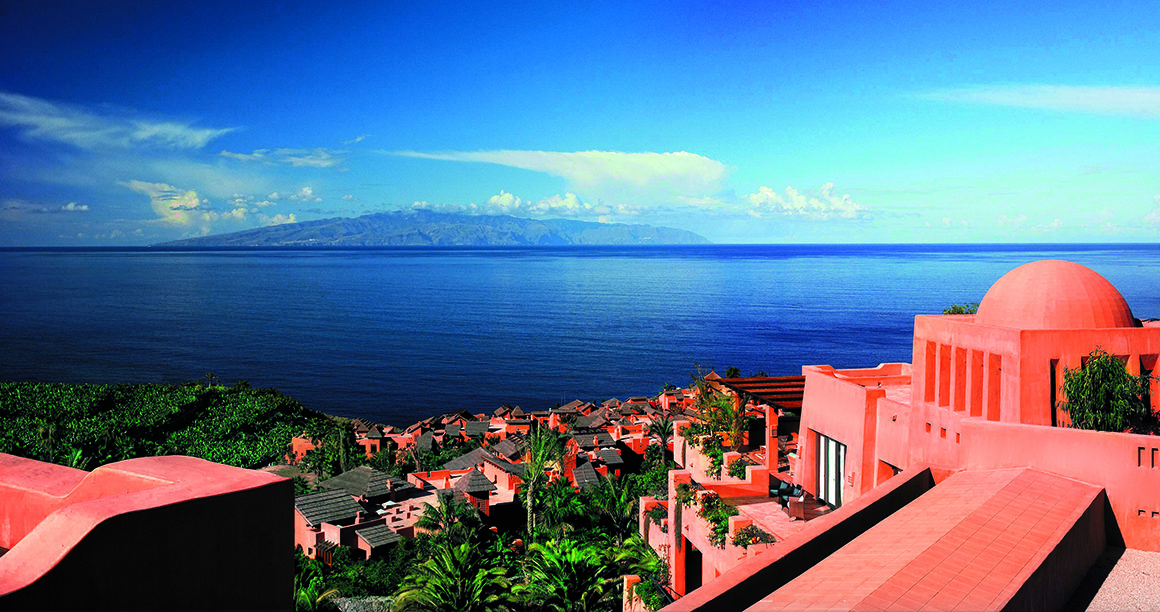
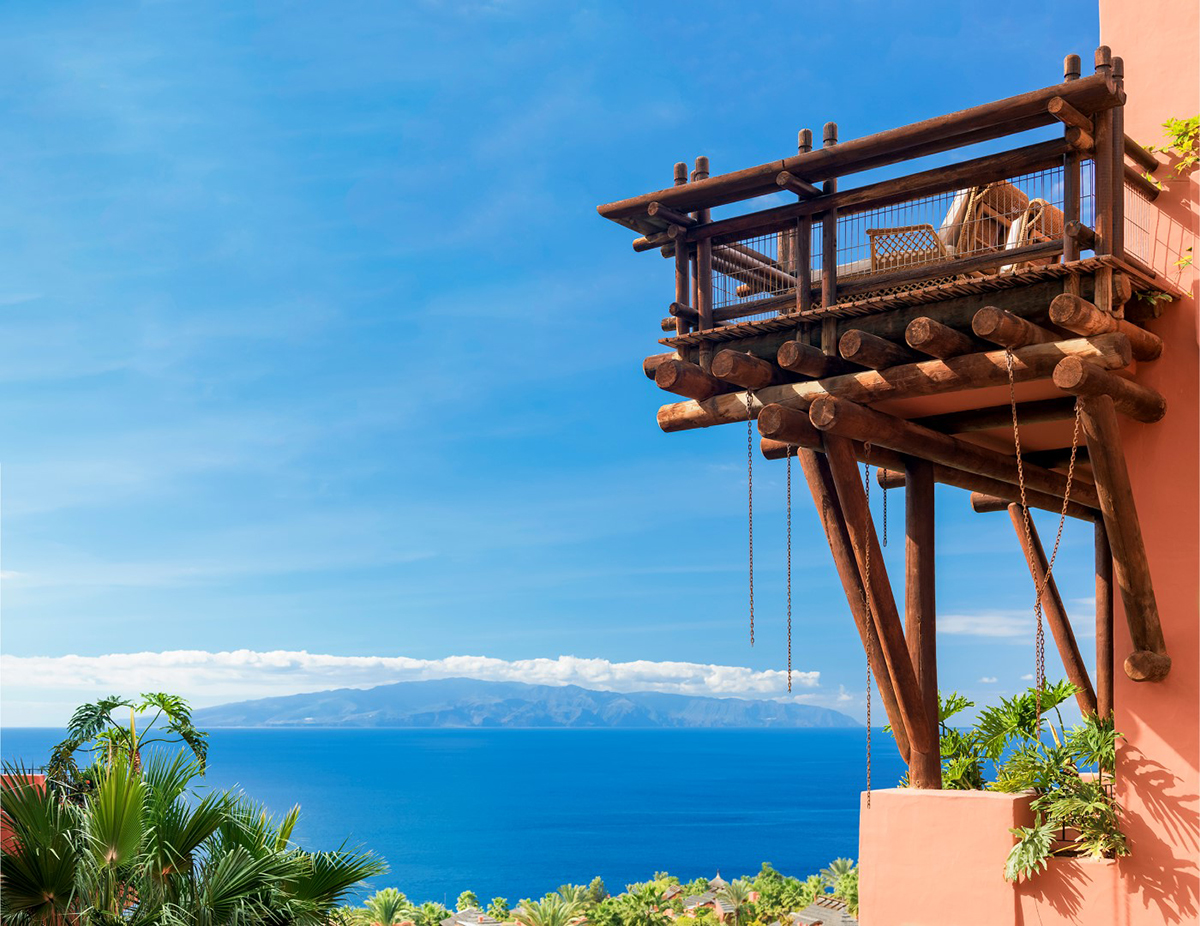
Blue skies and sunshine: springtime is picture perfect in the Canary Islands
Why should I go now?
Spring sounds good in theory, but in much of the northern hemisphere it means grey and cold as business as usual. Europeans still need to fly long haul to have guaranteed warm sunshine – or do they? The Canary Islands are beautifully toasty at this time of year, and never too hot, although you have to choose carefully: the rain in this part of Spain can sometimes arrive on windward hillsides.
Follow LUX on Instagram: the.official.lux.magazine
This is where the Ritz-Carlton Abama comes in. Built in the style of a Moorish palace, on a steeply raking mountainside dropping into the Atlantic, it is on the sunniest, southwest facing coast of Tenerife, which also happens to be entirely unspoiled by the overdevelopment in other parts of the island. To one side, banana plantations rise up relentlessly towards the peak of Mount Teide, a snow-capped volcano which at nearly 4000m is as high as most of the significant Alps. To the other, the mountainside plunges off a cliff and onto a semi-private white sand beach on a protected cove, facing the wild volcanic island of La Gomera.
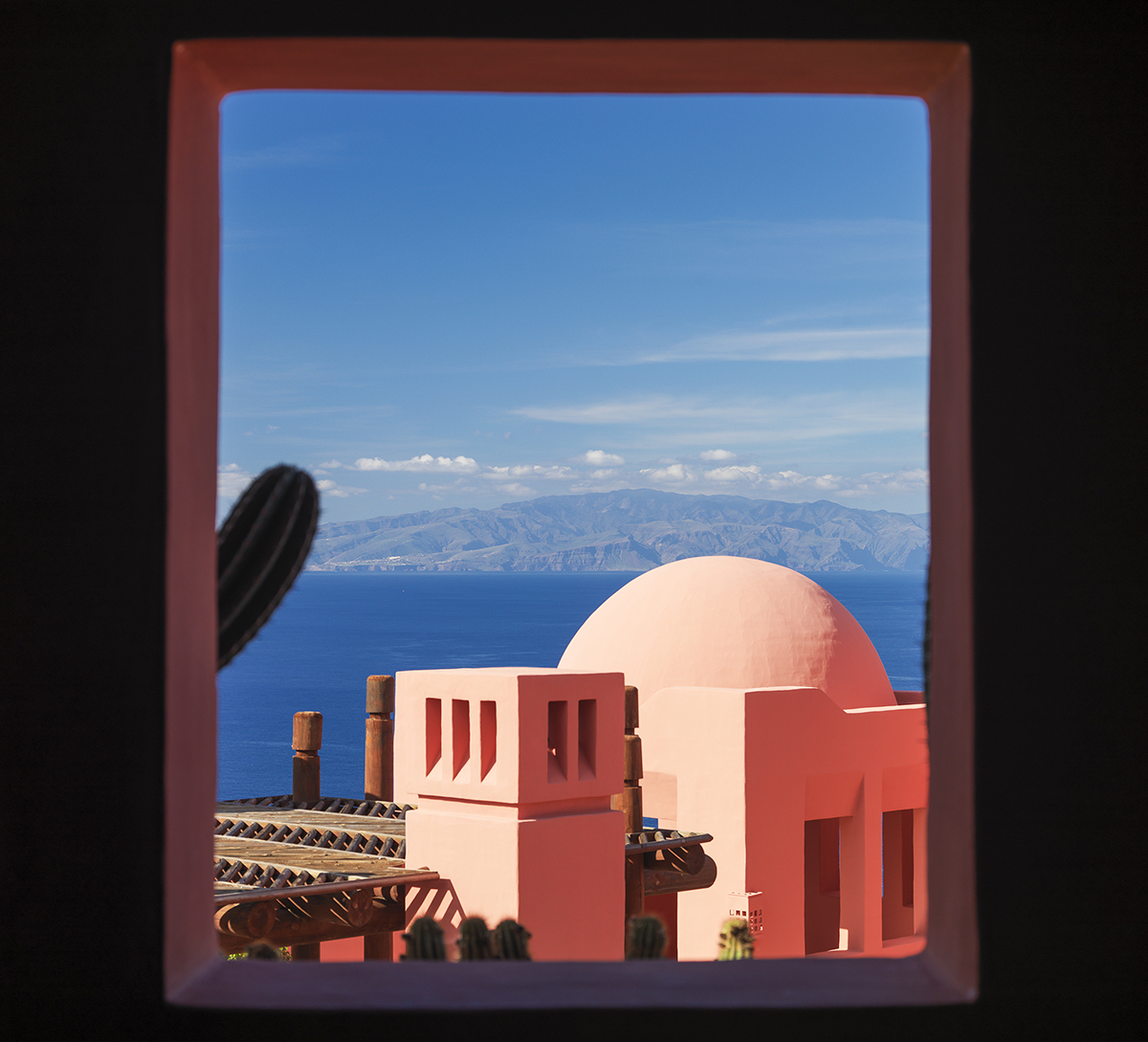
Views through a window of the Ritz Carlton Abama Citadel and the volcanic island of La Gomera
Monarch butterflies flutter hello as you wander through the resort’s endless tropical gardens; Margaritas are mixed and and ice-cold draft beer is on tap next to all of the seven pools (and the beach); and the place is so spaced-out that you never feel overcrowded – and end up feeling very pleasantly spaced-out yourself.
What’s the lowdown?
The pool and beach action, or inaction, should be enough for anyone wanting a decompression from a long winter deal-making season. We enjoy sitting on a balcony facing out over the sea, looking at the ominous mountain shapes on Gomera turn a deep blue-green as the sun sets behind them and disappears, and a panoply of stars emerges – Tenerife is one of the best spots in the world for star-spotting, as it is so clear of pollution and light pollution.
But there is an enormous amount to do for active types: the hotel has its own championship golf course on the dizzying slopes leading up the volcano, with a vertical gain so dramatic that it can be noticeably chilly on the uppermost holes while the resort basks in sunshine. There are numerous tennis courts (and a tennis academy), a kids’ club with an extensive outside area and mini football/rugby pitch surrounded by tropical flowers, a series of interconnected ponds and water features filled with hundreds of decorative Koi carp, and then there’s the dining.
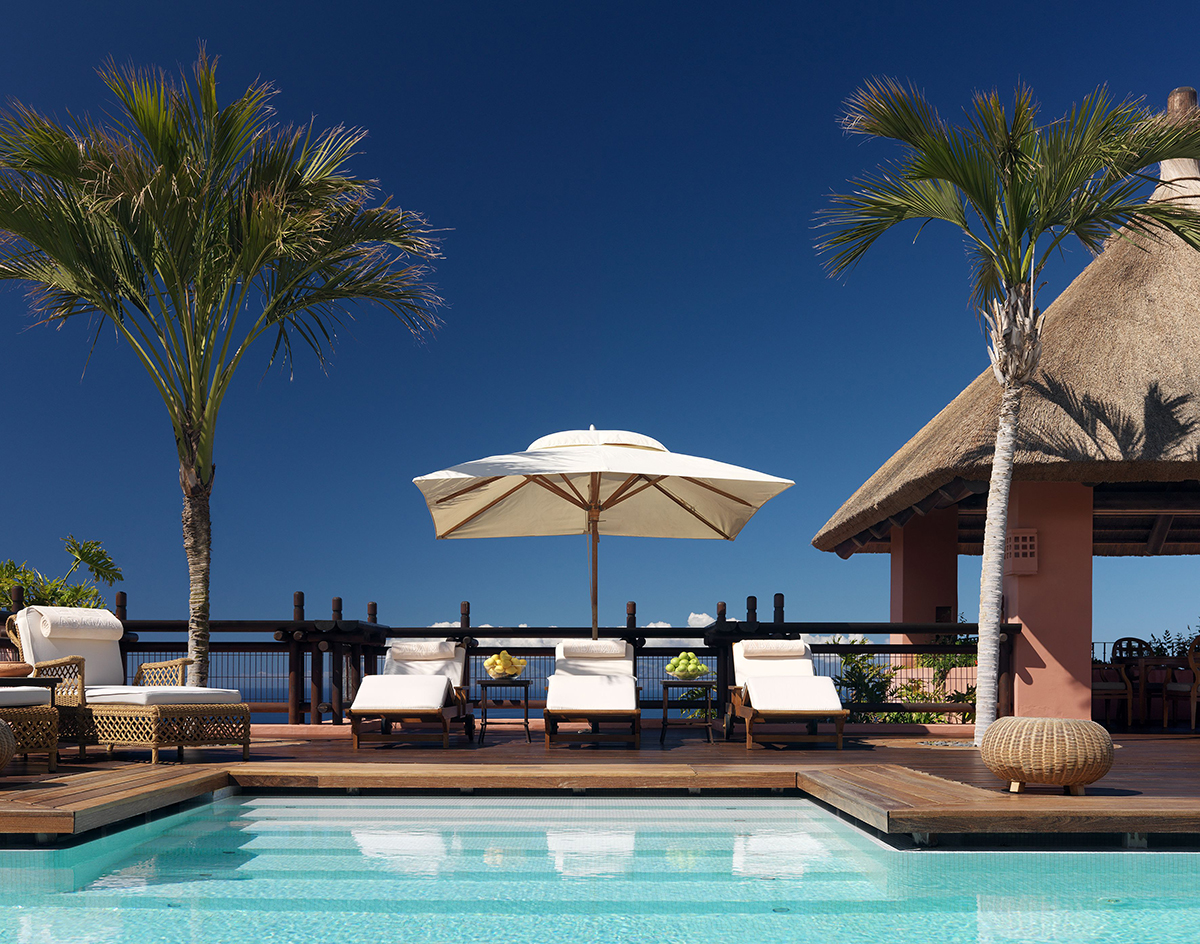
The imperial terrace and swimming pool
Two of the hotel’s restaurants have Michelin stars, an exceptional achievement this far from the coast of Africa; M.B is run by celebrated Basque chef Martín Berasategui, and Kabuki is an outpost of two renowned Madrid restaurants of the same name and outdoes either for both cuisine and location. Situated halfway up the golf course, Kabuki has a terrace with dramatic views down over the resort and the ocean, and a Japanese menu tinged with touches of the local – local catches are used for the sushi and sashimi, and flavoursome Canary mini-potatoes integrated into the menu. The wine list is rich with hard-to-find small grower champagnes.
Read more: Luxury chalets and high altitude adventure in Chamonix
Our favourite restaurant of all, though, is not Michelin starred; it is the Mirador, an eagle’s nest situated on top of a cliff plunging straight down into the ocean. On the terrace, you feel like you are floating over the sea, and Mirador is so celebrated for its paellas that it runs its own school, teaching clients how to cook the perfect blend of lobster, mussels, clams, local fish, saffron, and al dente rice.
Getting horizontal
Rooms are large, and simply but tastefully furnished in keeping with the semi-tropical setting, with marble floors, floor-to-ceiling windows, and furniture and artefacts from west Africa, the nearest continent. Pay more for a room with a view out over the ocean.
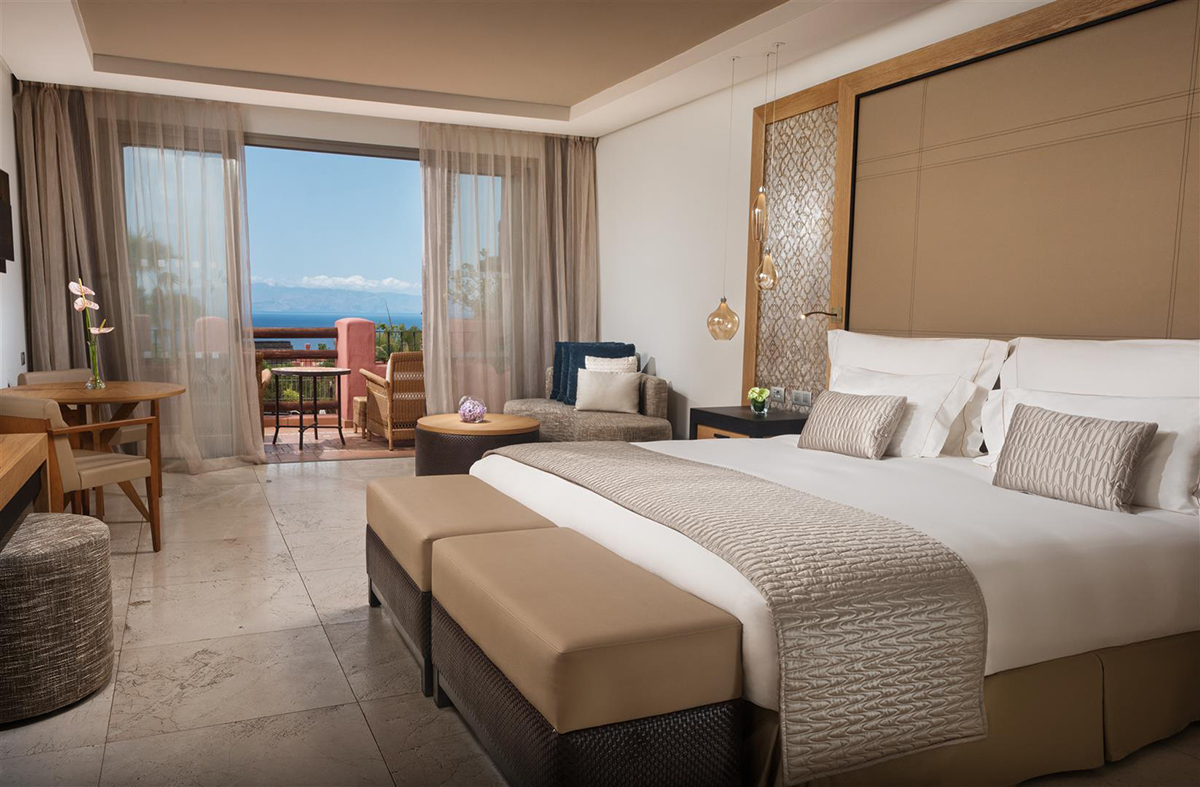
A deluxe, adults only room in the Tagor Villas with an ocean view
Flipside
If you’re travelling without kids and choose to dine within the family-friendly hotels in the centre of the complex, you might find more children around you than you care for; but otherwise, there are adult-only pools, and zones, and so much space around the grounds and facilities that you never feel overrun by other people’s offspring, unlike in many resorts at peak season. And outside peak season, you’ll have the place and views to yourselves. And while some rooms inside the main block have restricted views, if you choose a Villa in the grounds, you can walk out of your living room into your own gardens and pool area.
All in all, you could fly to the Caribbean or Indian Ocean and not have vistas, cuisine, and facilities to match. Believe us, we’ve done it.
Rates: From €245 + tax ( approx. £200 / $300 )
Darius Sanai
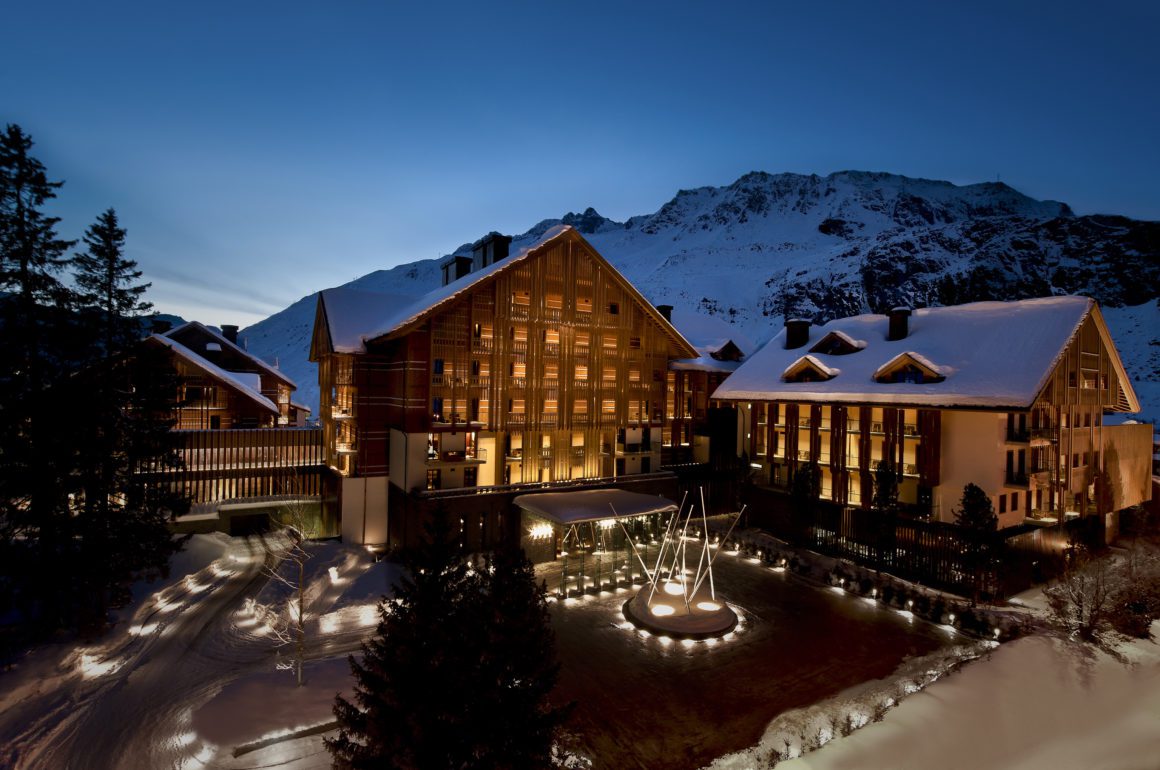
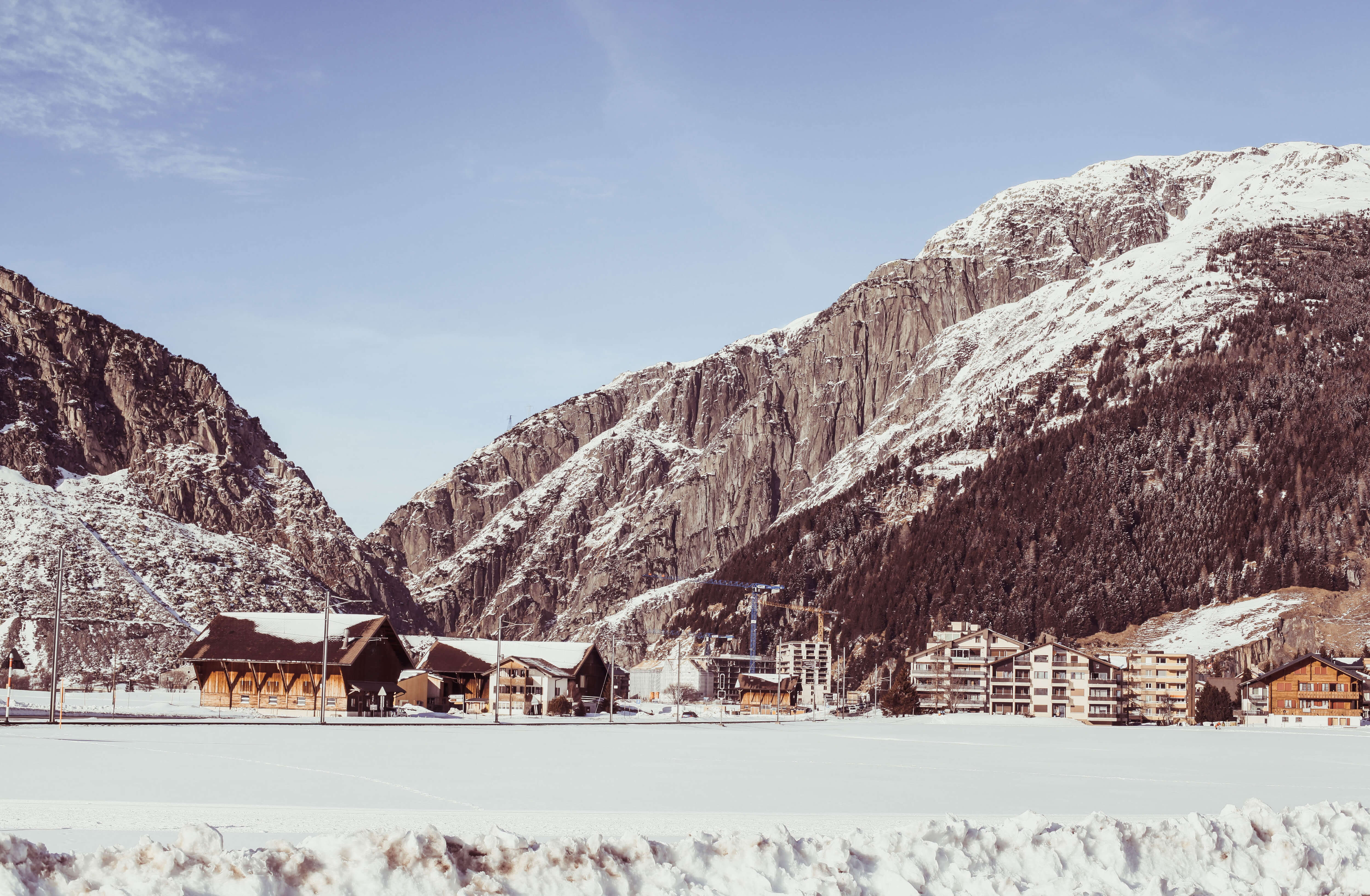
The remote alpine village of Andermatt, Switzerland. Image by Laureen Missaire
Deep within the Swiss Alps, tucked between Zermatt and St. Moritz, lies what is perhaps the most ambitious little town in Switzerland: Andermatt. With just 1,200 residents and limited access during the depths of winter, Andermatt appears to be at a disadvantage up against flashier ski resorts and yet, it’s home to one of the world’s most alluring alpine hotels, The Chedi Andermatt. Nathalie Breitschwerdt ventures into the valley to discover Andermatt’s hidden luxury.
We travel to Andermatt by train. The tracks run alongside Lake Lucerne, winding up through the stunning Alpine foothills, bringing us down into the fairytale like village of snowy Andermatt and almost straight to the door of The Chedi.
Visioned by the ‘starchitect’ Jean-Michel Gathy, The Chedi sits in the heart of the village at the base of the Gemsstock mountain. Although it stands tall with 123 spacious rooms and suites, the hotel’s dark-wooden facade blends in harmoniously with Andermatt’s traditional chalets, balancing grandeur with a cosy kind of warmth that’s especially inviting after a day on the slopes.
Follow LUX on Instagram: the.official.lux.magazine
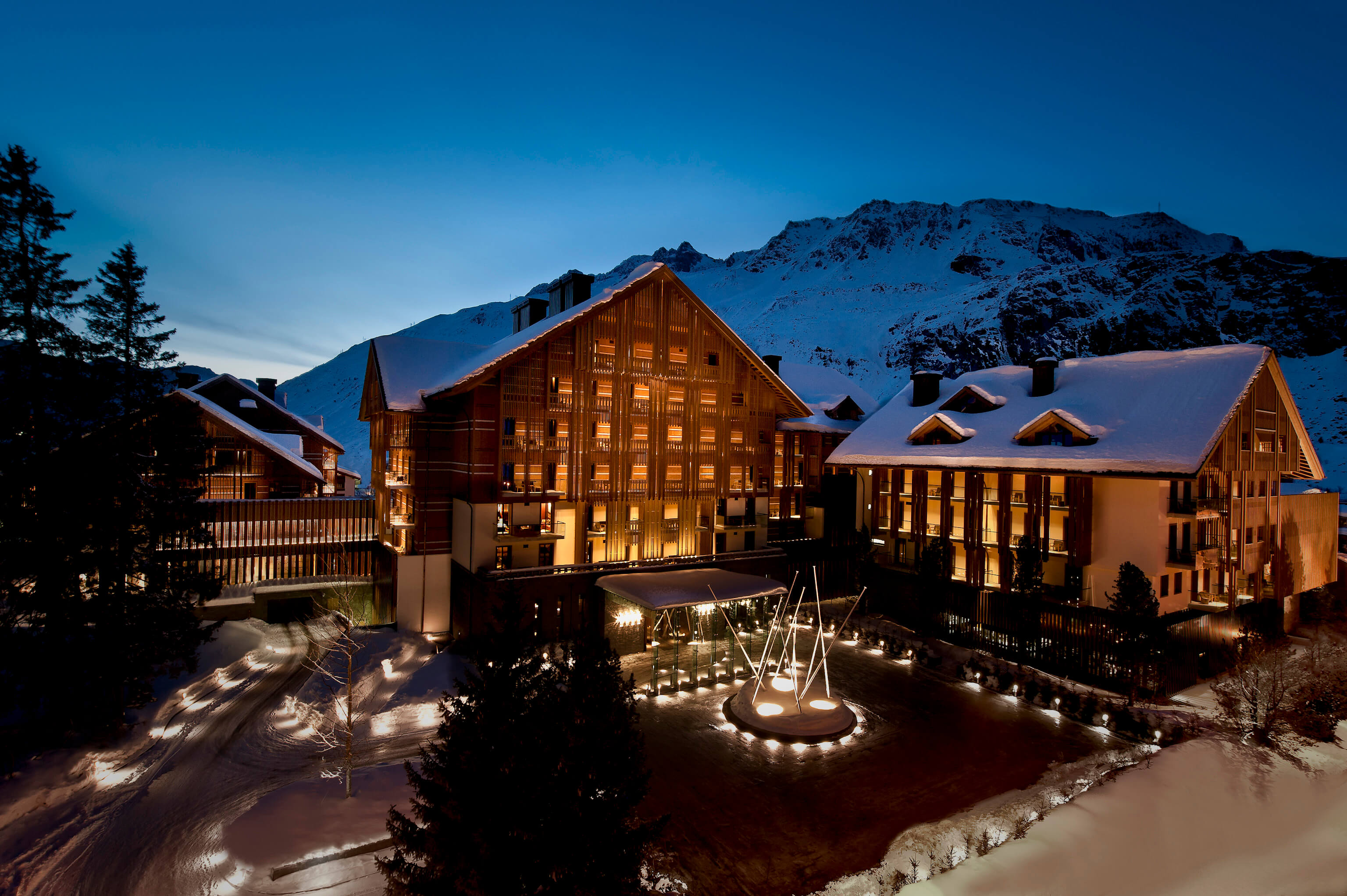
The Chedi Andermatt, designed by Jean-Michel Gathy
Throughout the winter season, the hotel offers a private Ski Butler service to assist guests with mapping the best routes. We select a route of hidden trails, trying to cover as much as possible of the Andermatt-Gemsstock-Nätschen ski area (approximately 120km), and for much of the day, we’re skiing on deserted slopes, which makes a welcome change to the stilted swerving that the more crowded resorts like Verbier and St. Moritz require.
Read next: 6 questions with LA’s hottest accessory designer Tyler Ellis
We arrive back at the hotel with flushed faces to be handed cups of creamy hot chocolate, before making our way to the spa. Spread over two floors, the spa is a sensual, fragrant space with two large swimming pools (one that sits in the snow outside and is – thankfully – heated) surrounded by plush loungers. Waiters circulate, at intervals, with complimentary smoothies, candied fruits, and flavoured waters. There’s a hydrotherapy section too, designed to resemble a kind of Asian temple, with various heated baths, steam rooms and saunas.
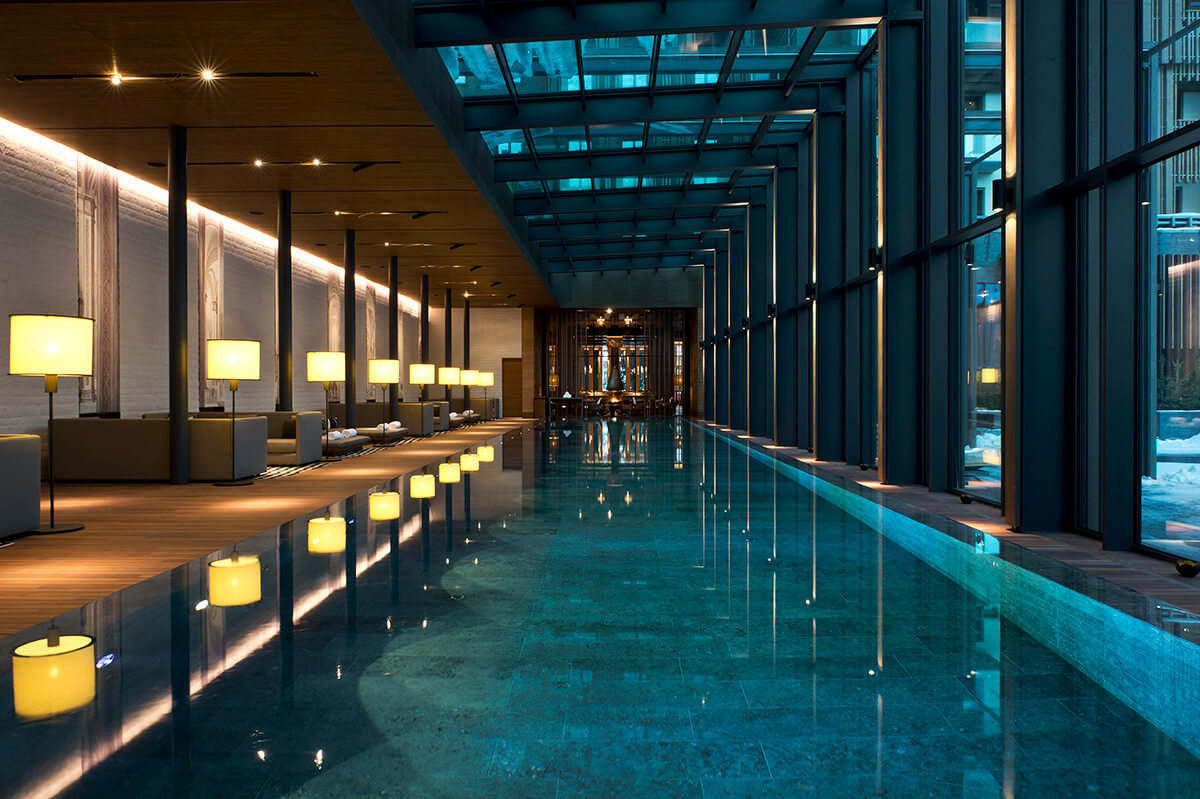
The indoor pool is encased in glass with views of the snowy courtyard
Everything about the hotel from the lobby to the restaurants to the rooms is spacious and indulgent, blending Swiss Alpine chic with Asian Zen. Our room is romantic, sumptuous and warm with dark woods, brown leather, furs, soft lighting and artfully placed Acqua Di Parma candles – and of course, there’s the view: startling white snow covered mountains that seem to have been rendered to postcard perfection.
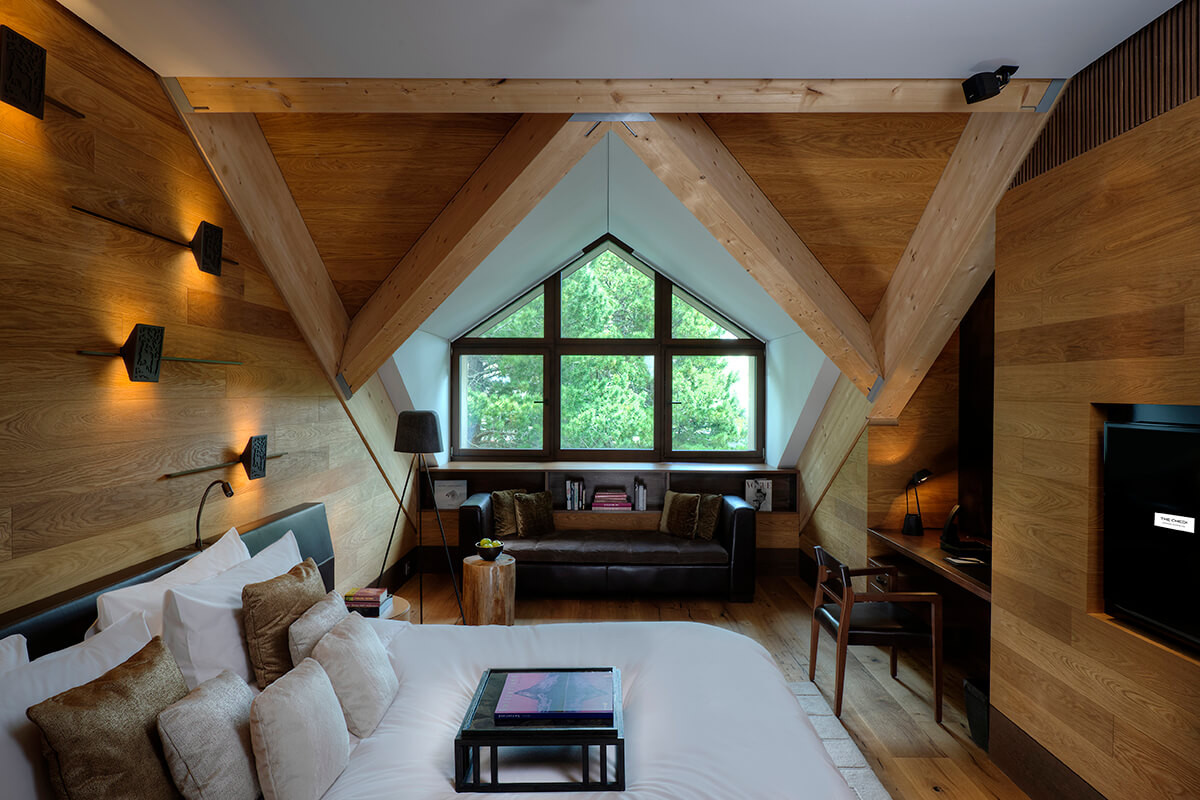
The height of luxury: the Furka Suite features three bedrooms and it’s own private spa
That night, we dine in the main restaurant on the ground floor that features four open plan kitchens, where you can watch the expert chefs prepare Swiss, European and Asian delights, and a striking five-metre high cheese cellar at the room’s centre, stocked with Switzerland’s finest. It’s a vibrant, interactive dining experience with all the frills and flourishes you’d expect, whilst still paying attention to the quality and taste (the melt-in-the-mouth dumplings were our highlight). For a slightly more casual affair, there’s also a little Swiss chalet set-up in the courtyard of the Chedi during the ski season, which re-creates the authentic alpine restaurant atmosphere complete with red and white checkered curtains and hearts carved into the wooden shutters. Inside, it’s compact, seating only five small groups and the speciality is cheese fondue, which comes a variety of ways – we choose a heady mix of champagne and truffle.
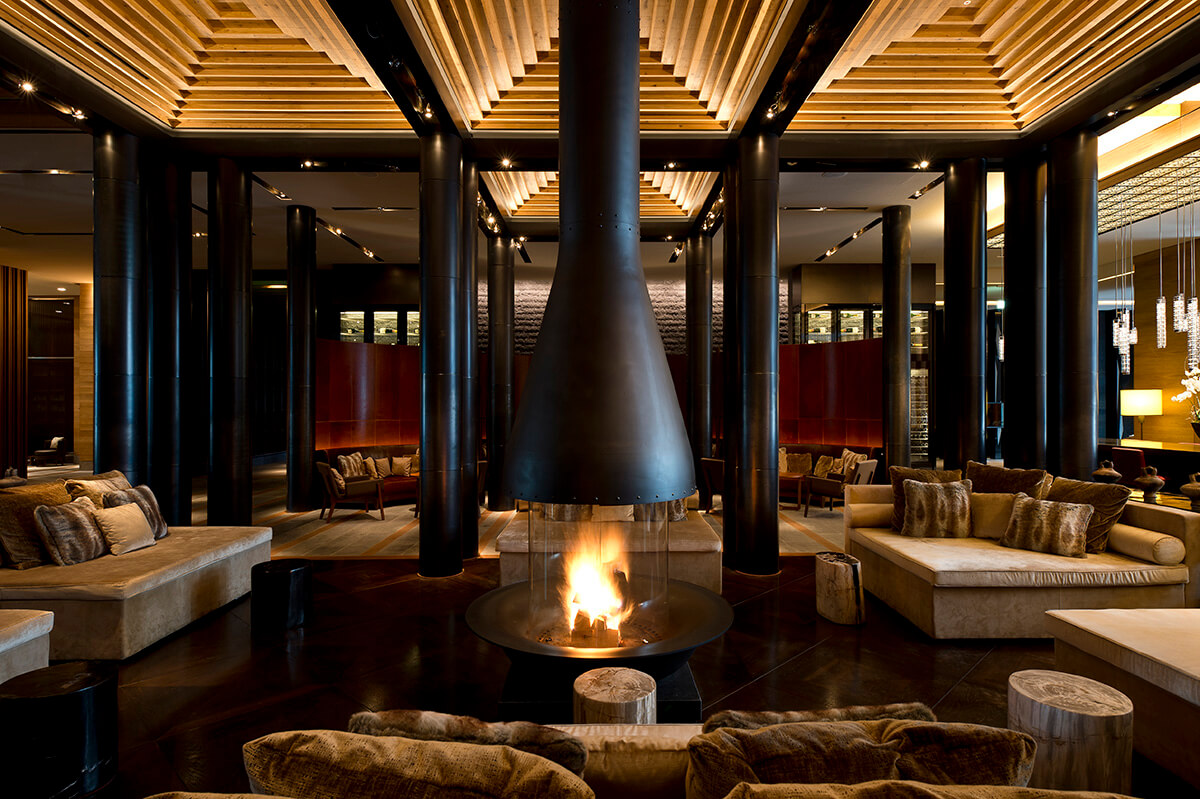
Open fires in the hotel lobby, where guests can curl up in an armchair in the evenings to listen to live piano music
Historically, Andermatt’s residents have always had to face the challenge of survival with its harsh winters and steep valleys. However, it continues to blossom despite the elements, maintaining a unique kind of other-worldly charm and the allure of remote escape. Make plans to go sooner rather than later – it won’t be long before the rest of the luxury world catches on.
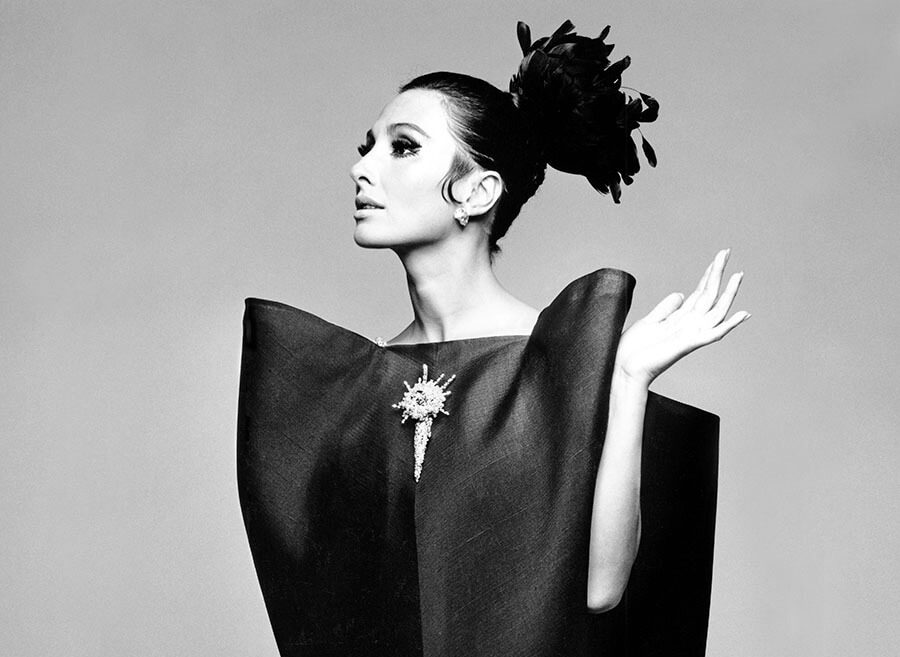
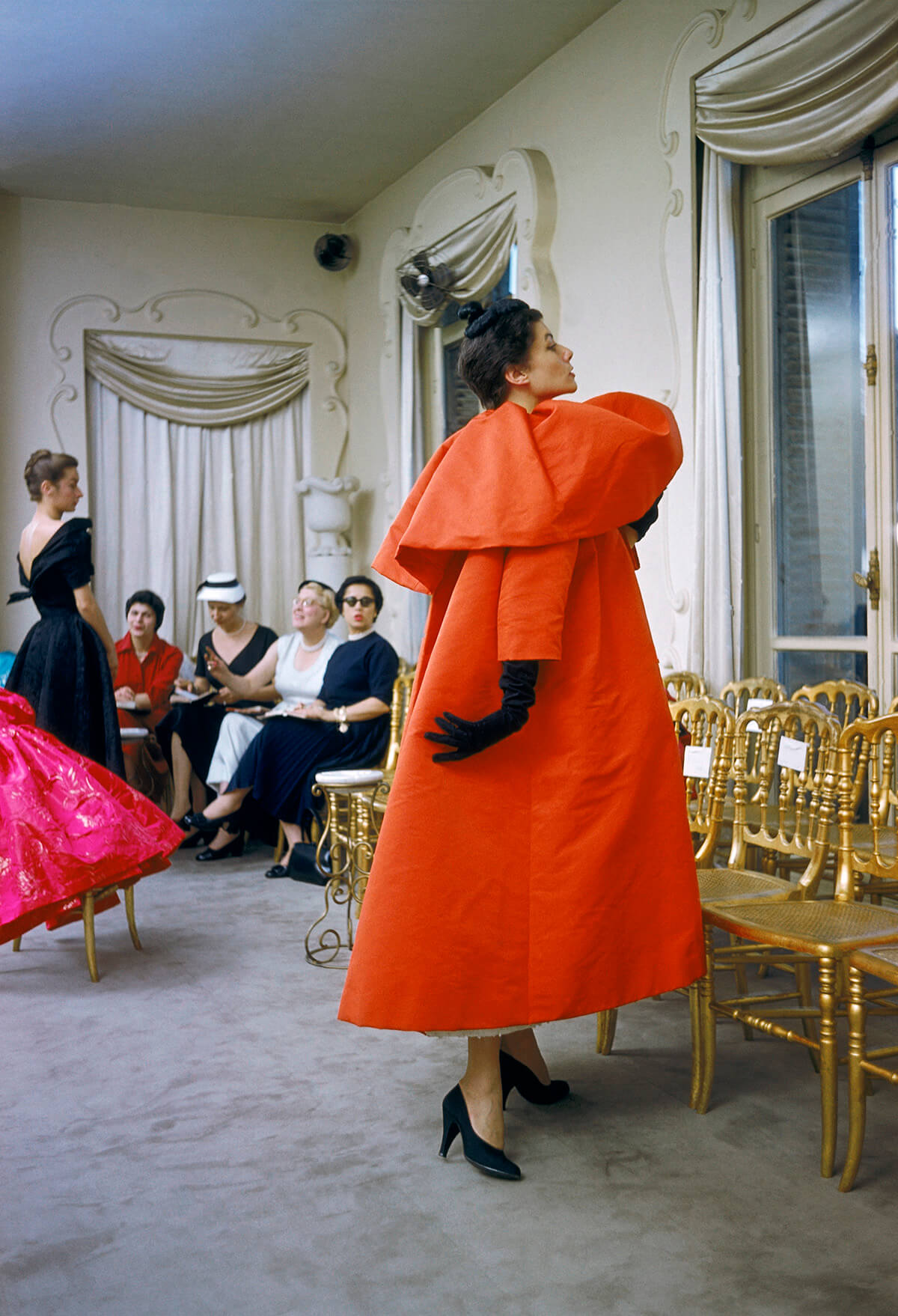
Model wearing Balenciaga orange coast as buyers inspect a dinner outfit in the background, Paris, 1954. Image by Mark Shaw
As the official London Fashion Week hotel, The May Fair has played host to some of the greatest names in fashion over the years. Now, the hotel, in partnership with the Victoria & Albert Museum, is celebrating the unique vision of the Spanish master of haute-couture, Cristóbal Balenciaga with an exclusive fashion-inspired package. Digital Editor Millie Walton is swept into a world of glamour and striking silhouettes
The May Fair is one of those hotels that Londoners trot past on their way to work, wistfully staring through the glass windows into the plush interiors that seem almost surreal in their gleam. It has a commanding kind of presence that you feel as soon as you walk in the door and stand at the desk in the wide (also gleaming) lobby, wondering how on earth you managed to sneak in and whether all of the glamorous people around you are either famous or work in fashion (they certainly look like they do).
Follow LUX on Instagram: the.official.lux.magazine
‘Do you work in fashion, madam?’ the receptionist asks me as he hands across my room key and a chilled glass of pineapple-infused water. I shake my head rather solemnly, but as I wait for the lift, a crisp cream envelope containing two tickets to the Balenciaga: Shaping Fashion exhibition in my hand, I could almost imagine that I do. It’s one of the most wonderful things about staying in a hotel, you step into a different world and time, albeit temporarily.
Alberta Tiburzi in ‘envelope’ dress by Cristóbal Balenciaga. Photograph by Hiro Wakabayashi for Harper’s Bazaar, June 1967.
Our room is a studio suite on the third floor. It’s a mammoth, labyrinthine building with winding corridors and some 404 rooms. The room is spacious and quite dated in design with the back wall covered in a heavily patterned fabric, but its hard not be swept up in the romance and stories of all the other feet who have walked across the carpet. Flushed fashion assistants rushing in and out with armfuls of billowing dresses, catwalk models, photographers, even Cristóbal Balenciaga himself perhaps. The huge, sleek, black walk-in wardrobe was certainly built to hold vast quantities of luxuriant fabrics.
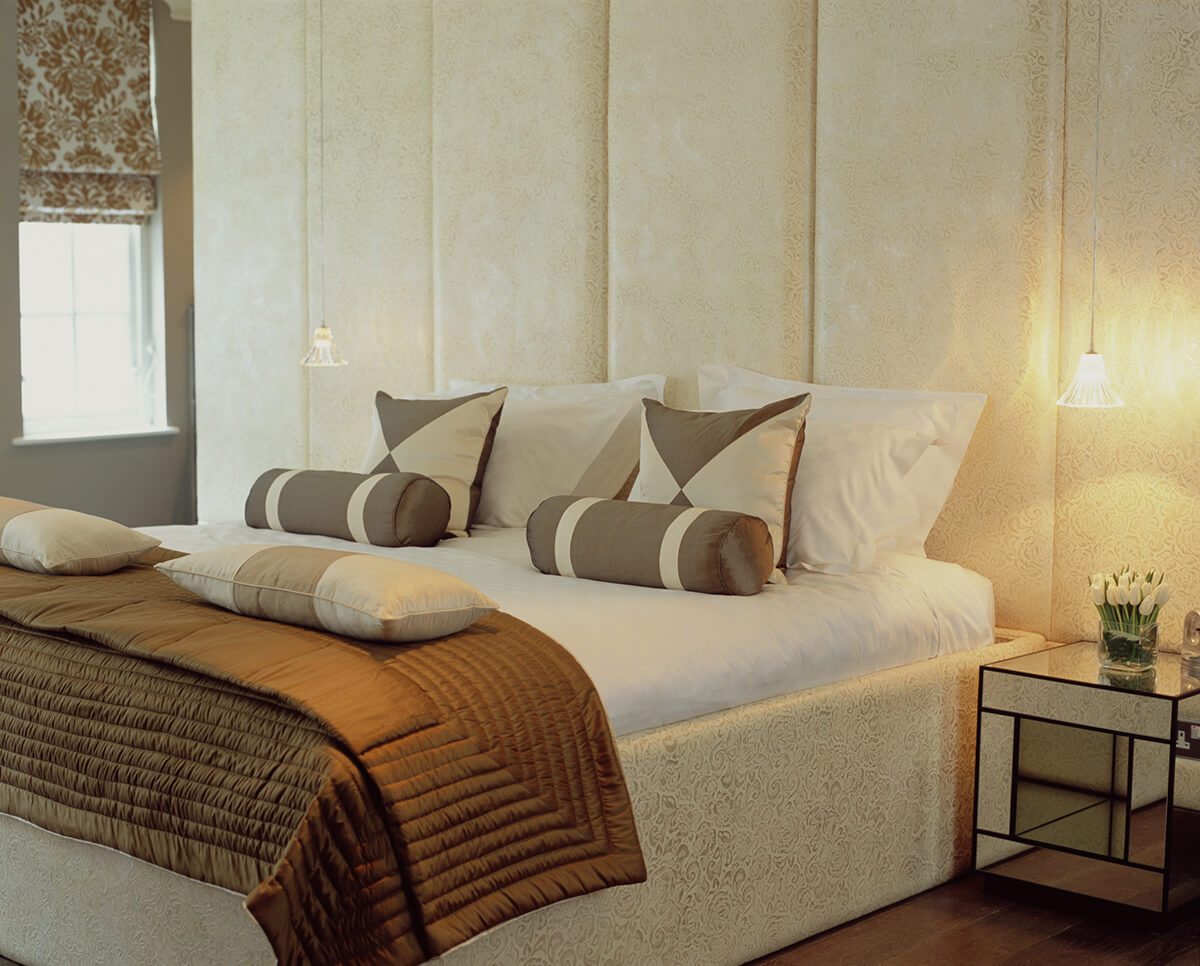
The Amber Suite at The May Fair Hotel
The V&A is conveniently ten minutes by car or tube from the hotel; we arrive in the early afternoon on a week day when there are fewer people, and the atmosphere is more serene. It’s the first ever UK exhibition to reflect on the work and continued influence of Spanish designer, Cristóbal Balenciaga and coincides with the 80th anniversary of the opening of his fashion house in Paris. It’s a fairly compact exhibition, largely centring around the latter part of the designer’s career, in which he literally changed the shape of women’s fashion by introducing new radical cuts such as the tunic, sack, ‘baby doll’ and shift dress.
Read next: Ulysse Nardin CEO on why creativity gets results in the luxury watch market
Many of these iconic dresses are on display along with archive sketches, photographs and short films with clips of current designers such as Molly Goddard and J.W. Anderson reflecting on Balenciaga’s innovations. Most interesting, are the x-ray works by artist Nick Veasey who unveils the inner workings of some of the more complex pieces, demonstrating how the seemingly impossible shapes were created. Balenciaga’s pieces were – and still are, in many ways – strikingly modern, often ignoring the natural shape of the woman’s body to sculpt architectural type installations. The elegance of such voluminous pieces is almost inexplicable. The exhibition serves as both a beautiful homage to the fashion house and a interesting revelation into the true artistry of haute couture.
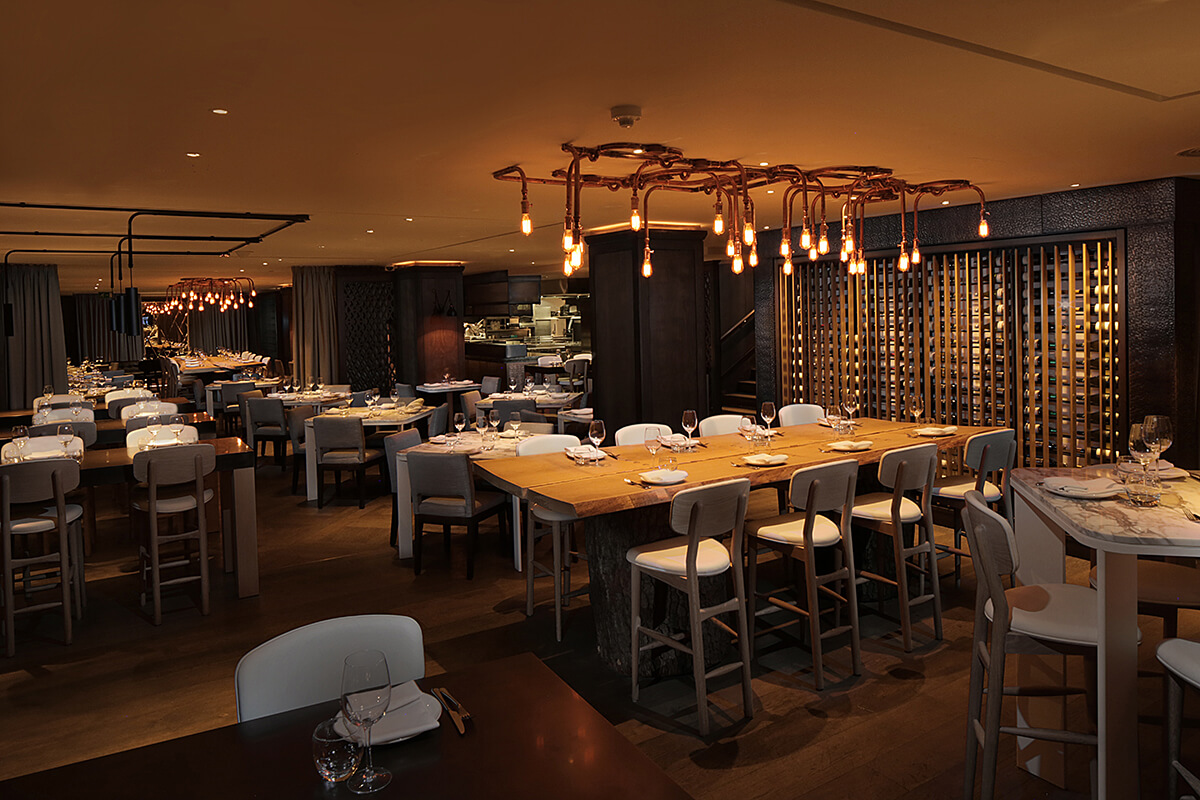
The May Fair Kitchen, the hotel’s in-house restaurant, serves tapas style plates in a sophisticated setting
Conversations feel more inspired that evening as we sip the sweet, pink Cristóbal cocktail at the May Fair bar. How would Balenciaga design a cocktail, we wonder, deciding that it would probably be in much larger, angular glass, but the setting is suitably elegant. For dinner, we walk across the lobby into the May Fair Kitchen; it’s a treat not to have to brave the bracing January winds and the food here is superb, taking the form of Spanish, Italian and Peruvian tapas plates. We order an indulgent selection – the risotto and squid are the stand-out dishes – and then return to the quiet of our suite to dream of ballooning skirts and unusual silhouettes.
The Balenicaga package at The May Fair Hotel includes an overnight stay with breakfast, two tickets to the exhibition at the V&A. Rates start from £285. themayfairhotel.co.uk
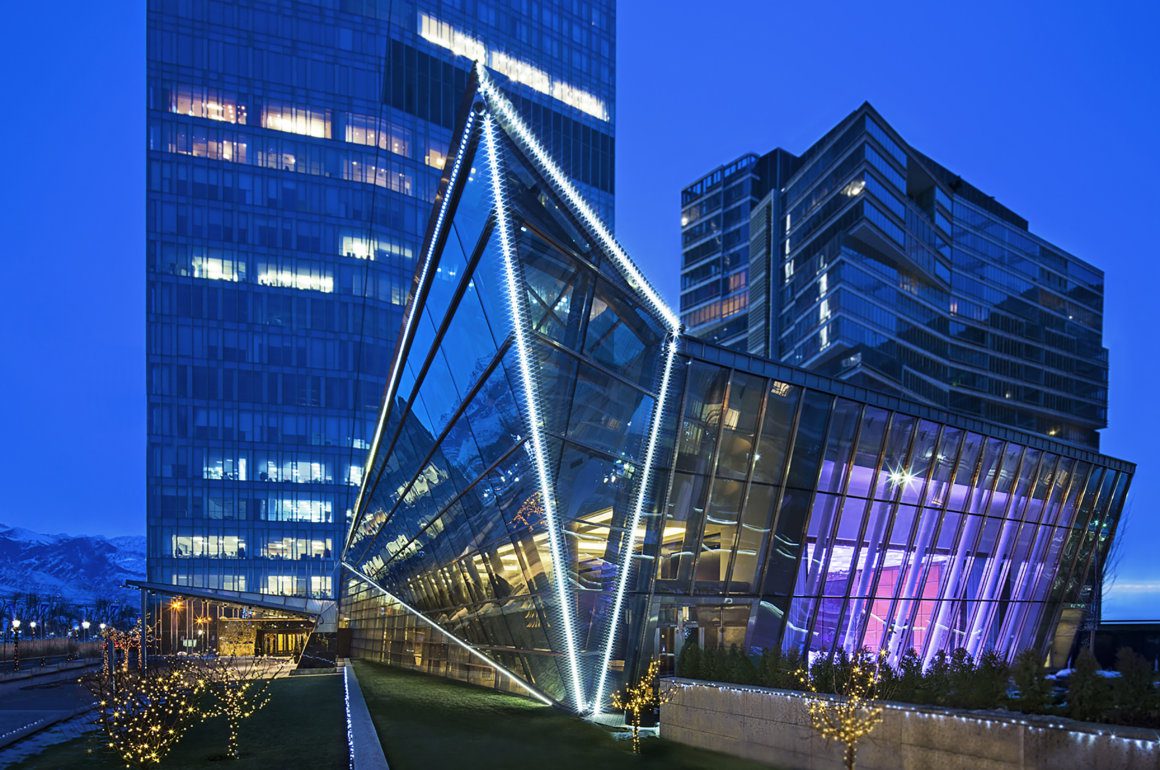
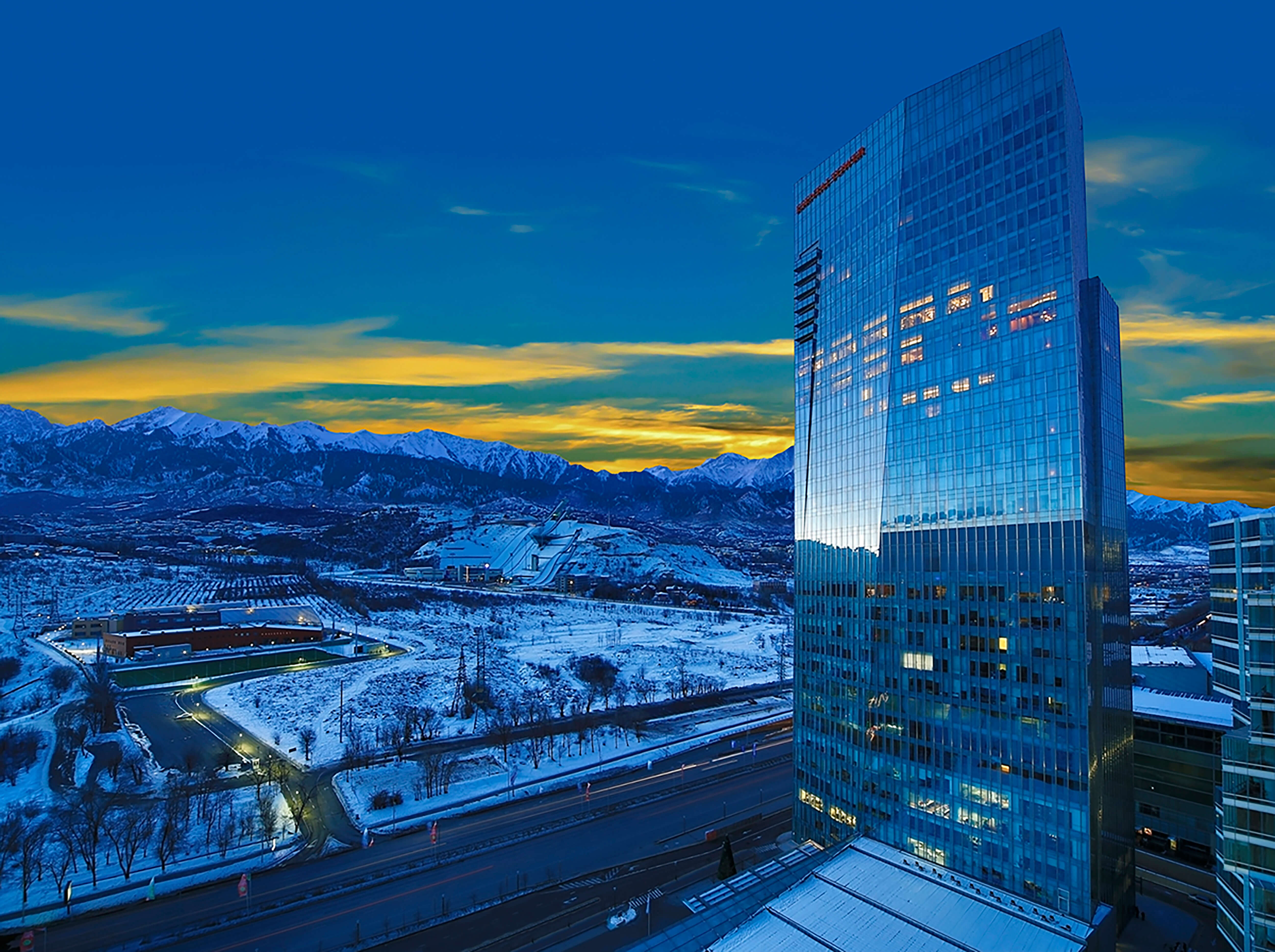
The Ritz-Carlton Almaty has a spectacular panorama of the Tien Shan mountains
Why should I go now?
It’s mid-winter in Kazakhstan, a spectacular time to see the biggest and most historic city in this huge and dynamic former Soviet republic straddling Siberia and the Tien Shan mountains – effectively the northernmost edge of the Himalayas.
What’s the lowdown?
Arrive at night, like we did, and you are ushered effortlessly to your room by the staff – they behave as welcomingly as Ritz Carlton staff anywhere in the world, but if it’s a first visit to the country, the Kazakhs looks impossibly exotic, beautifully coiffed, tall, slim, a striking blend of Slavic and Asiatic.
In the morning, draw the curtains expecting to see just another big Asian city, and you are blown backwards by the view from the picture windows in the bedroom. Before you stretch a vast array of peaks, rising to more than 5000m – higher than the Alps, deep frozen in snow, dwarfing any view from Milan, Geneva or Munich. Right in front of the hotel is an Olympic-style ski jump.
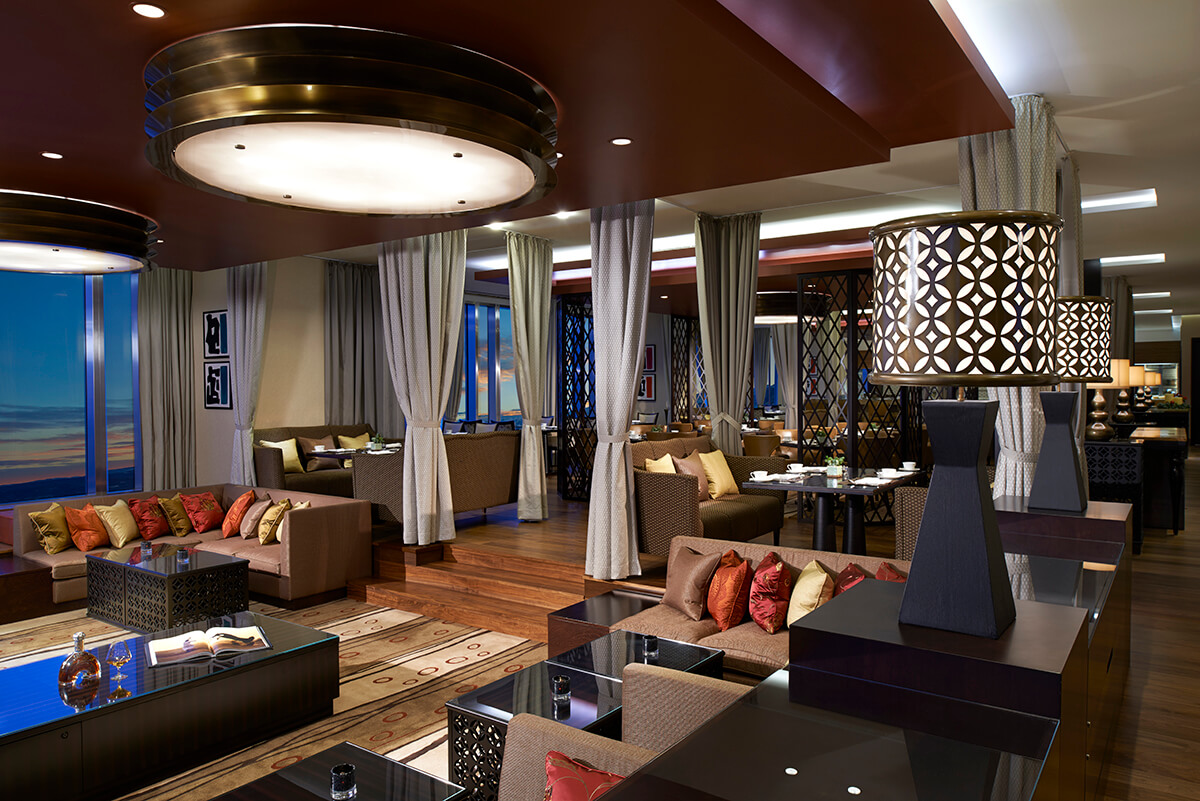
Dinner with a view at the VISTA restaurant
You could spend all your time in the Ritz and the uber-luxe Esentai Mall that adjoins it; the lobby, bar and restaurants are all on the 28th floor, with an excellent sushi bar. The aptly-named VISTA hosts a Sunday jazz brunch, with live band, straight out of the Upper West Side: we dined here with old friends, a sad and poignant occasion for very private reasons. The food was pure Manhattan bar & grill, with a little Osteria thrown in (particularly in the wine list, which was a heaven for Italophiles).
It would be a shame, though, not to go and explore Almaty: we enjoyed a night time trudge through deep snow to a couple of luxury fashion boutiques, including gorgeous MaxMara and Armani stores, with staff and clientele seemingly lifted directly from the Via Montenapoleone. And in contrast, in winter, a short drive takes you to the high-altitude ski resort of Shymbulak; skiing at nearly 4000m on the northernmost edge of the Himalayas is one of the world’s more spectacular experiences, and the snow is usually cold and dry (and the runs well groomed, and quite easy).
Getting Horizontal
There’s a beautiful pool and a Six Senses spa to revive yourself ahead of your next round of business conversations. Kazakhstan is a country on the go, and we found its leaders very open to inspiring conversations about developing its future. As for the bedroom, think Ritz modern luxury, with that matchless view thrown in.
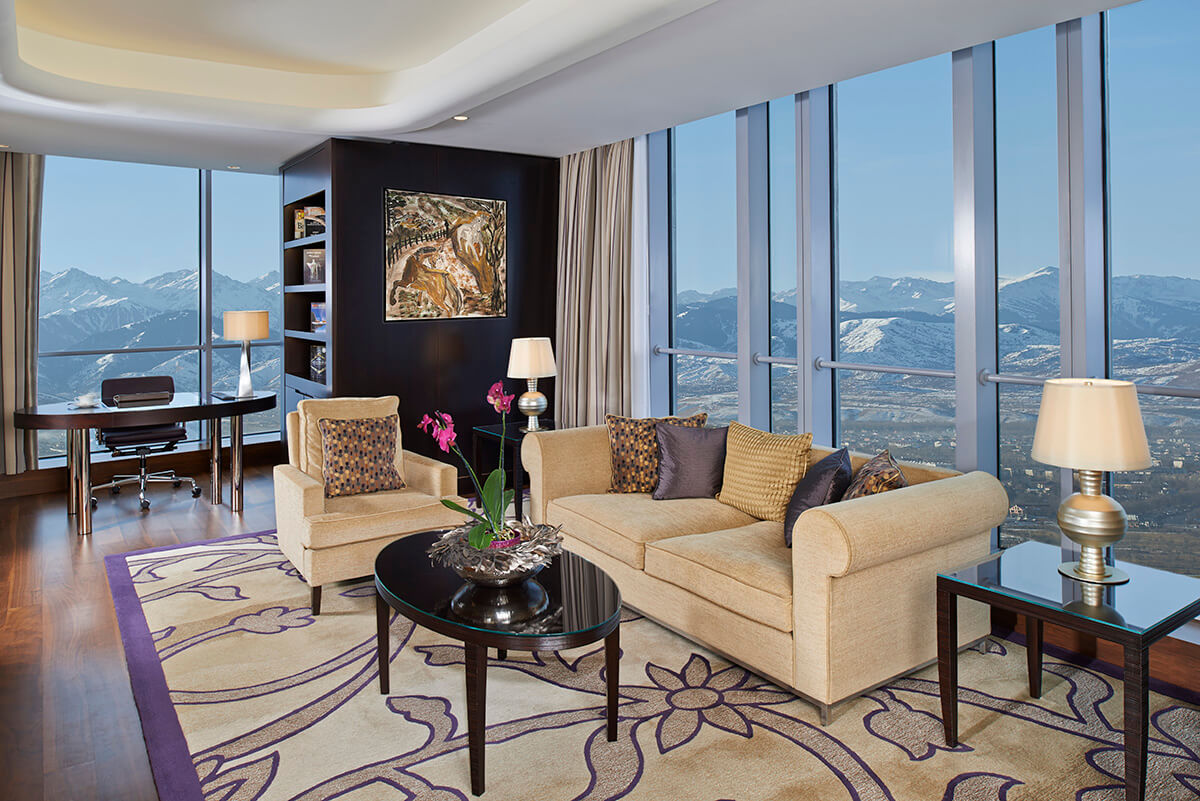
An executive suite with a breathtaking view to the south
Nitpicking
This has to be the best luxury spot between Moscow and Beijing. If we had to be critical, we’d say we’re mystified as to why Kazakhstan doesn’t do a better job of selling itself. President Nazarbayev – call on LUX if you need inspiration, because your country is too much of a secret.
Rates: From 90 000 kzt ( approx. £200 / $300 /€250)
Darius Sanai
ritzcarlton.com/en/hotels/kazakhstan/almaty
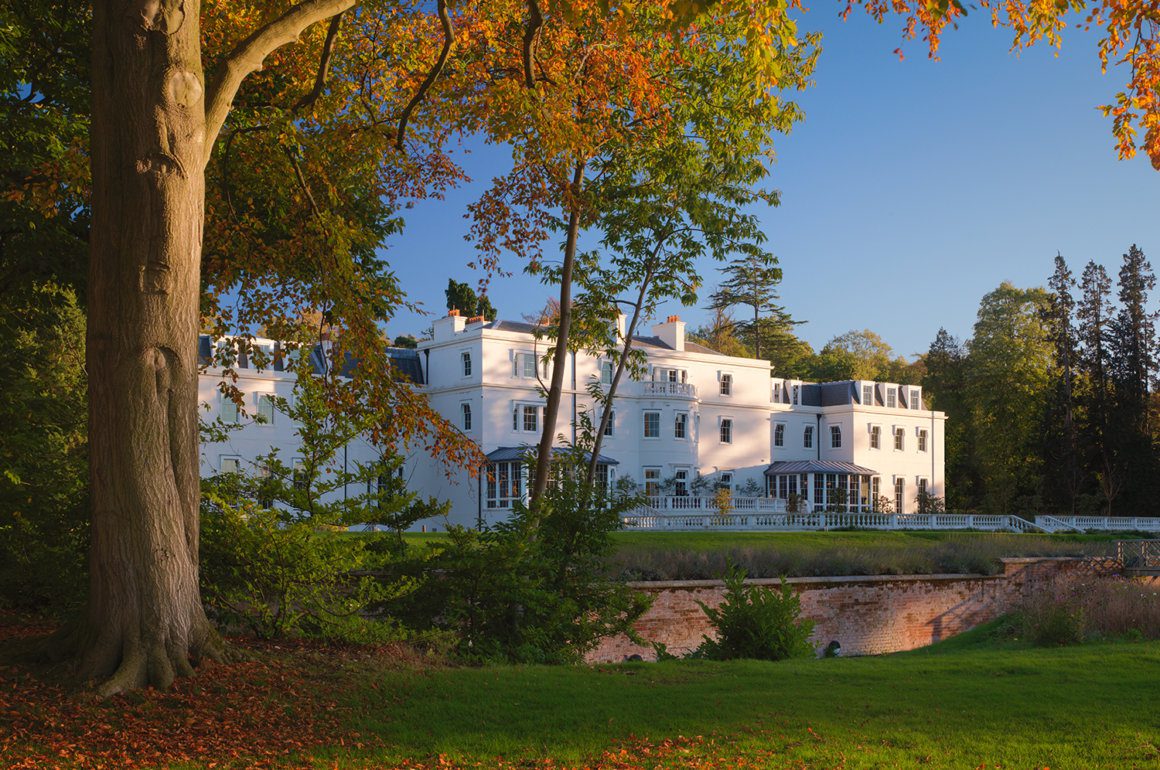
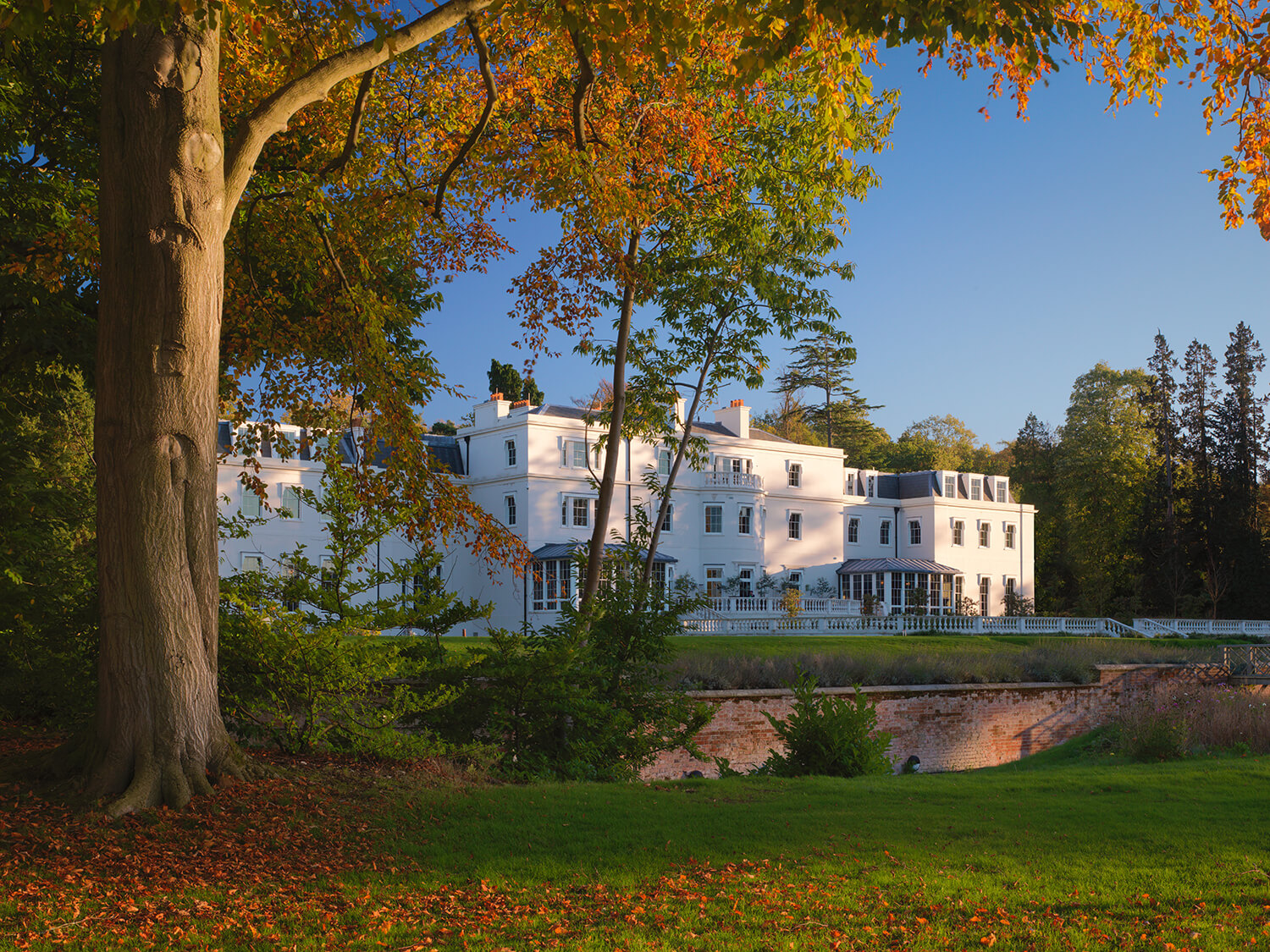
Autumnal colours at Coworth Park country hotel
Why should I go now?
Golden leaves, bright frosty mornings, log fires, long evenings – autumnal English country landscapes are hard to beat, especially when you can curl up in the drawing room of Coworth Park after a bracing walk.
Follow LUX on Instagram: the.official.lux.magazine
What’s the lowdown?
Coworth Park is an easy 45 minute drive from London, along winding country lanes through some of England’s prettiest pastoral scenes, close to Windsor Great Park. The main hotel building, a Georgian style Mansion House, is elegant and homely with cream fabrics, dark woods and a sweeping staircase leading up to bedrooms.
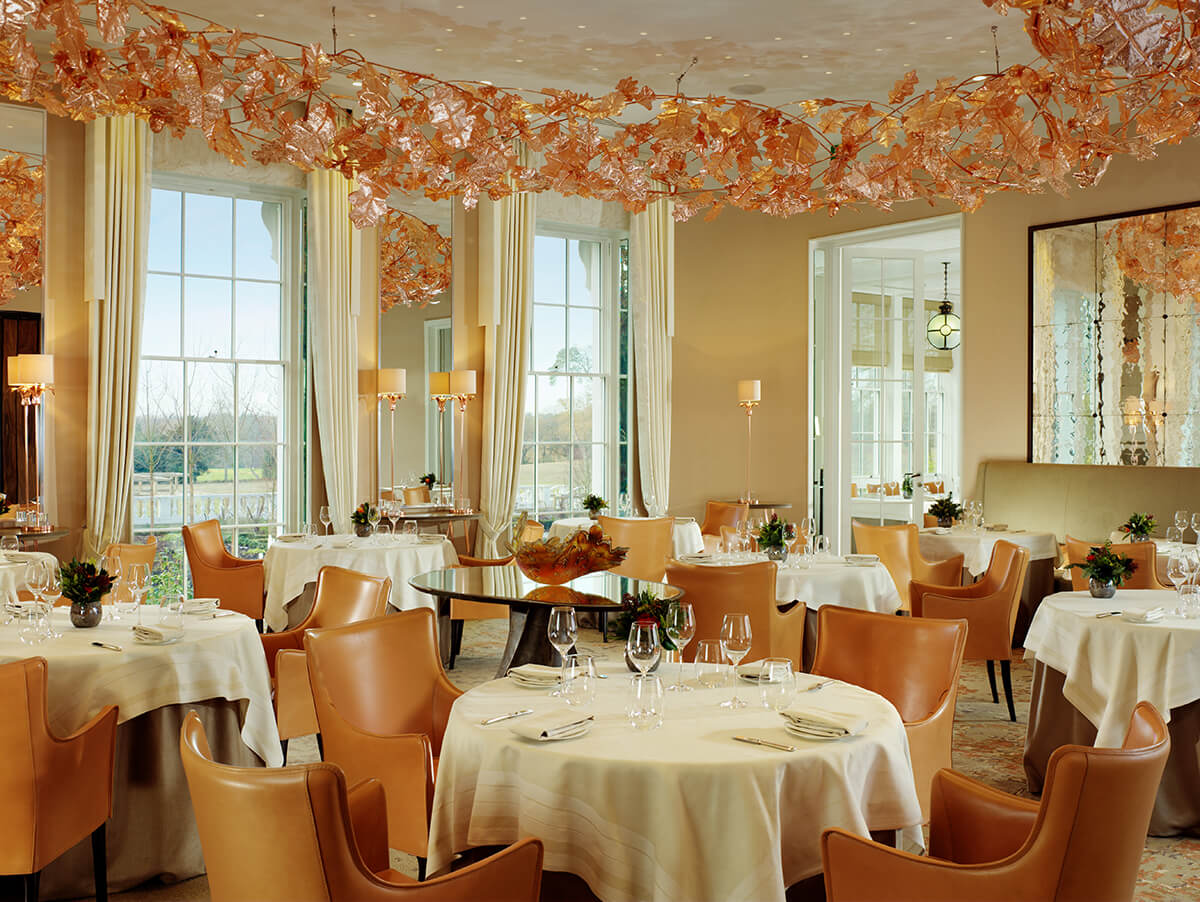
Restaurant Coworth Park, headed by Executive Chef Adam Smith was recently awarded a Michelin star
Sitting opposite the cosy drawing room and bar, is Restaurant Coworth Park (recently awarded a Michelin star) overlooking the rose garden and fields beyond. Adam Smith‘s menu follows a Best of British theme, using locally-sourced seasonal ingredients to create delicately flavoured dishes; we were especially delighted by the Cep Velouté (one of the best mushroom soups we’ve ever tasted) and the surprising combination of pink grapefruit, vanilla, white chocolate and ginger beer for dessert.
The Spa at Coworth Park
A rustic dining experience can be found at The Barn, close by to the converted Stables and Cottages (more bedrooms), where guests wander in for a hearty lunch in their muddy boots after a polo lesson with Guards Polo Club on Coworth Park’s professional polo field.
Read next: Fashion designer Markus Lupfer’s playful glamour
The award-winning Spa is partially submerged in the landscape with a live roof sprouting herbs, and huge windows on the upper floor at The Spatisserie restaurant, providing panoramic views of the parkland. There’s heated indoor swimming pool with underwater music and surrounding loungers, an aromatic steam room and high tech gym.
Getting horiztonal
The Drawing Room
Our room, a Stable Premium Suite, was spread across the entire top floor of a converted stable block with a large sitting room, slightly more compact bedroom and a spacious marble bathroom with two standalone, roll top copper bathtubs. Warm, earthy tones, equestrian themed artwork and underfloor heating create a homely atmosphere.
Nitpicking
Not all the bedrooms overlook the parkland, ours had huge windows but a view only onto the stable courtyard. Whilst they might be slightly less grand, the cottages or the Manor House front bedrooms are the ones to pick.
Rates: From £318 ( approx. $400/350€ )
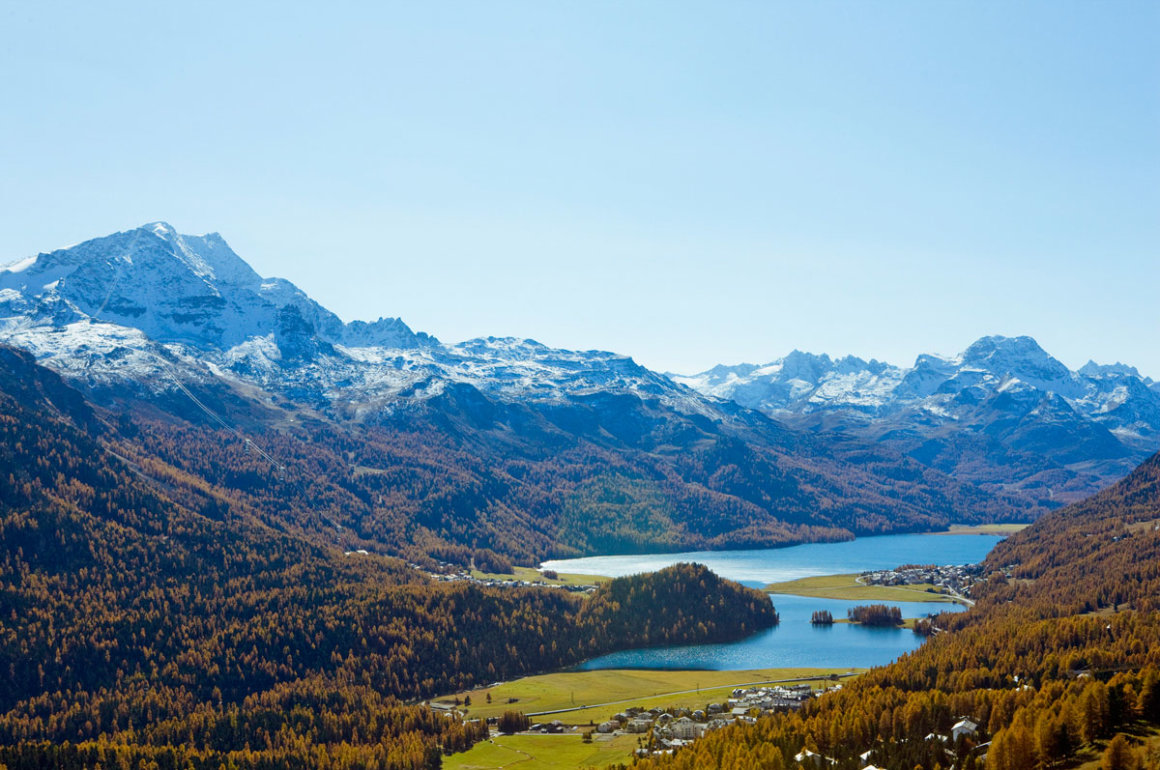
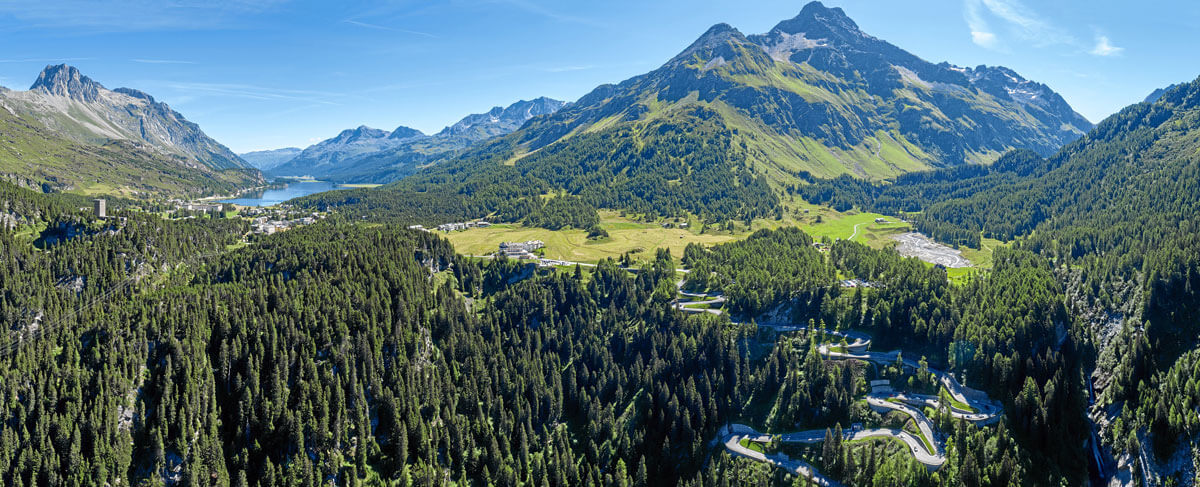
Panorama of summertime in St. Mortiz
A short blast in a vintage Ferrari from the crowds of the Côte d’Azur, the two most prestigious villages in the Alps offer glamour, sunshine, fine dining and more than enough space. Darius Sanai would go nowhere else in summer
Walking through the grand dining room of Le Restaurant at the Badrutt’s Palace, I felt two dozen pairs of eyes glance up at me. Our table, a good one, was a little beyond the centre of the room, meaning a decent double catwalk’s length stretched between the landing at the bottom of the staircase leading from the lobby hall, to the sanctuary of the table. The glances – Badrutt’s Palace clientèle is far too well brought up to stare – varied between the mildly interested and the appraising. The Palace has a claim to be the grandest legacy hotel of the Alps, the epitome of old money in St Moritz, the resort which personifies Europe’s inherited and regenerated wealth. Its regular guests wanted to know who was joining them.
After a couple of days, we got to know the Badrutt’s regulars, at their tables. The lady in the Chanel glasses, immaculate in white Dior trousers and a vintage Dior jacket, sitting and nursing her green tea and water, reading the Süddeutsche Zeitung. A ringer for Greta Garbo, she could have been one of a number of German movie stars from the sixties. The young couple with a little boy who conversed with them in French, English and Italian, seemingly at will, and who had befriended all the waiters. The jolly English family, extending from a baby via teenage girls on Instagram to a paterfamilias who looked like he had enjoyed as many bottles of First Growths as he had bought and sold enterprises. After three days, we started to feel at home.
Follow LUX on Instagram: the.official.lux.magazine
Badrutt’s is the hotel of St Moritz; if you want to get in to its New Year’s Eve gala dinner, you had better get in your time machine and ensure your great-great-grandmother marries a significant German count. We were there in summer, when it’s easier to book a room; in fact, the occupancy ratio was perfect, with enough people around to create a buzz, but enough space not to feel remotely crowded.
If Le Restaurant, with its etiquette and dress code, suggests the formal holiday experiences of the past, around 50m diagonally below it, cut into the rocks, is the holiday experience of today. A 25m pool, with picture windows facing the mountainsides across the valley and an extensive spa and wet area. The pool is bordered on one side by a 5m-high rock formation, which serves as diving board, waterfall and, underneath, a cave. Outside on the great lawn are swings, slides and a trampoline, all with a dramatic view.
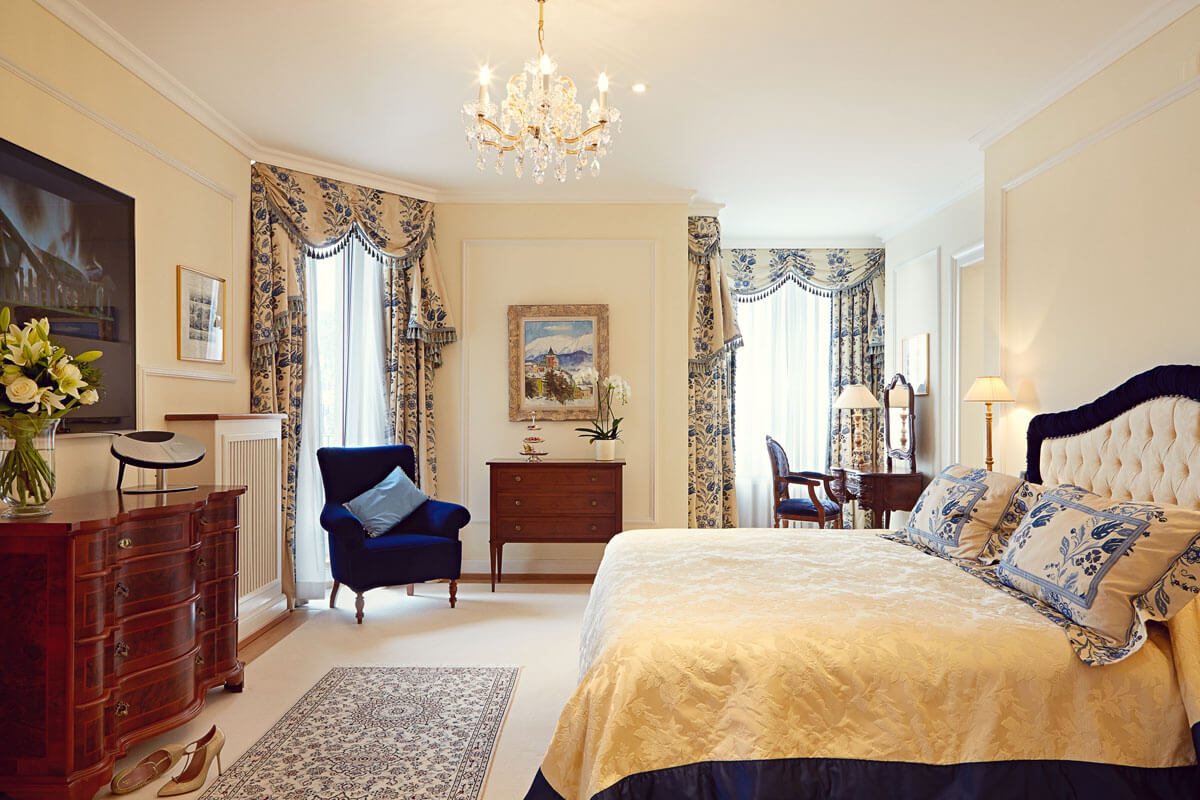
The Hans Badrutt Suite
Our rooms had the same view, albeit from a slightly higher vantage point; creams and floral curtains, subtle wood panelling and mahogany furniture suggest the tastes of the European aristocracy who form the heart of the hotel’s clientèle.
One of the most charming, and certainly the most surprising, element of the hotel is a little chalet that sits on the hillside across the road from the main building. Chesa Veglia is an ancient chalet that now belongs to the hotel, housing three restaurants, including a casual-chic rustic pizzeria, where the super-rich can eat with their hands and pretend to be normal people. We sat at a table on a first floor balcony, watching informal St Moritz in action; one of our party was invited down to make pizzas with the chefs in the open kitchen. The pizzas, Napoli-style, were picture perfect.
Read next: CEO & President of Acqua di Parma Laura Burdese on the unique beauty of craftsmanship
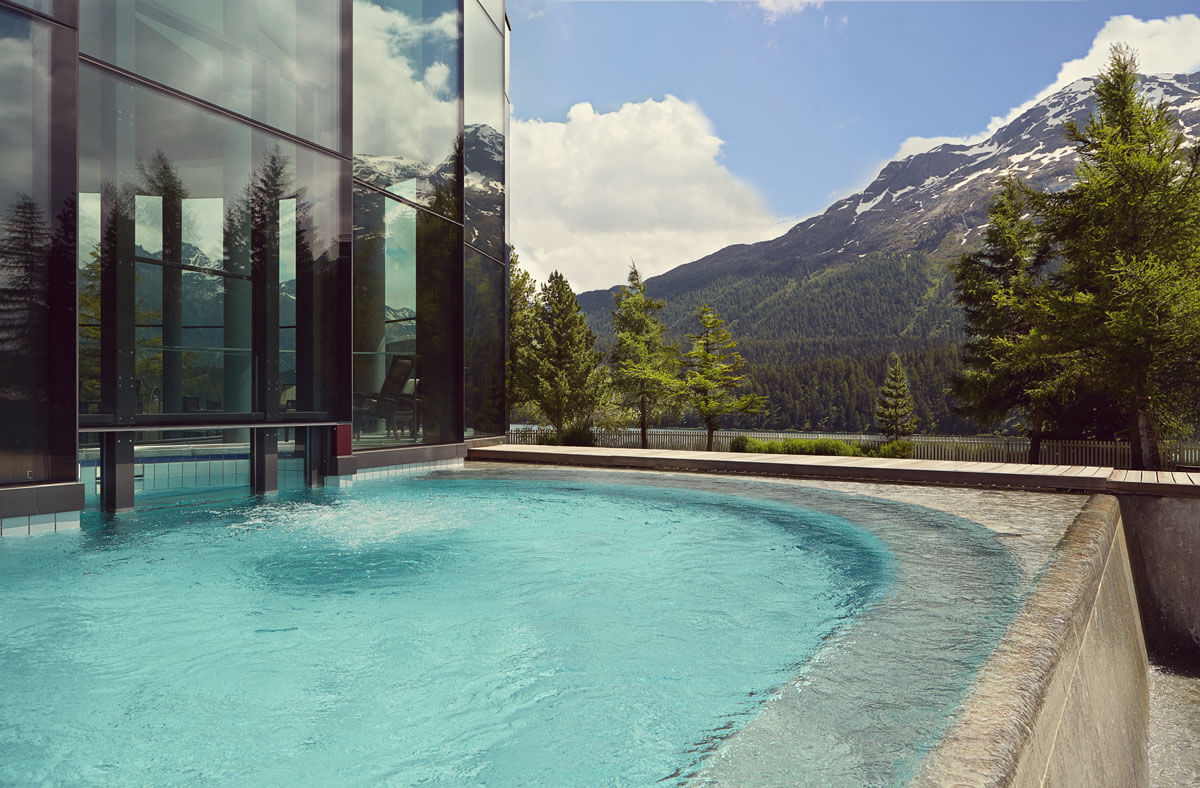
Badrutt’s outdoor swimming pool
It would have been easy to chill out in Badrutt’s for five days, perhaps stepping outside for a little jewellery shopping, before sliding into the limo and slipping away across Europe. I get the idea a lot of people do; while it’s 1800m up in a high Alpine valley, unlike many villages in the Alps, St Mo is not exactly crawling with people who look like they clamber up rock faces for fun.
But the mountains either side of the broad, high, light Engadine valley are far too tempting for anyone with a little mountain blood in them to ignore. On the second day, we took a funicular train through a steep forest, emerging at an Art Deco-inspired hotel called Muottas Muragl. High on a ledge just above the tree line, the hotel’s restaurant terrace floated over the Engadine, with the valley’s lakes set as blue splashes against the deep meadows; and also over another valley branching out immediately below, which rose to a wall of high peaks thickly covered in snow and ice. In this surreal setting, on a warm, sunny summer’s day, we sat on the terrace, and chose from a short menu strong on local ingredients and with a dash of panache. Perhaps it was the clear mountain air which augmented the senses (although a lack of oxygen is supposed to suppress taste buds) but the beef tartar with cognac tasted more vivid, more limpid, than its famed counterpart at the Cipriani; and a ‘Pork steak gratinated with tomato and mountain cheese on red wine sauce with pappardelle and vegetables’ had clearly delineated flavours, unlike some mountain food. The Muottas Muragl terrace was as memorable as its name, and we lingered until the view started to fade in the late afternoon light, before staggering down the mountain through a forest.
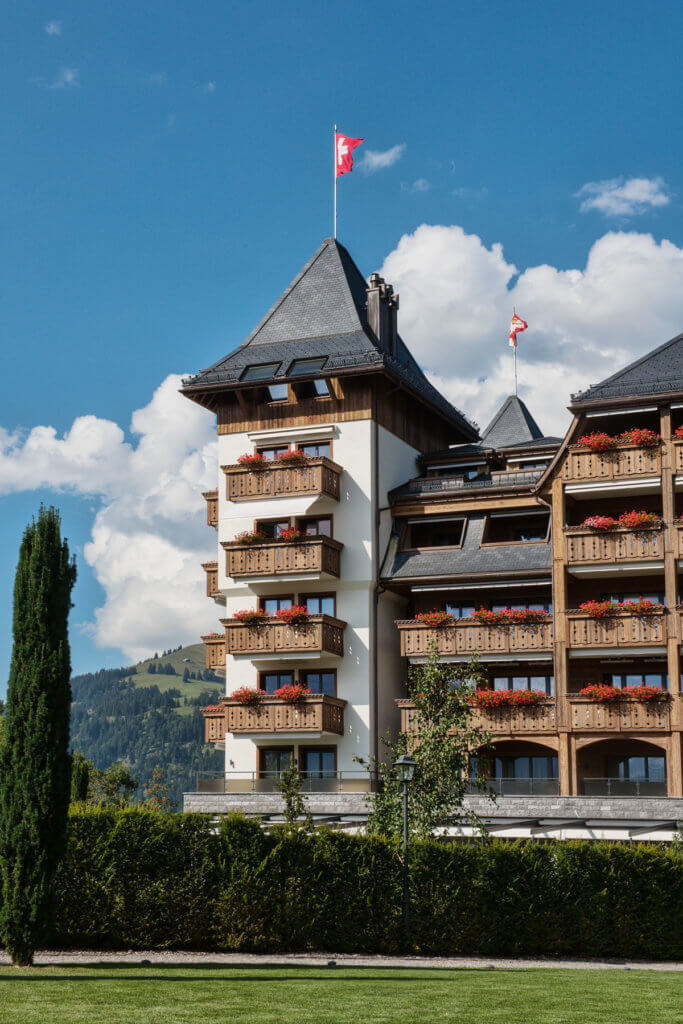
The Alpina is built on a knoll just above the village of Gstaad, facing off against the Palace, on its neighbouring knoll.
Apart from St Moritz, Switzerland, the country where the world’s wealthy have stored their money and visited for sport for the past century or more, has a few mountain village destinations that are known to the high net worth A-list. Zermatt, Crans-Montana, Verbier, Wengen, Arosa; all have their bijou appeal, their private bank branches, and are witness to a parade of furs in winter. But perhaps nowhere epitomises what Henry James called “the happy few” (the reference was ironic, but is now not always used as such) as Gstaad. And if the Palace Hotel has been the embodiment of old money at play for more than a century, its new rival, The Alpina Gstaad, tries to take everything to a new high.
The Alpina is built on a knoll just above the village of Gstaad, facing off against the Palace, on its neighbouring knoll. For breakfast here, we were ushered through a room combining ancient Alpine timbers and contemporary art and colour, onto a granite-lined terrace next to a flowerbed and a few metres from an outdoor pool. Beyond the pool, a lawn and more flowers, and then an uninterrupted view across a broad valley to round, forested hillsides, with rocky peaks splashed with snow beyond.
It was August when we visited the Alpina. Gstaad is one of the lower Alpine resorts, at 1000m lying roughly halfway between the high-Alpine vibe of the likes of St Moritz or Courchevel, and sea level. The sunshine was hot, tempered only by a hint of glacial cool. It wasn’t a great leap to imagine the crowds on the Côte d’Azur and people leaping off yacht diving boards, a few hours’ drive in the Ferrari, to the south. But, unlike the Med, the terrace at the Alpina was both sun-splashed and tranquil. After breakfast we walked the few metres to the pool’s sun loungers and spent the day sipping Margaritas and occasionally taking a dip, being careful not to get burned in the (semi) mountain sun. We had a few other people for company, but it all felt as private as having your own villa.
In the evening, we strolled down to the village; there were no teeming hordes here, either. Just enough people, from families to retired residents and the occasional romantic couple; just enough vibe.
Gstaad may be a gentler location, but it is still very much in the Alps; on the next day we took a cable car to Wispile, at the top of the small mountain overlooking the village. From the terrace here there is a 360-degree vista, towards high, glacial peaks to the south; across spiky, meadow-lined foot-peaks to the east and west; and to the northernmost ridge of the Alps to the north, with a glimpse of the hazy lowlands of Switzerland beyond. We walked along a series of meadows, past forests and farmsteads, through herds of curious cattle, and were ourselves herded onto a rock by an Appenzell cattle dog, until its smiling farmer owner emerged from a barn to tell us she was harmless.
Read next: The world’s most exclusive polo tournament in Gstaad
A steep, zigzag path dropped down through a forest, so dark we only had snapshots of the precipitous fall beneath us; after almost disappearing through a muddy field, the path emerged again and led us to a hotel on the edge of a little village, Lauenen, where we had a refreshing beer and called a taxi to take us back to dinner in another picture-postcard village, Schoenried. This is on a little plateau above Gstaad, and at its gourmet restaurant, Azalée, we felt we had no choice but to try the Simmental beef – acclaimed throughout the Alps, and from the valley we were in. The Azalée, with its vista across the Gstaad valley, was a gentle, spiritual place to be as summer evening turned into night.
Switzerland is the home of haute-hotellerie; nowhere has a higher concentration of five star hotels in small towns and villages. These hotels have faced a challenge as a new generation of wealthy guests arrives, brought up on the casual chic of the likes of Ian Schrager’s creations and the Soho House group. How much do they bend to cater for the new guard? In some cases, new hotels have sprung up which feel a little out of place, Greenwich Village in the Alps. In the case of the Alpina, which was created in 2012 on the site of an old hotel of the same name, the balance is exemplary. The building feels local through its extensive use of timber rescued from abandoned Alpine buildings and huts, and through the local stone on display throughout. It feels contemporary through the openness of its internal architecture, its colour, light and the museum-quality art displayed throughout, courtesy of its owners. None of that would matter if the quality of offerings didn’t stack up.
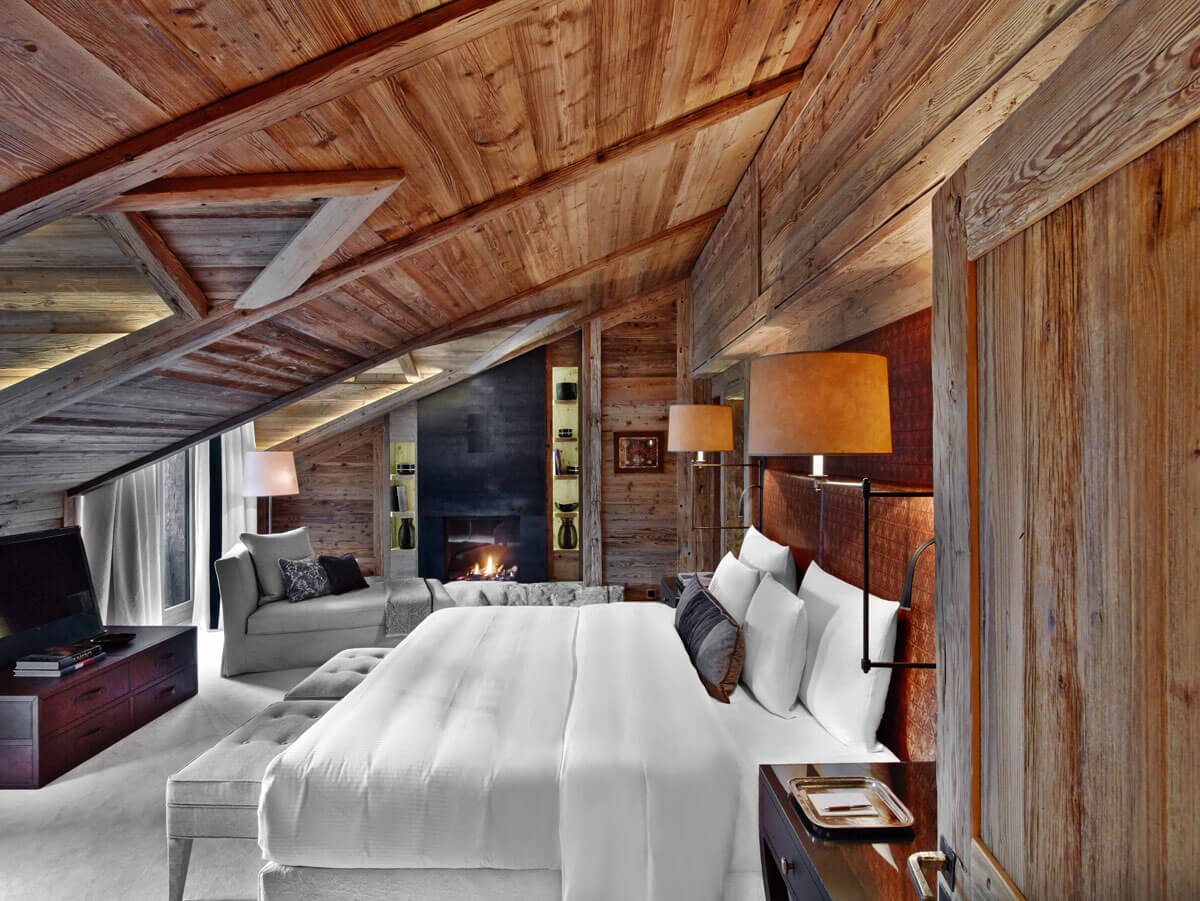
Chalet style interiors of one of the bedrooms at the Alpina
Sommet, the main restaurant, has a Michelin star, the highest Gault-Millau rating in the area, and a wall sculpture composed entirely of cutlery, under which we were seated. Expecting fine but rich Alpine fare, we were surprised: then executive chef Marcus Lindner’s tasting menu is 100% vegetarian, with carnivores catered to on request (Lindner has since been replaced by Martin Göschel). Redolent of the aromas of Alpine meadows, the succession of dishes proved that meat is far from essential to a signature evening: as one example, the artichoke with truffles from Perigord, sweet chestnut and brussels sprout was as savoury and protein-balanced as you could hope. It would be hard to match such an experience – in such a refreshingly light ambience – let alone to do so in the same establishment.
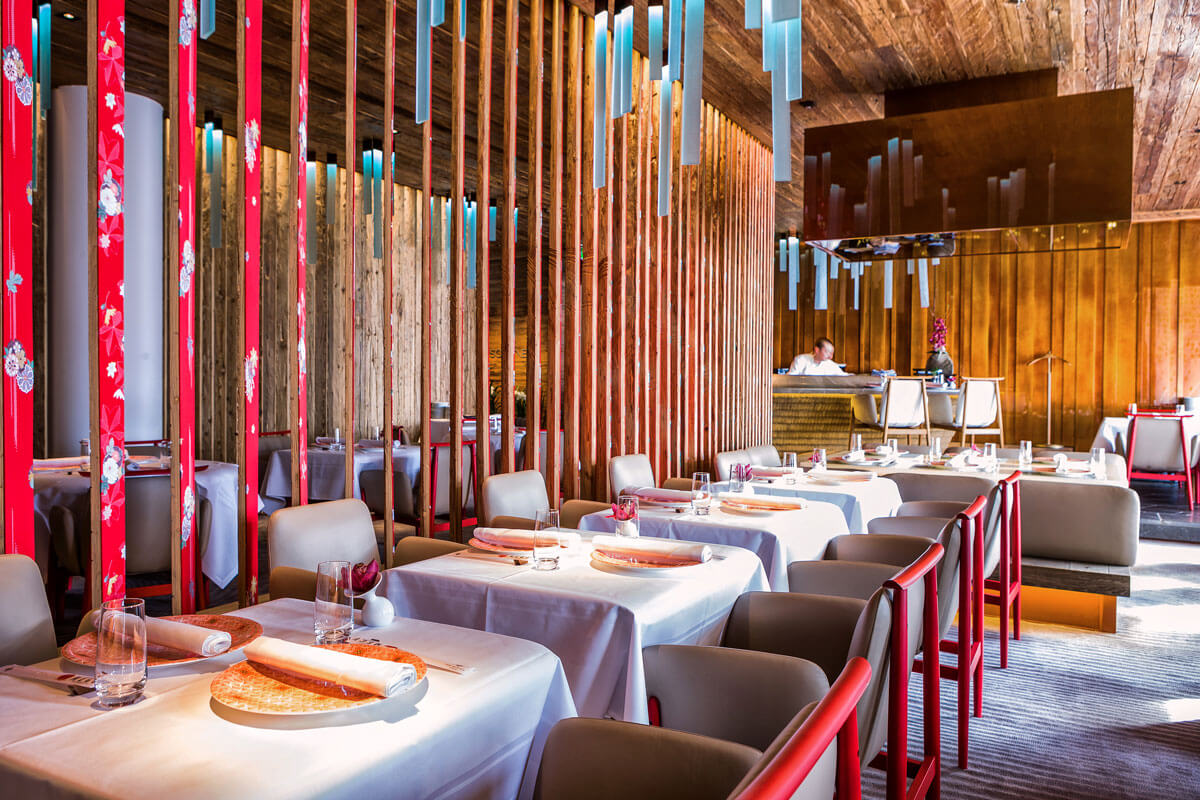
Megu is the Alpina’s Japanese restaurant, bringing the flavours of Tokyo to the Swiss alps
Megu is a Japanese restaurant, overseen by chefs who have come over from the homeland expressly to create a slice of finest Tokyo in the Alpine hills. Toro tartare with ponzu sauce, fresh water shrimp and Oscietra caviar was a study in subtle contrasts. We developed a serious yearning for the crispy asparagus crumbed with Japanese rice crackers, chilli and lemon – more, please, every day. It’s fine dining with a slice of wit, and a thorough and reasonably priced Swiss wine list – pinot noirs from Malans, Cornalin from Valais, local white grapes from the edge of Lake Geneva, all wines you just can’t find outside Switzerland.
Megu–sleep–pool terrace–repeat. What’s not to love about August in the Alps?
Our thanks to the Switzerland Travel Centre for organising first-class transportation on Switzerland’s beautifully efficient train network: switzerlandtravelcentre.co.uk
badruttspalace.com, thealpinagstaad.ch
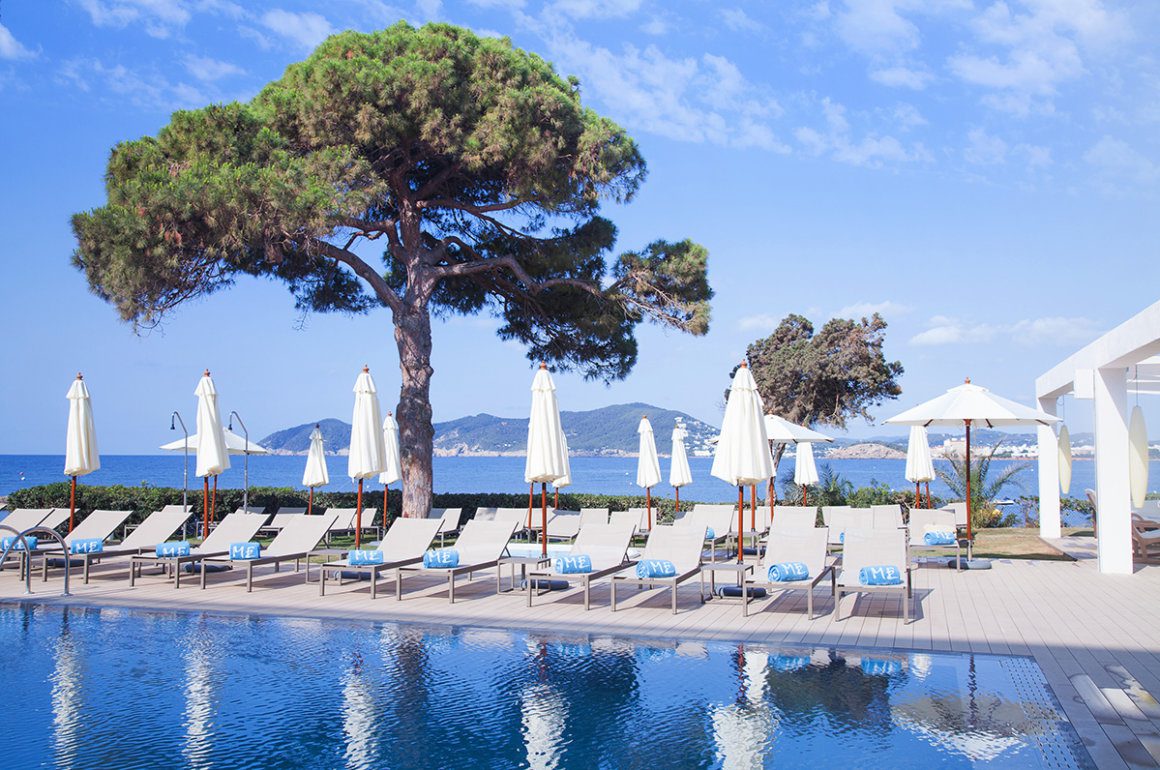
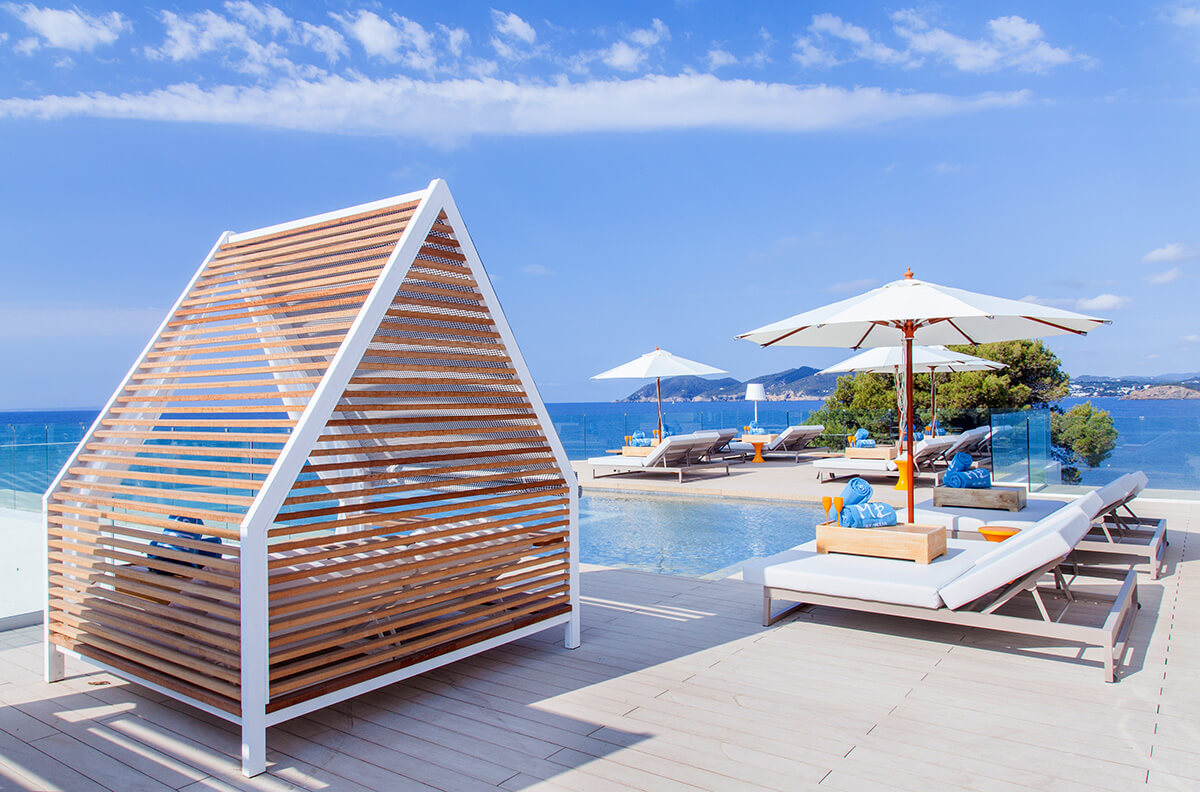
ME Ibiza Rooftop Pool
Why should I go now?
The summer family crowds have left the island and the weather is perfect, and less scorching.
What’s the lowdown?
The ME is in a quiet cove on the south side of the island; step through the open lobby on arrival and you are greeted with a view across the huge pool, across the bay, to the mountains beyond. It’s right next to Nikki Beach, but there’s no reason to go there when you have your own poolside and an even more exclusive and panoramic pool on the rooftop.
Follow LUX on Instagram: the.official.lux.magazine
The cuisine is Ibizan chic, grilled fish and meats, a little north African influence; there’s a cool but understated party scene at the Radio ME rooftop bar. This isn’t a hotel for the desperate aspirationals; more for those at peace with themselves. And there’s enough of a choice of hangouts that you don’t feel forced to party, or to chill; while the party was going on upstairs, we had a quiet meal by the sea downstairs.
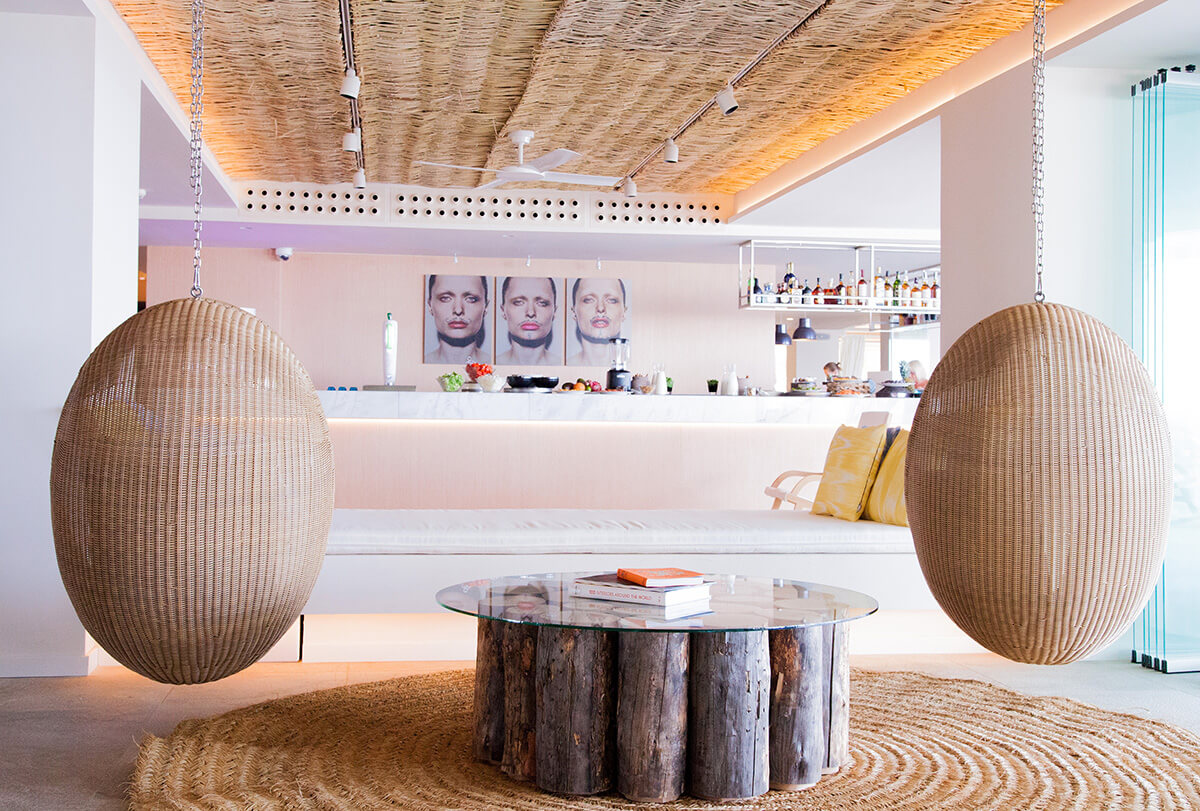
The open lobby
Getting horizontal
Minimalist bedrooms
Décor is minimal white Ibizan but without suffering preciousness or impracticality; our room was on the small side, but the open-plan bathroom and a beautifully-selected array of materials made it comfortable, not over-designed.
Nitpicking
The food could have been even simpler, to suit the minimalist ethos; and the service was occasionally a bit laid-back, but this is Ibiza. The club scene at Ibiza Town is a 25-minute taxi ride, and the beach clubs at Cala Jondal a little further – but once you’re at the ME, you’re unlikely to want to leave.
Rates: From 240€ ( approx. $300/ £200)
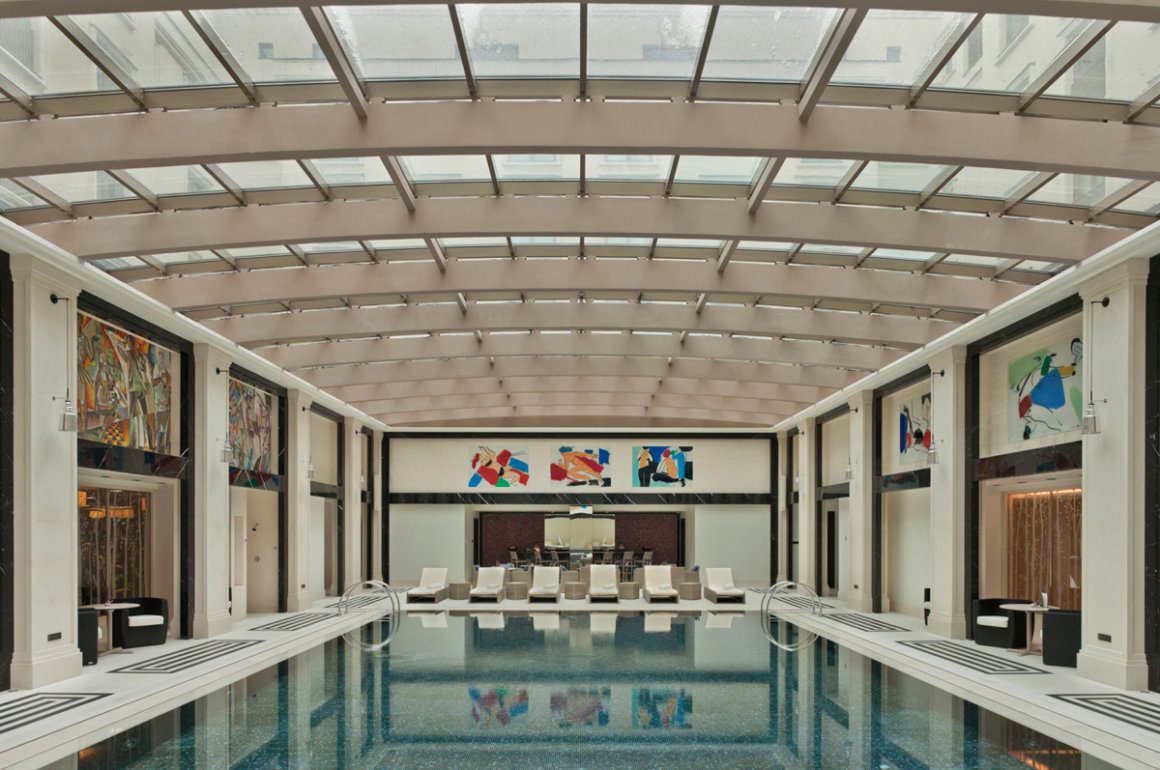
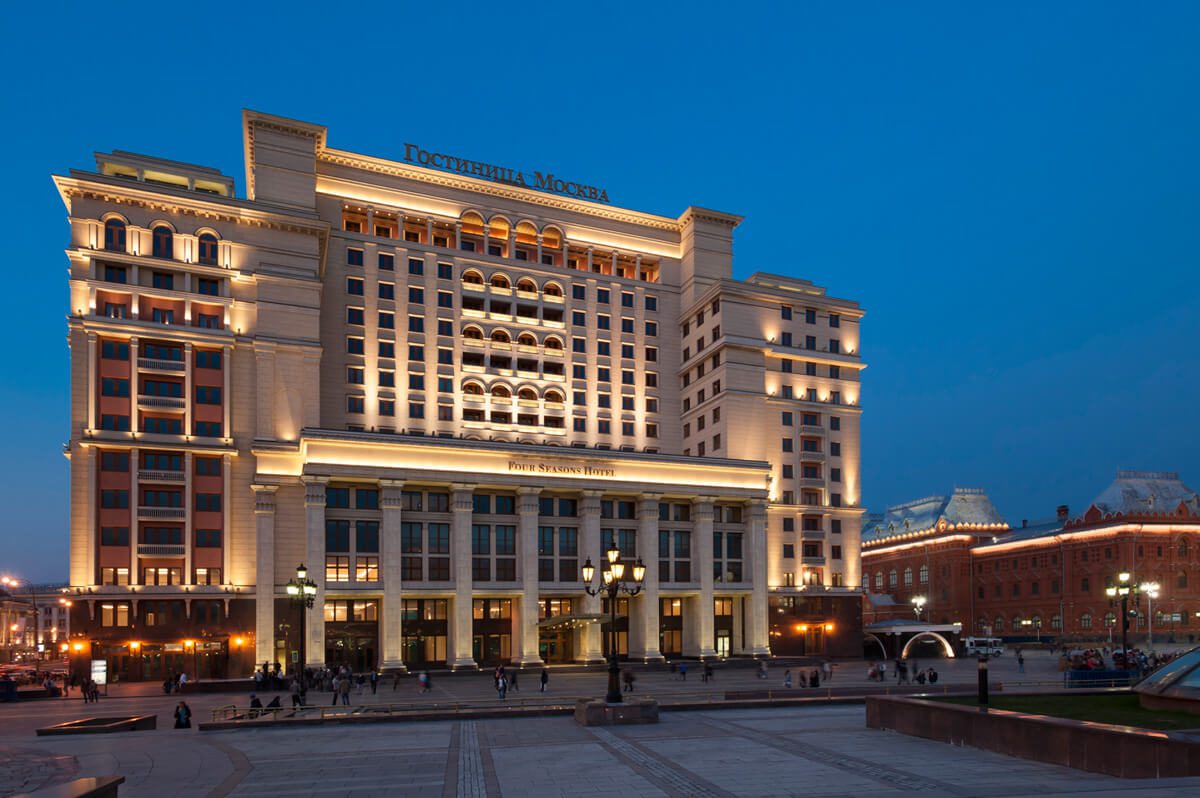
Russia’s grandest hotel: The Four Seasons Moscow
Why should I go now?
Moscow in summer is vibrant, unexpected. In the warm, dry, continental sun, the city’s streets and parks have a Mediterranean vibe. The Four Seasons has the best location in the city bar none, next to the Kremlin; you can watch Russian tourists wander in and out of Red Square, eating their marozhonye (ice cream) from your balcony.
What’s the lowdown?
The Four Seasons is an edifice and a historical artefact. Those interested in Soviet history will be fascinated to know it was formerly the Hotel Moscow, a pet project of Joseph Stalin, opened in 1935 – the Lubyanka, headquarters of Stalin’s NKVD security police, is a five minute walk. Those interested in cocktails will know its façade from the labels of Stolichnaya vodka. Transformed after many years of work into a luxury hotel, it is now the grandest hotel in Russia.
The 25 metre indoor pool at Amnis Spa
Its 25 metre indoor pool, occupying the internal courtyard, with a glass roof, and surrounding ultra-luxurious spa, are the central symbols of the transformation. We balanced out the yin of exercising and spa purifying with the yang of hanging out in the Moscovsky bar on the ground floor, where immensely strong cocktails are served in an atmosphere more New Orleans than Moscow; the Moscovsky Mule is the hotel’s take on the classic Moscow Mule, and has a moreish kick.
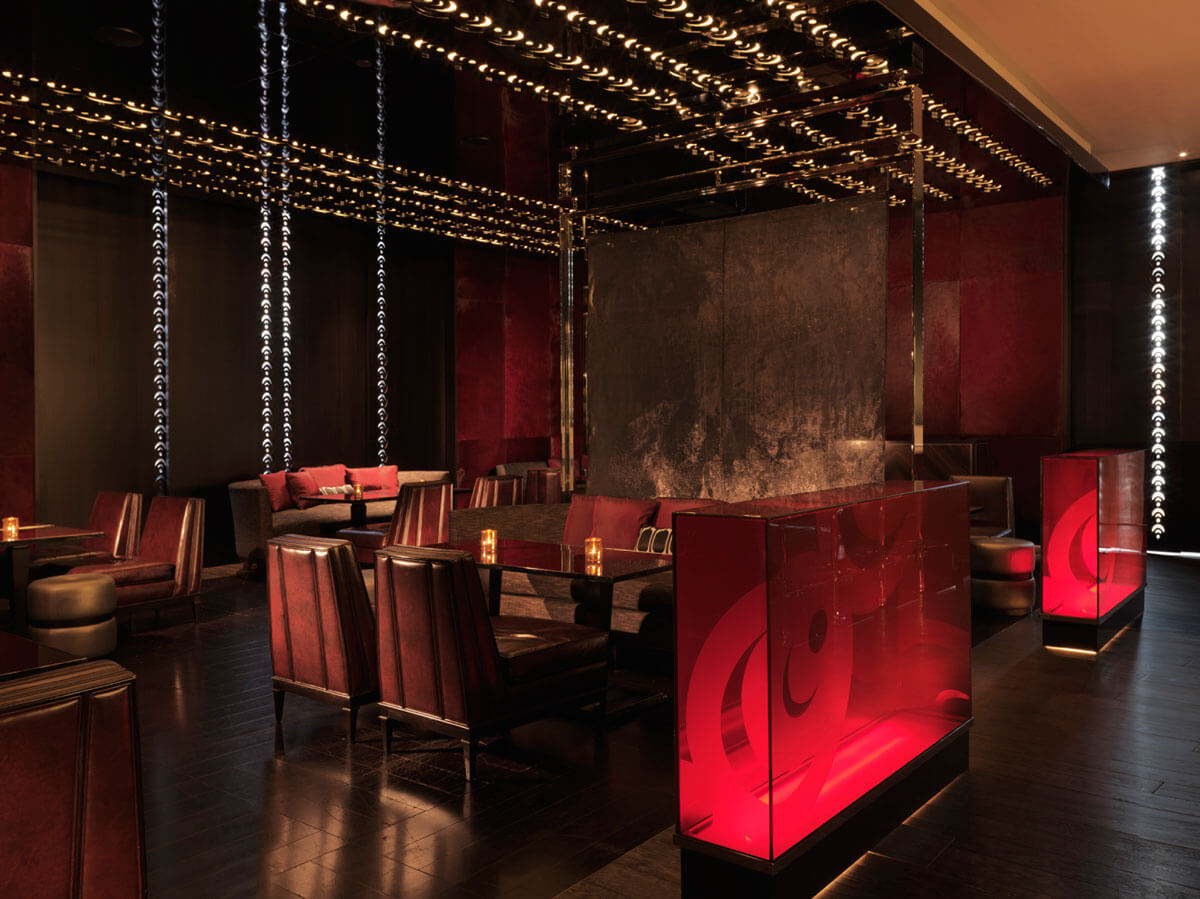
The Moscovsky bar
Getting horizontal
Our suite (bedroom, living area by the bedroom, and living/reception room) had balconies facing out onto Red Square, with the Kremlin to the right – you don’t realise exactly how much of a castle the Kremlin is until you have a chance to examine it at night and wonder at what has happened there over the centuries. Furnishings were plush, light and contemporary, while thick carpets and swathes of marble in the bathrooms will ensure that traditional Four Seasons fans (and visiting dignitaries) are not upset. It’s worth upgrading to a room with a view of, and balcony onto, Red Square; one of the most momentuous city views in the world.
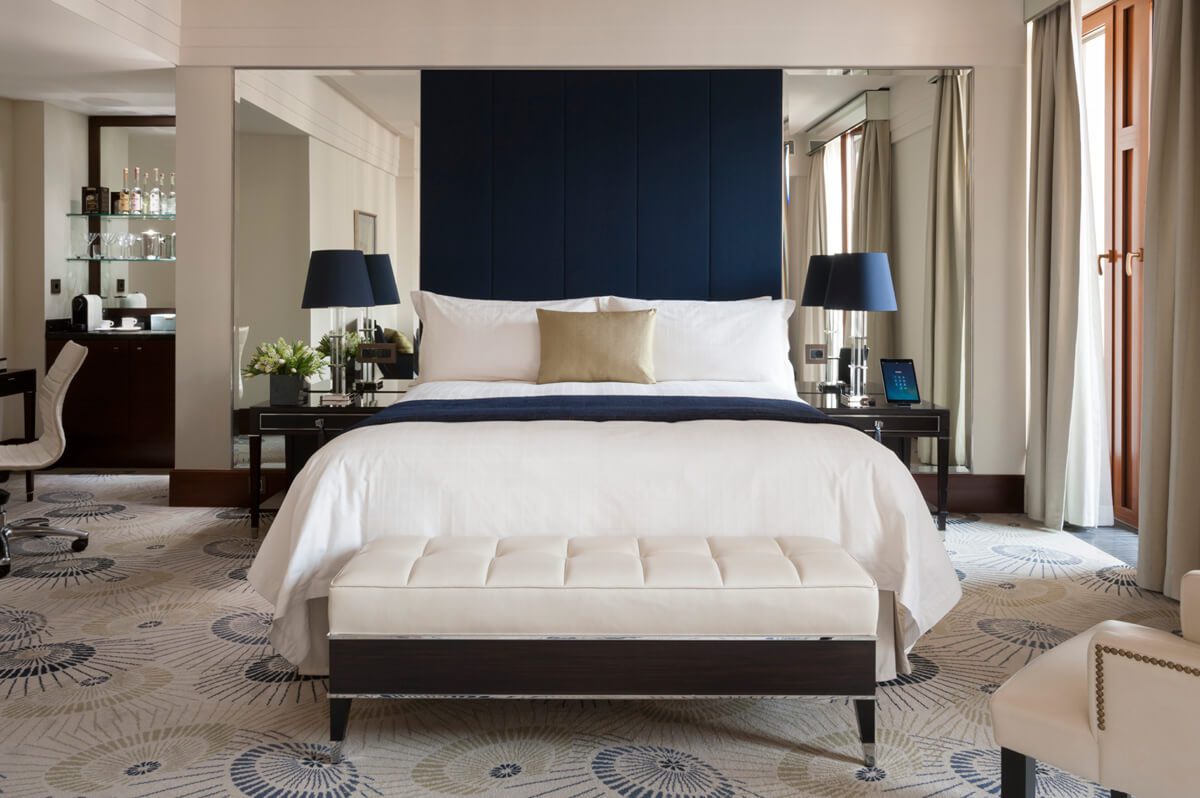
Some of the hotel’s Premier Rooms have balconies onto the Red Square
Nitpicking
This is a Four Seasons, so an element of grandeur and formality go with the deal, from the moment you walk into the immense lobby and stride down the marble corridors. Service is impressive at every touchpoint, as is security; the lobby areas are probably more suited to those with an entourage of bodyguards than a casual cabal.
Rates: From RUB 28,000 excluding breakfast (approx. USD $500/€400/£300)
Darius Sanai
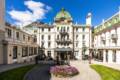

Recent Comments