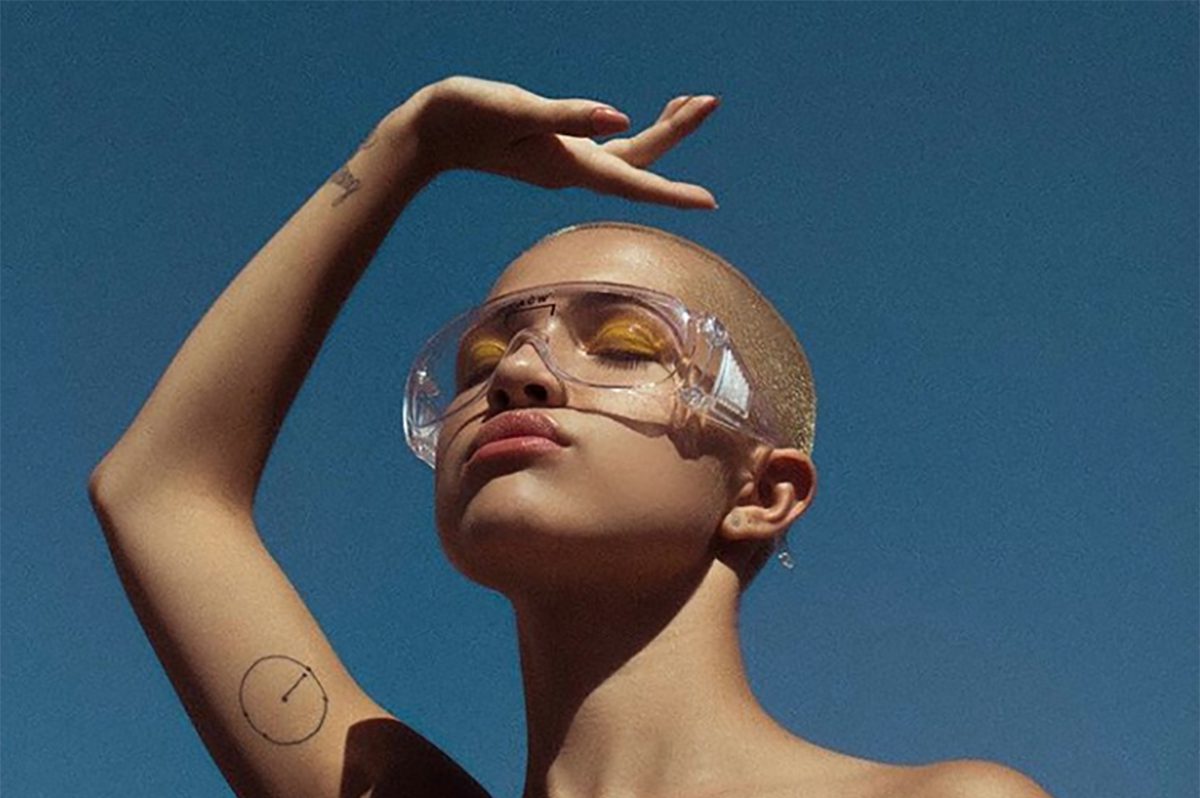



Backstage image of a model wearing a tiara

Backstage image of a Chaumet tiara being fitted on a model

Tiaras are the cult jewel of maison Chaumet, and their latest exhibition ‘Chaumet in Majesty’ at the Grimaldi Forum, Monaco offers a rare insight into the iconic jewel’s history

Since 1780 Chaumet has been the jeweller to sovereigns. This latest exhibition at Grimaldi Forum recounts the lives of the brand’s royal customers and delves into the history of the jewels themselves, highlighting tiaras as symbolic of timeless feminine power.

Follow LUX on Instagram: the.official.lux.magazine

Antique photograph of a woman in evening dress wearing a tiara

Portrait of Edwina, Countess Mountbatten of Burma, last Vicereine of India, wearing her Chaumet tiara for George VI’s coronation. Photographie de Yevonde, 1937. © Madame Yevonde/Mary Evans Picture Library

As Chaumet demonstrates, a tiara is not just a decorative jewel, but one which has an important functionality, specifically designed to imbue its wearer with virtuous qualities and authority. For example, The Briar Rose Bud tiara (1922) features fauna motif referring back to the power and prestige of classical laurel wreaths whilst the material qualities of the pearls evoke wisdom and diamonds are traditionally associated with timeless elegance and strength. The Pearl and Mircomosaic Parer (1811) also projects an image of its imperial court. The tiara depicts scenes of Roman landscapes through mosaic techniques to lend the piece and its wearer an air of romanticism and grandeur.

Product image of a diamond tiara against a black background


‘Chaumet in Majesty’ exhibition at the Grimaldi Forum, Monaco: displaying the tiara with florets of Edwina Countess Mountbatten of Burma, last Vice-Queen of India created by Marcel Chaumet (1886-1964) in 1934 in the workshop of Maison Chaumet. The tiara was entrusted to another Maison who sold it to Lady Edwina Mountbatten. Private collection

Read more: Why we love Cartier’s high jewellery collection ‘Magnitude’

The exhibition brings together 250 pieces of jewellery, some of which are being seen publicly for the first time, sourced from the collections of Prince Albert II of Monaco, Queen Margrethe II of Denmark and museum collections from all over the world. In the exhibition we see the heritage of the maison’s forms and the quality and beauty of their pieces, but more importantly, we can begin to appreciate jewellery’s role in signifying women’s power throughout the ages.

‘Chaumet in Majesty’ runs until 28 August 2019 at the Grimaldi Forum in Monaco. For more information visit: chaumet.com 
Rosie Ellison-Balaam

Share:
Reading time: 2 min
Model posing with large contemporary artworks
Model wearing a large necklace with blue stones

The Équinoxe necklace with an octagonal yellow sapphire at the centre

Move over minimalism, Cartier’s latest high jewellery collection is an adventurous exploration of magnified dimensions

Magnitude by Cartier is as much a statement of size as the collection’s name suggests. At the centre of each piece sits a remarkably large stone in its original form, showcasing unconventional, semi-precious crystals alongside more traditional jewels and diamonds.

Follow LUX on Instagram: the.official.lux.magazine

The most striking example of this adventurous new design approach for the French maison is the Zemia cuff bracelet, featuring an immense 77.27-carat matrix opal circled by violet sapphires, spessartite garnets, and brilliant-cut diamonds. The 68.85-carat rutilated quartz of the Aphélie necklace possesses similarly impressive proportions, set in a pink gold pendant with cascading morganite beads, orange and white diamonds, and flashes of coral and onyx.

Model posing with large contemporary artworks

Model wearing the Zemia cuff bracelet from Cartier’s Magnitude collection

Cut out image of an elaborate necklace with a huge stone centrepiece and beads

The Aphélie necklace

Whilst working with a variety of sizeable and seemingly unrefined stones, the collection retains the subtlety and elegance of the wider Cartier portfolio in the smaller, surrounding details of contrasting yet complementary colours and textures. For example, electric blue beads of lapis lazuli are interlaced in an openwork constellation design of the Équinoxe necklace with an octagonal yellow sapphire at the heart.

Read more: Ruinart x Jonathan Anderson’s pop-up hotel in Notting Hill

An overall talismanic effect is achieved through the earthy tones and natural aesthetic of the rudimentary colouring of each centrepiece, reminiscent of Cartier’s earlier work with ornamental stones in decorative objects during the Art Deco period.

Chloe Frost-Smith

For more information visit: cartier.co.uk

Share:
Reading time: 1 min
Woman walking towards table wearing a smart dress and holding a parasol
Three women posing in a field English countryside

Models (left to right) Agathe Angel Chapman de Lussy, Blaise and Alice Pins wearing designs by Meihui Liu of Victim Fashion Street. Hats by Noel Stewart and Piers Atkinson. Shoes by Natacha Marro. Styled by Ann Shore in Oxfordshire

Photographer and LUX Contributing Editor Maryam Eisler’s latest series reimagines a romantic version of the ‘Sublime Feminine’ set amidst the idyllic Oxfordshire countryside, in collaboration with Meihui Liu, founder of up-cycled, ethical and sustainable design label Victim Fashion Street

Photography and words by Maryam Eisler

‘Shall I compare thee to a summer’s day?’  – Sonnet 18, William Shakespeare

Tell me of one who has visited the countryside on an English summer’s day, and not felt the magic of almost-temporal emotions evoked by the sheer beauty of its nature, reflected by sounds carried upon the wind.

Follow LUX on Instagram: the.official.lux.magazine

The sound of cricket bats hitting balls in the distance. Of horses’ hoofs trotting along bridle paths covered by foliage, casting a hundred shadows, dancing to a thousand songs sung by maidens returning from the fields, their good day’s work done. The land tended to, a bottle of warm cider washing down homemade bread and cheese, a pickle to perk-up the repast.

Model poses sitting on a bench in a wide hat and long dress

Hat by Noel Stewart. Shoes by Natacha Marro

Young model poses in high fashion outfit

Hat by Noel Stewart

Three women sitting around a table with pizza

Shoes by Natacha Marro

Afternoon tea, anyone?

Fast forward to the present, planting beauteous maidens anew in those same fields of our imaginations. Seeing young Englishwomen dressed up in their lace and floral finery, languid and remote to match the balmy weather.

Young model poses in elaborate fashion and hat

Hat by Noel Stewart

Model poses wearing a large hat seated in long grass field

Young female model crouched in the long grass wearing a headpiece

Headpiece by Piers Atkinson

Read more: Richard Mille Chantilly Arts & Elegance 2019 in photos

Soon the harvest season cometh, beware the beguiling sunsets, and the warmth breeding a tempestuous sky. Past romance, nostalgia’s return. Stop the clock, time is precious …we never know the value of the moment until it’s reflected in memory. Locked and stored, ready for the flashing stroke of another summer.

Strawberries and cream, anyone?

The shy Jay’s shrill cry when taking flight hidden in the thick foliage of an old English oak. The calming, soothing call of the wood pigeon, its eyes fixed upon intruders into its little paradise. The blackbird that dares not squawk, for ill-temper becomes it well, but not in the face of such maidens’ beauty.

Model wearing a long dress walking through a field

Clothing and accessories by Meihui Liu of Victim Fashion Street

Model half hidden in long grass wearing black clothing

Hat by Noel Stewart

All is quiet, all is calm; ‘tis an English summer’s idyll. Only the click of the camera records the moment, the photographer’s ephemeral moment made for the regard of all. The handmaidens’ tales made as presents to those not favoured by the sight of English summer’s bright. Their summer fare, passed along as wear across subterranean ethernets for all to see, smell and hear. Their pictures are portraits for all times. Serving beauty, serving style, serving innocence, patchwork vintage n’all.

‘But Thy Eternal summer Shall Not Fade’ – Sonnet 18, William Shakespeare

Woman wearing a tiara with flowers

Female model poses draped over a wooden chair in thigh-high boots

Boots by Natacha Marro

Woman walking through field with a parasol and wearing long dress

‘Hand-made in England’ was photographed by Maryam Eisler at Story Deli in Oxfordshire, featuring models Alice Pins, Agathe Angel Chapman de Lussy and Blaise and sustainable, ethical up-cycled fashion and design by Victim Fashion Street and Meihui Liu. Hats by Noel Stewart and Piers Atkinson. Shoes by Natacha Marro. Styling by Ann Shore. Makeup by Melissa Victoria Lee and Keely Mangham

To view Maryam Eisler’s full portfolio visit: maryameisler.com


Share:
Reading time: 3 min
A silver sports car pictured in front of a stately home and behind a water fountain
Last weekend saw the 5th edition of Richard Mille’s annual automotive competition in Chantilly, France. Here, we recall the event in images

The weekend kicked off with the supercar rally in which the Mortefontaine track was turned into a playground for luxury cars and their owners. Practicing slaloms, braking and speed bowls, drivers such as skiing champion Alexis Pinturault showed off their racing prowess.

Follow LUX on Instagram: the.official.lux.magazine

Meanwhile, lunch at the Palais de Compiègne in the company of Jamaican sprinter Yohan Blake was a quieter affair. Here, at the Rallye des Collectionneurs, the public had the opportunity to marvel at a collection of rare cars including McLaren P1 GTR and 720s, Ferrari’s LaFerrari, Enzo and 288 GTO models, the Porsche 918 and various Mercedes SLRs.

Richard Mille car show by a lake

Before dinner entertainment that evening was provided by champion rider Jessica von Bredow-Werndl who impressed guests, including Australian actress Margot Robbie, with an elegant dressage in the stunning setting of the Grandes Écuries de Chantilly.

Read more: Ruinart x Jonathan Anderson’s pop-up hotel in Notting Hill

Sunday continued with the Concours D’Elegance, bringing together automotive masterpieces whilst guests enjoyed boat rides along the grand canal and old fashioned games on the lawn. An elegant weekend indeed.

Horse rider performing in an arena of a stately home

Jessica Von Bredow-Werndl performing a dressage demonstration before the Saturday night gala dinner

People at a car show in the setting of a stately home

Classic car driving through crowds

Richard Mille Chantilly Arts & Elegance 2019 took place on 29 & 30 June. For more information visit: chantillyartsetelegance.com


Share:
Reading time: 1 min
Render of birdseye view of a harbour from the top of a building
Luxurious estate home in the Italian countryside

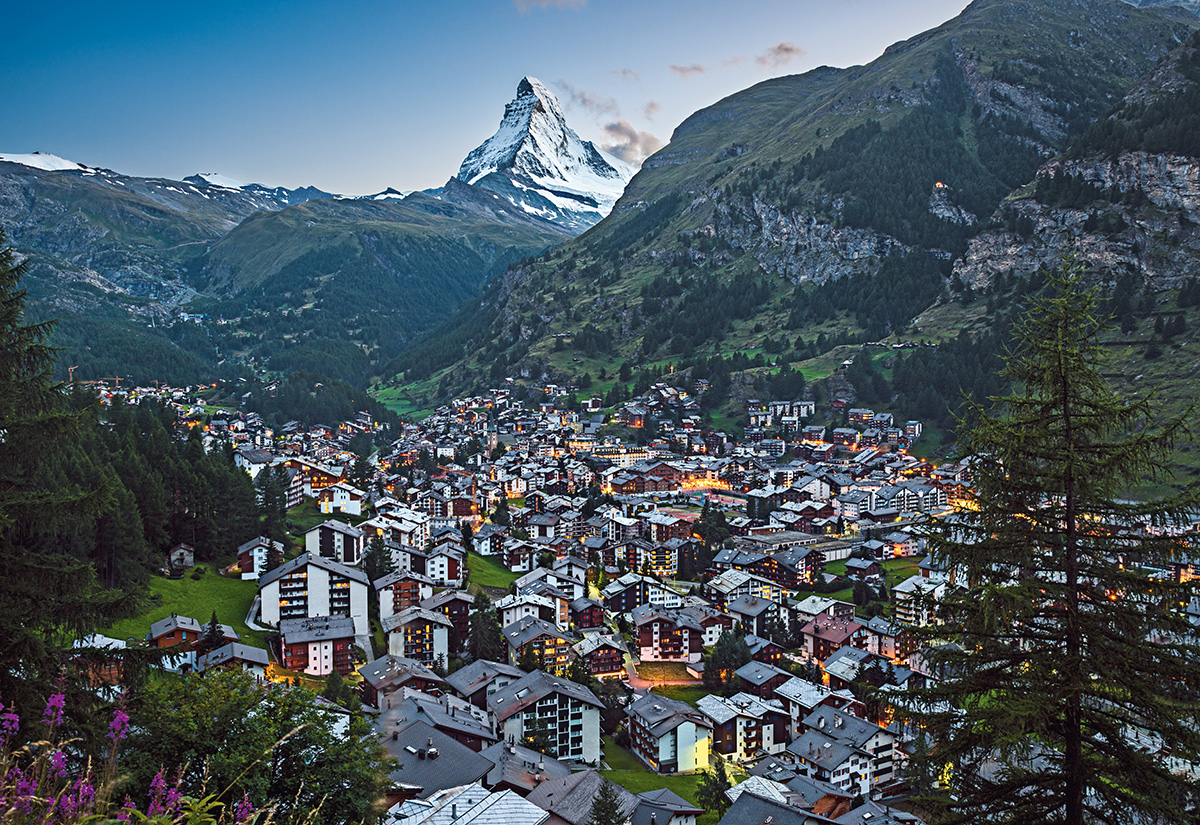
Italy retains its place as one of the most desirable second home destinations in the world, says Andrew Hay. This property, Le Bandite is located in Umbria with easy access to Rome

Portrait of a man in a suit

Lord Andrew Hay

Lord Andrew Hay is Global Head of Residential at Knight Frank, the international real estate consultancy, and has built up property portfolios for some of the wealthiest people in the world. In a new regular column, he is handed a theoretical sum of money by LUX and asked how he would invest it. We kick off by handing Lord Hay £100m and requesting a global residential property investment portfolio

When LUX’s Editor-in-Chief generously offered me the opportunity to “invest” £100m into property, I was unsurprisingly delighted to accept. I have had free rein on where and what I buy, but have decided to invest with both my head and my heart. The reason being – I want to enjoy the properties I purchase but also have a clear focus on investment returns.

With this in mind, I have divided my allocation into equal thirds, between high-end luxury residential property, residential investments with a focus on capital growth and rental returns and investment into student property and senior living. The final 10% I would invest into an agricultural portfolio.

Follow LUX on Instagram: the.official.lux.magazine

I have to start in London. Often the best investment strategy involves an understanding of which markets are the least fashionable at the moment – and with Brexit and tax hikes London has been underperforming in recent years.

With few London neighbourhoods having a global brand as strong as Chelsea’s, I firmly believe that Chelsea is the perfect example of an area that has been underperforming and which is now ripe for reassessment.

Prices here have fallen 20% since late 2014, compared with a 12% fall across the wider prime London market. While new-build property in this category achieves a premium, established property trades at between £1,200 and £1,800 per sq ft. With many properties now edging below £1,000 per sq ft, Chelsea is back in the spotlight and cheaper than some less central and glamorous neighbourhoods.

Luxury interiors of a stately home

Interiors of a luxurious villa residence overlooking Lake Como

Yes, the area still lacks the connectivity of other prime neighbourhoods. However, with easy access to the river, unrivalled shopping on the King’s Road and Fulham Road and some of London’s best schools within walking distance – including the Lycée Charles de Gaulle and the London Oratory School – and the promise (or maybe hope) of a station on the future Crossrail 2 underground railway, Chelsea is set for rediscovery.

The next place I would invest is the other side of the world: New Zealand. New flights and rapidly increasing connectivity to Asia means the country is increasingly becoming a go-to destination. Auckland is the logical entry point and investment destination. One location in particular stands out to me – home to the 2021 America’s Cup, Wynyard Quarter is changing fast. Over the past decade, this waterfront precinct, once the heart of Auckland’s marine and petrochemical industries, has emerged as a major hub for national and international corporates, including Fonterra, Datacom, Microsoft and ASB Bank, as well as for the city’s innovation and co-working scenes.

Read more: Ruinart x Jonathan Anderson’s pop-up hotel in Notting Hill

Staying in Australasia, I have to include Sydney in my portfolio – a market that has seen a huge growth in investment over the past two decades from around the world. The city may be remote, but education has been a driving force in attracting Chinese purchasers. The one location I would target is One Barangaroo – Crown’s new development. One Barangaroo is one of the most beautiful developments in the world currently being built and is achieving record prices on the shores of Sydney Harbour overlooking the bridge and the Opera House. It has brought a new global standard of facilities and services to the city.

Luxurious interiors of a penthouse apartment

New York design firm Meyer Davis have crafted designed the interior layouts of residences at One Bangaroo

Render of birdseye view of a harbour from the top of a building

View down to the harbour from One Barangaroo, the latest residential development in Sydney

In Europe, Italy retains its place as one of the most desirable second home destinations in the world. The new flat tax initiative however has cast the country in a new light as a potential permanent base for the world’s wealthy. Italy is certainly worth a closer look. Property prices in many Italian prime markets declined 40% in peak-to-trough terms following the financial crisis, interest rates remain at record lows and the country is better connected than ever before.

In the US, the West Coast is of especial interest to me, the combination of lifestyle and economic dynamism here is unparalleled anywhere else in the world. One area which appeals to me is Pasadena. Home to the Rose Bowl stadium, NASA’s Jet Propulsion Laboratory and the California Institute of Technology, Pasadena offers an attractive combination of relative value compared with neighbouring communities in Beverly Hills and West Hollywood, and the desirable lifestyle and privacy that residents of Los Angeles seek. The neighbourhood is easily accessible, with a light rail line that puts it within 15-20 minutes of Downtown Los Angeles.

Read more: Kuwait’s ASCC launches visual arts programme in Venice

In terms of growth areas I would point to student accommodation and retirement. Student in particular is counter cyclical (i.e. typically more students in a recession). Participation in tertiary education globally is increasing – OECD predict 8 million internationally mobile students by 2025 (up from 5m today). Markets remain structurally undersupplied. In terms of where Sydney looks good it has a big student population and low pipeline due to shortage of development land. In terms of development, I like big European cities like Barcelona, Lisbon and Paris. European markets comprise with very little existing organised supply. Europe is new front for portfolio development, scale building and brand.

At the opposite end of the age scale is senior living where the market is undergoing rapid growth, underpinned by demographic shifts that are increasing demand for a wider array of specialist housing to suit the changing needs of older purchasers. London and the South East, Bristol and Edinburgh are key UK senior living markets. Globally, America, Canada and Australia are at the forefront of investment.

Finally I would invest in farmland. Choosing where to invest in agricultural land depends very much on your appetite for risk but the world faces both a water shortage and food shortage by 2040 and 2050 respectively and therefore, investors looking at long-term food security are well advised to invest in agricultural land. With the world’s fastest growing population, Africa offers some very exciting opportunities. Zambia, for example, provides a good balance of relative political stability and established infrastructure. The Asia-pacific region is seeing a huge growth in wealth and rain-fed farms on the east coast of Australia are well placed to take advantage of this market.

And, that’s my £100m invested.

Find out more: knightfrank.co.uk

Knight Frank’ Wealth Report directs ultra-high-net-worth individuals on where to invest in property and reflect $3 trillion of private client investment into real estate annually. The countries that have been most robust and performed best over the last decade have been those where there is a steady political and economic situation as well as transparent rule of law, high quality living and first class education. The above portfolio choice reflects this.

Share:
Reading time: 6 min
Dinner table laid out with champagne bottles and antique plates

Hotel 1729, a one-bedroom hospitality concept designed by Ruinart x Jonathan Anderson

This week, Ruinart opens the doors to a one bedroom luxury hotel concept created in collaboration with fashion designer Jonathan Anderson
Man stands leaning against a pillar with the plaque 1729

Designer Jonathan Anderson outside Ruinart Hotel 1729

Last year, it was designer Tom Hingston and Primrose Hill. This year, Ruinart’s pop-up hotel is the creation of fashion designer Jonathan Anderson inside a Notting Hill townhouse. Named Hotel 1729, guests can check-in for a one-night only experience hosted by the champagne house’s Maître D’, Olivier Livoir.

Follow LUX on Instagram: the.official.lux.magazine

The dining experience is the focal point of the evening, designed to cater for up to eight guests in total, who will be taken on a sensory culinary exploration through Ruinart‘s history. Whilst the exact details of Anderson’s concept are kept strictly secretive, his main inspiration comes from a recent visit to the Ruinart Maison, and the 1735 artwork Le Déjeuner d’huîtres (The Oyster Lunch) by Jean-François de Troy which includes the first appearance of a champagne bottle in painting.

Antique painting of a huge chaotic feast in a stately home

‘Le Déjeuner d’huîtres’ (The Oyster Lunch) by Jean-François de Troy (1735), Musée Condé (Chantilly, France)

The menu itself has been specially created to perfectly pair with Ruinart cuvées by Chef Luke Selby, who previously worked as head chef at Ollie Dabbous’ HIDE. All drinks and courses will be served using antique glassware and ceramics from the 17th century, the same era in which Ruinart was established.

Curious? So are we.

Hotel 1729 in Notting Hill, London is open from Thursday 4 July until Sunday 14 July 2019. For more information visit: ruinart.com/en-uk/news/ruinart-hotel-1729

Rates: £1200 for a one night stay for two people including chauffeur transfers in partnership with BMW, dinner, breakfast and a selection of Ruinart Cuvées. Hotel residents can invite up to six guests to share the dining experience at an additional £160 per person.

Share:
Reading time: 1 min
Man sitting on the floor in front of sculptures of dinasours

French artist Richard Orlinski with two of his T-Rex sculptures

French artist Richard Orlinski is known for his bold, pop-art sculptures, which have appeared at French Grand Prix and on the slopes of Courchevel. Most recently, he collaborated with luxury watch brand Hublot and last month, saw the opening of his first London gallery on New Bond Street. Here, he tells us about falling in love with art, colours, and wild animals

1. When did you first realise that you wanted to be an artist?

I remember very well the moment I had a kind of love at first sight for creation. At school, when the other little boys used to play the brawl, I would prefer to create small terracotta animals. I was only 4 years old when my teacher called a local TV to come and discover my little sculptures. But growing up I ended up choosing a more steady job before I dropped it off to become an artist.

Follow LUX on Instagram: the.official.lux.magazine

2. Do you need a specific atmosphere to be able to create?

I don’t need a particular atmosphere to create. Everything inspires me, people’s daily lives, wherever I am, I can find an object, a feeling or an environment that inspires me. Afterwards, I get a lot of inspiration from animals for my sculptures. The first piece of artwork I created was a red resin crocodile. This mysterious animal has always fascinated me and humans in general. It has been on earth for a hundred million years. It is a witness of mankind. My creations are a reflection on the animal instinct and human nature. I have always been attracted to wild animals.

Large sculpture of a gorilla beating its chest

‘Wild Kong’ by Richard Orlinski

3. Many of your recent sculptures have taken the form of a wild animal – which animal from your series do you think you’re the most like and why?

The work with which I identify most is my ‘Wild Kong‘. It is one of my most emblematic works, but it is above all the one that comes closest to man and the human being. Strong and protective at the same time – he is a little bit like the ideal man without the hairs!

Read more: Inside the penthouse apartment designed by Roksanda

4. How has social media changed the art world?

My goal is to make art that speaks to the greatest number. I like to provoke an “immediate emotion” for both adults and children. I attach great importance to popularising my art by making it accessible. I like to exhibit my sculptures for free and in the open air. It’s very important for me. Social media has helped me a lot with that. This world of the instantaneous is quite fascinating.

Sculpture of a red stag

One of Richard Orlinski’s resin animal sculptures

5. You work with a distinct colour palette, what draws you to those particular shades?

The first piece I ever made was red. I love [to work with] a very colourful palette. All of my resin pieces are so pop and joyful. The pop colours give an immediate feeling especially with children. From one colour to another, the emotions could be different. We’re all time thinking about new colours and we always want to work with new matters, which can change the sculpture’s colour.

6. If you weren’t an artist, what would you be?

An artist!

See Richard Orlinski’s full portfolio: richardorlinski.fr

Share:
Reading time: 2 min
Luxury dining room area with contemporary stylish furnishings

The Penthouse kitchen and dining room designed by Roksanda. Photography by Michael Sinclair. Styling by Olivia Gregory

Fashion designer Roksanda Ilinčić has curated the interiors of a penthouse apartment inside Gasholders London, a new residential development in Kings Cross. We get the grand tour

The trend for designer home-wear has reached its pinnacle. The new penthouse apartment curated by fashion designer Roksanda Ilinčić shows not only her designs, but how they integrate with art and iconic pieces of design history. The apartment is about how we can live with art and how all arts engage with each other; fashion crossing into ceramics, furniture and architecture. It is a unique space, which encompasses her artistic vision through unifying and contrasting colours, textures and luxury materials.

Follow LUX on Instagram: the.official.lux.magazine

Roksanda’s own home-wear collection, naturally, takes centre stage. In the apartment’s whimsically named ‘Sun Room’,  a ‘Roksanda X Linck Ceramics’ vase stands next to a stylish velvet chaise in red and orange with a coral curtain backdrop. The vase’s monochromatic shades are striking against the vibrancy of its surroundings.

Still life image of a contemporary flower vase against a bright pink blind

A Roksanda X Linck Ceramics vase in the penthouse’s ‘Sun Room.’ Photography by Michael Sinclair. Styling by Olivia Gregory

Here and throughout the apartment, we see the designer using colour and form in an unexpected way, just as she does with her clothing and accessories. The sculptural shapes and distinctive cuts associated with her clothing lines are translated into her choice of furniture; in the sharp angular Pierre Jeanneret chairs (1950s), the sleek, almost weightless Guillerme and Chambron oak desk (1960) and the organic, rounded form of the ‘skin lamp’ by Eny Lee Parker.

Read more: Kuwait’s ASCC launches visual arts programme in Venice

Stylish contemporary living space

The living room with curated furniture by Roksanda. Photography by Michael Sinclair. Styling by Olivia Gregory

Coat and bag hanging on contemporary style zigzag coat hanger

Roksanda’s creations are dotted around the apartment. Photography by Michael Sinclair. Styling by Olivia Gregory

The link between fashion and art is further emphasised by the designer’s own pieces, which are dotted around the apartment. A deep red jacket hangs in the hallway, a dress is draped across a bedroom chair with a pair of matching slippers, giving the impression that the designer is living in the space. This, of course, is the desired effect. The pieces are positioned so as to reveal just how liveable the space is, allowing viewers to picture themselves in the scene.

Rosie Ellison-Balaam

The Penthouse sits over three floors, with a double-height sunken courtyard garden and staircase providing access to a private roof garden with views of Coal Drops Yard. The apartment is available to buy fully-furnished for £7,750,000. Find out more: gasholderslondon.co.uk

Share:
Reading time: 2 min
Close up photograph of a gorilla's face

A gorilla in the Bwindi Impenetrable Forest National Park, Uganda

Abercrombie & Kent’s Founder and LUX contributor Geoffrey Kent tells us his six top safari destinations from Brazil’s wetlands to the remote Canadian town of Churchill

1. Gorillas in the midst

The greatest of the great apes, the mountain gorilla, is also the most endangered. Just a few hundred survive in the high-altitude seclusion of Uganda’s Bwindi Impenetrable Forest and on the slopes of the Virunga volcanoes in neighbouring Rwanda. Dismiss any thoughts of terrifying, chest-thumping brutes – these are gentle and peaceful vegetarians living in closely bonded family groups. On day hikes from luxury lodges and led by superb local guides, you can get up close and personal with some of our closest relatives. Prepare to be moved and humbled by the privilege of sitting within a few metres of these magnificent animals.

Follow LUX on Instagram: the.official.lux.magazine

Herd of elephants travelling through the African bush

Elephants in Ruaha National Park, Tanzania

2. Tanzania’s south side story

Time to move on from the spectacular but busy national parks of northern Tanzania and head to the country’s deep south, and the biggest reserve of them all: the Selous. Named after the 19th century explorer and big-game hunter Frederick Courteney Selous, it covers over 50,000 square kilometres and is home to some of the largest concentrations of wildlife on the continent. Yet visitor numbers are low, and you’ll get a sense of Africa as it once was. An easy flight away is Ruaha National Park, offering an excellent chance to catch up with leopard as well as African wild dog, the legendary painted wolf, in one of its last strongholds.

Panoramic shot of wetlands with sunset

The wetlands in the Pantanal region, Brazil

3. A watery wilderness

The size of France and covering parts of three countries – Brazil, Bolivia and Paraguay – the sparsely populated Pantanal is a vast wetland and one of the hottest wildlife destinations right now. Not only is it a paradise for avian species ranging from iridescent hummingbirds to the huge jabiru stork, but it’s also the best place on the planet to look for jaguar. Kilo for kilo, South America’s top predator packs the heaviest punch of all the big cats and is best looked for as it hunts along the banks of the many waterways. Superb eco-lodges will be your base as you set off safari-style in jeeps and boats in search of the spotted maestro.

Close up photograph of a lemur's face

A lemur in Madagascar

4. Mad about Madagascar

Ninety million years of isolation in the Indian Ocean have made the world’s fourth-biggest island a unique reservoir of biodiversity, with over 75% of its flora and fauna found nowhere else in the world. There is a vast array of ecosystems to explore, from rainforest packed with orchids and ferns to the magical Spiny Desert and its cathedral-like baobabs. Keep a look out for the island’s 100-plus species of lemur, with the dancing sifaka and wailing indri top of the hit list. Sure, the roads can be rough and the conservation issues challenging, but for many adventure travellers it doesn’t get any better than Madagascar.

Read more: Why we’re obsessed with Bvlgari’s Cinemagia High Jewellery collection

Polar bear walking across snowy ground

A polar bear in Manitoba, Canada

5. Ice bear essentials

With mounting concern over the impact of climate change on the Arctic ice cap, the plight of the world’s polar bears has never been more in the spotlight. Nowhere more so than in the Canadian town of Churchill, where 500 or so bears spend part of their year on the shores of Hudson Bay. This is remote country, best accessed by rail or plane, but once here be prepared for some stupendous wildlife watching. Specialist guides will lead you across the tundra in search of the big white bears, but keep an eye out too for smaller creatures, such as Arctic foxes, caribou, ptarmigans and even wolves.

Close up image of a snow leopard

A snow leopard in Ladakh, India

6. Spots are the new stripes

Tigers are great, but there’s an even more spellbinding big cat in India. Head for the roof of the world, Ladakh, in search of the almost mythical snow leopard. Once glimpsed only by local people and scientific researchers, it’s now possible to spot one yourself with the help of expert trackers in Hemis National Park. There’s other wildlife too, with golden eagles soaring overhead, ibex scrambling over the rocks and tiny pika calling from the slopes. Plus the stupendous Himalayan scenery as a backdrop. There can never be guarantees of a leopard sighting, but trust in fate and your guides. Not quite the Yeti, but almost.

For more information visit: abercrombiekent.co.uk

This article was originally published in the Summer 19 Issue.

Share:
Reading time: 4 min
Woman walks in front of an artwork fanning herself

Artist Amani Althuwaini pictured with her work Present Tense. Image by James Houston

The Sheikh Abdullah Al Salem Cultural Centre brings Kuwaiti contemporary art to Venice with a mixed-media group exhibition by young emerging artists

The Sheikh Abdullah Al Salem Cultural Centre, otherwise known as the ASCC, is a colossal museum complex housing six separate institutions: a Natural History Museum, Science Museum, Museum of Islamic History, Space Museum, Fine Arts Centre and theatre. It’s the largest of its kind in Kuwait with the aim of promoting cross-cultural learning and awareness. With that in mind, the centre’s most recent initiative invites emerging Kuwaiti artists to apply for a residency, in which they are given space to work, and opportunities to exhibit overseas.

Follow LUX on Instagram: the.official.lux.magazine

This summer marks the first edition of the programme, which launched earlier this month with the opening of a group shown entitled ‘In my dream I was in Kuwait’ at the Scuola dell’Arte dei Tiraoro e Battioro . The building itself is a relic of Venice’s rich artistic history; it was once the home of the guild of artists and makers of gold thread and gold leaf. Now the building, offers a grand space for events and exhibitions in one of the world’s most picturesque settings. From the gallery’s top windows, you can watch the boats floating along the Grand Canal and almost imagine that you’ve slipped back in time. As such, the current exhibition of contemporary Kuwaiti art makes for an interesting contrast, uniting not only two distinct cultures, but also eras.

The show is split into two halves with the work of three artists (Amani Althuwaini, Mahmoud Shaker, and Zahra Marwan) currently on display until August when the next three artists will take over.

Small paintings hanging on a dark blue wall

A selection of artworks by Zahra Marwan. Image by James Houston

Marwan’s small-scale watercolour illustrations, which occupy the first floor gallery space, ahave a picture-book quality both with regards to the light-hearted brushstrokes and their narrative descriptors. The description of After the Fish Market reads: ‘I was able to choose my own fish at the market, and I thought it would come to life at home.’ Yet, many of these miniature works are also imbued with an air of melancholia and longing, depicting characters lost in nostalgia and half sleep states.

close up image of artwork with scripture and red painted faces

Detail of We See Everything by Mahmoud Shaker. Image by James Houston

Shaker’s works in the upper gallery space also contain an element of storytelling, combining photography and painting with handwritten lines from his own poetry in Arabic. Whilst we might not be able to understand the verse, the lettering gives the work the appearance of another era, and thus creates an intriguing tension between tradition and contemporary subject matter.

Read more: What to see at this year’s Masterpiece London

Althuwaini’s work, however, is the most striking both in composition and themes. Present Tense depicts an oversized chest of drawers, which references the Kuwaiti dowry tradition and its contemporary manifestations. The flatness of the piece presents a critique on the modern prioritisation of quantity rather than quality.

Gold embroidered words floating on a veil against a white wall

Detail of installation artwork He is not your choice by Amani Althuwaini. Image by James Houston

Another of Althuwaini’s installations, entitled He is not your choice, hangs suspended from the ceiling in one corner of the upper gallery. This is a wedding veil embroidered with the story of the artist’s friend who accepted an arranged marriage because of the groom’s perceived eligibility. The veil itself is translucent, whilst the gold lettering appears bold, defiant and doubly inscribed by the sunlight as it casts shadows of the words against the walls.

A woman using an old fashion weaving machine

A weaver at work inside the Tessitura Bevilacqua workshop, Venice. Image by James Houston

Whilst these works offer audiences insights into Middle Eastern artistic practises and cultures, the artists themselves are invited to explore traditional Venetian craft through workshops with weavers Tessitura Bevilacqua and glass maker Leonardo Cimolin amongst others. The central idea being that the Kuwaiti artists will find inspiration for their contemporary practise in ancient methods, and so continue the cross-cultural dialogue.

‘In my dream I was in Kuwait’ runs until 28 November 2019 at Scuola dell’Arte dei Tiraoro e Battioro, Venice. For more information visit: ascckw.com

Share:
Reading time: 3 min