
Shave head female model against blue sky

graphic banner in red, white and blue reading Charlie Newman's model of the month

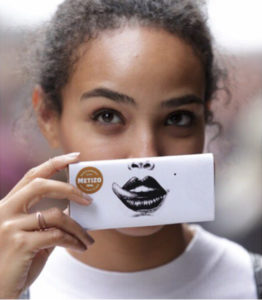
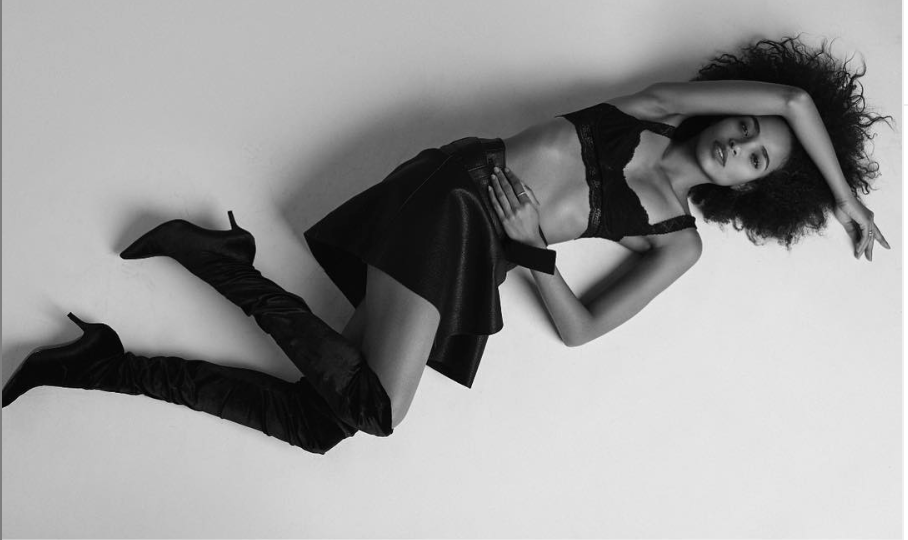
Portrait of female model with shaved head

Model and creative director Emily O’Donnell. Instagram: @emily.j.odonnell

LUX contributing editor and model at Models 1, Charlie Newman continues her online exclusive series, interviewing her peers about their creative pursuits, passions and politics

colour headshot of blond girl laughing with hand against face wearing multiple rings

Charlie Newman

THIS MONTH: 21-year-old Emily O’Donnell signed with Models 1 just under a year ago and has already shot for the likes of Vogue Italia, LOVE magazine, Hunger and iD China. Having recently graduated from UAL, she is also pursuing a career in creative direction whilst making art and music on the side. Here, she chats to Charlie about juggling her passions, how structure hinders creativity and collaborating with Nike.

Charlie Newman: What was your childhood like? Are you from a creative background?
Emily O’ Donnell: I was born in Leeds, where my mum is from. At two weeks old I moved to Milan because my dad is Italian and that’s where I was raised, which explains why I have such a weird accent! I was in Milan until I was about 17 years old but by then I was itching to get back to the UK, so I moved to Birmingham for two years to finish my diploma in art and design. After that I moved to London and studied at UAL, so I’ve been studying art since I was 13. The schooling system is really different in Italy, in Milan you have to choose what you want to do at 12 years old, and my choice was art! I don’t actually have creative parents. When I was growing up, music was the main thing for me. I was a super RnB head, my main inspiration until this day is Erykah Badu.

Follow LUX on Instagram: the.official.lux.magazine

Charlie Newman: Congratulations on graduating from UAL! What was your final project on?
Emily O’ Donnell: My course was fashion styling and production but I shifted more into creative direction which is what I’m doing more of now. I did a short film based around the importance of the body within cultural fabric, whether that’s within religion or cultural tradition. I basically explored the meaning of fabric within different religions and sort of distilled the two – body and fabric – and then reworked them in a more contemporary way. I created a film and an editorial.

Charlie Newman: Do you think it is important to study the arts is if you looking to work in a creative industry?
Emily O’ Donnell: I think especially for art and fashion I don’t think you necessarily need it, I’m not saying I haven’t learnt anything, I definitely have, especially at UAL, it’s been great platform to network. But as far as your creative flow and your creative knowledge goes, I don’t think being in such a structured environment helps. For me, university courses aren’t structured for you like to your work. By the time I finished a project I always hated the work, I was done with it. But it’s definitely been a good experience, I’ve learnt from it. I’m just now ready to move on.

Charlie Newman: When did you sign with Models 1 and how were you scouted?
Emily O’ Donnell: My friend wanted to go to this scouting event at a Brandy Melville store and I said I would go along with her to support – I really had no interest in it. We were both asked to come back and having seen my Instagram, Models 1 wanted me on their talent board and New Faces. I signed with them almost a year ago. It’s been good, I’m a workaholic and I really need to keep working and they know that! I saw a few agencies before but having been a freelancer for a few years I knew that if I were to be signed by an agency, I really wanted one that would take care of me so it’s been great. Models 1 know I don’t just wanted to be modelling, that they need to push my whole career. I’m not just my face.

Emily O'Donnell walking through water in a dress

Instagram: @emily.j.odonnell

Charlie Newman: What are you working on now?
Emily O’ Donnell: I’m working on a few projects to expand my creative direction portfolio. I’m working on a combination of commissioned and personal work. I paint too and I’ve been working on an EP for the past year now. Because of university I’ve had to put everything on pause and now that I’m done with it I can throw myself back into it all – no summer breaks for me!

Read more: Test driving Michelin’s tyres for supercars

Charlie Newman: How do you juggle it all?
Emily O’ Donnell: You know how people say that you can only master one art and you can’t do them all? Well for me it’s a necessity to have different outlets for me to be creative. I don’t think I could stick to one job for the rest of my life and for that to be it. I’ve always said that I’m going to work my ass off to make sure that I’m not in a position that I don’t want to be in. I never see it as Emily the painter, Emily the singer, Emily the creative director, Emily the model. They’re all a part of me and I love them all, I can’t not do any of them. If I’m not working enough I really feel it – I hate it.

Charlie Newman: Last year, Nike asked you to create a video for the launch of their new tracksuit campaign. What was it like collaborating with such a huge brand?
Emily O’ Donnell: I’m so lucky I have such an amazing relationship with Nike, they’re like family to me. They’re one of my favourite brands so when they reached out, of course I went for it. They gave me so much freedom for the video too which was great, all they told me was that it had to be fresh, be London and focus on youth culture. That job of course opened a lot of doors for me, I can’t thank them enough. If every there’s an opportunity for me to be in the right place at the right time I’ll take it!

Shave head female model against blue sky

Instagram: @emily.j.odonnell

Charlie Newman: What would be your dream project now?
Emily O’ Donnell: I really want to push my creative direction more into high end designers. I’ve done a lot of sportswear designers so it would be nice to mix it up.

Charlie Newman: What are you listening to or watching at the moment?
Emily O’ Donnell: I’m listening to Tyler the Creator, D’Angelo and Solange. I don’t really do series when it comes to film, because I don’t have the time. But having done film studies I’m really into David Lynch and Stanley Cooper, all the classics. I feel like when I watch movies now I’m only seeing the technical side of it, how they’ve shot it. I find it really hard for my brain to switch off. I watch a lot of documentaries because I find it much easier to watch, there’s less to analyse and it’s more informative.

Close up shot of a female model wearing pink eye shadow with eyes closed

Instagram: @emily.j.odonnell

Charlie Newman: You have such a distinctive beautiful look. When did you decide to shave your hair?
Emily O’ Donnell: I’ve had my head shaved for two years and before that I had a big brown bob, a bob! I feel like this is a much much better for my work, although it’s such an effort, I shave it and bleach it every week! People often say to me that they can’t work out where I’m from. It’s fresh and I’m really happy with it.

Charlie Newman: What do you think has been a career highlight for you?
Emily O’ Donnell: I wouldn’t like to say because I never like to sit back and I’m always onto the next thing. I’m lucky to have done so many sick shoots.

Charlie Newman: Finally, who’s your role model of the month?
Emily O’ Donnell: It’s got to be Erykah Badu, every time, I love her!

Follow Emily on Instagram: @emily.j.odonnell

Share:
Reading time: 7 min
Yellow Ferrari sports car pictured in the desert

Yellow Ferrari sports car pictured in the desert

LUX Editor-in-Chief Darius Sanai tries out Michelin’s supercar tyres on his Ferrari 430 Spider to see whether they’re worth the investment

Tyres are a curiously under-explored subject when it comes to supercar optimisation and maintenance. You can have conversations all day long with fellow owners about filters, suspension geometry, engine remapping, and other arcane elements of your car’s construction that might add fractions of a second to your lap time on a circuit.

But conversations about the patches of rubber that actually transmit all the power, and handling, from the car to the road and vice versa, are frequently limited to the very basics. How big are your wheels? How wide are your tires? Are they okay to drive when they have a certain amount of tread left, or a certain age?

Follow LUX on Instagram: the.official.lux.magazine

But tyres are, as any Formula One driver knows, far more important than that. Not only are they the only point of contact between your car and the road, they also elements of your car that will never, ever be made by the manufacturer of your car. You may have a Ferrari, a McLaren, or a Lamborghini, but your tyres will always be made by third-party manufacturers.

Each manufacturer has a range of tyres optimised for types of car and driving. My Ferraris were all supplied with Pirelli P Zero tyres, with the owners’ handbooks stating that these and similar Michelin and Bridgestone tyres were all officially approved. Owners’ forums, meanwhile, were full of discussion about the latest range of Michelin tyres for supercars, the Pilot Sport 4S.
Product image of the Michelin PS4S tyres

Michelin PS4S tyres

Of all my Ferraris, there is one model that has become my car of choice for a sunny, weekend high-speed drive in the countryside. The 430 Spider is the last of the line in a significant way. Certain model lines of Ferrari are celebrated for their ‘mid engines’, meaning the engine is located just behind the driver’s head, rather than under the front bonnet. They are also celebrated for their “gated manual” gearshift: a metal manual gear-lever which moves around a race-style bar metal gate, a work of art in itself. The 430 Spider is the last, and most modern, Ferrari that combines these two attributes; all mid-engined Ferraris since then have been made only with paddle-style gearshifts by the steering wheel, and no clutch pedals, like an automatic.

So the 430 Spider is a piece of history, and quite rare: a few hundred were made in right-hand drive. And it’s also tremendous fun to drive, combining a 485hp engine behind your head, no roof, sharp handling, and the opportunity to shift gear yourself. There was nothing wrong with the way it drove on its Pirelli tyres, in fact it was quite thrilling, but I decided to swap over to the new Michelins to see if they made any difference.

Read more: Investigating Vincent van Gogh’s iconic masterpiece

First thing to notice: the car rides appreciably more smoothly on the new tyres. Lumps in the road that formerly jarred now only bump. But you don’t buy a Ferrari for its comfortable ride.

Yellow sports car driving along a desert road

Going for an enthusiastic drive, the improvements made themselves known more subtly. Previously, turning into a corner, the car felt sharp, but now that sharpness, and feel, was there all the way through each curve. It was as if there was a new channel of communication open with the road. Push harder around the corner, and the feel increased: you had a stronger sense of what the car was doing.

Modern Ferraris have a switch on the steering wheel that allows you to flick between driving modes; the F430 was the first to have this, and for enthusiastic driving I switch mine to Race. This sharpens up responses and also means the car is allowed to slide around a bit when you are driving at its limit, before the electronic systems (usually) catch the car. Pushing on, in Race mode, the car now feels more adhesive at the limit – it simply feels like it sticks to the road more. It’s not a transformation – the car always had superb roadholding – but now you feel more on the way, and can stay gripping the road longer.

Read more: 6 mountain restaurants to stir your soul this summer

I haven’t tested another of the PS4S’s supposed attributes, its wet weather grip, because I don’t take my car out in the wet; and hope not to test another of its noted qualities, its performance under emergency braking.

Normally, performance and comfort in tyres are in inverse proportion: the more comfortable the tyre, the less suited to high-speed driving, and vice versa. The PS4S (not to be confused with another Michelin tyre, the less sporty PS4) manages somehow to combine both. In terms of investing in an upgrade in your car: if you have a car worth £150,000 (or euros, or dollars) or more, spending around 1% of that on a set of new Pilot Sport 4S tyres might just be the smartest investment you make.

Find out more at michelin.com and ferrari.com

Share:
Reading time: 4 min
Painting of erupting volcano

‘Vesuvius in Eruption’ (1817–20) by JMW Turner

The Watercolour World is an ambitious online project to digitise the world’s watercolours and rescue this all-too-often overlooked but artistically and historically significant medium from being forgotten. It is creating a wealth of riches for all of us, says Michael Brooks

Fred Hohler describes the idea as “blindingly obvious” in hindsight. Having spearheaded the creation of a digital record of the United Kingdom’s oil paintings, the former diplomat soon realised his Public Catalogue Foundation had left an ‘orphan’ collection of watercolours in dark drawers, cabinets and basements across the world.

Follow LUX on Instagram: the.official.lux.magazine

Now, though, these paintings are emerging, blinking, into the light. The Watercolour World is a rapidly growing website that hosts digital reproductions of watercolours from around the world. Even in these early days – the site’s official launch was in January 2019 – it has become an engrossing collection. Whether you are captivated by an 1840 view of Kings Cross as a rubbish dump – the ‘Great Dustheap’ – or sailors chasing a slave ship near Zanzibar in 1876, a seemingly inexhaustible supply of riches is coming into view. “I have a new favourite about four times a day,” Hohler admits.

Watercolour is often passed over as an unimportant medium, despite the fact that Ruskin, Gainsborough, Turner and Constable all used it at various times. “The lower status of watercolour was owing to the fact that it had been invented relatively recently, had not been used by the Old Masters, and was widely used by amateurs for documentary purposes,” says Sir Charles Saumarez Smith, senior director of Blain Southern gallery, and former chief executive of the Royal Academy of Arts.

Watercolour architectural style drawing of a tomb

‘Untitled’ [Section of the tomb of Psammuthis in Thebes, discovered and opened by Belzoni in 1818] (1817–20) by Giovanni Belzoni or Alessandro Ricci

In many ways, this negative view of the medium is what makes the new collection so compelling. In the 17th century, for instance, watercolour was the military medium of choice. Before photography, painting was considered the best way to keep tabs on where the military had been, and how easy its terrain and infrastructures would be to defend. “From the time of George III, the way of making a record for the military, then the civil service overseas, and the navy, was watercolour,” Hohler says.

At Woolwich Military Academy and elsewhere, officers studied drawing and were taught how to survey a landscape and draw coasts and harbours so that the knowledge of newly gained territories could be spread amongst the military. The watercolourist Paul Sandby was among those who did the training, and the courses were clearly popular, with many accomplished amateur painters emerging from the military academies. As a result, military, government and private collections are awash with watercolour landscapes from across the world, all painted with an attention to detail.

watercolour painting of rising dust clouds

‘The Great Dust- Heap, next to Battle Bridge and the Smallpox Hospital’ (1837) by E. H. Dixon

Many of them, however, have not seen the light of day for decades, if not centuries. “Watercolour as a medium is naturally more susceptible to the effects of heat and light,” says the charity’s chief executive Andra Fitzherbert. “As a result, they tend to be hidden away in dark places or kept in albums where they’re rarely pulled out and enjoyed.”

Read more: 6 mountain restaurants to stir your soul this summer

And that’s where The Watercolour World project comes in. Launched with the patronage of the Prince of Wales and the Duchess of Cornwall, and realised through support from the Marandi Foundation, The Watercolour World aims to collate hundreds of thousands of watercolour paintings, many of which have never been available to the public until now.

Watercolour painting of Mount Vesuvius erupting with plumes of smoke

‘Untitled’ [eruption of Mount Vesuvius, 1760–61] (1776) by Pietro Fabris

It’s a labour of love, but it will also be very useful, Hohler says. For a start, the watercolours facilitate the re-creation of lost historical artefacts. Paintings in the collection show the ancient Syrian city of Palmyra, which has been extensively destroyed by ISIS. Hohler and Fitzherbert hope that The Watercolour World will one day be useful to its regeneration. Then there are the watercolours depicting the tombs of Pharaoh Sety I. The wall paintings of these tombs were damaged by those keen to profit from exhibiting the contents and recreating the spaces for a London audience in the 19th century. Thanks to watercolours, there is a record of how they once looked, and The Watercolour World will be an invaluable resource for future archaeological research.

Watercolour painting of horse and cart by Thomas Gainsborough

‘Woodland Scene with a Peasant, a Horse, and a Cart’ (c. 1760) by Thomas Gainsborough

Just as exciting is the scientific potential of the project. Many watercolours offer a view of a world that no longer exists and are a means by which conservationists, ocean scientists, coastal engineers and geologists can reach back into the past, make sense of the present, and perhaps safeguard the future.

There is strong precedent for this. In the 1860s, the government moved the Gunditjmara, the Aboriginal people of the area, off Tower Hill, an extinct volcano in Victoria, Australia. They proceeded to clear the land’s thick vegetation for grazing. Only in the 1960s was there a move to restore the area. Fortunately, the watercolourist Eugene von Guérard had made a painting of the virgin land in 1855, a painting so detailed that the authorities could identify more than 20 species of plant to use in the restoration project.

Read more: Geoffrey Kent discusses the influence of top-earning millennials

The vast and growing catalogue of paintings in The Watercolour World means that similar restorations might be possible in other areas. Some of the paintings are already in use in a project to catalogue changes in the British coastline over the past 250 years. Geologist and coastal engineer Robin McInnes is in the closing stages of The State of the British Coast Study, which was commissioned by The Crown Estate, the European Commission and Historic England. Using a range of sources, including paintings in The Watercolour World, McInnes has been able to discern where and when beaches have eroded, cliff lines have changed and engineering projects have made an impact on the shoreline. The results of the study will be used to aid conservation and ecological efforts. “They’ve been feeding me coastal images, many from private collections that have never been seen before. I’ve been able to use some in my study,” McInnes says. Some are from less highbrow sources, too. “Postcard companies employed some prolific watercolour artists to paint the coast.”

Watercolour painting of an old fashioned campsite

‘The Encampment in Hyde Park’ (1781) by Paul Sandby

Another environmental application will be in surveys of glaciers. Watercolours have a strong history here. The first known depiction of a glacier, made in 1601, was Abraham Jäger’s painting of the Rofener Glacier in Austria. By the middle of the 19th century, artists were painting faithful renditions of scenes at the heads of glaciers. John Brett’s Glacier of Rosenlaui, for instance, shows the position of the glacier in 1856, as well as a detailed portrait of the erratics, the boulders at its head that had been carried by the ice. The Watercolour World’s collection includes renditions of glaciers by Horace Bénédict de Saussure, the precision of which give a marker for recent glacier retreat. “Climate change is on almost everybody’s mind right now, but in the 19th century artists and scientists were working together documenting glaciers,” says Barbara Matilsky, who curated last year’s ‘Vanishing Ice’ exhibition at the Weisman Art Museum in Minneapolis. Many of the show’s 47 artworks, dating from 1860 to 2017, showed evidence of climate change.

watercolour painting of cliffs and the sea

‘Bat’s Hole’ (no date) by Henry Joseph Moule

Using The Watercolour World as a scientific resource is a “fabulous idea”, Matilsky says. She points out that artists and scientists have long worked together to document the natural environment. In the 19th century, for instance, geologists at the Museum of Natural History in Paris commissioned artists to paint glaciers. “They wanted to show students what they look like so they could intuit from these works the processes that formed the glaciers,” Matilsky says. “Scientists were very much aware that artists were important in communicating scientific concepts.”

At the other end of Earth’s temperature scale, The Watercolour World includes dozens of paintings of volcanoes. The 1776 eruption of Vesuvius is particularly well represented, because the British diplomat Sir William Hamilton commissioned the artist Pietro Fabris to paint 54 illustrations of the volcano for his scientific studies of its geology.

Read more: Sir Rocco Forte on building his empire of luxury hotels

Fitzherbert is keen to point out that The Watercolour World will be of relevance to everyone, not just to scientists and culture professionals. All of the images have searchable location and keyword information, allowing people to explore their family history and their local area’s past. “We want to make it personal so that people can navigate through a map and find local places of interest and find family homes or where they were brought up,” she says. “People can use these paintings to reflect on their own lives.”

The Watercolour World operates a small team, equipped with a Fujitsu ScanSnap scanner, to perform the digitisation. In addition, a group of volunteers tag and categorise the images, adding their locations and all relevant data about the artist’s intentions. Only then are they uploaded onto the site.

The project has yielded unexpected gains. One is that, in some ways, the website offers something even better than a gallery viewing. The scanners provide a depth of colour and an ability to zoom in that just aren’t available in a static display. What’s more, observing the paintings on screens means they are, effectively, backlit. “You see it in an entirely different way,” Hohler says. “It’s given a brilliance to these images that you don’t otherwise get.”

Though the collection is already clocking in at 83,000 images, a queue is forming. “The wonderful thing is, as soon as you launch a project like this, it belongs to everybody,” Hohler says. Many institutions and organisations have offered their digitised collections. The Watercolour World is even receiving offers to scan private collections that have never been made public, let alone digitised. “We’ve been overwhelmed by people’s positivity and encouragement,” Fitzherbert says.

Find out more: watercolourworld.org

This article was originally published in the Summer 19 Issue

Share:
Reading time: 8 min
Sir Elton John standing with a Bentley sports car

David Furnish and Sir Elton John with the Bentley Flying Spur at the Elton John Aids Foundation Gala in Antibes, France. Photo by David M. Benett/Dave Benett/Getty

Bentley auctions its new First Edition Flying Spur to raise funds for the Elton John Aids Foundation at a Midsummer gala in Cap d’Antibes

On Wednesday evening at Villa Dorane in Cap d’Antibes, the Elton John Aids Foundation hosted its first Midsummer party, welcoming guests for a cocktail reception followed by dinner and a live auction where Bentley’s newest model, the First Edition Flying Spur reached a bid of €700,000.

Follow LUX on Instagram: the.official.lux.magazine

The winning bidder will be invited to create their own bespoke version of the car through Bentley’s Co-Creation Luxury Service, which is normally offered only to an exclusive selection of clients. Working with the brand’s design team, the owner will have the opportunity to personalise both interior and exterior details. All proceeds raised will go directly to the foundation.

Read more: Jewellery designer Valérie Messika on trends and inspirations

“It’s because of the consistent support and kindness of so many people in this room that we are able to commit the Elton John AIDS Foundation to real partnerships with world leaders that can a make a future without AIDS,’ commented Sir Elton John who hosted the evening with David Furnish.

For more information visit: bentleymotors.com and ejaf.org

Share:
Reading time: 1 min
Display of Van Gogh sunflower paintings
Sunflower painting by Vincent van Gogh

‘Sunflowers’, Vincent van Gogh, January 1889

One of the world’s most famous paintings Sunflowers (1889) has been carefully investigated, explored and restored for Van Gogh and the Sunflowers: A Masterpiece Examined at the Van Gogh Museum.

Follow LUX on Instagram: the.official.lux.magazine

As one of five sunflower paintings by Van Gogh, it is an iconic image of nineteenth century art and an important marker in still life painting. Yet, this latest exhibition transforms our view of the work by framing the masterpiece within its wide ranging and complex history.

Display of Van Gogh sunflower paintings

Installation image of ‘Van Gogh and the Sunflowers’ at the Van Gogh Museum, Amsterdam. Photo by Jan-Kees Steenman

On display are Van Gogh’s other flower paintings (not all sunflowers), the afterlife of the painting, its far-reaching influence, but also details of its recent conservation work. Most striking are the reconstructions by Charlotte Caspers, smaller canvases which copy views of the painting, using the same materials. These zoomed in views of the dying flower heads and of Van Gogh’s signature reveal the painting’s original colours, made up of brighter reds, pale lilacs and vivid chrome yellow. Through Casper’s work alongside the museum’s conservation team we are transported back to 1889 and the work’s conception. We are also shown x-ray images of the Sunflowers, revealing an added strip of canvas at the top of the painting, which Van Gogh used to correct the placement of the vase.

Read more: Sir Rocco Forte on building his empire of luxury hotels

Artist at work in the studio

Artist Charlotte Caspers painted reconstructions based on the results of research into the original colours of Van Gogh’s ‘Sunflowers’ in the Van Gogh Museum, 2019

Sketches of sunflowers in a sketch book

Vincent van Gogh, Sketches of vases with sunflowers, in sketchbook from Paris and Auvers-sur-Oise, 1890, Van Gogh Museum, Amsterdam (Vincent van Gogh Foundation). Photo by Petra and Erik Hesmerg


Standing in front of the painting, you are struck by the subject. Van Gogh’s obsession with the flowers evident in his precision and delicacy, each of his decisive strokes visible in the thickly painted surface. The sunflowers, which were first drawn by the artist in 1886 in the wilds around Arles, have become part of his signature, as he stated in a letter to Paul Gauguin in 1889: ‘I indeed … have taken the sunflower’. His affinity with the flower is portrayed in the masterpiece through the subtle use of varying shades of yellow and ochre, and by the way he captures the plant’s lifecycle as we see heads simultaneously opening in bloom and dying.

Rosie Ellison-Balaam

‘Van Gogh and the Sunflowers: A Masterpiece Examined’ runs until 1 September 2019 at the Van Gogh Museum, Amsterdam. For more information visit: vangoghmuseum.nl

Share:
Reading time: 2 min
Model leaning over a mirror wearing a red dress and diamond jewellery
Model wears tribal style jewellery

The ‘Black Hawk’ high jewellery collection by Messika

Valérie Messika grew up playing with precious stones. Her father, Andre, was renowned in the diamond industry for decades, but at the age of 25, Valérie discovered a niche in the market: everyday, wearable diamonds. She founded her eponymous brand around this ethos and Messika has since become a favourite amongst celebrities with stores across the globe. Here, we speak to the designer about fashion, Parisian style and designing for men

Portrait of a woman smiling in diamond jewellery

Valérie Messika by David Ferrura

1. What’s your most cherish piece of jewellery?

When I was young, my grandmother, who is one of the most amazing women I have ever met, gave me one of her rings. It is a pear shaped 9.30 carat diamond, it is my favourite piece of jewellery.

Follow LUX on Instagram: the.official.lux.magazine

2. How much attention do you pay to trends?

I am a real fashion lover! I get my inspiration from a lot of things, at all times– but fashion and haute couture are one of my biggest sources of inspiration. I find inspiration by walking the streets in Paris and looking at people’s attitude and style. I admire the Parisiennes; they look so chic but always in a very minimal and trendy way.

Model leaning over a mirror wearing a red dress and diamond jewellery

Pieces from the ‘Desert Bloom’ high jewellery collection by Messika

3. What makes a piece of jewellery timeless?

To be timeless, a piece of jewellery must be a mix between classic and contemporary, but always with a twist of modernity.

4. Do you approach designing for men and women differently?

I get my inspiration from people that surround me such as my two daughters, my husband and my father. I also take into consideration feedback from my clients, this is important to me.

Creating for men was about how I see men. Forging a bond between men and women’s jewellery was a real challenge. I have created a masculine interpretation of my iconic collection Move, that combines both power and lightness. The motif of the three moving diamonds is deeply imprinted in me and lies very close to my heart, it stands for the ‘love of yesterday, today and tomorrow’.

Read more: 6 mountain restaurants to stir your soul this summer

5. When you get dressed in the morning, which do you choose first: clothes or jewellery?

I am very lucky as I can change my jewellery every day. I always associate my jewels with my clothes. What I like is stacking bangles by mixing my signature collections, Move and Skinny. I adore wearing jewellery as fashion accessories.

Messika pieces are created to be worn on an everyday basis. Diamonds can be worn every day with a pair of jeans, your favourite sneakers or your favourite jumper!

Diamond earrings hanging on a branch of a tree

‘Wild Moon’ earrings by Messika

6. What’s your favourite jewel other than a diamond?

This is a tricky question as diamonds are in my DNA. This passion is my heritage. But I always have my Audemars Piguet watch that I consider to be like a piece of jewellery.

Discover Messika’s collections: messika.com

Share:
Reading time: 2 min
City of zermatt with the matterhorn mountain in the distance

Zermatt in summer with the Matterhorn in the distance. Image by Lorenzo Riva. Courtesy of Switzerland Tourism

Summertime in the Alps is exhilarating and inspiring. The sun (usually) shines, the air is clear, temperatures aren’t too sweltering and you are surrounded by lush pastures and high peaks. The cuisine is varied and uses an array of local ingredients: Alpine herbs, vegetables and fruit, local meats and cheeses. Here, we select six of the best places to enjoy mountain cuisine and sweeping vistas

1. Restaurant Findlerhof, Zermatt

Findeln is an ancient hamlet of dark wooden huts, on a mountainside high above the resort of Zermatt, just above the treeline. On the extensive terrace of the Findlerhof, you have a view across the forests to the magnificent Matterhorn, and you are surrounded by the sounds (grasshoppers, bees), sights (butterflies, wild flowers) and smells of the Alpine high pasture in summer.

Must try: All the food is high-class, simple Alpine quality, but the chocolate fondant is worth the journey in itself.

Follow LUX on Instagram: the.official.lux.magazine

2. Hotel Walther, Pontresina

This grand hotel at the end of the pretty high street in Pontresina, across the valley from St Moritz, has a grand dining room that is both grandiose and fun. A modern take on a traditional Alpine palace, it has an engaging holiday dinner ambience and superb wine list.

Must try: the traditional Swiss speciality of veal cooked sous-vide with roesti potatoes and local vegetables.

Interiors of a grand restaurant

Hotel Walther, Pontresina

Plate of food with lettuce garnish

Swiss speciality of roesti, potatoes cooked with bacon and herbs

3. Berghaus Wispile, Gstaad

Wispile is the big, forested green hill that rises above Gstaad, and in summer the restaurant at the top is transformed from a ski lodge to a family-friendly casual diner and farm with petting zoo, with beautiful views over the surrounding region. Kids can be taken on personalised goat petting tours by the local farmer in the neighbouring pasture; some regular human kid visitors have grown up with the kid goat residents over the years.

Must try: the special of the day, often local sausages with a rich gravy and vegetables

Chalet style restaurant pictured in the alps at summertime

Berghaus Wispile in Gstaad

Read more: Geoffrey Kent on the influence of top-earning millennials

4. Avenue Montaigne, Hotel Park Gstaad

Contemporary Swiss chic abounds at the Montaigne, which brings a touch of Paris to Gstaad. This is a place for a long, relaxed dinner, followed by a cigar in the cigar lounge, over cocktails, blending city sophistication with Alpine feel.

Must try: The Swiss quinoa tabbouleh, combining parsley, goji berries, tomato and avocado.

luxury rustic interiors of an alpine restaurant with an open fire

Avenue Montaigne at Hotel Park Gstaad

5. Fuorcla Surlej, St Moritz

The wildest type of mountain hut, Fuorcla Surlej sits atop a mountain pass accessible only by foot, above St Moritz. To one side is a lake and a view over the glaciers, to the other is the deep valley of the Engadine. Hardy mountain food is served here, amid stunning views, on a basic terrace.

Must try: Whatever’s on offer that day – the kitchen makes it up according to the ingredients they can get.

Couple eating by the mountainside

Fuorcla Surlej in St Moritz. Image by Christof Sonderegger. Courtesy of Switzerland Tourism

6. Hornli Hut, Zermatt

Matterhorn mountain

Matterhorn viewed from the Hörnli hut. Image by Isabella Sanai

The Hörnli hut is the base camp for the Matterhorn; climbers arrive the afternoon before their climb, are subject to a strict curfew, and awaken well before dawn to start an ascent that some never return from. Ordinary people can also visit for lunch: it involves a rather vertiginous two-hour climb from the top lift station at Schwarzsee, but no actual climbing. After lunch, walk five minutes up from the hut to the point at which the wall of the Matterhorn starts: a vertical piece of rock with fixed ropes. The views are literally breathtaking. Not a place for the fainthearted.

Must try: The surprisingly excellent (for a place accessible only on foot) pasta al ragu, with rich local ingredients.

Discover more: myswitzerland.com

Share:
Reading time: 3 min
Facade of a hotel at night lit with a purple sunset behind
Facade of Le Negresco hotel

Le Negresco hotel is the epitome of the French riviera

Why should I go now?

July is the month the city of Nice, capital of the French riviera, comes alive. Beaches are lively but not yet as teeming as in August, the nightlife is in full swing, the weather is warm and the sea is blue. If only there were a place to rise above it all – oh, wait, there is.

Follow LUX on Instagram: the.official.lux.magazine

What’s the lowdown?

Le Negresco is the epitome of the French riviera, with art and glamour at its heart. Whether you’re a fan of Princess Grace or Niki de St Phalle, Dalí or Louis Armstrong, there is something in the hotel to touch you – the grand facade even hides a roomful of street art.

Luxurious classic style dining room

The hotel’s two Michelin-starred restaurant Le Chantecler

Meanwhile you can hone your Riviera as it suits you; there’s live music every night on the Terrace, which looks out onto the Promenade des Anglais, the classic curved boulevard looping along the Mediterranean seafront; or disappear into old-world elegance in the two Michelin-starred Le Chantecler restaurant, with its 18th century grandeur.

Read more: Ruinart x Jonathan Anderson’s pop-up hotel in Notting Hill

Getting Horizontal

There are different styles of room as well as different price-categories. Decor in the rooms is a blend of classical and super-contemporary with suitably artistic touches in fixtures, fittings and funky wall coverings; meanwhile a sea view junior suite transports you to a time when the French riviera was pretty much the only seaside destination for anyone wealthy enough to visit on their Grand Tour, with rich classical furnishings.

Luxurious hotel suite with a balcony and views of the sea

One of the luxurious suites at Le Negresco

Flipside

Nice is a city with a rich cultural programme, and teeming with restaurants, bars, museums, gardens and artisanal shopping. The Negresco is the seafront hotel literally at the heart of it all, so it’s not a place to be if you want to be away from the world. But for a few nights of summer living, we love it.

Rates from: €155 per room ($200/£150)

Book your stay: hotel-negresco-nice.com

Darius Sanai

Share:
Reading time: 1 min
Woman walking bare foot along the beach

How well do you know your socio-economic and demographic grouping acronyms?

Abercrombie & Kent founder and LUX contributor Geoffrey Kent discusses how a new generation of consumers are influencing brands

How well do you know your socio-economic and demographic grouping acronyms? From the best-known, like Yuppie and Wasp, to the more recent, Sinbad – there seems to be an acronym for everyone.

If you are a frequent reader of my columns here on LUX or if you’re familiar with our luxury travel company, Abercrombie & Kent, you might be forgiven for thinking that we concentrate on attracting Dinkies, Tinkies (two incomes, nanny and kids), Glams (those who are greying, leisured, affluent and middle-aged), or even Rappies (retired affluent professionals), but in fact, we, like all brands, are increasingly turning our attention to the Henrys.

Follow LUX on Instagram: the.official.lux.magazine

Nothing to do with the Hooray Henry, this term was coined by Fortune magazine and stands for ‘high earners, not rich yet’, Henrys are those on their way to affluence, but not quite there yet due to high living costs and other factors. While Henrys span both the millennial and GenY generation, it is millennial Henrys, which are of so much interest to entrepreneurs and their marketers for two simple reasons.

Firstly, their numbers: as revealed in an all-important announcement in 2015 from the U.S. Census bureau, millennials (born between 1980-2000) surpassed Baby Boomers (those born between 1946 and 1964) as the largest generation in the U.S. (where this type of research frequently seems to stem from and of interest to me because of A&K’s American offices (A&K is headquartered in both London and Downers Grove, Illinois). Plus there are many, many more of them in comparison to their parents’ generation.

Man standing in front of an ice wall

Secondly, their spending power: from now until 2040, millennials will be entering their prime spending years. They will be the key consumer segment driving the world’s economies.

The millennial generation had its biggest birth year in 1990, so using them as an example, the top 20 per cent Henrys (high earners, not rich yet) born in 1990 earn over $50,000 per annum and the top 10 per are earning more than $75,000 a year approximately. They are well on their way to affluence, and are more educated, better informed and setting the trends that other millennials will emulate.

And with millennials driving economies, as brands try to win their business, millennials will change the businesses and their offerings, thus affecting us all. They are driving what is coming to be called the ‘experience economy’, moving from consumerism towards experientialism (read more about how they are redefining luxury travel here). If you have a subscription to a streaming service and no longer purchase DVDs or boxsets for example, it’s all down to millennials and this trend. If you have noticed more travel companies urging you to experience a destination like a local or learn something on holiday, you now know who the cause is. This isn’t exactly new ground for A&K – we’ve been encouraging travellers to make horizon-broadening connections since the early 1960s – plus ça change.

Read more: Kuwait’s ASCC launches visual arts programme in Venice

Millennials and the Henrys among them are focussed on value, not price point, and interested in feeling proud of their purchases and the things they do. They are design-led, crave authenticity and want for everything they do to be climate positive (or at a bare minimum, neutral). They are the type to choose a travel brand that is philanthropic and does good in the places in which its guests travel (such as A&K). They want a curated experience, that does no harm (i.e. is socially responsible) and that is Instagrammable. They share their experiences in the same way that their parents related theirs at dinner parties.

They are searching for a connection to their communities, other cultures and the world at large. Travel is a practical way to process and respond to an increasingly complex globe.

Thanks to childhoods, lifestyles and the psychology of millennials, they are the ‘Do It For Me’ customer – exactly the type that appreciates a well-travelled and knowledgeable travel expert who will arrange their luxury holidays for them. A match made in heaven? Who knows, but it certainly was a match made sometime between 1980 and 2000.

Discover Abercrombie & Kent’s luxury travel itineraries: abercrombiekent.co.uk

Share:
Reading time: 3 min
Luxury hotel interiors of a drawing room with painted walls and soft furnishings
Facade of a grand mansion house

The Rocco Forte Balmoral hotel in Edinburgh, Scotland

Since he created it in 1996, Sir Rocco Forte has grown his eponymous luxury hotel group to include multiple properties in key destinations across Europe, with a major expansion this year within his family’s native Italy. And there are plans for the boutique group to move into the US, Middle East and Asia. LUX’s Editor-in-Chief Darius Sanai speaks to the group’s chairman and founder about new openings, changes in the hospitality industry and what it takes to be a successful entrepreneur
Colour portrait of a middle aged man in a suit

Sir Rocco Forte, Chairman of Rocco Forte Hotels

LUX: Rocco Forte hotels is currently in a period of planned rapid expansion – why now?
Sir Rocco Forte: We had a period of consolidation after the financial crisis and have gradually come out of that and the business profitability increased. We’ve improved the quality of the management team. Generally taking the company forward, it was the right moment to start expanding again and looking at adding additional properties…

There are a huge number of different luxury brands within Marriott. Having said that, I think there’s an opportunity for the niche player somewhere, a business that is much more personalised in its approach to its customers, where attention to detail is extremely important. I think people are looking for things which are more individual, more related to where they are going. They want the rubber stamp wherever they go. I think it is going to get more and more difficult for these big companies to actually deliver that, and for a smaller organisation like mine, it’s easier because the top management is hands on. The business and the detail of business has some advantages.

Follow LUX on Instagram: the.official.lux.magazine

LUX: How has the landscape and your business philosophy changed since you started?
Sir Rocco Forte: It’s changed significantly on the technological side, the way people buy hotels in particular is much more a business done through the internet than there was than it was before, there are online travel agents who are becoming quite powerful. Customers are now more inclined to book through the web than going to direct to hotel. Then there’s the social media aspect which is also becoming more important, as a means of communication and promotion of properties. There is an interaction between guests who have tried properties and posted comments and so on. This is picked up by other people and used to validate their choice. TripAdvisor type sites didn’t really exist before and now people use it to make up their minds about hotels. Then you have the back of the house side of things; technologies have come in there and give management a greater ability to know their guests. There is increased technology in the rooms, television, wi-fi. Wi-fi became available 20 years ago and now people complain unless they had the fastest band available in the hotel. People used to pay for wi-fi and now they don’t want to pay for it anymore. Telephones, actual landlines have gone out of the hotels; they are hardly used.

In terms of the actual service side, the principles remain the same. The customer wants to be treated as an individual, wants to feel a warm welcome when he goes into a hotel, wants to be recognised. Maybe the relationship between the customer and the staff members has changed to some degree, it’s become slightly less formal, which is something that we did from the beginning.  I wanted to de-formalise the service to some degree. Then you’ve also got to keep up to date in a hotel because there are things that people have in their own houses that they expect to find at a hotel and it is a competitive market place.

Luxury hotel interiors of a drawing room with painted walls and soft furnishings

The front hall at Brown’s, a Rocco Forte hotel in London. Photo by Janos Grapow

LUX: The marketplace is much more crowded nowadays with new players coming in and there’s Airbnb. What is it that has allowed you to keep going and growing with so much more supply?
Sir Rocco Forte: Airbnb doesn’t really effect the luxury end to any great degree. Airbnb has already started to show problems with consistency. There are plenty of niche players coming in and it does eat into the marketplace, but if you have a well-located hotel and you deliver an excellent service and have a regular clientele that like the place, it’s very difficult to prize a luxury customer away from a hotel that he’s used to and where the staff are trained to his needs. There have been a lot of new openings in London and there are more in the pipeline; there’s always a supply and demand equation. I think you’ve got to try and distinguish your hotel group from others and make a potential customer feel that they will get something special, something different if they come to you. The staff are the people who deliver the service and you’ve got to ensure that they’re motivated in the right way. They need to have the right training, the right philosophical background. We put a lot of effort into induction where we tell them about the family, the history of the company, the history of the hotel and something about the city where the hotel is located  so everyone has a sense of heritage and belonging as a family. It is my sister and myself and three children running the hotels, we know a lot of the individual staff members and it creates a sense of warmth in our hotels which you cannot necessarily find anywhere else.

Read more: Chaumet’s latest exhibition reveals the symbolic power of tiaras

LUX: Is it important that your guests can recognise the brand when they’re staying at one of your hotels?
Sir Rocco Forte: Yes, part of having a group is that, you get cross fertilisation and you get customers using more than one hotel, following the brand. So the brand is important because the customer knows that if he comes to Brown’s or goes to Hotel de Russie in Rome, he will get a certain type of service and a certain type of welcome.

LUX: A lot of your properties are significant and historic properties in individual cities, how do you imbue them with the Rocco Forte brand?
Sir Rocco Forte: The induction is consistent throughout the company that creates the blueprint on which the hotel is based. My sister who leads the decor has a strong agenda and sense of place. It is very difficult sometimes to please everybody. The thing is you get a hotel designer to design the hotel and there are the prototype rooms, but it is never quite finished, it is a design hotel, you are always adding little bits and pieces and so on, which gives a more personalised touch. My sister does that very well. She usually buys locally, which give the rooms a more homely feel.

Views from a luxury terrace over a European city

The view from the Popolo Suite at Hotel de Russie in Rome

LUX: You have lots of developments happening in Italy at the moment – is Italy a particularly important destination to you?
Sir Rocco Forte: Italy is not the easiest place to do business, so in a way that is an advantage for us. Italy is a tourist destination, it is the prime tourist destination in the world. The American market loves Italy and that’s a very important market for travel. About 40% of our business comes from the States, you can get high prices for the rooms you sell, which in some destinations it’s impossible to do. So from that point of view, it’s attractive. The bureaucracy and the labour laws make it difficult, but the demand is there if you get the right hotel in the right location and at the price.

LUX: And Italy is underserved by luxury hotels, isn’t it?
Sir Rocco Forte: Yes, there’s no luxury chain across Italy, and we now have the opportunity to create one. We have six hotels and the three new hotels that we’re developing — we are doing a second hotel in Rome, a small 40 bedroom hotel in Puglia, and we have just taken on a place in Palermo, which is a 100 bedroom hotel and used to be a jewel of a place, but is now very run down and it’s been badly run for many years. It is a wonderful destination hotel. The city Palermo is having a revival, a lot of people are buying houses there, and doing them up. It is quite a good time to go in there and I already have a resort in south of Sicily, and Palermo is the airport you use for that so having the two properties working together is beneficial. But obviously, I need to be in Venice and Milan, I’d like to be on the Amalfi coast and some of the other heritage cities with smaller hotels. I am pushing to try and get there.

I also still want to be in the States…New York and LA and Miami maybe, I’d like to be in Paris, I’d like to be in Moscow, and probably another German city. Hamburg or Dusseldorf would complete the German equation. We are doing our first hotel in the Far East, in Shanghai, which will open next year. We don’t have a clear date, things get delayed quite a lot there.  It is moving forward, but slower than it is supposed to. That will be our first step into that part of the world. We will see. If I am going to travel to my hotels and if they are way out, that’s less attractive. I have to think carefully about it, about how far we extend geographically. Within Europe it is fairly straightforward.

Read more: Maryam Eisler’s new photography series reimagines pastoral romance

LUX: With the new portfolio that you are developing, are most of the hotels owned or managed, or both?
Sir Rocco Forte: The Palermo hotel we bought, but we probably won’t keep the ownership. We are talking to a partner about taking it on and leasing it back to us. The other two are leases, I prefer leases to management contracts because we’re in control with a lease. You have complete control of the property and you can do more or less what you want. With a management contract, the owner tends to interfere all the time. He thinks he knows how to run the property better than you do. If the hotel is doing well, he doesn’t need you, if the hotel is doing badly it is your fault. You take on more risk with a lease, but then it is a bigger upside and you have control over your own destiny.

Luxury hotel suite with plush furnishings

A Junior Suite at Hotel de La Ville, one of two Rocco Forte hotels in Rome

LUX: As an entrepreneur, what qualities have you needed to get to this stage with RF Hotels?
Sir Rocco Forte: Very difficult to say. I think you have to have a passion for what you’re doing, what you want to do, and you have to really care, and have people around you who believe in what you’re trying to do, who will help you to do it. You have to have determination. Where there are obstacles you have to overcome them. You have to have the determination to overcome them, not take no for an answer, continuously try to move things forward. It is easy to get dispirited, upset and to give up. A lot of people do, but I am not made that way and I am always looking forward, always looking to see if I can do things better. It is that, and I think the minute I stop having a passion, then I should stop working. But I hope that will never happen.

LUX: Do you have dreams of passing on the business to your children one day?
Sir Rocco Forte: Yes, but my kid are still in the early stages and they might well reach a stage, where they don’t want to take on responsibility so we’ll see. At the moment, that’s the idea. And it’s good having them working the business, it gives a certain continuity to the business and it adds value to the business. In the short term, it makes us different to a lot of other companies and from a personal point of view, it gives me a huge amount of pleasure: my kids have left home, but I see them all the time. We’ve got something in common to talk about and to argue about, and to enjoy. You never know — I could go under the proverbial bus tomorrow. And then what happens? The business is in a position where it can continue to go forward, but then my family would have to decide what they want to do.

LUX: Talking about the younger generation, do you think that, as customers, their demands of the hospitality industry are different?
Sir Rocco Forte: Apart from the technological side that we were talking about it earlier, the way they dress is differently, but in the end of the day they still enjoy service and being looked after. It depends…a lot of them are brought up under very comfortable circumstances and they understand that way of life and I don’t think they are particularly different. All the ones I’ve seen using my hotels, seem to enjoy the facilities like anybody else. I suppose there is more of a consciousness of wellness and well-being and looking after yourself than there was in the previous generations. We meet those demands through the facilities that we have in the hotels already. But I wouldn’t say there is anything dramatic and to build a hotel for a specific sector of a population is narrowing your market quite considerably. I also think people whether they are millennials or older people, like the idea of heritage and like the idea of history, and they enjoy it when they experience it — I don’t think that has changed. Most people want to know what is the next thing? I don’t know what the next thing is, but I think hotels tend to follow trends rather than set them. Mine do anyway. I think in the luxury sector, that is more so than it is anywhere… You have hotels now that have no staff, you put a credit card in a slot, you get a room key and you go up to your room. And there isn’t a restaurant, there are communal rooms for people to use, you help yourself, all these sorts of things, but not at the top end of the market. I don’t see anything dramatic on the horizon.

Read more: Where I would invest £100m in property by Knight Frank’s Andrew Hay

LUX: Your portfolio is predominantly city-based. Have you ever been tempted to start a resort hotel in tropical climates? And if not, why not?
Sir Rocco Forte: Because anything I’ve looked at hasn’t really worked financially. I haven’t managed to find anything. The hotel in Puglia has a beach facility available, but it is not on the sea. And then there is a seasonality thing, which is difficult. When you are building a new hotel from scratch, to finance that on quite a short winter season, for example, is difficult because it closes, then it opens for a very short summer season and then it closes again…

Luxury contemporary style villa with a private pool and wooden terrace

A luxurious villa at Rocco Forte’s Verdura Resort in Sicily

LUX: And what about the residences model that a lot of new hotels seem to have now, is that something you’d ever consider?
Sir Rocco Forte: It depends on the property, the location and the size of the property. But in Rome we’re now doing five luxury apartments, which are situated on the corner of Piazza de Spagna, which is within walking distance to our hotels (one is on top of the Spanish steps and the other one is on Piazza del Popolo). So that’s a new endeavour. Also we’re building some villas now in Verdura, which initially will be let as basically a sort of extended stay or hotel accommodation for families who want to stay together in one unit. We’re starting to get into that market.

LUX: Are there any other new developments in the pipeline that we should know about?
Sir Rocco Forte: My daughter has been working on the spas. The spa in the new hotel in Rome will be her spa design, which she thinks will be the first properly designed spa. She thinks that it has more activity and treatments and so on, which will encourage people to come and see. There are a range of creams that she produced which are properly organic so that is a bit of a new venture. Otherwise, we are continually looking to improve the facilities in our hotels. We are looking at the food side particularly. It is difficult for hotels to do restaurants well. We are always searching. A lot of places that have successful restaurants started out being run by restauranteurs, rather than hoteliers and then they have a few rooms as well. For example, Chiltern Firehouse or Costes originally, they had a few rooms and then they bought the hotel next door extending it. I haven’t found the key to creating really successful restaurants. Our restaurants are doing well by the standards of hotel restaurants. If we are doing 120 covers a day, we are happy, but there are restaurants doing 250 covers a day. Some hotel restaurants you go into, you never see anybody there. That is not the case with ours, but we can do a lot better than we do.

Discover the full Rocco Forte portfolio: roccofortehotels.com

Share:
Reading time: 15 min