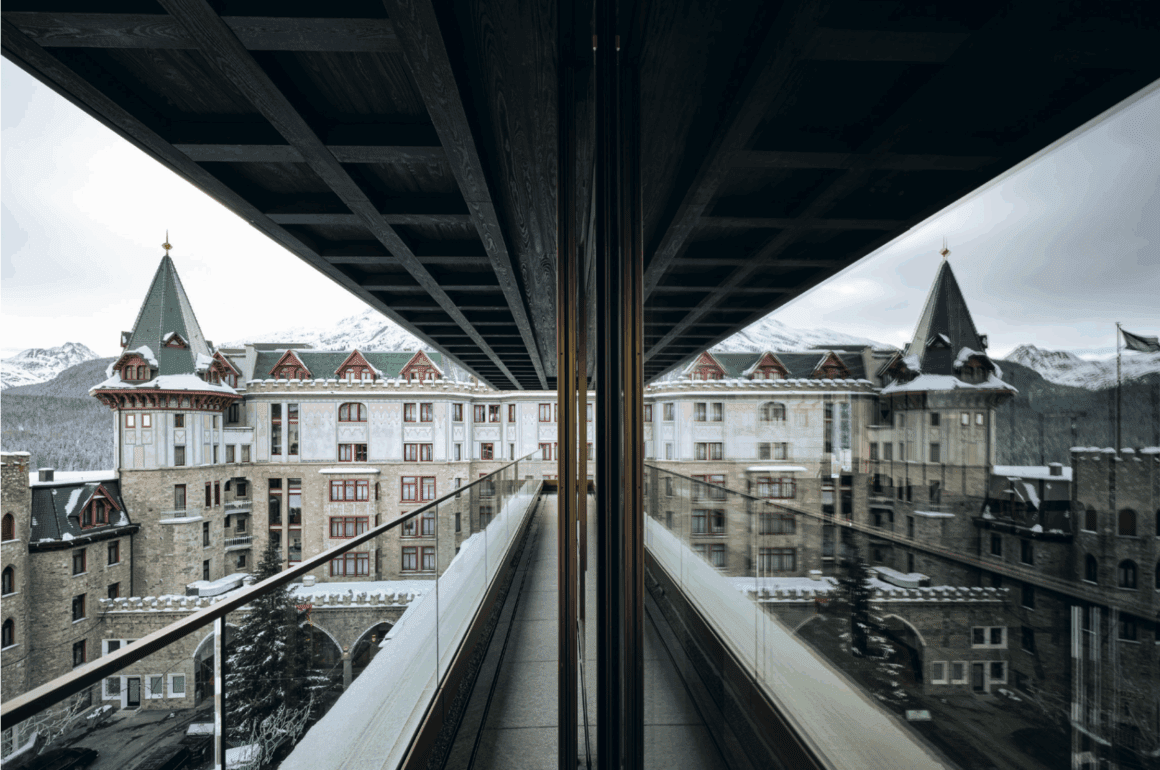
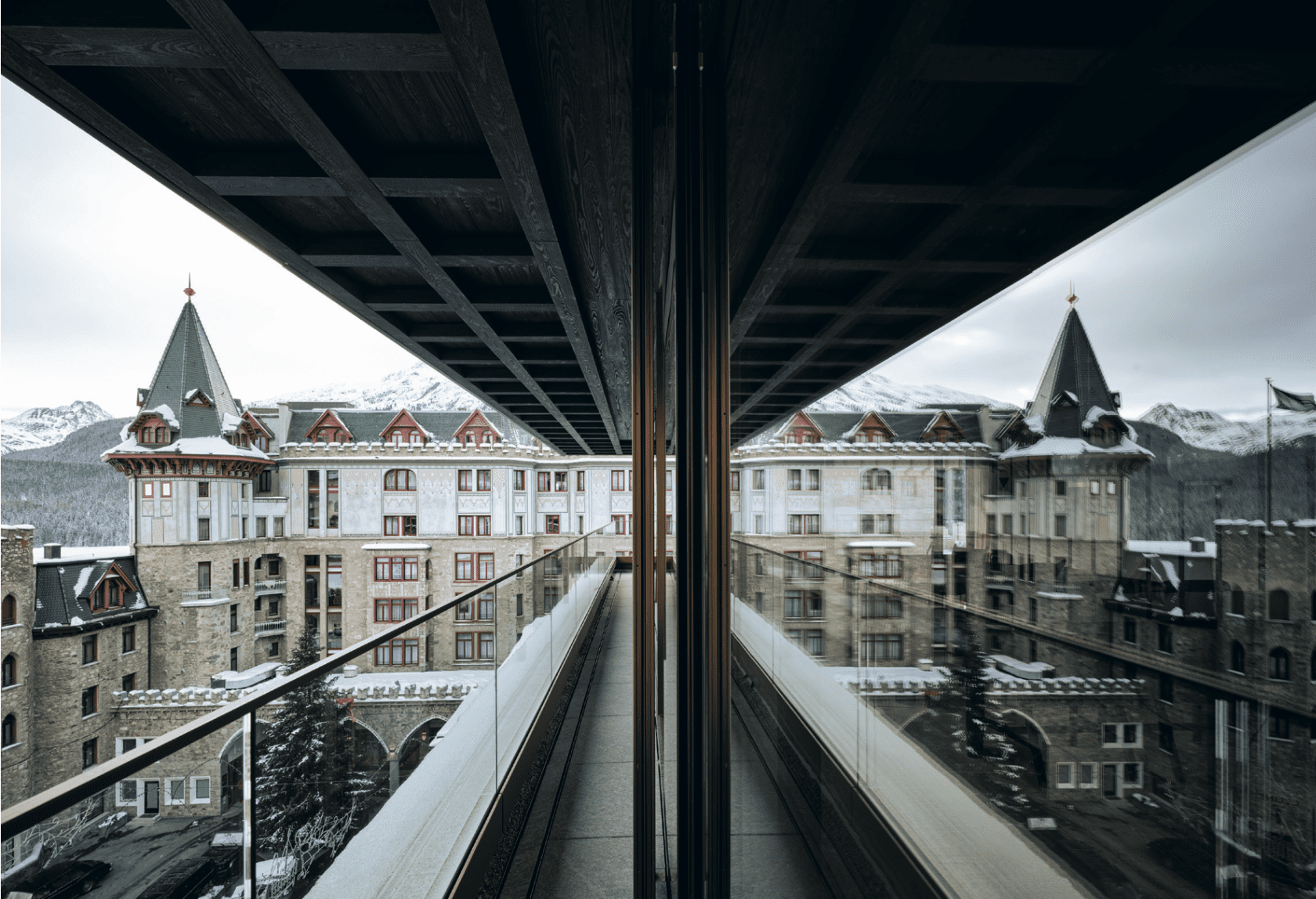
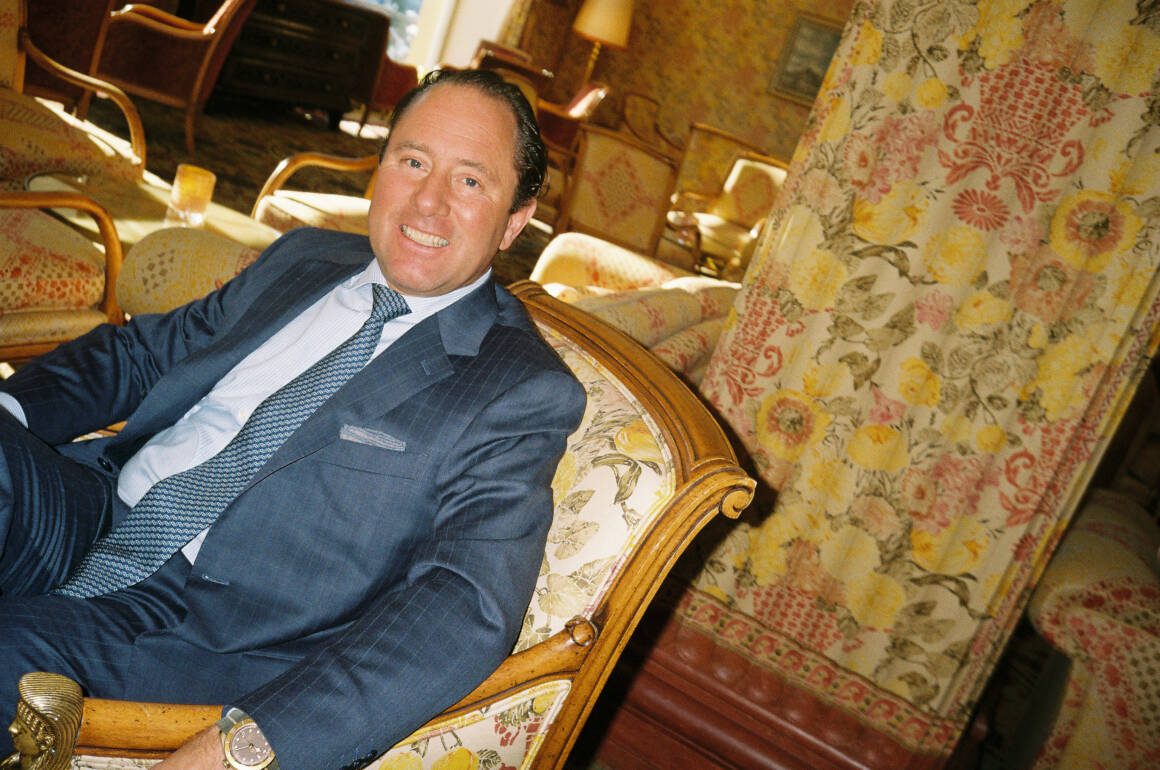
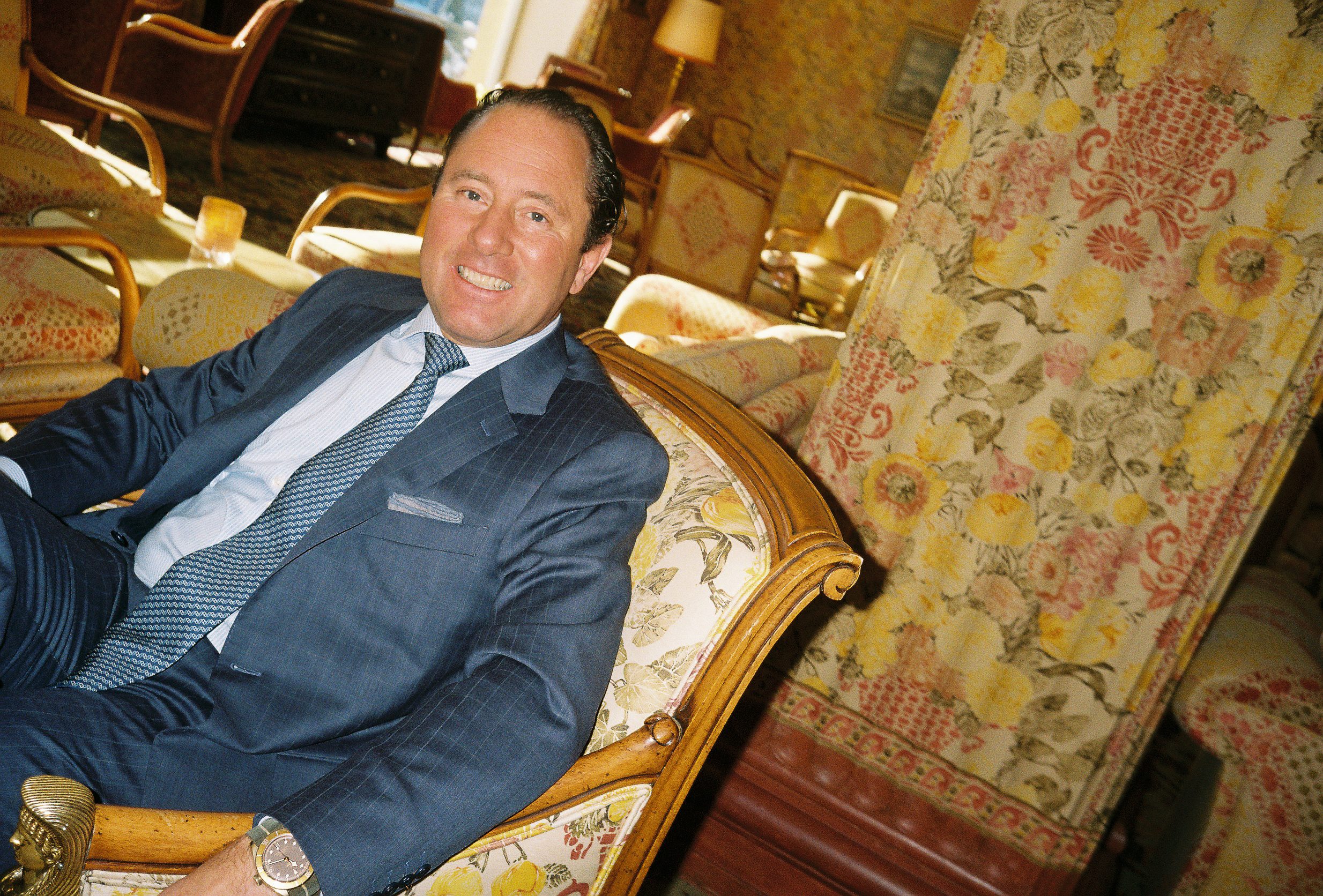
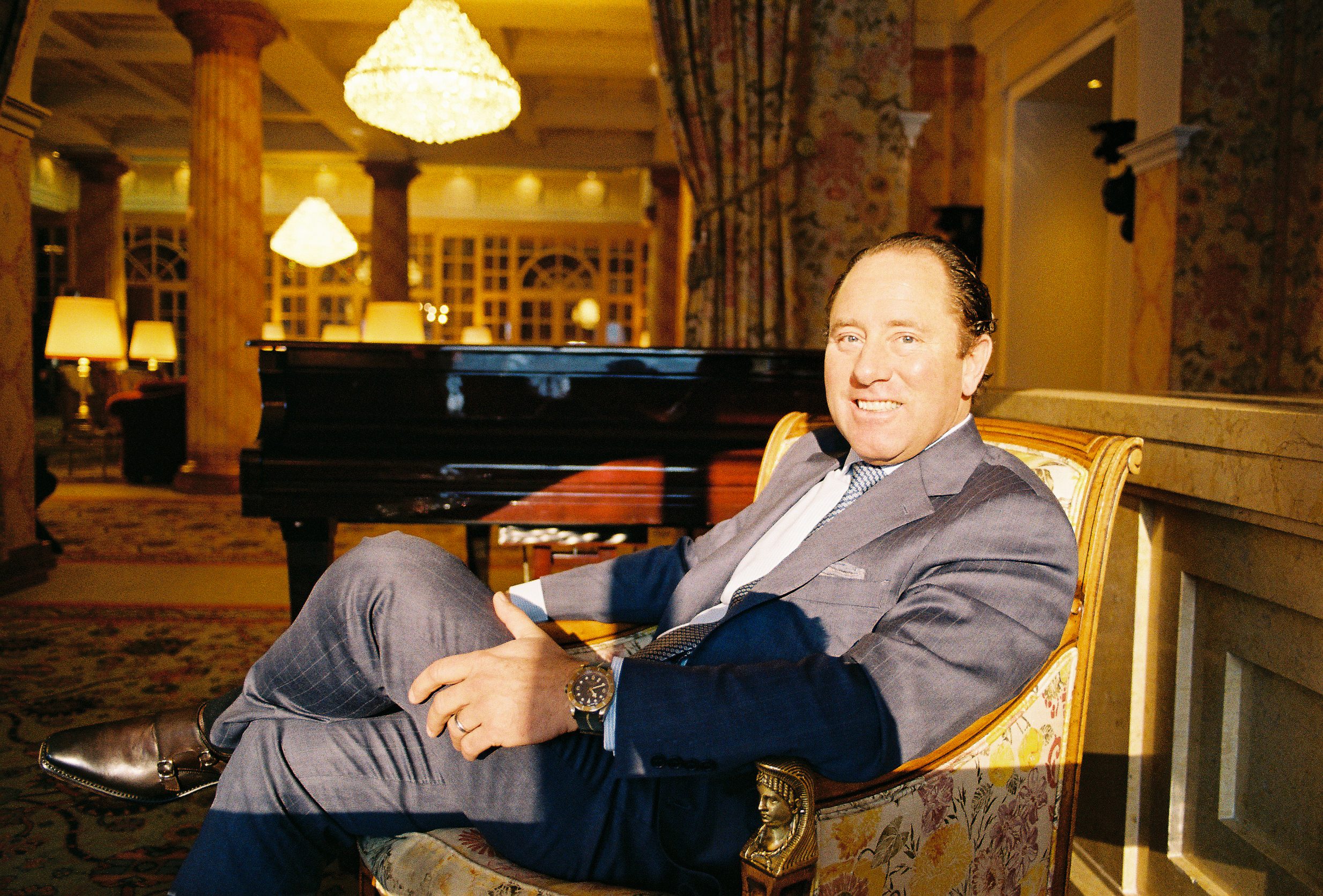
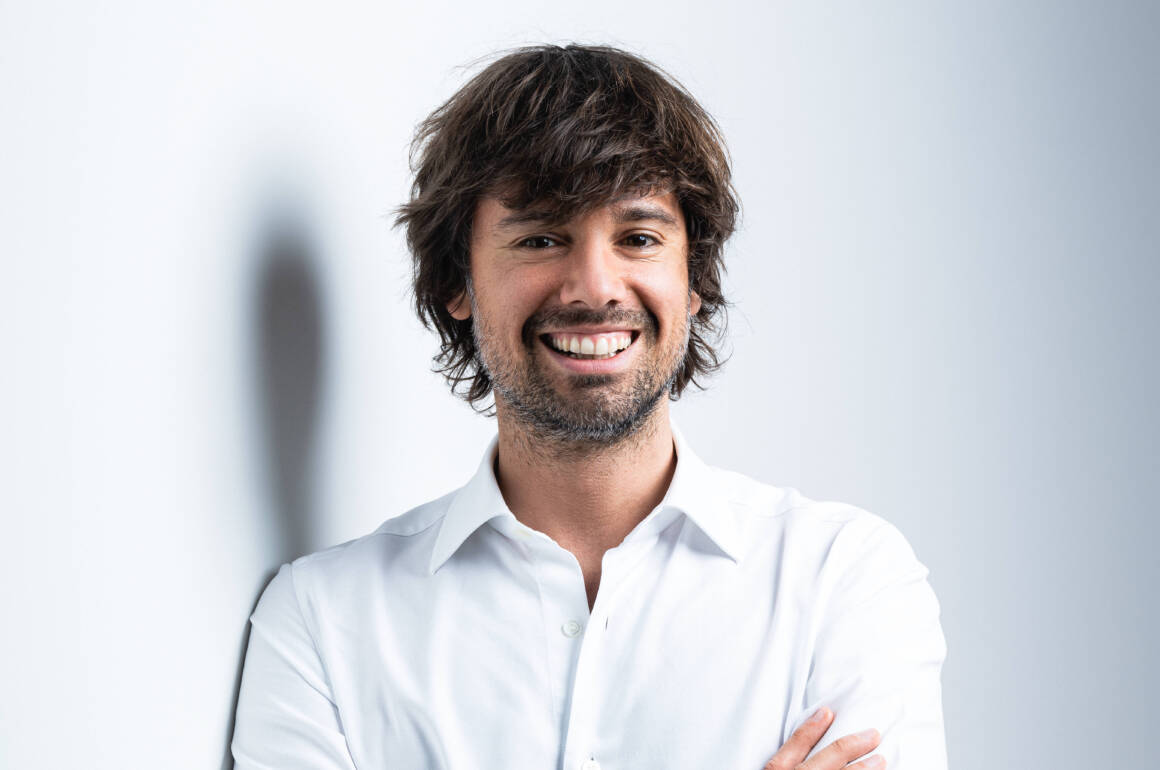
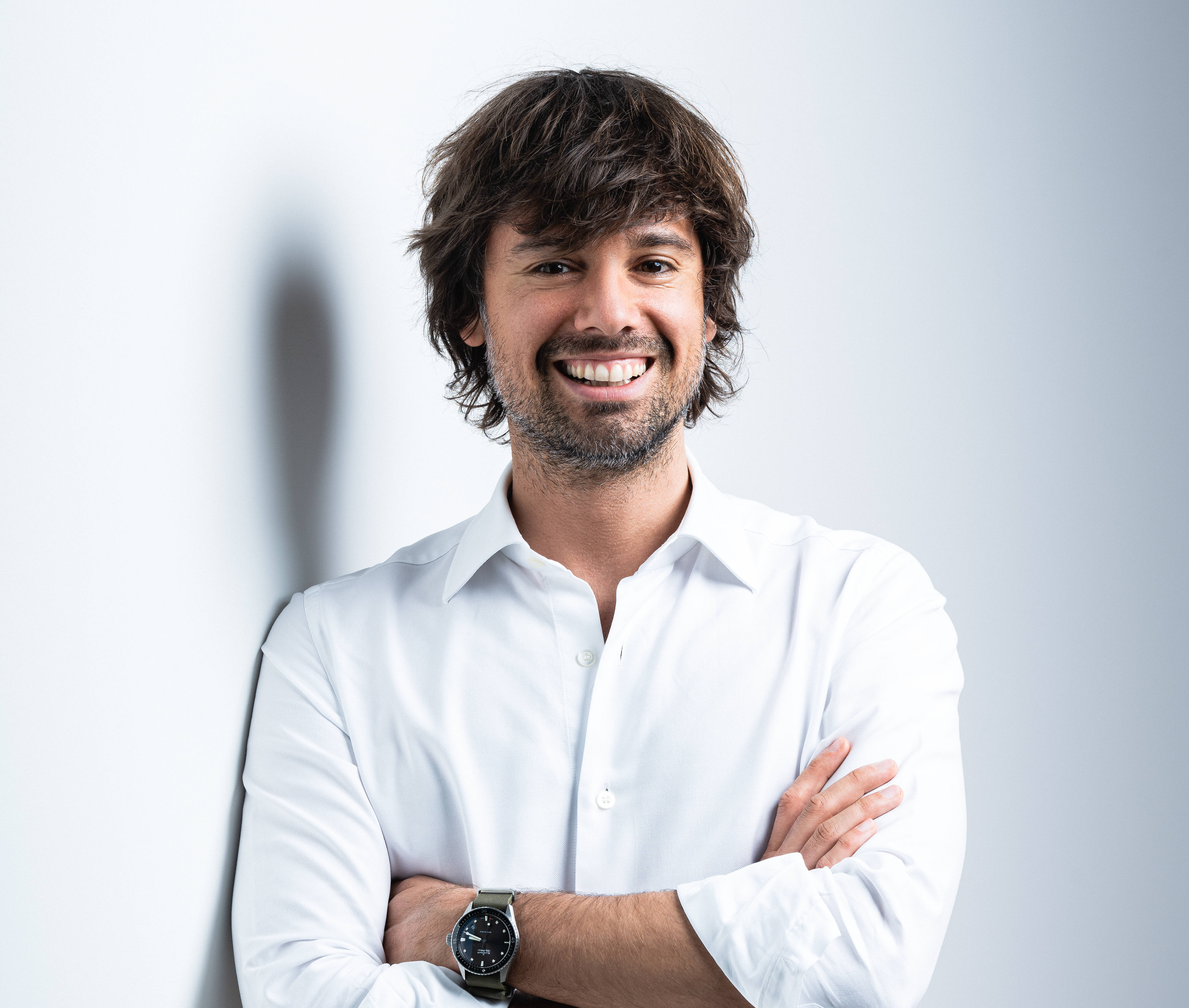
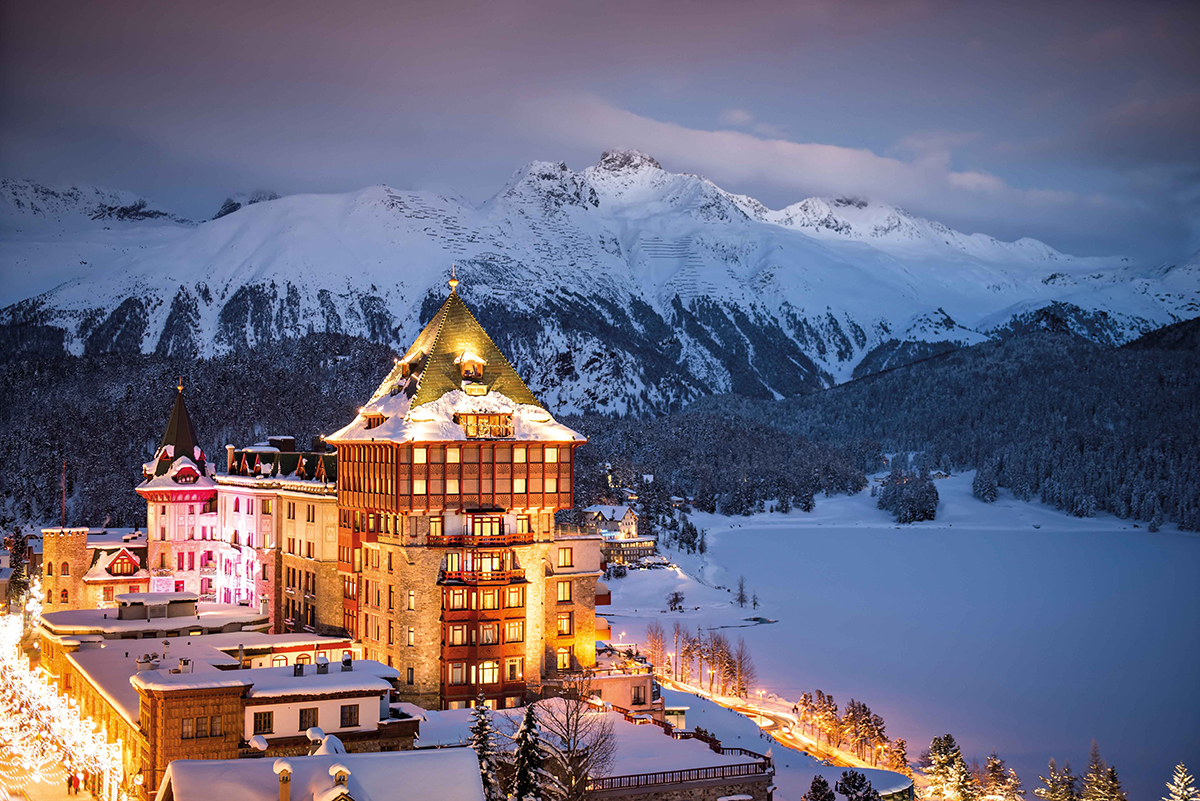
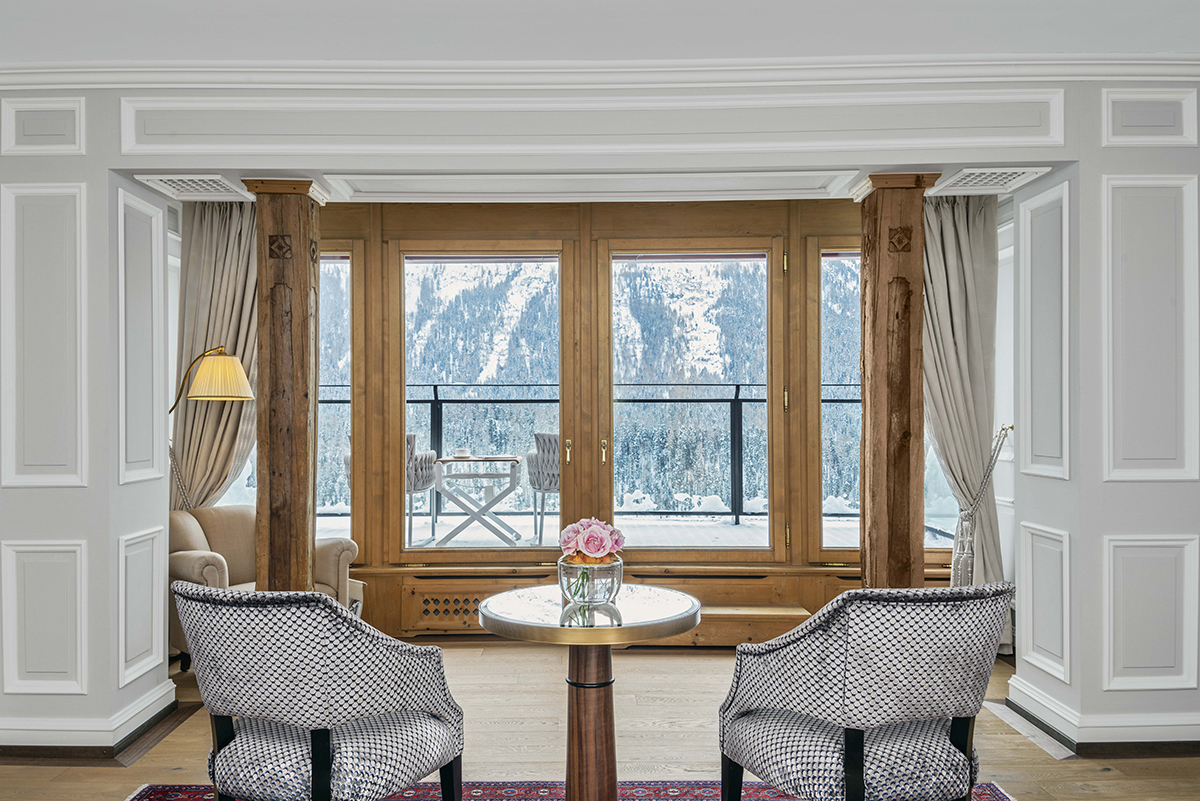
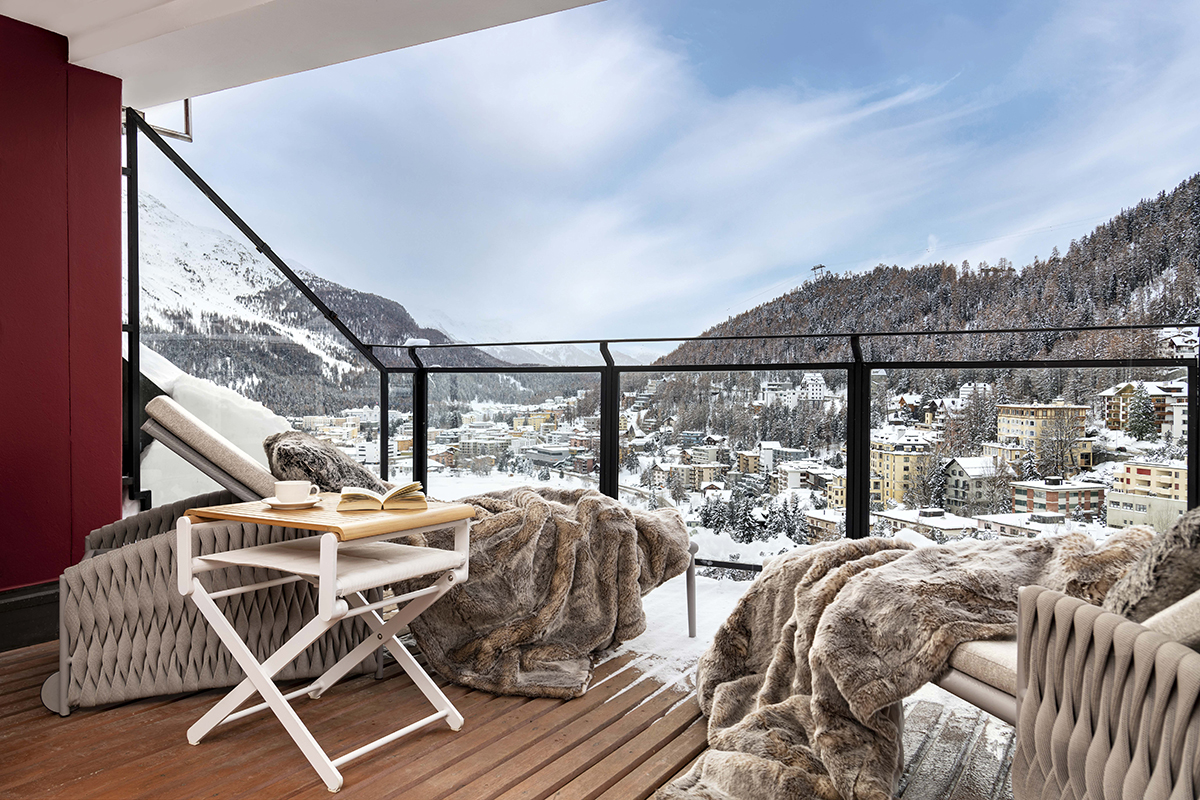
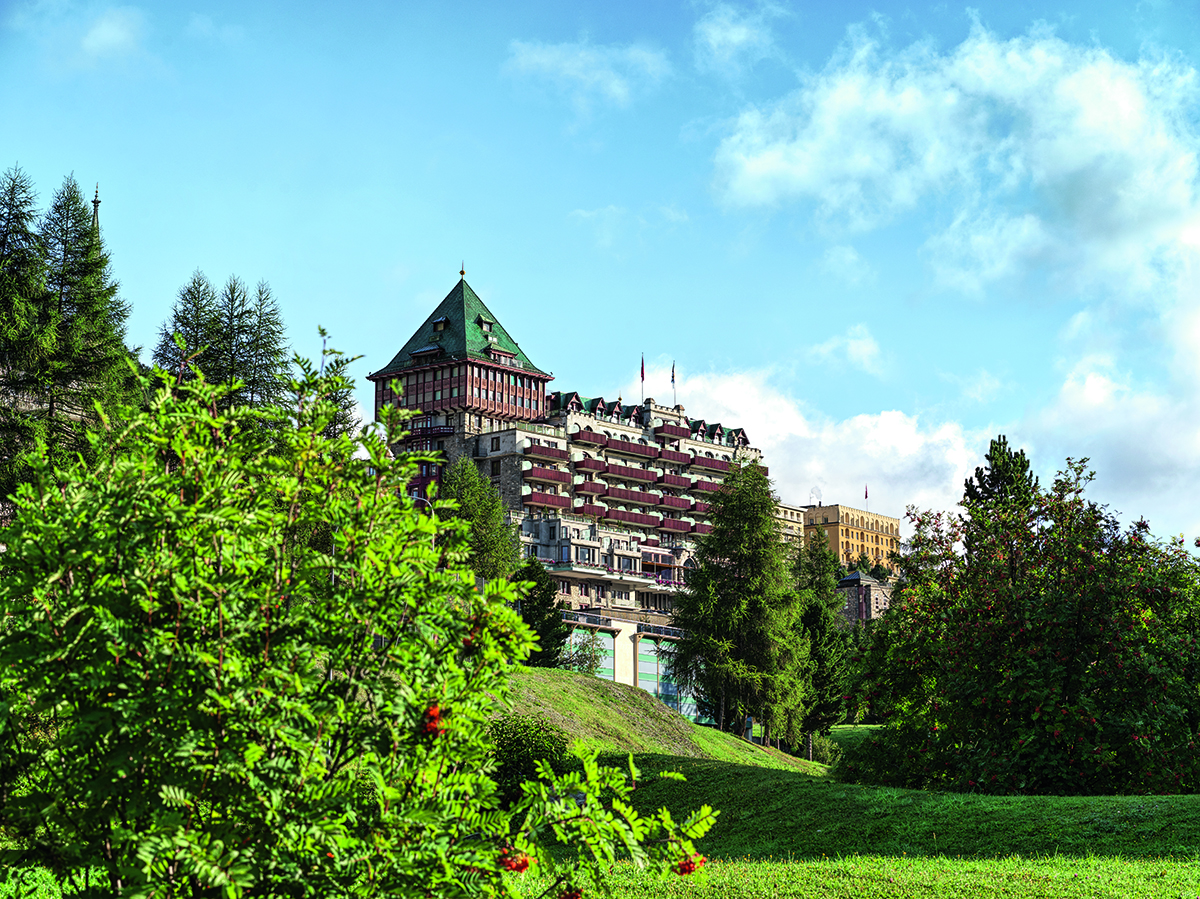
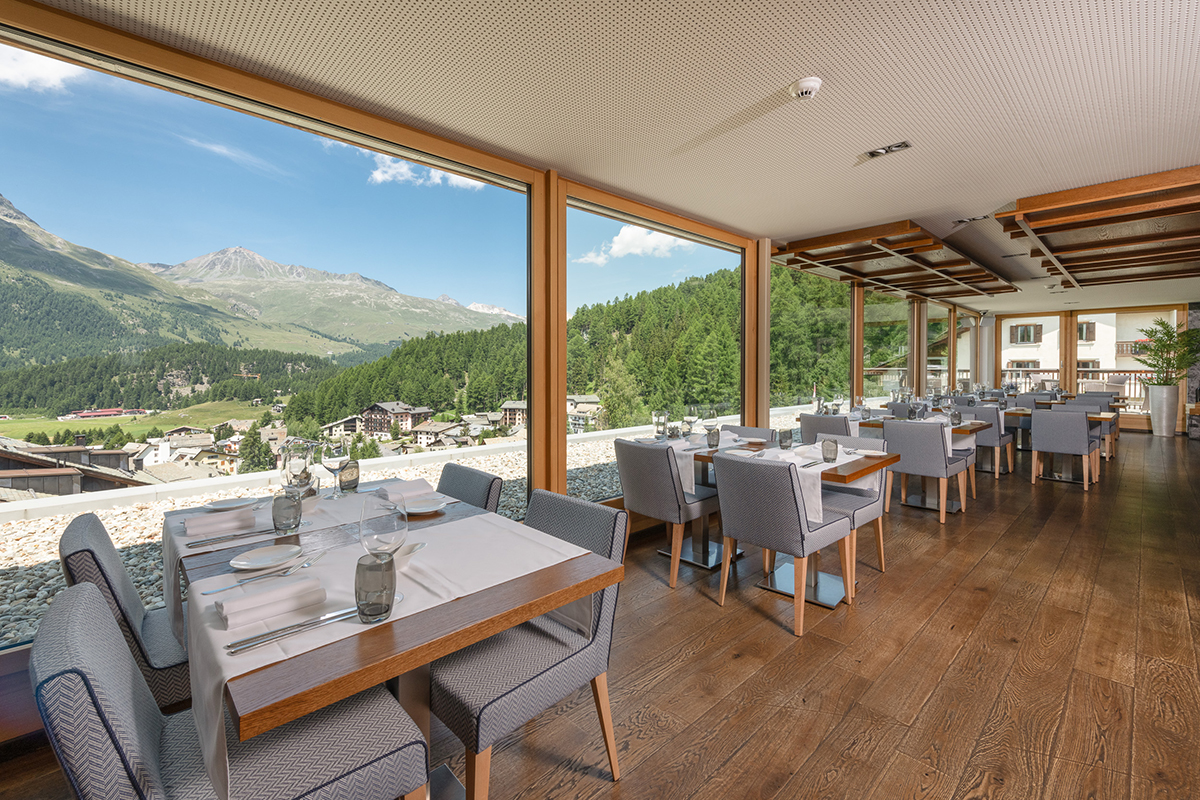
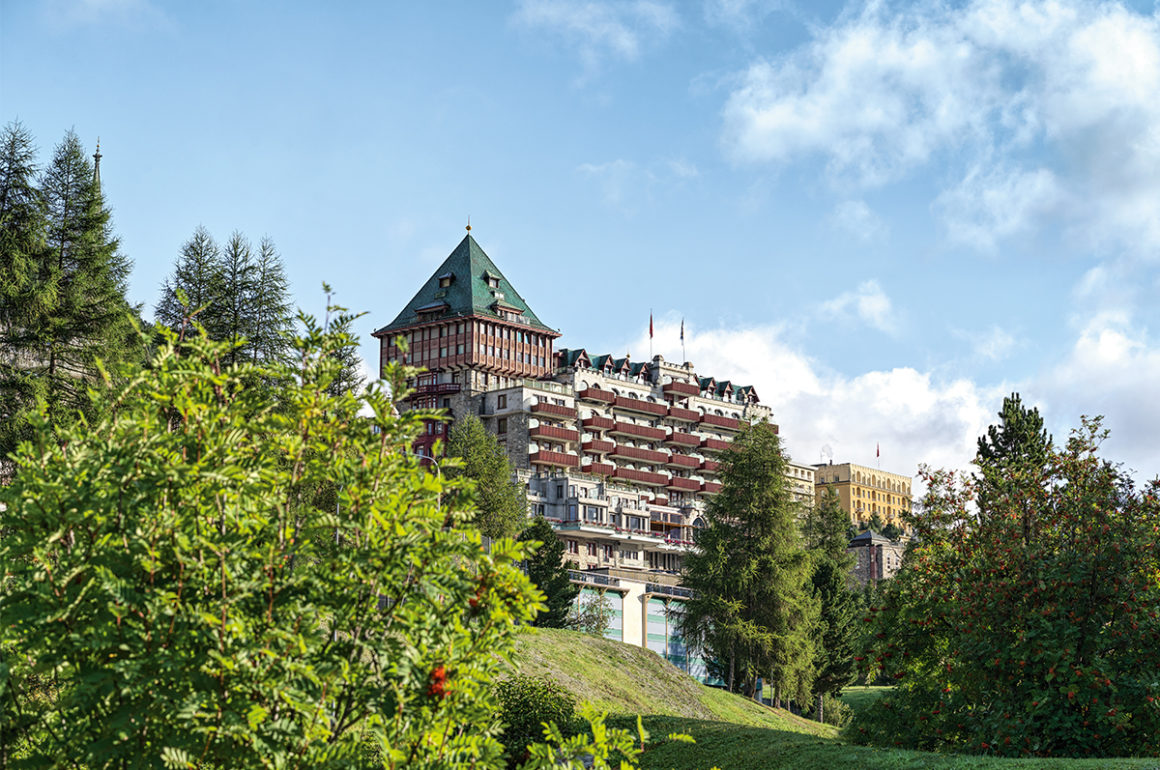
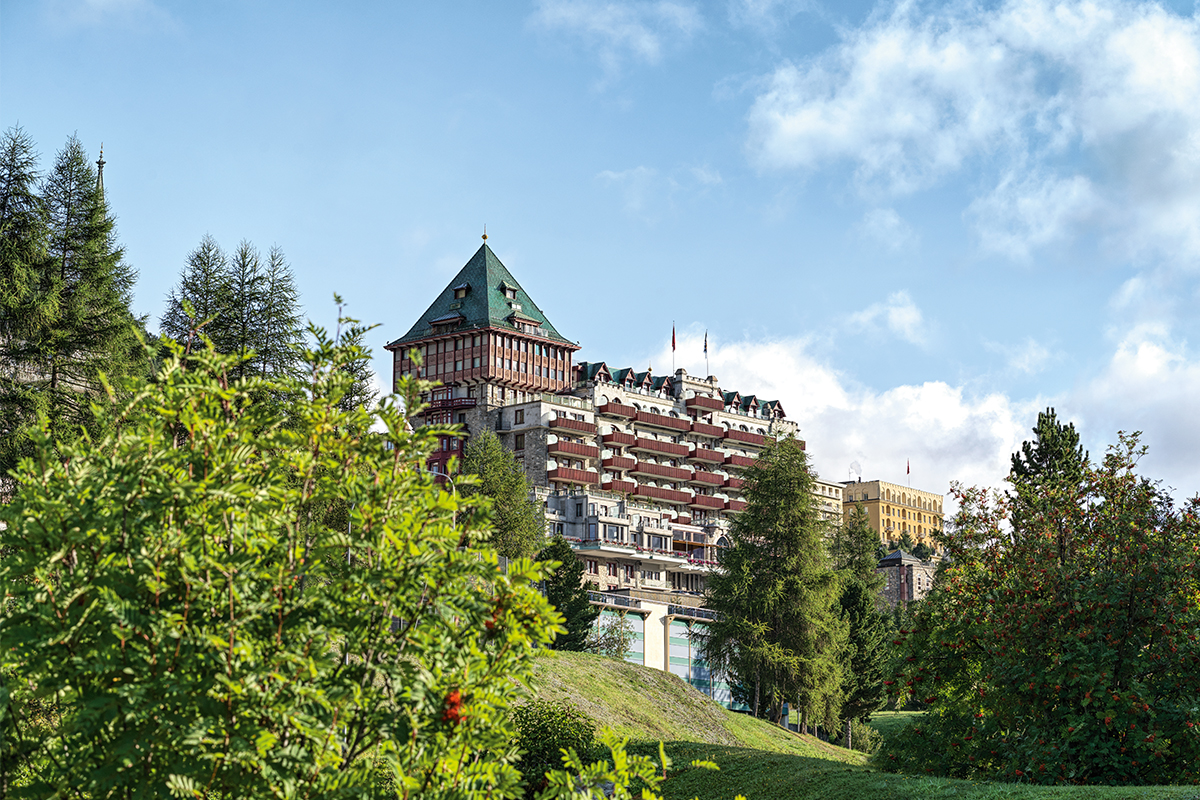
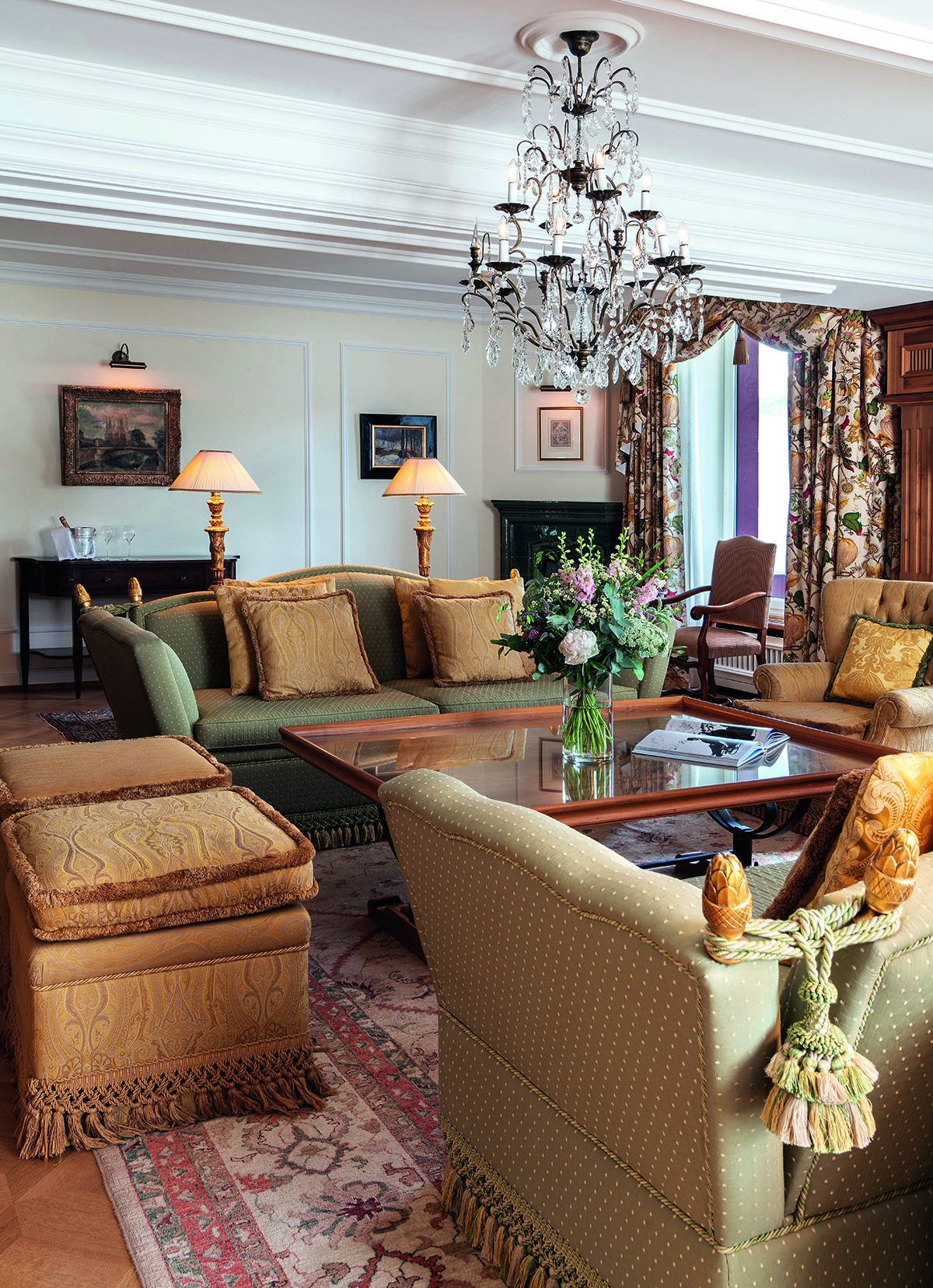
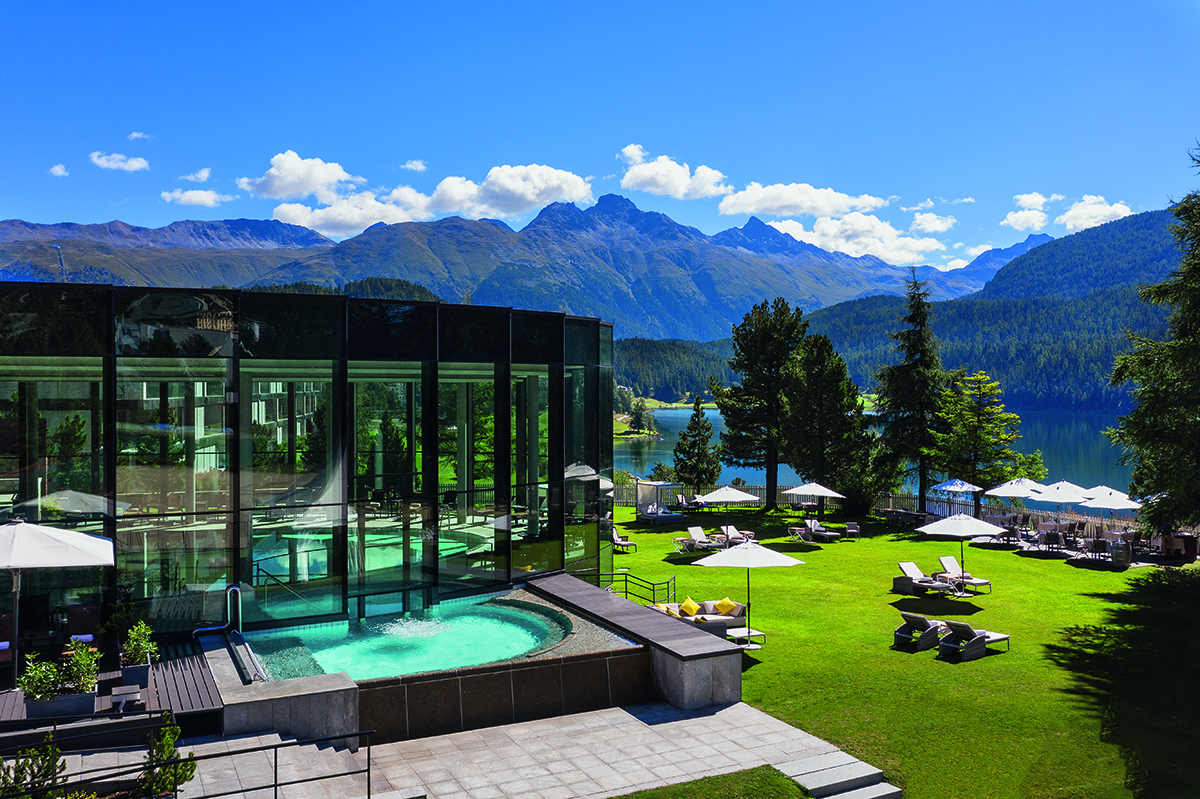
Heinz E. Hunkeler, the manager of Kulm Hotel, photographed by Konstantin Arnold
German writer Konstantin Arnold offers a glimpse behind the scenes at the iconic Kulm Hotel in St. Moritz. Through his (groggy) encounter with longtime Kulm Hotel manager Heinz E. Hunkeler, Arnold reflects on the delicate balance of tradition, change, and the quiet rituals that keep great hotels – and their guests – running smoothly
The morning after a long night, I met Kulm Hotel manager Heinz E. Hunkeler. Naturally, I was late – it wasn’t exactly the next morning, but rather three hours later. He didn’t take offence at this, behaving with the diplomacy and courtesy of a hotel manager who’s now part of my story. ‘No problem,’ he said, ‘I had some things to attend to anyway.’ He asked how my evening had been, and I told him it had been fantastic. He remarked that it couldn’t have been too crazy a night. He had all the numbers in his head, after all. The big spenders hadn’t been there – how could they have? I joked that I’d drunk like one but hadn’t paid anything. I laughed, and then he laughed, too.
Follow LUX on Instagram: @luxthemagazine
The first thing Heinz does in the morning is look at the figures – how many bottles of Dom Pérignon went to which room and at what time. You might have to apologise to your room neighbours. Heinz knows the truth before he even wants to. I mean, the guy had already been out swimming at six o’clock today. He wore a wonderful blue pinstriped suit in the morning light and sat with the same grand posture as he did in the armchair in his lobby. At one point, we had to move because the sun was shining too much in Heinz’s face. He was a good storyteller and spoke in simple and beautiful phrases with a charming Swiss accent. This was lucky since I wasn’t quite up to talking yet, and it was a pleasure to see how naturally he moved around the room.

Heinz E. Hunkeler photographed in his Kulm Hotel by Konstantin Arnold
Heinz E. Hunkeler – a hotelier shaping the future with tradition
Heinz grew up in Kulm. As a child, he played football in the indoor pool between seasons. Today, he and his wife are a true hotelier couple, who still live here. It’s a rarity these days. We talked a bit about the power of routines and the fact that there is a lot of work behind all the apparent ease. If you ask yourself in the morning what you’ll eat, wear, and do, you’ve already wasted precious time thinking. The most important skill of a hotel manager, however, is to make you the most important person in the world for the moment you spend with them. As soon as they walk out the door, you might be forgotten, but that doesn’t matter. Heinz’s job is to lead this hotel into the next century, so that the world of yesterday will still exist tomorrow, and his guests won’t stray. He even tolerates pizza boxes in the corridors. He has hired staff to cater for the trends of our time.
Read more: Six of the best hotels in Scotland reviewed
Tradition, change, and the value of good staff
Some people say he’s conservative; after all, Heinz likes to go hunting, so he doesn’t forget how to do his own shopping. Why do people always say that as if it were a bad thing? Time passes in cycles because people tolerate its passing better that way. The cultural manifestation of these cycles is called fashion, and its melancholy revival is called nostalgia. The point is to illuminate things and distill their constant repetition down to an essence that becomes eternal for a moment. Nothing lasts forever. Not even Angelo and Fabio. The turnover can be hard to bear. Many guests come not least because of the staff. Good employees are hard to find and hold onto. That’s why they have just renovated the staff accommodation for 25 million. In the past, Heinz says, there were shared rooms; today, there’s a gym, down duvets, compensation days, and chia seeds.

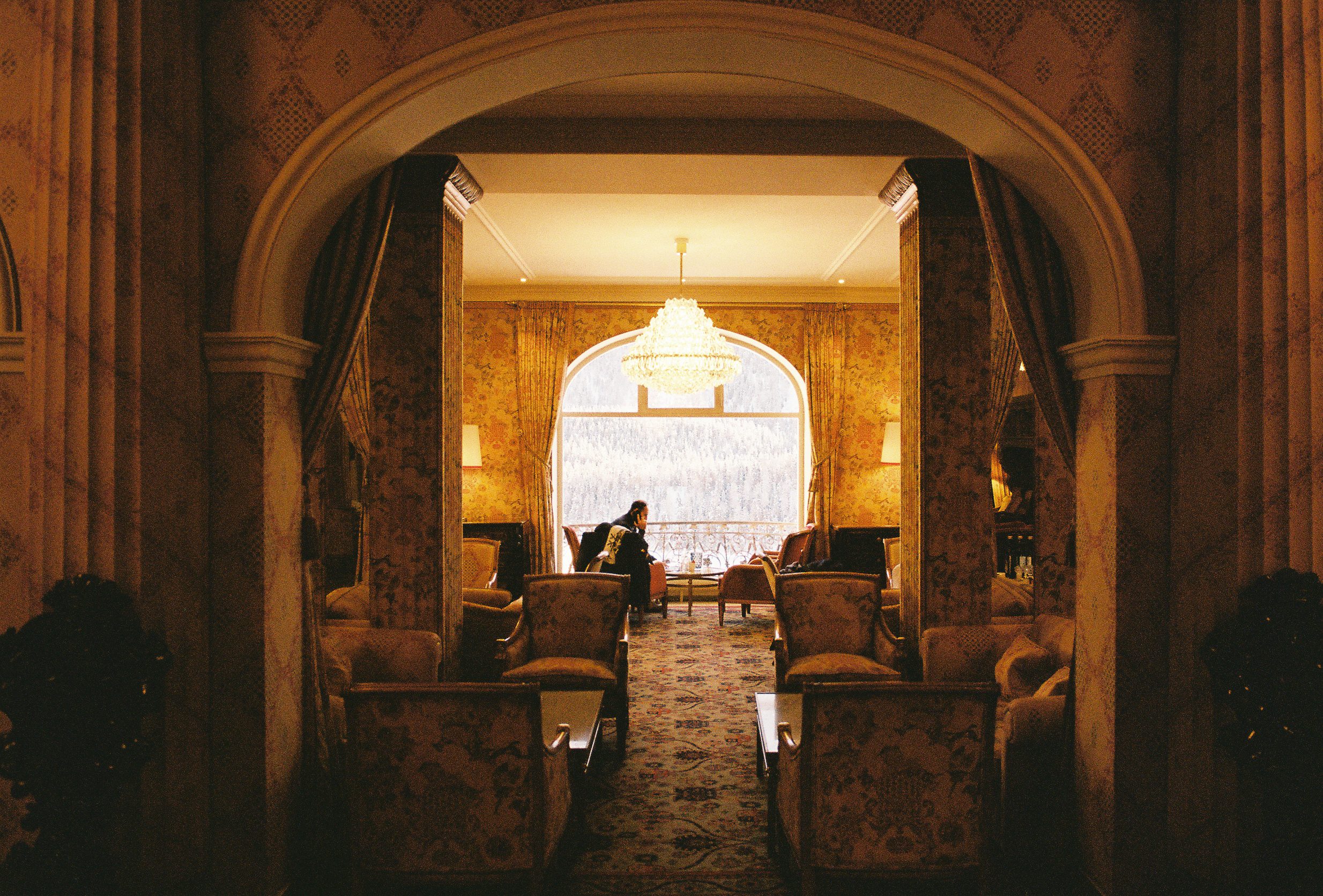

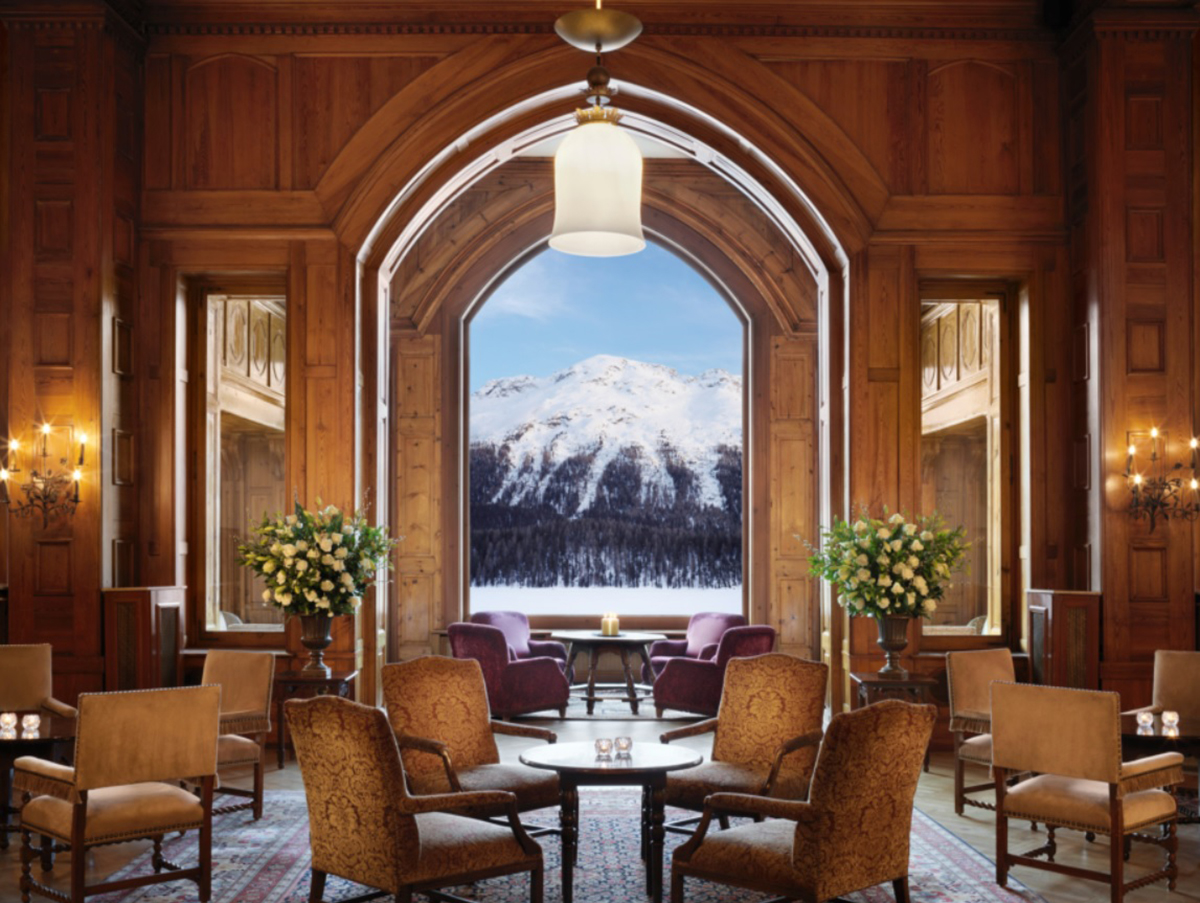
The lobby lounge at Kulm Hotel, photographed by Konstantin Arnold
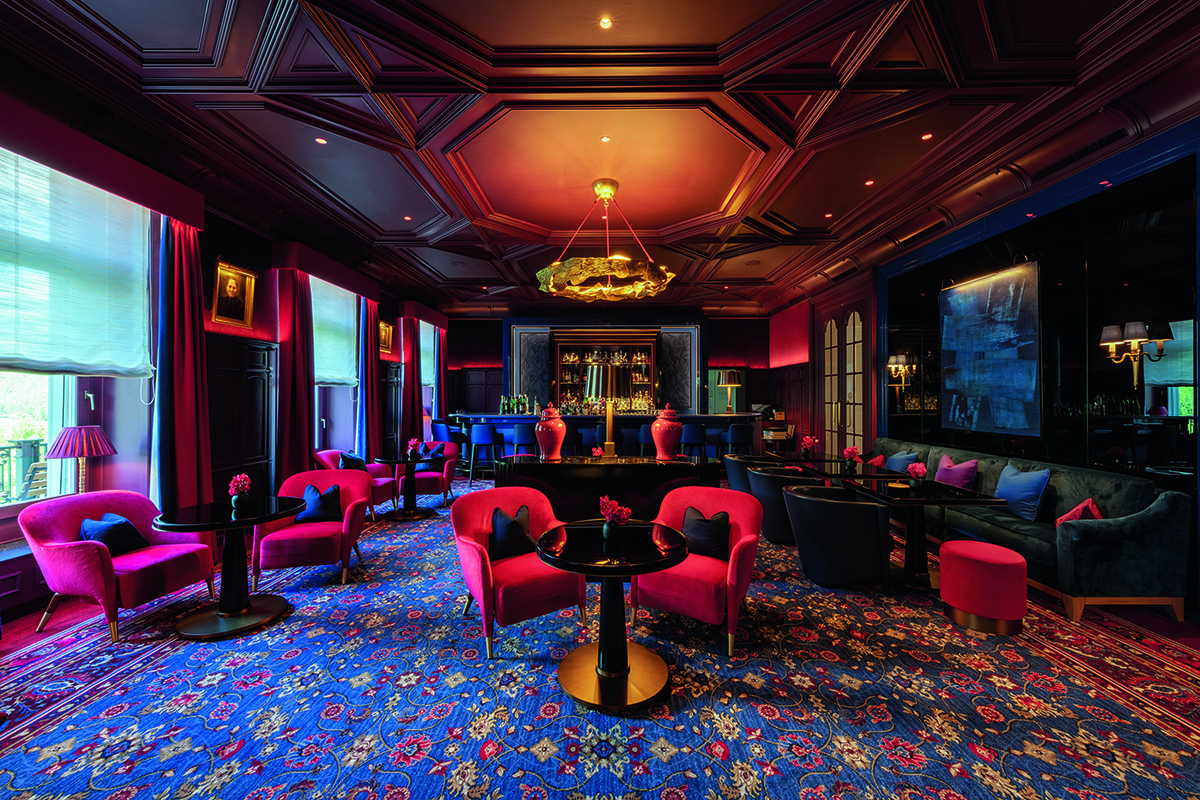
Reflections in the Kulm lobby
After the meeting with Heinz, I walked around the hotel for a while, still exhausted. You always think, ‘it’s over now,’ but it wasn’t. I settled into the lobby, its comfort almost unbearable without sleep. I nodded off, with the wall behind me and the world in view. Once again, I was struck by the beauty of these chairs. You notice them the first time, but you don’t realise how much they struck you. They’re colourful and have women’s faces in gold at the end of the armrests, which you can stroke as you sit down. Some of the women who came by looked remarkably similar. If you spend half the day there and you don’t have any inhibitions, you’ll meet all sorts of fascinating characters throughout the day: opera singers undergoing proton cancer treatment, people who sell bread and jewels in the same store, and friendly Slovenian waiters. It is the true living room of St. Moritz. The lobby at Badrutt’s is too hectic, too many people who are obliged to be there – the usual few days a year: say hi, play the game, leave. The one at Suvretta is too big to be truly cozy, though at least you can smoke at the bar.
Read more: Inside Aston Martin’s Valhalla and Vantage
So, what does the Kulm mean to me now? Tweeds and the lobby. Cornelius, the concierge. Angelo, the sommelier at the Dracula and breakfast room. A Portuguese woman walking down the lobby in a white ski dress, her brown hair tied up, gold earrings glinting. And what else? Andrea at the country club and the Slovenian waiter who always liked to talk to me when I was sitting here, the Russian aristocrat who skated every day and sipped tea in the lobby. But definitely Heinz E. Hunkeler, who likes to go hunting and whom I saw many times that day, talking and sitting with various guests until dusk fell. I have no idea how he manages it all.
Konstantin Arnold

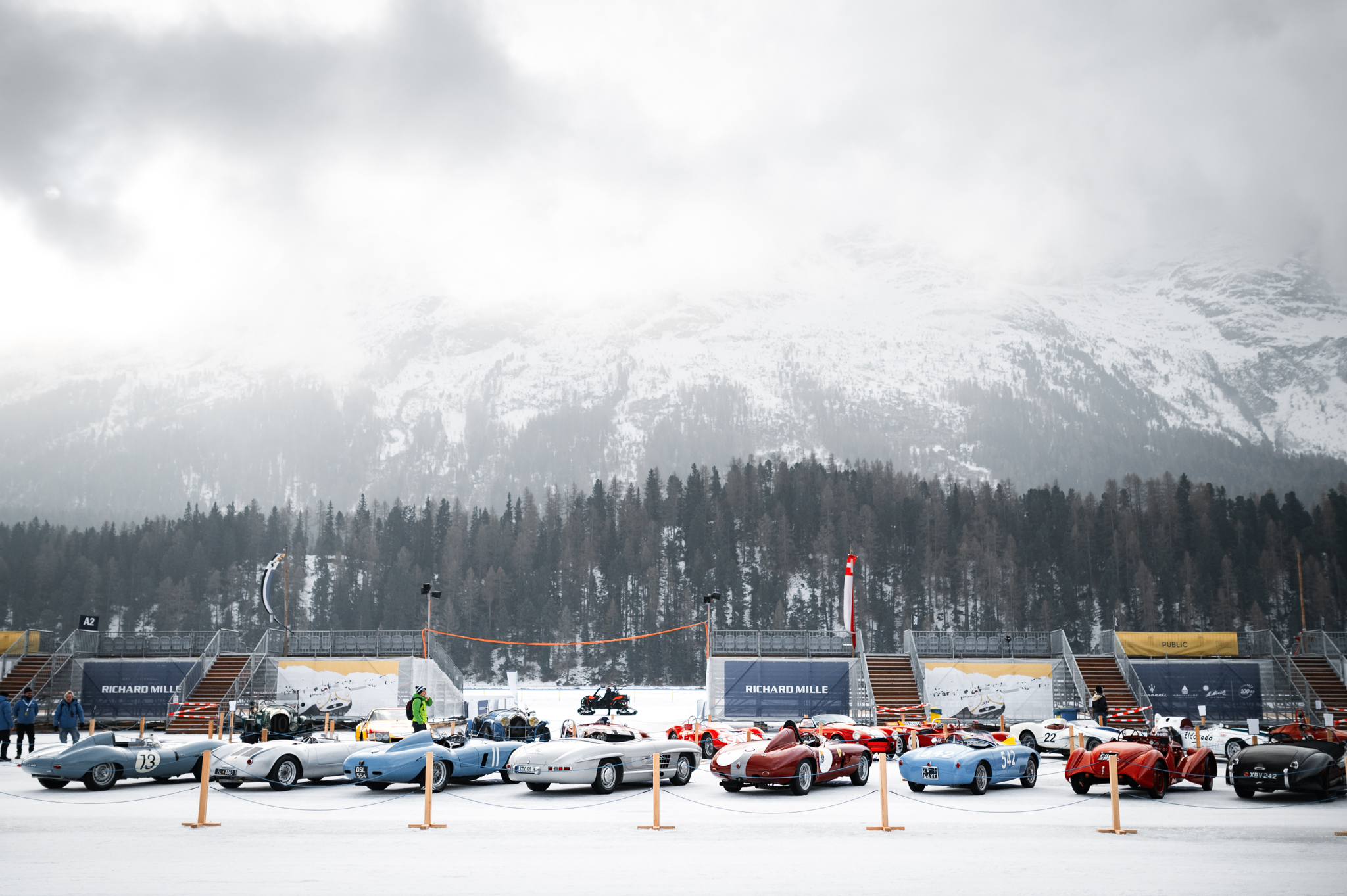
Held in Switzerland’s Engadin alpine valley, The ICE shows some of the most desirable classics slide across a frozen lake
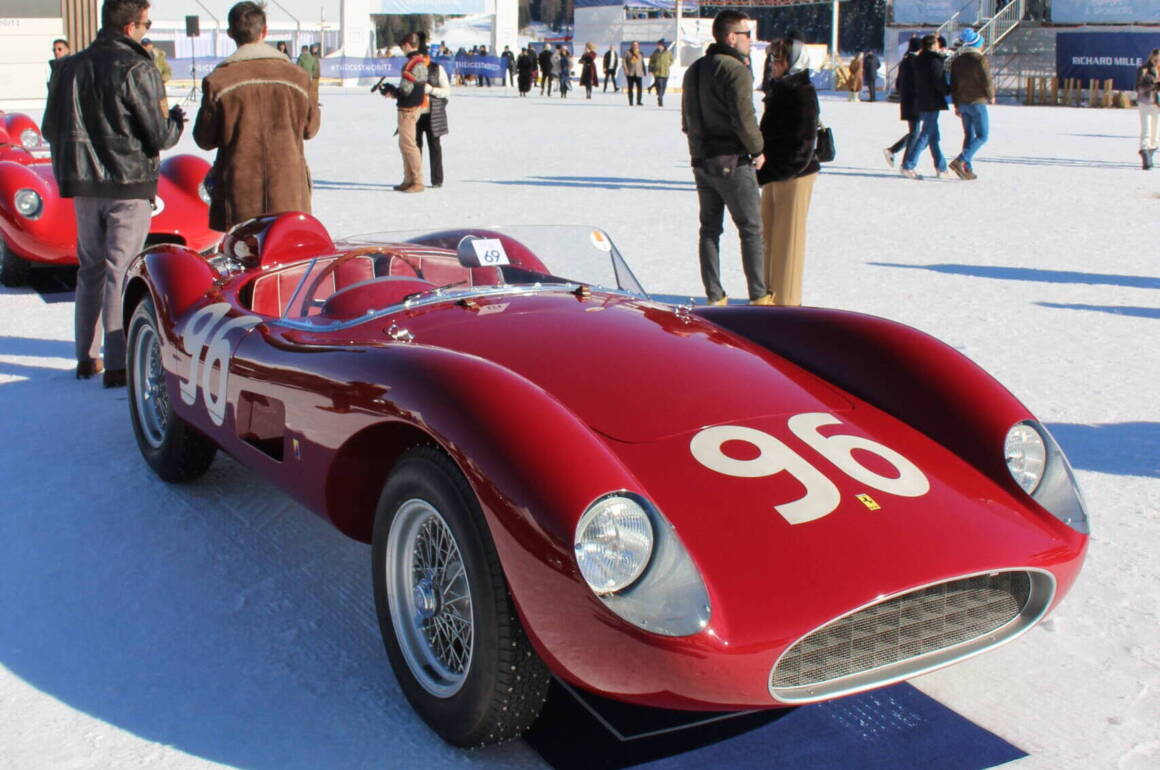
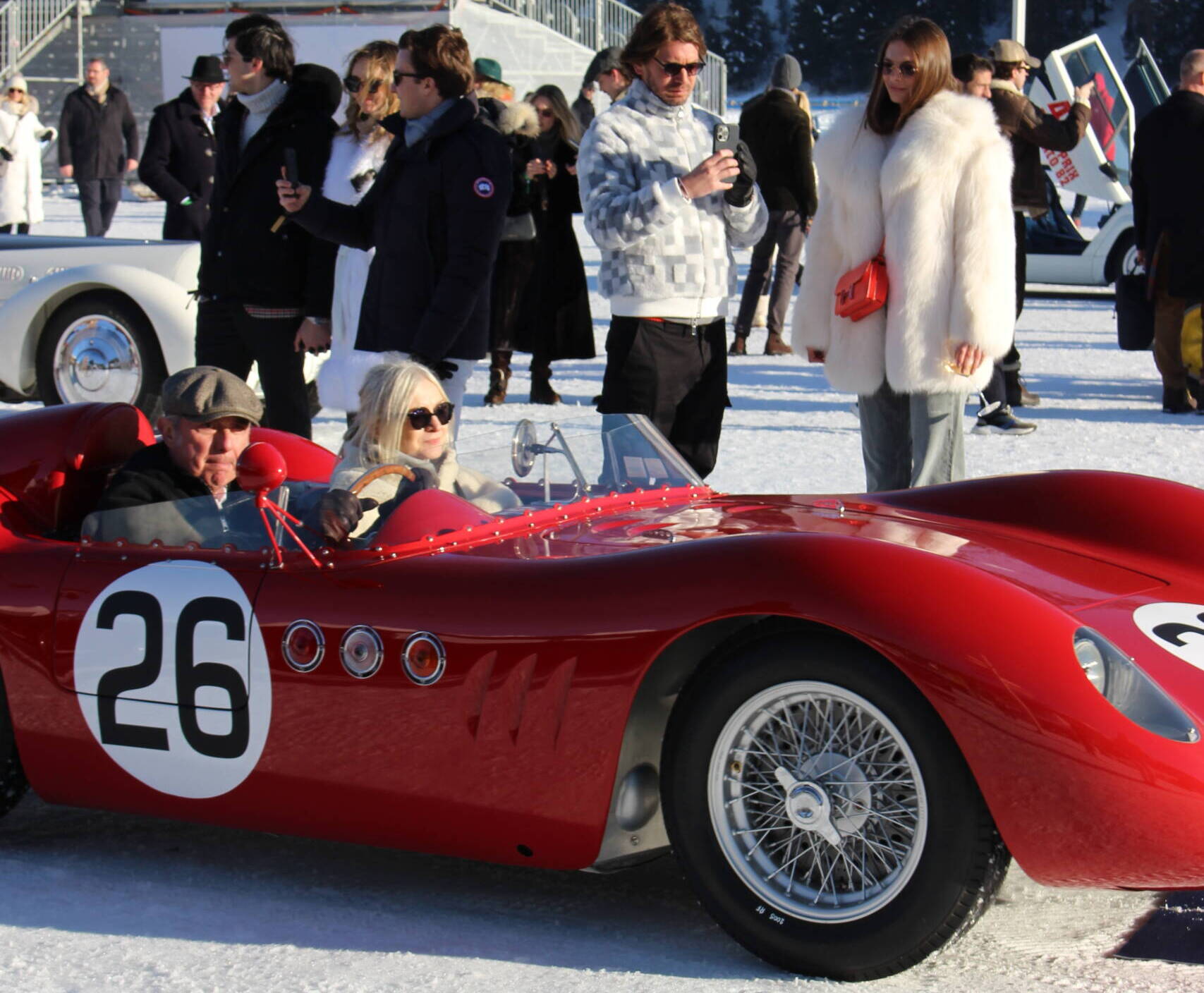
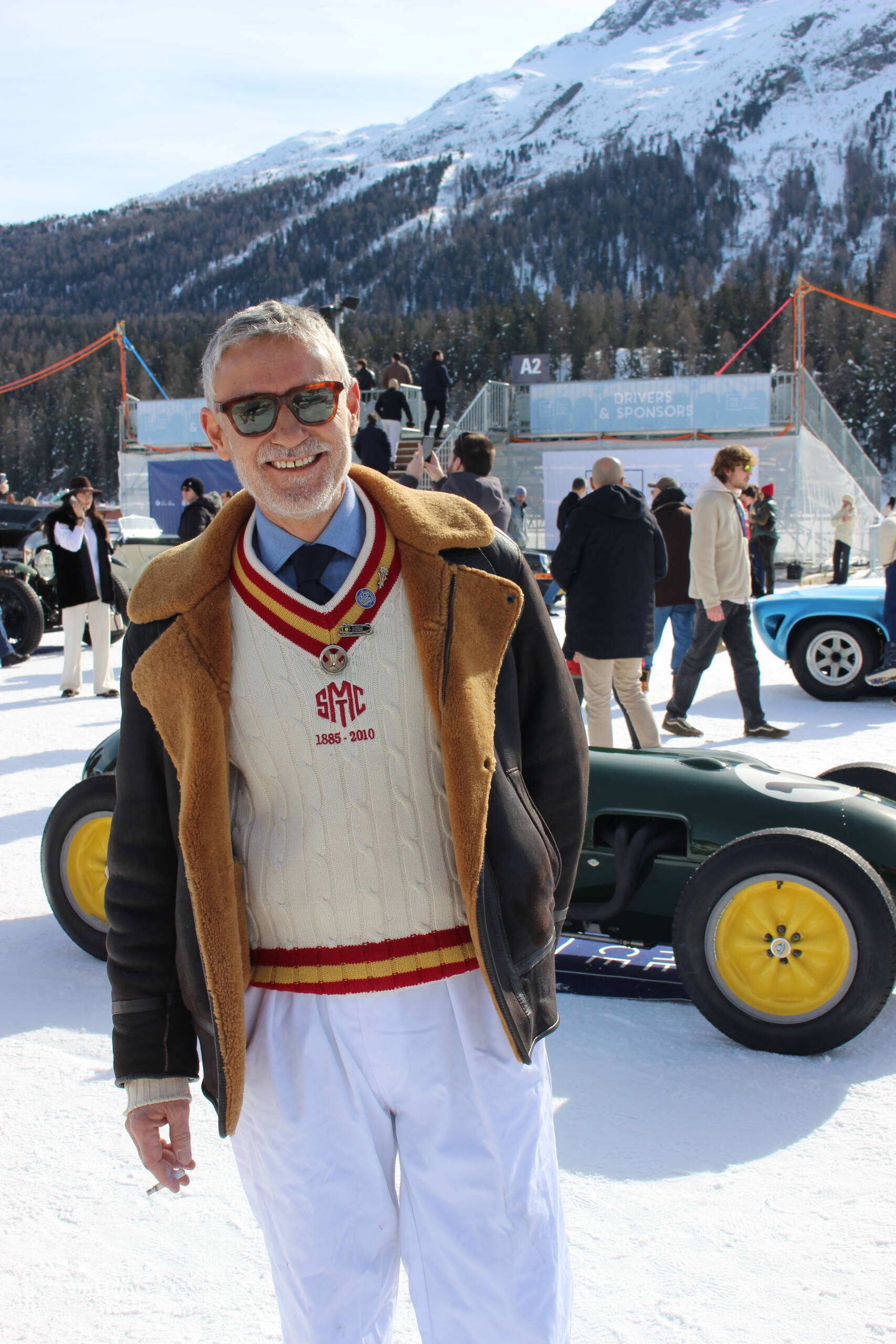
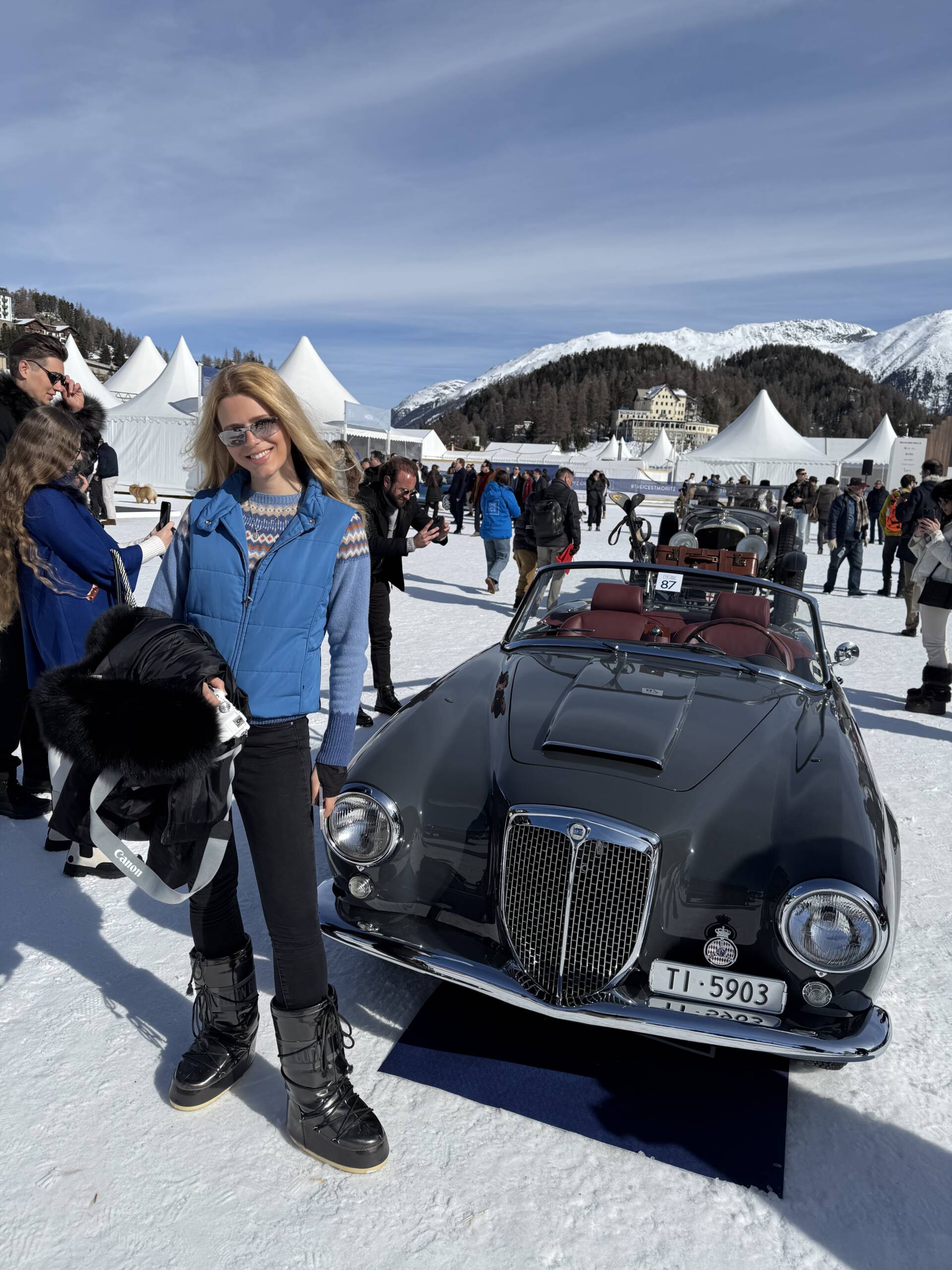
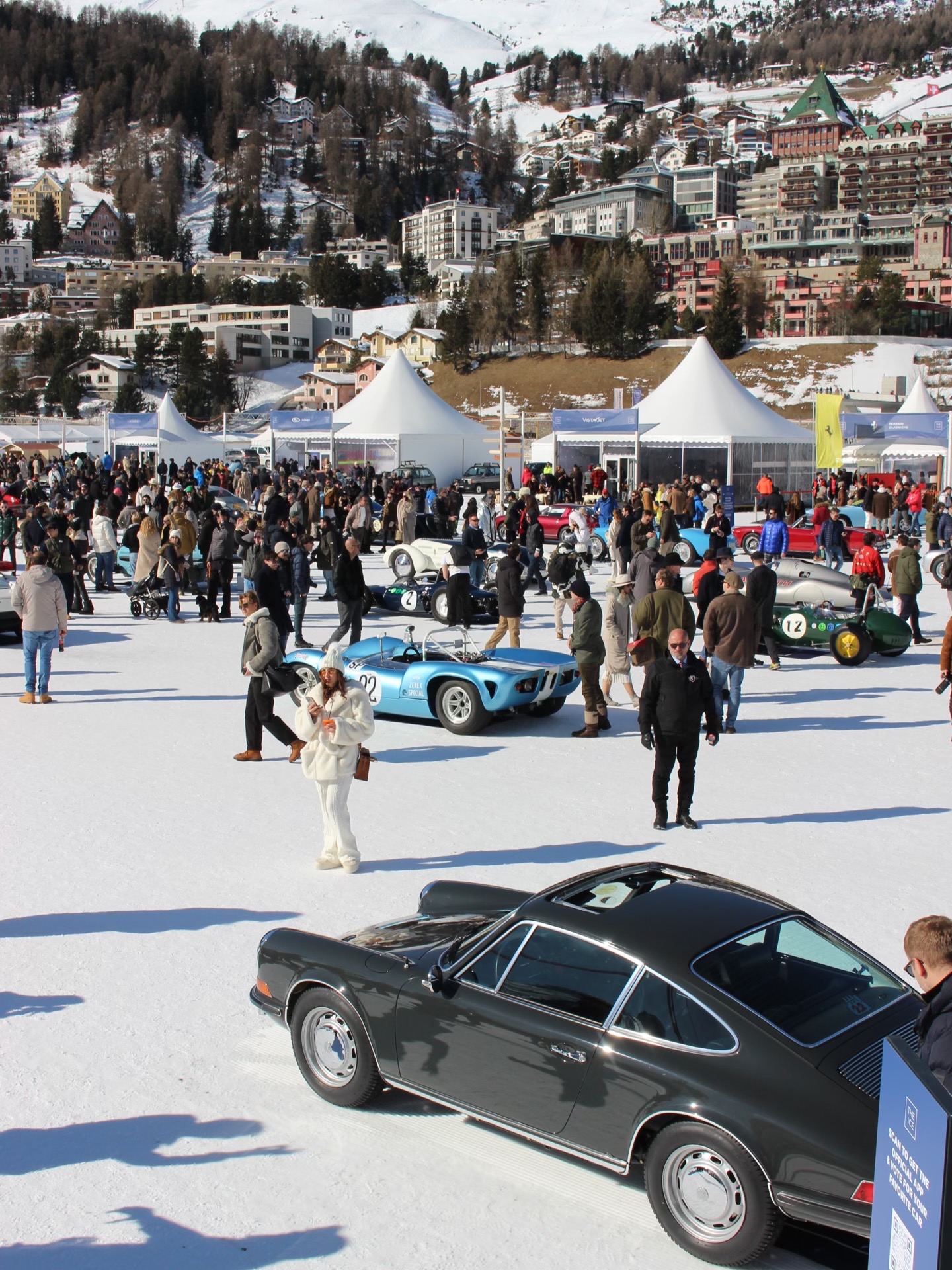
The ICE in St. Moritz transforms a frozen lake into one of the most glamorous Concours d’elegance on earth. The crowd? A mix of Cresta Run daredevils, classic car collectors, and the fashion elite, all drawn to this blend of horsepower, mountains, and high-altitude glamour. The so-called “Top of the world” this year hosted the most successful iteration ever of what is fast becoming known as the greatest high society car show in the world (with quite a few dogs thrown in). Fabienne Amez-Droz visits the ICE, captures the event photographically for LUX, and recalls her experience below
“Imagine seeing some of the most extraordinary classic cars in the world, drifting across a frozen lake in the heart of the Alps. It might feel like a dream, but in reality, you’re at the ICE St. Moritz. And this year’s event was truly the most spectacular one yet – sunshine, champagne, a great curation of cars and a lot of fun!
Follow LUX on Instagram: @luxthemagazine
The I.C.E. St. Moritz officially launched in February 2022. The event was becoming a big success over the last few years, proving that even the harshest winter conditions are no obstacle to the cars and collectors. It is a two-day event, kicking off with an exclusive preview, giving visitors a rare chance to get up close to some of the world’s most stunning classic cars and have conversations with the car owners.
Read more: Ronnie Kessels insider guide to St Moritz
On the second day, the event gets even more exciting. The cars that were just on display the day before now drive and slide across the ice. At the end of that day, there is the Concours d’elegance award ceremony and this year’s “Best in Show” trophy was designed by British architect and St. Moritz regular, Lord Norman Foster. After two full days on the ice, the true St. Moritz crowd has dinner at the Badrutts Palace and celebrate the success of the ICE event at Günter Sachs’ legendary Dracula Club.
The next morning, real ice comes in useful for the hangovers; although the tough guys and girls are up and out early on Corviglia, the Cresta run, or blasting their Ferrari 275 GTB/4 down the Engadine valley.”

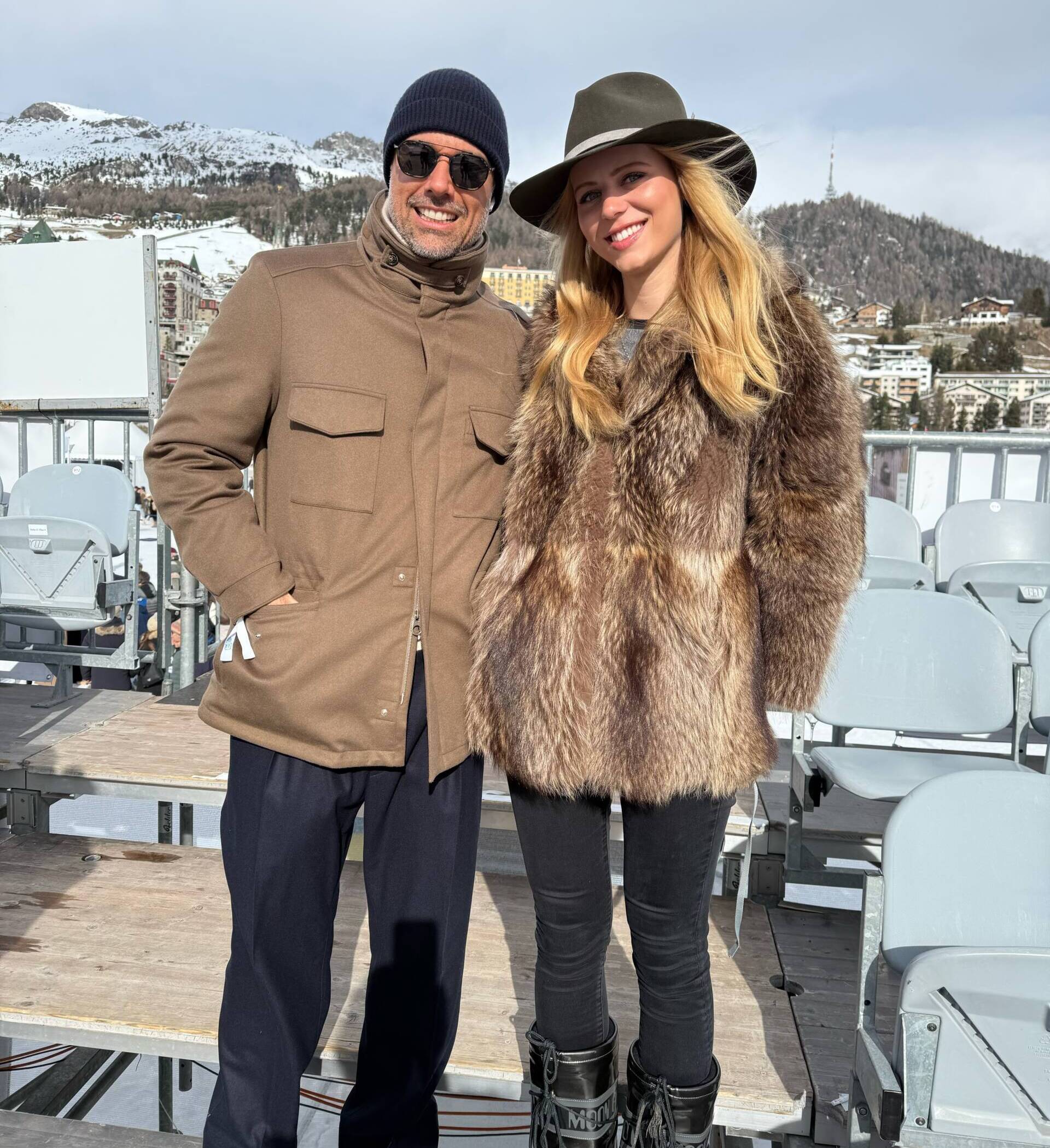
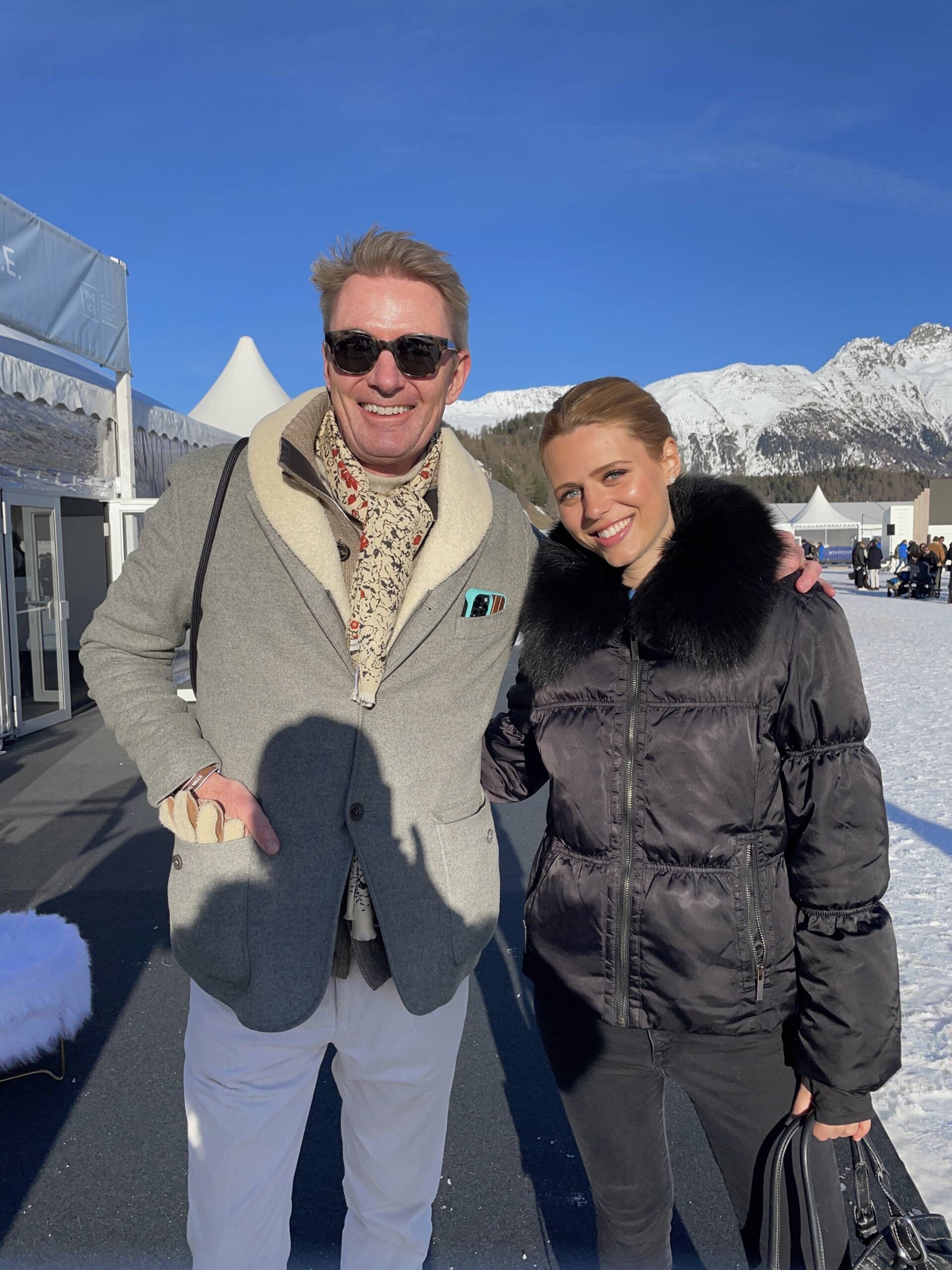
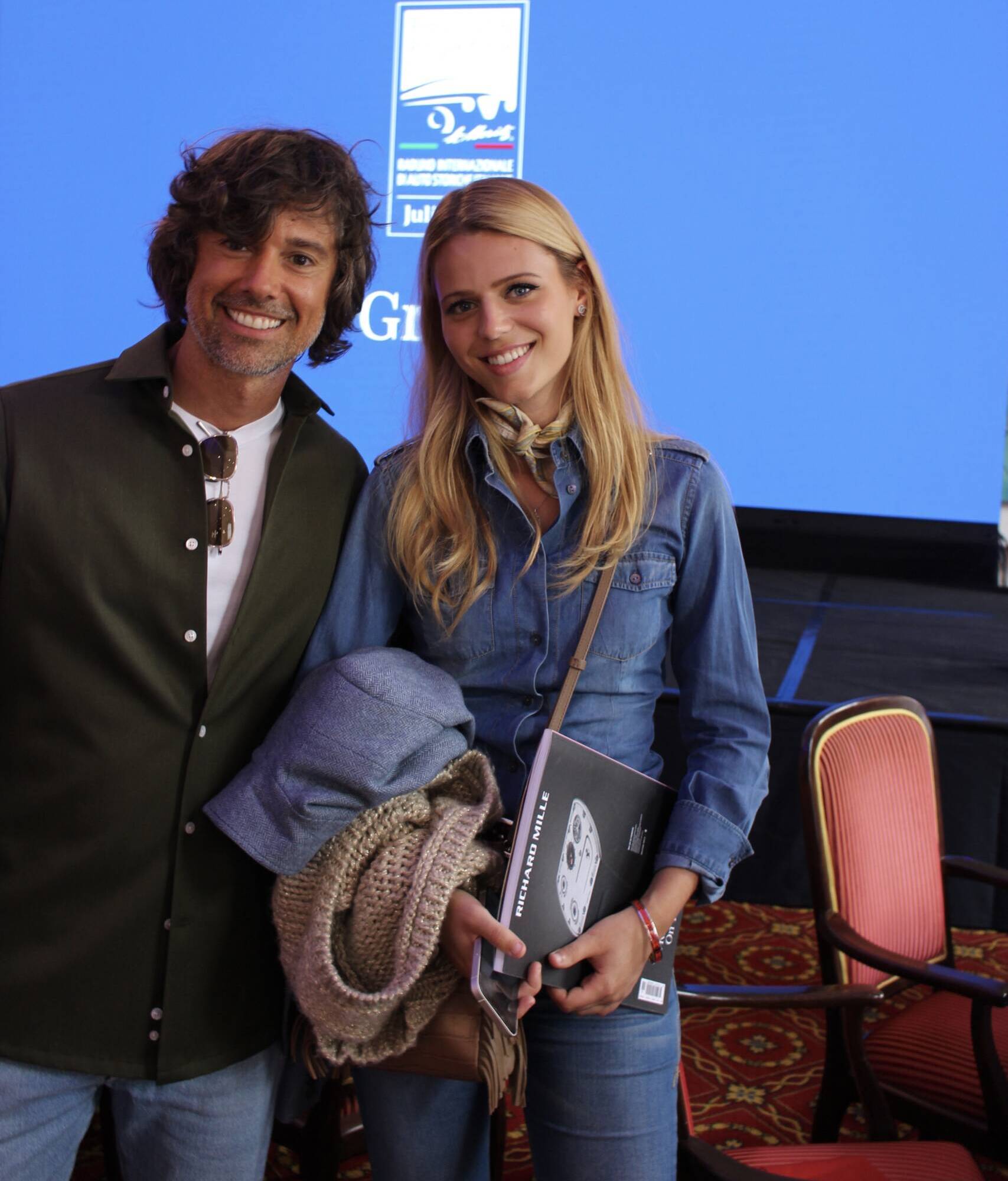
The ICE Co-Founder, Ronnie Kessel and Fabienne Amez-Droz on the spectator grandstand. Ronnie is the proprietor of Kessel, the Lugano based cars empire

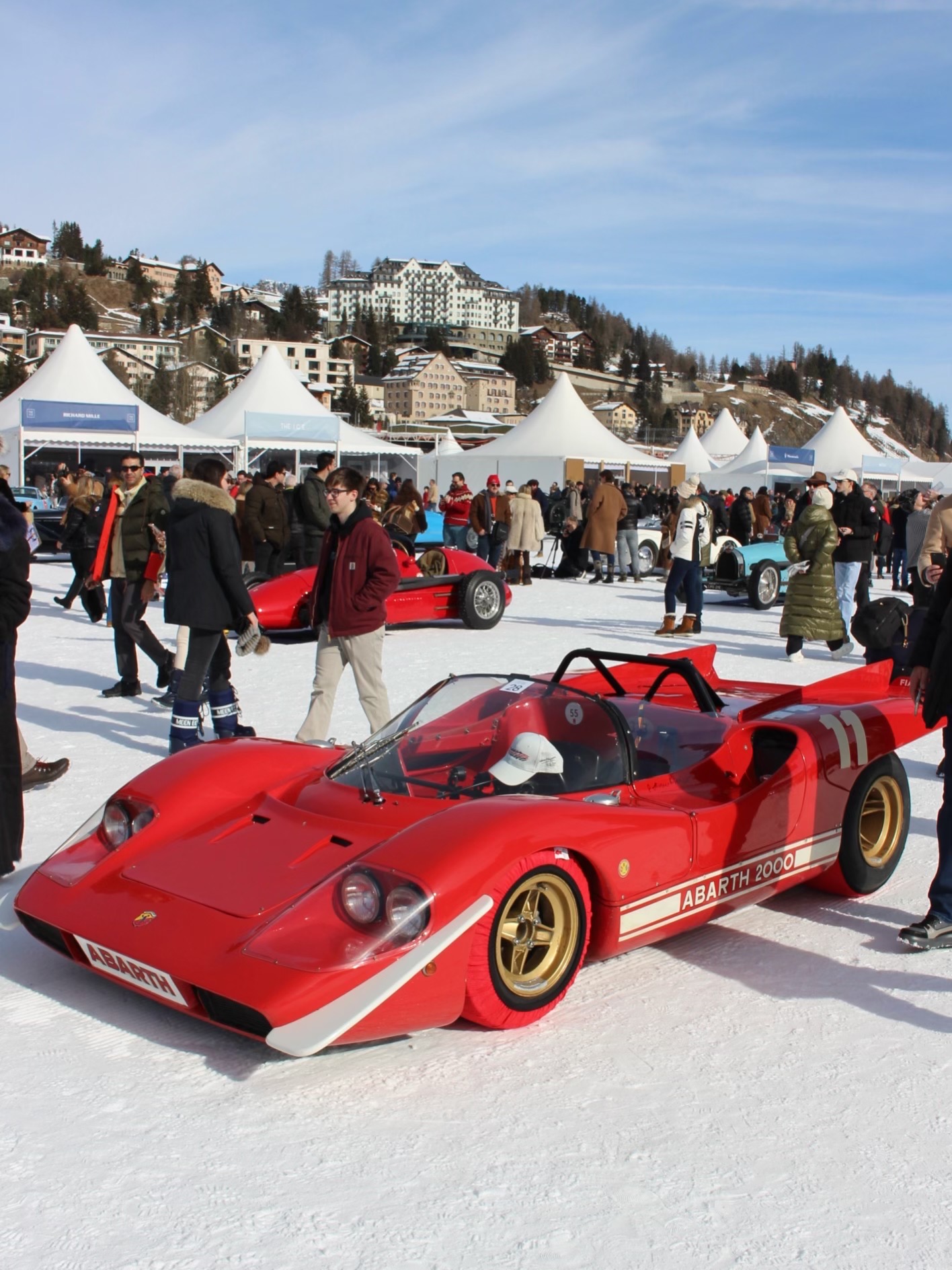
Swiss car collector king Fritz Burkard won Pebble Beach “Best of Show” in 2024. At the ICE he showcased another car from his Pearl Collection
Read more: Car collector king Fritz Burkard on his Pearl Collection

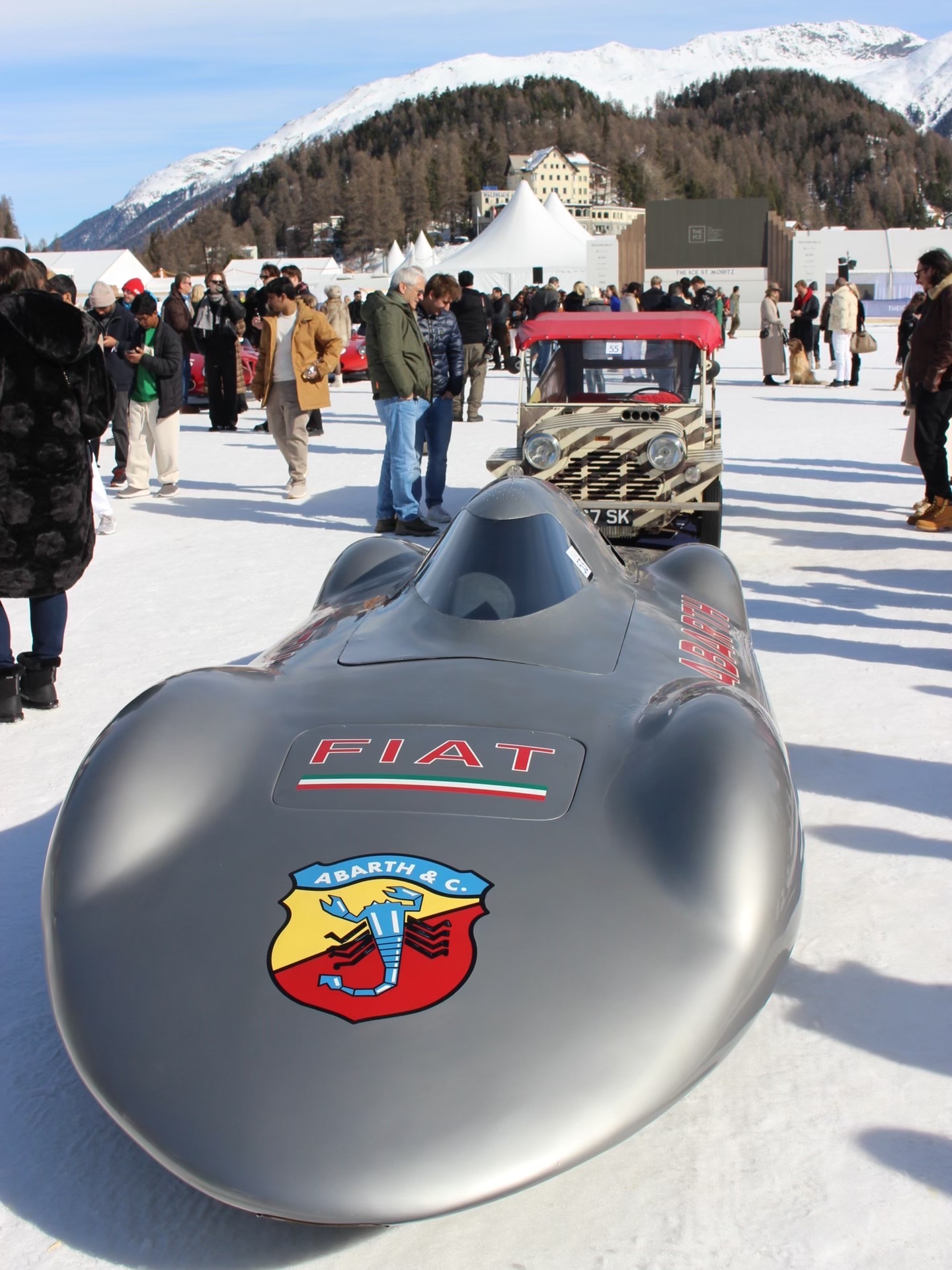
Fritz Burkard’s spaceship-looking, FIAT ABARTH from his Pearl Collection

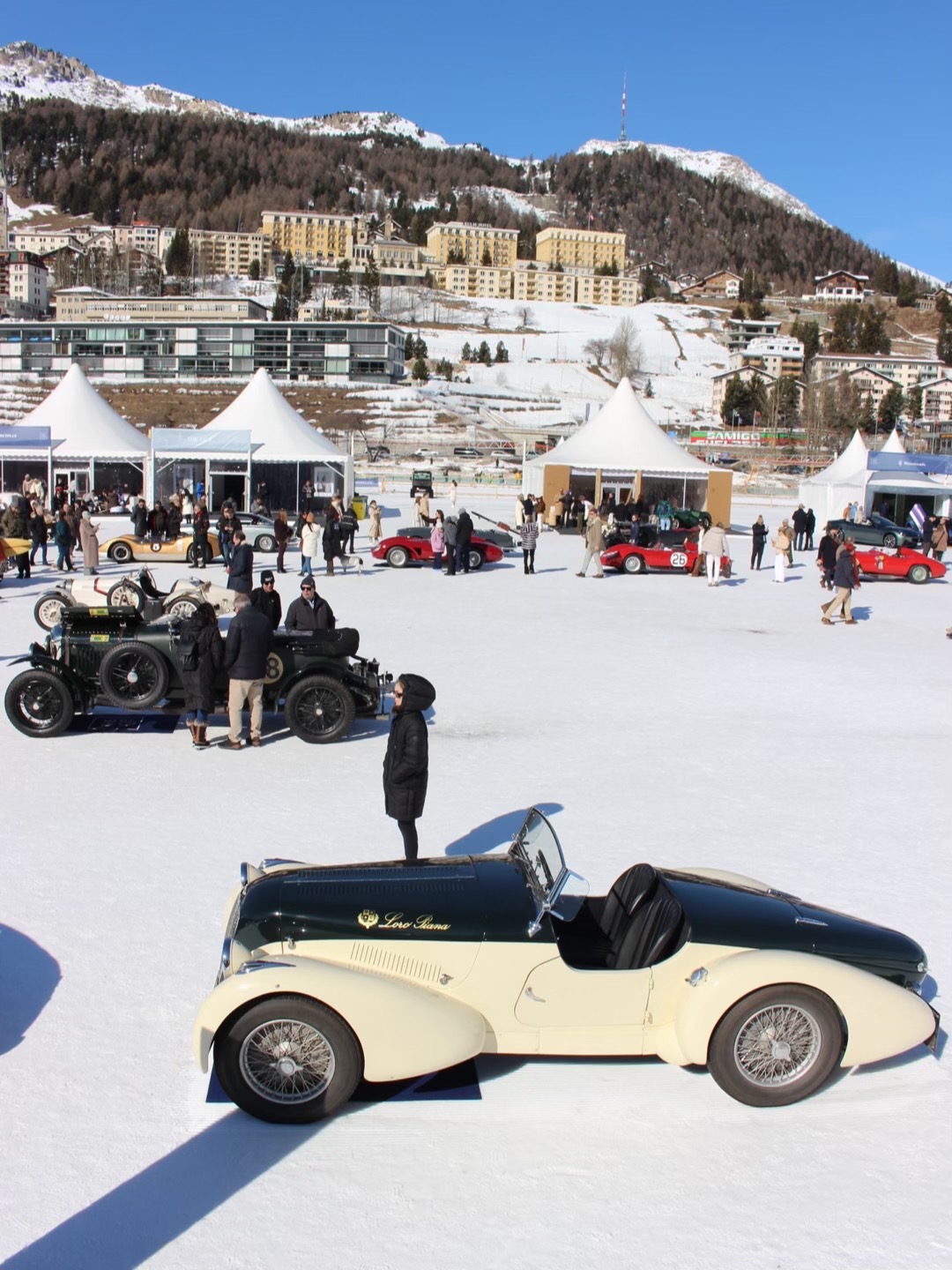
An extraordinary array of some of the world’s most valuable classics

Fabienne Amez-Droz with British car collector and expert Simon Kidston at the Richard Mille hospitality tent

During the preview day, you could get a close up of the classic cars and have conversations with the car owners

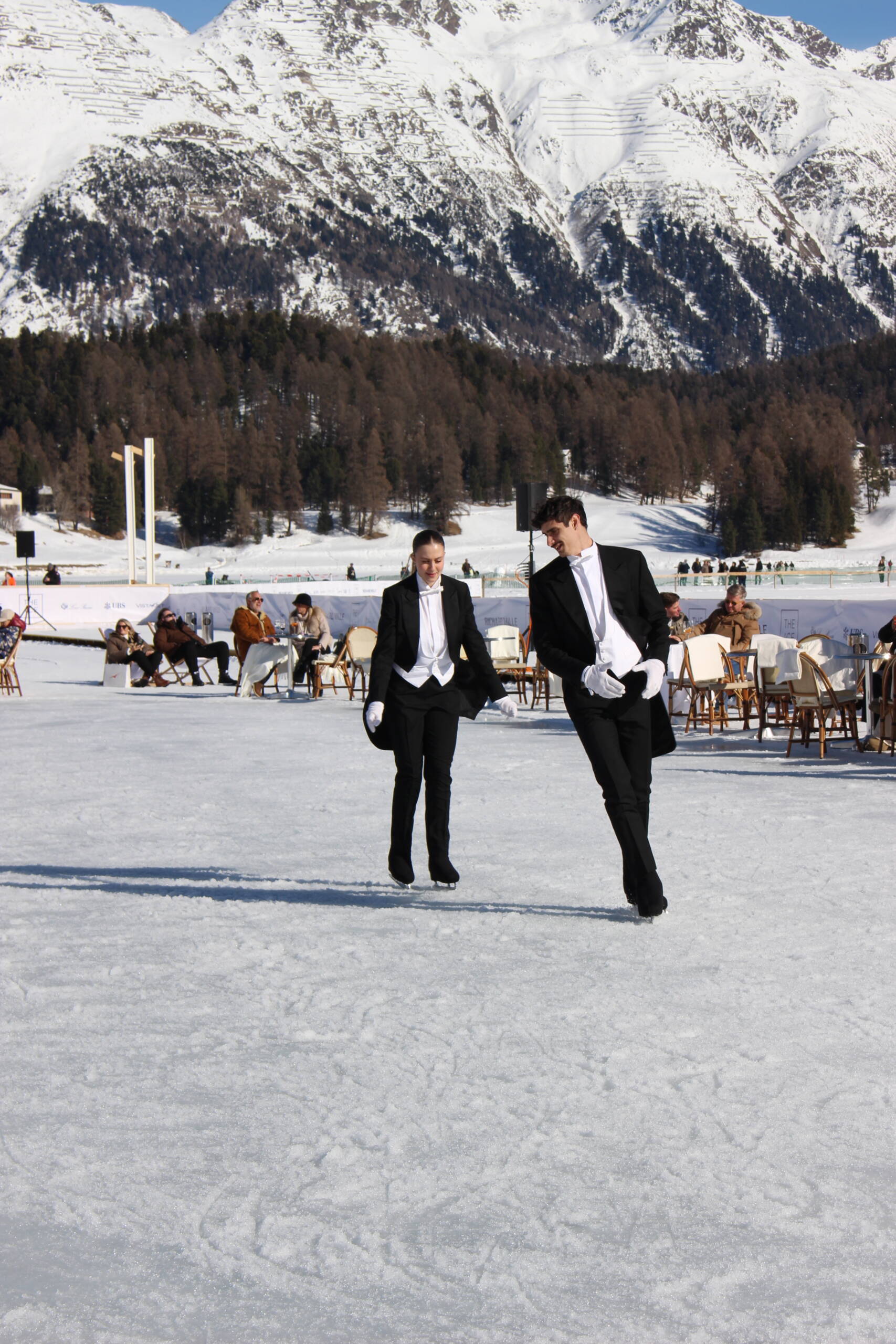
At the exclusive drivers’ lounge you can see the famous ICE-skating wait staff

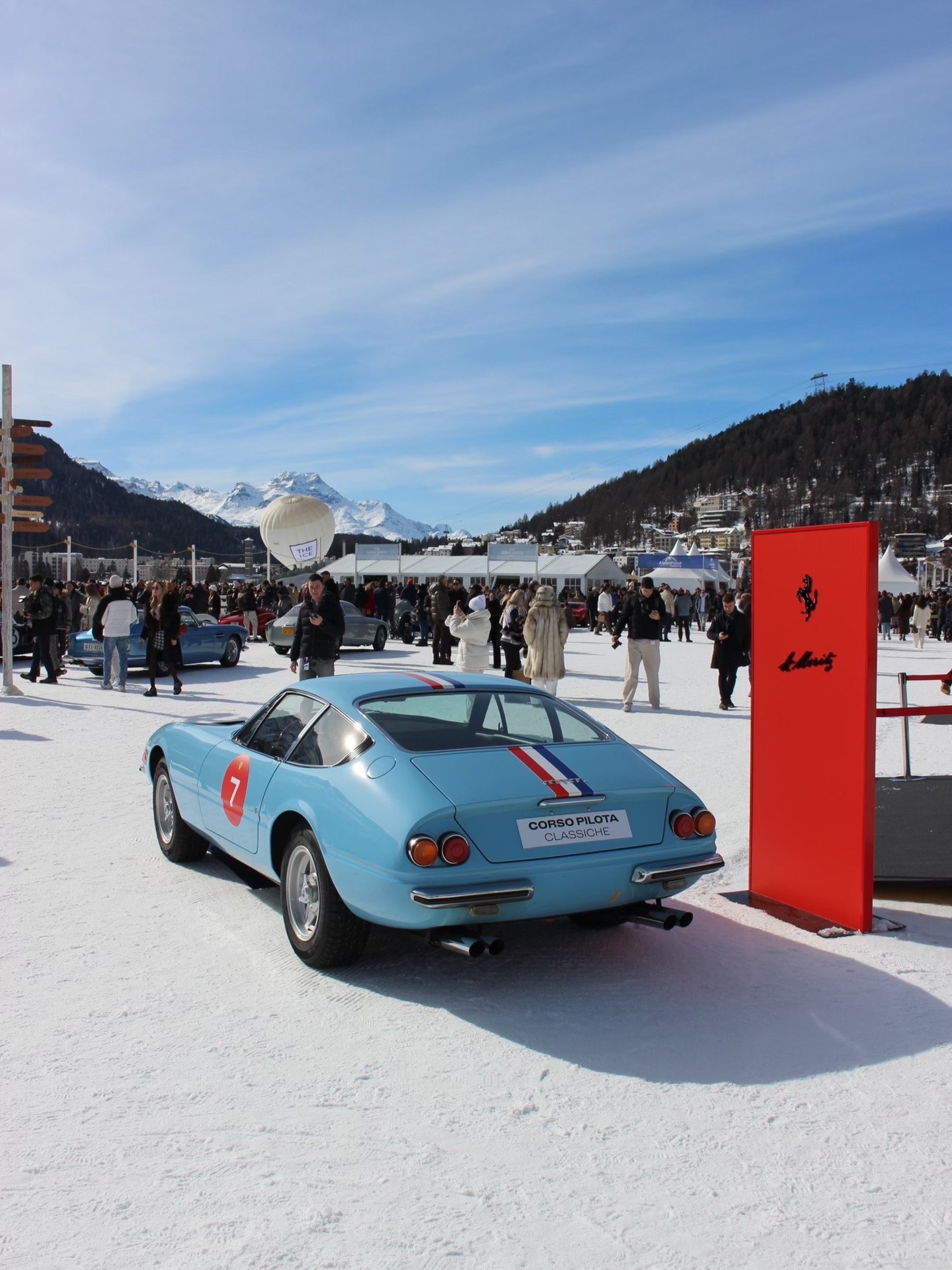
Ferrari’s classic Daytona is challenging enough to drive on a dry road. On a frozen lake at 1800m altitude, it’s something else

Our intrepid photographer and reporter Fabienne Amez-Droz wearing vintage-style Moon Boots to match the machinery

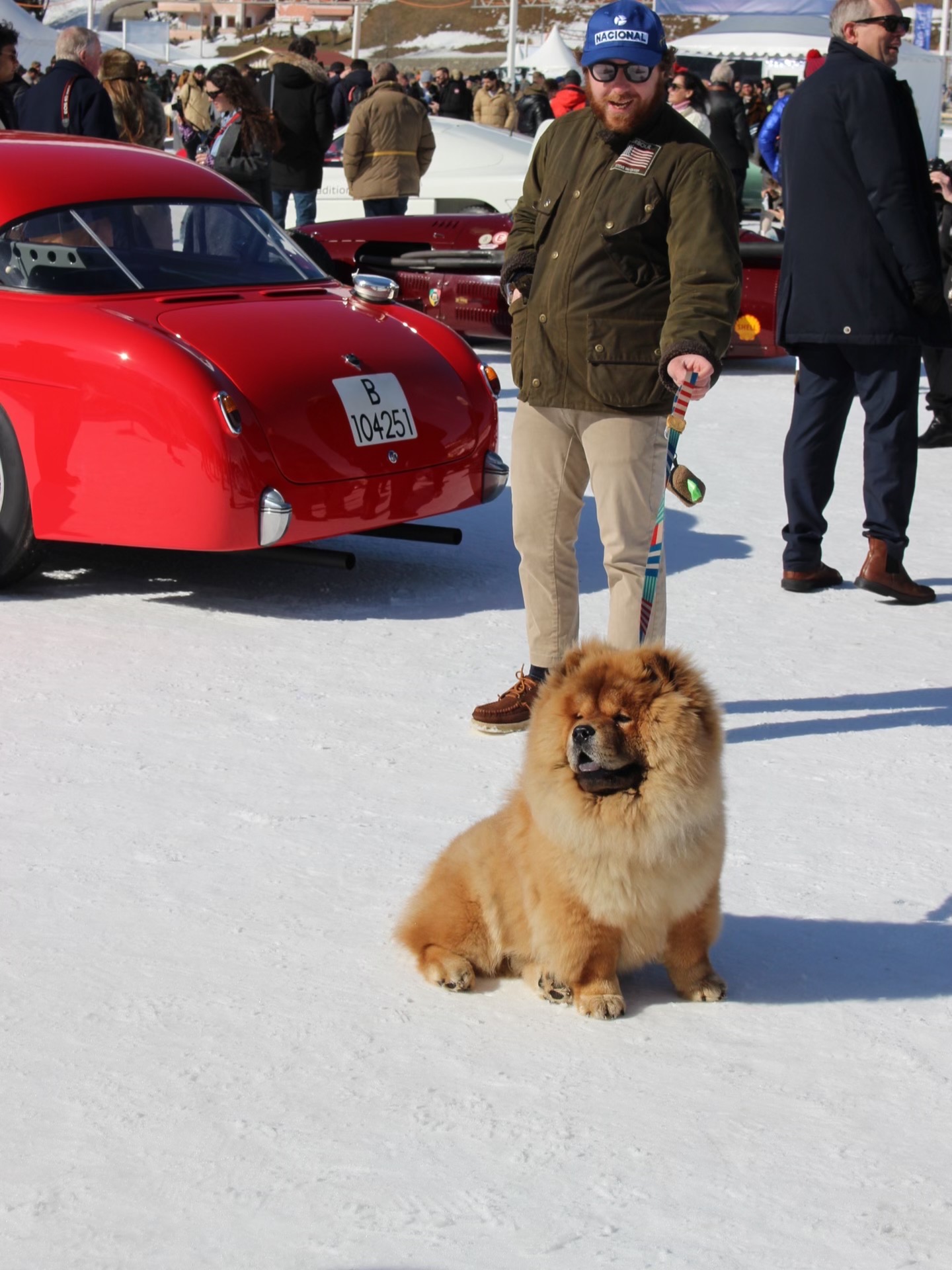
A few four-legged friends tried to steal the show from the cars – this one wearing the best fur coat of the day

Loro Piana brought its own classic car to the show

The very high level of the cars in the competition made the work of the jury complex, called to select the best in each of the 5 categories

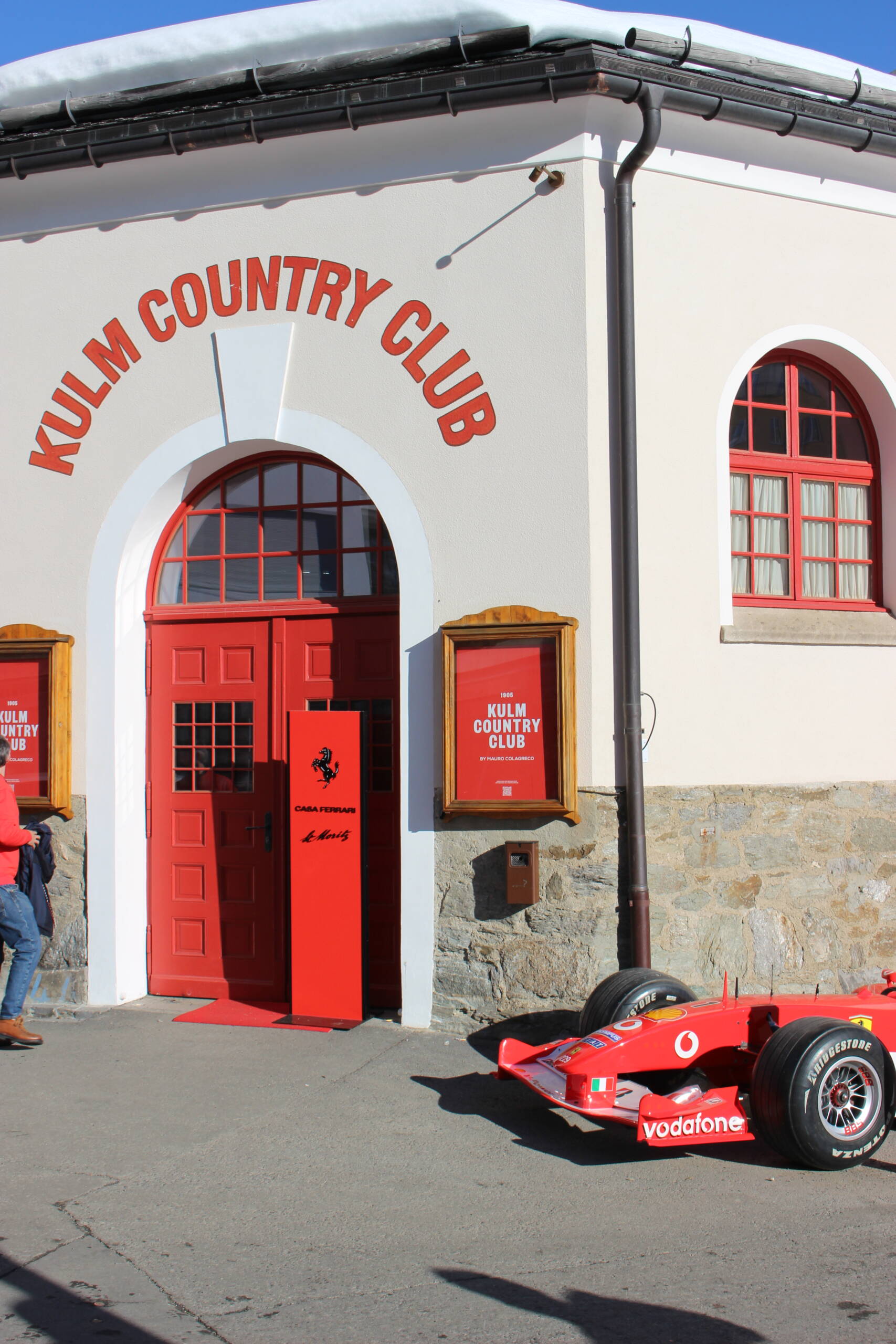
Casa Ferrari hosted some events at the famous Kulm Country Club

Only one of these Ferraris, the Purosangue, second from the front, is really made for driving on snow and ice; the others would be more at home in Monaco
Find out more: theicestmoritz.ch

ICE man Ronnie Kessel
Glamour, priceless cars, super-luxe watches and collectors of all types mix it at The ICE, now the most desirable event in the St Moritz calendar. Co-founder Ronnie Kessel gives Fabienne Amez-Droz his insider tips
LUX: How is The ICE St Moritz different?
Follow LUX on Instagram: @luxthemagazine
Ronnie Kessel: The magic of The ICE springs from its venue; a place that for more than eight months of the year doesn’t even exist. When the St Moritz lake freezes over, a miracle of nature occurs, turning the lake into a perfect white canvas to show those beautiful cars like true works of art.

Enjoying the glamour on the frozen lake
LUX: Courchevel or St Moritz, and why?
RK: It might sound predictable, since part of my roots are there, but there’s no other place like St Moritz, where sports meet art, culture and leisure in such an incredible way.

Ronnie Kessel and LUX’s Fabienne Amez-Droz
LUX: What’s the most underrated spot in St Moritz that even locals love to keep secret?
Read more: Omega CEO Raynald Aeschlimann on the watch industry
RK: Rather than just a spot, I’d say that St Moritz has a hidden season, summer, when you have infinite choices on how to spend your time: walks, hikes, tennis, downhill, paragliding, sailing… Mention one, and you’ll find the ideal place for it.

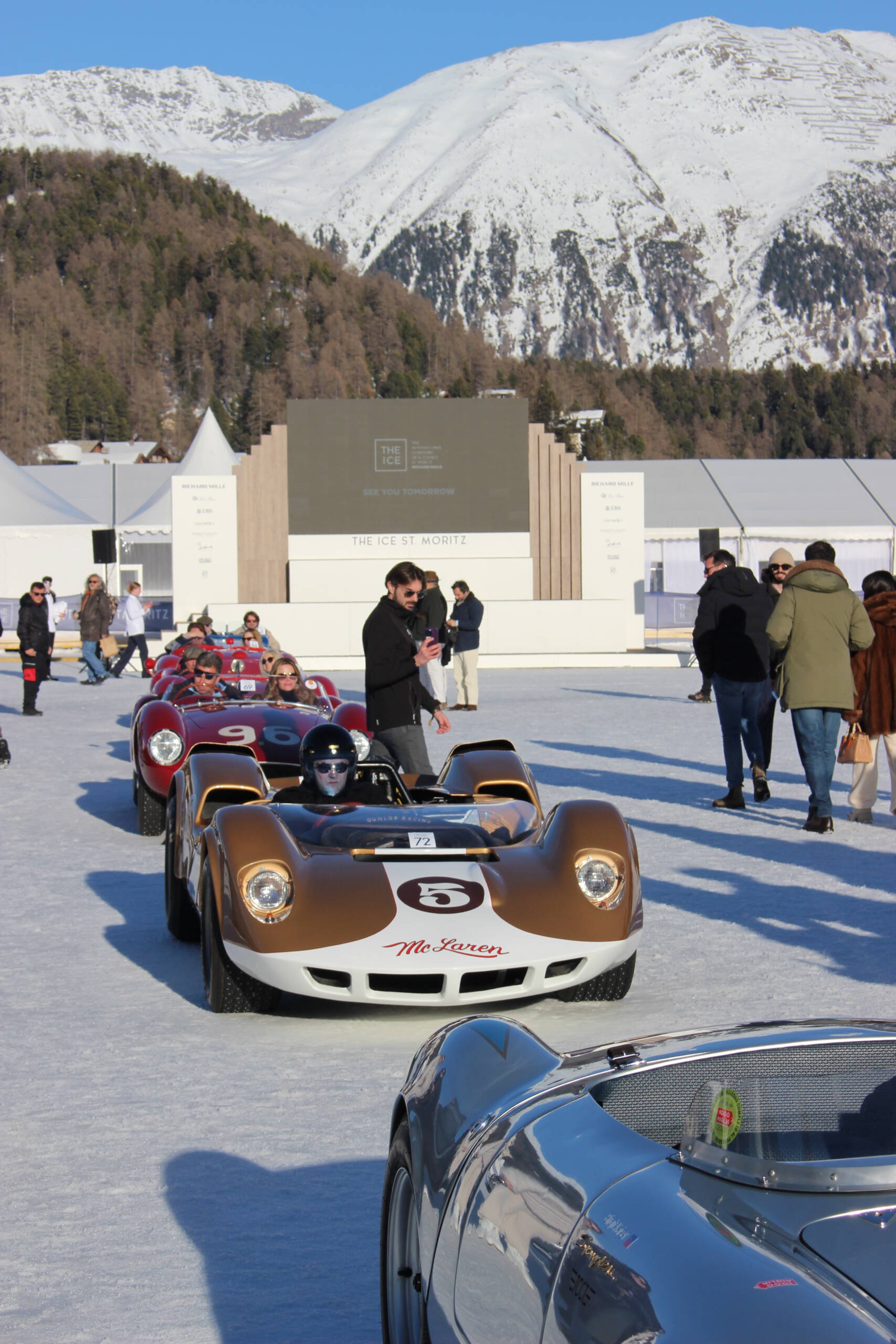
Cruising on the ice at The ICE
LUX: Après-ski at Paradiso or where else?
RK: Après-ski in town at Pavarotti & Friends or the Belmont. The Paradiso is perfect for lunch, when the sun shines right over, brightening the entire valley up to the Maloja Pass and the lakes.

Participants line up at the Richard Mille-sponsored event, at 1,800m altitude
LUX: Where would you spend your New Year’s Eve?
RK: Christmas at Kulm, New Year’s Eve at Badrutt’s Palace, brunch on New Year’s Day at Suvretta House.
LUX: If you could time-travel to any winter in St Moritz’s glamorous past, which era would you visit and why?

The view from Badrutt’s Palace Hotel
RK: Gunter Sachs’ era, when elegance reigned and there was a true devotion to beauty. This was the most chic, glamorous and charming time in St Moritz, also for the artistic scene.
Read more: Hugo Boss CEO, Daniel Grieder, redefining the brand for a new generation
LUX: Perfect classic car to drive up the Julier Pass?
RK: The Ferrari 512BB, preferably in dark blue, paying homage to the classiest BB of them all, Brigitte Bardot.

Gerard and Kelly: “E for Eileen”
The Engadine, the high valley in Switzerland that is home to St. Moritz, also houses the literary village of Sils, some of the world’s most interesting small museums and art initiatives, and some of its biggest art collectors. In this ecosystem, a relative newcomer, the St. Moritz Art Film Festival, is taking root, supported by some high-level collectors. The festival opens after Venice’s spectacular film festival, with a different brief, and in what has traditionally been a quiet month in St Moritz where wealthy residents have taken flight and when many of the luxury hotels are closed: a time when it is difficult to achieve traction. LUX Editor-in-Chief, Darius Sanai asks the Festival’s director, Stefano Rabolli Pansera, formerly the director of Hauser & Wirth in St Moritz, about what he hopes to achieve with this bijou concept.
LUX: Why is this different to any other film festival, and how?
Stafano Rabolli Pansera: The St. Moritz Art Film Festival is defined by the following four distinctive elements:
1. The festival takes place in the newly reopened Cinema Scala in the centre of St. Moritz, surrounded by the nature of the Engadine Valley. The Engadine marks the hinge between North and South of Europe: it is located at the centre of the continent, yet it feels detached from it, thus providing a critical distance to our timely issues.
2. As the name of the Art Film Festival highlights, the programme connects tradition and innovation as it lies at the intersection of arthouse cinema, video art and commercial cinematographic productions. Therefore, the scale of the festival remains intimate and exclusive, but also invites a broader audience to attend and participate in the different offerings.
Follow LUX on Instagram: @luxthemagazine
3. A cultural event with a significant territorial impact. The festival is a spatial happening: it is an event that attracts new audiences to the Engadine, it extends the tourist season by operating as some sort of territorial catalyst. St. Moritz Art Film Festival wants to be a one-of-a-kind festival, leading the path to sustainable cultural tourism in one of the most beautiful valleys, the Engadine. The festival’s unique landscape and surroundings invite to a responsible and sustainable use of the Valley’s resources and facilities.
4. The festival is curated as an exhibition of video art. A yearly curatorial theme is carefully chosen as the common thread of the programme of screenings, conversations, and collateral events during the year. The outcome is a coherent development of a strong annual theme, that triggers factual, philosophical and cultural debates, leaving a strong impression on the audience. The life of festival unravels throughout the years with a coherent development of different themes that are related to each other and create some sort of narrative.

Amshu Chukki: “Different Danny”
LUX: How has the art scene in St Moritz developed recently?
SRP: The Engadine has always been a source of inspiration for artists and thinkers: from Nietzsche to Gerhard Richter, from Alfred Hitchcock to Claudio Abbado. In recent years, thanks to extraordinary gallerists such as Bruno Bischofberger, Carsten Greeve and Hauser & Wirth, amongst many others, and thanks to enlightened collectors, the Engadine has become a unique context for exhibiting and divulging art.
Initiatives such as Muzeum Susch, Proyectoamil, and Engadine Art Talk, the Engadin has been transformed into an active centre of artistic production and a laboratory of ideas. The main differences with the past are the expansion of the cultural scene beyond St. Moritz into the entire Engadine valley and the emergence of an organised network of institutions that provide a constant cultural programme beyond the seasonal affluence of tourists.

Robert Cahen: “Juste le temps”
LUX: What is your main aim for the festival?
SRP: The aim of the St. Moritz Art Film festival is to reinforce its position as a leading cultural force in the international landscape of cinema and video art by offering a platform for sophisticated films and unique videos and for developing a consistent curatorial and philosophical discourse.
The St. Moritz Art Film Festival will always be an exclusive Festival: it is going to find a position in the circles of Video art and films d’essai. Yet, we aim to enlarge the audience and to attract famous and inspiring personalities from the world of Cinema and Video Art.
Read more: Art collector Andrea Morante talks on artist Sassan Behnam-Bakhtiar
Furthermore, we are building a year-long programme of events, in order to maintain the interest for experimental films alive. We are aware of the impact of the Festival in the local scene and we hope to be able to generate a robust economy by attracting international audiences and by employing a larger number of people for different programmes and for a longer period.

Ila Beka Lemoine: “The Sense of Tuning Stills”
LUX: What are the most interesting elements in this year’s festival?
SRP: The annual theme of the third year is “Meanwhile Histories” and it questions the notion of time which is commonly associated with history, a linear succession of one event after another. But time is an overlapping of multiple experiences that occur simultaneously. There are always multiple sides to events and occurrences.

Young jun Tak: “Love your clean feet on thursday”
However, the dominant historical perspective often cancels the multiplicity in favour of a linear understanding of events. What remains is always set by the main narrative, which can shape and control how history is remembered, what is neglected and silenced, and crucially, what history is passed to future generations.
Read more: The Richard Mille Art Prize at the Louvre Abu Dhabi
To approach minor or forgotten histories, perhaps it would be helpful to think of alternative temporalities in terms of “meanwhile”. When we read the dominant history, we must think about what else was happening “meanwhile”.
“Meanwhile Histories” challenges the dominant narratives that have shaped our understanding of history.
The collectors say:
Gerd Schepers is a Swiss art collector and one of the supporters of the festival. “It’s brilliant that Stefano is bringing this kind of content to the Engadin and the program definitely opens up a fresh perspective in a traditional commercial space with lots of untold stories.”
Aleksandra Pusnik, collector and supporter of thefestival: “The village of St. Moritz per se has always been a special place. On the surface, it carries a connotation of a place of ultimate luxury, only reached by the rich and famous. The Art Film Festival, with its choice of films, taps into the layers below this surface, only to discover the depth of the messages which get sent to the viewers, which in return addresses the masses, all of us, the planet. As the festival closes each year, I feel enriched by these messages as well as pensive about their content.”
The festival will take place from the 12th to the 15th of September 2024.
Find out more: smaff.org

The Hato Restaurant is located in the heart of St. Moritz village, only a few minutes walk away from the well-known Badrutts Palace
In the heart of St Moritz, Hato is all about people watching, inside and out, DJ vibes, and some vibrant pan-Asian cuisine to match anything in Mayfair, as LUX discovers
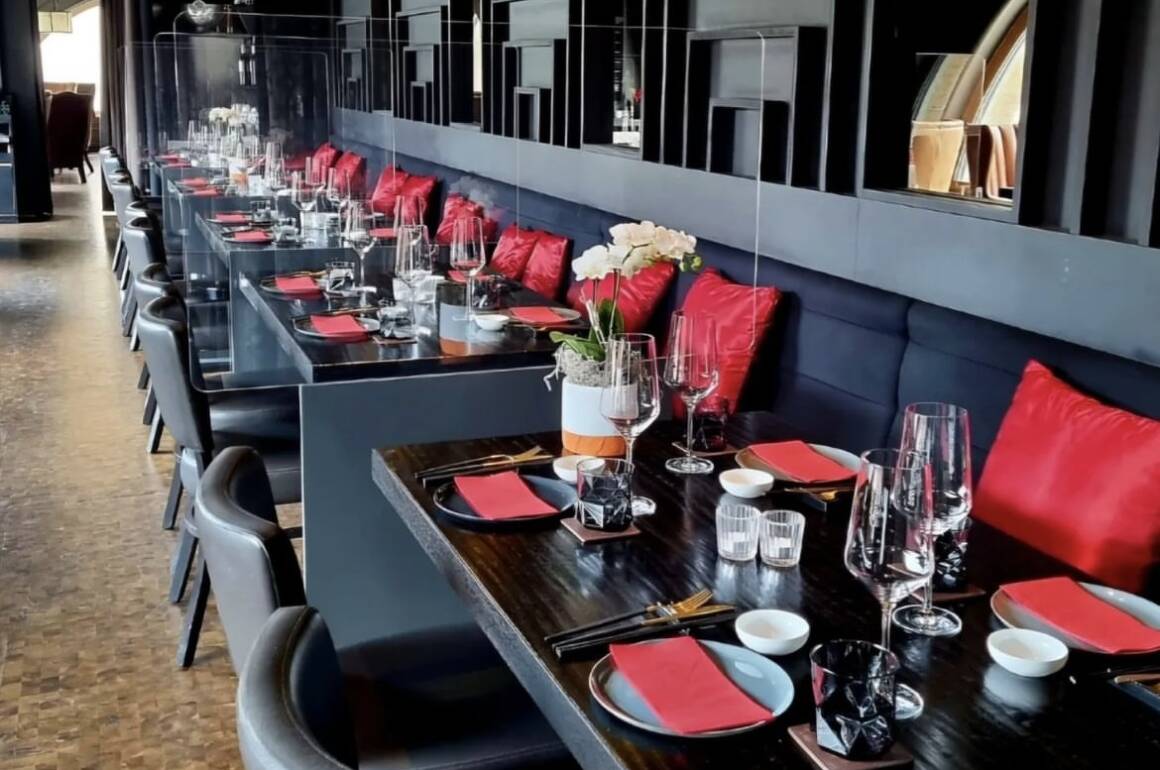
Slip into a window table at Hato and you have a ringside seat of the high-rolling circus that is St Moritz in season. A slick, dark, club-bar of a restaurant, Hato is right in the heart of the village, slightly elevated from the street, so you can look out, chilling to the DJ tunes, and spot exactly who is in town with which of their lovers/dogs/families.
Follow LUX on Instagram: luxthemagazine
The cuisine is Fine Asian and the menu references the Head Chef’s previous role at Sexy Fish in London, but that doesn’t really do justice to Hato: this is much more refined than Sexy Fish, both in concept and execution.

The restaurant with views on the lake of St. Moritz serves fine asian cuisine dishes that are displayed in a very extravagant style
Our Som Tam salad – not jam, coriander, green papaya, carrots, red onion and iceberg – was a dish surely never served before in St Moritz, and had a delicious vibrancy, matched well with our other sharing starter of steamed aubergine with chilli and coriander.
Read More: Roia’s fine-dining in Singapore’s Botanics
Hato started quiet that evening but quite late, as our mains arrived, troupes of young St Moritzians waltzed in, evidently familiar with the place, laughing, jogging over to their regular tables, chatting in the multilingual Esperanto of English, Italian, French and German that is the trademark of the Engadine.

Established in 2015, Hato is known for it’s range of asian foods, from rock shrimp tempura to Hamachi, a new style of yuzu truffle
Next up was handmade dim sum, which we had chosen over tempura, which seems to be everywhere these days. The siu mai and har gau were sufficiently al dente and definite, but it was the spinach and mushroom that caused delectations, likely due to the clarity of the local ingredients.
A main of black cod was originally, and highly successfully, served with saikio miso, truffle yuzu and fennel but the real standout of the whole meal was the whole butterfly seabass, with Thai spices. Zingy, buttery, thought provoking.

Grilled miso chicken, sashimi, nigiri, maki, handmade dim sum with ponzu sauce, shiitake mushrooms, tuna takaky: one doesn’t lack choice at HATO
We’re not sure if people go to Hato for the food or the vibe – both are high up the scale – or to spot their ex walking with someone new down below, to which the only answer is another bottle of Dom Perignon.

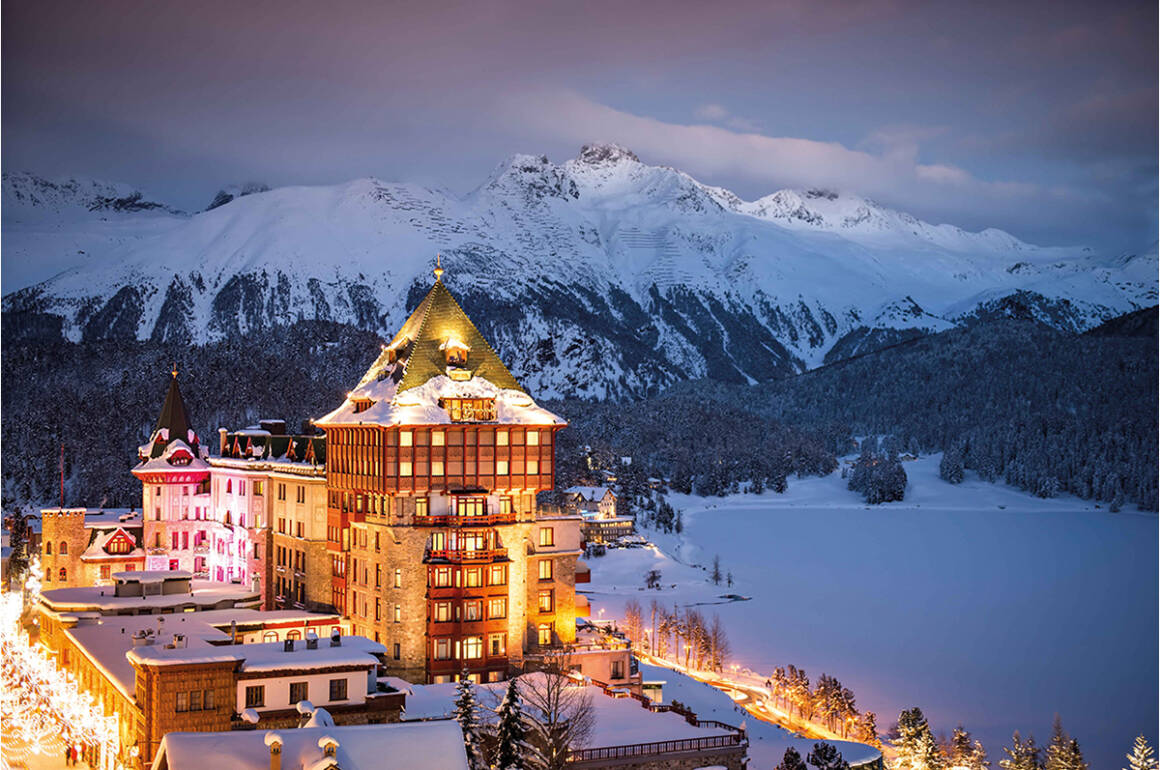
The hotel is located at the highest point in the village of Surlej, just 5 kilometres from St. Moritz. As a result, the hotel offers ski-in ski-out to the slopes
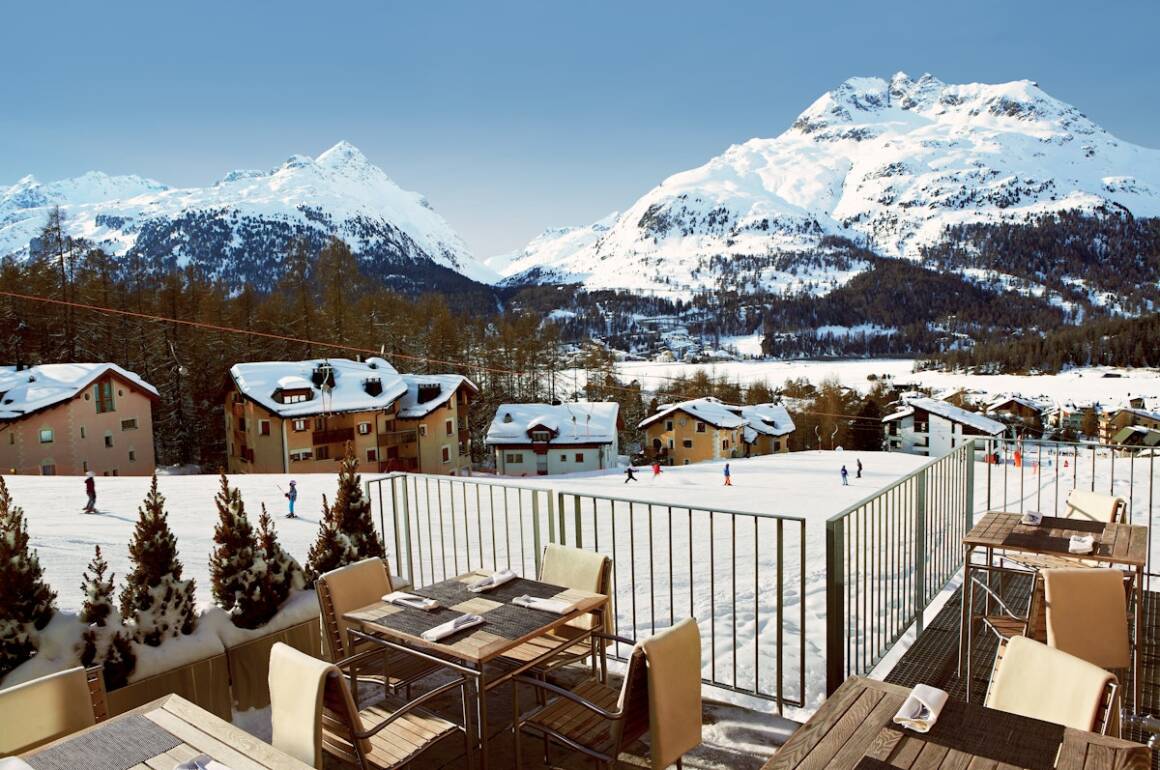
With a spectacular view of the Engadine Valley, and located right by one of the region’s best ski and hiking mountains, Nira Alpina is a hip hotel to inspire the soul – and palate

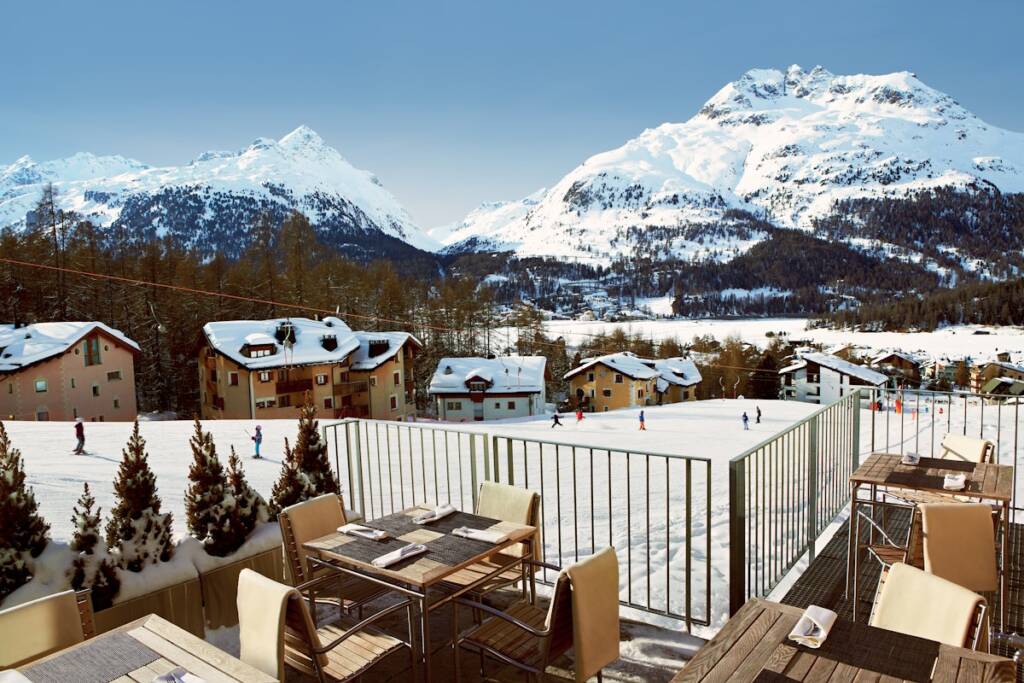
Nira Alpina offers views of untouched natural scenery and is suitable for both summer and winter adventures

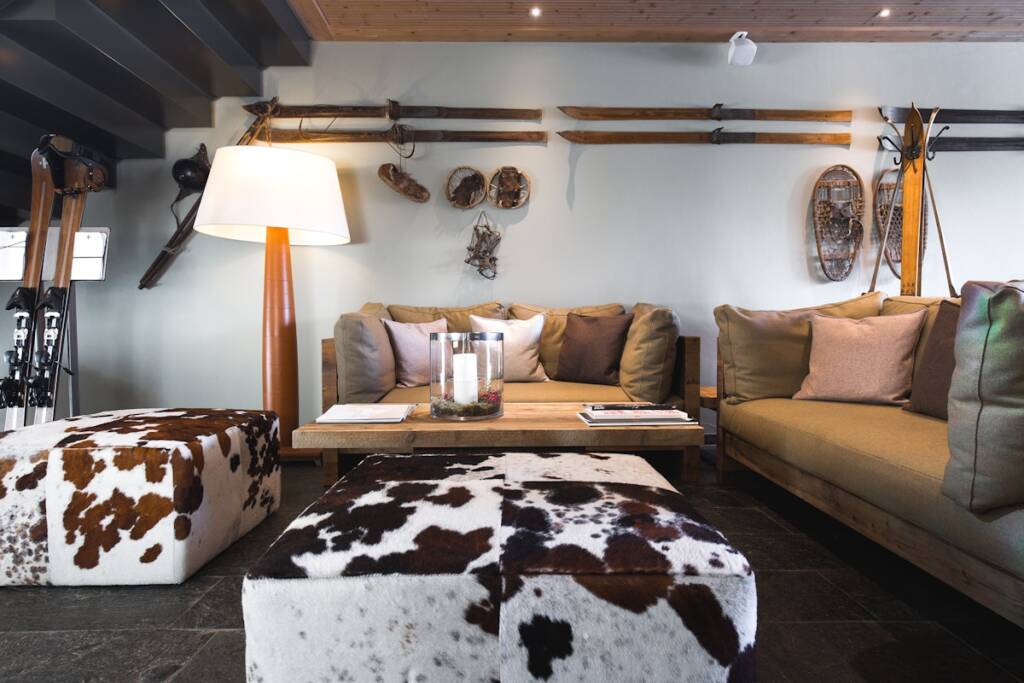
The spa of the hotel offers a relaxation room with coloured mood lighting, a steam room, a sauna, a vast whirlpool, and five large treatment rooms


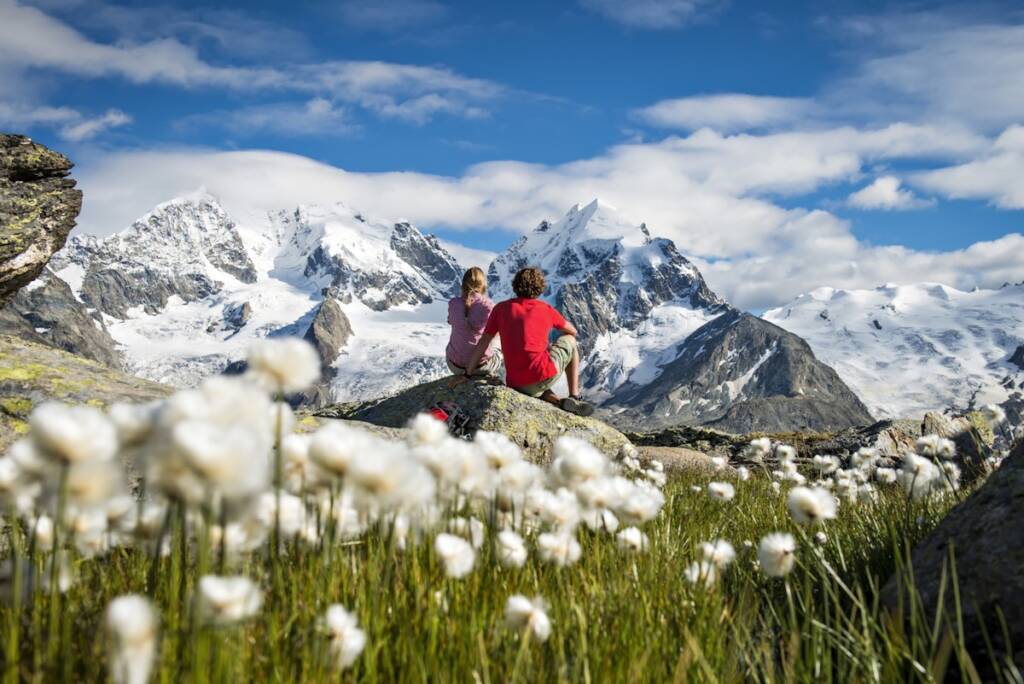
In the summer the hotel offers multiple outdoor activities like hiking, mountain biking, skiing and watersports.

During the winter guests have a wide selection of winter activities, including ice skating, winter hiking, sledding, bobsledding, horse riding, hang gliding, sky diving and Nordic walking.
LUX recommends our top hotels to check into this year. Compiled by Olivia Cavigioli
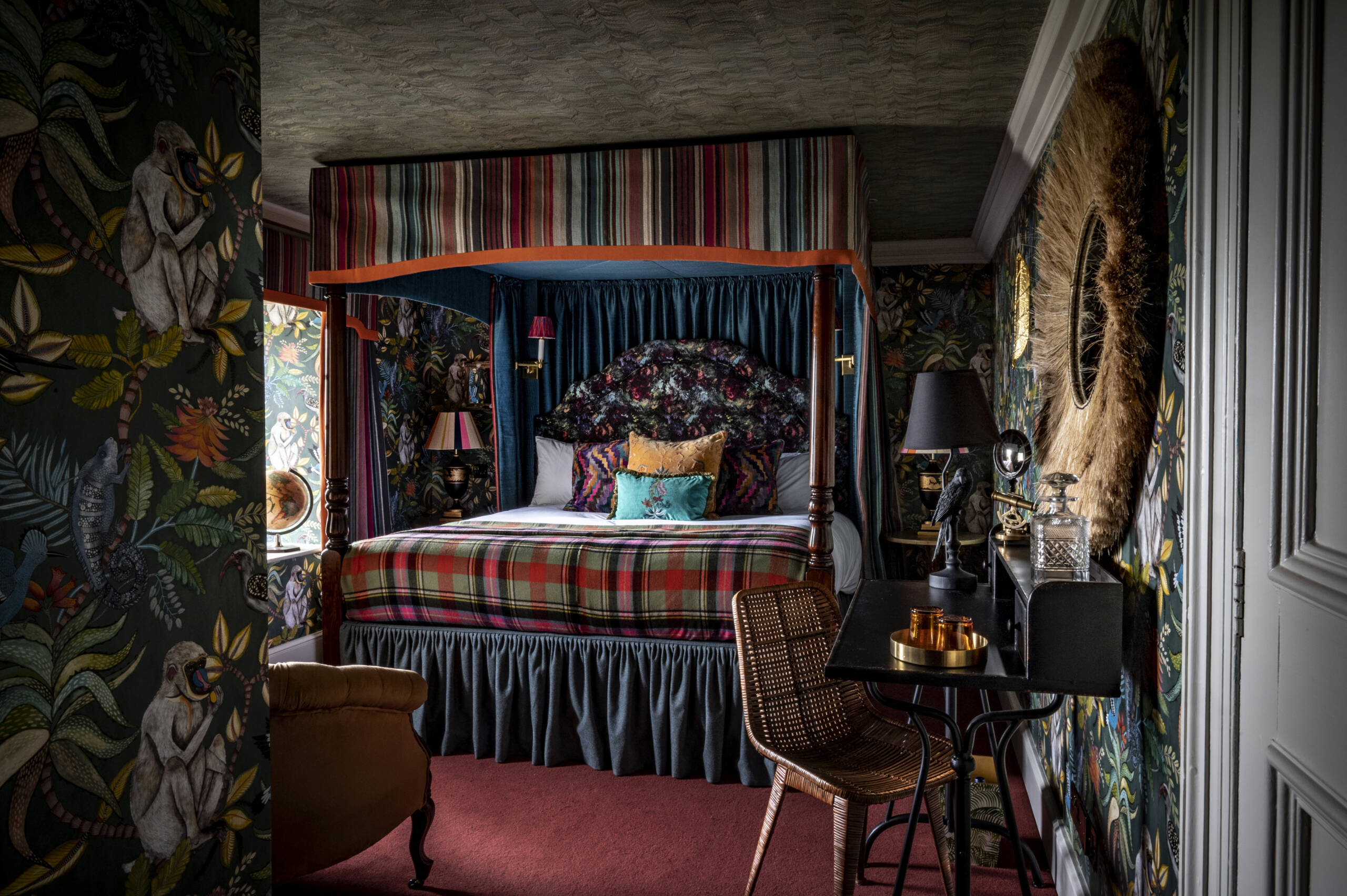
Glenmorangie House, Ross, Scotland
For a retreat into the Scottish Highlands, whisky distiller’s Glenmorangie House is the place to go. The brand just recently celebrated 180 years of craftsmanship, their single malt distilled and encompassed by the idyll of the Highlands, ‘Glenmorangie’ translating to ‘Valley of Tranquility’ in Gaelic.
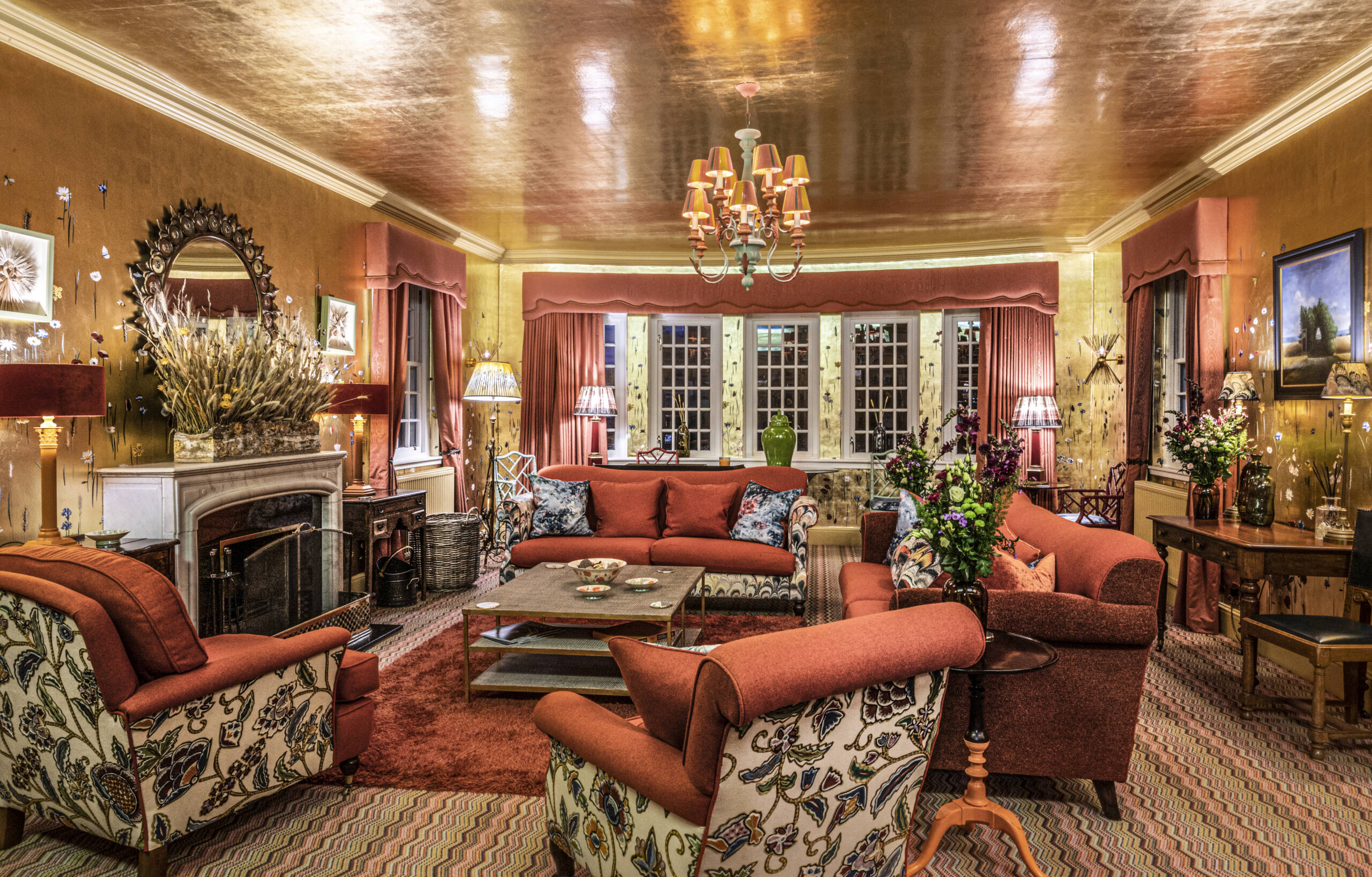
Situated along the coastline on the Easter Ross Peninsula, the house is a a stone’s throw away from the distillery so guests are immersed in the whisky making process and the land from which it is crafted. Designer Russel Sage brought the brand’s protected Tarlogie Springs to the Tasting Room, and the barley fields to the guilded Morning Room, curating the hotel with the Glenmorangie story in mind.
The brand hosts an exclusive weekend, ‘A Tale of Tokyo Experience’, in collaboration with drink connoisseurs Joel Harrison and Neil Ridley, where guests can experience the mythologies of two whiskey making cultures. Celebrating Glenmorangie’s new whiskey, marrying Japanese processes and flavours with the classic Highland drink, the weekend offers a cocktail masterclass and Kintsugi cup-making, a touring of the distillery, and unique dining experiences by design of Head Chef John Wilson, as guests will partake in both a Scottish Highland diner and A Tale of Tokyo inspired tasting menu.
22nd-24th March 2024, at £950 per room for a two-night stay in a Standard Room or Cottage.
Find out more: glenmorangie.com
The Lana, Dubai – Dorchester Collection
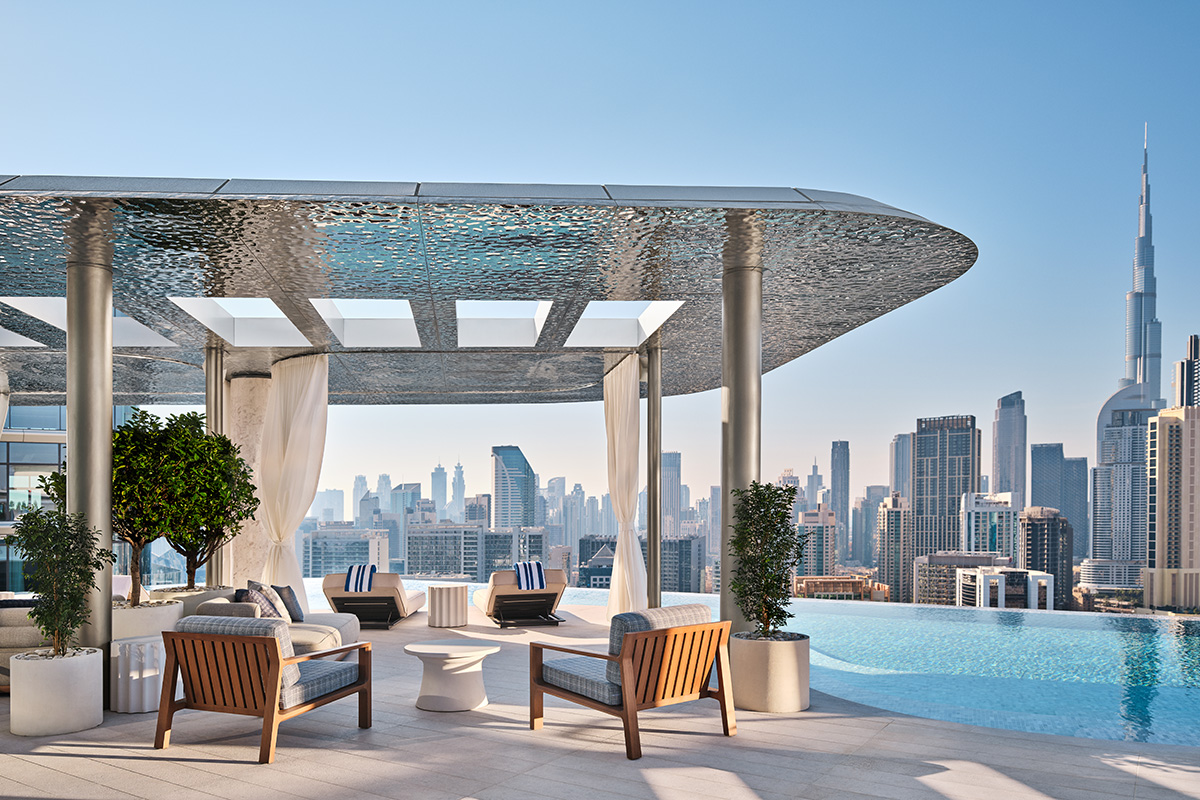
The Lana Dubai Rooftop
For a culinary whirlwind, Dorchester Collection’s first Middle East location, The Lana Dubai, is one to watch. Set to open in February 2024, the hotel is something of a gastronomical meeting of the minds in the countless dining experiences. Celebrated chefs Martín Berasategui, Jean Imbert and Angelo Musa create four distinct concepts out of the eight restaurants The Lana hosts. Accoladed with twelve Michelin stars, Martín Berasategui develops Jara, a love letter to Basque cuisine and the first of its kind in Dubai.
For modern Mediterranean cooking and cocktails, guests can flock to Riviera by Jean Imbert, who has also created High Society, an after hours lounge located on the rooftop of the hotel. Angelo Musa’s Bonbon Café will bring French patisserie with his own avant-garde approach to The Lana.
Designed by Foster + Partners, the hotel is bound in bright vistas, positioned along the Dubai Canal, a vantage point from which guests can revel in the city’s famed sunsets. The Lana’s spa, and 225 rooms and suites, with interiors designed by Gilles & Boissier, brings together the contemporary and traditional, in Dubai’s trademark style.
The Hotel is now open as of February 1st, now taking bookings. Rates start from £735 per night.
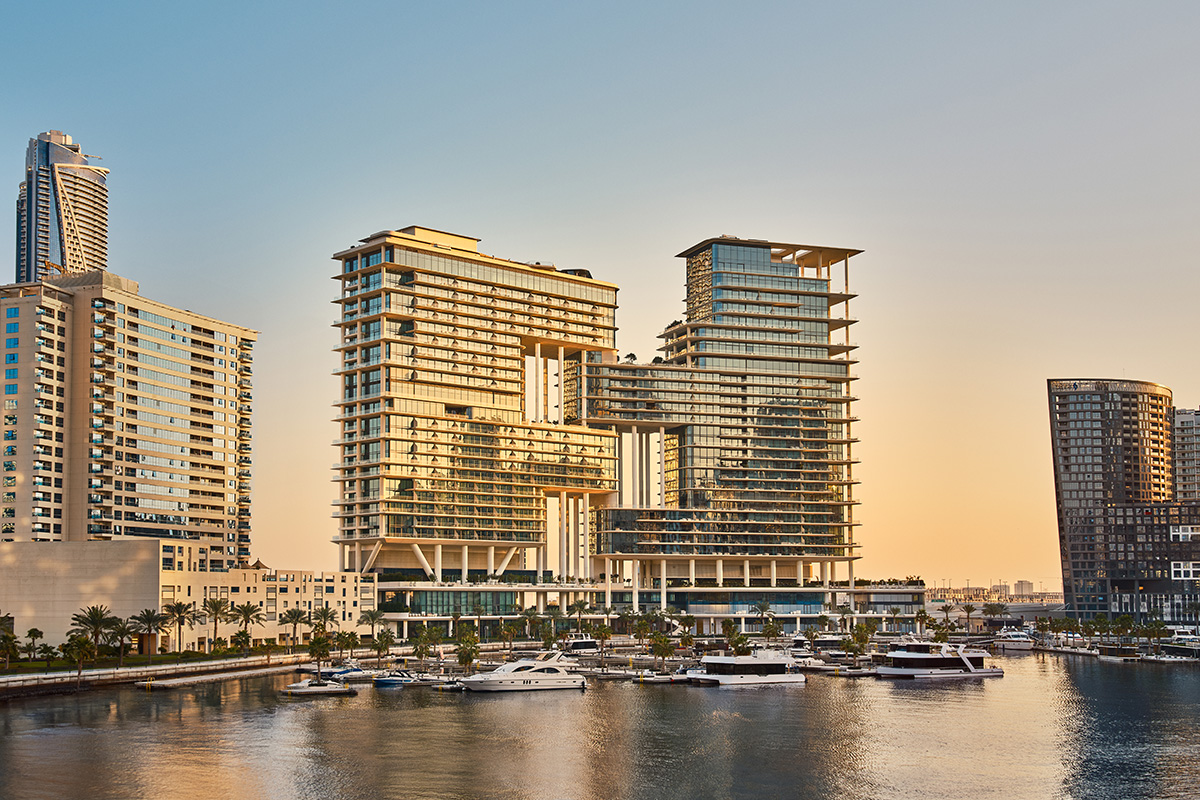
Find out more: dorchestercollection.com/dubai/the-lana
ROAR Africa’s ‘Greatest Safari on Earth’
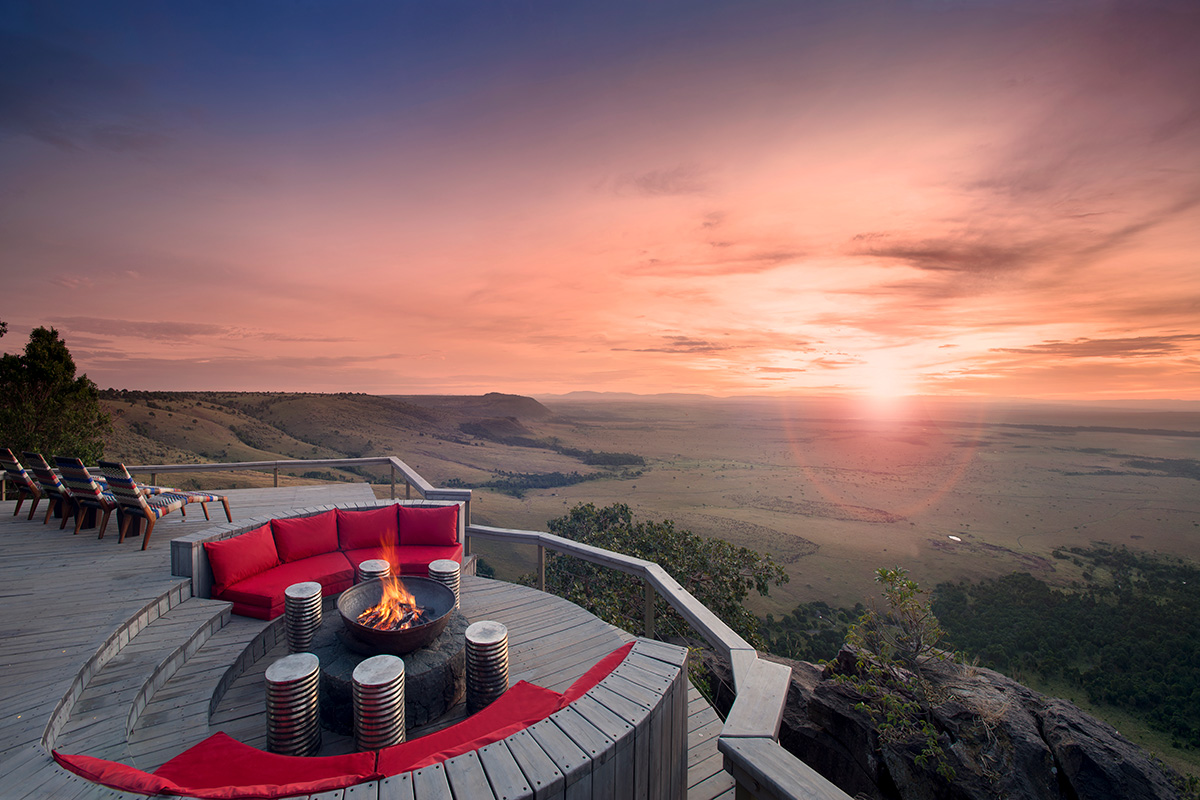
ROAR Africa’s ‘Greatest Safari on Earth’, is a pilgrimage through some of Africa’s most iconic destinations, as ten guests can become intrepid travellers over twelve days, going from Zimbabwe’s Victoria Falls to the Okavango Delta in Botswana, to Kenya’s Great Migration and ending ceremoniously in Rwanda.
The African odyssey will bring guests to the most splendent views amidst natural phenomenons, such as Victoria Falls, one of the seven natural wonders of the world, upriver from which guests will reside at the Matetsi, where they can immerse themselves in 55,000 hectares of protected wilderness.
Along the Okavango Delta in Botswana, guests will have the opportunity to see Africa’s ‘Big Five’; lion, leopard, elephant, rhino and buffalo. Guests will stay at the Xigera property, described as a ‘living gallery’, showcasing design inspired by the Delta, and works by the continent’s most celebrated creatives. After a few days in the Mara North Conservancy in Kenya, where guests will have experienced the breadth of wildlife from walking safaris to a hot air ballon ride along the Mara river, the trip ends with guests coming into intimate contact with the world’s last wild mountain gorillas at Rwanda’s Volcanoes National Park.
Two trips will be taking flight in 2024 aboard the ‘beyond first class’ Emirates A319 Executive Private Jet, with carbon credits matched to emissions.
August 10-22 2024 and August 25 – September 6 2024 are the two trip dates. Limited to 10 guests each and $148,000 per person.
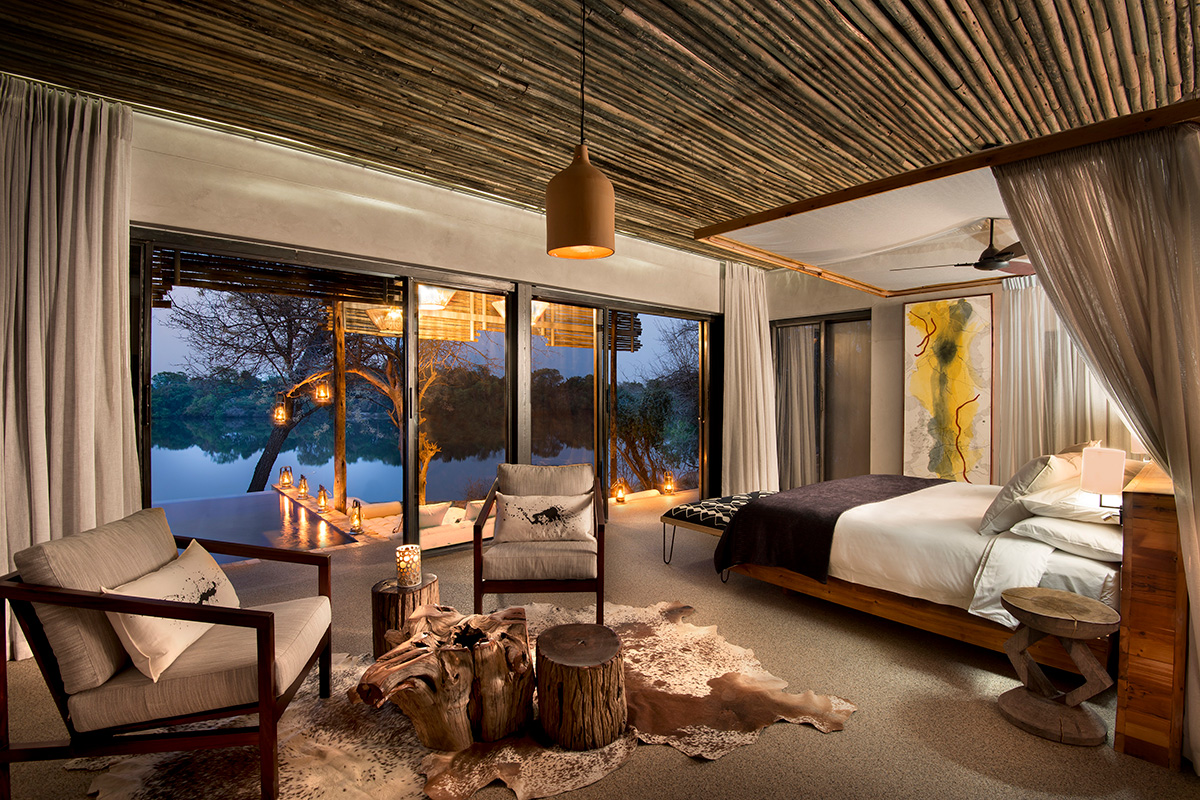
Find out more: roarafrica.com/emirates-gsoe
Suvretta House, St. Moritz
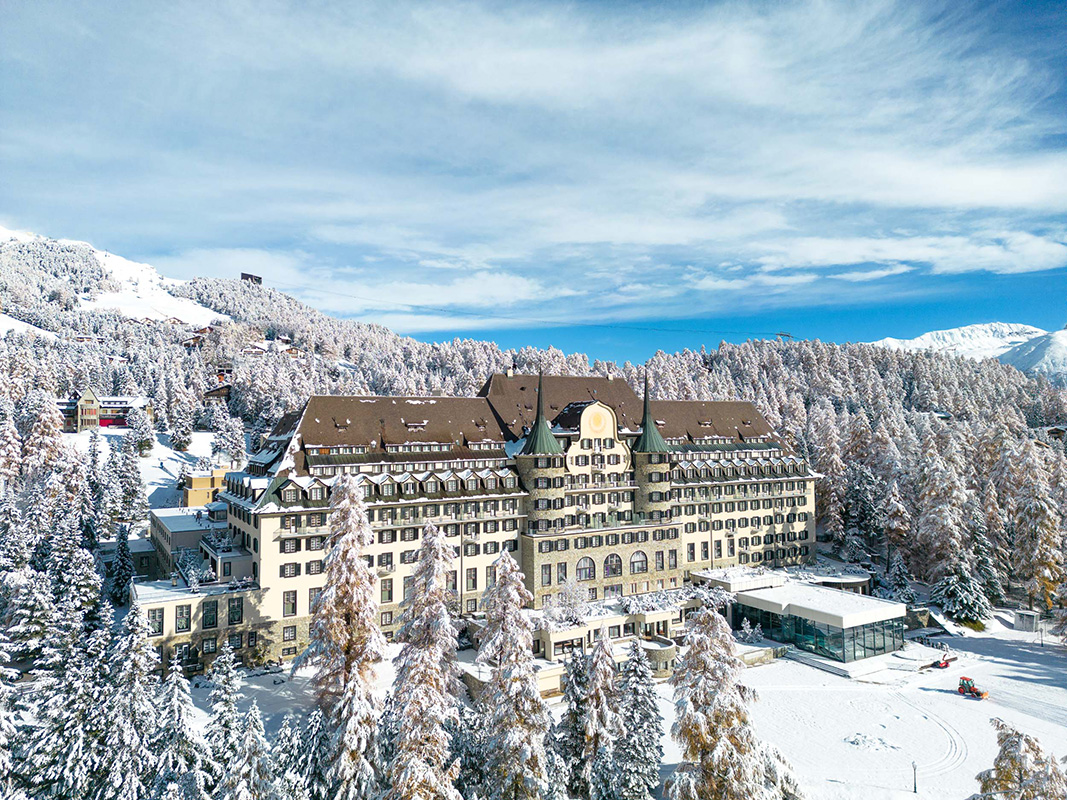
The Suvreta Hotel
Nestled in the valley of the Upper Engadine, St. Moritz, Suvretta House offers storybook winter-scapes and a plethora of Alpine activities to its guests. The resort sits in a natural park two kilometres west of St. Moritz, untarnished by the bustle of winter tourism, promising luxurious refuge in the snowcapped Engadine, with a private ski lift providing direct access to the slopes for guests who wish to embrace the winter sport season.
Bathed in the history and culture of the region, guests can expect elaborate horse-drawn sleighs reminiscent of Schlitteda custom, where young couples would go on rides together. Other attractions include opera and culinary festivals, horse races on the frozen St. Moritz lake, and overwhelming views to accompany a Savoyard lunch from the Suvretta House mountain restaurant ‘Trutz’.
You’d however be remiss to not take advantage of the 350km of ski runs available to guests, along with 220 km of cross country skiing trails, through sunlit valley floors or the illuminated night courses. The resort has even adopted curling, with its own unique Curling Guest Club and natural ice-curling field. Guests can also follow in the footsteps of former world champions who have skated on the Suvretta House ice rink, returning to the elegance and respite of the Alpine castle.
Winter season runs from 8th December 2023 to 1st April 2024. Rooms start at CHF 630.
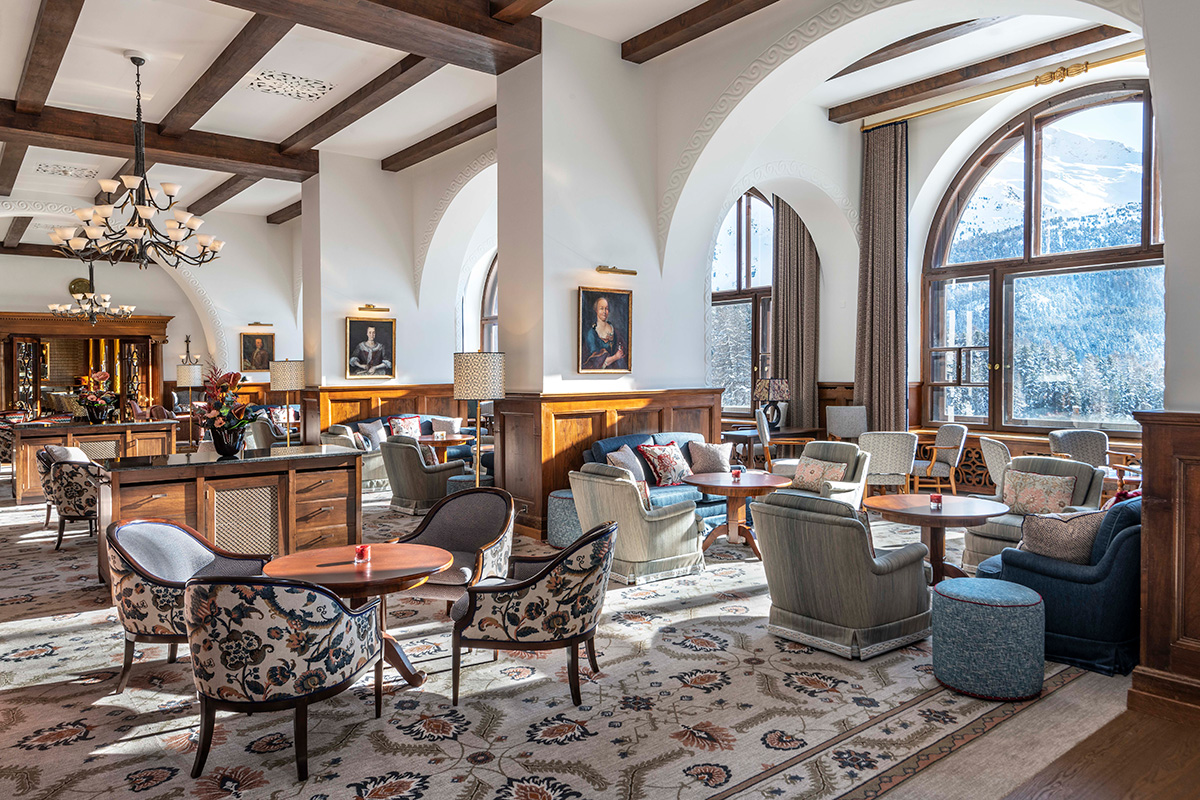
Find out more: suvrettahouse.ch

Badrutt’s Palace Hotel was first opened in St Moritz in 1896 by Caspar Badrutt
There’s a fairytale palace high in the Alps where everyone is a Royal – or feels like one
Hotel trends come and go. Some may remember the white cube rooms of the 1990s, the lobby-bar obsessions of the 2000s, the hotel-as-club revival of the 2010s, and the genericization of hotel bars into David Collins Blue Bar clones at some stage in between.
Follow LUX on Instagram: luxthemagazine
Yet the greatest hotels, like the greatest luxury brands, remain effortlessly eternal while never seeming old fashioned, or not to anyone except the most craven and uninformed observer, in any case.

Views from the Tower Penthouse Apartment
We were collected from St Moritz station by Badrutt’s Palace in a 1960s Rolls Royce Silver Cloud. The two minute ride to the hotel was effortlessly majestic. It suited a palace hotel so entwined with royalty that the Shah of Iran, in his famously vainglorious attempt to recreate Darius the Great’s Persian empire at Persepolis in 1973, flew the Badrutt’s staff out to run the occasion. Nobody else would suffice for the King of Kings.
Breakfast at Badrutt’s is in some ways the encapsulation of the place. In many luxury Alpine hotels, you have a homely, nutty buffet. Here, you sweep down the stairs, past a harpist, into a vast grand dining room. The buffet stretches the length of the room on one side, with picture windows facing the lake and mountains on the other. People dress up for breakfast here, even though it’s not a requirement. The buffet itself starts with an intricacy of cut fruits, segues through a vast array of hot European foods, a forest’s worth of different seeds and berries, and finishes at the far end with “hausgemacht” miso soup, bao, and dim sum. Among all the other guests, it’s quite easy to spot the regulars and long-termers, looking like a Hollywood portrayal of European aristocracy.

The terrace from the Tower Penthouse Apartment looking over St Moritz’s mountains
Our rooms at Badrutt’s were outliers: the Tower Penthouse occupies the whole of the iconic top part of the hotel, and is effectively a three floor private residence, with a huge living area, private terraces, kitchen and dining room, and more bathrooms and bedrooms than we could count. The master bedroom was by itself at the top of a spiral staircase, with views across St Moritz and the lake and mountains.
St Moritz has an appeal as broad as the Palace: in winter you can ski, cross country ski, walk or simply socialise (assuming you know the right people, darling); in summer you have some of Europe’s best hiking to hand, as well as a variety of mountain sports.

Le Grand Hall
Generations of European aristos, meanwhile, have learned how to dive, belly flop or jump from the top of the rock garden that has been built into one end of the huge indoor pool; swimming lengths in the pool involves a constant view of the next gen wealthy adapting their jumping techniques; meanwhile the outdoor spa pool has full drinks and food service, so you can sip your aperol while gazing at the mountains and having a water massage.

The Tower Penthouse Apartment drawing and dining room
But while the hardware of the hotel has an eternal class, the software – the people hosting you – are even classier. This is where luxury hoteliers go to learn how to be luxury hoteliers. One efficient young chap serving at breakfast, who we vaguely recognised from our last stay four years previously, effortlessly remembered our coffee orders from last time and brought Tabasco sauce to the table unheeded, again a memory of the last stay.
Read more: Francis Sultana: The life of a leader in design
Does he have an astonishing memory or was he just very well briefed? It doesn’t really matter – and what is remarkable in this era of high staff turnover is that the staff at Badrutt’s are always there and always remember.

Views of the lake in summer time from the Tower Penthouse Apartment
In that, they feel like they are your personal staff; unlike many hotels, it’s a place you feel like you could move into and live in, because, despite its grandeur and array of offerings – as well as the restaurants inside the hotel, Badrutt’s also owns the wonderful and iconic Chesa Veglia pizzeria across the road – each guest somehow feels like the staff are just there for them. Quite a remarkable achievement.
Rates: From £1500 per night (approx. €1725/$1850) for double room.
During the winter months, the Tower Penthouse Suite starts at £13,580 per night (approx. €15,550/$16,625)
Book your stay: badruttspalace.com/reservations
Darius Sanai

Summer at the Kulm Hotel, St Moritz
The hotel that invented the winter holiday also offers an escape from over-sultry summers – as well as some of the most thoughtful luxury in the world
As summers get warmer, summertime in the mountains becomes ever more attractive. At the end of July, sitting on a balcony with warm sunshine by day and cool air descending from glaciers by night seems a positively refreshing prospect – particularly if it is combined with some of the greatest hospitality the world can offer.
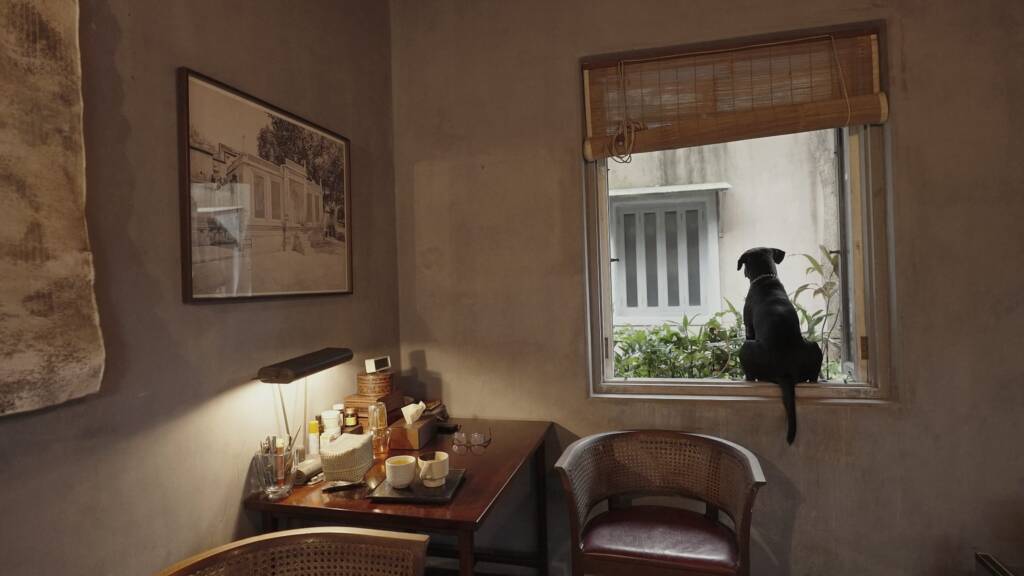
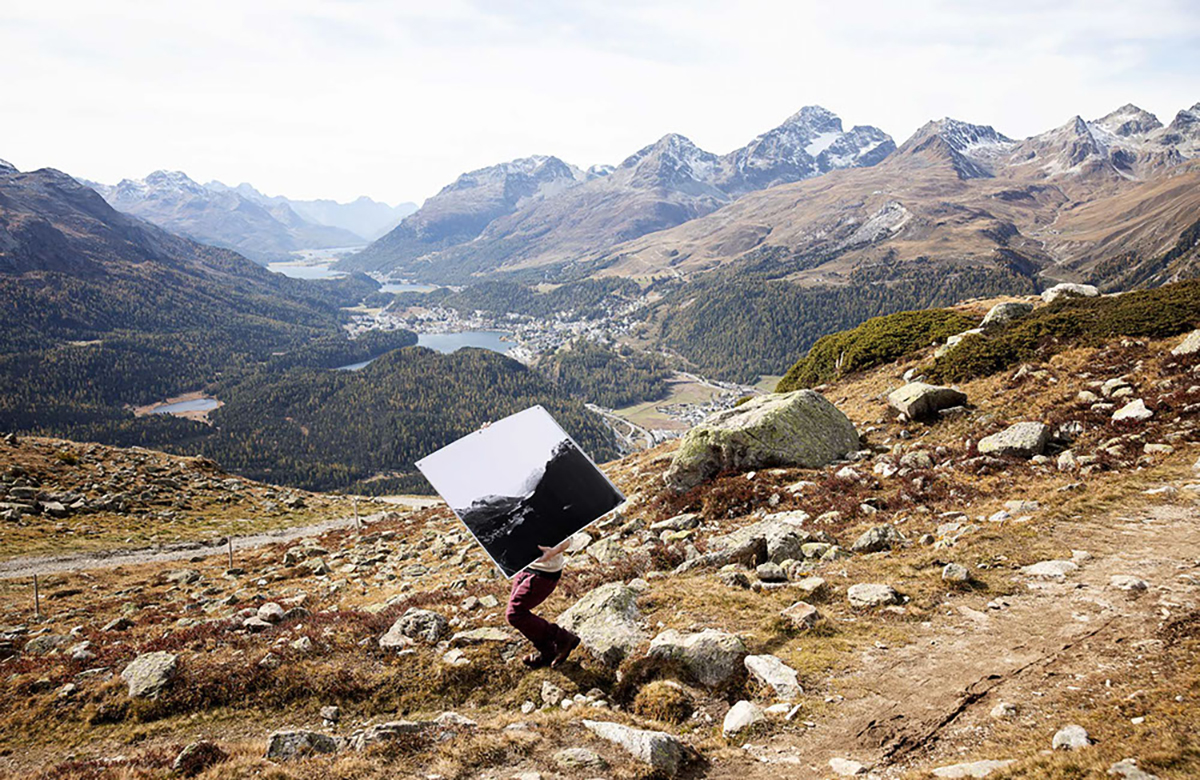
Rocky mountains and a camera magna photograph of the scene at St Moritz by photographer Daniel Meuli
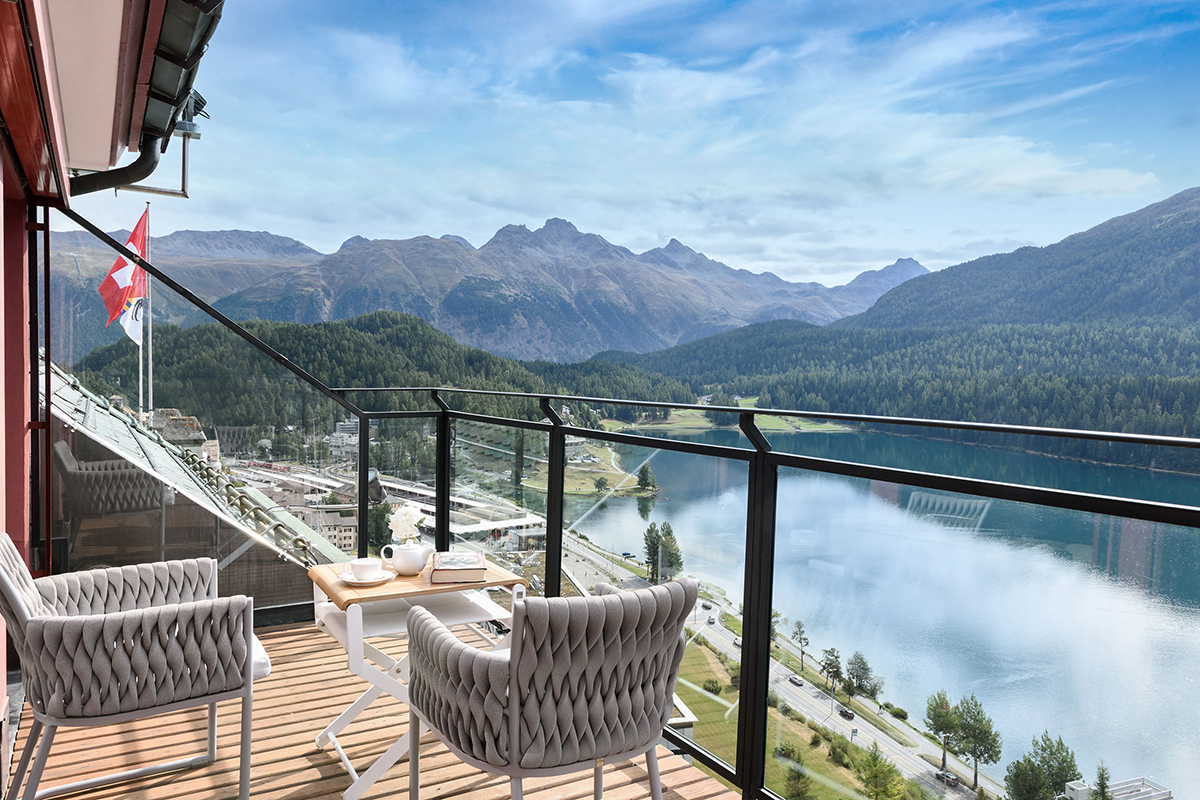
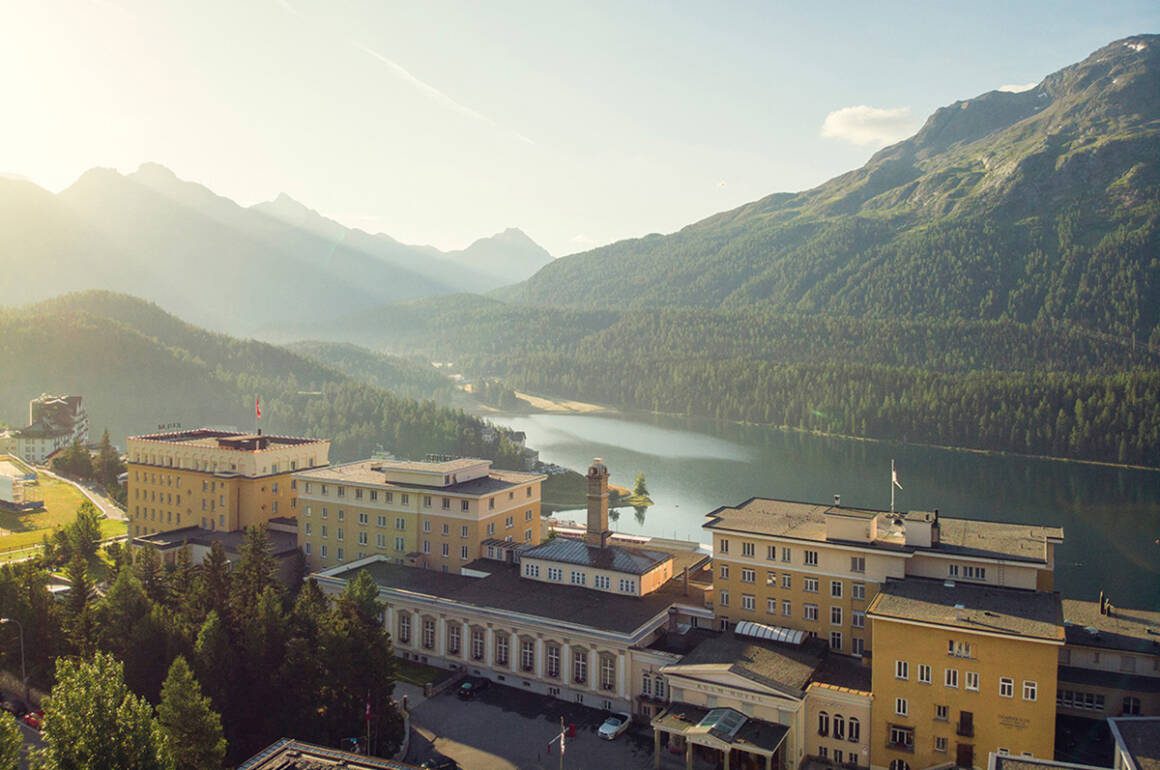
The Kulm Hotel, St Moritz, was the original luxury hotel in the Alps. From your balcony, you can see over the whole town, the lake and a 270-degree view around the mountains beyond.
Follow LUX on Instagram: luxthemagazine
Downstairs, you are in a subtly modernised grand dame of an hotel – the kind of place where a new generation understands and pays homage to the class and style of generations gone by.

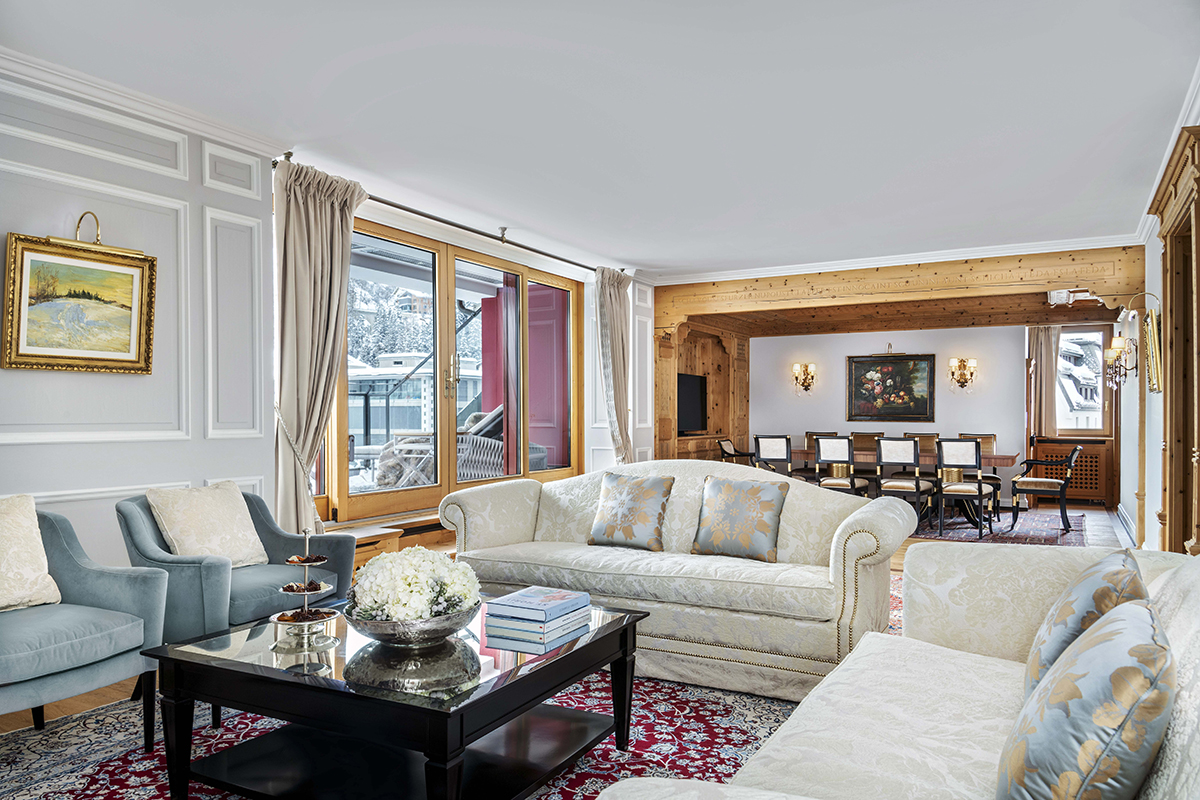
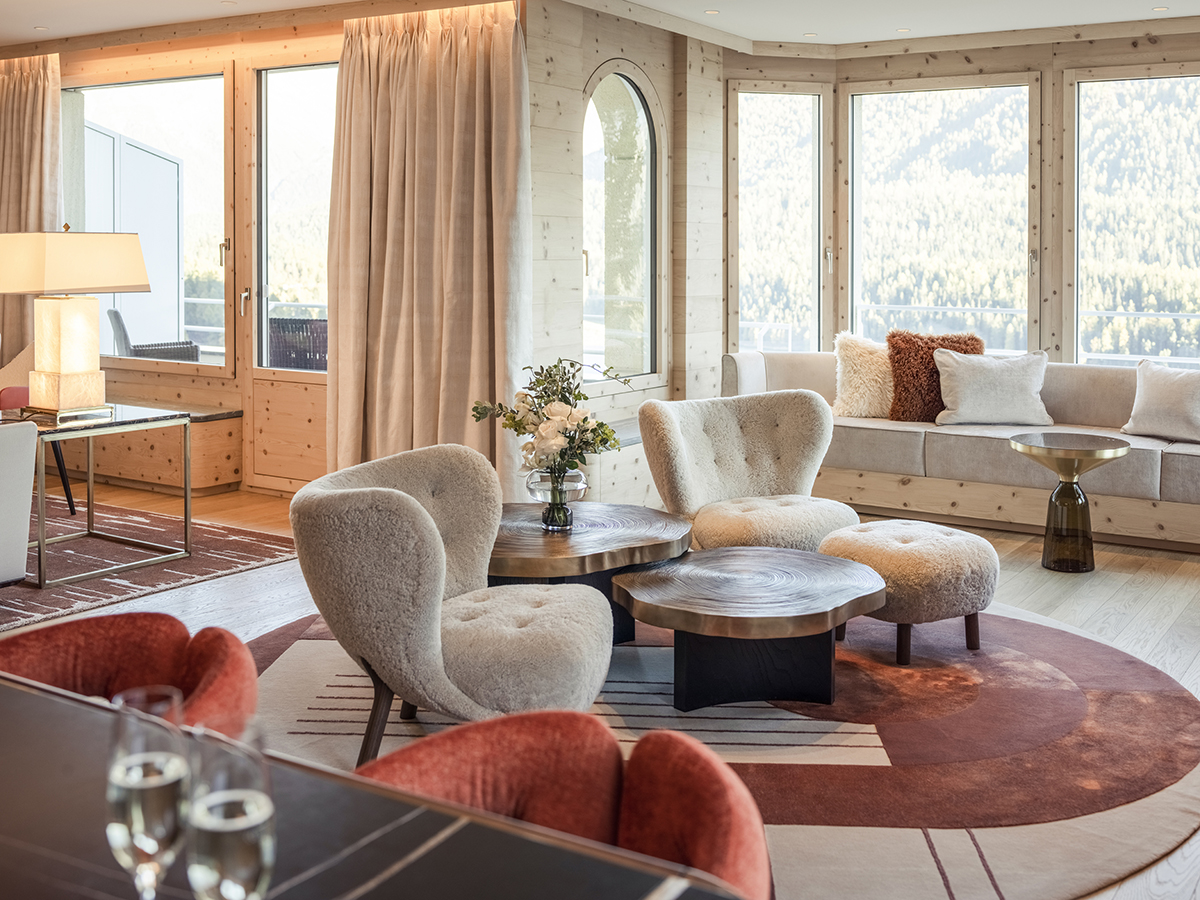
Modern-classic elegance in the Corvatsch Suite
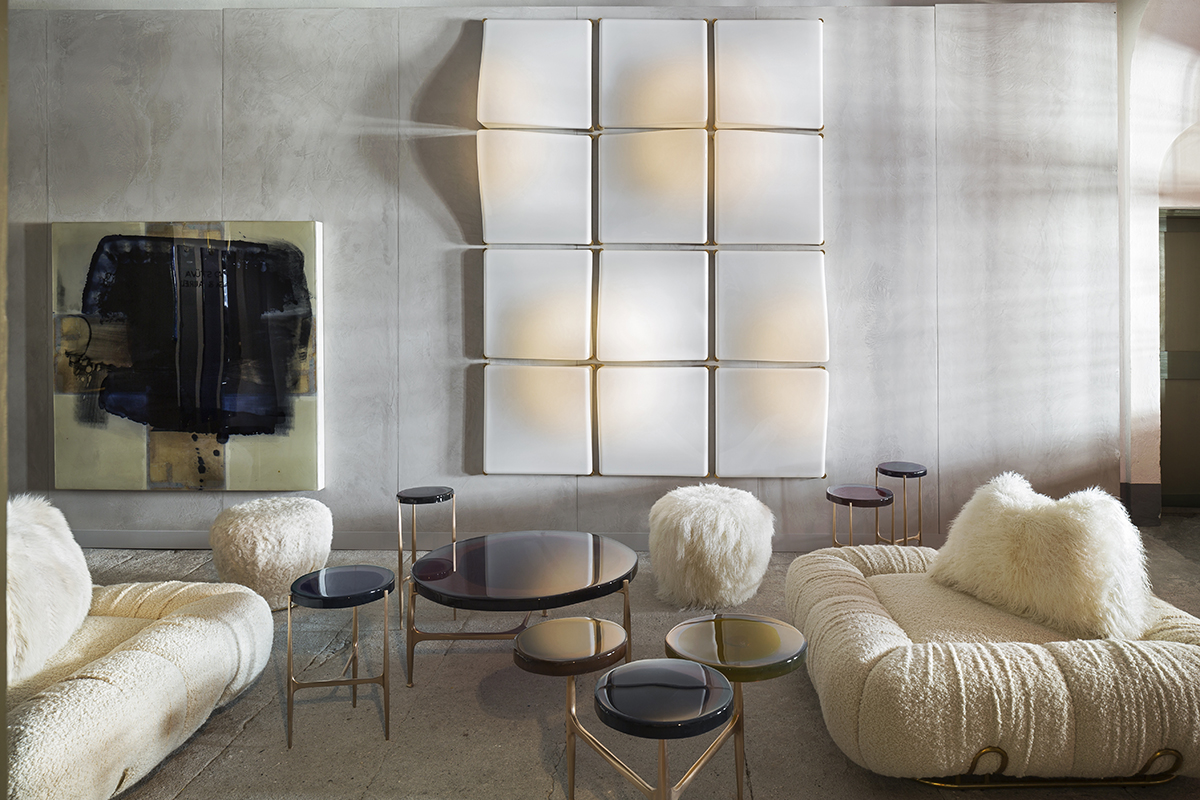
If you want a break high up in the forest, you are here already – the resort is surrounded by hundreds of miles of woodland and meadow. If you want to feel you are amid the heart of the jet set, you are also in the right place, as you can stroll across to the Kulm Country Club, a restaurant and members’ club serving some of the greatest food in Switzerland.
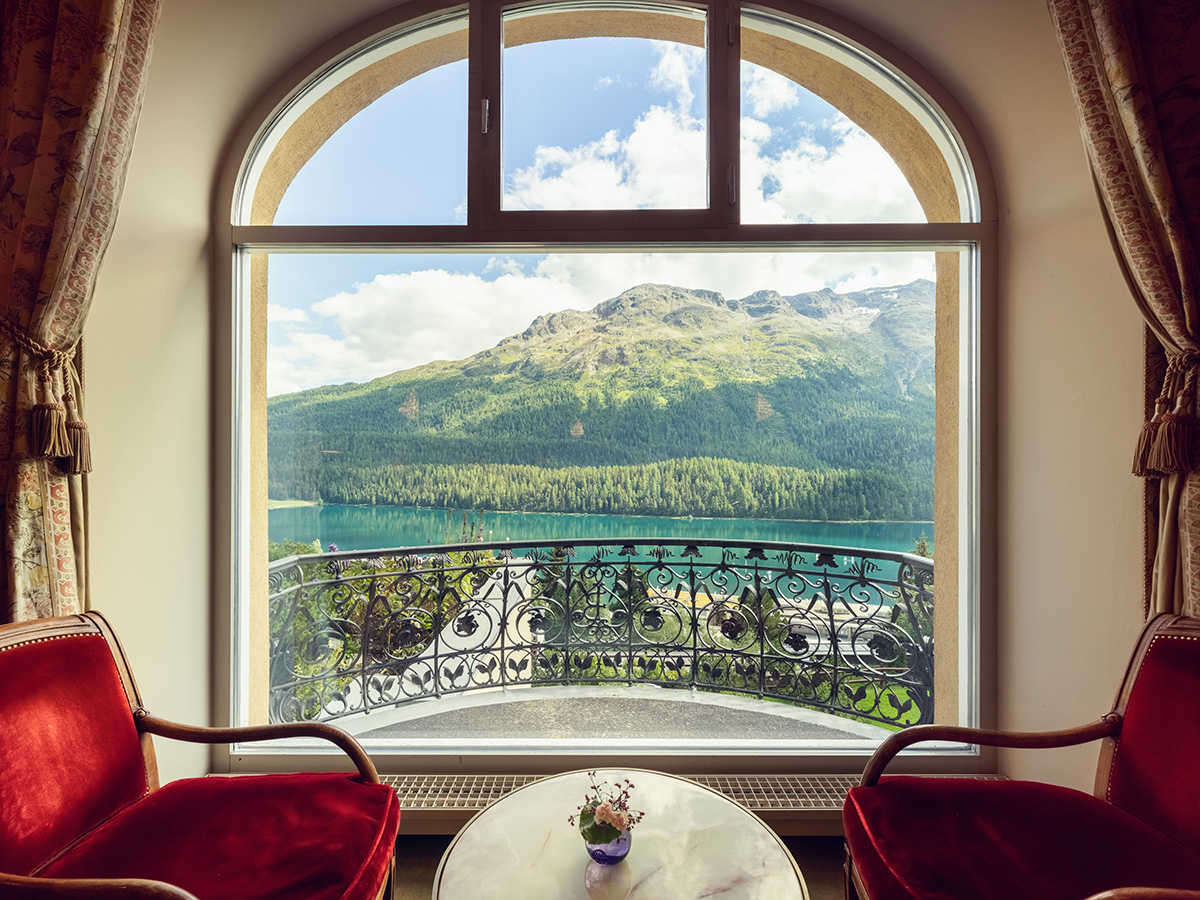
A glorious view from a nook in the lobby
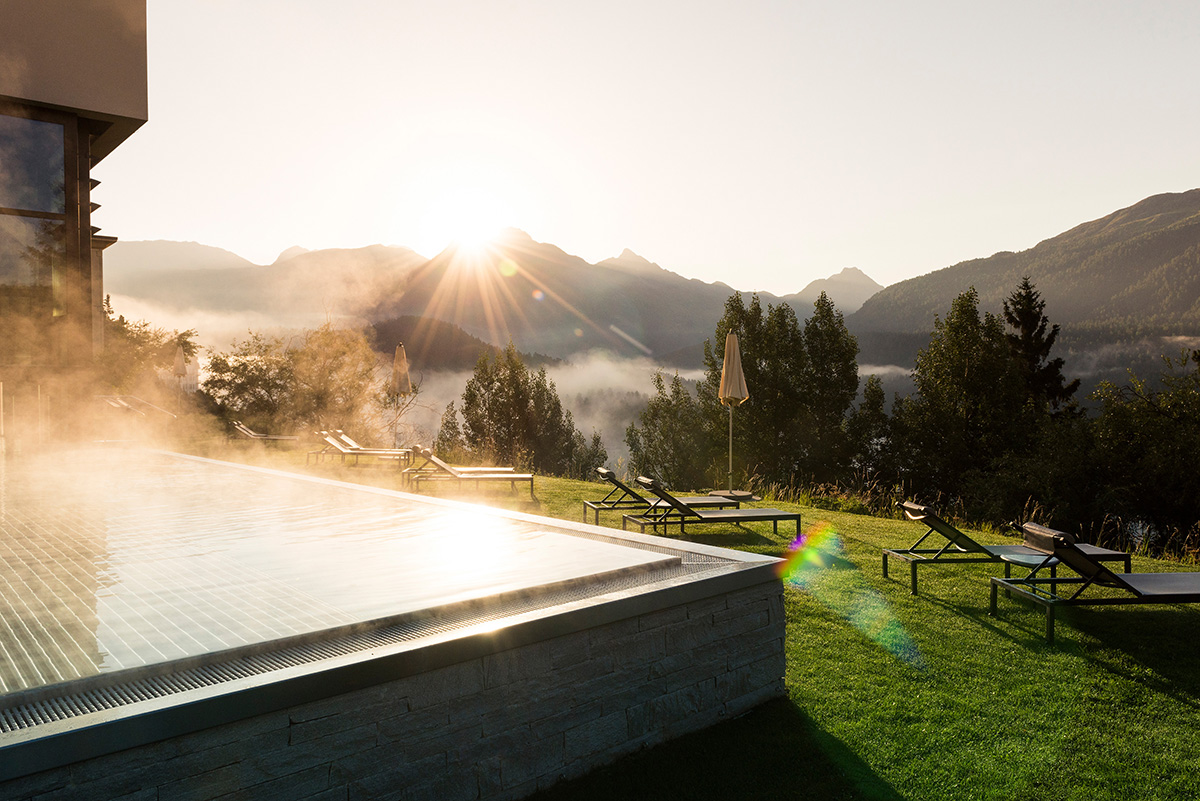
There is a large indoor pool, an open-air pool, spa with everything from steam room to saltwater grotto, and gardens with that mesmerising view.
Read more: Jean-Baptiste Jouffray on the future of the world’s oceans

A breath of fresh air at the outdoor wellness pool
The Kulm may be more famous as the original and greatest of all Alpine ski hotels in winter, but for sunshine, purity of air, cuisine and some very classy encounters, summer is the time to come.
Find out more: kulm.com
This article was first published in the Spring/Summer 2023 issue of LUX
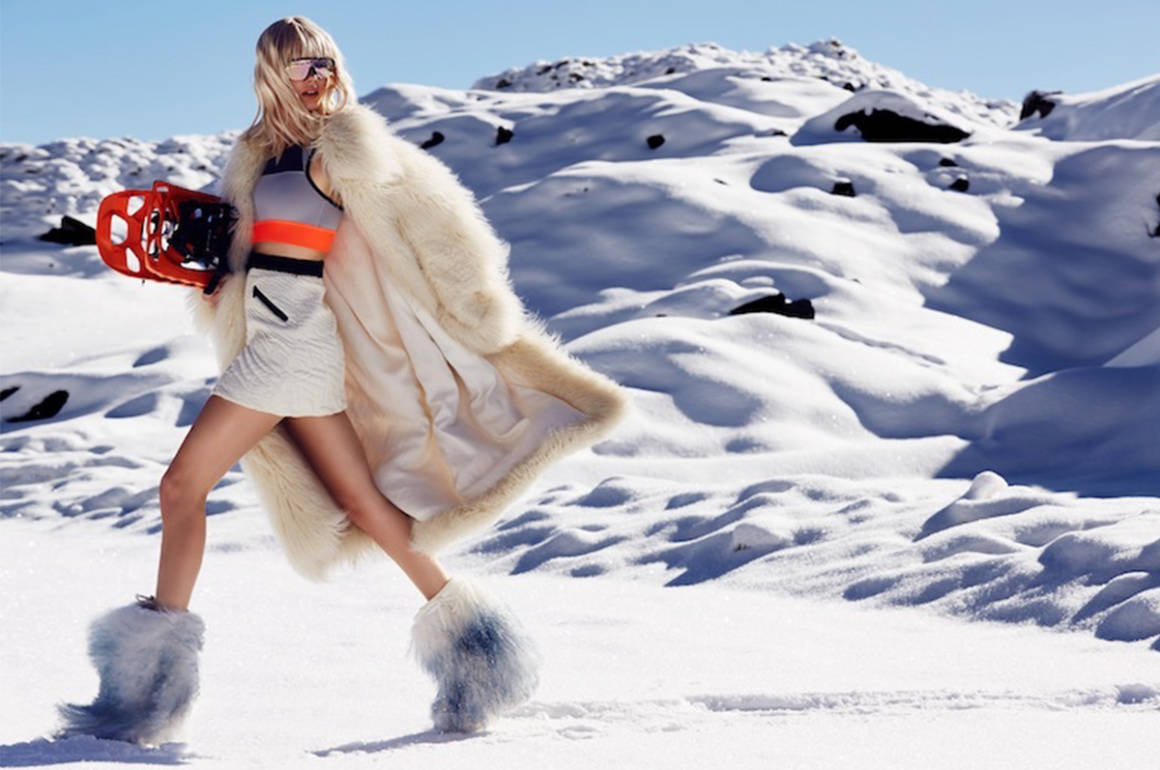
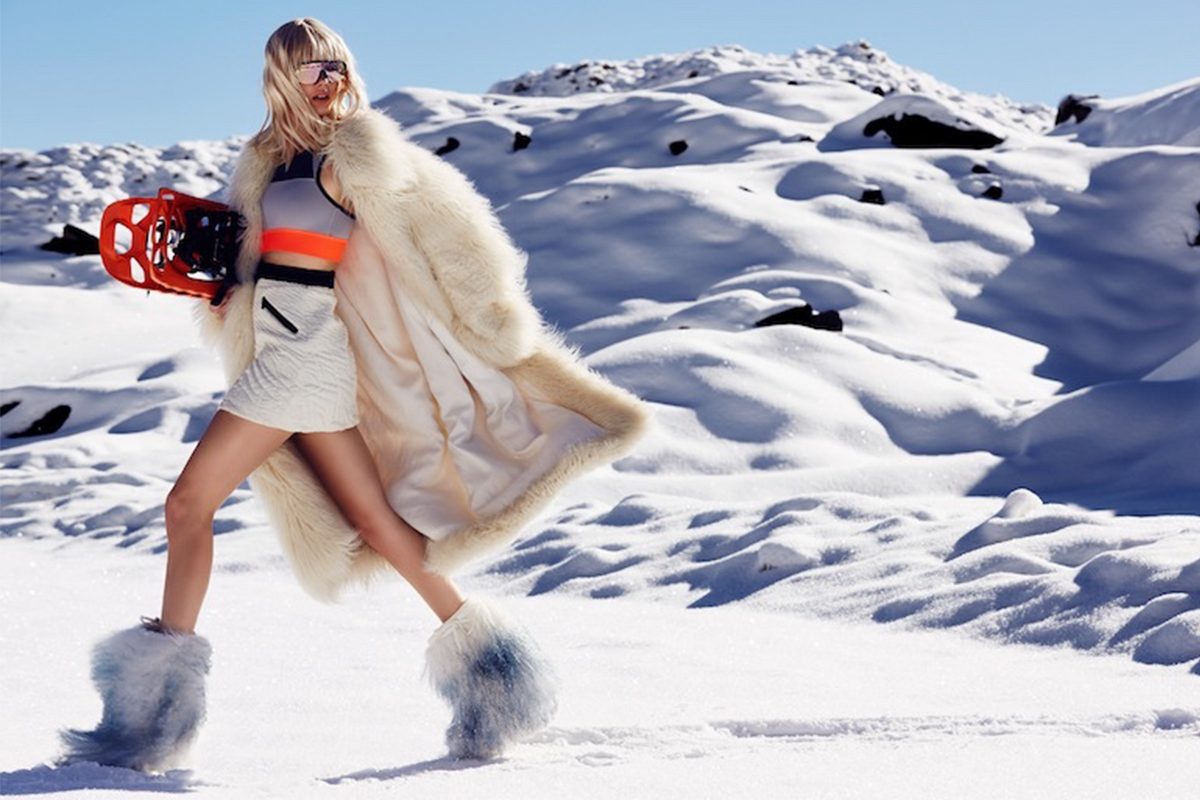
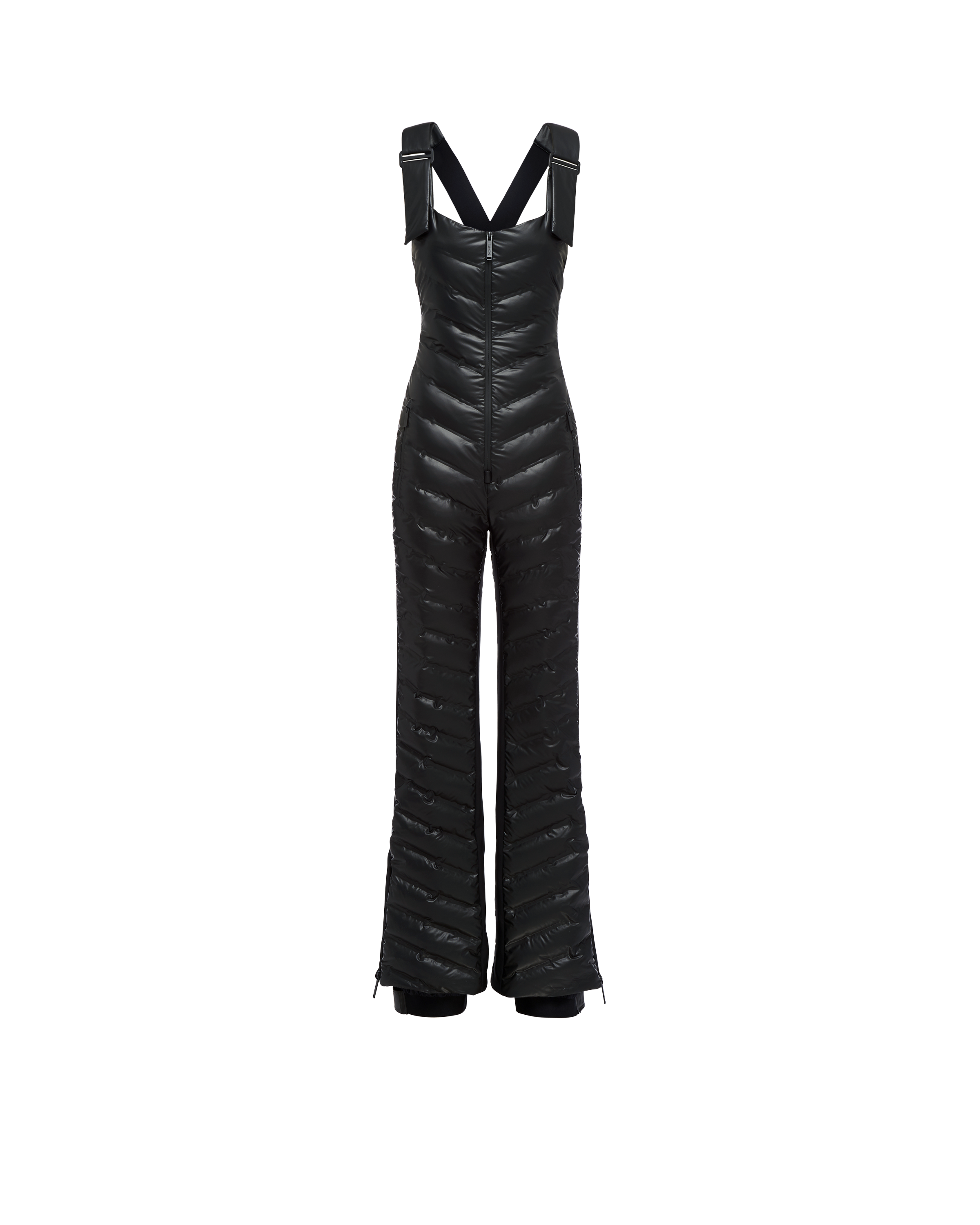
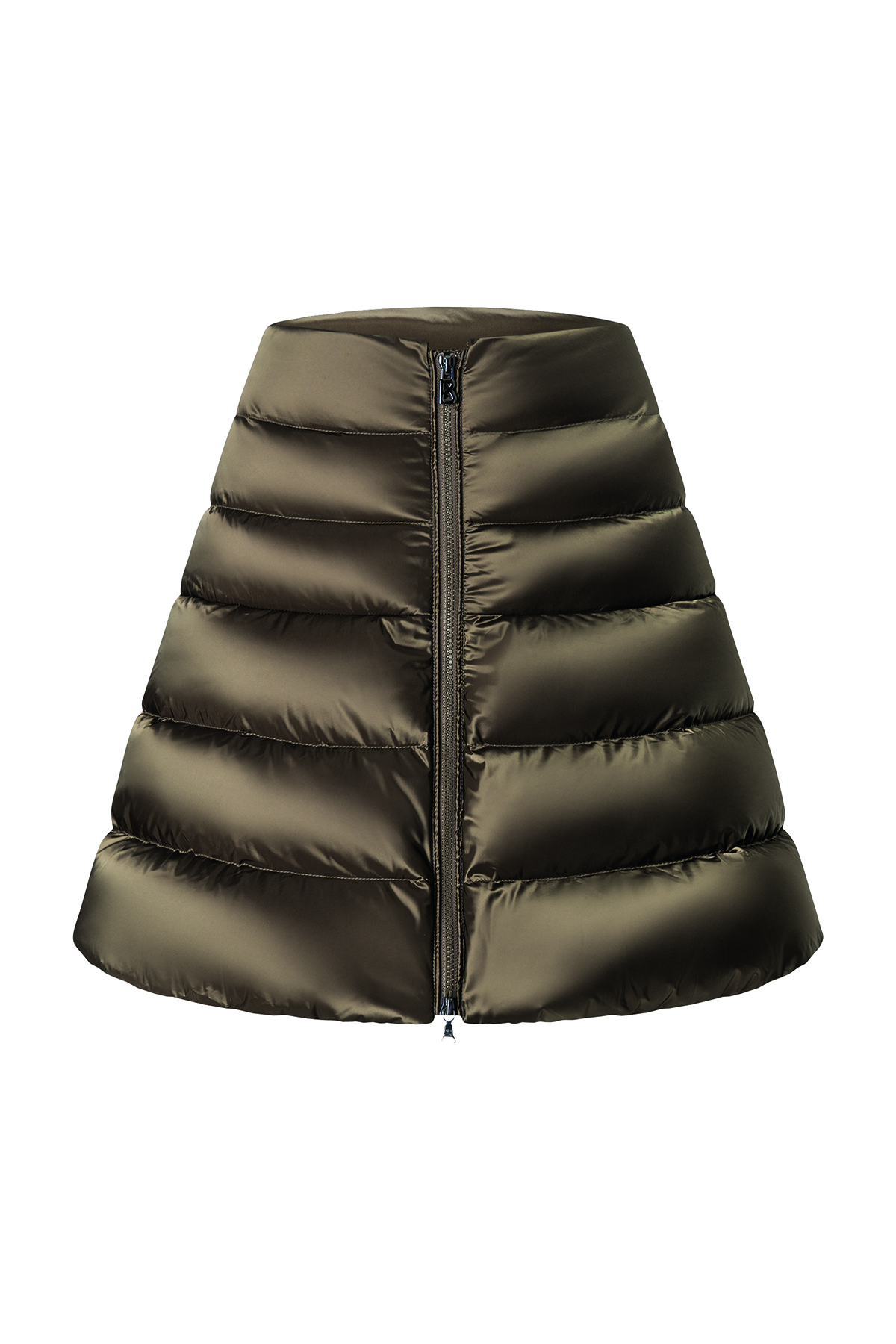
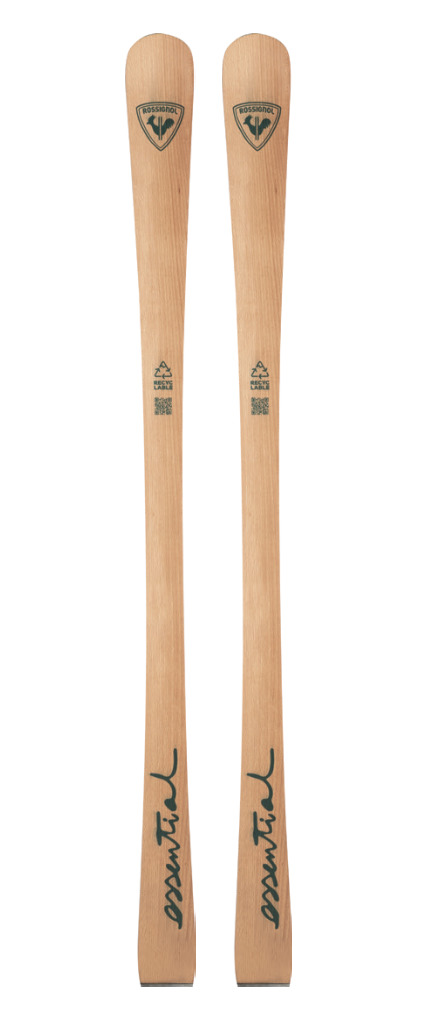
Get set to hit the slopes in new-season sustainable style. Compiled by Candice Tucker
Bogner‘s bust front is the essential item for your ski bag. With its hi-tech materials, this weightless, head-turning piece will keep you warm for those all-important hot- chocolate breaks. Sometimes you just need that extra layer.
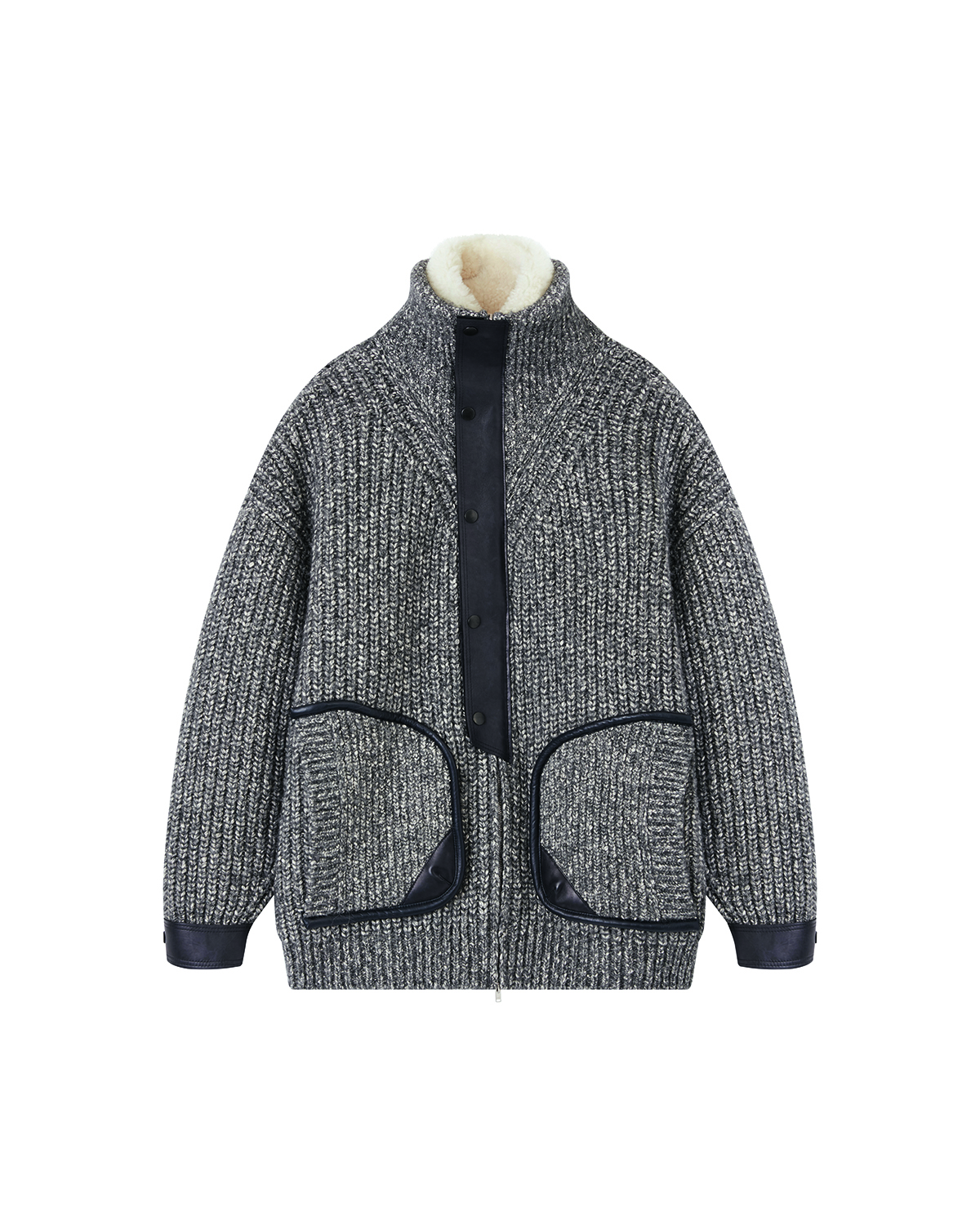
This Lindley cotton-blend knitted coat by Isabel Marant is snug and cosy but effortlessly stylish – just the thing for walking around the village in Zermatt after a long day of skiing, or enjoying a pizza with friends at Chesa Veglia in St Moritz.
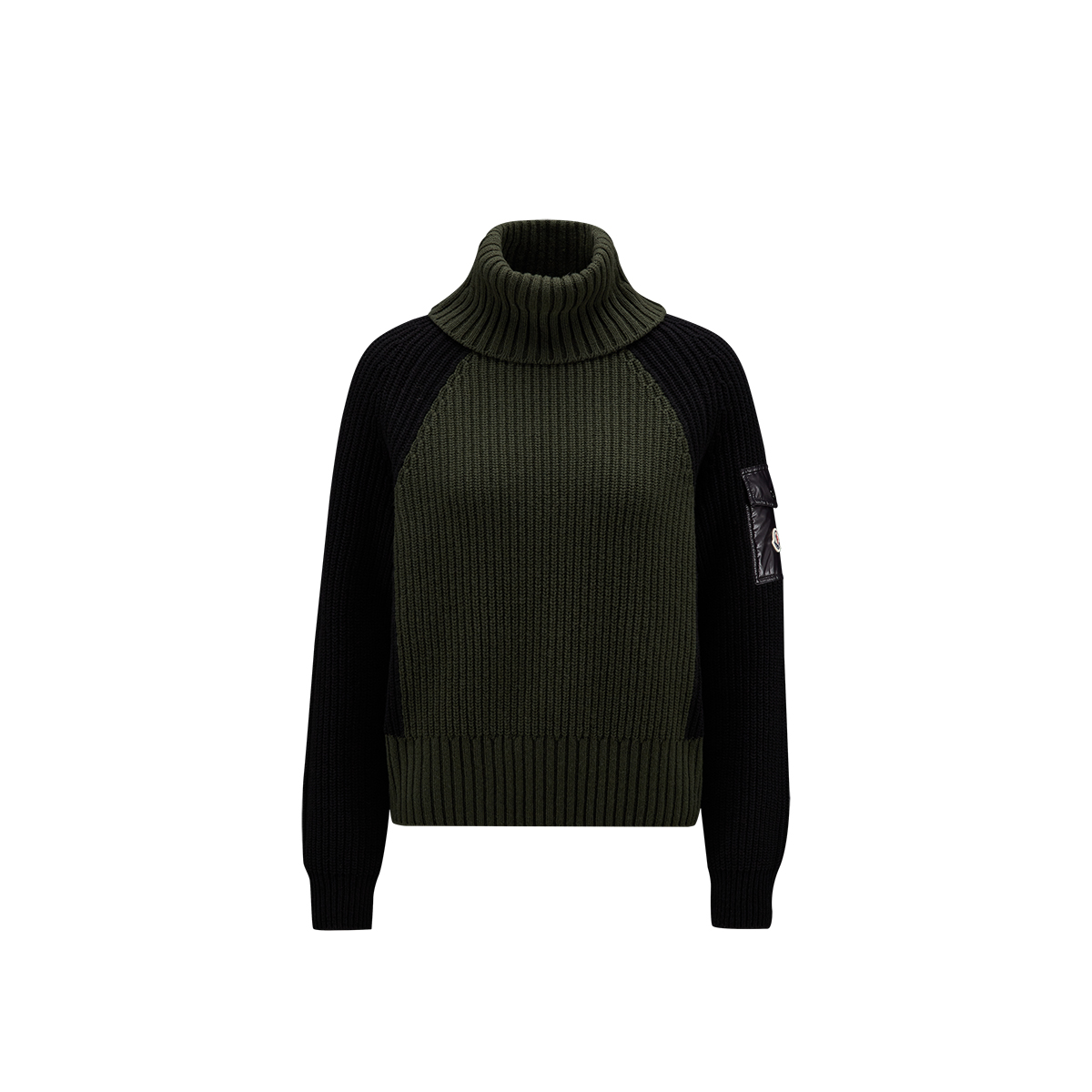
A strong contender for the turtleneck of the season comes from the iconic Moncler Grenoble collection. This wool and cashmere knit is ideal to wear for strolling around an alpine village, enjoying fondue in the chalet or to shrug on under your suit for some ski action.
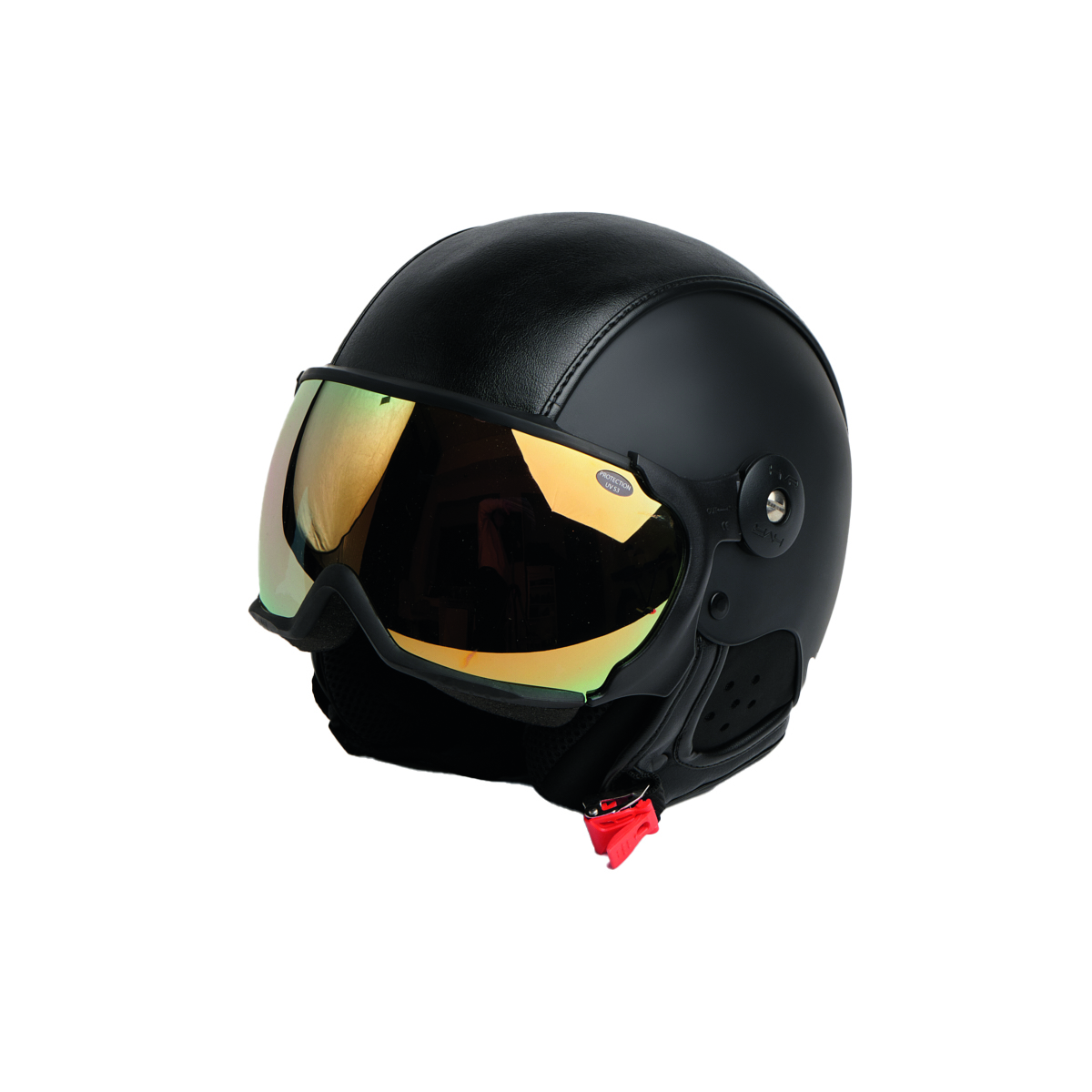
As Fusalp knows, safe doesn’t have to mean boring, and the brand has a reputation for chic, high-quality skiwear. Available in black and white, this helmet, with its leather band across the top, will match any ski suit and ensure you stay secure while looking the part.
This article first appeared in the Autumn/Winter 2022/23 issue of LUX

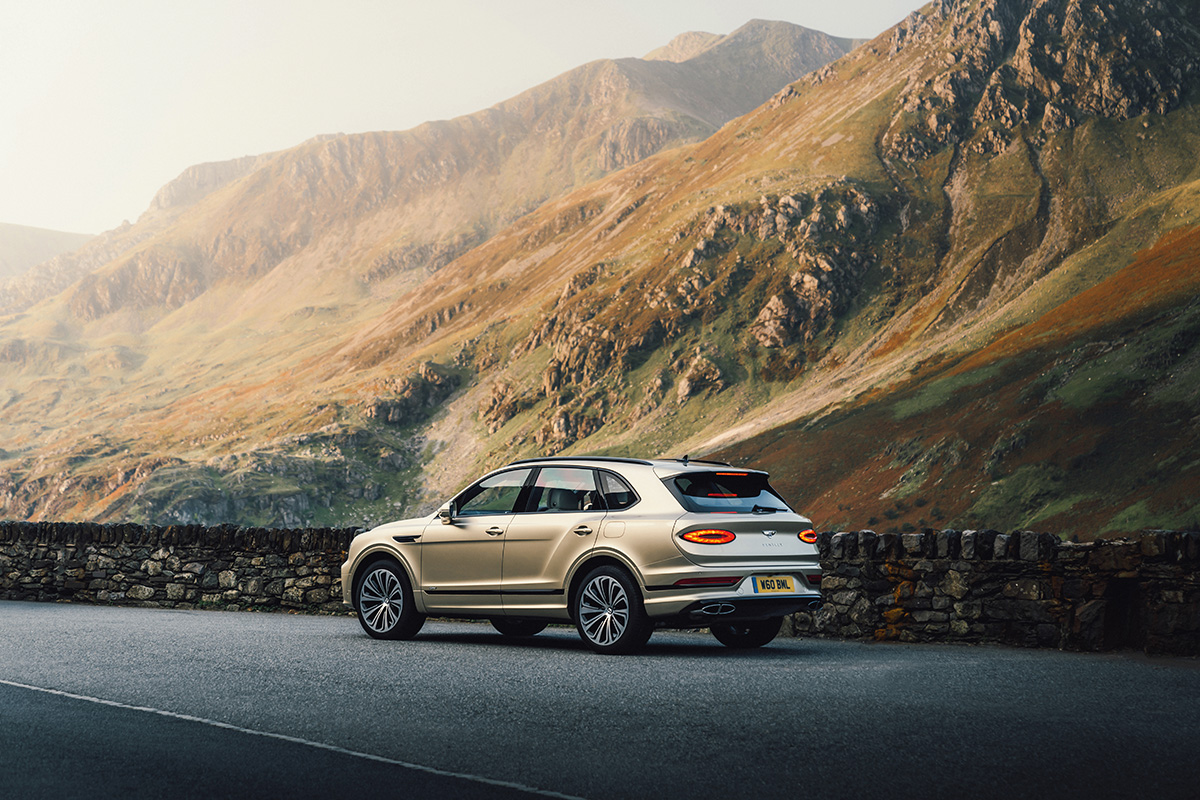
The new Bentley Bentayga Hybrid is a lighter-feel luxury SUV that’s a wonderful mix of refinement and muscle
In the third part of our supercar review series, LUX gets behind the wheel of the Bentley Bentayga Hybrid
If you need an example of how the attributes of heritage luxury car brands have to change in the new world of sustainability and electrification, look no further than Bentley. This is a company that has been making cars that are primarily distinguished by their immensely powerful and vocal petrol engines for more than 100 years. Taking the petrol engines out of Bentleys would be like taking the leather out of a Chesterfield.
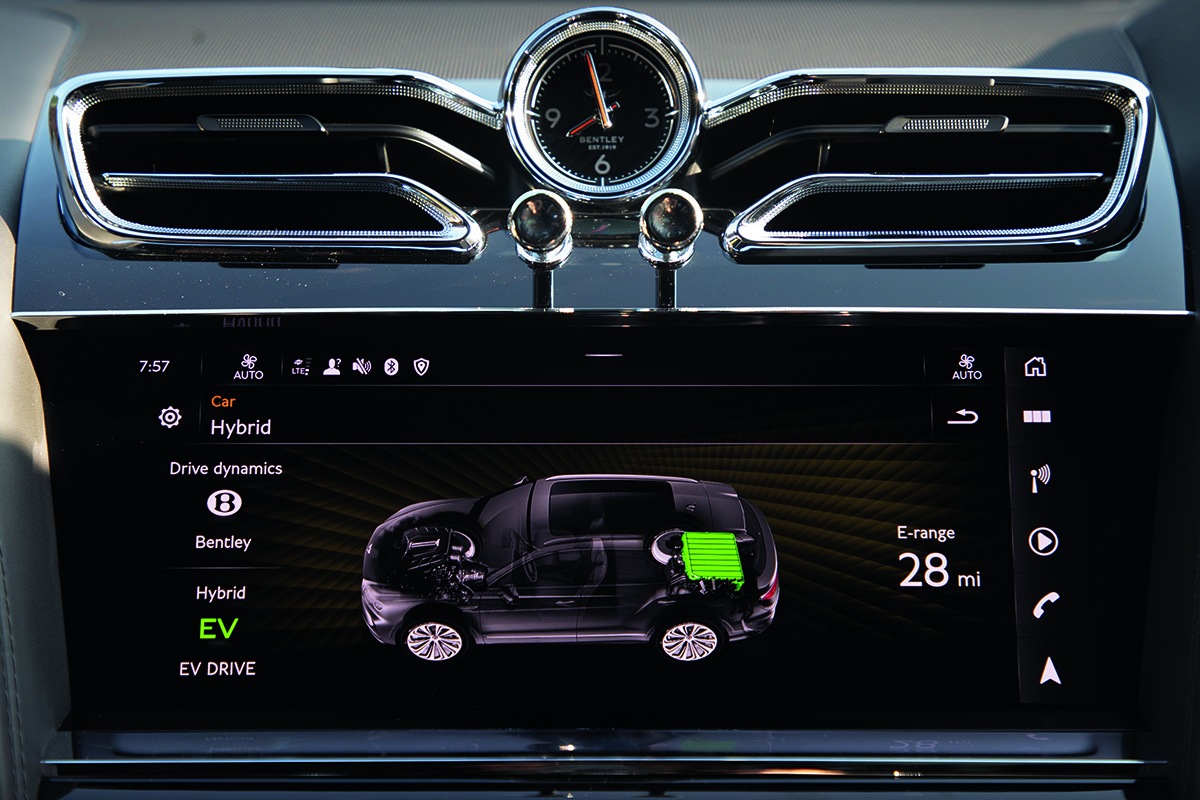
This latest model we drove is not electrically powered, but it’s a halfway point. The company’s luxury SUV is typically distinguished by its massive 12-cylinder engine (although there are models available with a V8). Here we have a hybrid version, with a six-cylinder petrol engine accompanied by an electric motor.
Follow LUX on Instagram: luxthemagazine
Does it work? That depends: if you’re listening for that V12 ‘whoof’, and expecting the distinctive power characteristics – speed and responsiveness to increase in tandem – you may be disappointed at first. In fact, the sound is the most notable characteristic of this car, as going from a Bentley V12 to this is rather like going from wild to farmed beluga. Still good, but not what you’re used to. But, given that in a few short years no engine will make any sound at all apart from a faint hum, this is really a moot point.

One other characteristic a traditionalist will welcome is the lighter feel: there is less engine in the nose of the car. It feels quite alive around corners on country lanes on the way to one’s architect-redesigned Oxfordshire manor house.

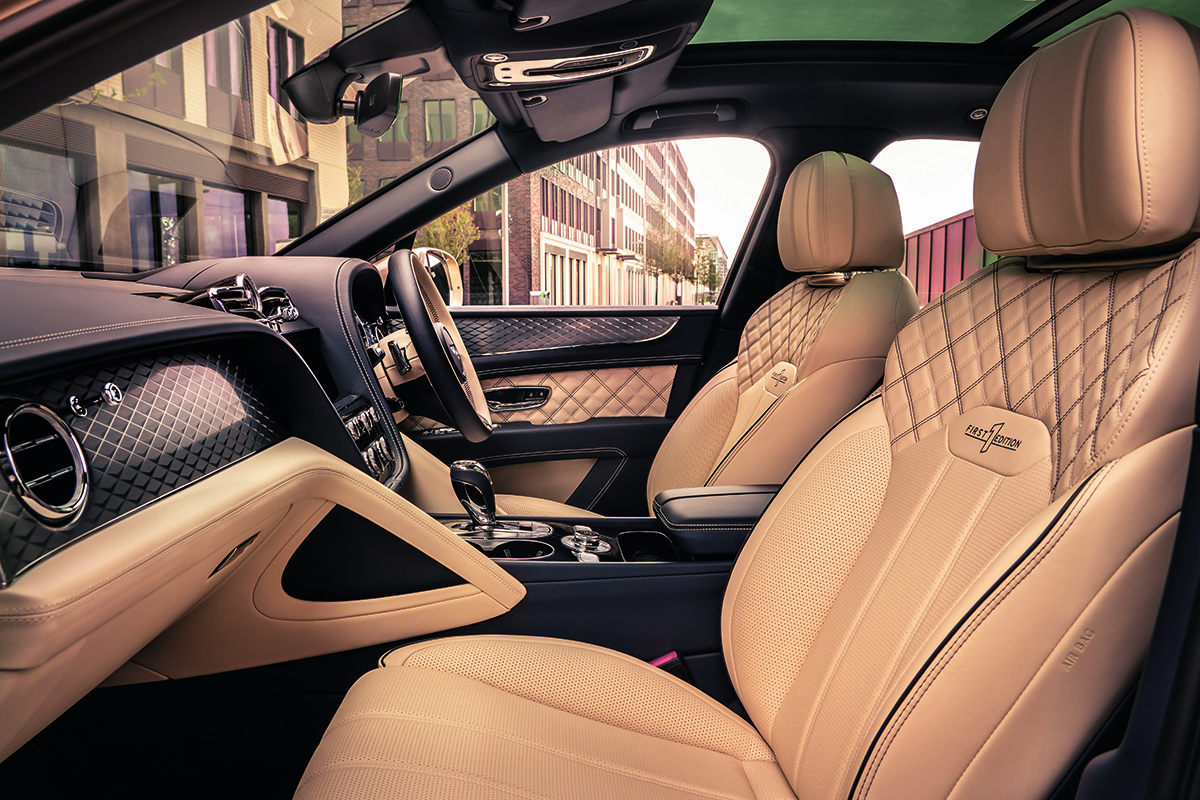
That is the kind of lifestyle this car is aimed at and it does an excellent job. The interior feels like sitting in a well-appointed bank vault with windows onto which the outside world is projected. Unlike some very powerful SUVs, it doesn’t feel like it wants to race every car from the traffic lights. It’s not exactly serene – it’s a Bentley after all – but it’s a wonderful mix of refinement and muscle. If you’re an enthusiastic driver, you won’t complain about the relatively agile handling, excellent roadholding and responsiveness at speed. You may wish for a little more feedback and involvement, though, as this car is set up more at the luxury end of things.
Read more: Why You Should Get Your New Car Ceramic Coated
Your passengers will enjoy the crafted feel of the interior, which really does feel a cut above almost any rival. It may not feel as passionate as the SUV offerings from Lamborghini or the Mercedes G 63, but it aims to do a slightly different job, rather more grown-up. It is also a car you could get in to drive from the Cotswolds to ski in St Moritz in one day, and arrive refreshed and ready for the slopes. And the fuel savings from the new electric-petrol engine will pay for a couple of drinks at Pavarotti’s.
LUX rating: 17.5/20
Find out more: bentleymotors.com
This article appears in the Summer 2022 issue of LUX

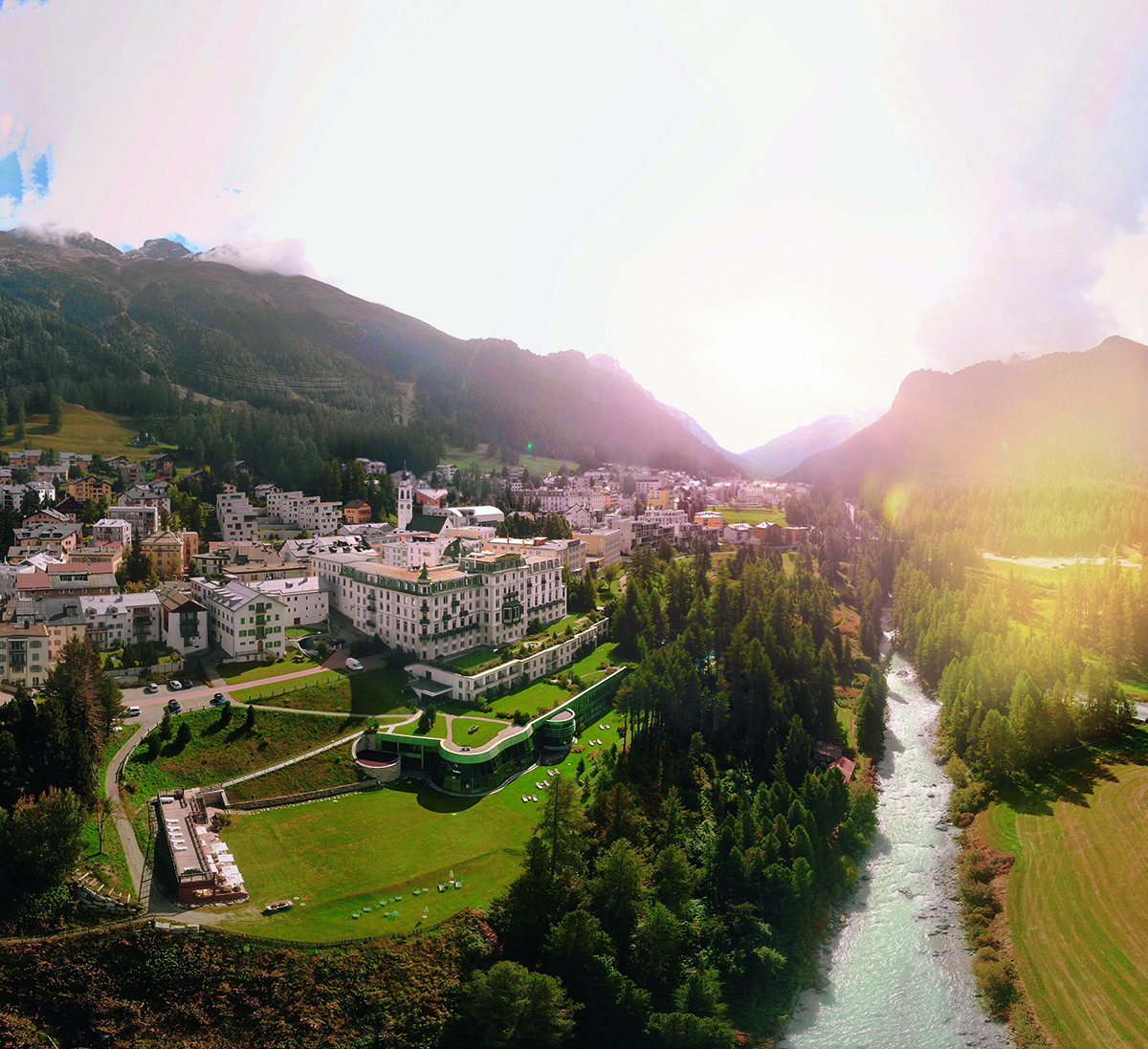
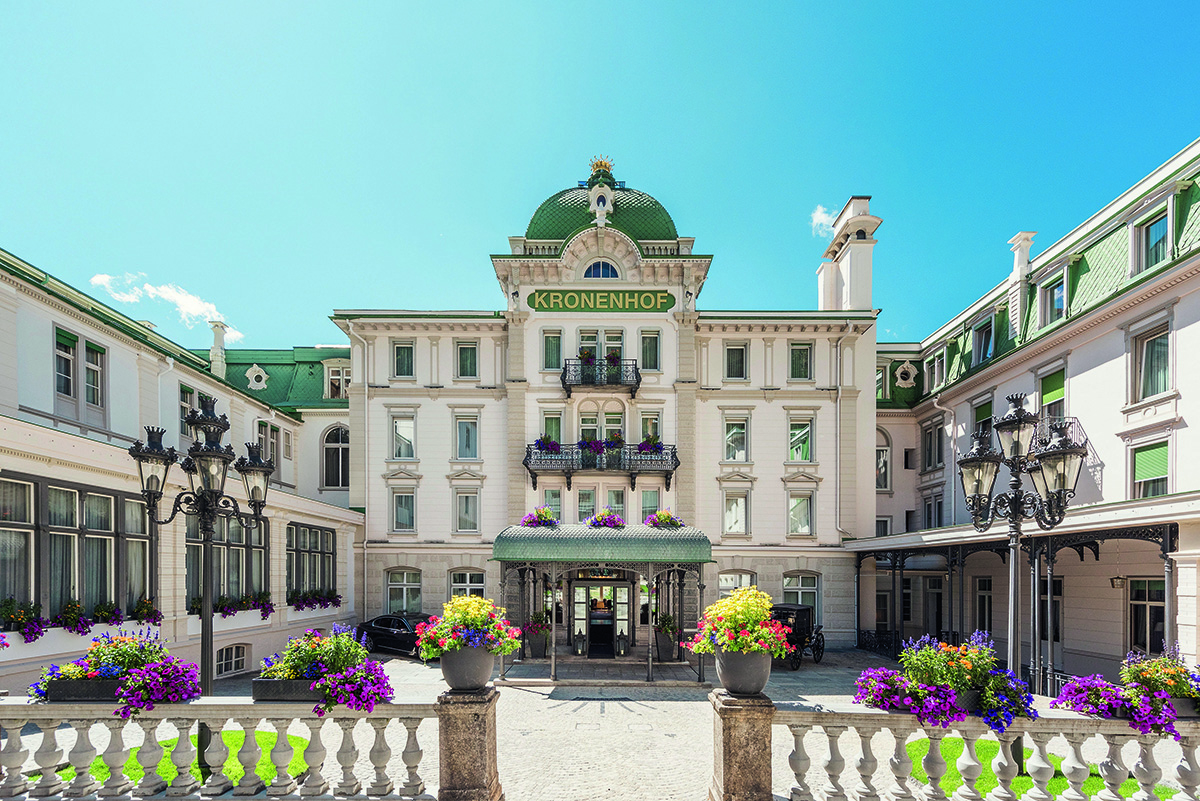
Exterior view of the 19th-century Grand Hotel Kronenhof in the Swiss Alps
In a high valley near St Moritz, the Kronenhof in Pontresina combines Swiss culture with a Mediterranean mountain vibe. Who needs Portofino?
One of the drawbacks of being in the mountains is that you are at the bottom of a valley, in the shade, when all around you is bathed in sun. This is not a problem that the Kronenhof, in Pontresina, will ever have. The village of Pontresina is located on a south- facing shelf, above the bottom of the valley that connects St Moritz, in Switzerland, with the Bernina Pass over to Italy.

The entrance of the Grand Hotel Kronenhof
The Kronenhof, in prime position on this shelf, feels like it is floating above the forest coating the valley floor (and dropping into a precipitous gorge, if you look closely enough). And from the lawns outside its swimming pool area in summer, you can see the Alps lined up, facing you, glowing gold-green in the sun.

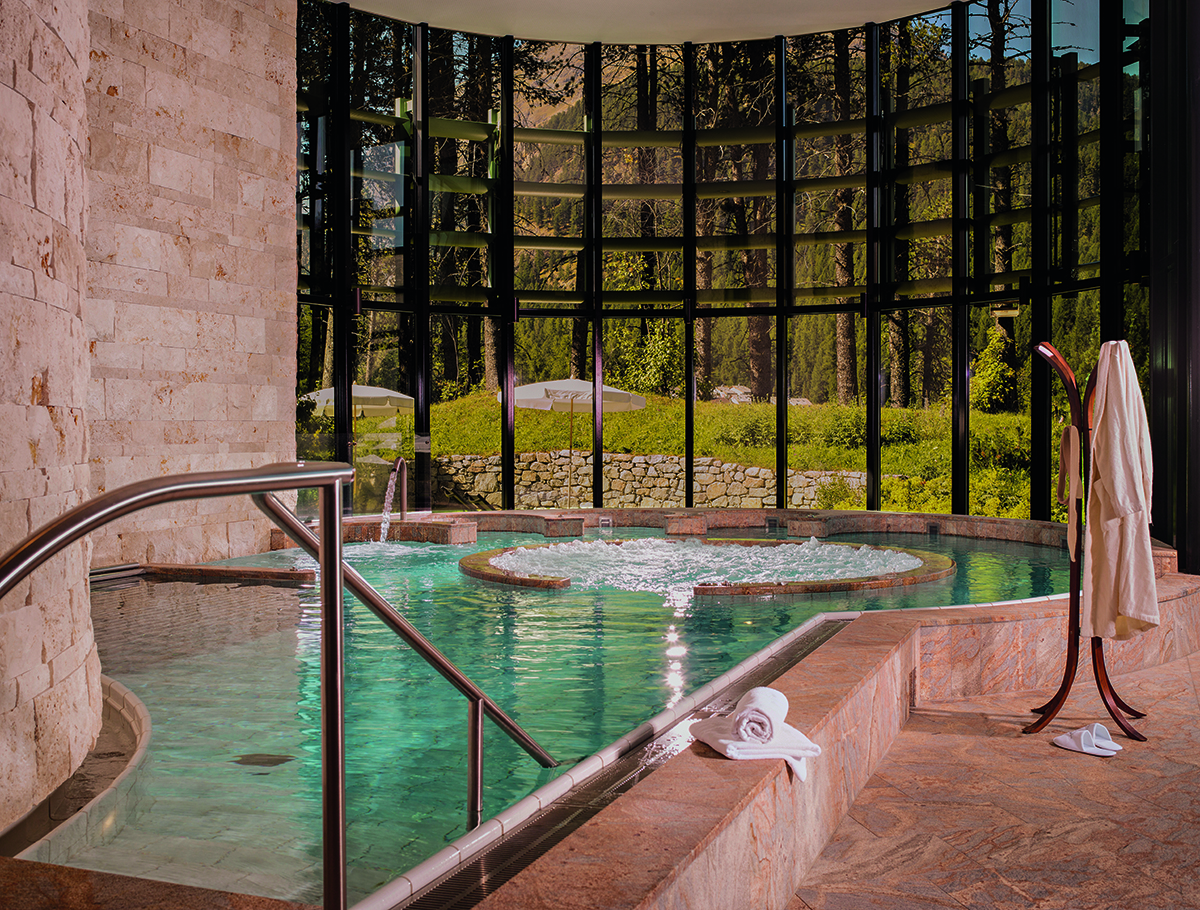
The whirlpool inside the hotel’s spa
It’s a strange and wonderful feeling, being here in summer. On the one hand, you are 1,800m (about 6,000ft) up in the mountains; the air is very precise, very pure, and will leave normal people puffing if they try to run.

The whirlpool inside the hotel’s spa
But on the other hand, this is the southern side of the Alps, contiguous with northern Italy and the South of France.
Follow LUX on Instagram: luxthemagazine
The mountains to the north hold back the wet northern European weather and this is one of the sunniest parts of the continent, meaning you can sunbathe most days during the summer, while gazing up the valley, opposite, at the glaciers of the Bernina mountain range.

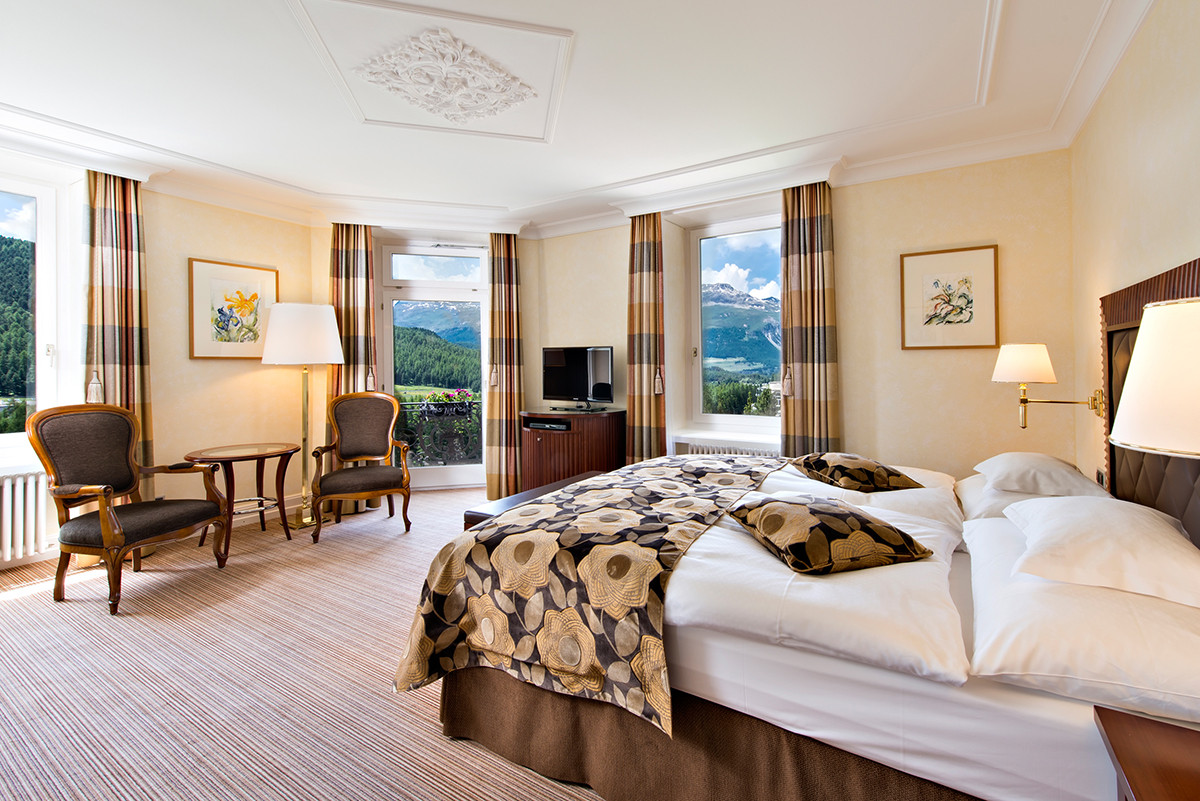
The luxury Bellaval suite, offering the most spectacular views in the hotel
If it does rain, just step inside. The pool, possibly the best in Switzerland, has a glasshouse view of the scenery, as well as a very therapeutic series of vitality pools and spa, above.

The Kronenhof Bar
Upstairs, the newly refurbished bar has brought a little urban chic to this mountain outpost, but, above all, this is a classic Alpine luxury retreat. The bars and clubs of St Moritz might be just a 10-minute drive away, round the forest, but you come to the Kronenhof, with its contemporary-chic bedrooms and light and views, to be in the centre of the high Alps, and also away from everywhere.
Read more: See The Light: Cascais, Portugal
Hike up the mountain and to the Segantini Hut with its views across half of Switzerland, visit the Alp Languard panoramic restaurant for a lunch of local roesti and meats, and be back for an apero in the bar. And then there’s the 200-year- old Kronenstübli restaurant with 16 Gault Millau points…
Find out more: kronenhof.com
This article appears in the Summer 2022 issue of LUX

Photograph of the Zermatt valley by Sheherazade Photography
The yacht’s being refurbished, you’ve done Ibiza too many times, the Hamptons are too cliquey and Bodrum is so 2021. So where to head this summer? Allow LUX to offer you some recommendations from one of our absolute favourite summer destinations (and no, this is not paid-for content): Switzerland
Switzerland in summer: panoramic views, (mostly) blue skylines, clean air, no crowds, teeming wildlife, one of the highest concentrations of Michelin-starred restaurants in the world, some of the best hotels in the world, and activities from kitesurfing and kayakking to glacier skiing and wine tasting. What more could you want? Perhaps, just a little guidance through the options, to get the very best out of your Helvetian experience.
Follow LUX on Instagram: luxthemagazine
1.Zermatt
Zermatt is, in effect, the epicentre of the Alps, in a valley surrounded by more than 30 of the highest peaks in Europe, which glow white with permanent snow even on a hot summer’s day. And it’s usually warm and sunny here: the resort is on the border with Italy and if you take a telescope to the top of its highest peak, Monte Rosa, you can see the spire of Milan cathedral.
Every type of mountain activity is available, including summer skiing at the top of a Swarovski crystal-encrusted cable car. It is also a paradise for mountain dining, with more fine dining spots than St Tropez, better views, and fewer crowds. Try the Findlerhof for its beautiful local farmers’ meat and cheese platter, and epic Matterhorn views; and Restaurant Zum See for an idyllic gourmet experience in a meadow at the foot of the peaks. In the village, we had a highly memorable meal at the restaurant in the hotel Omnia, all pared-back boutique chic and astonishingly vibrant flavours.

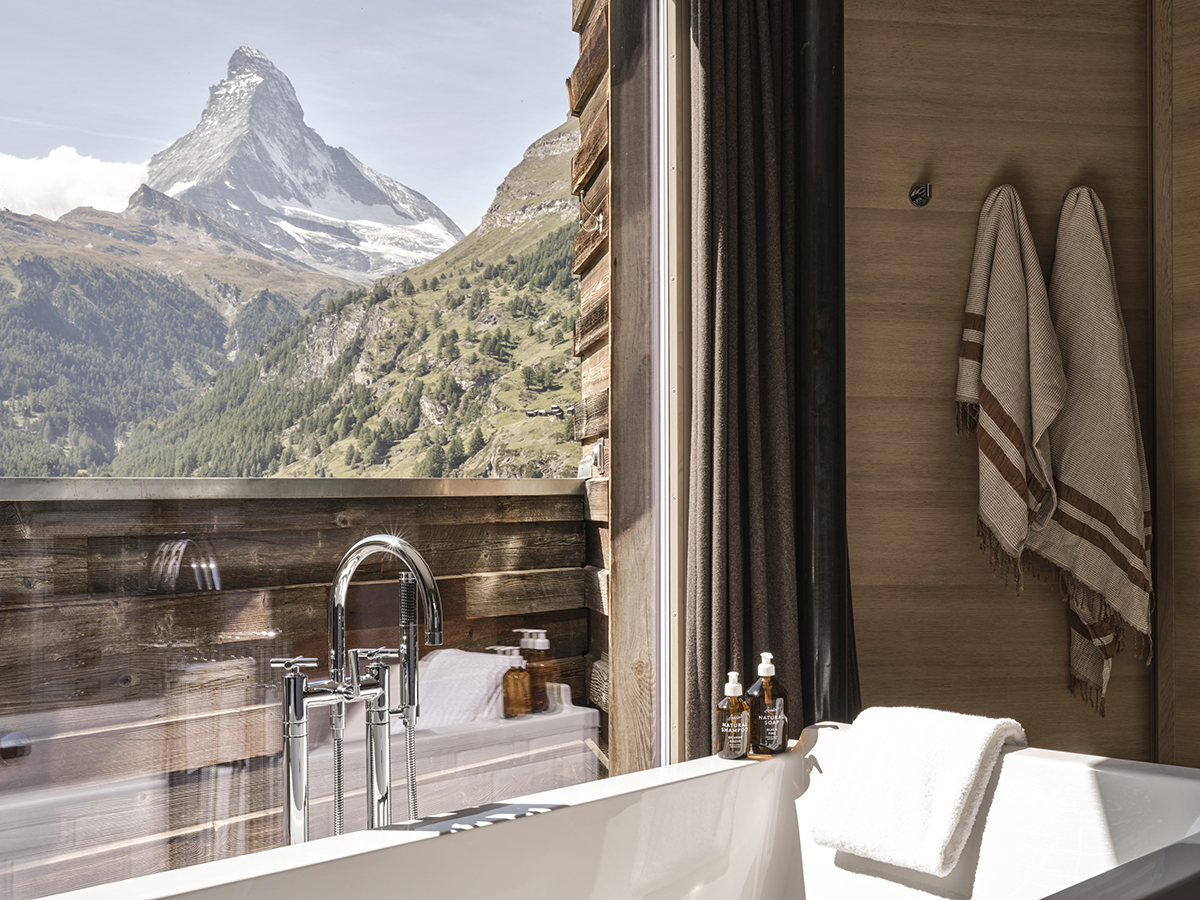
The view from a bathroom at The Cervo Hotel
Stay at: The Cervo is Zermatt’s eco-resort, and its owner, Daniel Lauber, is a passionate and thoughtful sustainability pioneer. One of the most thoughtful sustainable hospitality experiences, from the biodegradable slippers to the renewable energy heating system – tough, at 1600m altitude. The food, all sourced locally, is both hearty and magnificent and the staff have risen impeccably to the challenge of finding excellent wines and cocktail ingredients with a local remit.

Badrutt’s Palace Hotel, St Moritz
Badrutt’s is St Moritz, or so you will probably think after staying there. The hotel dominates the valley and lake like a citadel. The service became legendary even before the former Shah of Iran flew its staff out to serve a banquet marking 2500 years of the Persian Empire at the palace of, near Shiraz, in 1972. It’s the kind of hotel where the staff know what you’re thinking, before you do.
Read more: A Tasting At One Of The World’s Great Champagne Houses
The facilities make it, effectively, a holiday in one property: huge indoor pool with picture window, lawns and gardens (in the middle of St Moritz!), fine dining in a formal banquet hall which makes you feel like Audrey Hepburn (whoever you are), and across the road, its own pizzeria at Chesa Veglia – in reality a top social spot in its own right. And the views across to the mountains are inspiring.

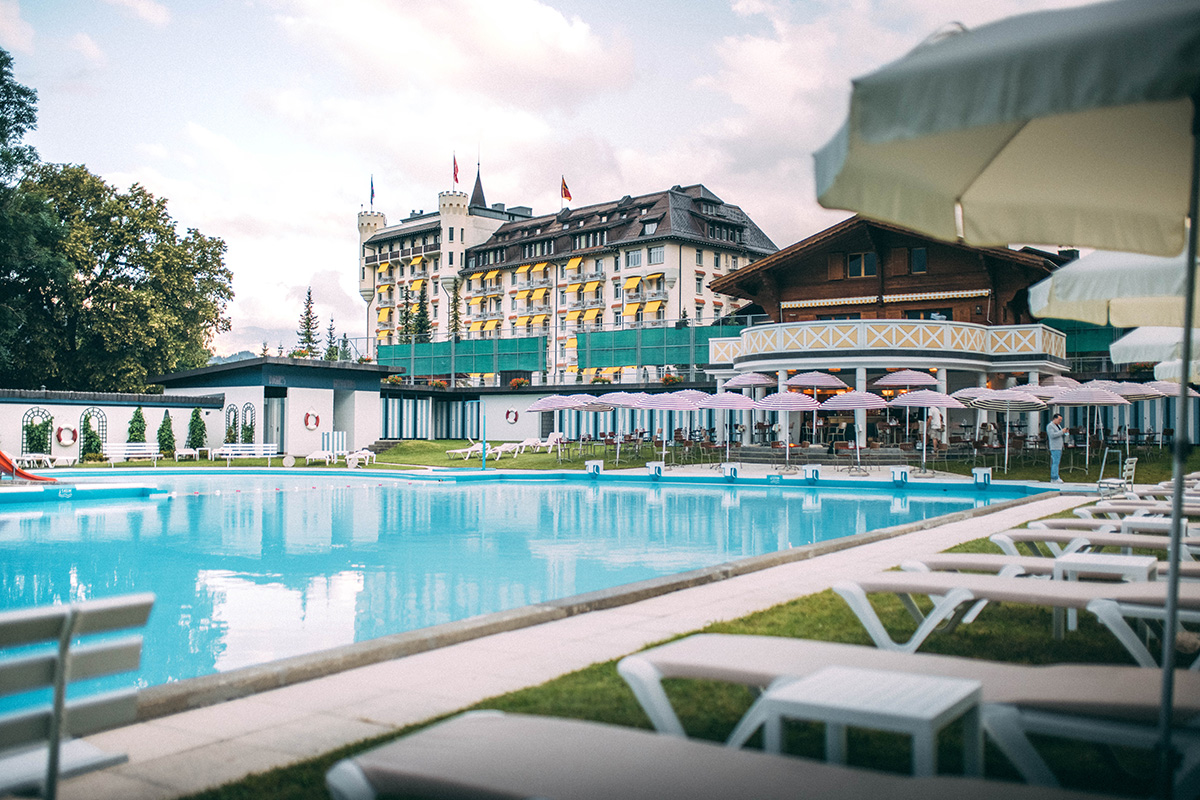
The piscine at Gstaad Palace
The Palace is a hotel that will whisk you into the jazz era even by thinking about it. This is a place where generations of European aristocrats have visited to stay and dine at; or to play tennis on its impeccable clay courts, or dance at its Greengo nightclub (in summer, it incorporates the indoor pool as a bar and terrace). It’s a perfect base for walking tours, or for strolls around Gstaad’s chi-chi high street, or just to exist in and take the air and dream of eternal youth.

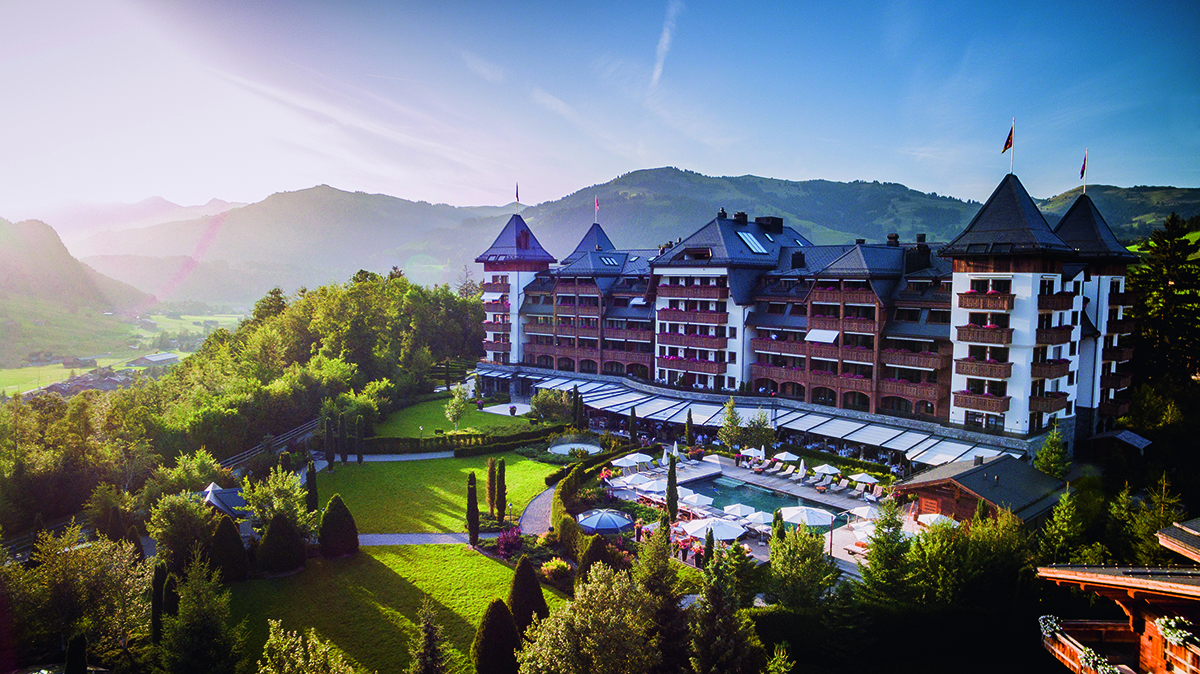
The Alpina Gstaad
Two luxury hotels in one place? Mais oui; the Palace and the Alpina are like Meursault and Margaux, we couldn’t live without either of them. The Alpina has contemporary style and vibrancy within the envelope of Alpine glamour (unlike some new luxury hotels in the Alps, it’s not pretending to be in Brooklyn), an outdoor pool with heart-melting views over the mountains, an equally gorgeous indoor pool and spa, and one of our favourite Japanese restaurants outside Japan.

Nira Alpina Stars Restaurant
The Nira Alpina is a hotel and restaurant resort on the edge of the high Engadine valley, between Lake Sils, inspiration for poets and artists, and buzzy St Moritz. Its rooftop restaurant, Stars, has a dramatic view across the valley and lakes where daytime kitesurfing gives way to reflections of the moon by night, and over to the jagged mountains on the other side. It’s at the foot of the Corvatsch mountain, which makes for energetic hiking in summer; at the end of a long walk down from the Fuorcola Surlej pass, we love indulging in a glass of Franciacorta here, followed by a bottle of vibrant Chardonnay from the nearby Bündner Herrschaft wine region, accompanied by its delicate, locally-sourced mountain food, big on herbs and vegetables from the nearby high valleys. We haven’t stayed at the hotel, but the restaurant is an experience in itself.

The Badrutt’s Palace hotel’s grand frontage and its iconic tower.
High in St Moritz, the grandest hotel in the Alps has just been revitalised. There’s nowhere better to take the summer air with your entourage than Badrutt’s
What could be better than the Helen Badrutt Suite at Badrutt’s Palace? Yes, we know there are some pretty swanky hotel suites out there. The Abu Dhabi suite at the St Regis in the namesake emirate has its own spiral staircase and cinema. The Presidential Suite at the Mandarin Oriental in Pudong, Shanghai, has floor-to-ceiling windows over the city and its own wine cellar and roof garden. Stay at Seven South at the Ritz Carlton in Grand Cayman and as well as 11 bedrooms, you get a free painting to take home.
Follow LUX on Instagram: luxthemagazine
But still. Enter the Helen Badrutt and you don’t feel like you have arrived, or paid what it takes, so much as having been granted entry to a very exclusive club, in one of the world’s most desirable pinpoint locations. Badrutt’s Palace is the acme of palace hotels in St Moritz, the world’s most exclusive mountain resort. It’s the fact that it has been so for more than a century, despite its location 1,800m up in the Swiss Alps, that provides a clue to the exclusivity: this is where blue bloods, royals, pretenders and their circle have played for more than 100 years.

The drawing room of the Helen Badrutt Suite
When the Shah of Iran decided to celebrate the 2,500th anniversary of the Persian Empire with the grandest dinner in the history of the world in Persepolis in 1971 (an act of indulgence that ultimately contributed to his downfall in the Islamic Revolution), he flew in the staff from Badrutt’s Palace. And staying in the Helen Badrutt, you are the crème de la crème of the hotel’s guests (or perhaps the Shahanshah).
Read more: Speaking with America’s new art icon Rashid Johnson
It might be the living room, with its grand décor, bottomless drinks cabinet refilled with spirits in decanters (no tacky miniatures here), Persian carpets and chandelier; or the balcony terrace looking out over Lake St Moritz and the mountain beyond, big enough to host a party for 20 people (we did); or the silent-quiet bedroom or marble bathroom; or that it can interconnect privately to form an entire wing of ten bedrooms.

The Badrutt’s Palace pool overlooking Lake St Moritz
Maybe it’s the butler service, which, unlike some more thrusting hotels, is almost entirely seen and not heard, Jeeves-style (we don’t know about you, but we don’t need butlers knocking on our door and asking what to do; they should know already, as they do at Badrutt’s).
In any case, staying in the Helen Badrutt bestows upon the visitor a sense of history, transforming the humble paying guest into a multi-suffixed European aristocrat with seats in each major city of the Holy Roman Empire and a foundation in a castled town in Westphalia from where a tweed-suited team of faithful retainers disburse philanthropic goodness to worthy institutions around the world. Or so it feels, anyway.
Read more: Sophie Neuendorf on Georgia O’Keeffe’s enduring influence
And even if that nuance escapes you, there is the rest of this glorious destination to enjoy. The Palace driver (there is a Rolls-Royce, of course) will whisk you to the foot of the Languard chairlift in nearby Pontresina, for example, from where you waft upwards through a magical larch forest where unknown creatures seemingly create tiny gardens in tree stumps; and from the top of which there is a view to the end of the Roseg valley where mountains live in permanent winter.

A newly refreshed St Moritz Suite
Or if you prefer to stay in St Moritz, Cartier, Louis Vuitton, Hermès, Chopard, et al, are metres, or in some cases centimetres, from the Palace. And if you prefer to stay in the
hotel itself, there’s the swimming pool with its celebrated rock garden to dive from (a kind of mini Alpine Acapulco) and spa, tennis courts, adventure playground and kids’ club.
And the best thing? Well, even old money needs refreshing sometime, and during lockdown the Palace has had more than 40 of its rooms and suites redecorated – the official word is “refreshed” – by New York design studio Champalimaud, which has brought fresh blues and whites and a kind of Alpine light to the rooms. Which means that even if you’re not old-guard enough, there’s a place for you.
Book your stay: badruttspalace.com
This article was originally published in the Summer 2021 Issue.

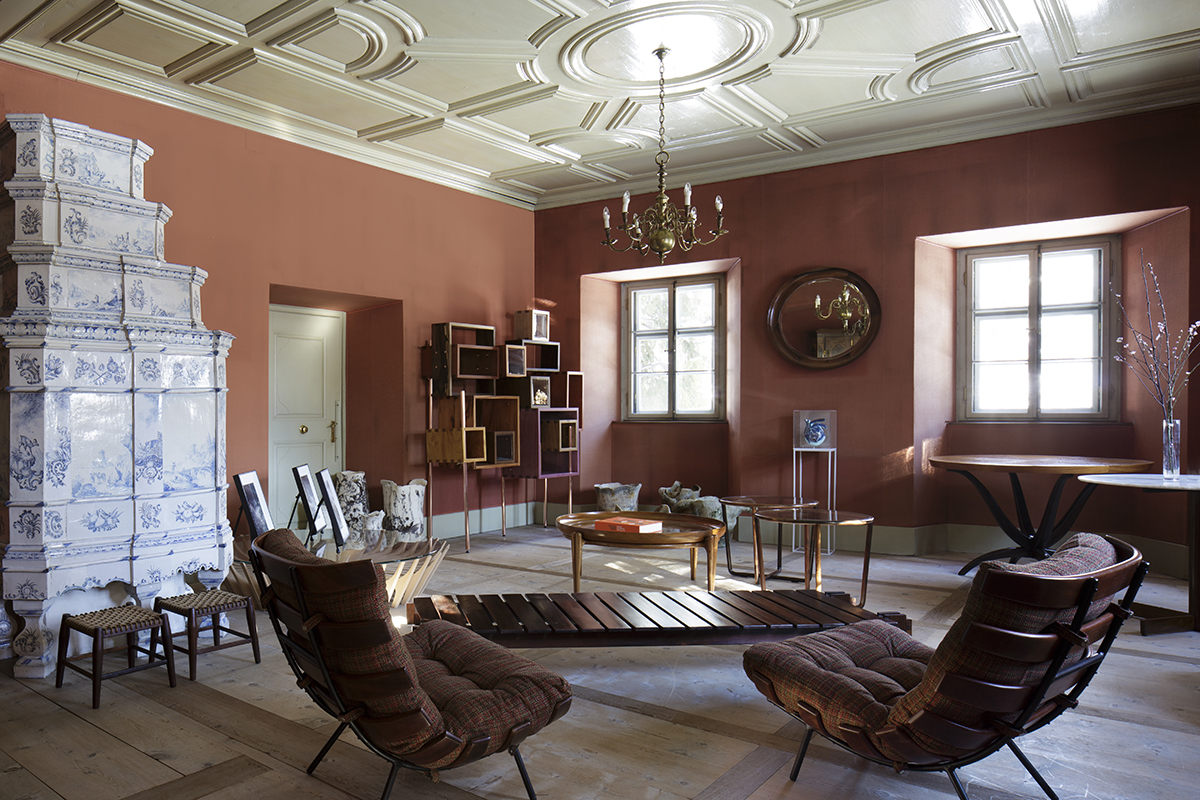
Italian design studio Draga & Aurel’s ‘Mimetic Dialogues’ took inspiration from the Alpine setting of St. Moritz
Earlier this month, the invitation-only design fair NOMAD returned to St. Moritz for its third edition, showcasing collectible objects and furniture in the grand setting of Chesa Planta mansion. Rebecca Anne Proctor shares her highlights from the fair
Giustini/Stagetti Rome
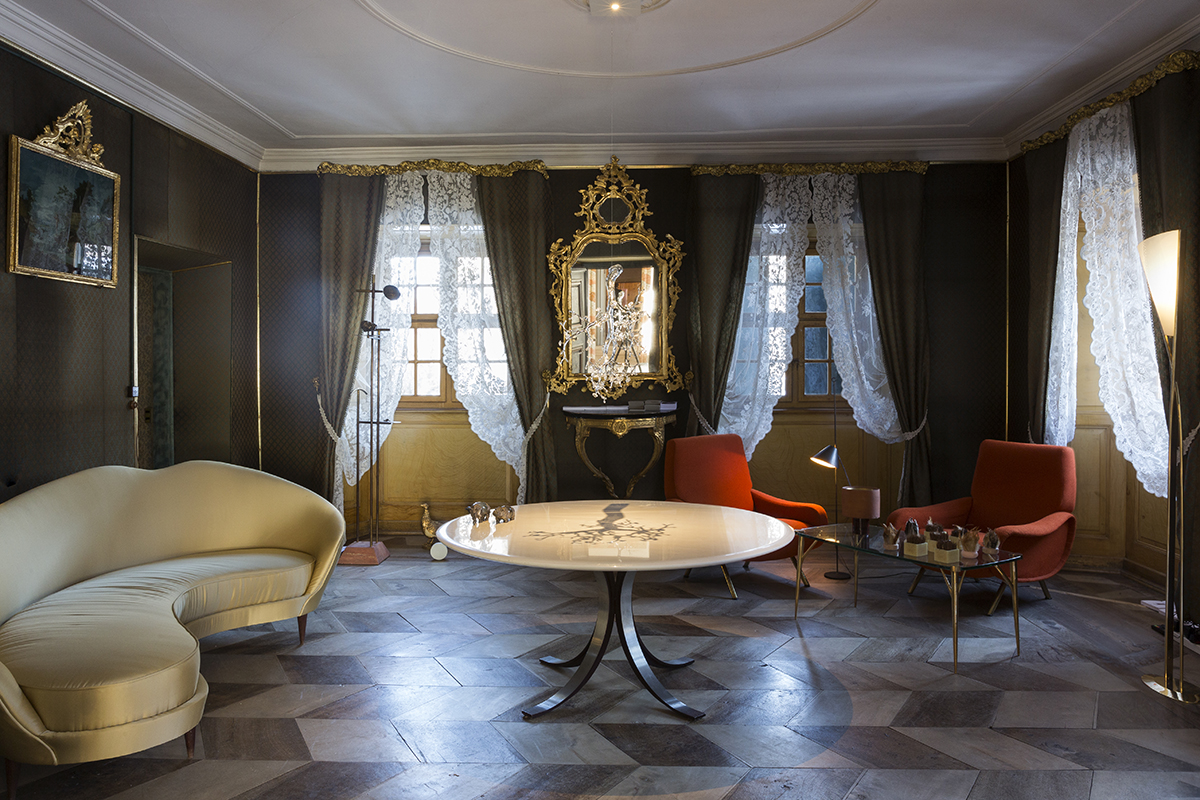
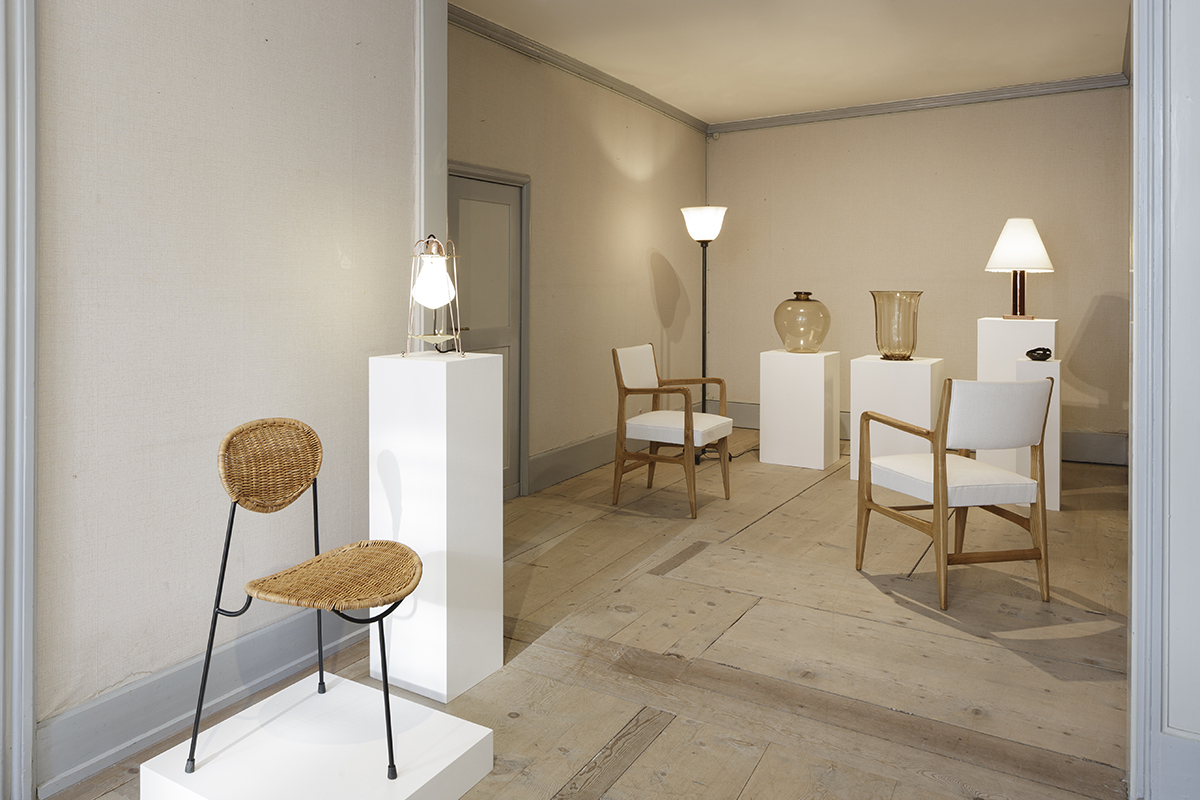
Roberto Giustini and Stefano Stagetti’s gallery favoured a minimalist aesthetic to showcase pieces from Italian design masters such as Gio Ponti, Franco Albini and Gino Sarfatti alongside a selection of international contemporary designers. Andrea Anastasio‘s collection of glazed ceramic ‘blossoming’ white vases, Giacomo Moor‘s ash and olive wood desk, and Paolo Tilche‘s wicker chair were amongst our favourites.

Giustini/Stagetti Rome at Nomad St. Moritz
The Masters by Au Départ + Mazzoleni
Founded in 1934 as one of four original Parisian luxury trunk makers, Au Départ was reborn in 2019 with a fresh collection of products designed for the contemporary globetrotter. The NOMAD exhibition showcased the company’s collaboration with Mazzoleni art gallery, displaying a new line of bags alongside exclusive carpets by Illulian Design Studio that have shaped Au Départ’s physical environments since its launch. On the walls, were striking works by Italian post-war artists such as Agostino Bonalumi, Alberto Burri, Enrico Castellani and Lucio Fontana.

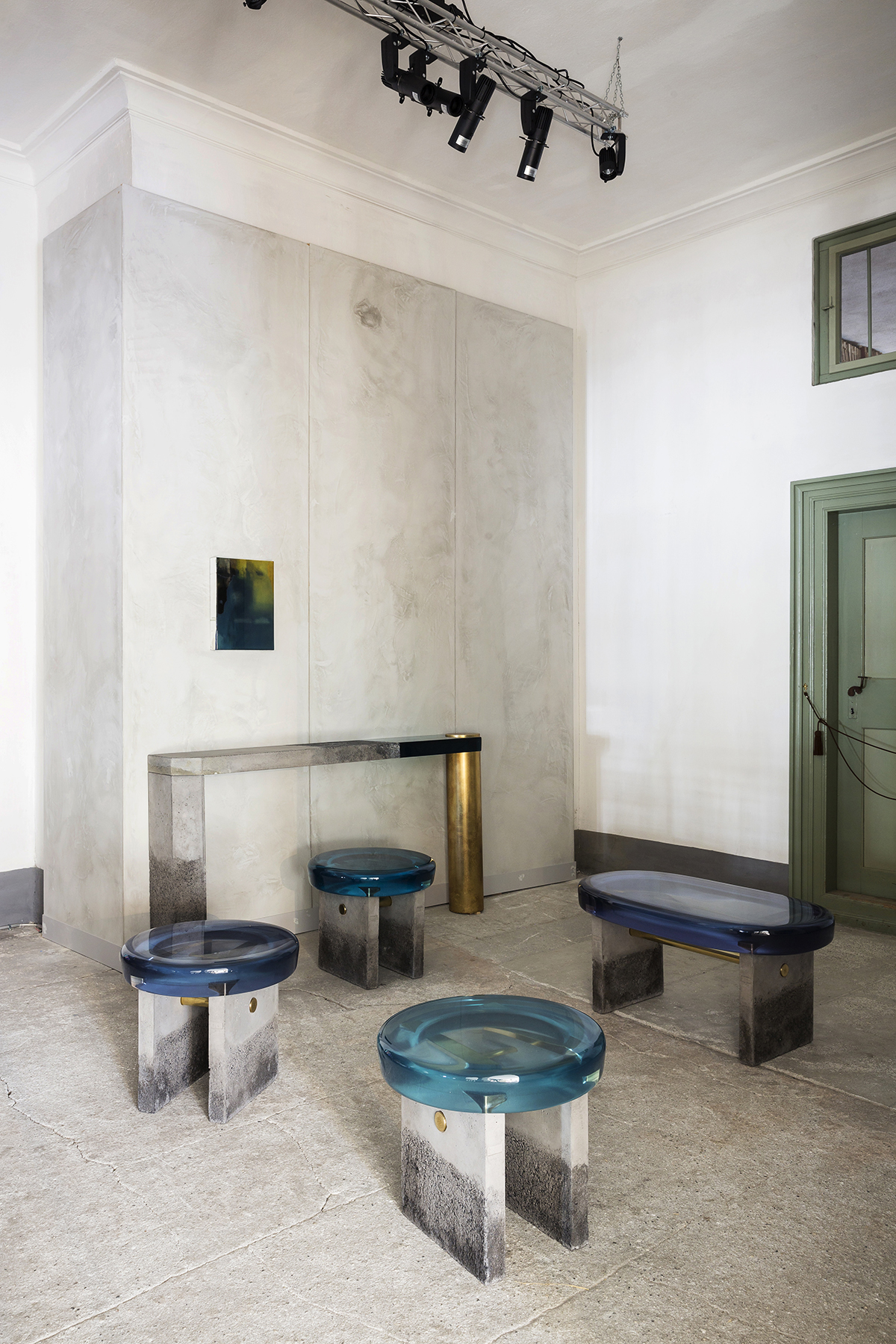
Draga & Aurel’s display featured resin-topped furnishings
Mimetic Dialogues by Draga & Aurel
Multi-disciplinary Italian design studio Draga & Aurel’s presented a unique display of sculpture pieces made especially for Nomad and inspired by the Alpine setting. We loved the glassy resin-topped stools and benches set on industrial cement bases.

Volumnia at Nomad St. Moritz
Volumnia
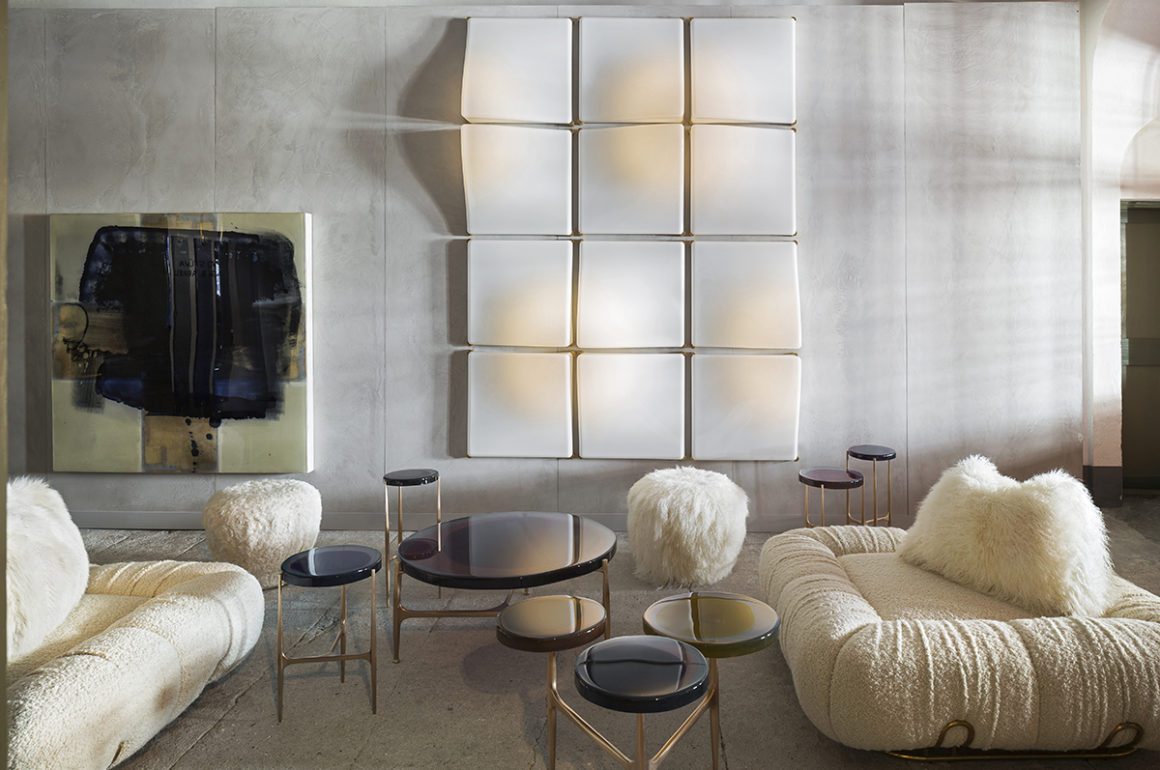
Gallerist Enrica de Micheli‘s newly opened art and design platform Volumnia presented a selection of renowned Italian design objects including a rare coffee table and lamp by Max Ingrand for Fontana Arte, Lady armchairs by Marco Zanuso for Arflex and a sofa by Federico Munari, alongside contemporary pieces such as a Mongolian fur carpet by Pier Francesco Cravel and Marcello Bonvini, and a chandelier by Simone Crestani and Davide Groppi.

Mercado Moderno at Nomad St. Moritz
Mercado Moderno
Rio de Janeiro-based Mercado Moderno presented voluptuous and earthy interiors from the likes of the Mameluca Studio, Gisela Simas, Gustavo Bittencourt and Inês Schertel. The most striking piece on display was the Cafofo Shelf by Mameluca Studio, which was custom-made for the exhibition space. Inspired by Brazilian natural diversity, the shelf offers an alluring multi-level assembly in various woods.
Find out more: nomad-circle.com
Recent Posts
Archives
- December 2025
- November 2025
- October 2025
- September 2025
- August 2025
- July 2025
- June 2025
- May 2025
- April 2025
- March 2025
- February 2025
- January 2025
- December 2024
- November 2024
- October 2024
- September 2024
- August 2024
- July 2024
- June 2024
- May 2024
- April 2024
- March 2024
- February 2024
- January 2024
- December 2023
- November 2023
- October 2023
- September 2023
- August 2023
- July 2023
- June 2023
- May 2023
- April 2023
- March 2023
- February 2023
- January 2023
- December 2022
- November 2022
- October 2022
- September 2022
- August 2022
- July 2022
- June 2022
- May 2022
- April 2022
- March 2022
- February 2022
- January 2022
- December 2021
- November 2021
- October 2021
- September 2021
- August 2021
- July 2021
- June 2021
- May 2021
- April 2021
- March 2021
- February 2021
- January 2021
- December 2020
- November 2020
- October 2020
- September 2020
- August 2020
- July 2020
- June 2020
- May 2020
- April 2020
- March 2020
- February 2020
- January 2020
- December 2019
- November 2019
- October 2019
- September 2019
- August 2019
- July 2019
- June 2019
- May 2019
- April 2019
- March 2019
- February 2019
- January 2019
- December 2018
- November 2018
- October 2018
- September 2018
- August 2018
- July 2018
- June 2018
- May 2018
- April 2018
- March 2018
- February 2018
- January 2018
- December 2017
- November 2017
- October 2017
- September 2017
- August 2017
- July 2017
- June 2017
- May 2017
- April 2017
- March 2017
- February 2017
- January 2017
- December 2016
- November 2016
- October 2016
- September 2016
- August 2016
- July 2016
- June 2016
- May 2016
- April 2016
- March 2016
- February 2016
- November 2015
- September 2015
- June 2015
- May 2015
- March 2015
- September 2014
- August 2014
- July 2014
- May 2014
- April 2014
- March 2014
- February 2014
- January 2014
- December 2013
- November 2013
- October 2013
- September 2013
- August 2013
- July 2013
- June 2013
- April 2013
- March 2013
- February 2013
- September 2012
- July 2012
- June 2012
- March 2012
- February 2012
Categories
- Adventure Travel Issue
- Aesthete Issue
- Architecture
- Art & Design
- Art & Photography
- Art collectors
- Autumn 19
- Autumn/Winter 2020/2021
- Autumn/Winter Issue
- Bespoke Issue
- Business
- Cars
- Cars & Collectibles
- Case Study
- Celebrities
- Culture
- Culture Issue
- Design Issue
- Dining Issue
- Earth Issue
- Family Issue
- Fashion & Jewellery
- Features
- Food
- Future Luxury Issue
- Health
- Hedonism Issue
- Image Issue
- Italy Issue
- Latest Stories
- Leaders & Philanthropists
- Leaders Slider
- Love Issue
- Luxury Travel Issue
- New Luxury Issue
- Online Exclusive Slider
- Opinion
- Spring 2020
- Summer 19 Issue
- Summer 2020
- Summer 2021
- Sustainability
- Taste Issue
- The Beauty Issue
- Travel
- Uncategorized
- Water Issue
- Winter 19 Issue
Popular Posts
Categories
- Adventure Travel Issue
- Aesthete Issue
- Architecture
- Art & Design
- Art & Photography
- Art collectors
- Autumn 19
- Autumn/Winter 2020/2021
- Autumn/Winter Issue
- Bespoke Issue
- Business
- Cars
- Cars & Collectibles
- Case Study
- Celebrities
- Culture
- Culture Issue
- Design Issue
- Dining Issue
- Earth Issue
- Family Issue
- Fashion & Jewellery
- Features
- Food
- Future Luxury Issue
- Health
- Hedonism Issue
- Image Issue
- Italy Issue
- Latest Stories
- Leaders & Philanthropists
- Leaders Slider
- Love Issue
- Luxury Travel Issue
- New Luxury Issue
- Online Exclusive Slider
- Opinion
- Spring 2020
- Summer 19 Issue
- Summer 2020
- Summer 2021
- Sustainability
- Taste Issue
- The Beauty Issue
- Travel
- Uncategorized
- Water Issue
- Winter 19 Issue


Recent Comments