

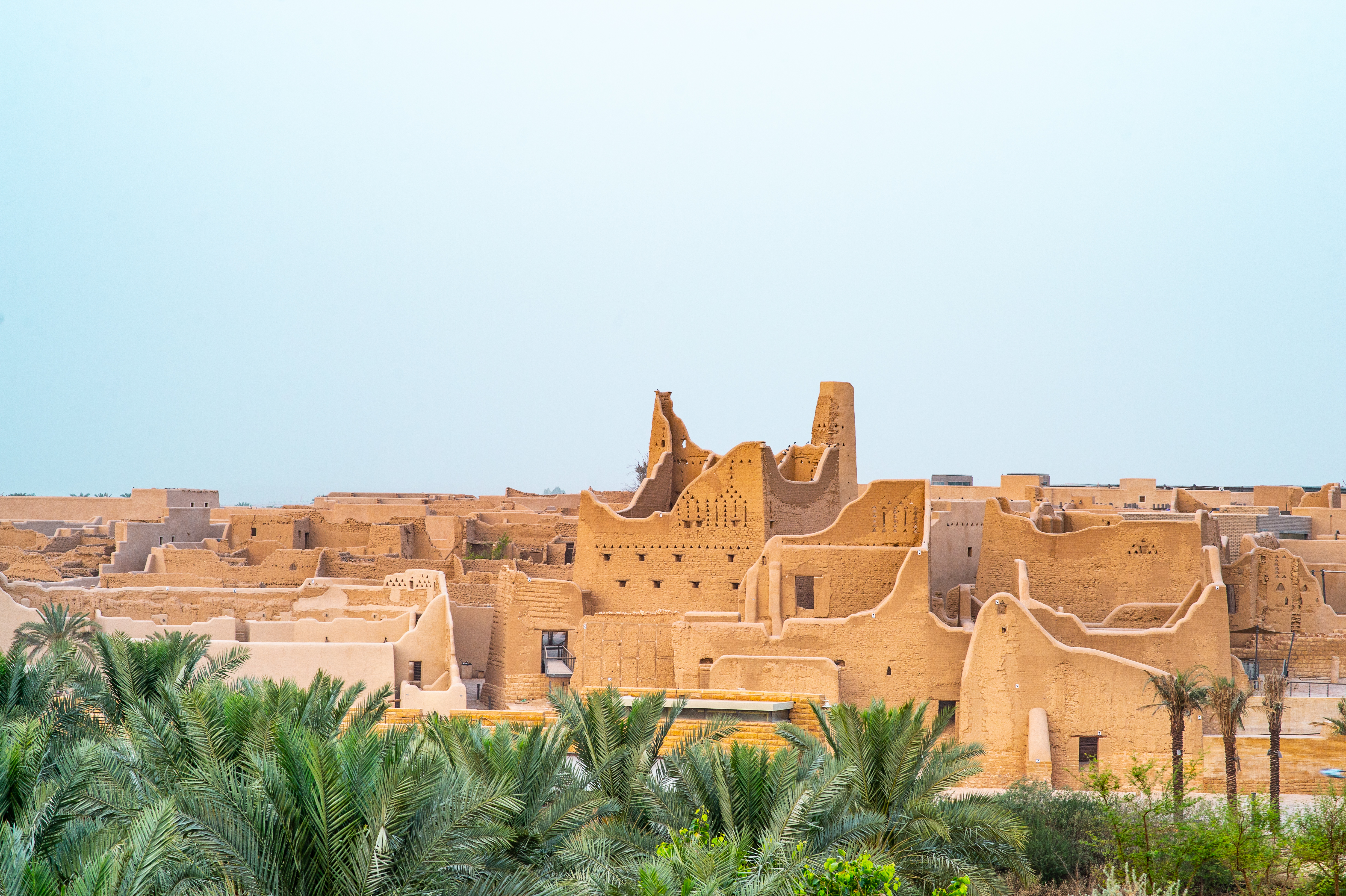
A view of Salwa palace in At-Turaif, a UNESCO site in Saudi Arabia and heart of the new Diriyah development
A vast development on the outskirts of Riyadh, Diriyah is being built around the foundations of the kingdom’s historic capital. Combining culture, leisure, education, and plenty of terraces where you can sip (alcohol-free) cocktails with a view, it could just be the most important of Saudi Arabia’s gigaprojects, reflects Editor-in-Chief Darius Sanai after a recent visit
Along a huge, sunny valley, boutique super luxury resorts sprout like oases on hillside crests. In the middle of the valley is a 27 hole golf course, designed by Greg Norman, with the practice fairway nestled in its own private valley. Resorts have dramatic sunset views (or sunrise if you are so inclined), there is a riding stables, polo field, hiking, biking and riding trails. In between the resorts is a scattering of high end super luxury homes, nestled in their own grounds.
Follow LUX on Instagram: @luxthemagazine
You probably wouldn’t guess that this scene was in Riyadh, capital of Saudi Arabia (or technically just outside), And in reality it isn’t quite like that yet, but it will be very soon. I visited recently and saw the luxury resorts, to be operated by Aman, Faena, Oberoi and other luxury hotel brands, topping out. Plantations were being planted, roads built, and the golf clubhouse was so complete that you could hit balls down the practice fairway in the presence of a pro, appropriately sourced from Scotland. Although all around, the rest of the scheme is very much a work in progress.
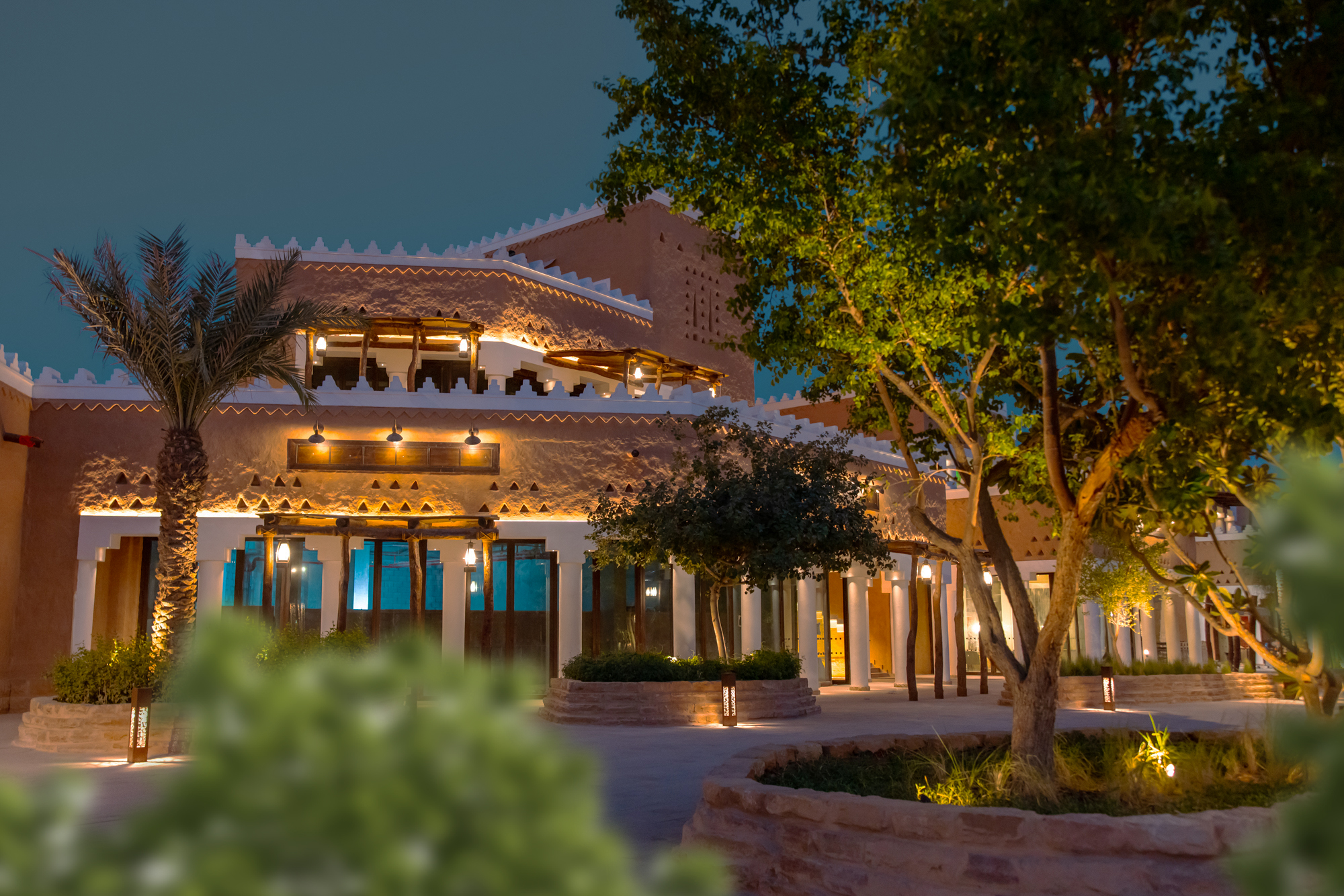
The Bujairi Terrace in Diriyah. Unlike the city of Riyadh, the new development features organic architecture and colours
Wadi Safar, the “Bel Air of Arabia”, it’s just one part of the vast Diriyah development just outside Riyadh. You could even call it a small part, even though Wadi Safar is itself the size of Manhattan and roughly the same shape, a valley a few kilometres wide and a few kilometres longer, enclosed by cliffs.
Diriyah itself is an entire new city, built out of the ruins of quite an old one, the former capital of the country that was raised to the ground by an Ottoman invasion. Not that much remains of old Diriyah, but what there is has been lovingly restored and reconstructed and around it a cultural city has been and is being created.
It’s the biggest project of its type in the world, and probably in the history of the world – perhaps Romulus and Remus building Rome at the bidding of the she-wolf might have matched it.
The official statistics provided to media say that this government-driven plan will create over 180,000 jobs, include nearly 40 luxury hotels, including The Ritz-Carlton, Baccarat, Armani, Raffles, Faena, and Chedi, 18,000 residences, including 300 branded residences, and 566,000 sqm of lifestyle retail and F&B offerings, among much else. (As such, it will also likely double the world’s annual sales of “nosecco” and ingredients for zero-alcohol cocktails, as all those F&B offerings and luxury hotels are still alcohol-free, Saudi being a “dry” country in more ways than one.)
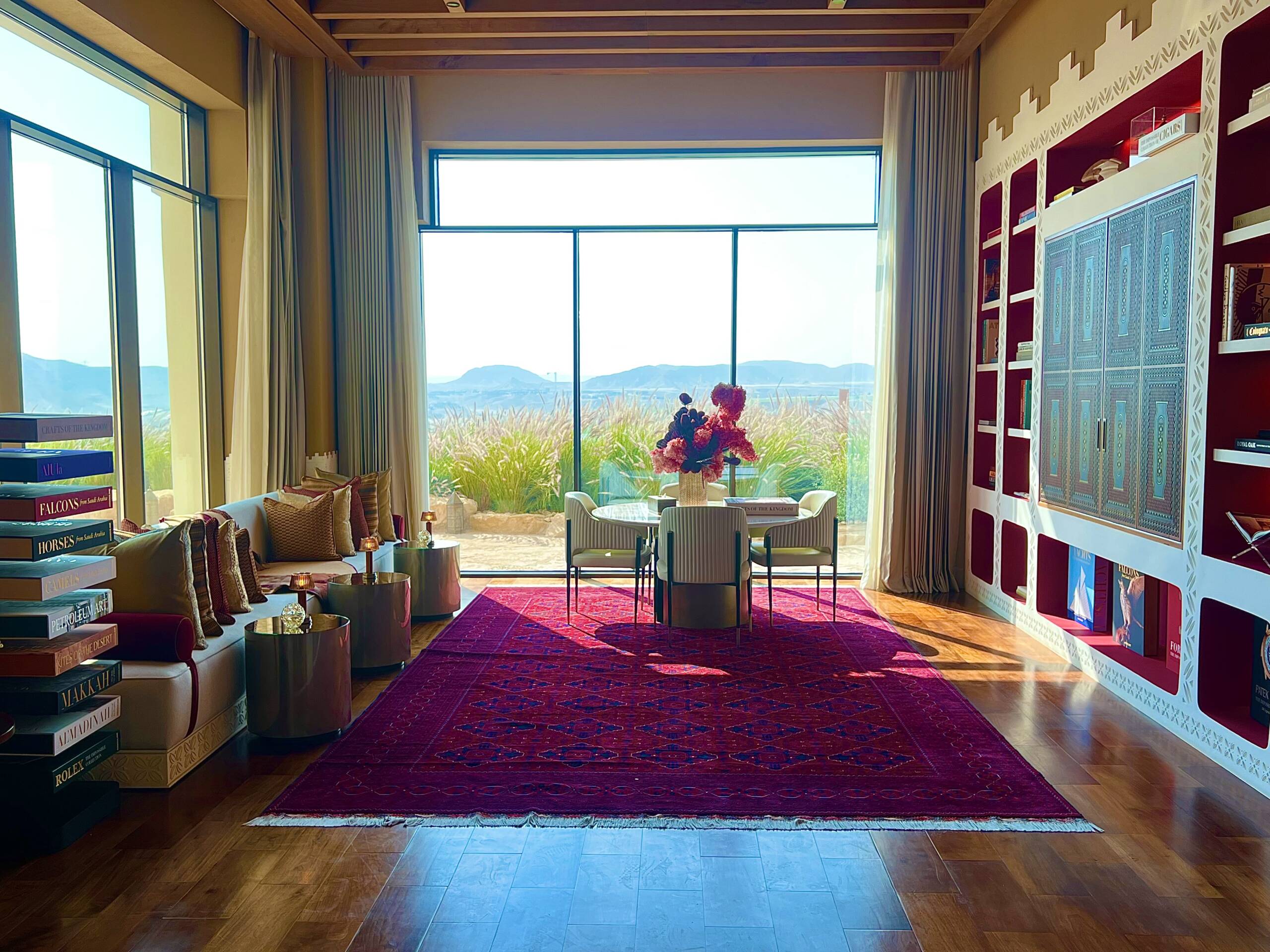
Wadi Safar, being built now, is one of the world’s most ambitious luxury residential developments, with a 27-hole golf course and riding stables at its heart (photograph by the author)
We in the media have been hearing about the Diriyah development for years; since the place nothing but cliffs, desert scrub, and a few historical ruins – so it was fascinating to finally visit and see some of the projections in the original plan actually spring to life.
Diriyah itself is in a strategic location, on a series of cliffs outside what is now the sprawling and rather featureless modern city of Riyadh. Unlike the capital city, Diryah has, in places, relief, cliffsides and views. The developers have been sure to highlight and create features aplenty in Diriyah.
Read more: Rachel Verghis interviews Sam Falls
You can walk along a cliff top, lined with restaurants and cafés, across a walkway to the ancient palace (part restored) and look at an artful reconstruction of the family tree of Al-Saud family, while weaving your way through the old and restored buildings and surrounding courtyards and walkways. You see history in a way you never could before, here. Bujairi Terrace, where the restaurants and cafes reside, is actually a place you could imagine chilling out on a date, 0% Margaritas in hand.
Elsewhere you find the Futures Museum, which opened with a spectacular show by the brilliant digital artist Refik Anadol.
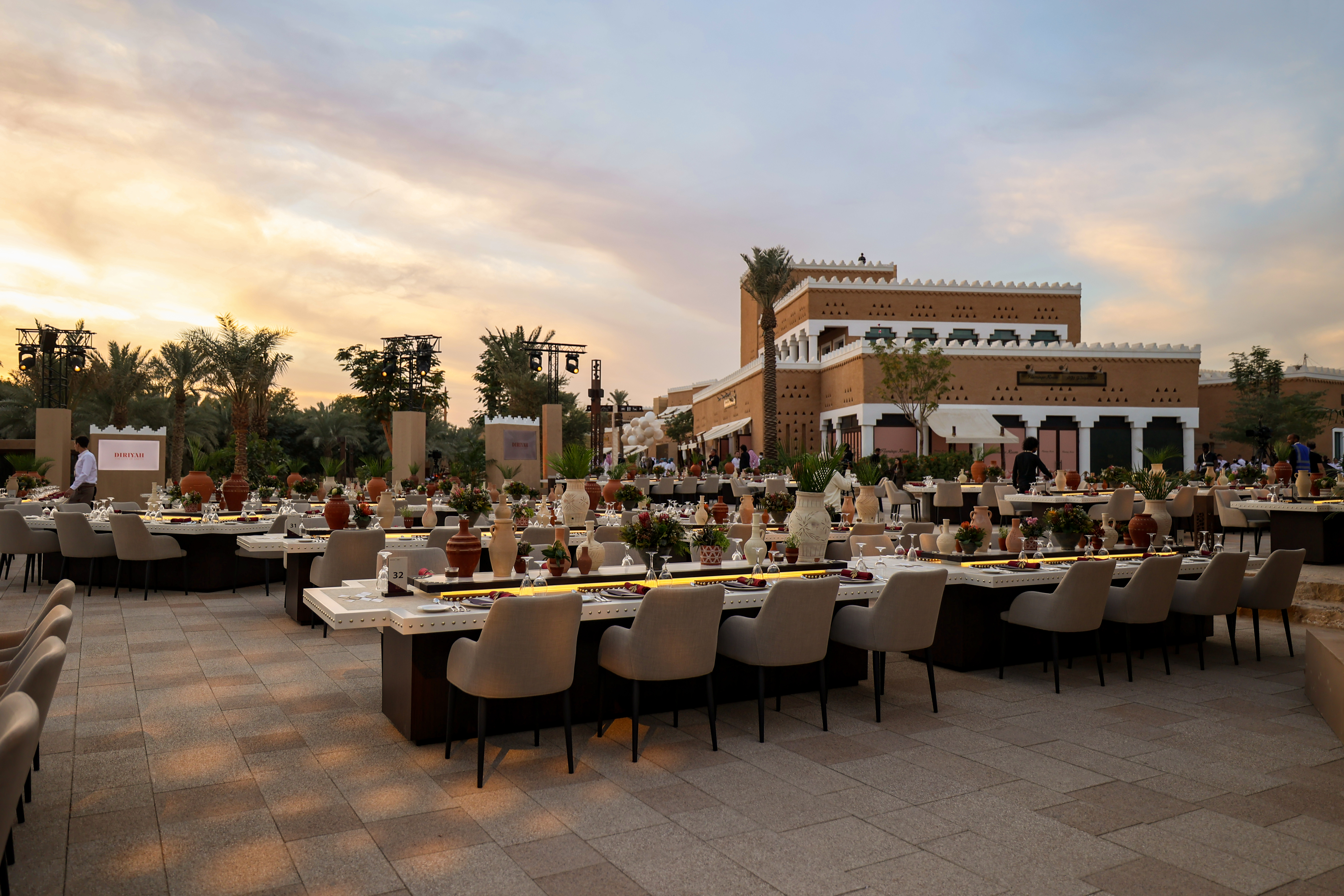
The Bujairi Terrace offers high-class dining and views
I do wonder why they don’t make more of art as a conveying and legitimising force in what is after all a new cultural city, but was told the designated arts district of JAX is in a different part of Riyadh – although art in real life, and its collectors, flows seamlessly with culture and cannot be confined; while luxury retail is about people shopping for brands, art is about endorsement by individuals, which can be immensely valuable for soft-power branding in a place like Diriyah.
Indeed, is notable and admirable that unlike neighbouring Abu Dhabi and Qatar and Dubai, Saudi Arabia has resisted the route of using international brands to create its cultural image. Where Abu Dhabi has the Louvre and Guggenheim, Doha has its Jean Nouvel and IM Pei designed museums and Dubai has Tadao Ando creating a museum of modern art, Diriyah is being remade as a place that highlights Saudi culture with links to the world.
I think this kind of thoughtful approach speaks of a confidence that, guided correctly, will serve the rapidly modernising Kingdom well. Perhaps they will also realise that their cultural narrative is best amplified by cultural leaders (full disclosure: LUX does this with our partnerships with UBS, Richard Mille, Louis Roederer, and our various art and cultural prizes for country partners).
Everywhere in Diriyah the buildings have a pleasing and warm terracotta colour and new buildings are constructed in architectural sympathy with ancient styles, including triangular cooling windows (even though they all obviously now have the fierce air-conditioning needed in this climate).
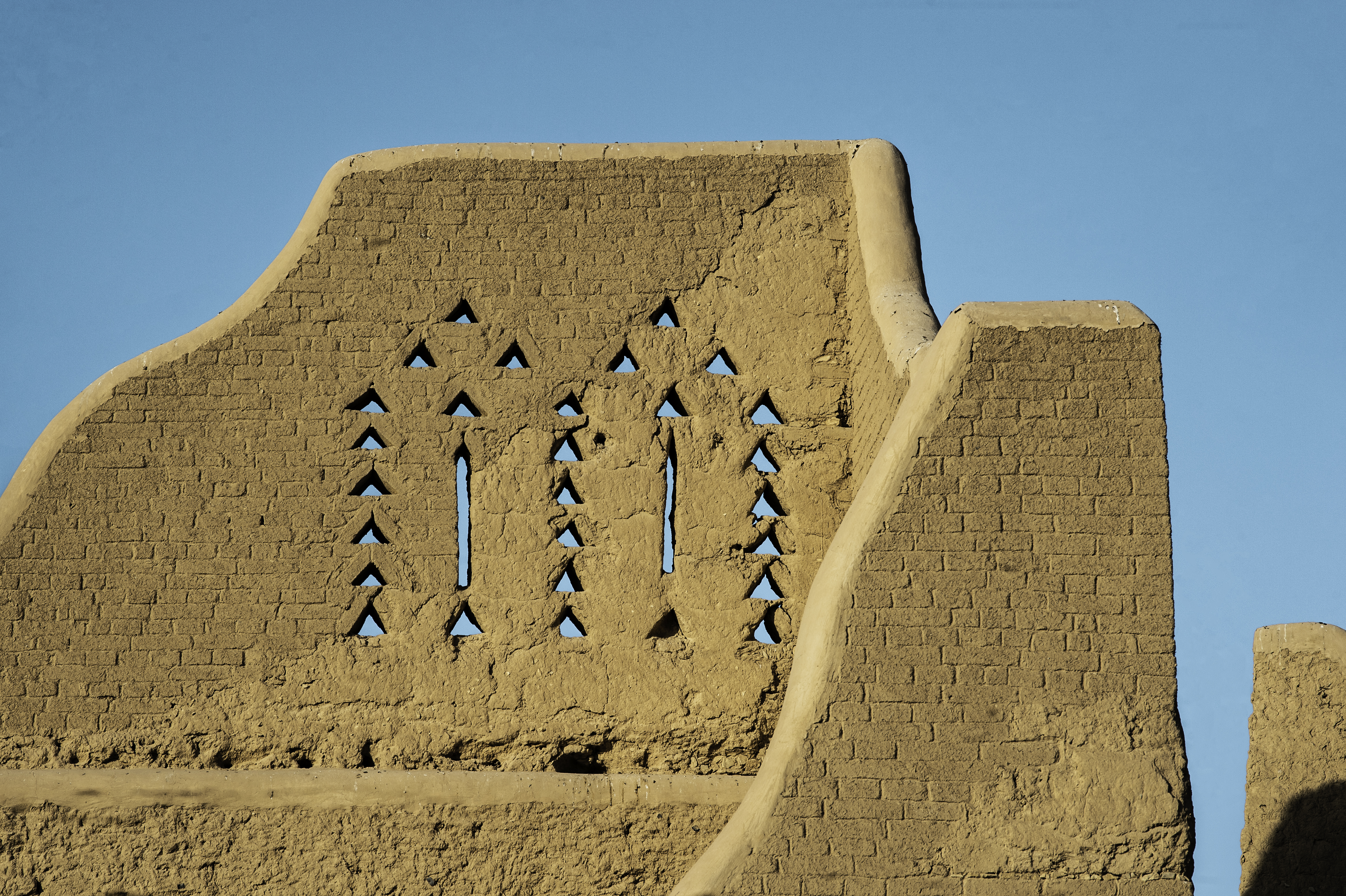
A close up of the ancient walls of At Turaif
A note about the climate: you may think, on hearing that a huge hyper luxury development and cultural city are being developed in Riyadh, that the climate may not favour living there. And if you are partial to northern climates, you may be right. But they said that about Singapore in the 1950s, and more recently about Dubai, Abu Dhabi and Doha, and that has not stopped a vast relocation of wealth to these places. Air conditioning, inside and out can work wonders (regardless of the sustainability concerns).
And there is something about the climate of Riyadh which is actually more attractive than that of Dubai and the Gulf states. Inland, far from the sea, and at an elevation of several hundred metres, it benefits from dry air and cooler nights, and it doesn’t feel like you are wading through hot mud because the humidity is low. Summers are extremely hot, but it’s more like Arizona than Dubai, summer and winter. Less steamy.
Read more: Inside the Monte-Carlo Bay Hotel & Resort
At Diriyah’s heart is the At-Turaif UNESCO World Heritage site; around it is being built cultural hubs like a new opera house, a university, a museum, as well as unimaginable amounts of retail and residential property. Some of it is already there, and you can certainly have the most pleasant experience that Riyadh offers amid the mud-brick architecture of At-Turaif, in outdoor cafes and restaurants (or indoors in the summer). Much of the Diriyah concept, however, still exists only as a sea of arid ground under a forest of cranes.
But things move fast here. The first luxury hotels open next year in Wadi Safar. You can play golf there now. Saudi Arabia is a country in a hurry. There is some justified scepticism about these gigaprojects: The Line, part of the futuristic Neom gigaproject elsewhere in the country, is being reevaluated. Diriyah is at a much more advanced stage, is properly tangible, and most importantly is at the edge of an existing metropolis of more than seven million people, with its international component growing fast. The people we met working on the Diriyah project have the zeal of a new generation determined to reshape their country’s future. Watch this space, and be prepared to be positively surprised.

Recent Comments