
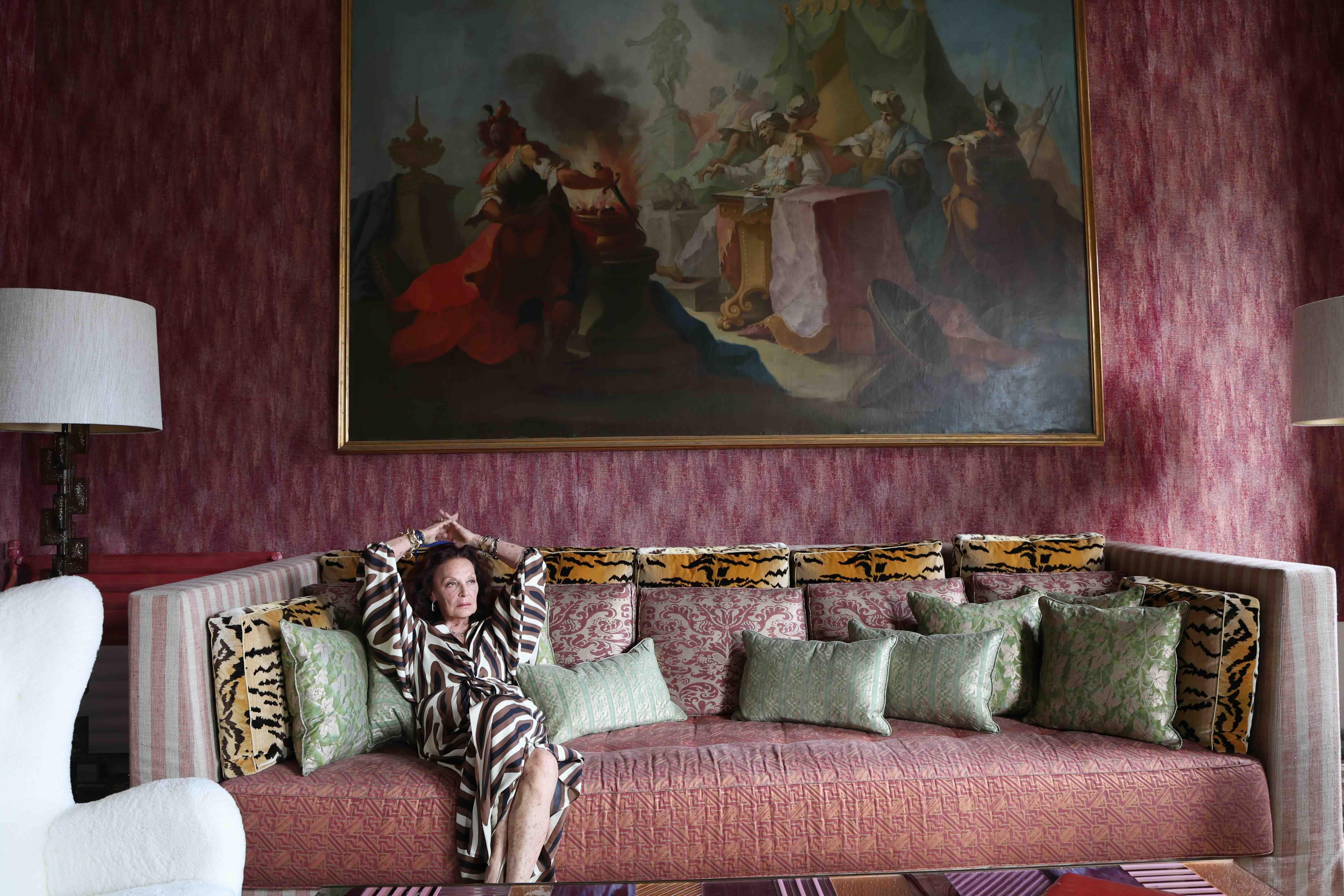
Diane von Furstenberg in the piano nobile apartment of Palazzo Brandolini, photographed by Simon de Pury in Venice

The daughter of a holocaust survivor, Diane von Furstenberg shot to fame in the creative cauldron of 1970s New York, where she created the wrap dress that instantly became fashion heritage and partied with Andy Warhol and his Studio 54 crowd. Now based between NYC and Venice, where she is actively involved in the cultural scene, the cool-as-ice-cream DvF was photographed by Simon de Pury for our Winter 2025 cover in her home in a celebrated Venetian palazzo; she also painted the issue’s LUX logo with inspiration from her adopted hometown

LUX: You reached a position of power during the 1970s when very few women did. What shaped you to do that?

Diane von Furstenberg: Aged 22, my mother spent 13 months in the camps. She came back and she weighed 29 kilos. Nobody could believe she survived, but she did. Her mother fed her like a little bird.

Follow LUX on Instagram: @luxthemagazine

After six months, her fiancé came back from Switzerland, they got married and the doctors said, “You have to wait two or three years before you have a baby, because you’re not going to survive and the child will not be normal.” And sure enough, 12 months later, I was born. And so my mother used to say, “God saved me so that I can give you life. By giving you life, you gave me my life back. You are my torch of freedom.” So I was born with a torch of freedom in my hand, which could be a little heavy for a little girl, but actually it was a blessing because it forced me to be responsible for myself from day one. My mother taught me two things: fear is not an option. And the other thing: never be evicted. And that’s that.
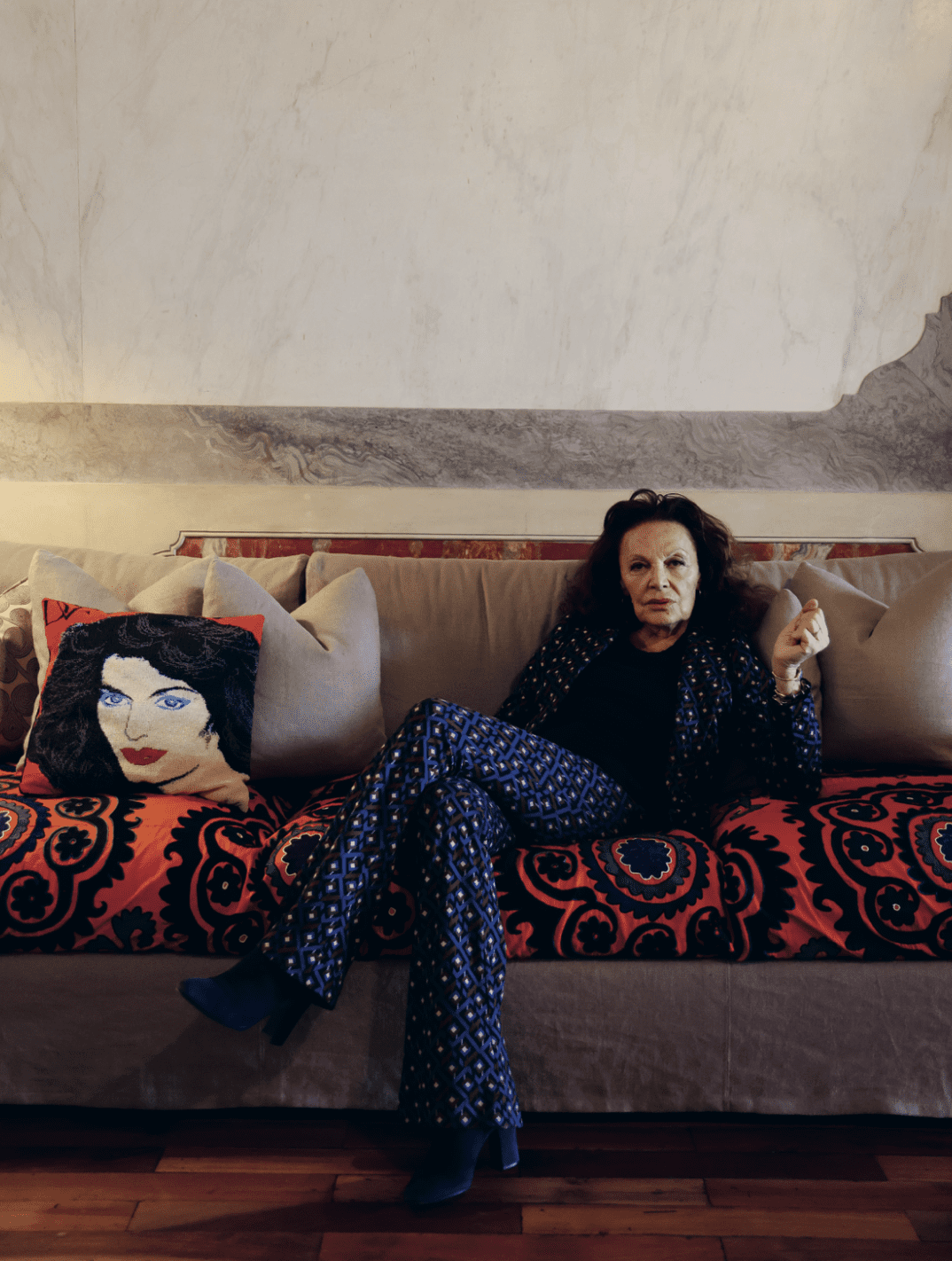
Diane von Furstenberg photographed at her apartment in Palazzo Brandolini, Venice, 2025, by Simon de Pury

LUX: It is an incredible story.

DvF: So I live the adventure of my life and still today, this morning, in my diary I wrote, “I have such a strange life. I improvise every day.” I mean, it’s an improvisation that I decided to have Venice be the stage for the winter of my life. It’s not particularly original, because a lot of eccentric older women decided to live in Venice, but anyway.

The other thing about my life that I think is special, even at my age, is agility. I have written in my diary every day, all my life. Every year, because I’m born on New Year’s Eve, I choose a couple of words for the year. Two years ago, it was gratitude and clarity. Last year, what was it? Oh, intention, manifestation, and this year was strength, kindness, agility. Agility – especially today when no one knows what the fuck is happening – agility is very important.

LUX: A recent documentary about you was called Diane von Furstenberg: Woman in Charge. What does being in charge mean to you?

DvF: To be in charge is first and foremost a commitment to yourself. It’s owning who you are. You own your imperfections; they become your assets. You own your vulnerability; you turn it into strength. It’s about being true to yourself, and it’s an ongoing process you need to practise every day. When you’re very high because you’re successful, you remind yourself, “Don’t believe your own bullshit.” And when things are tough, you say, “Ok, one door closed, another one will open.” Whatever is happening, you own it. You have no choice.
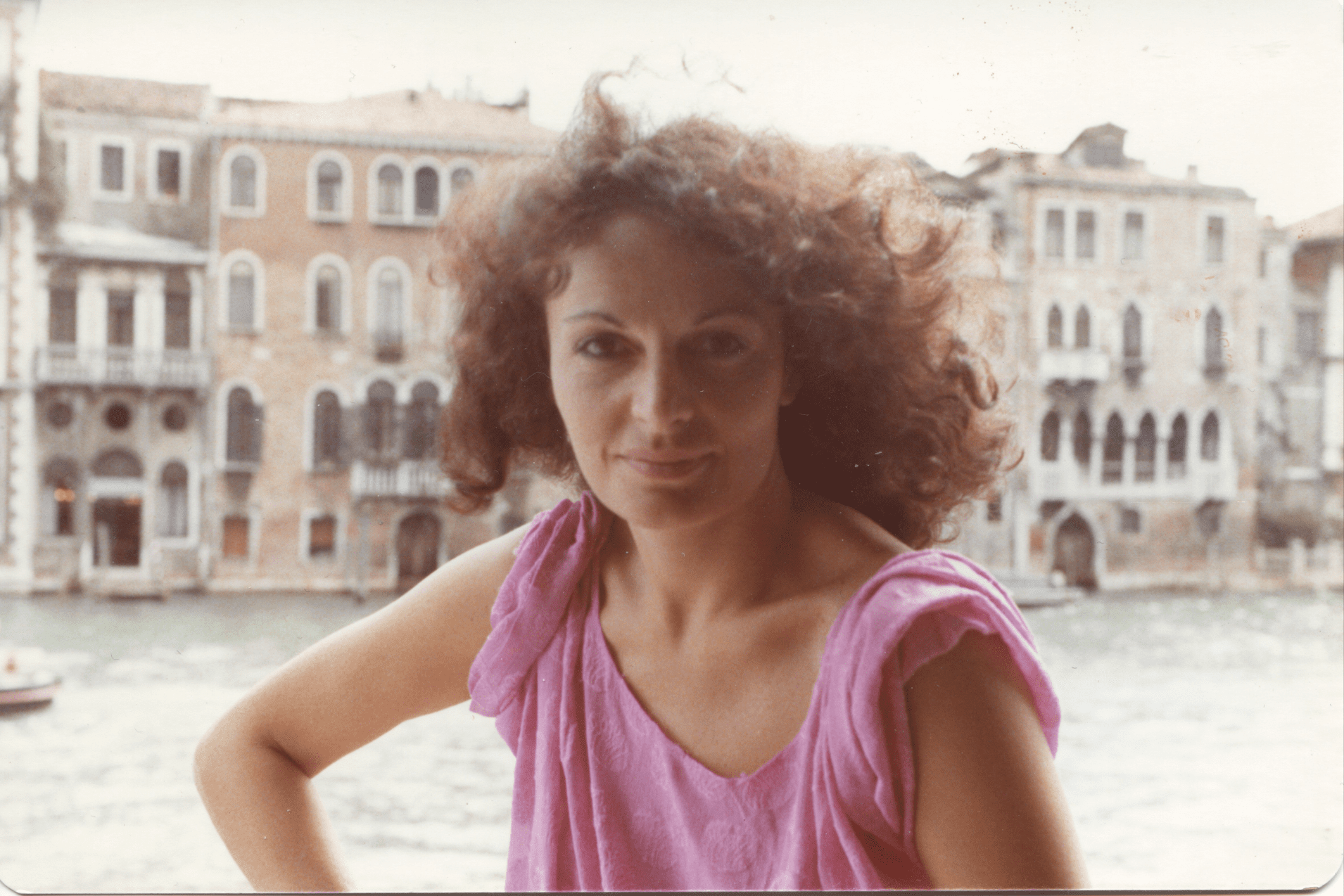
A photograph from an earlier time in Venice, from Diane von Furstenberg’s personal collection

LUX: You moved into the piano nobile apartment of the Palazzo Brandolini last year. Can you tell us about your relationship with Venice?

DvF: The first time I visited Venice, I was 17. We were tourists among others, visiting San Marco, having a delicious lunch in a garden, sliding through the narrow canals in gondolas, absorbing the beauty. I was silent, drinking it all in. But that day, something else was happening. I had fallen in love the night before with a handsome Italian boy and I felt I was a woman for the first time. From that moment, Venice, love and woman became linked forever.

Read more: A sojourn in Egypt

This, of course, is not original. Doesn’t everyone fall in love in Venice? Isn’t it the city where more love vows are made than any other? Three years later, Prince Egon von Furstenberg, the future father of my children, took me to Venice. His mother had a house in the countryside, but his aunt Cristiana lived in the most beautiful palazzo on the Canale Grande.

I will never forget walking into the piano nobile of the Palazzo Brandolini. I had never seen anything more grand, more glamorous. The carved ceilings, the frescoes, the walls with so much history, so many intrigues. I was not a tourist any more. It was the first week of September: the season of lunches, parties, balls and movie stars everywhere for the film festival; a rendezvous of beautiful people. I was in awe.
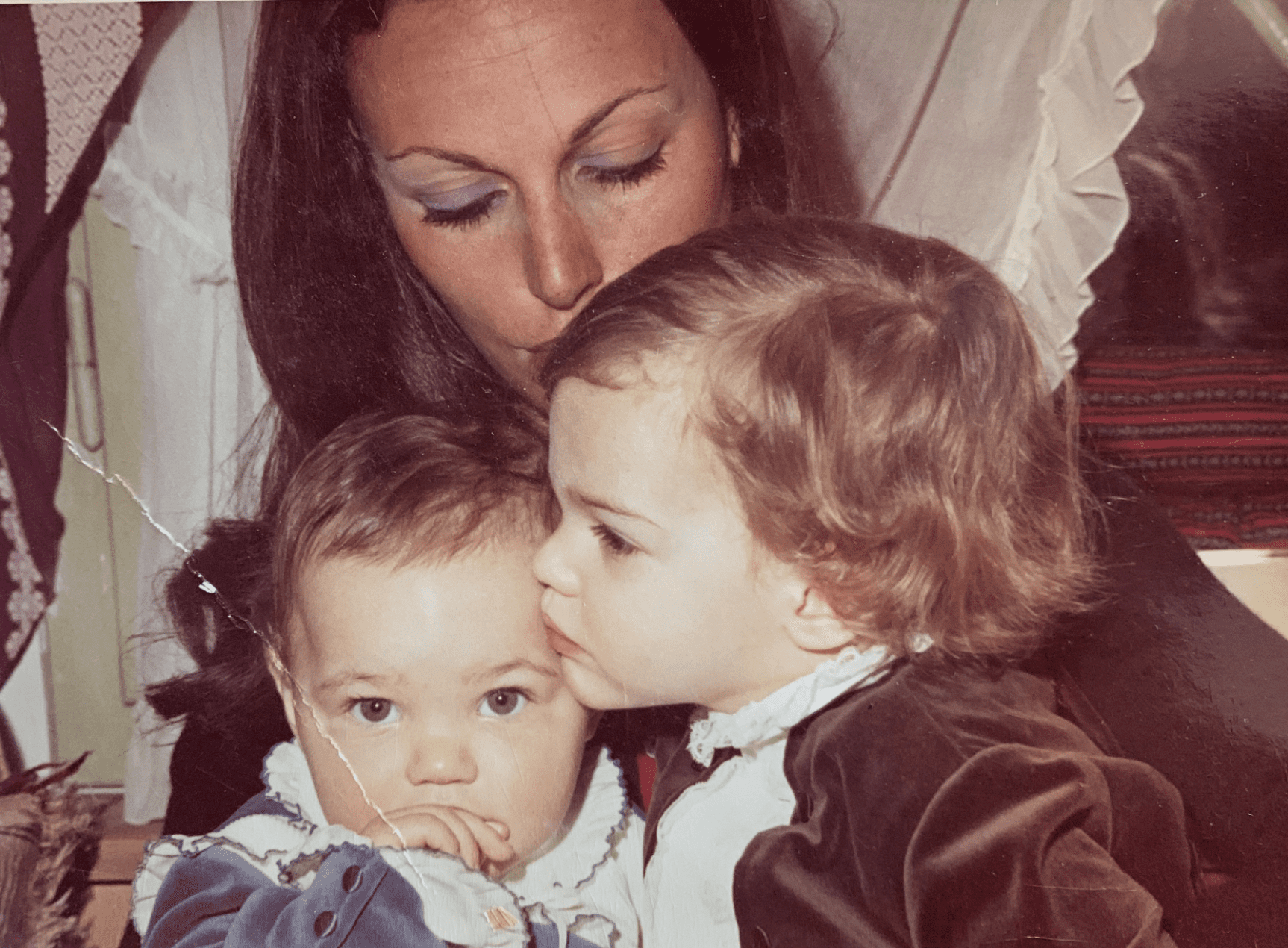
Diane von Furstenberg with her children Tatiana and Alexander, from DvF’s personal archive

From that moment, I came to Venice every year, enjoying the beauty, the exhibitions, the Biennale, the movies, the masquerades. I remember my first week with my daughter, an opera at La Fenice, a beautiful wedding in Torcello, my husband Barry Diller and I sailing into Venice on our schooner, the Eos.

LUX: You created a project for the Biennale Architettura 2025 on this idea of Venice as a woman. How did it come about?

DvF: I read a biography of Venice and discovered her history, creativity, courage and resilience. Some call her la dominante, Queen of the Adriatic or the Bride of the Sea. I identified her as the woman I admire the most, a woman I would like as a mentor, the woman I would have loved to be. To me she is the Serenissima, the ultimate symbol of femininity, elegance and brilliance, a resourceful creature who excels in balancing solution and seduction.

So it is my fantasy to imagine Venezia as the extraordinary woman who has been at the centre of history for 1,600 years, the alchemist who combined utility and creativity, who used her survival skills for triumph and glory. Carlo Ratti, curator of the Biennale Architettura 2025, was amused by my passion for Venezia the woman and invited me to conceive a project.
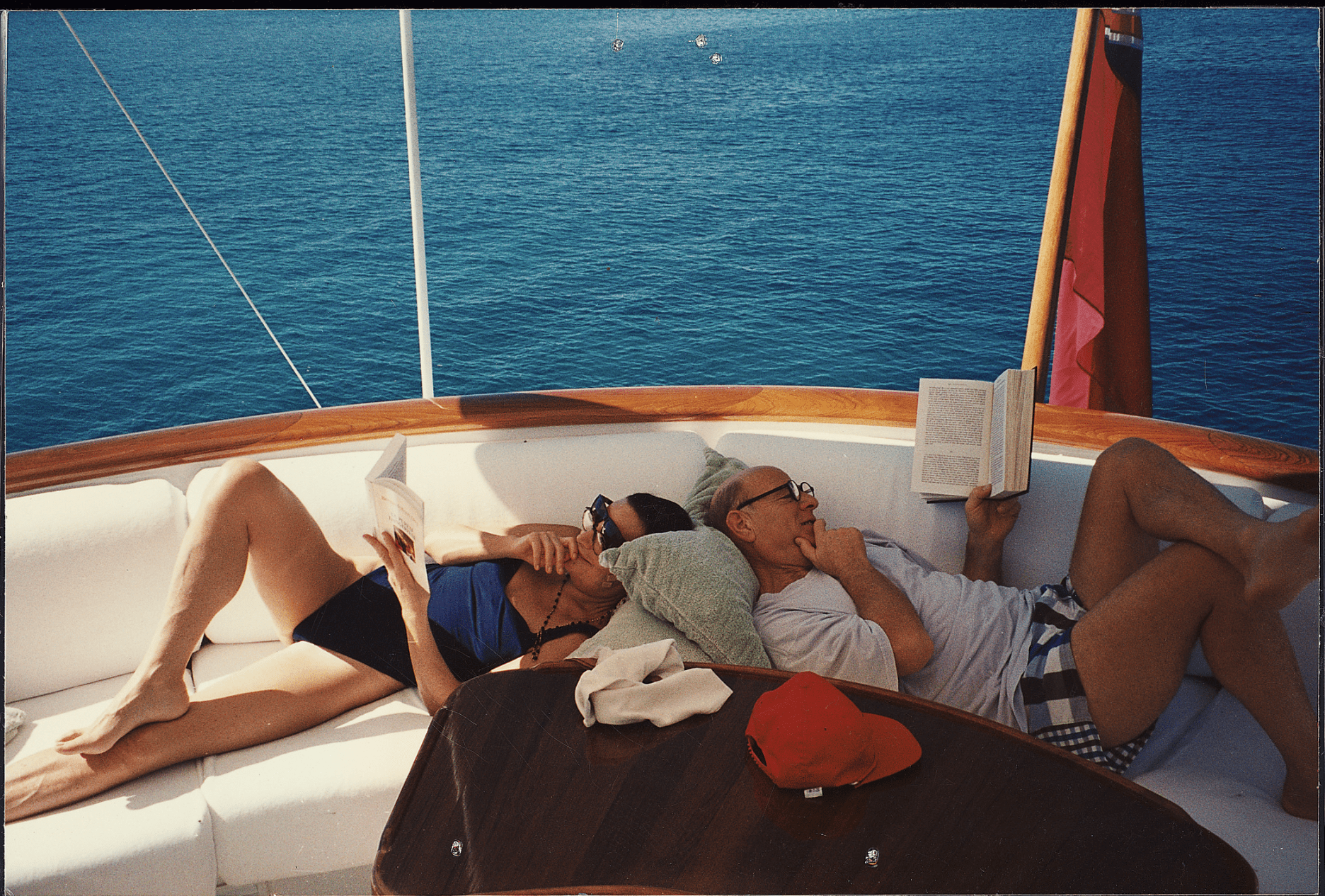
Diane von Furstenberg on the Eos in the Mediterranean with her husband Barry Diller

I researched and imagined the eight major roles Venezia the woman played in history. She’s the master of architecture, the brilliant maritime engineer, the opportunistic merchant that led her to be the financier banker. Above all, she is the muse – the creator of art, the diplomat, justice and, finally, Mother of the Republic.

With this vision, I went to my talented friend the artist Konstantin Kakanias, and asked him to paint the eight scenes of Venezia the woman. I then seduced Tiziana Plebani, historian, writer and true Venetian citizen, to write the stories of Venezia in the first person. Those beautiful artworks appear as large flags and float outside along the bookstore pavilion by New York architect Liz Diller for the Biennale 25. And the book is Serenissima: Solution & Seduction.

Read more: Arch Hades in conversation with Catherine Loewe

LUX: You have spoken about reinvention with Venezia, but is there also reinvention in yourself?

DvF: Definitely. My life now is a reinvention, deciding Venice would be the stage for the winter of my life. Venice is also the original startup innovator, founder of all the logistics of the past millennium, from banking to diplomacy, and I think it has a role to play in the future. So I can assemble a lot of people here and I can try to elevate the debate and that’s what I am now very interested in. Being in charge was always a movement I carried through, but I’ve also discovered the power of kindness. Kindness is a currency. And like money, it compounds, it compounds, it compounds. Generosity is the best investment. Now the movement is about being in charge and the power of kindness.
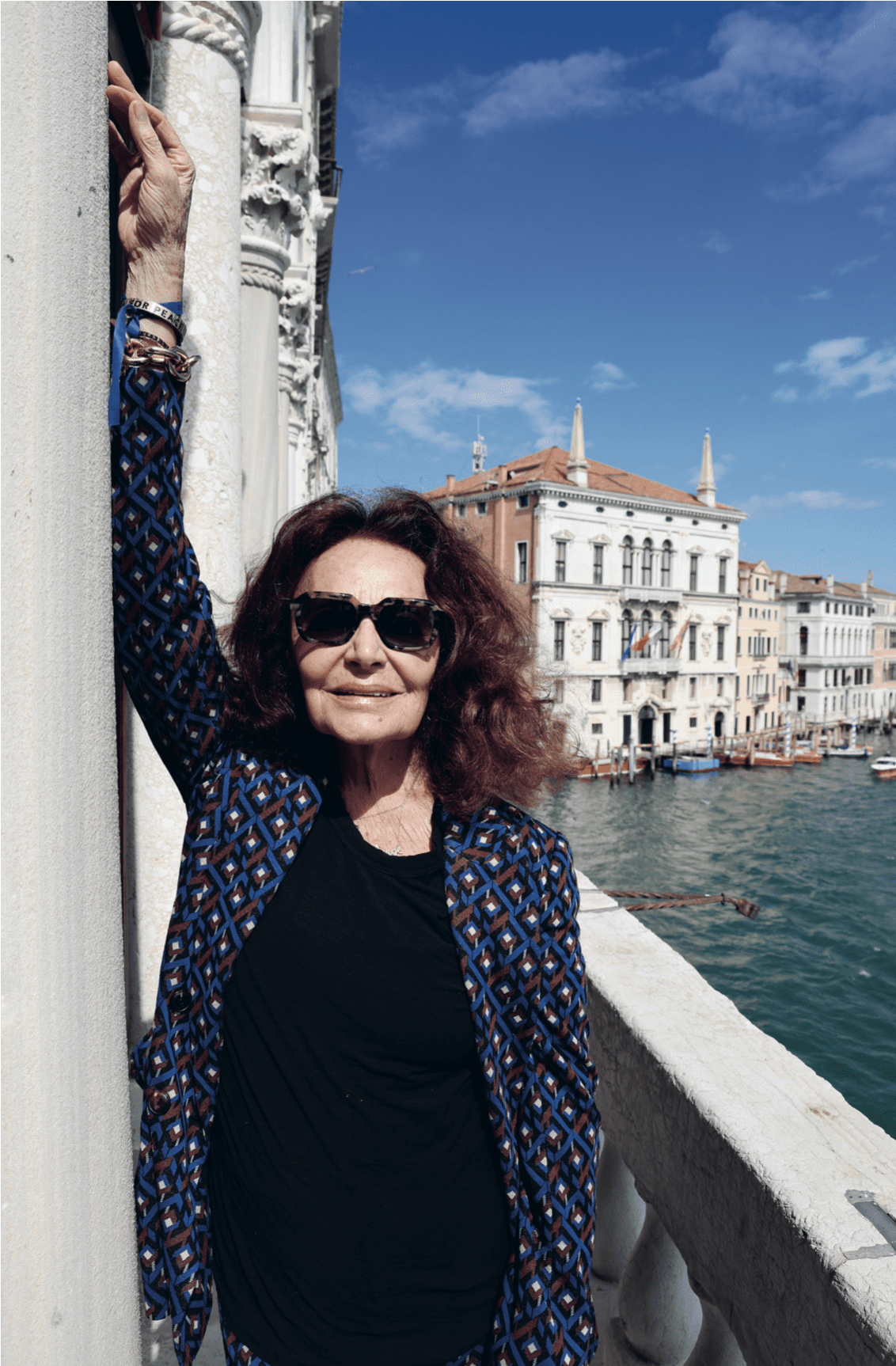
Diane von Furstenberg on her balcony overlooking the Grand Canal, 2025, photographed by Simon de Pury

LUX: As you see Venice as a woman, does that link to how you see your fashion career?

DvF: It’s not really fashion that interested me, it is woman. Two years ago, there was an exhibition about me and my work in Brussels, where I was born, made by a young curator, Nicolas Lor, and he called it “Diane von Furstenberg: Woman Before Fashion”. I’m much more interested in the woman, and so my fashion is timeless.

LUX: Who is the DvF woman?

DvF: She’s many women, but she’s the woman in charge, she’s on the go. And she’s sexy. But she could be many, like all of us, we could be different people. She could be a boss lady. She could be a diva. She could be a hostess.

LUX: You launched your iconic wrap dress in 1973. Women then didn’t have many clothing options in the corporate world. Now there are more, yet we still gravitate towards the wrap dress. Why, do you think?
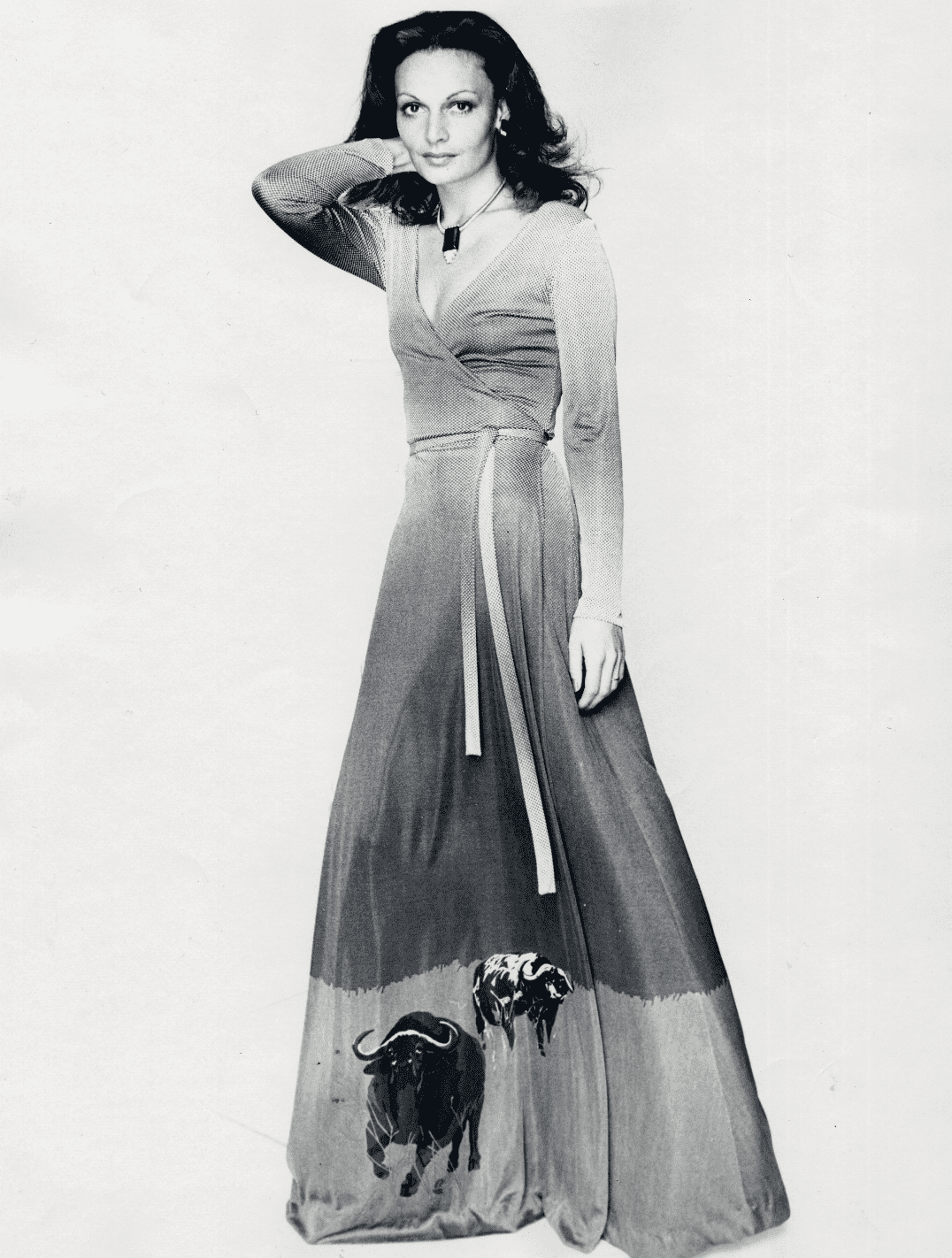
A portrait of Diane von Furstenberg wearing a maxi version of her iconic wrap dress in the 1970s

DvF: Listen, I made the wrap dress, but really, the wrap dress made me. First it was a little wrapped top and then it was a little wrapped top with a matching skirt, and then I turned it into a wrap dress. It’s all about the fabric: printed jersey moulds the body and moves so that you look feline. It looks nice on the body. First, there’s the quality of the fabric, then colour and print, then the style. The style should be very simple: designed, but looking effortless. For a woman to be beautiful there are three things: eye contact, smile and body language.

Read more: The heart of London’s art circuit at the Royal Academy

LUX: Have you ever felt self doubt and had to pick yourself up?

DvF: At least twice a week I wake up and I feel like a loser. You know, only losers don’t feel like a loser, but it doesn’t last. So I constantly question myself. Growing up, I didn’t know what I wanted to do, but I knew the feeling of the woman I wanted to be. I wanted to be a woman in charge. It meant I could travel, I could pay my bills, I could have a man’s life in a woman’s body. And I got that by the time I was 27. Because it was a dress that gave me that, I would go around selling the dress. The more confident I was, the more confident I made millions of women because of a dress. So early on, it became a conduit for me, but I was taking women with me.
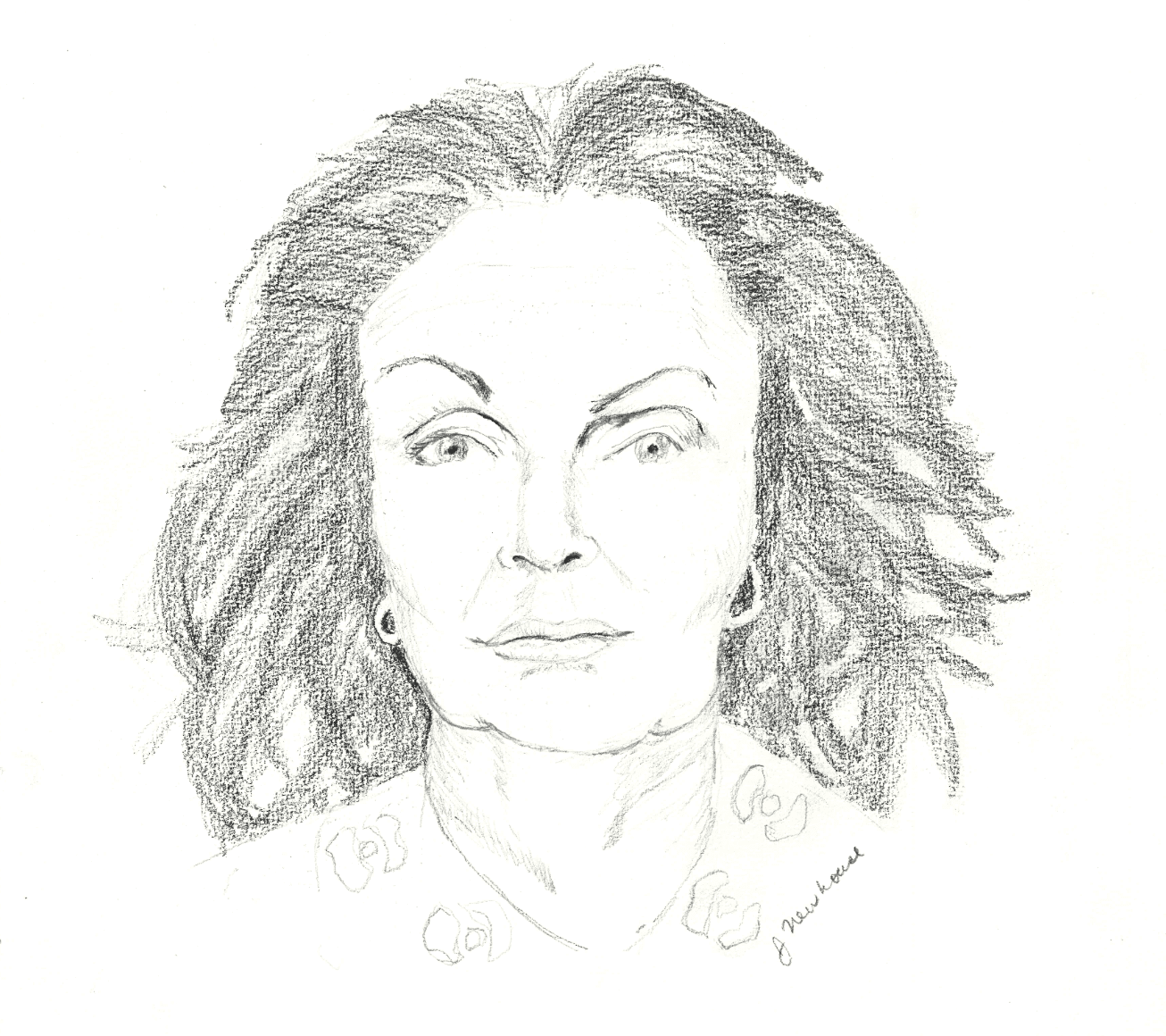
A pencil portrait of Diane von Furstenberg for LUX by Jonathan Newhouse

LUX: When have you feel most proud in your career?

DvF: When I was on the cover of Newsweek aged 27 and they compared me to Coco Chanel. And after I sold my company and started again in 1998 and suddenly it was the young girls who grabbed it, I was proud. Recently, I was proud of the exhibition and Venezia – so, things like that. I have such an odd life, such an odd destiny. That’s why your most important relationship is with yourself, and I advise everyone to write their diaries. It’s important.

LUX: How was your relationship with Andy Warhol, who famously made a silkscreen portrait of you?

DvF: About Andy Warhol, everybody asks, “Oh, how was it?” Well, Andy Warhol was very shy. He was not at all an actor. He was a spectator. He would take pictures of you. He would tape you. You know, he didn’t speak very much.
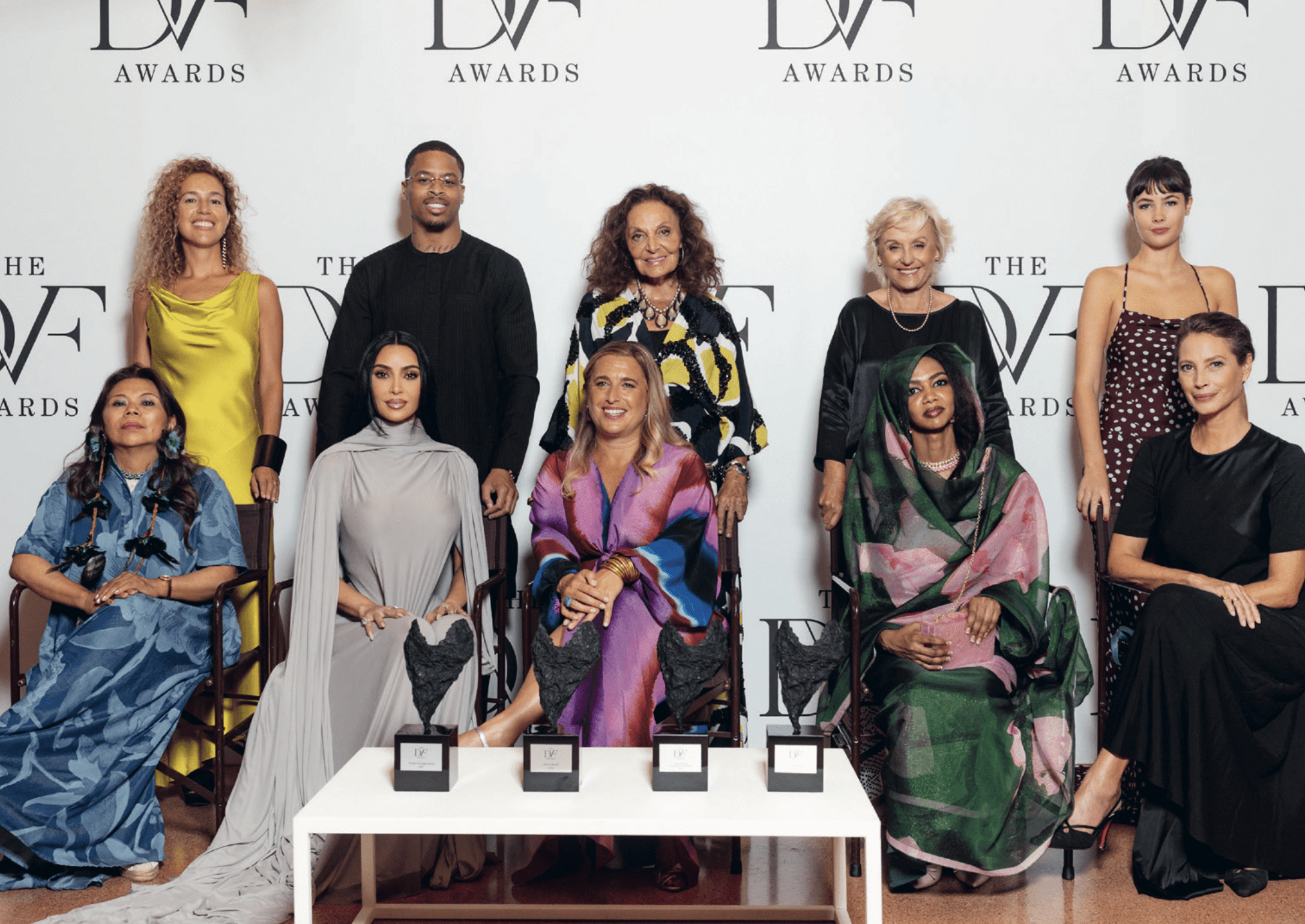
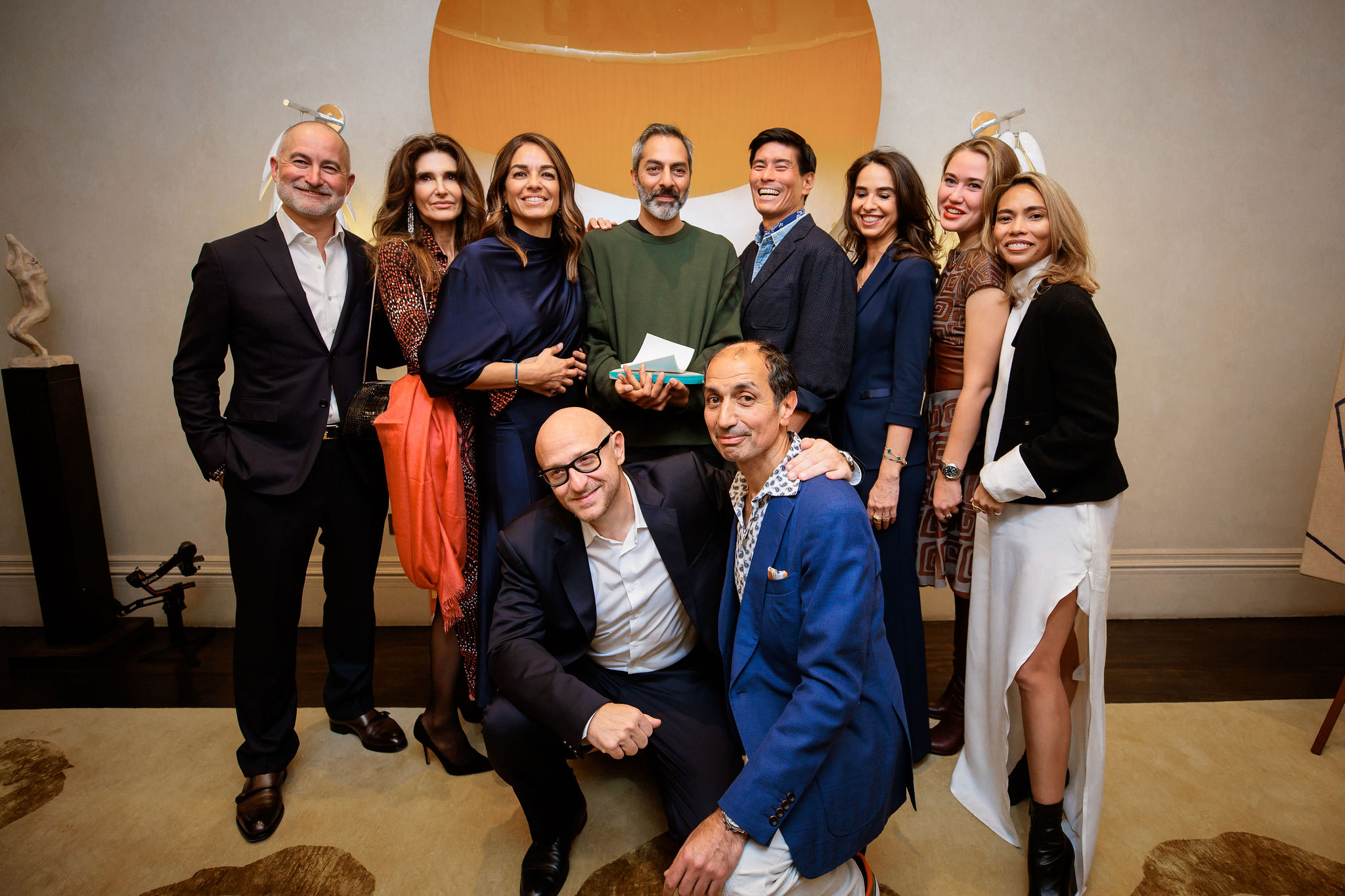
The 16th annual DvF Awards class photo, 2025

LUX: Do you think the fashion world is reinventing itself or doing the same thing?

DvF: Fashion became such a huge business. For 13 years, I was the head of the Council of Fashion Designers of America. Then I resigned. Because with the digital world, it didn’t make any sense to show clothes six months in advance, when everything happens immediately. I just took over my company again – another reinvention. It’s important because DvF has a very strong identity and vocabulary, and it’s important to control the product and the narrative.

Read more: Marcantonio Brandolini d’Adda’s art manifesto

LUX: And having retaken it, is there anything you’d like to change?

DvF: I just want more of it, more of it.

LUX: Which designers have you admired?

DvF: There are many. I grew up with Yves Saint Laurent and Kenzo, and the most talented couturier of all time is probably John Galliano.
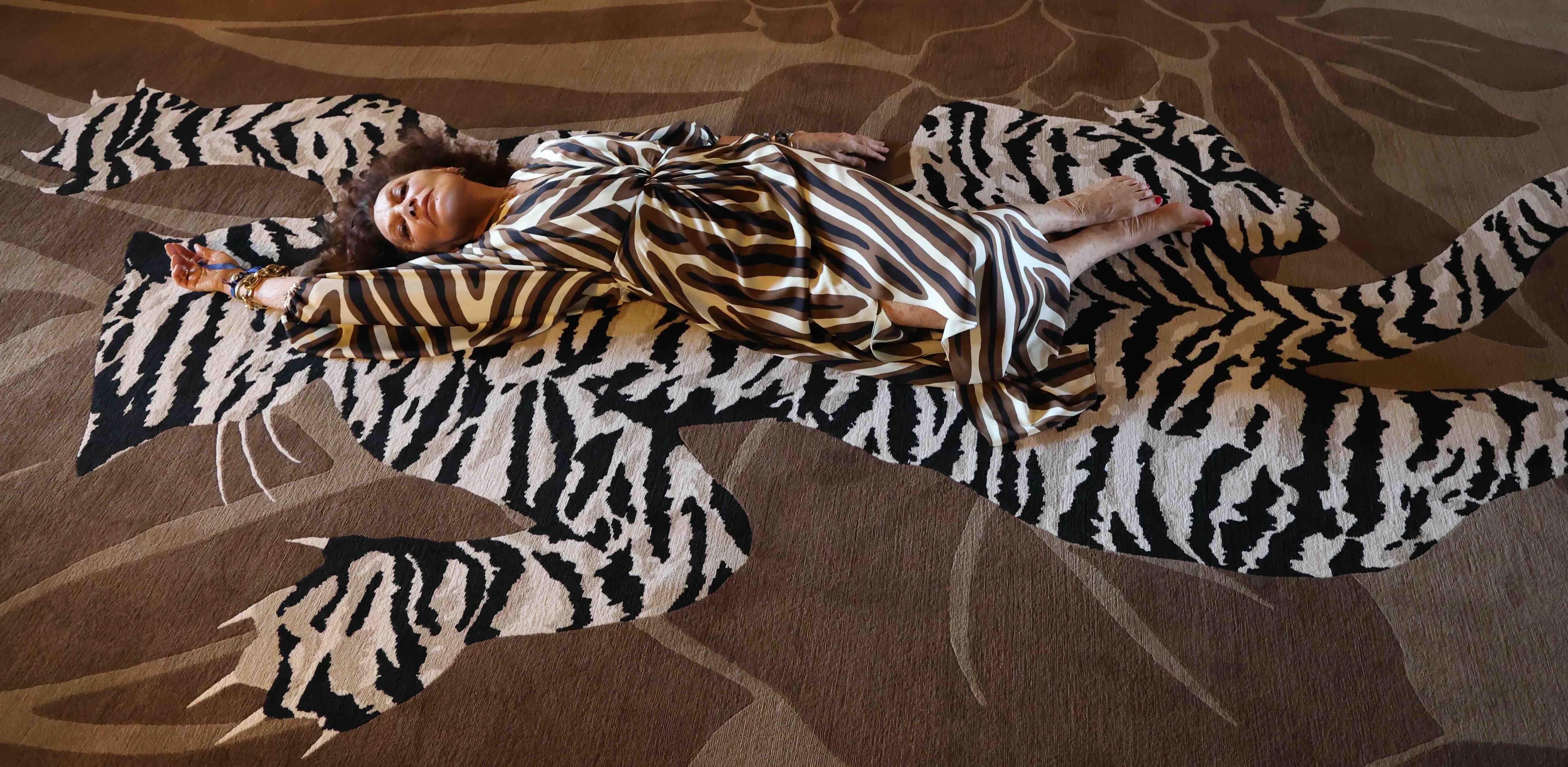
“Listen, I made the wrap dress, but really, the wrap dress made me” – Diane von Furstenberg. Photographed by Simon de Pury at home

LUX: Their ethos or their design?

DvF: It’s usually the way they see the woman. It has to do with the woman because, in the end, it’s clothes, isn’t it?

LUX: What is the legacy you’d like to leave?

DvF: Probably for women, I was lucky to become the woman I wanted to be. And I hope I have helped and inspired other women to be the women they wanted.

LUX: I think you definitely have.

DvF: Thank you.

dvf.com

Interview by Candice Tucker

Photography by Simon de Pury
Share:
Reading time: 12 min
Man in a mask standing next to frames of a crushed car
Pink and purple book on a colourful table

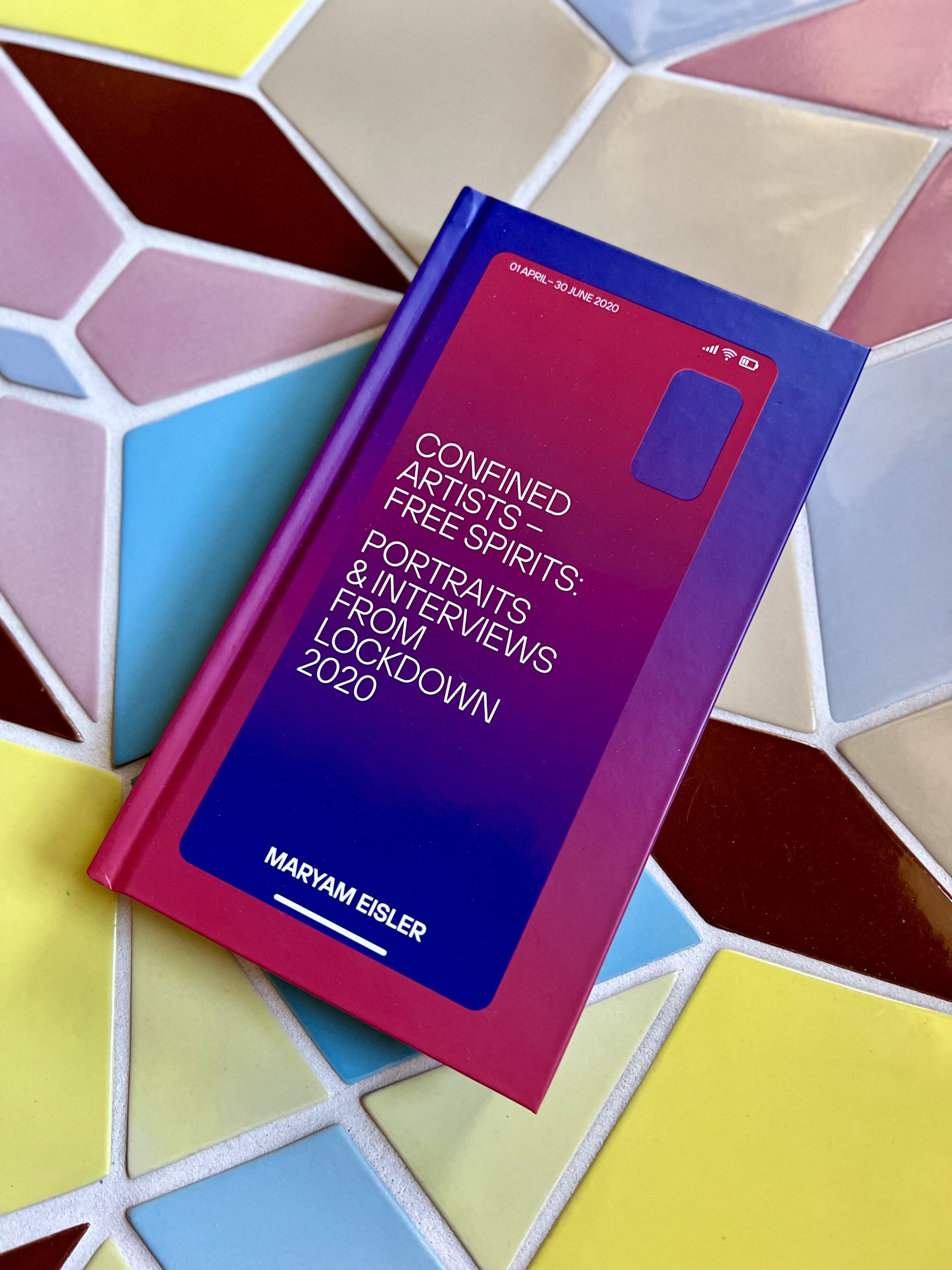
The hardback copy of ‘Confined Artists – Free Spririts: Portraints and Interviews from Lockdown 2020’. Photo by Maryam Eisler

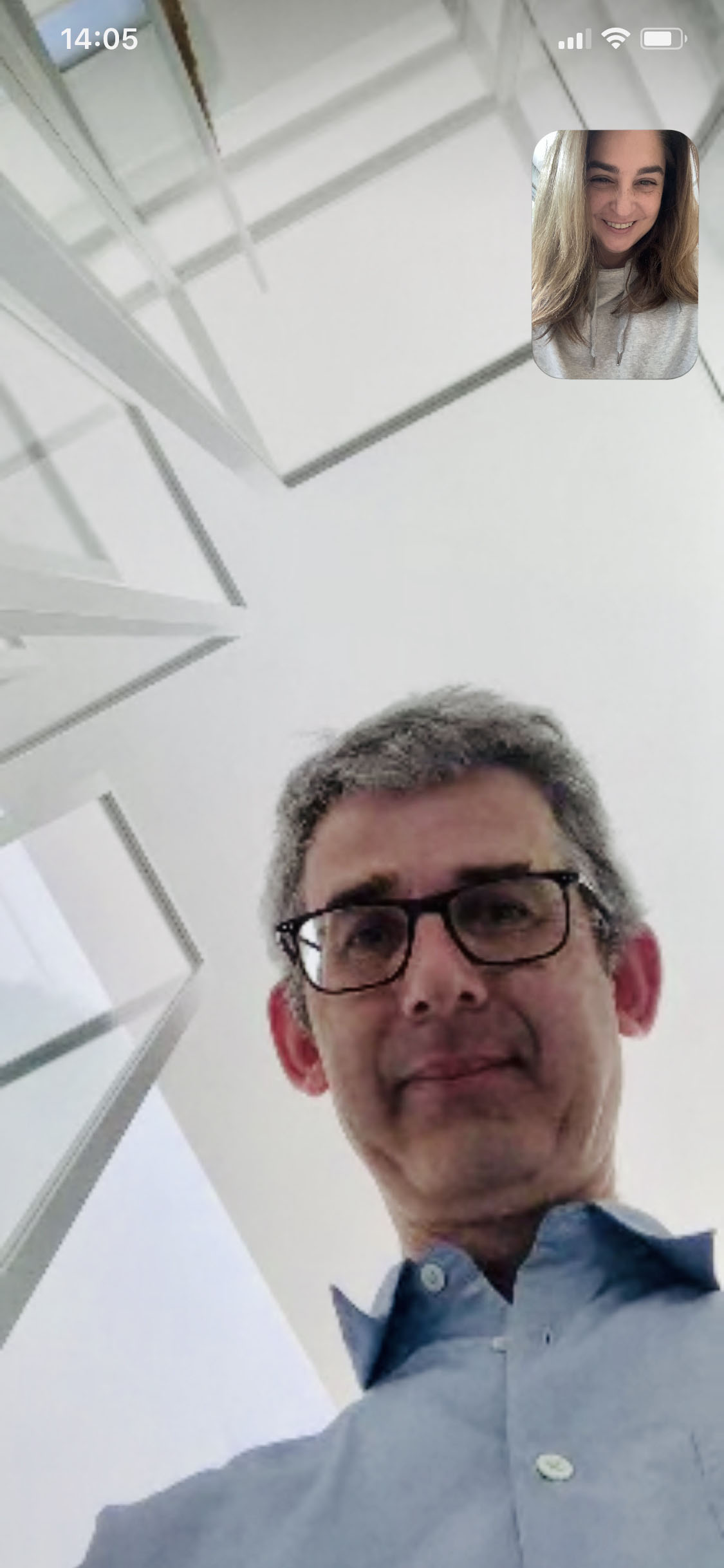
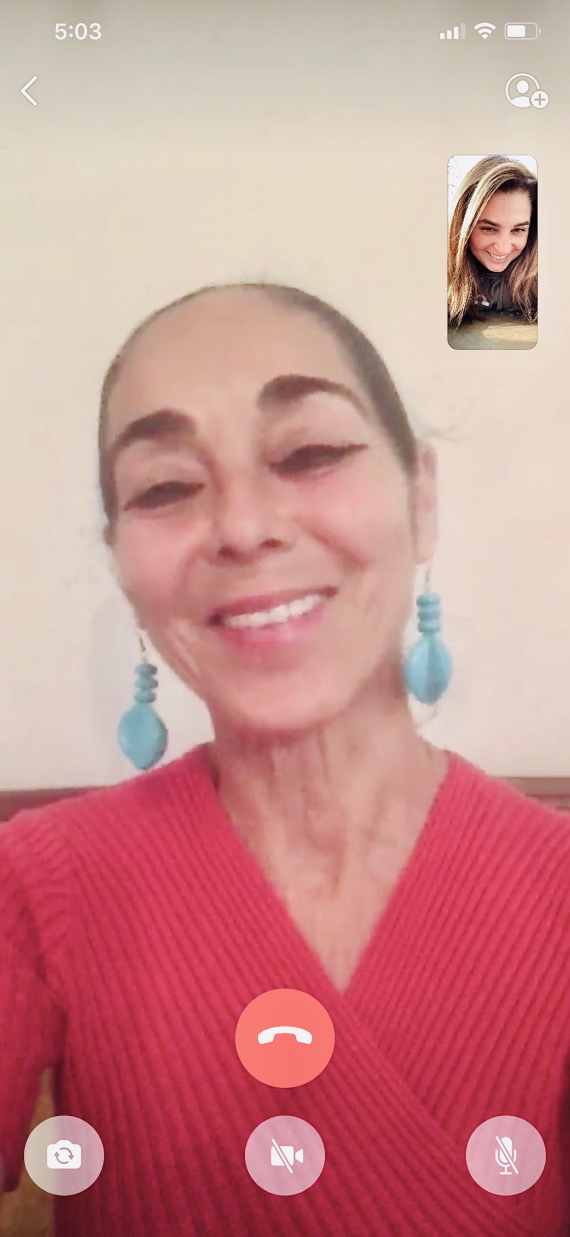
During the lockdown of 2020, Maryam Eisler brought together 164 of the world’s most influential artists, interviewing and photographing them over video calls to create a unique series of portraits and accompanying insights. As we anticipate the physical launch of Confined Artists – Free Spirits: Portraits & Interviews from Lockdown 2020, Trudy Ross speaks to Maryam about looking back on her unique creative journey from a post-pandemic perspective

It was April 2020, and Maryam Eisler was feeling restless. With her usual schedule of travelling round the world, exploring and creating curtailed, she sat at home pondering a life without movement. Thus, in a rare circumstance of  stasis, a one-of-a-kind project was born.

The result? 164 conversations, 164 unique portraits, and their assemblage as a wider piece of art. An exploration into the minds and hearts of artists across the globe during one of the most significant historical events in many of our lifetimes. As she says herself, it is: “a collective stamp of a moment in time. It is a memory, a capsule of a moment in history.” She managed to capture an important frame in the history of the modern art world.

Man in a mask standing next to frames of a crushed car

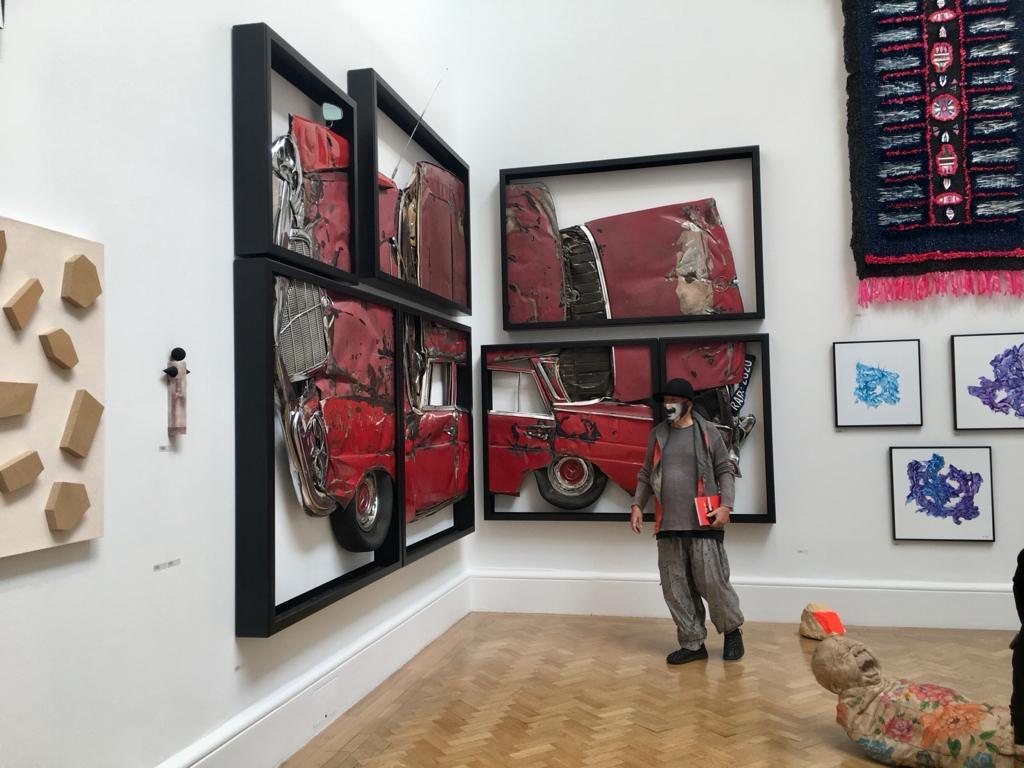
Ron Arad seeing his work Oh Lord, Won’t You Buy Me? for the first time at the Royal Academy Summer Exhibition 2020. Photo by Ron Arad and Associates Limited

The project’s first form was a digital exhibition on the LUX website shortly after its completion, which garnered so much traction that it actually crashed the LUX website when it went live. Now there is a new launch happening this week, a physical one, for a hardback book entitled: Confined Artists – Free Spirits: Portraits and Interviews from Lockdown 2020. Shaped like a tall rectangle to imitate a smartphone, each slick copy brings Maryam’s virtual interviews and Facetime-facilitated photography beyond the screen and into the physical world.

Over three years later, with the pandemic behind us – indeed, almost forgotten about by many in society – I spoke to Maryam about her time spent on this original project and the inspiration behind it.

“Artists are always very symbolic of their time,” she says. “Their ways of thinking and philosophies are often very much a reflection of the historical time that they live in, and this manifests in their artworks. I was intrigued to see how that particular community was dealing with the COVID issue from a psychological perspective, an emotional perspective, and also from a logistical perspective of production.”

Artist Ron Arad, one of the interviewees, spoke to LUX about the practicalities of production these strange times; “I did a lot during lockdown, including buying cars online, an old red Mercedes, and then flattening it online by giving instructions over Zoom to a team in Holland. I saw that piece for the first time on the walls of the Royal Academy […] It is very strange to know a piece intimately and work on it intensely, but to have never touched it.”

Originally, Maryam set her sights on thirty artists in total, but after receiving a resounding yes from everyone she reached out to – very rare in the world of overstretched artists in demand – she decided to keep going. And going. And going.

Screenshot of a woman in multiple mirrors

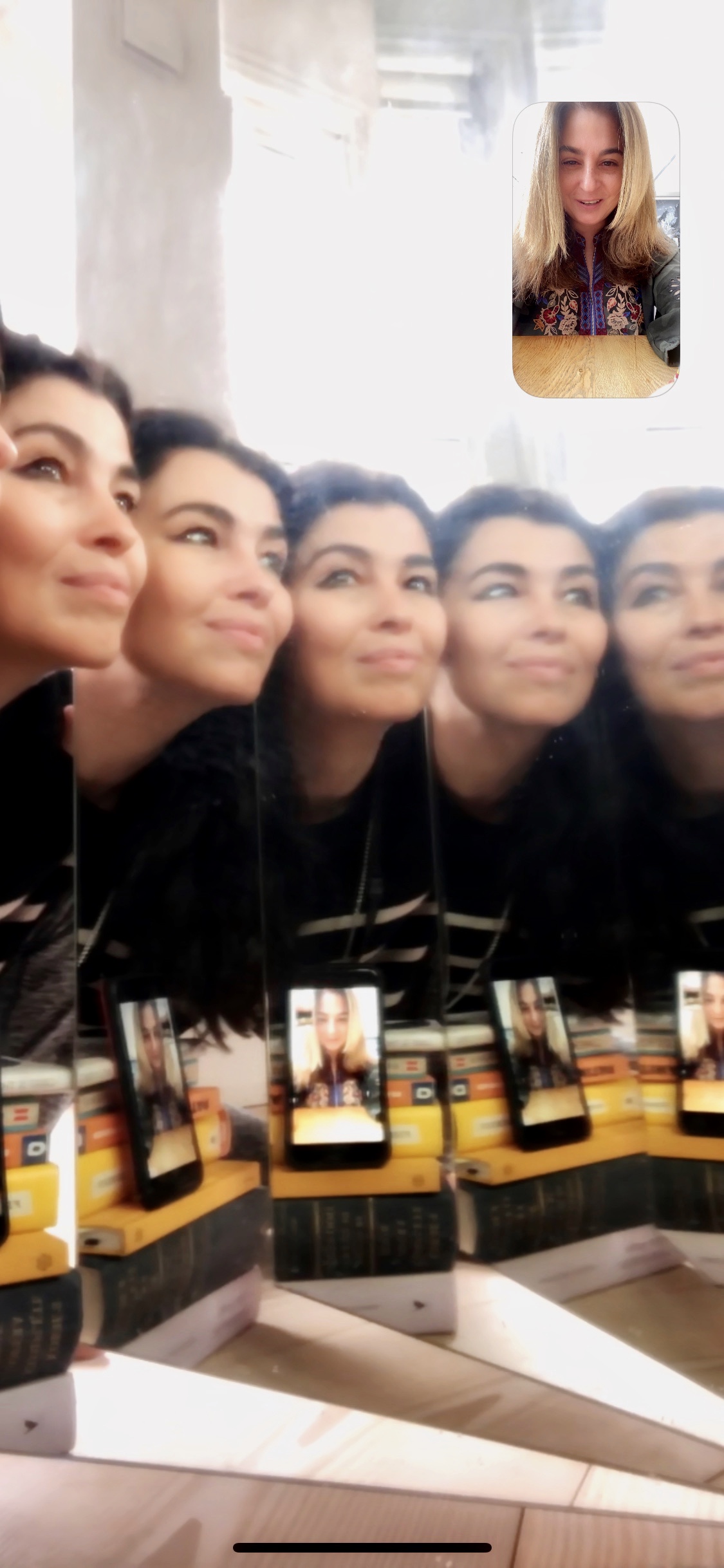
Es Devlin. Photo by Maryam Eisler

It became a routine for her, she tells me: “I had my desk set up in the kitchen, I had my roster, my Rolodex, and I would spend one day interviewing and one day organising.” Each conversation enriched her mind and gave her new perspectives on unprecedented times.

Beyond this, it was a creative exercise; she had a creative vision for each portrait, and aimed to allow each artist’s personality and areas of focus to shine through. When I ask her about some of her favourites, she says: “Off the cuff, I can remember Es Devlin; she put herself in front of a refractory mirror so you could see her face several times, which is very in line with her aesthetic and ethos. Charlotte Colbert uses eyes a lot on her work – indeed, eyes were a symbol that recurred throughout the project – so she had this massive eye that she put in front of another, so she had this distorted hawking out eye, an inanimate object, versus her regular blue eyes. With Edmund de Waal I remember clearly saying hold the camera a little bit more that way just a little bit more, so I could see the geometric designs and patterns in the studio ceiling. We had of course a lot of artists in front of their works which was one more straightforward but still telling approach. Melanie Dunea is one of my favourite portraits; she is holding a magnifying glass in front of one eye so, again, she has one eye protruding.”

Edmund de Waal by Maryam Eisler

“When you go through it you can see some artists’ attitudes in their portraits reflected in their words. Some are incredibly peaceful, and you can see the sense of serenity and peace in their face. In others you can see fear, and potentially anger. There was a real degree of playfulness from others. Philip Colbert, with his lobster alter ego and his mask, for instance.”

The project not only allowed interested readers to gain insight into the lives of artists in extraordinary times – it also touched the artists themselves profoundly. Shirin Neshat comments that: “Maryam came knocking at artists’ doors with lightness, sense of humour and ease when everyone felt utterly isolated and lost. Her zoom’s conversations felt comforting and a reminder of artists’ need for a community especially in times of crisis.”

Shirin Neshat by Maryam Eisler

Further still, the project touches on the fraught political landscape of the moment. Maryam highlighted the importance of chronology when putting the book together: “ as you read through, there is not only an art-historical progression, there is a political progression. Towards the end of the project in June is when the Black Lives Matter movement was beginning. The last profile of the book is about breathing – not in connection with the virus, but in connection with George Floyd.”

Mickalene Thomas takes the final, impactful slot in this book of over 150 famous artists, speaking to Maryam on 30th June, 2020. She calls upon the world to “say her damn name”, cementing in print the names of tens of black women who lost their lives at the hands of police enforcement – just a fraction of the total black lives lost this way.

Thomas’ words leave an imprint in the mind of the reader, and the project itself leaves an imprint on the timeline of the modern art world.

Find out more: www.maryameisler.com

Share:
Reading time: 5 min
artist portrait

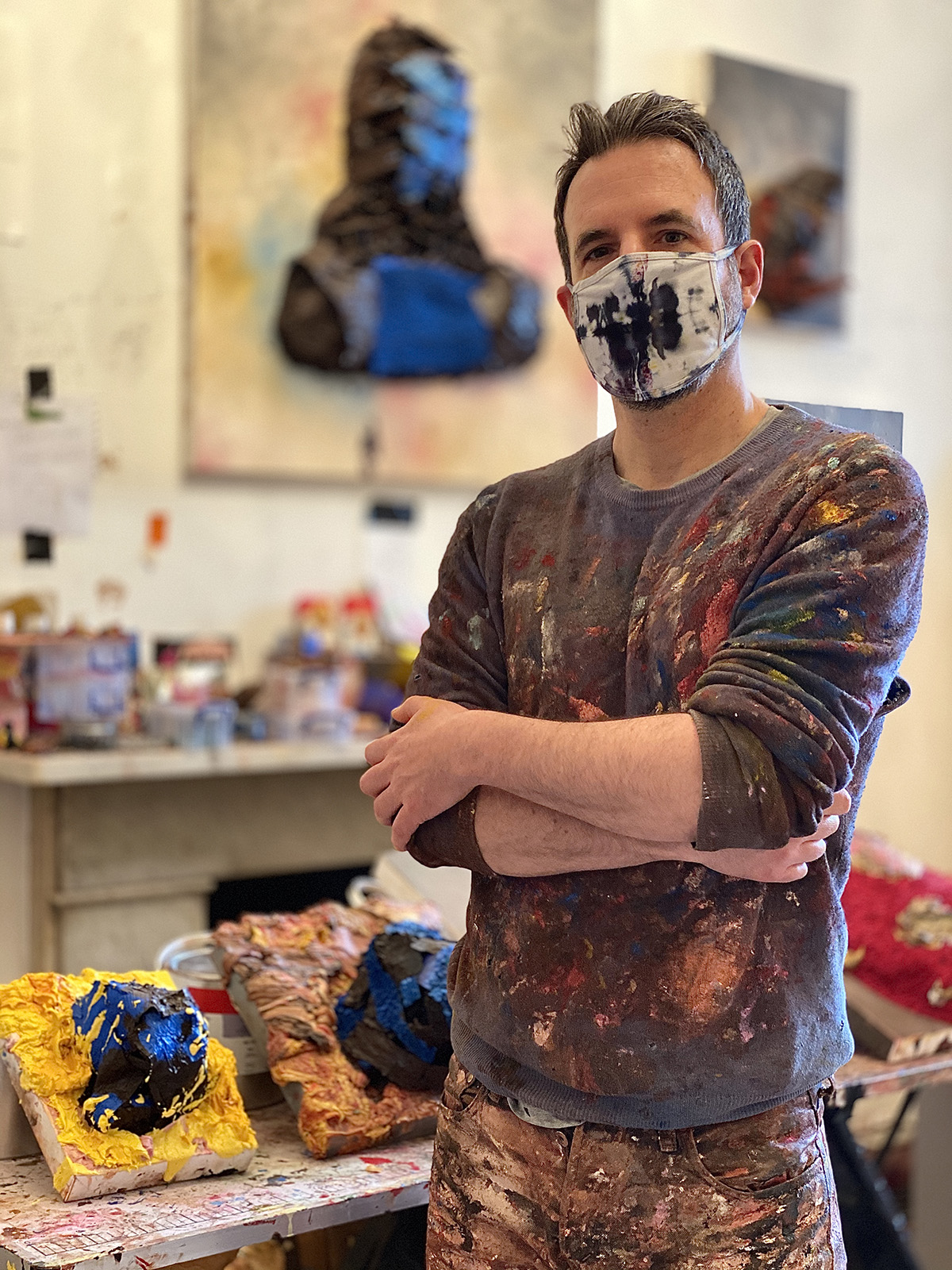
Antony Micallef in his London home turned studio. Photograph by Maryam Eisler

British artist Antony Micallef’s practice blurs the boundaries between painting and sculpture. His textural artworks are the result of a unique method that combines oil paint and beeswax to create striking, three-dimensional forms. Before the national lockdown, LUX contributing editor Maryam Eisler visited and photographed the artist in his London studio

Maryam Eisler: What made you decide to turn your home into a studio?
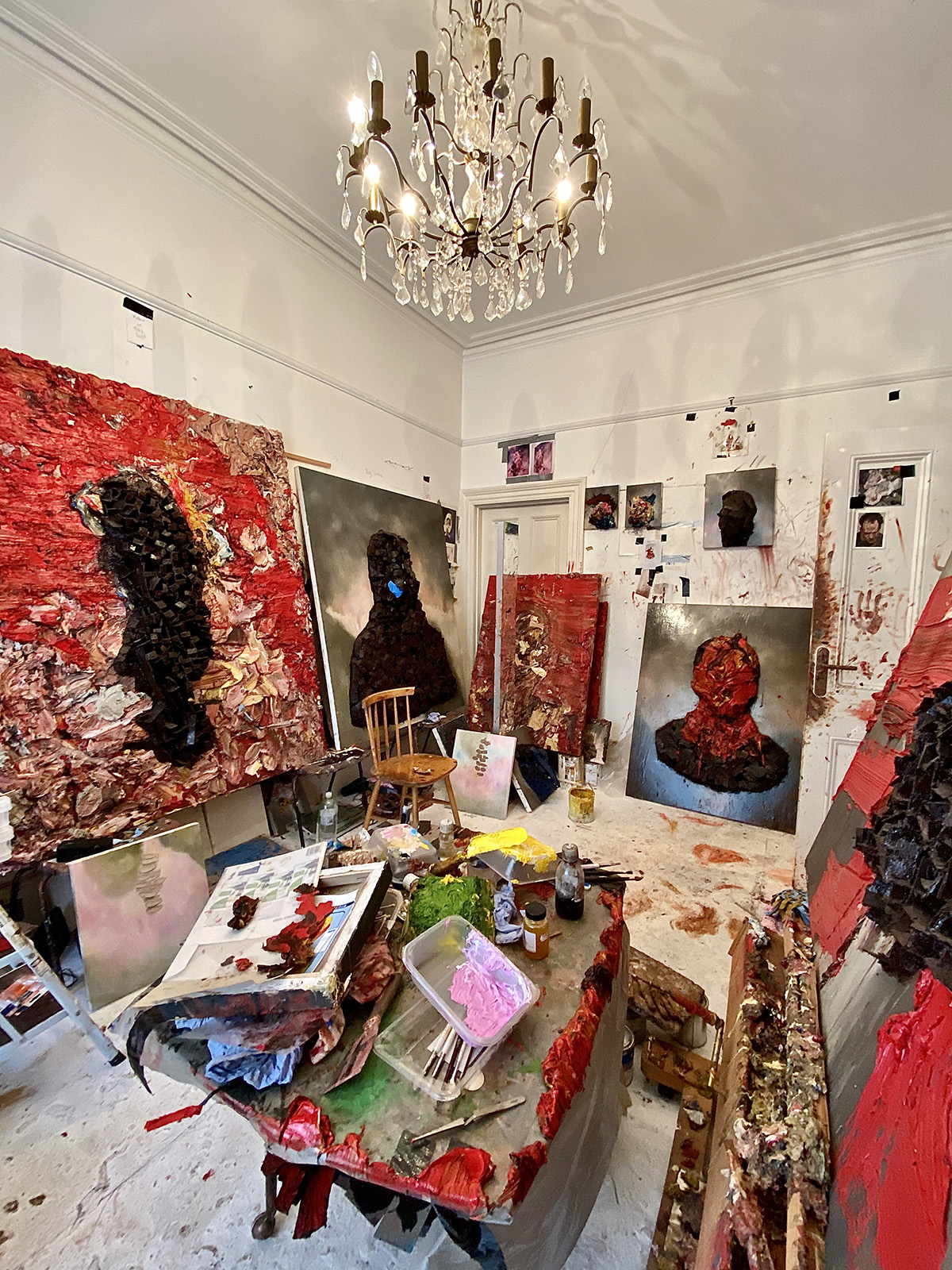
Antony Micallef: I have always loved this flat, and I think you really have to love the place where you work. I feel it has a lot of warmth and personality. I was very lucky to eventually buy a new flat on the same road, and the original intention was to use that as a studio, but after some time, I realised that the light in the new space wasn’t as good as my old flat. Getting paint on the walls for the first time was a bit like wearing your best clothes and jumping in a puddle of mud so I had to get rid of that preciousness! It is quite an intimate private space, and that’s the beauty of it. I don’t have many visitors here.

Follow LUX on Instagram: luxthemagazine

Maryam Eisler: As a newcomer to your studio, I sense a great deal of physicality in both the act of painting but also in its end delivery – your works glide between painting and sculpture. They’re ‘weighty’ and solemn. And around the studio, there are lots of palette knives, and mountains of stacked paint.
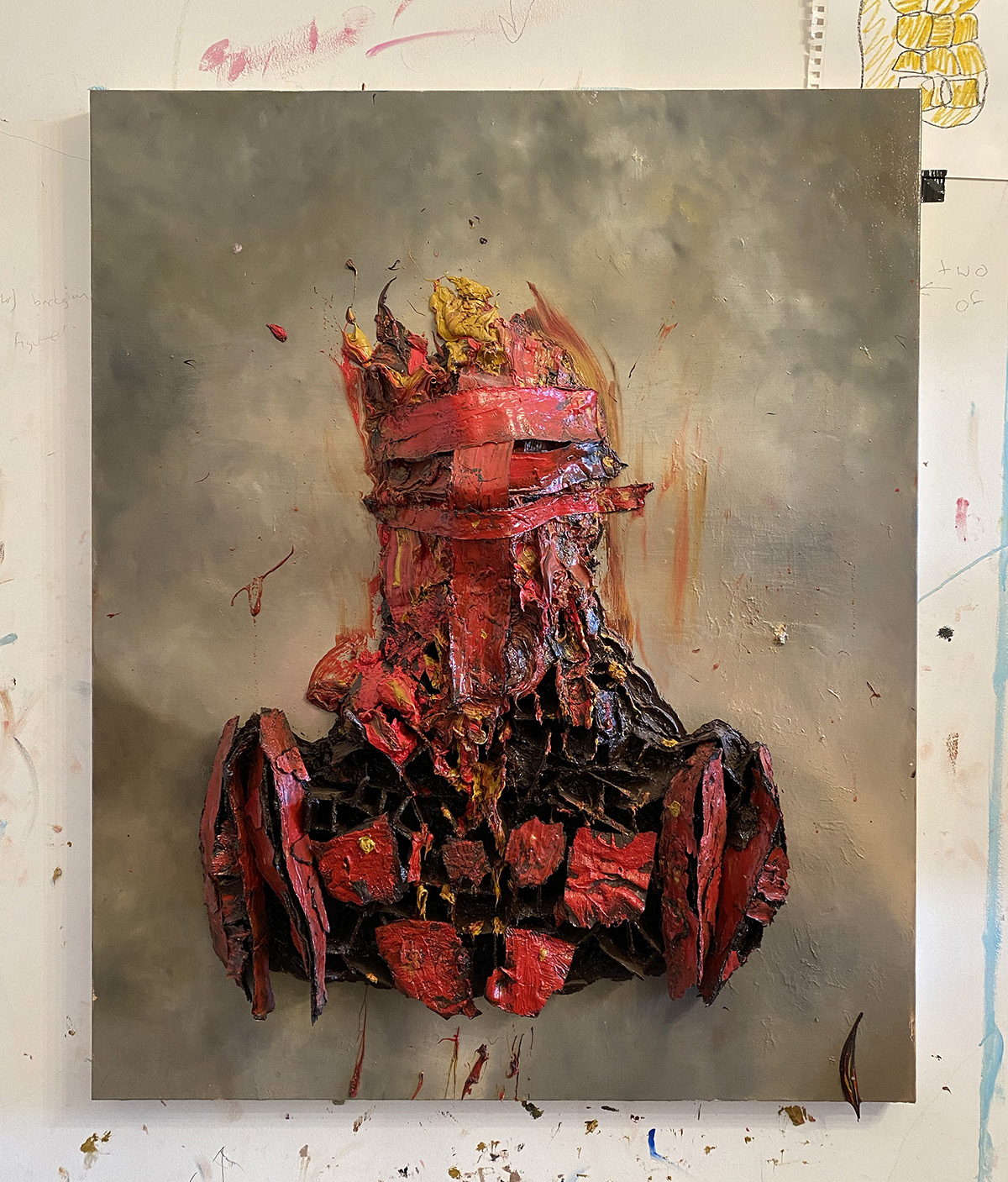
Antony Micallef: I am really glad you sense that. I am really interested in looking at the physicality of my paintings and in the objects they turn into. I’ve often found myself looking at the works of Tony Cragg and John Chamberlain, but also at rock formations while trekking, and early Alexander McQueen. I didn’t know how to fuse all these ideas together so I came up with a new method. I now mix beeswax and oil paint, which allows me to take the paint beyond its normal function. I use heavy palettes, loaded brushes, and loaded paint. It’s a forceful way of painting.

artist studio

Photograph by Maryam Eisler

Maryam Eisler: Can you explain more about how you’ve developed and altered the capabilities and texture of paint?
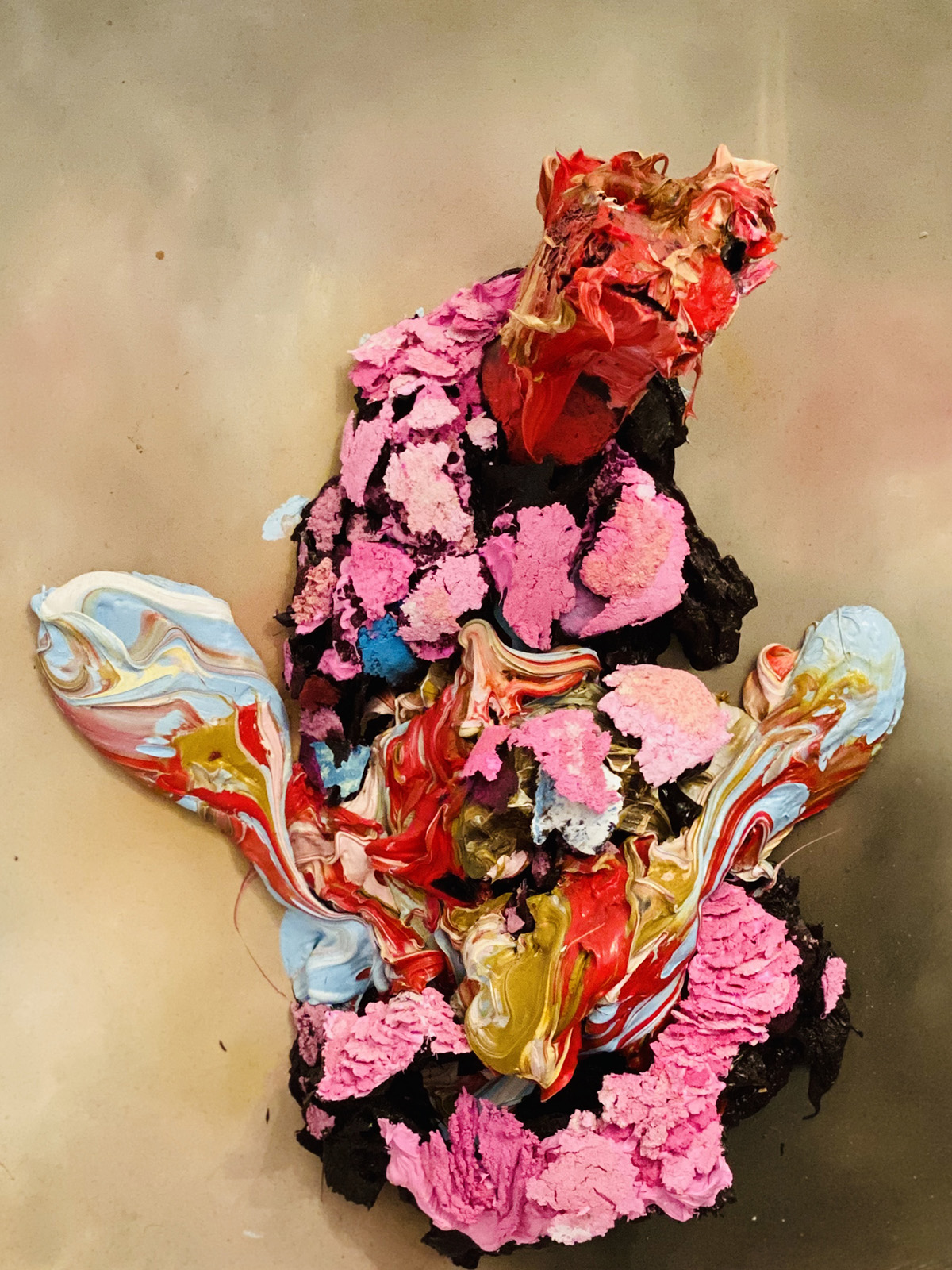
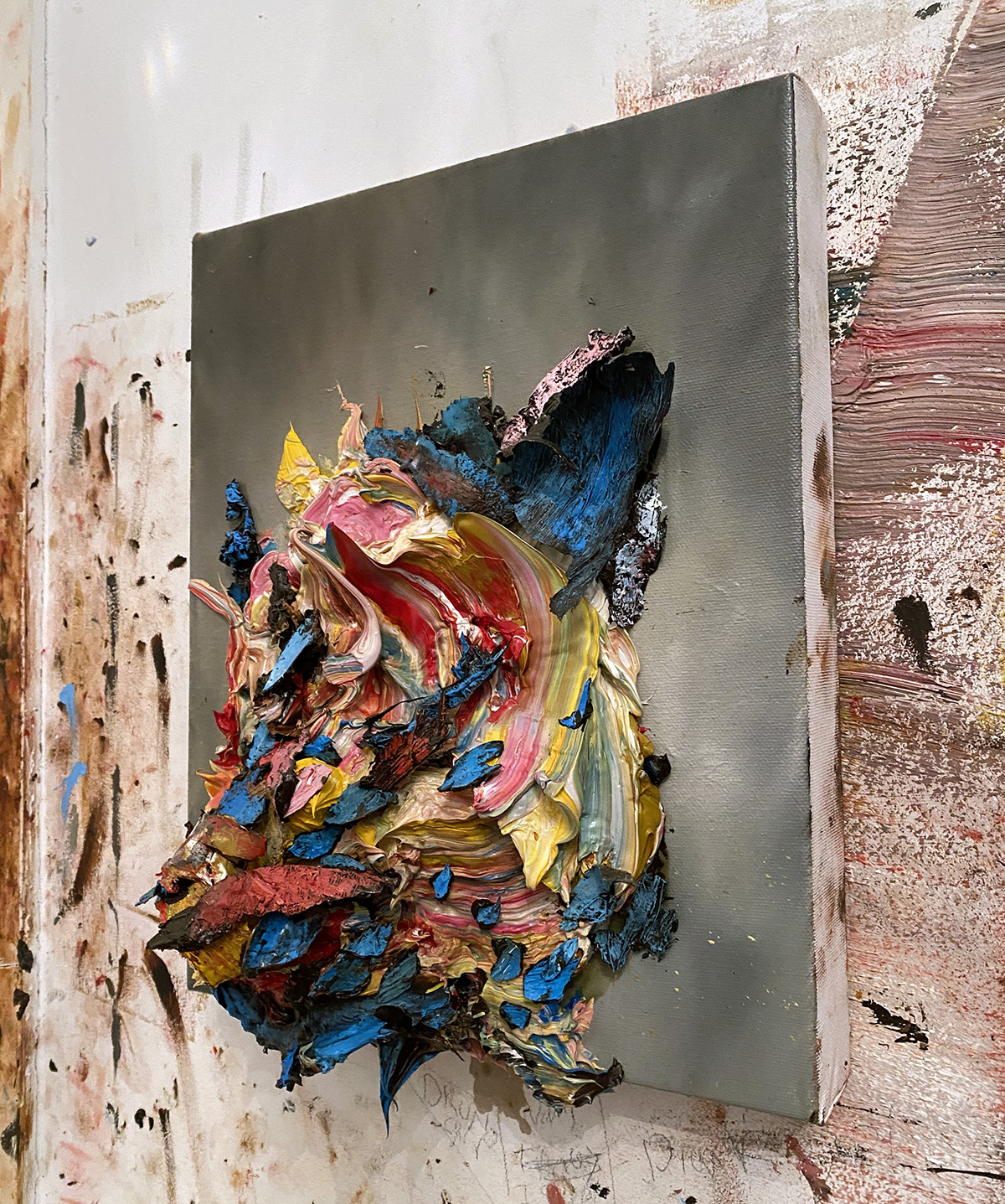
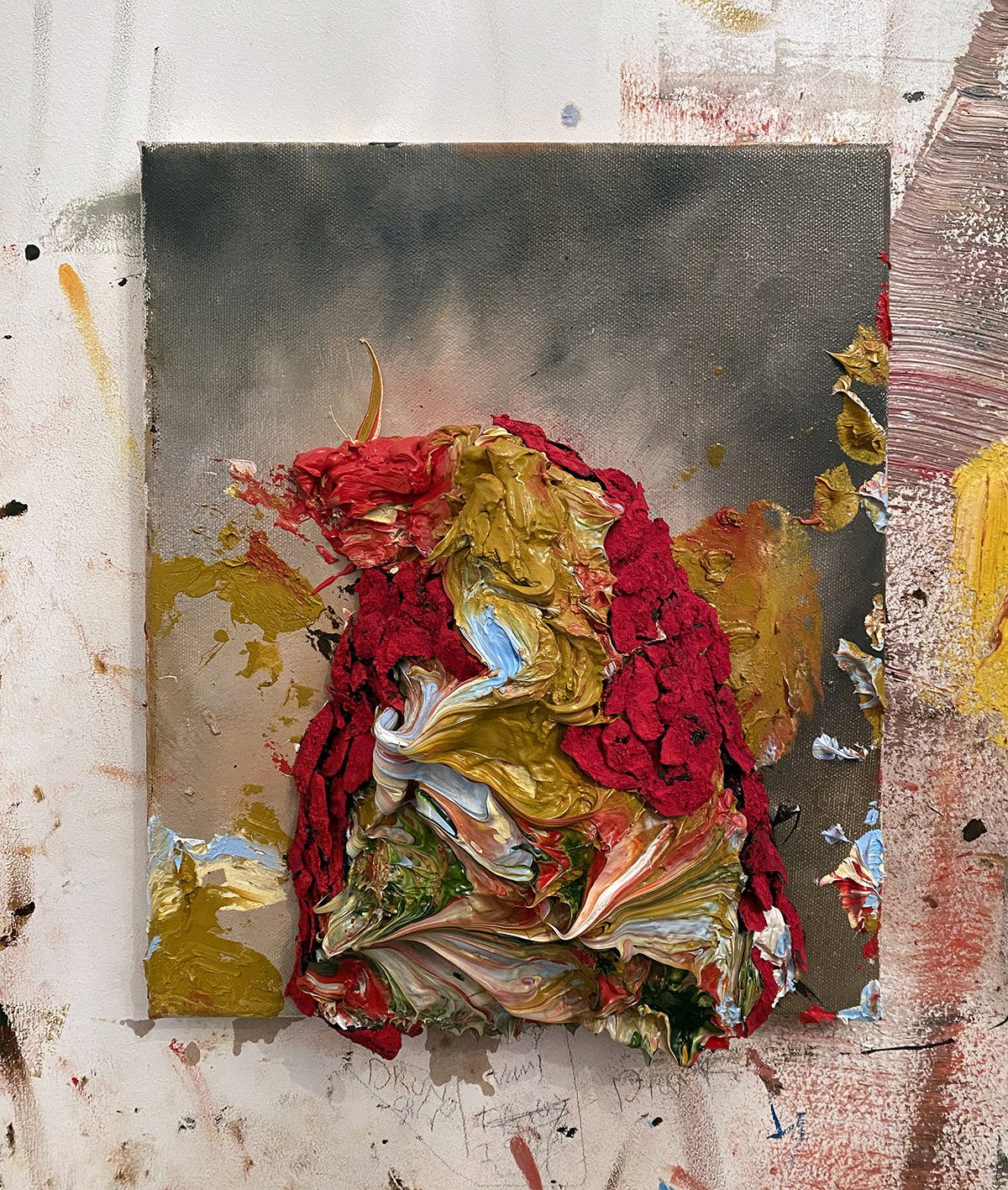
Antony Micallef: I have changed oil paint to a physical texture, which is like dried oil strips and I manufacture the strips in my flat. If it were solid paint, it would fall off the canvas and so I’ve developed a honeycomb structure that I combine oil with beeswax. It’s a kind of laced oil, which I paint onto. It has spaces in between the strips; it’s solid because I have taken the oil out of it completely. It’s a slow process. I call them carcasses. You stick them down with more paint and then you build your figure, using them as a base.

Read more: The serene beauty of little-known Alpine resort Drei Zinnen

They’re kind of hybrids to me. You’re right in saying they lie somewhere between sculpture and paint. They become objects in their own right. Here, I am constructing this sort of Frankenstein figure from scratch! You see, every artist has an ego, and I just wanted to say that, ‘I’d done this. I came up with this process. My process is unique to me!’ It is such an interesting territory to own and I guess sharing this with the wider audience makes me feel good; it’s great for my mental health.

Constructing Auras No. 1, 2020, Antony Micallef, oil and beeswax on linen

Maryam Eisler: I assume there’s a great deal of recycling going on in your work with unused strips for example.
Antony Micallef: Yes, you’ve touched on something important. All these bits you see here and there, I have cut them off the studio walls and off paintings. It’s all recycled paint. The studio in a sense then becomes part of the process, the walls, the floor… It is a bit like ‘harvesting’. That is why I am really precious with some of my pieces. I could never get these pieces again because the material comes off my studio walls. I have literally carved them off the wall over years. And that, to me, is a really important part of my practice.

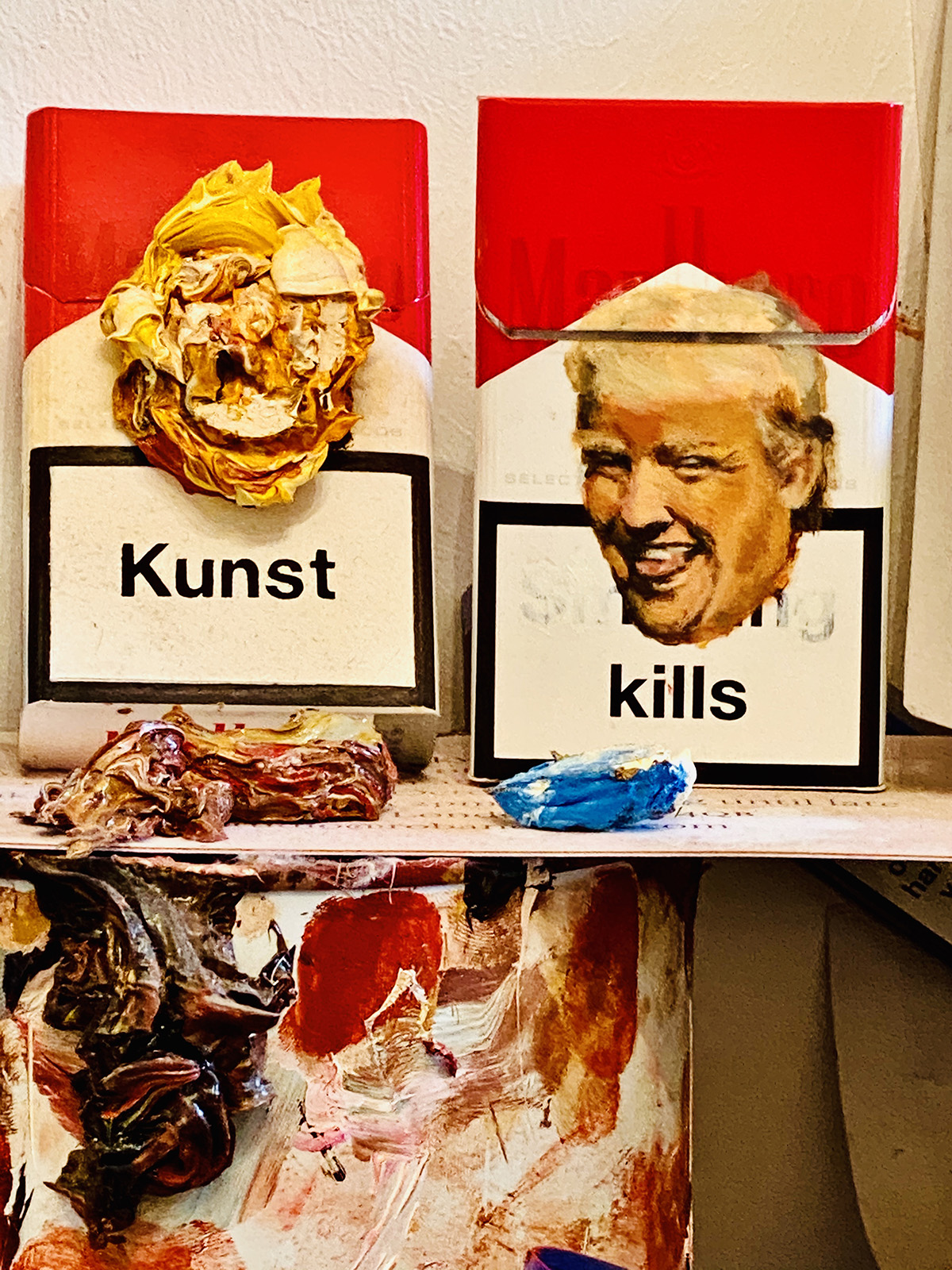
cigarette box paintings by Antony Micallef

Photograph by Maryam Eisler

Maryam Eisler: Have things changed much for you since lockdown?
Antony Micallef: I generally don’t see a lot of people, and I’ve seen even fewer this last year. Sometimes, it feels like you’re in the middle of the Pacific Ocean on a very small boat, but I have to say that having a visitor in your studio really helps. As an artist, you choose to be on your own, but when it’s inflicted onto you, it becomes something else.

Photograph by Maryam Eisler

Maryam Eisler: Can you tell me more about the body of work which you’ve been developing over a period of four years, and your recent show in Hong Kong?
Antony Micallef: Constructing Auras was my tenth solo show. As you’re nearing the time when the work is about to be picked up, everything starts bubbling inside your head. You’ve lived with these creations for so long and they are about to flee the nest, but it gets to a point where art needs to live on its own in the outside world.

Constructing Auras No. 5, Antony Micallef

Maryam Eisler: How did studying under the renowned landscape artist John Virtue influence your practice?
Antony Micallef: I was taught by John at Plymouth University. I was really lucky to encounter him. He completely changed the way I thought about painting at the time. He taught me discipline. He also taught me how to look at life, figures, how to use a palette, all the mechanics. He was quite brutal with his teaching, which I loved. There was no faffing around. It was so nice to be taught by someone whose enthusiasm energises you.

Read more: Maria-Theresia Pongracz profiles 2021’s artist to watch Sofia Mitsola

I think the best art – that moves you and everyone else around you – is when you can feel that the creator has taken a risk. When you’ve pushed it to the limits of what it is capable of. I remember someone asking John: ‘How do you know when it’s finished?’ To which he replied, ‘Well, the train slows down. Imagine a train going as fast as it can, and when you get into the 90% level that is when the magic starts to happen. You then have to apply the breaks and it’s got to stop right before it hits that wall! If you can get it to 98%, that’s when and where it really happens.’ I always say it’s like throwing a jigsaw piece into the air. When it lands and it all fits together, it feels amazing!

Constructing Auras No. 8, 2017, Antony Micallef, oil and beeswax with raw pigment 

Maryam Eisler: Do you ever bin your work?
Antony Micallef: Everybody bins their work, but you wouldn’t get those few you are really happy with if you didn’t!

Maryam Eisler: I can see the influence of the School of London painters in your work. Is that a conscious reference?
Antony Micallef: I never had the intention to paint like them, but I admire them, of course. When cooking, you have to have your own mixing bowl. You slowly find your own way of preparing a dish. The same holds true in painting.

The V&A had an amazing exhibition called Fashioned from Nature a few years ago. And that was pivotal for this body of work. Sometimes you walk into a show and something clicks.

View Antony Micallef’s portfolio: antonymicallef.com; @antonymicallef


Share:
Reading time: 6 min
Artist working in his studio vintage photograph

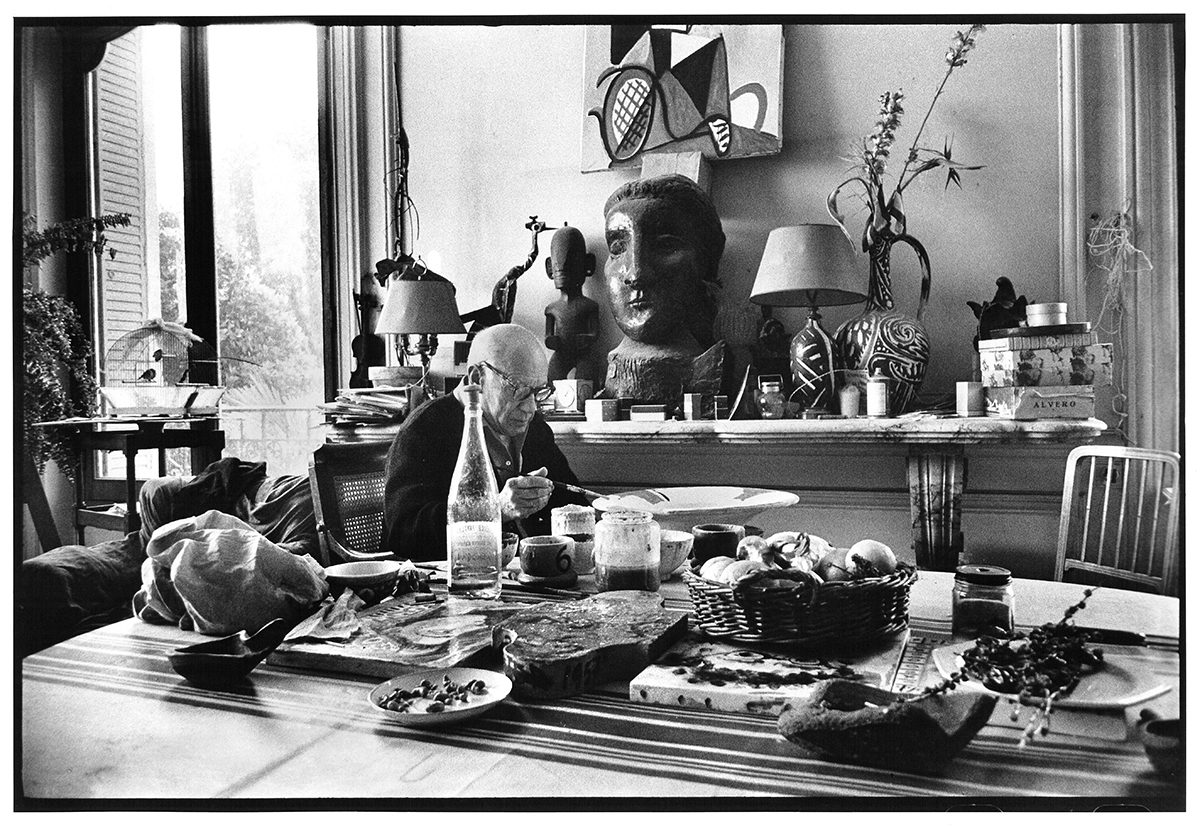
Picasso and ceramic (owl) by David Douglas Duncan (Spring 1957), Villa La Californie, Cannes © David Douglas Duncan © Succession Picasso/DACS, London 2019. Courtesy the estate David Douglas Duncan

For a special exhibition at Vieux Chalet in Gstaad, Hauser & Wirth brings together ceramics and paintings by Picasso alongside a series of portrait photographs by David Duncan Douglas to provide a fascinating exploration of creativity, intimacy and space.

Follow LUX on Instagram: luxthemagazine

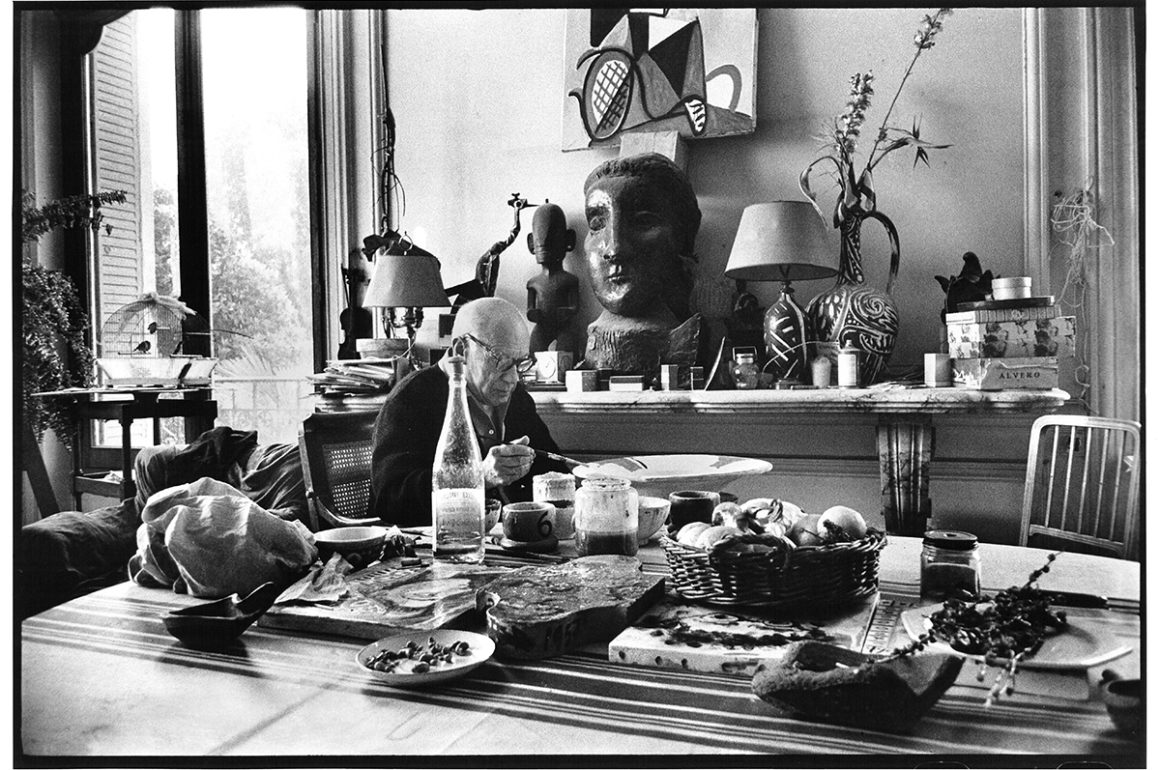
Duncan himself was a renowned war photographer and photojournalist, who first encountered Picasso in 1956 when he  infamously rang the doorbell of La Californie, the artist’s home in Cannes. At the time, Picasso was in the bathtub and allowed Duncan to photograph him right then and there, leading onto a lasting friendship which granted the photographer unprecedented access into the artist’s creative processes. Over the course of seventeen years, Duncan took approximately 25,000 images of Picasso, documenting not just Picasso himself, but also his family and friends.

Father and son playing wrestling

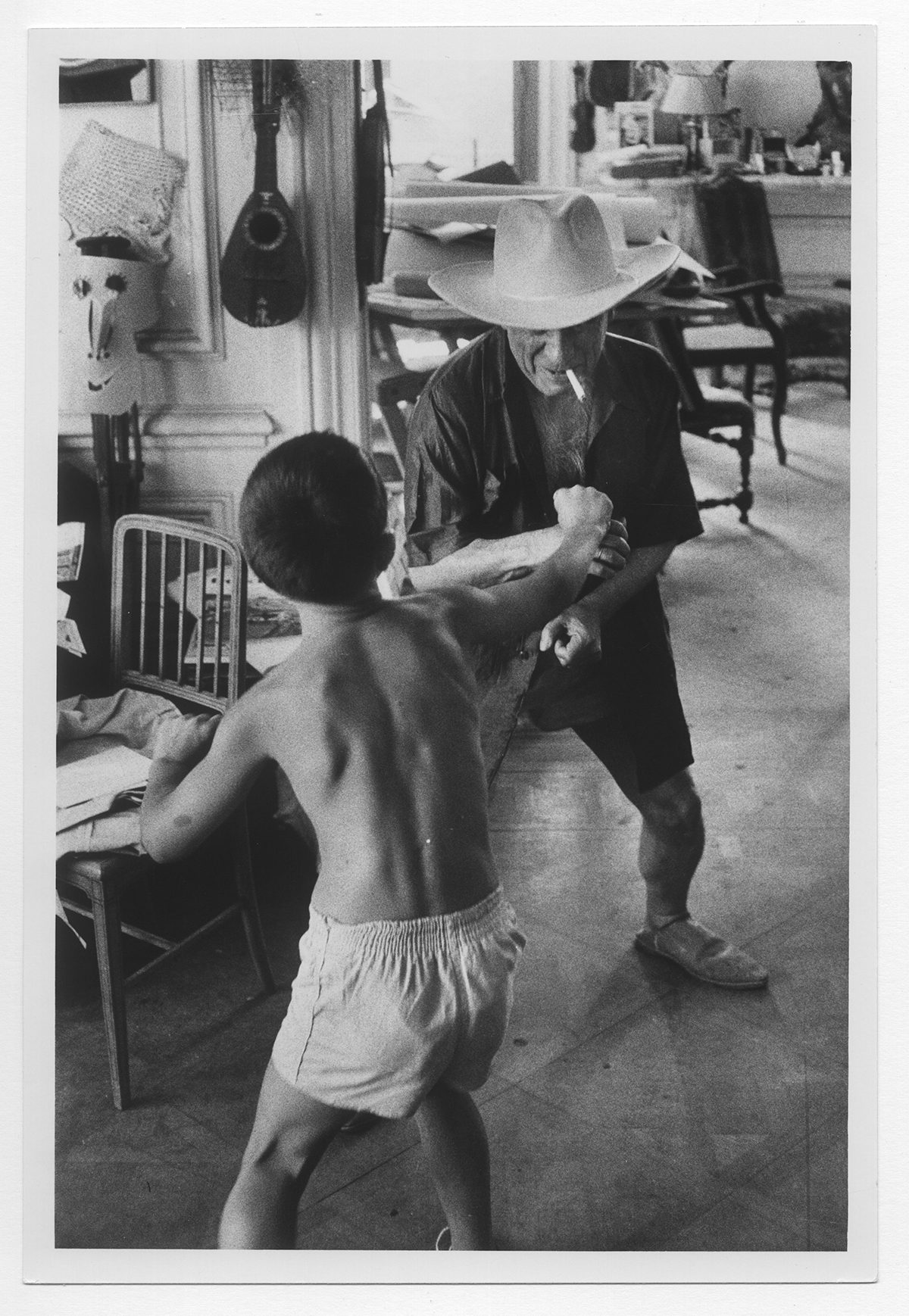
Battle between Claude and his father wearing Gary Cooper’s cowboy hat by David Douglas Duncan, July 1957, Villa La Californie, Cannes © David Douglas Duncan © Succession Picasso/DACS, London 2019. Courtesy the estate David Douglas Duncan

Painter and a painted portrait of a woman

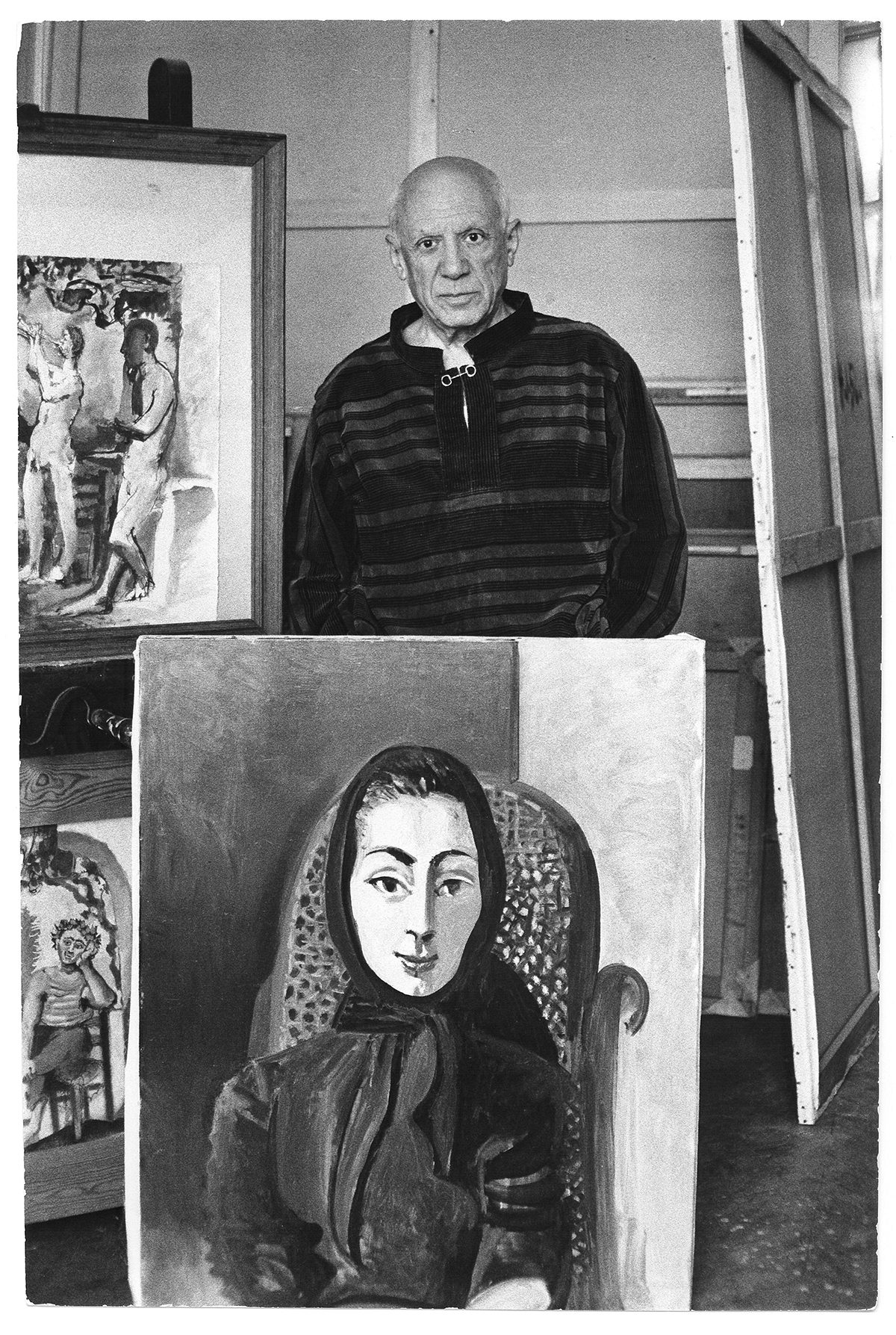
Pablo Picasso with the portrait Jacqueline à l’écharpe noire (1954) by David Douglas Duncan, 1957, Villa La Californie, Cannes © David Douglas Duncan © Succession Picasso/DACS, London 2019. Courtesy the estate David Douglas Duncan

Duncan’s photographs and Picasso’s artworks are displayed side by side throughout the domestic spaces of the chalet, emphasising the intimacy of the photographic perspective as well as the connection between the two distinct artistic mediums. In some of the images, Picasso is seen actively engaging with the lens whilst others are more candid, showing the artist amongst his easels, books, brushes and paints.

Read more: How Galerie Maria Behnam-Bakhtiar aims to inspire change

Ceramic vase painted with man's bearded head

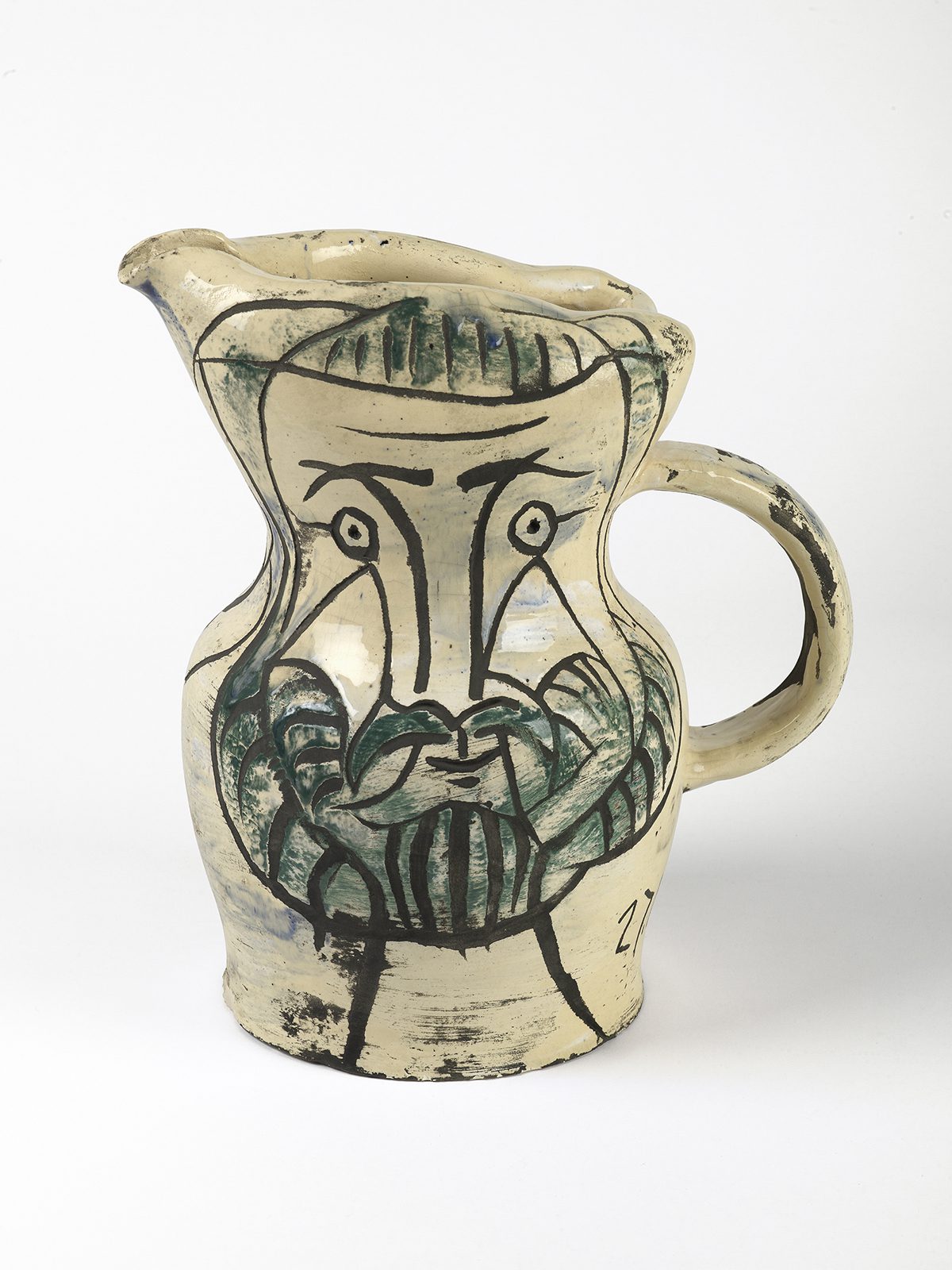
Bearded man’s head (1948) by Pablo Picasso © Succession Picasso/DACS, London 2019Courtesy Succession Picasso

The artist’s ceramics are amongst the most captivating works on display, as everyday objects such as bowls and vases are transformed into animal-like creatures through warped swollen shapes and dynamic painted lines. Seen alongside Duncan’s photographs, Picasso’s creative energy becomes even more palpable as does the friendship between the two artists caught in subtle gestures and glances.

‘Picasso Through the Lens of David Douglas Duncan’ runs until 28 February 2020 at Le Vieux Chalet in Gstaad. For more information visit: hauserwirth.com/hauser-wirth-exhibitions/26682-pablo-picasso-lens-david-douglas-duncan

Share:
Reading time: 2 min
installation view of artworks on gallery wall

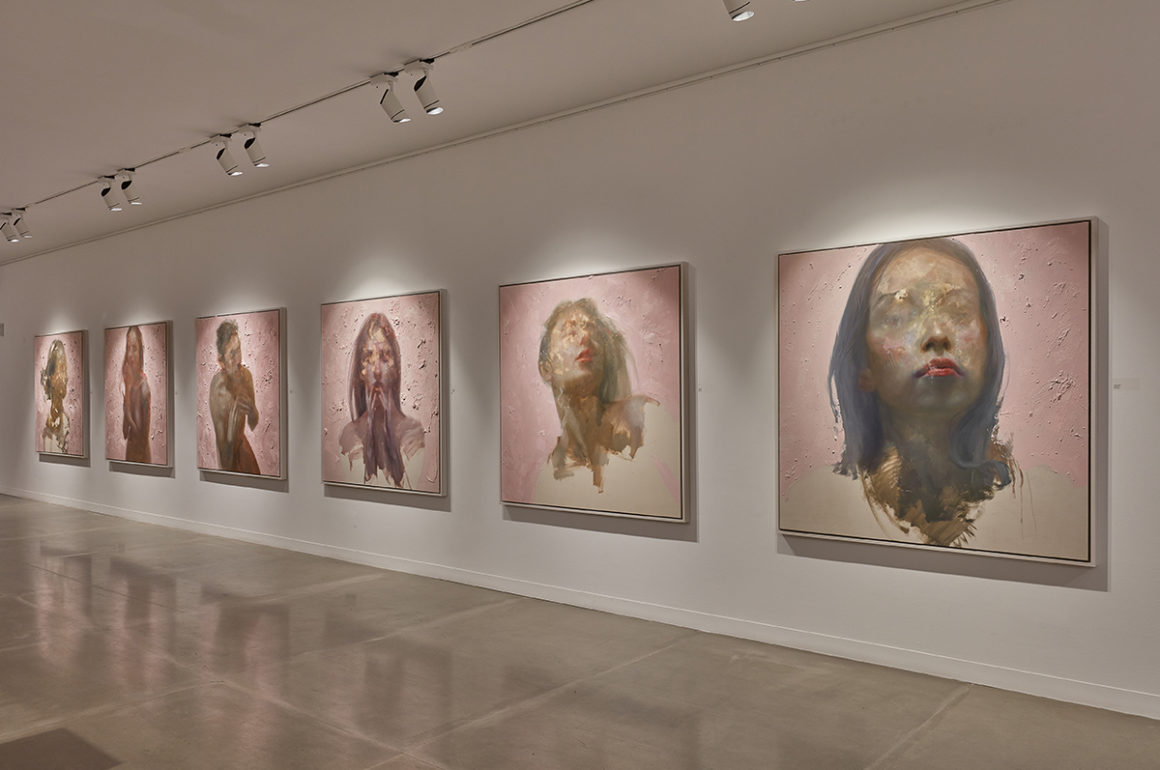
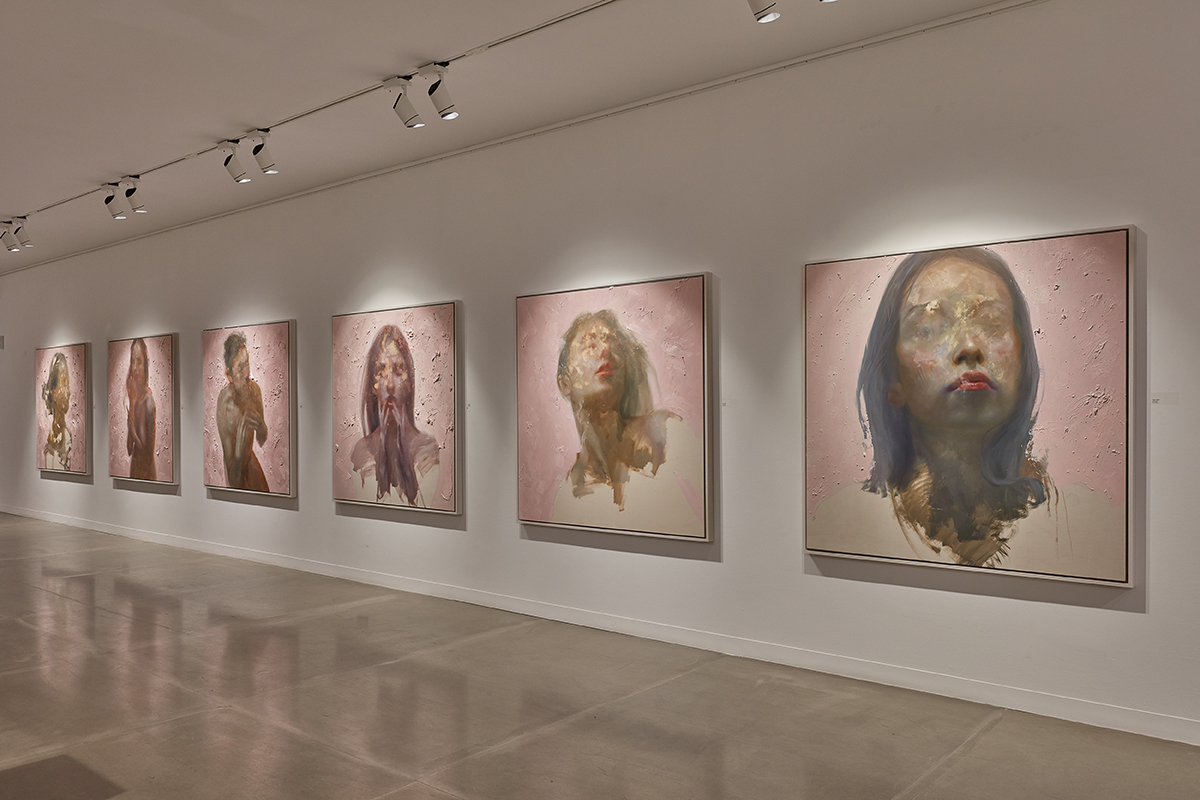
Installation view of Lethe by Henrik Uldalen at JD Malat Gallery, Mayfair

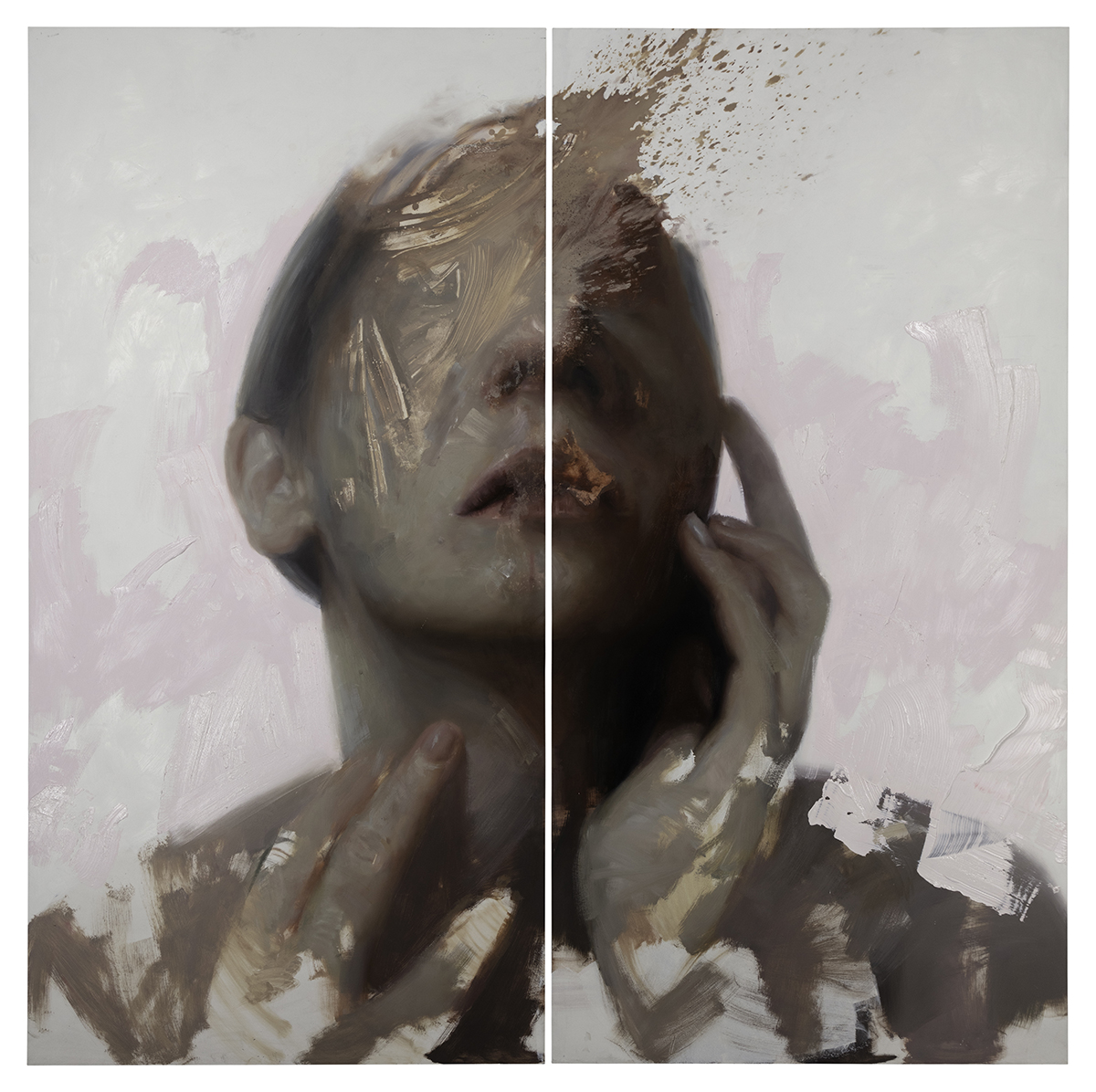
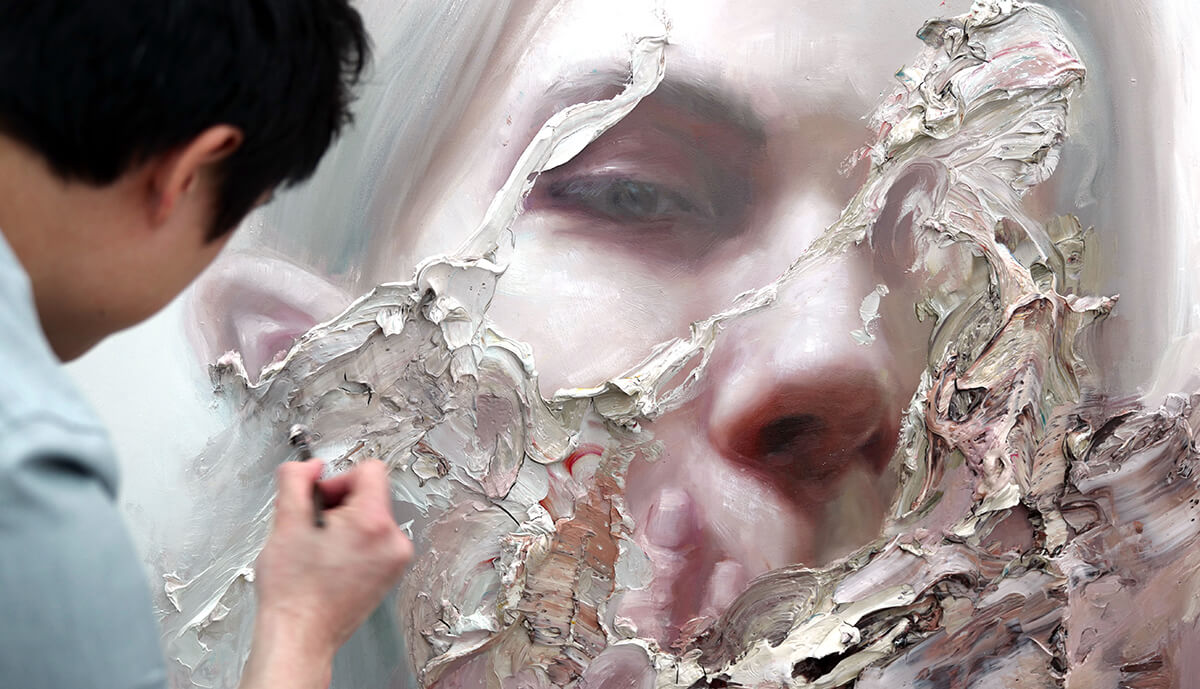
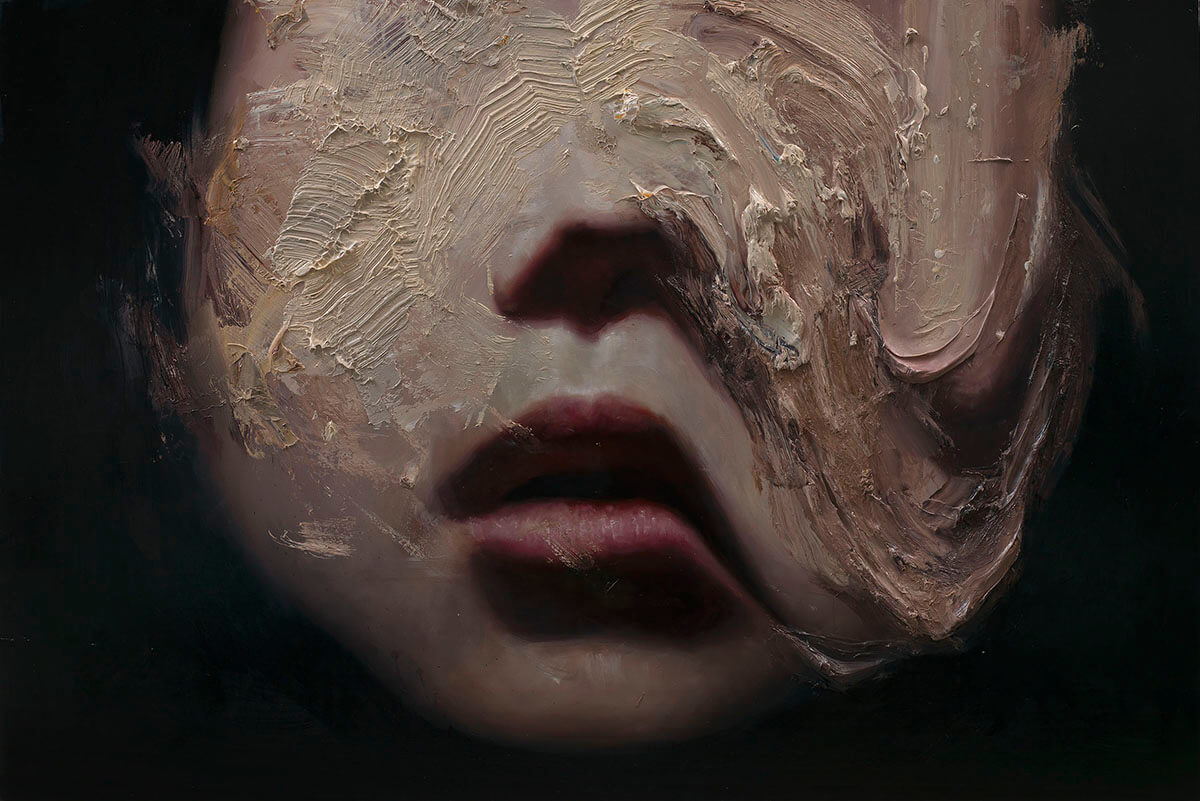
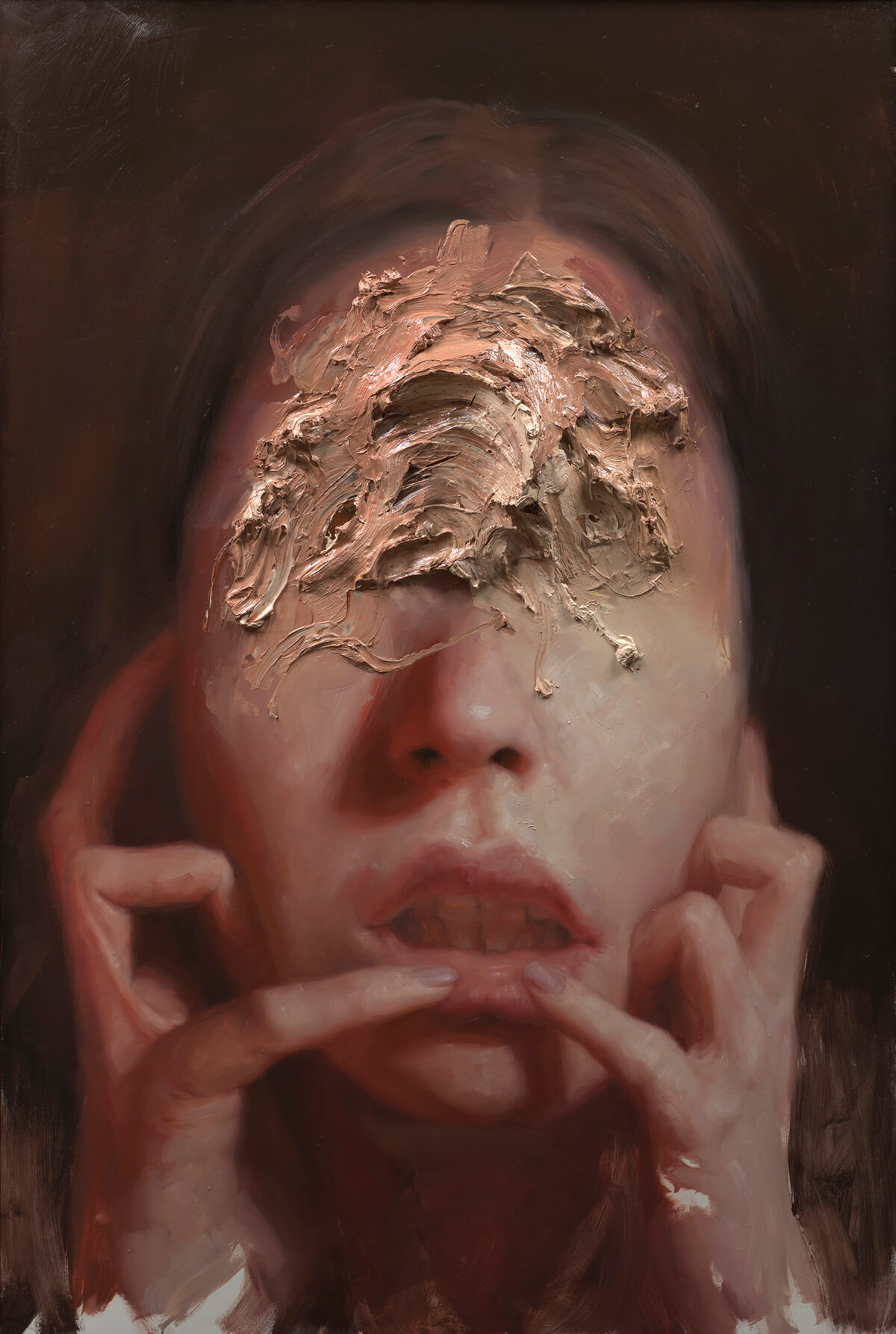
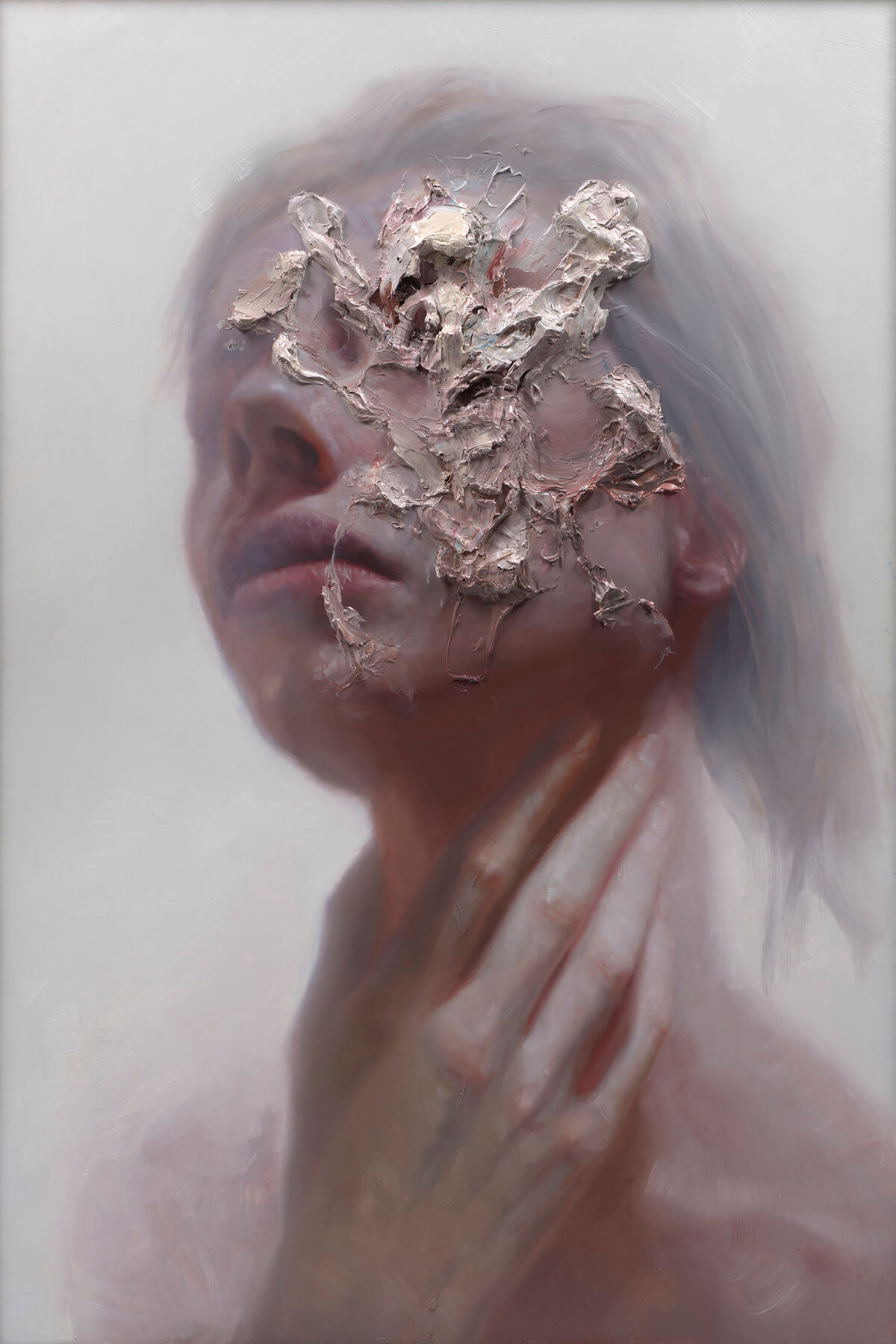
Henrik Uldalen is a self-taught artist, who caught the attention of gallerist Jean-David Malat via his Instagram account. His impasto portraits depict the tumultuous variety of human emotion. Following the opening of his second solo show Lethe at JD Malat Gallery in Mayfair, we speak to the artist about inspiration, social media and the colour pink.

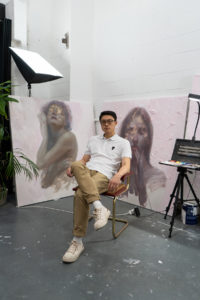
Artist sitting in sutdio

Artist Henrik Uldalen in his studio

1. Can you tell us about the concept for Lethe?

The show, in broad terms, is about history versus the collective memory, and how the zeitgeist of our time is polarising the society with the use of fear and glorified notions of the past.

2. What inspires you to start a new series or artwork?

Most of time I don’t need inspiration to start a new series. The need to create and express is always within, and if I don’t get it out of my system I know I won’t be a happy man. Over the years I’ve come to learn this about myself, and how to practically force myself out of the door in order to function as a person.

Follow LUX on Instagram: luxthemagazine

3. Are the figures you paint imagined or drawn from personal memories?

The people you see are models that I approach, but all the figures are also me. Every piece I make is a self-portrait projected onto a stranger, expressing my inner most intimate feelings and moods.

Abstract portrait painting of a woman

Artwork by Henrik Uldalen

4. How do you think social media is impacting the way we view art?

Social media is a blessing and a curse. The way you’re able to reach out to people across the globe with the click of link is mind boggling. Especially growing up in a small town in Norway this impacted my career in a massive way. Unfortunately, I find social media too superficial and narrow to be able to convey any deeper meanings from the artist to the viewer. In the same way that you can’t fully appreciate a beautifully cooked dish described through even the most flowery language, you’re not able to feel a painting as you’re supposed to in a split second over a 13x7cm phone screen.

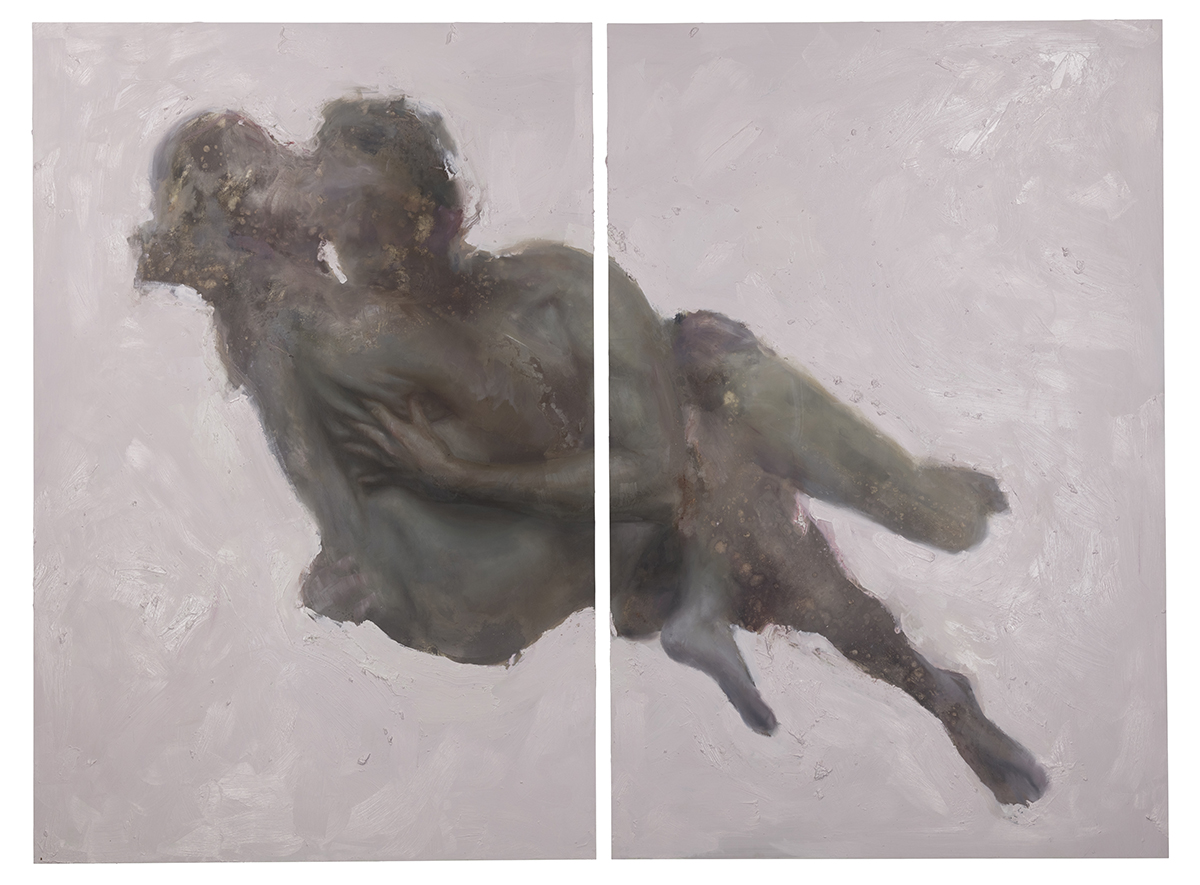
Painting of figures embracing against pink background

Artwork by Henrik Uldalen

5. The portraits in Lethe are set against a pink background. What significance does the colour have for you?

The colour pink in this exhibition represents the veil we cover our eyes with when we think back on our past. A comforting lie, telling us that everything will be fine as long as we return to our glory days.

Read more: Galerie Maria Behnam-Bakhtiar opens in Monte-Carlo

6. Which artists have most influenced your practice?

I usually look for inspiration in  fields of art other than my own. Movies, TV, books, plays and music are my main sources. I need to not understand the technical aspects of the artwork if I’m to appreciate the piece fully. If I see a painting I would immediately look for compositions, colour combinations and brush strokes, but in reality, I should just feel the piece of work.

‘Lethe’ by Henrik Uldalen runs until 11 January 2020 at JD Malat Gallery, 30 Davies St., Mayfair. For more information visit: jdmalat.com


Share:
Reading time: 2 min

Henrik Uldalen at work in the studio

The JD Malat Gallery opens with an exhibition by an artist discovered on Instagram

Jean-David Malat is known for championing emerging artists, although with some 666k Instagram followers (at the time of writing) Henrik Uldalen is hardly operating in the realms of obscurity. The London-based Norwegian artist’s exhibition ‘Metanoia’ is the JD Malat Gallery’s debut exhibition – a collection of striking oil paintings depicting half-obscured human figures undergoing a moment of transformation (hence the exhibition’s title, meaning ‘a change of mind’).

Follow LUX on Instagram: the.official.lux.magazine

If you were fortunate enough to be one of the first 30 to step through the gallery’s doors you will have been handed an Uldalen print, if not the works displayed in the gallery are for sale including those in the group exhibition on the lower level, which features Lithuanian-born artist Edgar Askelovic (the man behind the full-body sculpture of singer Rihanna) amongst many others.

Flood by Henrik Uldalen

Inhale by Henrik Uldalen

Flutter by Henrik Uldalen

JD Malat Gallery is located on 30 Davies Street, London, W1K 4NB. For more information on exhibitions and opening times visit: jdmalat.com

Share:
Reading time: 2 min