



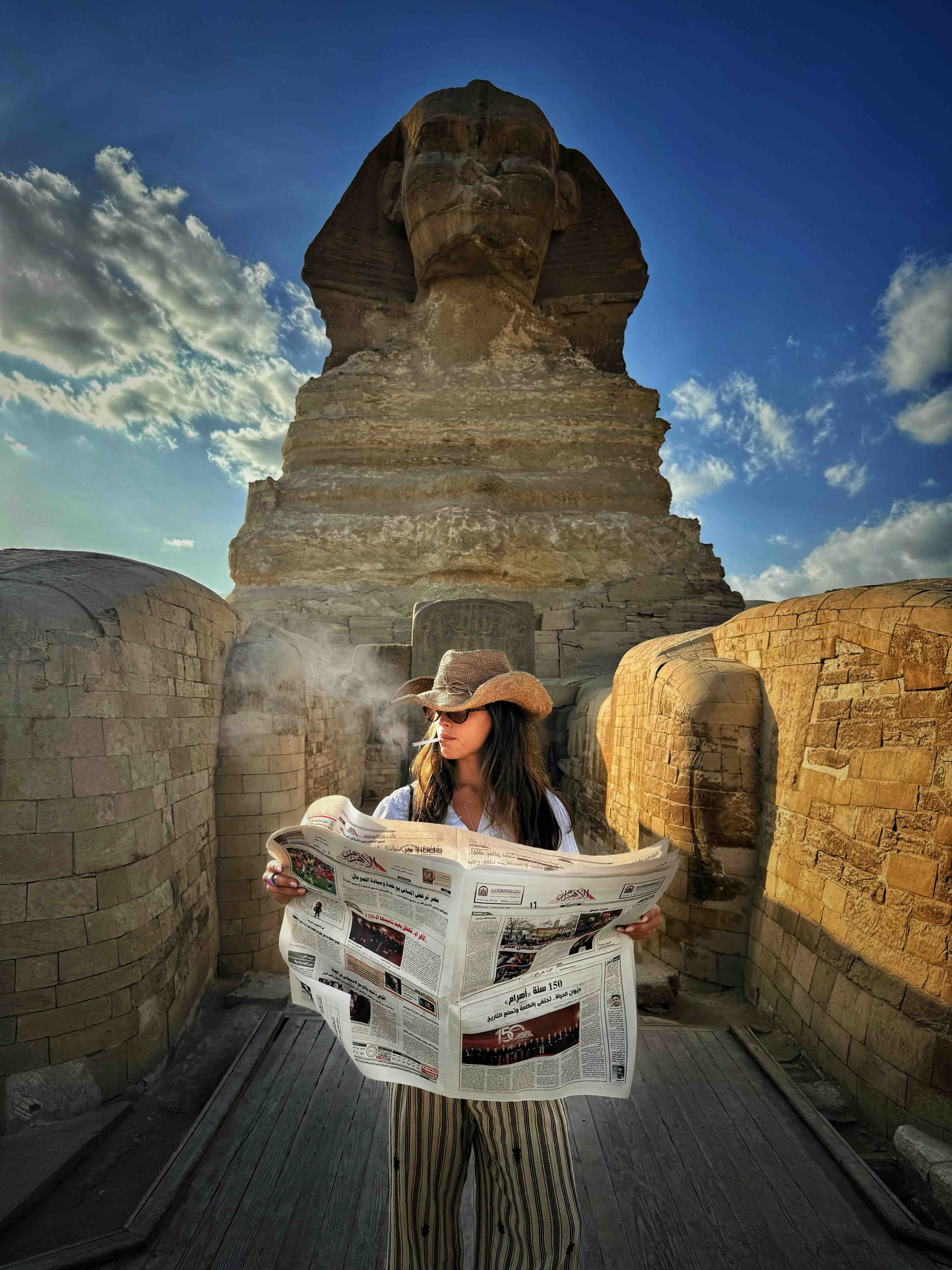
A figure reads the world’s news beneath the gaze of the ancient Sphinx, photographed by Maryam Eisler
Egypt is a country on the lips of smart cultural leaders everywhere, with the annual Art d’Egypte fair a contemporary anchor to thousands of years of culture. Across these pages, Rania Al Khalifa writes a paean to accompany a photographic portfolio by Maryam Eisler
Anchored by the long-awaited debut of the Grand Egyptian Museum (GEM), Egypt is currently experiencing a profound cultural renaissance. For me, it was the necessary catalyst for a return visit after a 38-year hiatus, and to take a journey along its ancient river – a chance to see if the country that Herodotus called the “gift of the Nile” still held its ancient magnetism.
Follow LUX on Instagram: @luxthemagazine
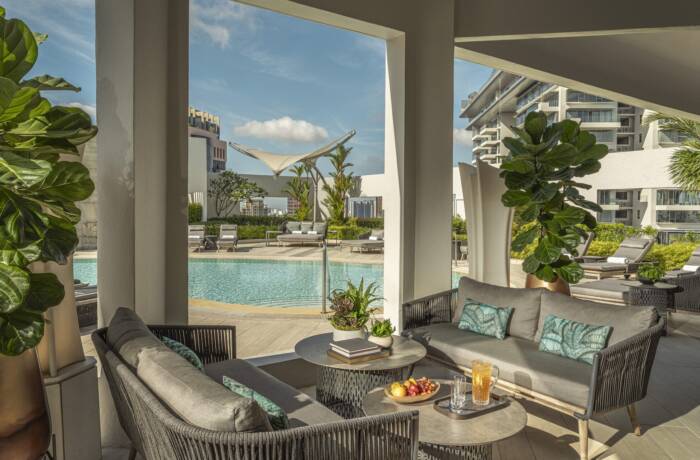
Cairo is a city of glorious, productive friction. We began with two nights at the Four Seasons Cairo Nile Plaza, centrally perched and pulsing with the city’s energy. Between the dust-caked majesty of the Giza Plateau and the sleek, limestone-and-glass futuristic designs of the GEM, Cairo offers a short, sharp spurt of chaos that serves as a vital preamble to the Nile’s slower tempo.
They say the light in Luxor hits different; a syrupy, amber glow that seems to emanate from the limestone itself. Landing in ancient Thebes feels like an immediate shedding of the modern world. To truly lean into the romance of the site, one must stay at the Sofitel Winter Palace Luxor. Here the ghosts of former guests Howard Carter and Agatha Christie still seem to linger in the high-ceilinged corridors of a palace that served as one of King Farouk’s favourite winter residences.
Read more: Arch Hades in conversation with Catherine Loewe
While the Big Three – Karnak Temple, Luxor Temple and the Valley of the Kings – are non-negotiable, I recommend veering off the mainstream to include Dendera Temple. It is a place where you realise the staggering breadth of Egyptian theology. Between the tongue-twisting names of Akhenaten and Ahmose, you eventually stop trying to memorise facts and simply start feeling the weight of history. It is a humbling curriculum in human insignificance.
The transition from Luxor to Aswan is best served by a dahabiya. We boarded the Roman by Nour el Nil, a 10-cabin vessel that epitomises rustic chic. This is unabashedly analogue travel: no pool, no gym, just the snap of a sail and the high-touch service of a devoted crew. Sailing on a dahabiya is a study in the melancholic rhythm of the river.
Read more: Marcantonio Brandolini d’Adda’s art manifesto
The pièce de résistance of the south is Abu Simbel. Many travellers omit this due to its proximity to the Sudanese border, but to skip it is to miss the soul of the empire. I have stood in the silent shadows of Angkor Wat and watched the clouds lift over Machu Picchu, but I have never felt as physically and spiritually dwarfed as I did beneath the four seated figures of Ramesses II. Carved directly into the Nubian sandstone, these statues were a definitive line in the sand, a celestial warning that Egypt’s power began here and ended nowhere.
Egypt remains a land where the only thing that moves faster than the Nile’s current is the imagination. A ten-day journey here doesn’t just fill a passport, it recalibrates the soul.
Rania Al Khalifa
Photographic portfolio and words by Maryam Eisler
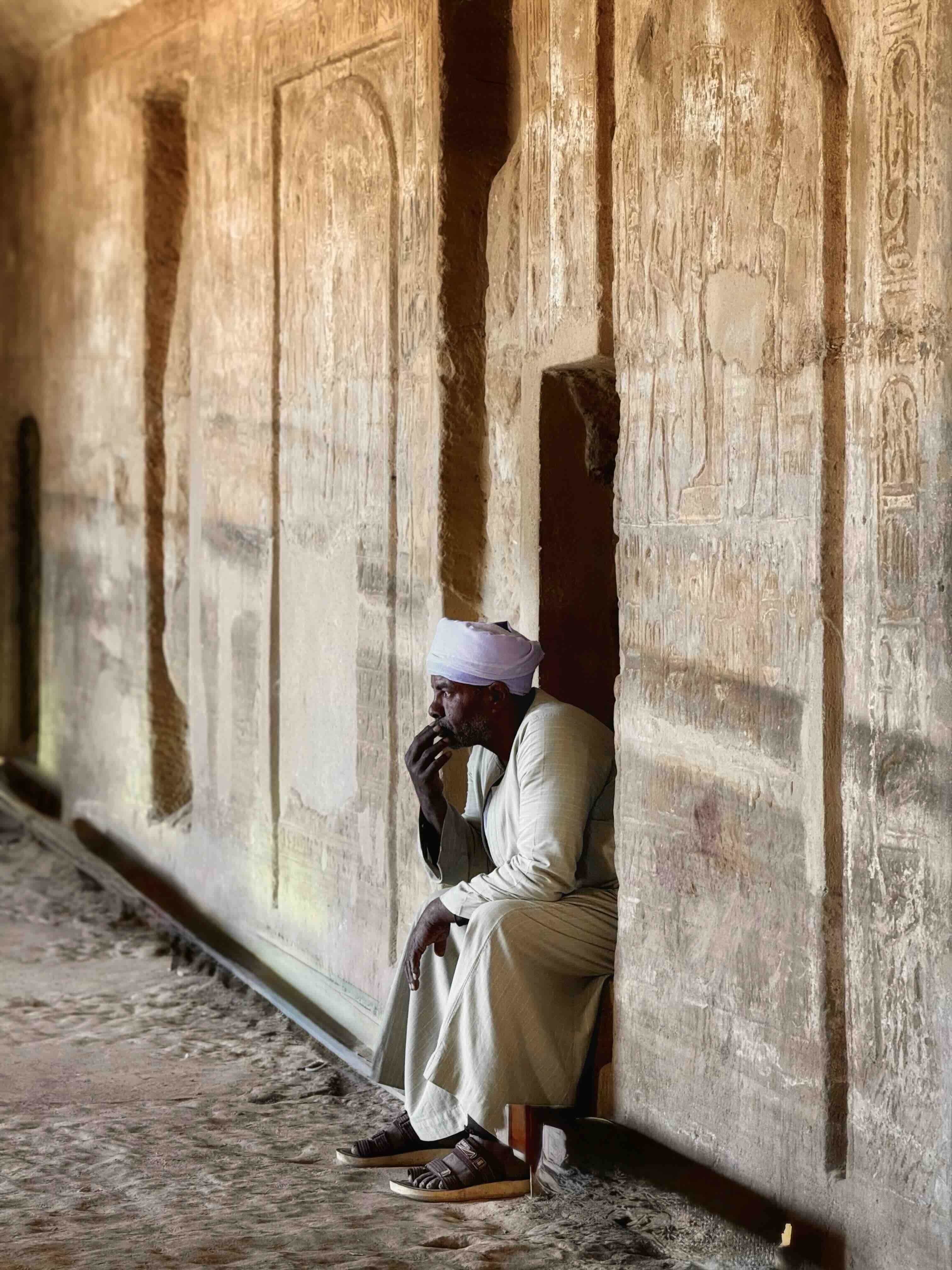
At Gebel el-Silsila, where the Nile slips softly between walls of sun-burned sandstone, the chapel of pharaoh Merneptah (a son of Ramesses II) is carved like a whispered prayer – a son’s quiet claim to immortality. Although less monumental than his father’s structures, Merneptah’s chapel reflects a continuity of royal presence along the Nile and the religious importance of this quarry region.
She stands beneath the ancient gaze of the Sphinx, unfolding today’s news while millennia watch in silence behind her. Smoke curls into the desert sky, and for a moment the modern world drifts softly against the face of infinitude.
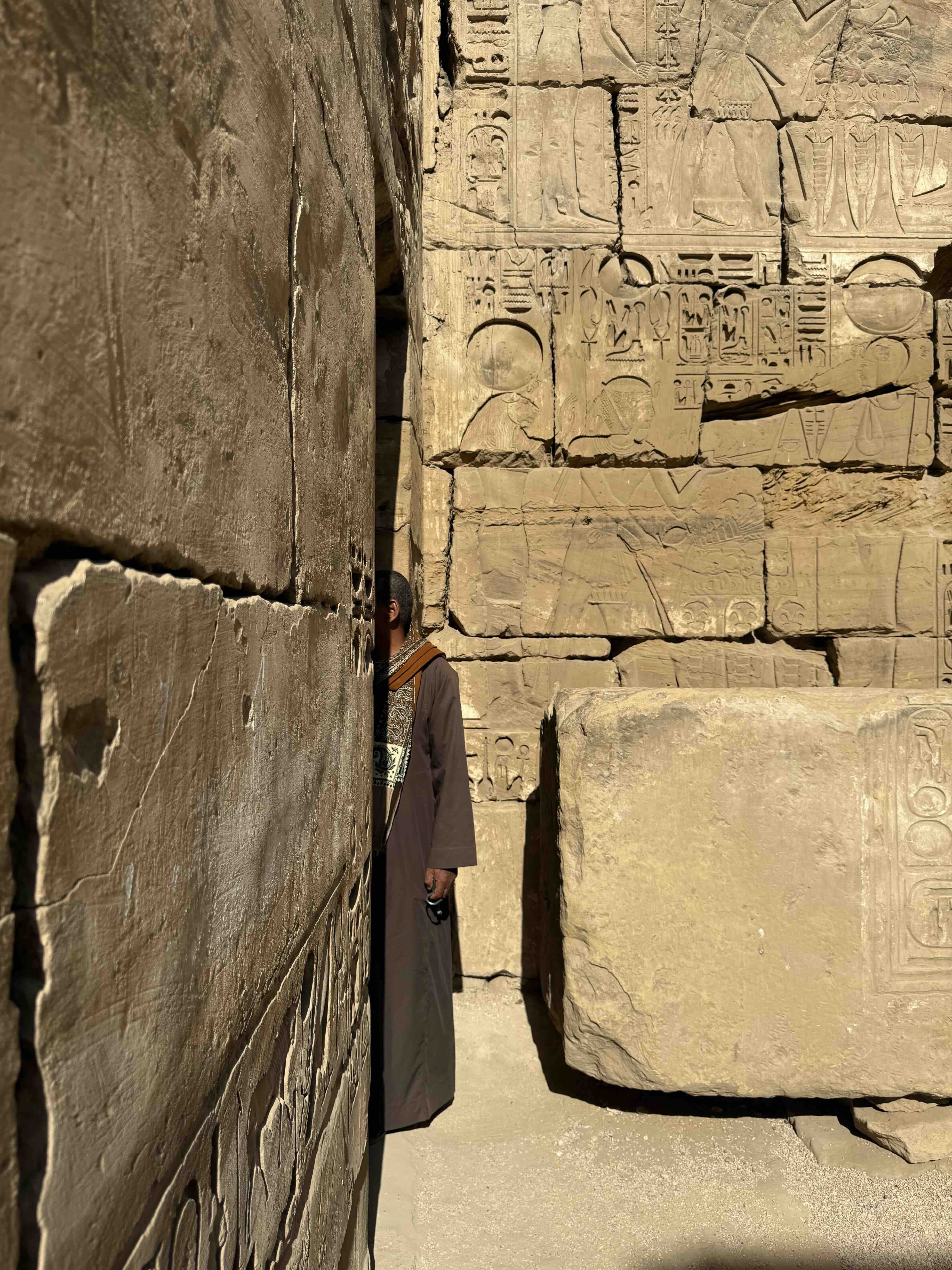
At Luxor Temple, a guide stands half revealed between ancient stones, as if emerging from the hieroglyphs that surround him. Suspended between shadow and sunlight, he feels less like a man in passing and more like a messenger from another age.
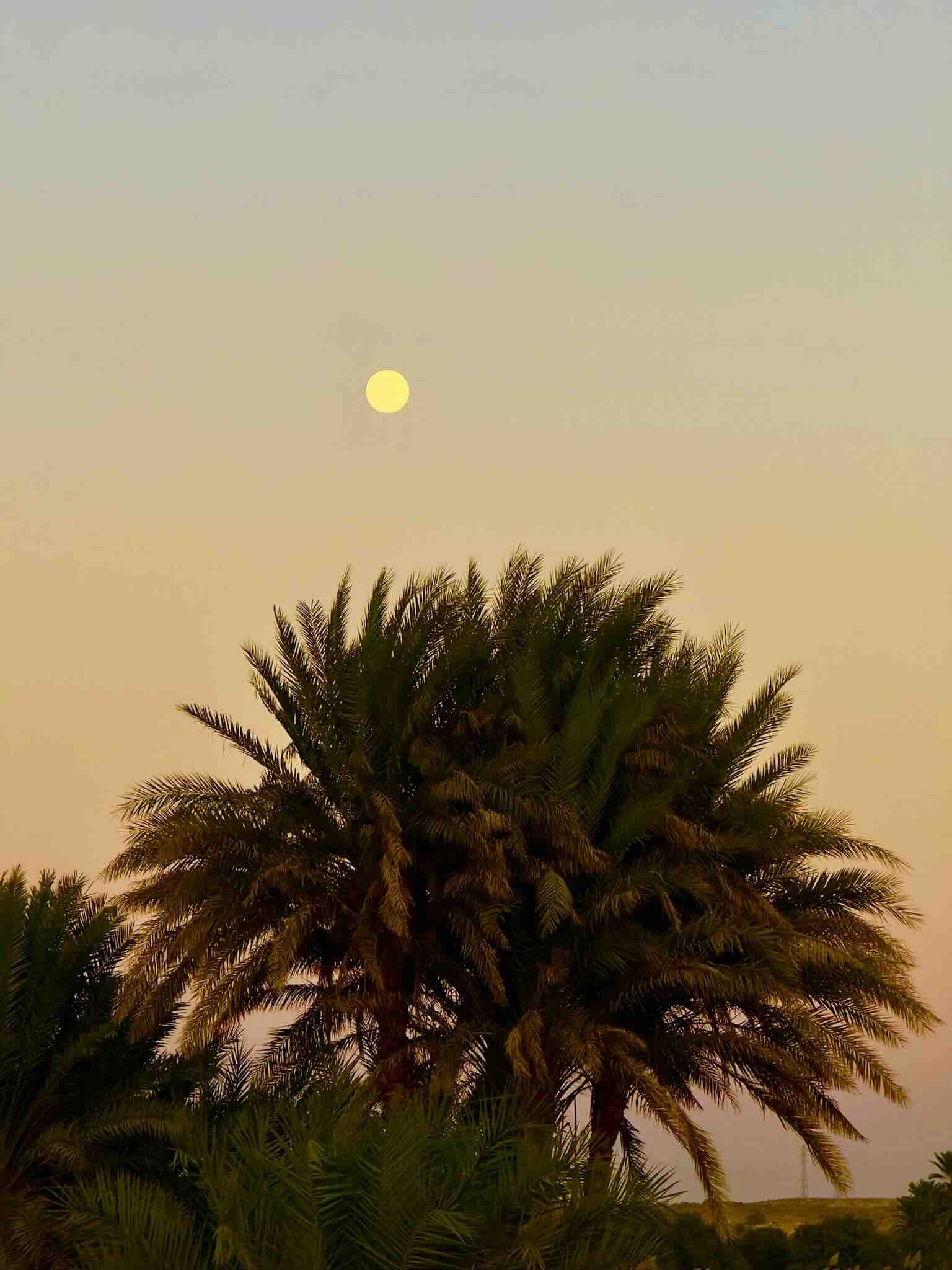
From the quiet drift of the boat at dusk, the palms rise like darkened lace against a sky still holding the last gold of day.
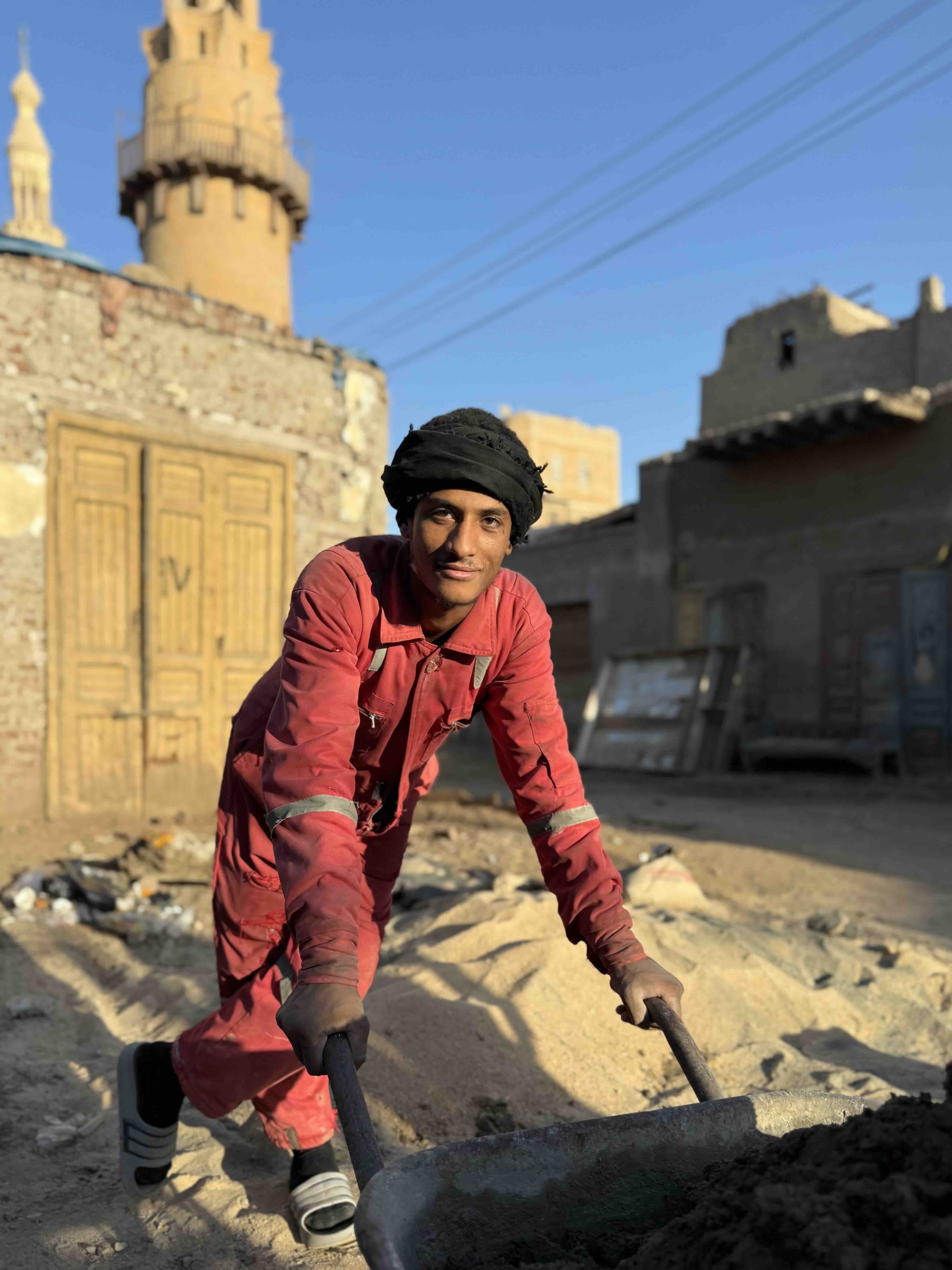
Beneath the shadow of the Temple of Esna, where the deity Khnum once shaped humankind from Nile clay, a worker bends into the dust as though continuing the god’s unfinished work. In the golden light, his gaze holds the same ancient gravity: earth on his hands, eternity in his stare.
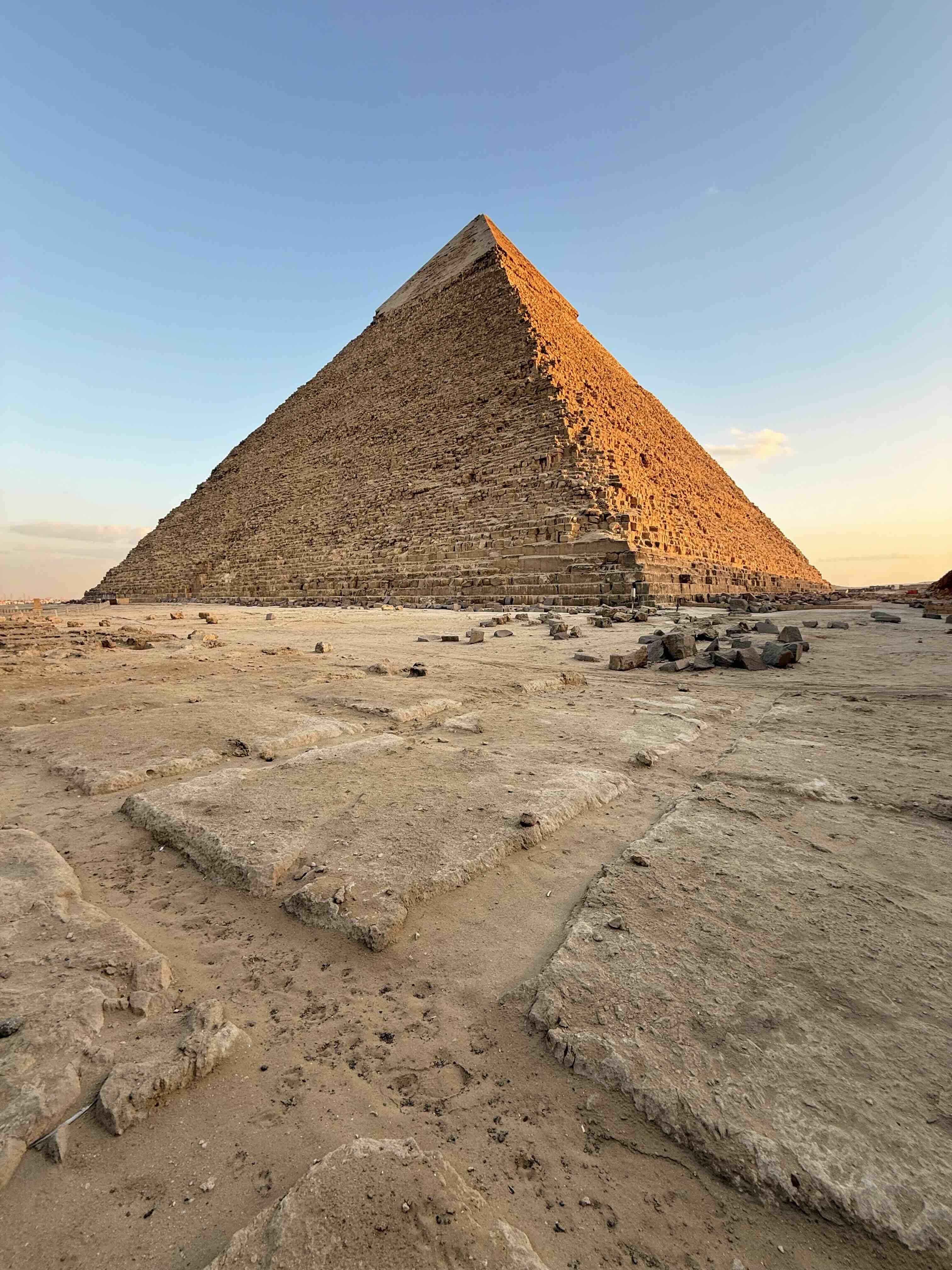
At Giza, the pyramid of the pharaoh Khafre rises from the desert like a flame turned to stone, holding the last light of day as if it were a secret whispered to the ages.
Maryam Eisler