Business woman Vicky Xu poses with a black horse

Vicky Xu with one of her racehorses

portrait of LUX Editor at Large Gauhar Kapparova

LUX Editor-at-Large, Gauhar
Kapparova

Vicky Xu, the head of Hong Kong venture capitalists Global Group’s new Lifestyle & Sports Club, has brought her lifelong love of horses to bear on the exclusive benefits the club offers its members. She tells LUX Editor-at-Large Gauhar Kapparova what it takes to make her club that bit different and how to turn a horse into a winner

Vicky Xu is vice chairman of the Global Group, the Hong Kong-based venture capital investment company, and CEO of the group’s Lifestyle & Sports Club. A citizen of the world with a passion for horses, she tells LUX Editor-at-Large Gauhar Kapparova about her motives for launching her new sports and horse-racing club, offering private members exclusive access to some of the greatest equine and sporting events – and ensuring a happy life and eventual retirement for the horses.

LUX: Where did your love of horses begin?
Vicky Xu: It all started in Mongolia, when I was eight years old. My first riding experience took place during a summer holiday with my father. Mongolia’s horses can be wild, but I remember talking to the horse before climbing on its back in an attempt to calm him, asking that he be gentle, as it was my first time to ride. Horses are renowned for being sensitive to human emotions and interacting with people. As a result, I had an amazing first-time experience on horseback, and since then I have been in love with horses and continue to ride in Hong Kong and London.

Follow LUX on Instagram: the.official.lux.magazine

LUX: With so many members clubs now in existence, how is the Global Group Lifestyle & Sports Club different?
Vicky Xu: It is designed for anyone around the world who wants to experience prestige privileges in addition to participating in world-class sports and thoroughbred racing events as well as networking and entertainment. The club offers unparalleled benefits to our members.

The club will hold 20 outstanding horses and the number will increase based on the number of members. Our stable has been expertly bred and trained and will participate in Royal Ascot and other important events such as Newmarket’s Guineas and July Festivals, York’s Dante, the Ebor Festival and Glorious Goodwood. Aside from these events, the club’s horses will also have the opportunity to participate in top horse-racing events in Europe, such as the Prix de l’Arc de Triomphe and Le French May. Members can share in net prizes won by the Club horses as well as experiencing these top international events in person.

Each year the club will either organise or provide access to a minimum of 12 events for members. While major race meetings will always be a highlight, with members attending events in the UK, France, Dubai and the US, other sporting offerings will include premier car-racing events such as Goodwood Revival and the Goodwood Festival of Speed; the Wimbledon tennis championships; a selection of exclusive, invitation-only gatherings such as the amfAR Gala in Cannes. There will also be an annual gala dinner held at the Palace of Versailles.

We also offer our members the opportunity to create their own tailored experiences. These include the chance to meet with world leaders, captains of industry, and the superstars of fashion, entertainment and sports.

Guests at royal ascot pose with jockey on the track

Vicky Xu with Johnny Hon (far left), the chairman of Global Group, and Ed Dunlop (far right), the trainer of Hon’s horse Global Giant, ridden by Gérald Mossé at Ascot

LUX: What are the challenges of running an international members club?
Vicky Xu: There are literally thousands of details that must be attended to daily to ensure the execution of the highest levels of service to our international members. While most of our events are exclusive and by invitation only with limited-seat availability, we want all our members to have the opportunity to participate in our events. We have no choice but to limit our membership to about 360.

LUX: What are your top three picks of the private events that Platinum members have access to?
Vicky Xu: Exclusive access to a private box in the Royal Enclosure at Royal Ascot; exclusive access to various world-class events at Goodwood Estate, including Glorious Goodwood, the Goodwood Festival of Speed, Goodwood Revival, and Formula One races. We also provide assistance to attend The Wimbledon Championships, the oldest and most prestigious annual tennis tournament in the world.

The finishing line at Royal Ascot 2018

Business woman Vicky Xu speaking at Royal Ascot in 2018

The finishing line of the Royal Hunt Cup at Ascot, 2018 (above), with Vicky Xu speaking

LUX: Members have the opportunity to have assets in the horses. How does this work?
Vicky Xu: The Global Group already has its own professional team of horse breeders and trainers in the UK, and over the past three years it has been honing its skills in these areas. We have hired a professional team and have a better understanding of the sport, which is of potential benefit to our members. The club will apply this knowledge to its own stable of racehorses, aiming to acquire horses that will race in events around the world, with members sharing in the winnings.

The club’s professional team is committed to its quality breeding programme, with its many years of experience in the pure-bred horse industry and access to advanced DNA technology. The value of this expertise is significant in producing quality race horses. Members will be able to benefit from the added value of horse assets while also enjoying the exhilaration of horse racing.

Read more: Why you Aman Le Mélézin is this month’s hottest hotel

LUX: Describe the thrill of a horse race.
Vicky Xu: At Royal Ascot last June, we brought some of our prominent guests and they all enjoyed the perfect racing experience, seeing the horses cross the finish line and capturing the best moments close at hand in the Royal Enclosure. In addition to the club’s 20 horses, the group currently has 40, one of which came fifth this year and was awarded Best Looking Horse on Ladies’ Day.

LUX: Who is your favourite designer to wear to the races?
Vicky Xu: I always believe in the maxim ‘you are what you wear’. There are so many designers I like. The most important thing is to respect the dress code and style etiquette of each race day.

LUX: How have new DNA technologies changed the horse industry?
Vicky Xu: Genetics testing has definitely arrived in the world of thoroughbred horse racing. Our professional team knows well that the modern thoroughbred’s performance is based on a great deal of things including the genetic ability of the horse and environmental influences including the condition of the horse and the track, the jockey, the competition and the race distance. But a good horse also needs courage, heart ,grit and the determination to win. Racehorses are actually professional athletes. We have to train them, love them, communicate with them and respect them.

Woman riding a white horse against a leafy background

Xu riding in Hong Kong

LUX: Why is the club setting up a charitable fund to look after retired racehorses?
Vicky Xu: We want to ensure that once their days on the track are over, the racehorses will be well cared for.

LUX: Where do you see the Global Group Lifestyle & Sports Club in ten years?
Vicky Xu: We’ll explore even more exclusive and prestigious events from all over the world for our members. I trust we can recruit many more international members in 10 years’ time and let more people enjoy the exhilaration of horse racing and other tailor-made events. I hope that one day the club’s charitable fund will be able to provide opportunities for more people, especially children, to enjoy horse riding and its many benefits, such as improved confidence, therapeutic and emotional benefits and the many physical rewards that the sport brings.

LUX: When you’re not at the races or working, what do you enjoy doing?
Vicky Xu: I am a mother of three daughters. Other than the races or working, I really enjoy most of all to spend time with them. Time slips by, so spending quality time together is the best way we have to show each other that we care and that our families are always the most important thing to us.

Find out more: global.hk

This article was first published in the Winter 19 issue.

Share:
Reading time: 7 min
Exterior of luxury ski hotel on the edge of a piste

Guests of five-star hotel Aman Le Mélézin can step straight out of the ski room onto the piste

Why should I go now?

The snow in the French alps this season is sensational; the skiing is velvet-powder perfect and Courchevel 1850 is a white-dusted fairy-tale.

It’s one of the prettiest and most exclusive resorts in the heart of the world’s biggest ski area, Les Trois Vallées. Courchevel somehow manages to balance quaint with outrageous; wooden shutters, horse and carts and traditional French boulangeries sit alongside designer boutiques, Michelin-starred restaurants and luxury hotels, of which ski-in ski-out hotel Aman Le Mélézin is one of the most sophisticated.

Follow LUX on Instagram: the.official.lux.magazine

What’s the lowdown?

The Aman is an elegant, grey chateau-style hotel right on edge of the Bellecôte piste, an easy green run down to the main ski lift station and the central village. Everything from the warm wooden panels, stone flooring and soft grey armchairs to the bonsais, artwork and Japanese sake cups has been carefully selected to create an atmosphere of calm, seamless luxury. It feels effortless and homely. Many of the doors melt into the wooden panelled walls so it takes time to find the hidden areas. Guests are invited to roam at leisure without the constant presence of staff breathing down their necks and with only 31-rooms it never feels busy. One afternoon, we had the spa entirely to ourselves and spent a few blissful hours drifting between the pool, hot tubs, hammam, sauna and rainforest shower, which pours to the accompaniment of tropical birdsong.

Luxurious sitting room with green velvet sofas, log fire and snowy landscape through the window

The cosy bar and lounge area at the front of the hotel

Meals are all served at Nama, the hotel’s restaurant which serves a limited but delicious French-style breakfast, and at night, becomes Japanese fine-dining. The kitchen is headed by chef Keiji Matoba, who creates innovative, authentic Asian dishes such as platters of melt-in-the-mouth fresh sashimi served on a bowl of ice, grilled black cod marinated in sweet miso and mochi sakura ice cream. The sake list is extensive with the option of a bottle or carafe, which comes in a hand-made Japanese ceramic jug.

Read more: Philip Colbert’s “Hunt Paintings” at Saatchi Gallery, Los Angeles

Downstairs is the new, spacious piste-side ski room where knowledgable staff literally put your feet into your boots and more or less onto your skis. If you’re feeling energetic, you can take the lift straight up and ski down into Méribel and over to Val Thorens all in time for lunch, or else enjoy the staggering views and mountain air with a vin chaud on the terrace of a restaurant whilst private planes fly overhead to land on the high-altitude altiport.

Sushi and sashimi arranged on a bowl of ice

A sushi platter at the hotel’s restaurant Nama

Getting horizontal

Our room was high-up on a corner of the building with two balconies providing views over the piste and village. The space was light and relaxing, minimally furnished in creams and light wood with white orchids. There was a horizontal window at the end of the bathtub, from which we could watch skiers gliding past.

Luxury ski hotel bedroom with a double bed and windows looking onto snowy landscape

Chambre Melezin with two balconies overlooking the piste and Courchevel

Flipside

The hotel is a little bit behind the times when it comes to tech, which may frustrate guests used to contemporary conveniences (there are no bedside iPads or digital concierges), but when you’re in the quiet of the mountains, perhaps it’s no bad thing to be dragged away from hyper-efficiency.

Rates: From €1, 100 (approx. £950 /$1,250) per night, half board

To book your stay visit: aman.com/resorts/aman-le-melezin

Millie Walton

Share:
Reading time: 3 min
Portrait of designer Olivier Rousteing
Designer Olivier Rousteing with Cara Delevingne and other models after a catwalk show

Olivier Rousteing with models, including Cara Delevingne, after Balmain’s SS19 show at the Hôtel de Ville in Paris

The French label Balmain, known for its 1950s couture, has been turned into a leader of the 21st-century pack by its creative director Olivier Rousteing. Harriet Quick meets him at his lair in Paris to discuss glamour, music and diversity

“Glamour never went away but right now we don’t like to like glamour – it’s something taboo, a guilty pleasure. It is easier to say a grey oversized coat is chic and beautiful,” says Olivier Rousteing. Over the past eight years as creative director of Balmain, Rousteing has started a brilliant new chapter in Parisian glamour with his continual reinvention of the fashion lexicon, with his signature ballast-shouldered d-b blazers, crazy beautiful embellishments, and architectural silhouettes conceived for megawatt impact. There are many neutral, minimalist suits and swishy plissé skirts designed for 2019. He’s the master of unapologetic va-va-voom, the kind that is rewarded with fire-flame emojis on Instagram, the kind that speaks of female empowerment, dynamism and a knock ’em-out fighting spirit, a message that the brand spreads far and wide.

Follow LUX on Instagram: the.official.lux.magazine

Balmain’s spring/summer 2019 collection, staged late last year under the frescoed ceilings of the Hôtel de Ville in Paris, was a paean to the extraordinary depth and breadth of culture in the capital, to Rousteing’s own exploration of it and to Parisian savoir-faire. Model and actress Cara Delevingne opened the show in a sculpted metal bustier, a fluid white satin trench with exaggerated shoulders and utility trousers that would suit a modern-day Cleopatra. Extreme fan shapes in triple organza arched over the torso like an unfolded concertina, micro dresses were constructed out of a mosaic of Plexiglas and black graphic knits boasting white hieroglyphics. “We’ve also riffed on the origins of modern-day Paris – and, actually, modern civilization itself. My fascination with the impressive obelisks, pyramids and columns that date from Napoleon’s campaigns and adorn this city’s most iconic public spaces is reflected in the collection’s many references to Egypt,” says Rousteing of his tour de force.

There are no half measures with Rousteing and he admires designers who work with similar conviction. “In my eight years as creative director, we’ve seen so many strong trends. I’m a huge fan of Demna Gvasalia, Hedi Slimane, Phoebe Philo and Raf Simons – they have visions and strong points of view. When I saw the hyper-real street wear of Vetements, I was happy because it is refreshing, but it doesn’t mean I have to do that. In fact, the opposite – you have to become more you. One might like or dislike Balmain but it keeps a fan and customer base, and you have to challenge and be relevant every season,” says the 33-year-old.

Black and white portrait of Balmain designer Olivier Rousteing

Olivier Rousteing, photographed in Paris in 2017 by Pascal Dangin

“I love what is figurative and what people can see. I use a lot of patterns and craftsmanship because I love the first IMPACT! But just because a piece is shiny does not mean there’s no depth. It’s so easy to say ‘bling’ but that means nothing. A piece can be shiny and be created with so many innovative artisan techniques – it is more than surface. The Tour Eiffel is impressive with or without lights; I hope, night or day – these clothes can stand up,” says the designer who joined Balmain and became its studio manager under his predecessor, Christophe Decarnin, in 2011. Previously, he had worked as Peter Dundas’s right hand at Roberto Cavalli, excelling in that brand’s neo-bohemian glamour.

Read more: In conversation with artist Victoria Fu

Balmain is majority owned by the Qatari investment fund Mayhoola, which is also behind Valentino, Pal Zileri and Anya Hindmarch. The luxury investment business that is supported by the emir of Qatar paid around $560 million for Balmain in 2016. The operations of the royal family-owned luxury investment business is secretive, with turnover figures for the brand undisclosed. To date, 80% of the turnover of Balmain has been at wholesale with collections for men, women and children being sold into multi-label boutiques and department stores around the globe. Success at wholesale equates to customer loyalty, which is impressive in this era of promiscuous label shopping. This year, under the new CEO Massimo Piombini, there is a major expansion into brick-and-mortar stores, with flagships opening in Miami, Moscow, Paris, Rome and Las Vegas. “Piombini is daring and is not afraid, and I love to push the limits of design. This is the base of making a great business in fashion. With Mayhoola, we want to make the business BIG and push it to the next level,” says Rousteing. Currently, Balmain employs 350 staff with 25 in the design studio.

This year has also seen new developments with the launch of a demi-couture collection entitled ‘44 François Premier’ (it carries the address of founder Pierre Balmain’s original atelier); a twice-yearly women’s wear capsule called Episode, which is showcased during the menswear shows; and a big boost to shoes and handbags. The line ‘Beauty’, following a capsule line with L’Oréal, is in the works. In total, Rousteing designs 14 collections a year.

A look from the Balmain SS19 collection on catwalk

Balmain SS19 ready-to-wear collection

The shift into demi-couture is significant in its appeal to a growing number of younger couture clientèle. Where a typical heavily embellished cocktail dress might cost £2,500–4,000 in ready-to-wear, a gown in ‘44 François Premier’ is £20,000 and up. “The line is not about trend or future forecasting; it’s about beauty for beauty’s sake, with iconic pieces; we have a huge market for that with so many celebrities embracing the brand,” says Rousteing, whose designs were inspired by his delving into the archives and by the golden years of Pierre Balmain, who dressed Hollywood, socialites and royalty in his exuberant designs in the mid-century. For Rousteing, the jewel-coloured ‘Dynasty’-style gowns, with their gigantic ruffles and furls and sinuous Grecian drapes as well as hand-crafted embellishments by Maison Legeron (a long-established maker of fabric flowers) proved a timely recalibration of the couture dream. The line quickly picked up red-carpet strikes with Lupita Nyong’o and Penélope Cruz parading looks at summer premieres.

Rousteing’s latest show was streamed live to the few lucky owners of Oculus VR headsets. While virtual reality has been used by brands including Chanel (in exhibitions) and Dior (in VIP presentations), the VR stream flagged up the digital savvy of Rousteing who embraced the peer-to-peer power of social media and Instagram (where he has five million followers) early on, much to the snobbish dismay of the old luxury elite. “We always have to remain two steps ahead,” says Rousteing, thumbing the shiny gold Balmain buttons on the shoulder line of his cashmere Breton sweater as he sits behind a vast desk of brown marble and bronze.

Luxury clothes shop interiors

Balmain’s new store in Miami

The contemporary take on the Parisian dream is epitomised in the micro-detail of the scintillating embellishments, as much as it is in the flagship interiors. The stores offer a new version of the traditional hôtel particulier with white stucco interiors, gilded mirrors and parquet floors that you could skateboard across, with the associated uptight, cloistering atmosphere banished. Likewise, the virtual universe is vibey with campaigns directed as pop videos. Cue the sonic autumn campaign video entitled ‘The Balmain Beat’ (their ad campaign using a series of films) directed by Jake Nava who has worked with Beyoncé and Britney Spears. It features a group of disparate performers including Milla Jovovich and Daphne Guinness in diverse locations in Paris, from empty office blocks to an 18th-century folly, drawn together by a spontaneously evolving tune played out on found instruments. It shows off the brand’s hero bag – a classy BBox bag with a medallion clasp – and clothes that vibrate with neon colour and metallic sheen.

Watch ‘The Balmain Beat’ Fall/Winter 2018:

What are his views on social media? “It’s a fantastic communication channel yet we have to be careful. Five years ago what I loved was the transparency and authenticity of social media – it was spontaneous and honest. Right now, it’s too commercial and you lose the magic of honesty and credibility. The millennials are not going to like it, as they don’t want to feel trapped,” he says.

In the Balmain world, real or virtual, music is a constant. Prince’s ‘When Doves Cry’ was the opening track to the spring/summer 2019 show. “We are witnesses of our time. I’m very passionate about inclusivity; I’m mixed race myself, and I look for diversity in everything I do. And listening is a key to that inclusivity. There’s a rhythm of life happening all around us. You won’t be scared of what happens tomorrow, if you take the time to listen,” says Rousteing.

Rousteing’s ‘lair’ is a spacious glass-walled office on the top of a six-floor HQ in a narrow street in the 8e. The brown marble and bronze desk, stacked with piles of books, devices and leafy plants, is his own design. While he is working, at the gym, or sketching, loud music is his constant companion. His catholic taste includes David Bowie, Rihanna, Ed Sheeran, 80s electro pop, rock and roll, and RnB. His spring/summer 2019 menswear was devoted to Michael Jackson, with its sequin jackets, rolled-cuff denim and white sock/patent shoe combos.

Read more: Italian brand Damiani’s Kazakh-inspired jewellery collection

Rousteing is one of the few black designers currently at the helm of a major brand. Recently, Virgil Abloh was appointed head of menswear at Louis Vuitton, but the numbers are tiny. Independent talents, who have the black experience at the heart of their work, include Duro Olowu and Grace Wales Bonner in London; Stella Luna in Milan; and in New York, Telfar, Pyer Moss and Shayne Oliver.

He has brought pop into fashion and fashion into pop and, by virtue of that ambitious confluence, has opened up a once tired old fashion house to the world. Balmain resonates with a vast audience that exists in and beyond the relatively limited fashion devotee circle. His collections are anthems built on a masterful spectacle and pageantry. He works closely with Rihanna, who first visited his studio in 2013, and he has created hundreds of looks, running the gamut from Egyptian goddess to American high-school denim and sweats, for Beyoncé and her crew for Coachella 2018. A limited-edition line was released shortly afterwards.

Model on a Balmain catwalk wearing couture dress

Balmain SS19 ready-to-wear collection

“Sometimes people love the tortured element of fashion – depressed, dark and wounded – and there is a depth and struggle in my clothes, but I am pudique (modest). I don’t like being in your face with the torment of creating my clothes,” says the designer who wears no sign of angst on his dewy, unlined complexion. Rousteing has a naturally mellifluous voice and a gentle, warm smile that mellow his fierce rhetoric.

While Rousteing might be a champion of diversity, global messaging and universality, he also remains particularly and brilliantly French. He upholds the values of Parisian glamour that he first fell in love with when a young boy of mixed race raised by adoptive parents in Bordeaux, gazing at images of Iman, Betty Catroux and Catherine Deneuve with their just undone coiffures and smouldering sexuality. He faced adversity (although he does not go into details) but one can assume that a bourgeois city in south-western France might not have been as liberal as it appears now.

Read more: The Bahamas’ new 1,000 acre luxury resort

“I’m obsessed with being French. I am not conservative but I love to push traditions to the next level,” says the designer who joined Balmain at the young age of 24 and brought about radical change making the brand diverse, inclusive, ‘empowered’. Those values, championed by the greats in the 1960s and 70s – Pierre Balmain and Yves Saint Laurent included – had fallen by the wayside in the following century. Now, a more humanistic approach is considered a vital ingredient of contemporary fashion. Frenchness to Rousteing is about creativity, breaking boundaries and yes, freedom, liberté, egalité and fraternité. His own ‘nest’ is in a light-filled Haussmann-heritage building in the 11e that is a contrast of bold minimalism and flamboyant baroque style. His pride and joy is a vast sculpture of a bronze eagle that boasts dazzling amethyst rock. Thinking about the price of Balmain demi-couture, I ask the designer what he would do with 40,000 euros. His answer is a big slab of brown marble to create a piece of furniture from, to go alongside the gym. “I love the way light dances off marble,” he says.

“Being too popular? I’ve never understood that language. Democratising is not something that’s not luxurious. People talk about chic, about style, about proportions, about the front row, but who is defining these words today and what do they mean? If you take a dictionary 20 years or 100 years from now, you will have new words and new meanings and it’s time for fashion to take on a new meaning.”

Discover the Balmain collections: balmain.com

This article was first published in the Winter 19 Issue

Share:
Reading time: 11 min
Philip Colbert lobster art installation
Contemporary artist Philip Colbert pictured standing on a ladder in front of one of his oil painting collages

Artist Philip Colbert in his studio

London-based contemporary artist Philip Colbert works within the self-defined movement of ‘Neo Pop Surrealism’. His distinctive, wildly vibrant aesthetic speaks of a hyperactive age swollen with imagery, media and symbols. His oil paintings are chaotic, visual overloads, creating imaginary surrealist dreams of swirling Colgate toothpaste roads, falling currency signs and laugh-crying face emojis.

Follow LUX on Instagram: the.official.lux.magazine

The exhibition “Hunt Paintings” presented by Unit London at the Saatchi Gallery pop-up in Los Angeles, coinciding with this month’s Frieze art fair, brings together a diverse range of artworks, including large-scale paintings, sculptures, and a virtual reality experience which transports viewers into ‘Lobster Land’. The title makes reference to the old master hunt scenes, depicted in works by artists such as Reubens. Reflecting on the violence of these scenes, Colbert’s collages teeter on the edge of nightmare, reflecting on the darker side of pop culture that lies beneath the sheen, slogans and humour.

‘The Year of the Lobster’, a collaborative work with art auctioneer Simon de Pury, is the most striking satire and an exhibition highlight. The surreal video is an art auction come pop song come music video, ridiculing the art world, consumerist society, advertising and modern day paranoias as de Pury calls out brand names and slogans, continually asking the viewer: “You do like that lobster, don’t you?”

Art sculpture by contemporary artist Philip Colbert

Philip Colbert lobster art installation

Installation shot of ‘Hunt Paintings’ by Philip Colbert at Saatchi Gallery, Los Angeles

“Philip Colbert – Hunt Paintings” runs until 11 March 2019 at the Saatchi Gallery pop-up, 8070 Beverly Blvd, Los Angeles. For more information visit: theunitldn.com/whats-on

Check out the next issue of LUX magazine, on sale from May 1 for a fabulous collaboration with Philip and Charlotte Colbert.

Share:
Reading time: 1 min
Modelling campaign featuring a mature model wearing chic office wear

graphic banner in red, white and blue reading Charlie Newman's model of the month

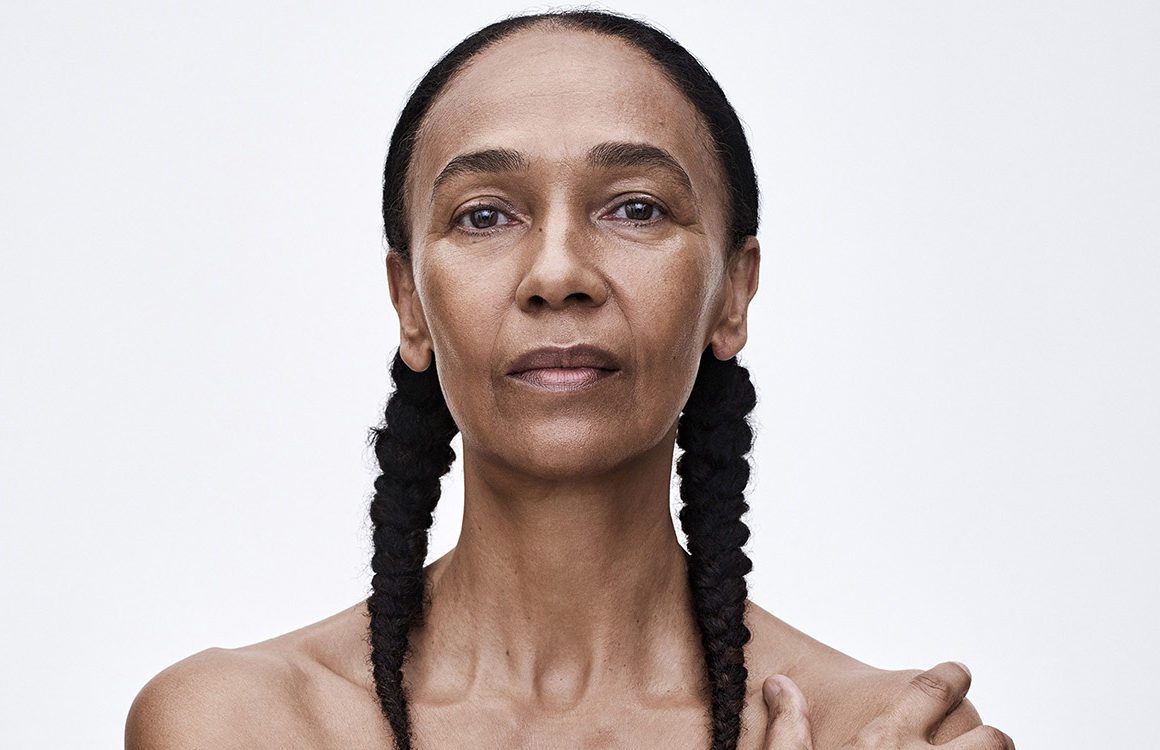
Portrait of legendary swedish model anna k

Swedish model and life coach Anna K. for matchesfashion.com. Instagram: @annaklevhag

LUX contributing editor and model at Models 1, Charlie Newman continues her online exclusive series, interviewing her peers about their creative pursuits, passions and politics

colour headshot of blond girl laughing with hand against face wearing multiple rings

Charlie Newman

THIS MONTH: Anna Klevhag, or Anna K. as she is known professionally, was a regular on the catwalks of the late 1990s alongside the likes of Kate Moss, Naomi Campbell and Linda Evangelista. After taking a break from fashion to focus on self-love and train as life coach, she has recently returned to the industry. Here she recalls her early career, struggling with self-belief and explains how coaching can help bring you back to your essential core.

Charlie Newman: Firstly can you tell us a bit about your upbringing and how modelling first came into your life?
Anna K: My upbringing was lovely in a small university town in Sweden as well as long warm summers on an island in the country. My father was a Chemistry professor at the university and was really keen on education, so I did engineering up to IB. I gained a place to study Architecture at university. But in those summer holidays, I won a competition to go to Paris and work as a model. A friend of mine and I were searching for jobs and we saw this job advertising that if you “were over 175cm” you should apply to this agency. My friend jumped straight on that and applied for me. Off I went and they took me on. I originally thought it was to be a booker, at 17 you are a bit dizzy! For the competition we had to parade around in swimsuits in some local hotel and all I remember is hearing my name being called and everyone congratulating me saying that I had won. After that I went to Paris for a week and then never really came back home again. First, I did catalogues and advertising, I was not athletic in body type, which was the thing of the 80s. It was when the ‘Grunge’ trend came that I did well. The look was more about personality and being flat chested and slender, that I could relate to. That’s what got things started.

Follow LUX on Instagram: the.official.lux.magazine

Charlie Newman: Was it difficult for you to take the leap and pursue modelling over studying?
Anna K: To be honest, I didn’t really think about it but now, having two young girls of my own who are around that age, I guess I wouldn’t have wanted them doing what I did. Education is beautiful, in any shape or form. To learn and know things enriches life like nothing else, it makes life more interesting and broad. I can’t stress how important it is to develop and grow, to learn, to have a purpose. I had such a strong interest in drawing and maths, I would have enjoyed being an architect but I rebelled. Still, it is never to late to start, I know that now, and being a life coach, I’m learning every day.

Charlie Newman: What was the reaction from family and friends when you started modelling?
Anna K: I don’t know how but my friends sort of always knew, much more than I did, that I wouldn’t really come back. My father didn’t say much, there was no outrage or anything deeply positive either, I was sort of left to get on with it from his perspective. I think everyone would have preferred it I went to university though.

Model lies along a roof wearing a short blue dress and heels

Anna K. as a young model in British Vogue. Instagram: @annaklevhag

Charlie Newman: Your career catapulted so quickly, but do you remember one moment that changed your life?
Anna K: There was a moment. I did a make up trial with Linda Cantello for Jil Sander in Paris. They ended up picking me for the showroom in Milano. At the end of that, I remember the Art Director Mark Ascoli musing aloud as to whether they should put me in the big show and Linda said “Of course!” I remember the feeling, walking down that catwalk. It was with Linda, Naomi, Claudia, Kate, Amber, Shalome, the old supers and the new generation. It was like I was floating in air. That was my moment. I was in the right place at the right time. It all took off from there. After that, I worked with all those amazing photographers in the 90s and went to New York – it was such a magical time!

Charlie Newman: Having established your career in Europe, how did you feel moving to New York and setting up a life there?
Anna K: Well it never really felt like I moved there, it was just an organic part of life. I had a permanent suite at the Gramercy Park hotel back when it was this enchanting place, oozing of New York. Funny old ladies, with big hair, drinking Cosmopolitans, smoking and eating Gold fish snacks around tables in the bar. It hadn’t been done up yet and I could be anonymous there, it felt personal and real, my friend Kirsten Owen lived there too. We did it our way, it was a special time for sure. Work wise, it was a more pressured environment than Paris. More about business, agencies trying to have you change to theirs, career talk etc etc. But I loved working for Calvin Klein and Donna Karen, J Crew and all those lovely department stores regularly, for days and weeks. It felt more like a proper job and gosh did we have fun!

Model poses in tweed coat standing on pile of boxes

Instagram: @annaklevhag

Charlie Newman: Tell us more about your journey into becoming a Life Coach.
Anna K: I got divorced at 40 and never really saw it coming. I’d been madly in love with my husband for 20 years – we met when I was 22 in Milan. We really grew up together, he was my soulmate. We had two children together and lived in Notting Hill. Life was pretty perfect except for inside of me. I went on this huge journey to discover my blocks, my strengths, my joy, to get to know me. I dealt with a lot of childhood stuff I didn’t even know I had, patterns and beliefs that hindered me as well as daring myself to tap into my inner strength and power. I wish I had followed my instincts and gone to see someone at 25, when I wanted to, but I’m so grateful I have got to where I am now. To have what I have now, inside.

I really had it all but still struggled with self-belief. It was others that had to believe in me. I had the most wonderful booker, Sam Archer, who was full of joy and lust for life. She got me feeling right when I wasn’t feeling right at all. It would take a huge effort for me to go out into what I now call the ‘arena of life’, to be vulnerable and dare to be as big as I could be. With coaching it was easy to unpick all of that, to understand myself and change what didn’t serve me. I could work out where I wanted to be and how to cope. Now, it is me driving my life for myself. The inner strength I gained, got me that step closer to my full potential, it is so powerful. Coaching clarifies, unblocks potential and puts you back in control of your life. You become your own C.E.O! And there is a lot of joy in that force.

I have become aware through my friends in powerful positions that they see Life Coaching as an imperative tool in order to navigate their jobs and lives more efficiently. I now also study Executive Coaching. If you feel good, you do well, if you think good thoughts and have a focused mind set, you become dynamic. Essentially, we are all born perfectly imperfect. We are who we are meant to be. Life’s experiences often scramble that powerful core. Coaching helps you find your way back to your core.

Read more: Exploring Earth’s last true wilderness with Geoffrey Kent

Charlie Newman: How do you apply your skills within the fashion world?
Anna K: I see my girls (models) once a week if they’re in the country, if not we Skype or rearrange, we’re flexible, you have to be in fashion! Each girl needs different things. So we work on vulnerability, self-esteem, habits, strengths, patterns, blocks whatever is lacking. It doesn’t take long to work things out. Coaching is like stepping on to a escalator. You take away what hinders you and step into your strengths. I also mentor professionally. I have spent most of my life in this business (over 30 years) and have worked on all levels. Having worked with most of the legends within fashion I know it like the back of my hand so I can help the models as I truly understand it. The industry has not changed that much fundamentally, only grown enormously.

Charlie Newman: Do you go and see a life coach for a specific reason?
Anna K: Whatever age you are and whatever stage you’re at within your life or career, we all hit patches of ‘confusion’. You simply don’t feel in charge, happy, joyful, strong, clear. Coaching clarifies everything quickly. I learned to be a coach so that I could coach myself – I am no longer confused. It doesn’t matter how wealthy or how successful you are, true joy and fulfilment cannot be without knowing, accepting and embracing yourself. Then follows growth, contribution, productivity – it is just logic really.

Charlie Newman: Do you work with a client for a particular time period?
Anna K: It can be anything from 4-6 sessions to months. Sessions are between 1 and 1.5 hours long. We set up strategies for change. Change happens in a moment. The time it takes to get to those moments of break through is personal but we usually get there quite quickly. You then condition that change finding newfound neurological paths that need reinforcing. Often girls come with a problem and it turns out that wasn’t the problem at all.

Model poses in front of pink wall wearing green pajamas

Instagram: @annaklevhag

Charlie Newman: What’s the difference between a life coach and a counsellor?
Anna K: Coaching is a result based practice. Whether its a small change or a bigger one. Coaching is much more instant and of the moment – there is an action plan. We do go into the past like you do with counselling but in coaching you use it as more as a ‘spring board’ to fuel your future. I went to quite a few therapists when I got divorced and I found myself just going over and over the same things but there was no change or no strategy in how to deal with things. I had it all but couldn’t use it, I was frustrated and I was confused. I needed to work out why but also change my ways and that’s where coaching stepped in.

Charlie Newman: Your fashion career has spanned so many years and you’ve seen it from so many different perspectives. What do you think has changed the most from when you started?
Anna K: There was no social media when I first started at the end of the 80s. There were no cell phones, I didn’t even had a credit card! You were perhaps more lonely in one way but then again Instagram or Facebook relationships can never substitute the real thing. There are benefits to social media, you can share your passion projects for example. Practically, things are much easier too. We used to spend hours in labs enlarging tear sheets to show to clients. Sometimes though, I wonder if all those time saving things actually prevent us from communicating organically, like we used to. I do wonder, if they actually do save time? It often doesn’t feel that way to me. It’s a balance I guess, I’m always finding the balance.

Charlie Newman: What kept you grounded when your career was going crazy?
Anna K: Without question it was my boyfriend at the time, who was my first husband. We shared absolutely everything, it was him and I against the world. He kept me sane.

Read more: Italian brand Damiani’s Kazakh-inspired jewellery collection

Charlie Newman: What advice do you give to younger models?
Anna K: Self-love is everything. Find out who you are, if you haven’t. Embrace it. Fulfil all your inner needs, as a whole human being, not just for work. Find out where you’re lacking and work on that. Try to focus on the good not the bad. Observe your thoughts. You are what you think. I tell my girls not to get upset if they don’t get the job because it’s actually nothing to do with them personally, it’s just a constructive business decision. Your turn will come. Just be ready for it when it does.

Charlie Newman: What made you go back into modelling?
Anna K: My dear agent Mika at Mika’s Stockholm, called to ask if I wanted to do some pictures and an interview on Sweden’s supermodels over time. I said yes and from that it snowballed. I got a MAC Cosmetics campaign, did Matches Fashion, magazines and advertising – it’s been great fun! Models 1 feels like family, they just get things, I am so lucky.

Charlie Newman: How have you found coming back into the industry after all these years?
Anna K: It has honestly felt like putting on an old pair of slippers! I have just loved it! It’s been wonderful to reconnect. I feel comfortable on set, I know that world, it is a part of who I am.

Charlie Newman: Lastly who is your role model of the month?
Anna K: It’s got to be my daughters because they’re so free, I’ve learnt so much from them. They are so healthy, they blow my mind.

Follow Anna K. on Instagram: instagram.com/annaklevhag

Share:
Reading time: 12 min
Private tropical beach with sun loungers and palm trees

The beach at the Rosewood Baha Mar

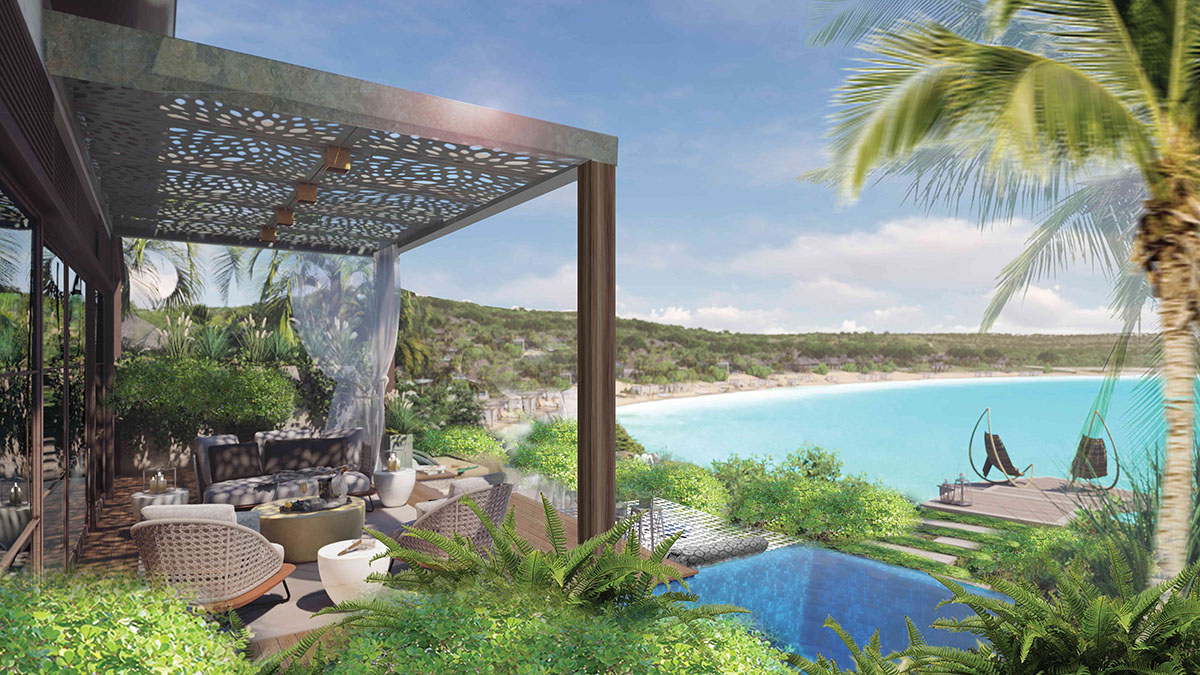
Baha Mar is the latest and most prestigious resort to open in the Bahamas. With three leading hotel brands and all the residential lifestyle amenities you could wish for, you may be tempted to move there permanently, says Jenny Southan

Said to have the clearest sea water in the world, the 700-island archipelago of the Bahamas has long been a glittery bolthole for holidaymakers and expats looking for a luxurious paradise to make their home, even if only temporarily. Part of its allure can be put down to its association with James Bond, whose escapades often took him to these parts. Scenes in Casino Royale, for example, were shot on New Providence Island, where the capital Nassau is located, and where non-stop BA flights from London touchdown along with services from the US.

Follow LUX on Instagram: the.official.lux.magazine

Life in the Bahamas (just 55 miles east of Florida and one of the oldest members of the British Commonwealth) is rich with ways to spend your time, be it strolling along the pink sands of Harbour Island, watching flamingos at West Side National Park on Andros, or viewing Long Island’s blue hole, one of the deepest on Earth. Activities range from diving and sailing to bone-fishing and swimming with pigs on Big Major Cay. With a year-round outdoor swimming climate, the islands are perfect for whiling away the endless days of summer, winter and everything in between.

The desirability of New Providence as a destination has been enhanced by a new resort, Baha Mar, on Cable Beach. Costing US$4.2 billion, it made its debut in 2017 with the opening of the Baha Mar Casino (the largest in the Caribbean, with 119 gaming tables, high-limit betting and private gaming rooms), the 18-hole Jack Nicklaus-designed Royal Blue Golf Course, a flagship ESPA spa with 24 treatment rooms, and the Racquet Club Baha Mar. Also there are the Baha Mar Convention, Arts & Entertainment Centre and the Grand Hyatt Baha Mar hotel, and beyond the show lakes and fountains, you will discover 30 designer boutiques, with brands such as Rolex, Bulgari, Hublot and Chopard.

Exterior of luxury beach-front hotel with pink facade

The exterior of the SLS Baha Mar hotel

With direct access to a kilometre-long white sandy beach, the 299-room SLS Baha Mar opened soon after in November 2017, while spring 2018 saw the unveiling of the 237-room Rosewood. There are fully serviced one- to six-bedroom oceanfront residences and villas from $705,000 at the SLS and from just below $1m at Rosewood. For UK citizens looking to buy property, Baha Mar provides enticing new options in this long-standing tax haven, with no income tax charged to residents no matter where in the world they earn their money. Once you own a house or apartment valued at more than $750,000, you are eligible to apply for permanent residency, and for anyone investing in excess of $1.5m, their application may be expedited.

Interiors of a contemporary bar with sofa seating and indoor plants

The Monkey Bar at SLS

The jet-set lifestyle of Baha Mar is easily enjoyed. The SLS Baha Mar, which is operated by US hospitality group sbe, has become a popular hotspot for entertaining. In addition to Mediterranean restaurant Cleo and trendy Monkey Bar, there is Privilege for upscale pool parties, rooftop lounge Skybar (the only one in Nassau), modern Japanese restaurant Katsuya, Fi’lia by the James Beard award-winning chef Michael Schwartz, and nightclub Bond, conceived by rock singer Lenny Kravitz’s Kravitz Design. Carna for steaks is coming soon.

Read more: Ultra-luxury development One Monte-Carlo opens in Monaco

The new Rosewood, meanwhile, has farm-to-table London-style brasserie Commonwealth and its exclusive Rum Room; and Costa, which features pavilions surrounded by water and a menu of seafood and meat dishes with a Latin American twist. In addition is The Library where a Bahamian-style afternoon tea is served. The heavenly Manor Bar features design inspired by a yacht interior – all dark polished woods and blue velvets.

Luxury hotel lobby with contemporary furnishings

The Living Room at Rosewood Baha Mar

The design of the property itself is reminiscent of a Bahamian island estate home, with white weatherboarding, tropical gardens and verandas. And to ensure the stresses of work are smoothed away, Sense, a Rosewood spa, has created treatments based on ancient Bahamian rituals using local plants such as lignum vitae, moringa leaf, cassava and neem tree.

For those interested in a base on the island, Rosewood has one- to three-bedroom residences (from $995,000) with private concierge and butler services, plus four-to six-bedroom beachfront villas with their own pool (from $6.4m to $25m). Buyers at Rosewood and SLS are eligible to apply for permanent residence status. Dependent on nationality, buyers may be entitled to tax benefits including capital gains and income tax exemptions.

Owners of the residences at SLS and Rosewood enjoy access to the members-only Nexus Club (with its champagne bar, pool with day beds, private gaming and cigar bar) plus the 65m (213ft) super yacht Eternity, on which they can cruise the archipelago or visit Baha Mar’s own 15-acre private island, Long Cay. Staffed by Rosewood and available for private hire, this is where sybarites can relax in a hammock on the beach with a glass of rum. Life doesn’t get any better than this.

Find out more: bahamar.com/residences/

This article was first published in the Winter 19 Issue.
Share:
Reading time: 4 min
Explorer walking past base camp on a snowy landscape

An explorer sets out on Day 6 of the recent A&K South Pole expedition. Image courtesy of Abercrombie & Kent

At the age of 76, LUX contributor and founder of luxury travel company Abercrombie & Kent Geoffrey Kent is still adventuring. Here he recalls one of his most recent and challenging expeditions into the South Pole

For the last three years, I have been occupied with a desire to go on a journey to Antarctica. Like my hero of heroes, Sir Ernest Shackleton, I dreamed of getting to the South Pole. Unlike Shackleton, who led three British expeditions to the Antarctic, I wanted to do it in comfort and five-star style.

Adventure is in my genes, and since my parents and I founded A&K in 1962, I’ve packed a lot in. I’ve climbed Kilimanjaro, hiked to Tiger’s Nest in Bhutan, and circled the earth along the equator. I’ve journeyed from the source of the Upper Amazon to where it meets the Atlantic Ocean and been to Iraq with some special forces’ guys. I have been to the edge of space in an English Electric Lightning, travelling Mach 2.2 at 21 kilometres up, and hiked to Base Camp Everest. I was officially the last person in the twentieth century to stand on the North Pole.

Follow LUX on Instagram: the.official.lux.magazine

My recent expedition to the South Pole is my latest and perhaps most challenging adventure. Like all dedicated travellers, my wanderlust constantly drives me. I’m obsessed with the app Been, which reveals that I have visited 70 per cent of the world’s countries (I travel approximately 270 days each year). In the next few years, I want it to be 100 per cent. The desire to see the whole world is the driving force behind Inspiring Expeditions by Geoffrey Kent.

In December 2018, seven intrepid guests and I spent the latter part of December in the vast wilderness that is Antarctica. Another continent ticked off – a personal dream fulfilled.

Private plane landed on the snow

Day 12: arriving by private jet into Whichaway Camp. Image courtesy of Abercrombie & Kent

When most people speak of having been to Antarctica, they have travelled by cruise ship from Ushuaia to the Antarctic Peninsula, a 1,300-kilometre chain of mountains and volcanoes that juts north towards South America. My expedition was to a dramatically different destination. The Antarctica that I’m talking about can’t be accessed by cruise ship. To get to the South Pole, you need a plane and skis or snowmobiles. Antarctica is vast – mind-bogglingly big. To put it in perspective, from our base inside the Antarctic Circle to get to the South Pole required an eight-hour flight, a re-fuelling stop and the crossing of a time-zone.

Our group – consisting of one couple and their two sons, a father and son, and me – set off from sunny Cape Town in mid-December. We landed on the first of three ice runways (or more aptly iceways) that A&K constructed in Antarctica for this journey and got our first glimpse of the land of snow and ice at a place dramatically named ‘Wolf’s Fang’.

Explorers climbing up an ice wall with picks and helmets

Day 8: ice climbing. Image courtesy of Abercrombie & Kent

There are no wolves for thousands of kilometres, just the occasional snow petrel flying overhead. Antarctica is a high desolate white desert where temperatures in summer rarely get above minus 20 degrees Celsius and the winter average is minus 60. It never rains here and the snow that falls is sparse. With less than 20cm of snowfall a year, Antarctica is technically a desert. It is so dry that with the correct kit on, you feel colder on London’s streets on a particularly grim day.

Read more: Italian brand Damiani’s Kazakh-inspired jewellery collection

It’s the last true wilderness on our planet. The last frontier – the final place on the planet where a traveller can feel genuinely remote and know that your footprints may be the first, that no other human may have walked here before. And if they have… what a club to be part of.

From our basecamp in an oasis – a series of rocky outcrops amongst the ice – over the course of eight days, our group flew to Atka Bay to view the large colony of Emperor penguins. There, we also learned essential winter skills, explored ice caves, visited both Russian and American research stations, summitted (and earned the right to name) a peak in the Drygalski mountain range, and ventured to the Geographic South Pole.

a colony of emperor penguin chicks in the south pole

Day 4: visiting the Emperor penguins. Image courtesy of Abercrombie & Kent

From the top of ‘Mount Inspiring’ – the virgin mountain which our group summited in the company of Marko Prezelj, four-time Piolet d’Or winner – staring over this vast expanse of white in awe of nature at its most elemental, it’s hard to imagine the flux that this continent is undergoing. Sadly, Antarctica has experienced an air temperature increase of three degrees Celsius. This rise in temperature is causing change – perennial snow and ice cover are melting, glaciers are retreating, and some ice shelves have collapsed completely. In the last 60 years, there has been a loss of 25,000 square kilometres of ice shelf. The flora and fauna are facing a threat too. Emperor penguin numbers have declined by up to half in some places and the number of breeding pairs may fall by 80 per cent by 2100.

Read more: The poetic beauty of the Swiss Engadine

One of the greatest, yet least seen, wildlife spectacles on the planet, the colony of 6,000 breeding pairs at Atka Bay is extraordinary. Two and a half hours by airplane away from basecamp, thousands of adolescents were finding their feet and snow bathing to cool off in strong sun, while their parents fished. These animals are under threat from human action from thousands of kilometres away.

We reached the Pole two days and one hundred and seven years after Roald Amundsen, a Norwegian explorer who won the race to the South Pole, just ahead of Scott. Standing at the designated marker at the lowest point on earth, you are able to walk around the world in a few steps. Surrounding the marker are flags from the twelve signatories of the Antarctic Treaty that sets aside the continent as a scientific preserve. It was a good place to reflect on the adventure of getting here and wondering about what’s going to become of this white desert… and what we all can do about it.

Discover Abercombie & Kent’s portfolio of luxury travel tours: abercrombiekent.co.uk

Share:
Reading time: 5 min
Luxury apartment interiors decorated in neutral colours with wooden floors
Render of a luxury apartment in Monaco

The apartments boast spectacular views over the square and the ocean

LUX travelled to Monaco for the opening of One Monte-Carlo, the swankiest residential and retail development, in the most expensive location in Europe.

Clear blue skies, champagne poured out of magnums at breakfast time, real fur aplenty, and new flagship stores for the likes of Louis Vuitton and Céline. It can only be Monte-Carlo, and to be precise, it can only be the opening of One Monte-Carlo, a staggeringly opulent new development in the very heart of the principality, incorporating 37 apartments and dozens of fashion and luxury stores in what a property developer would call an ultra prime location.

The Monaco royal family officially open the luxury development One Monte Carlo

Prince Albert II,Princesse Charlene, Prince Hereditaire Jacques and Princesse Gabriella at the inauguration of One Monte Carlo

Follow LUX on Instagram: the.official.lux.magazine

You may know Casino Square from its starring role in the Monaco Formula One Grand Prix and various movies, or because you park your Ferrari F 512M there when you visit the casino; now in a field of architecture engineering, it also boasts this rather beautiful development, next to the Hotel de Paris, designed by (Lord) Richard Rogers in an organic and eco-friendly style, anchored almost physically by the new Vuitton flagship.

CGI image of luxury residential development in Monaco

Luxury apartment interiors decorated in neutral colours with wooden floors

With architecture by Richard Rogers and interior design by Bruno Moinard, One Monte Carlo houses 37 luxury apartments and dozens of retail stores

The apartments themselves are designed by the estimable Bruno Moinard, who works closely with both LVMH Chairman Bernard Arnault and Kering founder Francois Pinault, personally. Interestingly, the apartments are only available for long-term rental not purchase. More than half have already been rented for the next 12 months, with some lucky residents paying more than €2 million a year. For les happy few, there is no better location in Monaco, or possibly Europe.

Darius Sanai

Share:
Reading time: 1 min
Campaign for Alsara by Damiani jewellery collection inspired by Kazakh traditions
Jewellery campaign for brand Damiani starring Aliya Nazarbaieva

An image from the first Alsara by Damiani campaign with Aliya Nazarbayeva wearing earrings and ring with turquoise and black-and-white diamonds

How does a historic Italian jewellery brand come to dedicate an entire collection to the traditions and culture of Kazakhstan? Through a little bit of serendipity, and some inspiration from one of the world’s ancient nomadic cultures, as LUX Editor-at-Large Gauhar Kapparova discovers
 Guido, Silvia and Giorgio Damiani of Italian jewellery brand Damiani

Guido, Silvia and Giorgio Damiani

Italian fine jewellery brand Damiani first opened stores in Almaty and Astana in 2005, following the brand’s strategy for global expansion under the leadership of third-generation Damiani family members, Guido, Giorgio and Silvia. The brand’s sensuous Italian style and commitment to hand-crafted detail quickly captured the attention of Kazakh women, whilst the Damiani siblings, who travel frequently to the country on business, became increasingly fascinated and enamoured by the culture and traditions there. A deep and mutual affection grew organically between brand and country, leading to the idea of a cross-cultural collaboration.

Follow LUX on Instagram: the.official.lux.magazine

To create Alsara, a collection inspired by and dedicated to Kazakhstan, the President’s youngest daughter Aliya Nazarbayeva teamed up in 2011 with Zhanna Kan, the owner of Damiani Kazakhstan and the driving force behind the new line. The name Alsara is a portmanteau combining Aliya and her mother’s name Sara, and pays tribute to the influence of not just them but also all the Kazakh women the jewellers have met.

Traditional Kazakh style necklace by brand Damiani

Unique necklace ‘Tumar’ with blue sapphires, rubies, diamonds and semi-precious stones

The collection began as a conversation between Aliya and Damiani’s Italy-based designers, during which Aliya educated the brand on ancient Kazakh ornament, such as the traditional tumar necklace and bilezik cuff. These styles were reimagined and transformed by expert craftsmen in Damiani’s historic ateliers in Valenza, where Enrico Grassi Damiani opened his first goldsmith’s laboratory in 1924. The result was a collection of intricate gold and precious stone pieces, marrying refined Italian craftsmanship with Kazakh heritage. Following a sold-out range, the collection broadened to include silver and semi-precious stones, such as onyx and turquoise, typical of Kazakh jewellery.

Read more: Meet the new creative entrepreneurs

Bridging two distinct cultures, the Alsara collection melds tradition with contemporary fashion. “Alsara pieces became not only stylish accessories for modern Kazakh women but also perfect gifts for weddings and kudalyk, which are the engagement ceremonies,” comments Zhanna Kan. “They are regarded as family jewels to be preserved and handed down.”

Campaign for Alsara by Damiani jewellery collection inspired by Kazakh traditions

The Alsara by Damiani campaign with Gulnara Chaizhunussova wearing silver earrings and a bracelet and ring with green agate, citrine and diamonds

Alsara’s most recent designs reveal a striking modern look for the collection, reflecting the evolving cosmopolitan culture of Kazakhstan. Colourful gemstones have been replaced with black and white diamonds, producing a pared-back aesthetic with hints of Art Deco and oriental motives. The Kazakh heritage has not been lost, however, and neither has the craft; the collection continues to be entirely handmade in Italy whilst the influence of traditional Kazakh jewellery remains in the threads of delicately curved silver, drawing on artisanal methods of filigree.

Discover the collections: damiani.com

This article was first published in the Winter 19 Issue.
Luxury fine jewellery earrings by brand Damiani

Earrings with wings motif in white and yellow gold with smoky quartz, garnet and icy diamonds


Ornate necklace by Italian brand Damiani

Jewellery from Damiani’s Alsara collection, including necklace in white and yellow gold with black and white diamonds and pearls, inspired by Art Deco and Kazakh ornament

Share:
Reading time: 3 min
the rolling mountains of the swiss engadine in summertime

A view across the Engadine valley from Muottas Muragl, above St Mortiz

Switzerland’s Engadine region has been the enchanted holiday home of the likes of Friedrich Nietzsche, Gerhard Richter and some of the world’s most discerning wealthy. LUX takes a summertime tour of this romantic paradise

Landscape photography: Isabella Sheherazade Sanai (@sheherazade_photography)
There was a moment in the evening, a point in the flow of time each day, when the colour on the mountain was perfectly balanced. Just below my balcony, the larch forest rising out of the lawn was an almost vanishing green, turning to black. The same forest was a dark emerald high up the mountainside. The high pastures above, a thin carpet of melded brown and dry, light, green. And the peak of the mountain, that minute, was just straining to catch the last of the day’s sun, emanating from behind the hotel, on the west side of the valley. It was the colour of a tarnished gold ring, glowing with the pride of being in daylight, today, while the rest of us had fallen into tonight.

Out of the trees and grass around me, the image was accompanied by a rising smell of damp, green, earthy life, its textures matching those in the glass of wine that would always accompany this ritual, a glass of pinot noir from two valleys away, in what the Swiss call the Bündner Herrschaft.

Follow LUX on Instagram: the.official.lux.magazine

The Waldhaus Sils, where my room and balcony were, is known for its magic. Artists, writers, musicians and poets are guests there, sometimes invited by the hotel for the inspiration they bring. Gerhard Richter, arguably the greatest living artist, unarguably one of the most expensive, was staying while I was there;  as were others from these worlds, whom I won’t identify as I didn’t spot them personally (the Waldhaus is very discreet about its guests).

The hotel sits on a forested ridge (thus the name Waldhaus – ‘Forest House’) above the village of Sils, once home to Friedrich Nietzsche, and overlooking Lake Sils, considered by many in the art world to be the most beautiful lake in Switzerland. The lake is at the southern end of the Engadine, a broad, flat, high-altitude valley making a slash through the most mountainous part of the country, its southeast corner, from Austria to Italy.

Sils Lake in Switzerland pictured in the summer

The Waldhaus Sils sits in a forest above the mystical Lake Sils, which has inspired poets, artists and writers since the 19th century

There is something about the Waldhaus Sils that no amount of money could create in a new hotel. The furnishings, from light fittings to tables, chairs, cabinets and even the signposts, look like they have come from a mid 20th-century Modernist sale at Phillips auction house. They are so perfectly positioned, as if everything has been looked at with aesthetic sight-lines in mind, and yet none of it feels Designed (with a capital D); this is just the aesthetic of the family who own the hotel. No wonder Richter and others love it so.

The Waldhaus mixes old, in the sense of mid-20th century, with a very up-to-date cuisine and wine list. Most guests take the half-board option, with dinners in a broad gallery of a dining room, with picture windows looking into the forest. Most memorable were the variations on a consommé, each night made with a different base stock; and the choucroute and pork fillet served by a visiting farmer-chef one evening.

Luxury hotel bar decorated in maroon colours

One of the bars at the Waldhaus Sils

One day, we walked out of the hotel down through the trees until we reached the floodplain of the lake, a flat meadow between the shore and the village. It was a summer day of intense mountain sunshine – you burn much more quickly here at altitude than down on the Mediterranean – but a flapping, chilly wind reminded us of exactly where we were. Along the lakeshore, a child and a dog were paddling in the water, on a tiny beach sprouting out of the path. The path itself curved past a tiny jetty housing a couple of rowing boats, and onto a forested promontory. Dipping and rising between larch trees and the water’s edge, it offered a different perspective every minute, with changes of light and in the colour of the water on the lake. The mountains beyond emerged bigger with every step we took away from them; my own mountain, which I had watched from the balcony, was revealed to be no more than the leading ridge of a much larger cluster of peaks at the end of what was a hidden valley.

Read more: Welcome to the age of internet art

We walked along that valley the next day. To get there, we first took a cable car from Sils up to a station above the treeline, from where we looked down at a string of lakes extended all the way down the Engadine past St Moritz, and were greeted by a pack of manic, crested chickens sprinting around a coop with a view most humans would crave. We walked along a path skirting the edge of the mountainside, past uncurious cows, until a luscious green valley, alternating meadows, streams, forest and hamlets, appeared beneath us. Invisible from the Engadine, this is Val Fex, home to some of the most ancient communities in Switzerland, who used the secret nature of the place (its entrance is sheathed in a deep, forested gorge which looks impassable from below) to shelter from invaders from Italy and the Germanic lands.

Along a woodland path at the bottom of the little valley, home to thousands of butterflies, we reached the Hotel Fex, where we had a fantastic lunch made of foraged and farmed local ingredients – young beef, herbs, grasses and flowers – while gazing at the high end of the valley. It was an hour’s walk, down past the butterflies and the meadow and through the gorge, to the Waldhaus and a balcony view back up to the sunset peak.

Idyllic forest scene with a river running through

The forested peninsula on Lake Sils, nearly 2km above sea level

St Moritz is fifteen minutes’ drive down the Engadine valley from Sils, and it has a roster of legendary palace hotels. Our destination was just outside the town of St Moritz, on a hillside. Suvretta House, one of the oldest grande dame hotels of Switzerland, surveys the surrounding scenery like a majestic ocean liner atop a wave. As we approached from Lake Silvaplana, it was almost as if nature had bent to the grand hotel, according it its centre-stage position, with nothing around it except forest and lakes, on a ledge in this long, high valley.

That was an illusion; within a couple of kilometres of Suvretta House lies one of the highest concentrations of (vacation) wealth in the world, but part of this area’s appeal is that it doesn’t look like it.

Luxury five star hotel Suvretta in Switzerland

The facade of the historic Suvretta House hotel

Our junior suite at Suvretta House had six windows opening out onto a carpet of forest below, the lakes ahead, and the peaks of the Bernina range on the east side of the valley beyond. The décor was clean and crisp, a kind of safe contemporary Swiss, with plenty of rich fabrics to please luxury’s traditionalists.

The Bernina mountains are one reason for the particularly attractive climate here; they protect the area from storms sailing up from the Adriatic beyond, while to the north and west, several ranges of high mountains stand as a kind of climatic Berlin Wall to prevent the moist Atlantic air of northern Europe arriving. The result is that this is the sunniest spot in Switzerland; and Suvretta House itself lies on a sun-trap of a ridge. We discovered this the next morning, on a pre-breakfast frolic in what must be the most picturesque children’s playground in the world, carpeted in lush grass, banked on three sides by Alpine forest and on a fourth by a slope leading down to the hotel.

Read more: The Getty LA launches an African American Art Initiative

At the front of Suvretta House, the 25-metre indoor pool stretches through a conservatory alongside a broad lawn, on which sun-loungers, a giant chess set, and other leisure accoutrements are set (in summer, anyway; in winter, it would be under several metres of snow).

Luxury indoor swimming pool surrounded by glass windows

Suvretta House’s swimming pool

High mountain restaurant in the swiss alps

The Fuorcola Surlej restaurant above St Mortiz

Breakfast was served at the Arvenstube restaurant, and featured about 36 different types of bread, cooked (and shaped) in their own in-kitchen bakery every day from three in the morning. The buffet seemed lavish enough, until we found it extended around the corner with dozens of combinations of freshly cut fruit, more permutations of gluten-free cereal than would fit on the biggest yoga mat, an array of nuts, seeds and other health-giving items that would embarrass a health food store, and still plenty of indulgences on the pancake/ chocolate/Nutella/cooked bacon front.

We returned to the Arvenstube for dinner, at first a little apprehensive. Almost every hotel in the German-speaking Alps has a restaurant called a stube; in humble hotels these are often beer-cellar-type places serving humble food (sausages, dumplings) and good beer. Luxury hotels sometimes persist in the belief (mistaken, in our views) that a luxury stube ought to be a play on these dishes, with lashings of old- fashioned Michelin-chasing creams, foams and drizzles, and tiny portions that make you wish you had gone out for some fondue instead.

What we found instead was a revelation. In the beautiful evening light as the valley turns to night – the Arvenstube faces south – there was a menu based on the concept of ‘Switzerland  meets Latin America’ from chef Isaac Briceño Obando, and it really worked. Examples: Puschlaver lamb, baby corn, roasted spring onions, tortilla powder and mountain honey; or Swiss cheese, guava jelly, tamarind jelly and paprika coulis; or tepid char with grilled peach, palm hearts and pine nuts. It was the distinctive, balanced, vivid cuisine of someone with a real ability to understand how and by whom his dishes would be consumed. We returned there three times and always had clear, crisp options.

Landscape photograph in the Swiss Engadine valleys at summer

On the path to the aptly-named Paradise hut, above Pontresina

Food image of a goats cheese salad with rocket and truffle shavings

Goat’s cheese with rocket and truffle at Chasselas

The Suvretta House also owns the Gault Milau-celebrated restaurant just up the road, the Chasselas. At the bottom of a piste, with its own chairlift linking it to the main Corviglia ski area of St Moritz, the Chasselas tries hard to look like a pristine, immaculate but humble mountain hut; however, the cuisine and wine list are anything but humble. We loved the medium-grilled saddle and braised cheeks of Iberico pork with artichokes, balsamic onions and plain in pigna, and Irish highland lamb racks with salsa verde, grilled vegetables and barley risotto. Different chef, but the Suvretta principles remained: there was nothing on the menu to weigh you down and make you feel, like many mountain restaurants do, that you need to climb the nearest peak to burn everything off.

It’s tempting never to leave Suvretta House (either during your stay, or when it’s time to depart) but we did, one day taking a cable car up the opposite side of the valley, towards Piz Corvatsch, and walking along a rocky, dramatic, high altitude trail until we reached a restaurant in a little mountain hut on a ridge. The other side of the ridge revealed a little lake, and a flabbergasting view down to a glacier and up to a range of high, snowy, rocky peaks. Fuorcula Surlej, the restaurant, really is a humble mountain hut. The owner told us she lives there, with only her dog for company, all summer and all winter; when she returns after her autumn break to open up for the ski season, all the available water is frozen in blocks of ice and she curls up with her dog to keep warm.

A small staff in her kitchen were making dishes off a short menu; we tried the barley soup, which tasted of fields and mountains together as we ate it on the terrace, looking out at the high peaks framed by dreamy deep blue; followed by a spaghetti with ragu, flavoursome home-made food by someone whose home is a ridge at the top of nowhere, towering above the Engadine.

Darius Sanai

For more information and to book your stay visit: waldhaus-sils.ch; suvrettahouse.ch

This article was first published in the Winter 19 issue.

Share:
Reading time: 10 min