



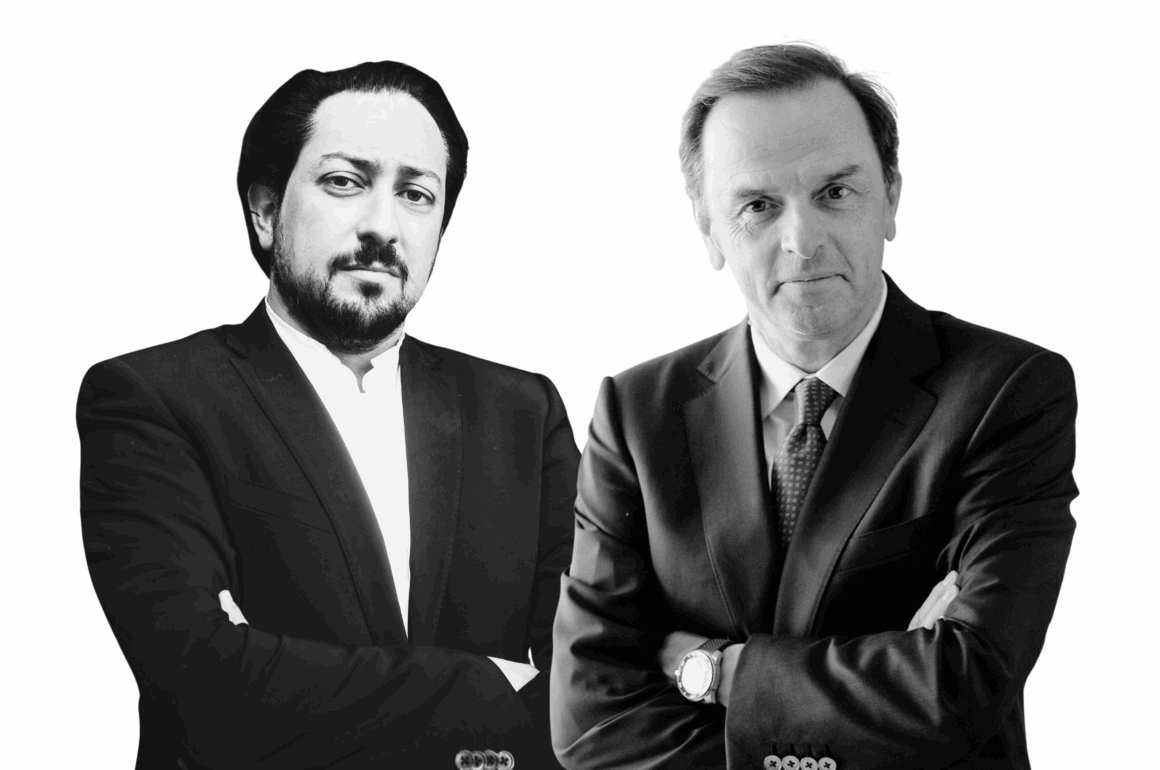
Jonathan Siboni, founder and CEO of Luxurynsight with Stanislas de Quercize, a giant of the luxury industry
In the latest in our series of luxury industry dialogues, Jonathan Siboni, founder of Paris-based luxury data intelligence specialist Luxurynsight, and Stanislas de Quercize, former CEO of Van Cleef & Arpels and senior executive at Cartier, riff on AI, generational shifts, and the future of the luxury industry. Moderated by LUX Editor-in-Chief Darius Sanai
Darius Sanai: I think it would be interesting to start with AI.
Stanislas de Quercize: Yes, AI is fabulous – it’s not 10 times better, not 100 times nor 1,000 times, but one million times better than our brain. As you know, Jonathan Siboni is a worldwide leader of data for the luxury industry, thanks to artificial intelligence. So it’s vital.
Jonathan Siboni: There’s a lot of bias around AI, and rightfully so as the world is changing quickly, but 99 per cent of what exists today in artificial intelligence is nothing new – it existed 20 or 30 years ago. What has changed is the ability of the interface: to be able to ask a simple question and get an answer that seems human. That has a deep impact on how consumers may interact with brands in the future: they may discuss a certain problem and feel like they’re talking to a human – that is important in luxury. If you were in a different sector, you wouldn’t mind talking to a computer so much, but for us, it’s just not possible.
However, a lot of the things we are doing with Luxurynsight have been using AI for years: the technology has not changed tremendously. There’s something interesting about machines and learning – the machine can be as powerful as you want, but if you don’t know how to teach it, it’s useless. The question of how to teach AI for luxury comes back to the purpose you want it to serve. If it’s to improve the fine tuning of prices versus demand, then it’s super useful for brands.
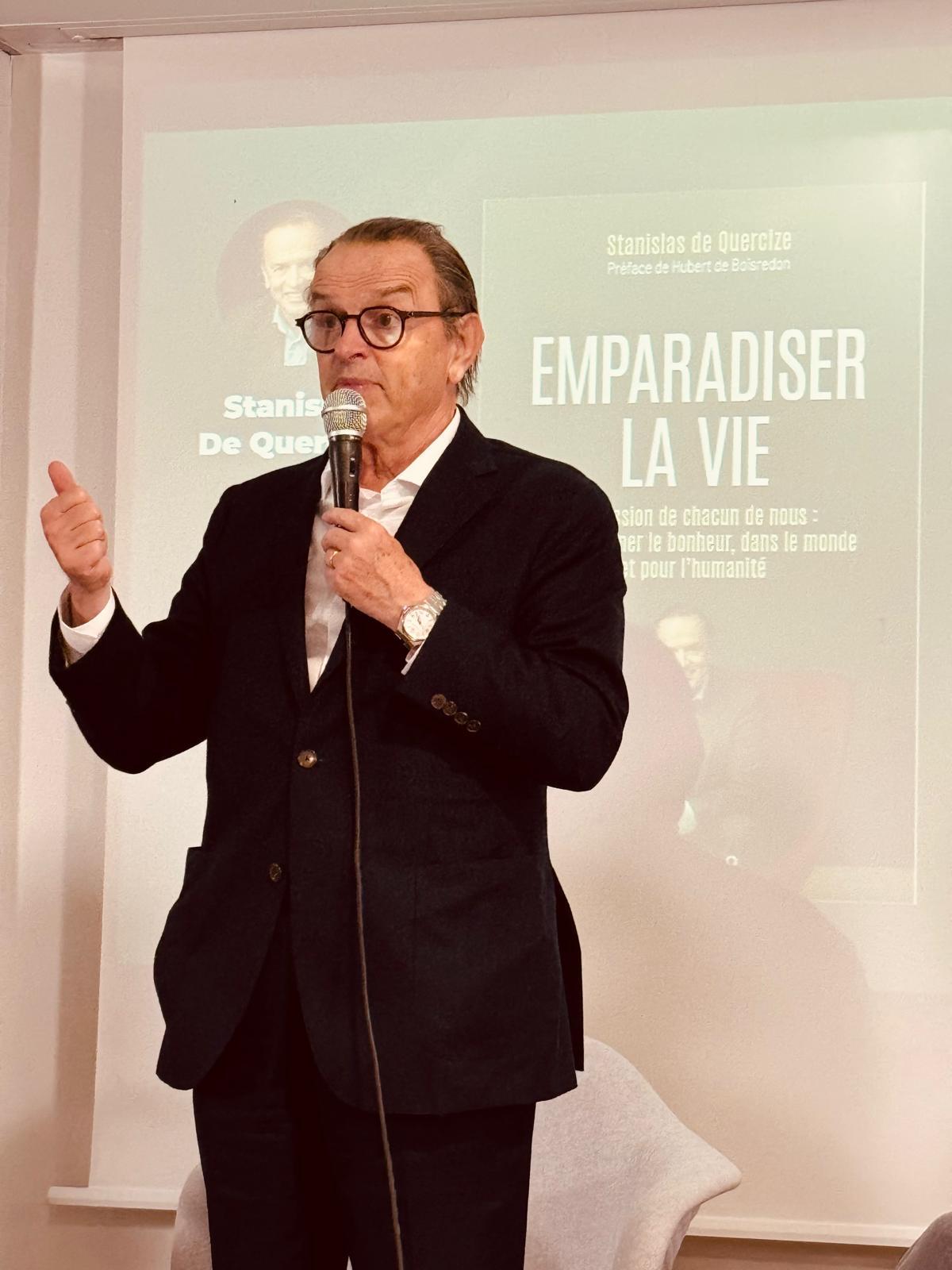
In 2025, Stanislas de Quercize published Emparadiser la Vie – which roughly translates to Paradising Life –reflecting his philosophy on leadership and purpose
A brand is a connection with a human: we all know that when we buy from Dior, we don’t buy from Christian himself, we talk to a salesperson, who 99 per cent of the time is our only face of the brand. If these people do not treat us well, all that work is burned in 20 seconds. So, the idea that tomorrow there will be a computer version, instead of a salesperson, will not have an impact. Most people won’t notice because a good AI system automatises for as long as possible and hands back to a human if a problem occurs. For me, as long as we limit AI to being something supportive, I don’t think it will be brands’ sole way of engaging with humans.
SdQ: We always need to improve luxury. We should question what we’re doing and how we’re doing it. AI is fundamental because it’s ultimately going to boost whatever you do, from manufacturing to selling.
Follow LUX on Instagram: @luxthemagazine
A watch wholesaler told me that one of his bestsellers was the preloved category. He added that the earth has been preloved over thousands of years: your apartment, your boutiques, your gardens, your castles. What you buy today, you can sell in six weeks, six months, six years. And I spoke to a brand that helps you buy and sell preloved jewellery. Preloved is human – it’s good for the planet and for everyone. But whatever we do, we need to always find ways to improve it, and AI will help that.
DS: At the moment we have two interesting trends: we are in the middle of the greatest generational wealth transfer in the history of humanity, but the luxury consumer market shrank last year. How will these affect luxury?
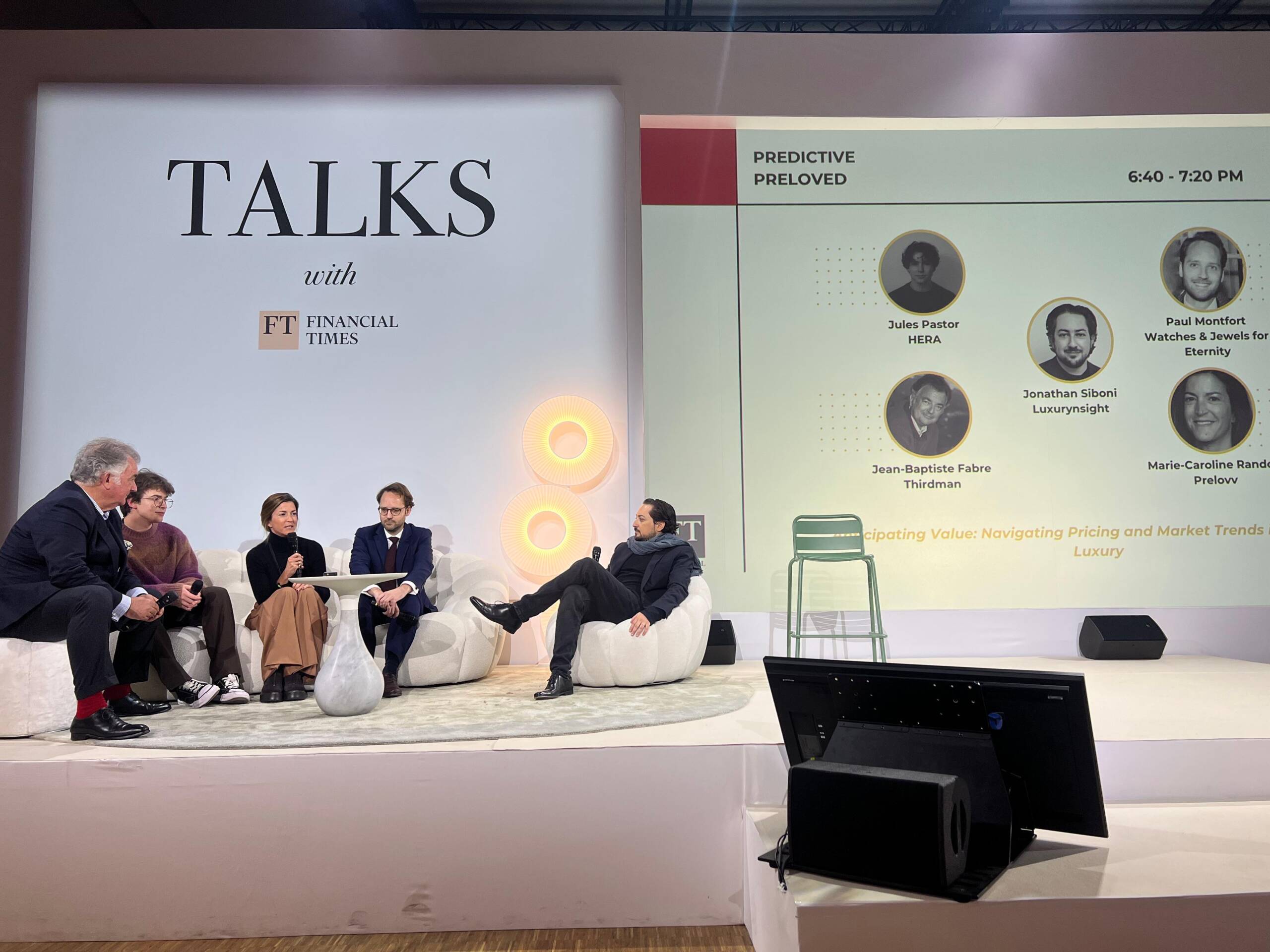
Jonathan Siboni on a panel with the Financial Times as an expert in strategic analysis of luxury, fashion, and beauty data
JS: For me, the impact has already begun. If you look at the luxury revolution over the past 70 years, younger people have access to more wealth than before – partly from their parents. This young generation will transform the industry to something more experiential, emotional and authentic – more about being than having. That’s my feeling, and it’s begun already. Younger people also love fashion, they love trends. When it’s trendy, they overbuy, when it’s out of fashion, they don’t buy.
That’s a risk, but also an opportunity for luxury. With the second trend, the market shrunk a little, true, but it was overinflated because of Covid. People didn’t have many ways to spend money, so they overspent on luxury goods. Now they can travel again, they won’t spend as much as before, so there is a new normal.
SdQ: First, always improve. Second, all clients are asking what you’re doing to save the planet – there’s a new law in the EU called CSRD (Corporate Sustainability Reporting Directive), an obligation for large companies to declare their environmental impact. Third, we need to improve where we develop. Luxury started in France, then developed into Europe, the USA, the Middle East, and now Japan, China and India.
There is a lot of effort to improve there because India is the number one market. In 1999, China was two per cent of the luxury market, now it’s between 35 and 50 per cent. India is one per cent of the market now so I think it will increase because of this new generation. I also think it’s important to have a price pyramid. We need the combination of access price and expensive price.
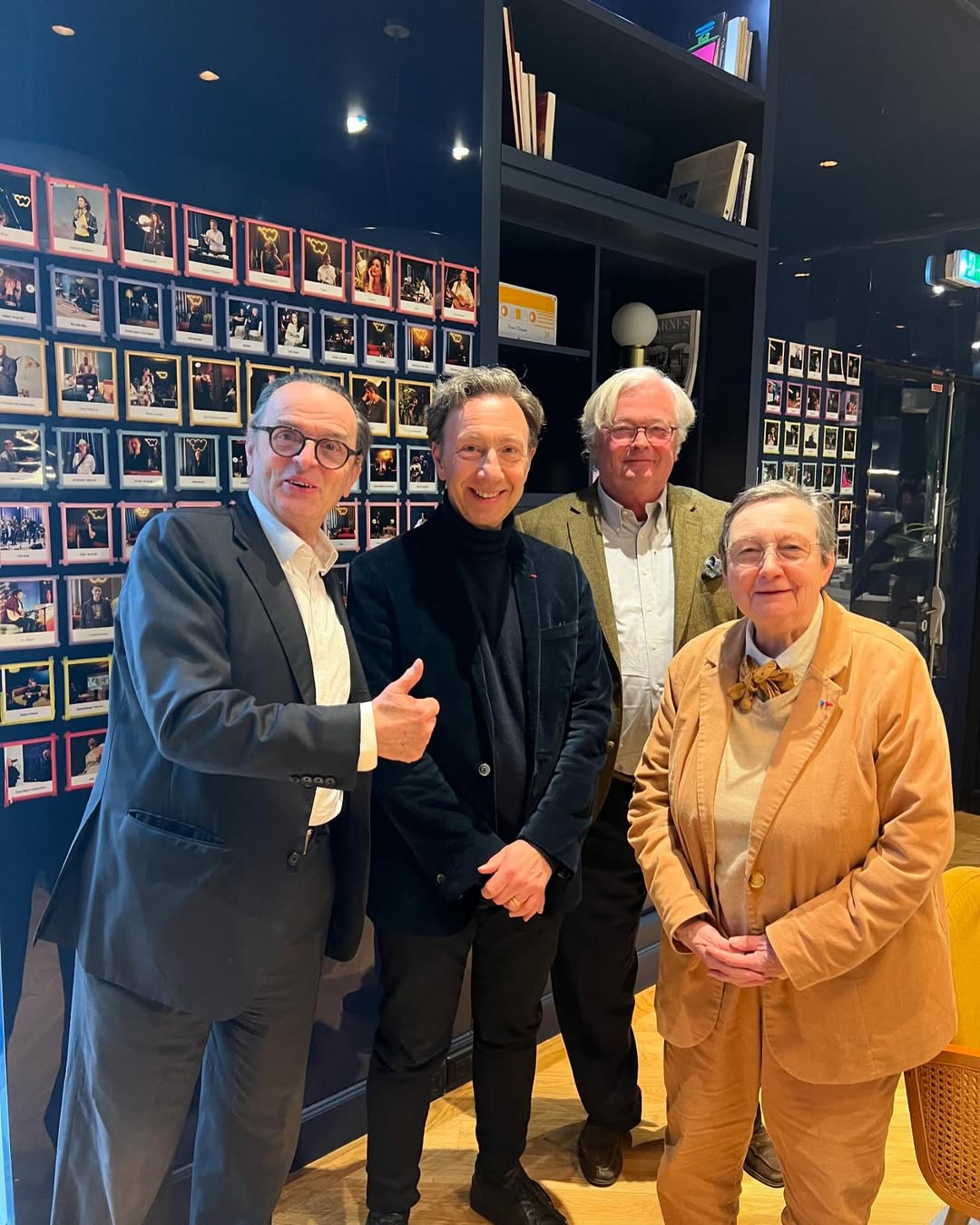
‘What I love in luxury is that there is cooperation instead of competition. I worked as a board member of Comité Colbert, which has 95 maisons working in concurrence, not in competition’ – Stanislas de Quercize
JS: Something amazing started to appear in the past generation – new luxury brands. When I started, there was new commerce, but not new brands. Now in almost all the industries there are new brands with relatively young founders. It proves there’s an openness to look at modernity and not just heritage. If you look at the brands performing best in luxury, they are ones considered modern – even if they are old, they re-invent themselves.
Read more: Spirit Now London acquires works for National Portrait Gallery at Frieze
Where I believe the rules of the game can change is in new categories. A few years ago, I was in Switzerland with luxury brands and we discussed the Apple Watch. We asked ourselves: will it change or kill the luxury watch market? If every day people put smartwatches on, they may still have a Patek, but keep it in the safe – that’s not how they engaged with a product before and it would limit the market to only a few brands with high investment power.
It’s also about safety and technology. People hesitate to put on an expensive watch because of safety questions. If you have an amazing watch but can’t wear it, plus you prefer to have an Apple Watch to see what’s happening on your phone, it brings into question the long-term existence of the categories. They will survive, but maybe as pieces of art – much as we have antique furniture now as art pieces.
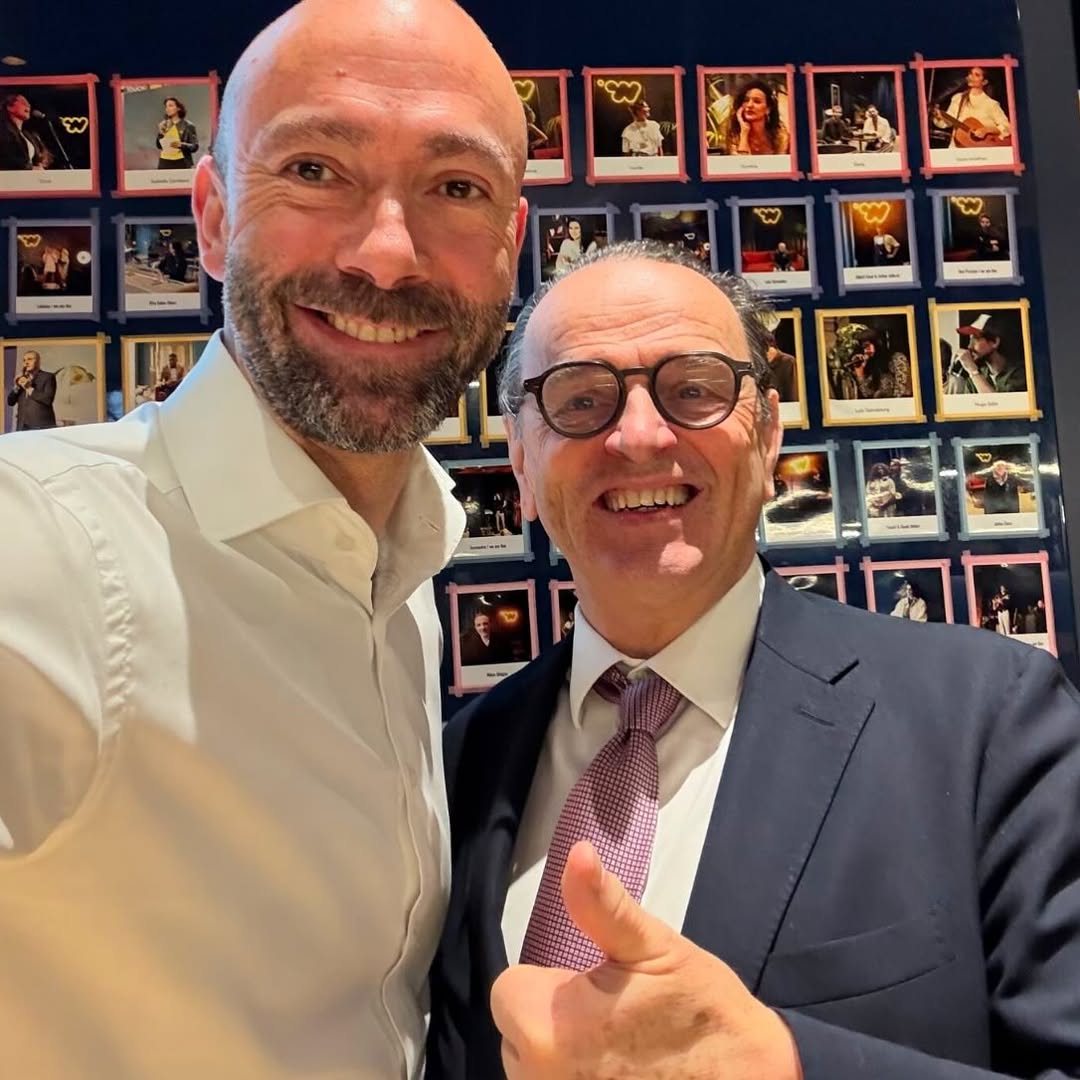
‘My own definition of luxury is what you transmit’ – Stanislas de Quercize
Christian Louboutin and Jimmy Choo are amazing brands, but if tomorrow people don’t want cars any more and everybody takes a bike to work, they will not wear heels – you cannot wear heels on a bike. The evolution of people’s lives will show which categories are engaging with which brands, and some young brands may be better at this.
SdQ: Well, in luxury, there are always new brands and new creativity: Cartier is nearly 200 years old, but Messika only 20. So there is old and new, and you can sell again what you created 100 years ago – Cartier preloved and vintage jewellery, for example. What I love in luxury is that there is cooperation instead of competition. I worked as a board member of Comité Colbert, which has 95 maisons working in concurrence, not in competition. There are more and more clients in the world, and we need to open in new countries, so there’s room.
JS: Luxury grows by going into new territories: if you stay where you are, you die. Luxury started two generations ago – brands with a strong heritage selling to a few rich clients in a few rich countries. Over the past 40 years they started selling to the middle classes in new territories and making new products for them, such as perfume. They have reinvented constantly to survive change.
Today, brands need huge reach to grow – and it’s hard to be visible and not dilute yourself too much. There are two philosophies. The French philosophy is that brands come from haute couture, like Hermès, and go to ready-to-wear and perfume and so on. Then you have the Italian model of brands that come from the middle, like Armani, and grow, which allows them to go to haute couture. Today, these two models are competitors, because all brands went both up and down. Now, all luxury brands go to jewellery – to all segments – but will that hold? It’s an open question.
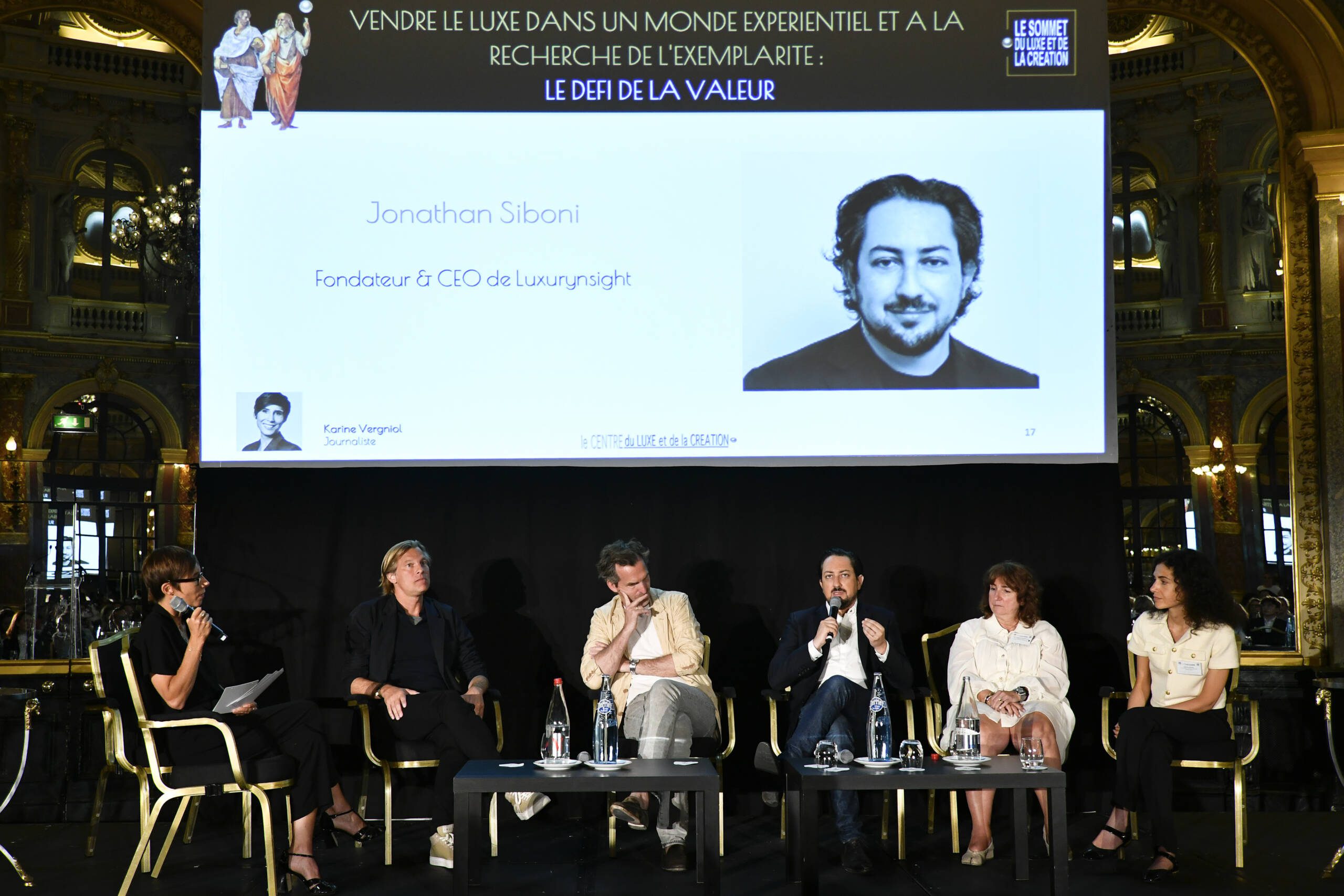
Siboni speaking at Le Sommet du Luxe et de la Création 2025
SdQ: The President of Hermès said luxury is what you repair, what you restore. My own definition of luxury is what you transmit. Your luxury is the best way to express your love, your friendship, your fraternity; it’s also vital to create new emotions. I once decided to invite our 80 top clients every year to see the new high jewellery collection, so they made potential new friends from different countries who love jewellery.
When we created a dinner at the top of the Eiffel Tower to present a new collection, a young American, maybe 25 years old, raised a toast to being a fourth-generation buyer. That’s what we are looking for: to have loyalty and serve clients from generation to generation. It is important to share from country to country, with companies helping each other, and to have events that people can share and amplify and are wins for everyone.
Read more: A conversation with artist-poet Arch Hades
DS: In terms of technology, Luxurynsight is a data firm, so what is happening in terms of the way luxury will be monitored?
JS: Luxury brands are about creating something that may not be needed but that will be desired. Generally, that comes with a high intensity of intuition and creativity that helps these maisons become empires. However, the world is changing quickly and, for me, the only way to understand its opportunities is to be able to create better GPS. Hermès, Louis Vuitton and Karl Lagerfeld all ensured they had as much connection to the world around them as possible.
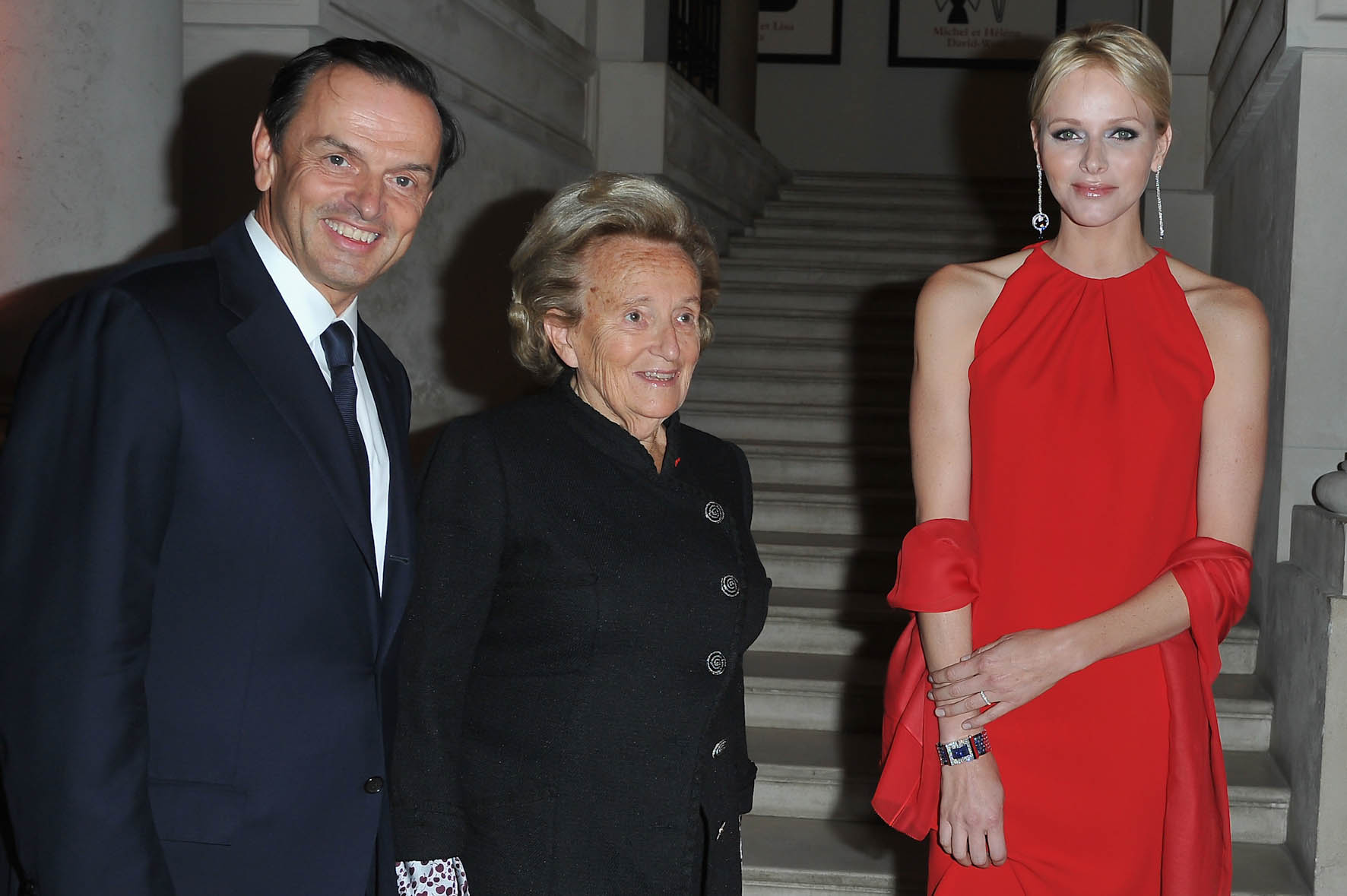
Stanislas de Quercize, Bernadette Chirac and Princess Charlene attend the Van Cleef & Arpels Exhibition Launch at Musee Des Arts Decoratifs in Paris, France 2012
Technology helps us go further. We work with more than 60 maisons every day, bringing in AI to optimise their business. The reality of the market today is not just your shop, it’s social media, it’s the ability to tell brands, “You’re performing well in that category but your competitor is doing this.” We process three to five million images a day. I can tell you in Italy right now which colour or category is over-performing because of the number of people wearing them.
Zara was a revolution a few decades ago, because it brought new technology to look at the world around it and be extremely reactive. Today, even Zara is being disrupted by new players like AI. The question is not, “How can I be quicker than them?”, because you can’t. Just see what the world is doing, find new opportunities in what you do, and look at the world around you with a little more prediction capability – not to copy, but to create.
Stanislas once told me, “We invented the brake to go quicker.” If I give you data, you can be more creative – you can measure the risk of going in that direction of creativity. If you have zero data, anything you do will be a risk. That’s the beauty of luxury: it’s not about using data in order not to take risks; it’s using it to evaluate well and be better at taking the risks. You need to stay ahead by running, not by waiting and saying, “I’ve been here for 200 years.”
SdQ: You know, Jonathan is a genius: he’s using data to help people make decisions. Whenever you are travelling you need some form of GPS to help you, and in giving you data he helps you with that.
DS: You’ve anticipated my next question: what do each of you find most interesting about the other?
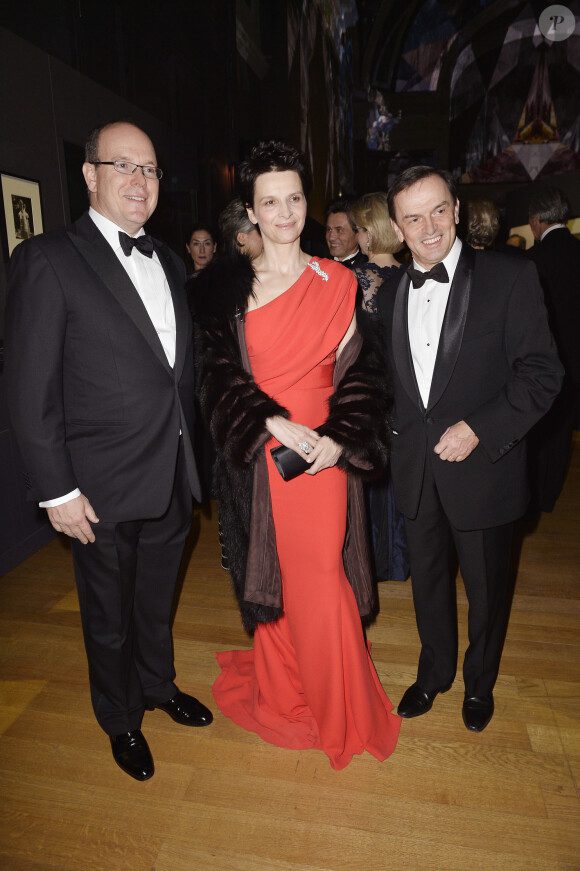
Prince Albert de Monaco, Actress Juliette Binoche and President of Cartier Stanislas de Quercize attend the ‘Cartier: Le Style et L’Histoire’ Exhibition Private Opening at Le Grand Palais in Paris, France 2013
JS: A better question would be, “what don’t I?”. I am most fascinated by two things. The first is his modernity: the ability to think of the future and not just the past, no matter how glorious – when you’ve been the CEO of Cartier and so on – but to look at the future, its complexities and trends. The second is a true kindness. Stanislas has been waking up every day to help young people, to help new industry – pure, non-business-related kindness that people want to give back to him. Speak to anyone who has worked with Stanislas, even 30 years ago, we all owe him a lot. I’m in debt to his kindness and vision, and that is rare: when you’ve done a lot, sometimes you think you can take, just because you have power. Stanislas is all about giving.
SdQ: As I mentioned, Jonathan is fabulous because what he is doing with data really is helping everybody. One hundred per cent of brands and maisons are able to make decisions, and it’s incarnating his prophecy through inspiring, joyful solutions. If you’re using Luxurynsight, it’s boosting you.
JS: What luxury brands have done recently is be open to change. When you’re number one, you don’t have as much incentive; all you can do is to lose, so you tend to just stop. But this ability to say, “You’re doing something I don’t know about; show me what you do,” is new to a lot of luxury groups. I think with this vitality, luxury will continue to be the amazing sector it’s been for hundreds of years.
Series coordinator: Charlotte Martin. Online editor: Cleo Scott. Chief sub-editor: Marion Jones.
Read this continuing series of LUX x Luxurynsight Dialogues online at LUX magazine