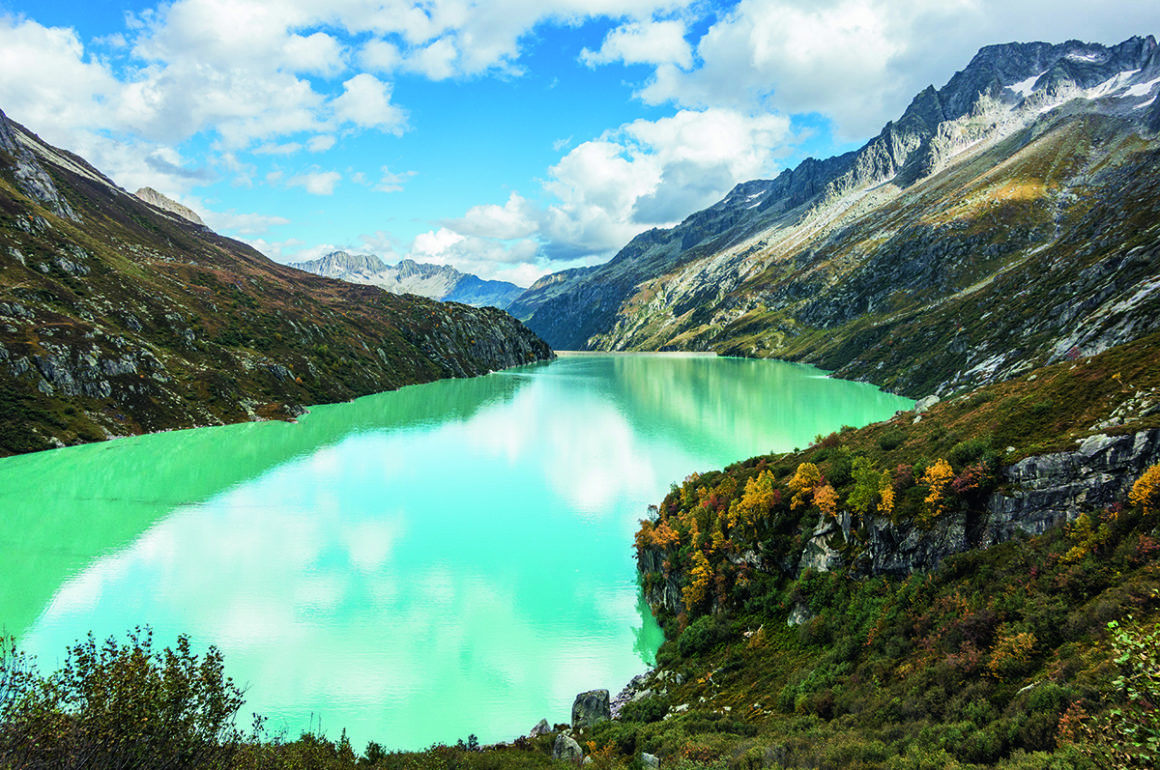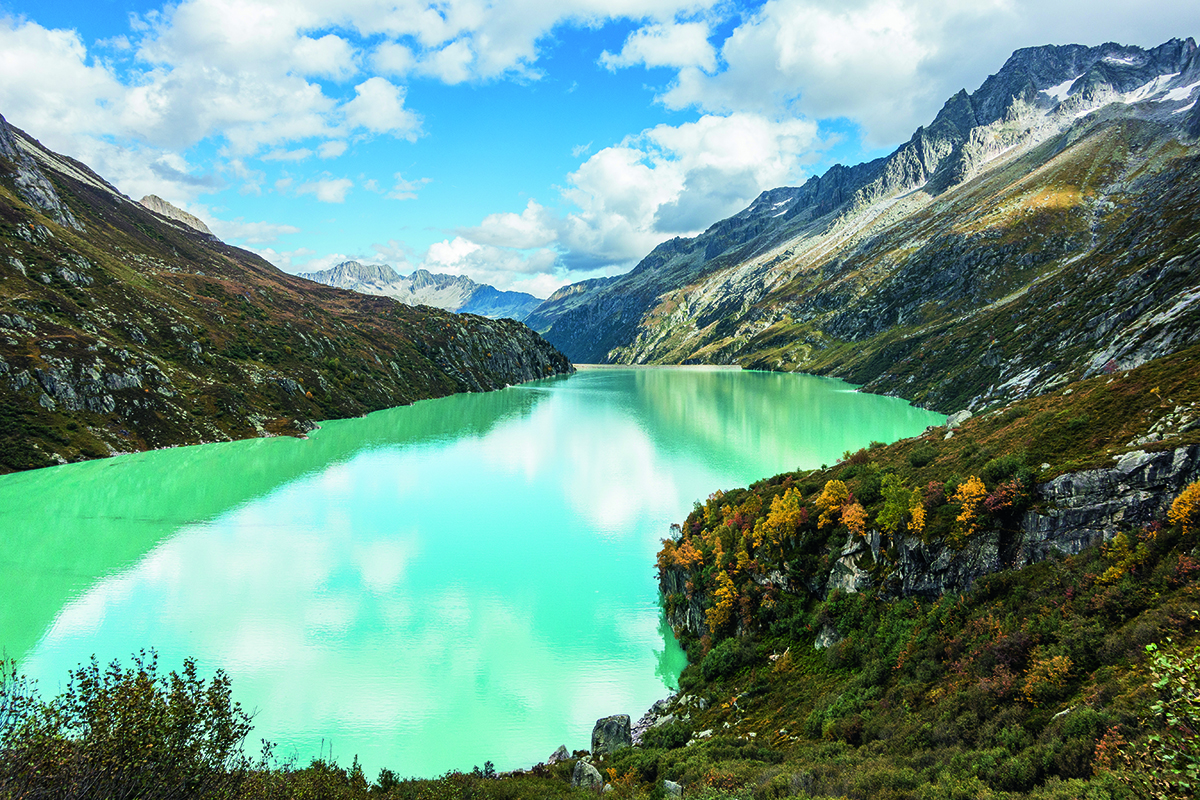



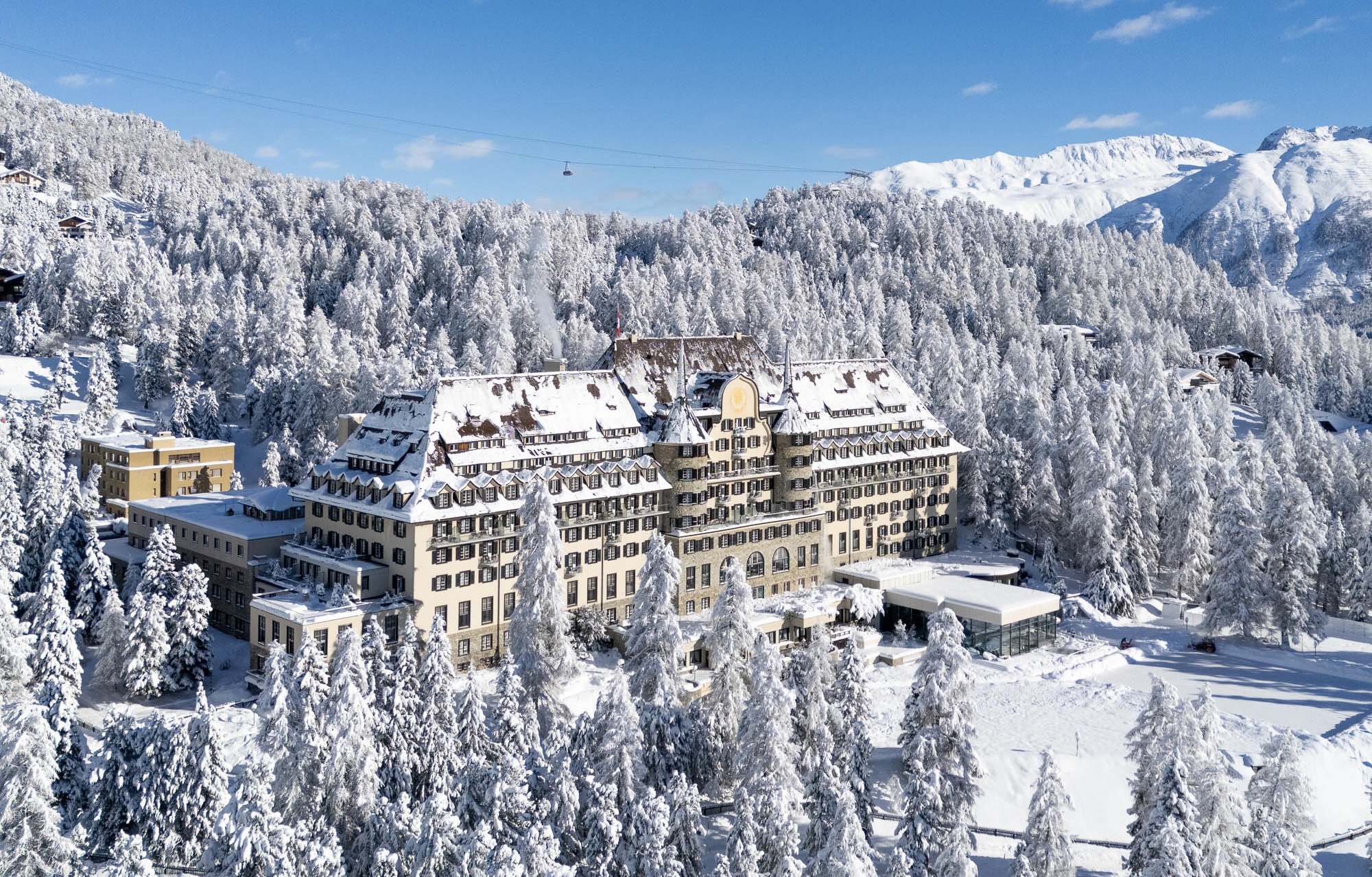
The Göscheneralpsee reservoir west of Andermatt is fed by the Dammastock glaciers.
Climate change is creating challenges for mountain resorts the world over. In Switzerland, a new luxury resort is leading the way in incorporating ecologically sound design into every aspect of their development. Jenny Southan discovers the innovations and advances being made in Andermatt
We all know that climate change is a problem, but for ski resorts, which rely on consistently sufficient snowfall, the challenge is particularly pressing – as snow, especially at lower altitudes, decreases, many will be forced to shut down (hundreds have already been abandoned across the Alps). And as the number of ‘snow-certain’ destinations dwindle, there is the added problem that by 2050, half of Switzerland’s 4,000 glaciers are forecast to have disappeared.
Follow LUX on Instagram: luxthemagazine
However, the good news is that humans are incredibly innovative, and if serious steps are taken now to combat carbon emissions, the negative effects of climate change could be mitigated. Leading the way in Switzerland is the Andermatt Swiss Alps (ASA) development project, which is one of just a small handful of resorts that is taking serious steps to up its eco credentials and ensure its longevity as an outpost for winter sports.
Stefan Kern, head of PR and communications for ASA, says: “The project is heavily dedicated to sustainability. This is a core value of all our activities – from energy consumption to construction and gastronomy. We are proud to be on the way to being a fully carbon-neutral holiday destination.”

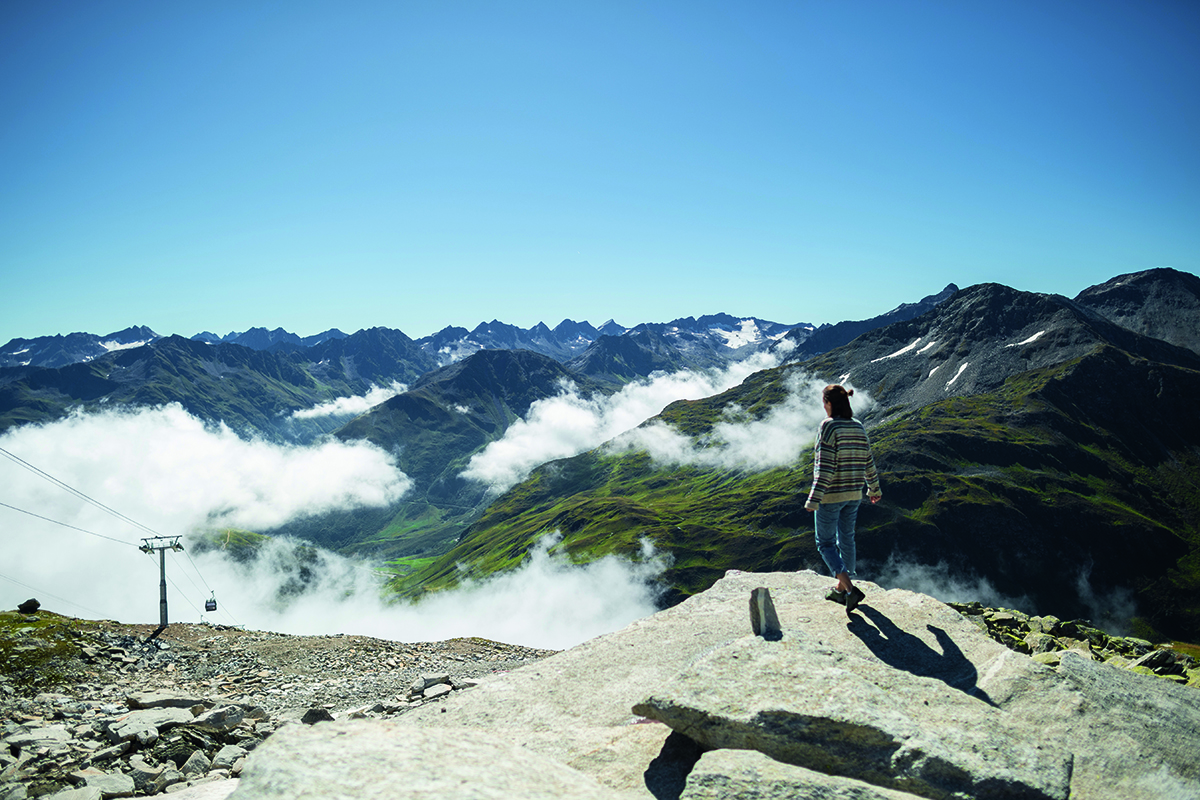
Looking down into the Ursern valley from Schneehüenerstock. Image by Valentin Luthiger
Demonstrating its commitment to the cause, ASA teamed up last year with the Swiss branch of American NGO Protect Our Winters (POW), which is helping it to devise sweeping, longterm initiatives to reduce its carbon footprint, as well as consumption of single-use plastic (none is sold at resort sites). At the beginning of 2020, ASA also launched Andermatt Responsible, a platform that “looks at the whole company’s footprint from heating to energy to water,” as Nicholas Bornstein, head and founder of POW Switzerland, explains.
Read more: Van Cleef & Arpels CEO Nicolas Bos on the poetry of jewellery
A political scientist with a Ph.D in Swiss environmental policy, there are few people better equipped than Bornstein to discuss combatting climate change in mountainous regions. He says that POW “allows me to combine my love of the outdoors with meaningful action”. He explains that his organisation works to “mobilise our community to implement climate change protection measures” via groups of local activists, professional athletes, companies and mountain guides, who act as ambassadors.

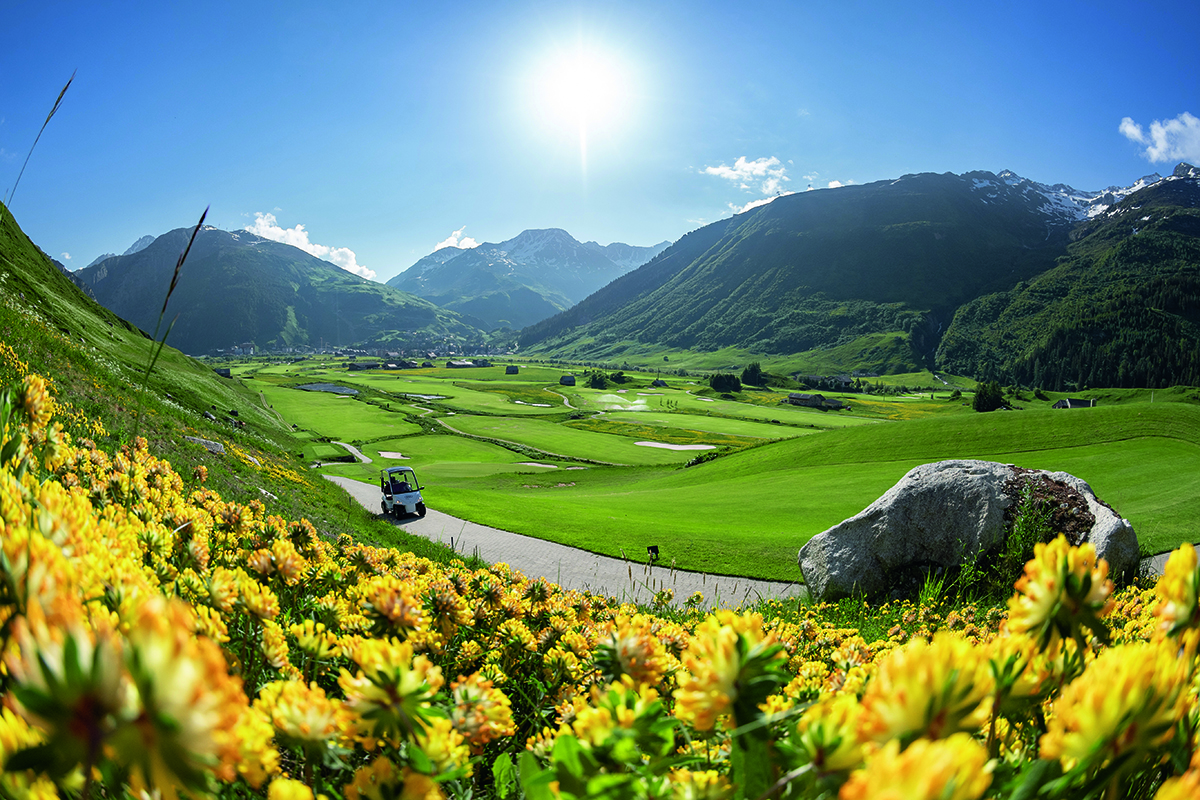
The Andermatt golf course. Image by Martin Wabel/Bildsektor.
How is climate change affecting Alpine ski resorts? In addition to making ski seasons shorter, Bornstein says: “The snow line has risen approximately 300 metres in the past 40 years, and is predicted to go up a further 500 to 700 metres by the end of the century, and this is putting a lot of ski resorts out of business.”
He also notes that conditions are becoming more dangerous. “We have seen avalanches in mid-winter of the kind that we would expect in April and May. They are becoming harder to predict.” Why? If the ground isn’t cold enough when it starts snowing, an insulating layer is created by the snow where heat is trapped and snow can slide off more easily. “We call these ‘fish mouth’ avalanches,” says Bornstein.
Read more: Jason deCaires Taylor on underwater art & ocean conservation
ASA has identified key contributors and is taking steps to reduce their impact. Bornstein says that approximately 50 to 70 per cent of CO2 emissions in Andermatt are from people coming to the resort by car so they are putting on extra trains from Zurich at weekends, offering discounted ski passes for people who don’t drive (driving in general here is restricted and there is a good bus system for those who don’t want to walk, including an electric bus). Andermatt Reuss is for pedestrians only.

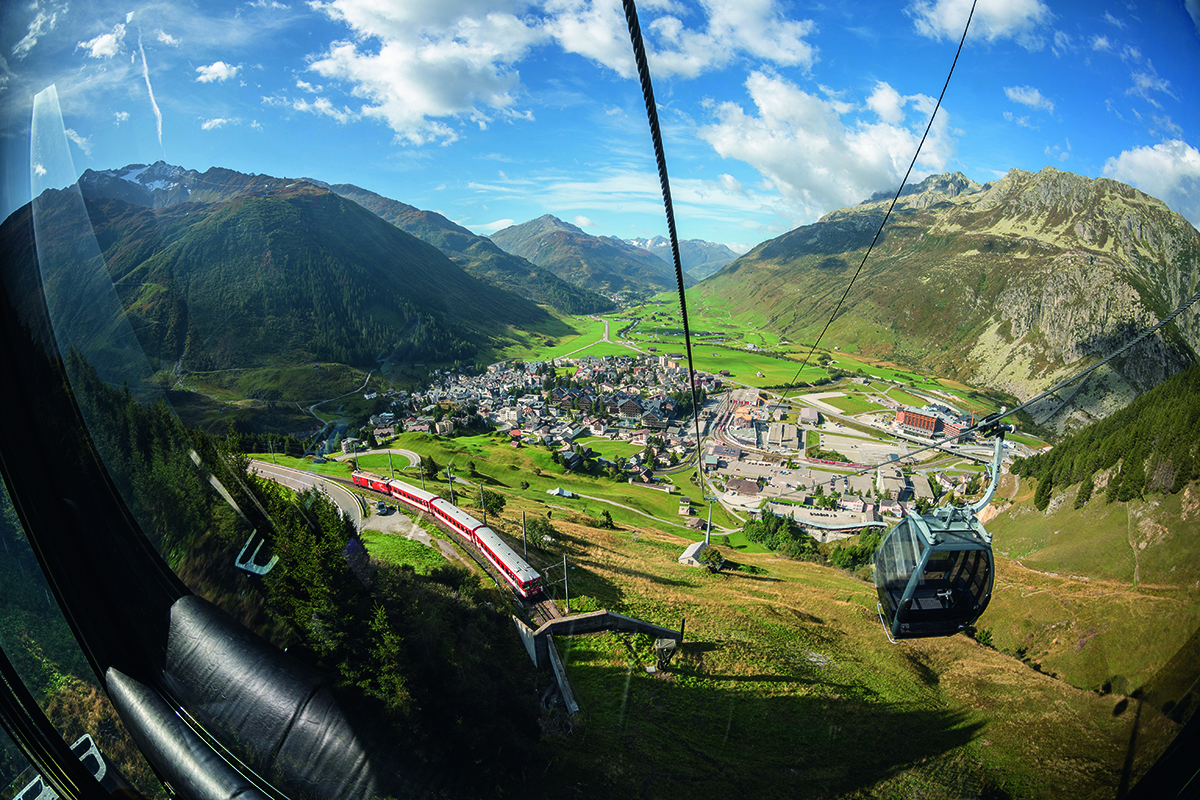
Andermatt seen from the Gütsch ski lift
Food production and logistics are also big polluters, especially in Switzerland which imports a lot of goods. Bornstein says that POW has been working with restaurants in ASA to
put a more regional and vegetarian cuisine on menus. Andermatt’s gourmet restaurants are also reducing the amount of plastic-wrapped ingredients they buy.
Even more impressive is the fact that the entire SkiArena of Andermatt (from homes to ski lifts) is 100 per cent powered by hydroelectric and wind-powered energy supplied by Ursern electricity works, which exclusively serves the Gotthard region. (On the Graubünden side of Andermatt, Energia Alpina also provides 100 per cent renewable energy.) Not only that but all the buildings are heated in a totally carbon-neutral way through the burning of locally sourced wood pellets and surplus heat captured from Swiss army computers buried deep in secret bases in nearby mountains.
Read more: How Gaggenau is innovating the ancient art of steam cooking
“People want to see companies stepping up to the challenge and we believe it is going to become more important to position yourself with a ski resort that cares about the future of the environment,” says Bornstein. Even during the summer when people play golf surrounded by green meadows, ASA has ensured that its 20-plus species of birds have plenty of areas to nest around the course – in fact, there are more birds here today than there were before the course was built, demonstrating that being responsible can benefit both nature and mankind.
RING IN THE NEW

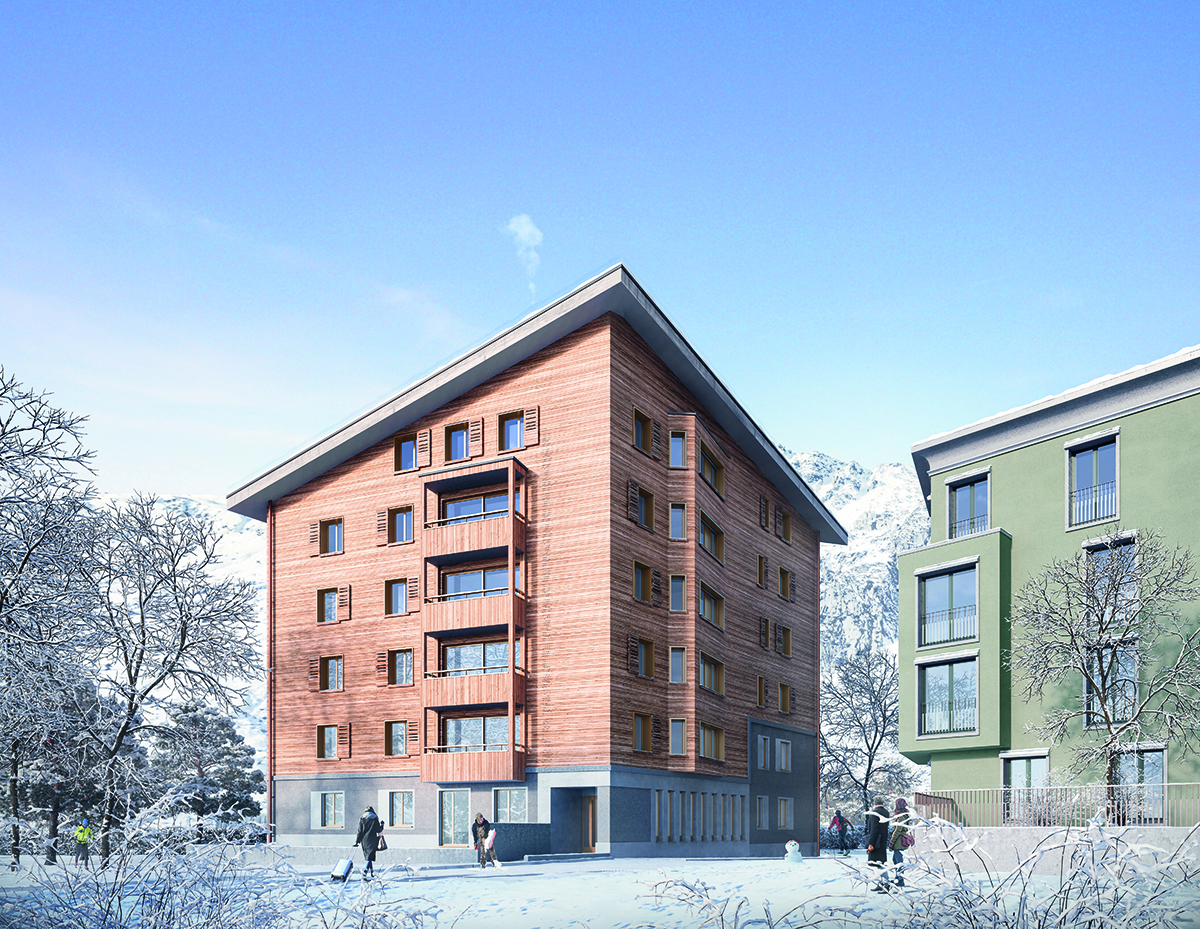
Arve Chalet Apartments
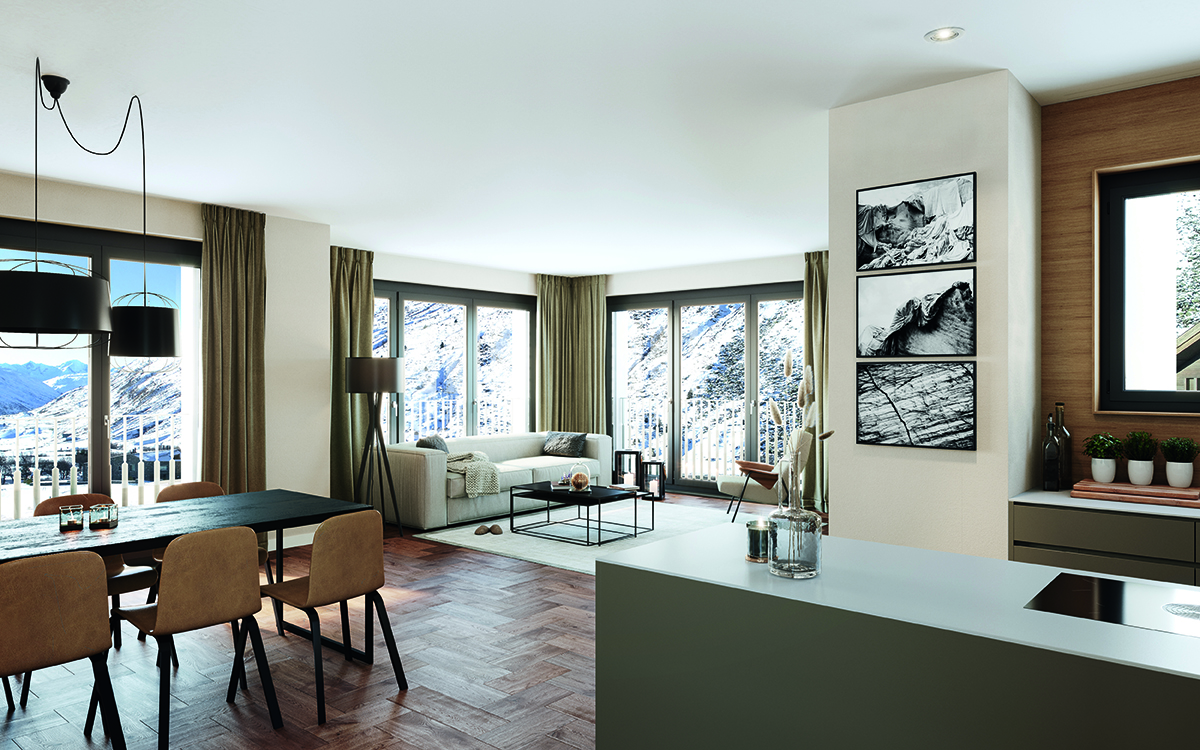
Arve is a five-floor block of 17 residences (73–116 sq m in size), each with open-plan living and dining spaces, and window seats offering views of the mountains.

Enzian Alpine Apartments
Enzian is a modern, three-floor Alpine villa housing 12 apartments measuring from 62 sq m to 136 sq m. Some come with saunas, private roof terraces and gardens.
Find out more: andermatt-swissalps.ch
This article was originally published in the Summer 2020 Issue.
Recent Posts
Archives
- January 2026
- December 2025
- November 2025
- October 2025
- September 2025
- August 2025
- July 2025
- June 2025
- May 2025
- April 2025
- March 2025
- February 2025
- January 2025
- December 2024
- November 2024
- October 2024
- September 2024
- August 2024
- July 2024
- June 2024
- May 2024
- April 2024
- March 2024
- February 2024
- January 2024
- December 2023
- November 2023
- October 2023
- September 2023
- August 2023
- July 2023
- June 2023
- May 2023
- April 2023
- March 2023
- February 2023
- January 2023
- December 2022
- November 2022
- October 2022
- September 2022
- August 2022
- July 2022
- June 2022
- May 2022
- April 2022
- March 2022
- February 2022
- January 2022
- December 2021
- November 2021
- October 2021
- September 2021
- August 2021
- July 2021
- June 2021
- May 2021
- April 2021
- March 2021
- February 2021
- January 2021
- December 2020
- November 2020
- October 2020
- September 2020
- August 2020
- July 2020
- June 2020
- May 2020
- April 2020
- March 2020
- February 2020
- January 2020
- December 2019
- November 2019
- October 2019
- September 2019
- August 2019
- July 2019
- June 2019
- May 2019
- April 2019
- March 2019
- February 2019
- January 2019
- December 2018
- November 2018
- October 2018
- September 2018
- August 2018
- July 2018
- June 2018
- May 2018
- April 2018
- March 2018
- February 2018
- January 2018
- December 2017
- November 2017
- October 2017
- September 2017
- August 2017
- July 2017
- June 2017
- May 2017
- April 2017
- March 2017
- February 2017
- January 2017
- December 2016
- November 2016
- October 2016
- September 2016
- August 2016
- July 2016
- June 2016
- May 2016
- April 2016
- March 2016
- February 2016
- November 2015
- September 2015
- June 2015
- May 2015
- March 2015
- September 2014
- August 2014
- July 2014
- May 2014
- April 2014
- March 2014
- February 2014
- January 2014
- December 2013
- November 2013
- October 2013
- September 2013
- August 2013
- July 2013
- June 2013
- April 2013
- March 2013
- February 2013
- September 2012
- July 2012
- June 2012
- March 2012
- February 2012
Categories
- Adventure Travel Issue
- Aesthete Issue
- Architecture
- Art & Design
- Art & Photography
- Art collectors
- Autumn 19
- Autumn/Winter 2020/2021
- Autumn/Winter Issue
- Bespoke Issue
- Business
- Cars
- Cars & Collectibles
- Case Study
- Celebrities
- Culture
- Culture Issue
- Design Issue
- Dining Issue
- Earth Issue
- Family Issue
- Fashion & Jewellery
- Features
- Food
- Future Luxury Issue
- Health
- Hedonism Issue
- Image Issue
- Italy Issue
- Latest Stories
- Leaders & Philanthropists
- Leaders Slider
- Love Issue
- Luxury Travel Issue
- New Luxury Issue
- Online Exclusive Slider
- Opinion
- Spring 2020
- Summer 19 Issue
- Summer 2020
- Summer 2021
- Sustainability
- Taste Issue
- The Beauty Issue
- Travel
- Uncategorized
- Water Issue
- Winter 19 Issue
Popular Posts
Categories
- Adventure Travel Issue
- Aesthete Issue
- Architecture
- Art & Design
- Art & Photography
- Art collectors
- Autumn 19
- Autumn/Winter 2020/2021
- Autumn/Winter Issue
- Bespoke Issue
- Business
- Cars
- Cars & Collectibles
- Case Study
- Celebrities
- Culture
- Culture Issue
- Design Issue
- Dining Issue
- Earth Issue
- Family Issue
- Fashion & Jewellery
- Features
- Food
- Future Luxury Issue
- Health
- Hedonism Issue
- Image Issue
- Italy Issue
- Latest Stories
- Leaders & Philanthropists
- Leaders Slider
- Love Issue
- Luxury Travel Issue
- New Luxury Issue
- Online Exclusive Slider
- Opinion
- Spring 2020
- Summer 19 Issue
- Summer 2020
- Summer 2021
- Sustainability
- Taste Issue
- The Beauty Issue
- Travel
- Uncategorized
- Water Issue
- Winter 19 Issue


Recent Comments