


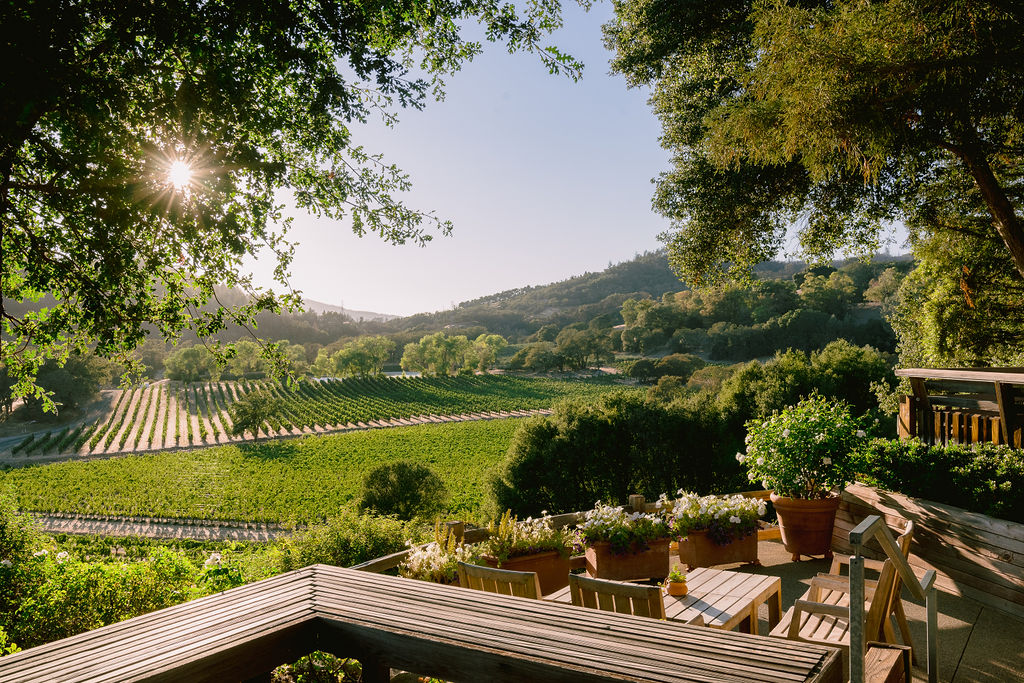
A view from the deck of the Joseph Phelps winery, looking over the vineyard in the heart of the Napa Valley

Joseph Phelps is a Napa valley wine legend. Maison President David Pearson is taking it to new heights, as we learn during a memorable tasting of fine vintages 

Is wine a luxury good? That $10 million question is in the mind of anybody who purchases a case of wine for the price of a fine mechanical watch, or in some cases a serious sports car.

Follow LUX on Instagram: @luxthemagazine

Ask five different people and you may get five different answers. Certainly some of the guardians of the old, family owned French wine estates have looked askance at me when I have asked them that question.

But, as a branded product with significant investment and responsibility to its environment, fine wine most definitely is a luxury good in many ways, aside from its price.
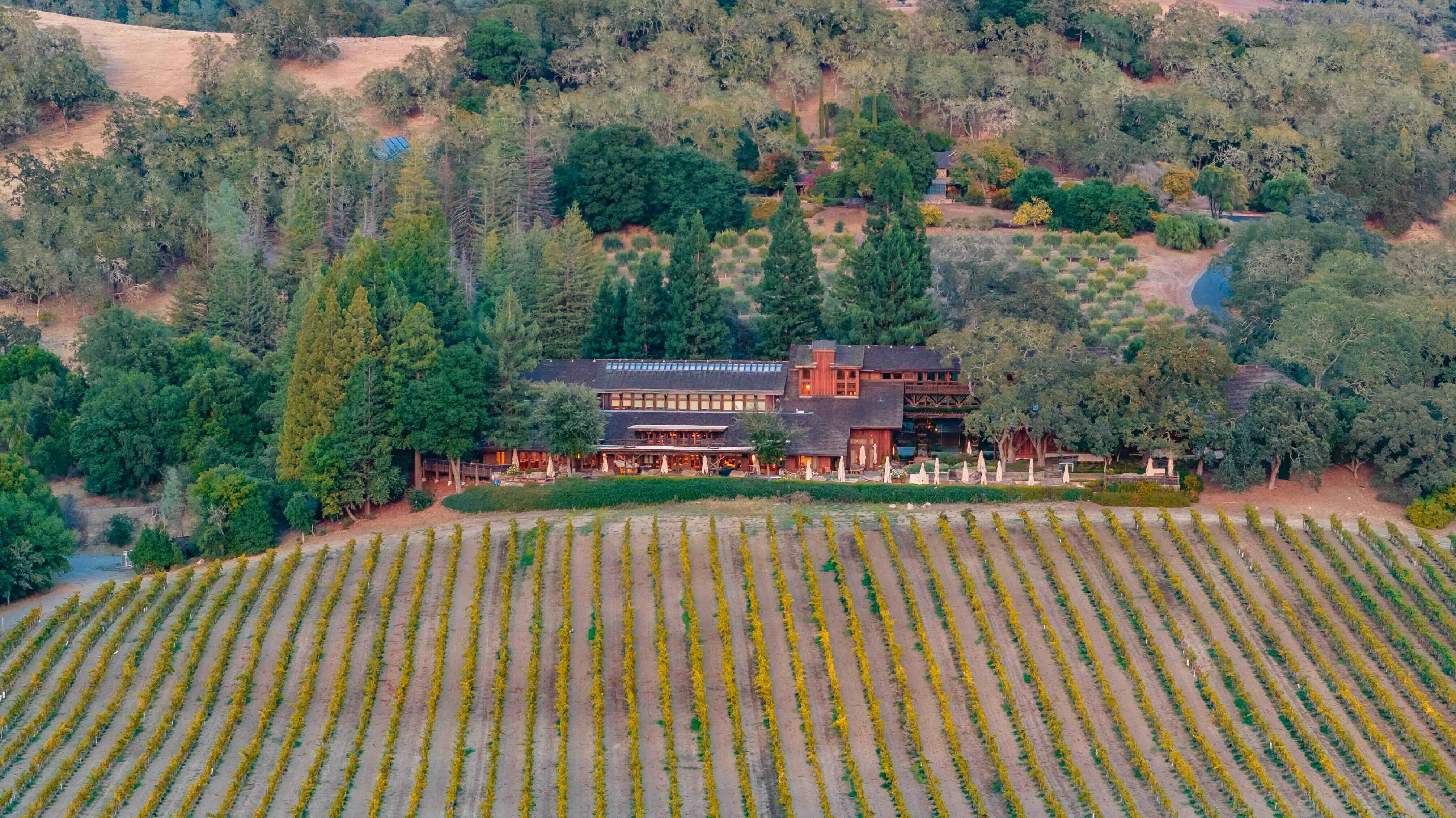
Joseph Phelps Vineyards owns and farms some 425 acres of vines in Napa Valley, with each vineyard bringing unique characteristics to the wines. Photograph taken by Seth Daniel

Nothing symbolises this more than the fact that the worlds greatest luxury titan, Bernard Arnault, has bought up some of the most hallowed brands in the wine world, from Dom Perignon and Krug to Château Cheval Blanc and, in Napa Valley, the Joseph Phelps winery.

Napa being what it is, it may be that the connoisseur of European wines reading this has not tasted bottles from the Phelps winery – but that is to their detriment. If there were a classification of first growths in Napa like there is in Bordeaux, Phelps would certainly be in there.

And so it was an honour for LUX to have a tasting, over zoom, of key vintages in the history of this fabled wine estate with Maison President David Pearson. Pearson himself appears to be created directly out of the confluence of luxury and wine. He is a Napa Valley stalwart, having previously directed equally legendary winery Opus One. But he also has the articulacy and ease of a genuine luxury CEO, as at home in a nouveau-style bistro in Paris as he would be pacing through the soils of Napa Valley.

Pearson is passionate about the importance of regenerative agriculture – farming that actually gives back to the soil, not just because it’s good for the environment, but it because by nature (literally) it makes better wines.

David Pearson, the Maison President, has a deep-rooted commitment to maintaining and enhancing the legacy of Joseph Phelps

He is also very aware that these days there is more choice than ever in the fine wine market and there’s no room to hide if the product itself is not at the pinnacle of its powers. Joseph Phelps may be owned by LVMH, but it does not have the marketing budget of Louis Vuitton: the wines have to stand on their own.

He speaks of the regenerative farming, and the focus on quality, as being part of a “compelling plan for our future“. There is an implication there that the great Napa estates have made their names over the last 50 years, and are now at the next step as mature brands, of blazing themselves into the consciousness of new generations of consumers in different destinations.

Read more: Passenger Princess in the Aston Martin DBX S

So given the importance of the product themselves, how did they taste?

Joseph Phelps flagship Insignia wine is really a wine for the ages: classical, structured, deep and long, it’s a wine aristocrat. It was interesting too to taste the other wines which receive less exposure in the fine wine world. Details are below, and the conclusion has to be that any serious wine collector needs a selection of Joseph Phelps, old vintages and new, in their cellar.
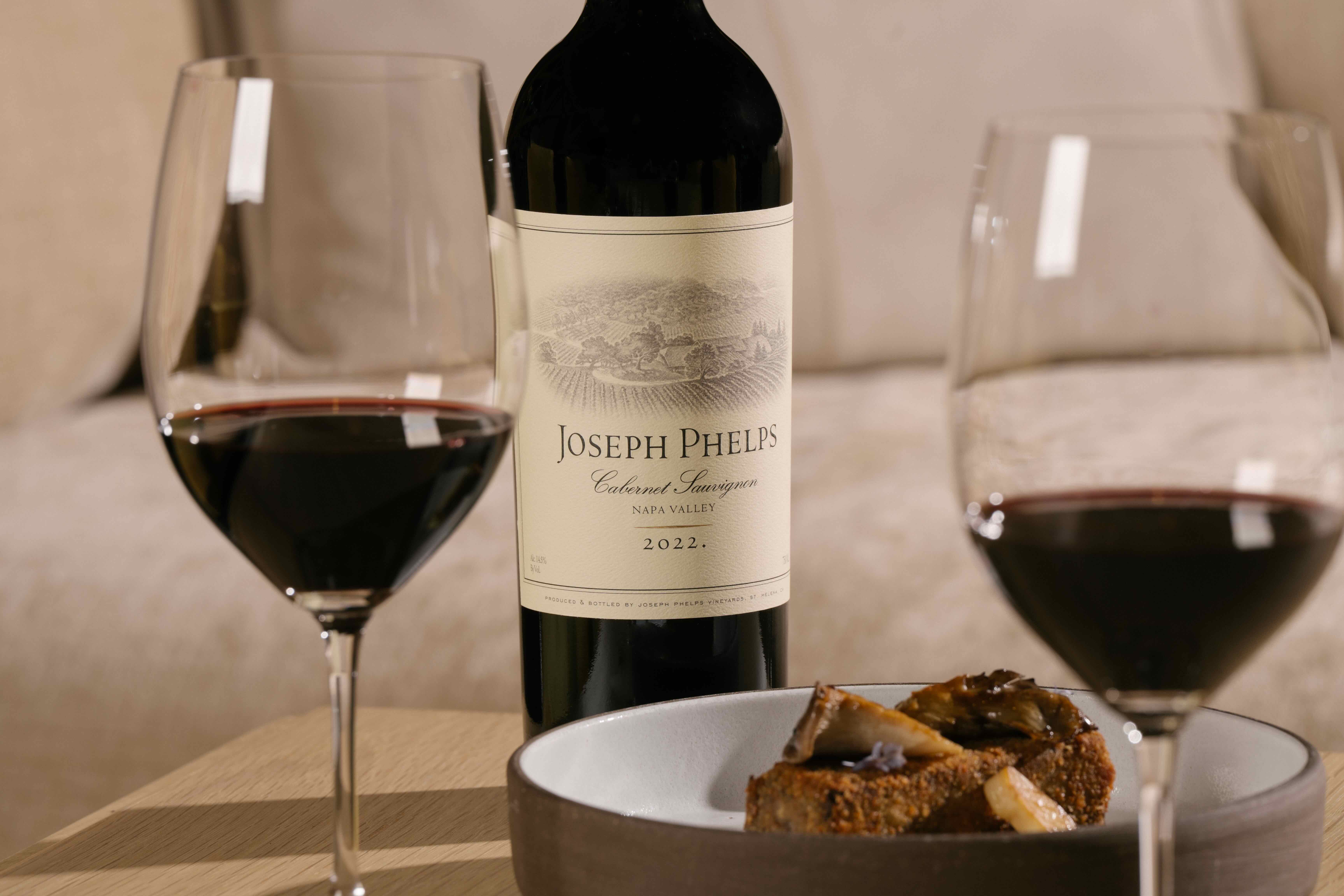
A glass of the Joseph Phelps 2022 Cabernet Sauvignon from Oakville’s Backus Vineyard on the eastern slopes of the Napa Valley

The Joseph Phelps wines and the LUX wine notes:

Joseph Phelps Insignia 2022

In the presence of greatness, but a bit like meeting Napoleon when he was 12. You have to wait a while to see what it will do, but by Jove, this will sweep the world with its breadth.

Joseph Phelps Insignia 2021

Very taut, like tapping on the case of a Stradivarius and then peeking inside. It’s all there but if you drink it now, you won’t have experienced it properly. Still, if you do, be sure to drink it with an onglet a l’echalotte.

Joseph Phelps Insignia 2019

I felt like I was attending the debutante coming out party of this wine. Beautiful, elegant and perfumed, and perfect, but will become beyond perfect, especially after it’s been out with the wrong boy for a couple of years.
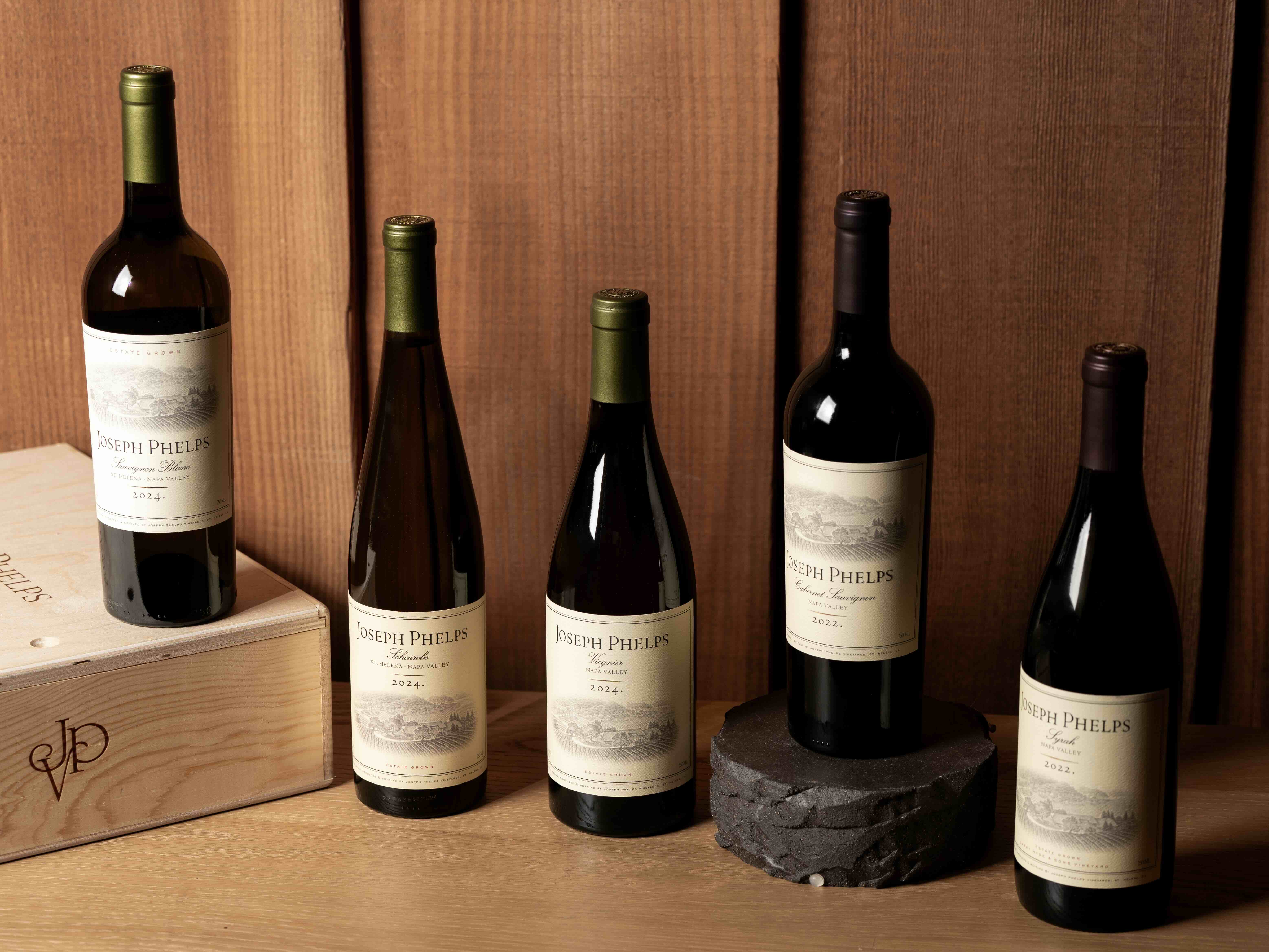
‘Any serious wine collector needs a selection of Joseph Phelps, old vintages and new, in their cellar’

Joseph Phelps Insignia 2006

Very hard to find, these back vintages, and this is why: expansive, rich but also with a hint of delicacy. Aged in a different way to a Bordeaux. Drink with some very old Comte cheese on the roof of a castle in the Luberon with a very old friend.

Joseph Phelps Cabernet Sauvignon 2022

Not as aristocratic a wine as the Insignia, but absolutely delicious with a kobe steak at a nightclub restaurant in Monte Carlo with a person who you are not supposed to be with.

Joseph Phelps Syrah 2021

A surprisingly smoky, complex Syrah that is best consumed while watching sundown from your villa in Montecito.

Joseph Phelps Scheurebe 2024

Rich dessert wine, with a parfait late afternoon at Club 55, just before the witching hour and the new magnum of Cristal.

We also had a quartet of Burgundy-style wines from the sister Freestone estate: two pinot noirs and two chardonnays. These were delightfully balanced and beautifully made.

josephphelps.com

Share:
Reading time: 5 min
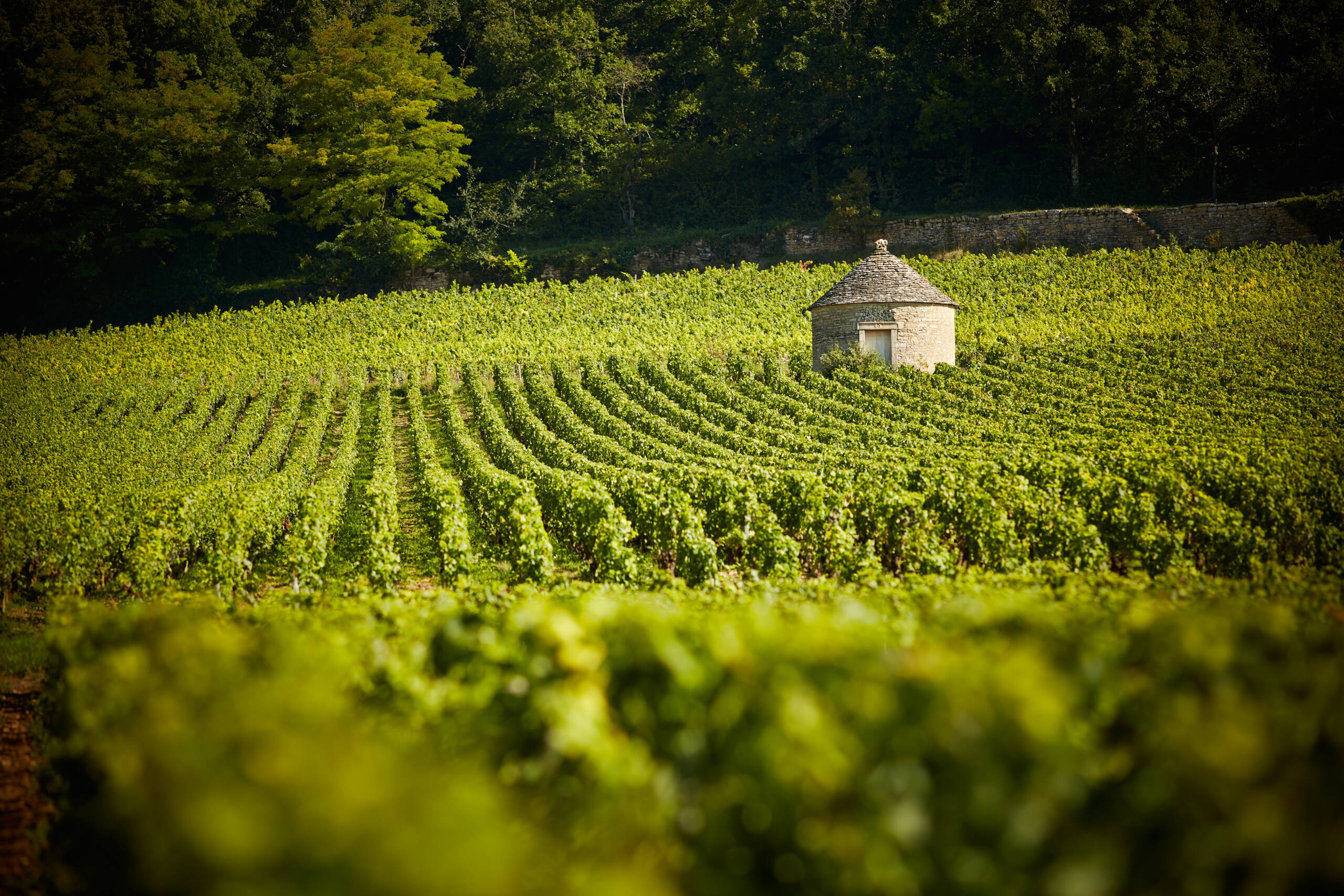
Green field with a little house in the middle
Family of different generations sitting on a stone wall

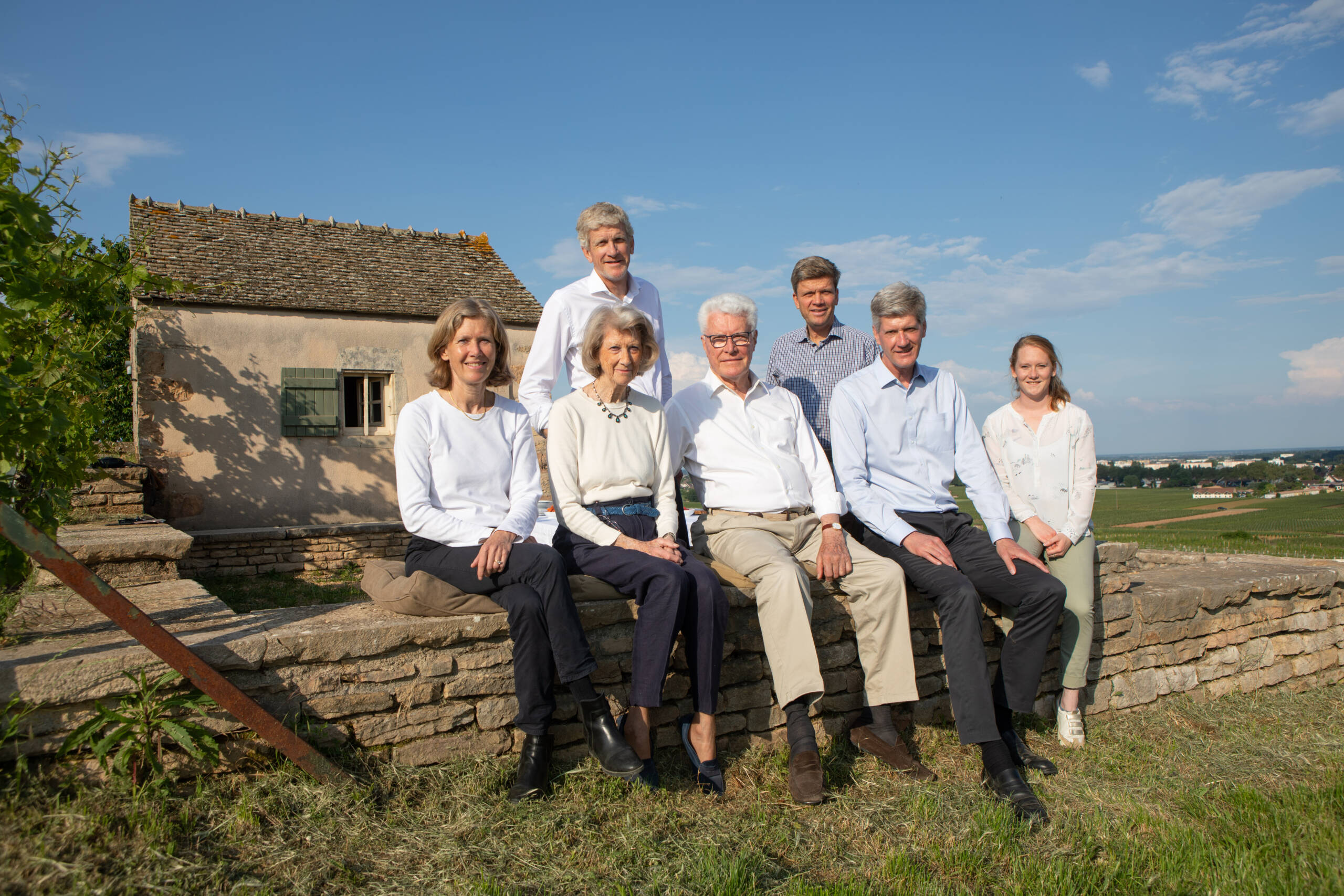
The family Drouhin grew up in the vineyards and acquired a deep understanding of wine alongside their father, Robert Drouhin. They all have their own role and they share the same passion for wine

Veronique Drouhin was not supposed to run one of the world’s most celebrated wine producers. The scion of a family with holdings throughout Burgundy and beyond, she was born with the odds stacked against her in two ways: she was the second child, where traditionally the elder child took on the family business; and she was a woman in the very mannish world of wine.

“I did not think, when I was at school, that things would end up the way they did,” the urbane, lively head of Maison Drouhin says ahead of our tasting of some of her finest wines. But her elder brother, Philippe, decided that he wanted to devote his energies to being in the vineyards, making the wines great rather than running the company. And Veronique, although she is too modest to say so directly, showed the commercial nous required to take the company forward in the 21st century.

Drouhin is famed for making wines of finesse, vibrancy and balance. That was not necessarily always a plus point: there was a time earlier this century when many consumers of fine wines thought that the more powerful a wine was, the better. And being the head of a negotiant-producer, which both owns its own vineyards and buys grapes from small producers with their own vineyards, was also a double-edged sword as high-end consumers sought out tiny production boutiquewineries as a status symbol.

Follow LUX on Instagram: luxthemagazine

But the pendulum has swung the other way, both on style, with finesse and balance most definitely back in vogue, and in terms of consumer demand, as the cost of wines from tiny producers shot upwards beyond sustainable levels. Drouhin, which makes wines from some of Burgundy’s most hallowed vineyards, suddenly looked like excellent value as well as high quality.

If there is a grace to the wines – more on which in our tasting notes below – there is also a grace to the head of the Maison. When I ask what she would have likely done if she had not been born into a major French wine dynasty, Veronique replies that she might have become a music. I can imagine her playing a Chopin sonata as much as I can imagine her tasting her wines or hosting a collector’s dinner.

Read more: A tasting of Dana Estate wines

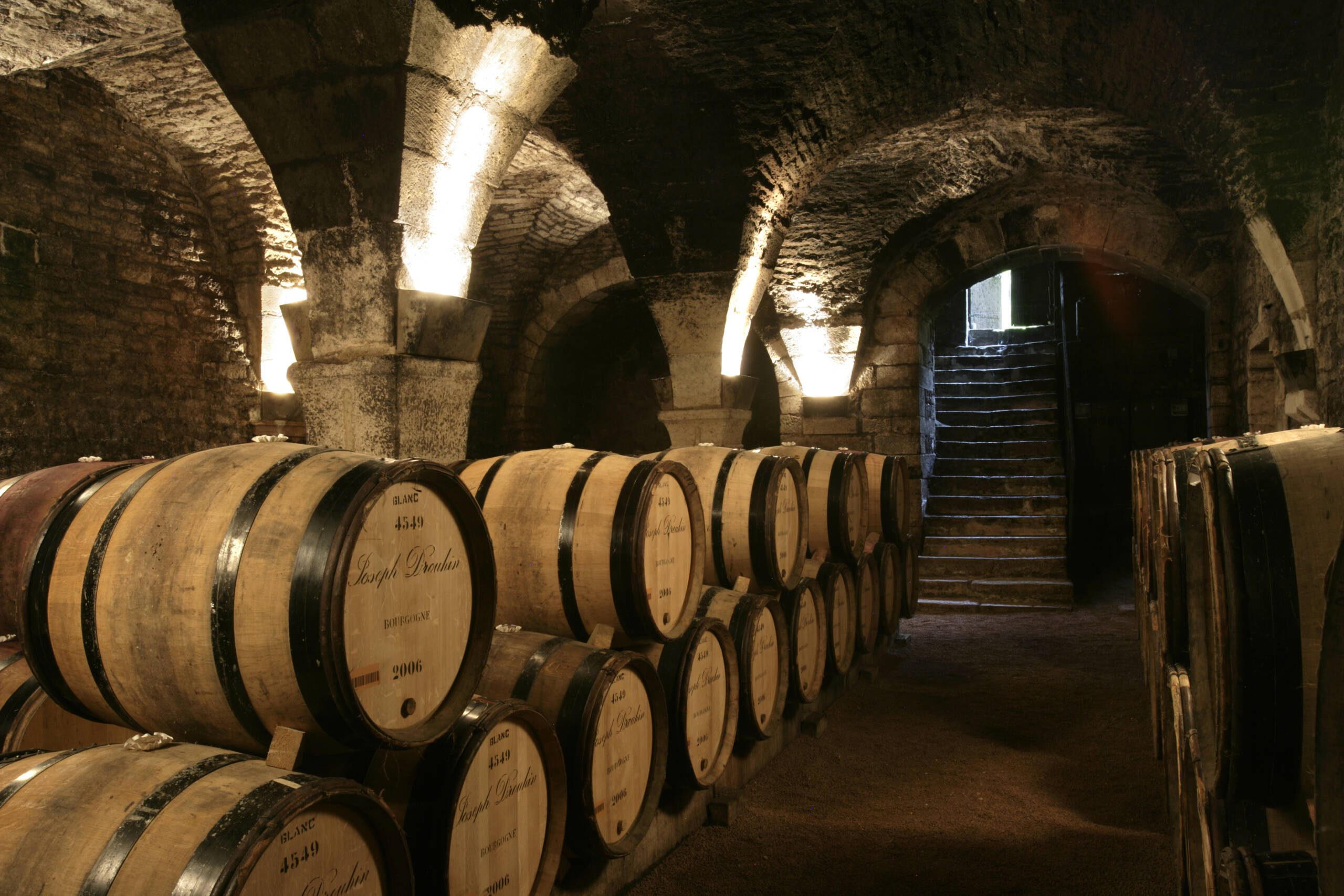
Wine cellar

After carefully harvesting the precious fruits of a year’s labour, Maison Drouhin let their vines enter a period of rest, an enchanted interlude called dormancy.

Drouhin makes wines at a variety of price points: just days before this tasting of some of their highest-end wines, which costs hundreds of pounds/euros/dollars a bottle, I partook of a bottle of a more lowly Drouhin Savigny-les-Beaune red Burgundy, from the fulsome 2020 vintage, at a London restaurant. It was delicious, balanced, moreish; and very much in the style of all the others. But if you are seeking a high end Burgundy at a relatively reasonable price, look to the below.

The Drouhin tasting. Tasting notes by Darius Sanai

Whites:

Chablis Grand Cru Les Clos, 2018

The Chablis brand might suggest a certain austerity and steeliness; this grand cru, from one of the most celebrated vineyards, had that but also breadth, depth and white nectarines. Very classy and surprisingly powerful; a Jaguar E-type of a wine.

Green field with a little house in the middle

The harvest date is determined through regular samplings. Maison Drouhin closely monitors the health and maturation of the grapes.

Beaune Clos des Mouches, 2019

A white wine from Beaune? Sacré bleu – or sacré blanc!  But what a wine this rare and prized bottling is. Rounded, rich fruit with freshness and sex appeal and a lot of layers. An open-topped classic two-seater Mercedes SL from the 1980s.

Chassagne Montrachet Premier Cru Morgeot, Marquis de Laguiche, 2019

From Chablis we headed south through the forest of the Plateau de Langres (Chablis is not connected to the rest of the Burgundy vineyards), over the continental divide and down to Beaune. Now we travel a few kilometres further south, with the Cote d’Or hills rising to our right, in our 1973 Porsche 911S, in a solid period dark green. That’s what this wine is: super-elegant, precise, crafted, stunning.

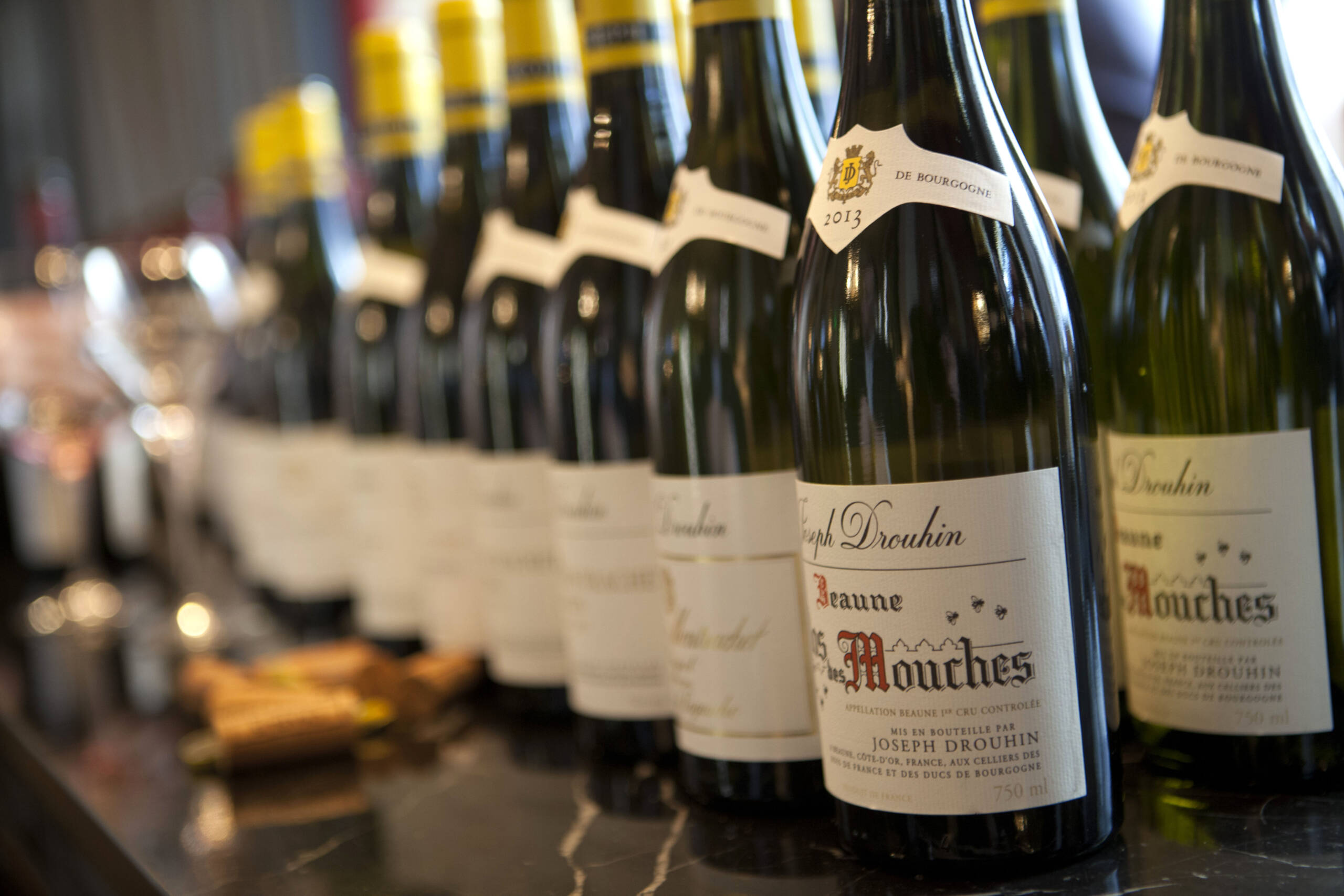
Multiple wine bottles standing next to each other

The harvest date is determined through regular samplings. Maison Drouhin closely monitors the health and maturation of the grapes.

Corton Charlemagne Grand Cru, 2019

Back up the road we go, past Beaune, to the rounded Hill of Corton. Corton Charlemagne is one of the most celebrated white Burgundies, and this is a beautiful interpretation, with stony fruits and the complexity to match a three Michelin-starred chef’s signature Escoffier-style white fish main course. A 1960s Citroen DS Decapotable (in black, with cream leather) of a wine.

Reds:

Volnay Premier Cru Clos des Chênes 2018

Such finesse, a wine that only hints at its true depth of first sip, then keeps speaking with you, reciting poetry in your ear.

Beaune Premier Cru Clos des Mouches 2018

Beaune is only a few kilometres away from Volnay, and this wine is made with the same, pinot noir, grape variety by the same producer: yet while retaining Drouhin’s finesse, this has power and muscularity. Like a Duke from the court of Louis XIV expounding on the virtues of his house musicians.

Chambolle-Musigny Premier Cru Les Amoureuses 2009

On first sip, this is a balanced, structured and slightly delicate red Burgundy. By the end of the second glass, it’s an artist, a pianist, a poet and a dancer – and not a particularly chaste dancer. A Chippendale from the 2000s, or a brilliant burlesque; all at the same time. Astonishing.

Chambertin Clos de Beze 2003

This is a wine you would have at your last supper, with capon, truffle, caviar and tripe sweetbreads (and maybe some pommes dauphinoise). Like a Falstaffian royal performing a perfect ballet while reciting Rumi.

domainedrouhin.com

Share:
Reading time: 5 min