

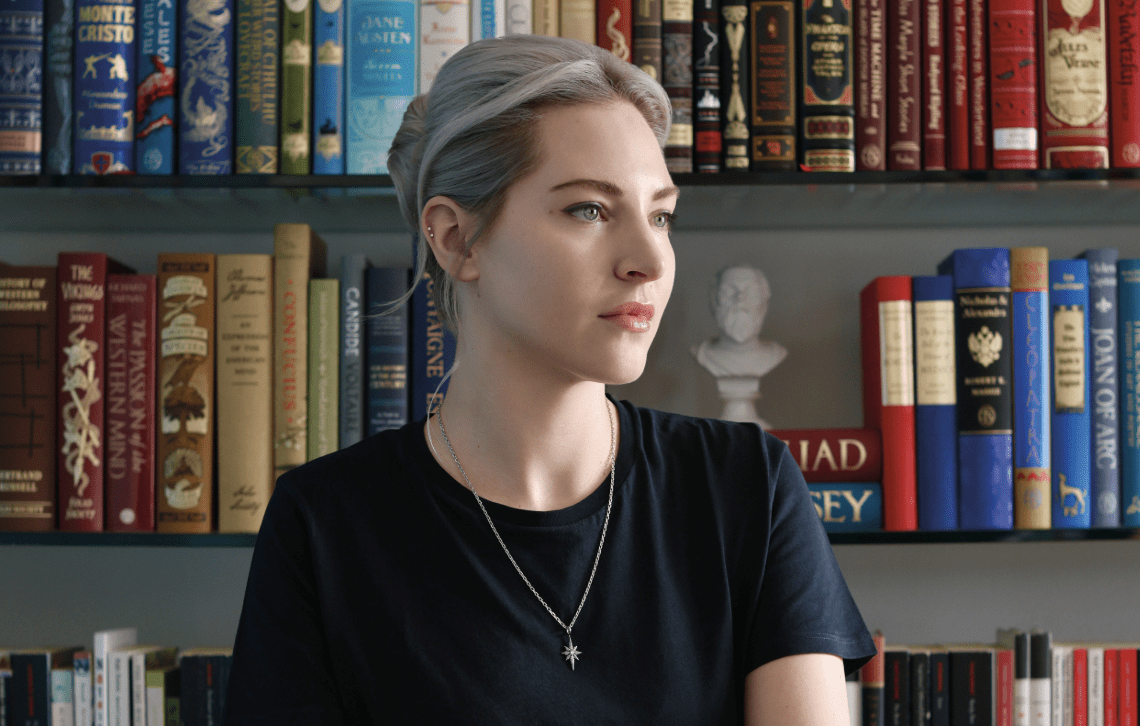
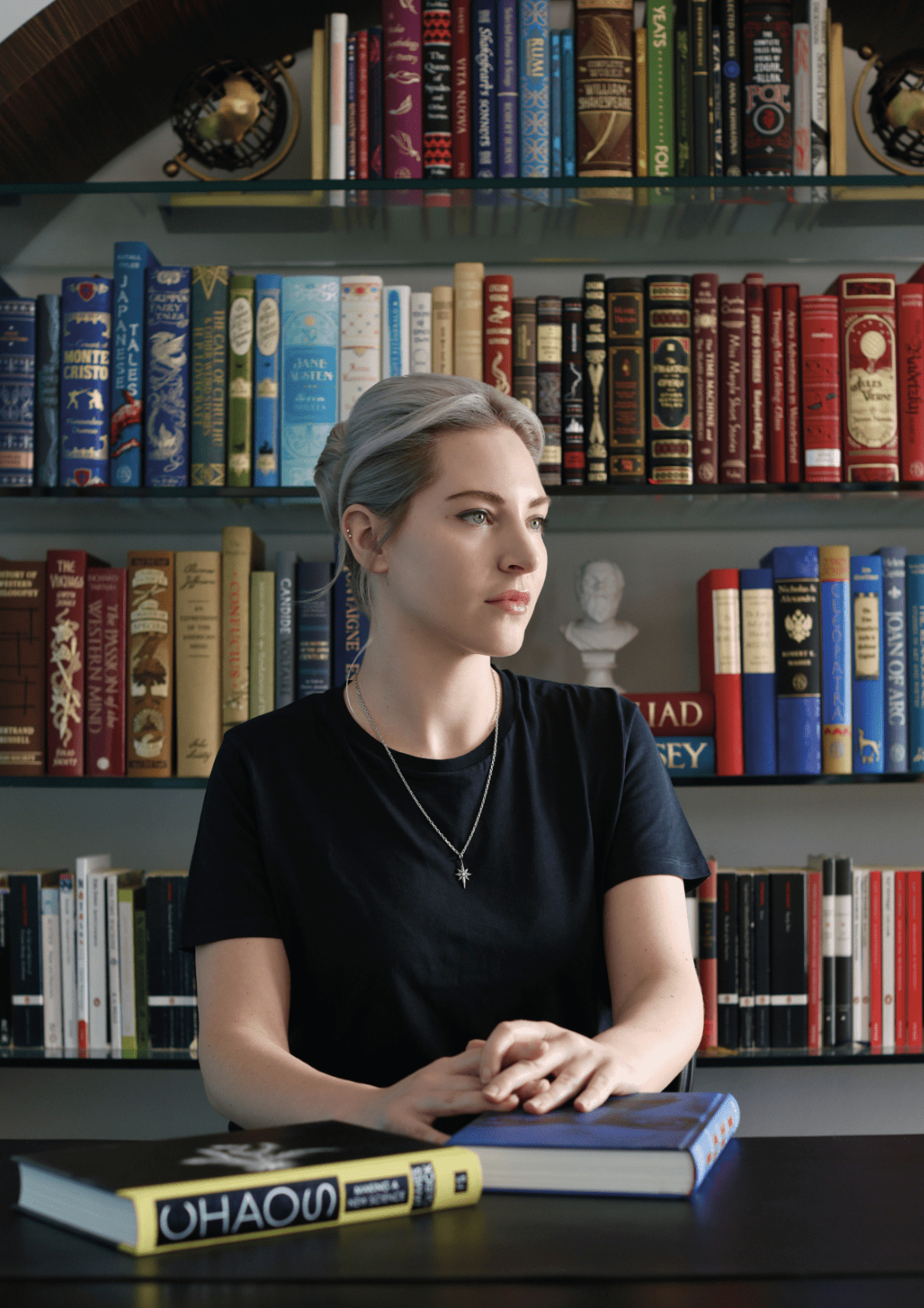
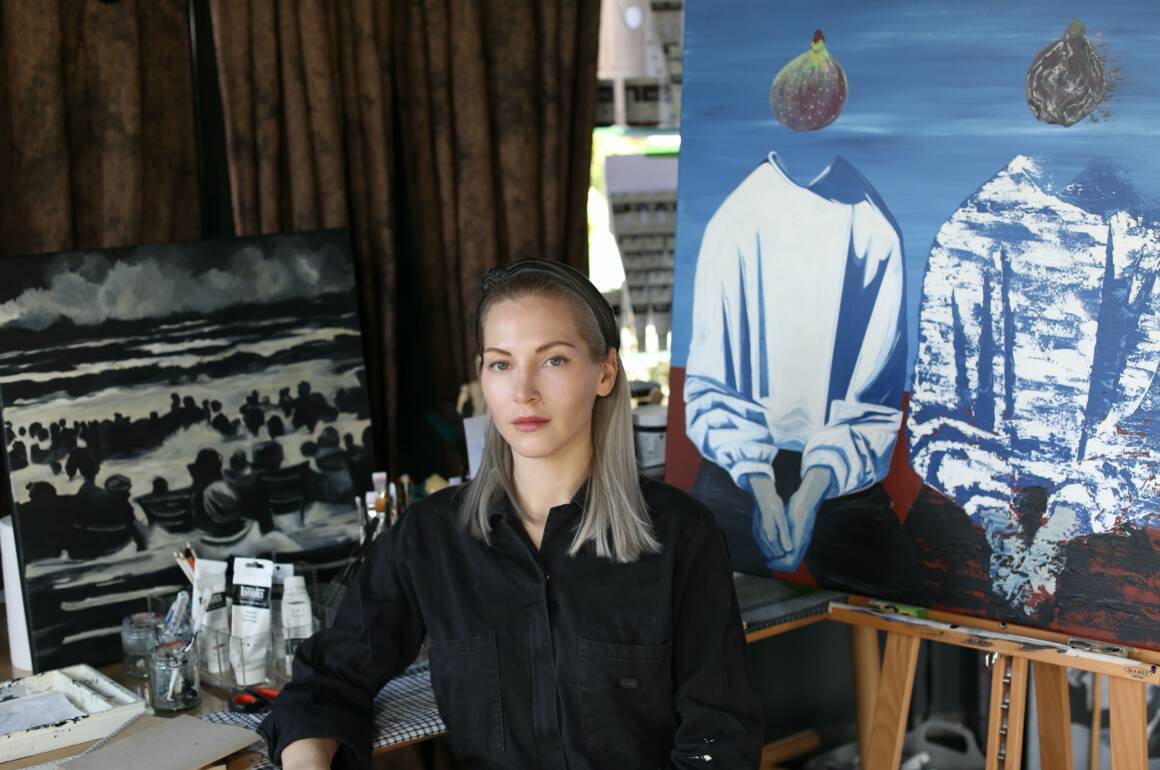
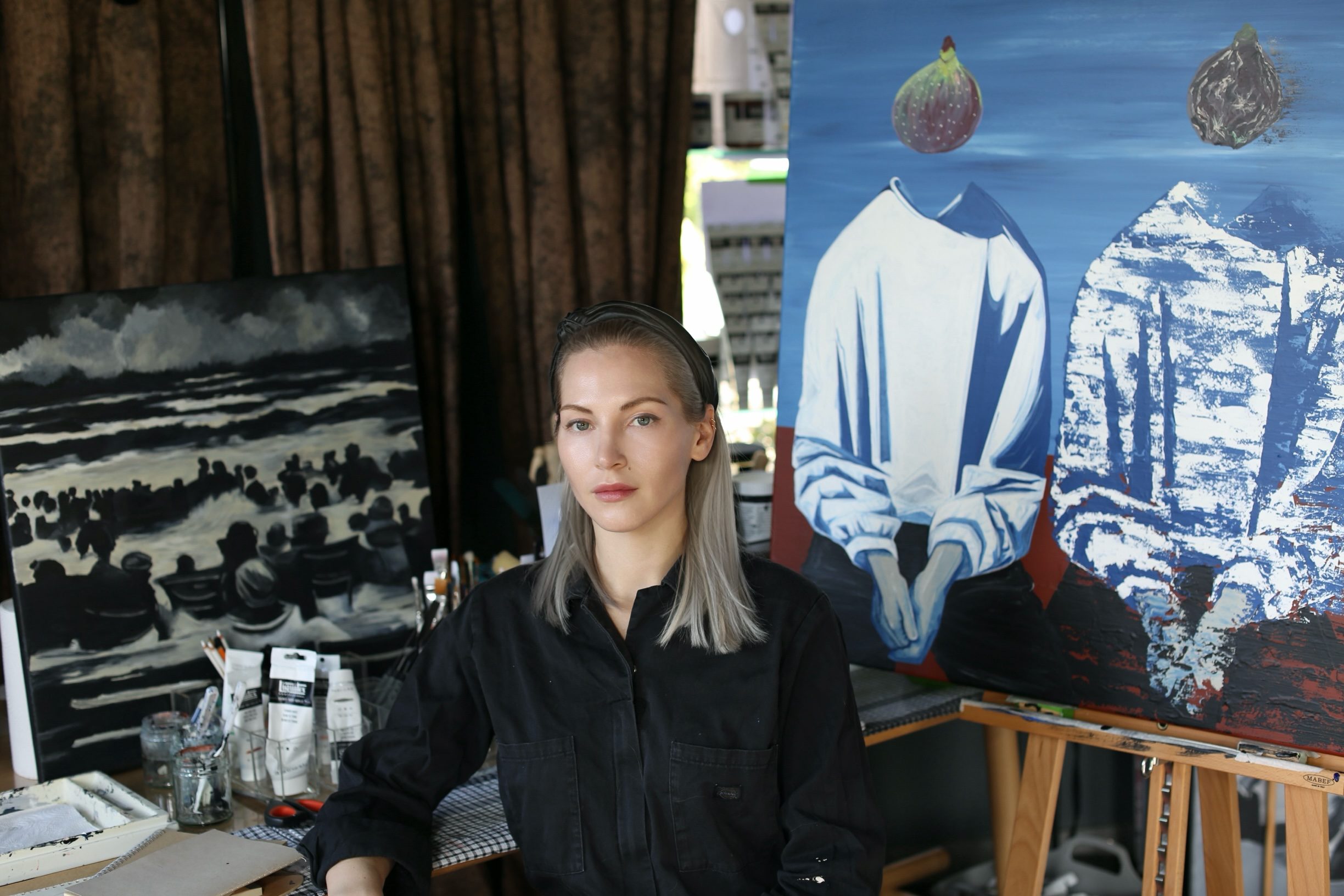
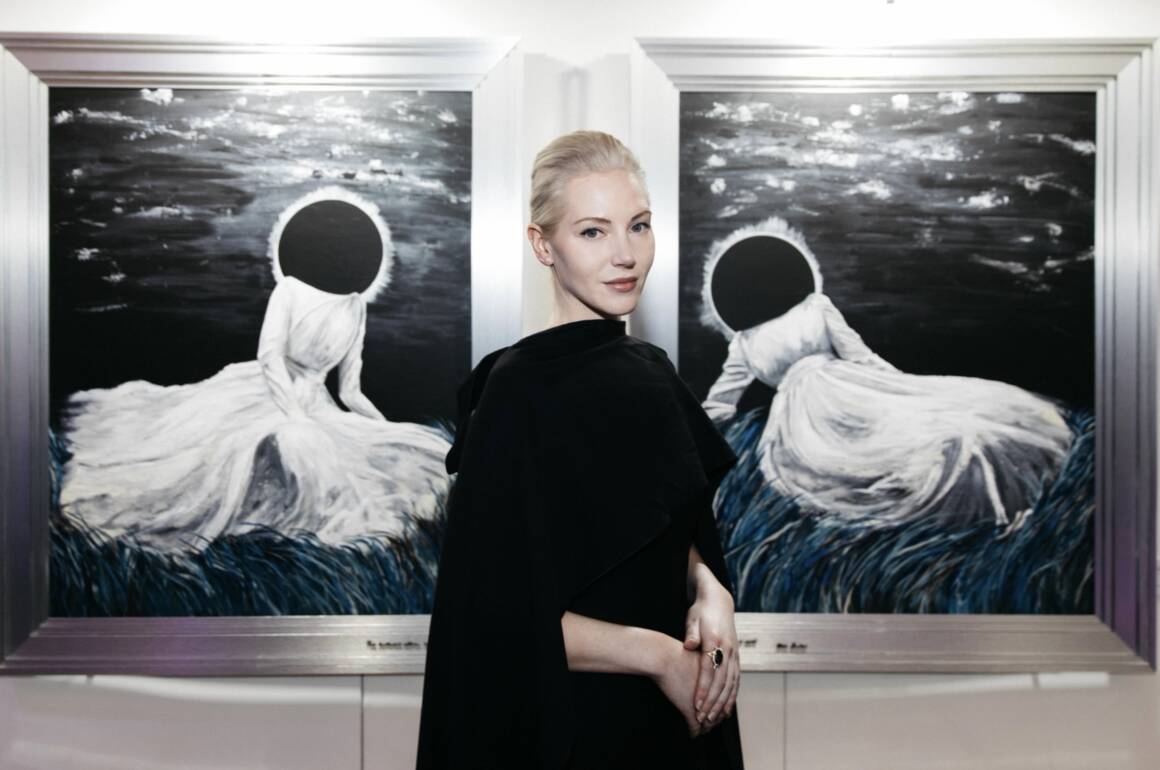
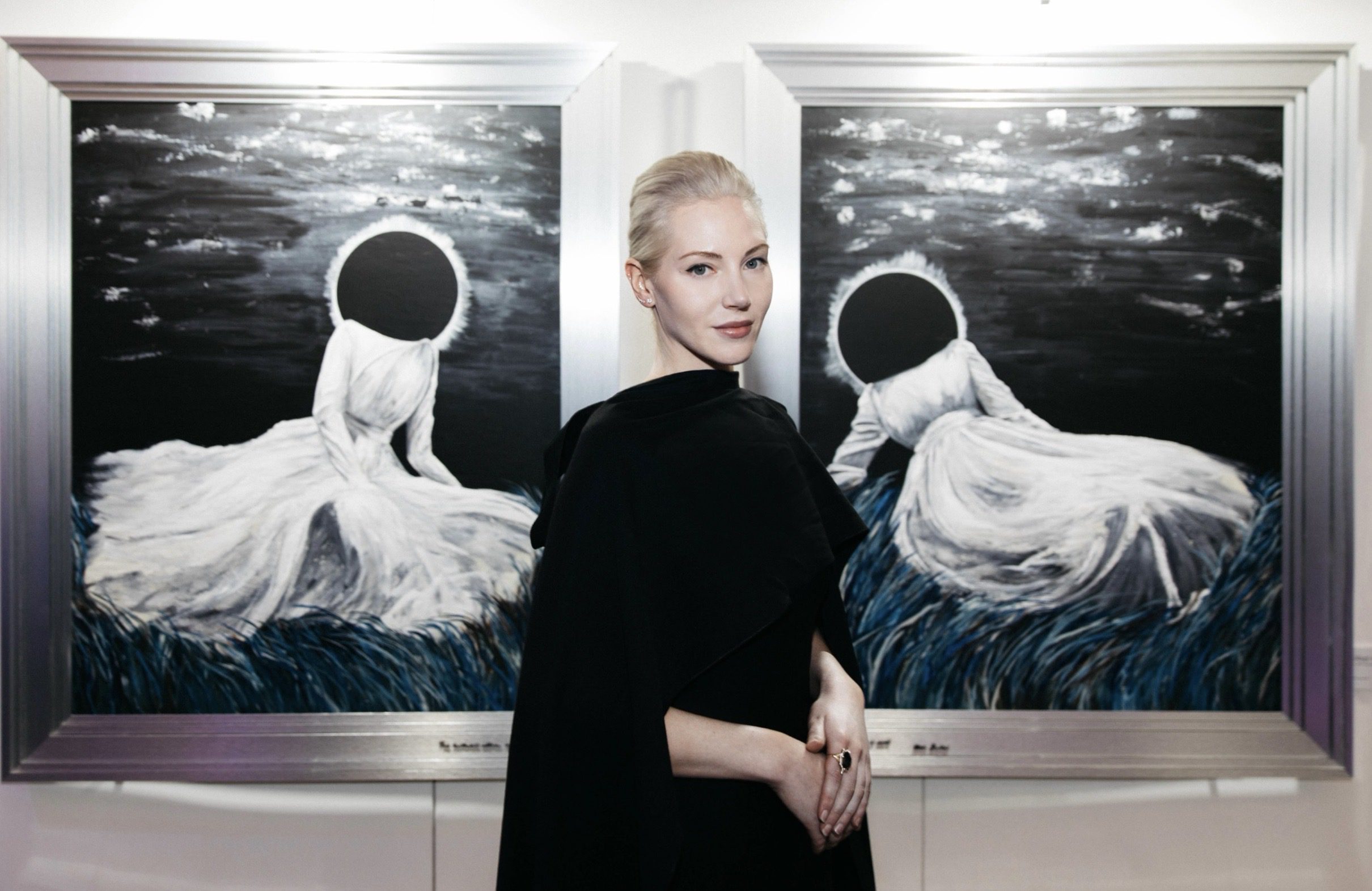
Arch Hades, London, March 2026, by Maryam Eisler
Arch Hades’ multidisciplinary practice oscillates between poetry, painting and text-based installation, shaped by existential philosophy and an unflinching engagement with the human condition. She speaks to Catherine Loewe about grief, gender, power and the inspiration behind her most monumental work, unveiled during this year’s Venice Biennale, accompanied by portraits by Maryam Eisler
Catherine Loewe: Your route into the arts was unconventional: you had an earlier career in politics, then published six volumes of poetry. How did the transition into visual art occur?
Follow LUX on Instagram: @luxthemagazine
Arch Hades: It began with failure. I took Art at GCSE, but when a teacher lost my coursework I was downgraded to a grade B. At my academically competitive school, I was told not to bother doing Art for A level or applying to art school, so I didn’t. I did, however, excel in Politics. I took a year out before university to work in Parliament and continued throughout my degree. I didn’t even attend my graduation – I didn’t want to take the day off. I was locked in for years, until I grew disillusioned and decided it was time to try and do something creative. Turns out politics is not that different from the arts. Politics is competitive storytelling.
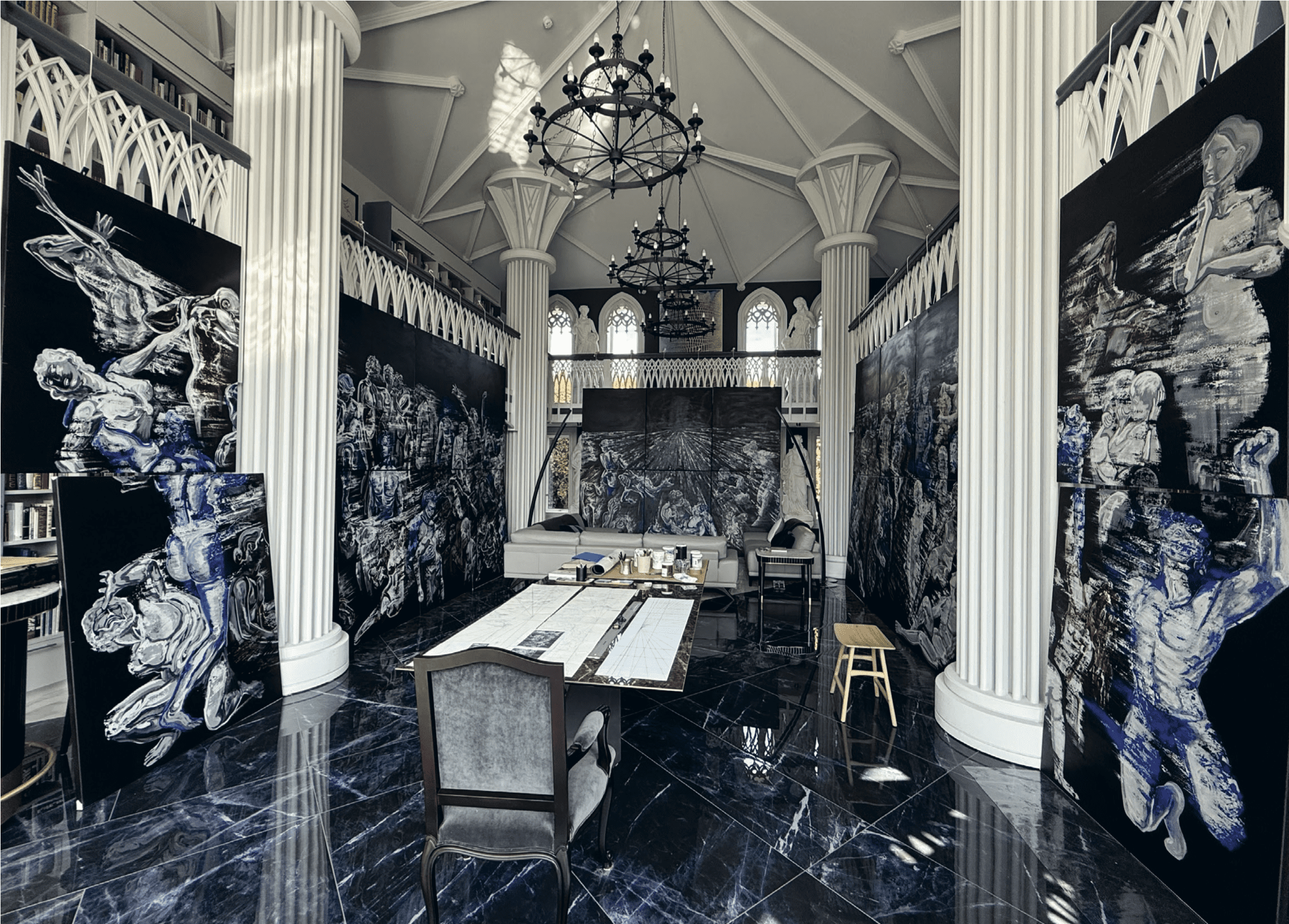
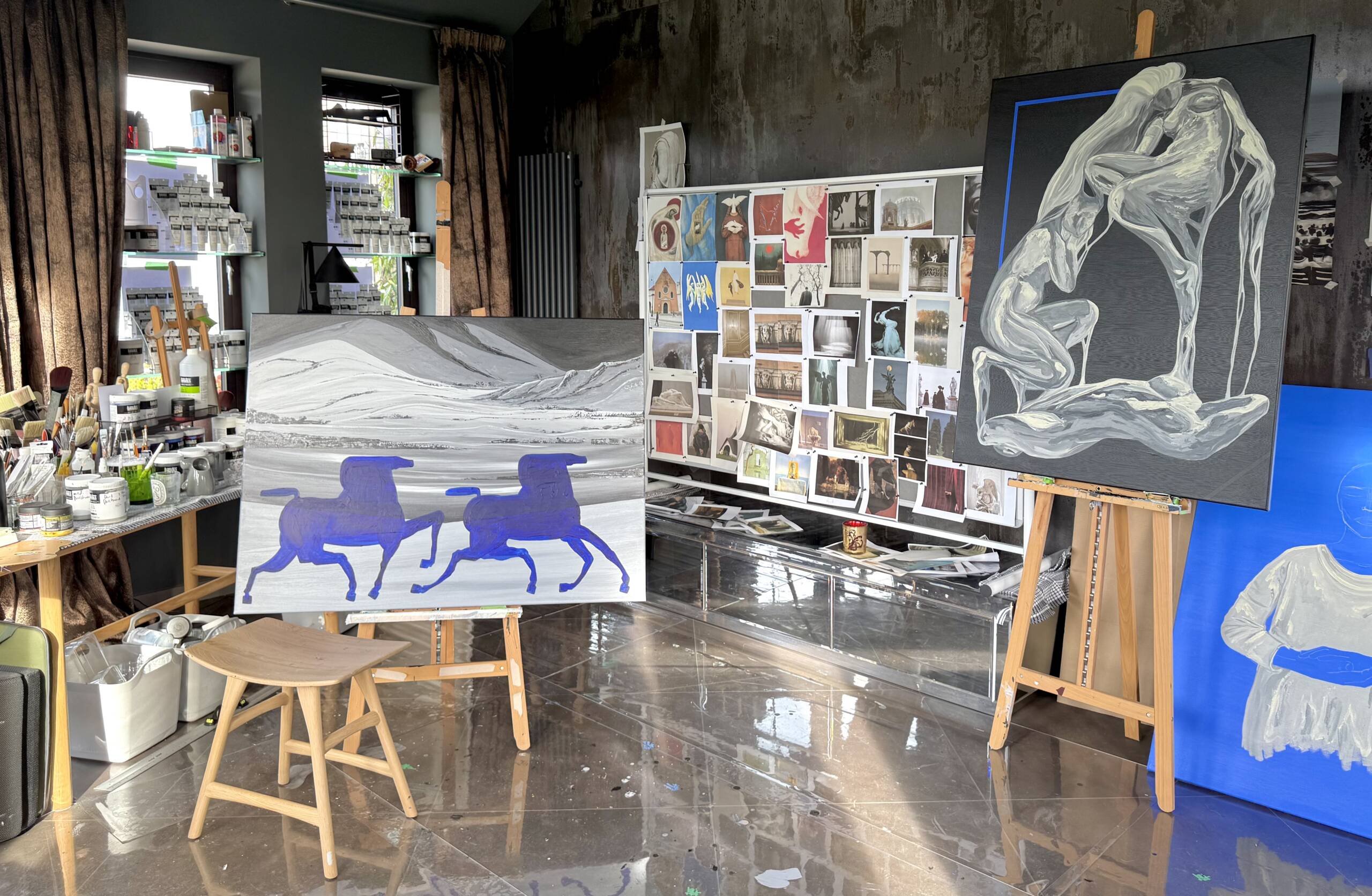
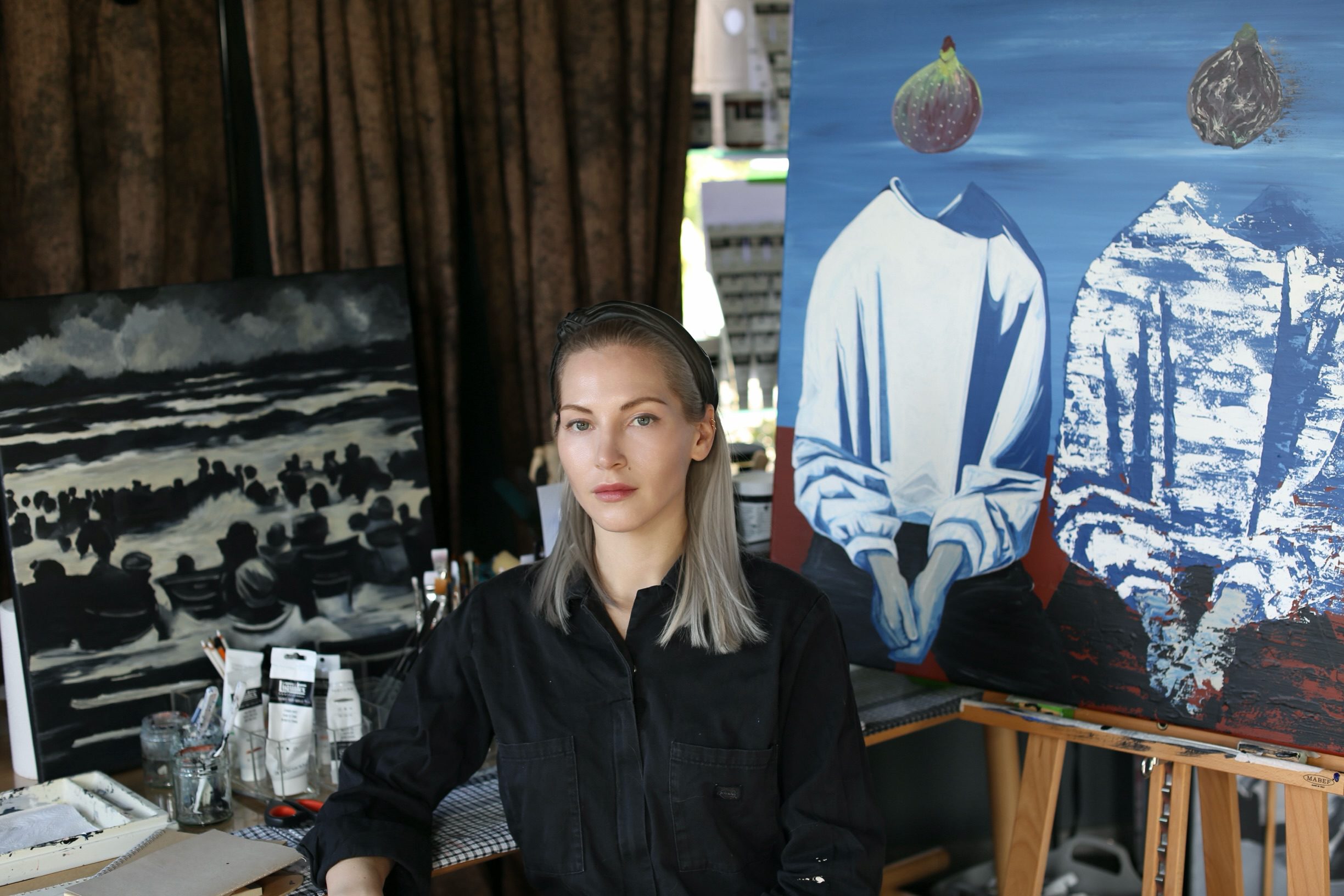
A studio view of Return, 2025, by Arch Hades
The pivotal moment came when my fourth book Arcadia was illustrated and sold as a digital film at Christie’s for a tidy sum and I was able to set up a home studio. The reward for making art is you get to make more art. I spent the pandemic writing books and re-training as a painter. I was 30 by the time I picked up a paintbrush since my B at GCSE. It’s been a journey.
CL: How has your time in the political sphere impacted your practice? Are you engaged in gender politics?
AH: Oh boy, my whole life is gender politics. Making art as a woman is inherently political because it represents a rejection of the traditional life of silent service, even if the work itself isn’t explicitly political. Some of my poetry does address politics directly – particularly 21st Century Human, which includes a section titled 21st Century Woman on emotional labour and gender expectations.
My visual practice is rooted in existentialism, which I see as a political philosophy. Existentialism insists on responsibility without divine authority: meaning must be made, not received. Historically, as women, we have come so far – once we couldn’t vote, open bank accounts or wear trousers, and that exclusion was normalised. Progress depends on better choices and accountability. I want to see powerful men being held responsible for their actions. There is more to hope and fight for.
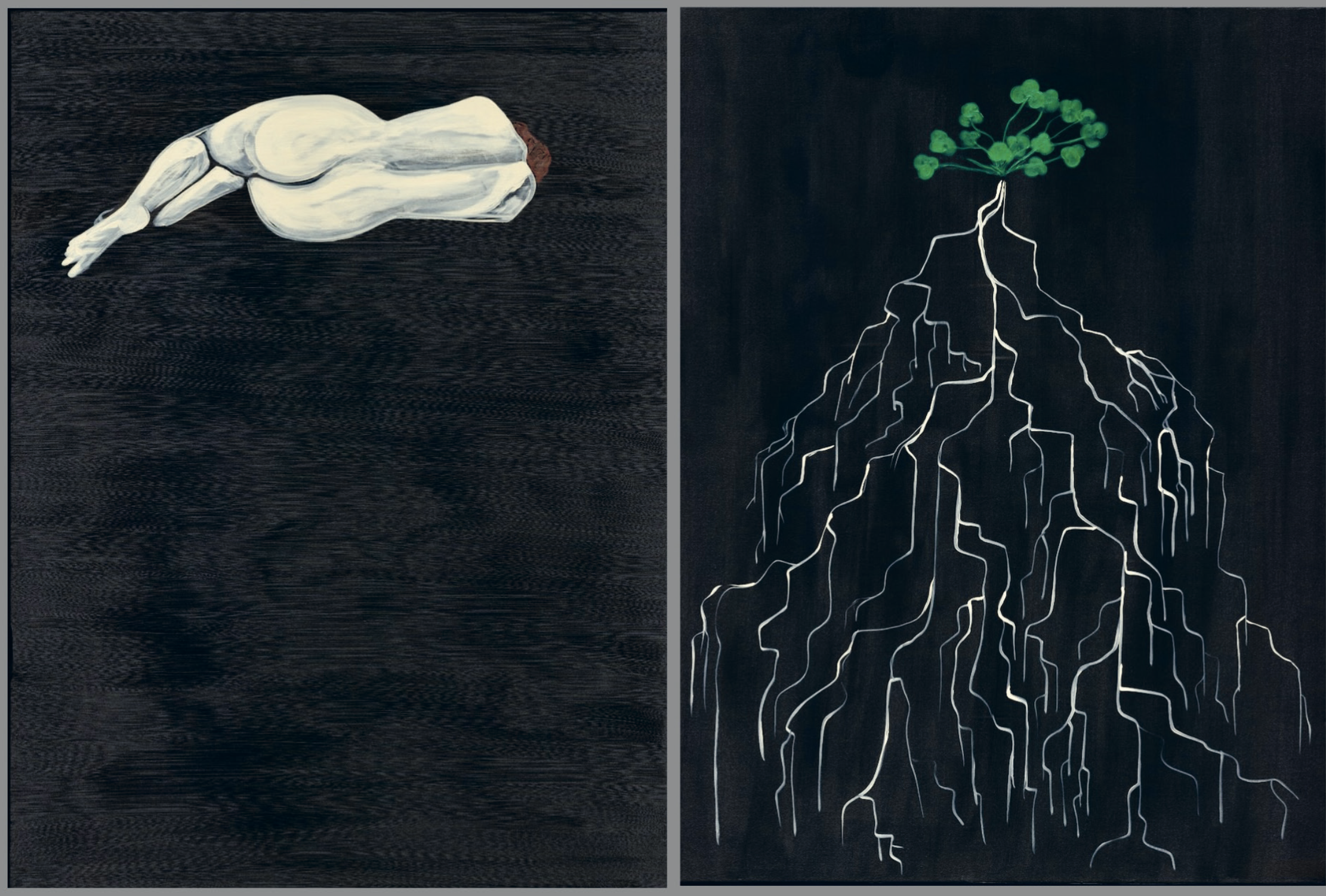
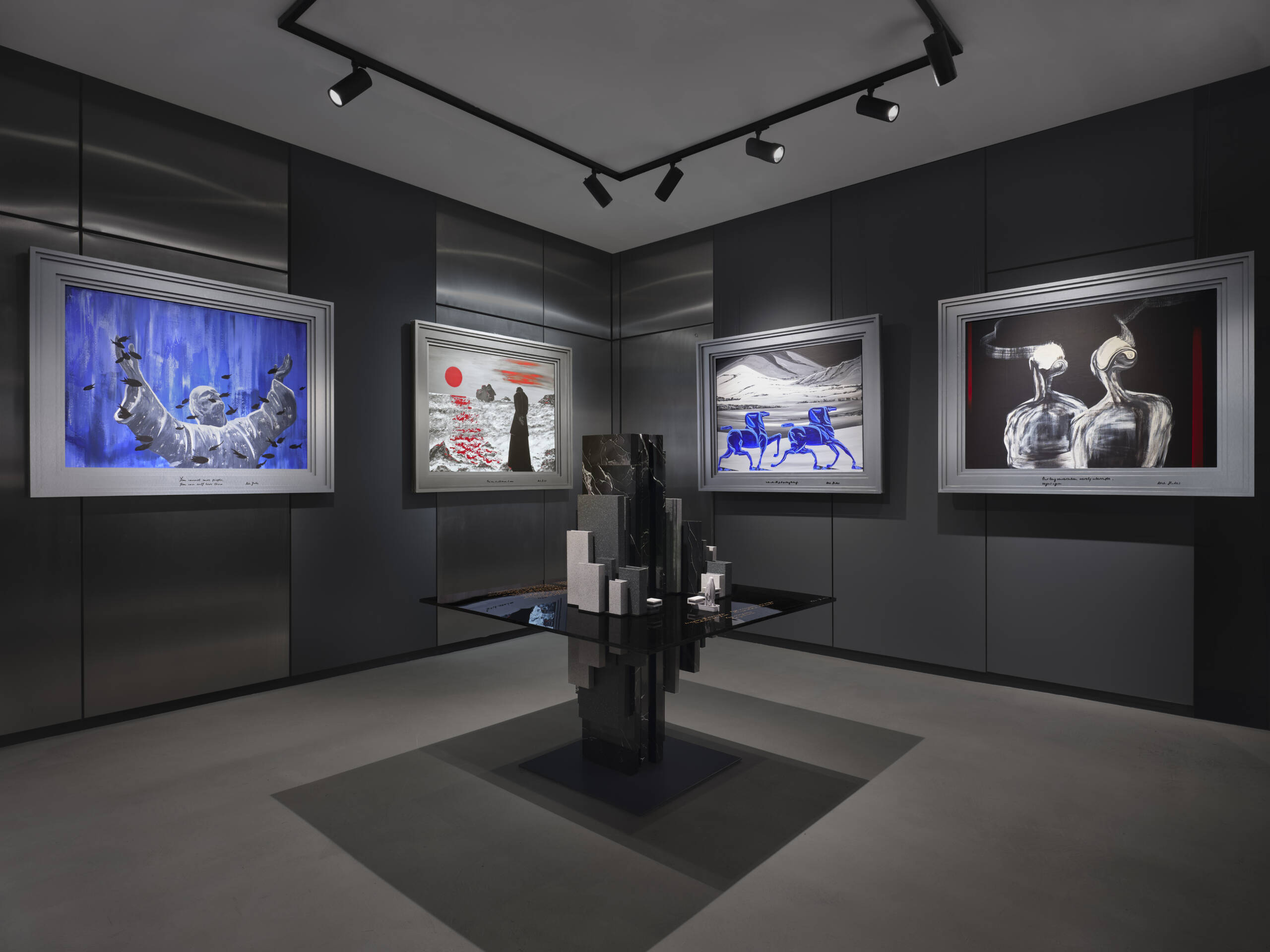
Roots, 2025, by Arch Hades
CL: What are your defining moments?
AH: Experiencing loss and grief at an early age. Once death enters your life, it never fully leaves. It’s impossible to explain human cruelty to a child. After profound loss washes over you, all beauty becomes marked by tragedy – by its inevitable impermanence and the knowledge that none of this is ours, we are only permitted to enjoy it for a while. There is a glory in that. It’s a privilege to love what death does not touch.
Read more: Arch Hades’ Return at the Venice Biennale
CL: What do you look for in an extraordinary work of art?
AH: The mysterious and the inexplicable: I’m drawn to works I cannot fully rationalise, those I return to again and again. One of my favourite paintings is Cow Beside a Ditch by Willem Maris. There is nothing ostensibly remarkable about it, yet it feels as though it was painted specifically for me. Donna Tartt describes this sensation perfectly in The Goldfinch as “the nail where your fate is liable to catch and snag”.
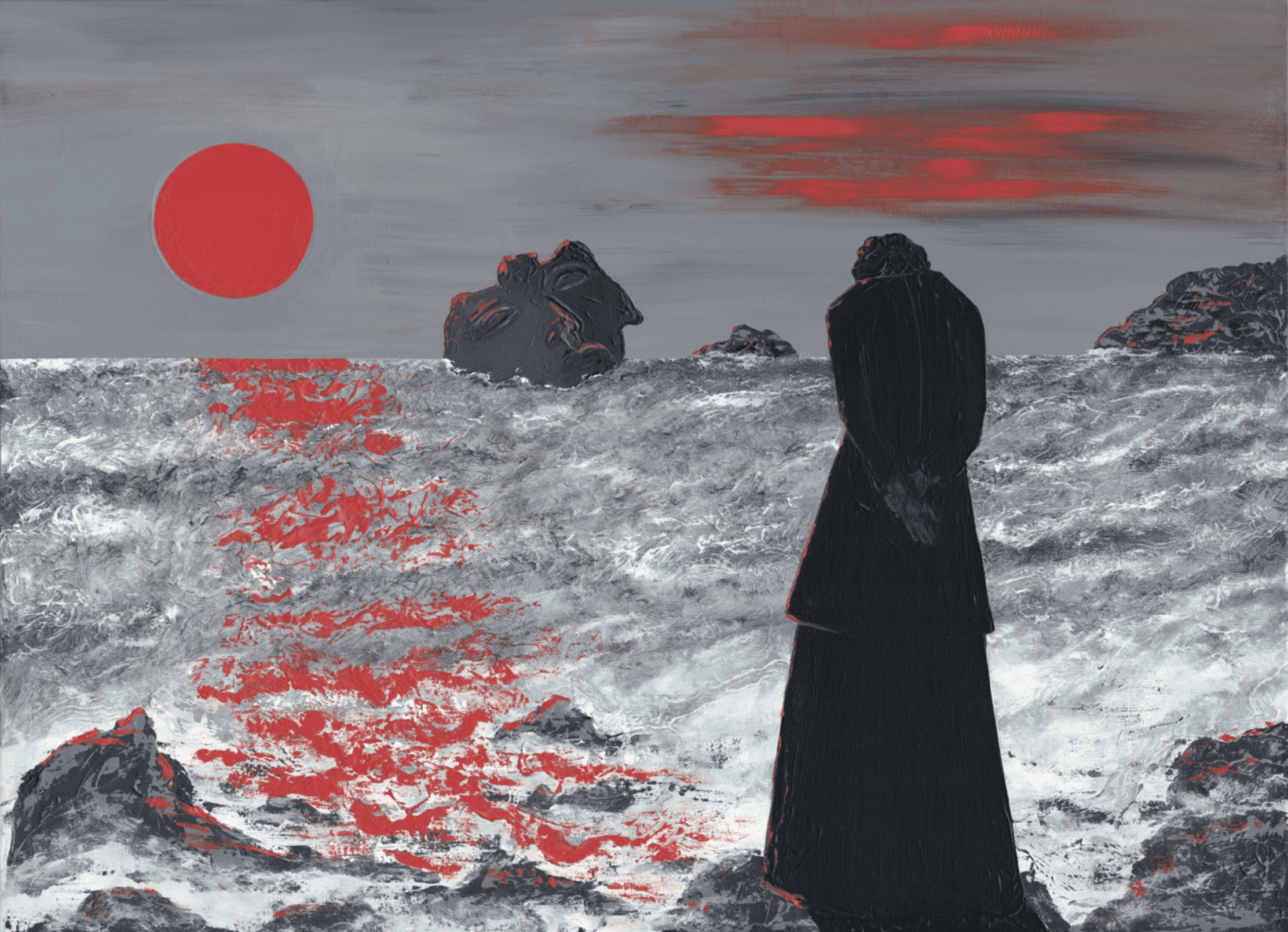
The Sea, The Sea, 2025, by Arch Hades
CL: Which artists have shaped your visual language?
AH: The list is ever growing, but I always return to René Magritte, Franz Sedlacek, Andrew Wyeth, Tamara de Lempicka and Francis Bacon – artists who balance precision with unease and return insistently to the human condition.
CL: Who are your favourite poets, living and dead?
AH: Byron, Rainer Maria Rilke, Mary Oliver, WH Auden, Carol Ann Duffy, Joseph Brodsky and Pablo Neruda.
CL: What is your current obsession?
AH: Byzantine iconography. It’s supremely stylised and unapologetically confident: elongated forms, flattened space, strict geometry, repetition of symbols and often bizarre human expressions. In my new series I replace human saints with scenes of nature – a not-so-subtle nod to what we should really be worshipping.
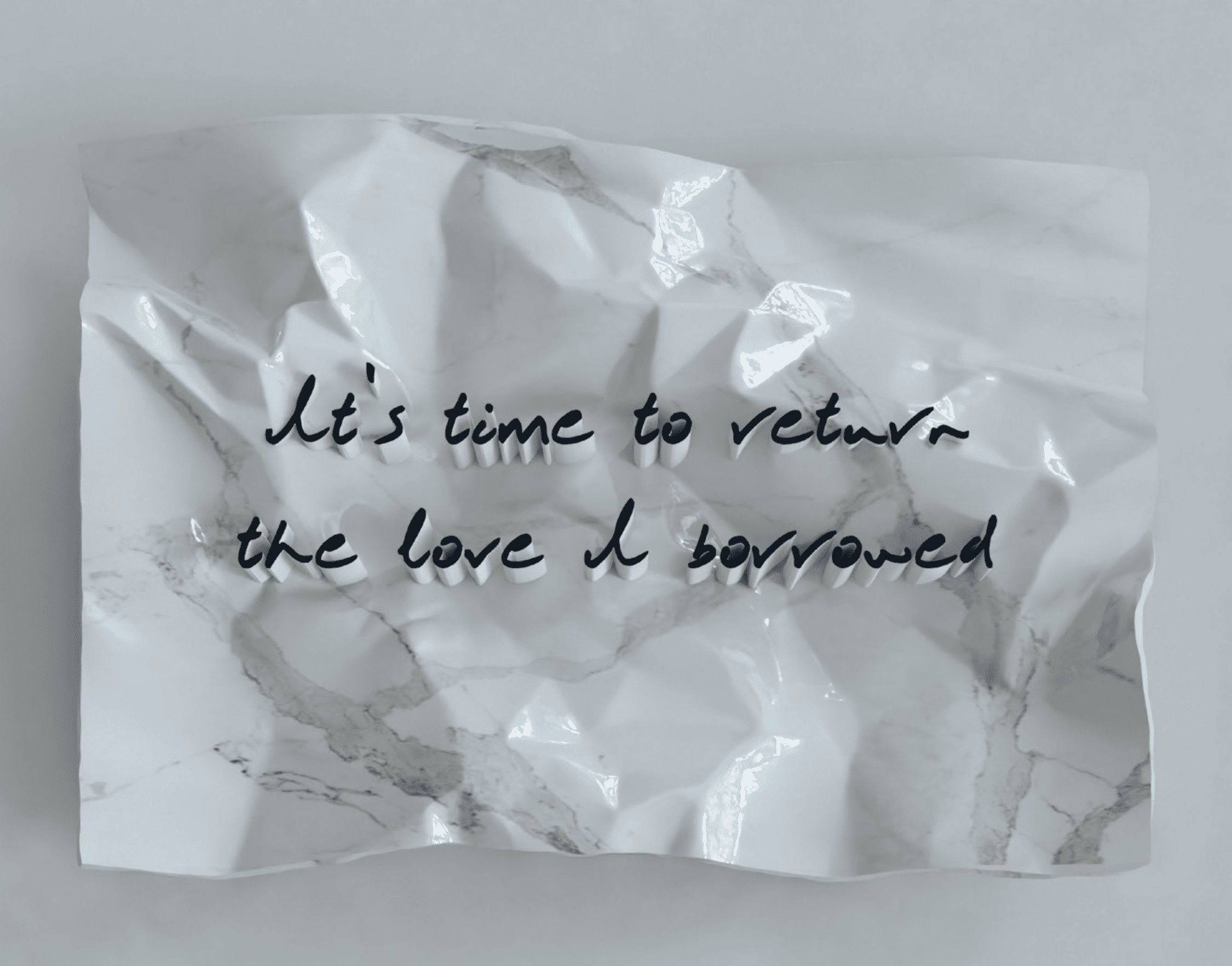
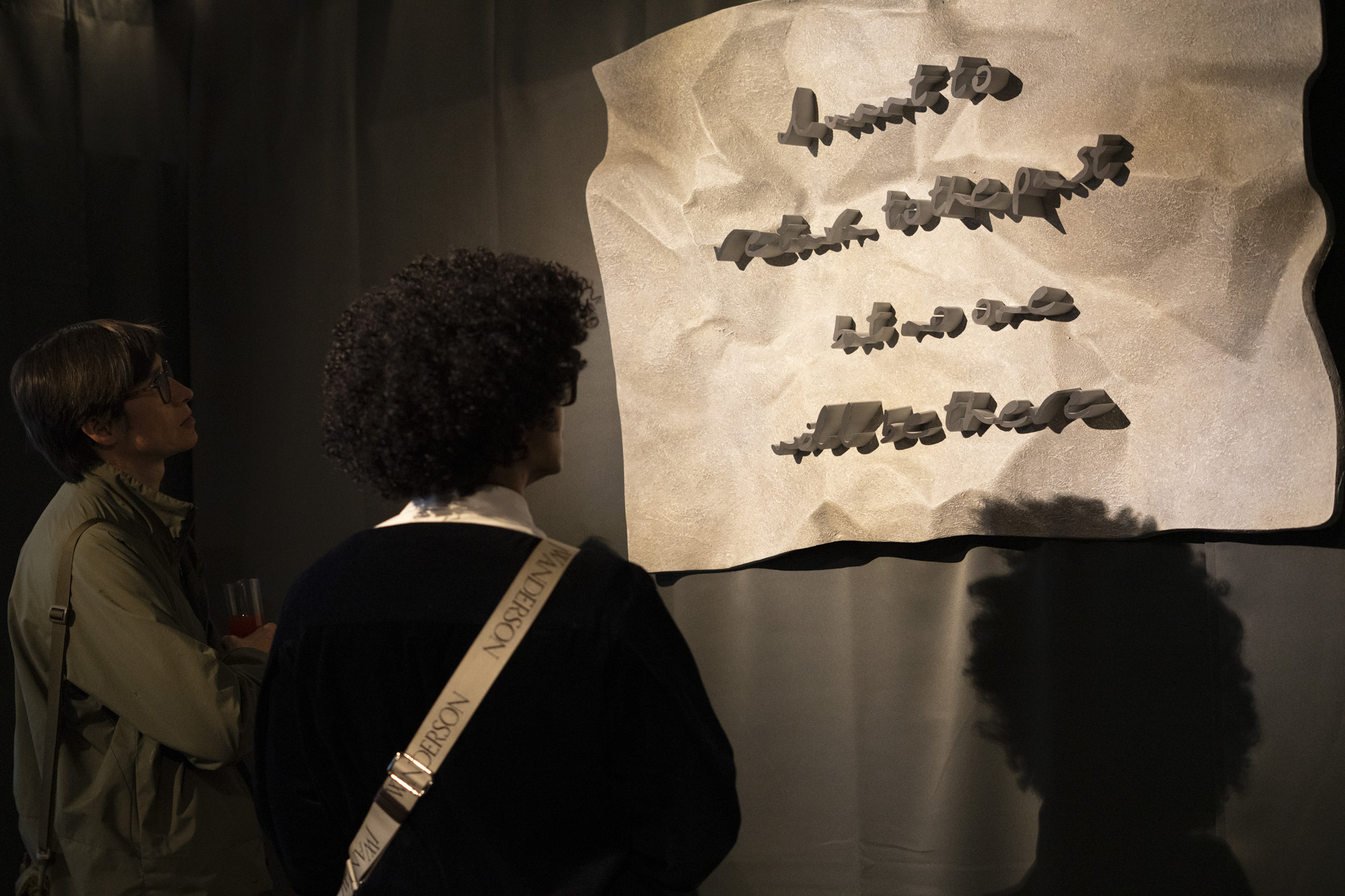
It’s time to return the love I borrowed, Confessions series, 2025, by Arch Hades
CL: Can you describe your working process?
AH: I begin at the end. Whether writing or painting, I visualise the final state before I start. In poetry, I often write the last line first. I first need to articulate to myself what I want the viewer or reader to feel, then visualise the final composition, textures and rhythm before executing the steps. I’m not spontaneous or carefree, I’m a planner.
CL: How do you think about colour?
Read more: Marcantonio Brandolini d’Adda’s art manifesto
AH: I love the drama of monochrome and draw great inspiration from filmmakers like Tarkovsky and Fritz Lang.
Too many colours overstimulate me – orange in particular makes my skin itch. I haven’t worn anything but black for years. Sergei Parajanov’s The Colour of Pomegranates demonstrates how restrained colour, glazed against near-monochrome scenes, can be devastatingly effective. In my own work, I typically introduce only two colours – ultramarine blue-green and alizarin crimson – to pull the eye toward the central subjects of the composition.
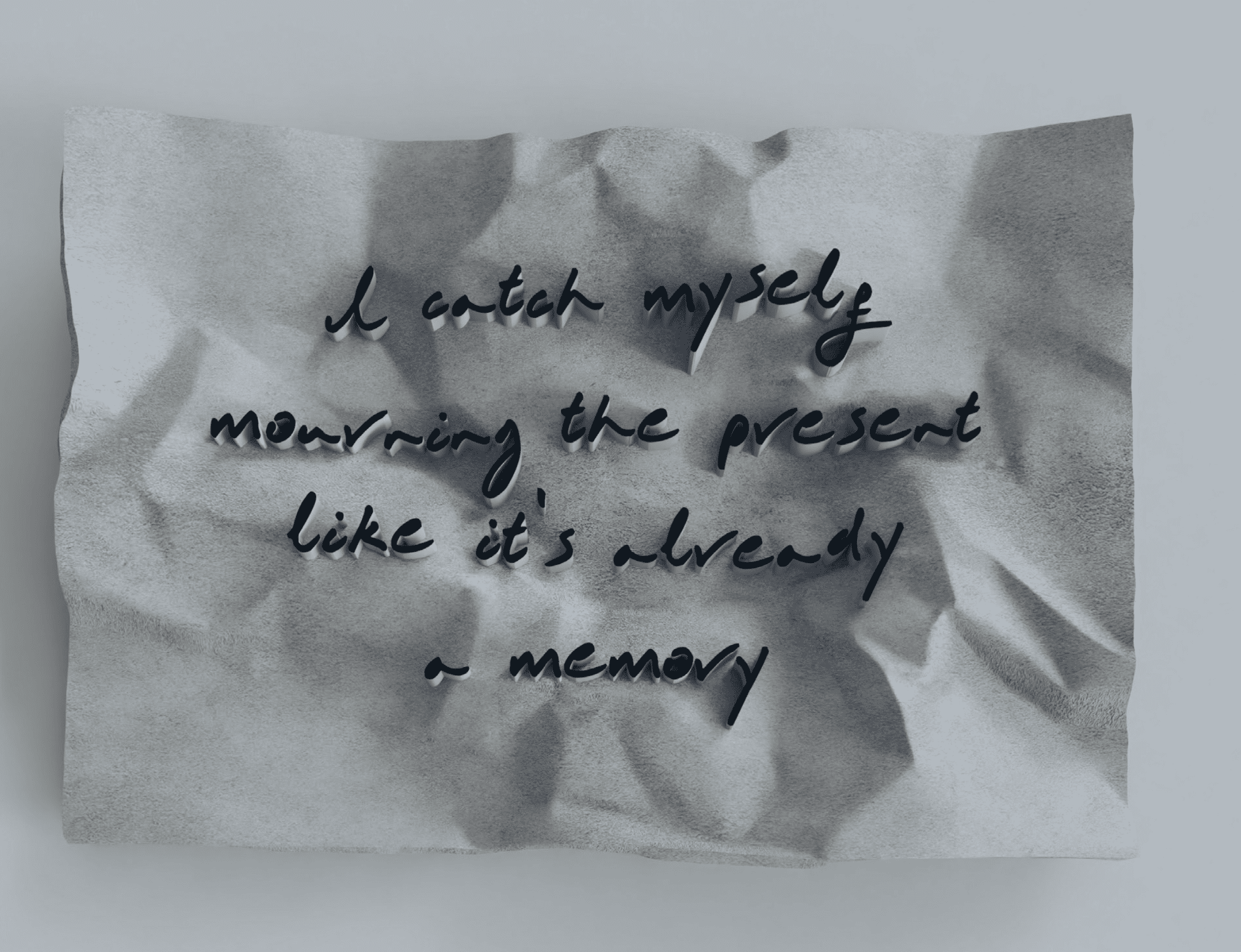
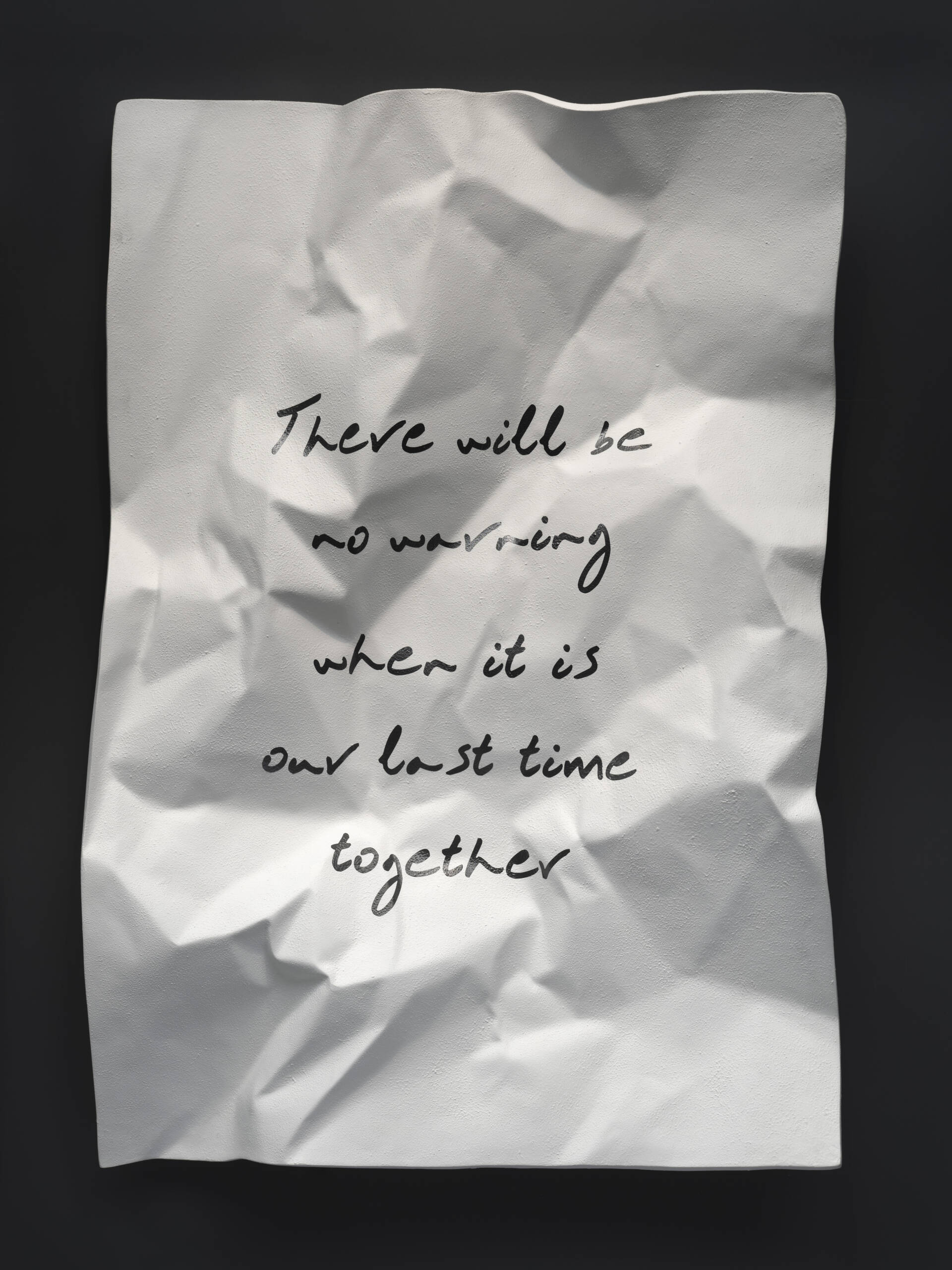
I catch myself mourning the present like it’s already a memory, Confessions series, 2025, by Arch Hades
CL: Tell us about Return (2025), the centrepiece of your upcoming Venice exhibition.
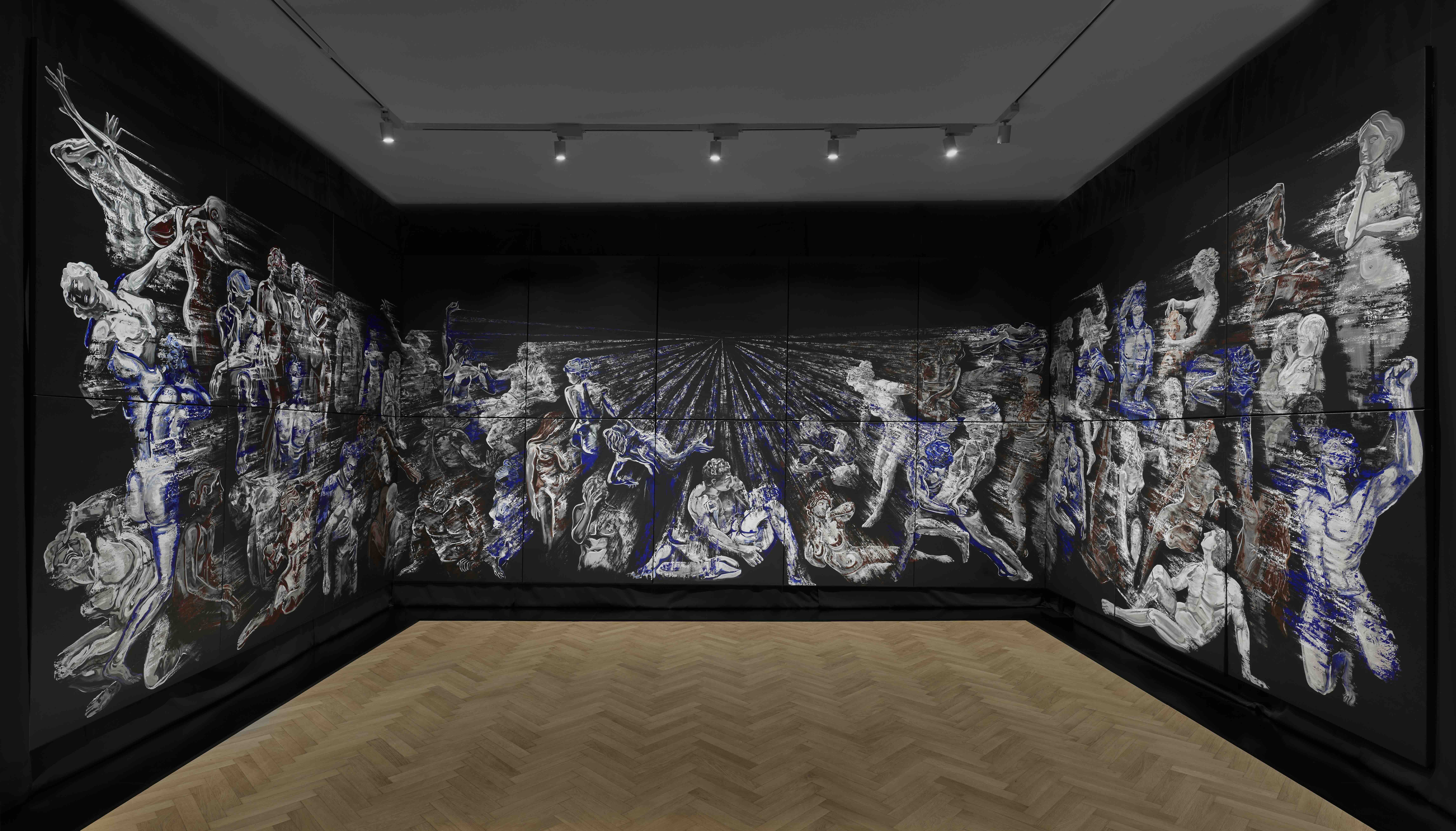
AH: Return is a 13-metre-wide, 22-panel painting composed of 63 life-size nude figures, installed across three walls, like an altar triptych. It’s the largest scale project I’ve undertaken and a huge honour to be invited by the Erarta Foundation to show in a beautiful decommissioned church on the Grand Canal.
The work draws inspiration from Gustav Klimt’s lost Faculty Paintings, particularly his vision of bodies drifting through a symbolic river of life. My figures echo Greco-Roman sculpture: they flow, merge and ultimately dissolve into a black abyss at the centre, tracing the full spectrum of human emotion – grief, fear, desire, tenderness. Some are tributes to family and friends; others reference art history – the Three Graces, or Bernini’s Rape of Proserpina in the Galleria Borghese.
Klimt’s Faculty Paintings have a tragic history. Commissioned in 1894 for the Great Hall of the University of Vienna, the panels – on Medicine, Philosophy and Jurisprudence – were destroyed when retreating German SS forces set fire to the building. Only preparatory sketches and photographs remain. That sense of loss, of cultural memory erased feels profoundly relevant.
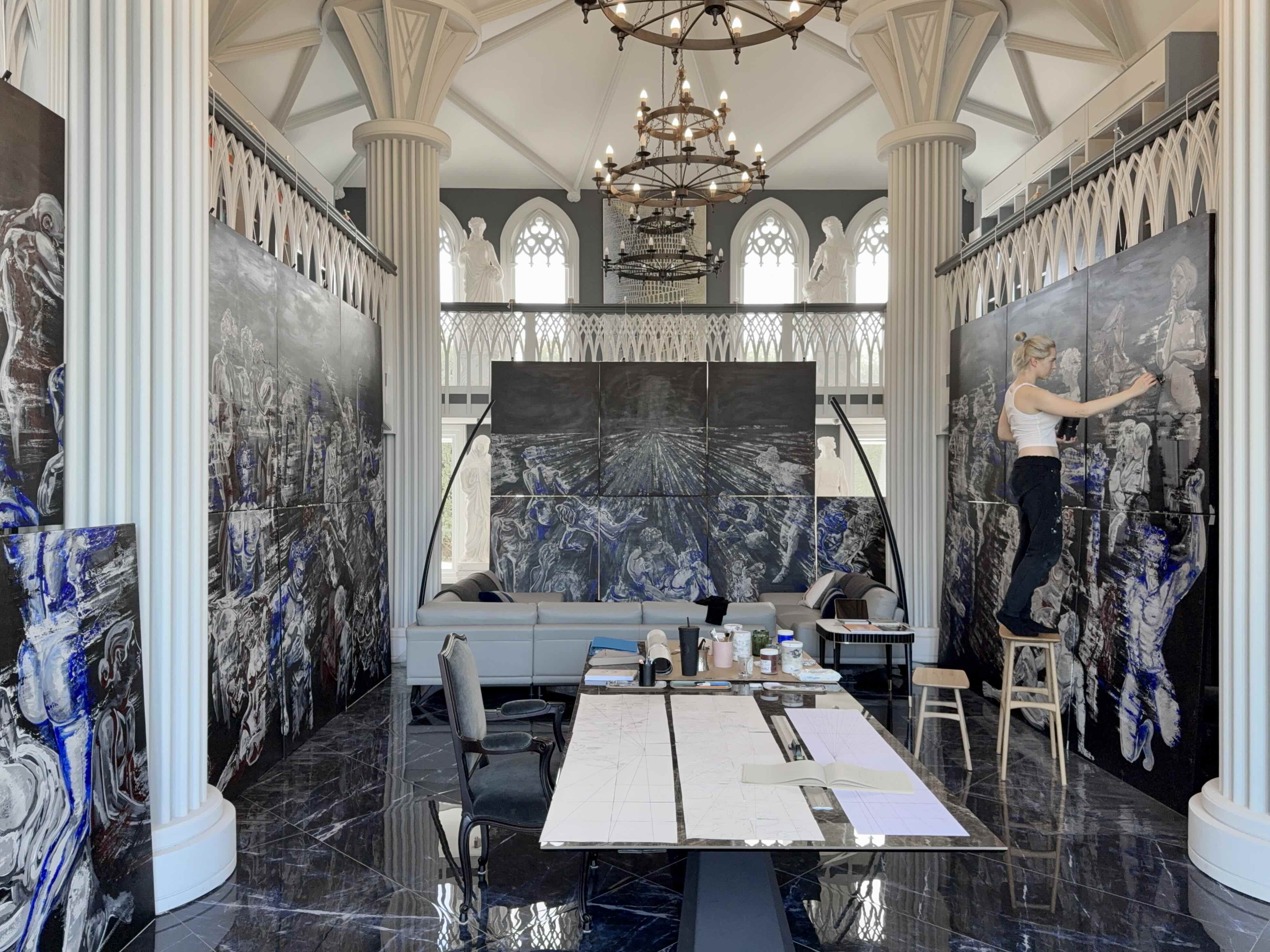
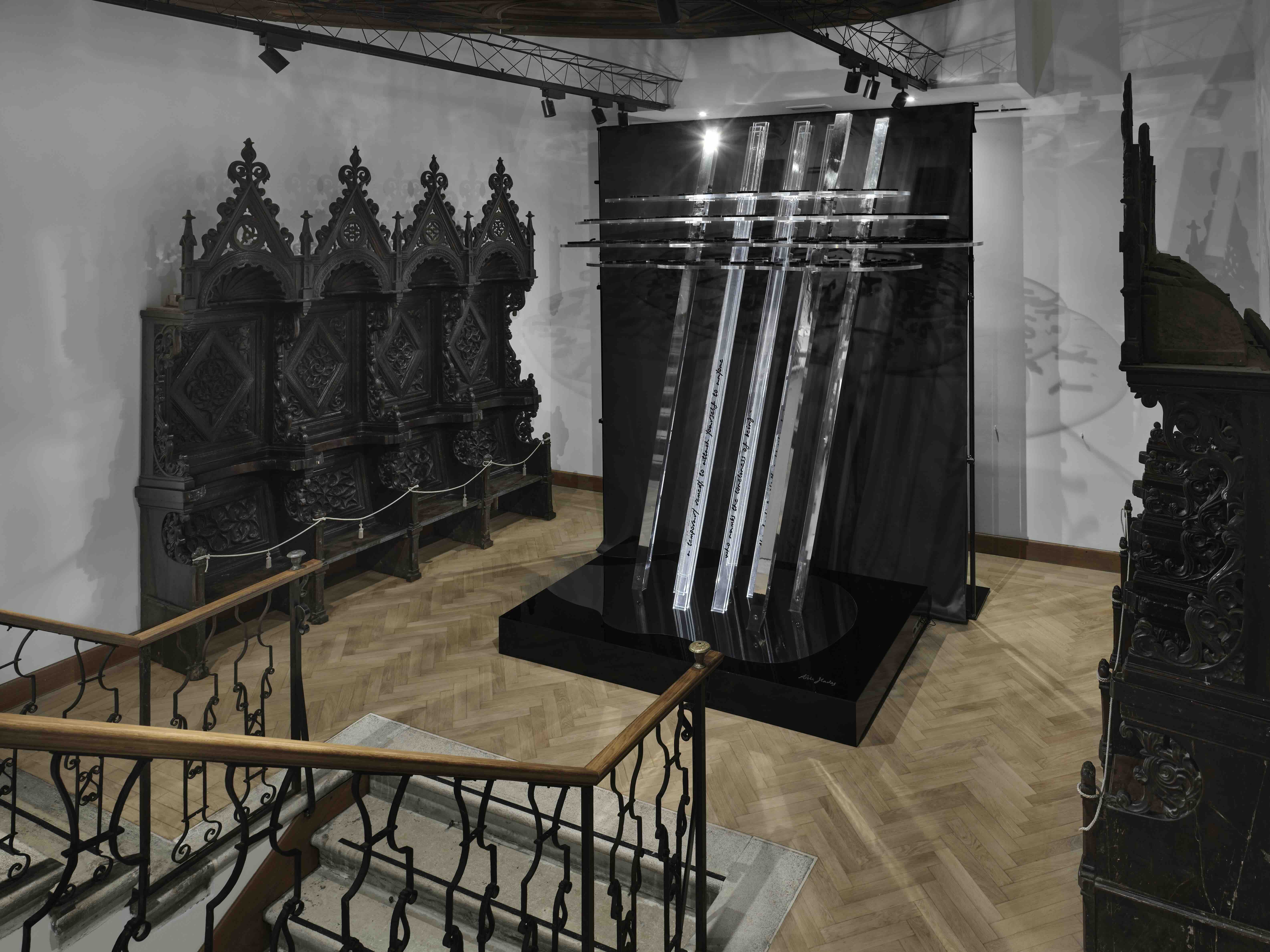
Return | Ritorno unfolds across three floors of the Scoletta Battioro e Tiraoro di Venezia, a decommissioned church on the Grand Canal in Venice. Photograph by Eva Herzog
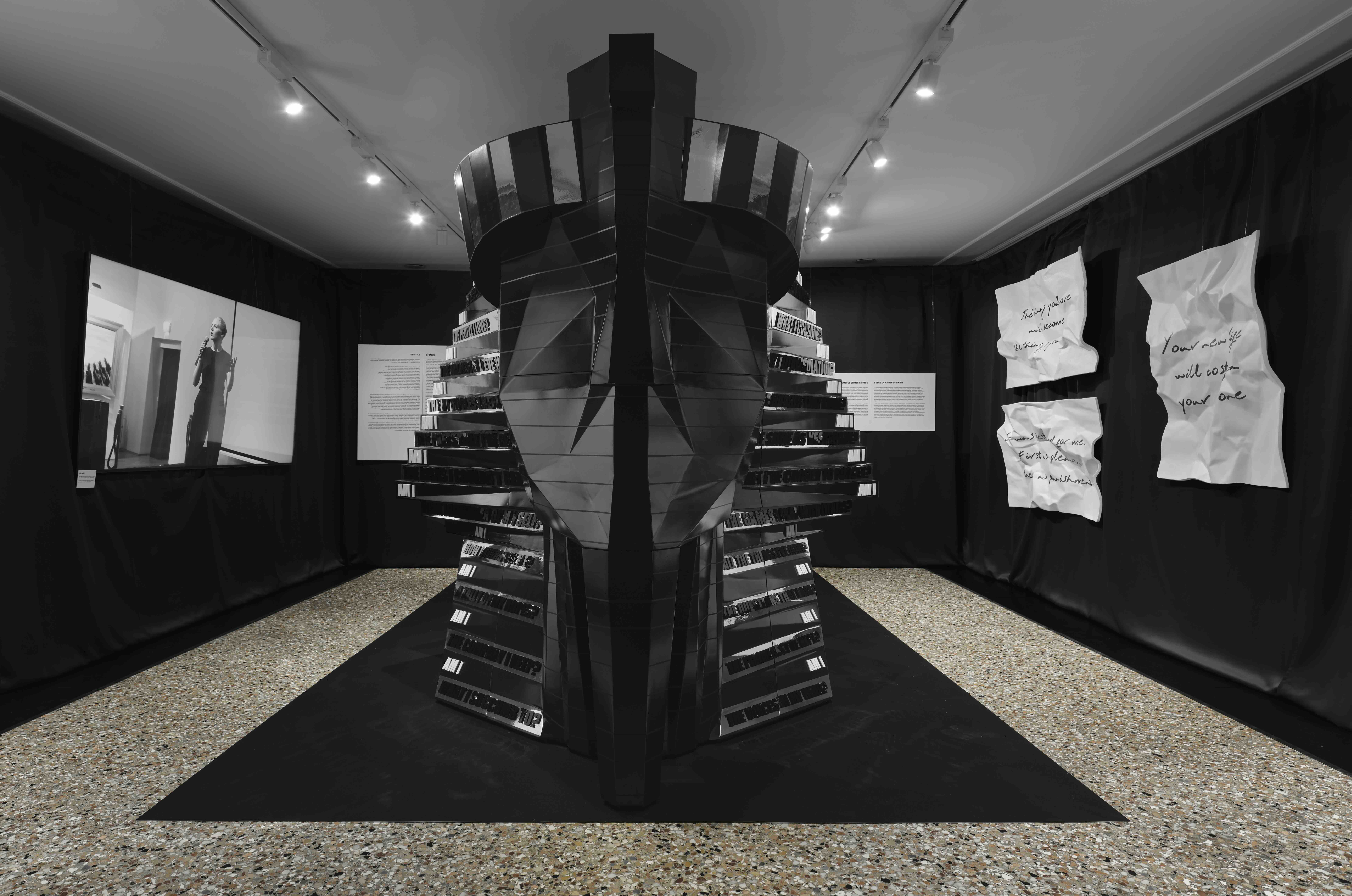
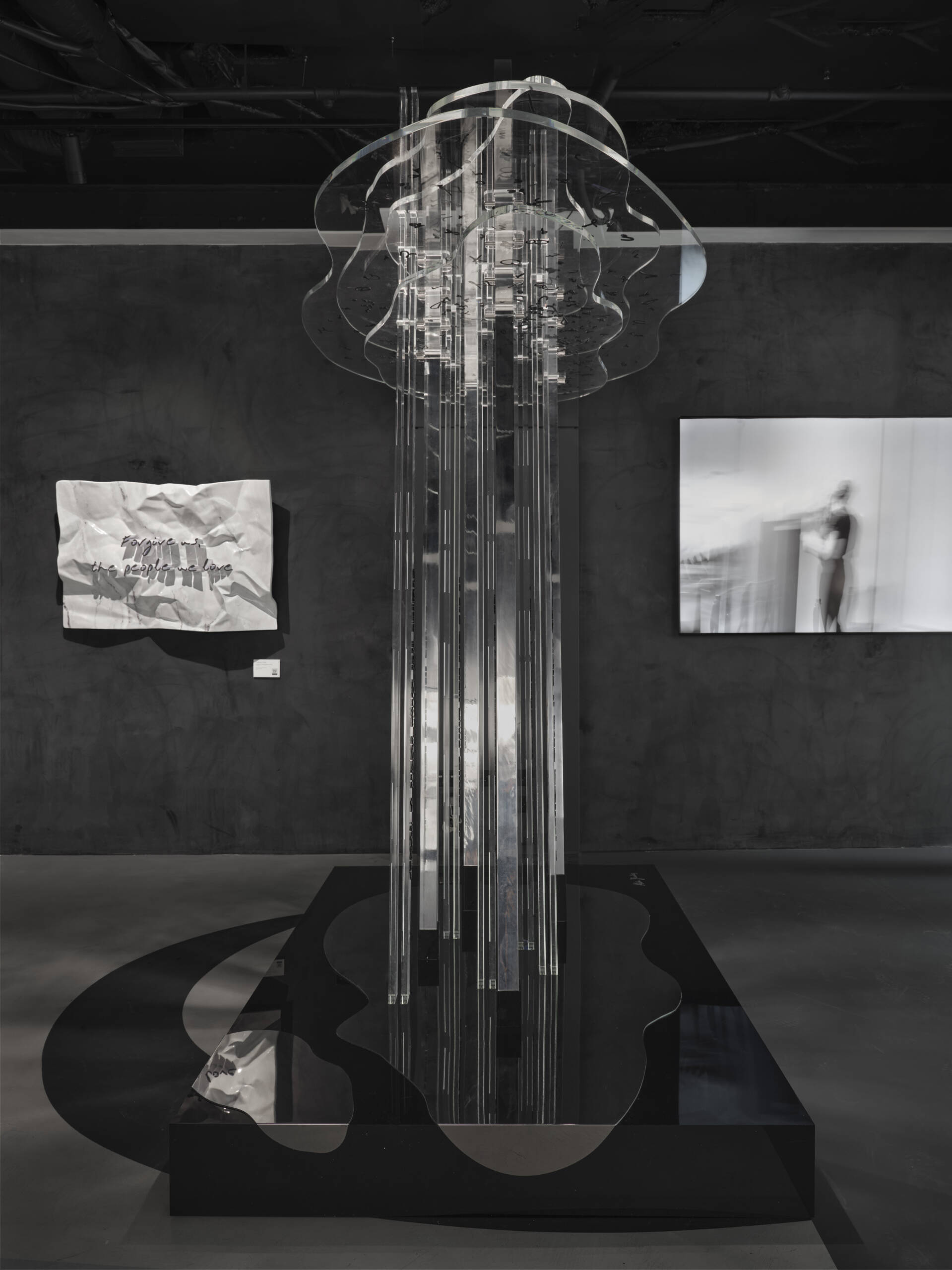
CL: You’re also presenting Sphinx, an interactive sculpture that integrates visual art and poetry.
AH: Every sculpture begins with a poem. I look for ways to materialise language as a physical object, using acrylic polymer and mirrors to explore reflection, transparency and opacity. Debuting Sphinx in Venice feels fitting. I loved the riddle as a child, the idea of the self as a traveller passing through time. That question – the nature of being human – runs through everything I do. We labour in webs spun long before we were born, but we can still shape our fate.
Read more: Jennifer Shorto’s highlights of the Cora Sheibani collection
My optimism comes from lived experience. My mother took us out of a totalitarian environment and into this dream of democracy, where individual choices matter. It is not hopeless or useless.
CL: Text continues to play a central role in your practice. Can you tell us more?
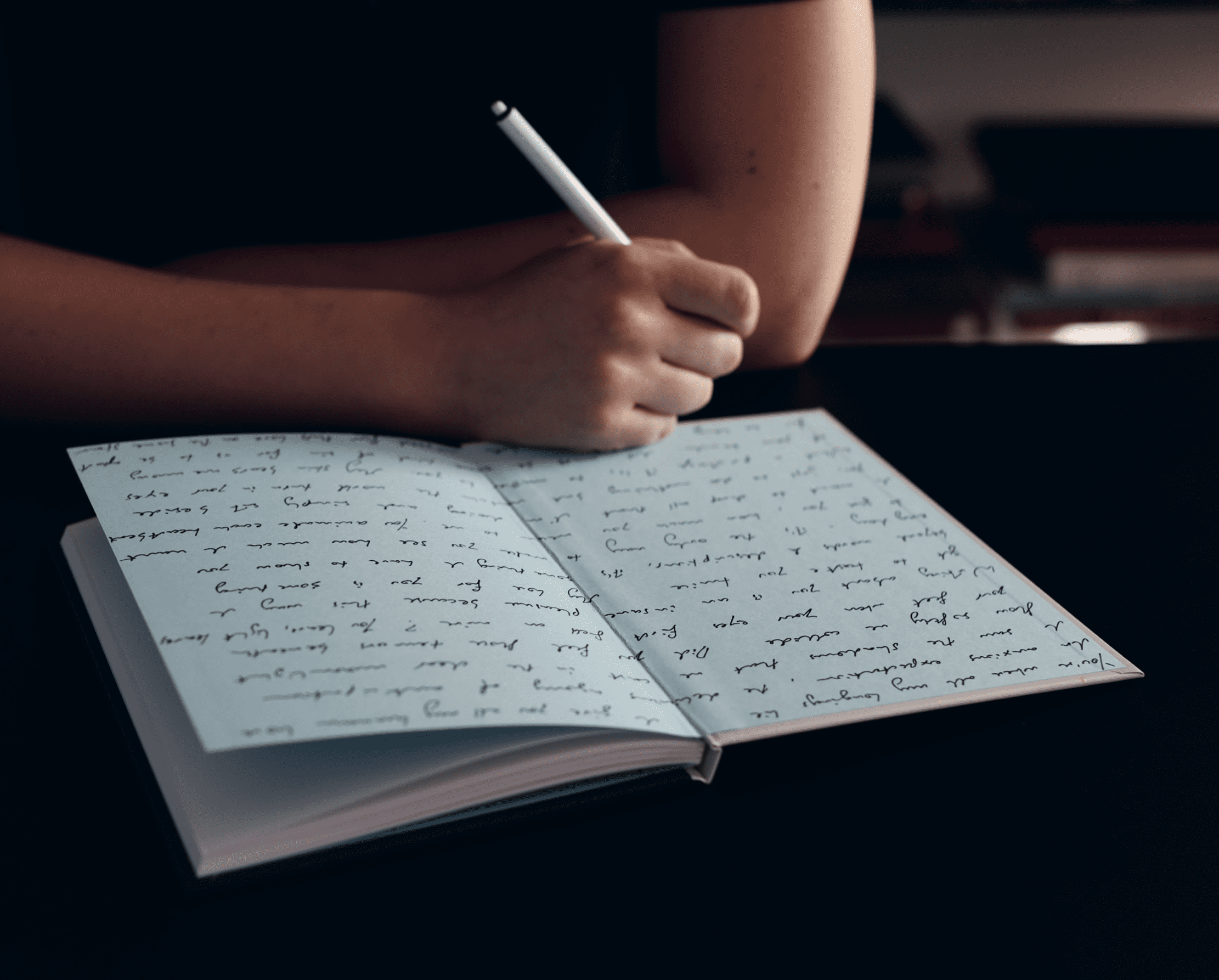
AH: Writing has always sought permanence – from The Epic of Gilgamesh onward. Poetry demands vulnerability, and connection demands authenticity. My Confessions series, which will also be included in the Venice show, draws on decades of journalling. I enlarge handwritten diary fragments onto concrete and marble slabs, transforming private confession into public object. Here, text is not illustrative – it is the work. Sometimes it succeeds, sometimes it doesn’t. It requires vulnerability, but I’ve found that the phrases I was most afraid to reveal are often the ones that resonate the most with audiences.
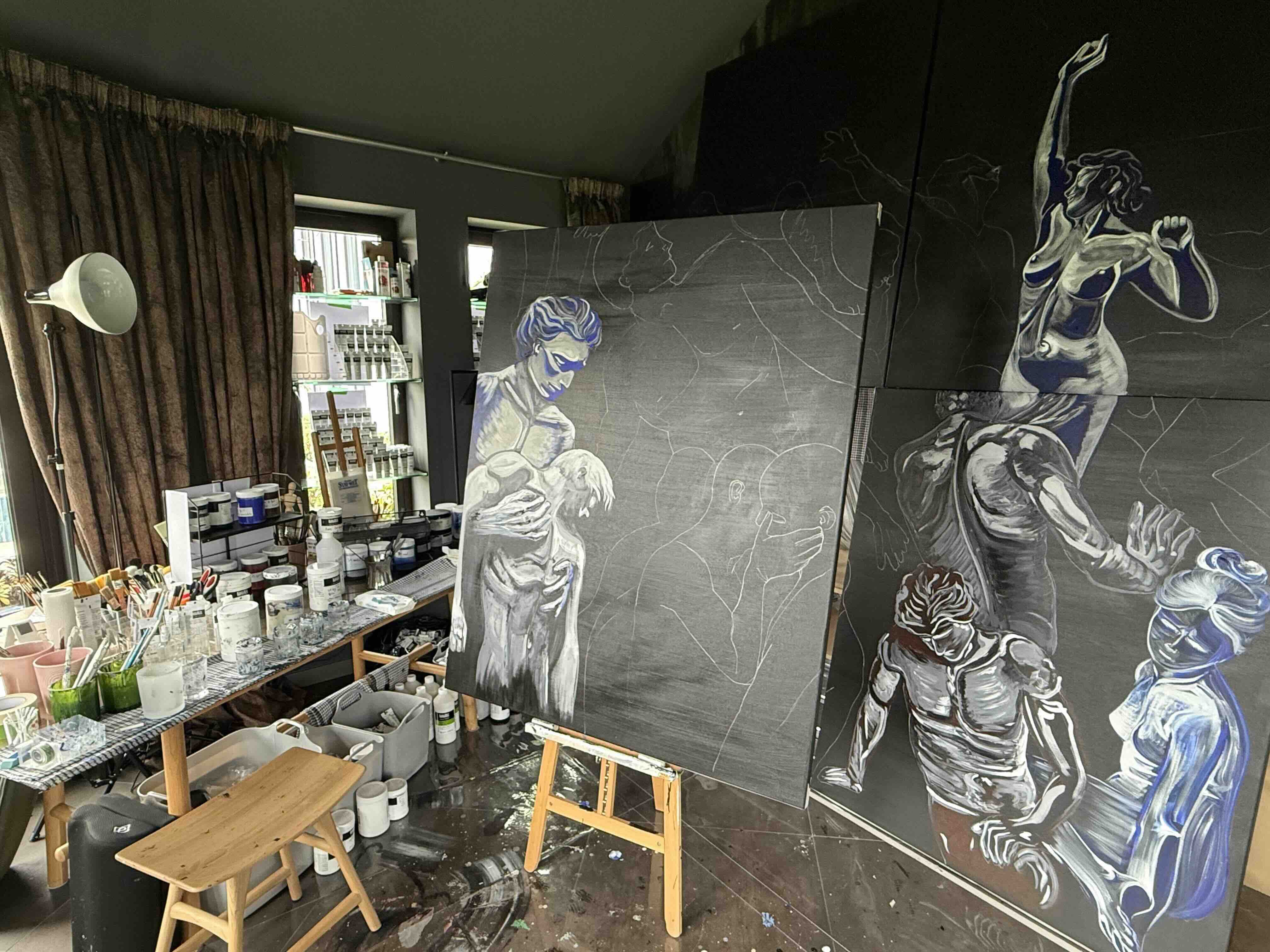
Return | Ritorno in progress in the studio, courtesy of Arch Hades
CL: We’re living through profound cultural and political shifts. How do you situate yourself within this moment?
AH: I hate that we are transitioning from nature as our host of life to mass technology as our environment. That’s what Arcadia, my fourth book, is about. We risk losing something ancient and essential in the process.
CL: Which artwork would you live with, if you could?
AH: Malevich’s Black Square, displayed in the corner as originally intended. It articulates one of my central philosophical positions: the rejection of religious authority and challenging tradition that ultimately celebrates existentialism. I don’t believe I should own it – but perhaps I could borrow it?
CL: If you could have lunch with anyone you admire, who would it be?
AH: Goodness, there are so many people I look up to. Living: Maria Ressa, Anne Applebaum, Maia Sandu. And dead: Jane Goodall, Ruth Bader Ginsburg, Mileva Marić.
I’d like to have lunch with Shabana Mahmood, the [UK] Home Secretary, or Bridget Phillipson, [UK] Minister for Women and Equalities, to persuade them to bring forward policy to create a publicly accessible nationwide register of stalkers, domestic abusers, sexual offenders and anyone convicted of killing their female partner. Up to a quarter of these men are repeat offenders and I believe women should have access to information about someone’s history of sexual violence, if they are considering dating them. This will save lives and is a vital step towards protecting women and girls.
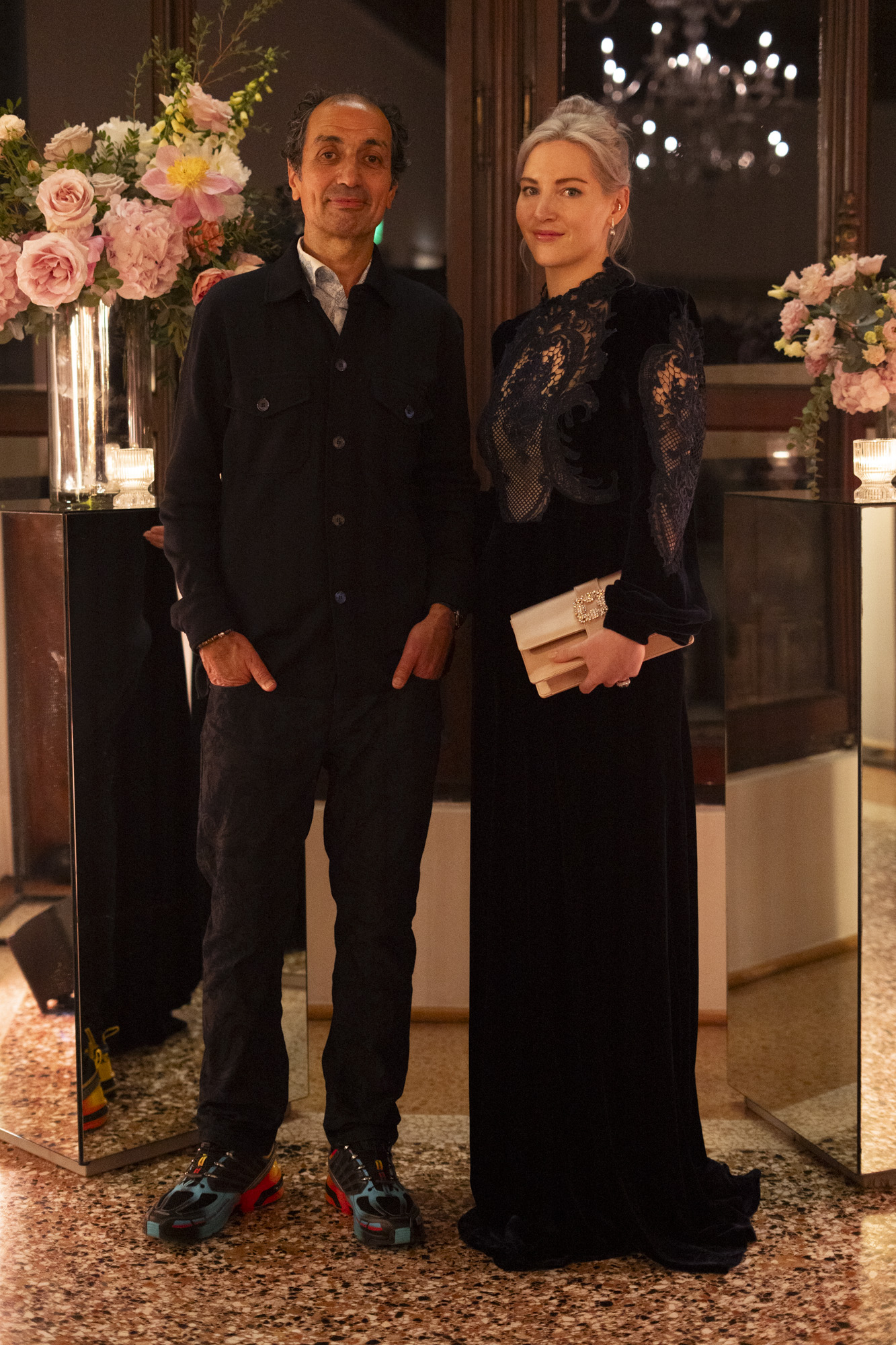
Arch Hades, London, March 2026, by Maryam Eisler
CL: What advice would you give to your 20-year-old self?
AH: Don’t get married. In fact, don’t even date anybody.
CL: What’s something that people don’t know about you?
AH: I’m an ordained minister. I’m not religious, I just enjoy officiating gay marriages.
Read more: A conversation with Claudio Laager
CL: What do you hope audiences take away from your work?
AH: I hope my art and poetry might become the “nail where your fate is liable to snag”. Like reading something you thought only happened to you, only to discover it happened to Byron 200 years ago. That recognition collapses time and liberates suffering and isolation. This is why art matters – because life matters.
Arch Hades’ solo exhibition, Return | Ritorno, runs from 7 May to 30 October 2026 at Scoletta Battioro e Tiraoro di Venezia


Recent Comments