




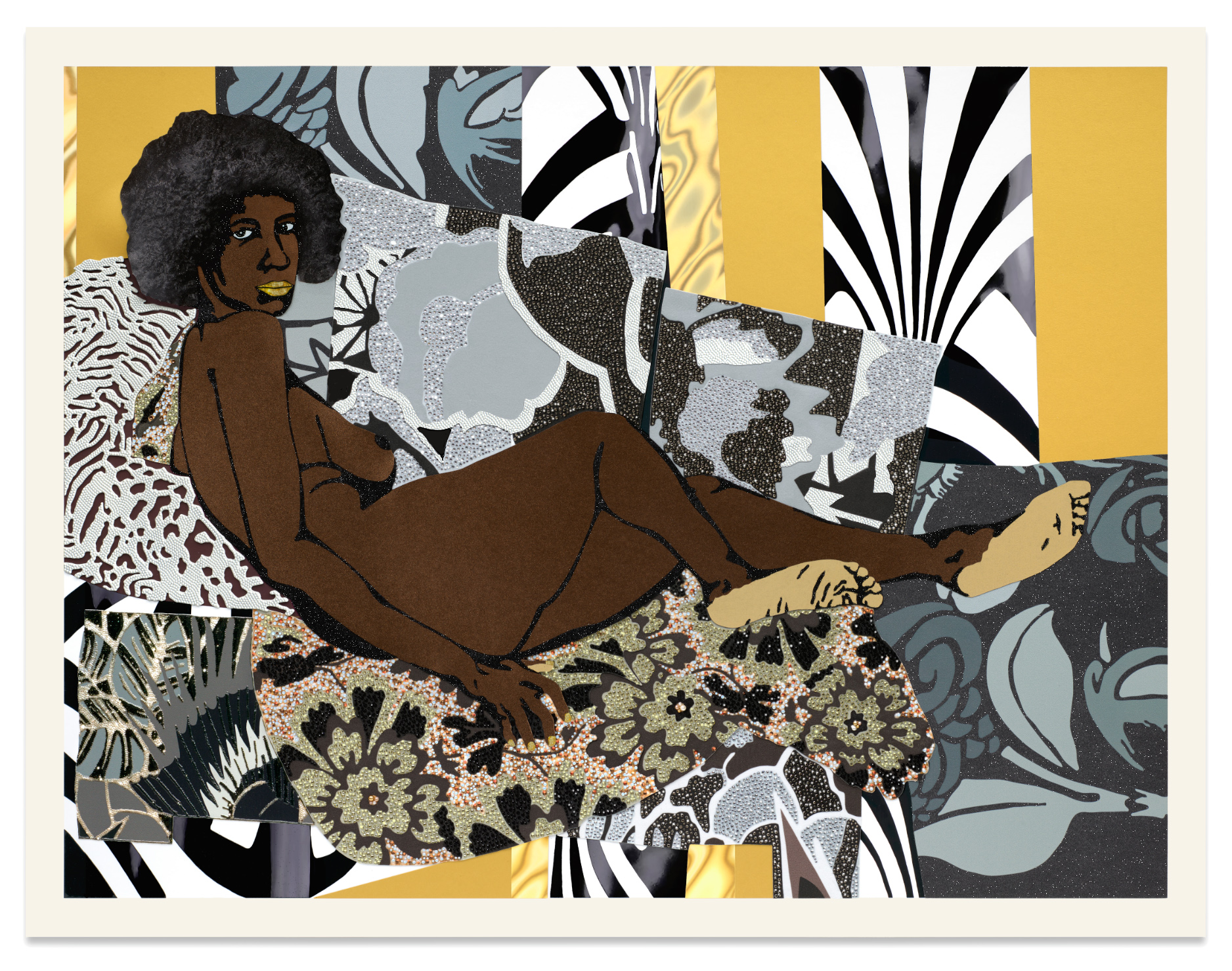
A Little Taste Outside of Love, 2007, by Mickalene Thomas, from the collection of Darius Sanai
Fresh from a blockbusting exhibition in London, New York’s Mickalene Thomas, a former LUX cover star, takes us through her life and loves
LUX: Hi Mickalene, how’s it all going? It’s been a while since you were on our cover.
Mickalene Thomas: Everything is moving – sometimes beautifully, sometimes with challenges, but always forward! I have deep gratitude for the journey. That cover story was special to me. It’s wonderful to reconnect.
Follow LUX on Instagram: @luxthemagazine
LUX: How was your Hayward show?
MT: “All About Love” was my first major global show, but it was also personal. Drawing from bell hooks’ words, I leaned into love as action: how it shapes who we are, who we uplift and the stories we tell. Presenting the work in London, honouring black beauty, femininity and resilience on such a scale was profound. My hope is always that people leave with a sense of love’s transformative, radical power.
LUX: Were the rave reviews important to you?
Read more: Bentley by LUNAZ review
MT: I’m grateful, but I’m most driven by making work to be seen, to be part of culture, to shift the conversation. I think it’s important not to lose sight of your purpose by listening too closely to critics. I believe I must focus on impact, rather than acclaim, if I want to shift narratives for present and future generations.
LUX: Your work Le Dejeuner sur l’herbe: Les trois femmes noires was the standout in a high-level field for us at Jeffrey Deitch’s 2022 LA show held in response to Manet’s painting. Do you consider it your “masterpiece”?
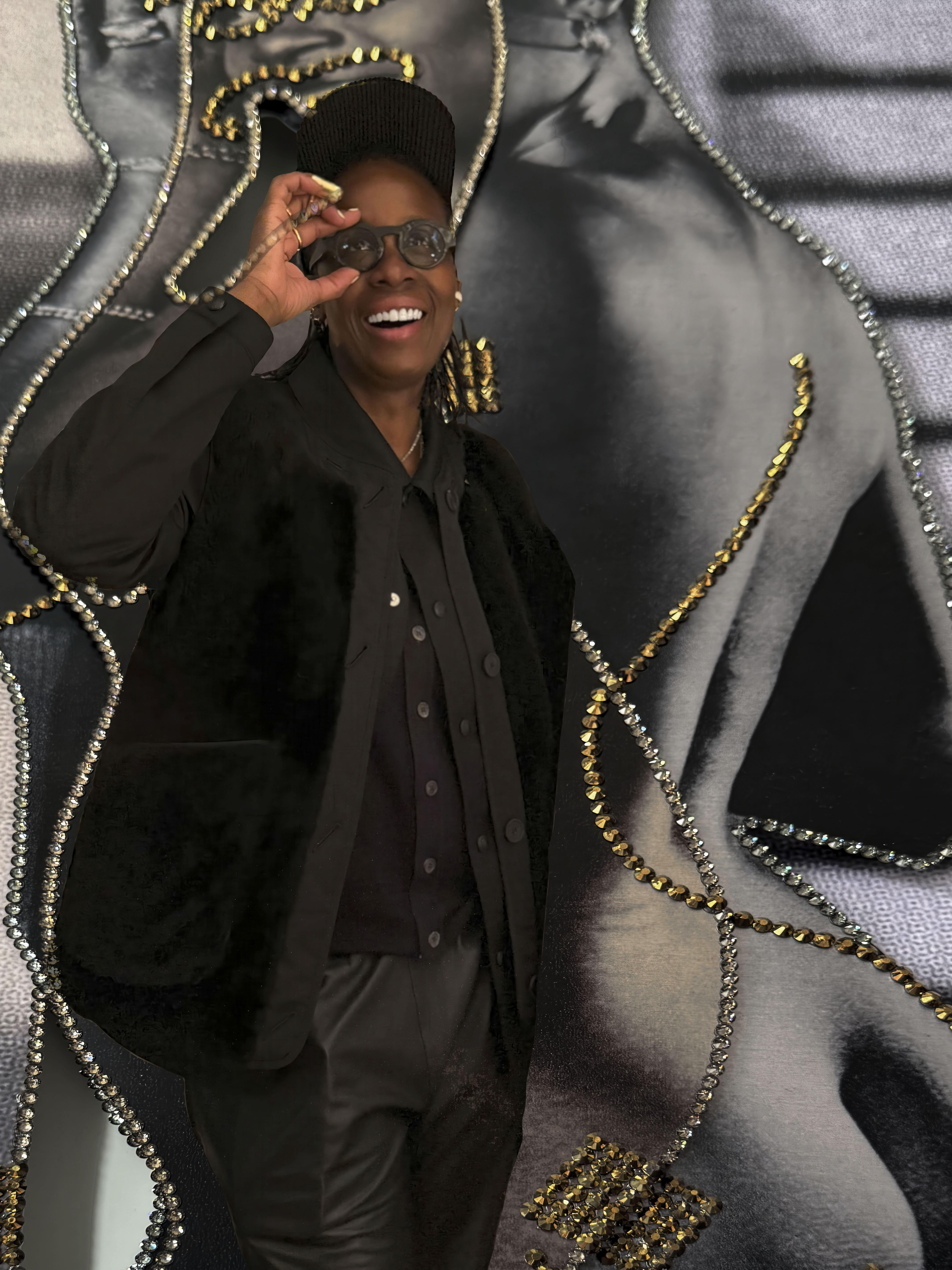
A portrait of Mickalene Thomas taken à l’improviste by Maryam Eisler
MT: That piece is a milestone. It challenges the notions of beauty and identity – three confident black women are depicted with a fixed gaze at the viewer. I don’t believe in one “masterpiece”. The ultimate triumph is that a work resonates with someone by challenging their idea of beauty and identity or reminding them of their strength and power, especially if they are a black female or from a marginalised community.
LUX: You are indelibly associated with New York City. Is that how you like it?
MT: Completely. New York is my home and inspiration. Its cacophony, diversity and energy are inseparable from who I am and what I create. It breeds possibility. While it has changed since I moved here in the 90s, it’s still an epicentre for artistic community and connection – especially here in Brooklyn.
LUX: What is it that you love about Brooklyn?
Read more: Passenger Princess in the Aston Martin DBX S
MT: Brooklyn is home. The community is like no other – it’s culturally rich and inhabited by people from diverse backgrounds. Being surrounded by other artists also keeps me inspired and fuels my drive to keep creating.
LUX: What is your favourite part of New York?
MT: Walking across Brooklyn Bridge and pausing in the centre to look back at Brooklyn, with the vibrant city skyline stretching out ahead. Wandering through the city helps me clear my mind, reflect and dream big.
LUX: Which artists do you collect and why?
MT: My collection is like a love letter to the communities that have shaped me: women, black, queer and underrepresented artists. I simply buy art that I love and that inspires me. I started by trading art with artists such as Wangechi Mutu, Deborah Grant, Louis Cameron, Derrick Adams and Kehinde Wiley. My collection also includes a sculpture by Leilah Babirye, a mixed-media piece by Abigail DeVille and work by Joiri Minaya, a multidisciplinary artist who investigates the female body within constructions of identity and hierarchies.
Read more: A tasting of Joseph Phelps wines with Maison President David Pearson
LUX: What is new and interesting in NYC?
MT: There’s always something unfolding in New York that resists cliché. Its heartbeat isn’t just in big institutions. Now there’s a revival of salons, pop-ups, block parties, community studios, where art, music and activism breathe together.
LUX: In 2011, you had a residency in Giverny. Have you always been a person of contrasts?
MT: I’ve reinterpreted classic paintings through a contemporary, black and queer lens, creating a tension between time periods and approaches. My work is exuberant, even if it often carries weighty messages and new storylines, where black women claim space and embrace their beauty and power. By juxtaposition, I can spark new dialogues. The dualities keep my work alive.
LUX: Is creating public art important for you?
MT: Community is where the greatest impact begins – not just for society, but for artists. Making art accessible is a part of my practice. I recently completed a mosaic that is now in the lobby of the Ruth Bader Ginsburg Hospital. Justice Ginsburg’s favourite flowers – freesias and hydrangeas – dance throughout the mural with an energy that emulates the joy, strength and power she embodied. Art in public spaces becomes a catalyst for connection and change – a way for people to see themselves in the work and be reminded of possibility, resilience and joy.


Recent Comments