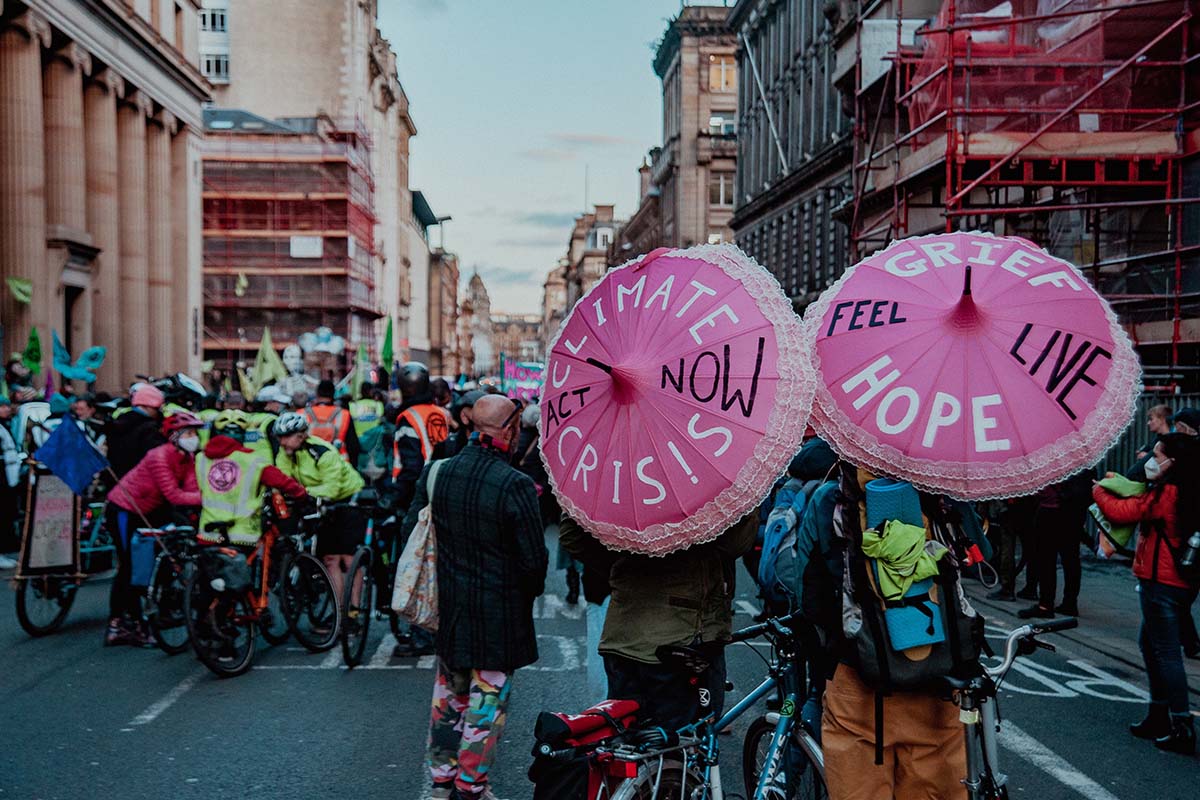
Nature provides services worth over $125 trillion per year globally
The planet’s species population sizes have decreased by 70% since the 1970s. Yet while scientists have proven that biodiversity loss is intimately linked with climate change, it continues to be kept in the shadows of the climate agenda
As the Nature-based Solutions Conference kicks off at Oxford University this week, we speak to Professor Nathalie Seddon about why boosting biodiversity is essential to building the resilience of our ecosystems in a warming world – and why planting trees is not the catch-all solution some think it is.
LUX: The mass of living creatures in the world is undergoing a dramatic diminution. What are the effects of this?

Professor Nathalie Seddon
Nathalie Seddon: The statistics are startling. We have lost about 80% of wild fish from the oceans and 82% of wild mammals on land, so our habitats and natural ecosystems are basically empty. 97% of vertebrates on the planet are people and their livestock; only 3% are wild creatures that we share the planet with. 9 million hectares of tropical forest are cut down a year; and we’ve modified over 50% of land use.
Biodiversity is important for multiple reasons – material, cultural and spiritual. Our health is intimately linked to the health of all these ecosystems that we are currently destroying. Our nature systems support us in countless ways, providing clean air, water, food, and genetic resources. Over half of GDP depends on natural ecosystems, which generate over $125 trillion worth of ecosystem services each year – from reducing the impacts of droughts and protecting coastlines from flooding or forests from wildfires. These services are dependent on the species and the diversity of the species within them, and are incredibly important to our resilience in a warming world.
Follow LUX on Instagram: luxthemagazine
LUX: Why is there so little awareness around biodiversity loss?
NS: Climate still doesn’t get enough attention or funding, but it is considerably more prominent in discourse than biodiversity is. Our economy has also been developed on the assumption that nature’s resources are infinite. People assume that, with enough money, technology will come to the rescue. I think there is a fundamental reason to explain all of these: the age-old idea that humans are not part of nature but rather separate from it; that we must conquer nature rather than flourish as a part of it. This disconnect between humans and nature is the root cause, and therefore also part of the solution to the trouble we face.
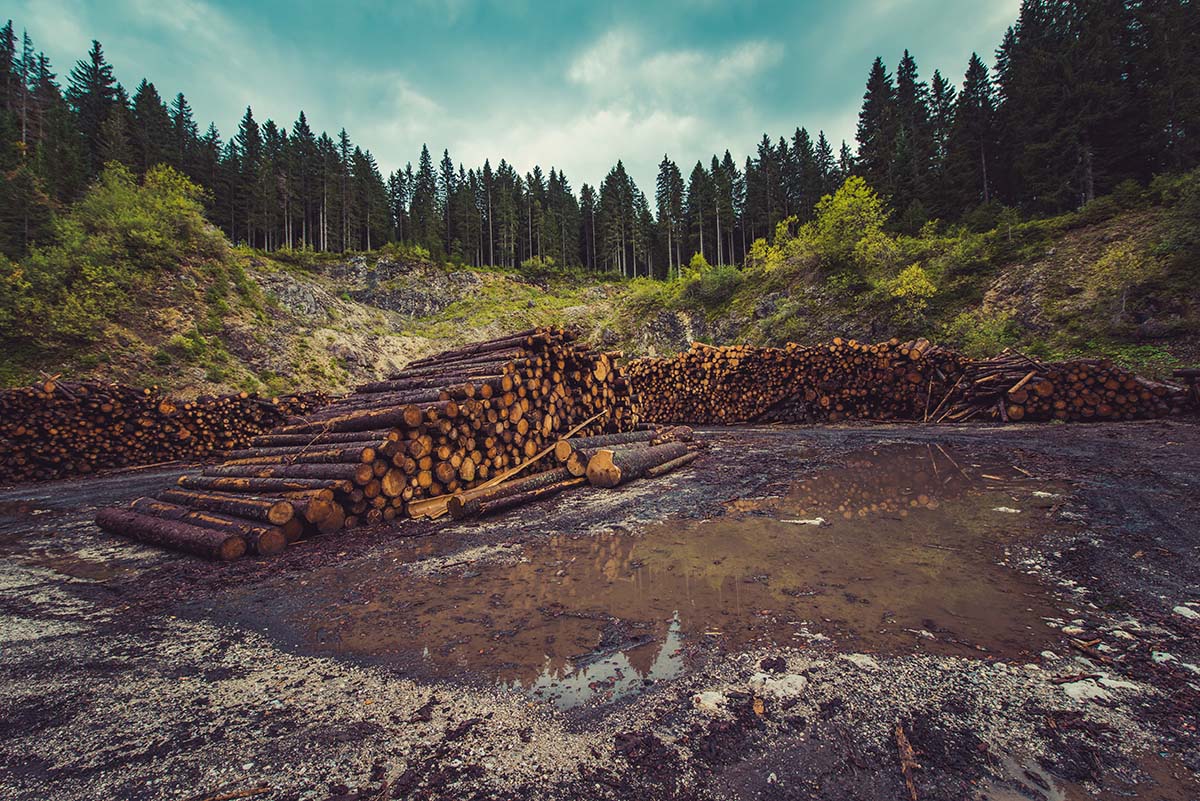
Deforestation contributes to increases in temperatures and changes in rainfall patterns across the world
LUX: Are we at a turning point of the understanding of the importance of biodiversity – not just as a desirable end in itself but as an essential part of combating climate change?
NS: In principle, yes. In the international policy and business community, there’s a lot more talk about biodiversity and climate change as two sides of the same coin. But a lot more work is needed to make sure that there is a robust understanding of what that means in practice and how that translates on the ground. For instance, agriculture or commodity production are the biggest drivers of biodiversity loss and also the second biggest source of greenhouse gas emissions. Protecting and restoring our biodiversity can help reduce emissions, but about 23% of our emissions come from changes in the land use sector in agricultural and forestry and other land use, so improving what happens in those landscapes can also have important impacts on warming. It’s only still quite a small part of the solution.
There has been a step up in terms of the prominence and emphasis on nature as part of the negotiations on nature-based solutions. But there are huge misunderstandings, including a big conflation of commercial forestry with nature-based solutions. You can’t just plant trees and then delay decarbonisation and transition to renewables.

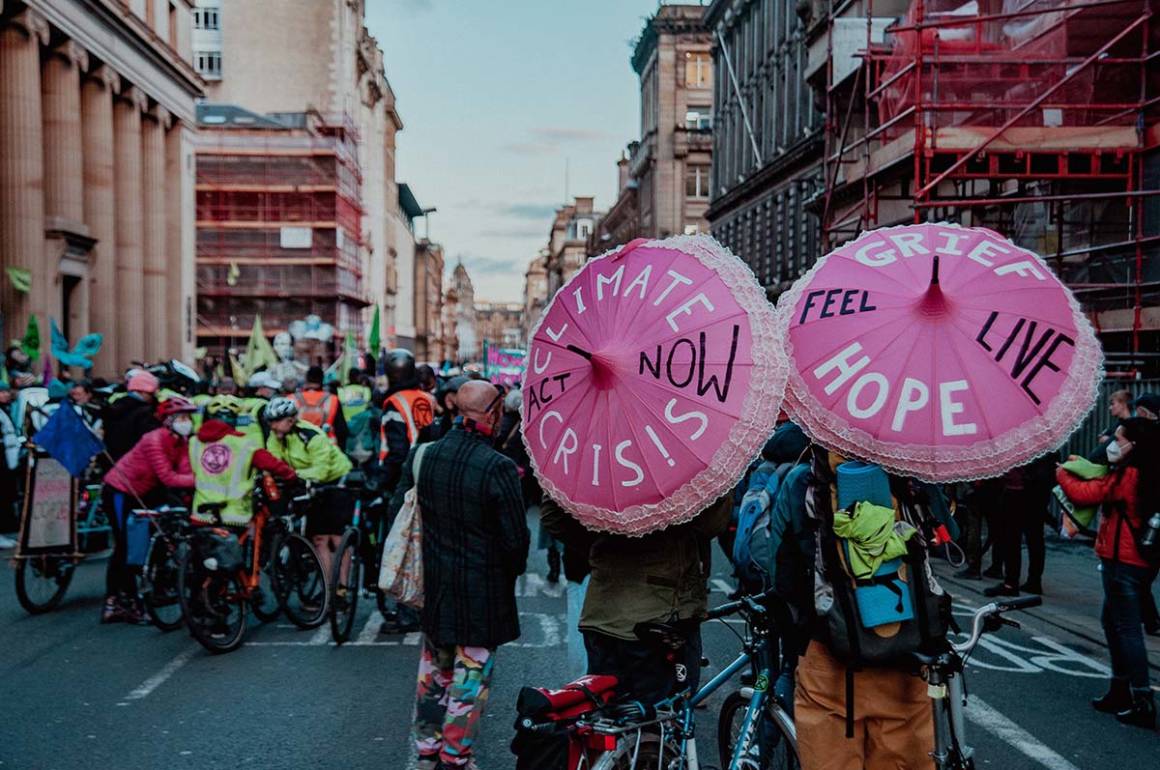
The Glasgow Science Centre played a key role in last year’s COP26 discussions
LUX: What are the most important steps leaders in business and wealthy individuals can take to combating this?
NS: A lot of businesses and governments are making net zero pledges, covering 90% of the global economy. But you look under the bonnet, and most of them are not underpinned by a really robust science based plan or any funding to enact it.
Talking about how nature, biodiversity and climate are connected is good, but we need to ensure that decision makers who are acting on that basis understand what that actually means in practice.That doesn’t mean offsetting carbon emissions by investing in cheap forestry plantations. It means doing everything they possibly can to reduce those emissions and reduce the damage that they’re doing to ecosystems within their supply chains whilst also investing in projects that are biodiversity based and community led and ideally doing that within their supply chains, which is a process that’s called insetting rather than offsetting.
Read more: Cary Fowler on Protecting the Biodiversity of our Planet
Offsetting is when a company will calculate its impact on climate or emissions so it will invest in probably some trees somewhere that probably shouldn’t be there and feel like it is addressing the problem. Insetting is looking within your own supply chain and investing in high quality, valuable projects within that supply chain, so insetting your damage to the biosphere and the climate within your supply chain. In doing so, you are not only meeting your ESG requirements but also increasing the value in resilience of the supply chain itself. It’s about investing in nature in your supply chains to reduce risk, operational risk, supply chain risks as well as reputational risk.
There is a real need to engage fully with the research community to ensure that those pledges can be met in a sustainable, ethical, biodiversity community-based way and so that’s where the work is. Public-private partnerships between researchers and businesses are really important. Companies in general should adopt a generative, circular economy model and then embed proper robust accounting on natural and social capital in their accounting procedures.
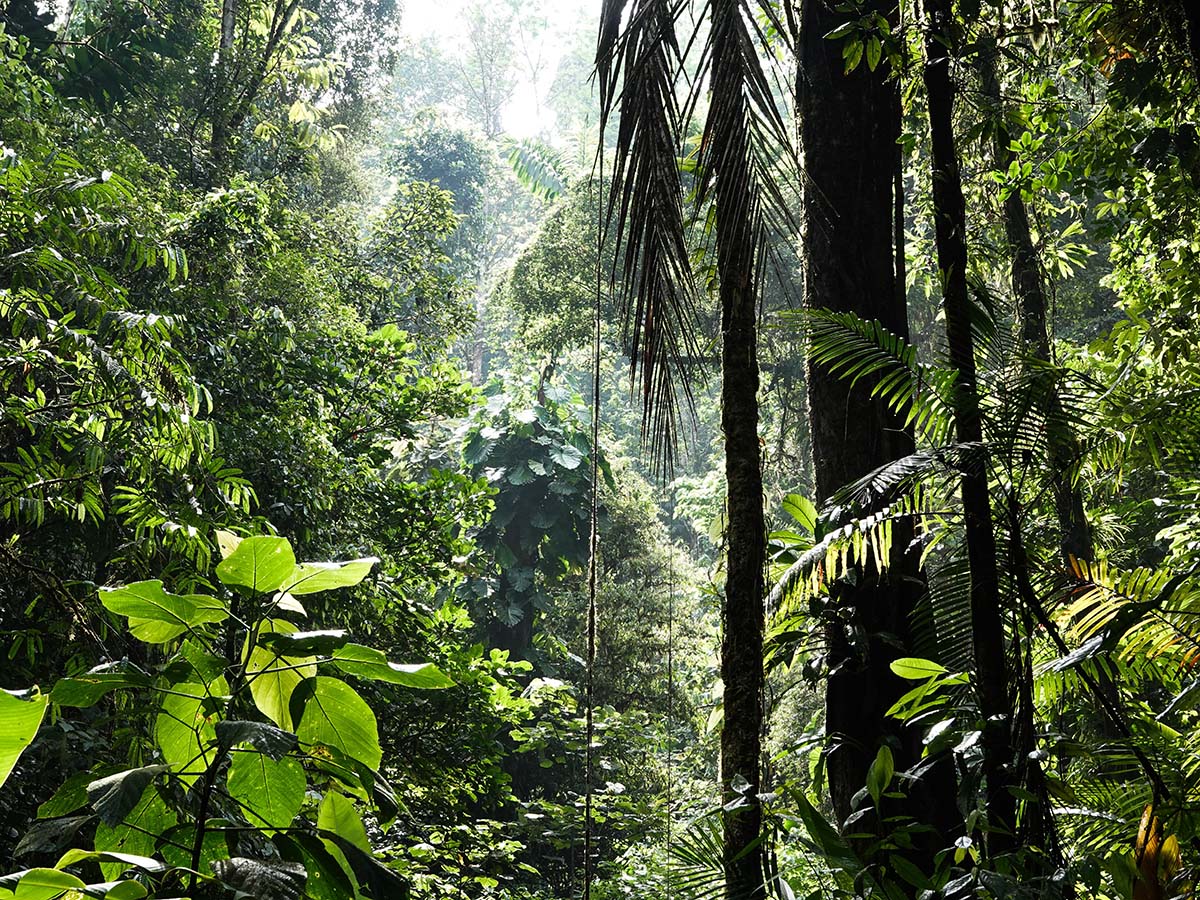
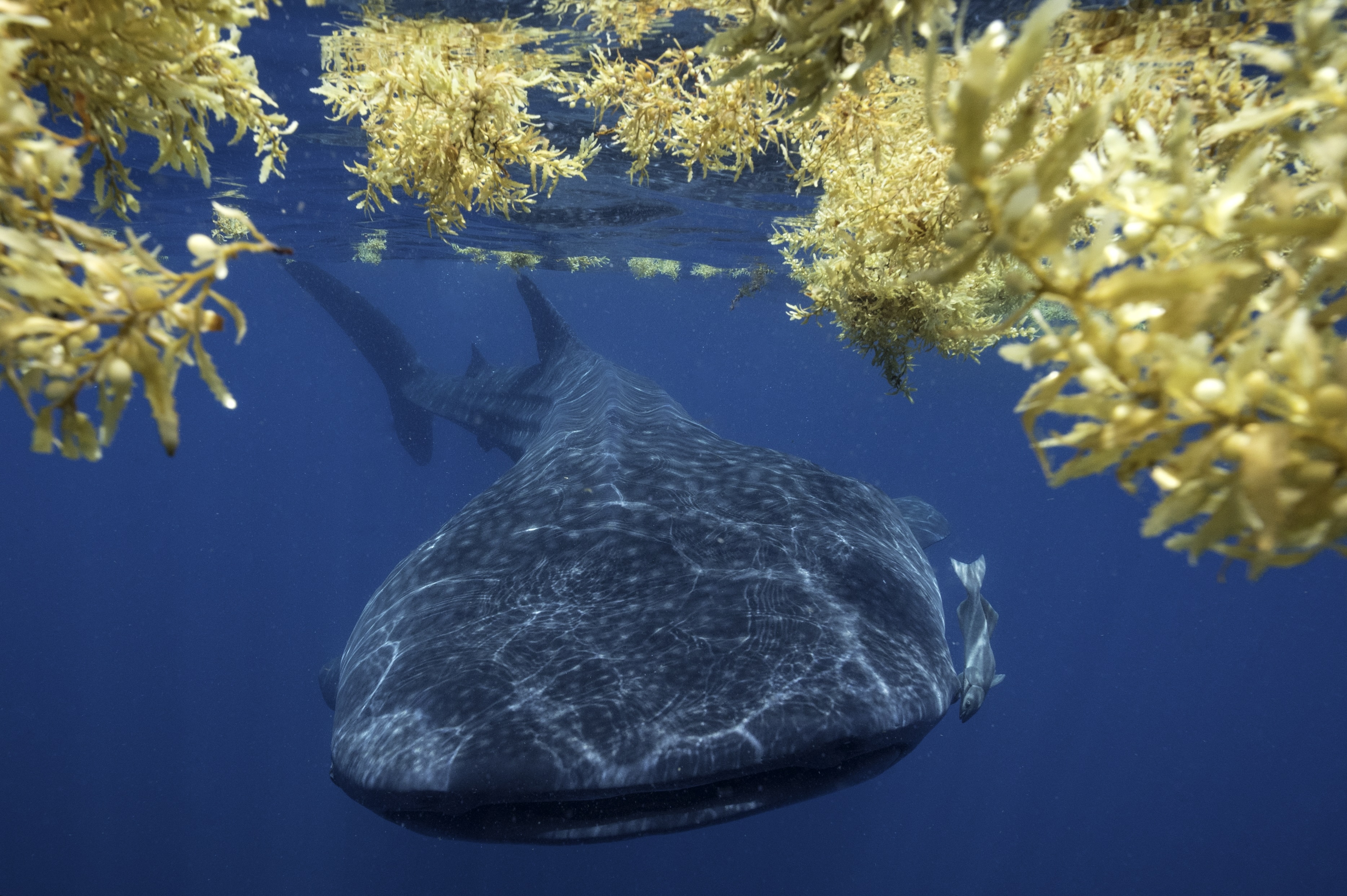
Humans have identified just 3 million of over 12 million complex life forms on the planet
LUX: Is it true that we are still discovering exactly how different species, seemingly unrelated, can have a dramatic impact on the health of the planet and the human race?
NS: There’s upwards of about 12 million complex life forms on the planet, and we have only named around 3 million of them. We don’t know what functions all those species play in the ecosystem, we just know that all species matter and that we can’t afford to lose the predicted 1 million species by the end of the century.
That diversity gives ecosystems the resilience they need in a warming world. It’s like having a diverse investment portfolio – the more different sorts of investments you have, the more likely it is to be able to weather the storm, in that case, a financial storm. In a natural world, the more species you have, the more likely it is that that ecosystem can deal with whatever is coming.
LUX: Are there any causes for hope, or is your feeling that we are doing too little too late?
NS: On one hand it’s all very frustrating because we’ve known for a very long time what causes climate change and what drives biodiversity loss, yet very little has been achieved. Put it into perspective: we have lost about 70% of species populations since the 1970s, despite a huge increase in the coverage of protecting it.
But there are lots of countries that are pledging to do the right thing: community and biodiversity based investments and nature-based solutions, at the same time as big commitments to renewables and reducing emissions. Costa Rica is leading on climate policy and the practice of renewables, plus large areas of land are under recovery and protection. [The same goes for] Moldova, Brazil, Chile and Cape Verde, at least on paper, in terms of how they’re incorporating nature into their climate change pledges.
There are also various companies that are taking a high integrity approach to tackling net zero. Netflix is an example of that: they are reducing emissions across all of their operations as fast as they can, as well as investing in projects that are truly verified in terms of their carbon, biodiversity and social benefits. That’s the real point. You can’t invest in nature if you’re not also doing everything you possibly can to reduce emissions.

Nature-based solutions involve the sustainable management and use of natural resources to tackle socio-environmental challenges
LUX: Who are the laggards?
NS: Most of the main fossil fuel companies are talking about decarbonisation but they’re not making enough progress. We need to keep fossil fuels in the ground and we need to invest in nature. It’s not ‘either or’, and some of those big fossil fuel companies are just greenwashing their operations by claiming to invest in so called nature-based solutions which often just turn out to be short rotation commercial forestry plantations. That’s a live issue that needs to be fully addressed.
At the government level, many countries are investing in tree planting, while not ensuring that their existing biodiversity and intact ecosystems are protected properly, and in fact actively opening them up. Decisionmakers seem to think that growing a tree is the same as a tree which is in an intact ecosystem, yet science is really clear that there is no equivalent: you can’t recapture the carbon lost through destroying our intact ecosystem in a timely or sensible way through planting trees. .
Read more: Julie Packard: All In Together
LUX: How would you explain to an intelligent but distracted business leader that the loss of a seemingly trivial habitat in one part of the world can have a fundamental effect on people in the other?
NS: The earth is a big, interconnected system. Deforestation rates in the Amazon are increasing to meet global demand for beef and soya, but because Amazonia is a big water pump, this can cause changes in global patterns of rainfall, therefore compromising food security and causing supply chain issues. For the intelligent but distracted business leader who thinks that it doesn’t really matter if we lose all the monkeys or toucans from a forest, it does, because those species play a critical role in the ecosystems and we need to extract carbon from the atmosphere to keep all of us safe.
Ultimately, we need systemic change in how we run our economies. Our economic system prioritises material wealth and infinite growth on finite resources. Unless that changes, we won’t avert climate change and biodiversity. We need to think about circular and regenerative economies, and we as individuals need to enact big behavioural change as part of that. Otherwise, you’re just rearranging chairs on the Titanic.
Nathalie Seddon is Professor of Biodiversity in the Department of Zoology at the University of Oxford.
Find out more: naturebasedsolutionsoxford.org
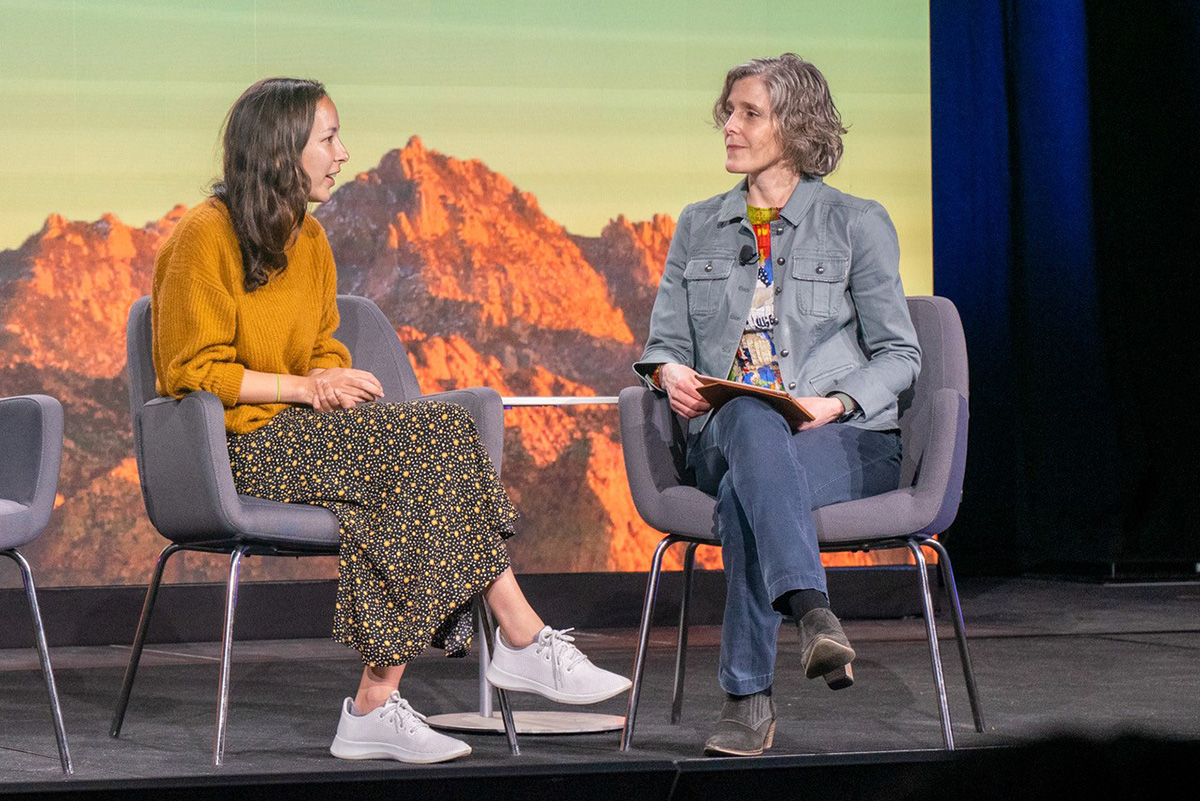
Heather Clancy and Sanda Ojiambo, CEO and Executive Director, United Nations Global Compact © GreenBiz Group/Louis Bryant III
Is there a one size fits all when it comes to corporate climate action? No matter how big a business is, says Heather Clancy, one thing is for certain: inaction is no longer an option. Clancy is Vice President and Editorial Director of GreenBiz, the media company working to accelerate the just transition to a clean economy. She tells LUX why companies need to work harder to embed environmental justice into their corporate sustainability strategy, and explains how climate fintech may just be key to the green transition
Heather Clancy ©GreenBiz Group/Louis Bryant III
LUX: Is there a one size fits all when it comes to corporate climate action?
Heather Clancy: The way a company prioritises is very focused on their individual business. The supply chain of one company could be totally different to that of another. US tech companies, for example, have done a lot on renewable energy, but should be doing more on how they treat and engage with their employees on various issues. Each company must look at what they touch and then make the decisions about which levers to push and pull most directly. The one thing they must do, however, is act. They can’t sit around anymore, no matter how big or small they are.
LUX: How should companies be balancing the ‘E’ and ‘S’ of ESG?
Heather Clancy: Corporations are not spending enough time thinking about how environmental justice is embedded into their corporate sustainability strategies. The pandemic has prompted a lot of soul-searching when it comes to where companies are doing business, but there is still a huge disconnect between the company’s corporate perceptions of what environmental justice means and how they act as a business. There is so much attention being put into making sure workforces reflect the diversity of the community –which is great – but companies need to get a lot more thoughtful about how they engage with the individuals and communities with whom they engage.
For example, one of the biggest blockers to the clean energy transition right now is the supply of materials like lithium, cobalt, and nickel. The necessity of these materials – which are used for wind turbines, electric vehicles, and batteries – has prompted a large increase in mining activities around the world, but there has not been enough attention paid to where that land is. A lot of it sits on indigenous territories, and these communities are not being consulted or involved in the plans, or economically compensated if that’s what is required.
Now that we have this supply chain rethink happening, it would be incumbent upon corporations to look closely at where they’re siting their new manufacturing city facilities if they’re going to move them. This means actually including communities in those plans –helping them understand what the plan is and asking them what makes sense.

Accountability of corporations is crucial for the green transition. Image courtesy of Andreas Gucklhorn
LUX: Are there enough measurable standards for corporations to be measured by?
Heather Clancy: If you ask them, there are too many standards! What is missing is a push for accountability, especially in the United States. The markets are motivated by these earnings reports that we get on a quarterly basis, but there is no equivalent for ESG measures. I do believe that this will be changing, though. Probably the most important prompter for this has been the Taskforce on Climate-Related Financial Disclosures (TCFD), whose recommendations made a tipping point happen as far as how companies talk about what they’re doing and how they are being held accountable for that. But now things are in place, we need to get some agreement and coalescence around certain of these things.
LUX: What role can early-stage climate tech play in decarbonisation?
Heather Clancy: Small, innovative companies have a real opportunity to innovate and become the new suppliers for larger companies – for example by producing alternative materials like mushroom-based packaging to replace plastic or Styrofoam. It is not coincidental that there are so many corporate venture funds now focused on climate technologies, because these corporations are going to benefit from that innovation when the company goes public down the line.
Follow LUX on Instagram: luxthemagazine
A great example is the Amazon-Rivian relationship. Rivian was a vaguely unknown electric van maker, which got a hundred-thousand-unit order from Amazon and has now gone on to become public. There is a lot of shakiness in the market right now with some of these suppliers, but that’s fundamental to business. It’s mainly a great innovation opportunity.
LUX: Do you think it’s correct to talk about de-carbonisation and opportunities in climate tech as being ‘opportunities’, or are they still challenges?
Heather Clancy: Look at Allbirds. They had some shakiness with their ESG IPO, but their entire company was created with the idea of using materials in a different way. One of the biggest problems with athletic shoes is the soles, so they worked to create a new type of sole with a new material which has a lower carbon footprint than other sneaker soles. Instead of choosing to make that sole their own proprietary invention, they opened the technology up to other organisations and helped other companies to start using it. As other companies start to use this technology, the costs will come down and it will be cheaper for them to use it as well. That is a company whose entire business model is framed around this.
Heather Clancy and Hana Kajimura, Head of Sustainability, Allbirds © GreenBiz Group/Louis Bryant III
LUX: What else is exciting you in the climate tech sector at the moment?
Heather Clancy: I am particularly interested in nature-based carbon capture and sequestration technologies. There is an organisation called Project Vesta that’s using nature-based approaches in this way. There’s a big debate about whether we should be investing in those things, because it takes money away from these newer areas, but I think we need to remove the carbon that’s there.
LUX: What role can fintech play in the green transition?
Heather Clancy: The digitisation of sustainability is really important, because it’s becoming part of the financial infrastructure of the companies themselves. Software innovations help companies better understand their climate risks, have a truer accounting of the carbon footprint of their supply chain operations, and to understand whether their carbon offset has the value they think it has. These tools also help people make investments in the other climate technologies.
LUX: What is the biggest barrier to scaling climate tech?
Heather Clancy: Politics. Climate is such a partisan issue in many areas of the world. It has become so easy for one side to weaponise the community and say, ‘look at these renewable energy advocates, they’re making your energy costs go up’. That’s been very damaging in terms of the whole concept.
Beyond that, though, is policy. If there’s one thing that we really are lacking from corporations, it is the voice and end policy support. There are so many policies in place that need to be changed, but there is not enough happening at the federal, state or local levels to help put the policies in place that will make this transition happen more quickly.

Heather Clancy explains the battle for companies desiring to create and bring in new greener technologies but not wanted to create waste by dumping the old materials. Image courtesy of Nick Fewings
LUX: Should we prioritise de-carbonising existing infrastructure or starting from scratch with new green technologies?
Heather Clancy: I’ve been thinking a lot about net zero buildings and how difficult it is to go in and retrofit a building to become a better performing building. There are incentives that exist which make it much easier to knock the thing down and to build a new one. That’s just a huge waste: why aren’t we reusing those materials? But the policies and the laws make it harder to do it any other way.
The other problem with giving credit for renewal projects is that it caters to the people that have money already. If you are a small organisation and don’t have the revenue, you can’t actually take advantage of some of these incentives currently because you can’t afford to invest in them. This is true of the way some of the clean energy incentives are written in the United States. That doesn’t make economic sense.
Read more: Product designer Tord Boontje on sustainable materials
LUX: Are corporations, consumers, or legislation responsible for leading the green transition?
Heather Clancy: Extended producer responsibilities is the buzzword here. It’s important that corporations be more responsible, and they have to be using their voices as well.
LUX: What should the wealthy be doing?
Heather Clancy: They should model better behaviour, and they also need to put their money where it counts. What Bill Gates with his Breakthrough Energy coalition is extraordinary, and seems to me to be an important model. Likewise, Mackenzie Scott and Laurene Powell Jobs have put money in some extraordinarily unusual places by investing in historically black colleges and communities that don’t usually get the money. They’re doing it quietly, and they’re putting their money to work.
It’s also time for the wealthy to help small businesses get on the bandwagon in terms of ESG – to help them with energy efficiency, with their waste and manufacturing processes. Buying from these companies will enable them to make the shift to greener practices.
Find out more: greenbiz.com

Melting glaciers will contribute to dramatic sea-level rises. Pictured: the Gornergletcher and Monte Rosa, Switzerland.

Professor Peter Newell
Academic Peter Newell made waves in the global media recently with a report describing how the wealthy have a disproportionate effect on climate change, and a duty to change their travel, business and leisure habits. As COP26 kicks off in Glasgow, he speaks to LUX about how moral duties increase with net worth
LUX: How do you define ‘unnecessary travel’?
Peter Newell: It is not for us as individuals to work out what counts as unnecessary travel: governments, cities and businesses can send clear signals about which travel is critical and which is largely unnecessary. Wealthy employers can set sustainable travel policies for their companies. But all of us can also exercise responsible self-restraint. Addressing poverty and social inequality means that carbon will inevitably and justifiably increase for some people, especially, but not exclusively, in the Global South.
To still live within tightening carbon budgets means cutting back on luxury emissions, including where travel to conferences and meetings is no longer necessary when virtual platforms can replace that need, as well as reducing frequent flying for holidays. It is worth remembering that just one per cent of people cause half of global aviation emissions.
Follow LUX on Instagram: luxthemagazine
LUX: What are the ethics of travelling for sporting events and art fairs?
Peter Newell: With finite carbon budgets that have to be shared equally, some activities become harder to justify than others. We should focus less on whether a particular event is ‘essential’, because we all feel what we do is essential, and ensure that we have sustainable and low-carbon forms of travel accessible to all. But until that’s in place, there is a need to reduce unsustainable travel through policy including taxes (to subsidise affordable, low-carbon transport), restrictions on air expansion or carbon rationing. There is an issue of collective responsibility here that trumps individual whims.
LUX: Is there any validity in the idea of personal carbon offsets?
Peter Newell: Personal carbon quotas may have some value but need to be implemented carefully. Offsets are notoriously problematic, subject to double-counting and fraudulent savings, and are really just passing the costs and the responsibility for reducing emissions onto others. Displacing responsibility is not the answer.
LUX: If wealthy individuals only do what is ‘necessary’, what’s the point of being wealthy?
Peter Newell: The issue is both how much wealth people have, because emissions are very closely related to purchasing power (to buy larger homes, cars, flights etc) and how that wealth was generated in the first place. If people make their money from activities driving the climate crisis, that is part of the problem and needs to be addressed. No amount of sustainable living will compensate for that. For wealthier people, it is also about where you invest your money and how you use your influence politically.
LUX: If everybody acts ‘correctly’, jobs will be lost in the oil, aviation and other sectors.
Peter Newell: Most discussions now are about transitions – helping workers to retrain in renewable energy industries or to work in other sectors of a sustainable economy. Research suggests most of them want a secure and reasonably paid job and have no loyalty to fossil fuel companies. There is also a need for compensation and regional development plans, the like of which have been used in helping coal-dependent regions transition to new development pathways. It is about protecting poorer workers as we make the necessary changes and redirecting the vast sums of state support in subsidies and aid that fossil fuel companies receive towards support for jobs in sustainable industries.
Read more: How Durjoy Rahman’s art foundation is promoting cultural collaboration
LUX: What of the tourism industry in the Global South?
Peter Newell: Many in the Global South are amongst the most exposed to the worst effects of climate change, a problem most who live there played little part in accelerating. For this reason, they are rightly demanding tougher action from the Global North, including reducing emissions from aviation. Small, low-lying and Caribbean island states have rightly been the champions of bolder climate action because their lives depend on it, even where some are heavily dependent on tourism. What you also might see, as we have here in the UK, is a huge boost to local economies as people holiday nearer to home. Aviation may become more sustainable through fuel and engine technology, but that will take time and clearly, for all our sakes, wealthier citizens need to reduce the amount they fly.
LUX: Is it realistic to try to recalibrate the desires and aspirations of the wealthy?
Peter Newell: Climate chaos is not a realistic or attractive prospect, but that is where we are headed. So, carrying on with business as usual is not an option. The investment and political power of the wealthy is vast and can be used to positive effect – to divest from fossil fuels, to support low carbon innovations, to use their profile and influence to back key campaigns and to pay taxes that generate the funds to address these challenges. This clearly isn’t happening on anything like the scale required. The wealthy share the same planet as the rest of us. They are part of the same society. With that comes duties and responsibilities to behave in ways that serve common interests. Planetary survival is one of those. This is a key moment for those with power, wealth and influence to use them in a bold and responsible way to safeguard all of our futures, including their own.
Peter Newell is Professor of International Relations at the University of Sussex
This article was originally published in the Autumn/Winter 2021 issue.
Recent Posts
Archives
- December 2025
- November 2025
- October 2025
- September 2025
- August 2025
- July 2025
- June 2025
- May 2025
- April 2025
- March 2025
- February 2025
- January 2025
- December 2024
- November 2024
- October 2024
- September 2024
- August 2024
- July 2024
- June 2024
- May 2024
- April 2024
- March 2024
- February 2024
- January 2024
- December 2023
- November 2023
- October 2023
- September 2023
- August 2023
- July 2023
- June 2023
- May 2023
- April 2023
- March 2023
- February 2023
- January 2023
- December 2022
- November 2022
- October 2022
- September 2022
- August 2022
- July 2022
- June 2022
- May 2022
- April 2022
- March 2022
- February 2022
- January 2022
- December 2021
- November 2021
- October 2021
- September 2021
- August 2021
- July 2021
- June 2021
- May 2021
- April 2021
- March 2021
- February 2021
- January 2021
- December 2020
- November 2020
- October 2020
- September 2020
- August 2020
- July 2020
- June 2020
- May 2020
- April 2020
- March 2020
- February 2020
- January 2020
- December 2019
- November 2019
- October 2019
- September 2019
- August 2019
- July 2019
- June 2019
- May 2019
- April 2019
- March 2019
- February 2019
- January 2019
- December 2018
- November 2018
- October 2018
- September 2018
- August 2018
- July 2018
- June 2018
- May 2018
- April 2018
- March 2018
- February 2018
- January 2018
- December 2017
- November 2017
- October 2017
- September 2017
- August 2017
- July 2017
- June 2017
- May 2017
- April 2017
- March 2017
- February 2017
- January 2017
- December 2016
- November 2016
- October 2016
- September 2016
- August 2016
- July 2016
- June 2016
- May 2016
- April 2016
- March 2016
- February 2016
- November 2015
- September 2015
- June 2015
- May 2015
- March 2015
- September 2014
- August 2014
- July 2014
- May 2014
- April 2014
- March 2014
- February 2014
- January 2014
- December 2013
- November 2013
- October 2013
- September 2013
- August 2013
- July 2013
- June 2013
- April 2013
- March 2013
- February 2013
- September 2012
- July 2012
- June 2012
- March 2012
- February 2012
Categories
- Adventure Travel Issue
- Aesthete Issue
- Architecture
- Art & Design
- Art & Photography
- Art collectors
- Autumn 19
- Autumn/Winter 2020/2021
- Autumn/Winter Issue
- Bespoke Issue
- Business
- Cars
- Cars & Collectibles
- Case Study
- Celebrities
- Culture
- Culture Issue
- Design Issue
- Dining Issue
- Earth Issue
- Family Issue
- Fashion & Jewellery
- Features
- Food
- Future Luxury Issue
- Health
- Hedonism Issue
- Image Issue
- Italy Issue
- Latest Stories
- Leaders & Philanthropists
- Leaders Slider
- Love Issue
- Luxury Travel Issue
- New Luxury Issue
- Online Exclusive Slider
- Opinion
- Spring 2020
- Summer 19 Issue
- Summer 2020
- Summer 2021
- Sustainability
- Taste Issue
- The Beauty Issue
- Travel
- Uncategorized
- Water Issue
- Winter 19 Issue
Popular Posts
Categories
- Adventure Travel Issue
- Aesthete Issue
- Architecture
- Art & Design
- Art & Photography
- Art collectors
- Autumn 19
- Autumn/Winter 2020/2021
- Autumn/Winter Issue
- Bespoke Issue
- Business
- Cars
- Cars & Collectibles
- Case Study
- Celebrities
- Culture
- Culture Issue
- Design Issue
- Dining Issue
- Earth Issue
- Family Issue
- Fashion & Jewellery
- Features
- Food
- Future Luxury Issue
- Health
- Hedonism Issue
- Image Issue
- Italy Issue
- Latest Stories
- Leaders & Philanthropists
- Leaders Slider
- Love Issue
- Luxury Travel Issue
- New Luxury Issue
- Online Exclusive Slider
- Opinion
- Spring 2020
- Summer 19 Issue
- Summer 2020
- Summer 2021
- Sustainability
- Taste Issue
- The Beauty Issue
- Travel
- Uncategorized
- Water Issue
- Winter 19 Issue


Recent Comments